There’s something almost ceremonial about a British Sunday roast. The smell of meat roasting low and slow, the sizzle of potatoes turning golden in fat, the gentle bubble of gravy reducing on the back burner — it’s a ritual that goes back centuries and still holds the same magnetic pull it always has. For many households, the roast isn’t just a meal. It’s the reason Sunday exists.
The tradition traces back to medieval England, where families would place a joint of meat in the oven before heading to church, returning home to a meal that was all but ready. During the Industrial Revolution, the Sunday roast became a symbol of comfort and continuity for working families — a weekly feast that marked the end of one week and the start of another. That heritage is baked into every plate.
What makes a Sunday roast genuinely special, though, is how much room it has for interpretation. Beef is the classic anchor, but chicken, lamb, pork, duck, and even vegetarian centrepieces all have a legitimate claim to the Sunday table. The trimmings — Yorkshire puddings, crispy roasted potatoes, rich gravy, and a spread of seasonal vegetables — remain the constant around which the main event rotates. And that’s exactly what makes it endlessly worth coming back to.
Whether you’re cooking for two or feeding a table of eight, here are ten distinct Sunday roast ideas worth making this weekend, each with its own character, its own best accompaniments, and the details that make the difference between a good roast and one people talk about for days.
Table of Contents
- 1. Classic Roast Beef with Yorkshire Puddings
- Getting the Temperature Right
- The Non-Negotiable Trimmings
- 2. Herb-Roasted Chicken with Bread Sauce
- Roasting Method That Actually Works
- Why Bread Sauce Belongs Here
- 3. Slow-Roasted Lamb Shoulder with Mint Sauce
- Flavouring the Lamb
- Homemade Mint Sauce Is Worth Every Second
- 4. Crackling Pork Belly with Apple Sauce
- The Two-Stage Roasting Approach
- Apple Sauce: The Classic Counterpoint
- 5. Glazed Gammon with Parsley Sauce
- The Glaze Makes or Breaks It
- Parsley Sauce as the Unexpected Highlight
- 6. Roast Duck with Cherry Gravy
- Temperature and Timing for Duck
- Cherry Gravy: A Natural Match
- 7. Vegetarian Nut Roast with All the Trimmings
- Building Texture and Structure
- Making the Vegetarian Trimmings Work
- 8. Slow-Roasted Pork Shoulder with Cider Gravy
- The Cooking Process
- Cider Gravy as the Centrepiece Sauce
- 9. Roast Turkey Crown with Sage Butter and Stuffing
- Timing and Temperature
- The Stuffing Situation
- 10. Braised Beef Short Ribs Sunday Roast
- Building the Braise
- Serving This Like a Restaurant
- Mastering the Sunday Roast Trimmings
- Final Thoughts
1. Classic Roast Beef with Yorkshire Puddings
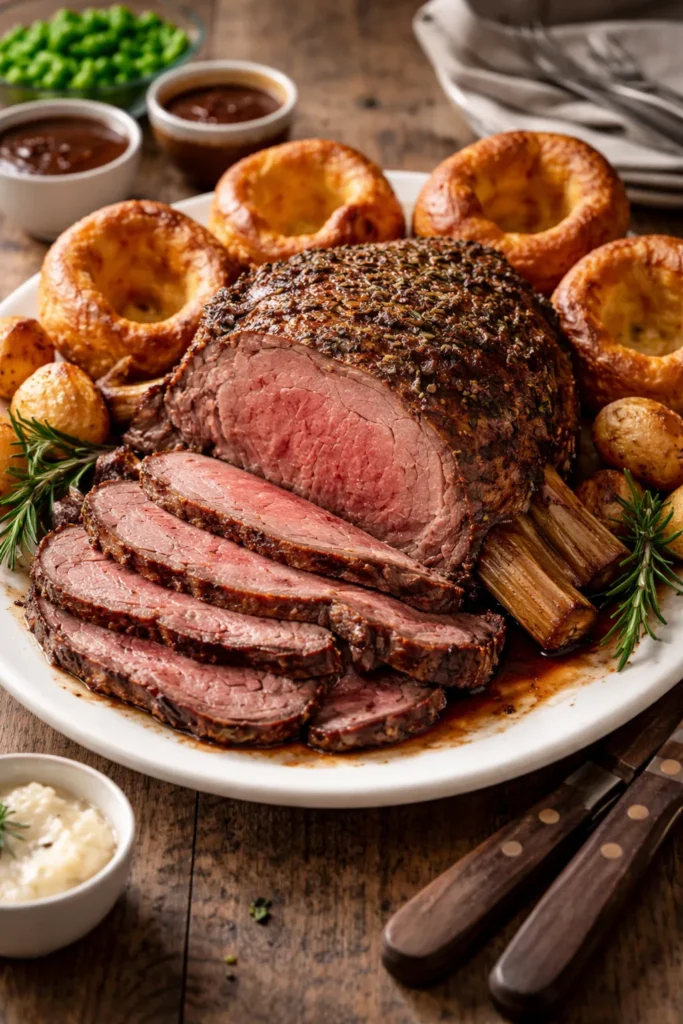
Nothing earns its place at the Sunday table more completely than a well-executed roast beef. It’s the dish that gave British royal guards their nickname “Beefeaters” and the meal that National Geographic has called the national dish of England. Done properly, it’s the benchmark against which every other roast is measured.
The cut matters enormously here. For a showstopping centrepiece, a bone-in ribeye roast (sometimes called prime rib) delivers unmatched flavour and a level of fat marbling that keeps the meat juicy all the way through. For a more accessible weeknight-friendly option, top round or sirloin roast both produce excellent results at a fraction of the cost.
Getting the Temperature Right
The single most important factor in roast beef is internal temperature, and this is where most home cooks go wrong. Pull the joint from the oven when the thermometer reads about 120–125°F (48–52°C) for medium rare — carryover heat will bring it to the 130–135°F target during resting. A leave-in probe thermometer eliminates all guesswork here.
Always bring the beef to room temperature for at least one hour before it goes anywhere near the oven. Cold meat straight from the fridge cooks unevenly, leaving the outer layers overdone while the centre struggles to catch up.
The Non-Negotiable Trimmings
Roast beef demands Yorkshire puddings, full stop. The batter — made from eggs, flour, whole milk, and a pinch of salt — needs to be ice-cold when it hits smoking-hot fat. That thermal shock is what creates the dramatic rise and the crispy, hollow shell with a soft, eggy interior. Rest the batter in the fridge for at least 30 minutes, or overnight if you’re prepping ahead.
- Serve with freshly grated horseradish cream or a sharp English mustard
- Roasted potatoes cooked in beef dripping for maximum flavour
- Rich pan gravy made from the roasting juices, deglazing the tin with good beef stock
- Roasted carrots and parsnips alongside steamed green beans or cabbage
Pro tip: Rest the beef for a minimum of 20 minutes under loose foil before carving. This is non-negotiable — cutting into it too early sends all the juices straight onto the board instead of staying in the meat.
2. Herb-Roasted Chicken with Bread Sauce
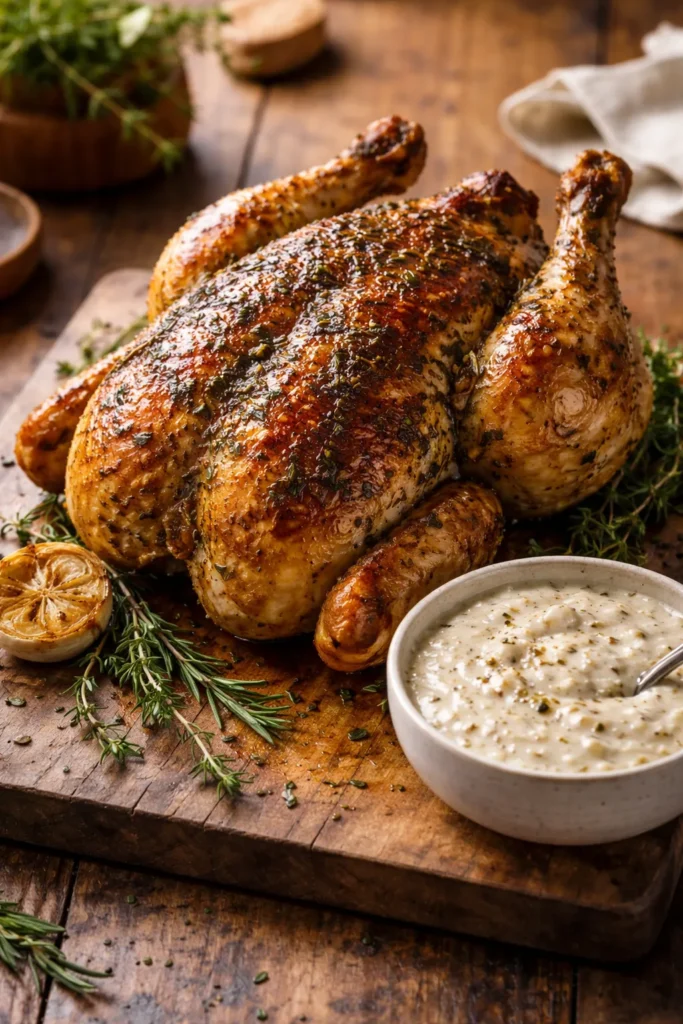
Roast chicken is the weekday workhorse that cleans up beautifully for Sunday. A well-roasted bird — skin lacquered to a deep amber, flesh moist all the way through — is one of the most satisfying things a home cook can produce, and it tends to win over every guest at the table regardless of age or appetite.
The key to chicken that genuinely impresses is patience with the skin. Pat it thoroughly dry before seasoning (a night uncovered in the fridge is ideal), rub generously with softened butter under and over the skin, then season aggressively with salt, black pepper, and your choice of herbs — tarragon, thyme, and lemon zest make an elegant combination, while garlic, rosemary, and a squeeze of lemon is a reliable crowd-pleaser.
Roasting Method That Actually Works
Start the bird at a high temperature — 425°F (220°C) — for the first 20 minutes to blast the skin into crispiness. Then reduce to 375°F (190°C) for the remainder of the cooking time. A 4-pound chicken typically needs about 1 hour 20 minutes total. The internal temperature at the thickest part of the thigh should reach 165°F (74°C).
Don’t skip the resting period. Fifteen minutes under foil after the bird comes out of the oven gives the juices time to redistribute through the meat. Carved straight away, chicken tends to feel dry even when it isn’t — the resting period is what separates a good roast from a great one.
Why Bread Sauce Belongs Here
Bread sauce is one of those underappreciated British classics that disappears the moment it hits the table. It’s made by infusing whole milk with an onion studded with cloves and bay leaves, then thickening it with fresh white breadcrumbs and finishing with a knob of butter. The result is creamy, mildly spiced, and deeply comforting — the perfect counter to the crispiness of the chicken skin.
- Serve alongside sage and onion stuffing balls roasted separately
- Honey-glazed roasted carrots and parsnips
- Steamed broccoli or buttered peas for freshness
- A light chicken gravy made from the pan drippings and good chicken stock
Worth knowing: Adding a whole lemon and a halved head of garlic to the cavity of the bird before roasting perfumes the meat from the inside out and produces a more fragrant pan gravy.
3. Slow-Roasted Lamb Shoulder with Mint Sauce
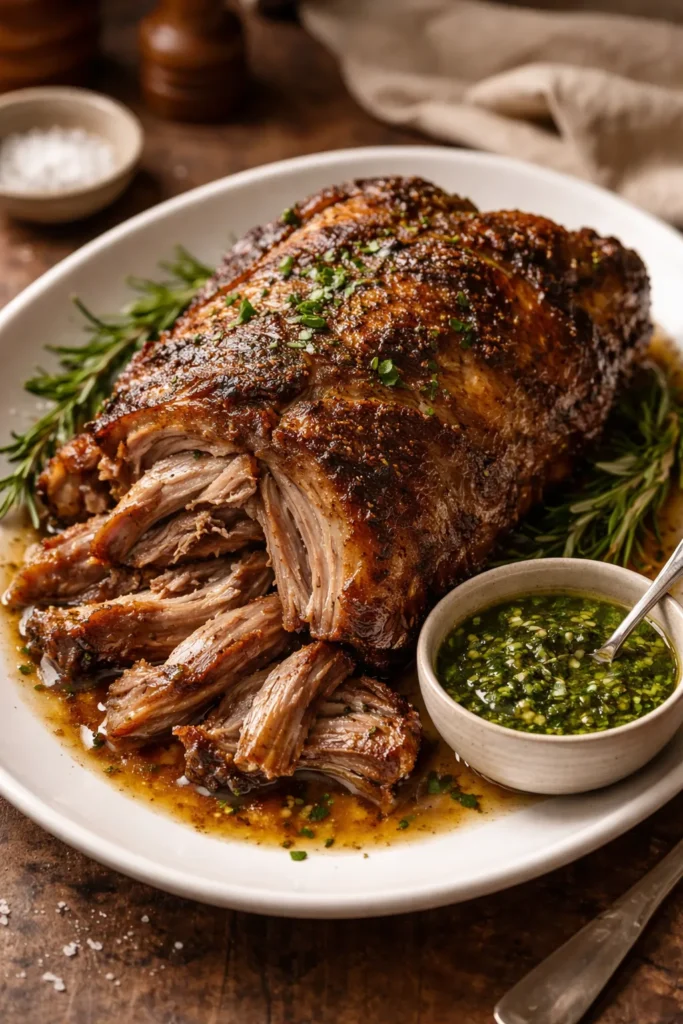
Of all the meats on the Sunday roast rotation, slow-roasted lamb shoulder might be the most forgiving and the most rewarding. Unlike a leg, which benefits from precise timing to avoid drying out, the shoulder is heavily marbled with connective tissue that breaks down over long, low cooking into silky, pull-apart tenderness. You almost can’t overcook it.
A bone-in shoulder of around 4–5 pounds benefits enormously from a full 4 to 5 hours at 325°F (165°C), covered in foil for the first three hours and uncovered for the final stretch to develop a crust. The result is meat that falls away from the bone with nothing more than a spoon.
Flavouring the Lamb
Lamb has a distinctive, earthy richness that pairs beautifully with aromatic herbs and alliums. Cut small incisions all over the shoulder and push in slivers of garlic and small sprigs of rosemary — this perfumes the meat from within during the long cook. A generous seasoning of coarse salt, black pepper, and dried oregano on the outside builds the crust.
Some cooks add a splash of white wine or stock to the bottom of the roasting tin before covering it with foil. This creates a gentle braising environment that keeps the meat moist and produces a deeply flavoured liquid that becomes the base of your gravy once the fat is skimmed.
Homemade Mint Sauce Is Worth Every Second
Jarred mint sauce has its place, but fresh mint sauce made from scratch takes about five minutes and transforms the plate. Finely chop a large handful of fresh mint leaves, mix with a tablespoon of caster sugar and two tablespoons of white wine vinegar, then let it sit for at least 10 minutes to mellow. The sugar balances the acid; the acid cuts through the richness of the lamb.
- Roasted baby potatoes tossed in goose fat and flaky sea salt
- Roasted cherry tomatoes and red onions alongside the lamb
- Buttered new potatoes with fresh mint if serving in warmer months
- Redcurrant jelly on the side as an alternative condiment
Pro tip: Reserve all the juices from the resting lamb and add them directly to your gravy. The gelatin-rich liquid from slow-braised shoulder produces a gravy with extraordinary body and depth.
4. Crackling Pork Belly with Apple Sauce
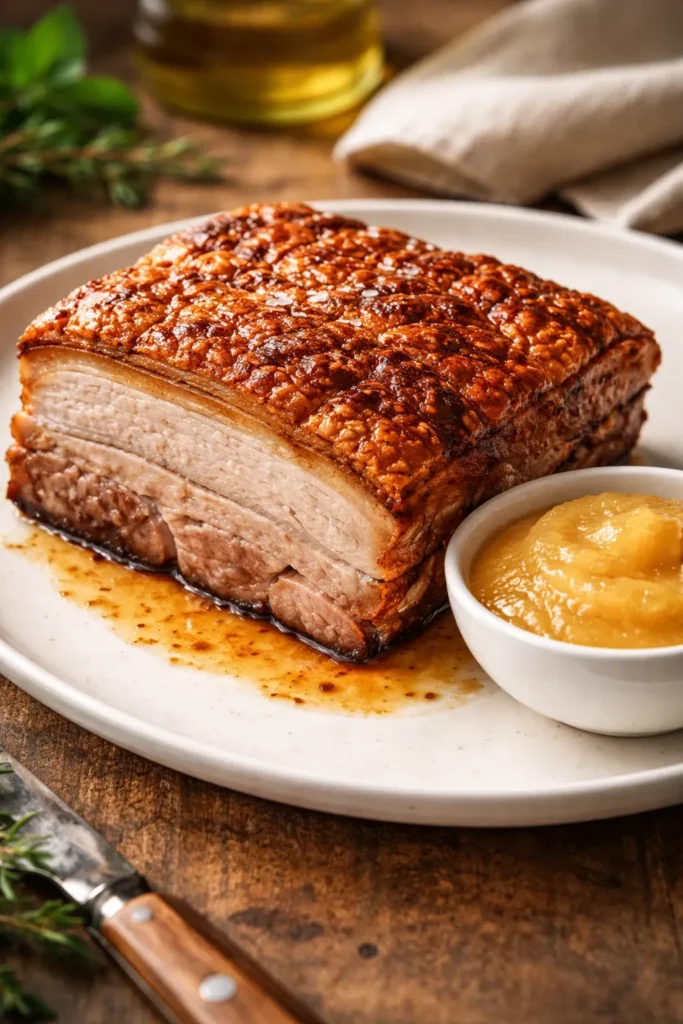
Pork belly is the roast cut that delivers the highest ratio of satisfaction to effort. The skin renders into shattering, golden crackling while the layers of fat beneath baste the meat continuously throughout the cook, producing something almost impossibly juicy. The key — and it really is the only thing standing between you and magnificent crackling — is completely dry skin before it goes into the oven.
Remove the pork belly from its packaging the night before, place it uncovered on a rack in the fridge, and let the skin air-dry overnight. The next day, score the skin at close intervals with a sharp knife or a clean Stanley blade, going through the skin but not into the meat. Rub generously with fine sea salt, pushing it down into every score mark.
The Two-Stage Roasting Approach
Start the belly at a screaming 450°F (230°C) for the first 25–30 minutes. This intense heat causes the skin to blister and crackle dramatically. Then reduce the oven to 325°F (165°C) and continue cooking for another 1.5 to 2 hours until the meat is completely tender when pierced with a skewer. The contrast between the blistered skin and the tender meat underneath is exactly what you’re after.
If the crackling isn’t uniformly crispy after the initial high-heat blast, finish it under the grill for 3–5 minutes — keep close watch to prevent it burning.
Apple Sauce: The Classic Counterpoint
Apple sauce cuts through the richness of pork belly the way nothing else does. Peel, core, and dice 4 Bramley apples (or any tart cooking apple), cook them down gently with a tablespoon of butter, a splash of water, and a pinch of sugar until completely soft, then mash or blitz to your preferred texture. A scraping of lemon zest at the end brightens the whole thing.
- Roasted potatoes cooked in pork fat for an echo of the main event
- Braised red cabbage with apple and a splash of red wine vinegar
- Sage and onion stuffing alongside the pork
- Pan gravy made from the pork drippings, deglazing with cider for a regional twist
Worth knowing: Asking your butcher to score the skin for you saves time and produces cleaner, more even cuts than most home knives can manage.
5. Glazed Gammon with Parsley Sauce
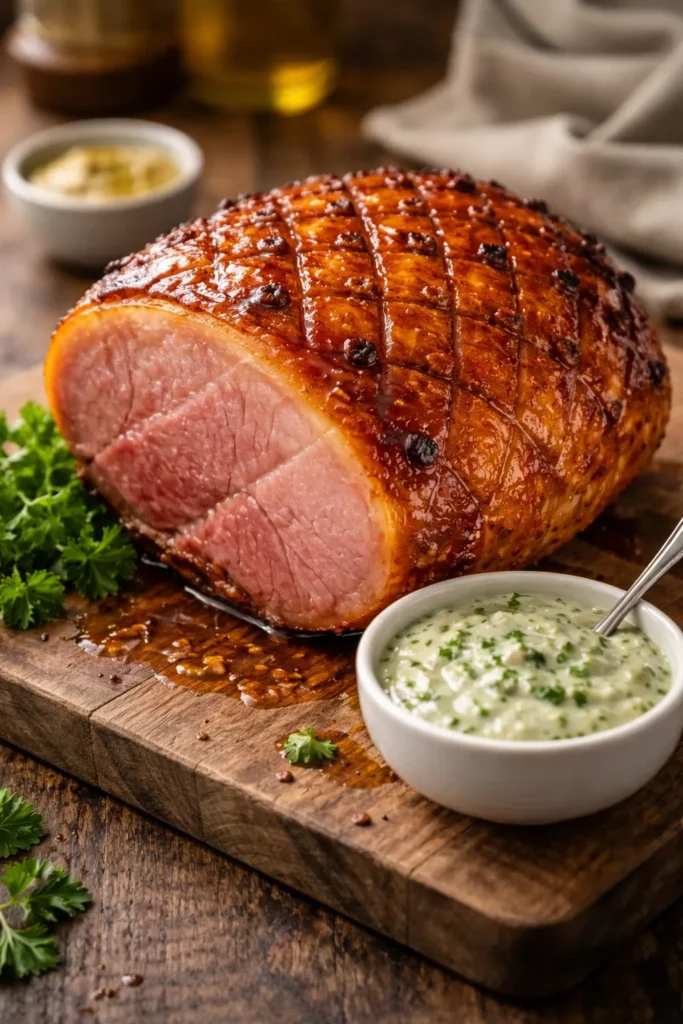
Gammon occupies a slightly different corner of the Sunday roast world — it’s boiled first, then finished in the oven with a sticky glaze, which gives it a different texture and character from your standard roasted joint. The result is tender, deeply savoury ham with caramelised edges that carries enough personality to anchor a serious Sunday spread.
A boneless gammon joint of around 3–4 pounds serves six people comfortably. Start by simmering it in a large pot of water with an onion, a few peppercorns, and bay leaves for approximately 20 minutes per pound, until a skewer meets no resistance. Remove from the liquid, allow it to cool slightly, then strip off the rind and score the fat in a diamond pattern.
The Glaze Makes or Breaks It
A classic honey-mustard glaze is made by whisking together 3 tablespoons of runny honey, 2 tablespoons of Dijon mustard, and a tablespoon of dark brown sugar. Brush this over the scored fat generously, then stud each diamond with a whole clove for a traditional touch. Roast at 400°F (200°C) for 25–30 minutes, basting once halfway through, until the glaze is deeply caramelised and the fat is blistered at the edges.
The cooking liquid left from simmering the gammon makes an excellent base for split pea soup the following day — another reason to save it.
Parsley Sauce as the Unexpected Highlight
Parsley sauce is one of Britain’s most underrated accompaniments. A classic béchamel base — butter, flour, and milk — finished with a substantial amount of chopped fresh flat-leaf parsley and a squeeze of lemon juice. It’s mild, creamy, bright, and cuts beautifully through the saltiness of the gammon.
- Roasted new potatoes or a creamy mash to absorb the sauce
- Buttered green cabbage or sweetheart cabbage
- English mustard on the side for those who want heat
- Roasted parsnips glazed with a little honey
Pro tip: Taste the simmering liquid after 30 minutes — if it’s aggressively salty, discard half and top up with fresh water. Over-salted gammon is the most common mistake with this cut.
6. Roast Duck with Cherry Gravy
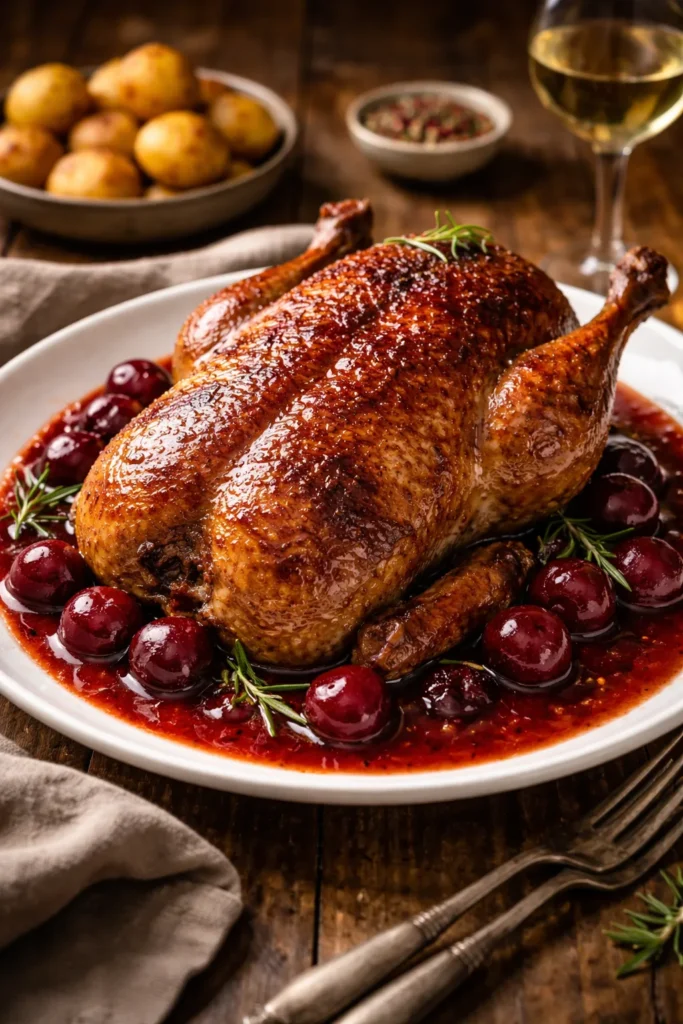
Duck is the Sunday roast choice that feels festive without requiring a formal occasion. The meat is rich, almost gamey, with a fat layer beneath the skin that renders down completely during roasting and bastes the bird continuously — producing skin that crackles like a good crackling and flesh that stays moist despite the heat.
A whole duck serves four people generously. Score the skin all over with a sharp knife (without cutting into the meat), then prick the skin with a fork dozens of times — this helps the fat render rather than pool beneath the surface. Season aggressively with salt and five-spice powder or just black pepper and dried thyme. Place on a rack in a roasting tin so the fat drips away during cooking.
Temperature and Timing for Duck
Roast at 375°F (190°C) for roughly 20 minutes per pound, then blast at 425°F (220°C) for a final 10–15 minutes to crisp the skin completely. The breast meat is ideal at an internal temperature of 165°F (74°C); unlike beef, duck breast is best served fully cooked rather than pink.
Pour off the rendered duck fat halfway through cooking — it accumulates quickly and keeps the bird sitting in its own grease otherwise. Save every drop of that fat. Roasted potatoes cooked in duck fat are, without question, the crispiest potatoes you will ever eat.
Cherry Gravy: A Natural Match
The slight bitterness of good duck meat calls for a sauce with sweetness and acidity. A cherry gravy made from the pan drippings, a splash of red wine, a cup of chicken or duck stock, and a jar of good cherry jam reduced together makes a glossy, deeply flavoured sauce that pairs with duck the way mint sauce pairs with lamb.
- Duck-fat roasted potatoes — the premier use of the rendered fat
- Roasted butternut squash with sage butter
- Braised Puy lentils as an earthy alternative to potatoes
- Wilted spinach or steamed green beans for colour
Worth knowing: Duck fat keeps for months in a sealed jar in the fridge, and it produces the finest roast potatoes of any fat available.
7. Vegetarian Nut Roast with All the Trimmings
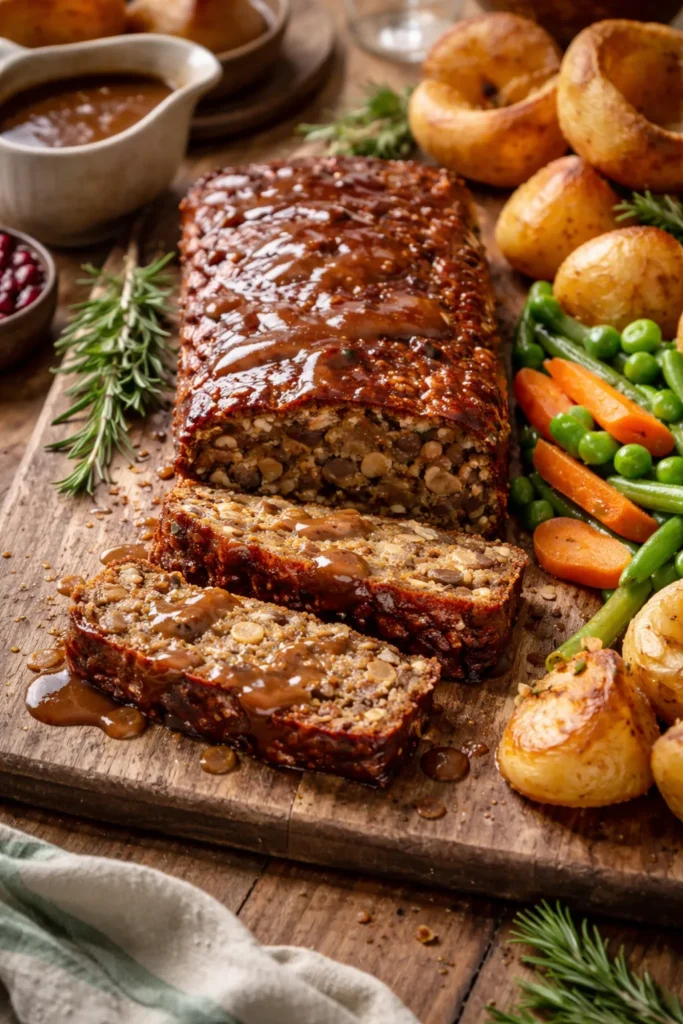
The vegetarian Sunday roast used to mean a sad, dry loaf relegated to the end of the table. That version deserves to stay in the past. A well-made nut roast — built on a foundation of toasted mixed nuts, lentils, sautéed mushrooms, caramelised onions, and bound with eggs and breadcrumbs — is genuinely satisfying, slices cleanly, and holds its own against any meat-based centrepiece.
The secret to a nut roast that impresses rather than apologises is layering flavour at every stage. Toast the nuts before chopping. Caramelise the onions properly — 25 minutes on low heat, not 5 minutes on high. Use smoked paprika, dried thyme, and a tablespoon of soy sauce or miso paste to build depth. Wilt mushrooms in butter with garlic until all their moisture has evaporated before adding them to the mix.
Building Texture and Structure
A 9×5-inch loaf tin, lined with baking paper and greased, is the right vessel. Press the mixture in firmly, smoothing the top. A brushing of soy sauce or a glaze of tomato purée mixed with balsamic vinegar on top adds colour and a sticky, savoury crust once baked.
Bake at 350°F (175°C) for 40–45 minutes until firm and deeply coloured on top. Let it rest in the tin for 10 minutes before turning out — this prevents it from crumbling on the board.
Making the Vegetarian Trimmings Work
The trimmings are what make or break a vegetarian roast. Every element that surrounds the nut roast needs to be as carefully considered as the main itself.
- Vegetarian gravy made from caramelised onions, vegetable stock, soy sauce, and a splash of red wine — surprisingly complex
- Yorkshire puddings are vegetarian-friendly and absolutely belong here
- Crispy roasted potatoes in vegetable oil or a neutral fat
- Roasted root vegetables: parsnips, carrots, and beetroot with honey and thyme
- Cauliflower cheese made with a mix of Gruyère and sharp Cheddar
Pro tip: Bake the nut roast the day before and reheat, loosely covered with foil, at 325°F for 20 minutes. It slices cleaner when cold, making a much better presentation on the plate.
8. Slow-Roasted Pork Shoulder with Cider Gravy
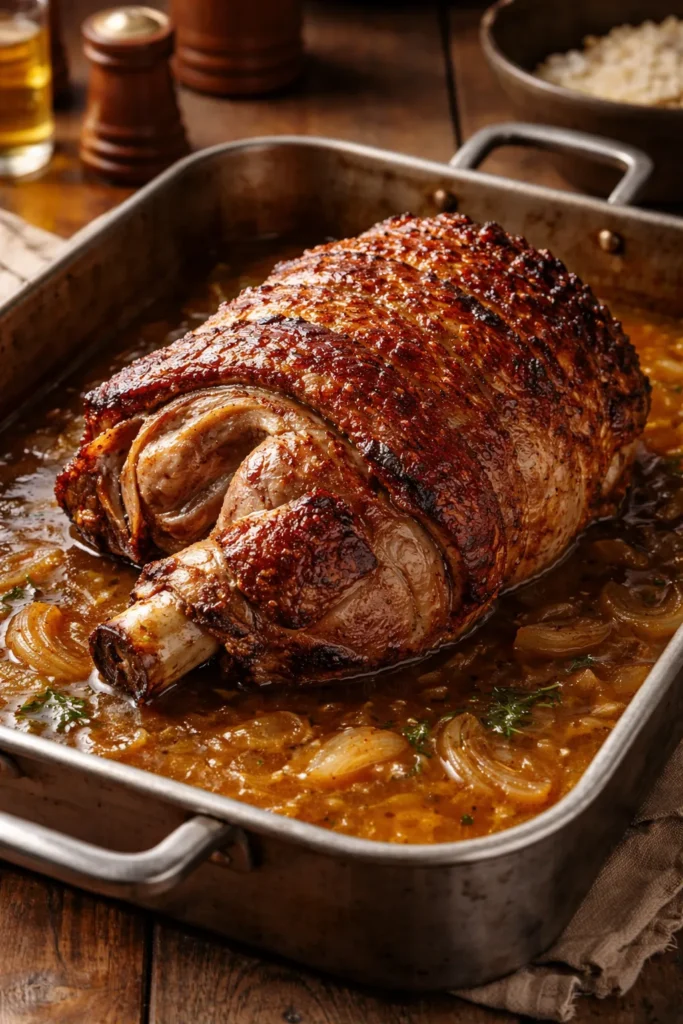
Where pork belly is about crackling and richness, pork shoulder is about low-and-slow tenderness — meat that pulls apart with two forks after four hours in a gentle oven. It’s a more relaxed cook than most Sunday roasts; once it’s in the oven, it largely takes care of itself.
A bone-in pork shoulder of 5–6 pounds is enough for 6–8 people and costs considerably less per serving than prime cuts. Score the skin deeply, rub with salt, cracked fennel seeds, garlic powder, and dried rosemary, then let it sit uncovered in the fridge for at least one hour (or overnight) before cooking. The dry rub and the air circulation are what produce the crackling.
The Cooking Process
Start at 450°F (230°C) for the first 30 minutes to blast the skin. Reduce to 300°F (150°C), cover the tin tightly with foil, and cook for a further 4–5 hours until the internal temperature reads 195–200°F (90–93°C) and the meat pulls apart effortlessly. Uncover for the last 30 minutes to recrisp the skin.
That window between 195°F and 200°F is specifically where connective tissue converts to gelatin. Pulling the shoulder at 165°F (safe, but underdone for a shoulder) will produce tough, chewy meat. The extra time transforms the same cut entirely.
Cider Gravy as the Centrepiece Sauce
Pork and apples is a combination that never stops working. Once the shoulder comes out to rest, place the roasting tin over medium heat on the hob, deglaze with a full can (330ml) of dry cider, scraping up every browned bit from the bottom. Add 500ml of good chicken or pork stock, reduce by half, and whisk in a teaspoon of wholegrain mustard and a knob of butter for sheen. The result is something deeply savoury and faintly sweet.
- Braised red cabbage with apple cider vinegar for a regional pairing
- Creamy mashed potatoes to absorb the cider gravy
- Roasted Bramley apple halves alongside the pulled pork
- Sage and onion stuffing balls as a classic accompaniment
Worth knowing: Pork shoulder holds beautifully on a low-heat warm setting for up to an hour after it finishes cooking. Unlike beef, it doesn’t go cold and tight — it just becomes more tender.
9. Roast Turkey Crown with Sage Butter and Stuffing
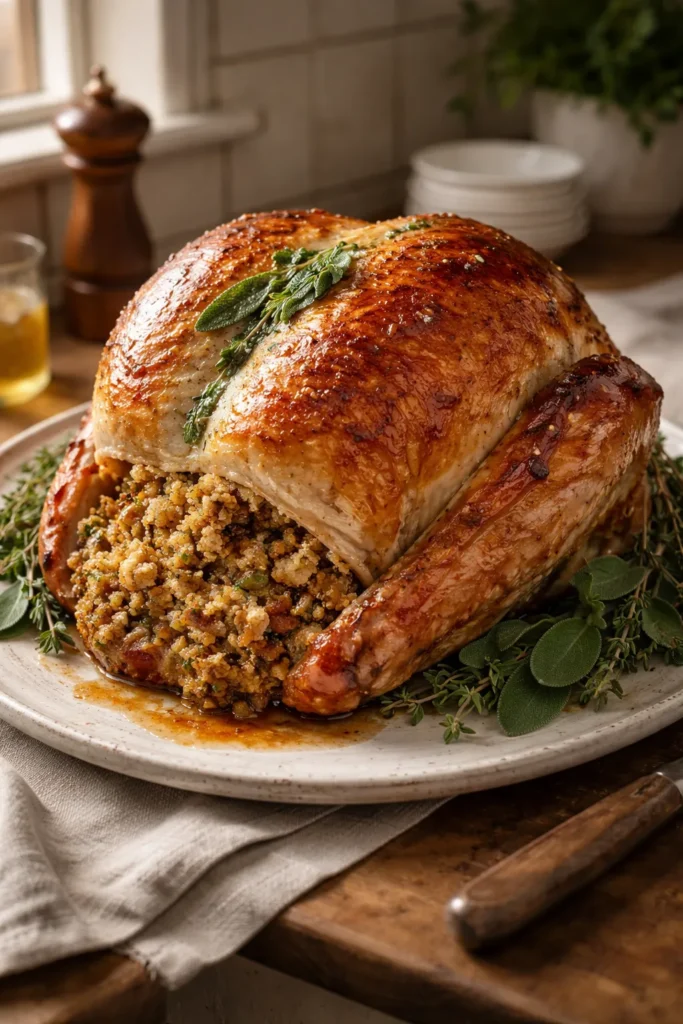
Turkey doesn’t need to wait for Christmas. A turkey crown — the breast and wings on the bone, with the legs removed — is a practical, elegant choice for a Sunday table that solves the perennial problem of feeding eight people without carving a whole bird mid-service. It roasts evenly, rests easily, and slices into clean, generous portions.
A crown of around 4–5 pounds serves six people. The primary risk with turkey is dryness, and the primary defence against it is butter. Work 100g of softened butter mixed with 2 tablespoons of finely chopped fresh sage, a grated clove of garlic, salt, and black pepper under the skin and across the top of the crown before roasting.
Timing and Temperature
Roast at 375°F (190°C), roughly calculating 20 minutes per pound plus an additional 20 minutes. A leave-in thermometer should read 165°F (74°C) at the thickest part of the breast — not the very surface, but the centre. Rest for at least 20 minutes under foil before carving; turkey benefits from a longer rest than most meats.
Basting every 30 minutes with the buttery pan juices keeps the skin developing colour and the meat staying moist. A splash of dry white wine in the roasting tin during the first hour adds to the eventual pan gravy.
The Stuffing Situation
Never stuff the cavity of a turkey crown with breadcrumb stuffing — the density prevents even cooking and creates food safety risks. Instead, cook the stuffing separately in a loaf tin or roll it into balls. A classic sage and onion stuffing made from stale white bread, softened onion, fresh sage, butter, and a beaten egg is the traditional partner for turkey and holds up beautifully when roasted alongside.
- Pan gravy using the turkey drippings and a good chicken or turkey stock
- Roasted potatoes in goose fat for the crispiest result
- Honey-glazed parsnips and roasted carrots
- Cranberry sauce or bread sauce on the side
Pro tip: If the skin starts browning too quickly before the breast reaches temperature, tent it loosely with foil — don’t seal it tight, just drape it over the crown to slow the browning without steaming the skin.
10. Braised Beef Short Ribs Sunday Roast
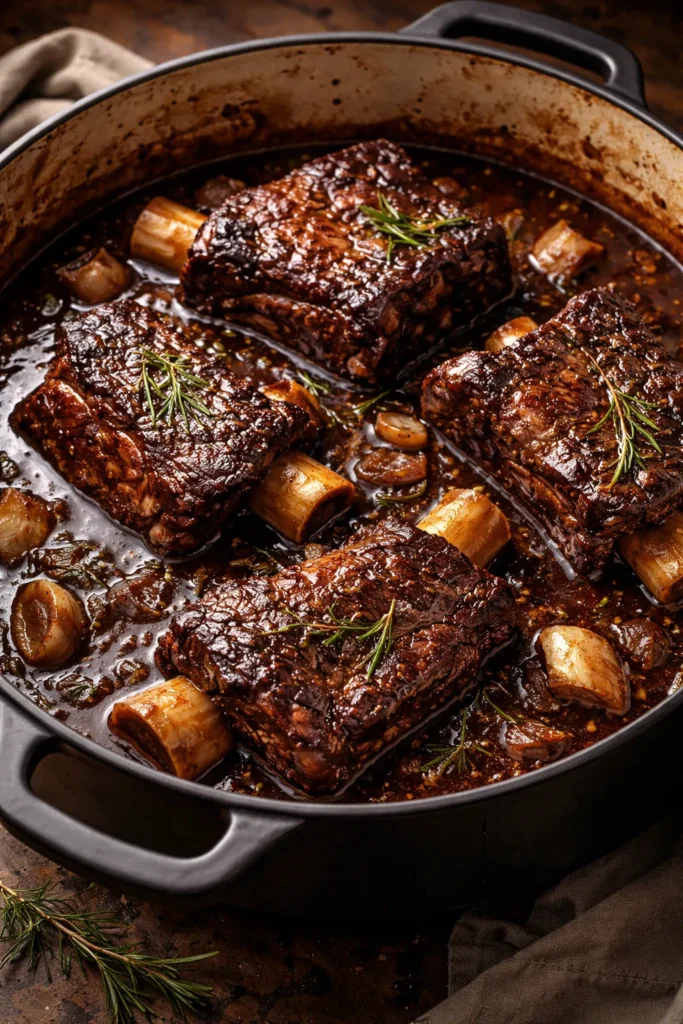
Short ribs occupy a fascinating middle ground between a traditional roast joint and a braise — and that duality is exactly what makes them such a compelling Sunday option. The ribs spend hours in the oven, partially submerged in a rich braising liquid of red wine, beef stock, and aromatics, emerging with meat that falls from the bone, a sauce of extraordinary depth, and a deeply browned exterior that looks and tastes like something from a serious restaurant kitchen.
Beef short ribs cut English-style (bone-in sections about 3–4 inches long) are the right choice here. Allow approximately 2 short rib sections per person as a main. Brown them aggressively on all sides in a hot, heavy-based pot before they go anywhere near the braising liquid — this Maillard reaction is what builds the foundation of flavour.
Building the Braise
Once the ribs are browned and set aside, sauté diced onion, celery, and carrot in the same pot until softened. Add 4 cloves of garlic, a tablespoon of tomato purée, and cook for another minute. Deglaze with a full bottle of robust red wine — Merlot or Shiraz both work — and reduce by half. Return the ribs, add enough beef stock to come three-quarters up the sides, tuck in a few sprigs of thyme and two bay leaves, then cover tightly and braise in the oven at 325°F (165°C) for 3 to 3.5 hours.
The meat is ready when it offers no resistance to a fork and has pulled back significantly from the bone. The braising liquid will have reduced into a glossy, deeply flavoured sauce that needs only straining and a final seasoning adjustment.
Serving This Like a Restaurant
Short ribs plated over a cloud of creamy potato mash with the braising sauce spooned over the top is one of the most satisfying plates of food you can put together at home. The contrast between the falling-apart meat, the rich sauce, and the smooth, buttery mash is precise and complete.
- Pomme purée — potato mash pushed through a fine sieve with generous butter and warm cream for restaurant-level smoothness
- Roasted root vegetables: thick coins of parsnip and carrot roasted in butter
- Wilted greens (cavolo nero works particularly well here) with garlic
- Yorkshire puddings poured with the braising sauce instead of traditional gravy
Worth knowing: Short ribs actually improve significantly the day after cooking. Refrigerating them overnight in the braising liquid allows the fat to solidify and be removed cleanly, and the flavours deepen considerably. Reheat gently, covered, at 300°F for 30 minutes before serving.
Mastering the Sunday Roast Trimmings
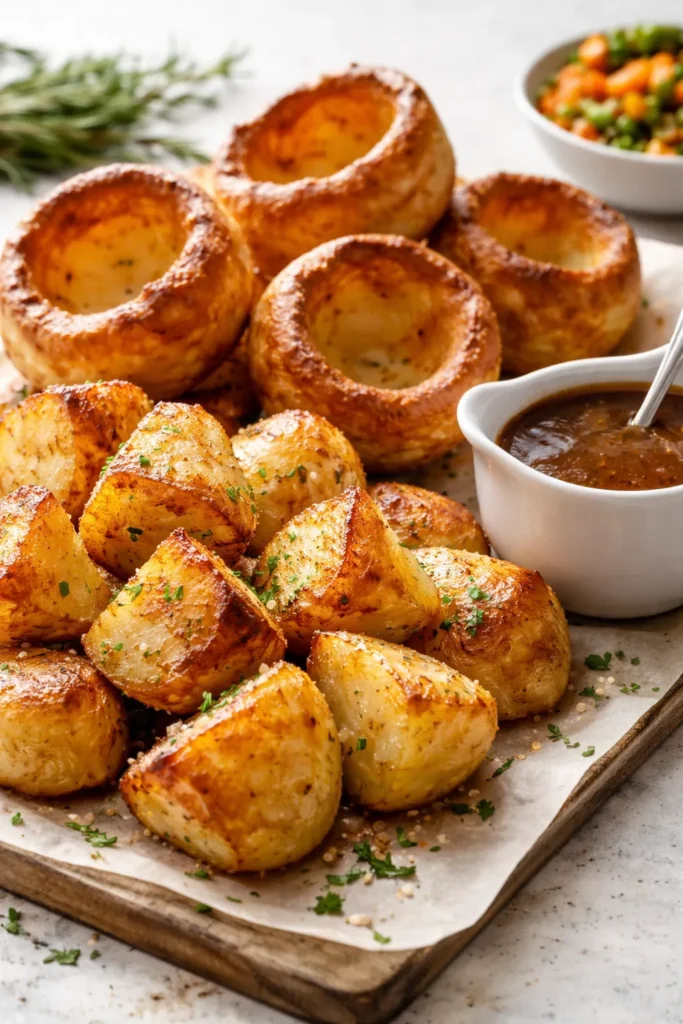
Regardless of which meat sits at the centre of your table, the supporting cast determines whether the meal is good or unforgettable. A few principles apply across every roast dinner worth making.
Roast potatoes deserve more care than they usually get. The formula is non-negotiable: par-boil in well-salted water until just fork-tender, drain, return to the pot, and shake vigorously with the lid on to rough up the edges. Those rough, floury edges are what creates the crust. Heat the fat — goose fat, duck fat, or beef dripping all outperform vegetable oil — until it’s smoking before adding the potatoes. An hour at 425°F (220°C), turning twice, produces the result everyone is actually looking for.
Yorkshire puddings need two things above everything else: ice-cold batter and screaming-hot fat. The thermal shock is what drives the rise. Let the batter rest in the fridge for at least 30 minutes (overnight is genuinely better), preheat the fat in the tin until it’s smoking, then pour and close the oven door without opening it for 15 minutes. Opening the door before they’ve set causes the collapse.
Gravy made from pan drippings will always outperform gravy made from a packet. Deglaze the roasting tin with good stock after the meat has rested, scraping up every caramelised bit from the bottom, reduce until it coats the back of a spoon, then season and serve. For richer colour, a splash of Worcestershire sauce and a teaspoon of tomato purée give the depth that some drippings lack on their own.
Final Thoughts
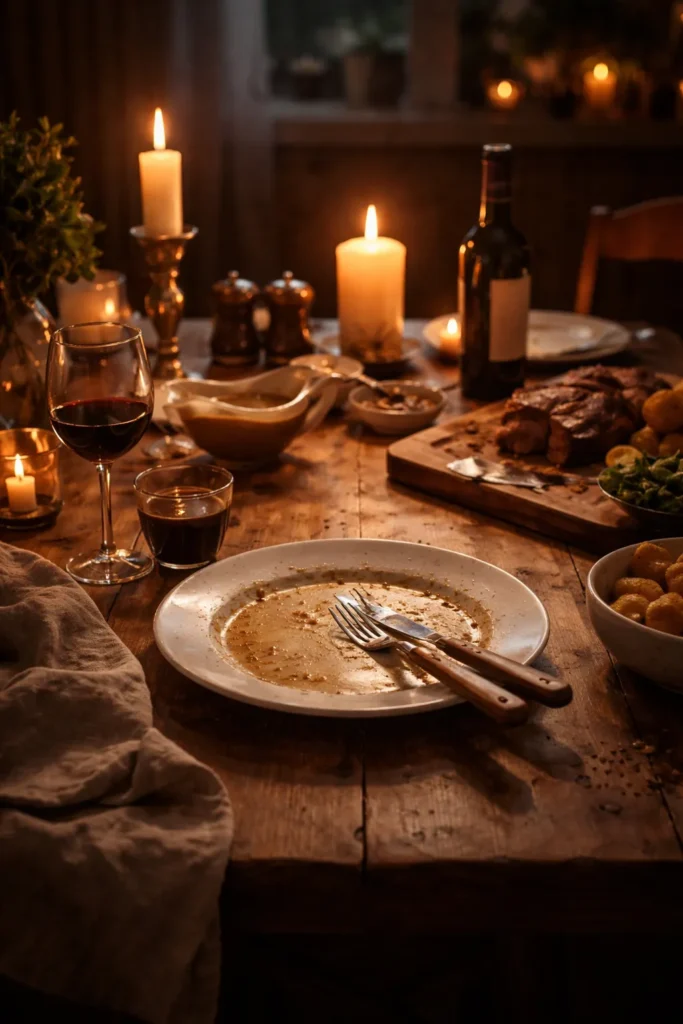
A Sunday roast is one of those rare meals that rewards both the cook and everyone at the table in equal measure. The effort is real, the timing takes practice, and the coordination across multiple dishes requires a plan — but the payoff is a table full of people eating something genuinely made with care, which is something no restaurant can reliably replicate.
Start with the meat you know best, nail the roast potatoes and Yorkshire puddings, and build from there. Once you’ve got the rhythm of timing multiple components, the whole thing becomes less of a project and more of a pleasurable Sunday routine.
The ten ideas here span the full range of what a British Sunday roast can be — from the deep tradition of beef and Yorkshire puddings to the slow-roasted elegance of pork shoulder and cider gravy. Each one brings something distinct to the table, and each one is worth the Sunday morning it takes to make. Pick one, commit to the prep, and make next weekend count.