There’s a moment that happens to anyone who tries Brazilian food for the first time — a genuine pause, a slight widening of the eyes, and then that involuntary “okay, what is this?” It’s a cuisine that somehow manages to be deeply comforting and completely surprising at the same time. Rich black bean stews, golden saffron-kissed rice dishes, crispy fried chicken bites drenched in garlic and lime — Brazilian cooking hits flavor notes that most weeknight dinners never get close to.
What surprises people most is how achievable it all is. Brazilian home cooking isn’t fussy or chef-driven. It’s built on pantry staples, bold seasoning, and techniques that any home cook can handle on a Tuesday evening. You don’t need a specialty grocery store for most of these dishes — just a well-stocked kitchen and about 45 minutes.
Brazil is a country of extraordinary culinary diversity, shaped by Indigenous traditions, Portuguese colonization, African influence, and waves of Italian, German, and Japanese immigration. That layered history shows up on the plate. A single country gave the world feijoada, brigadeiro, moqueca, and pão de queijo — dishes that couldn’t be more different from each other, yet all feel unmistakably, warmly Brazilian. The recipes below draw from that full range, covering hearty mains, quick weeknight staples, and a few crowd-pleasing favorites that’ll have everyone asking you to make them again.
Table of Contents
- 1. Feijoada — Brazil’s Beloved Black Bean and Pork Stew
- How to Serve It Like a Brazilian
- Tips for Getting It Right
- 2. Galinhada — One-Pot Saffron Chicken and Rice
- Building the One-Pot Flavor Base
- The Final Details That Elevate This Dish
- 3. Pão de Queijo — Crispy, Chewy Brazilian Cheese Bread
- What Makes the Texture So Unique
- Pairing Suggestions for Dinner
- 4. Moqueca — Brazilian Coconut and Tomato Seafood Stew
- Getting the Coconut Broth Right
- What to Serve Alongside Moqueca
- 5. Coxinha — Brazilian Chicken Croquettes
- Making Coxinha Work on a Weeknight
- Dipping Sauce Ideas
- 6. Brazilian Picanha — The Steak That Changes Everything
- Why Minimal Seasoning Works Here
- Serving a Proper Picanha Dinner
- 7. Brazilian Frango a Passarinho — Garlic Lime Fried Chicken Bites
- Getting the Fry Right
- What to Serve Alongside
- 8. Camarão no Leite de Coco — Shrimp in Coconut Sauce
- Building Maximum Flavor in Minimum Time
- Serving Ideas
- 9. Macarronada Brasileira — Brazilian Mac and Cheese with Chicken
- The Requeijão Question
- Make It Ahead
- 10. Arroz de Forno — Brazilian Baked Ham and Cheese Rice
- Why This Beats Regular Rice Every Time
- Variations Worth Trying
- Final Thoughts
1. Feijoada — Brazil’s Beloved Black Bean and Pork Stew
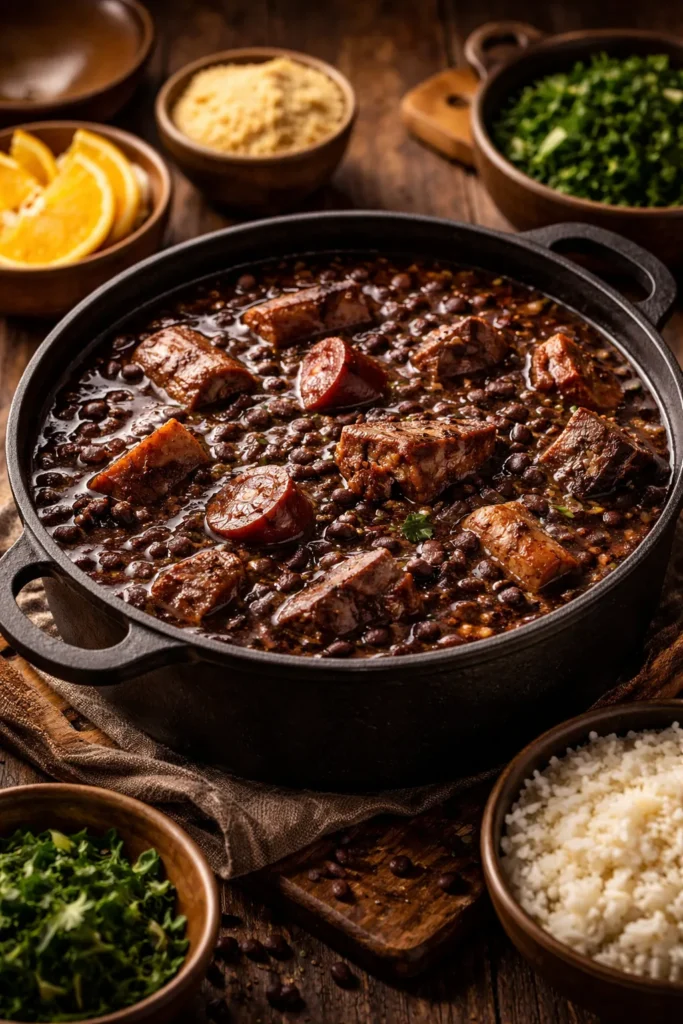
Ask any Brazilian what their national dish is and you’ll get one answer: feijoada. This slow-simmered stew of black beans and smoked meats is what Brazilians turn to for Sunday family gatherings, holiday tables, and — according to more than a few people — curing a rough morning after a night out. It’s hearty, smoky, deeply savory, and somehow manages to be greater than the sum of its parts.
The traditional version takes hours and involves a long list of pork cuts — everything from smoked sausage to cured beef ribs. The weeknight version is much more forgiving. Start with thick-cut bacon, sliced smoked pork sausage (or kielbasa), and two cans of black beans — don’t drain them, that starchy liquid is pure flavor. Sauté the bacon and sausage in olive oil until they’re deeply caramelized and starting to crisp at the edges. Add the beans directly from the can, pour in a cup of chicken broth, and season with garlic powder, bay leaves, dried oregano, and salt.
Bring the whole thing to a boil, then drop the heat to low and simmer for 15 to 20 minutes until the broth thickens and the beans absorb all that smoky pork fat. The result is a stew that tastes like it’s been on the stove all day.
How to Serve It Like a Brazilian
Feijoada is always served over white rice — this is non-negotiable in Brazilian culture. On the side, offer orange slices, which cut through the richness of the stew beautifully, and a simple sautéed collard greens dish called couve. The contrast between the dark, earthy stew and the bright citrus is genuinely spectacular.
Tips for Getting It Right
- Don’t use pre-cooked bacon — you want the raw fat rendering into the pot for flavor
- Thick-cut bacon outperforms regular strips here; it holds up to simmering without dissolving
- If the stew thickens too much, add a splash of chicken broth to loosen it
- The dish tastes even better the next day, once the flavors have had time to settle
Pro tip: A pinch of smoked paprika stirred in at the end deepens the smoky character without adding heat.
2. Galinhada — One-Pot Saffron Chicken and Rice
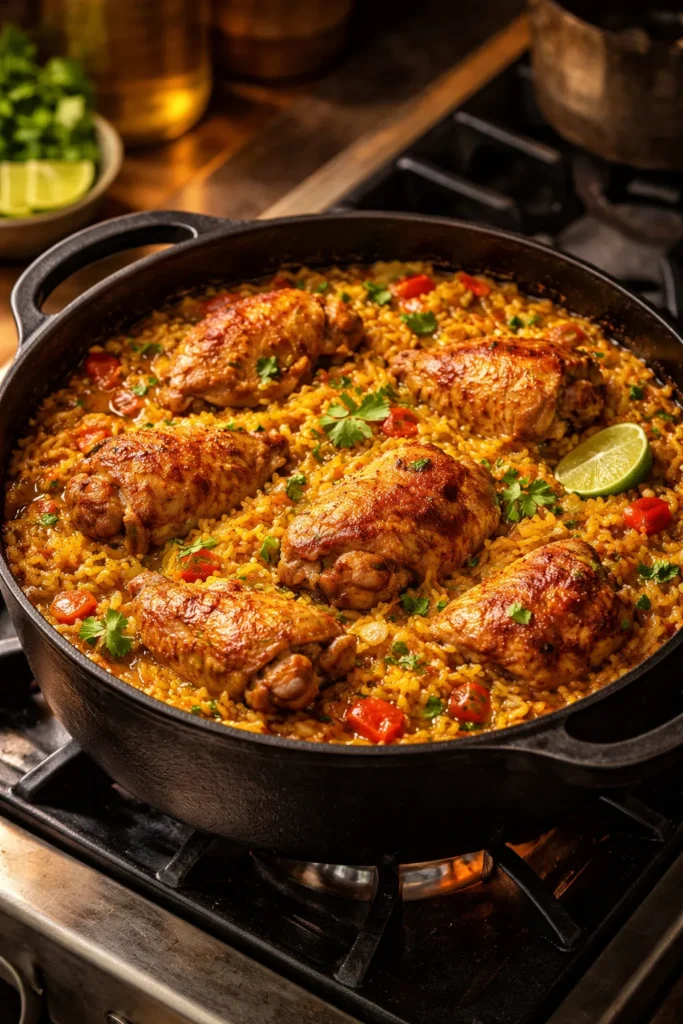
Galinhada is Brazil’s answer to arroz con pollo, and it might actually be better. Chicken thighs braise directly in the pot with long-grain rice, tomatoes, and saffron-infused broth until everything absorbs into a creamy, golden, deeply savory one-pot meal. It’s the kind of dish that fills your kitchen with an aroma so good that people wander in from other rooms asking what you’re making.
The dish originated in central Brazil — the states of Goiás and Minas Gerais both claim it — where Portuguese explorers traveling through the interior would cook hens they’d sourced from farms along the route. The practical, all-in-one nature of the recipe made it perfect for people on the move, and that same quality makes it perfect for weeknight cooking.
Use boneless, skinless chicken thighs — they stay juicy through the longer cooking process in a way that chicken breasts simply don’t. Season them with salt, pepper, and ground cumin and let them sit at room temperature for 30 minutes before you start. While that happens, steep a few saffron threads in a small bowl of hot water for 15 minutes. That steeped liquid is what gives galinhada its signature golden color and its faintly floral depth of flavor.
Building the One-Pot Flavor Base
Sear the chicken thighs in a large, heavy-bottomed pan until they’re properly golden — about 3 to 4 minutes per side. Remove them and sauté diced onion and bell pepper in the same pan until soft. Add garlic, toast the rice for a minute in the aromatics, then deglaze with white wine. Pour in the saffron water, chicken broth, a spoonful of tomato paste, and a bay leaf. Nestle the chicken back on top, cover, and simmer on medium heat for 10 to 15 minutes.
The Final Details That Elevate This Dish
- Add diced fresh tomatoes and peas in the last 3 minutes of cooking — this keeps them vibrant rather than mushy
- Squeeze half a lemon over the chicken right before serving for brightness
- A small drizzle of honey brushed over the thighs and a quick 2-minute broil at the end gives you golden, slightly caramelized skin
Worth knowing: Galinhada is one of those rare dishes where leftovers reheat beautifully — add a splash of broth to the pan to revive the creamy consistency.
3. Pão de Queijo — Crispy, Chewy Brazilian Cheese Bread

If you’ve never had pão de queijo, you need to clear your schedule. These small, golden cheese rolls have a shatteringly crisp exterior and an interior that’s simultaneously airy and chewy — a texture combination that shouldn’t work but absolutely does. They’re naturally gluten-free (the dough uses tapioca starch instead of wheat flour), which means they come out of the oven with that distinctive bounce and pull that’s unlike anything else in the bread world.
Pão de queijo translates simply to “cheese bread,” and it’s eaten everywhere in Brazil — at breakfast, as a snack, alongside a coffee, or served warm at the dinner table in place of a bread basket. In the state of Minas Gerais, where the recipe originated, they’re practically a way of life.
The ingredient list is short: tapioca starch, eggs, oil, milk, salt, and Parmesan or a Brazilian queijo Minas. Everything gets blended together — either in a blender or by hand — until you have a pourable batter. Scoop it into a greased mini muffin tin and bake at 375°F for about 20 minutes until the tops are golden and puffed.
What Makes the Texture So Unique
Tapioca starch behaves completely differently from wheat flour. It has no gluten-forming proteins, so instead of building structure through gluten networks, it sets through gelatinization when heated. The result is that signature chew — stretchy on the inside, with a thin, crisp shell on the outside. The cheese melts into the starch and becomes part of the structure itself, which is why the flavor is present in every single bite rather than just on the surface.
Pairing Suggestions for Dinner
- Serve alongside feijoada or galinhada in place of regular bread
- Add a pinch of cayenne and a grating of nutmeg to the batter for a more complex, slightly spiced version
- Stuff them with a small cube of mozzarella before baking for an outrageously gooey center
Pro tip: The batter keeps in the fridge for up to 3 days. Bake fresh rolls directly from the cold batter — no adjustment needed.
4. Moqueca — Brazilian Coconut and Tomato Seafood Stew
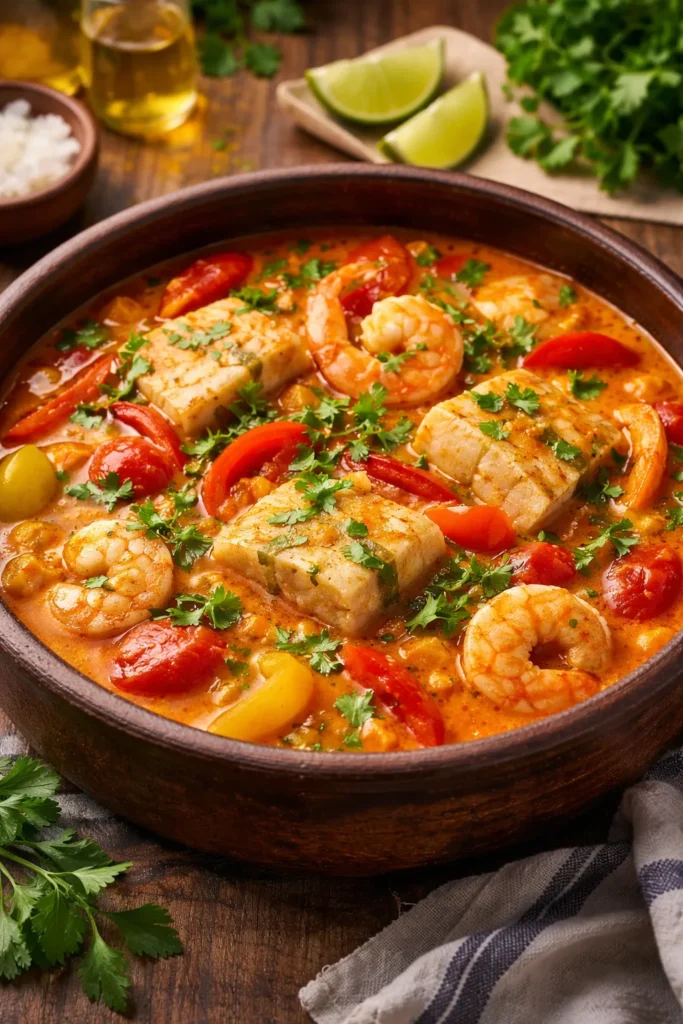
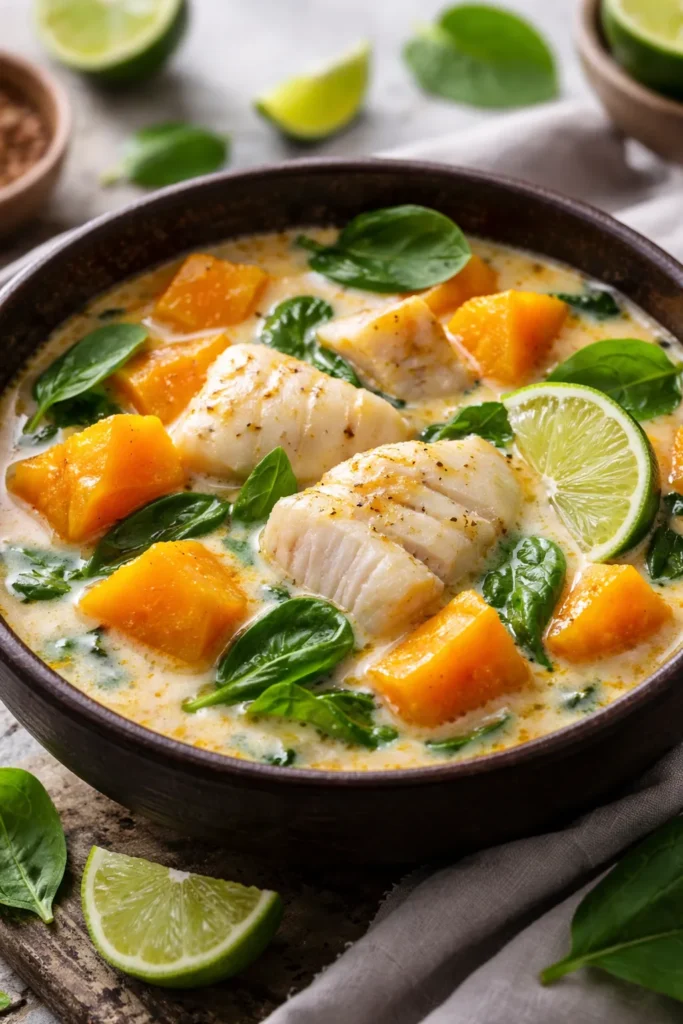
Moqueca is one of the most stunning dishes in Brazilian cuisine — not just in terms of flavor, but visually. A deep, terracotta clay pot filled with orange-tinged coconut broth, bright red tomatoes, thick pieces of white fish or shrimp, and a scattering of fresh cilantro. It looks like something from a high-end restaurant, but it comes together in under 45 minutes on a weeknight stove.
The dish has two major regional variations: Moqueca Baiana, from the northeastern state of Bahia, which uses dendê (red palm oil) and coconut milk for a rich, deeply colored broth; and Moqueca Capixaba, from Espírito Santo, which is lighter and uses regular olive oil. Either way, the essential technique is the same — layer aromatics, fish, and coconut milk in a pot and let them braise gently until the fish is just cooked through.
Use firm white fish like cod, grouper, or tilapia, or opt for large shrimp. Season the fish with lime juice, garlic, and salt and let it marinate for 20 minutes while you build the base. Sauté sliced onion, chopped bell peppers in multiple colors, and minced garlic in olive oil until soft. Add canned coconut milk, diced tomatoes, and a splash of fish sauce or chicken broth. Lay the fish directly in the liquid, cover, and cook on medium-low for 10 to 12 minutes.
Getting the Coconut Broth Right
The balance between acidic tomato and rich coconut milk is what makes moqueca so good. Don’t let the broth boil hard — a gentle simmer keeps the coconut milk from separating and the fish from toughening. A good squeeze of fresh lime over the finished dish is non-negotiable; it lifts every other flavor in the pot.
What to Serve Alongside Moqueca
- White rice is the classic accompaniment — it soaks up the coconut broth perfectly
- Farofa (toasted cassava flour) served on the side adds a nutty crunch that contrasts beautifully with the silky stew
- A cold caipirinha made with fresh lime and cachaça is the ideal drink pairing
5. Coxinha — Brazilian Chicken Croquettes

Coxinha is Brazil’s most beloved street food, and once you’ve made them at home, you’ll understand why they have cult status. These teardrop-shaped croquettes are filled with shredded, seasoned chicken, encased in a soft, slightly sticky dough, breaded, and fried until they’re a deep amber brown. The name means “little thigh,” a nod to their shape — they’re meant to resemble a chicken drumstick.
The filling starts simply: poach chicken thighs in seasoned broth, then shred the meat and mix it with cream cheese, green onions, garlic, and fresh parsley. The dough is made by cooking flour in chicken broth on the stovetop until it forms a smooth, workable mass — similar in technique to choux pastry, but denser. Let it cool slightly, then flatten small portions into discs, fill, and pinch into that characteristic teardrop shape.
Roll each coxinha through beaten egg and then breadcrumbs before frying in oil at 350°F for about 4 minutes per side until deeply golden. They should be crunchy on the outside, soft and pillowy just beneath the crust, and bursting with chicken filling in the center.
Making Coxinha Work on a Weeknight
The process has multiple steps, which sounds intimidating but is very manageable once you work in stages:
- Make the chicken filling the night before and refrigerate it
- The dough comes together in about 10 minutes on the stove
- Shape and bread the coxinhas in batches while the oil heats
Dipping Sauce Ideas
- A simple mixture of hot sauce, mayonnaise, and lime juice is the Brazilian standard
- Vinagrete (a bright chopped tomato and pepper salsa) works as a fresh counterpoint to the richness
- These can also be baked at 400°F for 25 minutes if you’d rather skip the frying — they won’t be quite as crispy but are still worth making
Pro tip: Coxinha freeze beautifully before frying. Shape and bread them, freeze on a baking sheet, then transfer to a bag. Fry straight from frozen, adding 2 extra minutes to the cook time.
6. Brazilian Picanha — The Steak That Changes Everything
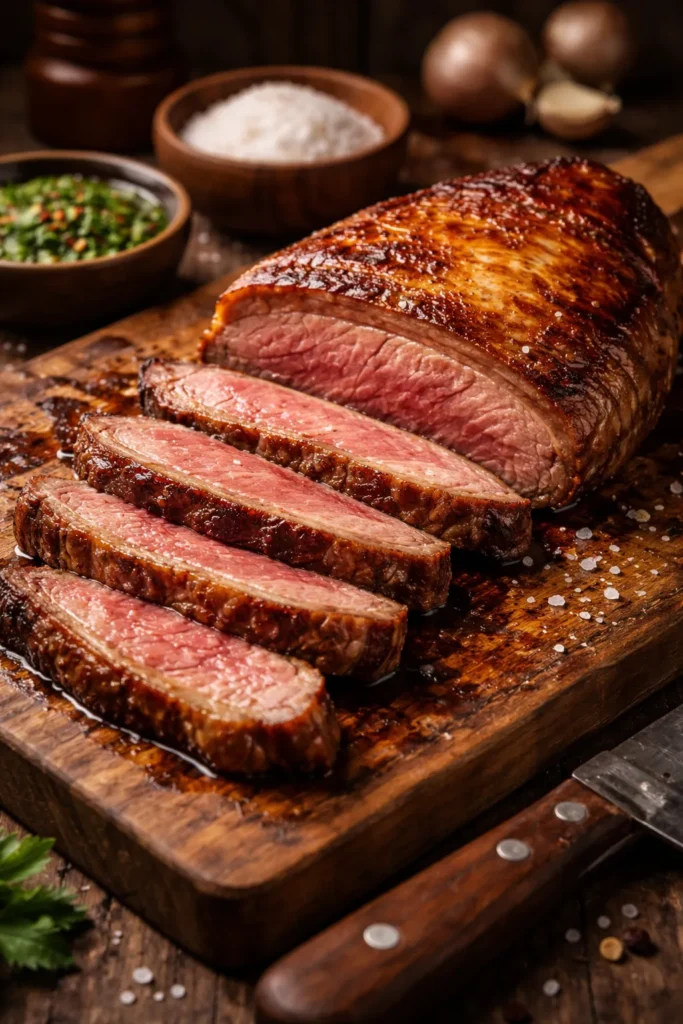
If you’ve ever eaten at a Brazilian churrascaria, picanha is probably the cut that made you reconsider every steak you’d ever had before. It’s a thick cap of sirloin surrounded by a generous fat cap that bastes the meat from the outside as it cooks. The result is simultaneously rich, beefy, and light-textured — not the dense chew you’d expect from a well-marbled cut.
Picanha (pronounced “pee-KAN-ya”) is cut from the rump cap, a muscle that doesn’t work hard, making it naturally tender. Brazilian butchers don’t trim the fat cap — they keep it thick (about an inch) because that layer is where the flavor lives. In Brazil, this cut is the centerpiece of any churrasco, seasoned with nothing more than coarse rock salt.
At home, you can roast it or sear it in a cast-iron pan. For a roasted version, score the fat cap in a crosshatch pattern, rub generously with coarse sea salt, and roast fat-side up at 400°F for 25 to 30 minutes for medium-rare. Let it rest for at least 10 minutes before slicing against the grain into thin strips.
Why Minimal Seasoning Works Here
This is the most important lesson Brazilian churrasco teaches: a truly great cut of meat doesn’t need more than salt. The fat cap renders slowly during cooking, continuously basting the lean meat beneath it. What comes out of the oven tastes like the most concentrated, cleanest version of beef you’ve ever had. Adding marinades or complex rubs actually muddies that clean flavor — resist the urge.
Serving a Proper Picanha Dinner
- Slice thin and serve over white rice with black beans on the side
- Brazilian vinaigrette — diced tomato, onion, bell pepper, olive oil, and red wine vinegar — is the classic fresh accompaniment
- Farofa sprinkled over the beans adds textural contrast
7. Brazilian Frango a Passarinho — Garlic Lime Fried Chicken Bites
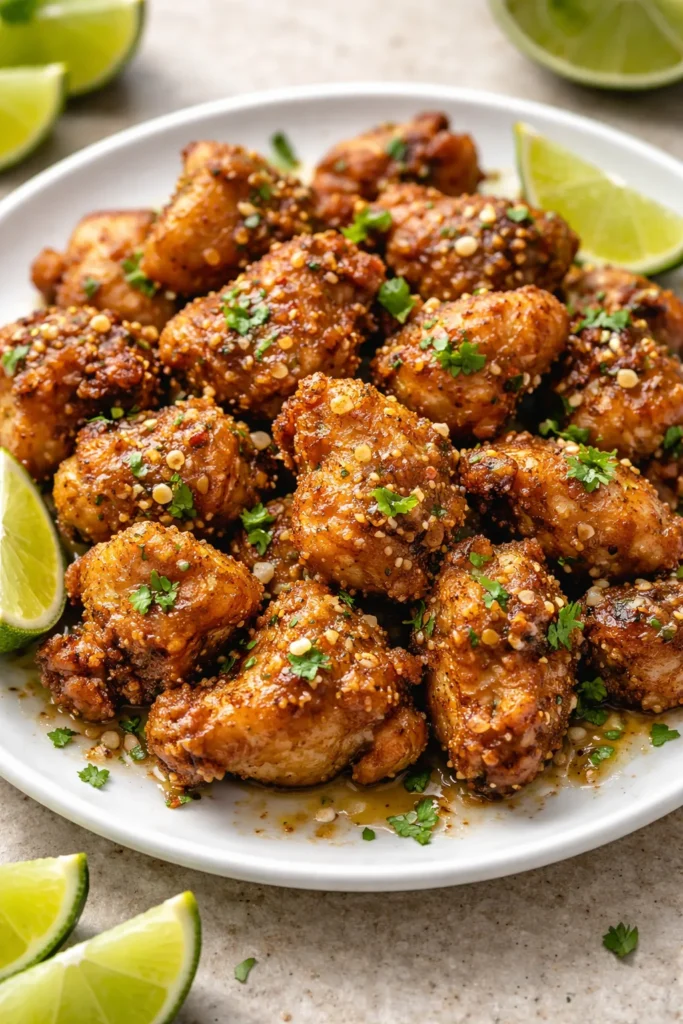
Frango a passarinho translates to “chicken like a little bird” — a name that refers to the way whole chicken pieces are fried small enough to eat in a few bites, bones and all, the way a bird is eaten whole. It’s one of the most iconic bar snacks in Brazil and one of the most satisfying things you’ll ever pull out of a frying pan.
The technique is dead simple. Chicken pieces — wings, drumettes, and thighs cut into chunks — are marinated in lime juice, garlic, salt, and white wine for at least 30 minutes (or overnight for maximum flavor). They’re then coated lightly in seasoned flour and fried in hot oil at 375°F until the skin is shatteringly crispy and the meat is cooked through.
What happens after frying is where frango a passarinho separates itself from every other fried chicken dish: you drizzle the just-fried pieces with a mixture of warm melted butter, heaps of raw minced garlic, and fresh parsley. The garlic hits the hot chicken and blooms immediately — fragrant and sharp and utterly irresistible.
Getting the Fry Right
- Pat the chicken completely dry before dredging — moisture is the enemy of crispiness
- The flour coating should be thin, not thick; shake off the excess aggressively
- Fry in batches — overcrowding the pot drops the oil temperature and gives you steam-cooked chicken instead of fried
- An instant-read thermometer should read 165°F at the thickest point
What to Serve Alongside
Frango a passarinho is traditionally served as a bar snack with cold beer, but it makes a completely satisfying dinner alongside:
- Simple white rice and black beans
- A wedge of lime for squeezing
- Thinly sliced raw white onion that has been soaked in cold water for 10 minutes to remove bitterness
8. Camarão no Leite de Coco — Shrimp in Coconut Sauce
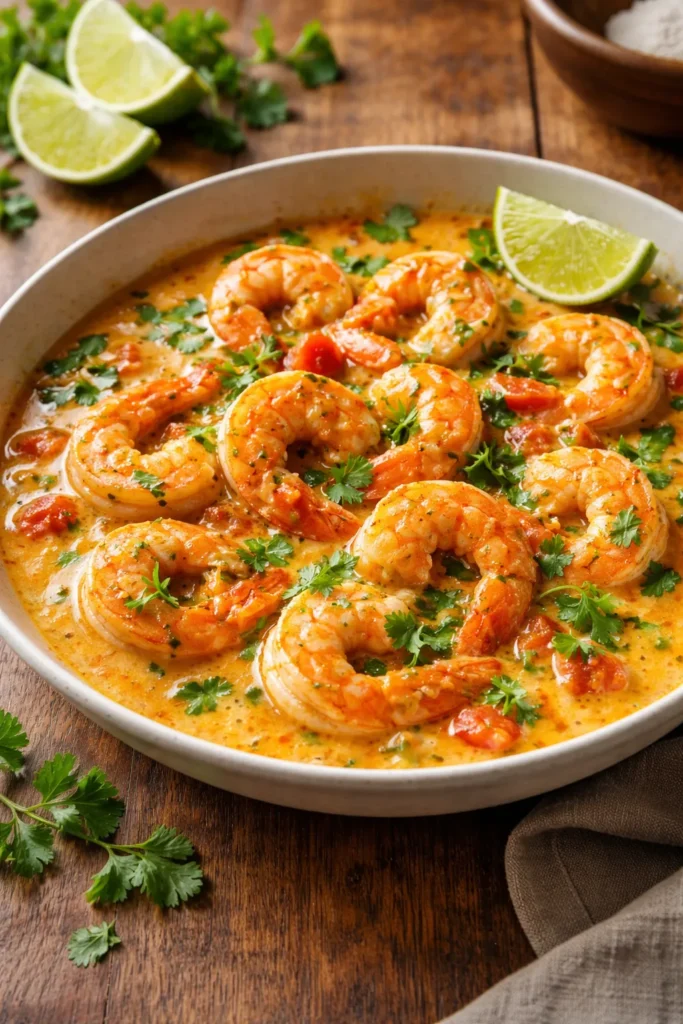
Camarão no leite de coco — shrimp in coconut milk — is Bahian cooking at its most direct and its most delicious. This is a one-pan dinner that comes together in about 20 minutes and produces a sauce so good you’ll want to drink it. Succulent shrimp cook in a fragrant base of sautéed onion, tomato, garlic, and coconut milk, finished with fresh cilantro and a squeeze of lime.
The dish comes from the state of Bahia in northeastern Brazil, which has the strongest African culinary influence in the country. Coconut milk, dendê oil, and seafood appear throughout Bahian cooking in combinations that feel both exotic and immediately comforting. You don’t need dendê oil to make a great version at home — good olive oil and full-fat coconut milk do the heavy lifting here.
Start by sautéing finely diced onion in olive oil until soft and translucent. Add garlic, cook for one minute, then add chopped fresh tomatoes and cook for three minutes until they begin to break down. Pour in one full can of coconut milk, season with salt and a pinch of cayenne, and bring to a gentle simmer. Add the shrimp — raw, peeled, and deveined — and cook for exactly 3 to 4 minutes until they turn opaque and curl into a C shape. A curled C means perfectly cooked; a tight O means overcooked.
Building Maximum Flavor in Minimum Time
The quality of this dish depends almost entirely on the quality of your coconut milk. Use full-fat, not light — the richness of the fat is what gives the sauce its body and its ability to carry spices. Thai or Indian coconut milk brands work beautifully because they tend to have a higher fat content than most mainstream grocery store options.
Serving Ideas
- Over steamed white rice with a torn piece of pão de queijo on the side
- With crusty bread for mopping up every drop of coconut sauce
- Garnished with fresh cilantro, sliced red chili, and extra lime wedges
9. Macarronada Brasileira — Brazilian Mac and Cheese with Chicken
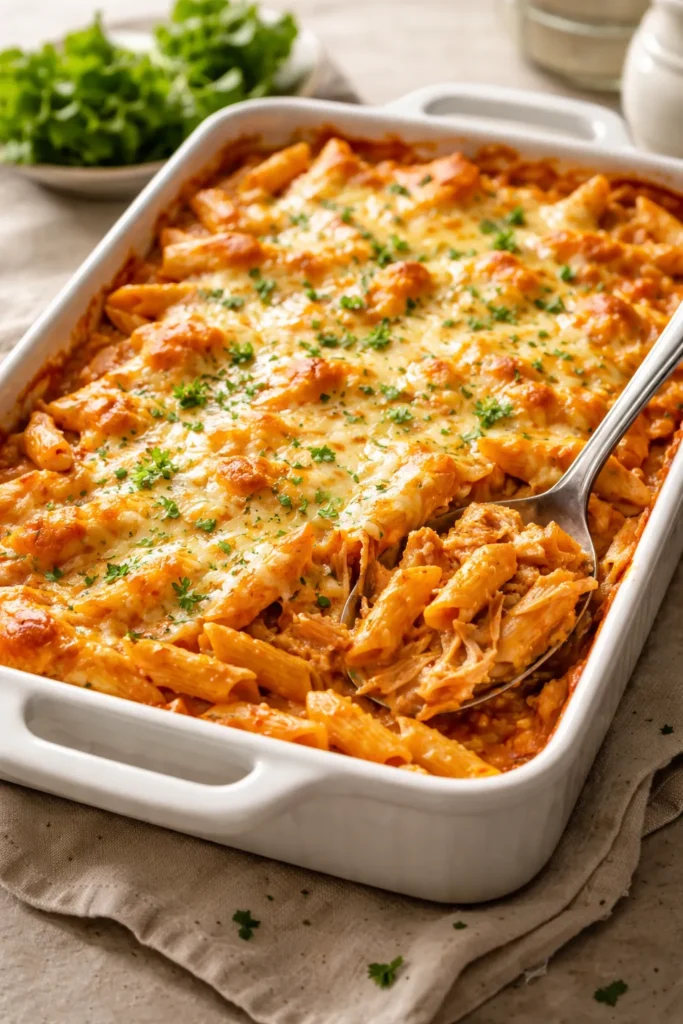
Brazil has a version of mac and cheese that is categorically its own thing. Macarronada is a baked pasta dish layered with shredded chicken, a creamy tomato-based sauce, melted cheese, and sometimes ham — all pulled together under a bubbling golden crust. It’s the Brazilian answer to pasta al forno, and it’s one of the most universally loved weeknight dinners in the country.
Don’t confuse it with American mac and cheese. The sauce here is closer to a Bolognese-cream hybrid — built on sautéed onion, garlic, canned tomatoes, and cream cheese or requeijão (a Brazilian cream cheese that’s thinner and more spreadable than its American counterpart). The pasta — typically penne or rigatoni — gets coated in this sauce, tossed with cooked shredded chicken, and baked topped with a thick layer of mozzarella.
Cook the pasta to about 80% done before it goes in the oven, because it’ll continue cooking as the dish bakes. For the sauce, sauté onion and garlic in olive oil, add canned diced tomatoes, and simmer for 10 minutes. Stir in cream cheese, heavy cream, and salt until the sauce is smooth and slightly thickened. Toss with the chicken and pasta, transfer to a baking dish, cover with mozzarella, and bake at 375°F for 25 minutes until the top is golden and bubbling.
The Requeijão Question
If you can find requeijão at a Brazilian or Latin grocery store, use it — it has a silkier texture than cream cheese and dissolves into the sauce more smoothly. If you can’t find it, a block of room-temperature cream cheese blended with a tablespoon of sour cream gets you very close to the same result.
Make It Ahead
- Assemble the dish completely, cover tightly, and refrigerate up to 24 hours before baking
- Add 10 extra minutes to the bake time when cooking straight from the fridge
- Leftovers reheat well in the oven at 350°F, covered with foil
10. Arroz de Forno — Brazilian Baked Ham and Cheese Rice

Arroz de forno is the kind of dish that shows up at Brazilian birthday parties, Sunday lunches, and potlucks because it feeds a crowd effortlessly and travels well. Baked rice — cooked rice mixed with ham, cheddar or mozzarella, and a creamy sauce, all baked until the top develops a golden, slightly crispy crust — is comfort food in the truest sense of the phrase.
The base is simple: long-grain white rice, cooked slightly more al dente than you normally would (it’ll absorb more liquid in the oven). Toss the cooked rice with diced ham, corn, peas, heavy cream or condensed cream of corn soup, and grated cheese. Season with salt, pepper, and a touch of garlic powder. Transfer to a greased baking dish, top with more cheese and a drizzle of melted butter, and bake at 375°F for 25 to 30 minutes until the surface is golden and the edges are starting to caramelize.
Why This Beats Regular Rice Every Time
The oven does something to rice that stovetop cooking can’t replicate. The bottom and edges pick up a slightly crunchy, toasty texture — similar to socarrat in paella — while the center stays creamy and cohesive. Getting a proper golden crust on top requires enough cheese to cover the surface completely and a few minutes under the broiler at the very end.
Variations Worth Trying
- Swap ham for leftover shredded rotisserie chicken for a quicker weeknight version
- Add sliced black olives and roasted red peppers for a more complex flavor profile
- Use Gruyère instead of cheddar for a nuttier, more savory result
- Stir a tablespoon of Dijon mustard into the cream sauce — it adds depth without any identifiable mustard flavor
Pro tip: This dish reheats particularly well the next day. Cover with foil and bake at 325°F for 20 minutes, adding a splash of cream to the surface before covering to keep it moist.
Final Thoughts
Brazilian dinner cooking is built for the way most people actually cook — with limited time, common ingredients, and a desire for something that genuinely satisfies. What these dishes share isn’t complexity; it’s the kind of smart, flavorful technique that comes from a cuisine shaped by real home cooks feeding real families.
If you’re starting out, feijoada and galinhada are the most forgiving — both are hard to overcook and taste better with more time in the pot. Moqueca and camarão no leite de coco are on the other end of the spectrum — lightning fast, but requiring attention to avoid overcooking delicate seafood. Frango a passarinho and coxinha reward a little extra effort with results that feel genuinely special.
The bigger takeaway is that Brazilian cuisine rewards exploration. Once you’ve made one of these recipes, you’ll notice the building blocks repeating — garlic, olive oil, bay leaves, lime, white wine, fresh herbs, coconut milk — and you’ll start to understand how the cuisine thinks. That’s when cooking it becomes genuinely intuitive rather than just following instructions.
Pick one dish, make it tonight, and see what happens. Odds are you’ll be back for a second one by the weekend.