There’s something almost magnetic about Cuban food. The moment that sofrito hits a hot pan — onions, garlic, and green pepper softening in olive oil — it sends a signal through the whole house that something worth sitting down for is on the way. Cuban home cooking has that effect. It’s not flashy or fussy. It doesn’t chase trends or demand exotic equipment. What it does is take a short list of humble ingredients and coax something deeply satisfying out of them, every single time.
Cuban cuisine carries the fingerprints of its history. Spanish colonial influence, African traditions brought over through the slave trade, indigenous Taíno ingredients, and Caribbean geography all collided on the island and produced something wholly its own. The spices lean toward cumin, oregano, and bay leaf — aromatic and warm, never aggressively hot. Citrus does a lot of heavy lifting, especially sour orange and lime. Pork and beef anchor most main dishes. And sofrito — that fragrant base of onion, garlic, and peppers — appears in nearly every savory recipe, the quiet backbone of the whole cuisine.
The good news for home cooks is that Cuban food is genuinely accessible. Most recipes share the same foundational techniques and overlapping ingredients, which means once you learn the rhythm of one dish, the next one comes faster. You don’t need a Cuban grandmother’s kitchen or a trip to Miami’s Little Havana to make these dishes taste authentic. What you need is good ground beef, a heavy pan, some pantry staples, and a willingness to let things simmer.
These 10 recipes span the full range of a Cuban home cook’s repertoire — hearty weeknight mains, essential sides, a classic sandwich, and a dessert that earns its reputation every time it hits the table.
Table of Contents
- What Makes Cuban Home Cooking Worth Learning
- The Role of Sofrito
- The Importance of Vino Seco
- Patience and Simplicity
- 1. Cuban Picadillo
- Why It’s the Perfect Starting Point
- How to Make It
- 2. Ropa Vieja (Cuban Shredded Beef)
- The Secret Is in the Braise
- Key Tips for Getting It Right
- 3. Arroz con Pollo (Cuban Chicken and Rice)
- The One Ingredient That Makes It Taste Cuban
- Building the Dish Step by Step
- 4. Tostones (Twice-Fried Green Plantains)
- Why the Double Fry Matters
- Getting the Most Out of Green Plantains
- 5. Cuban Black Beans
- Dried Beans vs. Canned
- The Sofrito Base for Black Beans
- 6. Vaca Frita (Cuban Crispy Fried Beef)
- The Texture Is Everything
- Marinade and Serving
- 7. Cuban Sandwich (Cubano)
- The History Behind the Sandwich
- Getting the Sandwich Right at Home
- 8. Bistec de Palomilla (Cuban-Style Thin Steak)
- Why Thin Steaks Work Better Than Thick Ones Here
- The Marinade and the Onions
- 9. Cuban Flan
- How to Make the Caramel Without Losing Your Mind
- Building and Baking the Custard
- 10. Pastelitos de Guayaba (Guava and Cream Cheese Pastries)
- The Filling: Guava Paste and Cream Cheese
- Assembling and Baking
- How to Stock a Cuban Pantry
- Building a Complete Cuban Meal Around These Recipes
- Final Thoughts
What Makes Cuban Home Cooking Worth Learning
Before diving into the recipes themselves, it helps to understand why Cuban cooking is so rewarding to learn at home — and why it’s more forgiving than you might expect.
Cuban recipes are built around a handful of universal techniques: browning aromatics in oil, deglazing with dry cooking wine or citrus, building a tomato-based sauce, and simmering low and slow until flavors meld. Once those techniques feel natural, you can improvise confidently across the whole cuisine.
The Role of Sofrito
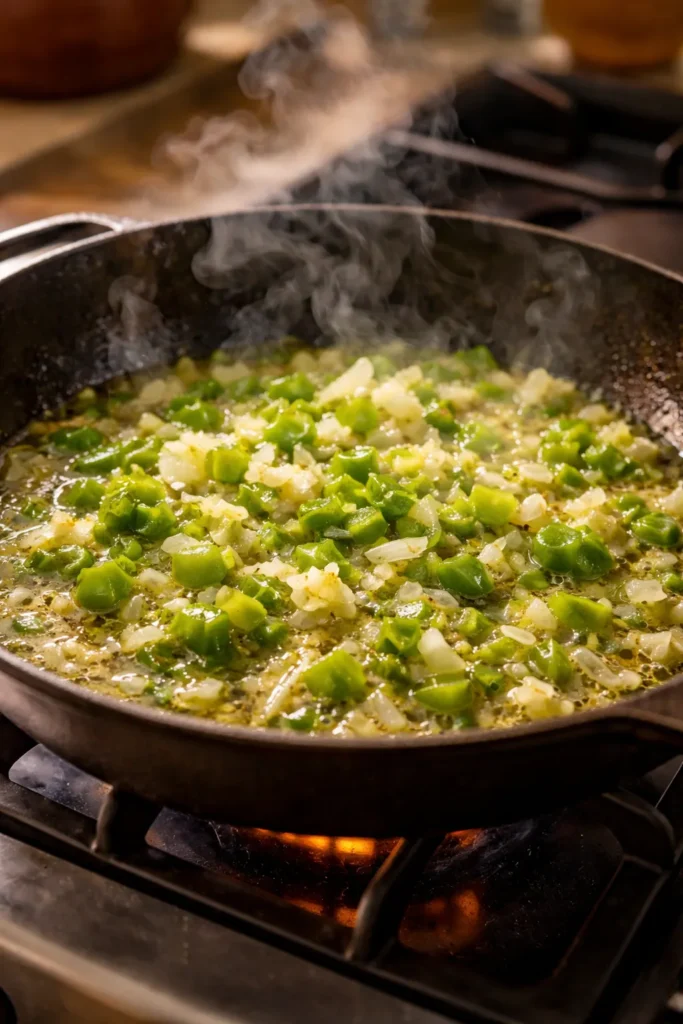
Sofrito is not a dish — it’s a decision. Every time you dice onion, green pepper, and garlic and cook them down in olive oil before adding anything else, you’re building sofrito. It appears at the start of picadillo, ropa vieja, black beans, arroz con pollo, and almost every other savory Cuban recipe. Getting it right — cooking it long enough to soften completely and develop sweetness without burning the garlic — is the single skill that makes the biggest difference across the entire cuisine.
The Importance of Vino Seco
Dry cooking wine, called vino seco, shows up in recipes with surprising frequency. It’s not optional. A splash added to ground beef or braising liquid after browning lifts the fond off the pan and adds a brightness that neither tomato sauce nor citrus alone can replicate. If you can’t find Cuban-style cooking wine, a dry white wine or dry sherry works well. Don’t substitute sweet wine — it throws the whole flavor profile off.
Patience and Simplicity
Cuban food doesn’t rush. Beans need to simmer until they’re creamy. Braised beef needs time to fall apart. Even picadillo, one of the fastest dishes in the repertoire, benefits from a 10-minute simmer that the impatient cook is always tempted to skip. The payoff for patience is food that tastes like it took hours of skill, when really it just took time.
1. Cuban Picadillo
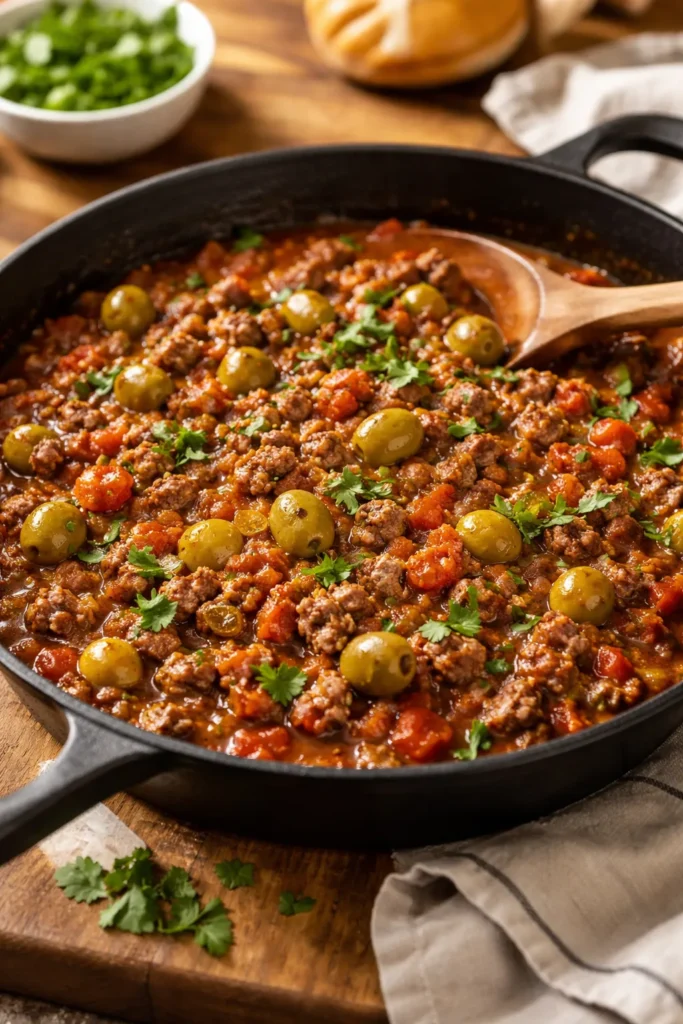
If there’s one dish that defines Cuban weeknight cooking for families across generations, it’s picadillo. Ground beef simmers in a savory tomato sauce with green olives, and — depending on whose abuela taught you — a handful of golden raisins for a sweet-salty contrast that’s more compelling than it sounds. It’s one of those 30-minute meals that genuinely tastes like it simmered all afternoon.
Why It’s the Perfect Starting Point
Picadillo is forgiving, fast, and built from ingredients that are almost always already in your kitchen. The flavor profile — cumin, oregano, tomato, garlic, a splash of dry cooking wine — is the blueprint for Cuban cooking in general. Making picadillo well means you already understand sofrito, which means you’re halfway to ropa vieja, carne con papas, and fricase de pollo without realizing it.
How to Make It
- Heat 2 tablespoons of olive oil in a large skillet over medium heat.
- Add ½ cup diced onion and ½ cup diced green pepper. Sauté for 2–3 minutes until softened.
- Add 3 minced garlic cloves and cook for 30 seconds.
- Add 1 pound of ground beef, breaking it apart as it cooks, until no longer pink — about 5 minutes.
- Stir in ⅓ cup dry cooking wine (vino seco), one 6-ounce can of tomato sauce, 1 teaspoon cumin, 1 teaspoon dried oregano, and salt to taste.
- Simmer on medium-low for 10–12 minutes until the sauce thickens and the beef absorbs the flavor.
- Remove from heat and stir in ¼ cup sliced Spanish olives and 2 tablespoons raisins (optional).
Serve over Cuban white rice, ideally with fried sweet plantains on the side. The leftovers — if there are any — taste even better the next day.
Worth knowing: Leftover picadillo becomes the filling for Cuban empanadas, papas rellenas (fried potato balls), and stuffed tostones. One batch essentially gives you four meals.
2. Ropa Vieja (Cuban Shredded Beef)
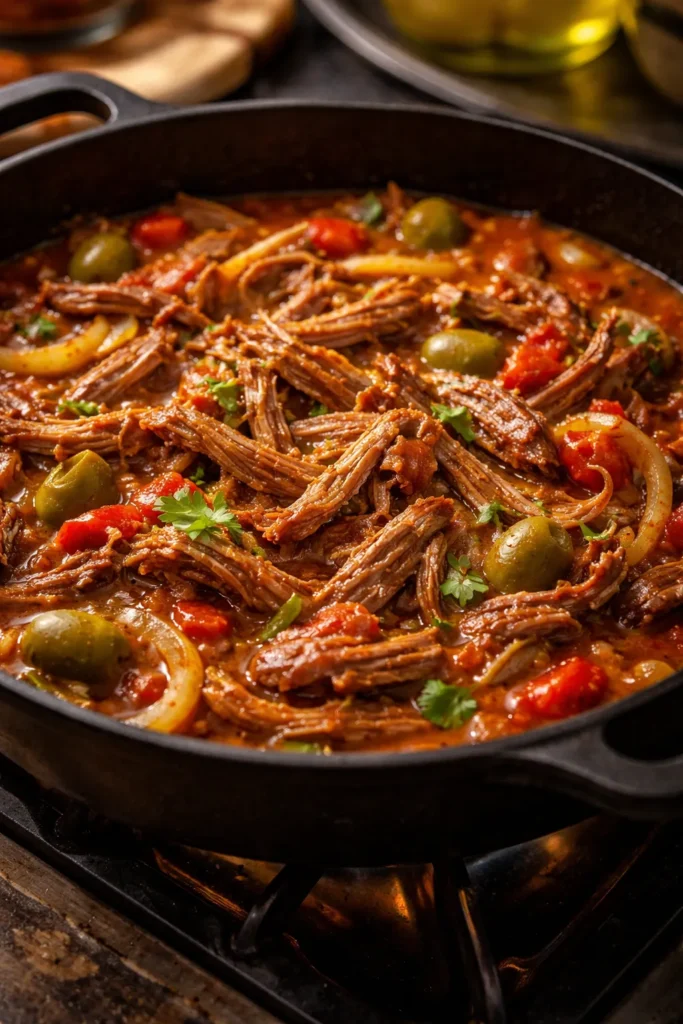
Ropa vieja translates literally to “old clothes,” supposedly because the tangle of shredded beef and colorful peppers looks like a pile of tattered rags. Don’t let the name fool you — this is arguably Cuba’s national dish, and it earns that title. Flank steak slow-braises until it falls apart into silky, flavor-soaked shreds, surrounded by a sauce of tomatoes, bell peppers, onion, garlic, cumin, and olives.
The Secret Is in the Braise
The magic of ropa vieja is time. Flank steak goes from tough and chewy to meltingly tender only after a long, slow simmer — at least 2 hours on the stovetop, or 7–8 hours in a slow cooker. There are no shortcuts that genuinely replicate it, though an Instant Pot can get the job done in about 45 minutes under pressure if you’re short on time. The sauce, built from sofrito plus crushed tomatoes, white wine, and a bay leaf or two, thickens beautifully as the beef shreds and absorbs everything around it.
Key Tips for Getting It Right
- Don’t skip browning the meat before braising. That step adds a depth of flavor that braising liquid alone can’t create.
- After braising, shred the beef against the grain using two forks. The fibers should separate with almost no resistance.
- Taste the sauce before serving and adjust with salt and a small splash of red wine vinegar if it needs brightness.
- Serve over white rice with black beans and tostones for the full experience.
Ropa vieja reheats beautifully and actually intensifies in flavor overnight, making it one of the best make-ahead Cuban recipes in the roster.
3. Arroz con Pollo (Cuban Chicken and Rice)
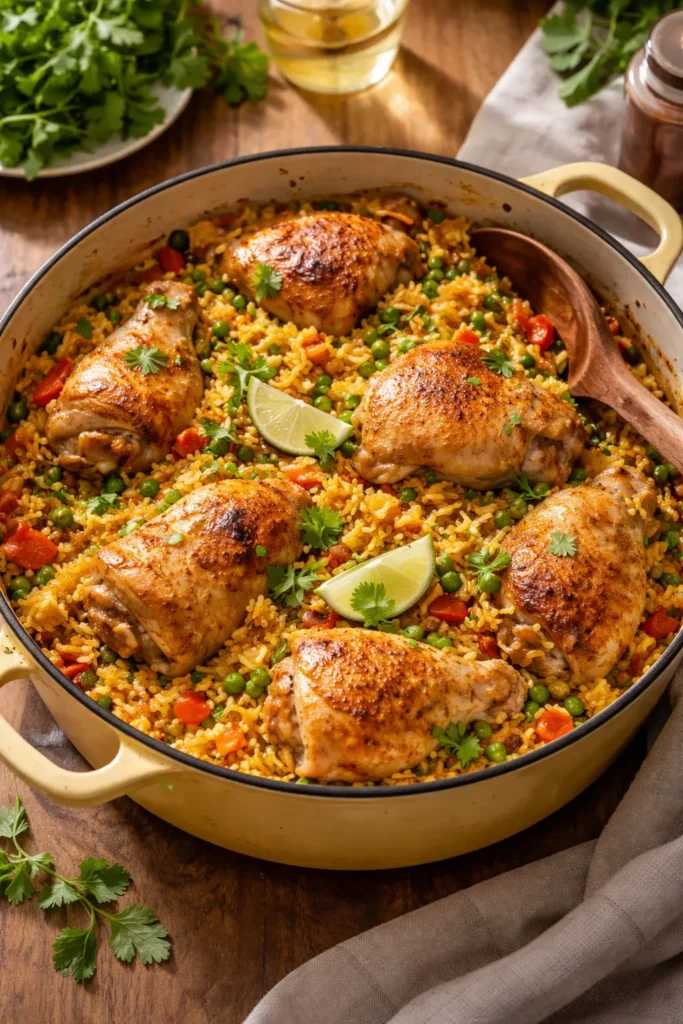
One pot, one meal, an entire table satisfied — arroz con pollo is Cuban home cooking at its most practical and most comforting. Bone-in chicken pieces brown in olive oil until the skin turns golden, then simmer in seasoned broth with long-grain rice until everything cooks together into a cohesive, fragrant dish. The rice absorbs the chicken fat, the spiced broth, and the tomato paste, turning a shade of golden-orange and developing a richness that plain steamed rice never achieves.
The One Ingredient That Makes It Taste Cuban
Sazón completa — a Cuban spice blend containing cumin, coriander, garlic, oregano, cilantro, and annatto — is what separates a truly Cuban arroz con pollo from a generic chicken-and-rice dish. Annatto gives the rice its characteristic golden-orange color. If you can’t find sazón completa in the international foods aisle, combine ½ teaspoon each of cumin, garlic powder, dried oregano, and onion powder with ¼ teaspoon turmeric as a practical substitute.
Building the Dish Step by Step
Season and dredge the chicken in the spice blend (plus a light coat of flour to help it brown). Brown it in olive oil for 8–10 minutes, turning once, until deeply golden on both sides. Remove the chicken and sauté diced onion and red bell pepper in the same pan. Add the rice and toast it for 2 minutes with the remaining spices. Pour in chicken broth mixed with a tablespoon of tomato paste, nestle the chicken pieces on top, cover, and simmer on medium-low for 30–35 minutes until the rice is tender and the chicken is cooked through.
Garnish with fresh cilantro. Don’t lift the lid during cooking — steam loss is what makes rice come out gummy or undercooked.
4. Tostones (Twice-Fried Green Plantains)
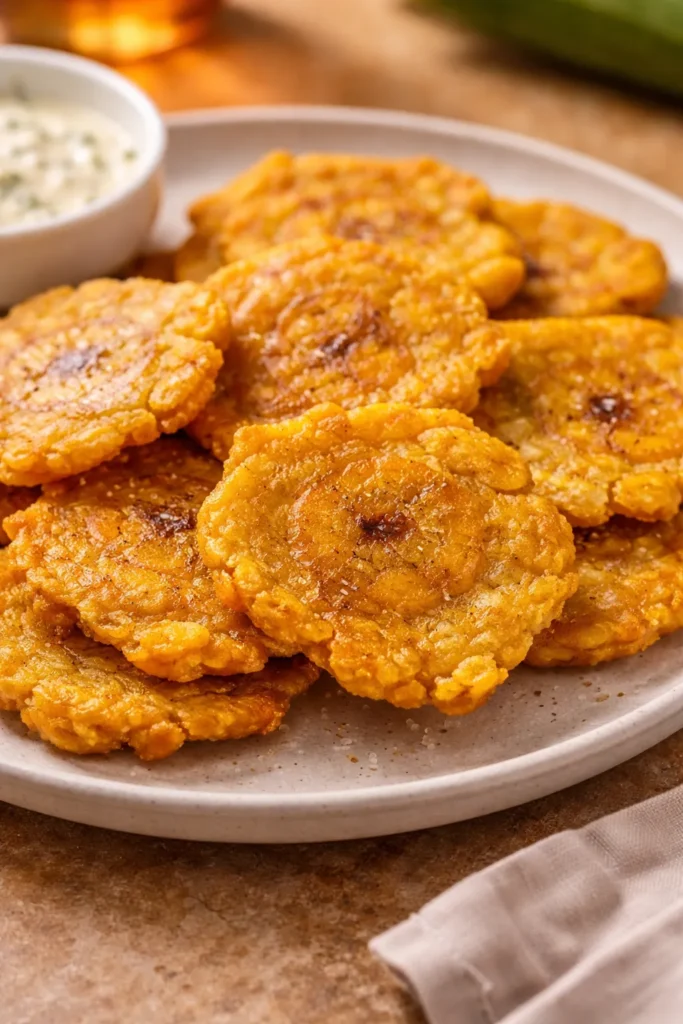
Tostones are the side dish that makes everything better. They show up alongside ropa vieja, black beans, grilled meats, and sandwiches — essentially anywhere a crispy, salty, starchy contrast is welcome. Made from green (unripe) plantains, they’re fried once, flattened, dipped in salted water, then fried again until they develop a shatteringly crisp exterior and a starchy, creamy interior.
Why the Double Fry Matters
The two-fry method is not optional — it’s what creates tostones’ signature texture. The first fry (at around 325°F) cooks the plantain through without crisping it. Flattening each piece — traditionally with a wooden tostonera press, though the bottom of a glass or a flat-bottomed mug works fine — increases the surface area dramatically. The dip in salted water before the second fry (at 375°F) creates steam on contact with the hot oil, which helps the surface blister and crisp rather than simply harden.
Getting the Most Out of Green Plantains
- Buy plantains that are fully green with no yellow patches. Yellow plantains will taste sweet rather than starchy, which is wrong for tostones (save those for maduros).
- Peel them by scoring the skin lengthwise and peeling it away in strips — the peel is much thicker and tougher than a banana’s.
- Cut into 1-inch rounds, fry in batches (never crowd the pan), and flatten to about ¼-inch thickness.
- Serve immediately with a sprinkle of flaky salt and a squeeze of lime. Tostones do not hold well — they lose their crispness within 20 minutes.
5. Cuban Black Beans
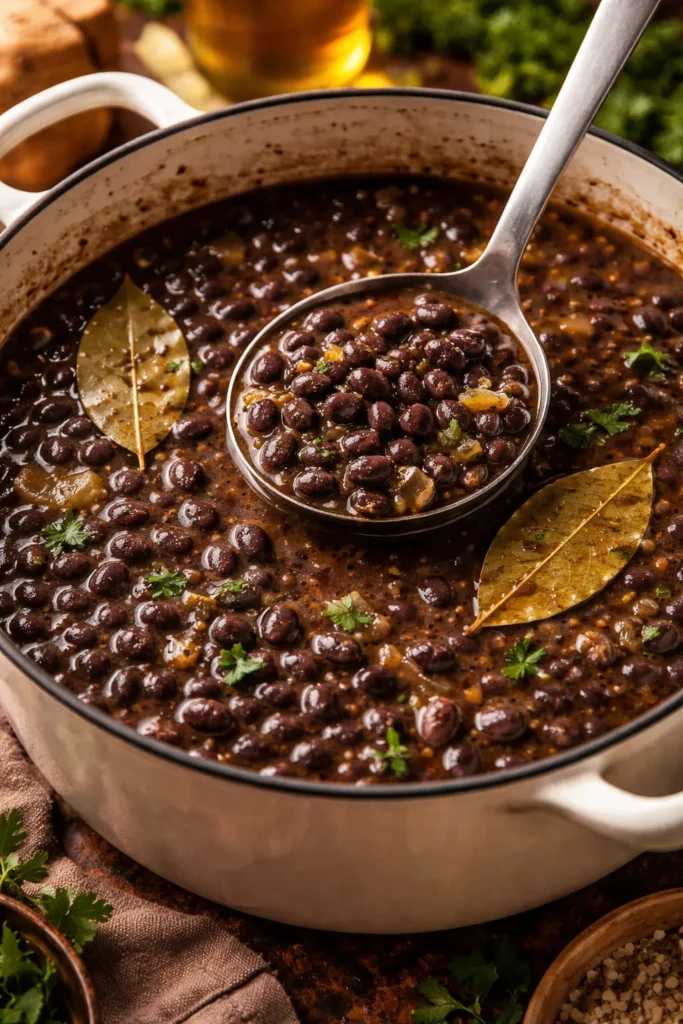
There’s a phrase that floats around Cuban households: sin frijoles no hay comida — without beans, there’s no meal. Cuban black beans are not a garnish or an afterthought. They’re a cornerstone, served alongside rice and meats at nearly every table on the island. Slow-simmered with sofrito, bay leaves, cumin, and oregano, they develop a creamy, deeply savory character that canned beans dressed with spices simply can’t match.
Dried Beans vs. Canned
Dried black beans are worth the extra time. Soaked overnight and simmered for 1.5–2 hours, they develop a silkier texture and a thicker, more flavorful cooking liquid that you can partially mash into the pot for body. If you’re pressed for time, an Instant Pot handles dried beans in about 25 minutes under high pressure without any pre-soaking. Canned beans work for a quick weeknight version — just build your sofrito first, add the drained beans, and let them simmer for at least 15 minutes in chicken or vegetable broth to absorb flavor.
The Sofrito Base for Black Beans
The sofrito for Cuban black beans adds one element not always found in other recipes: green bell pepper. The combination of diced green pepper, white onion, and garlic cooked in olive oil, then seasoned with cumin, dried oregano, and a bay leaf, is the flavor backbone of the dish. Some versions add a splash of red wine vinegar at the end for brightness; others finish with a drizzle of olive oil and a pinch of sugar to round the acidity of the tomatoes.
Serve over white rice as Moros y Cristianos (Moors and Christians) — a name that nods to the blend of black and white — or cook the beans and rice together for congri, the unified version with even more depth.
6. Vaca Frita (Cuban Crispy Fried Beef)
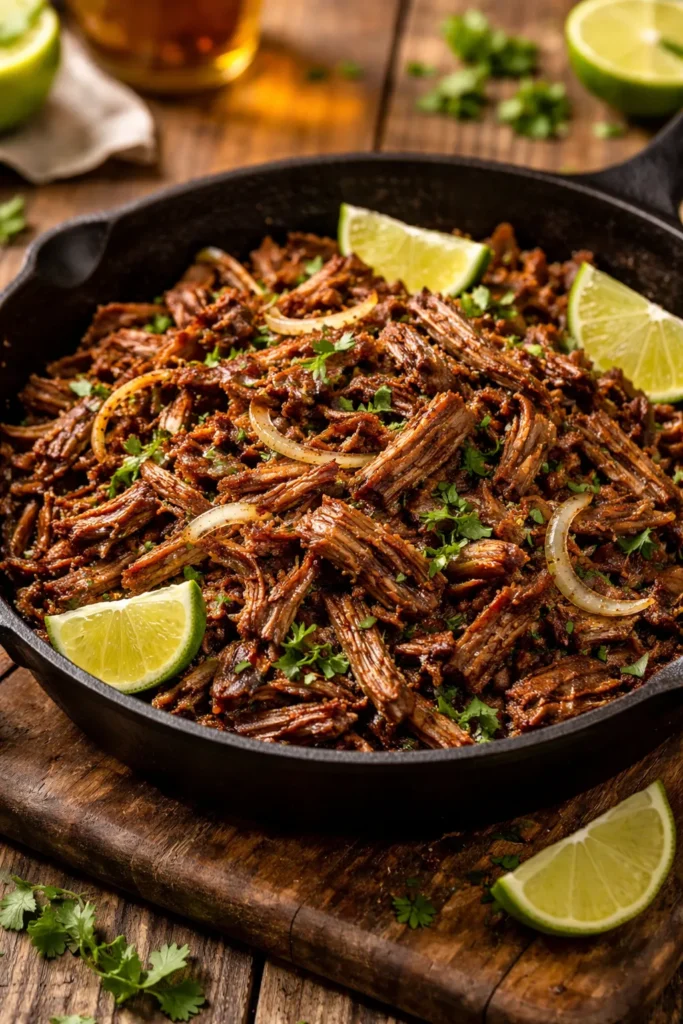
Vaca frita means “fried cow,” and it delivers exactly that — in the best way possible. Flank steak is first boiled or pressure-cooked until tender, then shredded, marinated in garlic and lime, and pan-fried in batches over high heat until the edges turn deeply caramelized and crispy. The contrast between the crunchy exterior and the tender, citrus-bright beef inside is the whole point.
The Texture Is Everything
Most beef dishes in Cuban cooking are about tenderness and sauce. Vaca frita is the exception — it’s about texture. The key is cooking the shredded beef in a dry or lightly oiled skillet over high heat without stirring too often. Letting the meat sit undisturbed for 2–3 minutes at a time creates caramelized, crispy edges that stir-frying destroys. Work in small batches so the pan stays hot and the beef sears rather than steams.
Marinade and Serving
After shredding the cooked beef, toss it with 3–4 minced garlic cloves, the juice of 1–2 limes, sliced white onion, salt, and a little cumin. Let it sit for at least 30 minutes (overnight is better). When you fry it, the lime juice evaporates and concentrates, the garlic chars slightly, and the onions soften into caramelized strands woven through the crispy beef.
Serve with white rice, black beans, and maduros (fried sweet plantains). A squeeze of fresh lime right at the table is non-negotiable.
7. Cuban Sandwich (Cubano)
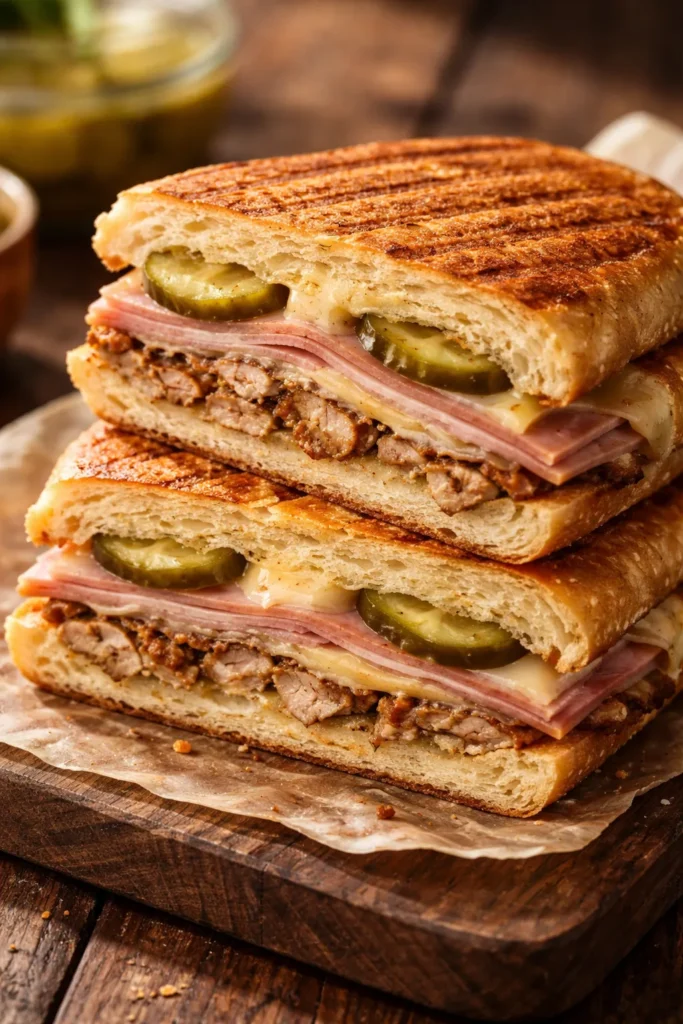
The Cubano is one of the most recognized sandwiches in the world, and for good reason. Layers of mojo-marinated roast pork, sliced ham, Swiss cheese, dill pickles, and yellow mustard are pressed between split Cuban bread and griddled under weight until the cheese melts, the bread turns golden, and everything fuses into a single, unified, deeply satisfying unit.
The History Behind the Sandwich
The Cubano as most people know it was born not in Havana but in Florida — Tampa and Key West, where Cuban cigar workers needed a fast, filling lunch. Tampa’s version traditionally includes Genoa salami, which the Miami version skips. Both are correct, and both are worth arguing about with considerable passion.
Getting the Sandwich Right at Home
Cuban bread — long, slightly chewy loaves with a thin, crisp crust — is the ideal vessel. A soft baguette or hoagie roll works as a substitute. The pressing is essential. A panini press is the easiest tool, but a heavy cast iron skillet placed on top of the sandwich while it cooks in a lightly buttered pan does the job just as well.
- Layer the bread with yellow mustard on both sides.
- Add sliced Swiss cheese first, then ham, then the roast pork, then pickles.
- Butter the outside of the bread lightly before pressing.
- Cook over medium heat, pressing firmly, for 3–4 minutes per side until the cheese is fully melted and the bread is deep golden.
The roast pork is the soul of the sandwich. If you have leftover mojo-marinated pork in the fridge, use it. If not, thinly sliced pork from a grocery store deli counter is a practical weekday option.
8. Bistec de Palomilla (Cuban-Style Thin Steak)
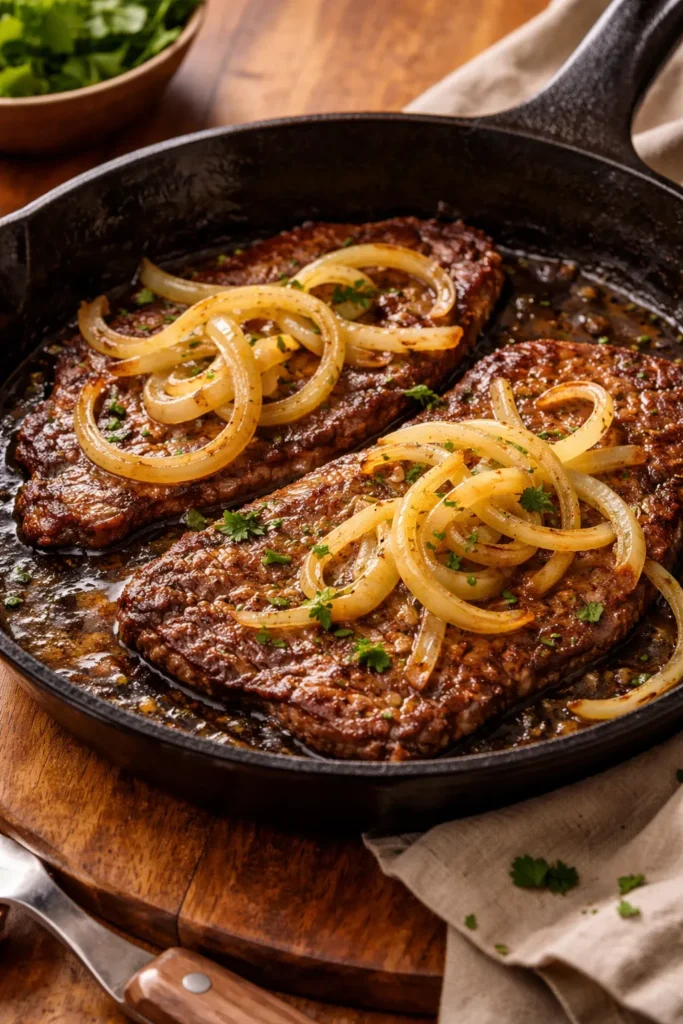
Speed and flavor is the promise of bistec de palomilla, and it keeps both. Paper-thin cuts of beef — typically top sirloin or round steak pounded to about ¼-inch thickness — marinate briefly in garlic, lime juice, and cumin, then hit a ripping-hot pan for 2–3 minutes per side. The result is a deeply savory, caramelized steak finished with a cascade of sautéed onions that soften in the pan drippings.
Why Thin Steaks Work Better Than Thick Ones Here
Palomilla-style cooking relies on the Maillard reaction happening fast, before the thin meat has a chance to overcook. The high heat creates a crust on the exterior while the center stays just cooked through — not pink, but not dry. This only works if the steak is genuinely thin. If yours is thicker than ½ inch, pound it between plastic wrap with a meat mallet until it’s the right thickness.
The Marinade and the Onions
The marinade is brief — 15 minutes is enough, 30 is better — and consists of minced garlic, lime juice, salt, cumin, and a drizzle of olive oil. After the steaks cook, add sliced white onion to the same pan with a little more oil and cook over medium heat until the onions are soft, golden, and slightly sweet. Pile them over the steak.
Serve with white rice, black beans, and tostones for the quintessential Cuban plate. A few drops of lime juice over everything at the end brightens the whole dish.
9. Cuban Flan
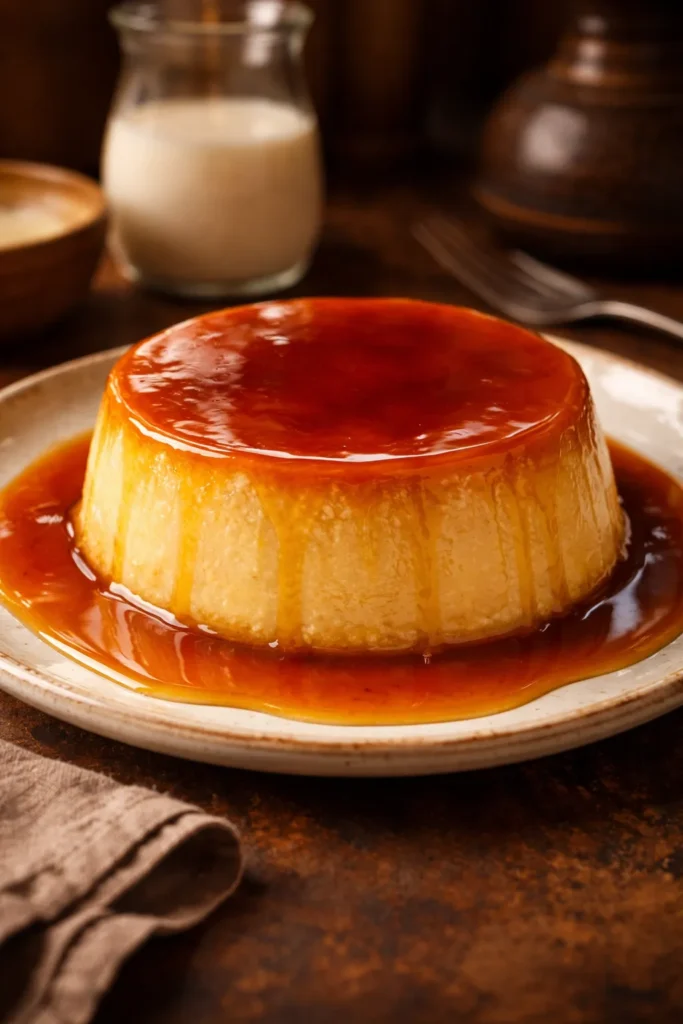
Flan is the Cuban dessert. Smooth, quivery custard with a deep amber caramel that flows like a sauce when the mold is inverted — it’s elegant, it’s rich, and it’s the dish that ends big family meals on a note everyone remembers. Cuban flan uses whole eggs and sweetened condensed milk, which gives it a denser, creamier texture than French crème caramel. The sweetened condensed milk also makes it more forgiving — it’s harder to overcook than an all-cream custard.
How to Make the Caramel Without Losing Your Mind
The caramel is the step that intimidates people, and it shouldn’t. Add ¾ cup of granulated sugar to a small, heavy-bottomed saucepan over medium heat. Don’t stir — just swirl the pan occasionally as the sugar melts. When it turns deep amber (it should smell slightly bitter, like toffee), immediately pour it into the bottom of a round cake pan or individual ramekins. Tilt to coat the bottom evenly. It will set almost instantly.
Building and Baking the Custard
Blend one 14-ounce can sweetened condensed milk, one 12-ounce can evaporated milk, 4 whole eggs, and 1 teaspoon vanilla extract until smooth. Pour over the set caramel. Place the pan inside a larger baking dish and pour hot water into the outer dish to reach halfway up the sides of the flan pan. Bake at 325°F for 45–55 minutes, until the custard is set at the edges but still has a slight wobble in the center.
Chill for at least 4 hours — overnight is better — before inverting onto a plate. The caramel will pool around the base like a sauce.
10. Pastelitos de Guayaba (Guava and Cream Cheese Pastries)
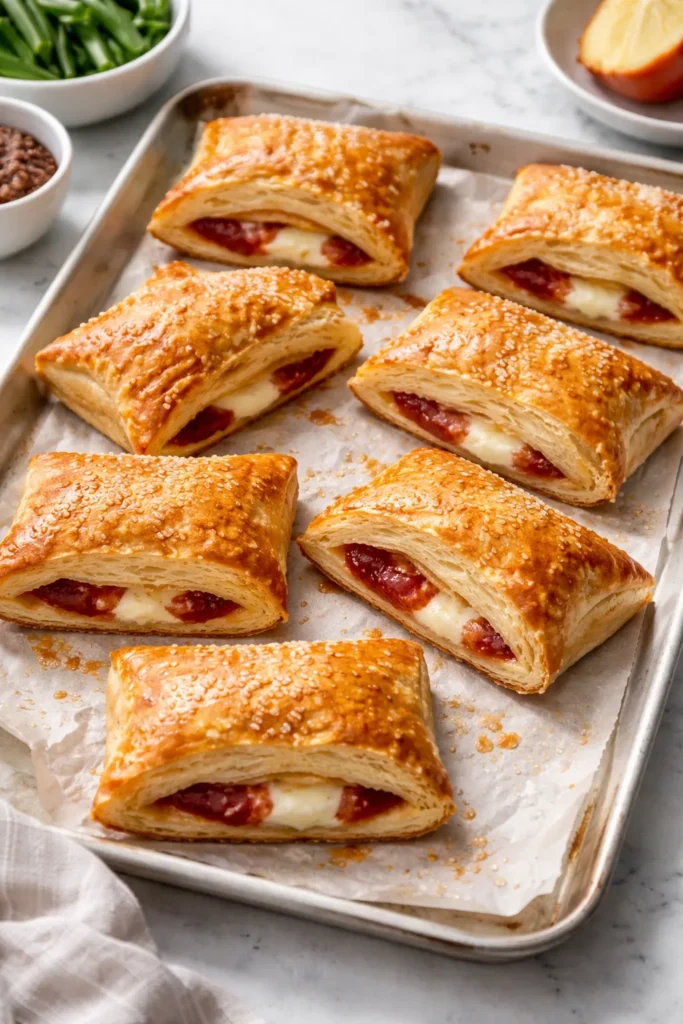
Walk into any Cuban bakery in Miami, Tampa, or Hialeah, and pastelitos are the first thing you smell — flaky puff pastry, warm guava paste, and cream cheese melting together into something that manages to feel like breakfast, dessert, and a snack simultaneously. The good news is that they’re among the easiest Cuban recipes to make at home, especially when you start with store-bought puff pastry.
The Filling: Guava Paste and Cream Cheese
Guava paste (pasta de guayaba) is sold in blocks at most Latin grocery stores and many mainstream supermarkets in the international foods aisle. It has a dense, almost jammy texture that doesn’t run or liquify during baking, which makes it ideal for pastries. Cut it into thin slices and pair it with a thin smear of softened cream cheese — the saltiness and tang of the cream cheese cuts through the intensely sweet, floral guava perfectly.
Assembling and Baking
- Thaw a sheet of puff pastry and cut it into rectangles (about 3×4 inches).
- Place a slice of guava paste and a small amount of cream cheese in the center of half the rectangles.
- Top with the remaining rectangles, press and seal the edges with a fork.
- Brush with egg wash (1 egg beaten with a tablespoon of water).
- Bake at 400°F for 15–18 minutes until deeply golden and puffed.
Dust with powdered sugar while warm, or brush with a simple sugar syrup for a glazed finish. Serve with Cuban coffee — cafecito — for the full experience.
How to Stock a Cuban Pantry
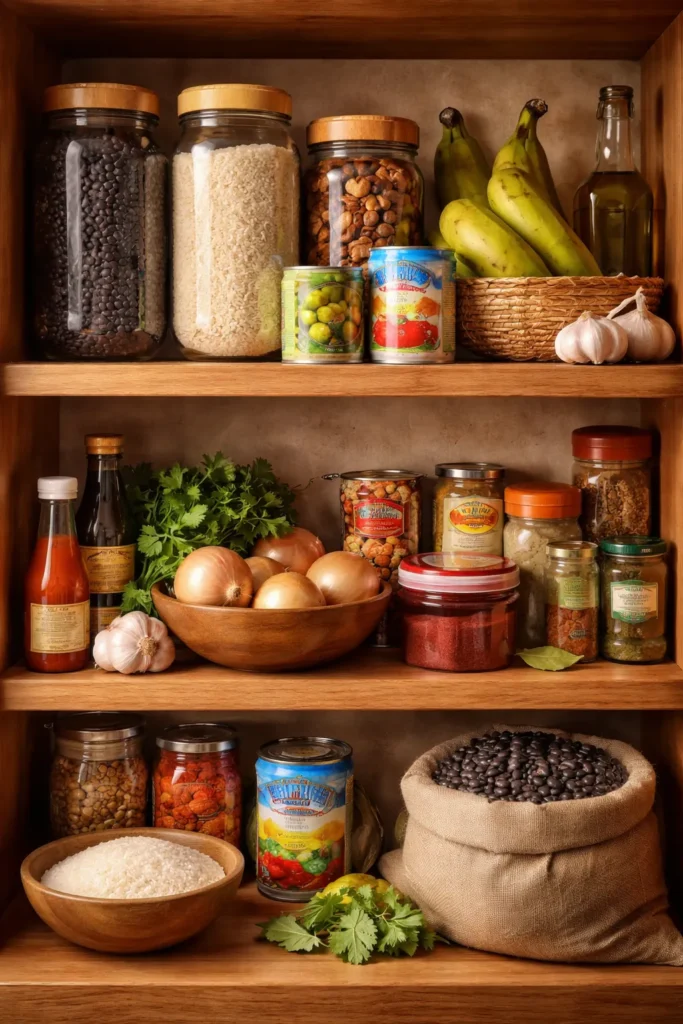
Once you’ve decided to cook Cuban food regularly, keeping these ingredients on hand means most of the recipes above are within reach on any given weeknight with minimal grocery shopping:
- Dry cooking wine (vino seco) — A Cuban kitchen staple available in most Latin grocery stores; dry sherry substitutes well.
- Ground cumin and dried oregano — The two most essential Cuban spices, used in almost every savory dish.
- Spanish green olives — Jarred, pitted, and sliced; they appear in picadillo, ropa vieja, and arroz con pollo.
- Tomato sauce (canned, 8-oz size) — The workhorse of Cuban cooking; keep several cans stocked.
- Dried black beans and long-grain white rice — The backbone of countless meals.
- Green plantains — For tostones; they store well on the counter for up to a week.
- Garlic (fresh) — Always fresh, never garlic powder, for Cuban cooking.
- Sazón completa — Available in the international foods aisle; invaluable for arroz con pollo and yellow rice.
- Guava paste — Essential for pastelitos; keeps indefinitely in the fridge once opened.
- Sweetened condensed milk and evaporated milk — For flan and Cuban desserts.
Building a Complete Cuban Meal Around These Recipes
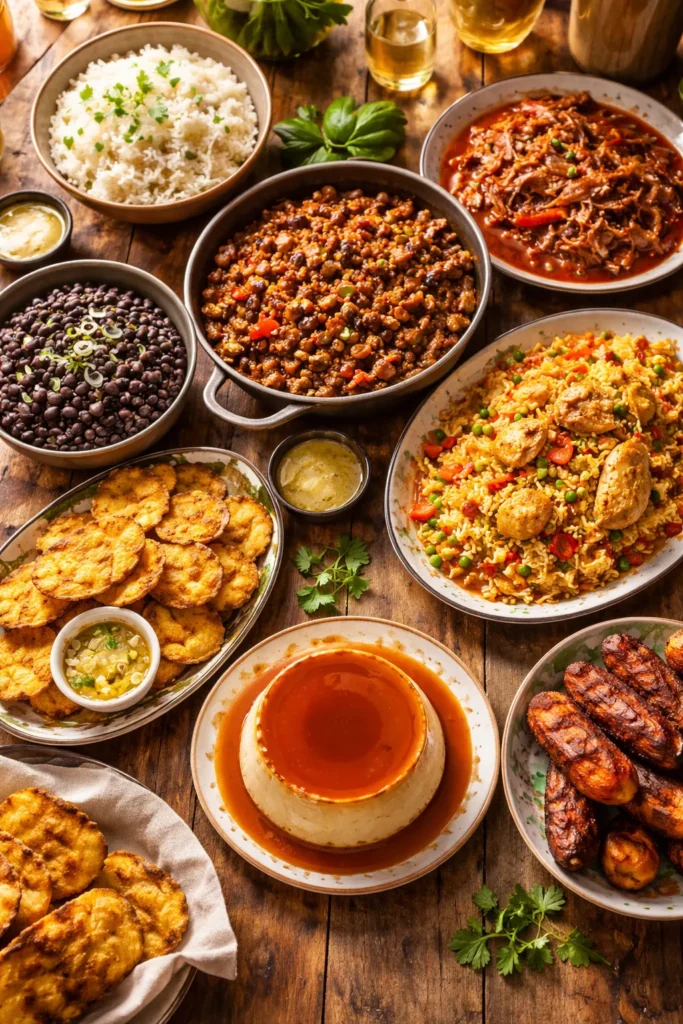
Cuban cooking is designed for the table — for eating together, for passing dishes around, for seconds being assumed. The best home-cooked Cuban meals layer a main dish, a side of rice, beans, and something fried. Here’s how to combine the recipes above into cohesive menus:
Weeknight dinner: Picadillo over white rice, Cuban black beans on the side, tostones for crunch.
Weekend gathering: Ropa vieja as the centerpiece, arroz con pollo for the crowd, black beans, maduros, tostones, and Cuban flan to finish.
Lighter weekday meal: Bistec de palomilla with white rice and a simple avocado-onion salad (just sliced ripe avocado, thinly sliced white onion, olive oil, lime juice, and salt — one of the most underrated sides in the whole cuisine).
Casual lunch or snack: Cubano sandwiches pressed in a skillet, pastries with cafecito.
The beauty of this cuisine is how modular it is. Learn the core dishes and the sides, and you can mix and match endlessly without any meal ever feeling repetitive.
Final Thoughts
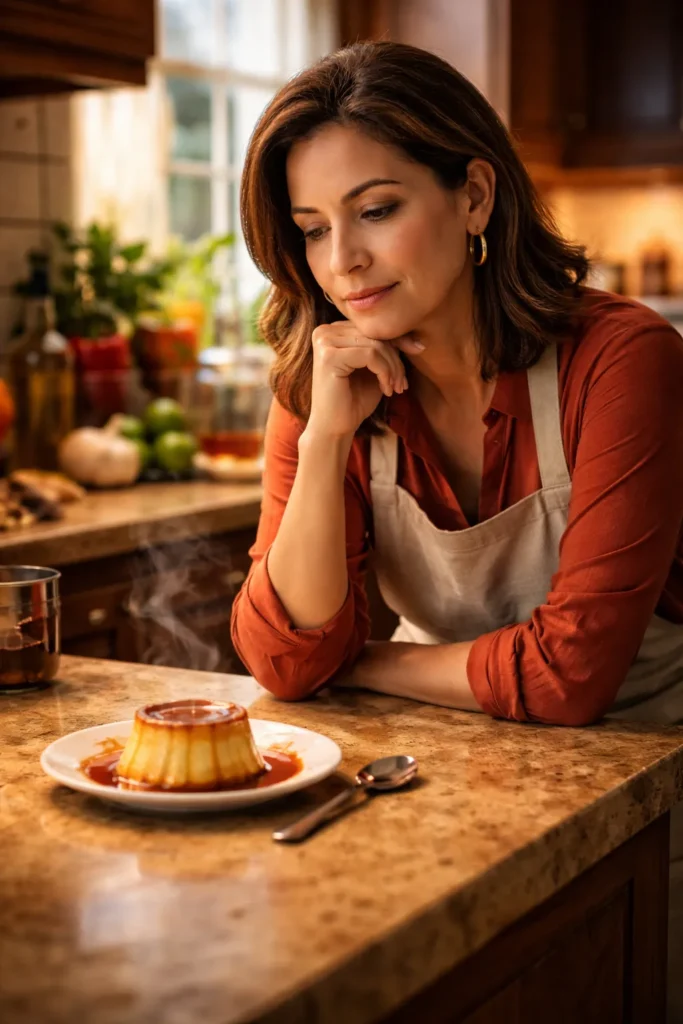
Cuban cooking rewards patience and repetition. The first time you make picadillo, you’re learning sofrito. The second time, you’re perfecting it. By the third or fourth time, your instincts kick in — you know when the onions are soft enough, when the wine has cooked off, when the sauce has simmered long enough to lose that raw tomato bite. That accumulated knowledge transfers directly to ropa vieja, to black beans, to arroz con pollo.
Start with picadillo if you’ve never cooked Cuban food before. It’s the gentlest entry point — fast, forgiving, and immediately delicious. From there, work toward ropa vieja and arroz con pollo. Add tostones and black beans to your rotation as the sides that pull everything together. Finish a meal with flan and you’ll have covered the full arc of Cuban home cooking in a handful of Saturday afternoons.
The ingredient list stays short. The techniques are learnable. And the food — at every step, from the first sizzle of garlic in oil to the quiver of flan sliding out of its mold — is genuinely worth making.