Cooking for yourself shouldn’t feel like a consolation prize. Too often, solo dinners default to whatever’s fastest — a bowl of cereal, reheated takeout, or a sad handful of crackers over the sink. But here’s the thing nobody talks about enough: cooking for one is actually one of the best positions you can be in. You answer to nobody. There are no dietary compromises, no negotiating toppings, no cooking something you don’t even like just to please the table. Every single decision — the protein, the sauce, the level of garlic — is entirely yours.
The challenge isn’t motivation. It’s finding recipes that feel worth making for just one person. Most recipes are written for four to six servings, which means either drowning in leftovers or doing the kind of mental math that makes cooking feel like homework. What you need are dishes that are specifically sized, or easily scaled, for one — and that feel genuinely satisfying rather than like you’re cutting corners.
Each dinner below is chosen for a specific reason: it’s fast enough to pull off on a weeknight, uses ingredients that won’t leave you with half-used, wilting leftovers, and — this is the part that matters most — it actually feels special. Not “I heated a can of soup” special. More like “I made this from scratch in 25 minutes and it tastes like something from a good restaurant” special. That distinction is what separates a dinner you tolerate from one you genuinely look forward to.
Table of Contents
- 1. Garlic Butter Shrimp Pasta
- Why It Works So Well for One
- Tips That Make It Better
- 2. Spicy Salmon Sushi Bowl
- Building the Bowl
- Flavour and Nutrition Together
- 3. Shakshuka With Feta and Crusty Bread
- Adding the Eggs
- Why Shakshuka Is Ideal for Solo Cooking
- 4. Creamy Garlic Chicken Thigh With Tarragon Sauce
- Making the Pan Sauce
- What Pairs Well With This Dish
- 5. Gochujang Noodles With a Soft-Boiled Egg
- The Soft-Boiled Egg Makes It Feel Luxurious
- Toppings That Elevate It Further
- 6. One-Pan Lemon Herb Salmon With Roasted Cherry Tomatoes
- Why This Is a Genuinely Smart Solo Meal
- Variations Worth Trying
- 7. Brown Butter Burst Cherry Tomato Pasta
- Finishing the Dish
- 8. Crispy Chickpea and Roasted Sweet Potato Bowl
- Building the Bowl
- The Tahini Dressing That Makes It
- 9. Single-Serve Fettuccine Alfredo
- What Makes This Special for One
- 10. Mini Chicken Shawarma Bowl
- Assembling the Bowl
- Why This Works So Well as a Solo Dinner
- Final Thoughts
1. Garlic Butter Shrimp Pasta
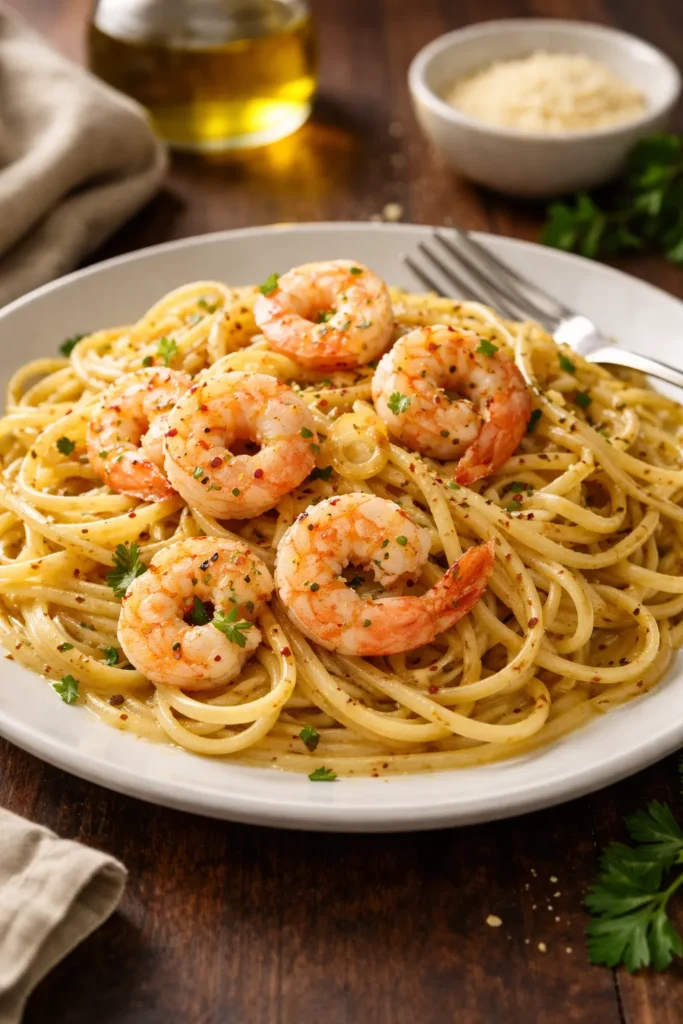
There’s a reason this combination appears on restaurant menus the world over — shrimp and garlic butter over pasta is one of the most satisfying flavor combinations a human being has ever invented. The good news is that it takes about 20 minutes to make at home, scales beautifully to a single serving, and uses ingredients you can keep stocked in your freezer and pantry at all times.
Frozen shrimp is your best friend here. A small handful thaws under cold running water in about five minutes, which means this dish is genuinely weeknight-ready with zero planning. Use about 150 grams (roughly 5 to 6 medium shrimp) per person — enough to feel generous without overwhelming the pasta.
The technique matters more than most people realize. Start by cooking 80 to 90 grams of linguine or spaghetti in well-salted boiling water. While it cooks, melt a generous tablespoon of unsalted butter in a small skillet over medium-high heat. Add three minced garlic cloves and let them sizzle for 30 to 45 seconds — just until fragrant, not browned. Toss in the shrimp, season with salt, red pepper flakes, and a squeeze of fresh lemon juice, and cook for about 2 minutes per side until the shrimp curl into a tight C-shape and turn opaque. That curl is your visual cue they’re done.
Why It Works So Well for One
Shrimp is one of the most efficient proteins for solo cooking: it comes pre-portioned in bags you can reseal and freeze, it cooks in under five minutes, and it absorbs surrounding flavors like a sponge. There’s no carryover cooking risk like with a thick steak, no resting time required, and no complicated prep. Even a genuinely novice cook can nail this.
Tips That Make It Better
- Save about 60ml (¼ cup) of pasta cooking water before you drain — adding it to the skillet creates an emulsified, glossy sauce that coats every strand of pasta
- Finish with a handful of fresh parsley and a pinch of lemon zest, not just lemon juice; the zest adds a floral brightness that juice alone can’t match
- A small splash of dry white wine in the pan after the garlic (before the shrimp) adds depth that mimics a proper restaurant preparation
- Don’t overcook the shrimp — rubbery, grey shrimp is the single most common mistake and it happens fast; pull them off the heat the moment they’re opaque
Pro tip: If you don’t have fresh parsley, a small spoonful of store-bought basil pesto stirred through at the end is a genuinely delicious shortcut.
2. Spicy Salmon Sushi Bowl
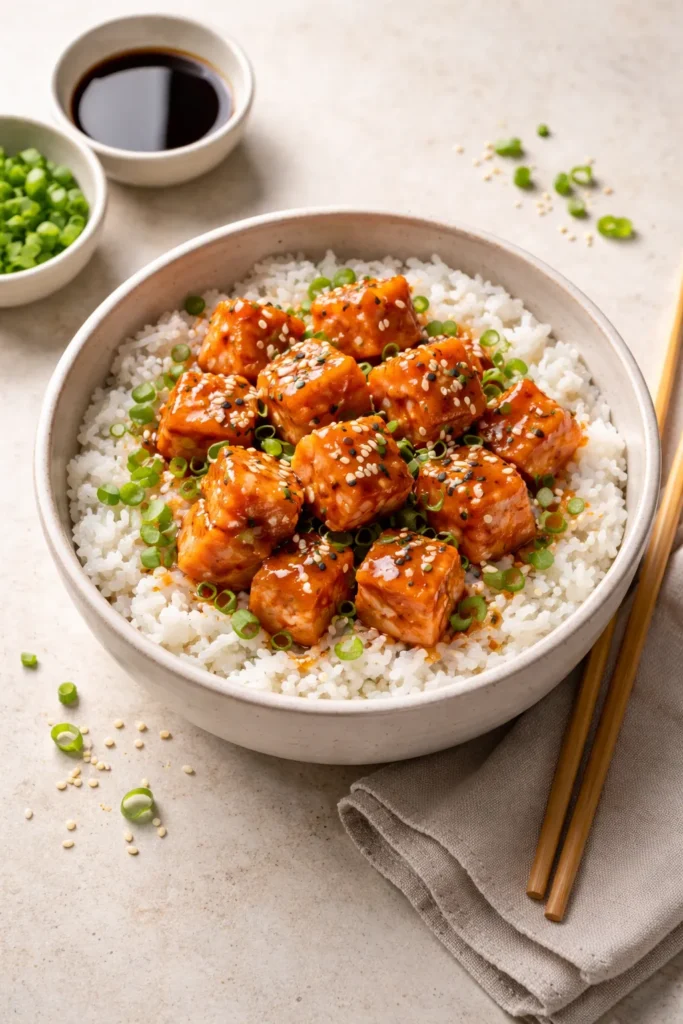
A sushi bowl gives you every flavor payoff of a restaurant poke bowl or sashimi plate without requiring any knife skills beyond dicing. For one person, it’s a legitimately excellent use of a single salmon fillet — the kind of meal that feels like a treat specifically because it tastes like something you’d order out.
The key is buying sushi-grade or sashimi-grade salmon from a reputable fishmonger or well-stocked grocery store. This is non-negotiable when eating salmon raw — regular fresh salmon from a supermarket fish counter is not always handled to the standards required for raw consumption. Sushi-grade fish has been frozen to specific temperatures to eliminate parasites, making it safe to eat uncooked.
Start your rice first. About 80 grams of short-grain sushi rice (dry weight) yields a perfect single-serve bowl. While it cooks, dice roughly 100 to 120 grams of salmon into 2cm cubes and toss with a teaspoon each of soy sauce and sesame oil, a small pinch of grated fresh ginger, and a teaspoon of sambal oelek or sriracha. Let the salmon sit for five minutes while you prep your toppings.
Building the Bowl
Toppings are where a sushi bowl goes from good to genuinely exciting. Thinly sliced cucumber, half an avocado cut into fans, a sheet of nori torn into strips, pickled ginger, and a sprinkle of sesame seeds all layer in beautifully. A drizzle of kewpie mayo (Japanese mayo, which is richer and slightly tangier than American mayo) over the top is the finishing touch that pulls everything together.
Flavour and Nutrition Together
- Salmon provides around 25 to 30 grams of protein per 100 grams, plus omega-3 fatty acids that support brain and heart function
- Short-grain rice offers slow-releasing carbohydrates that keep you full longer than white bread or pasta
- The sesame oil and soy marinade creates an umami depth that needs no additional seasoning at the table
- A tiny drizzle of rice vinegar over the assembled bowl just before eating adds brightness that cuts through the richness of the salmon and avocado
If raw fish isn’t your thing, this bowl works equally well with cubed cooked shrimp, canned tuna in oil (drained), or even a soft-boiled egg halved over the top. The soy-sesame-ginger dressing is the real star and it flatters everything.
3. Shakshuka With Feta and Crusty Bread
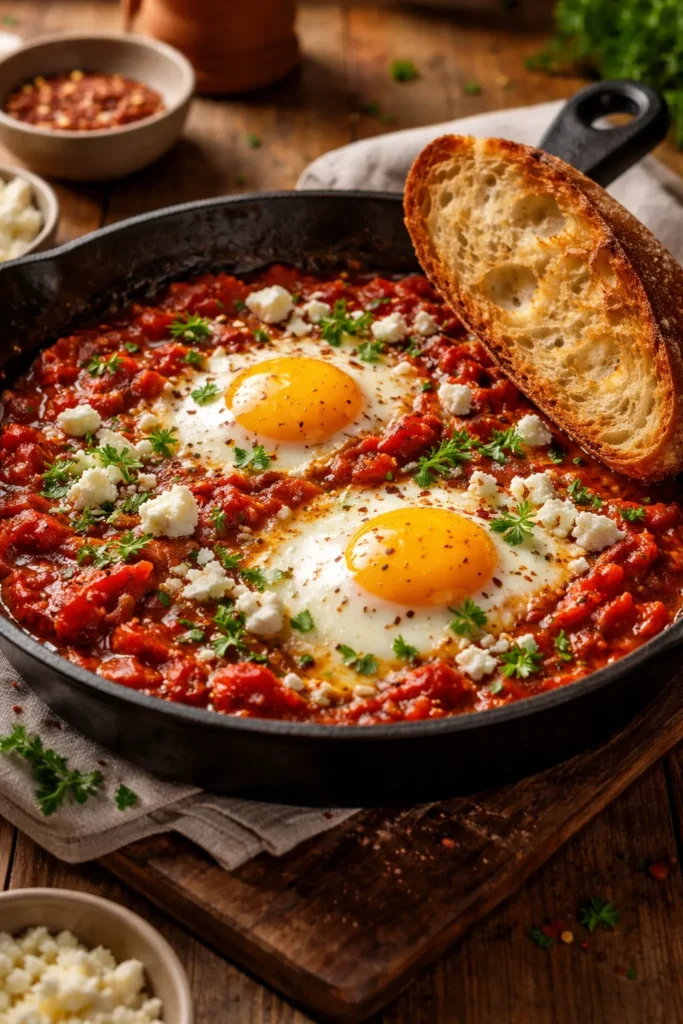
Shakshuka is one of those dishes that sounds impressive and tastes as though it took real effort — but the actual hands-on time is about 25 minutes, and most of that is passive simmering. It’s Middle Eastern in origin, widely beloved across North Africa and Israel, and endlessly adaptable. For one person, it’s a perfect single-pan meal that manages to feel both comforting and genuinely exciting.
The base is a spiced tomato and pepper sauce that gets better the longer it simmers, but is still excellent at 20 minutes. Start with a small drizzle of olive oil in a 20 to 22cm skillet over medium heat. Add half a diced onion and half a diced red bell pepper, and cook for about 5 minutes until softened. Add two to three minced garlic cloves, a teaspoon of cumin, half a teaspoon of smoked paprika, a pinch of cayenne, and cook for 60 seconds until the spices are fragrant and toasted against the pan.
Pour in one 400g can of diced tomatoes — yes, the whole can, which feels like a lot but reduces down considerably. Season with salt, add a small pinch of sugar to balance the acidity, and let the sauce simmer uncovered for 10 to 12 minutes until it thickens and deepens in colour.
Adding the Eggs
Use a spoon to create two or three wells in the sauce. Crack one egg into each well directly. Crumble a generous pinch of feta cheese around the eggs, then cover the pan with a lid and cook for 5 to 7 minutes. Watch this window carefully: the yolks should still be slightly jiggly when you remove the lid — they’ll continue setting from residual heat for another 60 seconds. Runny yolk into spiced tomato sauce with a piece of crusty bread is one of the most satisfying eating experiences a single-person dinner can offer.
Why Shakshuka Is Ideal for Solo Cooking
- A can of tomatoes is one of the most affordable ingredients you can buy, and the whole dish costs less than most takeout options
- The sauce itself (without eggs) keeps in the fridge for three to four days — meaning you can reheat it, crack in fresh eggs, and have shakshuka again with almost no effort
- It works as a dinner just as convincingly as a brunch, giving you flexibility about when you eat it
- Variations are endless: add baby spinach for the last two minutes, swap feta for goat cheese, stir in a spoonful of harissa paste for more heat, or top with fresh cilantro and sliced avocado
4. Creamy Garlic Chicken Thigh With Tarragon Sauce
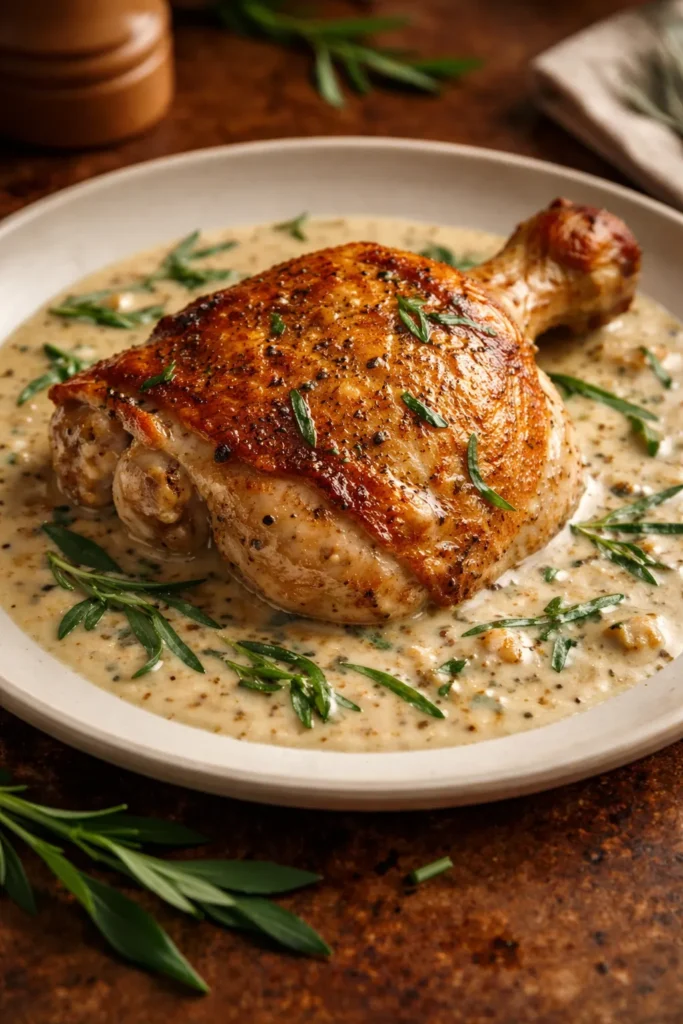
A bone-in, skin-on chicken thigh is one of the most forgiving, flavorful, and affordable single-portion proteins you can cook. Unlike a chicken breast, which dries out fast and punishes even a minute of overcooking, a thigh has enough fat and collagen to stay juicy even if you’re distracted by your phone for a moment too long. One large thigh, properly cooked, makes a dinner that feels like something from a proper bistro.
The technique here is a quick sear followed by a pan sauce. Pat the thigh dry with paper towel — moisture is the enemy of a good crust. Season generously on both sides with salt and pepper. Heat a small ovenproof skillet over medium-high heat with a teaspoon of oil, and place the thigh skin-side down. Don’t move it for at least 4 minutes. You want that skin to render fully and turn a deep golden mahogany colour before you flip.
After searing both sides, transfer the skillet to a 200°C (400°F) oven for 18 to 20 minutes until cooked through (an internal temperature of 74°C / 165°F). Rest the chicken for 5 minutes while you build the sauce.
Making the Pan Sauce
Don’t wash that pan. The brown bits stuck to the bottom — the fond — are pure flavour. Return the skillet to medium heat, add a small knob of butter and two minced garlic cloves, and let them sizzle for 30 seconds. Pour in 60ml of chicken stock and 60ml of heavy cream, scraping up the fond as the liquid hits the pan. Add a teaspoon of dried tarragon (or a tablespoon of fresh), a small squeeze of lemon, and let the sauce reduce for 2 to 3 minutes until it’s thick enough to coat a spoon.
What Pairs Well With This Dish
- Creamy mashed potato absorbs the sauce beautifully and takes about 15 minutes to make for one
- Steamed green beans or asparagus spears alongside the chicken add colour and a clean, slightly bitter contrast
- Crusty bread for sauce-mopping is non-negotiable
- A simple green salad dressed with lemon and olive oil keeps things balanced if you want something lighter on the side
Tarragon has a subtle anise flavour that works particularly well with chicken and cream — it’s the defining herb in classic French bistro cooking and it’s one worth keeping in your pantry.
5. Gochujang Noodles With a Soft-Boiled Egg
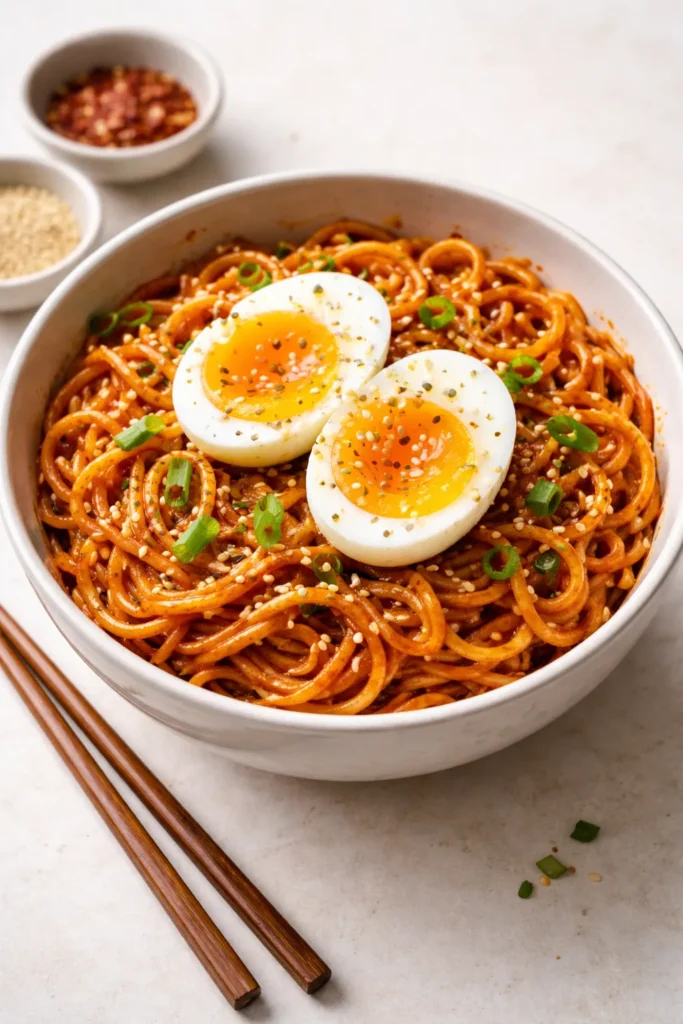
If you keep a jar of gochujang (Korean fermented chili paste) in your fridge, you are never more than 15 minutes away from one of the most flavour-packed noodle dishes you can make at home. This is the kind of dinner that tastes like it came from a good noodle bar — spicy, savoury, slightly sweet, deeply satisfying, with a richness that coats every strand.
Use whatever noodle you have: ramen, soba, udon, or even regular spaghetti in a pinch. Cook according to package directions. While the noodles cook, mix your sauce in the bottom of your serving bowl: one tablespoon of gochujang, one tablespoon of soy sauce, half a teaspoon of sesame oil, half a teaspoon of rice vinegar, a teaspoon of honey or sugar, and a small clove of garlic grated on a microplane or very finely minced. Whisk everything together.
Drain the noodles, reserve a splash of the cooking water, and add the hot noodles directly to the sauce in the bowl. Toss aggressively — the heat of the noodles will bring the sauce together, and a tablespoon of the starchy cooking water will help it cling. The residual heat does the cooking for you, which is why this dish needs almost no stove time beyond boiling the noodles.
The Soft-Boiled Egg Makes It Feel Luxurious
A jammy, 6-minute soft-boiled egg is the single best upgrade you can give any noodle bowl. Bring a small saucepan of water to a rolling boil, lower the egg in gently, and cook for exactly 6 minutes and 30 seconds. Transfer immediately to a bowl of ice water for 2 minutes — this stops the cooking and makes peeling easier. When you halve it over the noodles, the yolk should be set at the edges and still creamy and orange in the centre. That yolk mixes into the gochujang sauce and makes everything richer.
Toppings That Elevate It Further
- Thinly sliced scallions and toasted sesame seeds are the classic finish
- A small handful of shredded cucumber adds cooling contrast to the heat
- Crumbled nori sheets add an oceanic depth
- A drizzle of chili crisp oil on top is the kind of addition that makes you close your eyes for a second
6. One-Pan Lemon Herb Salmon With Roasted Cherry Tomatoes
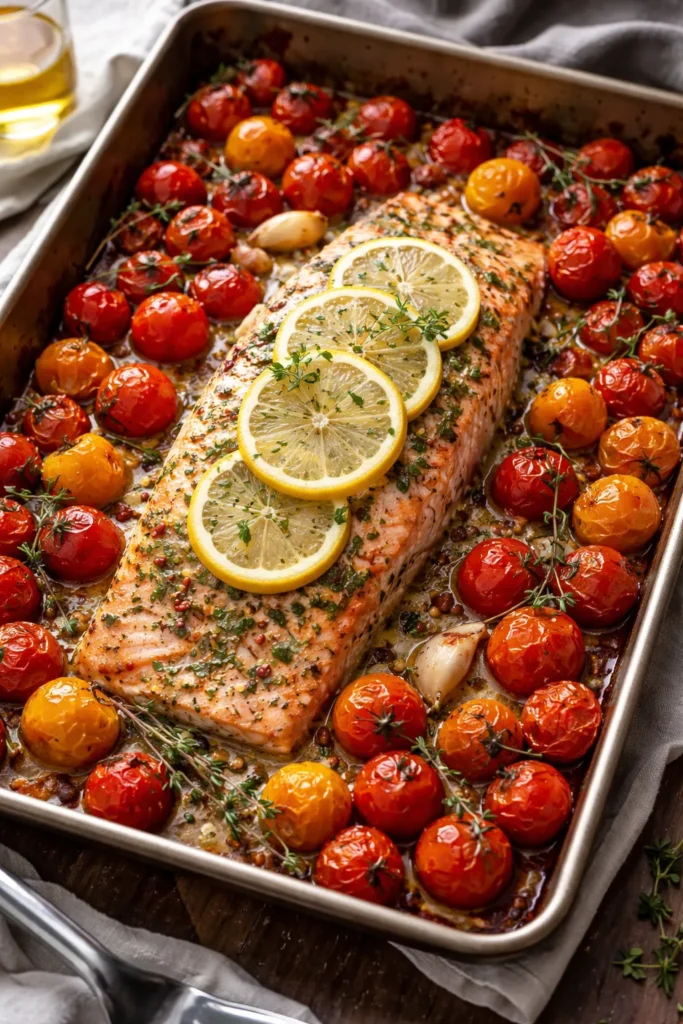
A salmon fillet with roasted cherry tomatoes is the kind of dinner that photographs well, tastes excellent, and comes together in under 30 minutes with one pan. For solo cooking, it’s practically perfect: salmon fillets are sold individually at any fishmonger or grocery store, cherry tomatoes are cheap and come in small enough portions that none go to waste, and the whole dish requires almost no prep.
Preheat your oven to 200°C (400°F). Place a handful of cherry tomatoes (about 150 grams) in a small baking dish or cast iron skillet, drizzle with olive oil, season with salt and pepper, and roast for 10 minutes until they’ve just started to blister and collapse. Push the tomatoes to the sides of the pan, then nestle a 150 to 180 gram salmon fillet skin-side down in the centre. Season the salmon with salt, pepper, a small pinch of dried oregano, and a few slices of lemon laid directly on top.
Return to the oven for 12 to 14 minutes. The salmon is done when it flakes apart easily at its thickest point and the flesh has turned from translucent to opaque. The roasted tomatoes, now slightly caramelised and bursting with concentrated sweetness, become an instant sauce when you drag the salmon through them on the plate.
Why This Is a Genuinely Smart Solo Meal
- The whole thing cooks in a single pan, which means almost no washing up
- Cherry tomatoes don’t require any prep beyond rinsing
- A salmon fillet takes exactly as long as you need to open a bottle of wine and pour yourself a glass
- The combination of omega-3-rich salmon and lycopene-rich tomatoes means this dish is as nutritionally sound as it is delicious
Variations Worth Trying
Different herbs change the character of this dish entirely. Swap oregano for fresh dill and finish with a spoonful of crème fraîche for a Scandinavian-leaning version. Try smoked paprika and a small dollop of harissa paste mixed into the tomatoes for something with more heat and smoke. A small handful of baby spinach added to the pan in the last two minutes wilts beautifully into the tomato juices and adds greens without any extra work.
7. Brown Butter Burst Cherry Tomato Pasta
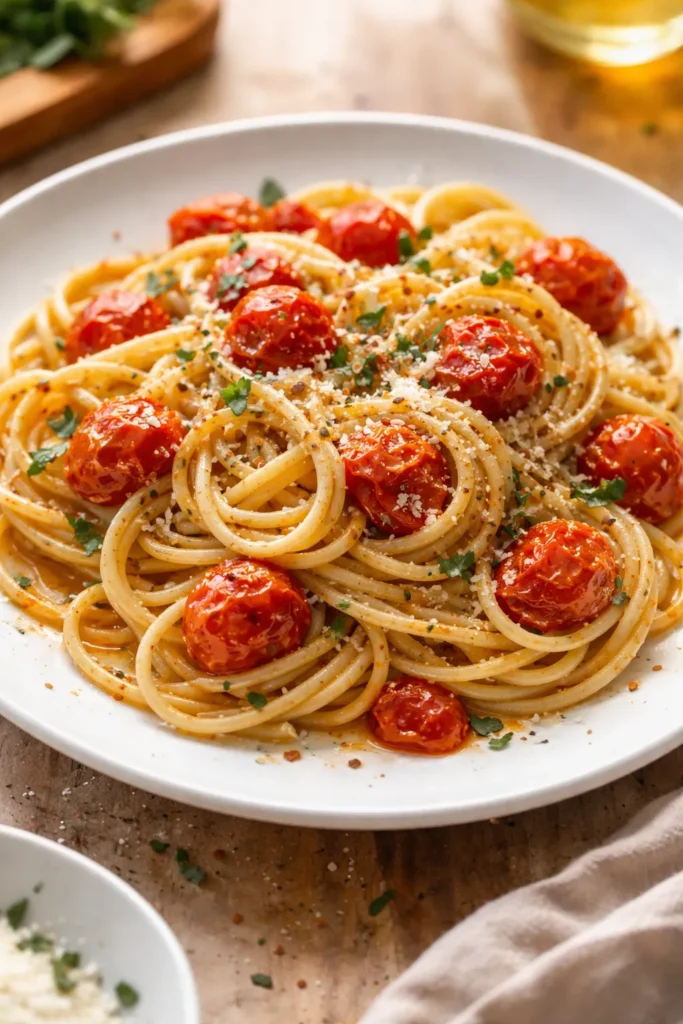
This is a dish that rewards patience with a deeply savoury, almost nutty sauce that costs almost nothing to make. The technique of browning butter — cooking it past the point of melting until the milk solids turn golden and the whole thing smells like toasted hazelnuts — transforms a simple pasta dish into something that tastes deliberately crafted rather than thrown together.
Cook 80 to 90 grams of pasta (spaghetti or a short shape like rigatoni both work well) in heavily salted water. In a small skillet over medium heat, melt two tablespoons of unsalted butter and keep cooking it, swirling the pan occasionally, for about 3 to 4 minutes. It will foam, then the foam will subside, and then the solids at the bottom will turn golden amber. The moment it smells like popcorn and hazelnuts, add your cherry tomatoes (about 150 grams) directly to the pan — they’ll spit and sizzle dramatically in the hot butter.
Let the tomatoes cook for 4 to 5 minutes until they start to burst and collapse. Press down on them gently with the back of a spoon to release their juice, which will mingle with the brown butter to create the sauce. Season with salt, a pinch of red pepper flakes, and one minced garlic clove added right at the end so it cooks briefly in the residual heat without burning.
Finishing the Dish
Drain the pasta, reserving a few tablespoons of cooking water. Add the pasta to the tomato-butter pan, toss everything together with the reserved water, and let it sit for 60 seconds over low heat. Pile into a bowl, finish with a generous amount of finely grated Parmesan, a few fresh basil leaves torn over the top, and a small drizzle of good olive oil. The Parmesan will melt into the hot pasta and thicken the sauce further.
This is the kind of dish that tastes like a restaurant delivered to your kitchen, made entirely from ingredients that are affordable, shelf-stable, and always worth keeping on hand.
8. Crispy Chickpea and Roasted Sweet Potato Bowl
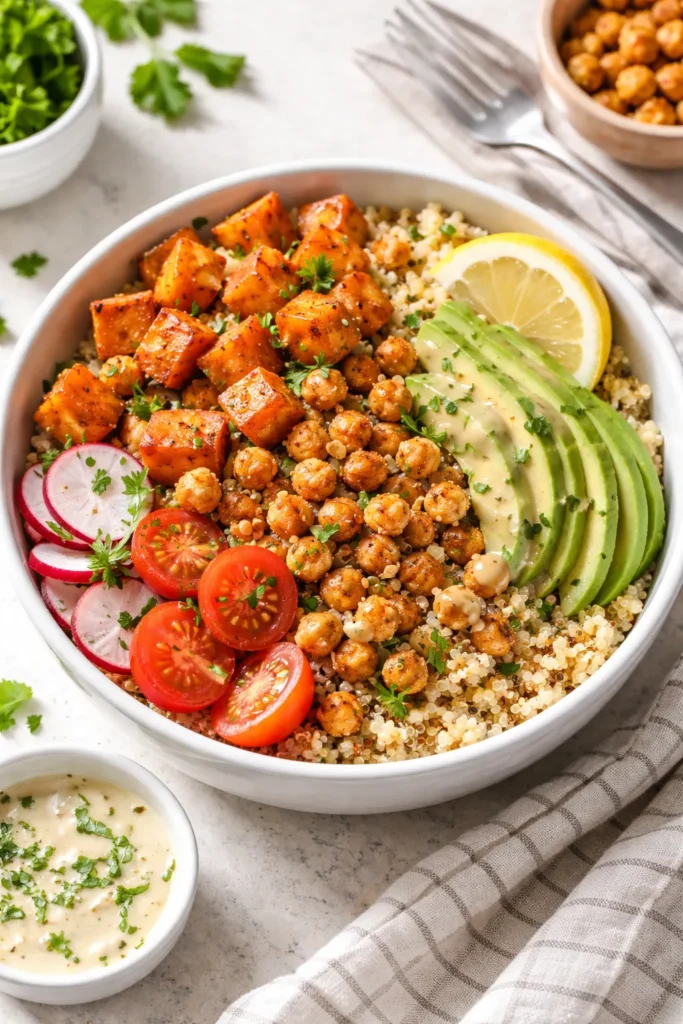
A grain bowl is the solo dinner format that most benefits from a little advance planning — and rewards that planning more than almost anything else. Roast a sweet potato and a can of chickpeas on a Sunday afternoon, and you’ve got the foundation for a dinner that comes together in about five minutes on a weeknight. Warm, crispy, filling, and deeply satisfying without a single ounce of heaviness.
For the chickpeas: drain and rinse one 400g can, then spread them on a paper towel and pat dry — drying them thoroughly is the single most important step for achieving crispiness. Any moisture remaining on the surface will steam the chickpeas in the oven instead of crisping them. Toss with a tablespoon of olive oil, half a teaspoon of smoked paprika, half a teaspoon of cumin, and a pinch of garlic powder. Roast at 220°C (425°F) for 25 to 30 minutes, shaking the pan halfway through, until they’re golden and crispy all the way through.
For the sweet potato: cube half a medium sweet potato, toss with oil and salt, and roast on the same tray for the last 20 minutes.
Building the Bowl
Start with a base of cooked grain — quinoa, farro, or brown rice all work well and can be cooked in batches and refrigerated for up to five days. Layer on the roasted sweet potato and chickpeas, then add any raw or quick-cooked vegetable you have: sliced avocado, baby spinach, shredded red cabbage, or halved cherry tomatoes all work perfectly.
The Tahini Dressing That Makes It
A simple tahini dressing pulls every element of this bowl together. Whisk together two tablespoons of tahini, the juice of half a lemon, a small clove of garlic grated finely, a tablespoon of water, and a pinch of salt. The dressing should be pourable — add more water a teaspoon at a time if it’s too thick. Drizzle it over the assembled bowl along with a pinch of red pepper flakes and a handful of fresh herbs if you have them. The earthy richness of the tahini against the sweetness of the potato and the crunch of the chickpeas is exactly as good as it sounds.
9. Single-Serve Fettuccine Alfredo
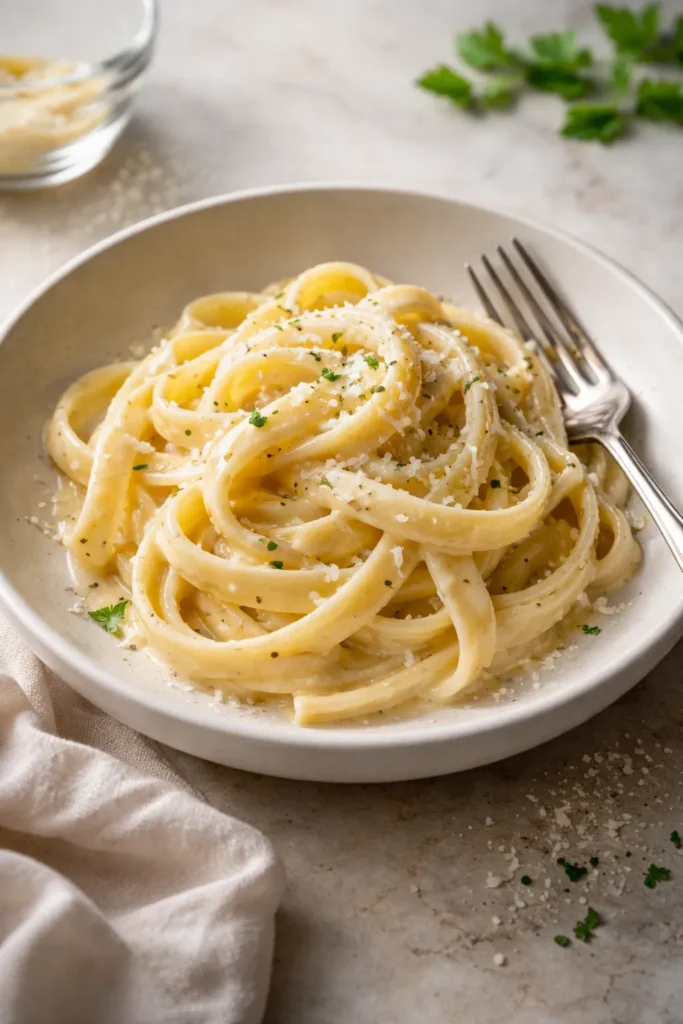
There is no more honest comfort food than fettuccine Alfredo. Creamy, indulgent, and deceptively simple in its best form, it’s also one of the most commonly ruined dishes in home cooking — usually because people reach for jarred sauce or follow recipes that turn it into a heavy, gluey mess. Proper Alfredo, the way it was originally made in Rome, contains only four ingredients: pasta, butter, Parmesan, and pasta water. Nothing else.
Cook 80 to 90 grams of fettuccine in generously salted water until just al dente — it should have a slight resistance when you bite through it. Reserve at least 120ml of pasta cooking water before draining; this starchy water is the emulsifying agent that transforms butter and cheese into a silky sauce. In a wide bowl or a skillet off the heat, place a tablespoon of softened unsalted butter and about 40 grams of finely grated Parmigiano-Reggiano. Use the real thing here, not pre-grated shelf-stable Parmesan — the difference is significant.
Add the hot drained pasta to the bowl immediately, followed by a splash of the hot pasta water. Toss vigorously and continuously for 60 to 90 seconds. The heat from the pasta and water melts the butter and cheese together without scrambling or separating, and the constant tossing creates the emulsion. Add more pasta water, a small splash at a time, if it tightens up too much.
What Makes This Special for One
Making Alfredo for a crowd requires precise timing and temperature management that’s hard to control. For one person, in a small pan or bowl, the whole process is faster and more manageable. You’re working with a smaller volume of pasta that stays hot longer, which means the emulsion comes together more reliably.
Finish with a generous amount of freshly cracked black pepper and an extra pinch of Parmesan at the table. If you want to make it more substantial, add thin strips of pan-seared chicken or a handful of sautéed mushrooms stirred through at the end. But honestly, the four-ingredient version needs nothing added. It’s perfectly complete on its own.
10. Mini Chicken Shawarma Bowl
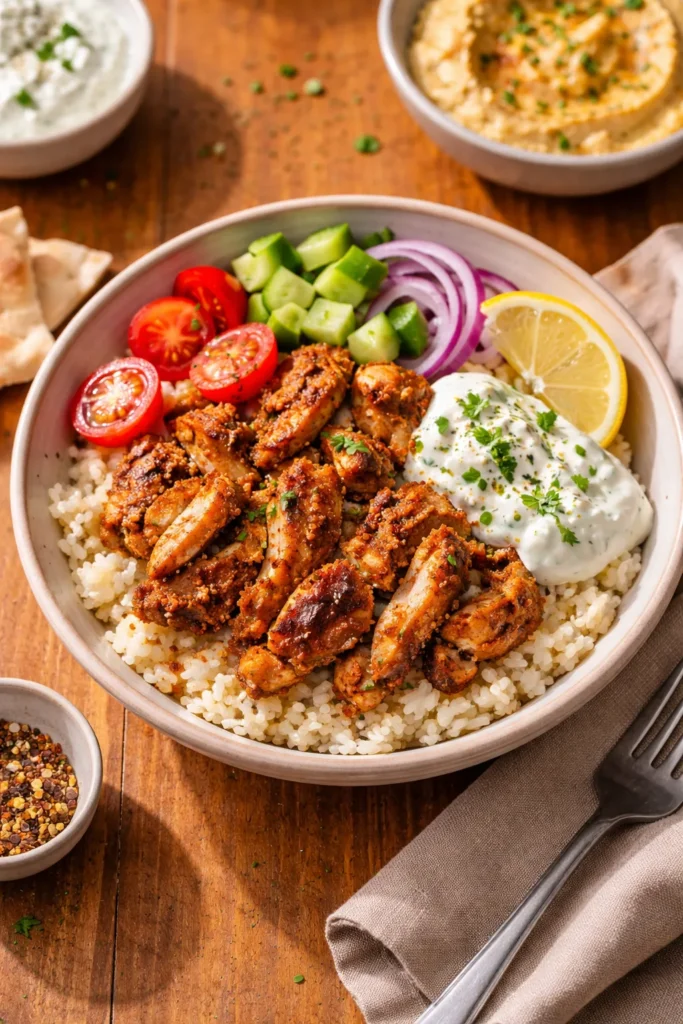
Making shawarma at home sounds like a project, but a single-serve version using chicken thighs and a spice blend you almost certainly already have is one of the most rewarding quick dinners in this list. The spice combination — cumin, coriander, turmeric, smoked paprika, cinnamon, and garlic — is warm and complex in a way that makes a simple pan-seared chicken thigh taste genuinely exciting.
Mix together half a teaspoon each of ground cumin, coriander, and smoked paprika, a quarter teaspoon each of turmeric and cinnamon, one minced garlic clove, a tablespoon of olive oil, the juice of half a lemon, and a pinch of salt. Toss one boneless, skinless chicken thigh in this marinade and let it sit for at least 10 minutes (up to 24 hours in the fridge, which makes it ideal for meal planning). The acid in the lemon begins tenderising the meat almost immediately.
Cook the thigh in a small, hot skillet over medium-high heat for about 5 minutes per side, until cooked through and deeply browned on the outside. Let it rest for three minutes, then slice thinly across the grain.
Assembling the Bowl
The bowl is where this really comes together. Start with a base of warm rice or warm flatbread — a single naan or pita, slightly charred directly over a gas flame or in a dry pan, is excellent. Layer on the sliced chicken, then add a few tablespoons of hummus, sliced cucumber, halved cherry tomatoes, and a small handful of chopped fresh parsley or mint.
The finishing touch is the garlic yogurt sauce: whisk together three tablespoons of plain Greek yogurt, a small minced garlic clove, a squeeze of lemon, and a pinch of salt. A drizzle of this over the assembled bowl is what makes the whole thing feel restaurant-quality.
Why This Works So Well as a Solo Dinner
- The entire spice blend uses things already in your cupboard — no specialty shopping required
- One chicken thigh is the perfect single portion, and boneless thighs are usually sold in packs of four to six that freeze perfectly
- The bowl format is forgiving and customisable: swap the rice for quinoa, use store-bought hummus if you don’t want to make the yogurt sauce, add pickled red onion if you have some in the fridge
- The flavours are bold enough that the dish feels special even when you make it on a completely ordinary Tuesday night
Final Thoughts
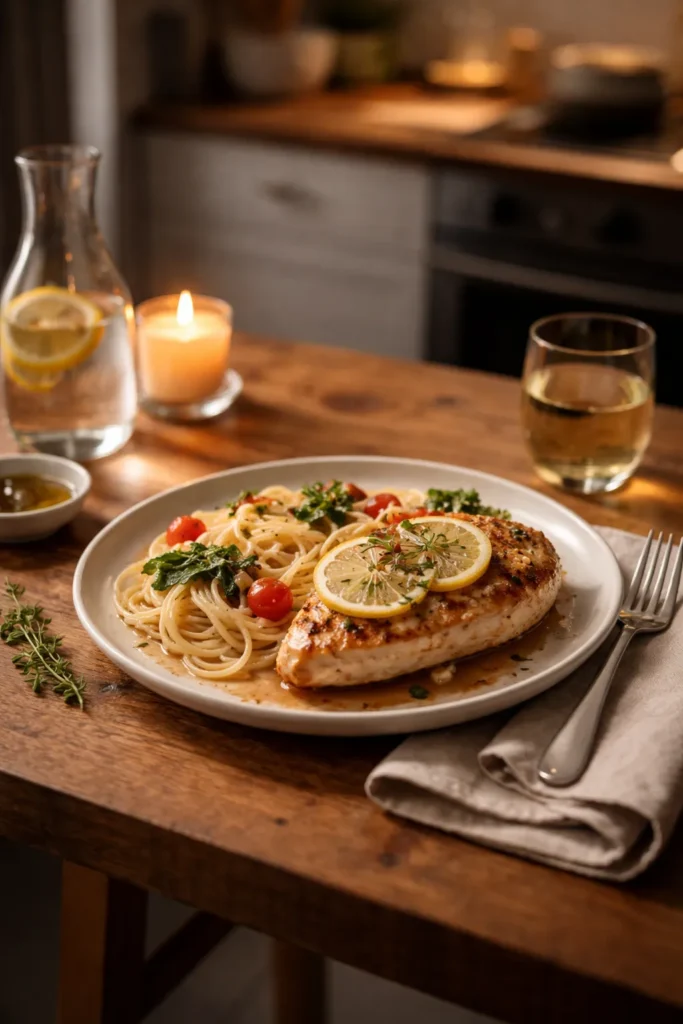
Solo cooking gets better the moment you stop treating it as a lesser version of cooking for others. Every single one of these dinners is something worth sitting down for — not eating standing at the counter, not shovelling down between tasks, but actually plating, actually tasting, actually enjoying.
The practical throughline across all ten of these dishes is that they use a short, manageable ingredients list and cook quickly — but they all deliver real, layered flavour that makes the effort feel worthwhile. None of them require special equipment or hard-to-find ingredients. They just require a little intention.
Start with one or two that match what you already have in the kitchen. Build confidence there, then rotate through the rest. The best solo dinner habit you can develop isn’t memorising a specific recipe — it’s knowing that you have five or six genuinely satisfying options you can make on any given night without thinking too hard about it. That’s when cooking for one stops feeling like a compromise and starts feeling like something you’d actually choose.