There’s a particular kind of magic that happens when cumin hits a hot pan. That warm, nutty bloom of aroma — the one that instantly makes a kitchen feel like something worth staying in — is the starting gun for some of the most satisfying food on the planet. Indian curries have a reputation for being complex, time-consuming, and frankly a little intimidating. But that reputation is mostly myth, and anyone who grew up watching their mother produce a deeply flavored curry on a Tuesday night can tell you so.
The truth is, a brilliant curry doesn’t need four hours. It needs a well-stocked spice rack, a solid technique for building flavor fast, and the confidence to trust your nose as much as your timer. With the right recipes in your rotation, you can have a steaming pot of something genuinely spectacular on the table before you’d even finish waiting for delivery.
These ten recipes range from creamy and mild to boldly spiced, from meat-forward to entirely plant-based. Some take as little as 20 minutes start to finish. A few work beautifully from pantry staples you already have. All of them are the kind of food that makes people lean over the pot and ask, “What is that smell?” — in the best possible way.
Table of Contents
- What Makes a Curry “Weeknight-Ready”
- The Three Factors That Speed Everything Up
- The Pantry That Makes It Possible
- 1. Quick Indian Chicken Curry with Tomato-Yogurt Sauce
- The Blended Paste Technique
- What to Know Before You Start
- 2. Creamy Butter Chicken (Murgh Makhani)
- Building the Murgh Makhani Sauce
- The Finishing Details That Matter
- 3. 10-Minute Chana Masala (Chickpea Curry)
- Speeding Up the Chickpeas
- How to Make It Your Own
- 4. Red Lentil Dal (Masoor Dal)
- Building the Dal Base
- The Tadka That Transforms It
- 5. Palak Paneer (Spinach and Cheese Curry)
- Getting the Paneer Right
- The Spice Balance in Palak Paneer
- 6. Coconut Chicken Curry
- Why the Sauce-First Method Works
- The Spice Blend
- 7. Tofu Tikka Masala
- Building the Tikka Masala Sauce
- A Note on the Vegan Swap
- 8. Egg Curry in Coconut Tomato Sauce
- The Sauce for Egg Curry
- Why This Works for Meal Prep
- 9. Aloo Gobi (Potato and Cauliflower Curry)
- The Spice Balance for Aloo Gobi
- Getting the Texture Right
- 10. Keema Matar (Ground Chicken with Peas)
- The Cooking Method
- What Makes It Stand Out
- The Pantry Staples That Make Every Curry Easier
- The Ingredients Worth Keeping Stocked
- On Fresh Aromatics
- What to Serve Alongside Any Indian Curry
- Rice Options
- Flatbreads
- Cooling Sides
- Storing, Reheating, and Making Curry Ahead
- Refrigerator Storage
- Freezing Curry
- Reheating Without Ruining It
- Making Components Ahead
- Final Thoughts
What Makes a Curry “Weeknight-Ready”
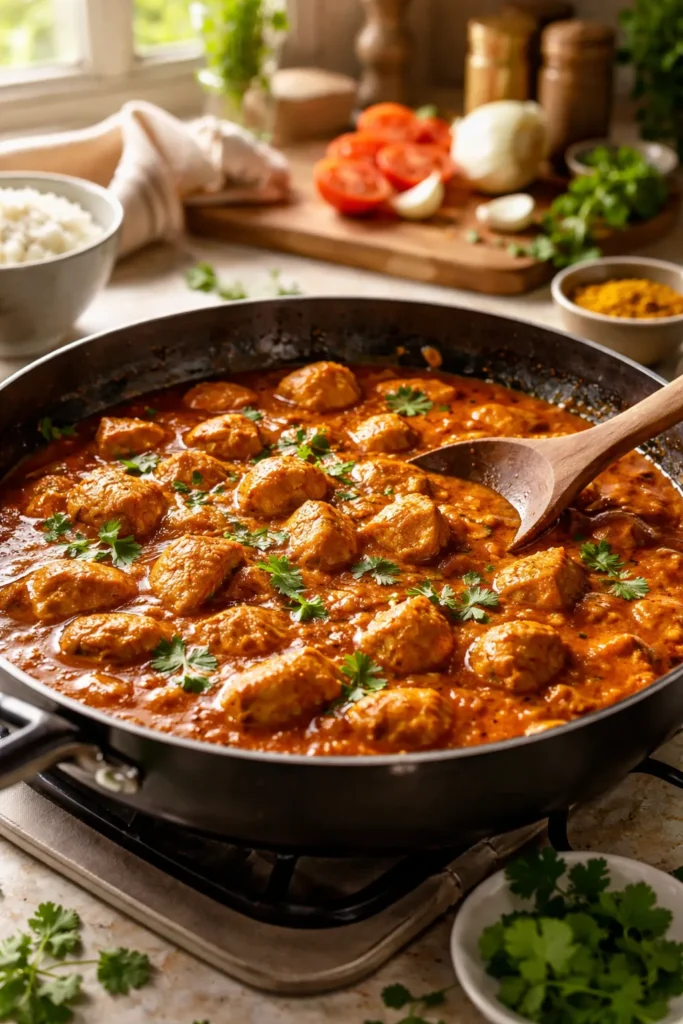
Not every Indian curry belongs on a weeknight menu, and that’s completely fine. Some dishes — a proper Rogan Josh with bone-in lamb, a slow-braised Nihari, a deeply layered Hyderabadi biryani — genuinely benefit from time, and shortcutting them does the food a disservice.
But a huge portion of Indian cooking was built for speed. Dals come together in 20 minutes. Stir-fried vegetable curries like Aloo Gobi take under half an hour. Even chicken curries — when made with boneless cuts and a smart flavor base — can go from raw to table-ready in 30 minutes flat.
The Three Factors That Speed Everything Up
A fresh curry paste or blended aromatics — rather than slow-sautéed whole onions — is the biggest time-saver in Indian cooking. Blending the onion, garlic, and ginger into a smooth paste means it cooks down in 2–3 minutes instead of 15–20. This is the technique behind many restaurant-speed curries.
Boneless proteins and canned legumes are your other two shortcuts. Boneless chicken thighs cook through in 8–10 minutes. Canned chickpeas, lentils, and kidney beans skip the overnight soak entirely. Neither shortcut sacrifices flavor — the spice work carries everything.
The Pantry That Makes It Possible
A weeknight curry habit is really a pantry habit. Keep these stocked and you’re always 30 minutes away from something worth eating:
- Ground cumin, coriander, turmeric, and cayenne
- Garam masala (the one spice that earns its own section later)
- Canned diced or crushed tomatoes
- Canned coconut milk
- Tomato paste
- Canned chickpeas and lentils
- Chicken or vegetable stock
With those on the shelf, every recipe below becomes genuinely easy.
1. Quick Indian Chicken Curry with Tomato-Yogurt Sauce
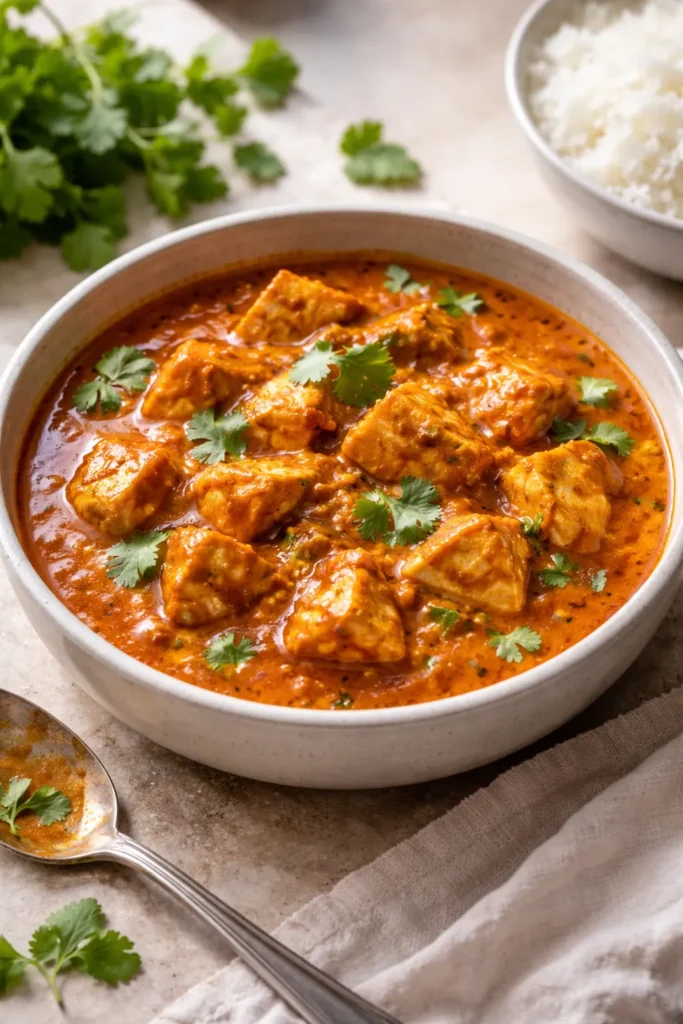
This is the recipe that converts people. It looks like something that took an hour, it tastes like something that took longer, and it actually takes about 20 minutes. The technique here — blending the aromatics into a smooth paste before cooking them — is borrowed directly from the way busy home cooks across India make curry on weeknights without sacrificing depth.
The sauce gets its richness from a combination of chopped tomato, tomato paste, and a half-cup of either sour cream, Greek yogurt, or coconut milk, depending on what you have. A squeeze of lemon at the end lifts everything. The result is a curry with real body and a warm, layered spice profile that doesn’t taste like it came from a jar.
The Blended Paste Technique
Add one large roughly chopped onion, 6 garlic cloves, a 3-inch piece of fresh ginger, a handful of cilantro, and all your ground spices — 2 tablespoons coriander, 1 tablespoon cumin, 2 tablespoons chili powder, 1 teaspoon garam masala, and ½ teaspoon turmeric — into a food processor. Blend until smooth, adding a tablespoon of water if needed. This is your curry base.
Cook that paste in hot oil for 2 minutes, add your tomatoes, cook another 2 minutes, then add 2 pounds of boneless chicken thighs cut into 2-inch pieces along with 1 cup of water or chicken stock. Cover and simmer 8–10 minutes. Stir in your yogurt or sour cream, simmer uncovered for 2 more minutes, and you’re done.
What to Know Before You Start
- Chicken thighs stay juicier than breasts — they’re more forgiving if you cook them a minute too long
- Dry the chicken pieces with paper towels before adding them to the pot; excess moisture makes the sauce watery and takes longer to reduce
- The garam masala is added as part of the paste, but a pinch added after the yogurt — off the heat — adds a bright, aromatic finish
- If the paste starts to stick or burn, add 2 tablespoons of water immediately rather than oil — it deglazes the pan without adding fat
Worth knowing: This curry reheats better the next day. The spices continue to bloom overnight, so the Tuesday leftovers are arguably better than Tuesday dinner.
2. Creamy Butter Chicken (Murgh Makhani)
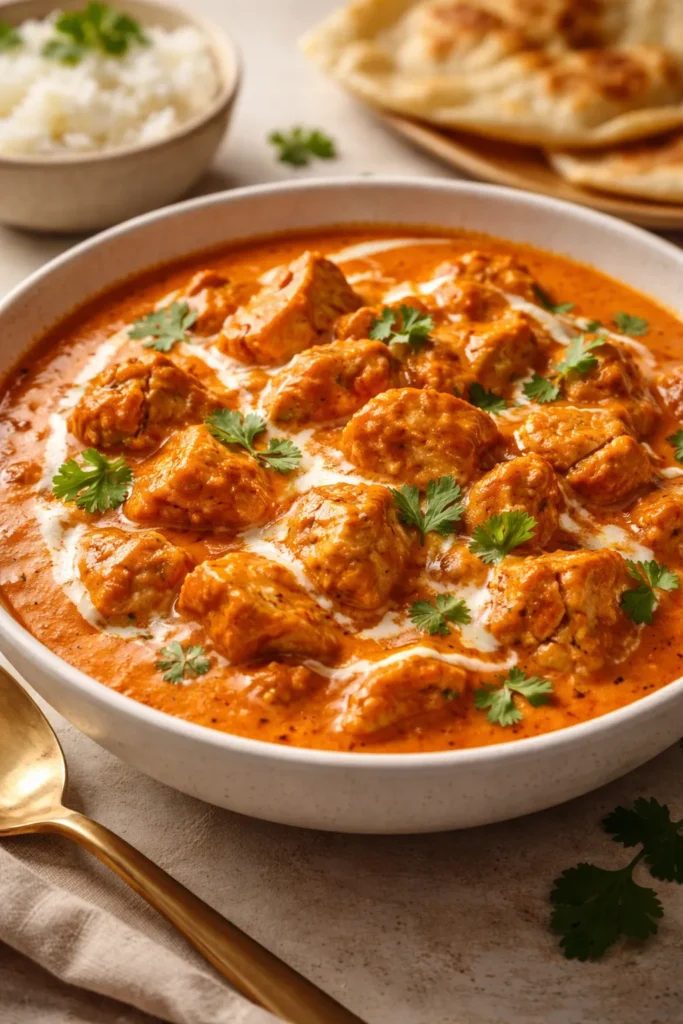
Butter chicken has arguably become the most recognized Indian curry outside of India — and for good reason. The sauce is deeply savory, slightly sweet, warmly spiced, and finished with butter and cream into something that feels genuinely luxurious. What most people don’t realize is that a solid weeknight version, while not identical to a restaurant’s slow-cooked marinade-and-tandoor version, comes extremely close in under 40 minutes.
The key difference in a fast butter chicken is using chicken thighs cut small — about 1-inch pieces — and cooking them in the sauce rather than roasting them separately first. You lose a little of the char, but you keep all the flavor and cut the timeline in half.
Building the Murgh Makhani Sauce
Start with 2 tablespoons of butter in a heavy-bottomed pan. Sauté 1 finely minced onion until it’s soft and just starting to color — about 6 minutes on medium heat. Add 5 minced garlic cloves and 1 tablespoon of grated ginger, cook 1 minute. Add 1 teaspoon each of cumin, garam masala, and coriander, ½ teaspoon turmeric, and 1 teaspoon of paprika for color. Stir 30 seconds, then add one 14-ounce can of crushed tomatoes and 1 tablespoon of tomato paste.
Simmer that sauce for 8 minutes, then blend it smooth (an immersion blender works perfectly here). Return to heat, add your chicken pieces and ½ cup heavy cream or coconut milk, cover and simmer 10–12 minutes. Finish with another tablespoon of butter, a pinch of sugar, and salt to taste.
The Finishing Details That Matter
- The butter added at the end is non-negotiable — it gives butter chicken its signature silky finish and glossy sauce
- Kashmiri chili powder, if you can find it, gives a deep red color without significant heat — regular paprika is a solid substitute
- A small pinch of sugar rounds out the acidity from the tomatoes — don’t skip it
- If you want more smokiness, a drop or two of liquid smoke added to the sauce is a genuine restaurant trick
3. 10-Minute Chana Masala (Chickpea Curry)
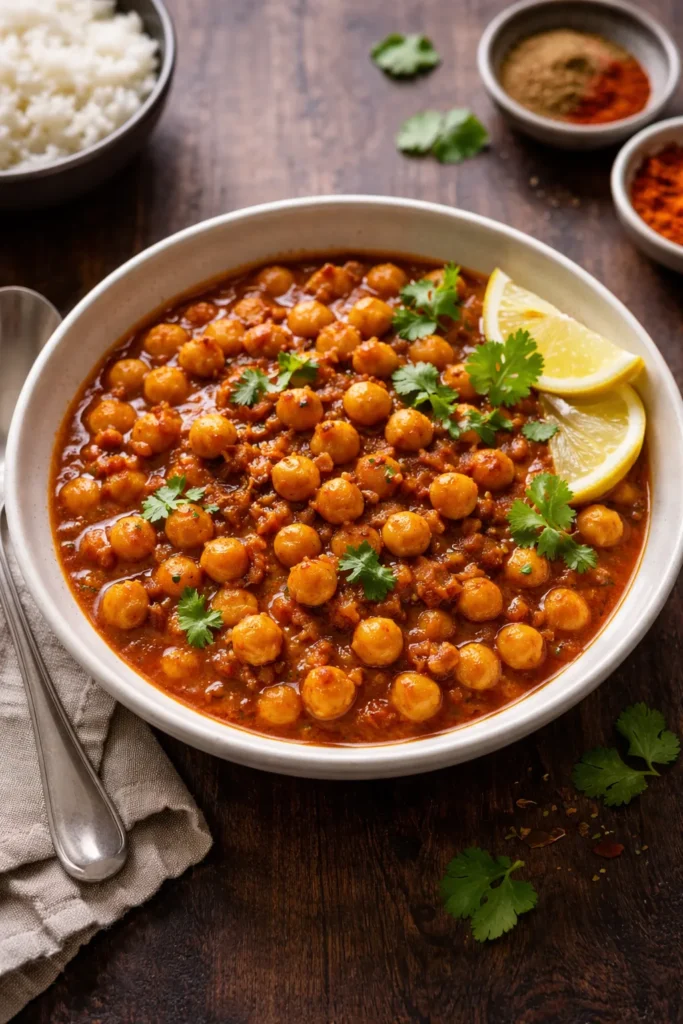
Chana masala is what you make when you need dinner to be ready immediately. Three cans of chickpeas, a handful of pantry spices, a can of diced tomatoes, and about 10 minutes of active cooking — and you have a deeply satisfying, completely vegan meal that eats like something you’d wait 30 minutes for at a restaurant.
The trick to getting flavor fast here is two things: blooming the spices in oil before adding anything else, and using tomato paste alongside the diced tomatoes. Tomato paste is already concentrated and cooked-down, which means it skips the long simmer that raw tomatoes need to lose their raw edge.
Speeding Up the Chickpeas
Canned chickpeas are already cooked, but they benefit from a few minutes of simmering in the sauce. Adding a pinch of baking soda to the liquid helps soften their skins faster and gives the curry a creamier texture without any extra work.
Heat 2 tablespoons of oil in a pan. Add 1 teaspoon of cumin seeds and let them sizzle for 30 seconds. Add a finely minced onion, cook 3 minutes. Add 4 garlic cloves and 1 tablespoon of ginger, cook 1 minute. Stir in 1 teaspoon each of coriander, cumin, and garam masala, plus 1 teaspoon of turmeric and 1 tablespoon of tomato paste. Toast 1 minute. Add one can of crushed tomatoes, drain and rinse three 15-ounce cans of chickpeas, add them with ½ cup of vegetable broth. Simmer 8 minutes. Finish with a squeeze of lemon, fresh cilantro, and salt.
How to Make It Your Own
- For a richer version, add ½ can of coconut milk in the last 3 minutes
- For a brothier consistency, add more vegetable stock and simmer uncovered
- For heat, add 1 finely minced green chili with the garlic
- Serve with pickled red onion on top — the sharpness cuts through the chickpeas beautifully
Leftover chana masala improves dramatically overnight as the chickpeas absorb the sauce. Make a double batch.
4. Red Lentil Dal (Masoor Dal)
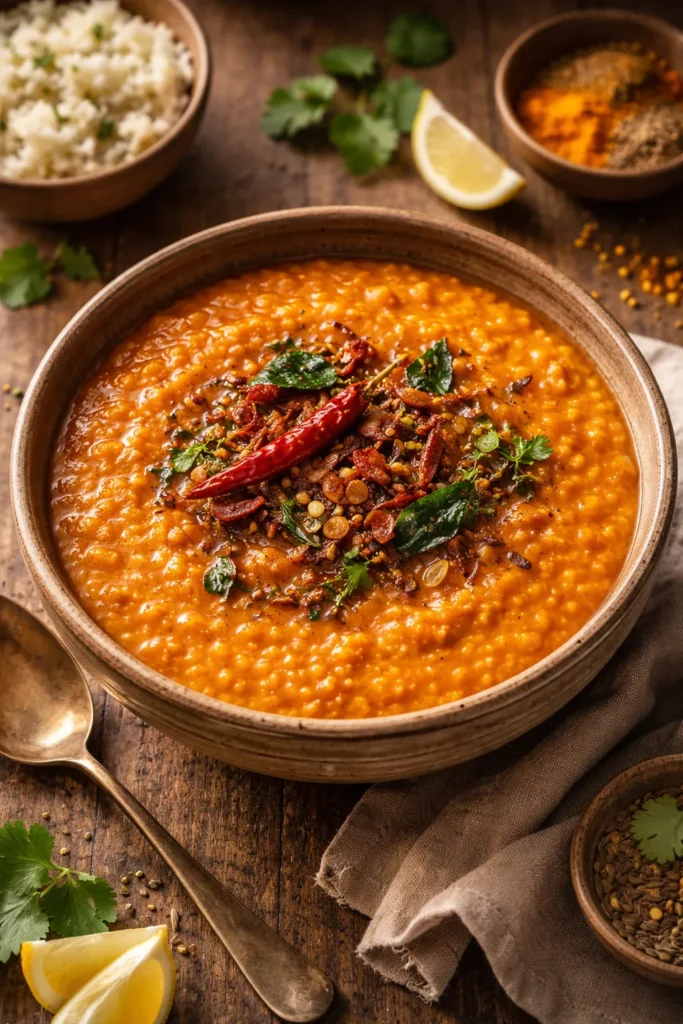
Dal is the quiet backbone of Indian home cooking. It’s eaten daily in millions of Indian households — not because it’s a fallback option, but because done right, it’s one of the most comforting things you’ll ever eat. Red lentils (masoor dal) are the weeknight cook’s best friend specifically because they don’t need soaking and cook down in about 20 minutes into a thick, velvety, deeply satisfying bowl of food.
The flavor comes in two stages: the base simmer with aromatics, and the tadka — a finishing step where whole spices are bloomed in hot butter or ghee and poured over the dal at the end. That sizzling, crackling tadka is where a lot of the magic lives.
Building the Dal Base
Rinse 1 cup of red lentils thoroughly. In a medium pot, heat 1 tablespoon of oil and cook 1 diced onion for 4 minutes. Add 4 minced garlic cloves, 1 tablespoon of grated ginger, 1 chopped tomato, 1 teaspoon each of turmeric, cumin, and coriander. Cook 2 minutes. Add the lentils and 3 cups of water or stock. Bring to a boil, reduce heat, cover, and simmer 18–20 minutes, stirring occasionally, until the lentils have completely broken down into a thick, porridge-like consistency. Season with salt.
The Tadka That Transforms It
This is the step most weeknight shortcuts skip — and it’s the one they shouldn’t. In a small pan, melt 2 tablespoons of butter or ghee until shimmering. Add 1 teaspoon of cumin seeds, a pinch of red chili flakes, and 3 thinly sliced garlic cloves. Let the garlic turn golden and the cumin sizzle — about 60 seconds. Pour this immediately over the finished dal. It hisses and smokes and smells extraordinary.
That tadka, poured on just before serving, is what separates a good dal from a great one.
5. Palak Paneer (Spinach and Cheese Curry)
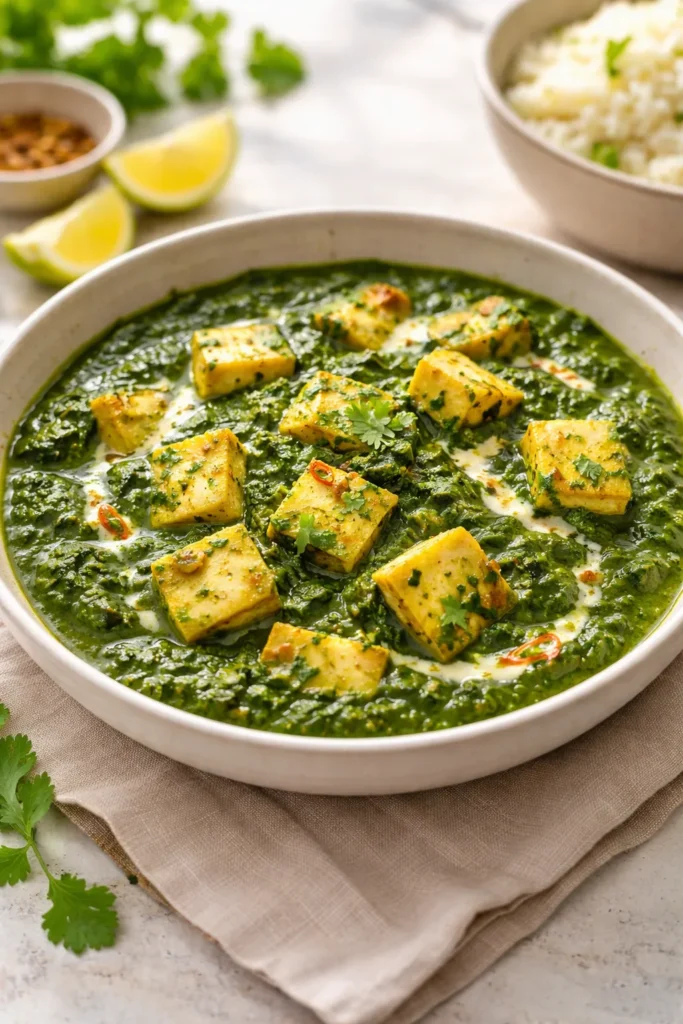
Palak paneer is one of those dishes that looks harder than it is. Fresh spinach, cubes of paneer (Indian cottage cheese), and a warmly spiced cream-enriched sauce — it sounds elaborate, but a solid version comes together in about 25 minutes and is one of the most nutritionally complete things you can put on a weeknight table.
The spinach is blanched quickly in boiling water (or microwaved for 3 minutes), then blended into a smooth purée. That purée becomes the base of the sauce, which means you’re essentially cooking a vegetable into its own sauce — there’s very little else to manage.
Getting the Paneer Right
Shop-bought paneer can sometimes be rubbery if added directly to the sauce. Two approaches fix this: either pan-fry the cubes in a little oil until golden on the edges before adding them to the sauce, or soak raw cubed paneer in warm salted water for 10 minutes to soften it. Both work well — the pan-fried version adds more texture and a slight caramelized flavor.
The Spice Balance in Palak Paneer
Unlike some curries where heat takes center stage, palak paneer is built on warmth rather than fire. The spice blend is 1 teaspoon cumin seeds, ½ teaspoon garam masala, ¼ teaspoon turmeric, with a small green chili or a pinch of cayenne for background heat. Fresh ginger adds sharpness. A few tablespoons of cream stirred in at the end gives the sauce its characteristic richness and dials back the aggressive green color to a more appealing deep jade.
- Use full-fat paneer — low-fat versions crumble instead of holding their shape
- Don’t over-blend the spinach; a little texture is welcome
- The dish can be made 24 hours ahead and reheated gently on the stovetop
6. Coconut Chicken Curry
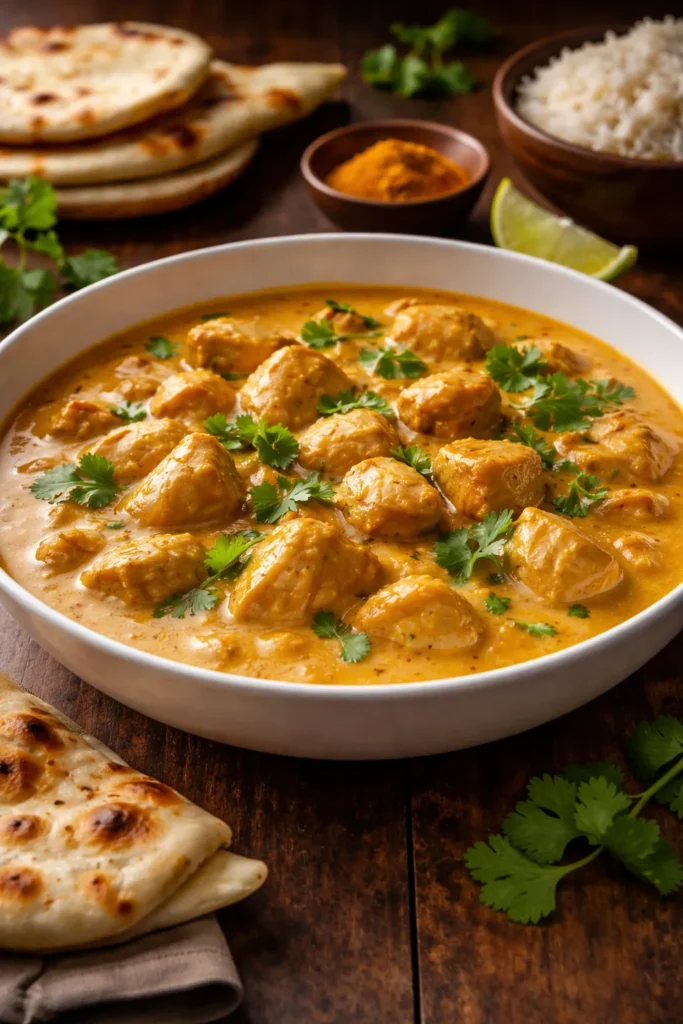
Coconut milk in a curry is not a shortcut — it’s a legitimate tradition, particularly in curries from Kerala and South India where coconut is as fundamental to cooking as olive oil is in Mediterranean food. A coconut chicken curry is naturally dairy-free, naturally gluten-free, and naturally the kind of thing that disappears from the pot before you can find a serving spoon.
This version uses canned full-fat coconut milk, which is non-negotiable. Light coconut milk is thinner, less rich, and produces a sauce that tastes diluted compared to the real thing. Use full-fat and reduce slightly if you want a thicker consistency.
Why the Sauce-First Method Works
Rather than browning the chicken first and then building the sauce, this recipe simmers the tomato-coconut sauce for 6–8 minutes before the chicken goes in. By the time the chicken is added, the sauce is already fragrant and developed — which means the chicken poaches gently in a fully flavored liquid rather than sitting in something that still tastes raw.
This approach also prevents the chicken from drying out. The chicken cooks to 165°F in the sauce in about 8–10 minutes — any longer and it gets dry. Use an instant-read thermometer the first time you make this, and you’ll know exactly what “done” looks and feels like going forward.
The Spice Blend
- 1 tablespoon curry powder (mild)
- 1 teaspoon ground cumin
- ½ teaspoon ground turmeric
- 1 teaspoon garam masala, split — half added with the spices, half added off the heat at the very end
That split addition of garam masala is a technique worth adopting across your curry cooking. The portion added early builds body and warmth; the portion added at the end provides a bright, aromatic top note that doesn’t cook off.
7. Tofu Tikka Masala
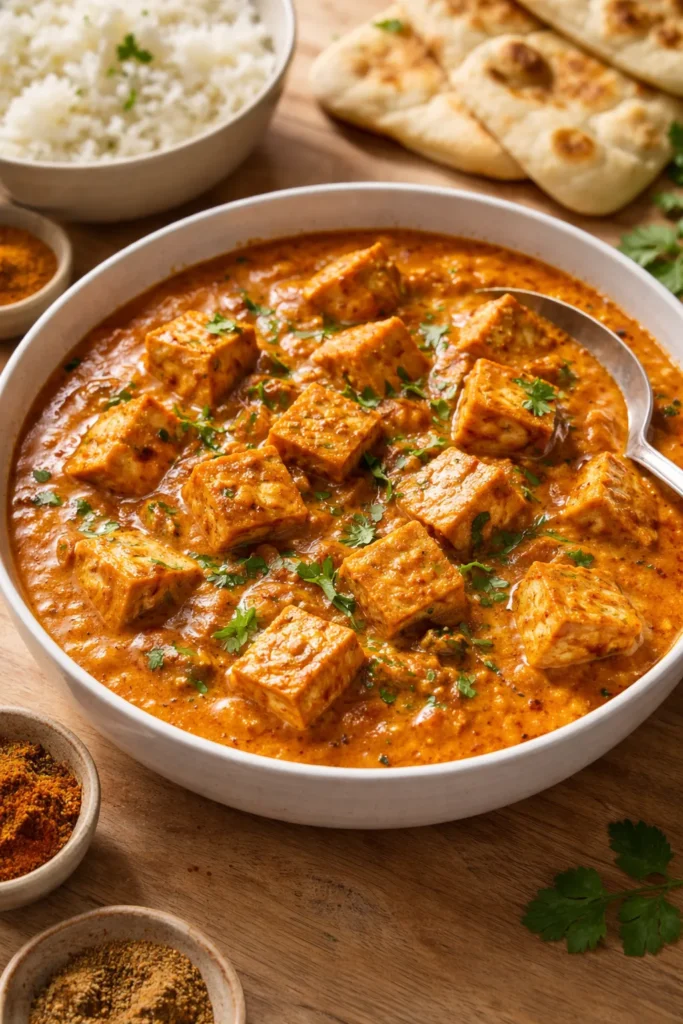
Tikka masala’s legendary sauce — rich with tomato, cream, and spice — works with any protein. Firm tofu, pressed dry and pan-fried until golden, does something interesting in this sauce: it soaks up flavor as it simmers, so the longer it sits, the more deeply seasoned it becomes. This is vegan, high-protein, and — if you haven’t made it before — likely to surprise you with how satisfying it is.
Pressing the tofu is the one step you can’t skip. Press a block of firm tofu for at least 20 minutes under a heavy pan (or in a tofu press if you have one) to expel moisture. Un-pressed tofu steams in the pan rather than browning, and you’ll end up with a soft, spongy texture instead of the slightly chewy, golden-edged cubes you want.
Building the Tikka Masala Sauce
The sauce for tikka masala is a tomato-cream base with a specific spice profile that leans toward warmth rather than heat: 1 teaspoon each of cumin, coriander, and paprika, ½ teaspoon turmeric, ½ teaspoon garam masala, and a pinch of cardamom. One 14-ounce can of crushed tomatoes forms the body of the sauce. Simmer that for 10 minutes, blend smooth, return to heat, and add ½ cup of coconut cream or dairy cream.
Add the pan-fried tofu, simmer 5 minutes, and finish with fresh cilantro. The sauce clings to the tofu in exactly the way it clings to chicken — you won’t miss a thing.
A Note on the Vegan Swap
Paneer is a natural substitute here if you’re not avoiding dairy. It behaves similarly to tofu — it benefits from pan-frying first and absorbs the sauce beautifully. Either way, the sauce is the star.
8. Egg Curry in Coconut Tomato Sauce
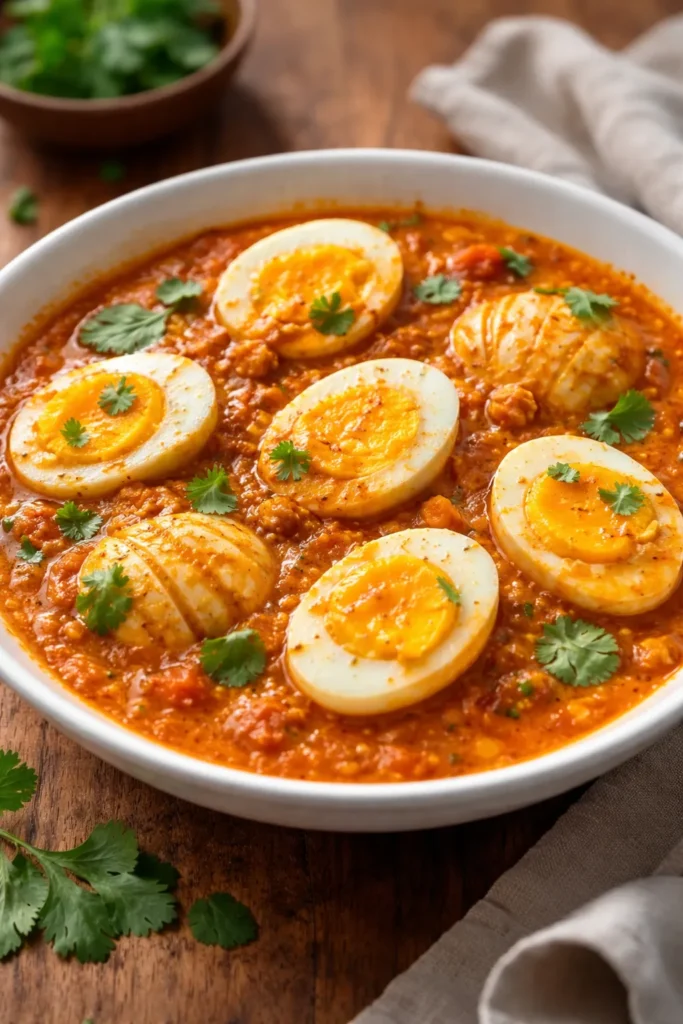
Egg curry doesn’t get enough credit in Western kitchens. Boiled eggs simmered in a spiced tomato-coconut sauce is not a compromise — it’s a proper, deeply satisfying dish with excellent protein and a richness that comes from both the egg yolks and the coconut milk. It’s also the fastest protein-forward curry on this list: hard-boil your eggs while the sauce cooks and you’re eating in 25 minutes.
Score the surface of each hard-boiled egg with a few shallow cuts before adding them to the sauce. This lets the masala penetrate slightly as the eggs simmer, so you get spiced flavor all the way through rather than just coating on the outside.
The Sauce for Egg Curry
Build a base with 1 diced onion cooked until golden, 4 garlic cloves, 1 tablespoon ginger, and 1 teaspoon each of turmeric, cumin, and coriander, plus 1 tablespoon of chili powder (adjust to taste). Add 2 chopped tomatoes and 1 tablespoon of tomato paste, cook 3 minutes. Pour in ½ can of coconut milk and ½ cup of water. Simmer 8 minutes.
Halve or leave whole the 6 hard-boiled eggs, add them to the sauce, and simmer covered for 5 minutes. Finish with a squeeze of lime and fresh curry leaves if you have them — curry leaves fried in a little oil and added at the end add a distinctive South Indian flavor that’s genuinely worth tracking down.
Why This Works for Meal Prep
Egg curry holds well in the fridge for 3–4 days and actually improves overnight. Unlike chicken, eggs don’t continue to tighten and dry out as they sit — they just get more deeply flavored. Make a big batch on Sunday and eat it through the week over rice or with roti.
9. Aloo Gobi (Potato and Cauliflower Curry)
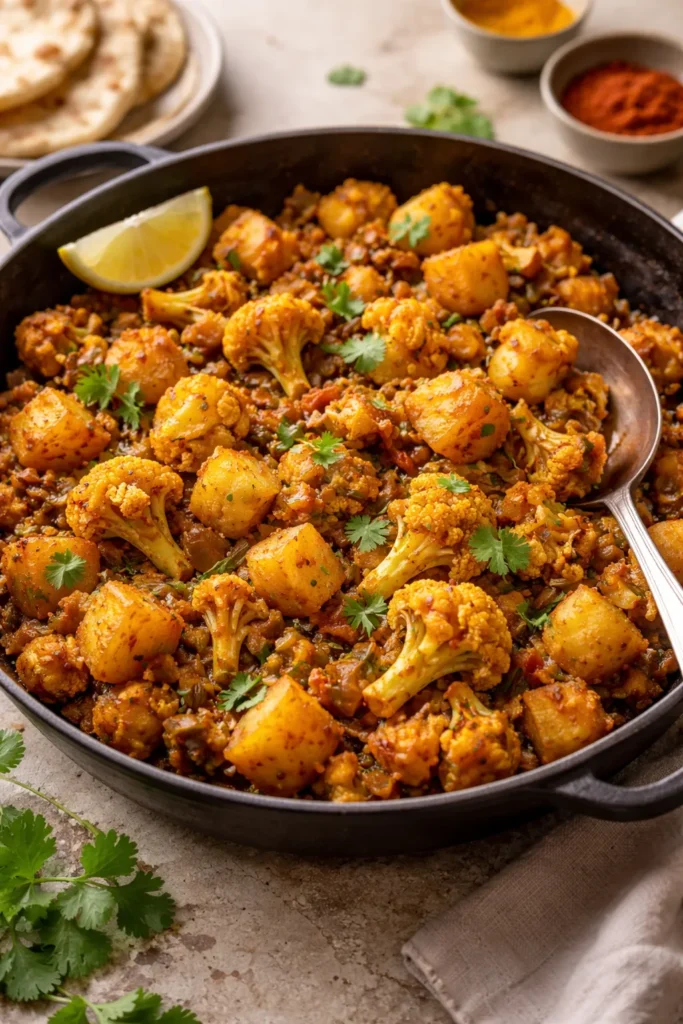
Aloo gobi is a dry-style curry — no sauce pooling at the bottom, no gravy to spoon over rice. Instead, cubed potatoes and cauliflower florets are cooked down with spices until they’re tender and slightly caramelized at the edges, each piece coated in a dry, intensely flavored masala. It’s one of the most beloved everyday dishes in North Indian home cooking, and it takes about 25 minutes.
The cooking method here is somewhere between a stir-fry and a braise. You start by cooking the potatoes and cauliflower in hot oil with the spices, add a small splash of water, cover to steam, then uncover at the end to let any remaining moisture evaporate and the vegetables char slightly.
The Spice Balance for Aloo Gobi
- 1 teaspoon cumin seeds (not ground — the whole seeds matter here)
- 1 teaspoon ground coriander
- ½ teaspoon turmeric
- ½ teaspoon garam masala
- 1 teaspoon amchur (dried mango powder) or a squeeze of lemon at the end
Amchur is the ingredient most recipes skip, and most recipes are the worse for it. The dry, sour pop of mango powder against the earthy potato and cauliflower is what gives aloo gobi its characteristic depth. If you can’t find it, a half-teaspoon of lemon juice added after cooking gives a similar effect.
Getting the Texture Right
Cut the cauliflower into smallish florets — about 1-inch pieces — and the potato into ¾-inch cubes. This sizing matters: if they’re too big, the outside chars before the inside cooks. Don’t crowd the pan; if needed, cook in two batches. The slight charring on the edges of the cauliflower, where it hits the hot oil and begins to caramelize, is exactly what you want. That’s where the flavor lives.
10. Keema Matar (Ground Chicken with Peas)
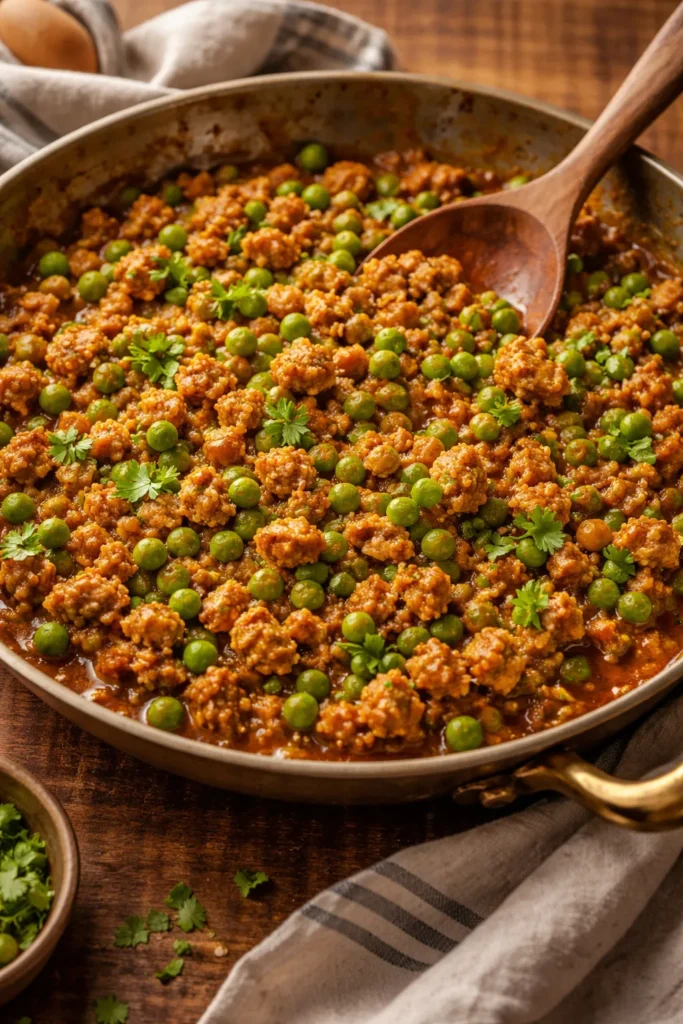
Keema matar — minced meat with peas — is one of Indian cooking’s most practical dishes. Ground chicken (or lamb, or beef) cooks in under 10 minutes, absorbs spice faster than any other protein, and creates a thick, almost dry curry that works brilliantly over rice, stuffed into flatbread, or spooned alongside a simple dal. It’s also highly adaptable: the base technique stays the same regardless of which meat you use.
This is a dish where the aromatics do heavy lifting. A finely minced onion cooked until deeply golden — we’re talking 8 minutes here, not 3 — creates a sweet, caramelized base that carries the spice blend beautifully. The onion isn’t a shortcut step in this recipe. Let it cook properly and the rest of the dish takes care of itself.
The Cooking Method
Heat 2 tablespoons of oil in a heavy pan. Cook 1 finely minced onion for 8 minutes on medium, until golden and fragrant. Add 5 minced garlic cloves, 1 tablespoon of grated ginger, cook 1 minute. Add 1 teaspoon cumin, 1 teaspoon coriander, ½ teaspoon turmeric, 1 teaspoon chili powder, and 1 teaspoon garam masala. Toast 30 seconds. Add 1 pound of ground chicken, breaking it apart with a wooden spoon, and cook until no pink remains — about 5 minutes.
Add 2 chopped tomatoes (or half a can of diced tomatoes), cook 3 minutes. Add 1 cup of frozen peas, cover and cook 3 more minutes. Finish with fresh cilantro and a squeeze of lemon.
What Makes It Stand Out
Keema matar reheats beautifully and freezes well — which means it’s one of the best options for batch cooking. Make a double portion on the weekend, freeze half in a freezer bag, and pull it out on a night when cooking feels impossible. It thaws quickly and reheats in a pan with a splash of water in about 5 minutes.
Try it stuffed inside a roti with a spoonful of raita — it’s a fast, filling, genuinely great lunch.
The Pantry Staples That Make Every Curry Easier
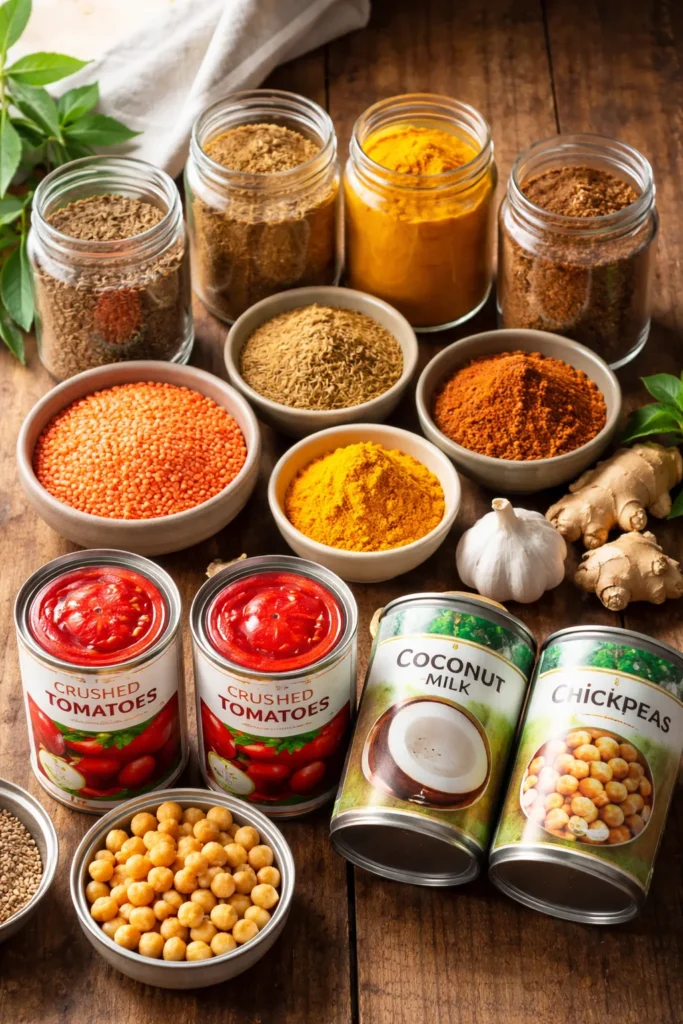
Across all ten recipes above, a pattern emerges: the same small collection of spices appears over and over. Ground cumin, ground coriander, turmeric, and garam masala are the quartet at the heart of most Indian weeknight cooking. Buy them, store them in a dark cupboard, and replace them when they stop smelling like anything — most ground spices lose their potency after about a year.
Garam masala deserves special mention because it’s so often misused. It’s not a heat spice — it’s a warm, complex blend of cardamom, cinnamon, cloves, and black pepper. Adding too much early in cooking makes a curry taste heavy and slightly muddy. The better approach: use a small amount early (for background warmth) and a pinch off-heat at the end (for aroma).
The Ingredients Worth Keeping Stocked
Beyond spices, these are the pantry items that make the recipes above available at a moment’s notice:
- Canned crushed tomatoes — the workhorse of most curry sauces
- Tomato paste — adds concentration and color without the cooking time of fresh tomatoes
- Full-fat coconut milk — for dairy-free curries and coconut-based sauces
- Canned chickpeas — drain, rinse, add; no prep needed
- Red lentils — no soaking required and they cook down in 20 minutes
- Frozen peas — go straight from freezer to pot, add peas and sweetness to any curry
On Fresh Aromatics
Ginger and garlic are the foundation of nearly every curry here. A jar of pre-minced ginger-garlic paste saves prep time and is widely available at Indian grocery stores. It’s not identical to freshly grated — the flavor is slightly milder — but it’s a genuinely useful shortcut on weeknights when you’re working fast.
What to Serve Alongside Any Indian Curry
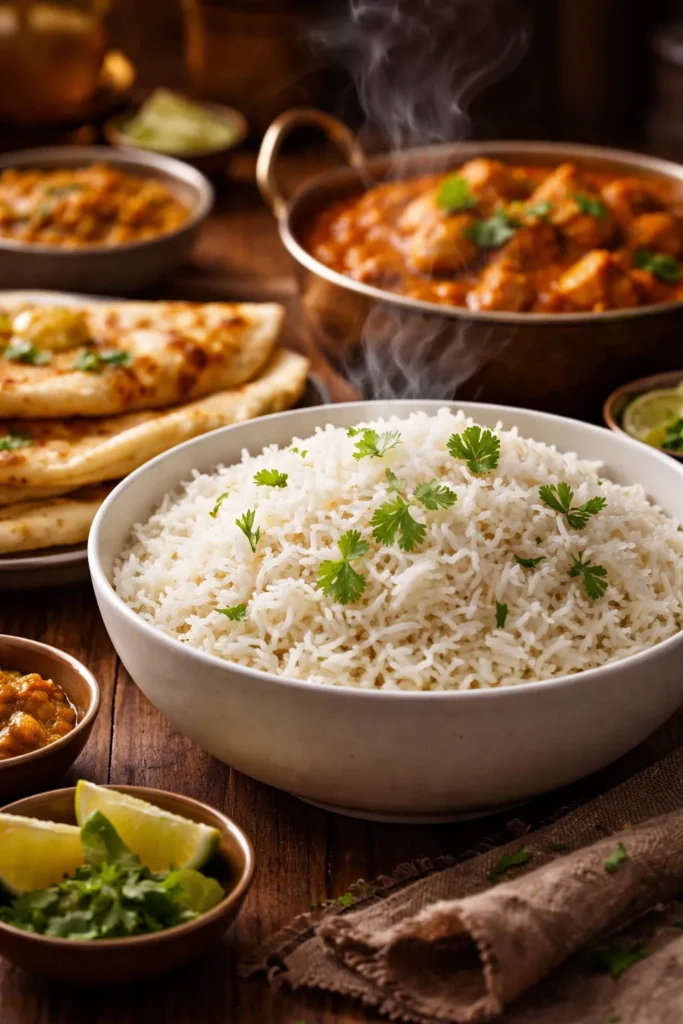
A great curry deserves something equally good to eat it with. The classic pairings are classic for a reason: they’re designed to complement and contrast.
Rice Options
Basmati rice is the default for good reason — its long, fluffy grains and slightly floral aroma pair with curry without competing with it. Rinse it until the water runs clear, then cook using the absorption method (1 cup rice to 1.5 cups water, bring to a boil, cover and simmer 12 minutes, rest 10 minutes with the lid on). The rest period matters — don’t skip it.
Jeera rice (basmati cooked with cumin seeds and a bay leaf bloomed in ghee first) takes 2 extra minutes and elevates the whole meal. Brown basmati works as a nutritious swap with a slightly nuttier flavor.
Flatbreads
- Naan — pillowy, chewy, and ideal for scooping thick gravies; homemade is better but good store-bought naan toasted in a dry pan is excellent
- Roti/chapati — thin whole-wheat flatbreads that are lighter than naan and eat beautifully with drier curries like aloo gobi and keema matar
- Paratha — layered, flaky flatbread that’s somewhere between a roti and a pastry; brilliant with richly sauced curries
Cooling Sides
A bowl of raita — plain yogurt with grated cucumber, a pinch of cumin, and some fresh mint — is the traditional counterpoint to spiced curry. It cools the palate, provides a textural contrast, and takes about 3 minutes to put together. A simple tomato-cucumber salad with a squeeze of lemon serves the same purpose and adds freshness.
Storing, Reheating, and Making Curry Ahead
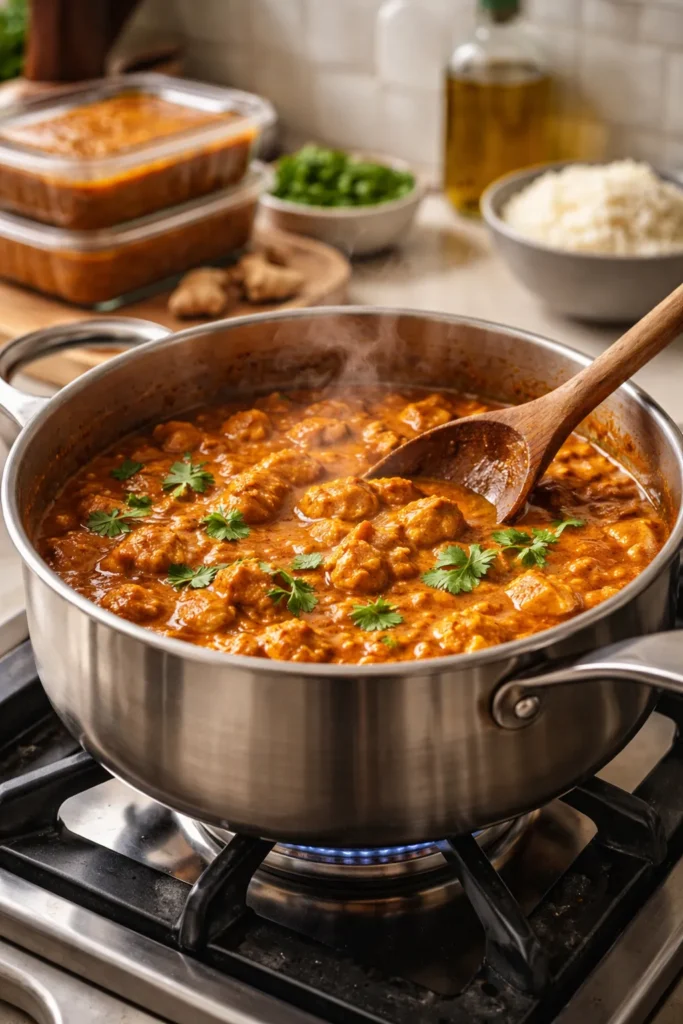
One of the best things about curry — genuinely one of the best things — is that it gets better after a night in the fridge. The spices bloom further, the proteins absorb the sauce more deeply, and what was already good at dinner is often better at lunch the next day.
Refrigerator Storage
Most curries keep well in a sealed container in the fridge for 4–5 days. The exceptions are seafood curries, which are best eaten within 2 days. Store rice separately from the curry — rice stored in sauce becomes mushy as it absorbs moisture overnight.
Freezing Curry
Almost every curry on this list freezes well, with one caveat: curries made with coconut milk or cream can sometimes separate slightly when thawed. A quick stir over gentle heat usually brings them back together. Curries with potatoes freeze less successfully — the potato texture turns grainy after freezing. It’s better to freeze the sauce base without potatoes and add freshly cooked ones when reheating.
Freeze in flat freezer bags for faster thawing, label with the name and date, and freeze for up to 2–3 months. Thaw overnight in the fridge before reheating gently on the stovetop over medium-low heat with a splash of water.
Reheating Without Ruining It
Low and slow is the rule for reheating curry. High heat causes sauces to break, proteins to dry out, and spices to bitter. Cover the pan, use medium-low heat, stir occasionally, and add a tablespoon or two of water or stock if the sauce has thickened in the fridge. It should be ready in 5–7 minutes.
Making Components Ahead
If weeknight timing is tight, do the prep work on the weekend:
- Make the curry paste (the blended aromatics from recipe 1) up to 3 days ahead; store in a sealed jar in the fridge
- Hard-boil eggs and refrigerate unpeeled for up to 5 days
- Press and cube tofu, then store dry in the fridge for up to 3 days
- Cook lentils and refrigerate — they reheat in minutes
With the aromatics and proteins prepped, most of these recipes become genuinely 10-minute meals on the night.
Final Thoughts
Indian home cooking is, at its core, weeknight cooking. It was built by people who needed flavor fast, who were working with whatever was in the pantry, and who had mouths to feed before everyone got too hungry to be polite. That tradition lives in every one of these ten recipes.
The real unlock isn’t any single technique — it’s the understanding that spices do the heavy lifting. Once you trust that a 2-minute bloom of coriander and cumin in hot oil creates something genuinely complex, you stop over-complicating the process. The rest is just cooking.
Start with whatever calls to you most. If you’re a meat eater, the quick chicken curry or keema matar will make the fastest impression. If you’re plant-based or trying to eat less meat, the chana masala and red lentil dal deliver extraordinary depth with almost no effort. Work your way through all ten, and you’ll have built a curry rotation that could carry you through months of weeknights without ever reaching for the takeout menu.
The spice rack is waiting. The pan is ready. Start with the thing that smells best to you — that’s always the right call.