Picture a long table covered in mismatched serving platters, everyone reaching across each other, someone’s elbow nearly knocking over a bottle of olive oil, and the whole room smelling of oregano, lemon, and roasting garlic. That’s a Greek family feast — and once you’ve hosted one, a quiet dinner for two feels a little lonely by comparison.
Greek cooking was practically designed for a crowd. The cuisine is built on sharing. Mezze plates get passed around, salad bowls get refilled, and the main course arrives in abundance because, as any Greek grandmother will tell you, running out of food is simply not an option. The ingredients are straightforward — good olive oil, fresh lemon, garlic, dried herbs, and whatever protein fits your table — but the results consistently taste like you spent far more effort than you actually did.
What makes these dishes ideal for feeding a large group isn’t just the portion sizes. It’s the timing. Many Greek classics can be prepped hours or even a full day ahead, which means you’re actually with your guests instead of trapped in the kitchen. A moussaka can be assembled the night before. Souvlaki marinates while you sleep. Baklava improves as it sits. The cuisine rewards the kind of relaxed, confident hosting where the cook gets to eat, drink, and enjoy the company too.
Whether you’re feeding twelve people on a Sunday afternoon or putting together a spread for a celebration that stretches into the night, these ten recipes have you covered from first bite to last.
Table of Contents
- 1. Chicken Souvlaki with Tzatziki
- The Marinade Is Everything
- How to Scale for a Big Group
- 2. Spanakopita
- Working with Phyllo Dough
- Feast-Ready Tips
- 3. Moussaka
- Building the Layers Right
- Make-Ahead Magic
- 4. Classic Greek Salad (Horiatiki)
- Building the Salad Correctly
- Scaling and Serving Tips
- 5. Pastitsio
- The Two Sauces
- 6. Lemon Herb Roasted Potatoes
- Getting the Texture Right
- 7. Lamb Chops with Garlic and Rosemary
- Cooking for a Crowd
- Serving Suggestions
- 8. Avgolemono Soup
- The Technique That Makes It Work
- 9. Baklava
- Building and Baking
- 10. Loukoumades (Greek Honey Doughnuts)
- Frying and Finishing
- Putting the Feast Together
1. Chicken Souvlaki with Tzatziki
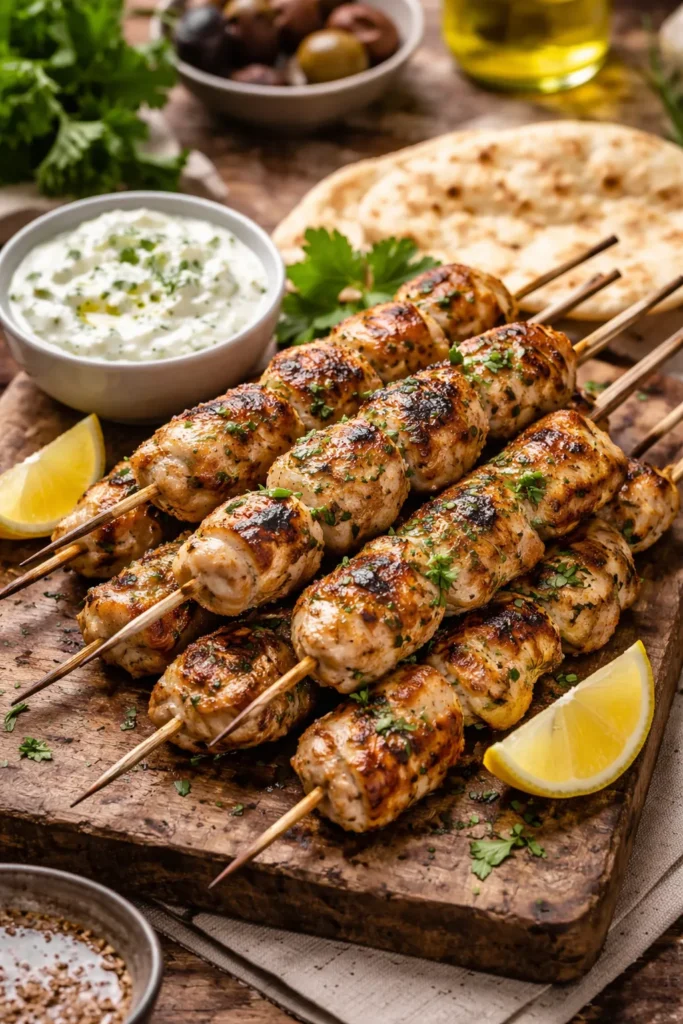
Few dishes announce a Greek feast quite like a platter of souvlaki — golden, herb-charred chunks of chicken threaded onto skewers, piled high and served with cool, garlicky tzatziki alongside warm pita. The name comes from the Greek word souvla, meaning spit or skewer, and the dish has been a street food staple across Greece for centuries. For a family feast, it’s one of the most practical dishes you can make: it scales up effortlessly, it’s hands-on and fun to eat, and most of the work happens in the marinade.
The Marinade Is Everything
The chicken needs to spend at least three hours in its marinade — overnight is even better. Combine a generous pour of good olive oil, fresh lemon juice, smashed garlic cloves, dried oregano, a pinch of paprika, and salt. The acid from the lemon tenderizes the meat while the fat from the oil carries the herb flavor deep into each piece. Use boneless, skinless chicken thighs instead of breasts if you want meat that stays juicy even if it sits on the platter for a few minutes before everyone serves themselves.
How to Scale for a Big Group
- For 8 to 10 people, start with 3 lbs of chicken cut into 1.5-inch cubes
- Soak wooden skewers in water for at least 30 minutes before threading to prevent scorching
- Cook on a grill pan over medium-high heat, rotating every 2 minutes, for about 12 minutes total
- Rest the skewers for 5 minutes before serving — the juices redistribute and every bite stays moist
For the tzatziki, strain full-fat Greek yogurt through a cheesecloth for 30 minutes, then grate a cucumber and squeeze out as much water as possible before folding it in. Add minced garlic, a drizzle of olive oil, chopped dill or mint, and lemon juice. The straining step is what separates a thick, restaurant-quality sauce from the watery version that slides off the pita.
Worth knowing: Prepare the tzatziki the day before your feast. The flavors meld beautifully overnight, and one less thing to do on the day makes a real difference when you’re cooking at scale.
2. Spanakopita
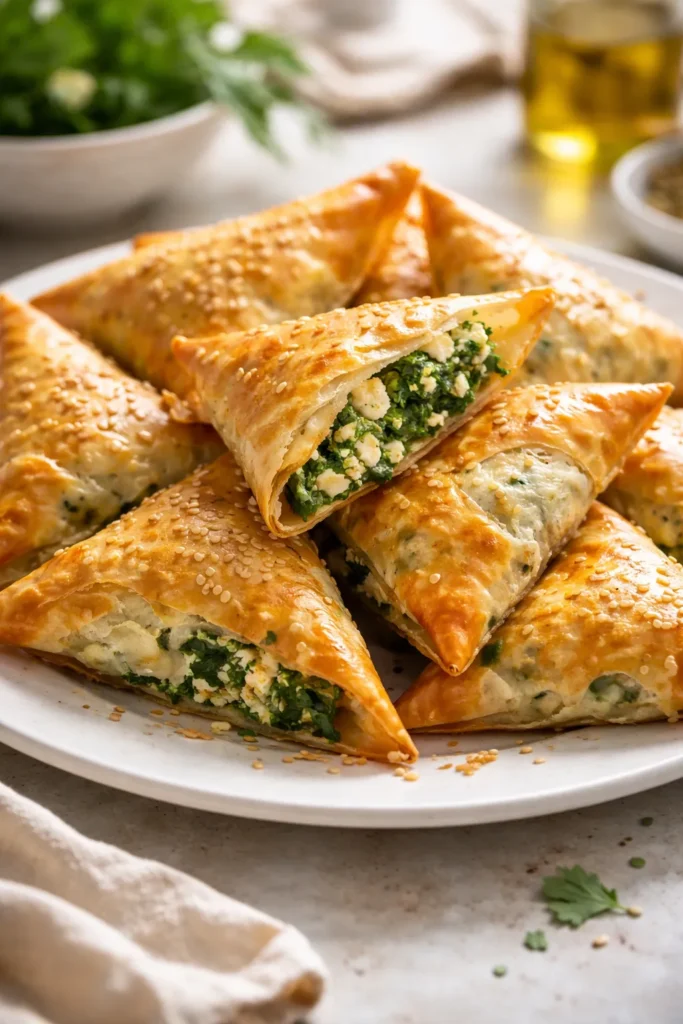
There’s something almost theatrical about spanakopita arriving at the table — that shatteringly crisp, golden-brown phyllo crust giving way to a fragrant filling of spinach and feta that’s simultaneously rich and fresh. This is the dish that disappears fastest at any Greek gathering, which means you should probably make two pans.
The filling combines cooked spinach (squeeze it dry — this step is non-negotiable), crumbled feta, eggs to bind everything together, sautéed onion, fresh dill, and a pinch of nutmeg. The nutmeg is subtle, but it adds a warmth that makes people wonder what they’re tasting and why it’s so good. Don’t skip it.
Working with Phyllo Dough
Phyllo is the part that intimidates most cooks, but it’s far more forgiving than its reputation suggests. The key rules are simple: thaw the dough in the refrigerator overnight rather than at room temperature, keep the unused sheets covered with a damp towel while you work, and brush each layer generously with melted butter or olive oil. Thin sheets that aren’t properly coated dry out and crack; properly oiled sheets bake up crisp and flaky.
Feast-Ready Tips
- Make it the day before: Assembled, unbaked spanakopita freezes perfectly. Pull it straight from the freezer and bake — add about 10 minutes to the cooking time
- A 9×13-inch baking dish serves 12 portions comfortably
- Cut into squares rather than triangles for a crowd — it’s easier to serve and portion
- Let it cool for at least 15 minutes before cutting; the filling needs to settle or it will spill out
Serve it warm or at room temperature. It’s one of the rare dishes that’s equally delicious either way, which makes it ideal for a buffet-style spread where food sits out for a while.
3. Moussaka
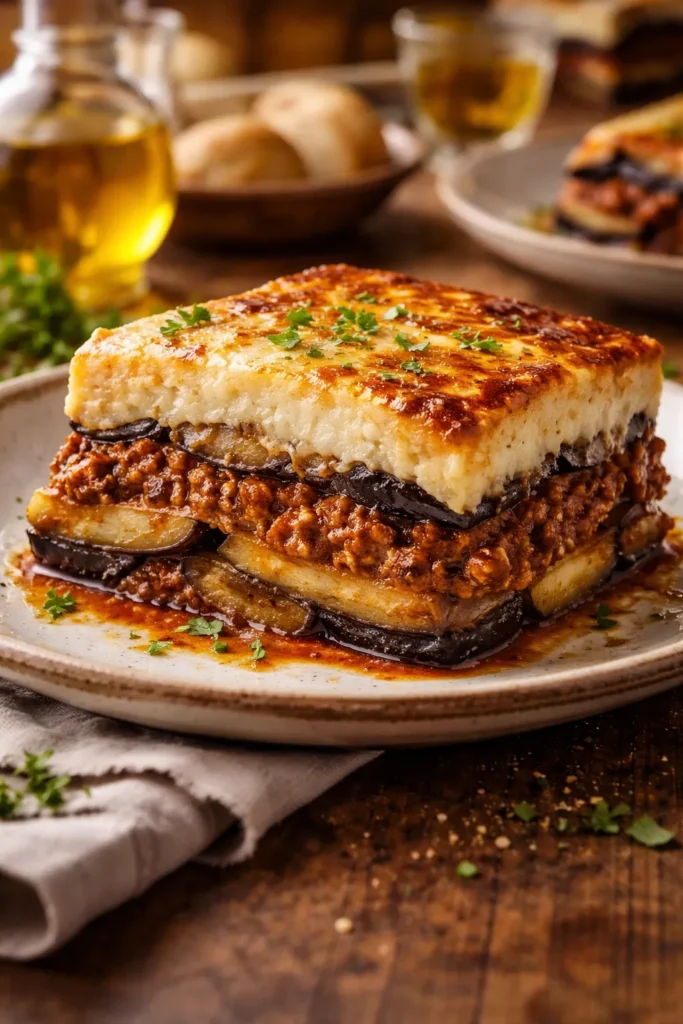
Moussaka is the Greek answer to lasagna — layered, deeply savory, and far better the second day than the first. It’s a dish that rewards patience and planning, and for a big feast, that’s actually one of its greatest strengths. The components can all be made separately and assembled the evening before, then baked fresh on the day.
The classic construction has three distinct layers: sliced eggplant (sometimes with potato) roasted or lightly fried until tender, a spiced meat sauce made with ground lamb or beef cooked down with tomatoes, cinnamon, allspice, and red wine, and a thick béchamel on top that bakes into a golden, slightly set custard. Each layer has its own job, and together they create something genuinely greater than the sum of its parts.
Building the Layers Right
The eggplant is the layer most cooks rush, and rushing it is the most common mistake. Slice it about a half-inch thick, salt the slices, let them sit for 20 minutes, then pat them completely dry. This draws out bitterness and excess moisture that would otherwise make the bottom layer soggy. Roast at 400°F rather than frying to save time when cooking for a group.
The meat sauce should be cooked down until it’s almost dry — any excess liquid will bleed through the layers and make the dish watery. Add a cinnamon stick while it simmers; remove it before assembling. That warm spice is what makes moussaka taste distinctly Greek rather than like any other meat sauce.
Make-Ahead Magic
- Assemble completely, cover with foil, and refrigerate up to 24 hours before baking
- Bring to room temperature for 30 minutes before going into the oven
- Bake covered for 30 minutes, then uncovered for another 20 to 25 minutes until the béchamel is deep golden brown
- Rest for at least 20 minutes before slicing — this is the step most people skip, and it’s why their servings fall apart
A 9×13-inch dish comfortably feeds 8 to 10 people as a main course.
4. Classic Greek Salad (Horiatiki)
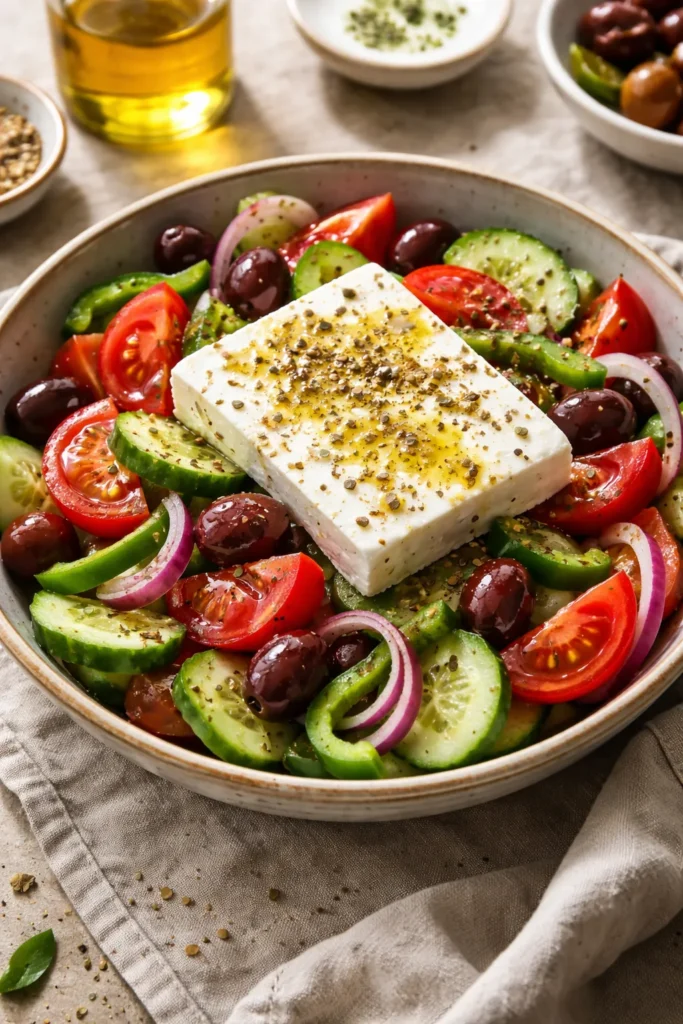
A proper horiatiki — the village salad that appears on every Greek table from the simplest taverna to the grandest restaurant — is not a supporting character at this feast. It earns its place through sheer, confident simplicity. Ripe tomatoes, cool cucumber, thinly sliced red onion, Kalamata olives, green pepper, a block (not crumbles — a whole block) of PDO feta laid on top, dried oregano, and enough olive oil to pool at the bottom of the bowl. That’s it. No lettuce. No vinegar in the traditional version.
The entire recipe lives and dies on ingredient quality. A winter tomato from a plastic bag has no place here. Use the ripest, most fragrant tomatoes you can find — they should be at room temperature, never refrigerated, and ideally bought the same day you’re serving.
Building the Salad Correctly
Cut the tomatoes into large, irregular wedges rather than neat slices. The rustic approach isn’t laziness — it exposes more surface area to soak up the dressing and gives each bowl something to scoop with a piece of bread. The cucumber should be unpeeled or partially peeled in stripes for visual interest, and cut into thick half-moons.
Scaling and Serving Tips
- For 8 people: 4 large tomatoes, 2 cucumbers, 1 medium red onion, 200g feta, 1 cup Kalamata olives
- Dress with 4 tablespoons of olive oil, a pinch of dried oregano, and a little sea salt just before serving
- Never toss a horiatiki — the dressing is drizzled over the top, not mixed in, and the feta stays whole on top as the centerpiece
- Set out a bottle of olive oil at the table so guests can add more — they will
This salad takes 15 minutes to assemble and zero cooking. For a feast where your oven and stovetop are already working hard, that kind of simplicity is worth its weight in gold.
5. Pastitsio
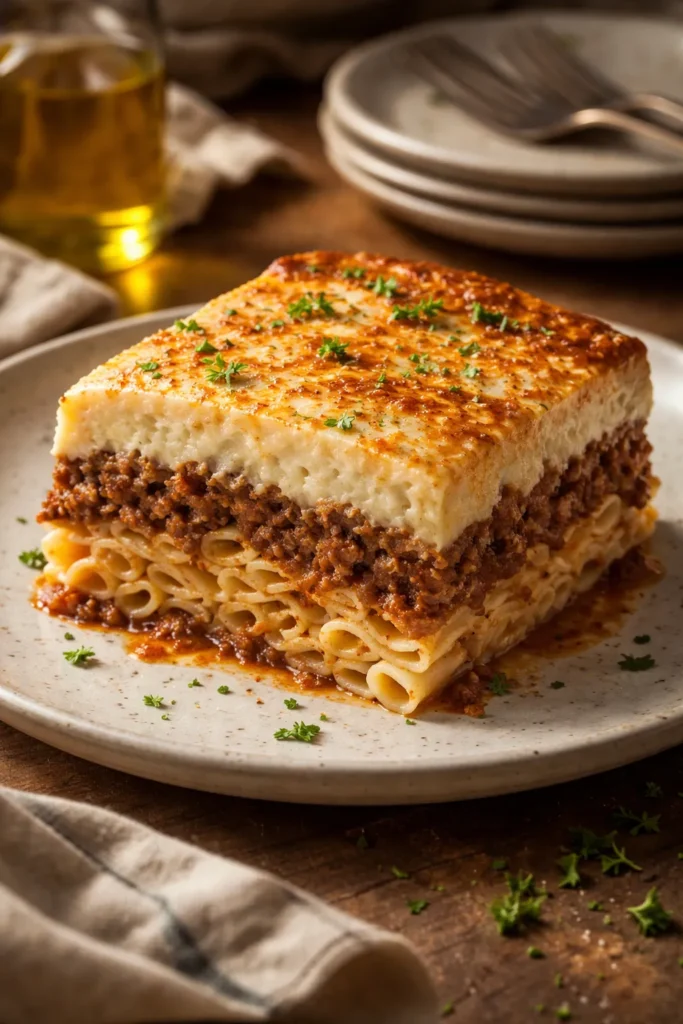
If moussaka is the Greek lasagna, pastitsio is the Greek baked ziti — and it’s even more crowd-friendly because it’s easier to portion, travels well, and reheats beautifully without losing texture. Layers of thick pasta (traditionally a Greek tube pasta called kritharaki, though penne or ziti work well) are combined with a richly spiced meat sauce, then blanketed in a silky béchamel and baked until golden and bubbling.
The pasta layer gets an egg beaten through it before going into the dish, which helps it hold together when sliced into clean squares. That detail alone separates homemade pastitsio from anything that looks vaguely similar.
The Two Sauces
The meat sauce follows a similar spice profile to moussaka — ground beef or lamb, tomatoes, cinnamon, allspice, and a bay leaf — but it tends to be slightly looser here because the pasta will absorb some of that liquid during baking. Cook the sauce until it’s thick and fragrant, taste it for seasoning, and then set it aside to cool slightly before combining with the pasta.
The béchamel needs to be made with patience. Melt butter, whisk in flour, cook for 2 minutes to eliminate the raw flour taste, then gradually add warm milk, whisking constantly. Season with nutmeg, salt, and white pepper. The finished sauce should coat the back of a spoon without dripping.
- Use a deep baking dish — a 10×14-inch roaster pan works well for a large batch
- Pasta should be cooked just until al dente before assembling; it will continue to cook in the oven
- Dust the top of the béchamel with a little grated Kefalotyri or Parmesan before baking for a deeper golden crust
- Rests at room temperature for up to 30 minutes after baking and still slices beautifully
6. Lemon Herb Roasted Potatoes
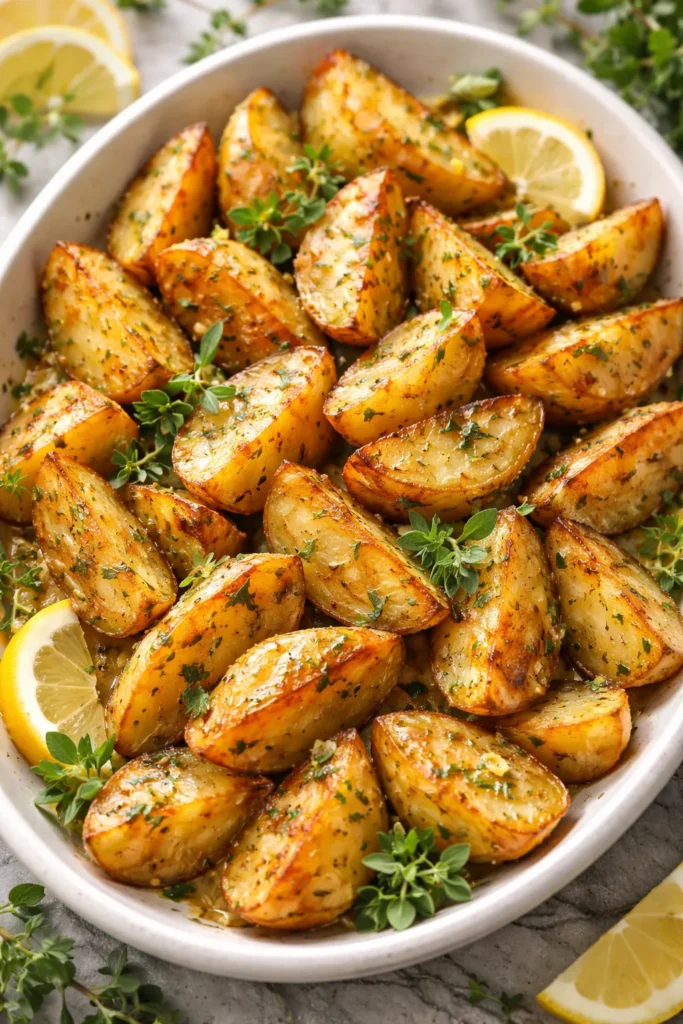
No Greek feast — absolutely none — is complete without a pan of roasted potatoes that have spent a long time in a hot oven absorbing lemon juice and olive oil until their edges are crispy and their centers are almost creamy. These potatoes are not a side dish in the supporting-cast sense. They’re a destination.
The technique that makes Greek roasted potatoes different from standard roasted potatoes is the liquid. You don’t just toss the potatoes in oil and roast them dry. You combine olive oil, lemon juice, chicken stock, garlic, and dried oregano, pour it all over the potato wedges, and let the pan go into the oven with that liquid present. As it cooks, the liquid evaporates and the potatoes essentially braise and roast simultaneously — absorbing every bit of that citrus and herb flavor before the exterior crisps up in the final stretch.
Getting the Texture Right
- Cut Yukon Gold or baby yellow potatoes into wedges, not rounds — the angle creates more surface area to crisp
- The pan should be large enough that the potatoes sit in a single layer; crowding them causes steaming instead of roasting
- Start at 400°F, then raise to 425°F for the last 15 minutes to drive off remaining moisture and get the color
- Toss with fresh chopped parsley and a squeeze of extra lemon the moment they come out of the oven
For a group of 8, use 2.5 lbs of potatoes. These can be par-cooked and finished in the oven right before serving — which makes timing much easier when you’re juggling multiple dishes.
7. Lamb Chops with Garlic and Rosemary
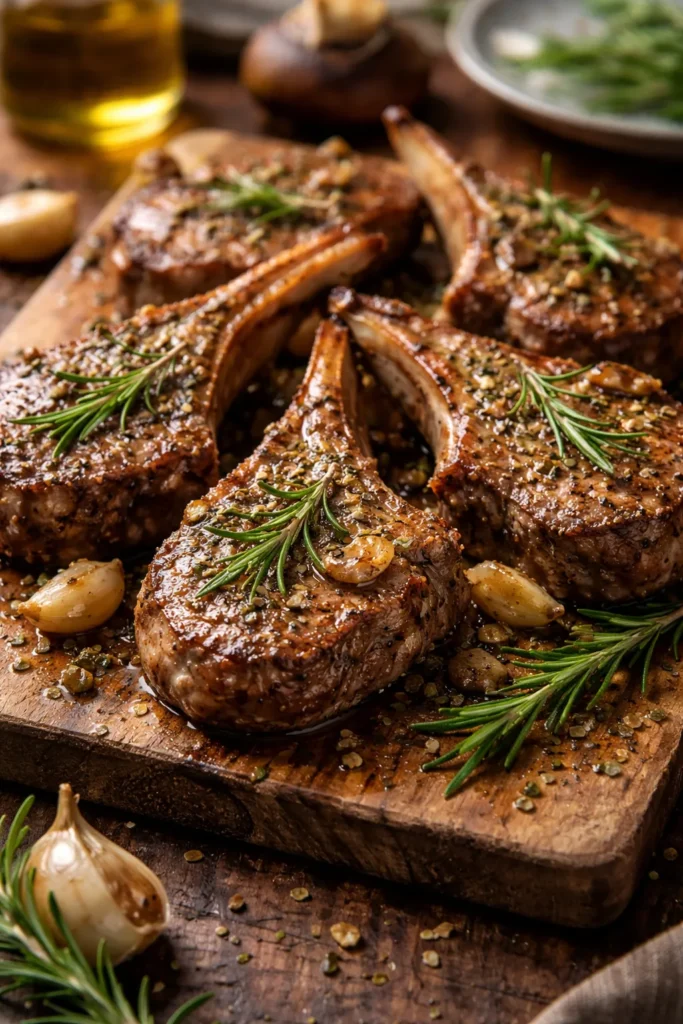
Lamb chops feel celebratory in a way that few other proteins do. They’re individual, they’re impressive on a platter, and they cook fast — which means you can grill or sear a full batch in under 30 minutes even for a large group. For a family feast, loin chops work best because they’re thick enough to get a proper sear on the outside while staying pink and tender at the center.
The marinade should be built around the classic Greek combination of olive oil, lemon, garlic, and oregano — but adding fresh rosemary here gives the lamb a woodsy, slightly resinous quality that pairs beautifully with the mineral richness of the meat. Marinate for at least 2 hours, preferably 4.
Cooking for a Crowd
The challenge with lamb chops for a large group is getting them all to the table at the right temperature. The solution is to cook them in batches, let them rest on a foil-covered platter in a warm oven (around 200°F), and serve them all together once the last batch is done. They’ll hold their temperature and juiciness for up to 20 minutes this way.
Serving Suggestions
- Pair with the whipped feta dip or a simple hummus as a sauce alongside
- A plate of halved lemons at the table is traditional — let guests squeeze their own
- Sprinkle with flaky sea salt right before serving, not before cooking
- Figure 2 to 3 chops per person for a feast where multiple dishes are being served
Pro tip: Bring the lamb chops to room temperature for 30 minutes before cooking. Cold meat hitting a hot pan causes uneven cooking — the outside overcooks before the inside reaches temperature.
8. Avgolemono Soup
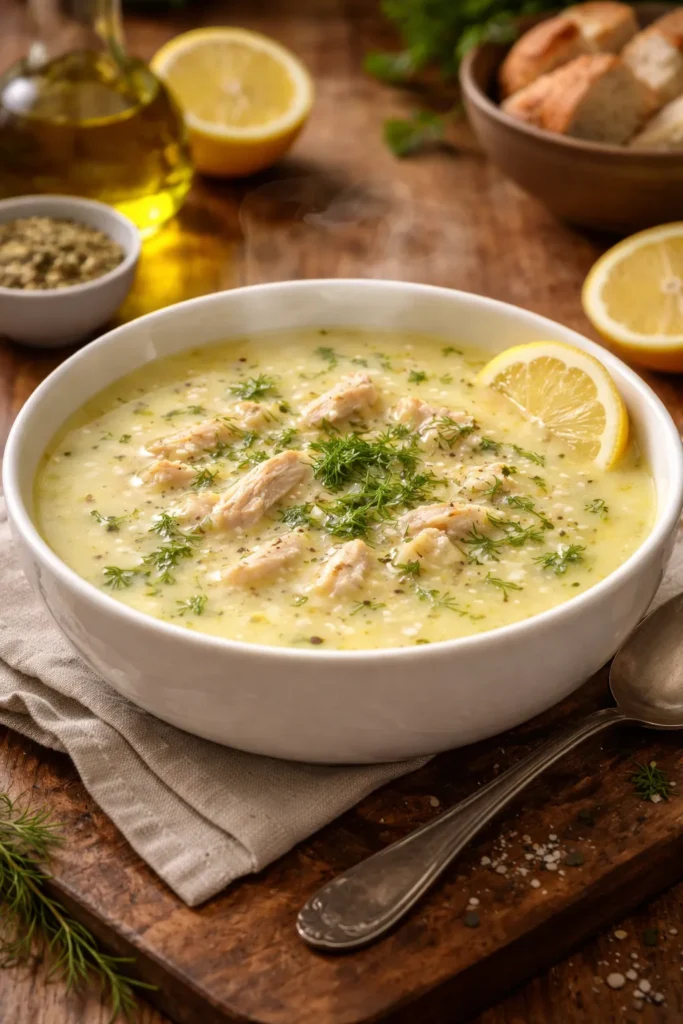
Avgolemono is Greek comfort food at its most elemental — a broth-based chicken soup thickened with a mixture of eggs and lemon juice that transforms it into something velvety, silky, and completely unlike any other soup. The name translates directly: avgo means egg, lemono means lemon. And that combination, whisked together and slowly tempered into hot broth, creates a texture that feels luxurious without being heavy.
For a feast, this soup works beautifully as a starter that doesn’t overwhelm the appetite. It’s warm, soothing, and just substantial enough to satisfy — especially if you’re serving it before a spread of mains.
The Technique That Makes It Work
The tempering step is where most first-timers stumble. You can’t just pour cold egg-lemon mixture directly into boiling broth — the eggs will scramble and you’ll end up with lemon-flavored egg drop soup. Instead, whisk the eggs and lemon juice together until frothy, then slowly ladle hot broth into the egg mixture one scoop at a time, whisking constantly, until the mixture is warm. Only then do you pour it back into the pot.
- Keep the soup at a gentle simmer, never a rolling boil, once the egg mixture is added
- Orzo or long-grain rice both work as the starch component — orzo gives a slightly silkier consistency
- Add shredded rotisserie chicken to save time when cooking for a crowd
- Season aggressively with salt and white pepper — the lemon should be bright and assertive, not just a hint
A batch made with 8 cups of broth comfortably serves 6 to 8 as a starter portion.
9. Baklava
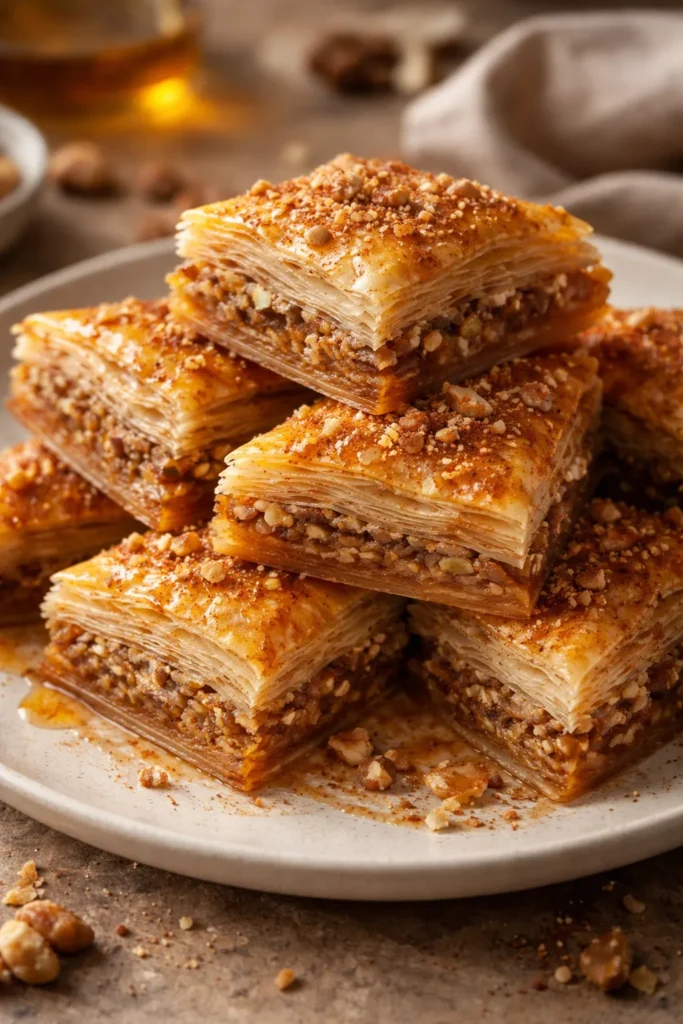
Baklava is the dish you make when you want every person at your table to close their eyes on the first bite. It’s intensely sweet, gloriously sticky, and constructed with the kind of layered precision that looks far more difficult than it actually is. The payoff-to-effort ratio is extraordinary — one pan makes four dozen pieces, which means you’re producing dozens of moments of genuine joy from a few hours of work.
The classic Greek version uses a combination of roughly chopped walnuts and almonds, layered between sheets of buttered phyllo and soaked in a honey syrup flavored with cinnamon and a strip of orange peel. Some versions use only walnuts; others add pistachios for color and a slightly sweeter flavor. Any combination of nuts works, as long as they’re chopped coarsely — fine crumbles make the filling dense rather than textured.
Building and Baking
Layer 8 sheets of buttered phyllo on the bottom, add a thin layer of nut mixture, then alternate 2 to 3 sheets of phyllo with nut layers until you’ve used all your filling. Finish with 8 more sheets of buttered phyllo on top. Cut the diamond or square shapes before baking — trying to cut through baked baklava shatters the phyllo.
- Bake at 325°F for 45 to 55 minutes until deeply golden from top to bottom
- Pour the cooled syrup over the hot baklava the moment it comes out of the oven — hot baklava, cool syrup
- Let it sit for at least 4 hours before serving — overnight is better, as the syrup soaks through every layer
- Baklava keeps at room temperature, covered loosely, for up to two weeks
Worth knowing: Making baklava two days before your feast means it’s at its absolute best when guests arrive — and one less thing to think about on the day.
10. Loukoumades (Greek Honey Doughnuts)
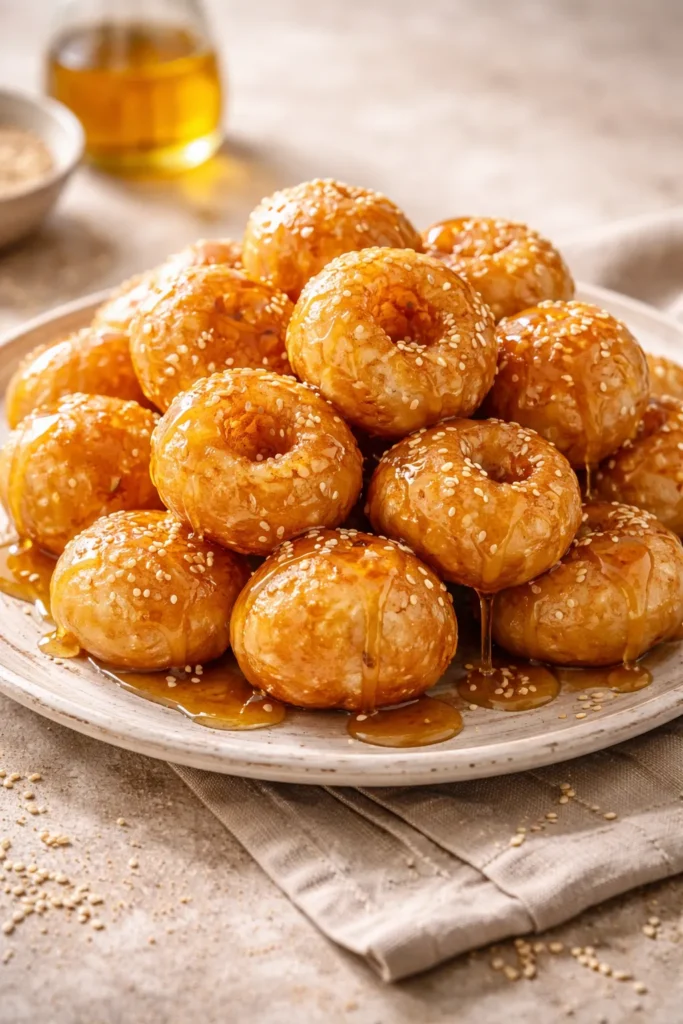
If baklava is the elegant finale, loukoumades are the crowd-pleasing encore. These bite-sized fried doughnuts — airy, golden, and dripping with warm honey — have been eaten in Greece since ancient times, and the fact that they’re still everywhere from street stalls to home kitchens tells you everything about how irresistible they are. For a family feast, they bring an element of theatre: they’re best served straight from the fryer, which means a little live-action cooking at the table.
The batter is a simple yeast dough — flour, yeast, water, a pinch of salt and sugar — left to rest until bubbly and alive. The dough should be shaggy and somewhat sticky; don’t be tempted to add more flour. That high hydration is what creates the characteristic light, hollow interior that soaks up honey without becoming heavy.
Frying and Finishing
Use a neutral oil with a high smoke point — sunflower or canola — in a deep pot, heated to 350°F. Drop the batter in using a small ice cream scoop or two wet spoons, and fry in small batches to keep the oil temperature stable. They take about 3 to 4 minutes total, turning occasionally, until every surface is a deep amber gold.
- Drain briefly on paper towels, then move to the serving plate immediately
- Drizzle generously with warm honey — thyme honey or a good wildflower variety work beautifully
- Finish with crushed walnuts and a dusting of cinnamon
- Optional: a light sprinkle of sesame seeds adds a nutty crunch that plays well against the sweetness
Make the dough ahead: Mix and let it rise in the refrigerator overnight. Pull it out 45 minutes before frying to come to room temperature. This gives you maximum flavor from the slow fermentation and zero day-of stress.
Putting the Feast Together
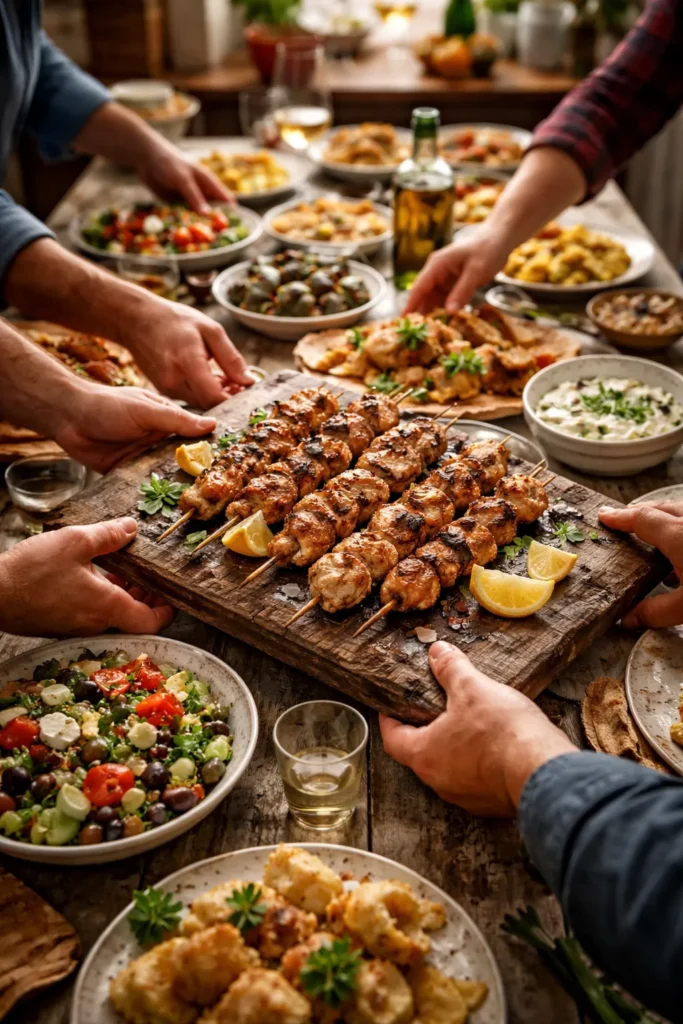
A Greek feast works best when it’s layered — a few things happening at once, timed so the meal unfolds naturally rather than arriving all at once in a frantic rush.
Start with the mezze: tzatziki, hummus, the Greek salad, and warm olives. These keep guests happily occupied while the mains finish. Souvlaki and lamb chops come hot off the grill or pan, joined by the roasted potatoes and spanakopita. Moussaka or pastitsio — whichever you’ve chosen — comes out of the oven as a centerpiece. Then, after a bit of breathing room, the sweets arrive.
The secret to pulling off a spread like this without losing your mind is preparation spread across two days. Marinate meats the night before. Make the baklava two days out. Assemble the moussaka or pastitsio the evening before. That way, the day of the feast involves mostly reheating, finishing, and assembling — and you actually get to sit at that beautiful, chaotic, wonderful table with everyone else.
Greek food is generous by nature. Cook with that same spirit, and the feast will take care of itself.