There’s a version of “healthy dinner” that’s haunted kitchens for decades — a pale chicken breast next to a pile of unseasoned steamed broccoli, eaten with grim determination because this is what eating right looks like. Millions of people have cooked that meal, suffered through it, and quietly ordered a pizza by Friday. And honestly? They weren’t weak. They were just following the wrong playbook.
The thing is, healthy food and delicious food aren’t actually opposites. They’re the same thing when you know what you’re doing. The dinners that fuel your body, help you hit a protein target, and keep you satisfied until morning — those meals can also be the ones you genuinely look forward to at 6 PM after a long day. That gap between “good for you” and “good to eat” isn’t about ingredients. It’s about technique, seasoning, and understanding what actually makes a meal satisfying.
What separates a dinner that keeps you full and energized from one that leaves you raiding the pantry an hour later comes down to three things: adequate protein (roughly 25-45 grams per meal), enough fiber-rich vegetables to create real volume on your plate, and bold, well-developed flavor. Miss any one of those three and you’ve got a meal that feels like a punishment even if the calories are perfectly counted.
Every dinner on this list was built around all three. They’re weeknight-ready, built from ingredients you can find in any grocery store, and — this matters — they taste like something you’d choose to eat even if nobody told you to eat healthy.
Table of Contents
- Why “Healthy” Dinners Get a Bad Reputation
- The Formula Behind Every Satisfying Healthy Dinner
- The Protein Anchor
- The Volume Play
- The Flavor System
- 1. Lemon-Garlic Sheet Pan Salmon with Roasted Broccoli
- Why This Combination Works
- What to Know
- 2. Turkey Bolognese over Chickpea Pasta
- The Technique Behind the Flavor
- What to Know
- 3. Blackened Tilapia with Mango-Lime Slaw
- Building the Blackening Spice Blend
- What to Know
- 4. Shrimp and Vegetable Stir-Fry with Ginger-Soy Sauce
- The Sauce Formula
- What to Know
- 5. Greek Chicken Bowls with Homemade Tzatziki
- Marinating the Chicken
- What to Know
- 6. One-Pan Chicken Fajita Skillet
- Building the Flavor Base
- What to Know
- 7. Roasted Butternut Squash and Black Bean Tacos
- Getting the Squash Right
- What to Know
- 8. Pesto Chicken with Zucchini Noodles and Burst Cherry Tomatoes
- The Pesto Question
- What to Know
- 9. Spinach-Stuffed Turkey Meatballs with Marinara
- Baking vs. Pan-Frying
- What to Know
- 10. Chickpea Coconut Curry with Basmati Rice
- Building Flavor Fast
- What to Know
- How to Cook Any of These Dinners in Under 30 Minutes
- The Staging Sequence
- The Mise en Place Habit
- Making Healthy Dinners a Habit Without Willpower
- Final Thoughts
Why “Healthy” Dinners Get a Bad Reputation
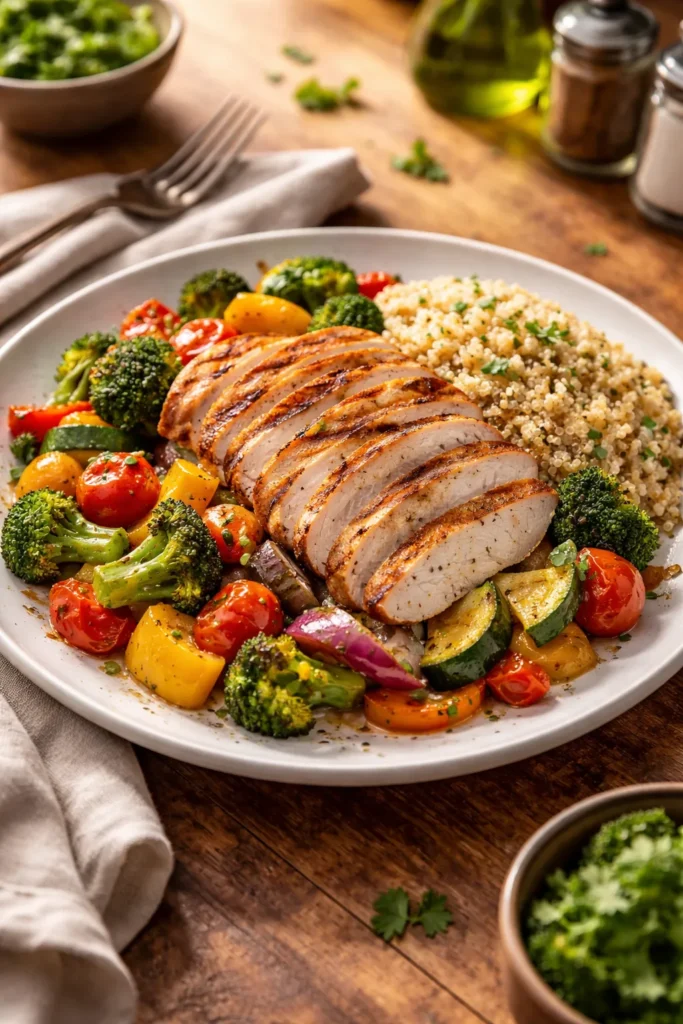
The failure isn’t in the philosophy. Eating more vegetables, leaner proteins, and whole grains genuinely does support weight management, energy levels, and long-term health. The failure is almost always in the execution — and specifically, in the radical underseasoning that plagues so much “clean eating” cooking.
Salt is not the enemy. Neither is olive oil. Used in appropriate amounts — measured rather than free-poured — these ingredients are what make food taste like food. A teaspoon of olive oil adds only 40 calories and dramatically improves both flavor and texture. Half a teaspoon of kosher salt across a full dinner adds essentially nothing from a calorie standpoint and makes everything taste better. The instinct to strip all fat and salt from a healthy meal is what produces the flavorless results that give nutritious eating such a bad name.
The other culprit is cooking technique. Steaming keeps calories low but does nothing for flavor. Roasting at high heat — 400°F to 425°F — caramelizes the natural sugars in vegetables, browns the exterior of proteins, and creates layers of flavor that no amount of seasoning can replicate on a boiled piece of chicken. Roasting is the single most impactful technique swap a home cook can make when building healthy dinners that actually satisfy.
Variety matters just as much. Eating identically prepared food five nights in a row — regardless of how nutritious it is — triggers sensory-specific satiety, which is a very academic way of saying your brain gets bored and starts craving something different. The dinners that follow cover six different global flavor profiles, three different protein types, and a range of textures. That variety isn’t just for fun — it’s the practical mechanism that keeps healthy eating sustainable over weeks and months rather than collapsing by day eight.
The Formula Behind Every Satisfying Healthy Dinner
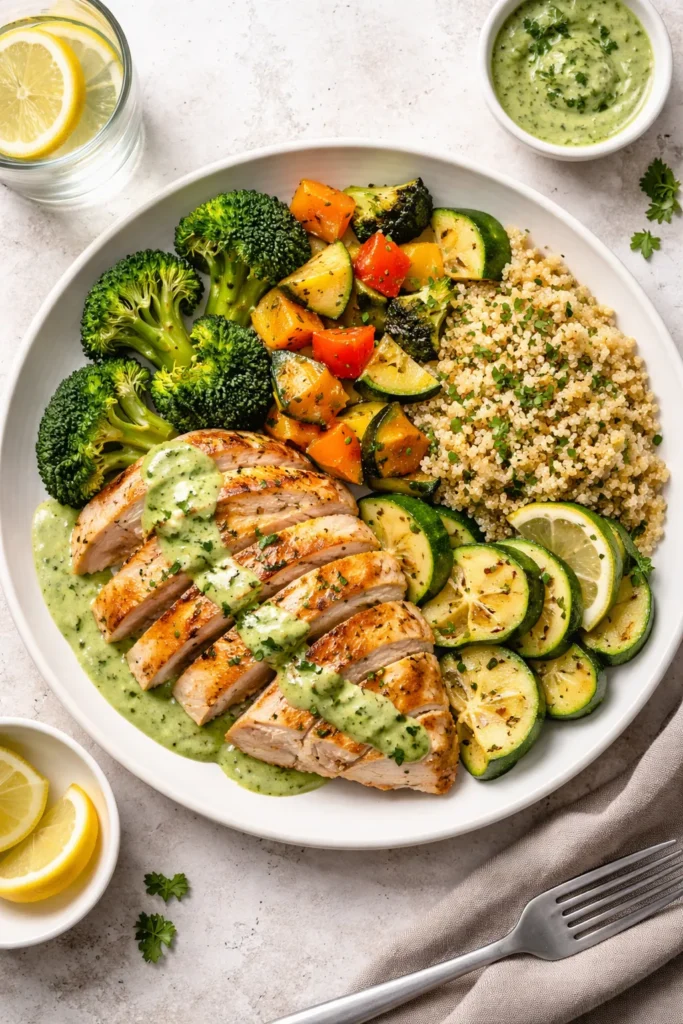
Before getting to the specific recipes, it helps to understand the architecture they all share. Once you see the pattern, you can improvise and adapt without losing what makes these meals work.
Every dinner on this list follows the same underlying structure: one high-quality protein source, one or two non-starchy vegetables, a smart carbohydrate portion, and a sauce or seasoning system that ties everything together. That’s it. Vary the protein, vary the vegetables, change the seasoning profile, and you have a different meal every night of the week.
The Protein Anchor
Protein is the non-negotiable starting point. It’s the macronutrient most directly responsible for satiety — it triggers the release of hormones like GLP-1 and PYY that signal fullness to your brain. A dinner without adequate protein, regardless of how many vegetables it contains, tends to leave people hungry again within two hours.
Aim for 25-40 grams of protein per dinner. Practically speaking, that’s a 5-6 ounce portion of chicken breast, a 6-ounce salmon fillet, 7-8 ounces of shrimp, or about a cup of cooked lentils combined with a legume-based pasta.
The Volume Play
Non-starchy vegetables — broccoli, zucchini, bell peppers, spinach, cauliflower, green beans — give you the most food per calorie of anything on a dinner plate. Two cups of roasted broccoli weighs in around 80 calories and provides 5 grams of fiber. That fiber slows digestion, extends satiety, and makes your stomach physically fuller. Putting 1-2 cups of these vegetables on every dinner plate isn’t a sacrifice — it’s the cheat code for feeling genuinely satisfied without overconsuming calories.
The Flavor System
Bold, well-layered seasoning is what makes people crave healthy food instead of tolerating it. Every dinner here uses a combination of aromatic base ingredients (garlic, onion, ginger), dry spices or herbs, an acid element (lemon, lime, vinegar) added at the end, and a finishing touch — fresh herbs, a sauce, a garnish. That’s four layers of flavor, applied strategically, that cost almost nothing in calories and everything in palatability.
1. Lemon-Garlic Sheet Pan Salmon with Roasted Broccoli
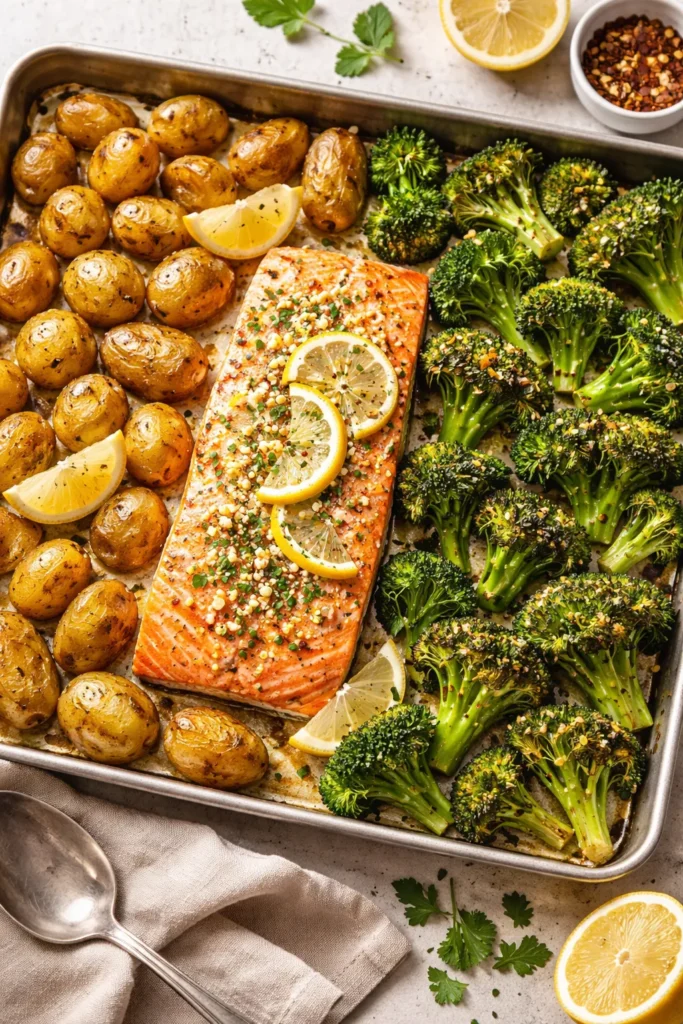
Few dinners deliver this combination of effortlessness and genuine eating pleasure. Salmon is one of the most protein-dense, omega-3-rich proteins you can put on a weeknight table — a 6-ounce fillet provides around 34 grams of protein and a dose of anti-inflammatory fatty acids that you’d be hard-pressed to match from any other single ingredient. Pair it with roasted broccoli and baby potatoes on the same pan, and you’ve got a complete meal that dirties one sheet pan and takes about 30 minutes from cold oven to the table.
Why This Combination Works
The key to this dish is temperature and sequence. The potatoes go onto the pan first — they need about 12-15 minutes at 425°F before anything else joins them. Then the salmon and broccoli go in together for the final 12-15 minutes. This staged approach means everything finishes at the same time with the same level of doneness, which sounds obvious but is something most one-pan recipes completely ignore.
The seasoning is simple on purpose: garlic, lemon zest (applied before cooking for depth), a touch of dill, salt, and black pepper. The lemon juice itself goes on after cooking as a finishing squeeze. If you add acid before roasting, it steams the fish rather than caramelizing it and you lose all that gorgeous browning on the exterior.
What to Know
- Pull the salmon at 140°F internal temperature — it’ll hit the USDA-safe 145°F during the five-minute rest while you plate everything else
- Broccoli needs space on the pan; crowded florets steam instead of roasting and turn soft and dull
- One salmon fillet, one pan, about six ingredients — this is the emergency dinner you can execute even on your worst Wednesday
- Wild-caught salmon tends to have a more pronounced flavor and slightly firmer texture than farmed; both work perfectly here
Pro tip: Rub the salmon with garlic and lemon zest the morning of and let it sit loosely covered in the fridge. Even two hours of contact makes a noticeable difference in how the flavor penetrates the fish.
2. Turkey Bolognese over Chickpea Pasta
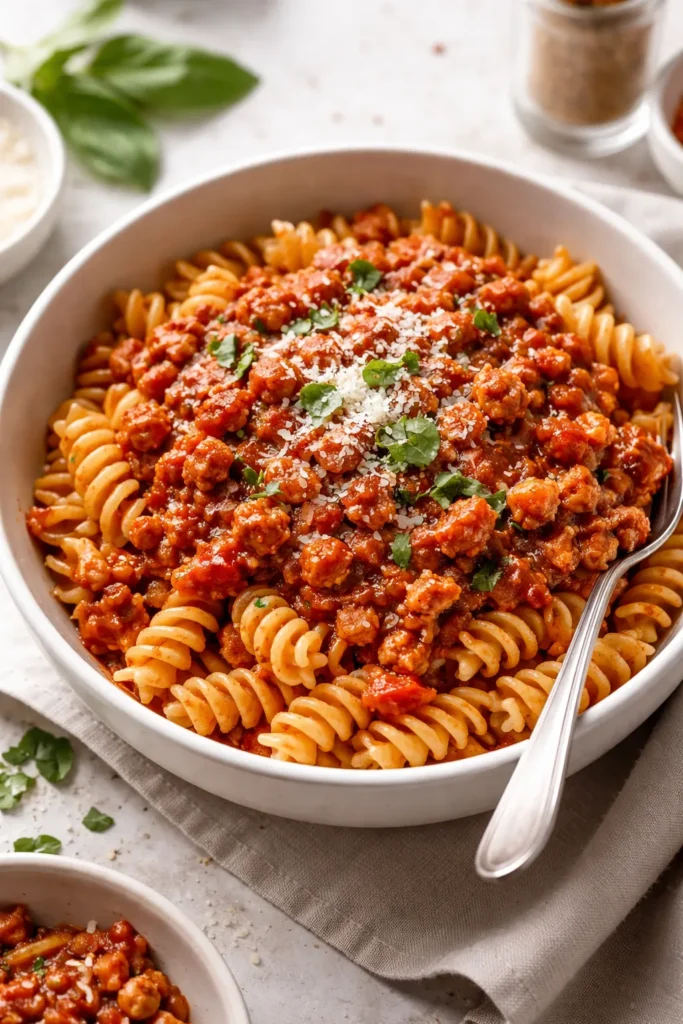
Bolognese is comfort food at its most satisfying, and the traditional version — slow-simmered beef and pork, butter, whole milk, a glass of wine — is genuinely spectacular. This version uses 93% lean ground turkey and chickpea pasta, and it’s not a pale imitation. It’s a different dish that’s just as satisfying and dramatically higher in protein per bowl.
The swap that makes the biggest difference isn’t the turkey — it’s the pasta. Chickpea-based pasta contains around 20-25 grams of protein per serving compared to 7-8 grams in regular pasta. Combined with 6 ounces of ground turkey (approximately 30 grams of protein), a single bowl of this bolognese can push 50+ grams of protein with all the carbohydrate satisfaction of a pasta dinner.
The Technique Behind the Flavor
Ground turkey has a reputation for being bland, and it is — if you cook it incorrectly. The fix is simple: don’t rush the browning. Break the turkey into medium-sized crumbles rather than tiny bits, get your pan hot before adding the meat, and resist the urge to stir constantly. Let the meat sit undisturbed for 2-3 minutes per side so it develops a genuine brown crust. Those browned bits on the bottom of the pan are flavor, and you want them there before you add the garlic and marinara.
Choose a jarred marinara with no added sugar and a short ingredient list — tomatoes, olive oil, garlic, herbs, salt. A good marinara and properly browned turkey carry this dish without anything else.
What to Know
- Add a splash (about ¼ cup) of the starchy pasta cooking water to the sauce before combining with the pasta — it helps the sauce cling instead of sliding off
- Red pepper flakes added with the garlic are non-negotiable for depth
- Store sauce and pasta separately in the fridge; pasta held in sauce overnight gets mushy
- This freezes beautifully — make a double batch and freeze half the sauce before adding pasta
3. Blackened Tilapia with Mango-Lime Slaw
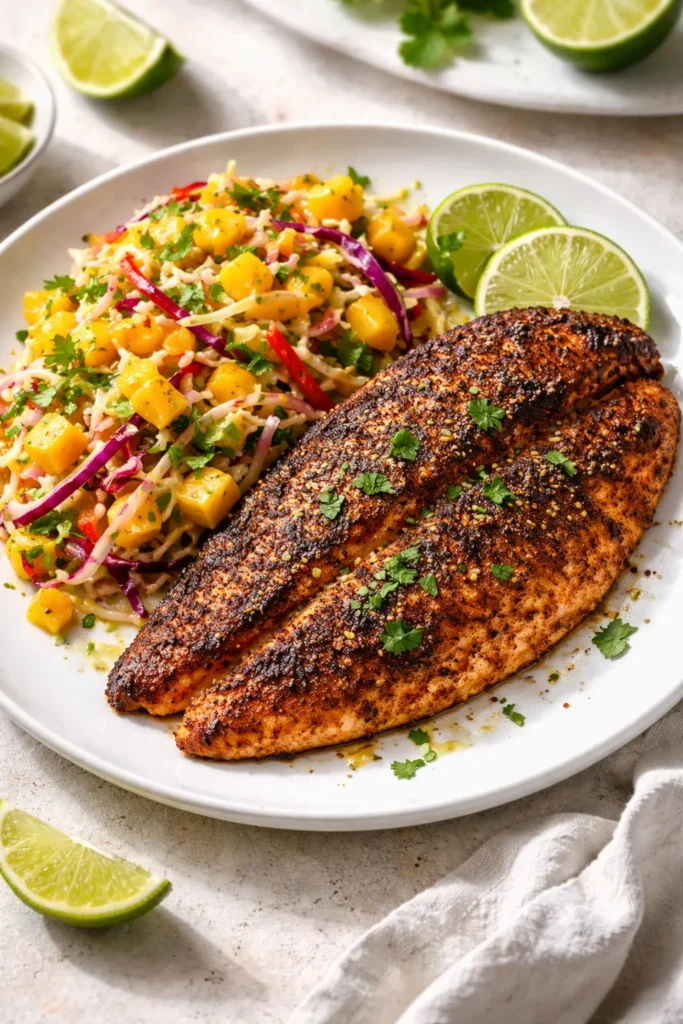
Tilapia doesn’t get the credit it deserves. It’s one of the leanest protein sources available — a 4-ounce fillet has about 23 grams of protein and fewer than 115 calories — with a mild flavor that acts as a perfect canvas for bold seasoning. Blackening spice turns that mild canvas into something dramatically different: a charred, slightly spicy, deeply savory crust that looks far more impressive than the five minutes it takes to develop.
The mango slaw on the side does something important here. It’s the acid counterpart to the heat of the blackening spice — the sweetness and lime juice cut through the charred intensity and create balance. This contrast is what keeps the dish interesting from first bite to last, which is a flavor principle worth borrowing for any protein-vegetable pairing.
Building the Blackening Spice Blend
You don’t need to buy a pre-made blackening seasoning, and most of them are loaded with sodium anyway. Combine smoked paprika, garlic powder, onion powder, dried oregano, dried thyme, cayenne (as much as your heat tolerance allows), and a pinch of salt. That’s the whole blend. It takes 90 seconds to mix and keeps in a jar for months.
What to Know
- A cast-iron skillet is ideal for blackening — it retains heat better than stainless steel and gets the fish exterior charred without burning the seasoning before the fish cooks through
- Keep the exhaust fan on; blackening genuinely creates smoke and that’s a sign it’s working correctly
- Tilapia fillets are thin (usually ½ to ¾ inch) and cook in 3-4 minutes per side — don’t walk away
- The mango slaw can be made up to a day ahead; it actually improves as it sits and the lime juice softens the cabbage slightly
Pro tip: Pat the tilapia fillets completely dry with paper towels before pressing on the blackening spice. Any surface moisture prevents that hard, crusty sear from forming.
4. Shrimp and Vegetable Stir-Fry with Ginger-Soy Sauce
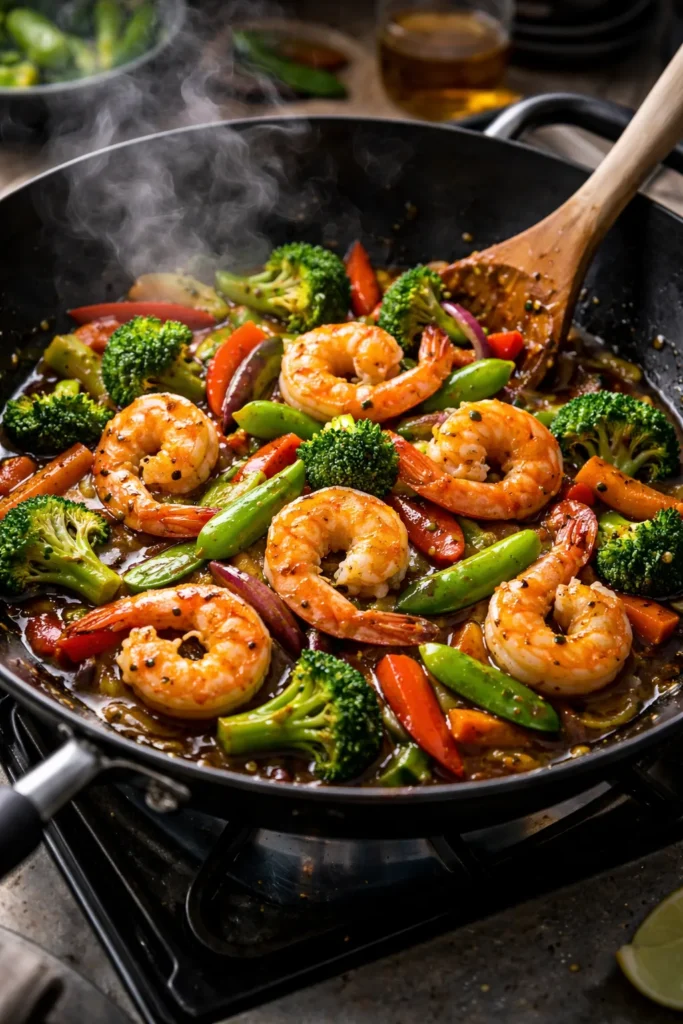
Shrimp is the weeknight dinner hero that most home cooks underutilize. It goes from frozen to fully cooked in under eight minutes, has one of the highest protein-to-calorie ratios of any animal protein (about 23 grams of protein per 3 ounces with fewer than 85 calories), and absorbs bold flavors faster than any other protein because of its porous texture. A stir-fry built around it is genuinely the fastest path to a complete, satisfying, macro-balanced dinner.
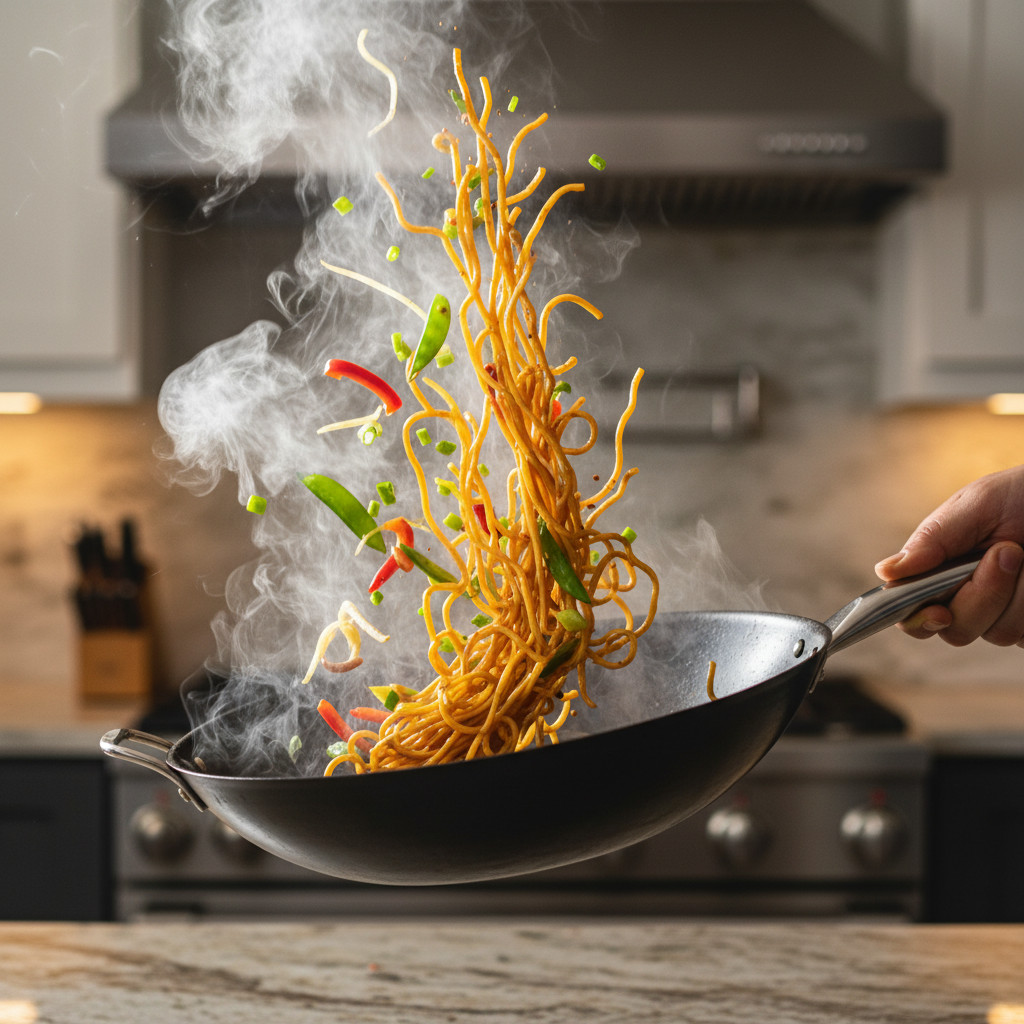
The secret to a good home stir-fry — the thing restaurant kitchens have that most home setups don’t — is wok hei, the slightly smoky, charred quality that comes from cooking at extremely high heat. You can approximate it by getting your pan or wok screaming hot before adding anything, cooking in small batches rather than crowding the pan, and keeping everything moving constantly once it’s in.
The Sauce Formula
Mix 2 tablespoons of low-sodium soy sauce, 1 teaspoon of sesame oil, 1 teaspoon of rice vinegar, a half teaspoon of honey, and a pinch of red pepper flakes. Add minced fresh ginger and garlic directly to the pan rather than to the sauce — aromatics bloom better when they hit hot oil. This sauce formula works with any protein and any combination of vegetables, which makes it worth memorizing rather than looking up each time.
What to Know
- Cook shrimp and vegetables separately, then combine at the end with the sauce — cooking them together almost always results in overcooked shrimp or undercooked vegetables
- Shrimp is done the moment it turns pink and curls into a loose C shape; a tight curl means it’s overcooked
- Frozen broccoli, snap peas, and bell peppers work perfectly here and eliminate all the chopping
- Brown rice holds up better than white when reheated the next day
5. Greek Chicken Bowls with Homemade Tzatziki
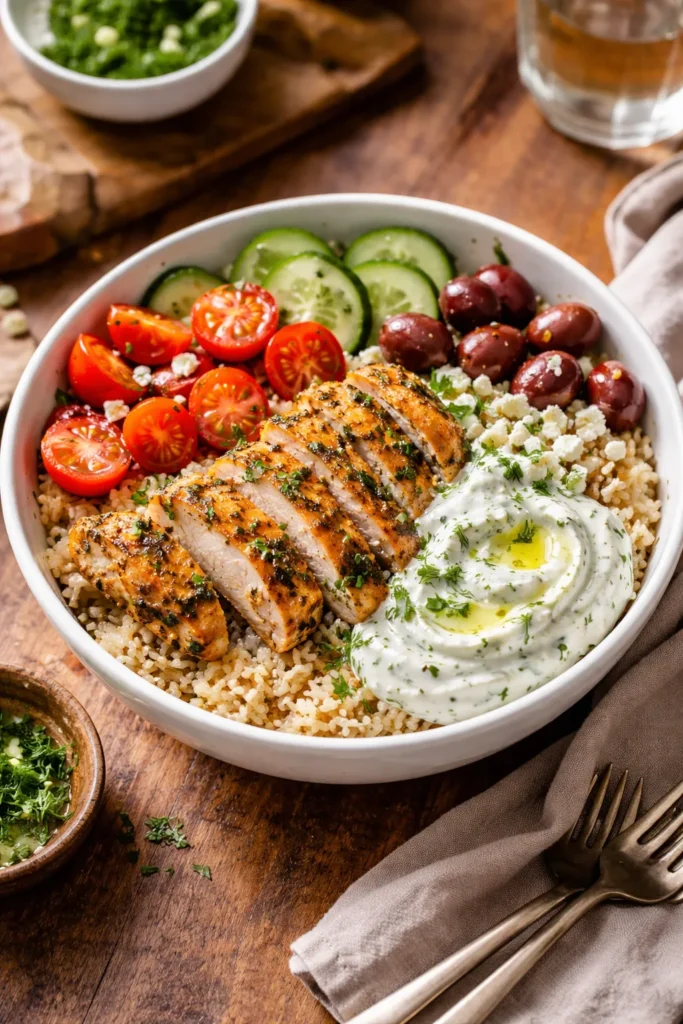
The bowl format is the most reliable structure for a healthy dinner that doesn’t feel like diet food. Each component layers on top of a grain base — in this case, quinoa or brown rice — and you get a different combination of flavors and textures in every bite. The Greek version of this format is one of the most satisfying because of how well the components interact: herb-marinated chicken, cool tzatziki, briny olives, and acidic tomatoes against the warmth of the grain.
The tzatziki here does double duty. It’s a sauce and a protein boost simultaneously — Greek yogurt-based, with grated cucumber (squeezed dry), garlic, dill, and lemon juice. A generous dollop adds about 10 grams of protein to the bowl and the cooling effect balances the warmth of the chicken.
Marinating the Chicken
Greek chicken marinade: olive oil (1 tablespoon), lemon juice, dried oregano, garlic, salt, and pepper. Even 20 minutes in this marinade transforms a plain chicken breast. A few hours is better. The acid in the lemon juice begins to break down the outer muscle fibers, making the cooked chicken noticeably more tender without doing anything to the protein structure deeper inside.
What to Know
- A bed of quinoa adds an additional 8 grams of protein compared to white rice — worth the upgrade for a meal that’s already protein-forward
- Kalamata olives are high in fat but the flavor payoff per olive is significant; measure out 5-6 olives rather than pouring from the jar
- This bowl works cold as well as warm, making it one of the best meal-prep options on this entire list
- Cherry tomatoes halved and tossed with a tiny pinch of salt release juice that mixes with the tzatziki and creates a natural sauce
6. One-Pan Chicken Fajita Skillet
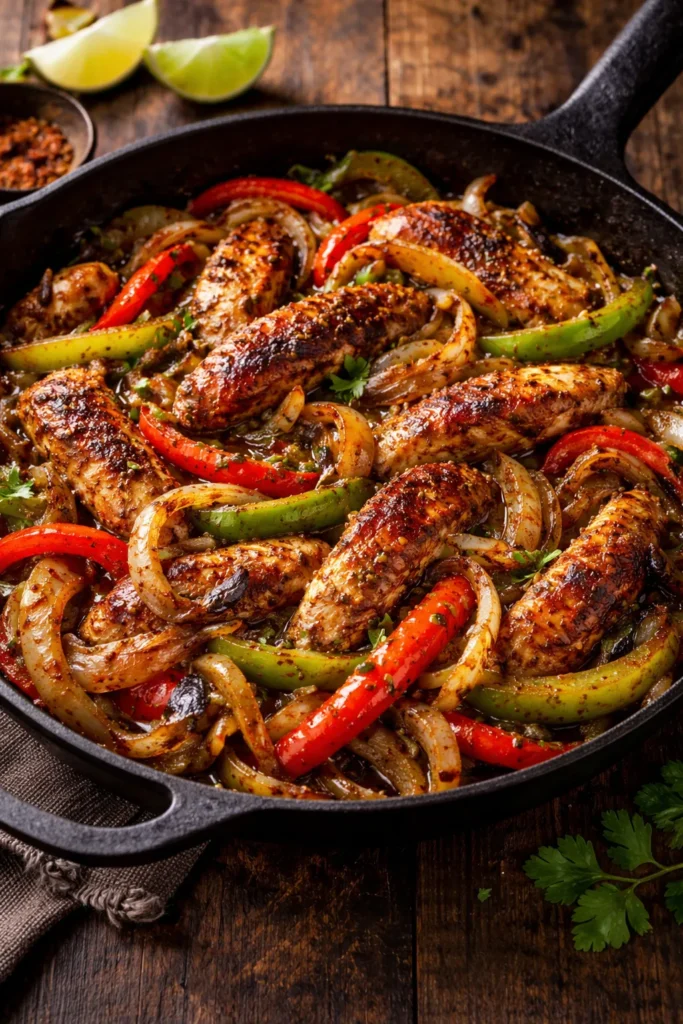
Sheet pan fajitas get all the attention, but a skillet version gets better char on the chicken and vegetables because of direct, sustained contact with a hot surface. Slice the chicken breast into strips about half an inch thick, season aggressively with cumin, smoked paprika, chili powder, garlic powder, and a touch of cayenne, and sear them undisturbed for 2-3 minutes per side before adding the sliced peppers and onions.
What makes this dinner work as a weeknight staple is its flexibility. The fajita components — chicken, peppers, onion — can become a bowl over rice, wrapped in a whole wheat tortilla, layered on top of cauliflower rice for a lower-carb version, or served straight from the pan with salsa and Greek yogurt as sides. One cooking session, four different presentations throughout the week.
Building the Flavor Base
The spice mix is the whole game here. Don’t use store-bought fajita seasoning packets — most of them are more than half salt, with trace amounts of actual spices. Make your own: 2 teaspoons cumin, 1 teaspoon smoked paprika, 1 teaspoon chili powder, half a teaspoon garlic powder, a pinch of cayenne, and a quarter teaspoon of dried oregano. This costs pennies and you control exactly what’s in it.
What to Know
- Let the pan fully preheat for 2-3 minutes over medium-high heat before adding anything — a cold pan produces steaming, not searing
- Cook chicken strips first, remove to rest, then cook vegetables in the same pan; this staggers the heat correctly and builds flavor in layers
- A squeeze of lime over the finished dish at the table brightens everything and shouldn’t be skipped
- This recipe scales up easily — double the batch and you have lunches handled for two days
7. Roasted Butternut Squash and Black Bean Tacos
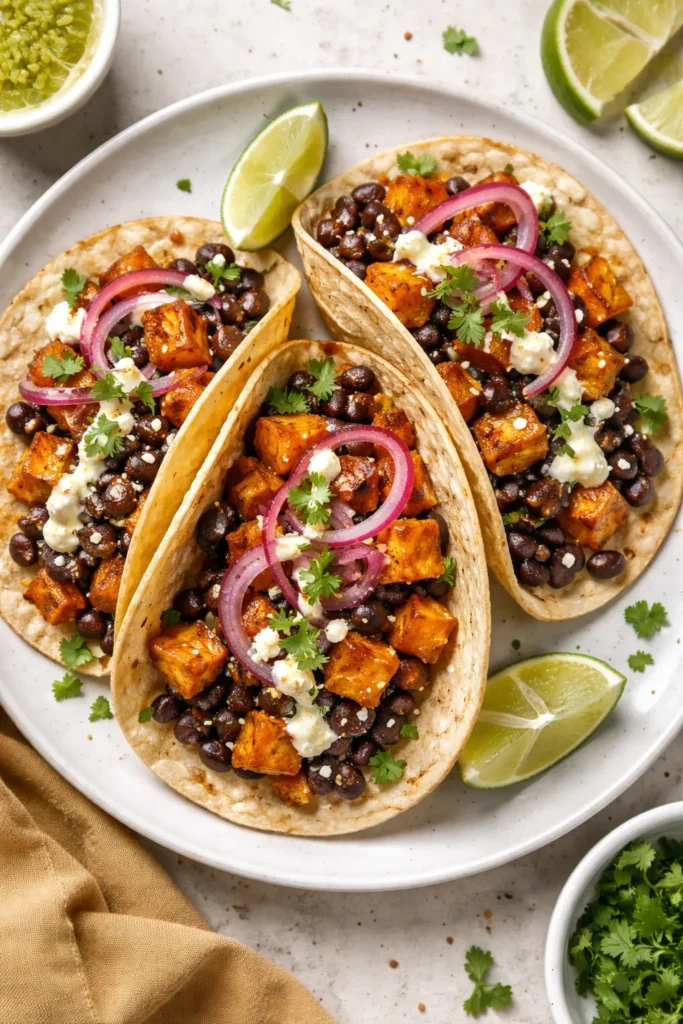
The misconception about vegetarian dinners is that they leave you hungry. Done carelessly, that’s true. Done correctly — with enough protein, fiber, and fat to trigger genuine satiety — a plant-based taco can hold you just as effectively as a meat-based one.
These tacos combine roasted butternut squash (caramelized at 425°F with cumin, chili powder, and smoked paprika) with well-seasoned black beans, a bright pickled red onion, and a quick lime crema made from Greek yogurt. The squash provides natural sweetness and substance. The black beans bring about 8 grams of protein and 7 grams of fiber per half-cup serving. The crema adds tang and creaminess. Together on a warm corn tortilla, this is a taco that competes with any version.
Getting the Squash Right
Cut butternut squash into half-inch cubes — smaller than you think you need. These smaller cubes roast faster (20-25 minutes versus 35+ for larger chunks) and develop more caramelized surface area, which is where all the flavor lives. Toss with avocado oil or olive oil, your spice blend, and a pinch of salt, then spread in a single layer. Do not crowd the pan. Crowded squash steams and turns mushy. Spread-out squash caramelizes and becomes something you want to eat by the handful while standing at the counter.
What to Know
- Warm your corn tortillas directly over a gas flame for 20-30 seconds per side for the best texture and slightly smoky flavor
- The pickled red onion (thinly sliced onion soaked in lime juice and a pinch of salt for at least 15 minutes) transforms the entire taco — don’t skip it
- For added protein, top with a crumble of cotija cheese or a fried egg
- These tacos come in around 350 calories for two, making them one of the lighter options on this list
8. Pesto Chicken with Zucchini Noodles and Burst Cherry Tomatoes
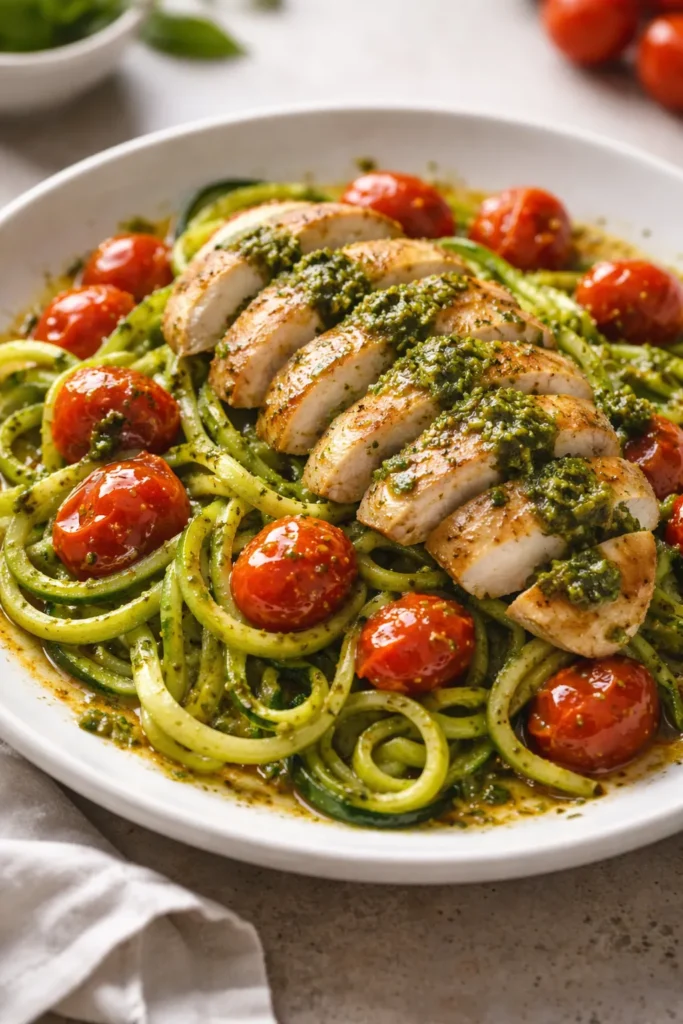
Zucchini noodles have been dismissed as the punchline of diet food, and that’s mostly because people make them wrong. Overcooked zoodles turn into a watery, limp mess that makes everyone sad. The key is treating them more like a vegetable than a pasta replacement — they need only 2-3 minutes in the pan, should still have slight resistance when you eat them, and must be served immediately.
The cherry tomatoes in this dish are what take it from adequate to genuinely crave-worthy. Cook them in the same pan the chicken rested in — medium heat, a minute or two — until they start to blister and pop, releasing their juices. Those concentrated tomato juices mix with the pesto and create a glossy, naturally bright sauce that coats the zoodles without needing any cream or butter.
The Pesto Question
Store-bought pesto is fine here. Look for one with a short ingredient list — basil, pine nuts or walnuts, olive oil, Parmesan, garlic, salt. The portion to use per serving is 1 to 1½ tablespoons, measured rather than estimated. Pesto is calorie-dense (about 80-90 calories per tablespoon due to olive oil and cheese) and easy to over-apply in a way that doubles the fat content of the dish without adding proportional flavor.
What to Know
- Spiralize zucchini yourself or buy pre-spiralized from the produce section — both work equally well
- Salt the zucchini noodles lightly and let them sit on paper towels for 10 minutes before cooking to draw out moisture
- This dish is naturally low in carbohydrates (roughly 15-20g total), which makes it one of the more keto-friendly options on this list
- If you want more staying power, add ½ cup of cooked chickpea pasta to the zoodles — it blends in and adds 11+ grams of protein
9. Spinach-Stuffed Turkey Meatballs with Marinara
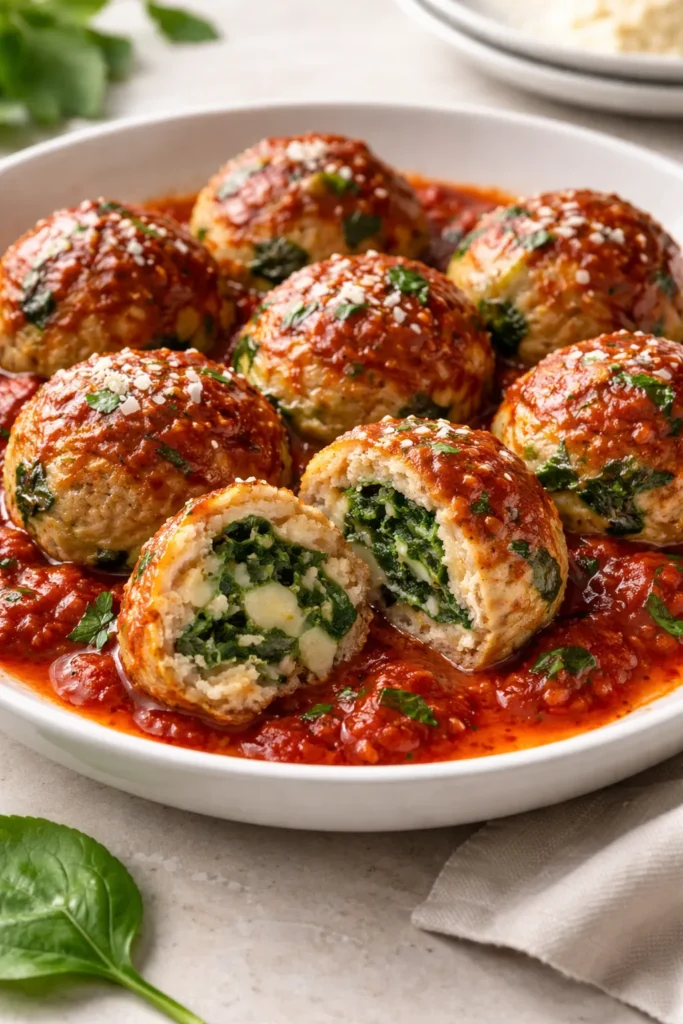
Turkey meatballs have a structural problem that chicken and beef versions don’t share: they’re drier and denser because lean turkey fat renders out during cooking, leaving the meatball tight and crumbly. The solution is spinach — not for any particular nutritional reason, but because the moisture in the spinach (wilted, cooled, and squeezed before adding) keeps the interior of the meatball soft and tender even after baking.
The other key is an egg plus a small amount of whole milk ricotta in the meatball mixture. The ricotta adds just enough fat and creaminess to compensate for what you lost by using lean turkey. A tablespoon per serving adds very few calories but dramatically improves texture in a way that breadcrumbs alone can’t.
Baking vs. Pan-Frying
Baking at 400°F for 18-20 minutes is the more practical method for weeknights — you can make 20 meatballs on a sheet pan while prepping other things. But pan-frying in a small amount of olive oil for 2 minutes per side before finishing in the oven gives you the kind of browned, slightly crispy exterior that makes a meatball feel indulgent rather than diet-friendly. If you have the extra five minutes, it’s worth it.
What to Know
- Roll meatballs to about 1½ inches in diameter — larger than a golf ball means the center won’t cook through before the outside overcooks
- Freeze uncooked meatballs on a sheet pan first, then transfer to a bag — this way they won’t stick together and you can cook exactly as many as you need
- Serve over zucchini noodles, spaghetti squash, or a bed of wilted spinach for a complete meal
- A three-meatball serving with marinara comes in around 230-250 calories and 27 grams of protein
Pro tip: Add a tablespoon of nutritional yeast to the meatball mixture along with the Parmesan — it deepens the savory, umami quality without changing the flavor profile noticeably.
10. Chickpea Coconut Curry with Basmati Rice
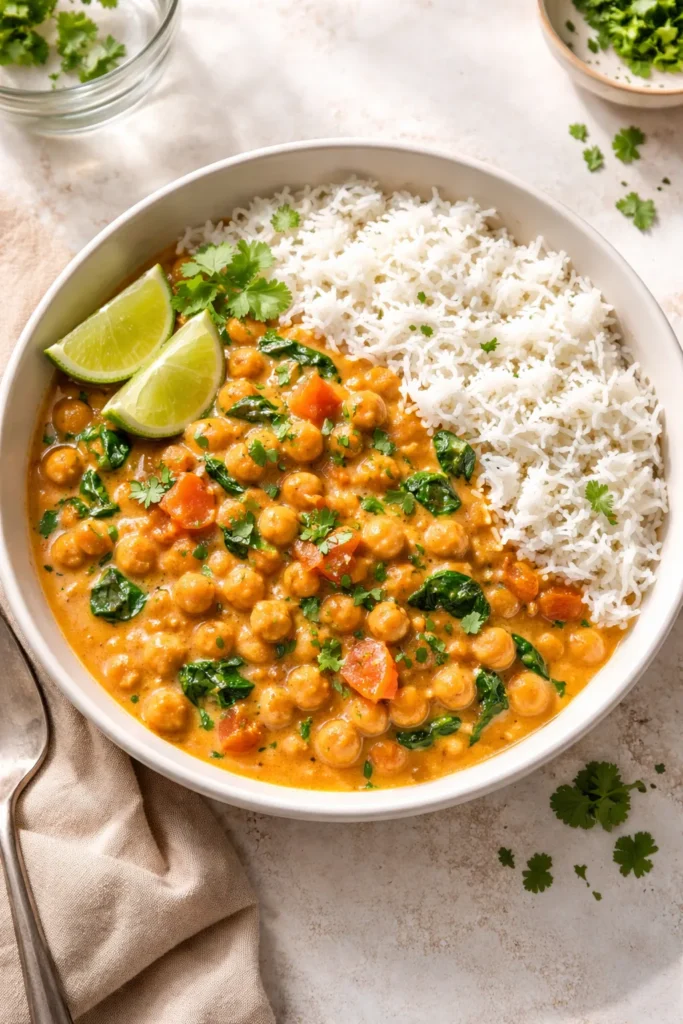
Curry is one of the most chronically underrated weeknight healthy dinners because people assume it’s complicated. The truth is that a deeply satisfying chickpea curry — the kind that smells incredible from three rooms away and tastes like it took most of the afternoon — comes together in under 20 minutes with mostly pantry staples.
The flavor foundation here is curry paste (not powder — paste has more depth because it contains fresh aromatics) bloomed in a small amount of oil for 60 seconds until fragrant, then hit with a splash of light coconut milk. Light coconut milk has about 70% fewer calories than full-fat while retaining enough richness to make the sauce feel genuinely luxurious. Add a can of drained chickpeas, diced tomatoes, and two big handfuls of spinach, and you have a curry that provides around 15-18 grams of plant-based protein per serving.
Building Flavor Fast
The difference between a flat, one-dimensional curry and one with real complexity comes down to two things: blooming the spices in fat before adding liquid, and finishing with acid and fresh herbs. The bloom — that 60-second moment where the curry paste sizzles and becomes fragrant in the oil — is when the fat-soluble flavor compounds in the spices activate. Skip it and the spices taste raw and powdery throughout. Do it correctly and the whole base of the dish deepens.
What to Know
- Add spinach in the last 90 seconds of cooking — it wilts almost instantly and if added earlier it turns gray and unappetizing
- A squeeze of lime and fresh cilantro over each serving are finishing touches that cost nothing and dramatically brighten the flavor
- This dish is naturally vegan and gluten-free, making it one of the most versatile on the list for accommodating different dietary needs at a shared table
- Chickpea curry gets better overnight; the flavors meld and deepen in the fridge, making leftovers arguably better than the original meal
How to Cook Any of These Dinners in Under 30 Minutes
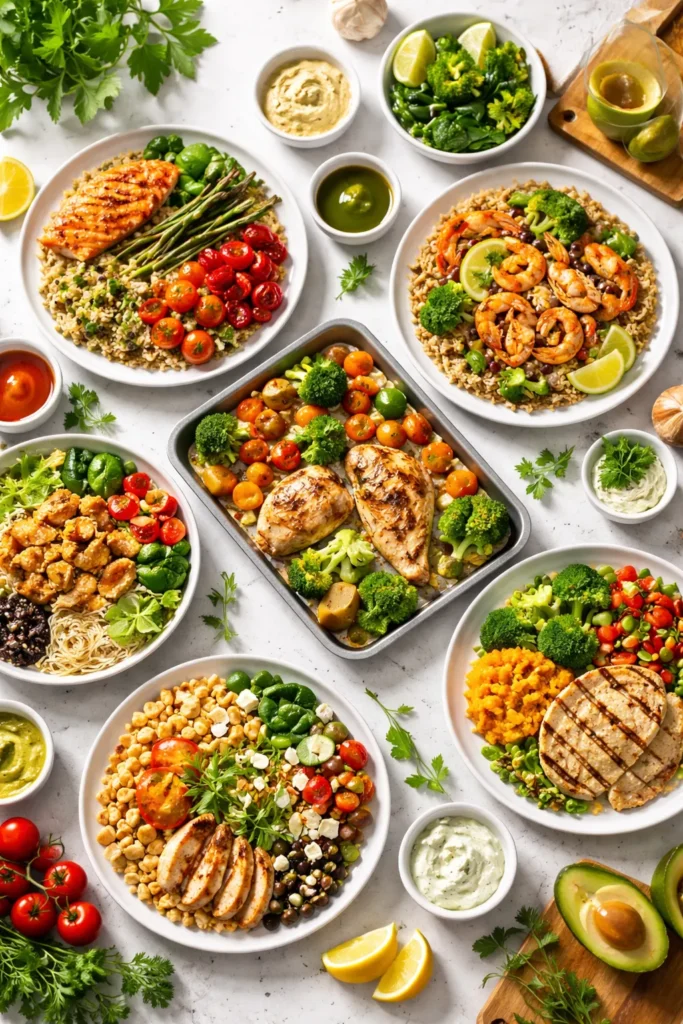
Speed and healthy eating are not mutually exclusive — they just require a slightly different approach to how you organize the cooking process. Most people add time to their dinners by starting everything simultaneously and then scrambling. Cooking in sequence, with a clear understanding of which component takes longest, eliminates that scramble entirely.
The five-minute setup is where 30-minute dinners actually happen. Before turning on a single burner: preheat the oven, pull out every ingredient, do all the chopping, measure all the spices into a small bowl, and have every tool you need on the counter. This five-minute investment means you cook continuously without stopping to search for things mid-process.
The Staging Sequence
Start the component that takes longest — always. If there’s a grain involved, start that first (rice takes 35-45 minutes; get it going before anything else). If you’re roasting vegetables, they go in before the protein because they typically take 5-10 minutes longer at the same temperature. The protein almost always goes last, because it cooks the fastest and suffers the most from sitting and waiting.
For sheet pan dinners, follow this timing guide:
- Starchy vegetables (potatoes, sweet potato, butternut squash): start at minute zero
- Protein + non-starchy vegetables: add at minute 15-20
- Delicate greens or quick-cooking items: add in the last 5 minutes
The Mise en Place Habit
Professional kitchens operate on a principle called mise en place — everything in its place before cooking begins. It sounds like a luxury, but even a stripped-down version of this habit (pre-measured spices, pre-chopped aromatics, protein patted dry and seasoned) cuts active cooking time dramatically. It also prevents the specific chaos of realizing the garlic needs to be minced while the butter is already burning.
Making Healthy Dinners a Habit Without Willpower
Here’s something worth saying directly: cooking healthy dinners consistently has almost nothing to do with motivation and almost everything to do with removing friction. The nights you order unhealthy takeout aren’t usually nights you stopped caring. They’re nights when every individual step between you and dinner felt like too much.
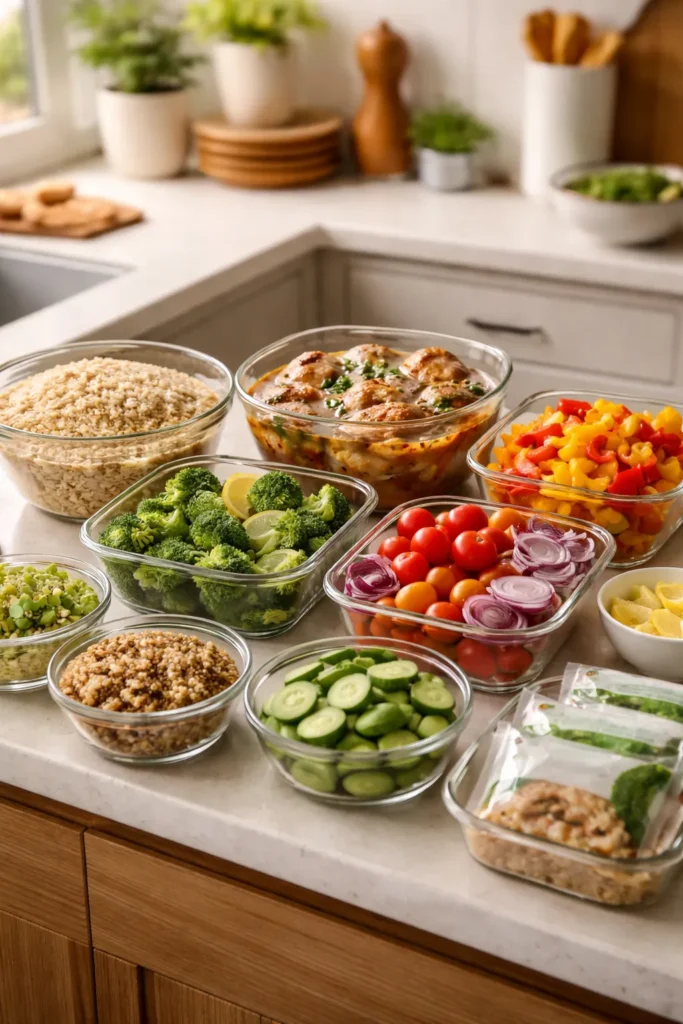
The most effective friction-removal tool is a small Sunday prep session — not a full meal prep, just a 45-minute investment in eliminating the hardest parts of weeknight cooking. Cook a big pot of rice or quinoa. Marinate the chicken you plan to use on Tuesday. Wash and chop the vegetables for the first three nights. These actions take the raw willpower requirement of a weeknight dinner from “I have to figure out what to make and cook everything from scratch” to “I need to assemble components that already exist in my fridge.”
Keep your freezer stocked with the emergency options that prevent the worst dinners: frozen shrimp, steam-in-bag vegetables, frozen edamame, and microwave rice pouches. On your most exhausted nights, these four items can become a complete stir-fry in eight minutes. Having that option available changes the calculation at 7 PM when you’re running on empty.
Variety within structure is the long game. Pick three or four flavor profiles you genuinely love — maybe Mediterranean, Mexican, and Asian stir-fry — and rotate your proteins and vegetables through those profiles throughout the week. Same cooking logic, different flavors, no boredom. That rotation is more sustainable than trying to cook an entirely different cuisine every single night.
Final Thoughts
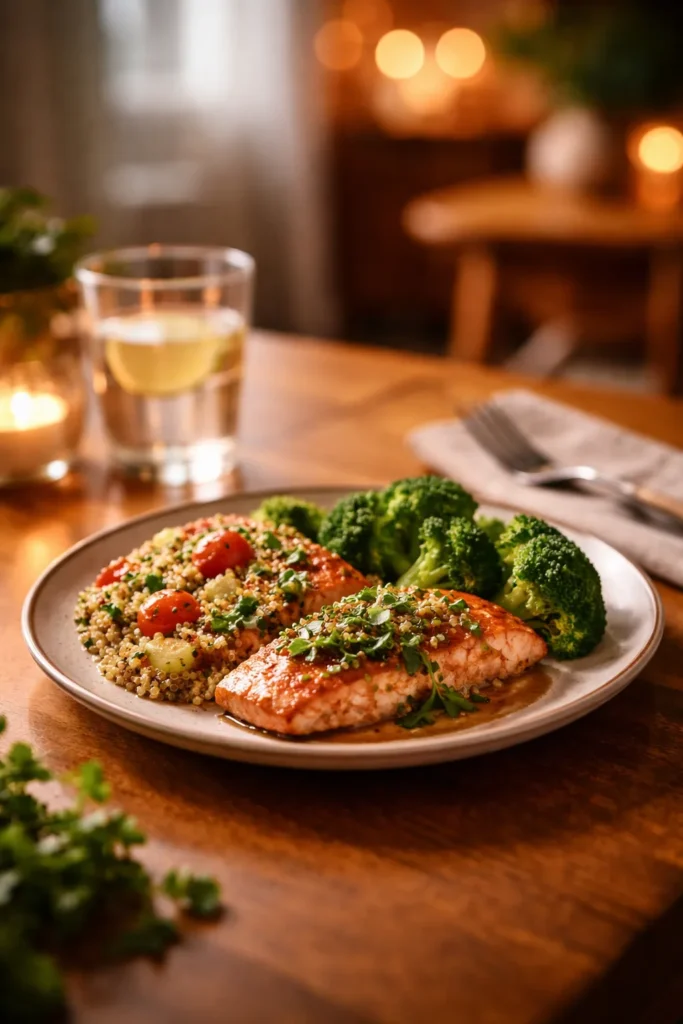
The dinners on this list share one thing in common beyond their nutritional profile: they’re meals worth looking forward to. That distinction matters more than any specific macro ratio or calorie count because the eating pattern you can sustain is always the one that wins.
Start with whichever two or three recipes appeal to you most and cook them until they feel effortless — until the timing is automatic and the seasoning ratios are committed to muscle memory. Then add more. Build a rotation slowly, one reliable dinner at a time, rather than trying to overhaul everything at once.
The best healthy dinner isn’t the one with the lowest calorie count or the cleanest ingredient list. It’s the one you actually make, actually eat with real satisfaction, and actually choose again next week without dreading it. That version of healthy eating isn’t a compromise — it’s the whole point.