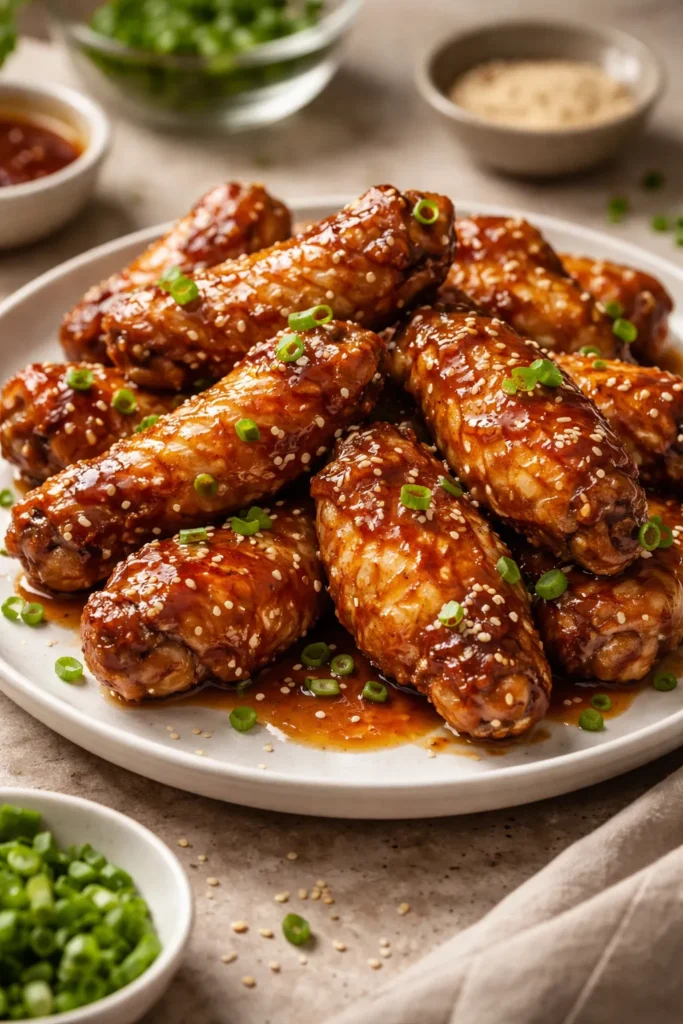
There’s a moment most home cooks know well — it’s 6 PM, everyone’s hungry, and the last thing you want to do is spend an hour in the kitchen. That’s exactly where stir fry earns its place as one of the most underrated cooking techniques on the planet. A proper stir fry hits the table in under 25 minutes, but it doesn’t taste like a shortcut. Done right, it’s layered with deep savory flavor, loaded with vegetables, and satisfying in a way that no sad desk sandwich ever could be.
Stir frying is a Chinese cooking technique that dates back thousands of years, built around the idea of cooking food fast over ferociously high heat while keeping it in near-constant motion. The result is something that a slow braise or a gentle roast simply can’t replicate — caramelized edges, crisp-tender vegetables, and protein that stays juicy because it spends just a few minutes in the pan. It’s a technique that rewards speed and preparation, not hours of patience.
What makes stir fry particularly powerful for healthy weeknight eating is how naturally balanced it is. You’ve got your protein, your vegetables, and your grain or noodle base all in one pan. The sauce ties everything together, and because you’re making it yourself from pantry staples, you’re not pouring a bottle of sodium-heavy, additive-laden concentrate over your dinner. You control the salt, the sweetness, the heat, and the texture.
The ten dinners here cover a full range of proteins, flavor profiles, and sauce styles — from a ginger beef with deep umami richness to a peanut shrimp that leans sweet and nutty. Each one is genuinely ready in 25 minutes or less, and each one is built on a framework you’ll understand so thoroughly that you’ll be riffing on these combinations without a recipe in no time.
Table of Contents
- Why Stir Fry Is the Smartest Weeknight Cooking Method
- The Four Building Blocks of a Great 25-Minute Stir Fry
- Prep Everything Before You Touch the Stove
- Cut Proteins and Vegetables the Same Size
- Add Vegetables in Order of Density
- Cook Protein Separately from Vegetables
- How to Build a Stir Fry Sauce From Pantry Staples
- 1. Honey Sesame Chicken Stir Fry with Broccoli and Snap Peas
- Why It Works So Well
- Key Details
- 2. Ginger Beef and Broccoli with Brown Garlic Sauce
- The Technique Behind Tender Beef
- Key Details
- 3. Shrimp Stir Fry with Peanut Sauce and Rice Noodles
- Why Shrimp Is a Weeknight Hero
- Key Details
- 4. Tofu and Vegetable Stir Fry with Sriracha Glaze
- Getting Crispy Tofu Without Deep-Frying
- Key Details
- 5. Teriyaki Chicken Stir Fry with Bell Peppers and Carrots
- Using Chicken Thighs Instead of Breast
- Key Details
- 6. Spicy Pork and Green Bean Stir Fry
- Building the Spicy Sweet Glaze
- Key Details
- 7. Kung Pao Shrimp with Cashews and Dried Chilies
- Cashews vs. Peanuts
- Key Details
- 8. Sesame Garlic Chicken and Mushroom Stir Fry
- The Garlic-Forward Sauce
- Key Details
- 9. Orange Ginger Beef Stir Fry with Snow Peas
- Why Fresh Orange Juice Beats Bottled
- Key Details
- 10. Veggie Stir Fry with Edamame and Peanut Noodles
- Making Peanut Noodles Work
- Key Details
- Choosing the Right Pan for High-Heat Stir Frying
- Oils That Handle High Heat
- Make-Ahead Tips That Cut Your 25 Minutes Down Even Further
- Final Thoughts
Why Stir Fry Is the Smartest Weeknight Cooking Method
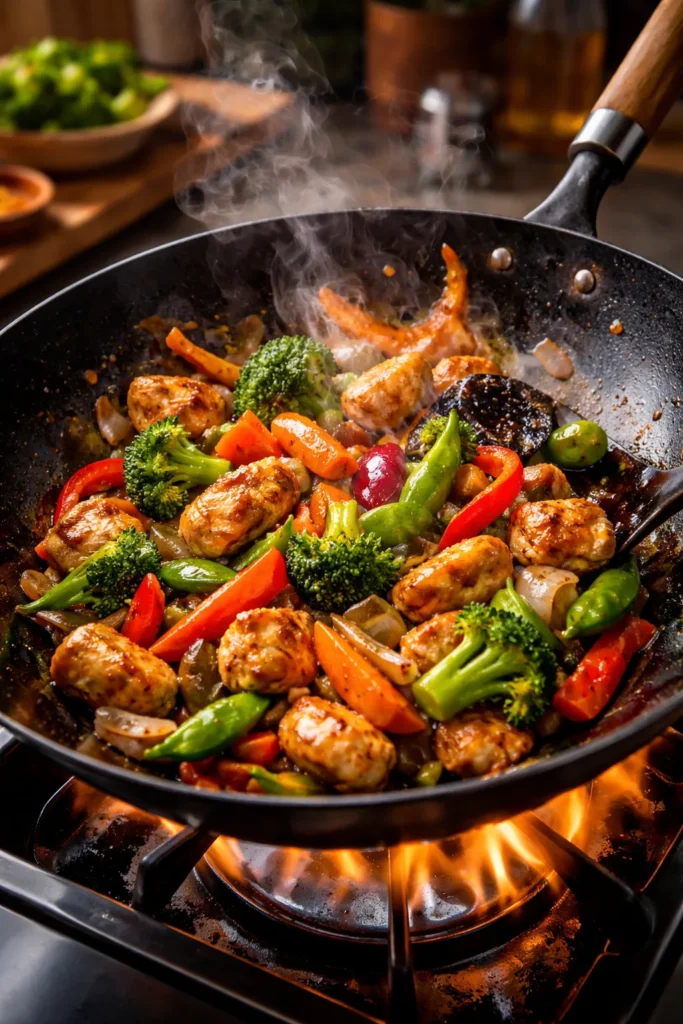
Most quick-cooking methods force a trade-off between speed and flavor. You get fast, or you get good — rarely both. Stir fry breaks that rule completely, and the reason comes down to heat.
Cooking over high heat (and we mean high — a properly preheated wok or large skillet should make a drop of water evaporate in under two seconds) drives what cooks call the Maillard reaction. That’s the chemical process responsible for the golden-brown caramelization on your chicken edges, the slight char on your broccoli tips, the depth of flavor you can’t get from steaming or sautéing at medium heat. Restaurant stir fry tastes so good partly because commercial burners run three to four times hotter than a home stove. You can compensate by preheating your pan longer and cooking in smaller batches so the temperature doesn’t drop when you add ingredients.
The other reason stir fry is so weeknight-friendly is the dish’s built-in flexibility. There’s no rigid recipe you have to follow. Think of the formula instead: protein + hardy vegetables + tender vegetables + aromatics + sauce. Once you internalize that structure, your stir fry becomes whatever you have in the fridge. A bell pepper that needs using up, some leftover chicken breast, a bag of frozen broccoli — all of it works.
One-pan cooking also means fewer dishes, which matters more than most recipe writers admit. When you’re tired on a Tuesday night, the psychological weight of a sink full of pots is real. Stir fry gives you dinner and a relatively clean kitchen.
The Four Building Blocks of a Great 25-Minute Stir Fry
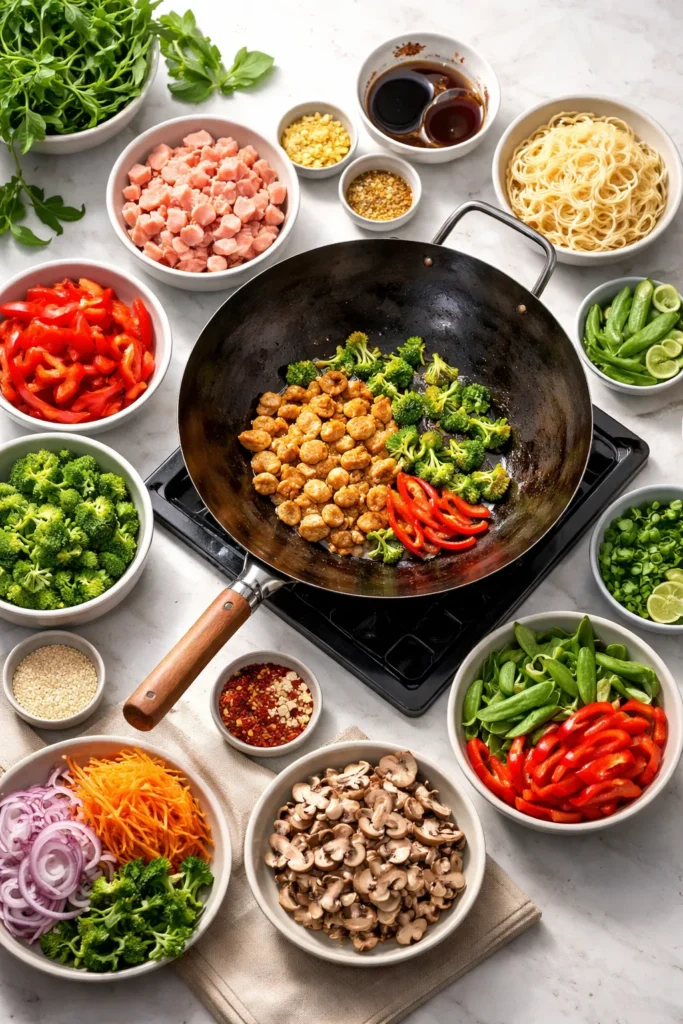
Before getting into the ten recipes, it’s worth understanding what separates a flat, forgettable stir fry from one that makes you want to lick the plate. Four things — and only four — make the difference.
Prep Everything Before You Touch the Stove
The French call it mise en place — everything in its place. Stir frying moves fast. From the moment the oil hits the pan to the moment you’re plating, you might have a total of 10 minutes of cooking time. There’s no pausing to dice a garlic clove or whisk together a sauce mid-cook. Have your protein cut, your vegetables chopped, your aromatics minced, and your sauce whisked before you light the burner. Do that, and 25 minutes is genuinely achievable every single time.
Cut Proteins and Vegetables the Same Size
This isn’t about aesthetics. Uniform cuts mean uniform cooking. If your chicken pieces range from half an inch to two inches, some will be rubbery and overdone while others are still raw in the center. Aim for bite-sized, evenly cut pieces — roughly ¾ to 1 inch for protein cubes, thin strips for beef and pork.
Add Vegetables in Order of Density
Carrots and broccoli need more time to soften than mushrooms or snap peas. Start with the hardest vegetables, then work your way down to the most delicate ones. Toss in leafy greens like bok choy or spinach in the final 60 seconds — they need almost nothing. This sequencing is what keeps everything crisp-tender instead of a mixed bag of mushy and raw.
Cook Protein Separately from Vegetables
This is the step most home cooks skip, and it’s the reason their stir fry turns into a steam bath. Cook your protein first, remove it from the pan, then cook the vegetables. Adding everything at once drops the pan temperature dramatically, and instead of searing, you’re stewing. The protein goes back in with the sauce right at the end, just long enough to reheat and glaze.
How to Build a Stir Fry Sauce From Pantry Staples
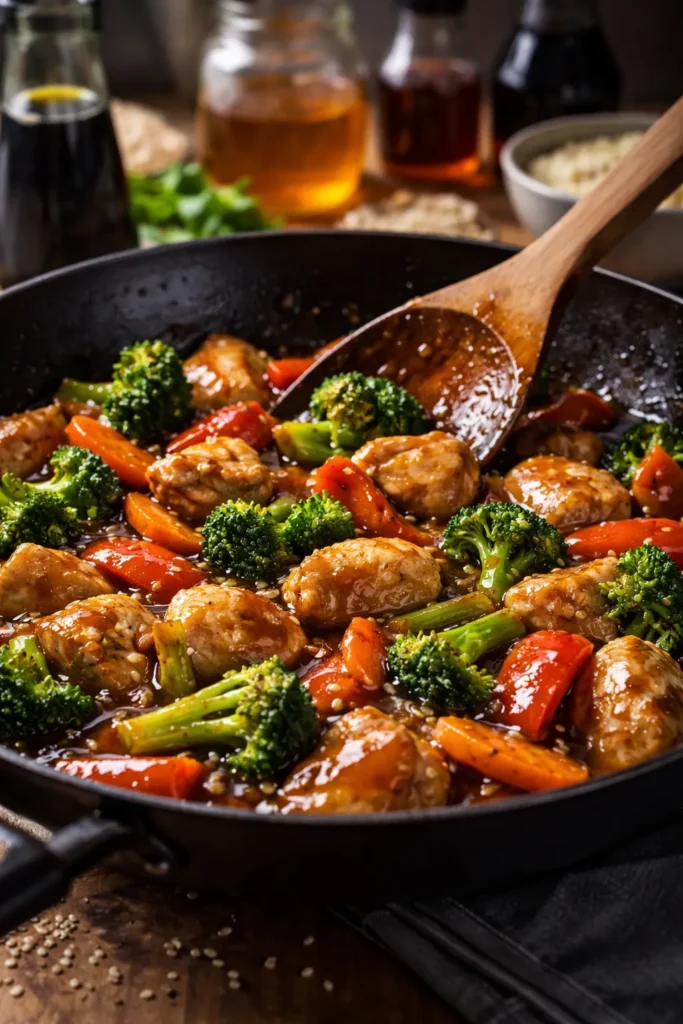
The sauce is where the whole dish lives or dies. The good news: you don’t need anything exotic. A handful of pantry staples covers every flavor profile you’d want.
The base is almost always soy sauce (or tamari for a gluten-free option, or coconut aminos if you avoid soy entirely). It brings salt and deep umami without you having to do any work.
The sweet element balances the salty base. Honey, brown sugar, and hoisin all work. A tablespoon is usually enough — you want balance, not a candy coating.
The acid cuts through the richness and lifts the whole sauce. Rice vinegar is the go-to. A splash of orange juice or lime juice works beautifully too, depending on the direction you’re going.
The aromatic fat is typically toasted sesame oil — a teaspoon or two, added at the end rather than used as the cooking oil, since it burns at high heat. It adds a nutty, roasted depth that no other ingredient replicates.
The thickener is usually cornstarch, whisked into the sauce before it goes into the pan. As the sauce hits the hot pan and comes to a brief boil, it transforms from watery to glossy and coat-everything thick. About half a teaspoon to a full teaspoon per ¼ cup of liquid is the sweet spot.
From there, you’re just choosing your flavor direction: add sriracha or chili flakes for heat, fresh ginger and garlic for aromatic depth, peanut butter for a nutty richness, or orange juice for a citrusy lift.
1. Honey Sesame Chicken Stir Fry with Broccoli and Snap Peas
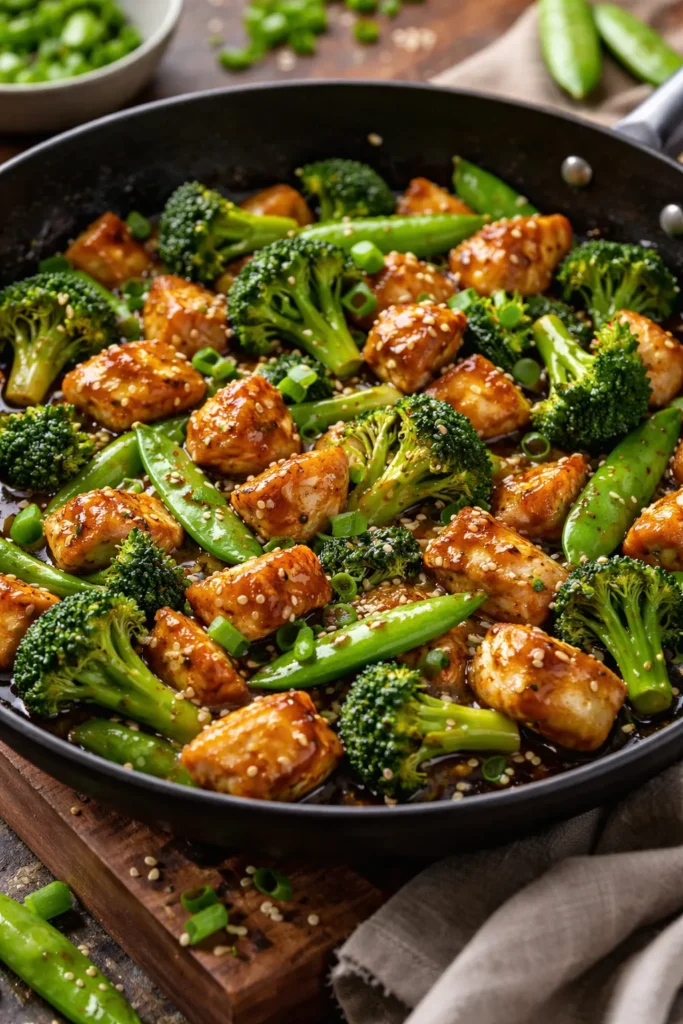
This is the one you’ll make on rotation for the next six months. The sauce is sweet, savory, and sticky in the best possible way — honey and soy sauce with just enough toasted sesame oil to give it that distinct roasted nuttiness. It clings to the chicken pieces and coats every broccoli floret.
Why It Works So Well
Chicken breast is the leanest option here, but it’s also the most unforgiving — overcook it by even a minute and it goes rubbery fast. The fix is cutting it into smaller cubes (about ¾ inch) so it cooks through in 5 to 6 minutes without drying out, and not crowding the pan so every piece gets direct heat contact and develops golden edges.
Key Details
- Protein: 1 lb boneless, skinless chicken breast, cut into ¾-inch cubes
- Vegetables: 2 cups broccoli florets, 1 cup snap peas
- Sauce: 3 tbsp low-sodium soy sauce + 2 tbsp honey + 1 tsp toasted sesame oil + ½ tsp cornstarch + 2 cloves garlic, minced + 1 tsp fresh ginger, grated
- Serve over: steamed white or brown rice, topped with sesame seeds
Pro tip: Pat your chicken dry with a paper towel before it hits the pan. Surface moisture steams the meat instead of searing it, and that kills your chance at those caramelized edges.
2. Ginger Beef and Broccoli with Brown Garlic Sauce
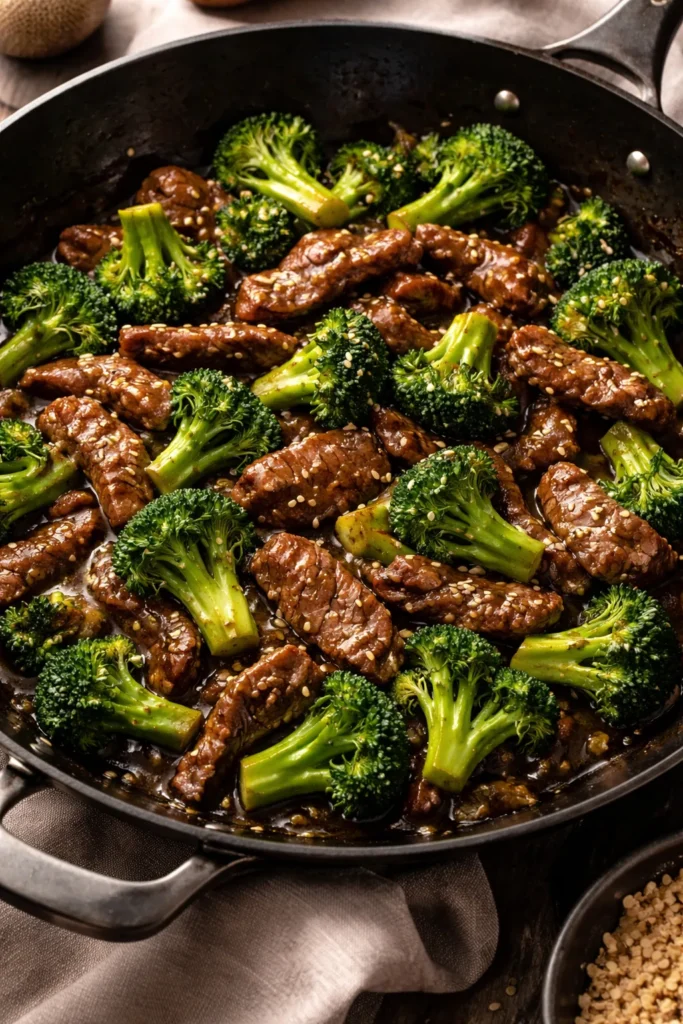
Beef and broccoli is the dish that convinced half the world that stir fry was worth making at home. The version here skips the cornstarch-dredged beef and instead relies on slicing the meat thin — against the grain — so it stays tender with minimal cooking time. Flank steak or sirloin are both ideal choices.
The Technique Behind Tender Beef
Slicing against the grain isn’t optional. The grain refers to the direction the muscle fibers run. When you cut with the grain, you’re leaving those long fibers intact, and they contract and toughen under heat. Cutting perpendicular to the grain shortens those fibers dramatically, giving you beef that’s tender enough to pull apart with a fork even after a hot two-minute sear.
Key Details
- Protein: 1 lb flank steak, sliced very thin against the grain
- Vegetables: 3 cups broccoli florets, ½ cup sliced mushrooms
- Sauce: ¼ cup low-sodium soy sauce + 1 tbsp oyster sauce + 1 tbsp honey + 1 tbsp rice vinegar + 3 cloves garlic, minced + 1½ tsp fresh ginger, grated + ½ tsp cornstarch
- Serve over: steamed white rice
Partially freezing the beef for 20 minutes before slicing makes thin, even cuts much easier to achieve — the meat firms up just enough for your knife to glide cleanly through it.
3. Shrimp Stir Fry with Peanut Sauce and Rice Noodles
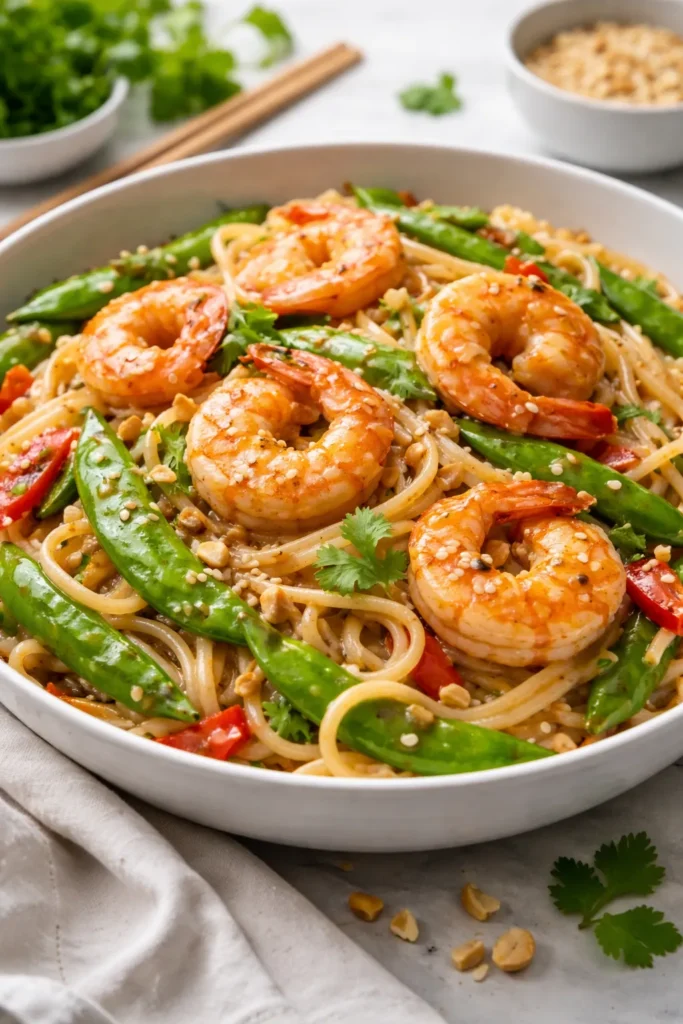
Peanut sauce belongs in more stir fries than it gets credit for. It’s got a natural creaminess and sweetness that pairs brilliantly with shrimp’s delicate flavor, and the rice noodles turn this into something that feels a bit more indulgent than your average weeknight bowl without adding any real complexity to the cook.
Why Shrimp Is a Weeknight Hero
Shrimp goes from raw to perfectly cooked in about 3 to 4 minutes at high heat. That’s not a typo. The moment each shrimp curls into a loose C-shape and turns opaque pink, it’s done. An O-shape means you’ve gone too far. Because of this speed, shrimp is genuinely the fastest protein you can stir fry, which makes it a natural fit for 25-minute dinners.
Key Details
- Protein: 1 lb large shrimp, peeled and deveined
- Vegetables: 1 cup sugar snap peas, 1 red bell pepper (julienned), ½ cup shredded carrots
- Sauce: 3 tbsp peanut butter + 3 tbsp low-sodium soy sauce + 2 tbsp rice vinegar + 1 tbsp honey + 1 tsp grated ginger + 2 tbsp warm water (to thin)
- Serve with: cooked rice noodles, topped with crushed peanuts and thinly sliced green onions
Worth knowing: Peanut sauce can seize up and thicken too fast in a hot pan. Pour it in and stir constantly, adding a tablespoon of warm water if it starts to go paste-like rather than saucy.
4. Tofu and Vegetable Stir Fry with Sriracha Glaze
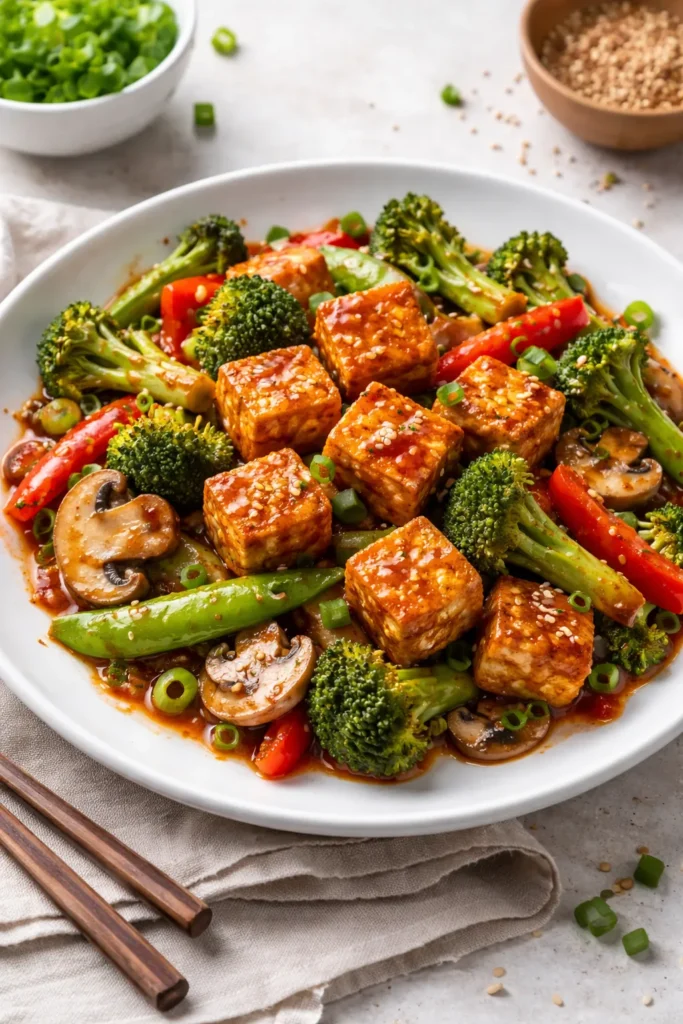
The biggest mistake people make with tofu stir fry is not pressing the tofu first. Excess moisture is the enemy of crisp tofu — it creates steam in the pan rather than a sear, leaving you with soft, pale cubes that don’t pick up any color or texture. Press a block of extra-firm tofu between paper towels for at least 10 minutes (or up to 30), and the difference is night and day.
Getting Crispy Tofu Without Deep-Frying
Once your tofu is pressed and cubed, cook it in a dry (no oil) or lightly oiled pan at high heat without touching it for a full 3 to 4 minutes per side. Resist the urge to stir it constantly — that’s how you get golden, crisp edges. After the tofu is seared on two or three sides, set it aside and cook your vegetables, then return it to the pan when you add the sauce.
Key Details
- Protein: 1 block (14 oz) extra-firm tofu, pressed and cut into ¾-inch cubes
- Vegetables: 1 cup snap peas, 1 cup broccoli florets, 1 red bell pepper (diced), 1 cup sliced mushrooms
- Sauce: 2 tbsp low-sodium soy sauce + 1 tsp sriracha (or more to taste) + 1 tbsp rice vinegar + 1 tbsp honey + 2 garlic cloves, minced + ½ tsp cornstarch
- Serve over: brown rice or cauliflower rice
This dish is naturally vegan and gluten-free when you swap in tamari for soy sauce. It’s also one of the best meal-prep-friendly stir fries in this list — the tofu holds up in the fridge for three days without going soggy.
5. Teriyaki Chicken Stir Fry with Bell Peppers and Carrots
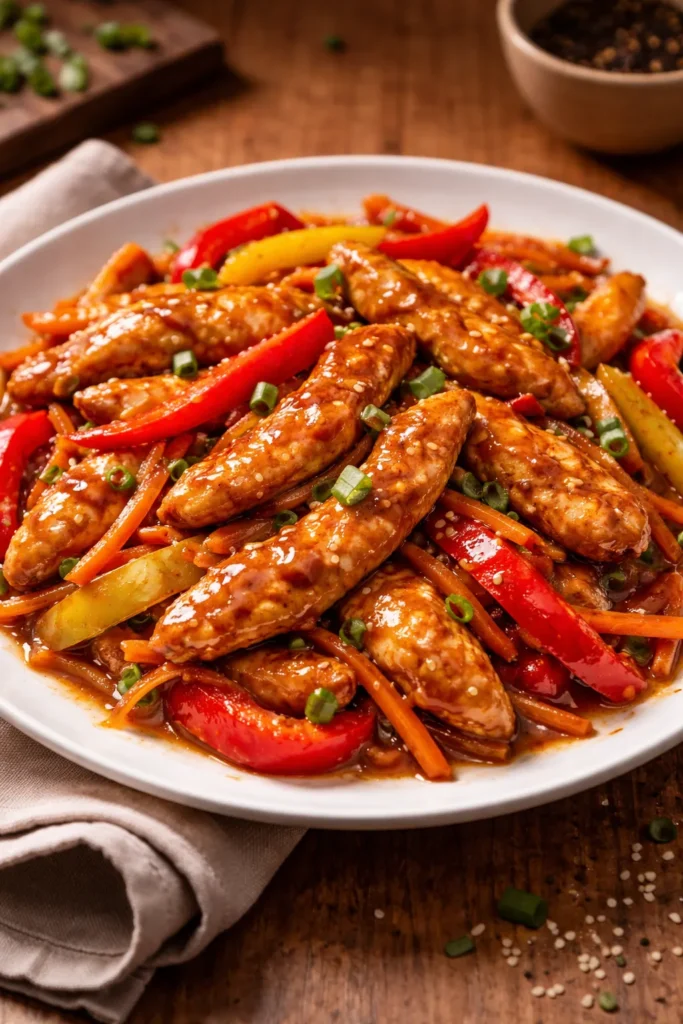
Teriyaki might be the most universally loved stir fry flavor profile, and the homemade version is so dramatically better than anything from a bottle that it’s almost embarrassing to compare them. The key is the balance: equal parts soy sauce and honey as the base, with rice vinegar to keep it from tasting cloying, and a half-teaspoon of cornstarch to create that characteristic glossy, lacquered finish.
Using Chicken Thighs Instead of Breast
Chicken thighs are more forgiving than breasts because of their higher fat content — they stay juicy even if you cook them a minute longer than planned. For a stir fry, boneless skinless thighs cut into strips are an excellent swap if you want a richer, more deeply flavored chicken in every bite. They brown a little better too, picking up more of that caramelized Maillard crust.
Key Details
- Protein: 1 lb boneless, skinless chicken thighs, cut into strips
- Vegetables: 1 red bell pepper + 1 yellow bell pepper (both sliced thin), 1 cup julienned carrots
- Sauce: 3 tbsp low-sodium soy sauce + 3 tbsp honey + 2 tbsp rice vinegar + 3 tbsp orange juice + ½ tsp cornstarch + 2 cloves garlic, minced
- Serve over: brown rice, garnished with sesame seeds and green onion
Pro tip: Add the orange juice to your teriyaki sauce. It adds a brightness that lifts the whole flavor and makes it taste far more complex than the ingredient list suggests.
6. Spicy Pork and Green Bean Stir Fry
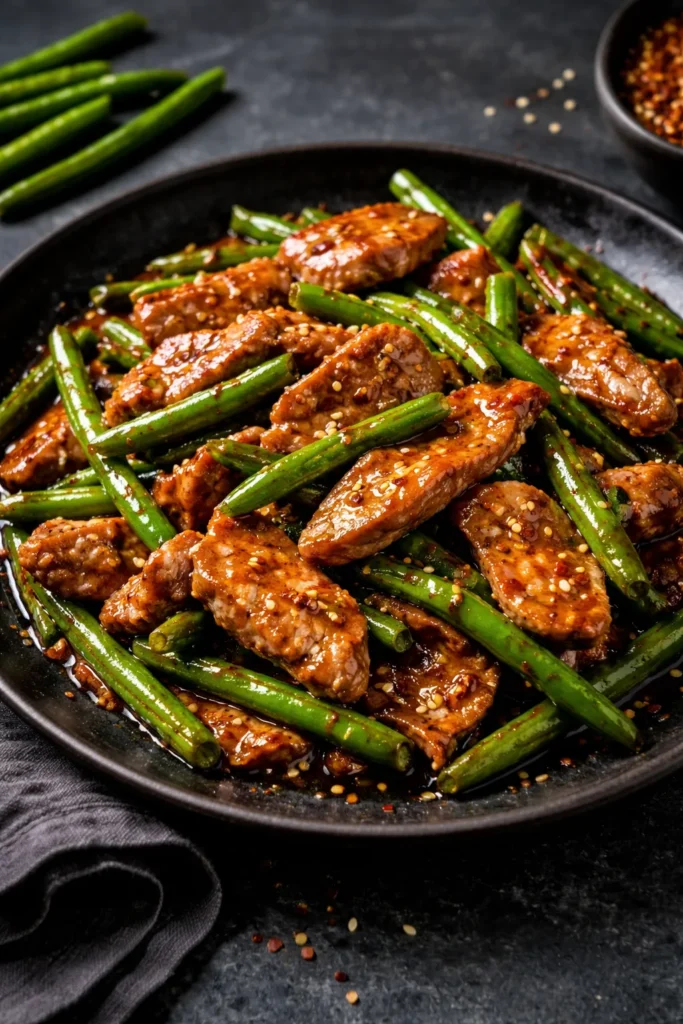
Pork tenderloin is criminally underused in home stir fry cooking. It’s lean, affordable, and takes on flavor from a marinade faster than beef because of its more open-grained texture. Slice it thin against the grain — just like beef — and it cooks to perfect tenderness in under 5 minutes. Green beans are the ideal vegetable partner here: they hold their crunch at high heat and don’t release a lot of moisture into the pan.
Building the Spicy Sweet Glaze
The sauce for this one leans into the sweet-heat combination. A tablespoon of apricot jam (or any fruit preserve) dissolved into the soy sauce base sounds unconventional, but it adds a fruity sweetness that plays off the heat from chili garlic sauce without making the dish taste like dessert. It’s the kind of ingredient swap that makes a home cook look like they know something.
Key Details
- Protein: 1 lb pork tenderloin, sliced thin against the grain
- Vegetables: 2 cups green beans, trimmed and cut into 2-inch pieces
- Sauce: 2 tbsp low-sodium soy sauce + 1 tbsp apricot jam + 1 tbsp chili garlic sauce + 1 tbsp rice vinegar + 1 tsp sesame oil + ½ tsp cornstarch
- Aromatics: 3 garlic cloves (minced), 1 tsp fresh ginger (grated)
- Serve over: steamed white rice
Blanching the green beans in boiling water for 90 seconds before adding them to the wok isn’t strictly required, but it shortens their stir fry time and guarantees a vivid green color in the final dish.
7. Kung Pao Shrimp with Cashews and Dried Chilies
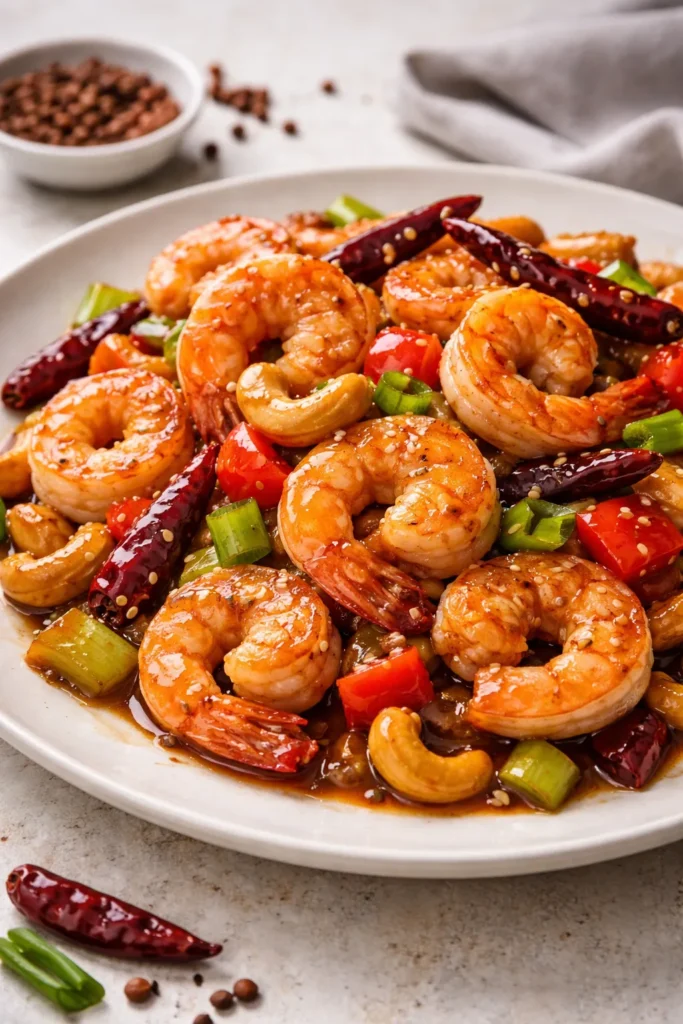
Kung Pao is one of the most iconic stir fry dishes, traditionally made with chicken, but shrimp makes a fantastic and faster-cooking alternative. The defining characteristics of a proper kung pao are dried red chilies, which should go into the hot oil first to bloom and infuse their heat into the fat before any other ingredient touches the pan, and Sichuan peppercorns, which deliver that distinctive mouth-numbing tingle that makes kung pao unlike any other stir fry.
Cashews vs. Peanuts
Traditional kung pao uses peanuts. Cashews offer a creamier, slightly buttery crunch that pairs particularly well with shrimp’s sweetness. Both work — and you can mix them if you like. Add the nuts at the very end, after the heat is off, so they stay crunchy rather than turning soft in the sauce.
Key Details
- Protein: 1 lb large shrimp, peeled and deveined
- Vegetables: 1 red bell pepper (diced), 1 celery stalk (sliced), 4-6 dried red chilies
- Sauce: 2 tbsp low-sodium soy sauce + 1 tbsp rice vinegar + 1 tbsp honey + 1 tsp sesame oil + ½ tsp cornstarch + 1 tsp chili garlic sauce
- Aromatics: 3 garlic cloves (minced), 1 tsp ginger (grated)
- Add at the end: ⅓ cup roasted cashews or peanuts
- Serve over: steamed jasmine rice
Worth knowing: If you can’t find Sichuan peppercorns, a pinch of black pepper plus the dried chilies gets you most of the way there in terms of the layered heat.
8. Sesame Garlic Chicken and Mushroom Stir Fry
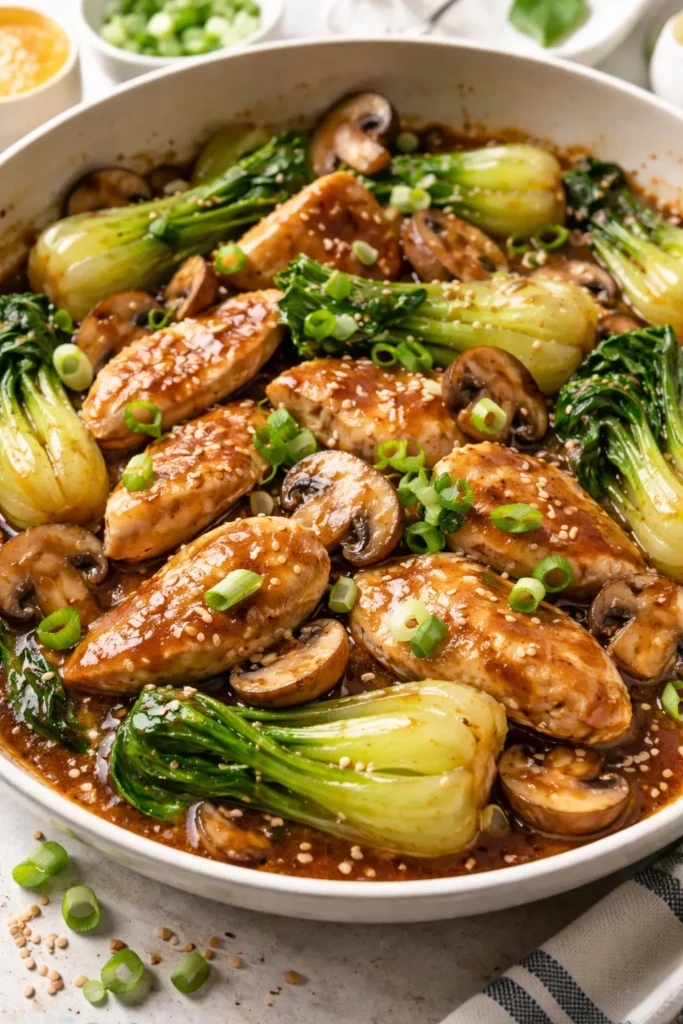
Mushrooms bring something to a stir fry that no other vegetable quite replicates — a deep, earthy umami that amplifies the savoriness of the sauce without adding much at all in terms of calories or prep complexity. Cremini mushrooms are the easiest option; shiitake mushrooms, if you can find them, push the flavor even deeper and add a pleasantly meaty chew.
The Garlic-Forward Sauce
This dish puts garlic front and center rather than treating it as background. Four cloves might sound like a lot, but once minced garlic hits a hot pan for 30 to 60 seconds, it mellows considerably, losing its sharpness and becoming sweet and toasted-smelling. Don’t let it go past golden — burned garlic is bitter and will sink the entire dish.
Key Details
- Protein: 1 lb boneless, skinless chicken breast, sliced thin
- Vegetables: 2 cups cremini or shiitake mushrooms (sliced), 1 cup baby bok choy (halved), 2 green onions (sliced)
- Sauce: 3 tbsp low-sodium soy sauce + 1 tbsp rice vinegar + 2 tsp honey + 2 tsp toasted sesame oil + 4 garlic cloves (minced) + ½ tsp cornstarch
- Garnish: toasted sesame seeds, additional sliced green onion
- Serve over: rice or soba noodles
For deeper flavor, add a teaspoon of hoisin sauce to the sauce mix. Hoisin is fermented soybean paste with a plum-like sweetness — it adds a savory complexity that makes the sauce taste like it spent hours cooking rather than five minutes.
9. Orange Ginger Beef Stir Fry with Snow Peas
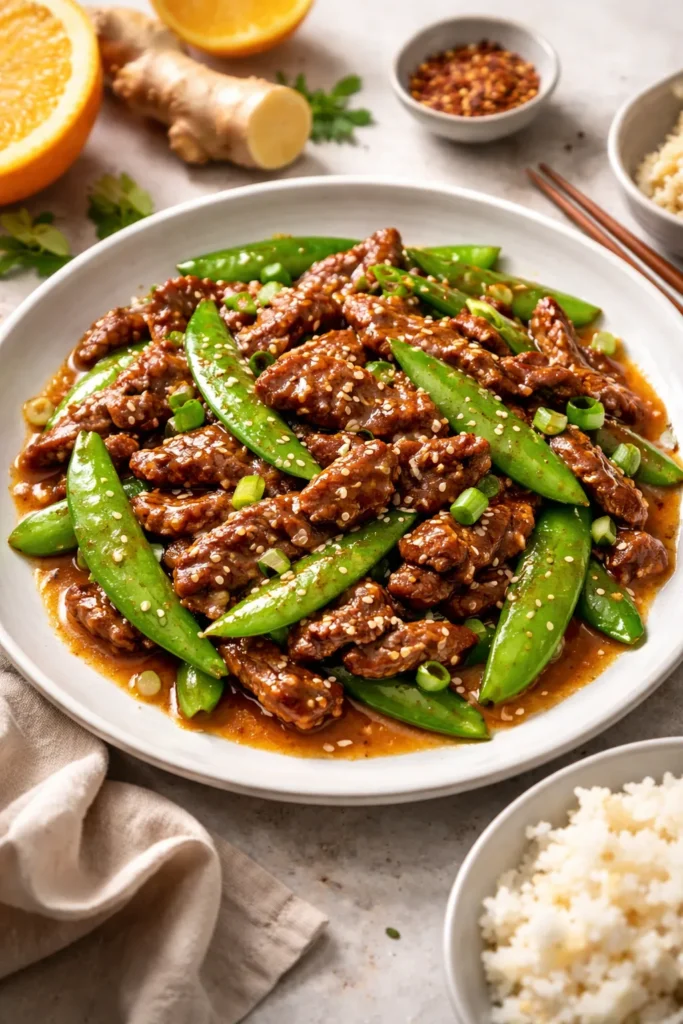
The brightness of fresh orange juice does something genuinely unexpected to a beef stir fry. It cuts through the richness of the meat, lifts the soy sauce’s saltiness, and gives the whole sauce a citrusy freshness that makes this dish taste lighter than most beef preparations. The ginger — and don’t be shy with it, a full tablespoon of freshly grated ginger is correct here — adds warmth and a slight spiciness that plays off the orange beautifully.
Why Fresh Orange Juice Beats Bottled
The difference between fresh-squeezed orange juice and anything from a carton is more pronounced here than in most cooking applications because you’re adding it to a high-heat pan where it concentrates and caramelizes. Fresh juice has a volatile, aromatic quality that cooked-through carton juice simply doesn’t. Take two minutes to squeeze an orange — it matters.
Key Details
- Protein: 1 lb flank or sirloin steak, sliced thin against the grain
- Vegetables: 1½ cups snow peas, 1 orange bell pepper (sliced), 3 green onions (cut into 1-inch pieces)
- Sauce: ¼ cup fresh orange juice + 2 tbsp low-sodium soy sauce + 1 tbsp honey + 1 tbsp rice vinegar + 1 tbsp grated fresh ginger + 2 cloves garlic (minced) + ½ tsp cornstarch
- Serve over: steamed jasmine rice or quinoa
Pro tip: Zest the orange before you juice it and stir the zest into the sauce. Orange zest contains concentrated essential oils that intensify the citrus flavor without adding any liquid.
10. Veggie Stir Fry with Edamame and Peanut Noodles
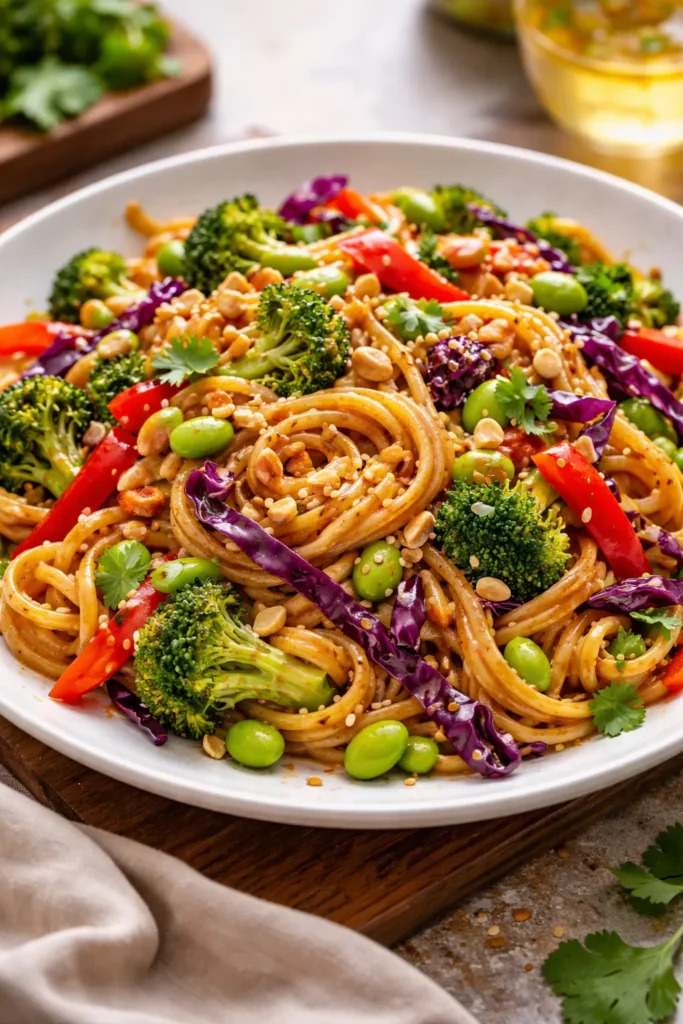
This one is fully plant-based and doesn’t apologize for it. Edamame are soybeans, which means they deliver a genuine protein punch — about 17 grams of protein per cup — making this a satisfying meatless dinner that won’t leave anyone hungry two hours later. The peanut noodle base is where all the rich, nutty creaminess lives, and it comes together from ingredients you almost certainly already have.
Making Peanut Noodles Work
The trick with peanut sauce for noodles is the consistency. Too thick and it coats unevenly, leaving some noodles sauced and others dry. Too thin and it pools at the bottom of the bowl. Thin your peanut butter sauce with warm water — not cold — a tablespoon at a time until it runs off a spoon in a slow, steady ribbon. That’s your target consistency before it hits the pan.
Key Details
- Protein: 1½ cups shelled edamame (thawed from frozen)
- Vegetables: 1 red bell pepper (julienned), 1 cup shredded purple cabbage, 1 cup broccoli florets, 2 green onions (sliced)
- Sauce: 3 tbsp natural peanut butter + 2 tbsp low-sodium soy sauce + 2 tbsp rice vinegar + 1 tbsp honey + 1 tsp toasted sesame oil + 1 tsp grated ginger + 3-4 tbsp warm water (to thin)
- Base: 6 oz rice noodles or soba noodles, cooked according to package instructions
- Garnish: crushed roasted peanuts, sesame seeds, fresh lime wedge
Add a handful of fresh cilantro and a squeeze of lime over the finished bowl. The acidity of the lime and the herbaceous hit of cilantro brighten the rich peanut sauce in a way that makes the dish feel completely finished rather than one-note.
Choosing the Right Pan for High-Heat Stir Frying
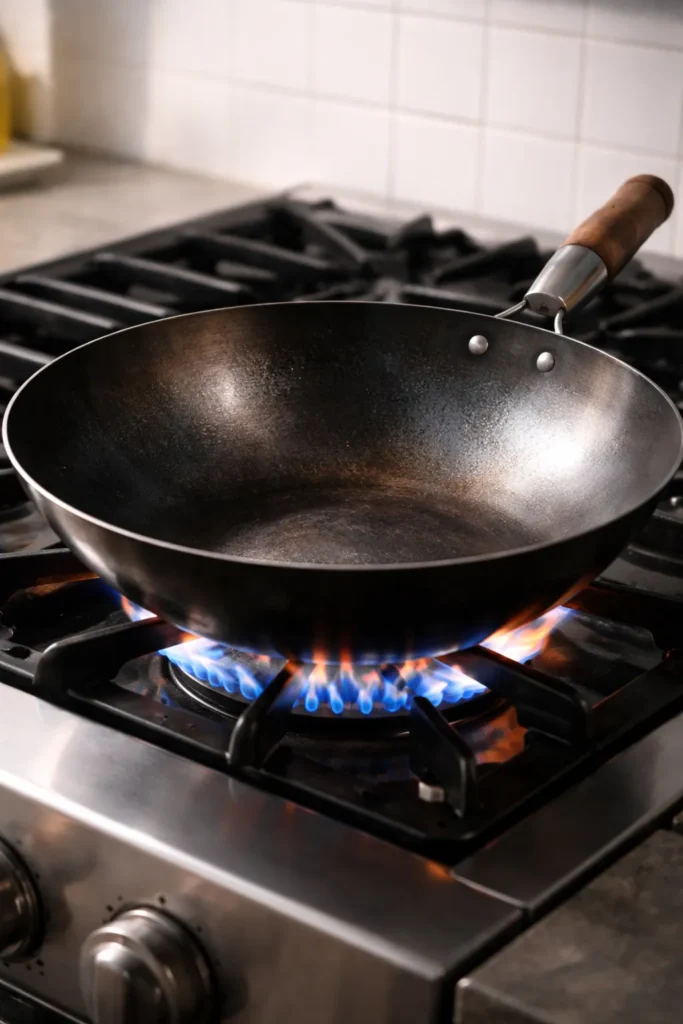
A wok is the traditional and genuinely superior vessel for stir frying, and the reason is geometry. The curved walls and wide mouth allow you to toss ingredients up the sides of the pan where it’s slightly cooler, keeping some components warm while others cook at the base. You can also fit more food without overcrowding.
That said, you don’t need a wok to make any of these dishes. A 12-inch or 14-inch cast iron skillet or a large stainless steel pan with straight, high sides works well. The important thing is surface area — more surface area means more contact between ingredients and hot metal, which means better searing and less steaming.
Whatever pan you use, preheat it for at least 90 seconds over high heat before adding any oil. If you flick a few drops of water into the pan and they ball up and skitter across the surface before evaporating, the pan is hot enough. If they just splatter and evaporate immediately on contact, it’s almost hot enough — give it another 30 seconds. This seems obsessive until you taste the difference it makes.
Oils That Handle High Heat
Not all oils behave the same way over a screaming hot burner. You need an oil with a high smoke point — typically 400°F or above — for stir frying, which rules out extra-virgin olive oil (smoke point around 375°F) as your primary cooking fat. Better choices include avocado oil, grapeseed oil, safflower oil, and refined coconut oil. Save the toasted sesame oil for the sauce, where its low smoke point doesn’t matter and its flavor shines.
Make-Ahead Tips That Cut Your 25 Minutes Down Even Further
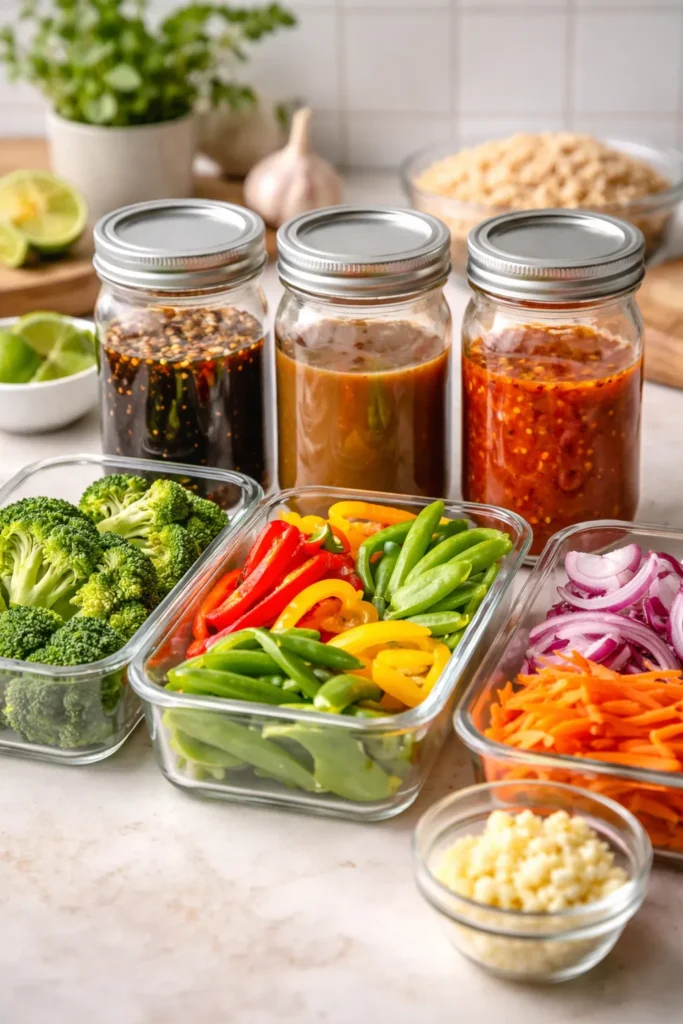
Twenty-five minutes is fast, but you can shave that down to 15 if you do a little prep ahead of time. The most valuable 10 minutes you can spend on a weeknight is the Sunday afternoon prep session that makes the whole week feel manageable.
Sauces keep well. Every sauce in this list can be whisked together and stored in a mason jar in the refrigerator for up to 5 days. Make two or three different sauces at once on Sunday, and your weeknight stir fry becomes a matter of cutting vegetables and cooking — the sauce is already done.
Pre-cut vegetables store beautifully. Raw chopped bell peppers, broccoli florets, sliced carrots, and halved snap peas keep well in airtight containers in the refrigerator for 3 to 4 days without losing their crunch. Mushrooms are the exception — slice those day-of.
Marinate your protein in the morning. If you want maximum flavor from chicken or beef, toss it in the sauce (just reserve some to finish the dish) and let it sit in the fridge for 4 to 8 hours. The marinade seasons the protein all the way through and the cornstarch in the sauce coats the meat, giving it a slight crust when it hits the hot pan.
Frozen vegetables are also completely legitimate and genuinely useful for stir fries. Add them straight from frozen — don’t thaw first. Thawed frozen vegetables release water into the pan, which drops the temperature and causes steaming. Straight from the freezer, they hit the hot pan, release a little moisture quickly, and then sear once that moisture evaporates. Add 3 to 4 extra minutes of cooking time when using frozen vegetables.
Final Thoughts
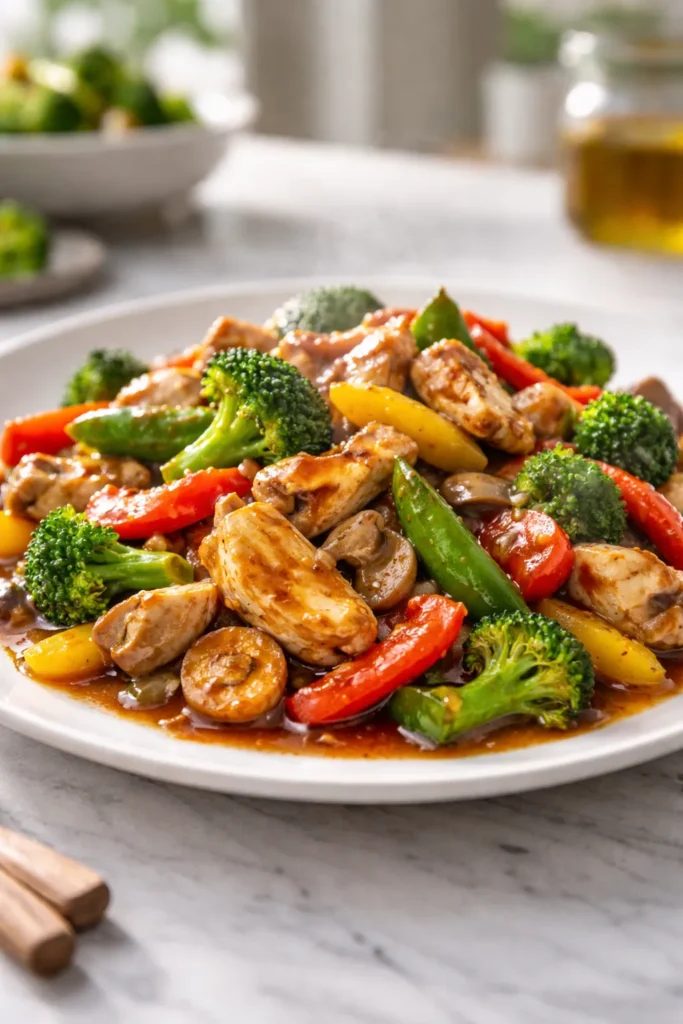
Stir fry’s real secret isn’t a clever ingredient or a hidden technique — it’s the combination of high heat, short time, and a well-balanced sauce that makes everything click. Master those three elements and you have a dinner framework that never gets boring because the variables are essentially infinite.
The ten dinners here give you a strong starting point across proteins, sauce styles, and vegetable combinations. But the deeper skill is recognizing the pattern: sear your protein first, cook your vegetables in order of density, push your aromatics in for thirty seconds, pour in your pre-made sauce, and let it thicken for a minute. That sequence works every single time, with whatever is in your refrigerator.
Start with one or two of these recipes exactly as written to get a feel for timing and heat level. Once those feel natural, start swapping — different vegetables, different sauce, same protein — and you’ll quickly build a personal rotation that doesn’t require looking anything up. That’s the point where weeknight cooking stops feeling like a chore.