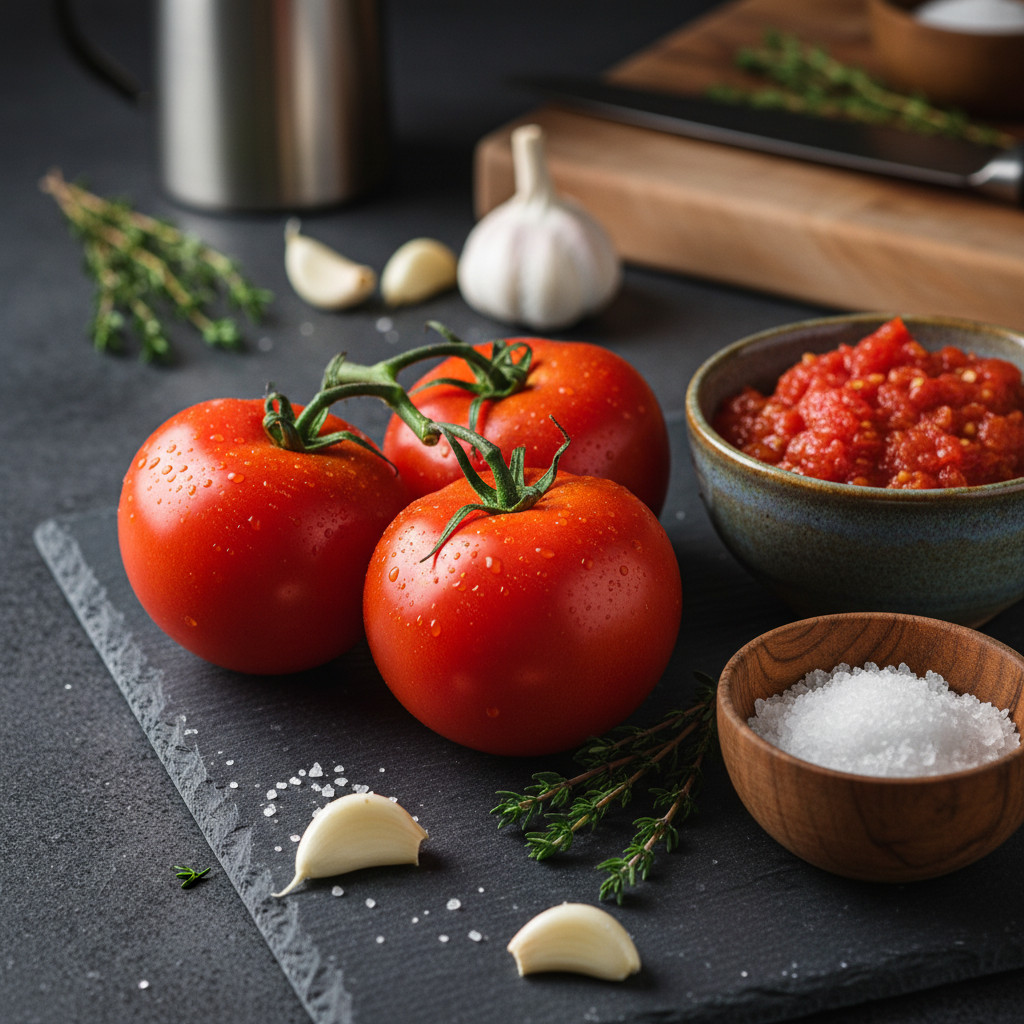
Most home cooks have a handful of go-to meals they rotate through the week — and there’s nothing wrong with that. But if those meals feel a little flat, a little predictable, the problem usually isn’t the protein or the vegetables. It’s the absence of a great sauce. A properly made sauce is the difference between a meal you eat because you’re hungry and one you actually look forward to.
Here’s what most people underestimate: sauces don’t require hours at the stove or culinary school training. The majority of the most impactful ones take under 15 minutes, use pantry staples, and work across a surprising range of dishes. A batch of chimichurri that you meant to put on steak works just as brilliantly over eggs the next morning. A peanut sauce made for noodles becomes a killer dipping sauce for vegetables by the afternoon.
What separates a cook who consistently makes memorable food from one who doesn’t often comes down to a small repertoire of reliable sauces. Not dozens — just a handful of genuinely great ones that you know cold, that you can adapt on instinct, and that feel like second nature. The ten sauces below were chosen with exactly that in mind: maximum versatility, achievable technique, and flavor that punches well above their effort level.
Each one includes a full ingredient list, practical tips, suggested pairings, and notes on storage — because a sauce you made on Sunday should still be delicious by Thursday.
Table of Contents
- 1. Classic Argentinian Chimichurri
- What You’ll Need
- How to Make It
- Tips and Storage
- 2. Creamy Garlic Butter Sauce
- What You’ll Need
- How to Make It
- Tips and Storage
- 3. Five-Minute Romesco Sauce
- What You’ll Need
- How to Make It
- Tips and Storage
- 4. Vibrant Basil Pesto
- What You’ll Need
- How to Make It
- Tips and Storage
- 5. Quick Garlic Tomato Pasta Sauce
- What You’ll Need
- How to Make It
- Tips and Storage
- 6. Classic Lemon Caper Butter Sauce
- What You’ll Need
- How to Make It
- Tips and Storage
- 7. Creamy Peanut Sauce
- What You’ll Need
- How to Make It
- Tips and Storage
- 8. Creamy Tzatziki Sauce
- What You’ll Need
- How to Make It
- Tips and Storage
- 9. Bold Gochujang Sauce
- What You’ll Need
- How to Make It
- Tips and Storage
- 10. Silky Hollandaise Sauce
- What You’ll Need
- How to Make It
- Tips and Storage
- Final Thoughts
1. Classic Argentinian Chimichurri
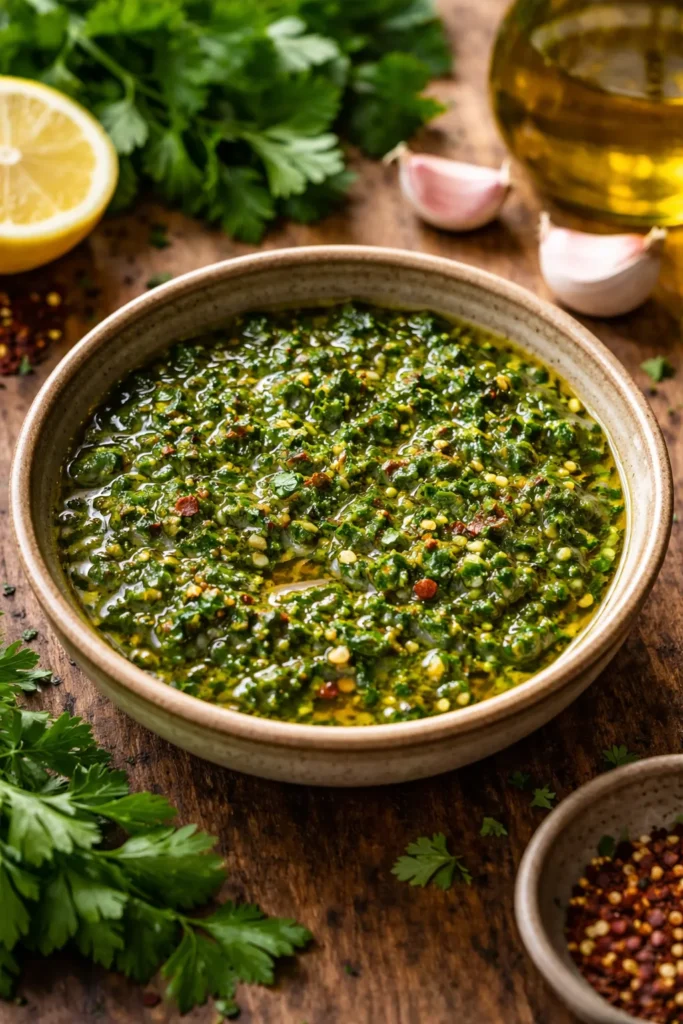
Chimichurri might be the single most versatile sauce on this list. It’s herby, garlicky, tangy, and has just enough heat to keep things interesting — and it requires zero cooking. You’re essentially chopping fresh herbs, combining them with vinegar, olive oil, and aromatics, and letting the mixture sit for a few minutes. That’s the whole process.
The sauce originated in Argentina, where it’s traditionally paired with grilled beef. But calling it a “steak sauce” dramatically undersells it. Chimichurri is outstanding over grilled chicken, roasted potatoes, pan-seared fish, scrambled eggs, grilled vegetables, and crusty bread. It’s one of those preparations where the question isn’t “what does this go with?” — it’s “what doesn’t this go with?”
What You’ll Need
- 1 cup flat-leaf parsley, packed, finely chopped
- ¼ cup fresh cilantro, finely chopped (optional, but excellent)
- 4 cloves garlic, minced
- ½ cup red wine vinegar
- ¾ cup extra-virgin olive oil
- 1 teaspoon dried oregano
- ½ teaspoon crushed red pepper flakes
- ½ teaspoon fine sea salt
- Fresh cracked black pepper to taste
How to Make It
Combine the parsley, cilantro (if using), garlic, oregano, and red pepper flakes in a bowl. Pour over the red wine vinegar and olive oil, season with salt and pepper, and stir well. Let it rest at room temperature for at least 15 minutes before serving — this is non-negotiable. The resting time allows the garlic to mellow and the flavors to marry into something cohesive rather than sharp and separate.
Tips and Storage
Don’t use a blender or food processor for chimichurri. The hand-chopped texture is part of what makes it work — a blender turns it into something closer to pesto, which has its own merits but isn’t chimichurri. The sauce keeps refrigerated for up to 3 days; the color fades slightly but the flavor deepens. Bring it to room temperature before serving.
Variation: Swap the red wine vinegar for lime juice to make a citrus-forward version that’s particularly good with seafood and fish tacos.
2. Creamy Garlic Butter Sauce
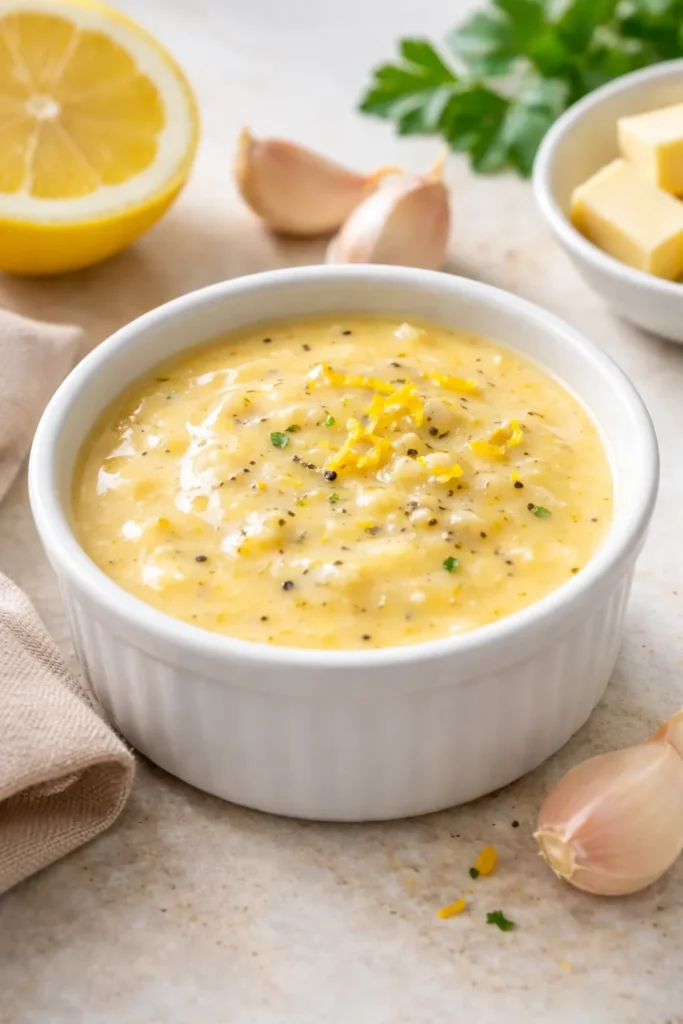
This sauce is what happens when you accept that butter and garlic are, together, one of the most effective flavor combinations in existence. It’s rich, glossy, deeply savory, and takes about 5 minutes from start to finish. It works over pasta, drizzled onto pan-seared chicken, spooned over roasted vegetables, or used as a dipping sauce for warm bread.
The technique here matters more than the ingredient list. The key is keeping the heat moderate and adding the butter in pieces rather than all at once, which creates a smooth, emulsified sauce rather than a greasy pool of melted butter.
What You’ll Need
- 4 tablespoons unsalted butter, cold, cut into cubes
- 4 cloves garlic, minced
- ½ cup chicken or vegetable stock (or dry white wine)
- 2 tablespoons fresh lemon juice
- 2 tablespoons fresh flat-leaf parsley, finely chopped
- Salt and cracked black pepper to taste
How to Make It
In a small saucepan over medium heat, melt 1 tablespoon of the butter. Add the garlic and cook for 60 to 90 seconds, stirring constantly, until it becomes fragrant and just barely golden — not brown. Add the stock (or wine) and the lemon juice. Let it simmer for 2 to 3 minutes, reducing slightly. Remove from heat and whisk in the remaining cold butter, two cubes at a time, until fully incorporated and the sauce is glossy and slightly thickened. Stir in the parsley, season with salt and pepper, and serve immediately.
Tips and Storage
Cold butter is the secret to emulsification. Room-temperature butter added all at once will break the sauce into an oily mess. Keep the heat off or very low when whisking in the final butter additions. This sauce doesn’t store particularly well because the emulsion breaks when chilled — make it fresh, make it right before serving, and use it all.
Great over: pasta, grilled shrimp, roasted broccoli, pan-seared salmon, or simple steamed vegetables.
3. Five-Minute Romesco Sauce
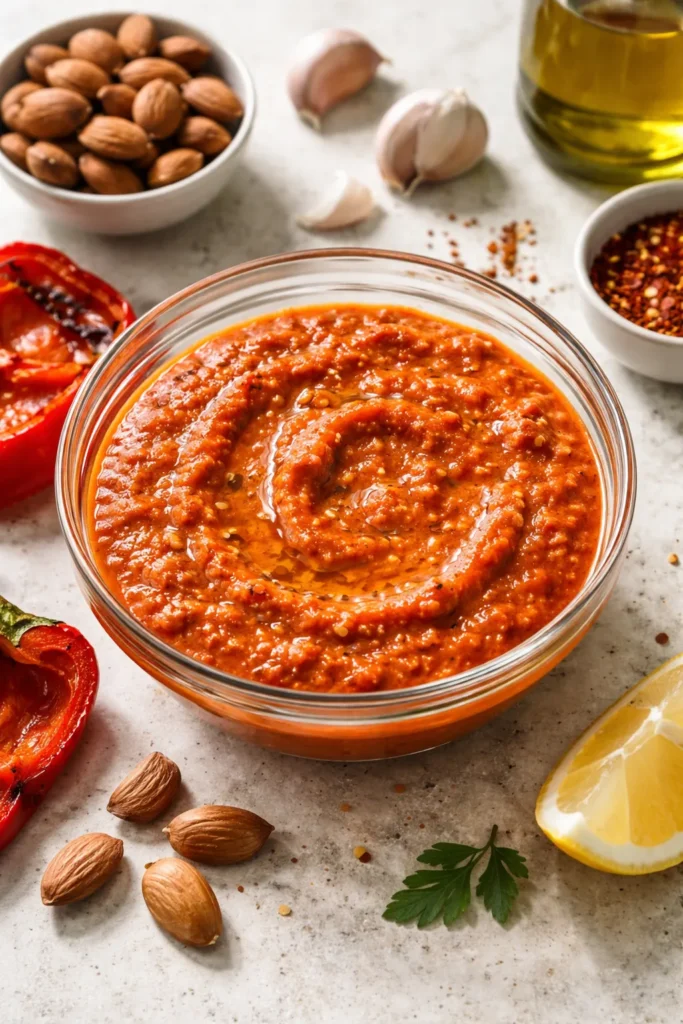
Romesco is a Spanish sauce from the Catalonia region, traditionally made by fishermen to accompany their fresh catch. Made from roasted red peppers, almonds, garlic, and sherry vinegar, it has a flavor profile that’s simultaneously smoky, tangy, nutty, and a little sweet. A food processor handles the heavy lifting — this is a five-minute blender sauce once you have your ingredients assembled.
It’s one of those sauces that genuinely tastes like you did a lot more work than you actually did. Spread it on a sandwich and people assume you’re an accomplished cook. Serve it alongside grilled vegetables at a dinner party and someone will ask you for the recipe before the evening’s over.
What You’ll Need
- 1 jar (12 oz) roasted red bell peppers, drained
- ½ cup whole roasted almonds (or blanched almonds)
- 3 cloves garlic
- 2 tablespoons sherry vinegar (red wine vinegar works too)
- 3 tablespoons extra-virgin olive oil
- 1 teaspoon smoked paprika
- ½ teaspoon fine sea salt
- Pinch of cayenne pepper
How to Make It
Add everything to a food processor. Pulse 8 to 10 times to break things down, then blend continuously for about 30 seconds. Stop and scrape the sides down, then blend for another 15 to 20 seconds until you reach a slightly chunky, pourable consistency. Taste and adjust — more vinegar if it needs brightness, more salt if it tastes flat, more cayenne if you want heat.
Tips and Storage
The texture is your call. Some people prefer a coarser, chunkier romesco; others want it smooth. Blend longer for smooth, pulse less for rustic. Don’t add water to thin it — a splash more olive oil achieves the same result without diluting the flavor. Romesco keeps well in the refrigerator for up to 5 days and actually improves after a night of rest.
Use it on: grilled chicken, roasted asparagus, lamb chops, as a sandwich spread, or stirred into pasta with some roasted vegetables.
4. Vibrant Basil Pesto
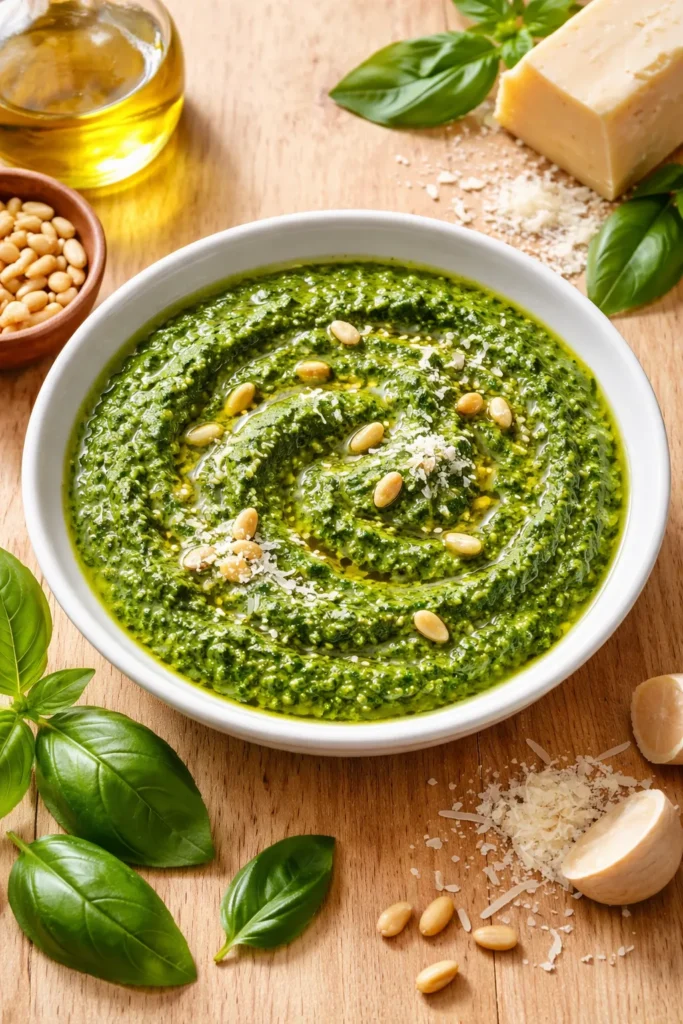
Store-bought pesto exists on a spectrum from barely acceptable to genuinely offensive. Making your own takes about 5 minutes with a food processor and produces something so much better that it’s almost unfair to compare the two. Fresh basil, toasted pine nuts, good Parmesan, garlic, and enough olive oil to bring it all together — that’s the foundation of one of Italy’s most celebrated sauces.
The ratio is what makes or breaks a pesto. Too much garlic and it’s aggressive. Not enough oil and it’s pasty. Too little cheese and it tastes flat. The recipe below has been calibrated for balance, but tasting as you go is still the most important step.
What You’ll Need
- 2 cups fresh basil leaves, firmly packed
- ⅓ cup pine nuts, lightly toasted
- 2 cloves garlic, roughly chopped
- ½ cup freshly grated Parmigiano-Reggiano
- ½ cup extra-virgin olive oil
- ½ teaspoon fine sea salt
- Fresh cracked black pepper to taste
- 1 tablespoon lemon juice (optional, but it brightens the whole thing)
How to Make It
Add the basil, pine nuts, garlic, and Parmesan to a food processor. Pulse 6 to 8 times until roughly combined. With the machine running, pour the olive oil in through the feed tube in a slow, steady stream. Blend until the pesto reaches your preferred consistency — some people want a smooth paste, others prefer texture. Season with salt, pepper, and lemon juice, then pulse one more time to combine.
Tips and Storage
Toast the pine nuts. Two minutes in a dry skillet over medium heat transforms them from bland to nutty and deeply flavorful. Watch them carefully — they burn quickly. To prevent the pesto from turning brown in the refrigerator, press plastic wrap directly onto the surface before sealing the container. It’ll keep for 4 days in the fridge or up to 3 months in the freezer.
Swap the nuts: Walnuts, almonds, and pistachios all make excellent substitutes for pine nuts. Each one changes the flavor slightly — walnuts give it an earthier edge, pistachios add a subtle sweetness.
5. Quick Garlic Tomato Pasta Sauce
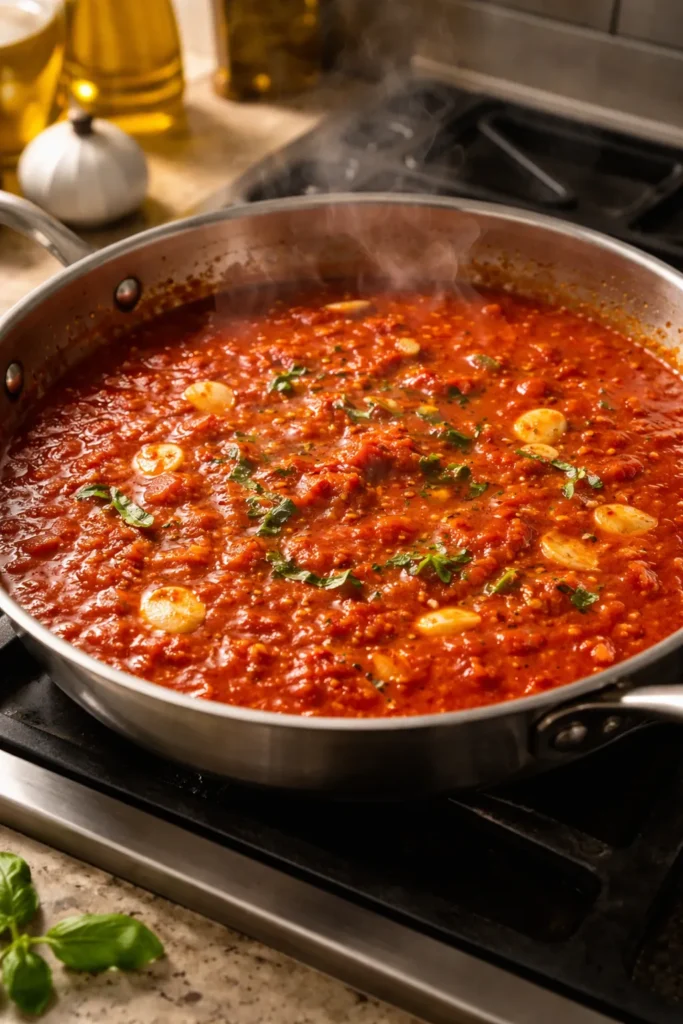
A great tomato sauce doesn’t need to simmer for three hours to taste good. The version below is honest about what it is: a 20-minute weeknight sauce with real depth and clean, bright flavor. The trick is in the technique — cooking the garlic slowly, scraping up every bit of fond from the pan, and finishing with a pat of cold butter to give the sauce body and a slight richness that canned tomatoes alone can’t provide.
This is the kind of sauce that can carry your whole week. Make a big batch on Sunday, and you’ve got a base for pasta Monday, a pizza sauce Tuesday, and a sauce for baked meatballs Wednesday.
What You’ll Need
- 3 tablespoons extra-virgin olive oil
- 1 medium yellow onion, finely diced
- 4 cloves garlic, minced
- 1 can (28 oz) crushed tomatoes
- 2 teaspoons dried basil
- 1 teaspoon dried oregano
- ½ teaspoon crushed red pepper flakes
- ½ teaspoon fine sea salt
- ½ teaspoon granulated sugar
- 1 tablespoon cold unsalted butter
- ¼ cup water
How to Make It
Heat olive oil in a wide saucepan over medium heat. Add the onion and cook, stirring frequently, for 5 to 6 minutes until softened and translucent. Add the garlic and cook for another 90 seconds, stirring constantly. Add the dried basil, oregano, and red pepper flakes, and stir for 30 seconds — this blooms the spices in the oil and makes a noticeable difference. Pour in the crushed tomatoes and water, add salt and sugar, and stir to combine. Reduce heat to low and simmer for 10 to 15 minutes, stirring occasionally. Remove from heat and stir in the cold butter until melted and glossy.
Tips and Storage
The sugar is not optional if your tomatoes are acidic. Half a teaspoon doesn’t make the sauce taste sweet — it neutralizes sharpness and rounds out the flavor. Taste before adding; some brands of crushed tomatoes are naturally sweeter than others. The sauce keeps refrigerated for 5 days or frozen for 3 months.
6. Classic Lemon Caper Butter Sauce
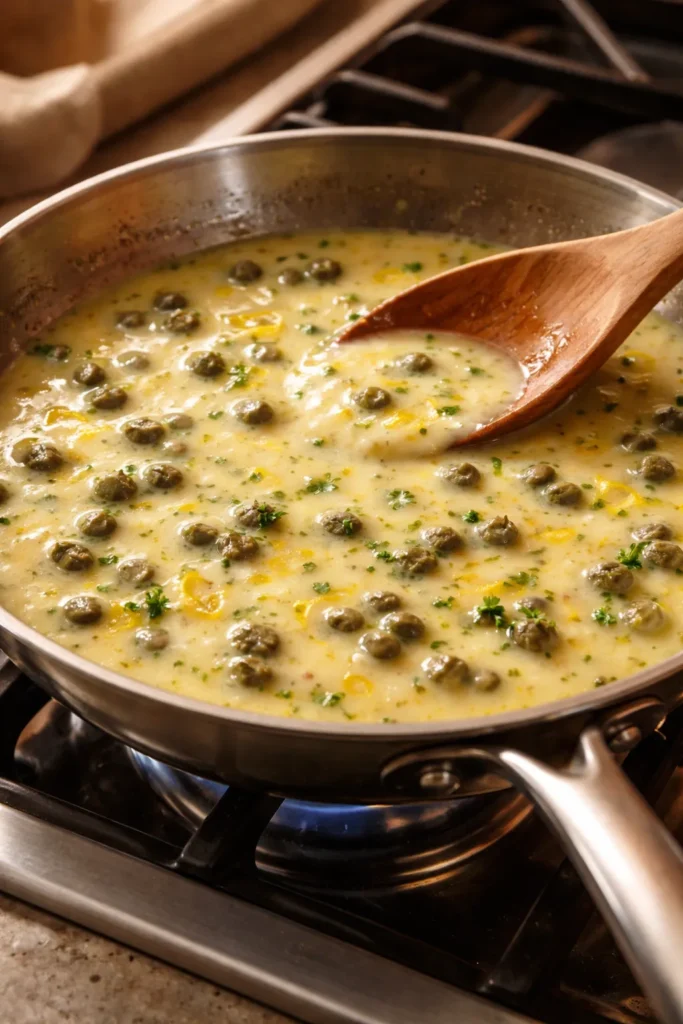
This is a French pan sauce — specifically a variation on beurre blanc — that sounds far more intimidating than it actually is. Butter, lemon, capers, and a splash of white wine come together in about 8 minutes and produce a sauce with a gorgeous, silky texture and the kind of bright, briny, citrusy flavor that makes simple fish and chicken taste extraordinary.
The technical secret is the cold butter method. Adding cold butter piece by piece off the heat creates an emulsified sauce with body. Add warm or melted butter and you’ll get a greasy liquid. The distinction sounds finicky, but once you’ve done it twice, it becomes completely intuitive.
What You’ll Need
- 3 tablespoons cold unsalted butter, cut into cubes
- 2 tablespoons capers, drained and roughly chopped
- 3 tablespoons fresh lemon juice
- ¼ cup dry white wine
- 1 small shallot, finely minced
- 1 tablespoon fresh flat-leaf parsley, chopped
- Salt and white pepper to taste
How to Make It
In a small skillet over medium heat, combine the white wine, lemon juice, and shallot. Let it simmer until reduced to about 2 tablespoons of liquid — this takes 3 to 4 minutes. Remove the pan from heat completely. Add the cold butter one cube at a time, swirling the pan constantly between additions. Once all the butter is incorporated and the sauce is glossy and slightly thickened, stir in the capers and parsley. Season with salt and white pepper.
Tips and Storage
If the sauce begins to look greasy or separated, it’s too hot. Move the pan to a cool surface immediately and whisk in one more piece of cold butter off the heat — this usually brings it back together. This sauce must be made fresh and served immediately; it doesn’t hold well or reheat successfully.
Pairs beautifully with: pan-seared sole, tilapia, branzino, poached salmon, roasted chicken, or steamed asparagus.
7. Creamy Peanut Sauce
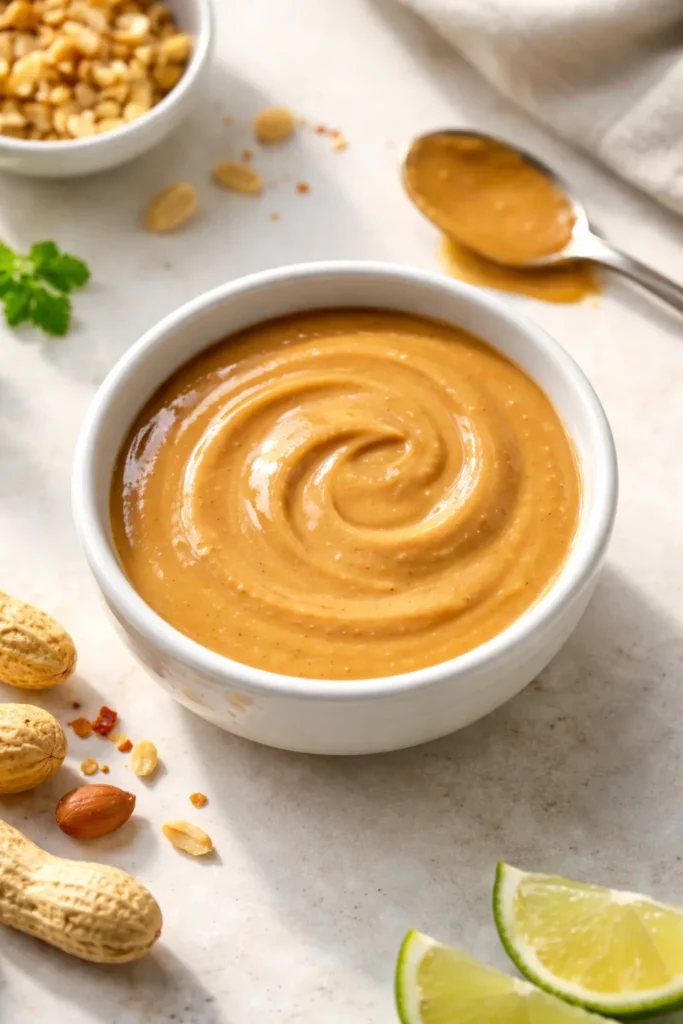
Peanut sauce occupies a special category: it works as a dipping sauce, a noodle sauce, a drizzle for grilled proteins, a dressing for cold salads, and a marinade. The base is simple — peanut butter, soy sauce, sesame oil, rice vinegar, garlic, and ginger — but the way those flavors combine produces something that’s simultaneously sweet, salty, nutty, tangy, and deeply savory.
A truly excellent peanut sauce is about getting the consistency right. Too thick and it’s gluey; too thin and it doesn’t coat anything properly. The goal is smooth and drizzle-able, with enough body to cling to noodles or vegetables without pooling at the bottom of the bowl.
What You’ll Need
- ½ cup natural peanut butter (smooth)
- 3 tablespoons soy sauce
- 2 tablespoons rice vinegar
- 1 tablespoon toasted sesame oil
- 1 tablespoon honey or maple syrup
- 2 cloves garlic, minced
- 1 teaspoon fresh ginger, grated
- 1 tablespoon lime juice
- 2 to 4 tablespoons warm water (to adjust consistency)
- ½ teaspoon chili flakes or a squeeze of sriracha (optional)
How to Make It
Whisk together the peanut butter, soy sauce, rice vinegar, sesame oil, honey, garlic, ginger, and lime juice in a bowl until smooth. The mixture will look thick and even slightly grainy at first — that’s normal. Add warm water one tablespoon at a time, whisking between additions, until the sauce reaches a smooth, pourable consistency. Taste and adjust: more lime for brightness, more soy for salt, more honey for sweetness, more chili for heat.
Tips and Storage
Use warm water, not cold. Cold water can cause the peanut butter to seize up and become lumpy. Warm water keeps everything smooth and emulsified. The sauce keeps well refrigerated for up to a week; it thickens significantly when chilled, so whisk in a tablespoon of warm water to loosen it before using again.
Serve with: rice noodles, grilled chicken skewers, spring rolls, shredded cabbage salads, or as a dipping sauce for crudités.
8. Creamy Tzatziki Sauce
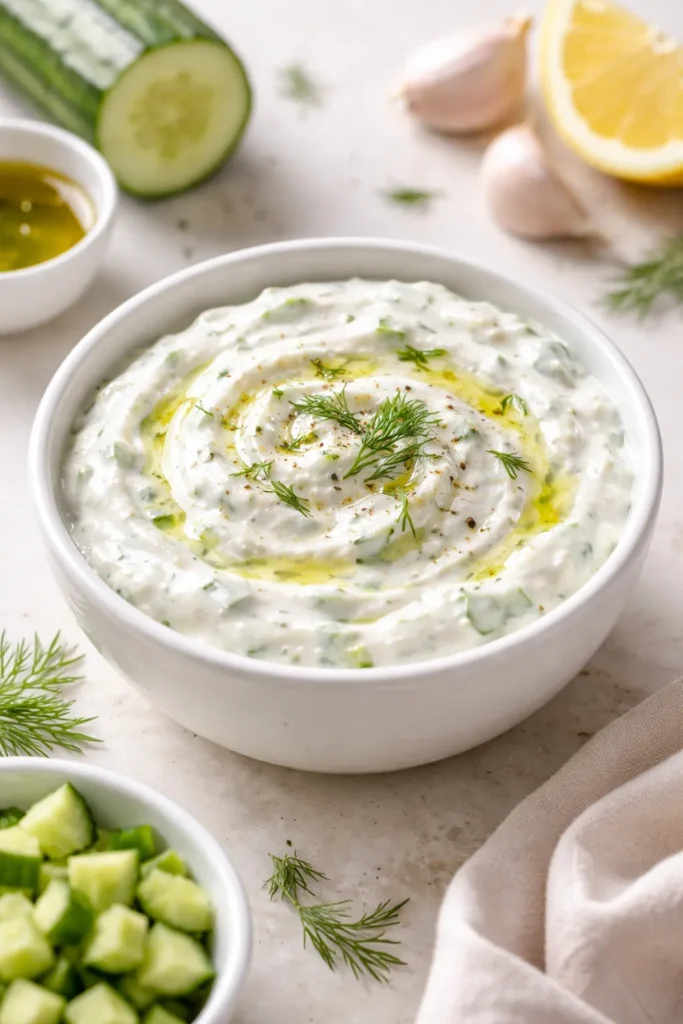
Tzatziki is the kind of sauce that belongs in every home cook’s rotation regardless of whether you ever make Greek food. It’s cooling, garlicky, tangy, and works as a dip, a sauce, a spread, and a dressing. The texture should be thick and creamy — more spreadable than pourable — with cucumber providing freshness and slight crunch without making the whole thing watery.
That last part is the most common tzatziki mistake: skipping the step of salting and draining the cucumber. Raw cucumber holds a significant amount of water, and if you fold it into yogurt without removing that moisture, your tzatziki will be thin and waterlogged within an hour.
What You’ll Need
- 1 cup full-fat Greek yogurt
- 1 medium cucumber, peeled and grated
- 2 cloves garlic, minced into a paste
- 2 tablespoons fresh dill, finely chopped (or 1 teaspoon dried)
- 1 tablespoon extra-virgin olive oil
- 1 tablespoon fresh lemon juice
- ½ teaspoon fine sea salt (plus more for the cucumber)
- Cracked black pepper to taste
How to Make It
Grate the cucumber using a box grater. Place the grated cucumber in a clean kitchen towel or a few layers of cheesecloth, sprinkle with a pinch of salt, and let it sit for 5 minutes. Then squeeze firmly over the sink, removing as much water as possible. Be more aggressive than you think necessary. In a bowl, combine the Greek yogurt, drained cucumber, garlic, dill, olive oil, and lemon juice. Mix well, season with salt and pepper, and refrigerate for at least 30 minutes before serving to let the flavors come together.
Tips and Storage
Full-fat Greek yogurt is non-negotiable here — low-fat versions are thinner and produce a sauce that feels watery even after draining the cucumber properly. Tzatziki keeps refrigerated for up to 4 days; stir before serving if any liquid has separated to the top.
Great with: pita bread, falafel, grilled lamb, chicken kebabs, roasted vegetables, or as a spread on grain bowls and sandwiches.
9. Bold Gochujang Sauce
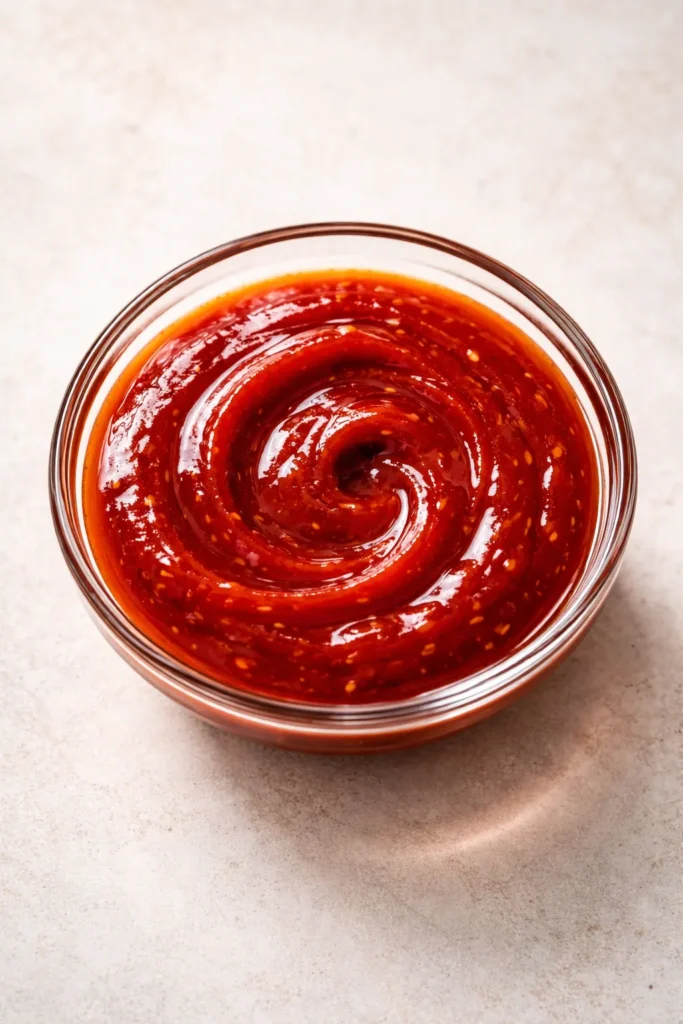
Gochujang is a fermented Korean red chili paste with a flavor that’s not just hot — it’s complex. Sweet, smoky, savory, and funky in the best possible way. When you thin it with sesame oil, rice vinegar, garlic, and a touch of honey, you get a sauce that’s as versatile as sriracha but with dramatically more depth. This one has become a fixture in a lot of home kitchens for good reason.
It’s equally effective as a dipping sauce, a noodle sauce, a chicken marinade, a grain bowl drizzle, or a glaze for roasted vegetables. If you haven’t cooked with gochujang paste yet, this sauce is the ideal starting point — the other ingredients balance and soften the heat so it’s approachable even for those who don’t typically seek out spicy food.
What You’ll Need
- 3 tablespoons gochujang paste
- 2 tablespoons toasted sesame oil
- 2 tablespoons soy sauce
- 1 tablespoon rice vinegar
- 1 tablespoon honey or brown sugar
- 2 cloves garlic, minced
- 1 teaspoon fresh ginger, grated
- 2 tablespoons water (to loosen)
- 1 teaspoon toasted sesame seeds (for finishing)
How to Make It
Whisk together the gochujang, sesame oil, soy sauce, rice vinegar, honey, garlic, and ginger until smooth. Add water one tablespoon at a time until the sauce reaches a drizzleable consistency. Taste — it should be bold, slightly sweet, and have a building heat. Adjust with more honey if it’s too sharp, more gochujang if you want more fire, or a splash more vinegar if it tastes flat. Finish with sesame seeds before serving.
Tips and Storage
Gochujang brands vary considerably in heat level. Korean grocery store varieties tend to be hotter; supermarket brands are often milder. Start with less than the recipe calls for if you’re heat-sensitive and build up. The sauce actually improves after 24 hours as the garlic and ginger mellow and the flavors integrate. Keeps refrigerated for 2 weeks.
Use it on: grain bowls, bibimbap, roasted Brussels sprouts, glazed chicken thighs, noodles, or as a dipping sauce for dumplings.
10. Silky Hollandaise Sauce
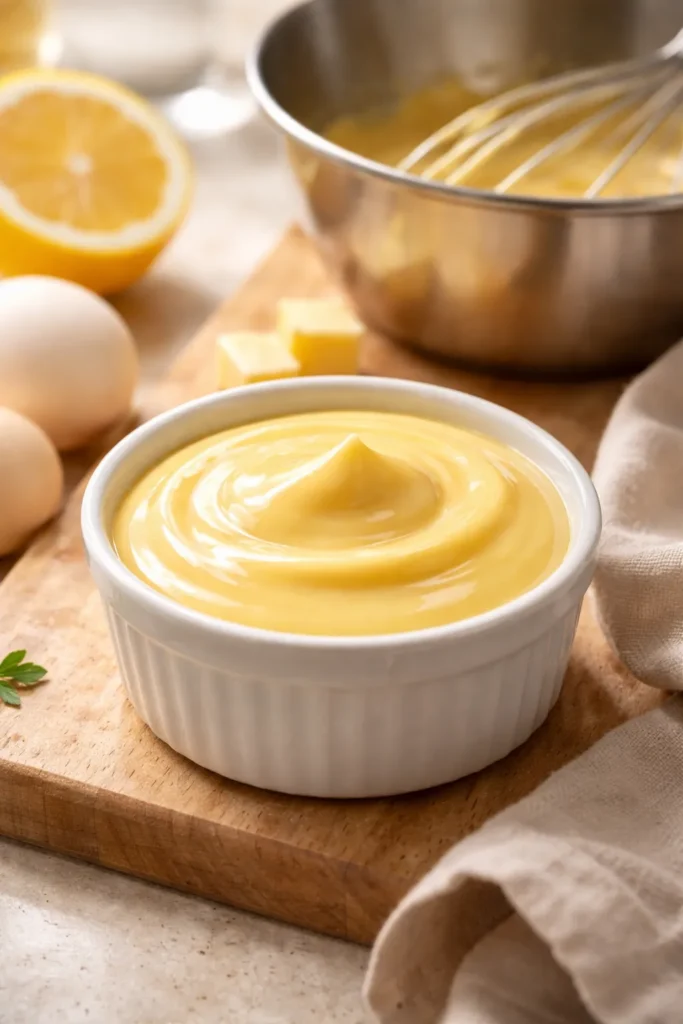
Hollandaise is the one sauce on this list that takes genuine attention and technique. It’s also the one sauce that makes a profound, restaurant-quality impression the moment you serve it. Made correctly, it’s a velvety, rich, lemony emulsion of egg yolks and butter that transforms poached eggs, steamed asparagus, grilled salmon, and roasted vegetables into something that feels genuinely special.
The double boiler method is the most reliable approach for home cooks — it gives you control over the temperature, which is the single most important variable. Too hot and the eggs scramble. Too cool and the butter won’t emulsify. The sweet spot is a gentle, consistent warmth.
What You’ll Need
- 3 large egg yolks
- 1 tablespoon cold water
- 1 tablespoon fresh lemon juice (plus more to taste)
- ½ cup (1 stick) unsalted butter, melted and kept warm
- Pinch of cayenne pepper
- Salt and white pepper to taste
How to Make It
Set a heatproof bowl over a saucepan of barely simmering water — the bowl should not touch the water. Add the egg yolks and cold water to the bowl and whisk constantly for 2 to 3 minutes until the mixture becomes pale, thickened, and slightly foamy, and the whisk leaves visible trails when dragged through. Remove from heat momentarily. Begin adding the warm melted butter in a very slow, thin drizzle — almost drop by drop at first — whisking the entire time. As the sauce begins to thicken and emulsify, you can add the butter slightly faster, but never stop whisking. Once all the butter is incorporated, whisk in the lemon juice, cayenne, salt, and white pepper. Taste and adjust.
Tips and Storage
If your hollandaise breaks — meaning it turns greasy and separates — it’s fixable. Whisk a fresh egg yolk with a teaspoon of warm water in a clean bowl, then slowly whisk the broken sauce into the new yolk mixture. This almost always rescues it. Hollandaise should be made fresh and served within 30 minutes; it doesn’t store well or reheat safely. If you need a more forgiving version, a small splash of heavy cream added before the butter provides extra stability.
Serve with: Eggs Benedict, poached salmon, steamed asparagus, roasted potatoes, or over blanched green beans.
Final Thoughts
A strong sauce collection doesn’t need to be large — it needs to be dependable. The ten sauces above cover every major flavor direction: herby and bright (chimichurri, pesto, romesco), rich and buttery (garlic butter, lemon caper, hollandaise), creamy and cooling (tzatziki, peanut sauce), bold and fermented (gochujang), and hearty and warming (tomato sauce). Between them, they’ll handle any protein, vegetable, grain, or occasion you throw their way.
The other thing worth noting is how these sauces interact with each other. Once you understand how to make a proper emulsified butter sauce, hollandaise and beurre blanc variations become instinctive. Once you’ve made chimichurri, you understand how acid, oil, and fresh herbs can form a sauce without any heat at all. Each technique you learn opens a wider range of improvisation — that’s how cooking with sauces actually develops over time.
Start with two or three from this list that align with how you already cook. Make each one a couple of times until you know it by feel. Taste as you go, adjust confidently, and pay attention to what your palate tells you. The goal isn’t to follow a recipe forever — it’s to absorb the logic behind each sauce until it becomes something you can riff on freely, without measuring a thing.