When the temperature climbs and the thought of heating your oven makes you want to weep, there’s one dessert that saves the day: no-bake cheesecake. It’s cool, creamy, refreshing, and absolutely foolproof. There’s no need to fuss with water baths, temperamental eggs, or worry about cracks spreading across the surface. Just mix, chill, and slice into pure indulgence.
The beauty of no-bake cheesecake is that it requires almost zero oven time, making it the perfect warm-weather dessert when you want to keep your kitchen cool and your dessert even cooler. Whether you’re hosting a dinner party, bringing something to a potluck, or simply treating yourself on a lazy afternoon, these ten variations prove that the best cheesecakes don’t need an oven. From classic simplicity to adventurous flavor combinations, you’ll find a no-bake cheesecake here that speaks to your taste buds. Each one is designed to be made ahead, chilled to creamy perfection, and ready to impress.
The best part? Most of these cheesecakes actually taste better the next day, making them ideal for advance prep when you’re juggling summer activities and entertaining. So grab your springform pan, set aside a couple of hours for assembly, and discover why these make-ahead desserts have earned a permanent place in the warm-weather entertaining playbook.
Table of Contents
- Why No-Bake Cheesecake Is the Ultimate Summer Solution
- The Essential Ingredients for Perfect No-Bake Cheesecakes
- 1. Classic Philadelphia Cheesecake
- Why This Version Works
- How to Build the Perfect Classic
- 2. Fresh Strawberry Cheesecake
- Building the Strawberry Layer
- The Complete Technique
- 3. Chocolate Lovers’ Dream Cheesecake
- Incorporating Chocolate Properly
- Building Layers of Chocolate Flavor
- 4. Lemon Zest Cheesecake
- The Power of Fresh Lemon
- Creating Brightness and Balance
- 5. Biscoff Cookie Cheesecake
- Working with Biscoff Spread
- The Biscoff Cookie Crust
- 6. Raspberry White Chocolate Cheesecake
- Incorporating White Chocolate
- The Raspberry Element
- 7. Peanut Butter Cup Cheesecake
- Building the Peanut Butter Flavor
- The Chocolate-Peanut Butter Combination
- 8. Tropical Mango Cheesecake
- Working with Fresh Mango
- Creating Tropical Balance
- 9. Mint Chocolate Cheesecake
- Infusing Mint Flavor
- The Chocolate-Mint Marriage
- 10. Salted Caramel Cheesecake
- Creating the Perfect Salted Caramel
- Layering Caramel into Cheesecake
- Final Thoughts
Why No-Bake Cheesecake Is the Ultimate Summer Solution
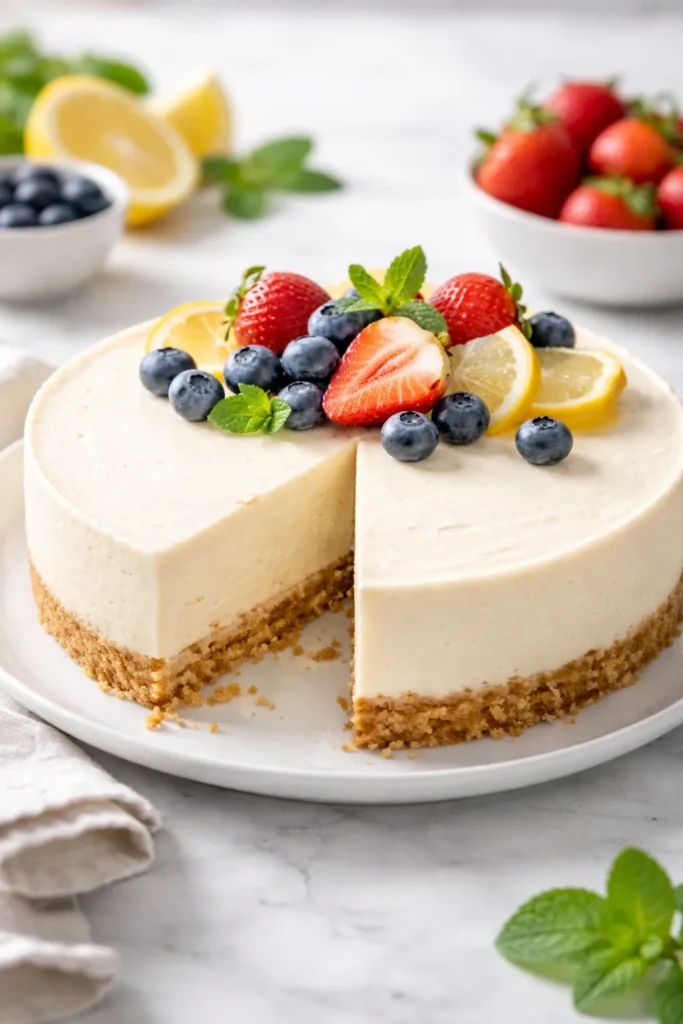
No-bake cheesecake sits squarely in that sweet spot between convenience and genuine indulgence. When you don’t have to use your oven, your kitchen stays cooler and more comfortable during peak summer heat. But beyond the practical advantage, there’s something really special about the texture and flavor of a well-made no-bake cheesecake—it’s lighter and more mousse-like than its baked counterpart, yet sturdy enough to slice cleanly.
The filling comes together with just a handful of ingredients: softened cream cheese, whipped cream, sugar, and a touch of vanilla or lemon juice. The secret to achieving that perfect texture lies in the balance between aeration and structure. When you whip cream cheese with sugar until it’s smooth and fluffy, then fold in properly whipped heavy cream, you create a filling that’s rich yet light, creamy yet stable. Some recipes rely on gelatin powder for additional setting power, which prevents the cheesecake from becoming too soft while still maintaining that silky smooth mouthfeel.
The crust deserves equal attention. A buttery, crumbly graham cracker or digestive biscuit crust provides the ideal textural contrast to the creamy filling. Press it firmly into the pan so it holds together once the cheesecake is removed from the springform. Once the cold filling is added and the whole thing chills in the refrigerator, the crust absorbs moisture and becomes even more structurally sound, holding the layers together beautifully.
Unlike baked cheesecake, which requires precise oven temperature and timing, no-bake versions are remarkably forgiving. There’s no risk of overcooking, cracking from temperature shock, or dealing with a water bath. You’re simply working with ingredients at room temperature and cold temperatures, making it nearly impossible to ruin. The only real requirement is patience—you need to allow adequate chilling time, typically at least six hours, for the filling to set properly and develop that dense, sliceable texture that makes every bite satisfying.
The Essential Ingredients for Perfect No-Bake Cheesecakes
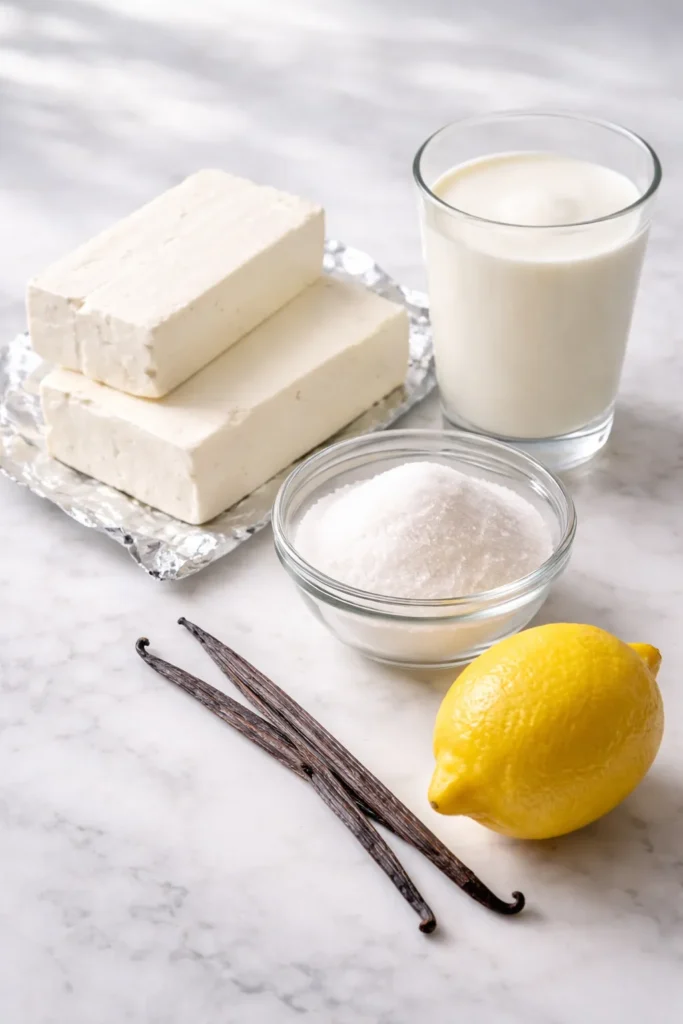
Before diving into these ten variations, let’s talk about the core ingredients that make no-bake cheesecake work. Understanding why each component matters will help you execute any recipe with confidence and, if needed, adapt them to your preferences.
Cream cheese is the star of the show, and it matters which kind you use. Block cream cheese is significantly firmer than tub cream cheese, which is formulated for spreading. Block varieties like Philadelphia brand contain less moisture and whip up to a fluffier consistency, creating a lighter final cheesecake. If you can only find tub cream cheese, you’ll want to use slightly more gelatin powder to help the filling set properly. Always soften your cream cheese to room temperature before beating—if it’s straight from the fridge, it’ll be lumpy and difficult to work with smoothly.
Heavy whipping cream needs to be ice cold to whip properly into stiff peaks. The cold temperature helps the fat globules emulsify and trap air, creating that fluffy texture that makes the cheesecake so appealing. Room-temperature cream simply won’t whip, so take it straight from the fridge when you’re ready to use it. Make sure you’re using cream labeled as suitable for whipping, not pouring cream or ultra-pasteurized cream that’s been treated in ways that prevent proper whipping.
Sugar should ideally be caster sugar (superfine sugar) with its smaller crystal size, which dissolves more easily without heating. If you only have granulated sugar, beat the cream cheese mixture a bit longer and rub a small amount between your fingers to ensure no grains remain. This step matters more for no-bake recipes since heat isn’t working in your favor to dissolve sugar crystals.
Gelatin powder is optional but highly recommended if you want a cheesecake that holds its shape beautifully and slices cleanly. Unflavored gelatin is affordable and widely available in the baking aisle. When used in the right amount, gelatin provides structure without making the filling rubbery or giving it a bouncy, panna cotta-like texture. The technique is simple: sprinkle gelatin over cold water to “bloom” it, let it sit for a few minutes until it firms up like rubber, then gently microwave it for 15 seconds to melt it back into liquid form. Cool it for five minutes before folding it into the cream cheese mixture. This blooming step is essential because dumping dry gelatin directly into liquid causes it to clump into unusable lumps.
Flavorings—vanilla extract, lemon juice, citrus zest—add depth and brightness. Real vanilla extract tastes infinitely better than vanilla essence in no-bake desserts because there’s no heat to mellow or alter the flavor. A squeeze of fresh lemon juice brings subtle tang that balances the richness of cream cheese without making the cheesecake taste citrusy.
1. Classic Philadelphia Cheesecake
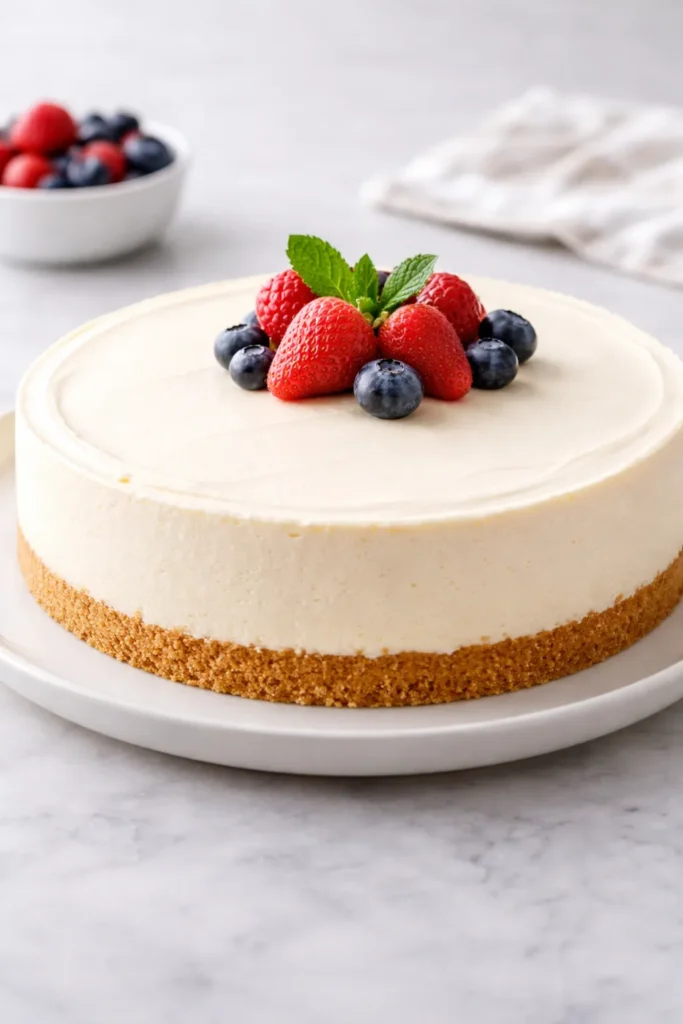
This is the cheesecake that started it all—beautifully simple, utterly elegant, and proof that sometimes restraint in ingredients creates the most satisfying dessert. A traditional no-bake version delivers everything you expect from a Philadelphia-style cheesecake: silky smooth filling, buttery crust, and that perfect balance of sweetness and tanginess that makes you want another slice before you’ve finished your first.
Why This Version Works
The beauty of this classic is that every ingredient serves a purpose, and there’s nowhere to hide. The cream cheese must be high quality and properly softened, the cream must be whipped to proper stiff peaks, and the balance of sugar and lemon juice must be exact. This teaches you the fundamentals that you’ll apply to every other cheesecake variation you make. When you master this one, you’ve got the foundation for success.
Most traditional Philadelphia cheesecake recipes call for just cream cheese, sugar, vanilla, and sometimes a touch of lemon juice. In the no-bake version, add properly whipped heavy cream to create that light yet rich texture. A simple graham cracker crust pressed into the bottom and slightly up the sides provides the perfect textural foil to the silky filling. The result is a cheesecake that tastes like it came from a fancy restaurant, but you made it in your own kitchen without breaking a sweat.
How to Build the Perfect Classic
Beat 500g (16 oz) of softened cream cheese with 150g (¾ cup) of caster sugar until the mixture is pale, fluffy, and noticeably increased in volume—this takes about two minutes of beating. Add one teaspoon of vanilla extract and one tablespoon of fresh lemon juice, beating just until combined. In a separate bowl, whip 300ml (10 fl oz) of ice-cold heavy cream to stiff peaks, then fold it gently into the cream cheese mixture in two additions, being careful not to deflate the whipped cream.
Pour into your prepared graham cracker crust and refrigerate for at least six hours, though overnight is even better. The longer it sits, the more the flavors meld and the firmer the texture becomes. This cheesecake is best served straight from the fridge, cut with a hot knife (run it under warm water and wipe it dry between slices for clean cuts), and enjoyed completely plain or with fresh berries on the side.
Pro tip: The simplicity of this cheesecake makes it the perfect canvas for toppings. Serve it with a fresh berry compote, a drizzle of chocolate ganache, a spoonful of jam, or simply with sweetened whipped cream and fresh fruit alongside.
2. Fresh Strawberry Cheesecake
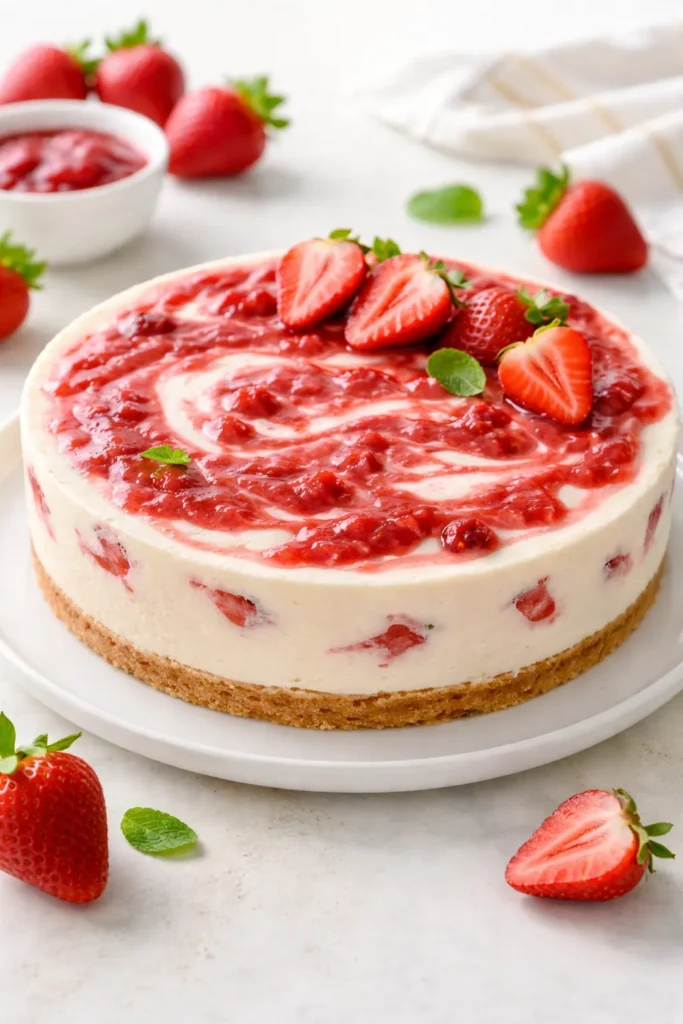
When summer strawberries are at their peak—juicy, fragrant, and naturally sweet—there’s no better way to celebrate than with a no-bake strawberry cheesecake. This version layers a classic cream cheese filling with vibrant fresh strawberry sauce, creating a dessert that tastes like the essence of summer in every bite. The tartness of fresh strawberries perfectly complements the rich creaminess of the cheese filling.
Building the Strawberry Layer
Fresh strawberry sauce is incredibly simple but makes a dramatic difference in flavor and appearance. Hull and halve about 500g (18 oz) of fresh strawberries, then place them in a food processor with 2-3 tablespoons of sugar and a squeeze of lemon juice. Pulse until you have a chunky, jammy consistency—not completely smooth, but broken down enough to spread. If you prefer a smoother sauce, strain it through a fine-mesh sieve, though the slight texture from strawberry pieces adds nice complexity.
You can layer this sauce into your cheesecake in several ways. Some bakers spread half the cheesecake filling into the crust, then top with a layer of strawberry sauce, then finish with the remaining filling. Others swirl the sauce through the filling just before chilling, creating a marbled effect. A third approach—and perhaps the most elegant—is to spread the finished cheesecake with a glossy layer of strawberry sauce just before serving, allowing fresh sliced strawberries to sit on top like jewels.
The Complete Technique
Prepare your graham cracker crust as usual and press it firmly into your springform pan. Make the classic cream cheese filling, but reduce the lemon juice to just half a tablespoon since the strawberry sauce will provide tartness. Spread half the filling into the crust, smooth it with a spatula, then spoon the strawberry sauce across the surface in an even layer. Top with the remaining filling, smoothing it gently without stirring too much (you want some definition to the strawberry layer). Chill for at least six hours.
Alternatively, prepare the complete cheesecake filling, pour it into the crust, and chill as directed. Then, just before serving, top the chilled cheesecake with fresh strawberry sauce and crown it with a generous handful of fresh sliced strawberries. This approach keeps the strawberry flavor bright and fresh since the fruit hasn’t been sitting in the filling for hours.
Worth knowing: If you can find freeze-dried strawberries, crush them coarsely and fold them directly into the filling for little bursts of concentrated strawberry flavor throughout. This works beautifully in combination with fresh strawberry sauce on top.
3. Chocolate Lovers’ Dream Cheesecake
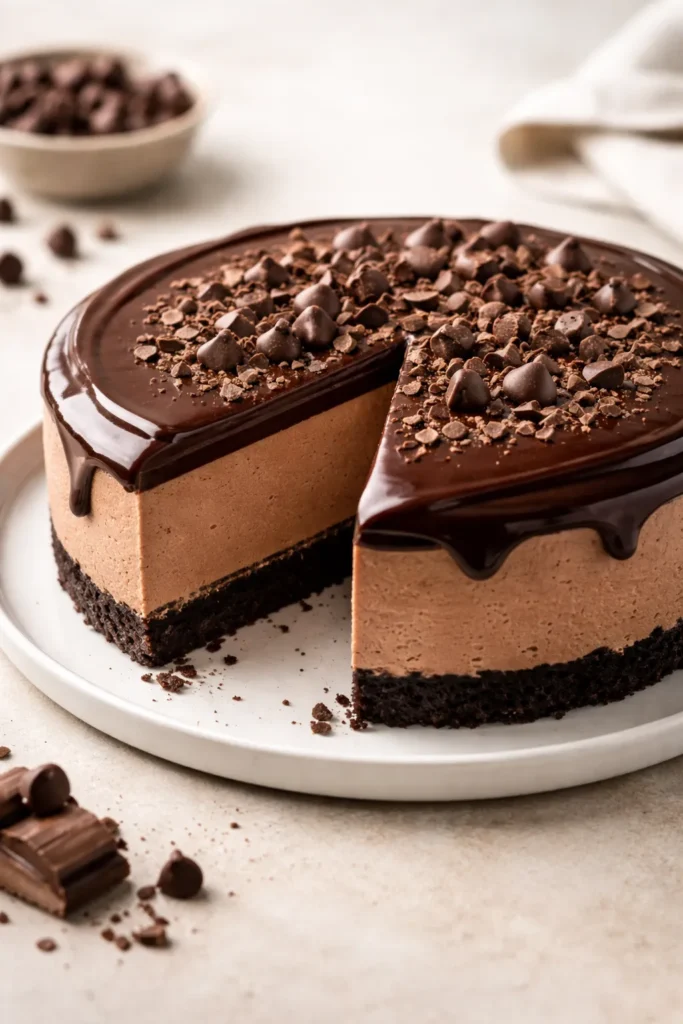
For anyone who believes chocolate makes everything better, this version transforms the classic into pure indulgence. Rich, decadent, and impossibly smooth, this no-bake chocolate cheesecake combines cream cheese with dark chocolate, creating a filling that’s complex enough to satisfy serious chocolate enthusiasts yet creamy enough to feel elegant on the palate. Topped with chocolate ganache, it’s a dessert that disappears quickly.
Incorporating Chocolate Properly
The trick to a successful chocolate cheesecake is incorporating chocolate in a way that doesn’t seize up or create a grainy texture. Rather than stirring melted chocolate directly into cream cheese, which can cause problems, a better approach is to melt quality dark chocolate with a bit of heavy cream, creating a smooth ganache-like mixture that blends seamlessly into the filling.
Melt 150g (5 oz) of chopped dark chocolate (70% cacao works beautifully) with 60ml (¼ cup) of heavy cream over gentle heat, stirring until completely smooth. Allow this to cool for about five minutes until it’s still pourable but no longer piping hot. Prepare your cream cheese filling as usual, then gently fold the cooled chocolate mixture into it until the color is even throughout and no streaks remain.
Building Layers of Chocolate Flavor
For maximum chocolate impact, use a chocolate cookie crust made from crushed Oreos or digestive biscuits mixed with melted butter and a bit of cocoa powder. This creates a chocolate-forward base that reinforces the chocolate filling. Pour your chocolate cream cheese filling into this crust and chill as directed. Once set, you can top it with a thin layer of glossy chocolate ganache made from equal parts dark chocolate and heavy cream, melted together and cooled slightly before spreading.
Some bakers prefer to dust the chilled cheesecake with cocoa powder, scatter it with chocolate shavings, or leave it plain to showcase the silky, dark filling. Each approach is elegant in its own way.
Insider note: A tiny pinch of sea salt sprinkled over the chocolate ganache just before it sets creates a sophisticated sweet-salty contrast that makes the chocolate taste even more chocolatey.
4. Lemon Zest Cheesecake
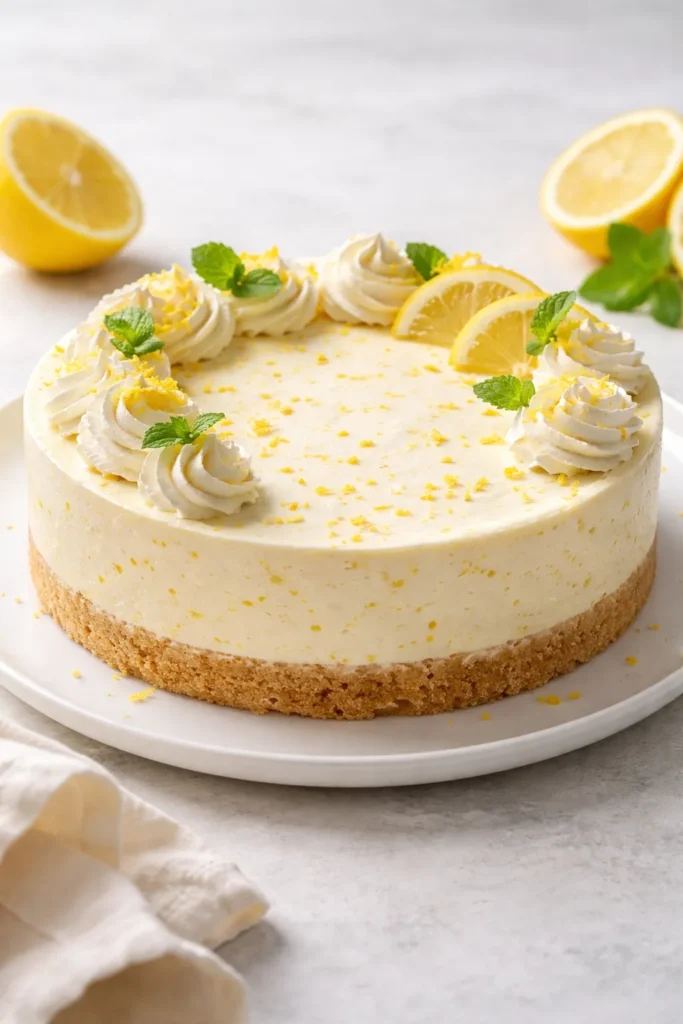
Bright, refreshing, and perfectly balanced between sweet and tart, a lemon cheesecake is the definition of a summer dessert. Fresh lemon zest and juice wake up the cream cheese filling, creating something that tastes light and sophisticated while remaining deeply creamy. This version is particularly stunning served with fresh raspberries or a simple raspberry coulis that contrasts with the bright lemon flavor.
The Power of Fresh Lemon
Real lemon juice—squeezed from fresh lemons, not the bottled kind—makes all the difference here. You need about 2-3 tablespoons of fresh lemon juice in your filling, depending on the size of your lemons and how intensely you want the lemon flavor to come through. Beyond juice, the zest of one or two lemons adds concentrated lemon flavor without additional moisture. Zest your lemons before cutting them in half to juice, using a microplane zester to get the brightest, most flavorful zest without the bitter white pith.
Fold the zest into your cream cheese mixture along with the juice, making sure the zest is distributed evenly throughout. The little flecks of zest become part of the silky filling, adding visual interest and intense bursts of lemon flavor in every spoonful.
Creating Brightness and Balance
Don’t skip the sugar in a lemon cheesecake—you might think you want something super tart, but the sugar is essential for balance. Aim for about 150g (¾ cup) of caster sugar, which is enough to be noticeable but not so much that it overwhelms the lemon. Some bakers add a tiny touch of honey or corn syrup for additional body and smoothness, though it’s not essential.
For the crust, use a standard graham cracker crust or try a buttery shortbread crust for something a bit more sophisticated. Once the cheesecake is chilled and set, serve it plain or with fresh raspberries, a drizzle of raspberry coulis, or a simple berry compote on the side. The tartness of berries and lemon together creates a flavor combination that tastes impossibly fresh and summery.
Pro tip: Toast the zest lightly in a dry pan for just 30 seconds before adding it to the filling to intensify the lemon flavor even further.
5. Biscoff Cookie Cheesecake
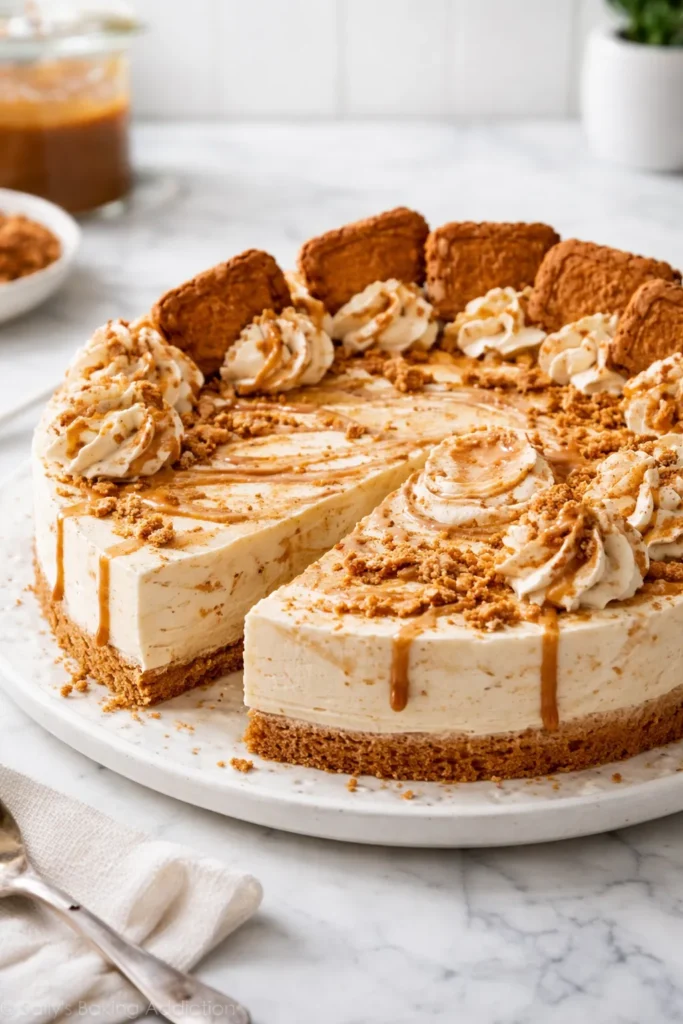
If you love the warm, caramel-like spice of Lotus Biscoff cookies, this cheesecake is your new favorite. Biscoff cookies bring a sophisticated flavor that’s almost impossible to find in other ingredients—a combination of cinnamon, caramel, and subtle honey notes that transforms a simple no-bake cheesecake into something truly memorable. This dessert tastes like it took hours to develop when it actually comes together remarkably quickly.
Working with Biscoff Spread
Biscoff spread (also called Lotus Biscoff butter or cookie butter) is the secret ingredient that elevates this cheesecake. You’ll want to use the smooth spread rather than the crunchy variety for this application, though both are delicious. Fold 100-120g (½ cup) of Biscoff spread into your prepared cream cheese filling, making sure it’s distributed evenly and there are no lumps remaining.
The Biscoff spread adds not only flavor but also body and richness to the filling, making it naturally thicker and creamier without needing gelatin (though you can still add it if you want an ultra-sturdy texture). The amount of spread you use depends on how intensely Biscoff-forward you want the cheesecake to taste. Some people prefer a more subtle hint of Biscoff, while others want it to be the dominant flavor.
The Biscoff Cookie Crust
Crush Biscoff cookies to fine crumbs using a food processor or by placing them in a zip-top bag and pounding with a rolling pin. You’ll need about 200g (7 oz) of crushed cookies. Mix with 90g (6 tablespoons) of melted butter and a pinch of salt, then press firmly into your springform pan. The Biscoff cookies have enough sweetness of their own that you might not need additional sugar in the crust—taste as you go.
Some bakers like to create a double Biscoff experience by topping the finished cheesecake with additional Biscoff spread drizzled over the surface or by crushing extra Biscoff cookies and sprinkling them around the edges. It’s an indulgent touch that makes this cheesecake feel extra special.
Worth knowing: Biscoff spread can be quite thick. If it feels too firm to fold into the filling easily, warm it slightly by placing the jar in a bowl of warm water for a few minutes, making it easier to incorporate smoothly.
6. Raspberry White Chocolate Cheesecake
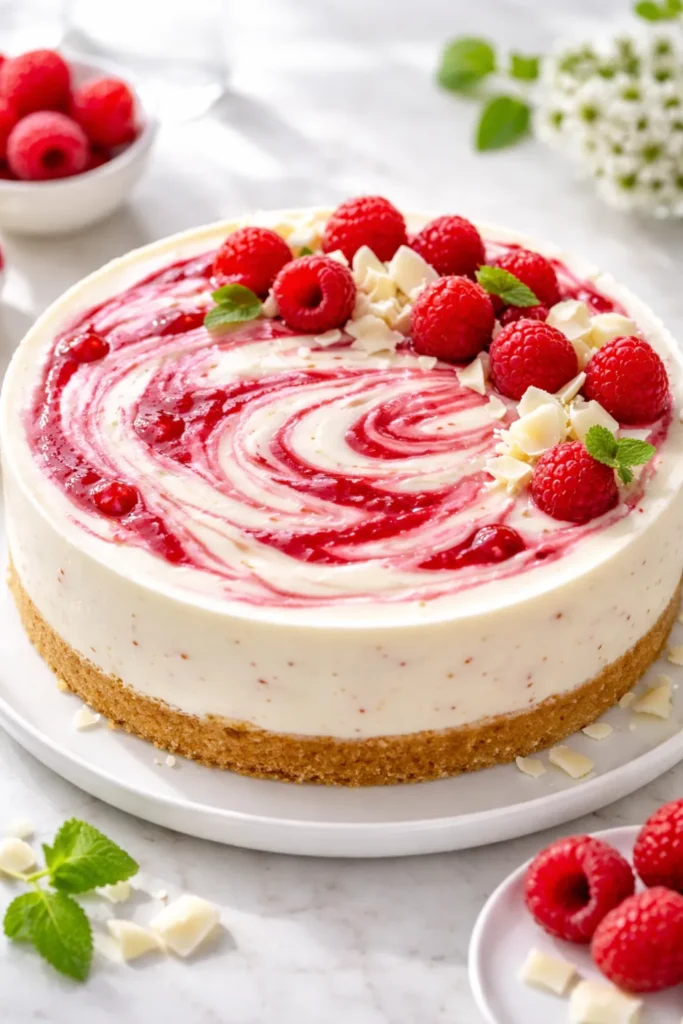
White chocolate and raspberry is a classic pairing that tastes elegant and refined, perfect for summer entertaining. The tartness of fresh or frozen raspberries provides a bright counterpoint to the sweet, creamy white chocolate filling, creating a cheesecake that feels both indulgent and refreshingly fruity. This version proves that white chocolate cheesecake can be just as satisfying as darker varieties.
Incorporating White Chocolate
White chocolate can be temperamental, so approach it with care. Chop 150g (5 oz) of quality white chocolate into small pieces and melt it with 2-3 tablespoons of heavy cream over gentle heat, stirring frequently until completely smooth. The cream helps prevent the white chocolate from seizing, which can happen if you apply direct heat without enough moisture.
Allow the white chocolate mixture to cool for several minutes—it should be barely warm but still pourable. Then gently fold it into your prepared cream cheese filling. Because white chocolate adds sweetness and richness, you can reduce the amount of sugar you’d normally use in the filling by about 20-30g (2-3 tablespoons). Taste as you fold to find the right balance for your preference.
The Raspberry Element
Fresh raspberries are ideal, but frozen raspberries work beautifully in this application. If using frozen raspberries, thaw them and strain off any excess liquid to prevent the cheesecake from becoming too wet. You can either fold some raspberries directly into the filling for a swirled effect, or layer them in the middle of the filling, or top the finished cheesecake with a raspberry coulis and fresh berries just before serving.
For the most elegant presentation, prepare a raspberry coulis by pressing fresh or thawed frozen raspberries through a fine-mesh sieve with a bit of sugar, then drizzle this over the chilled cheesecake just before serving. The deep red coulis against the pristine white filling creates a stunning visual contrast.
Insider note: A touch of white chocolate shavings on top of the finished cheesecake adds sophistication and reinforces the white chocolate flavor.
7. Peanut Butter Cup Cheesecake
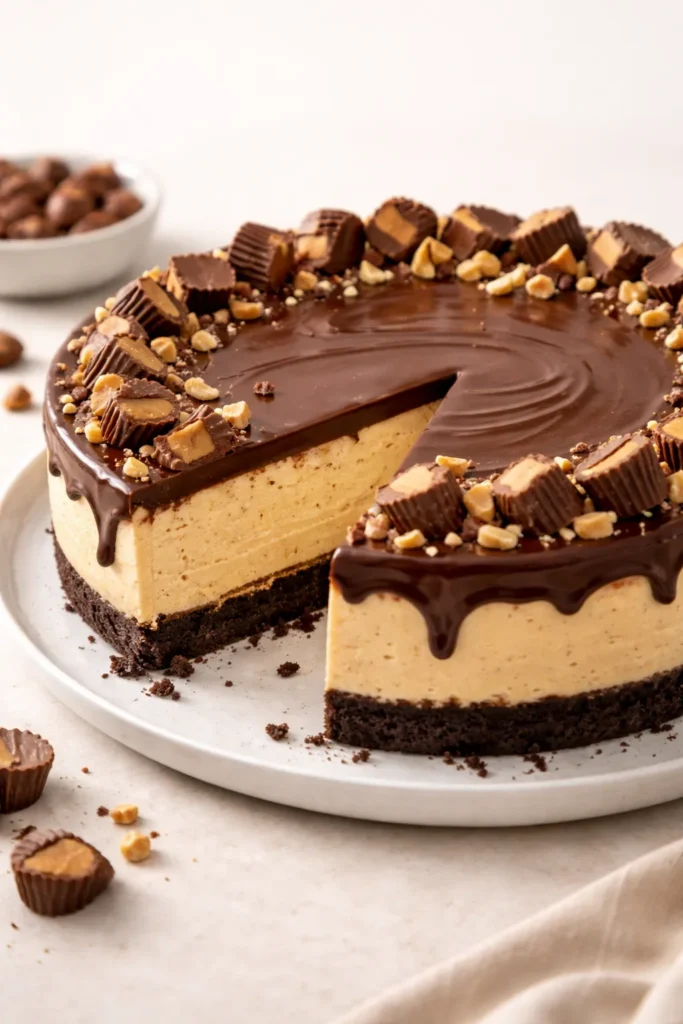
If you’re a peanut butter and chocolate person, this cheesecake combines both flavors in a way that’s pure nostalgia wrapped in elegance. The creamy peanut butter filling enriched with real peanut butter creates a dessert that tastes like an upscale Reese’s cup but feels indulgent in a grown-up way. Layer it with chocolate and it becomes an event.
Building the Peanut Butter Flavor
Natural peanut butter works well here, but creamy conventional peanut butter is more convenient and creates a smoother filling. Fold 150g (¾ cup) of peanut butter into your prepared cream cheese filling, beating it in until completely smooth and evenly distributed. The peanut butter adds richness and body to the filling, making it naturally thicker.
If your peanut butter is very thick, you can soften it slightly by warming the jar in a bowl of hot water for a few minutes, making it easier to fold in smoothly. Alternatively, some bakers like to mix their peanut butter with a bit of heavy cream before folding it in, creating an even smoother integration.
The Chocolate-Peanut Butter Combination
For maximum impact, use a chocolate cookie crust made from crushed Oreos mixed with melted butter. Pour your peanut butter cream cheese filling into this crust, then once it’s chilled and set, top it with a thin layer of chocolate ganache. The chocolate ganache can be simple—equal parts dark chocolate and heavy cream melted together—or you can make it more special by adding a tablespoon of peanut butter to the ganache mixture, creating an extra layer of peanut butter-chocolate harmony.
Some bakers like to crush Reese’s peanut butter cups and scatter them over the ganache before it sets, or to top the finished cheesecake with chopped peanut butter cups and a drizzle of chocolate. This is a dessert where you can be as decadent as you want.
Pro tip: If you’re concerned about the peanut butter flavor being too intense, reduce it to 120g (½ cup plus 2 tablespoons) and the cheesecake will still be distinctly peanut butter flavored but slightly more balanced.
8. Tropical Mango Cheesecake
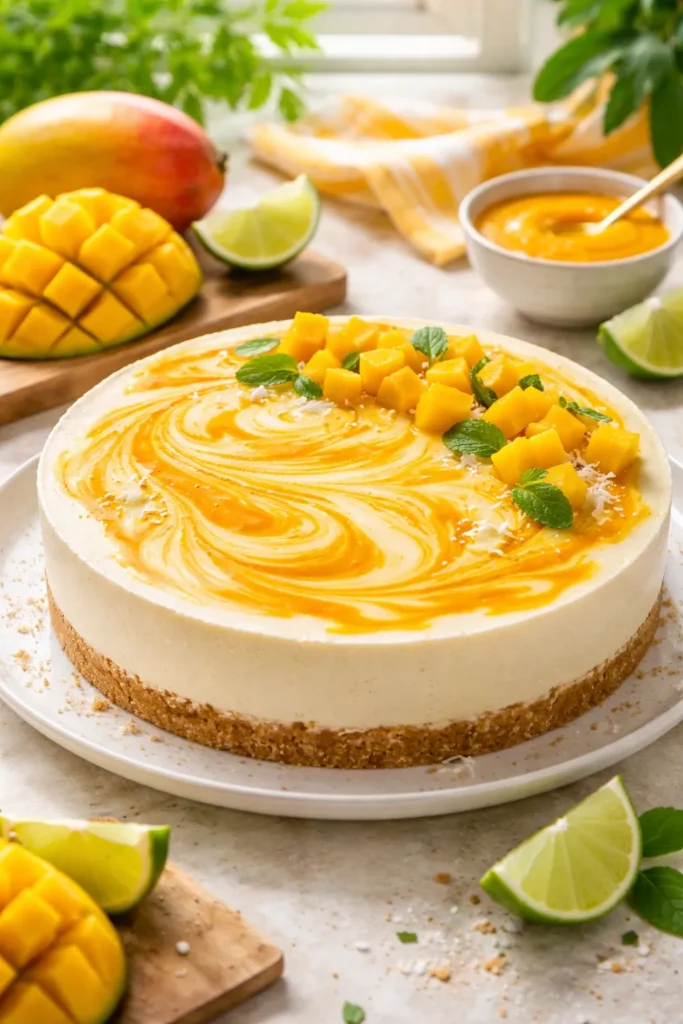
Summer tastes like mango, and this cheesecake captures all the tropical sweetness and bright flavor of ripe mango in a creamy, elegant form. Fresh mango puree swirled through the filling or layered on top creates a cheesecake that tastes like a vacation in every bite. This is the dessert to make when you want something that feels exotic and special.
Working with Fresh Mango
Choose ripe, fragrant mangoes that yield slightly to gentle pressure. Peel them, remove the pit, and roughly chop the flesh. Place the mango pieces in a food processor and pulse until you have a smooth puree. If your mango seems very watery, strain the puree through a fine-mesh sieve to remove some of the excess liquid, which could affect the texture of your cheesecake.
You’ll need about 250ml (1 cup) of mango puree. Fold this gently into your prepared cream cheese filling, swirling it through rather than mixing it completely, which creates a beautiful marbled effect. Alternatively, you can make your basic cheesecake filling first, then top it with a layer of mango puree and fresh diced mango just before serving to keep the mango flavor bright and fresh.
Creating Tropical Balance
The natural tartness of mango works beautifully in cheesecake, but you may want to reduce the lemon juice in your filling to just half a tablespoon since the mango provides acidity. A pinch of cardamom or a tiny touch of fresh ginger can amplify the tropical feeling without being identifiable as a specific spice—just a hint that makes people pause and ask “what is that?”
Use a classic graham cracker crust and top the finished cheesecake with fresh diced mango and a sprinkle of toasted coconut flakes for a complete tropical experience. Some bakers like to glaze the top with a light mango-jelly topping, creating a glossy, jewel-like appearance.
Worth knowing: Frozen mango puree works beautifully when fresh mangoes aren’t available. Thaw it completely and strain off any excess liquid before using it in your filling.
9. Mint Chocolate Cheesecake
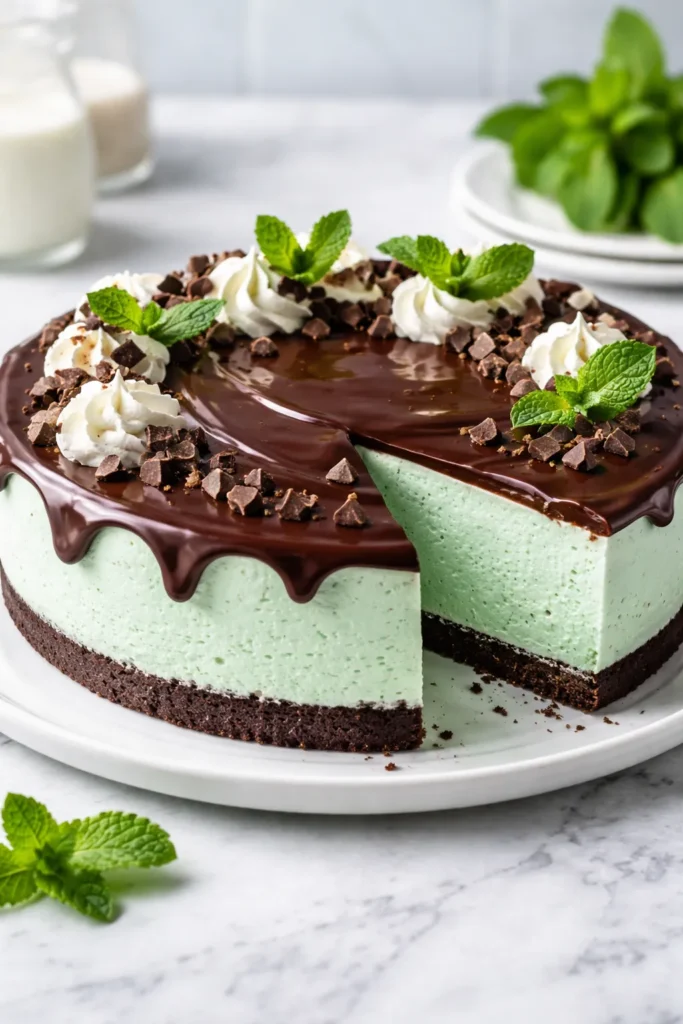
Cool mint and rich chocolate create one of the most satisfying flavor combinations in the dessert world, and it’s particularly perfect for hot summer days. This no-bake cheesecake brings together the cooling freshness of mint with the indulgence of dark chocolate, creating something that tastes both sophisticated and craveable.
Infusing Mint Flavor
Fresh mint creates the most vibrant flavor, though mint extract works in a pinch. If using fresh mint, brew a strong mint tea by steeping a large handful of fresh mint leaves in 100ml (about 3 oz) of just-boiled water for 10 minutes. Strain out the leaves and allow the tea to cool completely. Then use about 2-3 tablespoons of this cooled mint tea in place of the same amount of heavy cream in your filling to create the mint flavor.
Alternatively, add ½ to ¾ teaspoon of food-grade peppermint extract to your cream cheese filling. Start with ½ teaspoon and taste as you go—peppermint extract is potent and a little goes a long way. You can always add more, but you can’t remove it once it’s in.
The Chocolate-Mint Marriage
Incorporate quality dark chocolate into your filling as described in the chocolate cheesecake variation, but reduce the chocolate quantity slightly to about 120g (4 oz) so the mint flavor can shine through without being overwhelmed. The chocolate should complement and enhance the mint, not dominate it.
Use a chocolate cookie crust as the foundation, and once your cheesecake is chilled and set, top it with a thin layer of dark chocolate ganache. Some bakers like to crush fresh mint leaves and press them gently into the chocolate ganache while it’s still slightly soft, creating an elegant garnish that announces the flavor.
Insider note: Crushed candy canes or peppermint bark scattered over the finished cheesecake adds both flavor and visual interest, creating a dessert that tastes fancy but feels fun.
10. Salted Caramel Cheesecake
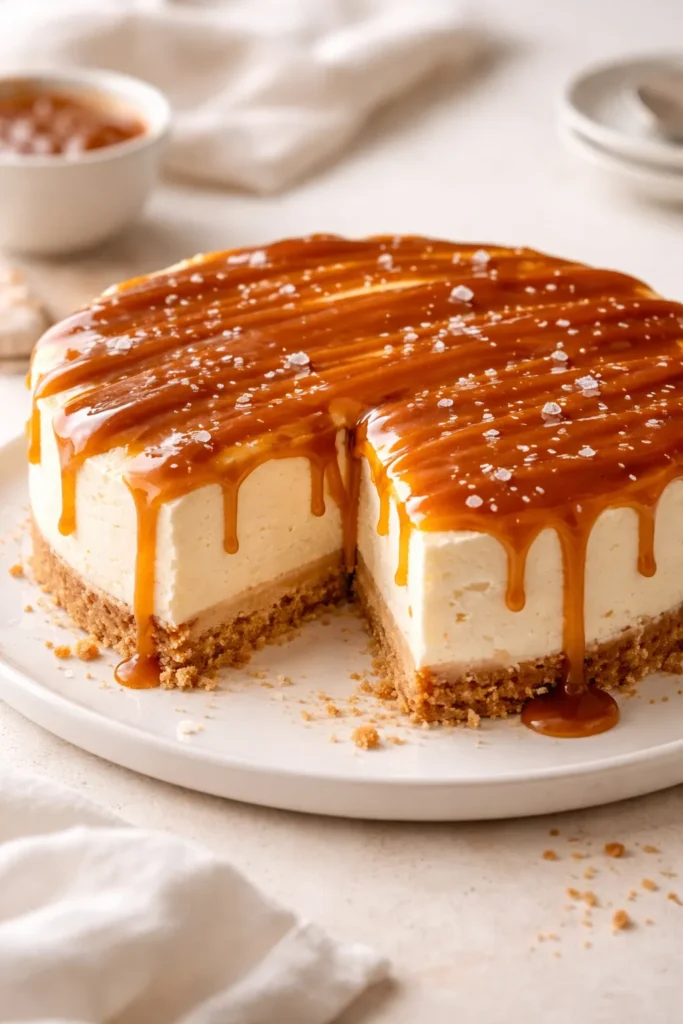
Sweet, salty, creamy, and indulgent, salted caramel cheesecake is the kind of dessert that makes people close their eyes with appreciation after the first bite. This version brings together the rich, buttery complexity of homemade salted caramel with the smooth creaminess of cheesecake, creating layers of flavor that keep developing with each spoonful.
Creating the Perfect Salted Caramel
Homemade salted caramel tastes infinitely better than store-bought versions, though you can certainly use quality store-bought caramel in a pinch. To make your own, melt 150g (¾ cup) of sugar in a heavy-bottomed saucepan over medium heat, swirling the pan occasionally (never stir once the sugar has melted, as stirring causes crystallization). Once the sugar is melted and deep amber in color—this takes 5-10 minutes depending on your stove—remove it from heat and add 60g (4 tablespoons) of cold butter cut into cubes.
The mixture will bubble vigorously. Stir gently until the butter is incorporated, then remove from heat and add 60ml (¼ cup) of heavy cream, stirring gently. The caramel will bubble again. Finally, stir in ½ teaspoon of fleur de sel or flaky sea salt. Allow the caramel to cool completely before using.
Layering Caramel into Cheesecake
You can layer the salted caramel in several ways. Some bakers drizzle caramel into the bottom of the crust before adding the filling. Others swirl caramel through the cheesecake filling itself, creating beautiful ribbons throughout. The most dramatic approach is to spread the finished cheesecake with a generous layer of salted caramel just before serving, creating a glossy, jewel-like topping.
A graham cracker or shortbread crust works beautifully with salted caramel, and some bakers like to make a butterscotch-flavored crust by adding a bit of brown sugar and a touch of vanilla to their crust mixture. Top the finished cheesecake with a few flakes of sea salt and perhaps some toasted pecans or candied walnuts for textural contrast.
Pro tip: If your caramel is too thick to drizzle once it’s cooled, warm it gently in a saucepan over low heat, stirring constantly until it reaches the right consistency.
Final Thoughts
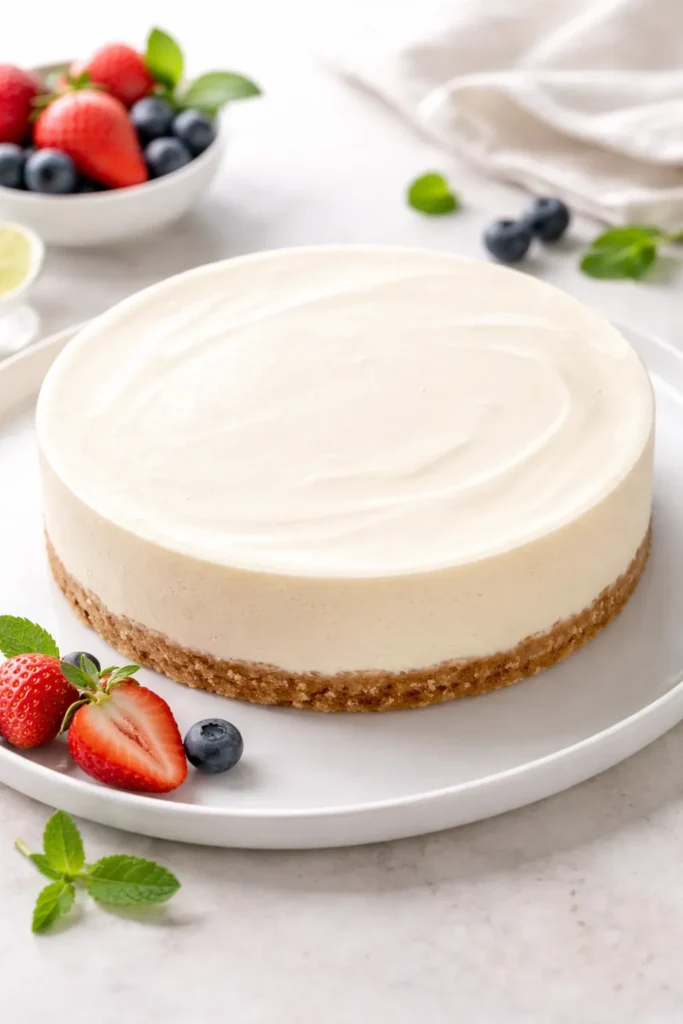
From classic simplicity to adventurous flavor combinations, no-bake cheesecake is the ultimate summer dessert. Each of these ten variations proves that you don’t need an oven to create something that tastes impressive, elegant, and absolutely delicious. The only real requirement is patience—allowing proper chilling time transforms the mixture from soft and mousse-like into something firm enough to slice cleanly.
The beauty of these no-bake versions is that most improve over time. The flavors meld and deepen as the cheesecake sits in your refrigerator overnight or for a couple of days. They’re also remarkably forgiving desserts, perfect for advance preparation when you’re juggling summer entertaining. Make it a day or two ahead, store it covered in the fridge, and simply add fresh fruit or toppings just before serving.
Whether you choose one of these recipes or use them as inspiration to create your own flavor combination, remember that no-bake cheesecake is ultimately about the pleasure of creamy, cool, refreshing indulgence on warm summer days. There’s no risk, no stress, and absolutely no reason not to make one this week.