Weeknight dinners have a way of sneaking up on you. One minute you’re wrapping up a full day, and the next you’re standing in the kitchen at 6pm wondering what on earth you’re going to put on the table. Sound familiar? You’re not alone — and the oven is quietly your most underused ally in this daily battle.
Oven-baked meals solve a specific problem that stovetop cooking doesn’t: they buy you back your time. You do a few minutes of hands-on prep, slide a pan into the oven, and walk away. No stirring, no hovering, no babysitting a skillet while simultaneously helping with homework or answering emails. The heat does the heavy lifting, and you show up at the end to a hot, genuinely satisfying dinner.
What makes these meals stand out from the “throw anything in a pan” category is intentional cooking — choosing recipes where the oven’s dry, even heat actually improves the food. Proteins get golden edges and juicy centers. Vegetables caramelize and concentrate in flavor. Casseroles bubble and meld into something more cohesive than the sum of their parts. Done right, oven baking delivers restaurant-quality results from your own kitchen with a fraction of the effort.
The ten meals below are built around one guiding principle: maximum flavor, minimum weeknight effort. Each one involves ten minutes or less of active prep, uses accessible ingredients you can keep on hand, and produces a complete dinner the whole family will actually want to eat.
Table of Contents
- Why the Oven Is the Smartest Weeknight Tool You Have
- The One-Pan Rule That Changes Everything
- Pantry Staples That Make Oven Dinners Faster
- 1. Sheet Pan Chipotle-Lime Shrimp and Vegetables
- Why It Works on a Weeknight
- Serving Ideas
- 2. Baked Salmon with Lemon, Garlic, and Herbs
- The Herb and Flavor Combinations Worth Trying
- Quick Facts
- 3. Chicken Stuffing Casserole
- Making It Your Own
- 4. Oven-Baked Pork Chops with Rice
- Why This Dish Is Weeknight-Perfect
- Seasoning the Chops
- 5. Baked Chicken Fajitas
- Building the Fajita Seasoning
- 6. Spinach Ravioli Bake
- Variations to Keep It Interesting
- 7. Parmesan-Crusted Baked Cod
- The Crust Formula
- 8. Sheet Pan Sausage and Roasted Vegetables
- The Best Vegetable Combinations for This Dish
- 9. Ground Beef and Rice Casserole
- Tips for a Perfect Bake
- 10. Orange-Glazed Pork Tenderloin
- What Makes This a Go-To Repeat Dinner
- Smart Techniques That Make Every Oven Dinner Better
- The Resting Rule Nobody Follows Closely Enough
- Making These Dinners Even Faster With Prep Strategies
- Final Thoughts
Why the Oven Is the Smartest Weeknight Tool You Have
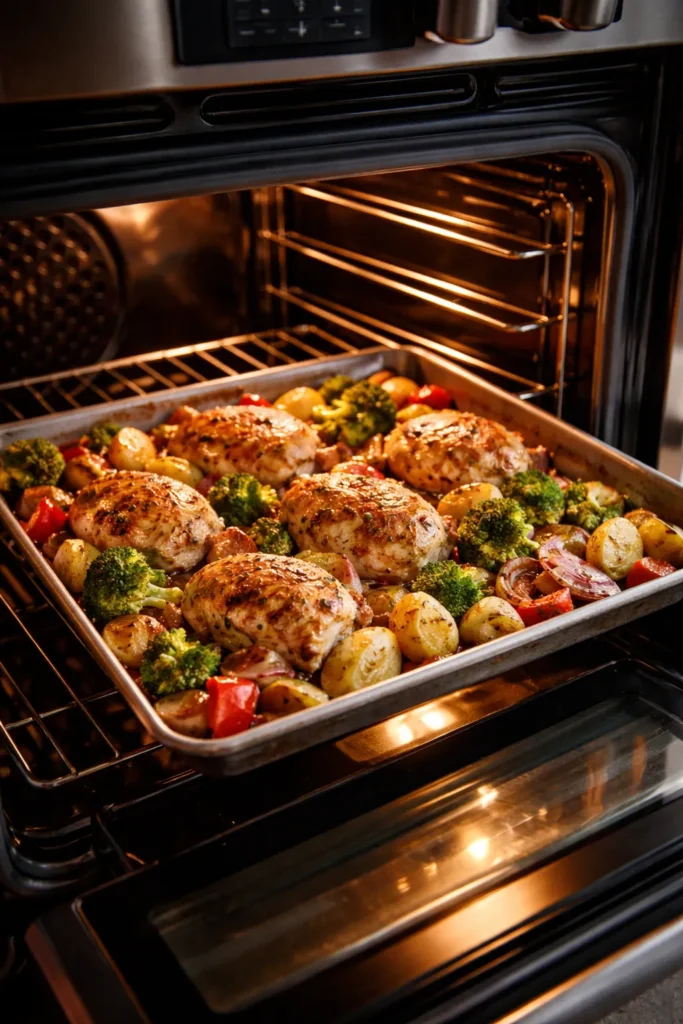
There’s a reason home cooks who’ve figured out their kitchen rhythm lean on the oven more than any other appliance. It multitasks on your behalf. While a casserole bakes for 45 minutes, you can unload the dishwasher, help with homework, take a shower, or just sit down. That’s not possible when you’re actively managing a stir-fry or a pan sauce.
Oven cooking is also more forgiving. A roasted chicken thigh pulled out 5 minutes late won’t overcook the way a pan-seared one would. The contained, ambient heat environment means there’s a larger window between perfectly cooked and overdone — which is exactly what you need when evenings get chaotic.
From a flavor standpoint, high-heat roasting does something stovetop methods struggle to replicate at scale: it browns everything simultaneously. The Maillard reaction — the chemical process responsible for golden crusts, caramelized edges, and that deep savory flavor — happens across the entire surface of whatever you’re cooking, not just the side touching the pan. Sheet pans loaded with vegetables and protein, for example, develop a flavor complexity that boiling or steaming simply can’t match.
Sheet pan dinners and casseroles also mean fewer dishes. One pan, one dish — that’s a weeknight win by any measure.
The One-Pan Rule That Changes Everything
The most practical shift you can make in weeknight cooking is committing to single-vessel meals. Whether it’s a sheet pan, a 9×13 baking dish, or a Dutch oven, cooking everything in one container means less cleanup, better heat distribution, and a more cohesive final dish. Fats and seasonings from the protein baste the vegetables as everything roasts together. Pasta or rice absorbs sauce flavor as it cooks rather than being added after. The payoff from this simple structural choice — one vessel — is disproportionately large.
Pantry Staples That Make Oven Dinners Faster
Keep these on hand and oven dinners come together in under ten minutes flat: canned cream soups (mushroom, chicken), jarred salsa and marinara sauce, low-sodium chicken broth, a bottle of soy sauce, dried herbs (rosemary, thyme, Italian seasoning), Dijon mustard, and honey. These are the building blocks behind most of the recipes below, and having them stocked means you’re always one sheet pan away from dinner.
1. Sheet Pan Chipotle-Lime Shrimp and Vegetables
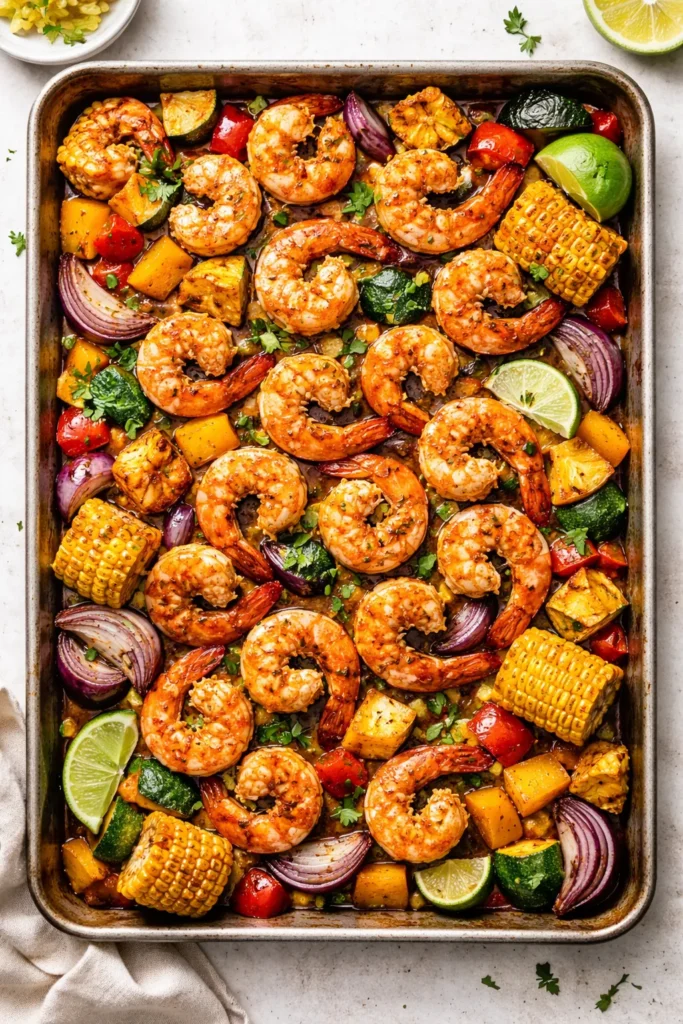
Sheet pan shrimp might be the fastest oven dinner that exists. Shrimp cook in 8 to 10 minutes at high heat, which means this entire meal — including any vegetables you toss alongside — is done faster than most pasta dishes. The chipotle-lime combination is smoky, bright, and just bold enough to make plain shrimp feel like an event.
The genius of this dish is the pairing flexibility. Asparagus, broccoli, zucchini, bell peppers — whatever needs to be used in your crisper drawer works here. Hearty vegetables like broccoli florets and asparagus spears roast beautifully alongside shrimp because they share a similar heat tolerance and cook time. Thinner or softer vegetables, like cherry tomatoes, go on the pan for the final 5 minutes to avoid turning to mush.
The seasoning is straightforward: chipotle chili powder, garlic powder, a heavy squeeze of fresh lime juice, olive oil, salt, and pepper. Toss everything together in the baking dish before spreading it in a single, even layer. Overcrowding the pan is the one mistake that ruins this dish — when ingredients pile on top of each other, they steam instead of roast, and you lose the char and the texture entirely.
Why It Works on a Weeknight
- Total active prep time: under 10 minutes
- Cook time: 8 to 10 minutes at 400°F
- Shrimp thaw under cold running water in about 5 minutes, making this a freezer-to-table meal on short notice
- Leftovers work in tacos, grain bowls, or over rice the next day
Serving Ideas
- Serve directly over cilantro-lime rice
- Wrap in warm flour tortillas with avocado and a dollop of sour cream
- Pair with a simple black bean salad for a higher-fiber meal
Worth knowing: Pat shrimp dry before seasoning them. Surface moisture creates steam in the oven, which prevents browning and dilutes the seasoning.
2. Baked Salmon with Lemon, Garlic, and Herbs
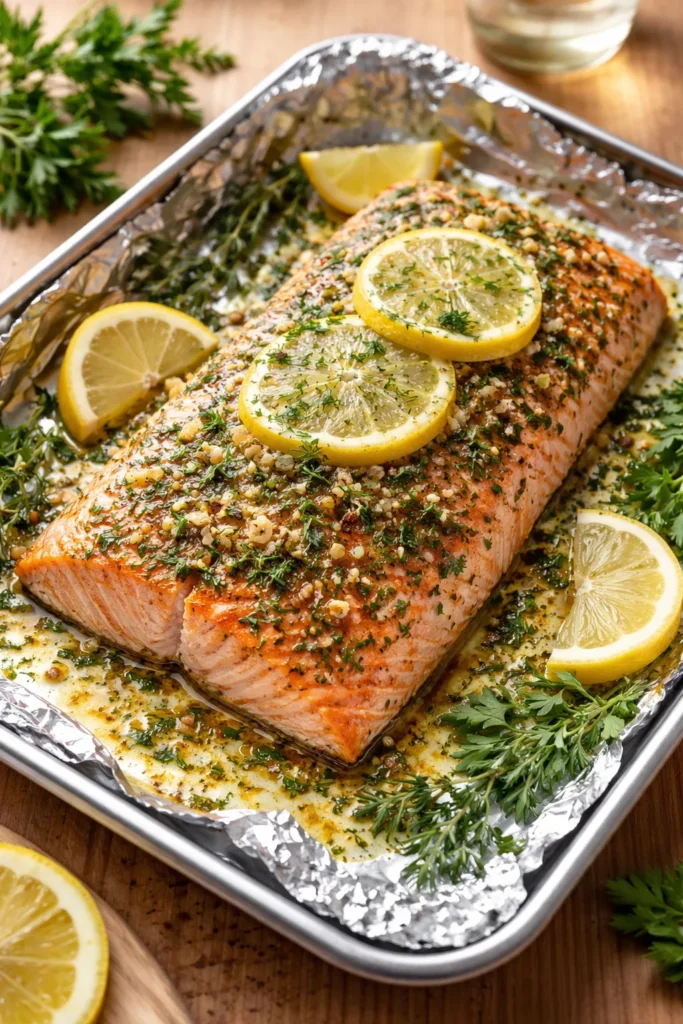
Salmon is one of the most forgiving proteins you can bake, and it’s done in 20 minutes or less. That’s not a shortcut — that’s just how salmon works. A fillet cooked at 400°F is fully done in 12 to 15 minutes, with an internal temperature of 125°F for a silky, medium center or 145°F if you prefer it fully cooked through. The margin for error is generous, which is exactly what busy evenings require.
The classic preparation is simple but reliable: line a baking dish with foil (for zero cleanup), place the salmon skin-side down, brush with a mixture of melted butter or olive oil, minced garlic, lemon zest, and fresh or dried herbs, then bake until the flesh turns opaque and flakes easily. That’s the whole recipe. It consistently produces salmon that’s moist, well-seasoned, and genuinely restaurant-quality.
What elevates it further is the finish. A squeeze of fresh lemon juice directly over the hot fillets right before serving brightens all the flavors and cuts through the richness of the fish. Don’t skip this step — it takes two seconds and makes a noticeable difference.
The Herb and Flavor Combinations Worth Trying
Salmon accepts a wide range of flavors, which is part of why it stays interesting as a weekly rotation option:
- Classic: lemon, garlic, fresh dill, and capers
- Asian-inspired: soy sauce, sesame oil, grated ginger, and honey
- Smoky: smoked paprika, cumin, a drizzle of maple syrup, and lime
- Mediterranean: sun-dried tomatoes, olives, and dried oregano
Quick Facts
- A 6-ounce salmon fillet contains approximately 34 grams of protein and a substantial dose of omega-3 fatty acids
- Skin-side down baking protects the delicate flesh from direct heat and keeps it from drying out
- Salmon can be marinated for up to 30 minutes before baking, but acidic marinades (lemon, vinegar) will begin to “cook” the exterior if left longer
- Line the pan with foil or parchment and cleanup is literally just folding and tossing
3. Chicken Stuffing Casserole
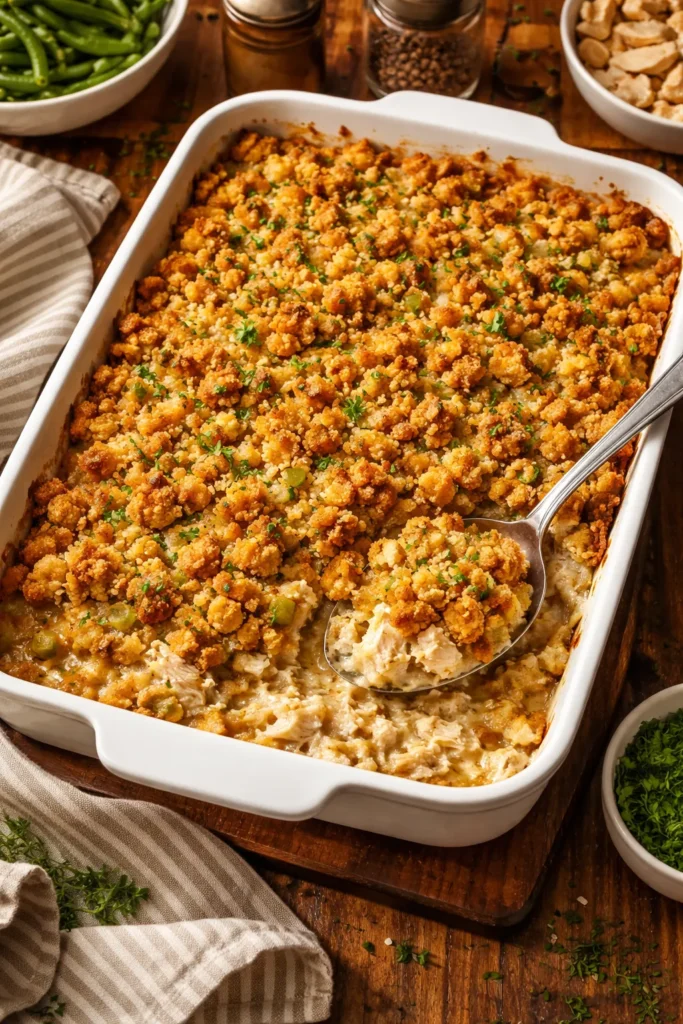
There are few things more satisfying on a cold evening than a casserole that tastes like it took hours and actually took ten minutes to assemble. Chicken stuffing bake is exactly that dish. Cubed or shredded chicken (rotisserie chicken is ideal here) goes into a baking dish with a layer of cream of chicken soup thinned slightly with sour cream or chicken broth, and a thick crown of prepared stuffing mix on top. Into the oven it goes at 350°F for about 40 to 50 minutes.
The result is layered and cohesive in the best way: the stuffing on top crisps and goes golden while the underside soaks up the creamy chicken sauce. The filling is rich, savory, and deeply comforting — the kind of thing kids ask for on repeat and adults find themselves finishing off cold from the fridge the next morning.
Using a rotisserie chicken takes prep from 10 minutes down to about 5. The chicken is already seasoned, already cooked, and just needs to be pulled into chunks. If you want to add vegetables, frozen peas or frozen mixed vegetables fold in without any prep — straight from the bag into the dish.
Making It Your Own
This is a casserole that welcomes flexibility:
- Swap cream of chicken for cream of mushroom for a slightly earthier flavor
- Add a handful of shredded cheddar between the chicken layer and the stuffing for extra richness
- Use leftover Thanksgiving or holiday turkey in place of chicken — it’s essentially the same dish
- Top with sliced almonds or crispy fried onions alongside the stuffing for added crunch
Pro tip: Cover the dish tightly with foil for the first 30 minutes of baking to trap steam and keep the chicken moist, then remove the foil for the final 15 minutes to crisp the stuffing.
4. Oven-Baked Pork Chops with Rice
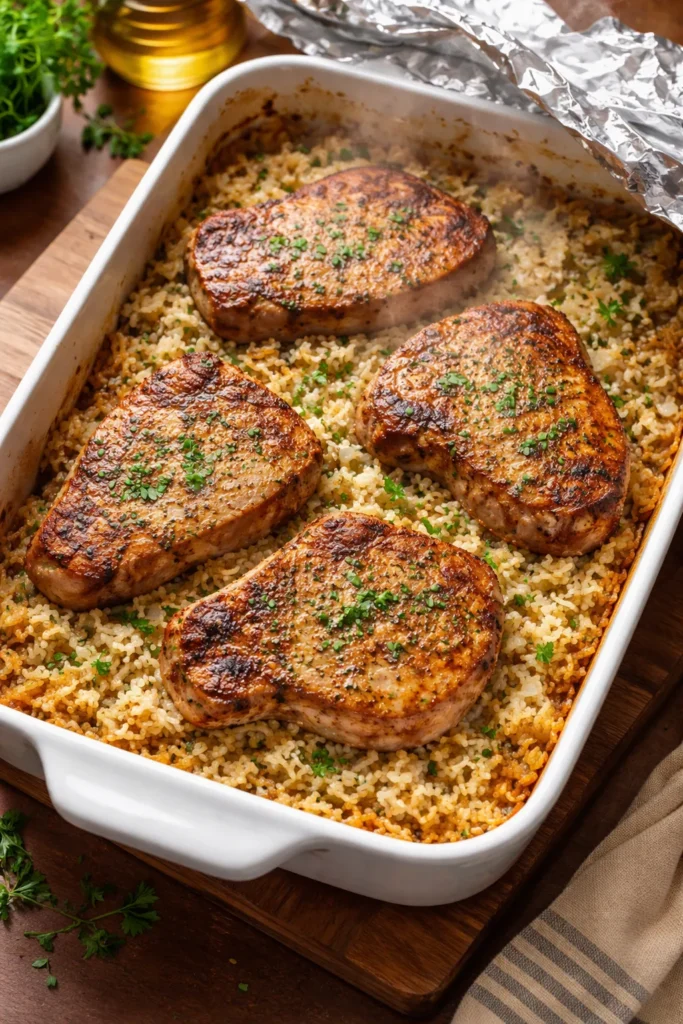
Country-style baked pork chops with rice is the definition of a dump-and-bake dinner. The raw rice goes directly into the baking dish — no pre-cooking — along with broth, a can of cream of mushroom soup, onion soup mix, and bone-in or boneless pork chops laid right on top. Cover tightly with foil and bake at 350°F for about 60 to 70 minutes. The rice cooks in the braising liquid, absorbs all the savory pork flavors, and comes out tender and fully flavored.
The foil seal is non-negotiable here. The steam created inside the covered dish is what cooks the raw rice. If you open the foil early or if it’s not tightly sealed, the rice will be underdone and crunchy, no matter how long you bake it. Press the foil firmly against the edges of the dish and don’t peek until the final 10 minutes.
This is genuinely one of the most satisfying hands-off oven dinners because the pork chops baste themselves as they cook. Fat renders slowly, the soup and broth mingle, and the whole dish becomes something greater than any individual ingredient would suggest.
Why This Dish Is Weeknight-Perfect
- Zero stovetop steps required — everything goes in one dish
- Total active time: 5 to 8 minutes
- The broth and soup create enough liquid to cook the rice and keep the chops moist simultaneously
- Feeds 4 to 6 people with no additional side dishes needed
Seasoning the Chops
Don’t skip seasoning the pork directly before laying them on the rice. A simple sprinkle of garlic powder, onion powder, black pepper, and paprika on both sides adds depth that the cream soup alone can’t provide.
5. Baked Chicken Fajitas
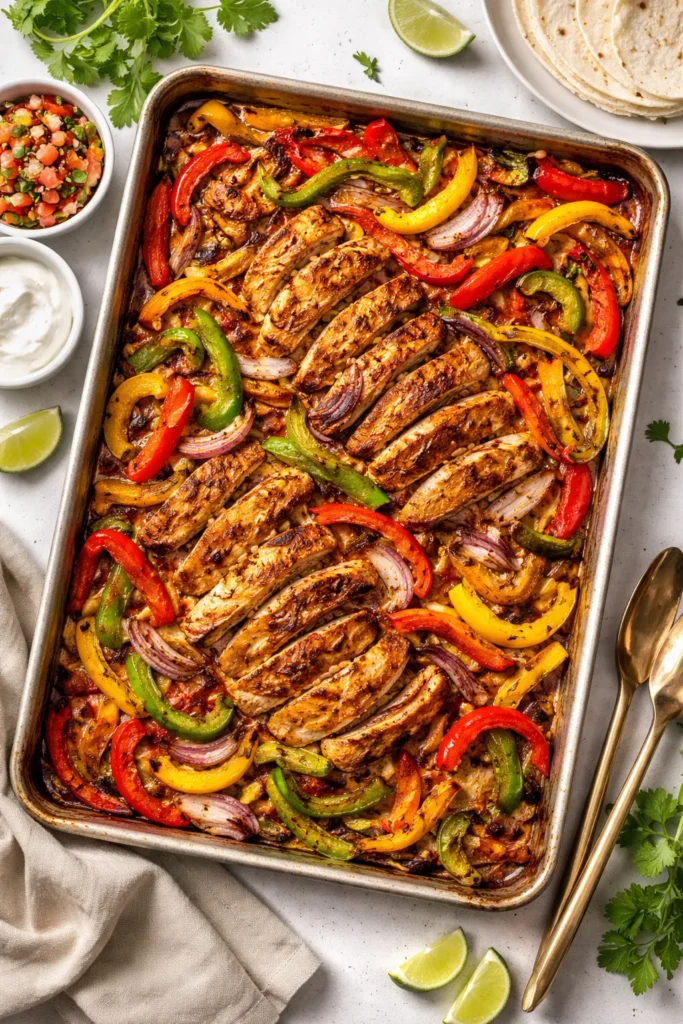
Sheet pan chicken fajitas are one of those recipes that genuinely impresses people given how little effort they involve. Sliced chicken breast or thigh, strips of bell pepper (red, yellow, and green for color and sweetness), and sliced onion all get tossed with fajita seasoning and olive oil, then spread on a foil-lined sheet pan and roasted at 425°F for about 20 to 25 minutes. The high heat caramelizes the edges of the vegetables and cooks the chicken through simultaneously.
The payoff is a pan full of slightly charred, deeply seasoned fajita filling that goes straight from the oven to warm tortillas. Set out guacamole, sour cream, shredded cheese, salsa, and lime wedges, and dinner feels interactive and fresh. It also scales up effortlessly — two sheet pans at once feeds a crowd with the same amount of active effort.
The key technique is cutting the chicken into uniform strips, roughly ½ inch thick. Pieces that are too thick will take longer to cook than the vegetables, and you’ll end up with either undercooked chicken or over-roasted peppers. Even thickness means even cooking across the whole pan.
Building the Fajita Seasoning
Skip the packaged mix and make your own in 60 seconds — it uses less sodium and tastes more vibrant:
- 1 teaspoon chili powder
- ½ teaspoon cumin
- ½ teaspoon garlic powder
- ¼ teaspoon onion powder
- ¼ teaspoon smoked paprika
- Salt and pepper to taste
Scale this up and keep it in a jar for the next time you make this recipe — and you will make it again.
6. Spinach Ravioli Bake
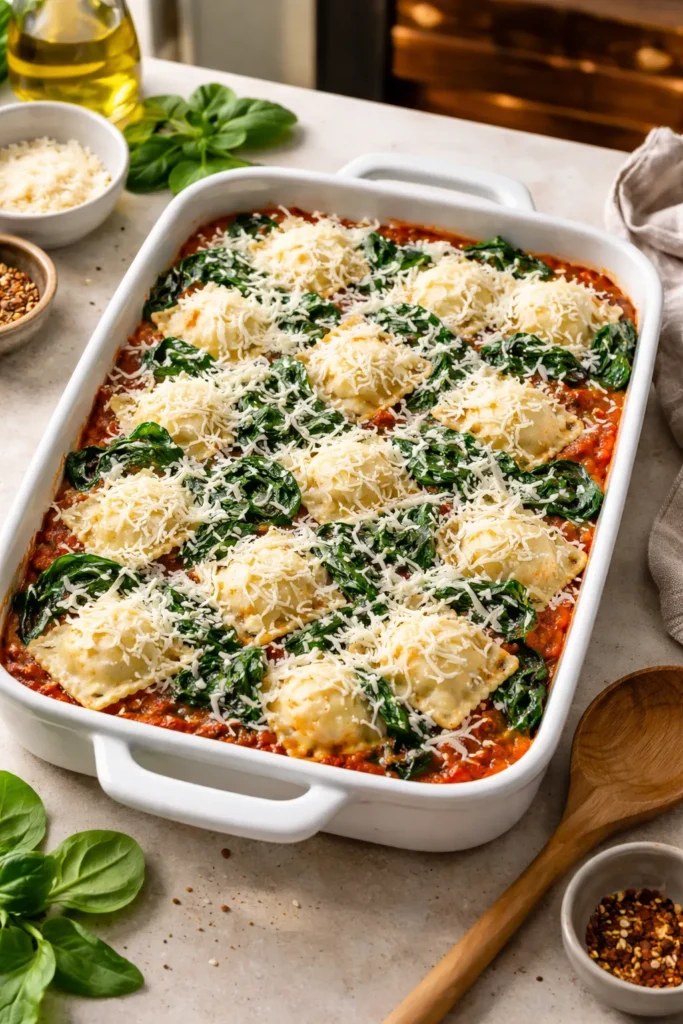
The spinach ravioli bake is the kind of recipe that makes you feel like you outsmarted the system. Frozen ravioli goes straight from the freezer into the baking dish — no boiling, no thawing. You simply layer frozen ravioli with marinara sauce, a scattering of wilted or frozen spinach, and a generous topping of shredded mozzarella. Cover tightly and bake at 400°F for 35 to 40 minutes, then remove the cover for the final 10 minutes to brown the cheese.
The ravioli cooks inside the dish using the moisture from the sauce, which also flavors it in a way that boiling in plain water never would. The result is a cheesy, saucy, deeply satisfying pasta bake that tastes like you spent significantly more time on it than you did.
This recipe works best with a quality jarred marinara. Since there are only a few ingredients, the sauce flavor carries the dish. Spend an extra dollar on the good jar — San Marzano tomato-based sauces bring a natural sweetness and depth that budget marinara can’t replicate.
Variations to Keep It Interesting
- Add a layer of Italian sausage, crumbled and cooked first (or use pre-cooked chicken sausage for a faster option)
- Use cheese ravioli for a richer, more indulgent result, or whole wheat ravioli for added fiber
- Stir a tablespoon of pesto into the marinara before layering for a more complex sauce flavor
- Top with a sprinkle of red pepper flakes and fresh basil after baking for brightness
This dish reheats beautifully the next day — the ravioli absorbs even more sauce overnight, making leftovers arguably better than the original.
7. Parmesan-Crusted Baked Cod
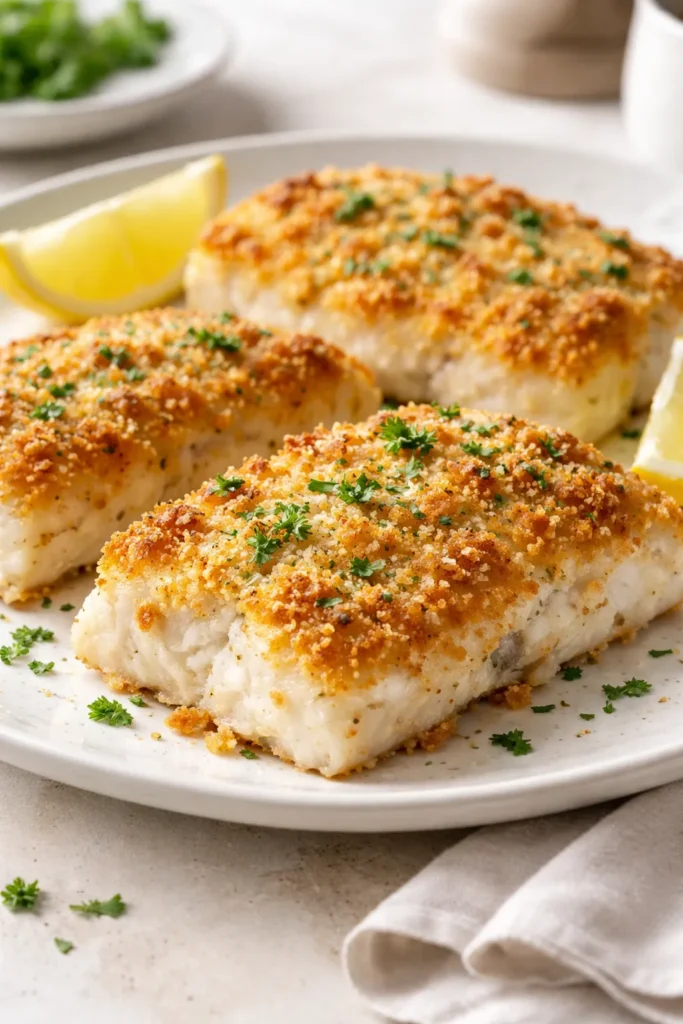
Baked cod is one of the most weeknight-friendly fish options available: it’s mild in flavor, inexpensive, widely available, cooks in about 15 minutes, and accepts almost any seasoning you put on it. The Parmesan-crusted version takes a base of plain cod fillets and transforms them into something with real texture and savoriness by pressing a mixture of grated Parmesan, panko breadcrumbs, Dijon mustard, and a little melted butter onto the top of each fillet before baking.
At 425°F, the crust browns and crisps while the fish beneath stays moist and flakes cleanly. The crust creates an insulating layer that prevents the delicate white flesh from drying out — a common problem with plain baked fish. Pull the fillets at just-done, around 145°F internally, when they separate easily with a fork but still have a slight sheen at the thickest point.
This dish pairs well with just about anything: roasted asparagus, garlic mashed potatoes, steamed rice, or a simple side salad. It’s elegant enough for company but simple enough for a Tuesday.
The Crust Formula
Per 4 fillets, combine:
- ¼ cup grated Parmesan (not the powdered kind — freshly grated melts and crisps better)
- 2 tablespoons panko breadcrumbs
- 1 tablespoon Dijon mustard
- 1 tablespoon melted butter
- ½ teaspoon garlic powder
- Pinch of cayenne for a mild kick
Mix into a paste and press firmly onto the top surface of each fillet before baking.
8. Sheet Pan Sausage and Roasted Vegetables
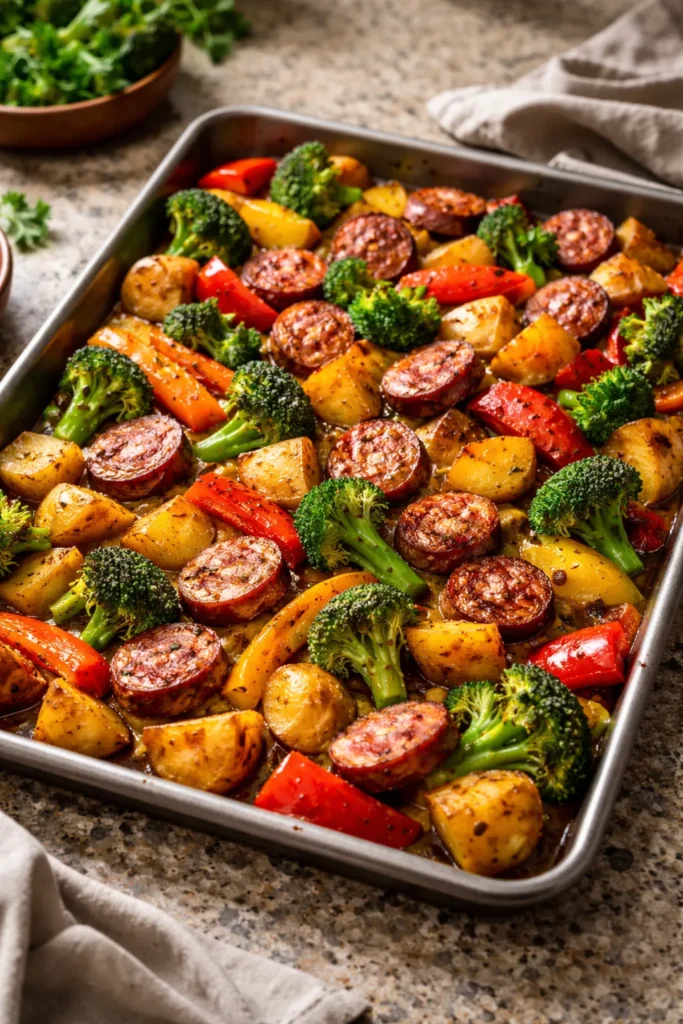
Sheet pan sausage with vegetables is the meal that gets made when the week has genuinely gotten away from you. It requires almost no culinary skill — you slice the sausage into rounds, chop some vegetables (or use pre-cut bags), toss everything with olive oil and seasoning, spread it on a pan, and roast at 400°F for 25 to 30 minutes. Dinner is done.
The combination of smoked sausage (kielbasa, andouille, or Italian-style links all work) with roasted vegetables is deeply satisfying because the sausage fat renders during cooking and bastes everything around it. Bell peppers get sweet and slightly charred. Potato chunks go crispy at the edges. Zucchini and onions caramelize and concentrate. The whole pan develops a unified, savory flavor that tastes far more complex than its preparation.
Crowd the pan strategically: sausage and potatoes can handle being close together since they’re robust. Softer vegetables like zucchini and cherry tomatoes should be spread with more space between them so they roast rather than steam.
The Best Vegetable Combinations for This Dish
- Hearty and filling: cubed potatoes, bell peppers, and broccoli
- Light and fresh: zucchini, cherry tomatoes, and asparagus
- Smoky and southern: corn cut from the cob, red onion, and green beans
- Fall-style: sweet potatoes, Brussels sprouts, and red onion with a drizzle of maple syrup and Dijon
Finish the pan with a sprinkle of fresh parsley or a squeeze of lemon right before serving to cut through the richness of the sausage fat.
9. Ground Beef and Rice Casserole
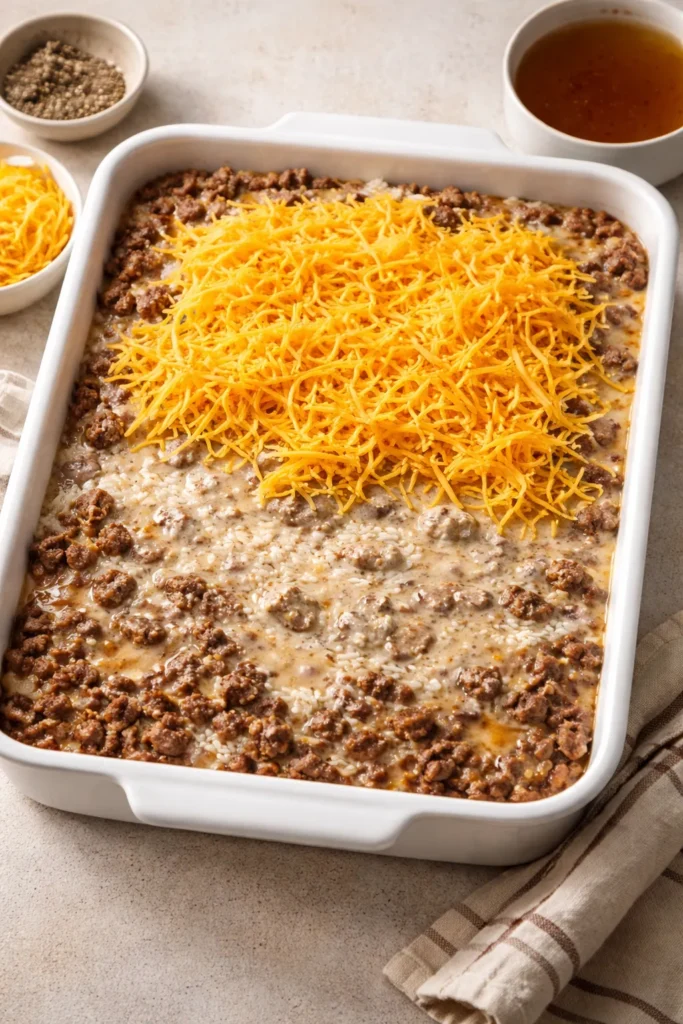
The dump-and-bake ground beef and rice casserole is proof that you don’t need to brown meat or pre-cook grains to get a great result from your oven. Raw ground beef, uncooked long-grain white rice, beef broth, cream of mushroom soup, and shredded cheddar cheese go directly into a baking dish together. Stir, cover tightly with foil, and bake at 350°F for about 60 to 65 minutes. The beef cooks through in the covered dish, the rice absorbs the broth, and the whole thing emerges as a cohesive, cheesy, hearty casserole.
The texture is somewhere between a traditional beef and rice pilaf and a hearty baked casserole — which is to say, it’s exactly the kind of food that feels restorative after a long day. Kids consistently love this one, and it feeds six people generously from a single 9×13 dish.
Season the raw beef layer with garlic powder, onion powder, Worcestershire sauce, and black pepper before covering. Since the beef isn’t browned first, these seasonings work into the meat as it cooks rather than being mixed in after — the result is well-flavored throughout rather than seasoned on the surface.
Tips for a Perfect Bake
- Long-grain white rice works reliably here; brown rice requires a longer bake time and more liquid
- Use warm or hot broth to help the casserole come up to temperature faster and ensure the rice cooks through
- Let the casserole rest uncovered for 5 minutes after pulling it from the oven — it firms up and becomes easier to serve cleanly
- Stir in frozen peas or corn during the last 10 minutes of baking for added color and nutrition
10. Orange-Glazed Pork Tenderloin
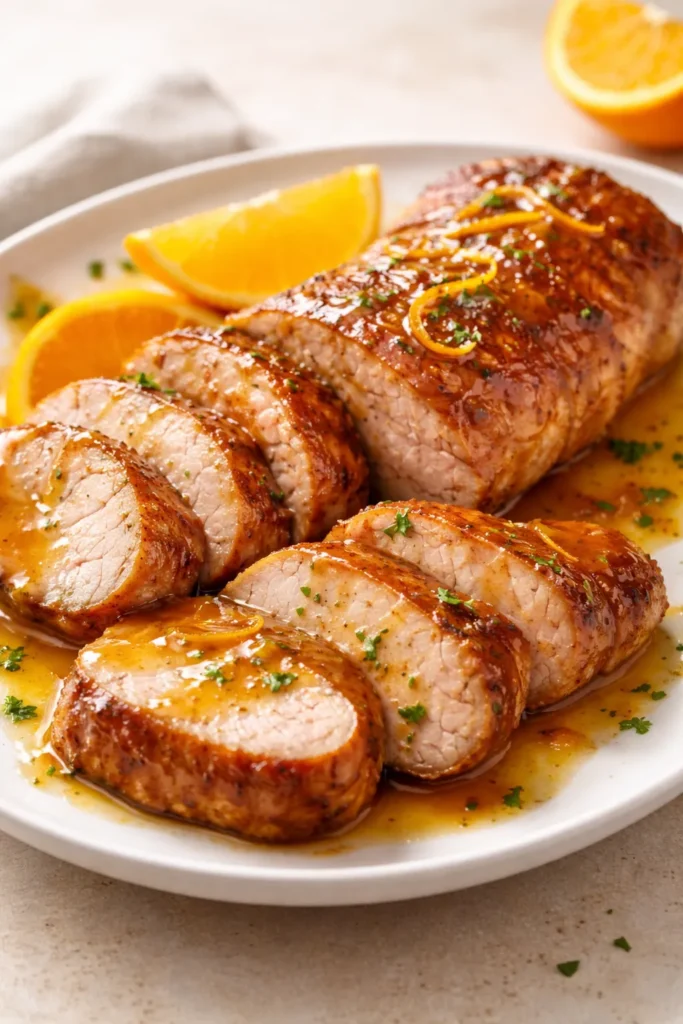
Pork tenderloin is one of the most underrated weeknight proteins. It’s lean, it cooks quickly (a 1-pound tenderloin takes about 25 minutes at 425°F), and it absorbs marinades and glazes exceptionally well. The orange glaze version builds a sauce from orange juice, brown sugar, Dijon mustard, and a touch of soy sauce — four ingredients that balance sweet, savory, tangy, and umami in a single pan.
Roast the tenderloin on a foil-lined sheet pan, brushing with the glaze every 10 minutes. The sugars in the orange juice caramelize against the pork’s exterior, creating a sticky, glossy coating with slightly charred edges and a beautifully moist interior. Pull it at 145°F internal temperature and let it rest for 5 full minutes before slicing — this rest period allows the juices to redistribute, and skipping it is the most common reason tenderloins turn out dry.
Slice on a slight diagonal into ½-inch medallions and serve with the pan drippings spooned over the top. Roasted sweet potatoes, steamed broccoli, or a simple green salad round out the plate without competing with the bright citrus glaze.
What Makes This a Go-To Repeat Dinner
- The pork can marinate in the glaze overnight for an even deeper flavor (and even less active time on the cooking day)
- One tenderloin serves 3 to 4 people; two tenderloins on the same pan scales this up for a crowd
- Leftover sliced tenderloin makes excellent sandwiches the next day with Dijon mustard and arugula
- The glaze recipe works equally well with pork chops, chicken thighs, and salmon fillets — learn one sauce, use it across the week
Smart Techniques That Make Every Oven Dinner Better
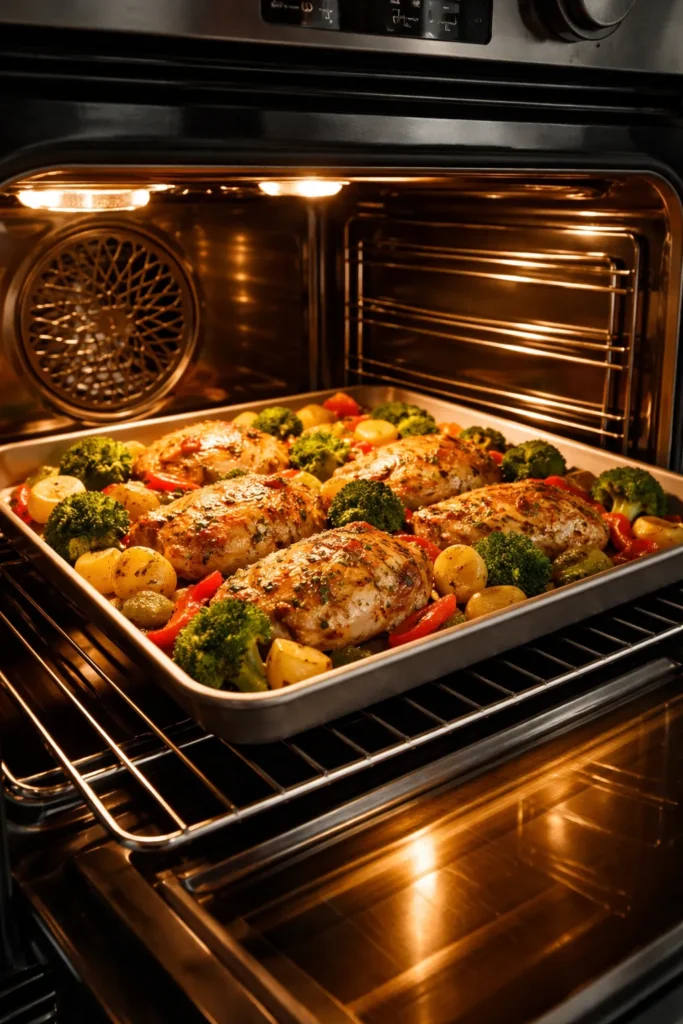
Understanding a few baking fundamentals turns good oven dinners into consistently great ones. These aren’t fancy chef techniques — they’re simple habits that cost nothing to adopt.
Preheat completely. Placing food into an oven that hasn’t fully reached temperature is a common mistake. Most ovens take 10 to 15 minutes to fully preheat, and some cheap models take longer than their indicator light suggests. An oven thermometer (a $10 investment) tells you what’s actually happening inside your oven versus what the dial claims.
Use the right pan for the job. Rimmed sheet pans (also called half-sheet pans) are the workhorse of oven cooking. They provide enough surface area to spread ingredients in a single layer, the rim keeps drips contained, and their weight means they heat evenly and stay flat. Dark pans absorb more heat and brown more aggressively — useful for crispy roasted vegetables, but worth watching closely for delicate fish or chicken.
Pat proteins dry before seasoning. Surface moisture creates steam when it hits the hot oven, which prevents browning. Whether it’s chicken, fish, pork, or shrimp, 30 seconds with a paper towel makes a meaningful difference to the final texture.
The Resting Rule Nobody Follows Closely Enough
Every piece of protein that comes out of the oven benefits from resting before cutting. For small items like fish fillets and shrimp, two to three minutes is enough. For chicken breasts and pork chops, aim for five minutes. For larger cuts like a pork tenderloin or a chicken thigh casserole, give it eight to ten minutes.
Resting allows the proteins to reabsorb their own juices rather than releasing them the moment a knife breaks the surface. Cut too early and those juices pool on the cutting board — that’s moisture and flavor that should be in your dinner, not running across the kitchen surface.
Making These Dinners Even Faster With Prep Strategies
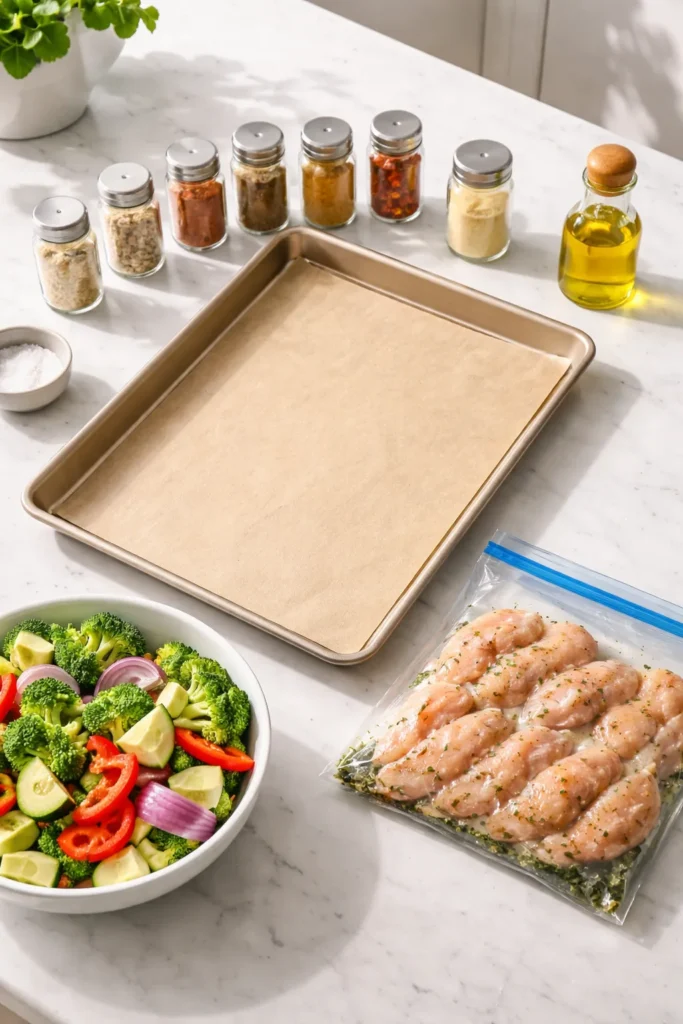
The gap between a 10-minute and a 5-minute dinner often comes down to what you’ve done in advance. None of these meals require elaborate meal prep, but a few simple habits reduce active cooking time dramatically on the nights when even 10 minutes feels like a lot.
Keep a seasoning rotation. Pre-mix your most-used spice blends (fajita seasoning, Italian herb mix, simple salt-pepper-garlic blend) in small jars. Reaching for one jar instead of opening five different ones saves 2 to 3 minutes per meal — and over a week, that adds up.
Use the freezer strategically. Shrimp, salmon fillets, and pork tenderloins thaw under cold running water in 10 to 15 minutes or overnight in the fridge. Keeping these proteins frozen means you always have a fast oven dinner available without a grocery run. Frozen vegetables — broccoli, mixed peppers, peas, corn — go directly into baking dishes without thawing and save all of the washing and chopping time.
Line every pan. Every single time. Foil or parchment paper means cleanup is folding and tossing, not scrubbing baked-on food. The few seconds it takes to line a pan pays back tenfold at the end of the night.
Double the recipe when oven space allows. Two sheet pans in the oven at once means dinner for tonight and lunch or another dinner tomorrow. Roasted chicken, salmon, and vegetables all reheat well and transform into new meals — grain bowls, wraps, pasta toppings, or scrambled eggs.
Final Thoughts

The through-line connecting all ten of these dinners is the same: they respect your time without compromising on the quality of what ends up on the table. Oven baking is a technique that rewards low-effort cooking with high-quality results, and once you start building a rotation around it, the weeknight dinner problem starts to feel much more manageable.
Start with whichever recipe matches what you have in the pantry and freezer right now. The chicken stuffing casserole if you have rotisserie chicken on hand. The baked salmon if you keep fillets in the freezer. The pork chop and rice bake if you’re looking for the most hands-off option on the list. Pick one, make it, and notice how differently the evening feels when dinner takes care of itself.
Over time, these recipes become second nature — you stop measuring the marinade and start eyeballing it, you know the right weight of a cooked pork tenderloin before you check the thermometer, you learn which vegetables your family reaches for first. That’s where the real payoff lives: not just in easy dinners, but in a confident, rhythmic cooking life where weeknights feel less like a problem to solve and more like something you’ve genuinely figured out.