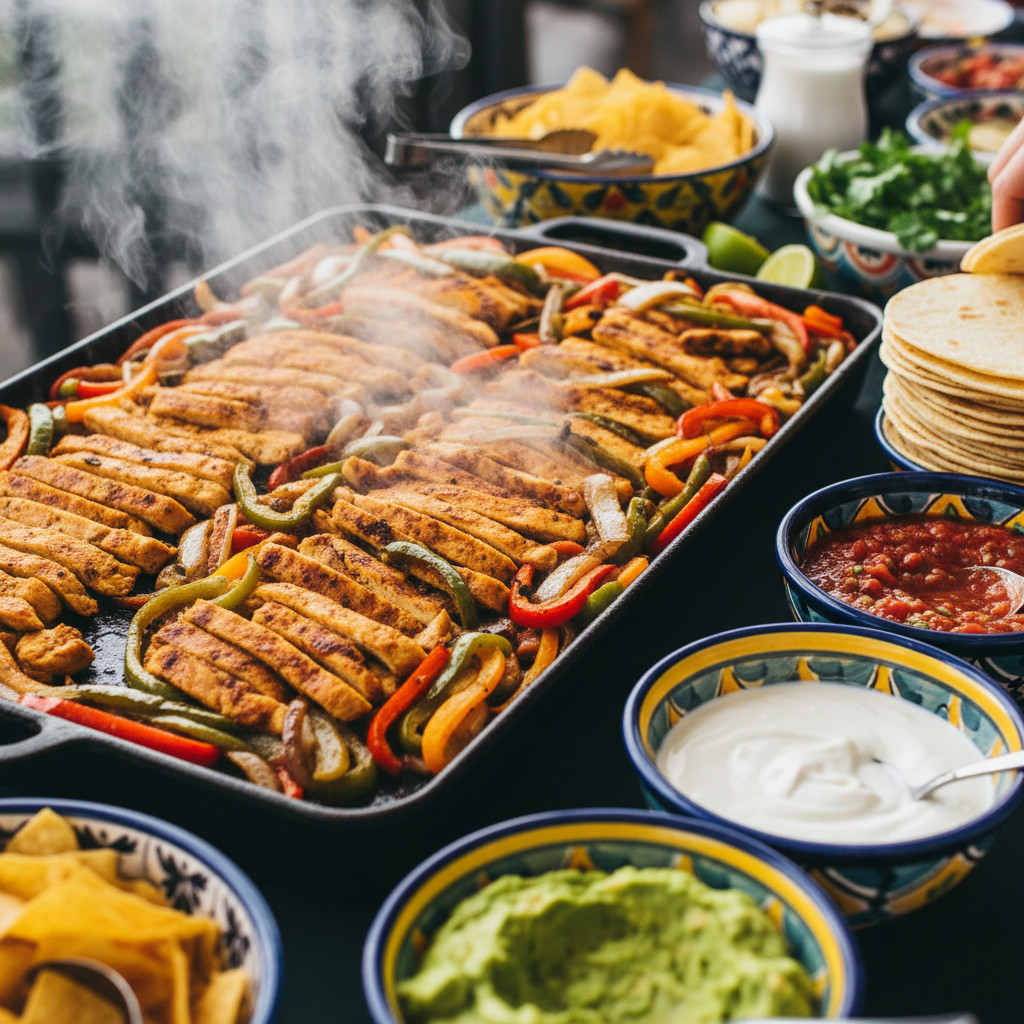
Few cooking methods deliver as much flavor for as little effort as roasting everything on a single sheet pan. You slide it into a hot oven, walk away, and come back to a complete dinner — protein, vegetables, and all the caramelized, crispy edges that make roasted food so satisfying. No stirring. No monitoring multiple burners. No stack of pots and pans waiting in the sink.
But here’s the part that separates a truly painless sheet pan dinner from one that still leaves you scrubbing: lining the pan. A sheet of heavy-duty aluminum foil or parchment paper under your ingredients means cleanup drops from ten minutes of elbow grease to literally lifting out the liner and wiping the pan dry. That’s it. That’s the whole secret, and once you start doing it, going back feels unthinkable.
The ten dinners below are built around that principle. Every recipe uses one pan, minimal prep, and ingredients that roast together without babysitting. They range from bold Mexican-inspired fajitas to Mediterranean salmon to sticky, savory beef bulgogi — so there’s no monotony, even if you cook from this list all week. Each one is the kind of meal that makes people ask how long you spent in the kitchen, and the honest answer will embarrass you in the best possible way.
Table of Contents
- The Sheet Pan Cleanup Secret Most Cooks Miss
- 1. Sheet Pan Chicken Fajitas
- Why Thighs Beat Breasts Here
- How to Serve It
- 2. Sheet Pan Honey Mustard Chicken with Green Beans
- The Timing Question
- Swaps That Work
- 3. Sheet Pan Italian Sausage with Potatoes and Peppers
- The Browning Problem (And How to Solve It)
- What to Serve Alongside
- 4. Sheet Pan Rosemary Salmon with Asparagus
- Choosing the Right Salmon
- Flavor Variations Worth Trying
- 5. Sheet Pan Greek Chicken with Olives and Feta
- The Sauce That Forms Itself
- Serving Ideas
- 6. Sheet Pan Garlic Parmesan Chicken and Broccoli
- The Parmesan Crust Trick
- Why Even Thickness Matters
- 7. Sheet Pan Pork Tenderloin with Sweet Potatoes and Broccoli
- Resting the Pork
- Glaze Variations
- 8. Sheet Pan Chipotle Lime Shrimp with Potatoes
- The Overcooking Risk
- Ways to Round Out the Plate
- 9. Sheet Pan Beef Bulgogi
- What to Serve With Bulgogi
- The Pear Factor
- 10. Sheet Pan Meatball Gnocchi with Sausage and Broccoli Rabe
- The Gnocchi Surprise
- Finishing Touches That Elevate the Dish
- How to Choose Proteins and Vegetables That Cook Together
- Lining the Pan for True Zero-Cleanup Results
- The Temperature and Timing Rules That Make Everything Work
- Final Thoughts
The Sheet Pan Cleanup Secret Most Cooks Miss
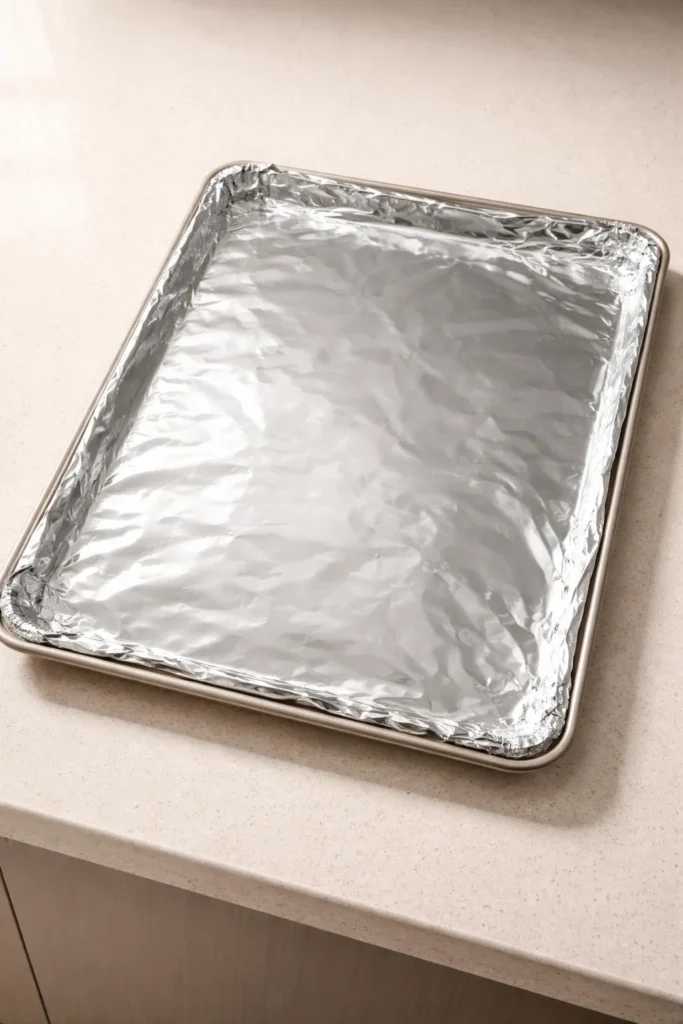
Before getting into the recipes, it’s worth spending a moment on the one technique that actually separates a low-cleanup sheet pan dinner from a moderately annoying one.
Most people know sheet pan dinners are easy. Fewer people think carefully about lining the pan before anything goes on it. Heavy-duty foil — not the standard thin kind — is your best option for high-heat roasting, especially with anything that has a sticky sauce or glaze. It holds up at 425°F without tearing, and you can crimp the edges up around the sides to catch any juices.
Parchment paper is slightly better for delicate fish, gnocchi, or anything you want to stay dry-roasted rather than steamed. It can’t handle temperatures above 425°F safely, so for anything that needs higher heat, stick with foil. For everything in between, either works.
One more thing worth knowing: a rimmed baking sheet — the standard 18×13-inch half-sheet pan — is the right tool for all of these dinners. Rimless baking sheets let juices drip onto your oven floor, which is its own cleanup nightmare. A rimmed pan with a foil liner is genuinely the closest thing cooking has to a self-cleaning appliance.
1. Sheet Pan Chicken Fajitas
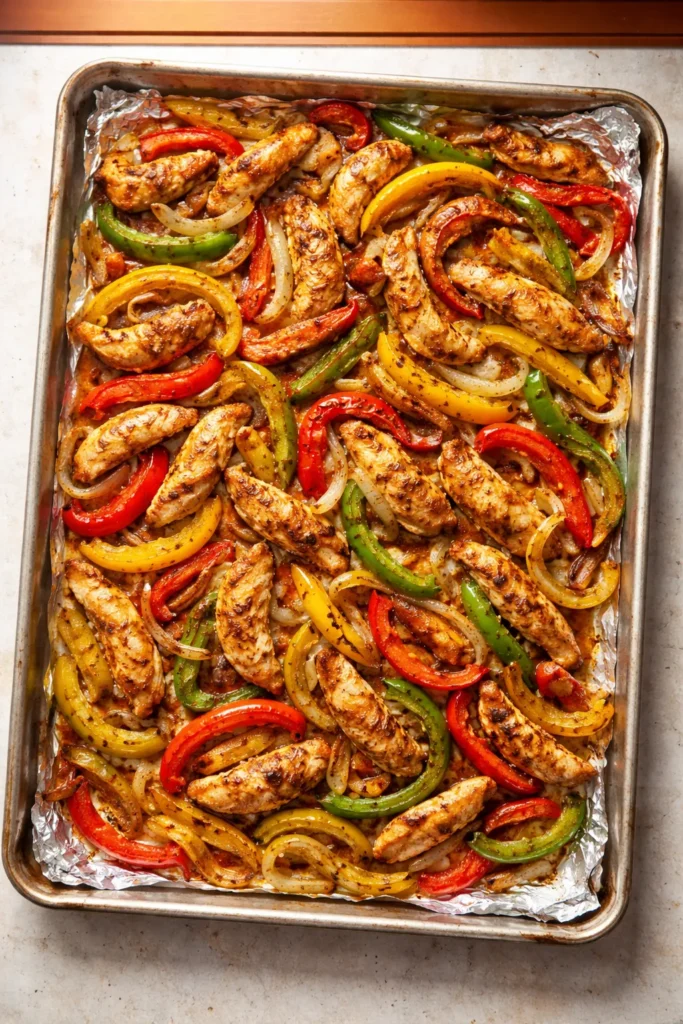
There’s something deeply satisfying about chicken fajitas that come out of an oven with the same smoky, slightly charred quality you’d expect from a restaurant griddle. The secret is a very hot oven — 425°F — and spreading everything in a single layer so it roasts rather than steams.
Slice chicken thighs or breasts into strips, toss them with sliced bell peppers and onions, and coat everything in a seasoning blend of cumin, chili powder, garlic powder, smoked paprika, and a squeeze of fresh lime. Spread it across a foil-lined sheet pan and roast for 22 to 25 minutes, flipping once halfway through. The peppers will soften and blister at the edges; the chicken will develop golden color on the outside while staying juicy inside.
Why Thighs Beat Breasts Here
Chicken thighs are significantly more forgiving in a hot oven than breasts. Their higher fat content means they can stay in a couple of minutes longer without drying out — which matters on a sheet pan, because you’re often waiting for vegetables to catch up. If you prefer chicken breasts, slice them thinner (about ½ inch) so they cook through in the same window as the peppers.
How to Serve It
- Warm flour or corn tortillas directly on the oven rack for the last 2 minutes
- Set out toppings (guacamole, sour cream, salsa, fresh cilantro) on the counter so everyone builds their own
- For a lower-carb version, serve over cauliflower rice or inside lettuce cups
Pro tip: Add a sliced jalapeño to the pan if you want heat. It roasts down and mellows slightly, which makes it more aromatic than raw jalapeño but still noticeably spicy.
2. Sheet Pan Honey Mustard Chicken with Green Beans
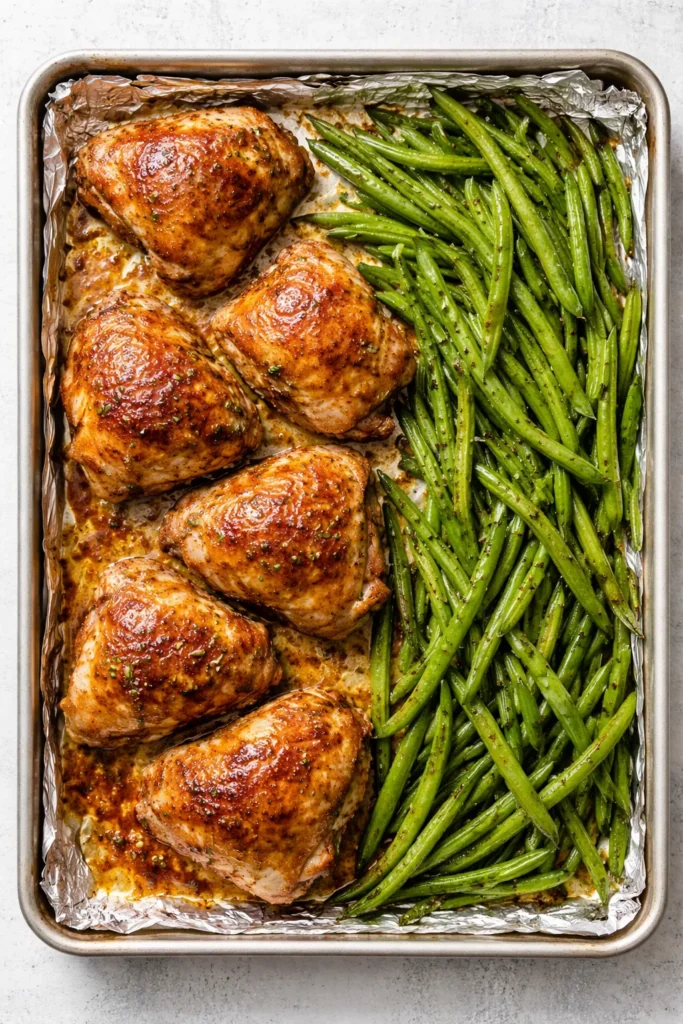
Honey mustard as a glaze for roasted chicken is one of those combinations that sounds simple and tastes like you planned much harder. The sugars in the honey caramelize in the oven and create a lacquered, golden coating on the chicken that’s genuinely hard to stop eating.
Use bone-in, skin-on chicken thighs for this one — the skin crisps up beautifully under the glaze and keeps the meat underneath moist throughout the roasting time. Whisk together two parts Dijon mustard to one part honey, add a squeeze of lemon juice, a pinch of smoked paprika, salt, and black pepper. Coat the chicken thighs and arrange them on one half of a foil-lined pan; spread fresh green beans (tossed lightly in olive oil and salt) across the other half.
The Timing Question
Bone-in chicken thighs need about 40 to 45 minutes at 400°F to reach an internal temperature of 165°F with skin that’s actually crispy rather than pale and soft. Green beans, on the other hand, are done in 15 to 20 minutes. The fix: slide the chicken in first, then add the green beans for the final 18 minutes of cooking. You get both components cooked perfectly without a single extra pan.
Swaps That Work
- Swap green beans for asparagus, broccolini, or thin-sliced sweet peppers
- Use stone-ground whole grain mustard for more texture and a slightly sharper bite
- Add a tablespoon of apple cider vinegar to the glaze for extra tang
3. Sheet Pan Italian Sausage with Potatoes and Peppers
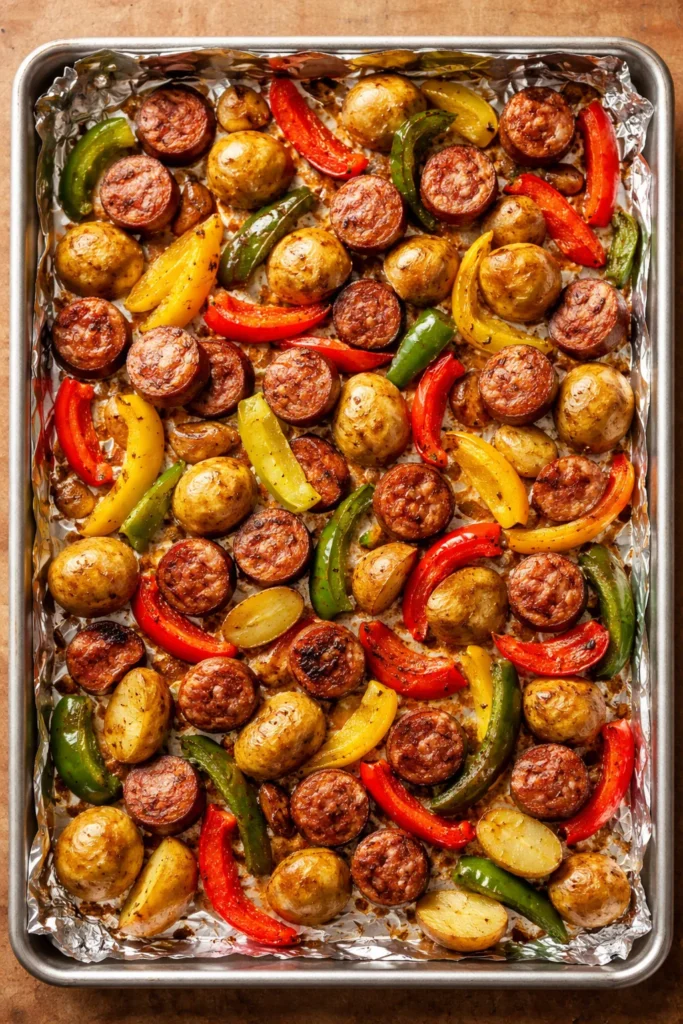
This combination — sausage, potatoes, sweet peppers, and onion — is the kind of weeknight dinner that gets requested on repeat. Every element roasts in the same amount of time at the same temperature, which makes it genuinely foolproof. There’s no staggering ingredients, no checking whether one thing is done before another.
Cut Italian sausage links into 1-inch coins (or use fresh bulk sausage pressed into small rounds), halve baby potatoes, and slice bell peppers and onion into strips. Toss everything with olive oil, garlic powder, Italian seasoning, fennel seed, and a pinch of red pepper flakes if you want heat. Spread it across a foil-lined half-sheet pan in a single layer — actually spread out, with space between pieces — and roast at 400°F for 35 to 40 minutes, stirring once at the halfway mark.
The Browning Problem (And How to Solve It)
Overcrowding is the single biggest mistake with this recipe, and it shows up as pale, steamed ingredients instead of deeply browned, slightly crispy ones. If your pan looks crowded before it goes in the oven, use two pans. This isn’t being fussy — browning requires dry heat and air circulation, and steam creates neither.
What to Serve Alongside
- A simple green salad with red wine vinaigrette
- Crusty bread to soak up the pan juices
- A dollop of whole grain mustard on the side for dipping the sausage
Mild or spicy Italian sausage both work; the spicy version adds a nice heat that mellows considerably with roasting.
4. Sheet Pan Rosemary Salmon with Asparagus
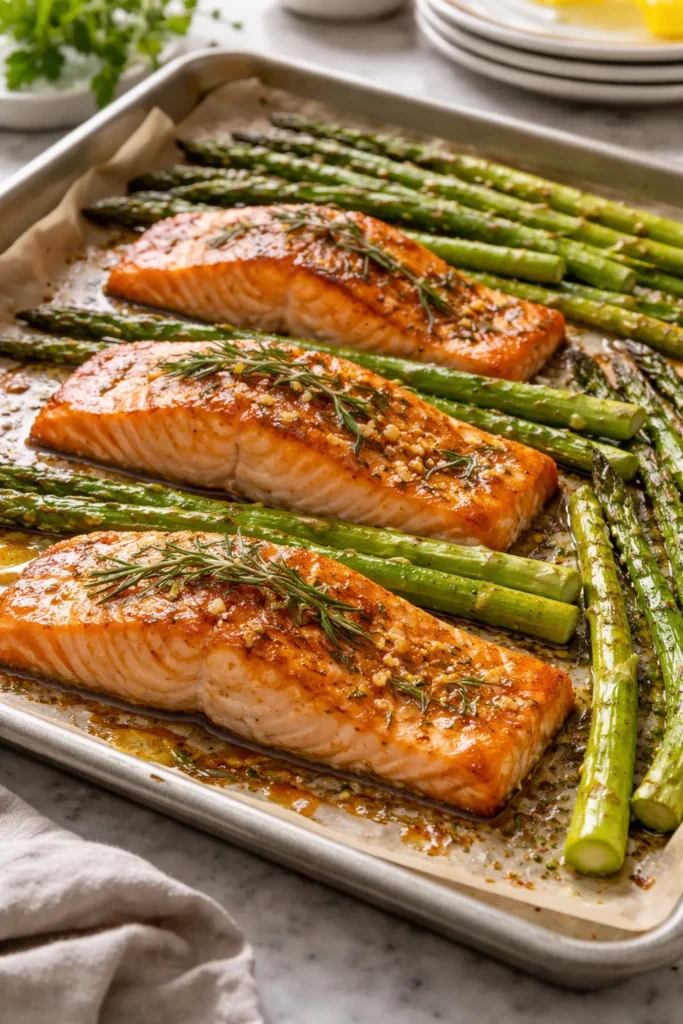
Salmon is one of the fastest proteins you can roast — most fillets are done in 12 to 15 minutes at 400°F — which makes it the natural choice for nights when you absolutely cannot wait. Asparagus roasts in about the same window, which means both components go on the pan at the same time with no staging required.
Lay salmon fillets skin-side down on a parchment-lined pan. Toss asparagus spears with olive oil, salt, and pepper and arrange them around the fish. For the salmon, brush a glaze of balsamic vinegar, minced garlic, chopped fresh rosemary, a drizzle of honey, and a crack of black pepper. Roast at 400°F for 12 to 14 minutes, depending on the thickness of your fillets. The salmon is done when it flakes easily at the thickest part and the asparagus has developed a light char at the tips.
Choosing the Right Salmon
Wild-caught sockeye or coho salmon tends to be thinner and cooks in 10 to 12 minutes. Farmed Atlantic salmon fillets are often thicker and need the full 14 to 15 minutes. All fillets on the pan should be similar in thickness — if they’re not, tuck thinner pieces partially under thicker ones, or remove thinner pieces a few minutes early.
Flavor Variations Worth Trying
- Miso glaze: white miso, rice vinegar, soy sauce, a touch of honey
- Lemon-herb: lemon zest, olive oil, fresh dill, capers
- Harissa: thinned with a little olive oil for a smoky, spicy coating
Pro tip: Leave a 1-inch gap between the salmon and the asparagus on the pan so the fish doesn’t steam the vegetables. Proximity matters more than you’d expect.
5. Sheet Pan Greek Chicken with Olives and Feta
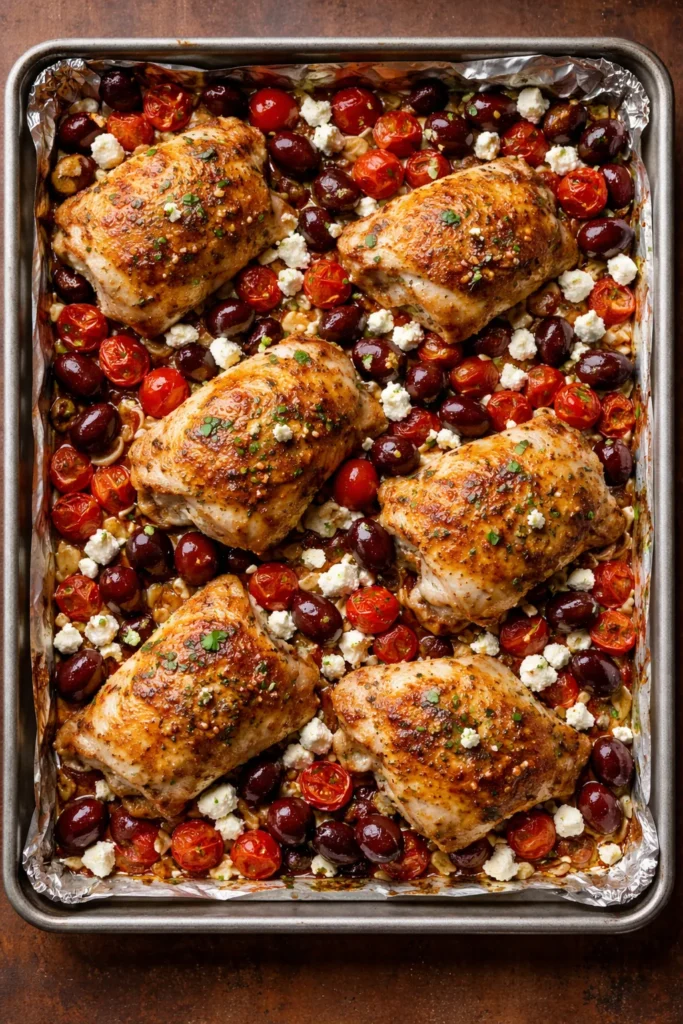
Mediterranean flavors translate extraordinarily well to sheet pan cooking. The combination of bright lemon, dried oregano, garlic, kalamata olives, and cherry tomatoes creates a pan of concentrated, deeply savory flavors — and the feta crumbled on at the very end adds a creamy, tangy finish that makes the dish feel restaurant-complete.
Marinate bone-in chicken thighs in a mixture of olive oil, lemon juice, lemon zest, minced garlic, dried oregano, dried thyme, salt, and pepper — even 20 minutes in this marinade makes a noticeable difference. Arrange the thighs on a foil-lined pan, scatter halved cherry tomatoes, sliced red onion, and pitted kalamata olives around them, and roast at 400°F for 40 to 45 minutes. Add crumbled feta for the last 5 minutes of cooking so it softens without fully melting.
The Sauce That Forms Itself
One of the best things about this recipe is what happens in the pan during roasting. The chicken releases its juices, the tomatoes burst and concentrate, and the olive oil, lemon, and oregano meld together into a pan sauce that’s excellent spooned over everything at the table. Don’t skip scraping the pan before serving — those browned bits are flavor.
Serving Ideas
- Over orzo or pearl couscous to soak up the pan juices
- With warm pita and a side of tzatziki
- Alongside roasted lemon potatoes added to the pan in the first 20 minutes
6. Sheet Pan Garlic Parmesan Chicken and Broccoli
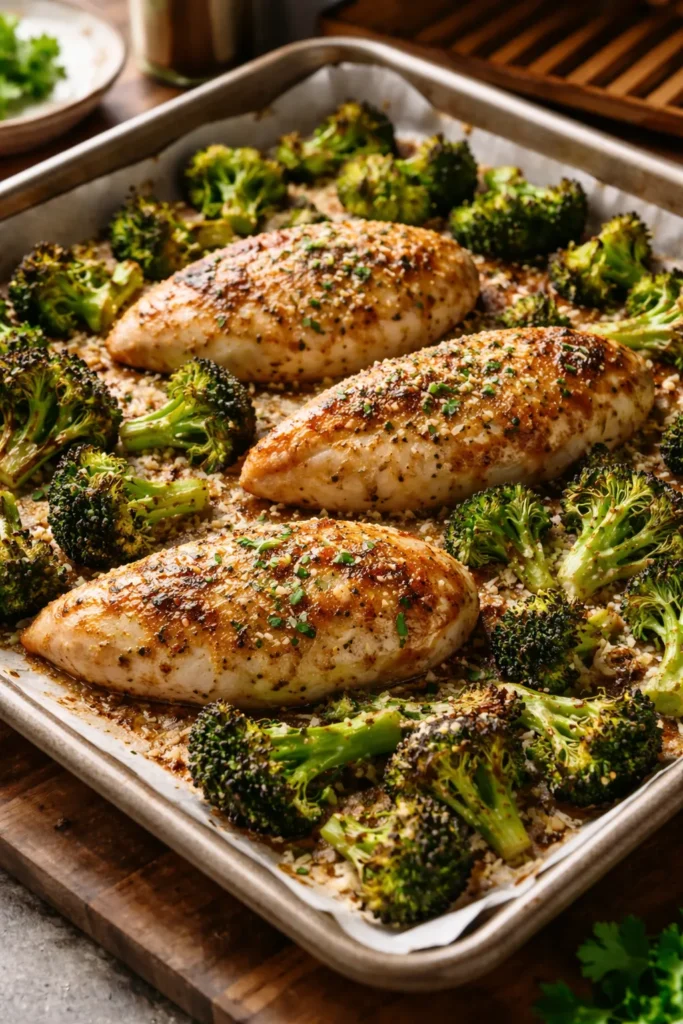
This recipe has the best ratio of effort to result of anything on this list. The ingredient list is short, the prep takes under ten minutes, and the flavors — golden garlic butter coating on crispy broccoli and juicy chicken — taste like something that required considerably more work.
Pound boneless, skinless chicken breasts to an even 3/4-inch thickness (or use chicken tenders, which don’t need pounding). Whisk together melted butter, minced garlic, grated Parmesan, garlic powder, salt, and black pepper. Toss the chicken and broccoli florets separately in this mixture — you want everything well-coated. Arrange on a parchment-lined pan and roast at 425°F for 22 to 25 minutes, until the broccoli tips are deeply brown and slightly crispy and the chicken registers 165°F internally.
The Parmesan Crust Trick
For an extra-crispy Parmesan crust on the chicken, sprinkle an additional tablespoon of finely grated Parmesan directly on top of each piece before the pan goes in the oven. At 425°F, it melts and browns into a thin, lacy crust that adds texture without any extra steps.
Why Even Thickness Matters
If one end of a chicken breast is twice as thick as the other, it’s nearly impossible to cook evenly. The thin end will be dry and overcooked by the time the thick end is safe to eat. A quick pound with a rolling pin or meat mallet solves this entirely and takes about 30 seconds.
This dish works cold from the fridge the next day, sliced over a salad with a lemon vinaigrette.
7. Sheet Pan Pork Tenderloin with Sweet Potatoes and Broccoli
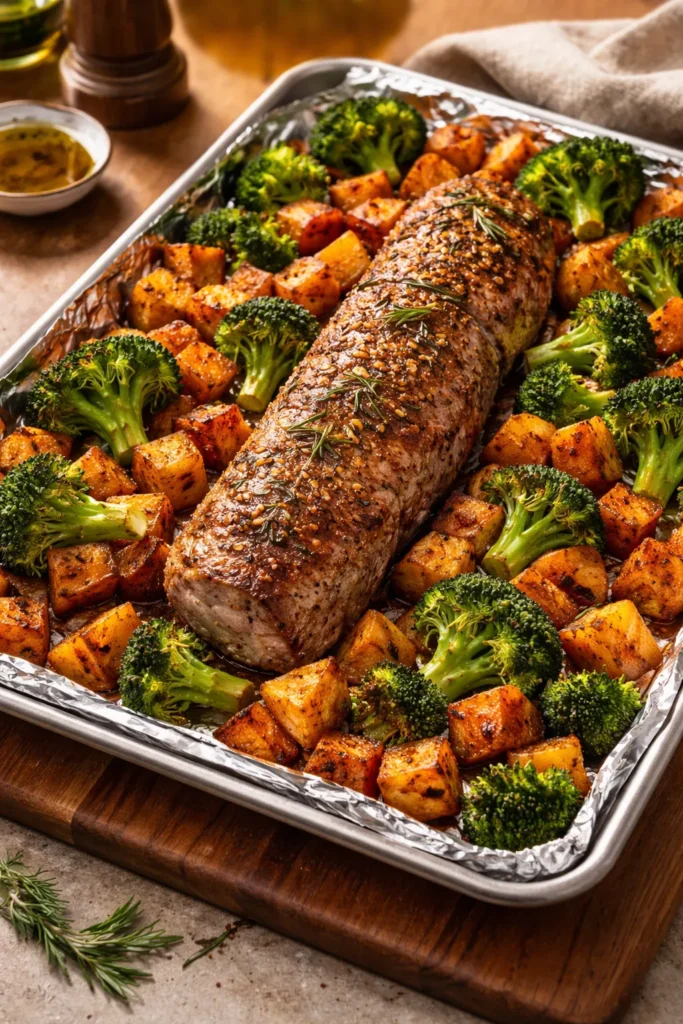
Pork tenderloin is chronically underrated as a weeknight protein. It cooks faster than most cuts of meat — about 20 to 25 minutes for a one-pound tenderloin — it stays juicy at high heat, and it takes on glazes and seasonings beautifully. Paired with sweet potatoes and broccoli on the same pan, it becomes a complete meal with genuinely minimal effort.
Rub the tenderloin all over with a mixture of olive oil, whole grain Dijon mustard, garlic, rosemary, salt, and pepper. Cube sweet potatoes into 3/4-inch pieces (small enough to cook through in the same time frame as the pork) and toss with olive oil, smoked paprika, cinnamon, salt, and pepper. Spread the sweet potatoes across the foil-lined pan, nestle the tenderloin in the center, and roast at 425°F for 20 minutes. Add broccoli florets (tossed in olive oil and salt) around the pan and roast for another 10 to 12 minutes, until the pork reaches an internal temperature of 145°F.
Resting the Pork
This is non-negotiable: let the tenderloin rest on a cutting board for 5 to 7 minutes before slicing. Cutting into it immediately causes the juices to run out onto the board instead of redistributing through the meat. A rested tenderloin is noticeably juicier than one that’s cut straight from the pan.
Glaze Variations
- Apple cider and Dijon: sweet, tangy, pairs especially well with the sweet potato
- Hoisin and ginger: takes the whole dish in an Asian-inspired direction
- Balsamic and honey: rich and caramelized, excellent with any root vegetable
8. Sheet Pan Chipotle Lime Shrimp with Potatoes
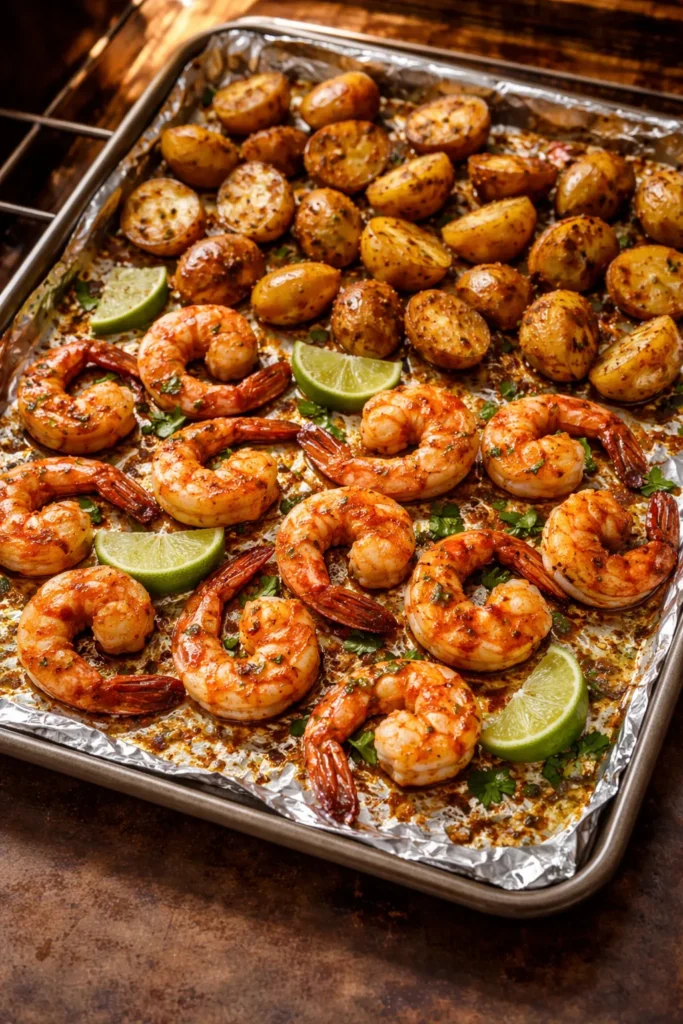
Shrimp is the fastest-cooking protein in any sheet pan dinner — large shrimp are fully cooked in 8 to 10 minutes in a 400°F oven. That speed requires a little planning, because most vegetables take considerably longer. The solution for this recipe is to start the potatoes first and add the shrimp only at the end, resulting in crispy-edged potatoes and perfectly cooked, tender shrimp from the same pan.
Halve baby red or Yukon Gold potatoes, toss with olive oil, chili powder, garlic powder, cumin, salt, and pepper, and roast on a foil-lined pan at 400°F for 25 minutes. While the potatoes roast, toss large, peeled, deveined shrimp in a mixture of olive oil, chipotle powder, fresh lime juice, garlic, and a pinch of honey. Scatter the shrimp over and around the potatoes and return the pan to the oven for 8 to 10 minutes, until the shrimp are pink, lightly curled, and cooked through. Finish with fresh cilantro and lime wedges.
The Overcooking Risk
Shrimp overcook faster than almost any other protein, turning rubbery and tight rather than tender. Check the shrimp at 8 minutes. They’re done when they’ve just turned opaque — the moment the translucent grey center disappears, pull the pan. They’ll carry over slightly from the residual heat.
Ways to Round Out the Plate
- Serve over coconut rice for a sweet contrast to the smoky chipotle
- Add Broccolini or asparagus to the pan alongside the shrimp
- Top with a simple avocado crema (blended avocado, lime juice, garlic, and a splash of water)
9. Sheet Pan Beef Bulgogi
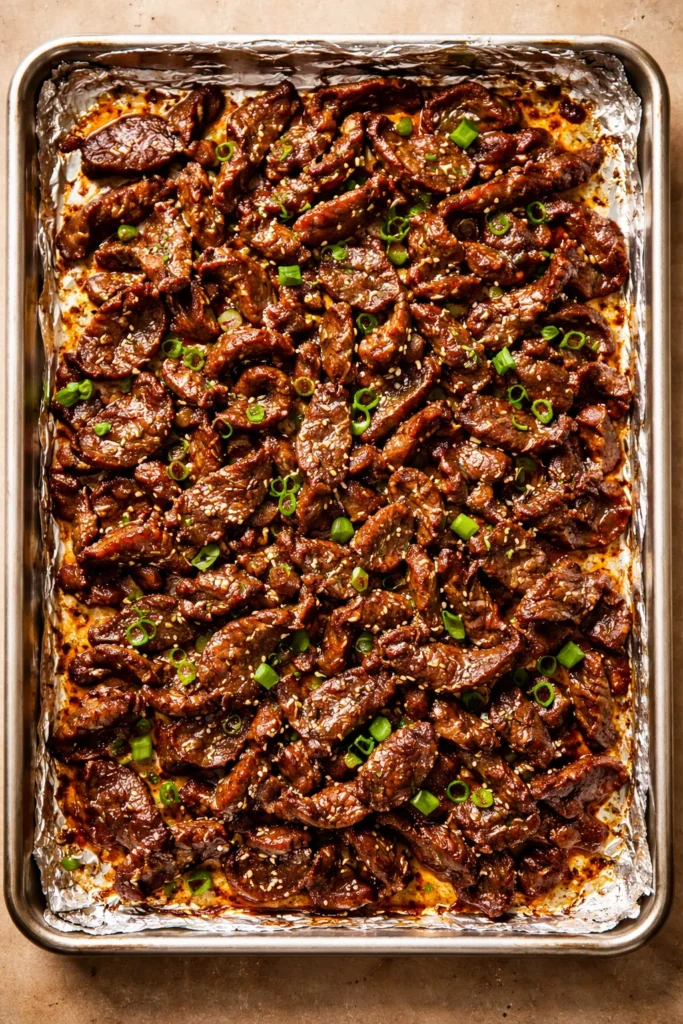
Bulgogi — Korean marinated beef — translates surprisingly well to sheet pan cooking. The oven caramelizes the sweet-savory marinade (which typically includes soy sauce, sesame oil, grated Asian pear or kiwi, garlic, ginger, and brown sugar) around the thinly sliced beef, creating slightly charred, concentrated edges that come very close to the smoky quality of grilled bulgogi.
The key to this recipe is thin-sliced beef. Ribeye or sirloin sliced to 1/8-inch thickness works best — cutting meat this thin is much easier if you put it in the freezer for 20 minutes first, which firms it up just enough to slice cleanly with a sharp knife. Marinate the sliced beef for at least 30 minutes (or up to overnight in the refrigerator). Spread it across a foil-lined pan in as close to a single layer as you can manage and roast at 425°F for 10 to 12 minutes, until the edges are caramelized and slightly crispy.
What to Serve With Bulgogi
- Steamed short-grain rice is the classic pairing — the sauce-soaked beef makes the rice extraordinary
- Sliced green onions and sesame seeds as garnish
- Sliced cucumber in a quick rice vinegar brine adds a cool, acidic contrast
The Pear Factor
Asian pear in the marinade isn’t just flavor — the enzymes in the fruit actively tenderize the beef. If you can’t find Asian pear, kiwi works in the same way and is usually easier to source. Either option makes a noticeable difference in the final texture of the meat.
Bulgogi leftovers are excellent in fried rice the next day.
10. Sheet Pan Meatball Gnocchi with Sausage and Broccoli Rabe
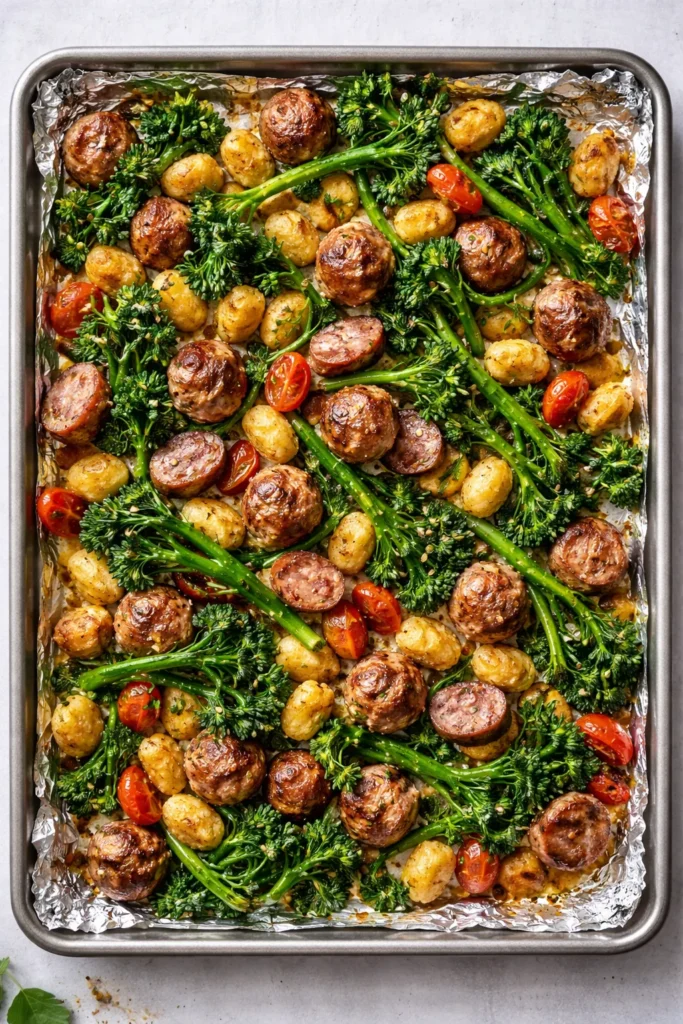
This is the one to make when you want something that genuinely looks and tastes impressive without putting in impressive effort. Store-bought gnocchi roasts directly on a sheet pan — no boiling, no draining, no second pot — and develops a crispy outer shell with a soft, chewy center that’s significantly better than the boiled version.
Use a combination of store-bought Italian turkey or pork meatballs (or homemade if you have them), uncooked shelf-stable gnocchi, sliced Italian sausage, and broccoli rabe (or regular broccoli florets if broccoli rabe’s bitterness isn’t your preference). Toss everything with olive oil, garlic, crushed red pepper, fennel seed, and a handful of halved cherry tomatoes. Spread across a foil-lined sheet pan and roast at 425°F for 25 to 28 minutes, stirring once, until the gnocchi is golden and slightly crispy, the meatballs are cooked through, and the sausage has browned at the edges.
The Gnocchi Surprise
Most people who make this recipe for the first time are genuinely shocked by what happens to shelf-stable gnocchi in a hot oven. Instead of the soft, somewhat bland texture you get from boiling, roasted gnocchi develops a golden exterior with a satisfying chew that’s closer to a pierogi than a pasta. Do not boil first — put it directly on the pan from the package and let the oven do the work.
Finishing Touches That Elevate the Dish
- A handful of freshly grated Parmesan scattered over the pan in the final 3 minutes
- A drizzle of quality extra virgin olive oil just before serving
- Fresh basil torn over the top adds brightness that cuts through the richness
How to Choose Proteins and Vegetables That Cook Together
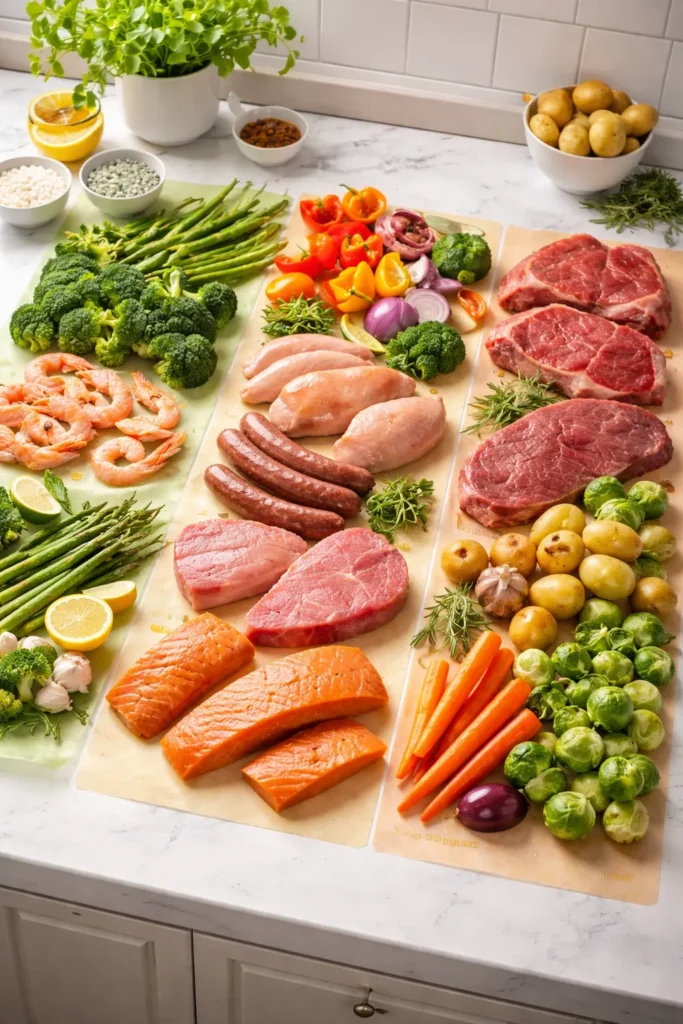
The biggest source of confusion with sheet pan cooking is matching ingredients that need different amounts of time and heat. Roasting a whole chicken breast alongside thin asparagus spears means one of them will be wrong — the chicken won’t be done when the asparagus is already overcooked, or the asparagus will be limp and pallid waiting for the chicken to finish.
A few general groupings help enormously here:
Fast proteins (under 15 minutes at 400°F): shrimp, scallops, thin fish fillets like tilapia or sole, very thinly sliced beef.
Medium proteins (20 to 30 minutes at 400°F): salmon fillets, pork tenderloin, boneless chicken breasts and thighs, sausage coins.
Slow proteins (35 to 50 minutes at 400°F): bone-in chicken thighs and drumsticks, bone-in chicken breasts, thick pork chops.
Fast vegetables (12 to 18 minutes at 400°F): asparagus, shrimp, thin green beans, cherry tomatoes, baby spinach added at the very end, zucchini.
Medium vegetables (20 to 28 minutes at 400°F): broccoli florets, bell peppers, mushrooms, cauliflower, Brussels sprouts.
Slow vegetables (30 to 45 minutes at 400°F): halved baby potatoes, sweet potato cubes, parsnips, beets, whole garlic heads.
The simplest strategy: pair proteins and vegetables from the same time category, or start your slow-cooking ingredient first and add the faster-cooking one partway through. Every recipe above does one or the other.
Lining the Pan for True Zero-Cleanup Results
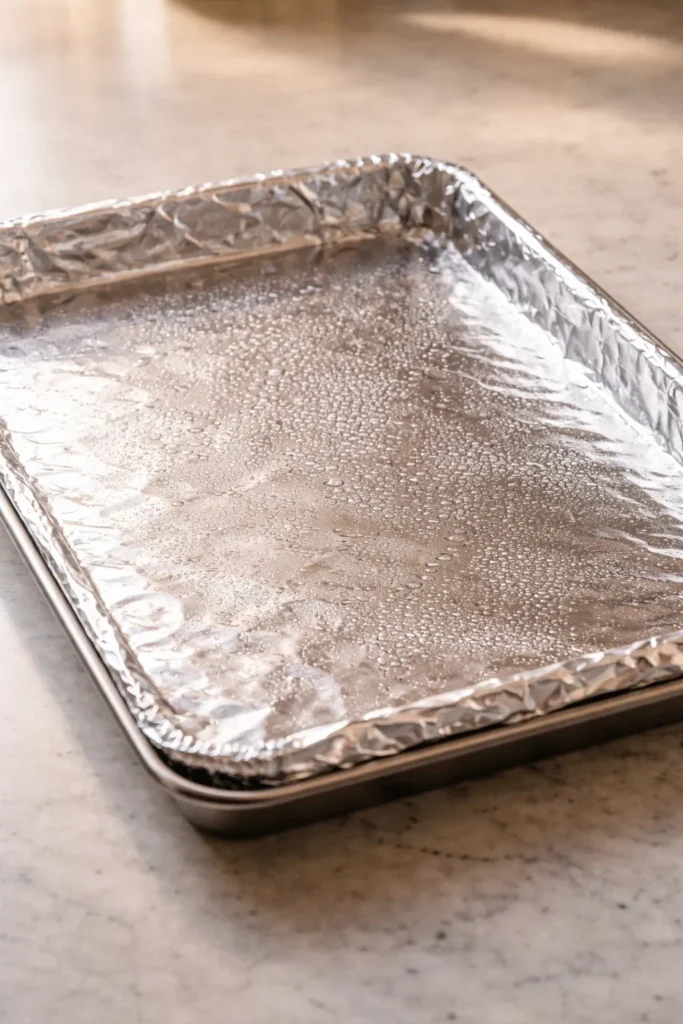
This deserves its own section because it’s genuinely the difference between “minimal cleanup” and no cleanup.
Heavy-duty aluminum foil is the most versatile liner. Cut a piece slightly larger than your pan, press it into the corners, and crimp the edges up the sides so juices can’t pool underneath. For recipes with a sticky glaze (honey mustard, bulgogi marinade, teriyaki), spray the foil lightly with cooking spray before adding your ingredients — this prevents even heavily caramelized glazes from sticking.
Parchment paper is better for gnocchi, fish, and anything delicate. It creates a slightly dryer environment than foil (it doesn’t reflect heat back up at the food the way foil does), which makes it better for browning without burning. Just don’t push it above 425°F.
What to do with the pan itself after removing the liner: wipe it down with a damp cloth while it’s still warm. Any tiny amount of residue comes off in seconds. If you use a liner every time, your pans stay essentially clean indefinitely.
One more thing: avoid dark-colored sheet pans for these recipes if possible. Dark metal absorbs more heat and can cause the bottoms of vegetables to burn before they’re cooked through. Light-colored, heavy-gauge aluminum pans heat more evenly and are worth the investment if you cook this way regularly.
The Temperature and Timing Rules That Make Everything Work
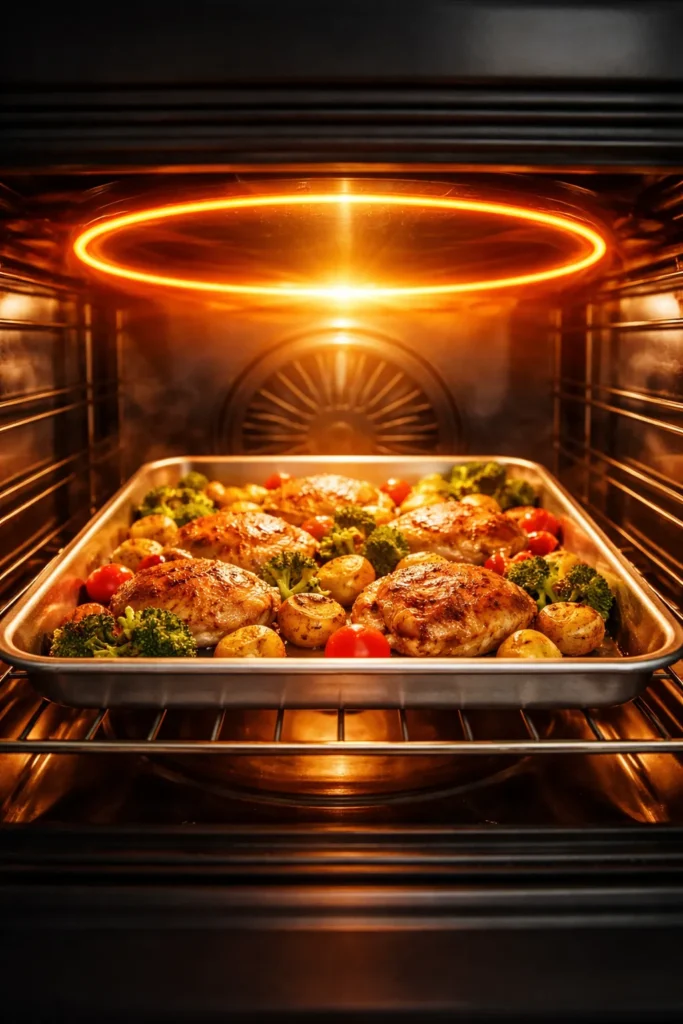
There’s a reason so many sheet pan recipes call for 400°F to 425°F: that range is hot enough to create browning and caramelization without burning the outside before the inside is cooked. Below 375°F, most ingredients roast rather than brown — they become tender but pale, which tastes fine but misses the deeply savory quality that makes sheet pan dinners genuinely exciting.
For crispy skin on chicken, 425°F is the right starting point. The skin needs high heat to render the fat and crisp up — at 375°F, it just sits there, pale and slightly rubbery.
For fish, 400°F is typically more appropriate. High heat can cause the albumin (the white protein) to bubble aggressively to the surface and create an unappealing texture, especially on salmon. Medium-high heat keeps the flesh tender.
For vegetables alongside proteins, always ask whether the vegetable needs the same heat the protein does. Broccoli florets love 425°F — the tips char slightly and develop a nutty, almost smoky flavor. Cherry tomatoes, on the other hand, become jammy and sweet at 400°F and can turn grainy and over-reduced at 425°F.
Position the oven rack in the upper-middle position for most of these recipes. Food higher in the oven gets more radiant heat from the top element, which promotes browning on top rather than burning on the bottom.
Final Thoughts
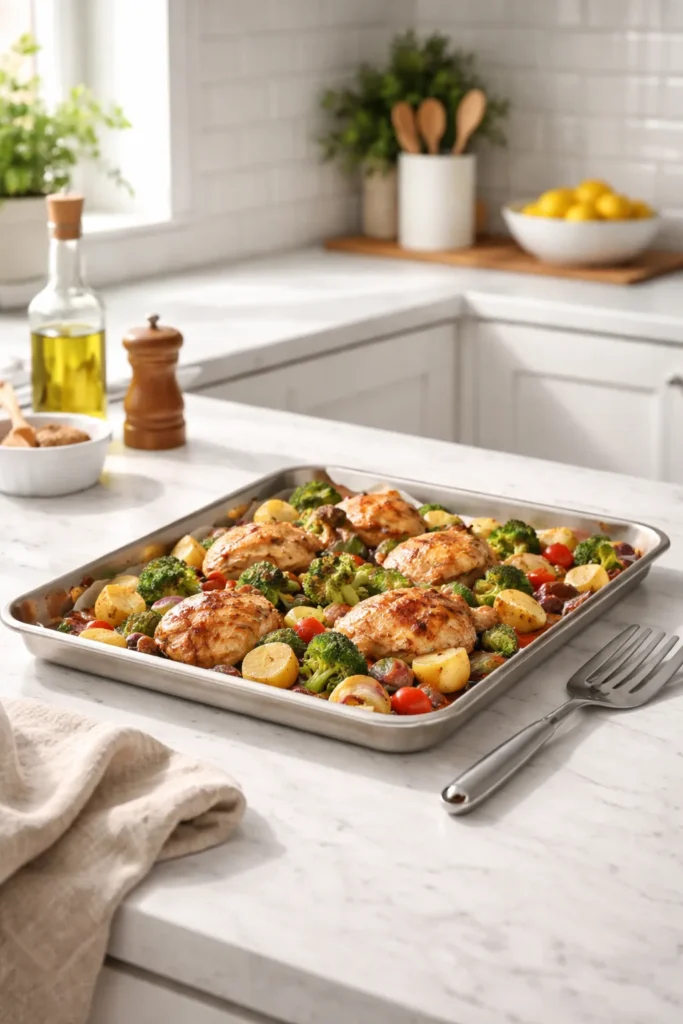
Sheet pan dinners work because they’re built around a simple truth: the oven does the hard work, and all you have to do is prep and set the timer. The ten dinners here cover enough flavor territory — Mexican, Mediterranean, Korean, Italian, American comfort — that you could genuinely rotate through them for weeks without cooking anything twice.
Line the pan, choose ingredients that cook at similar rates, give everything enough space to roast rather than steam, and resist the urge to open the oven door every five minutes. The best results come from trust — trust that a hot oven and a well-seasoned pan of ingredients will do exactly what they’re supposed to.
The real reward isn’t just a good dinner. It’s a clean kitchen at the end of a long day, which somehow makes the food taste even better.