There’s something almost unfair about how good a slow cooker makes beef taste. You drop a tough, marbled chuck roast into a ceramic crock in the morning, go about your entire day, and come home to meat so tender it practically falls apart when you look at it. No hovering. No basting. No checking the oven every twenty minutes.
The science behind it is beautifully simple. Tough cuts of beef — the ones that would be nearly inedible if you grilled or pan-fried them — are loaded with collagen and connective tissue. Under low, sustained heat over many hours, that collagen breaks down into gelatin, giving the meat a silky, rich texture that no amount of high-heat cooking can replicate. The sweet spot is pushing the internal temperature past 190°F, where the tough bits don’t just soften — they dissolve.
What follows are ten genuinely different slow cooker beef recipes, each one fork-tender in its own way, each one built for a different craving. Some are deeply savory and wine-braised. Some are bold and spiced. Some are weeknight-simple, and some are weekend-worthy showstoppers. All of them use a slow cooker the way it was meant to be used — not as a shortcut, but as a technique that turns inexpensive cuts into something that feels like a proper restaurant meal.
Table of Contents
- Why Chuck Roast Outperforms Every Other Cut
- 1. Classic Slow Cooker Beef and Vegetable Stew
- What Makes It Work
- Tips for Getting It Right
- 2. Slow Cooker Shredded Beef for Tacos and Sandwiches
- Why No Liquid Is Actually Better
- Ways to Use the Shredded Beef
- 3. Slow Cooker Pot Roast with Pan Gravy
- Building the Gravy at the End
- Seasoning the Roast Right
- 4. Slow Cooker Beef Bourguignon
- The Technique That Separates Good from Exceptional
- Key Ingredients
- 5. Mississippi Pot Roast
- Why the Minimal Liquid Works
- Serving Suggestions That Make It Shine
- 6. Slow Cooker Beef Short Ribs in Red Wine Sauce
- Why Bone-In Short Ribs Matter
- Making It a Complete Meal
- 7. Slow Cooker French Dip Sandwiches
- The Au Jus Is Not an Afterthought
- Building the Perfect Sandwich
- 8. Slow Cooker Hungarian Beef Goulash
- What Goes In
- How to Serve It Authentically
- 9. Slow Cooker Chipotle Beef Carnitas
- A Step That Makes a Big Difference
- Uses for Slow Cooker Beef Carnitas
- 10. Slow Cooker Thai Coconut Beef
- How to Build the Flavor Base
- Serving This Recipe Properly
- The Searing Step That Changes Everything
- Common Slow Cooker Mistakes Worth Avoiding
- Storing, Reheating, and Making Ahead
- Final Thoughts
Why Chuck Roast Outperforms Every Other Cut
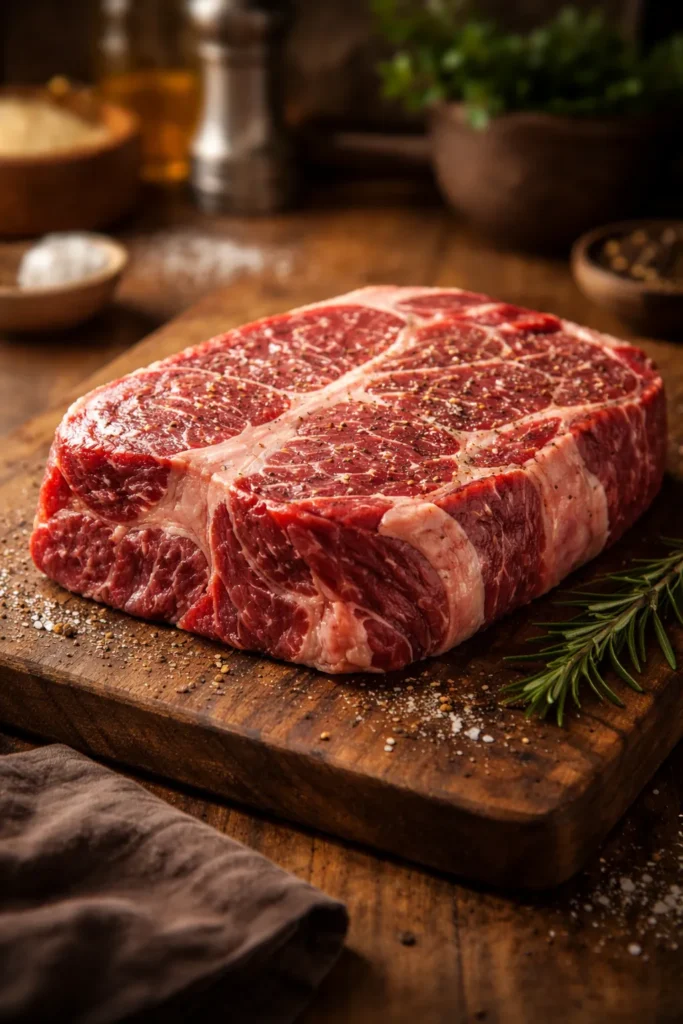
Before getting into the recipes, it’s worth understanding why chuck roast keeps showing up in every credible slow cooker beef recipe. It’s not a coincidence — and it’s not just about price.
Chuck roast comes from the shoulder region of the cow, an area that gets a constant workout. That constant movement builds muscle fibers packed with connective tissue and intramuscular fat. Both of those things, which make chuck roast tough when cooked quickly, become massive advantages in a slow cooker.
The fat renders slowly, basting the meat from the inside out. The connective tissue converts to gelatin. The result is meat that’s simultaneously rich, moist, and tender in a way that lean cuts like eye of round can never achieve, no matter how long they cook.
Short ribs, brisket, and beef shanks work on the same principle. If a recipe calls for something labeled “stew meat,” buying a whole chuck roast and cutting it yourself is almost always worth the extra five minutes — the pre-cut stuff often mixes muscle groups that cook at different rates, leading to uneven results.
1. Classic Slow Cooker Beef and Vegetable Stew
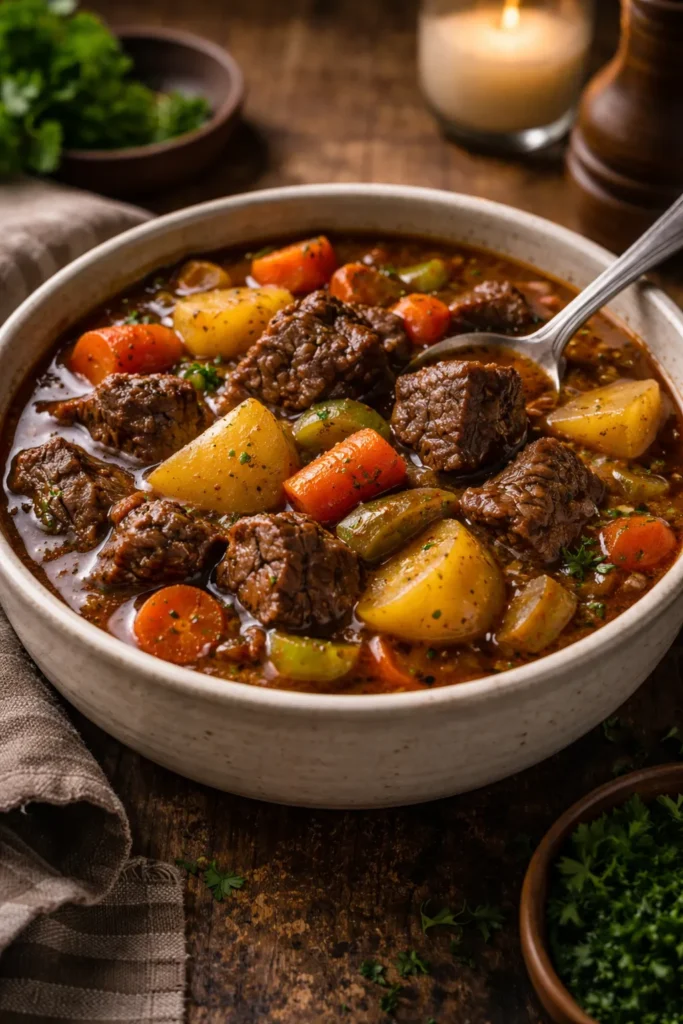
This is the one that started it all for most people — the recipe that made them realize a slow cooker was worth the cabinet space. Chunks of chuck roast, Yukon Gold potatoes, thick carrot rounds, and celery braised in a wine-enriched beef broth until everything melds into something deeply satisfying.
The key distinction between a good version and a forgettable one comes down to two steps most recipes skip: searing the beef until genuinely dark brown before it goes into the crock, and frying the tomato paste in the aromatics until it turns brick red. Both steps build what’s called the Maillard reaction — a cascade of flavor compounds that no amount of simmering alone can create.
What Makes It Work
Yukon Gold potatoes hold their shape over an 8-hour cook where Russets would turn to mush. The natural starch they release thickens the broth from the inside, giving the gravy body without a heavy flour roux. A cornstarch slurry added in the final 15 minutes on HIGH tightens everything into that velvety, spoon-coating consistency you’re after.
Tips for Getting It Right
- Cut the beef into 1.5-inch cubes — too small and they disintegrate; too large and the outside overcooks before the inside renders
- Use dry red wine like Cabernet Sauvignon — the tannins cut through the fat and add brightness
- Add frozen peas in the last 5 minutes only — any earlier and they turn grey and bitter
- Skim the fat layer from the surface before serving, or drag a folded paper towel lightly across to absorb it
Worth knowing: A teaspoon of instant espresso powder added during the aromatics stage deepens the savory quality without any detectable coffee flavor.
2. Slow Cooker Shredded Beef for Tacos and Sandwiches
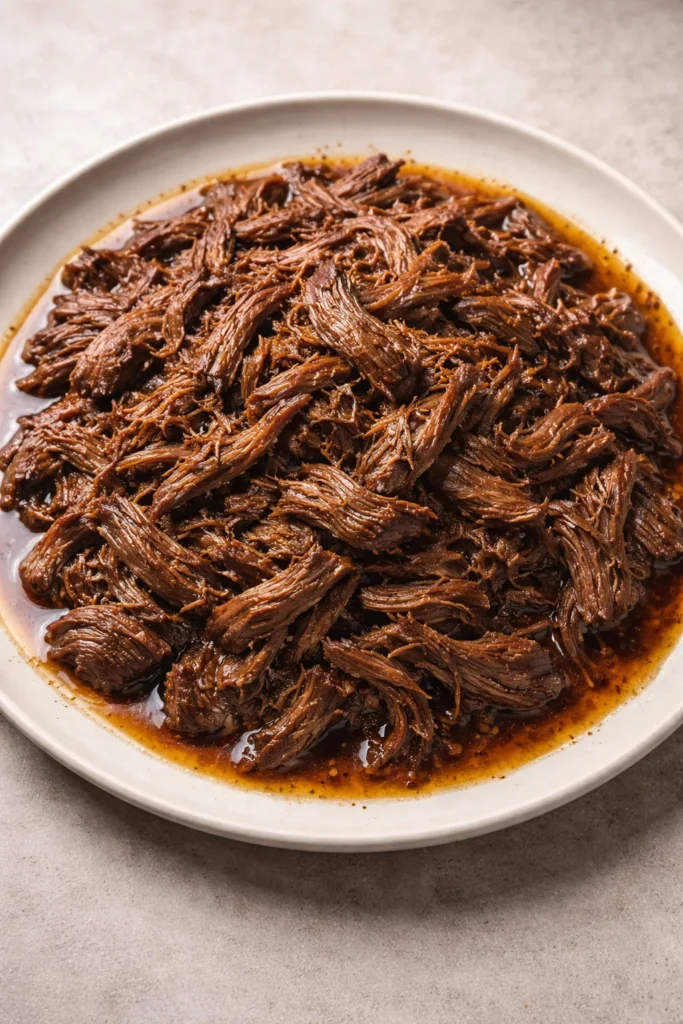
This is pure batch-cooking intelligence. A 4 to 5 lb chuck roast — rubbed with olive oil, red wine vinegar, salt, dried basil, parsley, and garlic powder, then buried under sliced onions and whole garlic cloves — cooks on LOW for 8 to 10 hours in its own juices. No added broth required.
The result is pull-apart beef with a concentrated, deeply savory flavor that works across an almost absurd number of meals. The same pot of beef becomes tacos on Monday, shredded beef sandwiches on Tuesday, burrito filling on Wednesday, and a pasta topping by Thursday. It’s one cook session that covers half a week.
Why No Liquid Is Actually Better
This approach sounds counterintuitive, but the logic is solid. When you skip the broth, the beef cooks in its own rendered fat and released juices — a more concentrated, intense flavor base than anything you’d get by diluting with added liquid. The onions caramelize slightly in those drippings and become soft, almost jammy, adding a natural sweetness to the finished meat.
Ways to Use the Shredded Beef
- Piled into warm corn tortillas with pickled red onion and cotija cheese
- Loaded into slider rolls with a drizzle of the braising jus
- Tossed with egg noodles or served over creamy mashed potatoes
- Used as a filling for enchiladas with red chili sauce
- Stuffed into burritos with black beans and rice for meal-prep lunches
Pro tip: Stab a few holes all over the roast with a fork before rubbing it with oil and vinegar. This helps the seasoning penetrate deeper into the meat rather than just coating the surface.
3. Slow Cooker Pot Roast with Pan Gravy
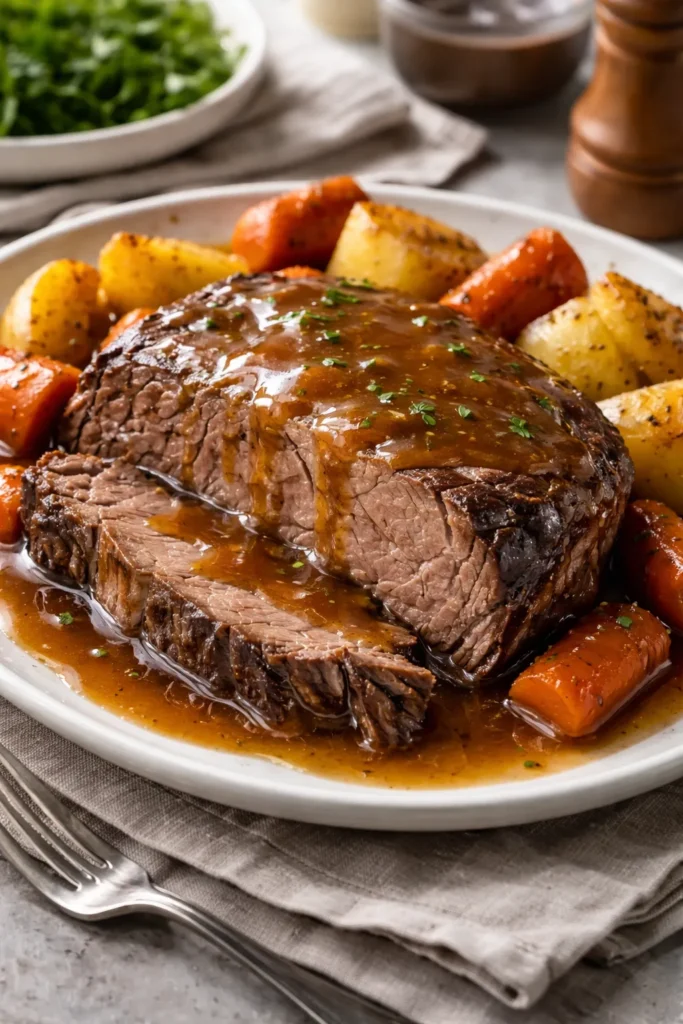
The quintessential Sunday dinner. A whole chuck roast — left in one piece rather than cubed — braised over 9 hours in beef broth with potatoes, carrots, onions, and celery until it pulls apart in thick, gorgeous ribbons. The difference between this and stew is entirely about texture and intention.
Keeping the roast whole means you get distinct slices or pulled sections you can arrange on a platter, rather than chunked pieces suspended in sauce. The visual presentation alone feels more special — which matters when you’re feeding people you want to impress.
Building the Gravy at the End
After the roast is done, the liquid in the pot is liquid gold. Pour it into a saucepan, bring it to a boil, and whisk in a cornstarch slurry (2 tablespoons cornstarch + 2 tablespoons cold water). Within 3 to 5 minutes on medium heat, it thickens into a proper gravy that coats the back of a spoon. Season it with a touch of garlic powder and black pepper before serving.
Seasoning the Roast Right
- Rub a blend of steak seasoning and Italian seasoning all over the surface before it goes in
- A tablespoon of Worcestershire sauce added to the broth provides depth without tasting obvious
- Don’t skip spraying or greasing the slow cooker insert — even with a fatty cut, sticking happens at the edges after 9 hours
Worth knowing: This recipe holds well in the slow cooker on the WARM setting for up to 2 hours after cooking, making it flexible for family dinners where people eat at different times.
4. Slow Cooker Beef Bourguignon
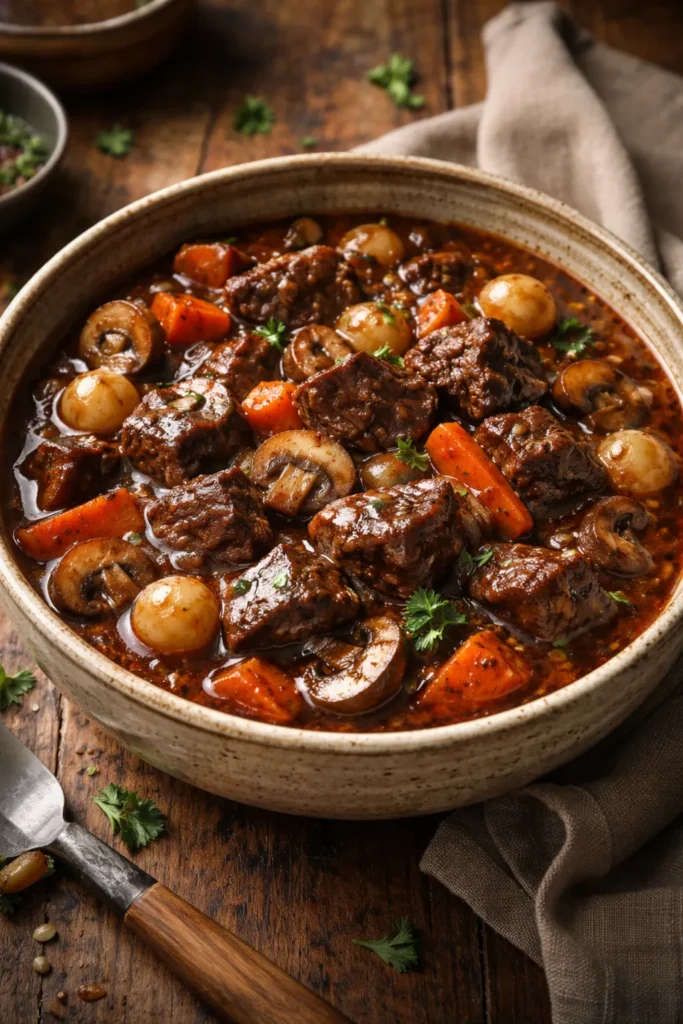
This is French braised beef translated into a method that doesn’t require a Dutch oven, a watchful eye, or three hours standing at the stove. Beef bourguignon — chunks of chuck roast slow-braised in a full bottle of red Burgundy wine with pearl onions, mushrooms, carrots, and fresh thyme — is one of those dishes that tastes like it belongs in a Parisian bistro.
The slow cooker version gets there through the same collagen-conversion science as every other long braise, but the wine plays a bigger role here than in most recipes. Burgundy or any good Pinot Noir adds fruit, acidity, and earthiness that a broth-only stew simply can’t replicate. Don’t use anything you wouldn’t drink — but you don’t need to use anything expensive either.
The Technique That Separates Good from Exceptional
Dredging the beef cubes lightly in flour before searing them accomplishes two things: it creates a thicker, crispier crust on the exterior, and the flour disperses into the liquid during the long braise to naturally thicken the sauce without a slurry. If you want to keep it gluten-free, skip the flour and use a cornstarch slurry at the end.
Key Ingredients
- Pearl onions (fresh or frozen) — they hold their shape beautifully over long cooking
- Cremini or button mushrooms added in the last 2 hours so they don’t turn to mush
- Fresh thyme and a dried bay leaf — remove both before serving
- A tablespoon of tomato paste cooked into the aromatics for umami depth
Pro tip: Brown the bacon lardons or diced pancetta first and use that rendered fat to sear the beef. The smoky pork flavor weaves through the entire braise and is part of what makes classic bourguignon taste so layered.
5. Mississippi Pot Roast
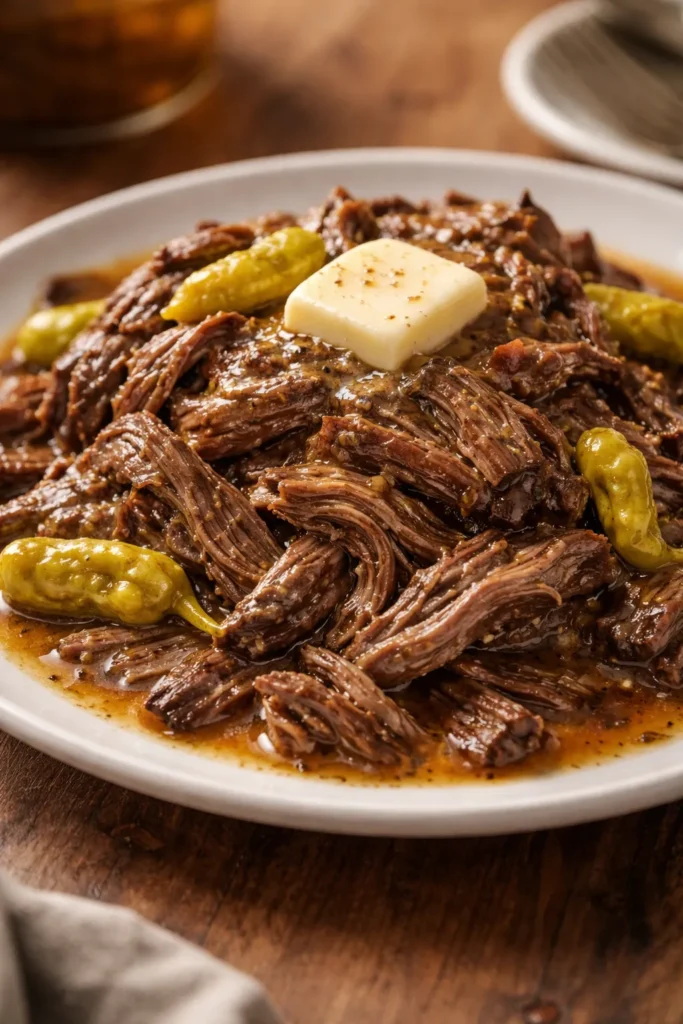
If you’ve spent any time in slow-cooker communities, you’ve encountered Mississippi Pot Roast — and the enthusiasm around it is warranted. A chuck roast cooked with a packet of dry ranch seasoning, a packet of au jus or brown gravy mix, a stick of butter, and a handful of pepperoncini peppers. That’s essentially the entire recipe.
It sounds too simple to be interesting. It absolutely isn’t. The tangy brine from the pepperoncini peppers cuts through the fat of the chuck roast in a way that makes every bite feel balanced rather than heavy. The butter melts into the braising liquid and creates a sauce that’s rich, slightly spicy, and tangy all at once.
Why the Minimal Liquid Works
There’s no added broth in this recipe. The pepperoncini bring their brine, the butter melts, and the roast releases its own considerable juice. After 8 hours, there’s a surprisingly generous amount of flavorful liquid at the bottom of the crock.
Serving Suggestions That Make It Shine
- Shredded over mashed potatoes with the cooking liquid spooned over the top
- Piled into hoagie rolls for a next-level beef sandwich
- Served over egg noodles with the jus as a sauce
- Spooned into slider buns for game-day appetizers
Worth knowing: You can use whole pepperoncini (removed before serving) or sliced banana peppers as a substitution. The heat level is mild — more tangy than spicy — so it works for people who don’t love heat.
6. Slow Cooker Beef Short Ribs in Red Wine Sauce
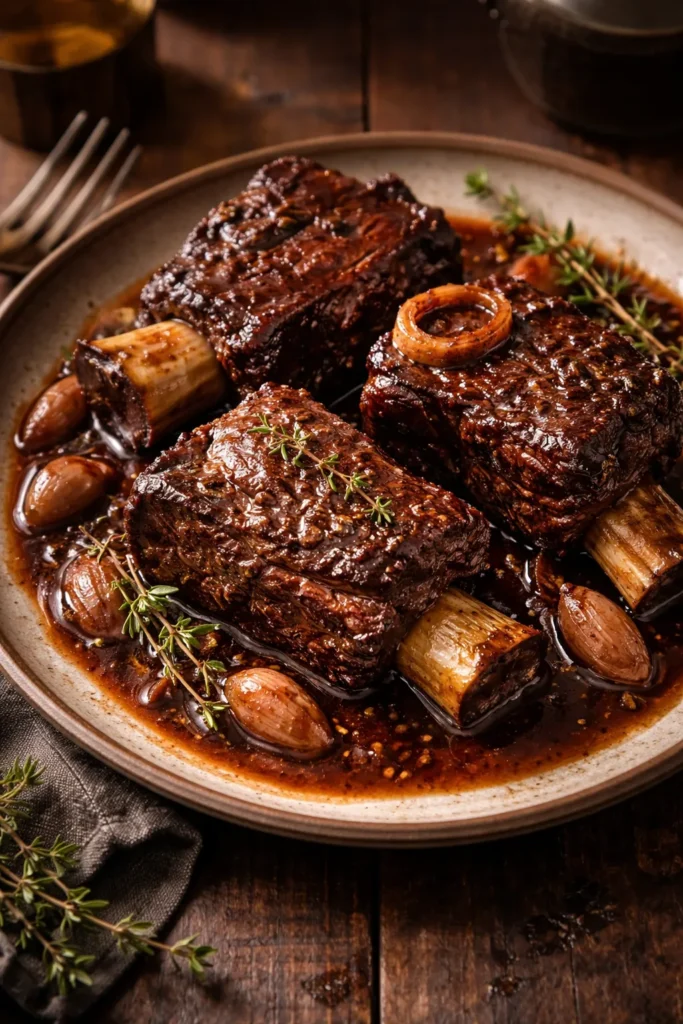
Short ribs in a slow cooker are one of the most rewarding things you can make with almost no technical skill. The fat content of bone-in beef short ribs is even higher than chuck roast, which means the meat that comes out after 6 to 8 hours on LOW is almost obscenely tender — falling off the bone with zero resistance.
The classic preparation involves searing the short ribs hard on all sides, building a red wine and beef broth sauce with shallots, garlic, and fresh thyme, and letting the slow cooker do the rest. The sauce that develops is naturally thick and glossy from the collagen released by the bones and the gelatin that forms as the meat braises.
Why Bone-In Short Ribs Matter
The bone does more than hold the meat together. It releases marrow and collagen into the braising liquid over the long cook, contributing body and richness that boneless short ribs simply can’t match. If your butcher offers flanken-cut (cross-cut) or English-cut, either works — English-cut gives you larger, meatier portions per bone.
Making It a Complete Meal
- Serve over creamy polenta — the corn flavor contrasts beautifully with the rich beef sauce
- Mashed potatoes work equally well and soak up the sauce perfectly
- A side of wilted greens (spinach, escarole, or broccolini) adds freshness to balance the richness
Pro tip: After the ribs are done, transfer the braising liquid to a saucepan and reduce it by half over medium heat. That reduction becomes an intensely flavored, glossy sauce worth every extra minute of effort.
7. Slow Cooker French Dip Sandwiches
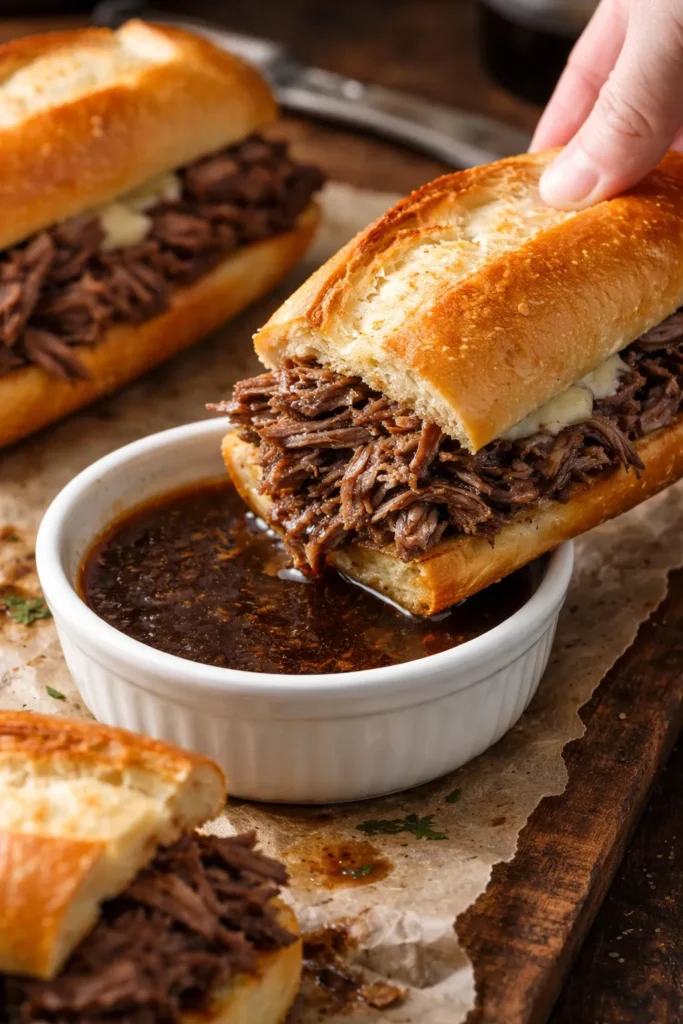
A French dip done right is one of the most satisfying sandwiches in existence. Thinly sliced or pulled slow-cooked beef piled onto a crusty roll, served alongside a ramekin of warm au jus for dipping. The slow cooker is, genuinely, the best way to make the beef for this sandwich.
The roast — typically a chuck roast or, for a slightly firmer result, a brisket — braises in a seasoned beef broth seasoned with Worcestershire, a little soy sauce, garlic, and dried herbs. After 5 to 6 hours, the meat shreds easily but holds enough structure to pile onto a roll without immediately disintegrating.
The Au Jus Is Not an Afterthought
Strain the cooking liquid through a fine mesh sieve before serving it as the dipping broth. Skim the visible fat from the surface, taste it, and adjust the salt. If it’s too thin, reduce it briefly on the stovetop. The au jus should be flavorful enough to drink on its own — because your guests essentially will be.
Building the Perfect Sandwich
- Crusty French rolls or hoagie buns — they hold up to dipping better than soft brioche
- A smear of horseradish cream on the roll before piling on the beef
- Provolone or Swiss cheese melted over the beef under the broiler for 2 minutes
- Piled beef, not a modest serving — this sandwich is meant to be substantial
Worth knowing: Seasoning packets marketed as “au jus mix” or “French onion soup mix” added to the braising liquid are a legitimate shortcut that adds flavor complexity without opening twenty different spice jars.
8. Slow Cooker Hungarian Beef Goulash
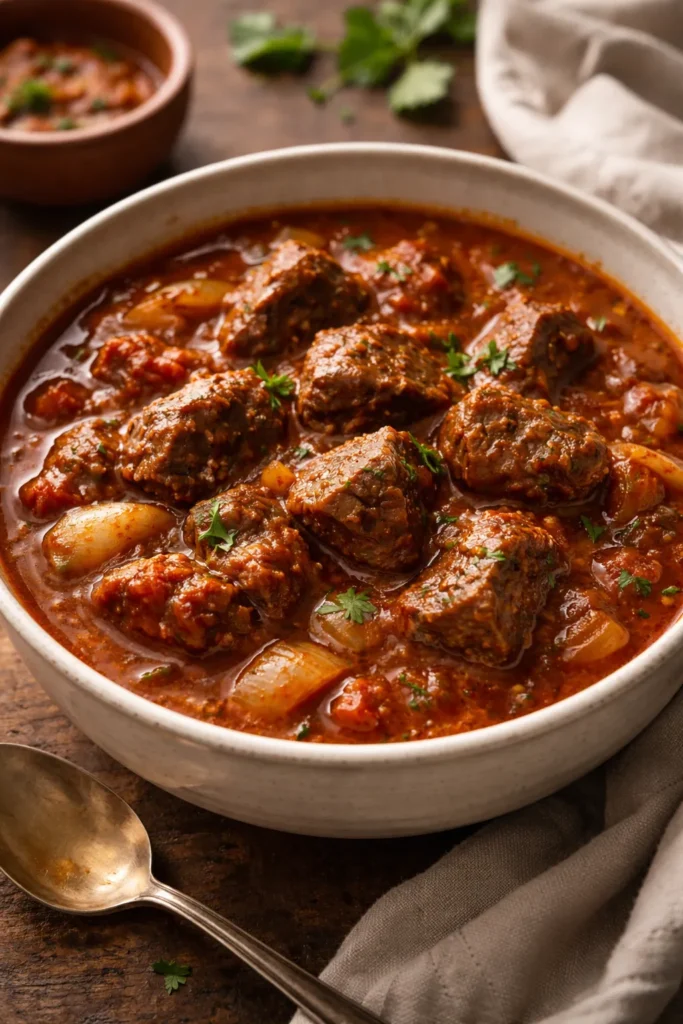
Goulash is one of those dishes that different countries have claimed so thoroughly that arguments break out over the definition. Hungarian goulash — the original — is a deeply paprika-spiced beef stew, closer to a thick, russet-colored sauce than to the American ground beef and pasta version.
The key ingredient is sweet Hungarian paprika, and it needs to be used generously. Two to three tablespoons for a 2 to 3 lb batch of beef is not excessive — it’s necessary. Paprika is the backbone of goulash’s flavor and color, not a background note. Adding caraway seeds deepens the earthy, Central European quality of the dish in a way that’s hard to replicate with substitutions.
What Goes In
Beef chuck cut into 1.5-inch cubes is dredged in paprika-seasoned flour, seared until deeply colored, and then braised with sliced yellow onions, garlic, crushed tomatoes, beef broth, and caraway seeds. After 7 hours on LOW, the sauce is thick, fragrant, and complex.
How to Serve It Authentically
- Over egg noodles — the traditional Hungarian pairing
- Topped with a generous spoonful of sour cream stirred in just before serving
- With a slice of dark rye bread on the side to mop the sauce
Pro tip: Bloom the paprika in a hot pan with a little oil for 30 seconds before adding any liquid. This wakes up the fat-soluble flavor compounds in the spice and makes the finished dish taste considerably more vibrant.
9. Slow Cooker Chipotle Beef Carnitas
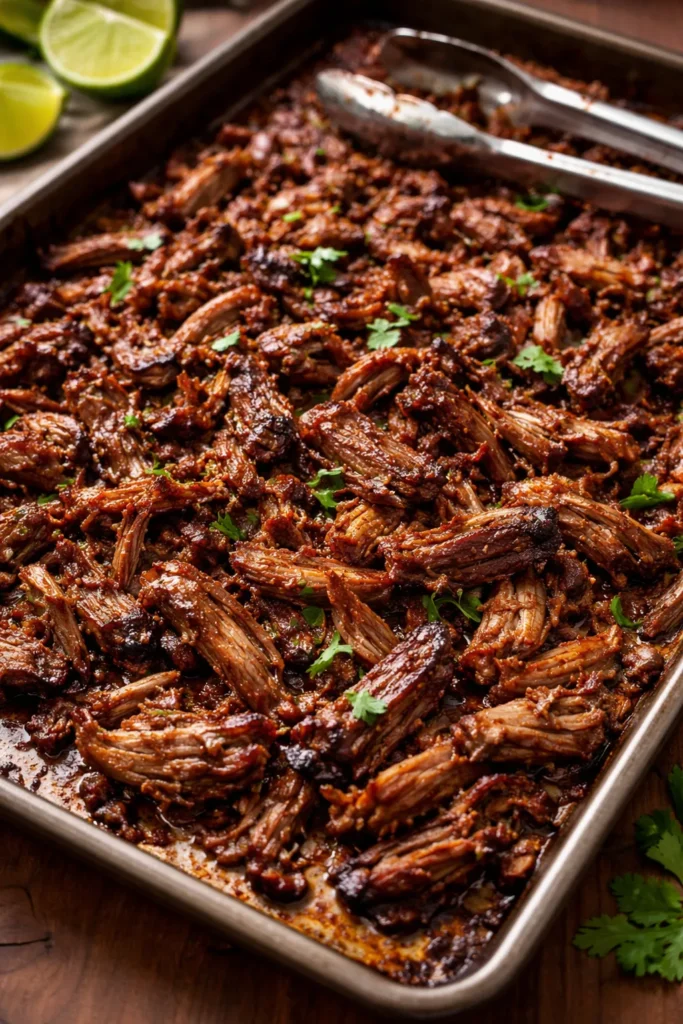
Carnitas in a slow cooker is almost too easy. A chuck roast rubbed with a blend of cumin, oregano, chili powder, smoked paprika, garlic powder, and chipotle in adobo sauce, cooked on LOW for 8 hours until it shreds with minimal effort. The result is smoky, slightly spicy, deeply flavorful pulled beef that works across an enormous range of applications.
The chipotle peppers in adobo sauce are doing double duty here: the chipotles bring smokiness and moderate heat, while the adobo sauce adds vinegar, tomato, and spice that deepen the overall flavor profile. One or two peppers plus a tablespoon of sauce is enough for most palates; two peppers plus two tablespoons will produce something noticeably hotter.
A Step That Makes a Big Difference
After shredding the beef, spread it on a baking sheet and run it under the broiler for 3 to 4 minutes. The edges crisp and caramelize, creating that contrast of textures — crispy bits against tender pulled meat — that makes restaurant carnitas so good. It adds five minutes and completely changes the eating experience.
Uses for Slow Cooker Beef Carnitas
- Loaded into warm corn tortillas with diced white onion, cilantro, and lime
- Served over cilantro-lime rice with black beans and avocado
- Used as a burrito bowl base with all your preferred toppings
- Layered into quesadillas with Oaxacan cheese and pickled jalapeños
Worth knowing: The dry spice rub used in this recipe can be mixed in bulk and stored in a jar for months. Having it pre-made cuts prep time to under 10 minutes on a weeknight.
10. Slow Cooker Thai Coconut Beef
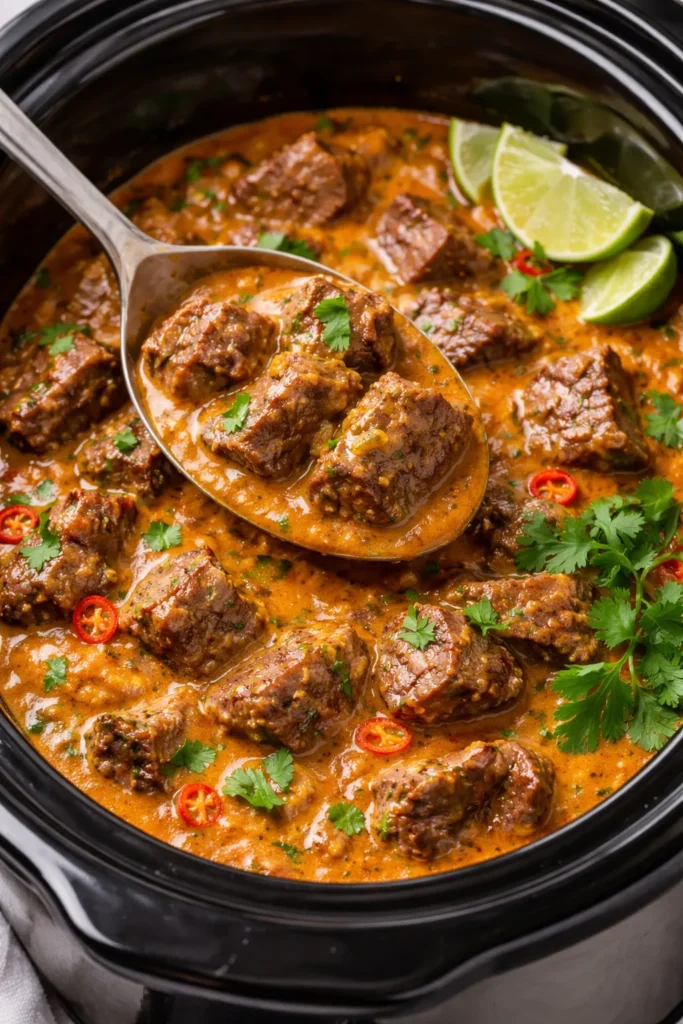
This one surprises people every time. Thai-inspired slow cooker beef shouldn’t work as well as it does — and yet the combination of full-fat coconut milk, fish sauce, lime juice, fresh ginger, lemongrass, and red curry paste with slow-braised chuck roast is one of the most interesting and delicious things a slow cooker can produce.
The coconut milk acts as both the braising liquid and the sauce base. Over 8 hours, it absorbs the flavors of the beef and aromatics and thickens into something that coats every piece of meat. The fish sauce provides the umami backbone that soy sauce does in Western-style braises — funky, savory, and absolutely essential. Don’t skip it, and don’t be afraid of it.
How to Build the Flavor Base
Sauté a tablespoon of red curry paste in a hot pan with a small amount of oil until it turns fragrant and deepens in color — about 60 seconds. Add sliced shallots, fresh ginger, and minced garlic. Pour in the coconut milk and a tablespoon of fish sauce. Bring to a simmer, then pour over the seared beef in the slow cooker. A stalk of lemongrass (bruised and tied in a knot) added to the liquid infuses a citrusy, floral quality that elevates the whole dish.
Serving This Recipe Properly
- Over steamed jasmine rice — not optional, it absorbs the coconut sauce brilliantly
- Topped with fresh Thai basil leaves, sliced red chili, and a squeeze of lime
- With a side of steamed bok choy or cucumber salad to add freshness
Pro tip: Stir in a tablespoon of natural peanut butter in the last hour of cooking. It adds richness and a faint nutty depth that makes the sauce feel even more restaurant-quality.
The Searing Step That Changes Everything
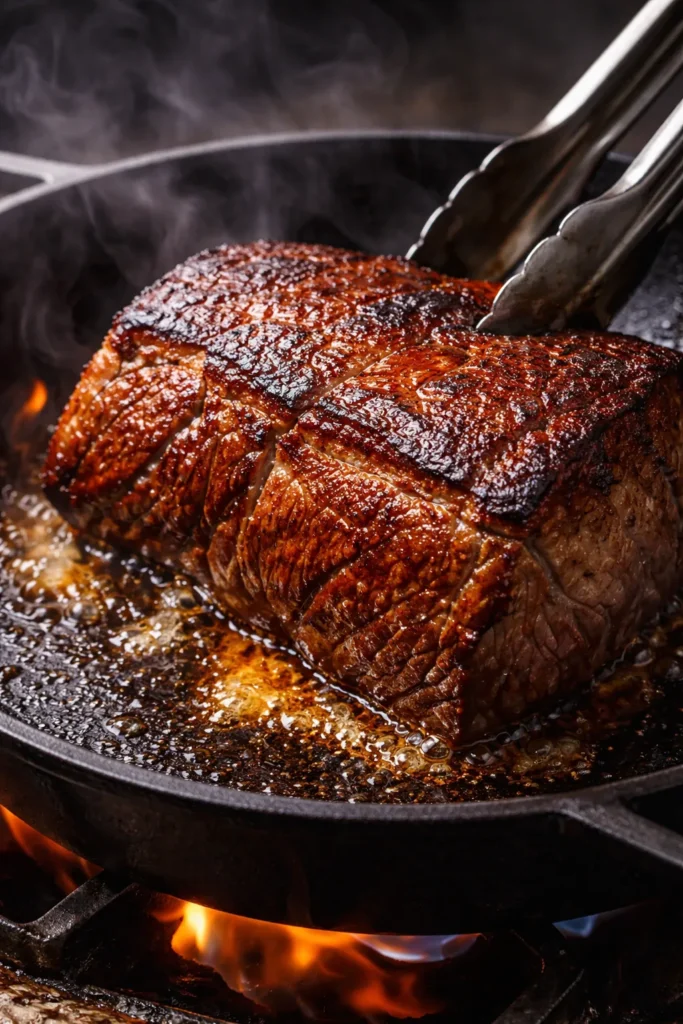
Every recipe in this list either recommends or requires searing the beef before it goes into the slow cooker. This deserves its own explanation, because it’s the step most people skip when they’re in a hurry — and it’s the step that most dramatically affects the final result.
Searing creates the Maillard reaction: a complex chemical process that occurs when protein and sugars are exposed to high, dry heat. The brown crust that forms on seared beef is not just color — it’s hundreds of flavor compounds that have no equivalent in long, low-heat cooking. Skipping the sear costs roughly 40% of the potential flavor in the finished dish, based on how dramatically the taste changes between seared and unseared versions.
The practical rules for a proper sear: the pan must be genuinely hot before the beef goes in, the beef must be completely dry on the surface (pat it with paper towels), and you must resist moving it for at least 2 to 3 minutes per side. If the beef sticks, it’s not ready to flip. When a proper crust forms, the beef releases from the pan naturally.
Sear in batches — never crowd the pan. Crowding drops the pan temperature, which causes steaming instead of browning. Steamed beef looks grey, not brown, and contributes almost nothing to the flavor of the finished dish.
Common Slow Cooker Mistakes Worth Avoiding
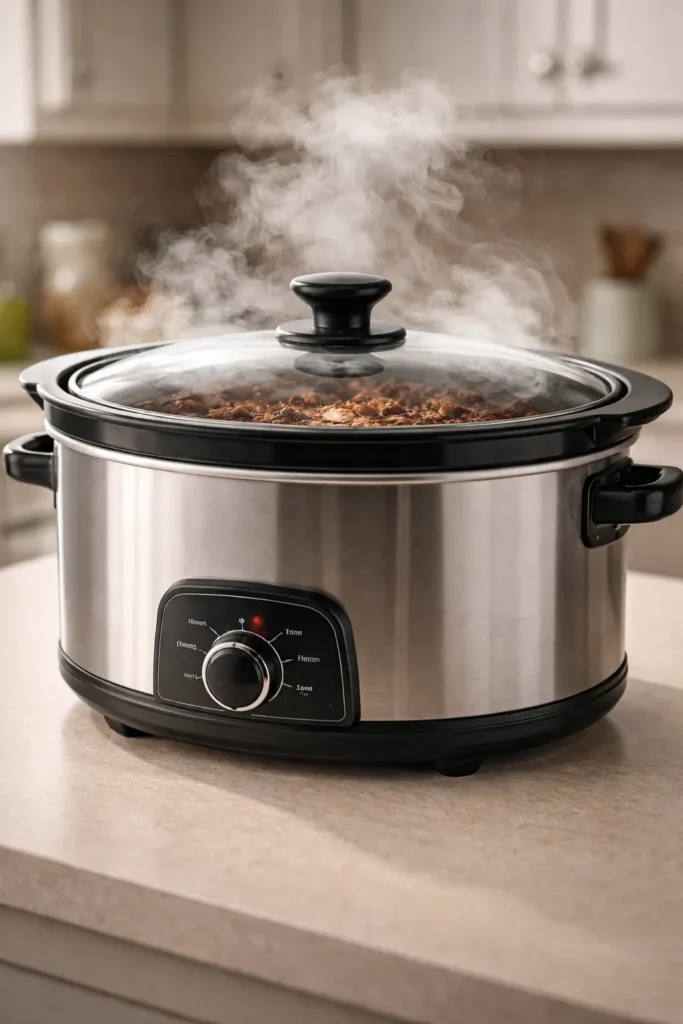
After making dozens of slow cooker beef recipes, certain patterns emerge in what goes wrong and why. Understanding these ahead of time saves a lot of disappointment.
Cooking on HIGH when LOW is specified. HIGH in a slow cooker produces a rolling boil rather than a gentle simmer. For tender, fall-apart beef, that aggressive heat causes the muscle fibers to tighten and seize rather than relax — leading to meat that’s technically cooked but feels stringy and dry. LOW is almost always the right call for beef.
Adding too much liquid. Meat and vegetables release significant moisture as they cook. If you fill the slow cooker to the rim with broth at the beginning, you’ll end up with a thin, diluted stew at the end. Use less liquid than feels comfortable — usually half what you’d use for stovetop braising.
Opening the lid repeatedly. Each time the lid comes off, the slow cooker loses heat and adds 15 to 20 minutes to the cooking time. Check the recipe, set a timer, and leave it alone.
Pulling the beef out too early. If the beef is still tough after 8 hours, most people assume it’s overcooked. The opposite is true — tough beef in a slow cooker means it hasn’t cooked long enough. The collagen hasn’t finished converting to gelatin. Give it another hour or two and it will get there.
Using the wrong potato. Russet potatoes break down completely after 8 hours of braising. Yukon Golds and Red Bliss potatoes have a waxier texture that holds its shape over long cooking. Make the switch and the difference is dramatic.
Storing, Reheating, and Making Ahead
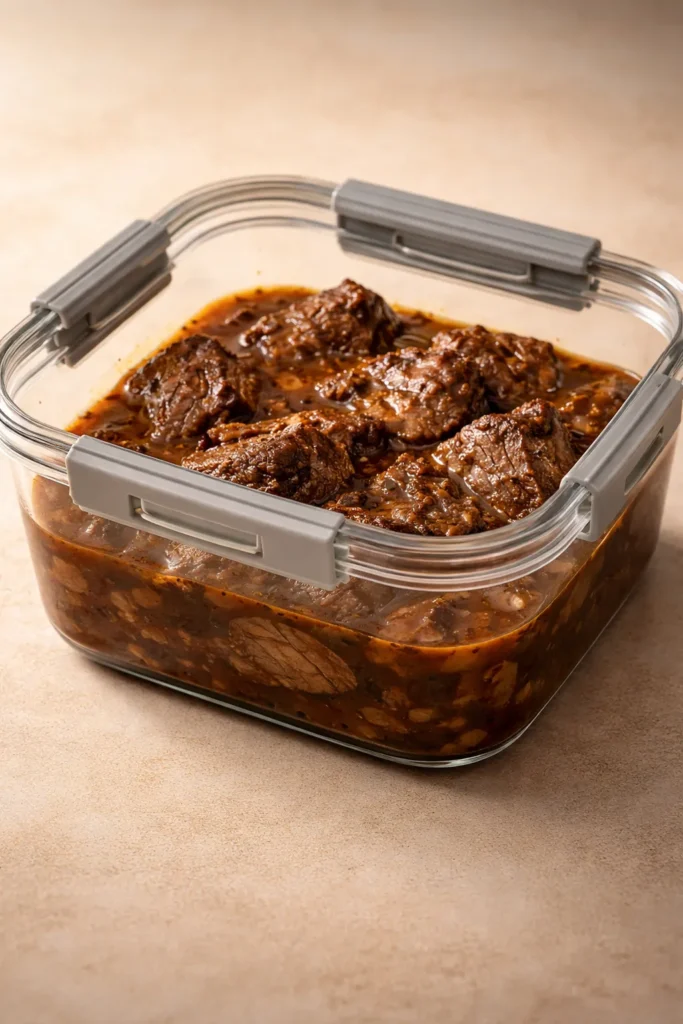
Slow cooker beef recipes are arguably better the next day. Overnight refrigeration lets the flavors integrate more fully, and the fat congeals at the surface of the liquid, making it easy to lift off cleanly before reheating.
Refrigerator storage: Up to 4 days in an airtight container. Store the beef and its braising liquid together so the meat stays moist. If you store the beef dry, it will be noticeably drier when reheated.
Freezer storage: Most slow cooker beef recipes freeze for up to 3 months. The main caveat is potatoes — they become grainy and watery after freezing. Either pick the potatoes out before freezing, or plan to add freshly cooked potatoes when you reheat the dish.
Reheating: The gentlest method is a covered saucepan over low heat with a splash of water or broth added to prevent sticking. Microwaving works in short bursts with the dish covered, but can dry the meat out if overheated. For large quantities, reheating in a 325°F oven in a covered baking dish is the most even method.
Make-ahead prep: For most of these recipes, you can sear the beef and sauté the aromatics the evening before, refrigerate everything together, and simply transfer to the slow cooker in the morning. The prep is the time-consuming part — having it done already means breakfast-time setup takes under 5 minutes.
Final Thoughts
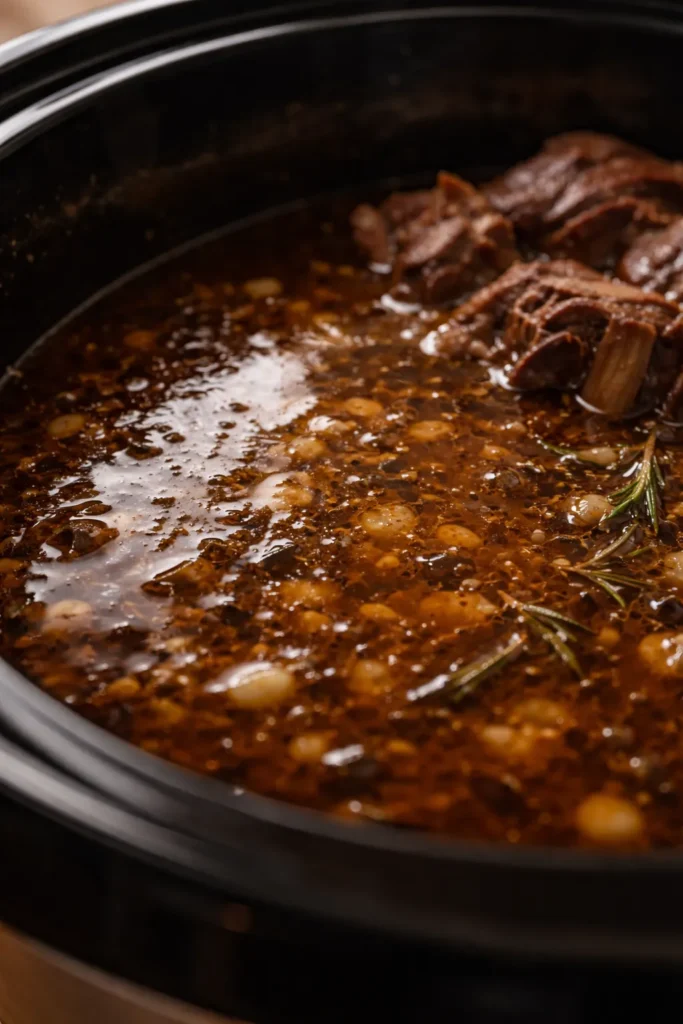
Slow cooker beef cooking rewards patience more than skill. The technique is forgiving, the science is consistent, and the payoff — meat that melts at the touch of a fork — is one of the most satisfying results a home kitchen can produce.
Start with chuck roast, sear it properly, and resist the urge to open the lid. Those three principles will get you through every recipe on this list. The specifics — the wine, the spices, the vegetables — are where the personality of each dish lives, but the foundation is always the same.
Don’t underestimate the value of the braising liquid. In every recipe here, the liquid at the bottom of the slow cooker after 8 hours is as valuable as the meat itself. Taste it, adjust it, reduce it if needed, and use it — whether as a gravy, an au jus, or a sauce poured straight over rice.
Pick one recipe this week and make it properly. The searing step matters. The timing matters. And leftovers, eaten cold over the sink the next morning while the household is still asleep, are one of cooking’s underrated pleasures.