Few dishes earn their place at the weeknight table quite like stuffed pasta shells. There’s something almost theatrical about them — those plump, golden-edged jumbo shells cradling a molten pocket of ricotta and cheese, half-submerged in a bubbling marinara that smells like it’s been simmering for hours. And yet, the whole thing comes together in under an hour. That contrast between impressive and effortless is exactly why stuffed shells have become a staple across Italian-American dinner tables for generations.
The beauty of jumbo pasta shells — called conchiglioni in Italian — is that their curved, cup-like shape is practically designed to hold filling. They’re the ideal vessel. Whether you pack them with a simple three-cheese mixture, enrich the filling with ground beef, fold in wilted spinach, or swap out the marinara for Alfredo sauce entirely, the basic technique stays the same: cook, fill, bake, eat. The variations are where things get exciting.
What follows are ten of the best stuffed shell recipes you can make for dinner, ranging from the classic vegetarian version to heartier meat-loaded builds. Each one has its own personality, its own flavor payoff, and its own practical advantages depending on what you have in your fridge or who’s sitting at your table. Some are weeknight-fast. Some are company-worthy. All of them are the kind of dinner you’ll want to make again before the week is out.
Table of Contents
- What Makes Stuffed Shells Different from Other Baked Pastas
- 1. Classic Three-Cheese Stuffed Shells with Marinara
- The Cheese Filling Breakdown
- How to Bake Classic Stuffed Shells
- 2. Spinach and Ricotta Stuffed Shells with Lemon Zest
- What Goes Into the Filling
- Baking and Serving
- 3. Ground Beef Stuffed Shells with Meat Sauce
- Building the Meat Sauce
- Layering for Maximum Flavor
- 4. Stuffed Shells with Ground Beef and Spinach Filling
- Filling Proportions for This Version
- Assembly and Bake
- 5. Italian Sausage Stuffed Shells with San Marzano Marinara
- The Sauce Makes All the Difference Here
- Filling Highlights
- 6. Chicken and Ricotta Stuffed Shells
- Using Rotisserie Chicken Effectively
- Choosing Your Sauce
- 7. Cottage Cheese Stuffed Shells for a Lighter Version
- Protein-Forward Filling
- Why This Version Works for Meal Prep
- 8. Alfredo Sauce Stuffed Shells with Spinach and Mushrooms
- The Alfredo Layer
- 9. Pesto and Sun-Dried Tomato Stuffed Shells
- Filling for Pesto Stuffed Shells
- Sauce Options for This Version
- 10. No-Meat Spinach and Ricotta Stuffed Shells with Toasted Pine Nuts
- What You Need
- Toasting the Pine Nuts
- The Technique Tips That Make Every Version Better
- How to Make Stuffed Shells Ahead and Freeze Them Successfully
- What to Serve Alongside Stuffed Shells
- Cheese Selection Guide for Stuffed Shells
- Final Thoughts
What Makes Stuffed Shells Different from Other Baked Pastas
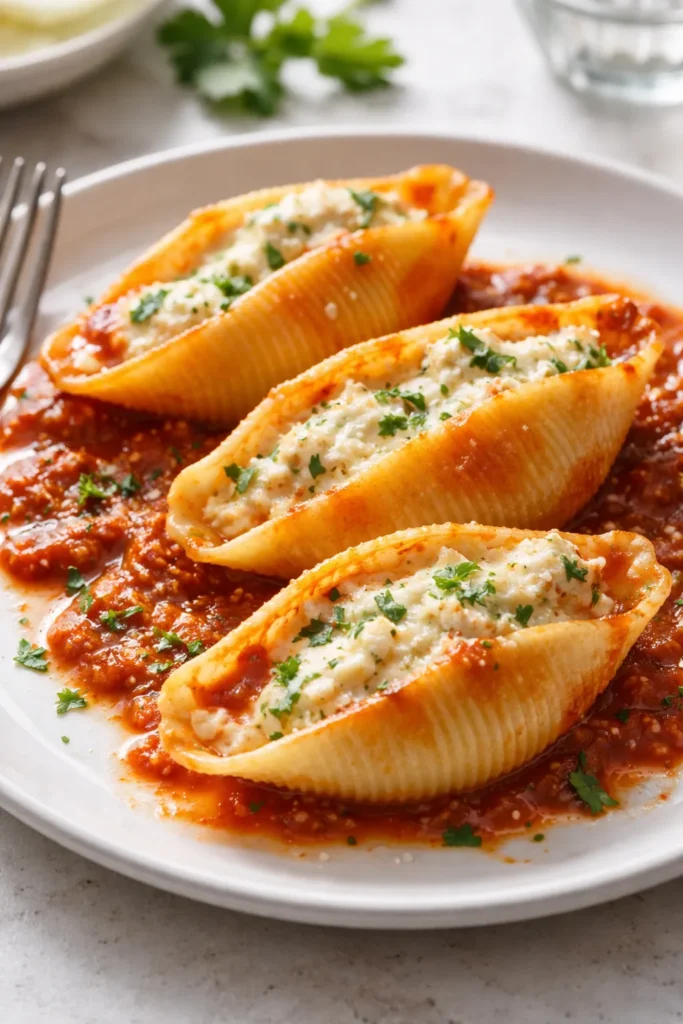
Before getting into the recipes, it’s worth understanding why stuffed shells work so well — because that knowledge makes every version below easier to execute.
Unlike lasagna or baked ziti, where everything gets layered or tossed together, stuffed shells require you to fill each pasta individually. That sounds like extra effort, but it’s what gives every shell its concentrated pocket of flavor. Each one is its own little package. When a dinner guest gets three or four shells on their plate, they’re getting a self-contained serving rather than a scoop of something blended together.
The pasta itself plays a bigger role than people realize. Jumbo shells should always be cooked slightly under al dente — 1 to 2 minutes less than the package directions suggest. They’ll continue cooking in the oven, and if they go in fully cooked, they’ll turn soft and collapse. Slightly firm shells hold their shape when you’re stuffing them, and they absorb the marinara sauce during baking in a way that makes every bite more flavorful.
Cheese quality matters here more than in most pasta dishes. Whole-milk ricotta has a creamier, richer texture than part-skim, which can be slightly grainy. And if you’re adding shredded mozzarella, grating it yourself from a block makes a genuine difference — pre-shredded bags are coated in anti-caking agents that interfere with melting.
1. Classic Three-Cheese Stuffed Shells with Marinara
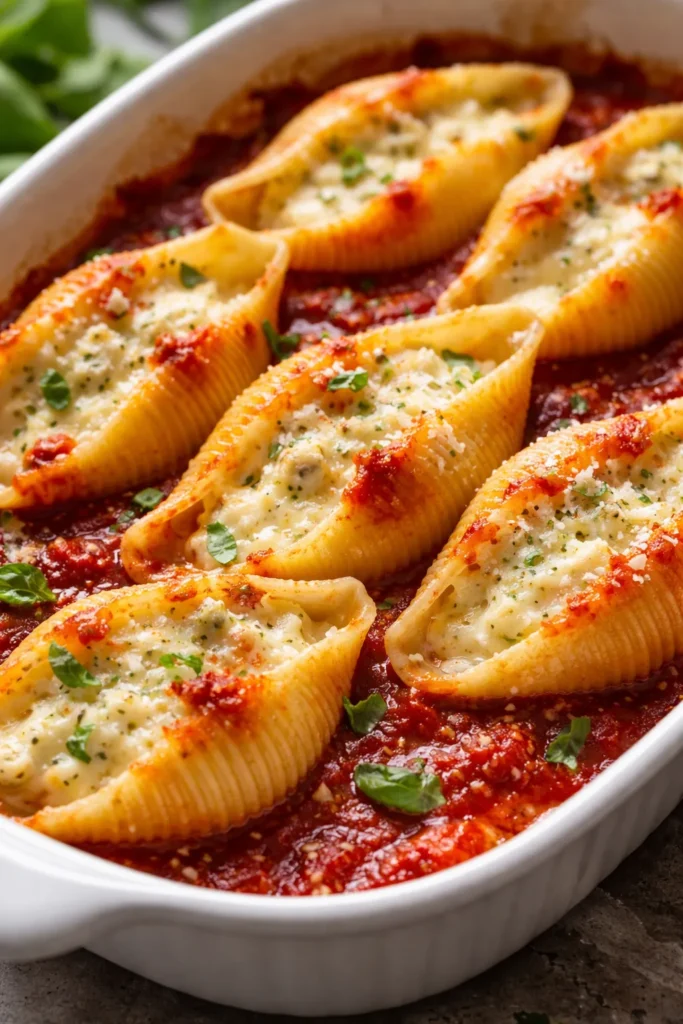
This is the recipe that started it all — the original, the benchmark. Three cheeses, one great marinara sauce, and nothing more complicated than mixing a filling and spooning it into shells. If you’ve never made stuffed shells before, this is where you start.
The filling combines ricotta, mozzarella, and Parmesan in proportions that balance creaminess, stretch, and sharp, salty depth. One egg holds it all together and prevents the filling from becoming watery during baking. Italian seasoning ties everything into a cohesive flavor without requiring you to measure out four separate herbs.
The Cheese Filling Breakdown
- 15 oz ricotta cheese (whole-milk for best texture)
- 1½ cups shredded mozzarella (freshly grated)
- ½ cup grated Parmesan
- 1 large egg
- 2 teaspoons Italian seasoning
- Salt and black pepper to taste
Stir everything together in a large bowl until fully combined. The mixture should look thick and hold its shape on a spoon — not runny. If yours looks loose, the ricotta may have excess moisture; drain it briefly through a fine mesh strainer before mixing.
How to Bake Classic Stuffed Shells
Spread 1½ cups of marinara in a 9×13 baking dish. Fill 20 to 24 cooked shells (slightly underdone) with the cheese mixture and arrange them in a single layer over the sauce. Spoon the remaining marinara over the tops, then scatter another ½ cup of mozzarella across everything. Cover with foil and bake at 375°F for 20 minutes, then remove the foil and bake an additional 10 minutes until the cheese on top turns golden and bubbling at the edges.
Pro tip: Use an ice cream scoop — half-filled — to portion the filling into each shell. It speeds up the process and keeps every shell evenly packed.
2. Spinach and Ricotta Stuffed Shells with Lemon Zest
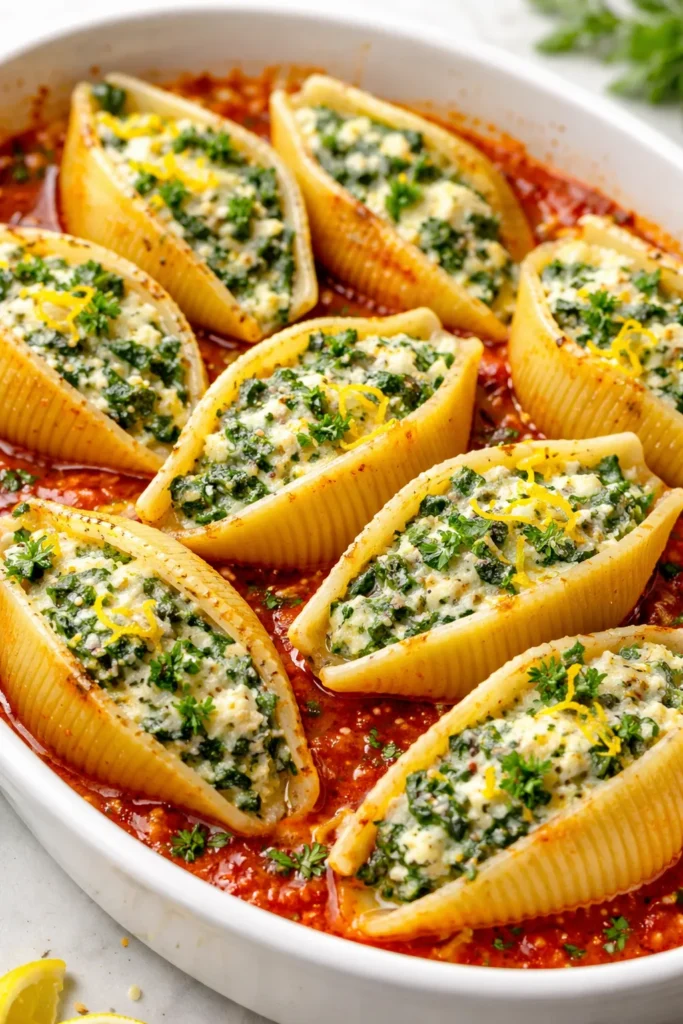
The moment lemon zest enters a ricotta-based filling, something shifts. The citrus doesn’t make it taste lemony in an obvious way — it cuts the richness just enough to make the whole thing taste brighter, cleaner, and almost impossibly fresh. This is the version from Love and Lemons that has earned a devoted following, and for good reason.
Fresh spinach gets steamed until just wilted, squeezed very dry, then roughly chopped before going into the filling. Squeezing out the moisture is non-negotiable — if you skip it, the filling will be watery and the shells won’t hold together properly after baking.
What Goes Into the Filling
- 5 oz fresh spinach, steamed and squeezed very dry
- 2 cups (16 oz) ricotta cheese
- ¼ cup grated Pecorino Romano (plus more for topping)
- 2 garlic cloves, finely grated on a Microplane
- 1 teaspoon dried oregano
- 1 teaspoon fresh lemon zest
- ¼ teaspoon red pepper flakes
- ¾ teaspoon sea salt
- Freshly ground black pepper
Pecorino adds a slightly sharper, saltier note than Parmesan — it suits the brightness of the lemon zest perfectly. Grating the raw garlic on a Microplane (rather than mincing it) disperses it completely throughout the filling so you don’t get any harsh raw garlic spots.
Baking and Serving
Spread 2 cups of marinara in a 9×13 baking dish, nestle the filled shells in the sauce, cover with foil, and bake at 425°F for 20 minutes. The higher temperature means a faster bake and slightly more saucy results. Serve with additional marinara on the side and a sprinkle of fresh parsley.
This version pairs well with a simple arugula salad dressed with lemon and olive oil — the flavors echo each other beautifully.
3. Ground Beef Stuffed Shells with Meat Sauce
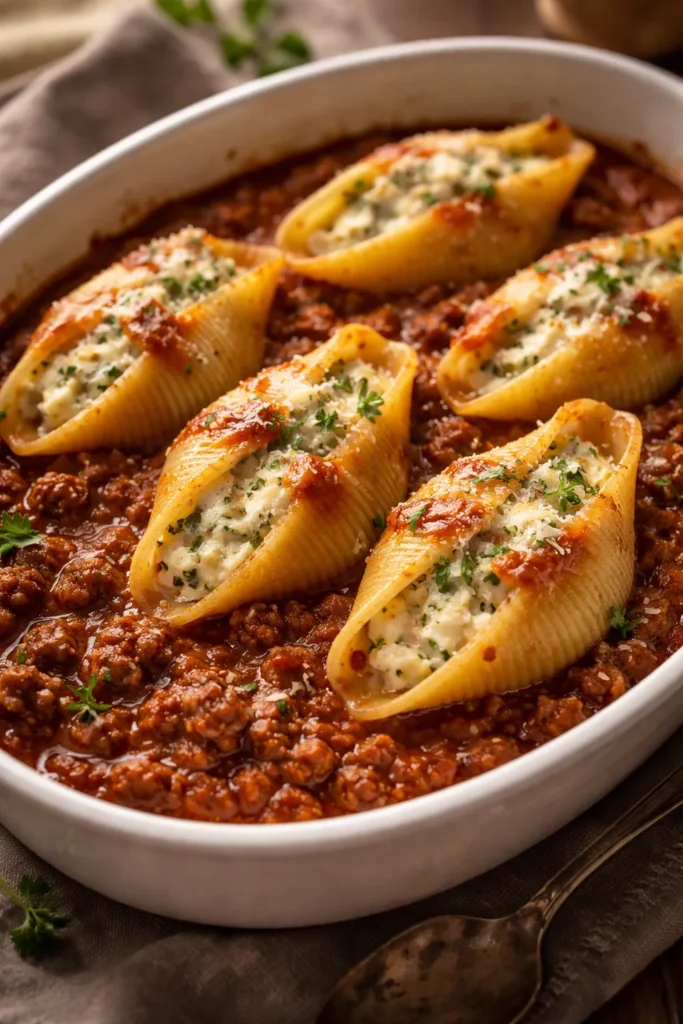
For anyone who finds a cheese-only filling a little light, the ground beef version answers every objection. The shells are stuffed with the same ricotta-and-cheese mixture, but the sauce layer gets upgraded to a full meat sauce — ground beef browned with onion and garlic, simmered with marinara until deeply savory.
The filling stays pure cheese (ricotta, mozzarella, Parmesan, egg, and dried parsley), which keeps the shells from becoming too dense or heavy. The meat lives in the sauce, blanketing the shells from below and above, so every bite pulls in both the creamy filling and the hearty sauce.
Building the Meat Sauce
- 2 tablespoons olive oil
- 1 small onion, finely chopped
- 3 garlic cloves, minced
- ½ pound lean ground beef
- 24 oz marinara sauce (store-bought or homemade)
Heat the olive oil in a large skillet over medium heat. Sauté the onion and garlic for about 3 minutes until fragrant and softened. Add the ground beef and cook, breaking it into small crumbles, until fully browned. Pour in the marinara, stir to combine, and let it simmer on low while you prepare everything else.
Layering for Maximum Flavor
Spread one-third of the meat sauce across the bottom of the prepared baking dish. Arrange the filled shells in a single layer, then pour the remaining two-thirds of the sauce over the top. The shells cook nestled in sauce both above and below, which means the pasta absorbs flavor from every direction.
Cover with foil and bake at 350°F for 30 minutes, then uncover, scatter the remaining mozzarella over the top, and bake uncovered for another 5 to 10 minutes until the cheese melts and browns slightly at the edges.
Worth knowing: Ground Italian sausage — sweet or hot — works equally well here and adds a more complex, fennel-forward flavor. Some cooks use a 50/50 split of beef and sausage for the best of both.
4. Stuffed Shells with Ground Beef and Spinach Filling
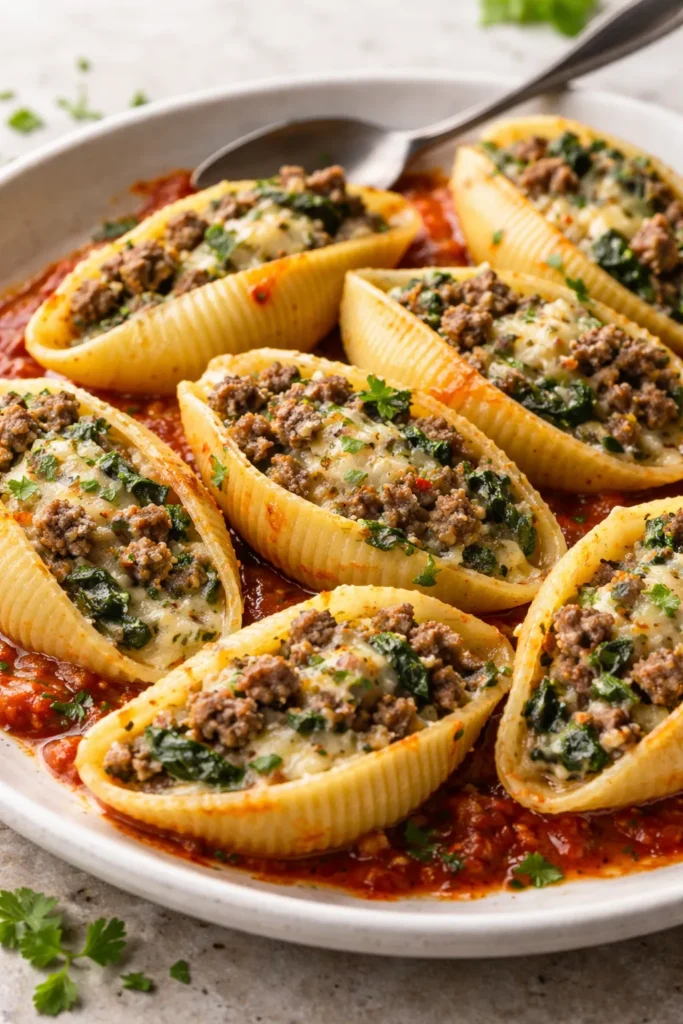
This version takes things a step further by combining the ground beef directly into the cheese and spinach filling, rather than keeping it exclusively in the sauce. The result is a denser, heartier shell that works especially well when you want the filling itself to be the star rather than the sauce.
Lean ground beef is browned with onion and garlic, then drained of excess fat. Frozen spinach — thawed and squeezed vigorously until almost completely dry — gets mixed directly with the ricotta, egg, Italian cheese blend, and Parmesan. The beef goes in last, folded through until evenly distributed.
Filling Proportions for This Version
- 1 pound lean ground beef, cooked and drained
- 1 (16 oz) package frozen spinach, thawed and squeezed very dry
- 1 (15 oz) container part-skim ricotta
- 1 large egg
- 1 cup shredded Italian cheese blend or mozzarella
- ¼ cup grated Parmesan
- ¾ teaspoon kosher salt
The frozen spinach shortcut works perfectly here — it’s already broken down and easy to squeeze dry, which is actually harder to do with fresh spinach because it holds more water per leaf.
Assembly and Bake
Use about 2 heaping tablespoons of filling per shell — enough that the shell is generously packed but not so full that it’s impossible to close. Arrange over half the marinara meat sauce in a 9×13 dish, top with the remaining sauce and a full cup of shredded mozzarella and Parmesan, cover tightly with foil, and bake at 350°F for 40 minutes. Uncover and bake for a final 5 minutes to brown the cheese.
5. Italian Sausage Stuffed Shells with San Marzano Marinara
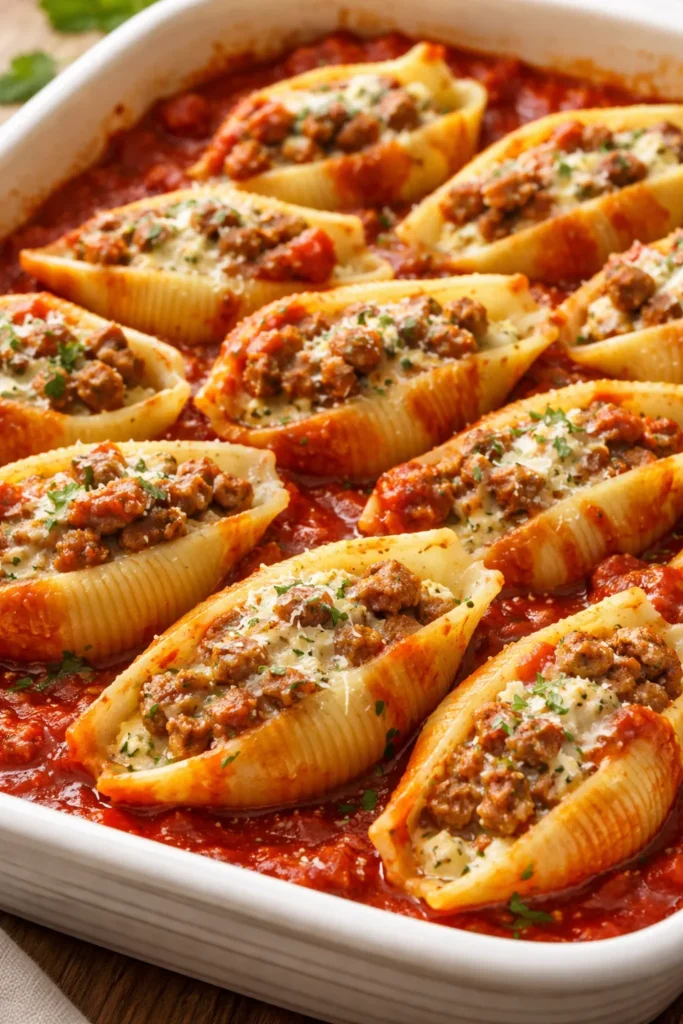
Italian sausage brings a depth to stuffed shells that ground beef alone can’t quite match. The natural fennel seeds, herbs, and fat content in sausage infuse both the filling and the surrounding sauce with a richer, more complex flavor that tastes like it took significantly more effort than it actually did.
Remove the sausage from its casings and brown it in a wide skillet, breaking it into small pieces. Sweet Italian sausage gives you a mild, slightly herby flavor. Hot Italian sausage adds a slow, building heat that plays off the richness of the ricotta beautifully. The choice is yours — or mix them half and half.
The Sauce Makes All the Difference Here
San Marzano tomatoes — either in a premium store-bought sauce or made into a simple homemade marinara — have a naturally lower acidity and sweeter flavor than standard canned tomatoes. With a bold filling like Italian sausage, you want a sauce that complements rather than competes. San Marzano-based marinara hits that balance perfectly.
Filling Highlights
- 1 pound Italian sausage, casings removed, browned and crumbled
- 2 cups whole-milk ricotta
- 1 cup fresh mozzarella, torn or shredded
- ½ cup Parmesan, freshly grated
- 1 egg
- 2 teaspoons Italian seasoning
- 2 cloves garlic, minced
Mix the browned and cooled sausage into the cheese mixture before stuffing the shells. Bake at 375°F, covered, for 30 minutes, then uncover for a final 10 minutes to brown the top.
Pro tip: Let the cooked sausage cool for a few minutes before adding it to the ricotta — adding hot meat to cold ricotta can partially cook the egg and make the filling lumpy.
6. Chicken and Ricotta Stuffed Shells
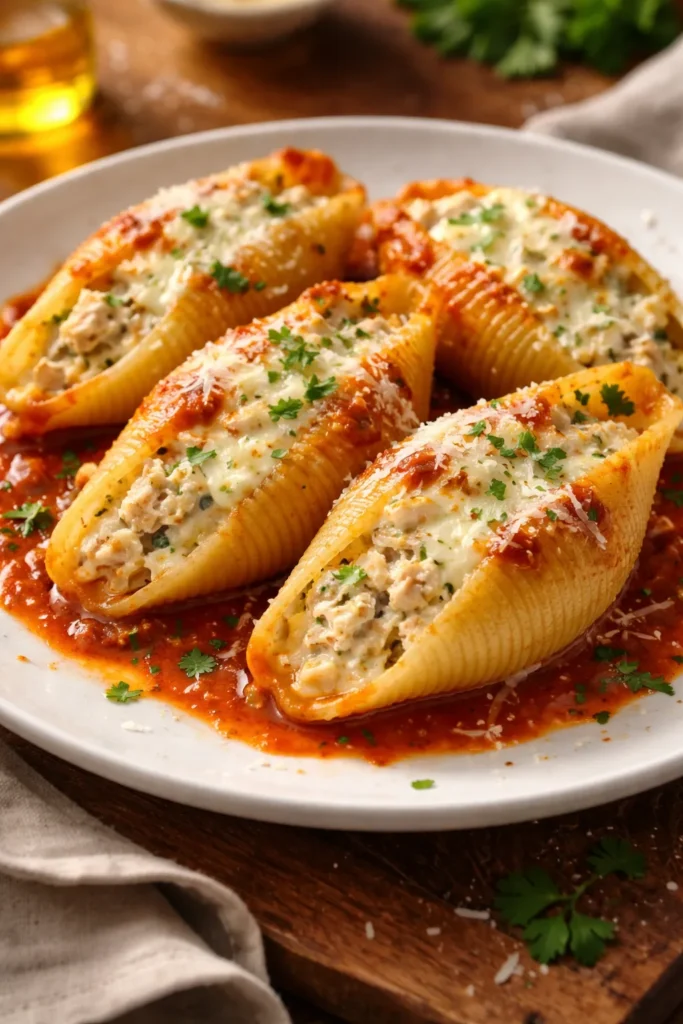
Chicken stuffed shells don’t get nearly enough attention. Shredded cooked chicken — rotisserie is ideal — adds lean protein without the heaviness of red meat, and it pairs extraordinarily well with creamy ricotta and herbs. The texture contrast between the silky cheese filling and the tender pulled chicken creates something genuinely interesting in every bite.
This version works beautifully with either marinara or Alfredo sauce. With marinara, it tastes fresh and bright. With Alfredo, it becomes a white-sauce pasta experience that feels almost indulgent.
Using Rotisserie Chicken Effectively
Pull the chicken into very small, fine shreds — not large chunks. Fine shreds distribute evenly throughout the filling and make it possible to stuff the shells without the chicken pieces catching on the pasta edges and tearing the shells.
- 2 cups cooked chicken, finely shredded
- 15 oz whole-milk ricotta
- 1 cup shredded mozzarella
- ⅓ cup Parmesan
- 1 egg
- 1 teaspoon garlic powder
- 1 teaspoon Italian seasoning
- Salt and pepper to taste
Fold the shredded chicken into the cheese mixture until it’s uniformly combined. Stuff generously — each shell should feel pleasantly full without bulging.
Choosing Your Sauce
Go with marinara for a lighter, tomato-forward result. Go with a store-bought or homemade Alfredo for something rich and creamy that makes this version feel like a special occasion dinner with almost no extra effort. Either way, bake covered at 375°F for 25 minutes, then uncover for 8 to 10 minutes.
7. Cottage Cheese Stuffed Shells for a Lighter Version
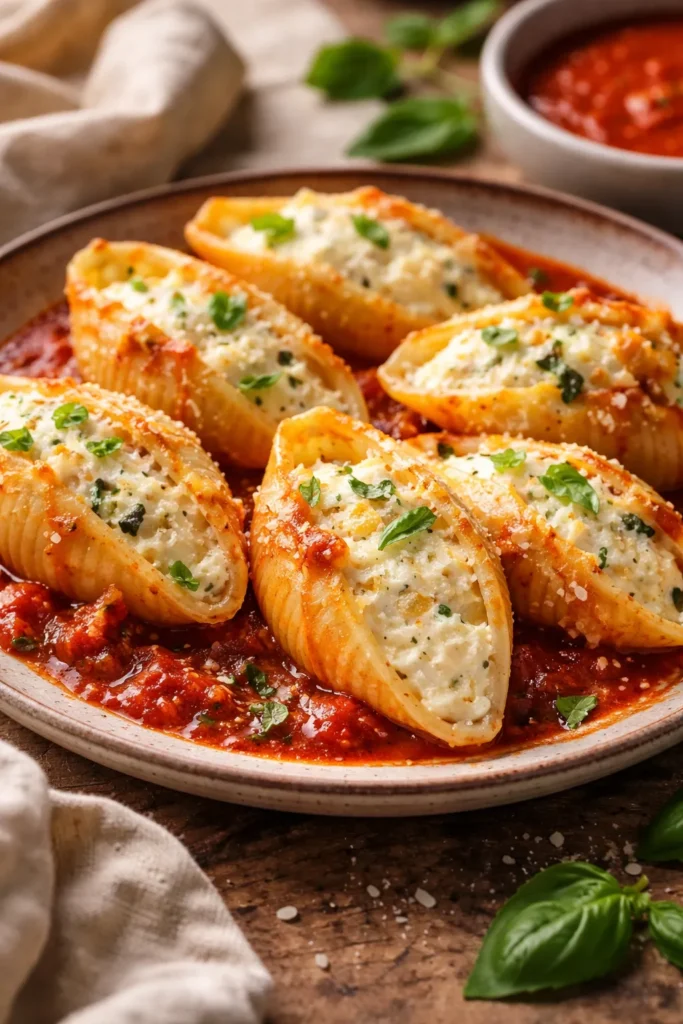
Cottage cheese stuffed shells have a quiet but dedicated fanbase, and once you try them, you’ll understand why. Blended until smooth, cottage cheese is nearly indistinguishable from ricotta in texture, but it carries more protein per ounce and generally fewer calories. It also has a slightly tangier flavor that works exceptionally well with a well-seasoned marinara.
The key step is blending. Cottage cheese straight from the container has a lumpy, watery texture that doesn’t work in a filling. Blend it for 30 to 45 seconds in a food processor or blender until it’s completely smooth and creamy — it transforms entirely and the result is a filling so similar to ricotta-based shells that most people can’t tell the difference.
Protein-Forward Filling
- 15 oz small-curd cottage cheese, blended until smooth
- 1 cup shredded mozzarella
- ⅓ cup Parmesan, grated
- 1 egg
- 2 tablespoons dried parsley
- 1 teaspoon garlic powder
- ½ teaspoon Italian seasoning
- Salt and pepper to taste
Substitute the blended cottage cheese 1:1 for ricotta in any of the other recipes in this list. The method is identical — the only change is blending the cheese first.
Why This Version Works for Meal Prep
Cottage cheese stuffed shells reheat particularly well because the filling holds its structure without becoming grainy or dry. Make a full 9×13 pan on a Sunday, store it covered in the refrigerator for up to 4 days, and reheat individual portions in the microwave with a drizzle of extra marinara to add moisture. They’re genuinely delicious the next day.
8. Alfredo Sauce Stuffed Shells with Spinach and Mushrooms
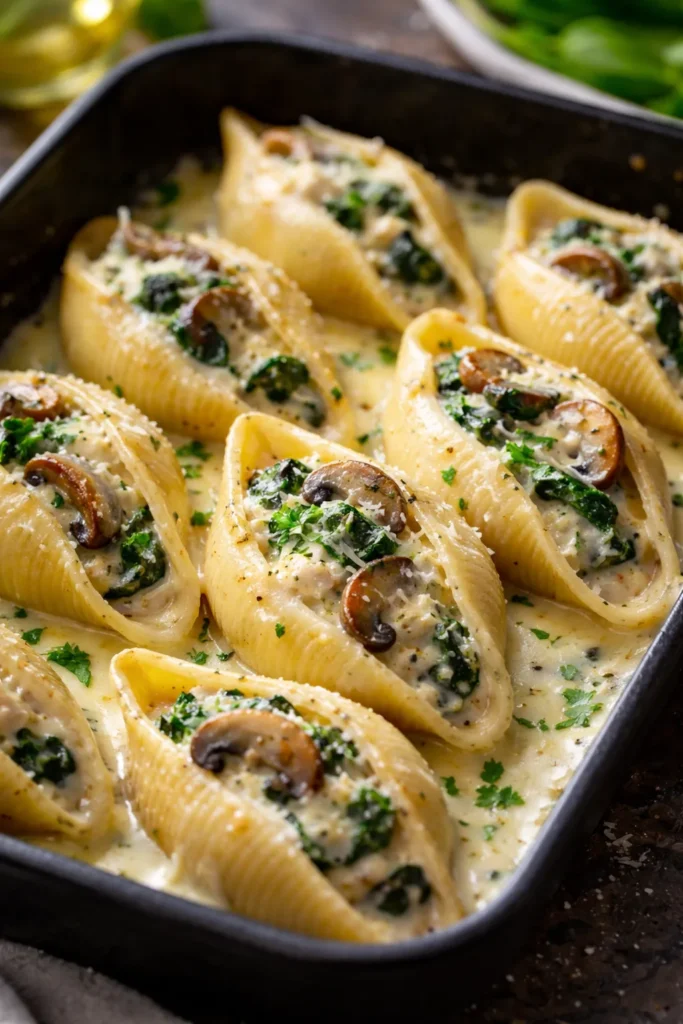
Swapping marinara for a creamy Alfredo sauce creates a completely different eating experience — one that’s richer, more luxurious, and deeply satisfying in a different way. Alfredo stuffed shells belong in the “impressive dinner party dish” category, yet they’re no harder to make than the marinara version.
Sauté 8 ounces of cremini mushrooms (sliced thin) in olive oil with two minced garlic cloves over medium-high heat until they release their moisture and begin to brown at the edges, about 6 to 8 minutes. Fold them into the spinach-ricotta filling along with a handful of Parmesan for extra depth.
The Alfredo Layer
A store-bought Alfredo sauce works well here, especially a high-quality jarred version. Alternatively, make a quick Alfredo by melting 4 tablespoons of butter in a saucepan, whisking in 1 cup of heavy cream, and simmering until slightly thickened before stirring in ¾ cup of grated Parmesan. Season with salt, white pepper, and a grating of fresh nutmeg.
Spread half the Alfredo in the dish, arrange the filled shells, pour the remaining sauce over the top, and scatter a layer of shredded mozzarella across everything. Bake at 375°F, covered, for 20 minutes, then uncover and bake for another 10 minutes.
One thing to know: Alfredo sauce separates and becomes grainy if it gets too hot too fast. Covering the dish for the first portion of baking keeps the temperature consistent and prevents the sauce from breaking.
9. Pesto and Sun-Dried Tomato Stuffed Shells
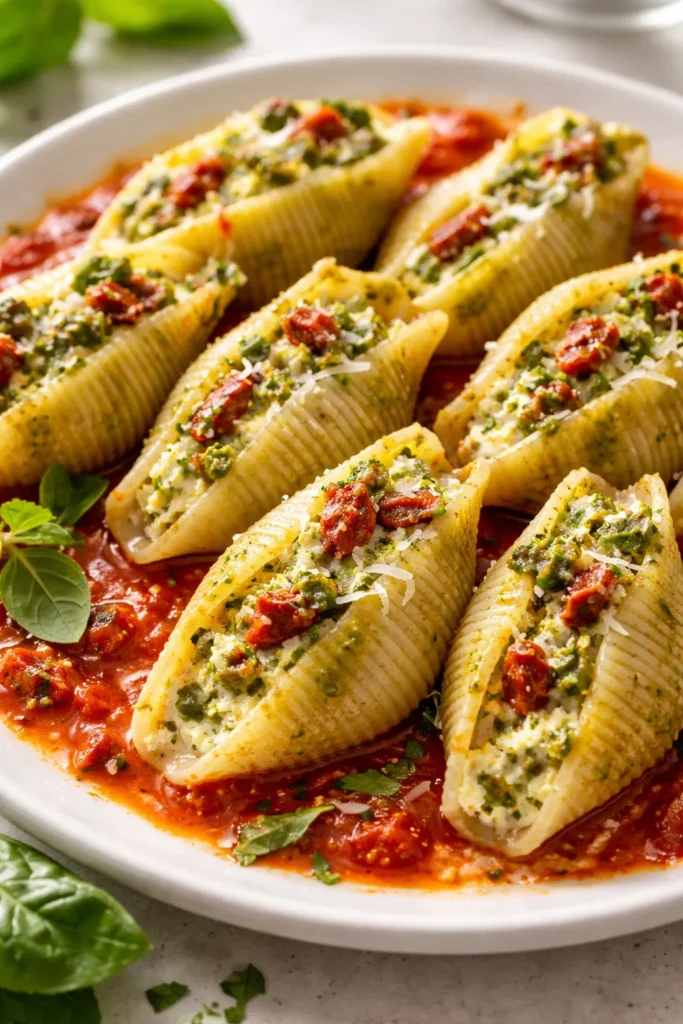
This version departs from the classic red-sauce template entirely and delivers something fragrant, herby, and almost Mediterranean in character. Basil pesto — store-bought or homemade — gets stirred directly into the ricotta filling alongside chopped sun-dried tomatoes, creating a filling that’s as flavorful as it is colorful.
The contrast between the green pesto, the bright red tomato bits, and the white ricotta looks stunning once the shells are cut open. Visually, it’s one of the most striking stuffed shell preparations, which makes it a great choice when you’re cooking for people you want to impress without spending all day in the kitchen.
Filling for Pesto Stuffed Shells
- 15 oz ricotta cheese
- 3 tablespoons basil pesto (good quality)
- ⅓ cup sun-dried tomatoes in oil, drained and roughly chopped
- 1 cup shredded mozzarella
- ¼ cup Parmesan
- 1 egg
- Salt and pepper to taste
Mix everything together until the pesto is evenly distributed — the filling will have a subtle green tinge throughout. Taste before stuffing and adjust salt as needed, since pesto and sun-dried tomatoes are already quite salty.
Sauce Options for This Version
A light marinara works, but a simple tomato-cream sauce — made by stirring a splash of heavy cream into a standard marinara — complements the richness of the pesto filling without overwhelming it. You can also use a roasted garlic marinara for extra depth. Bake at 375°F, covered, for 25 minutes, then uncover and broil very briefly until the top mozzarella turns spotty and golden.
10. No-Meat Spinach and Ricotta Stuffed Shells with Toasted Pine Nuts
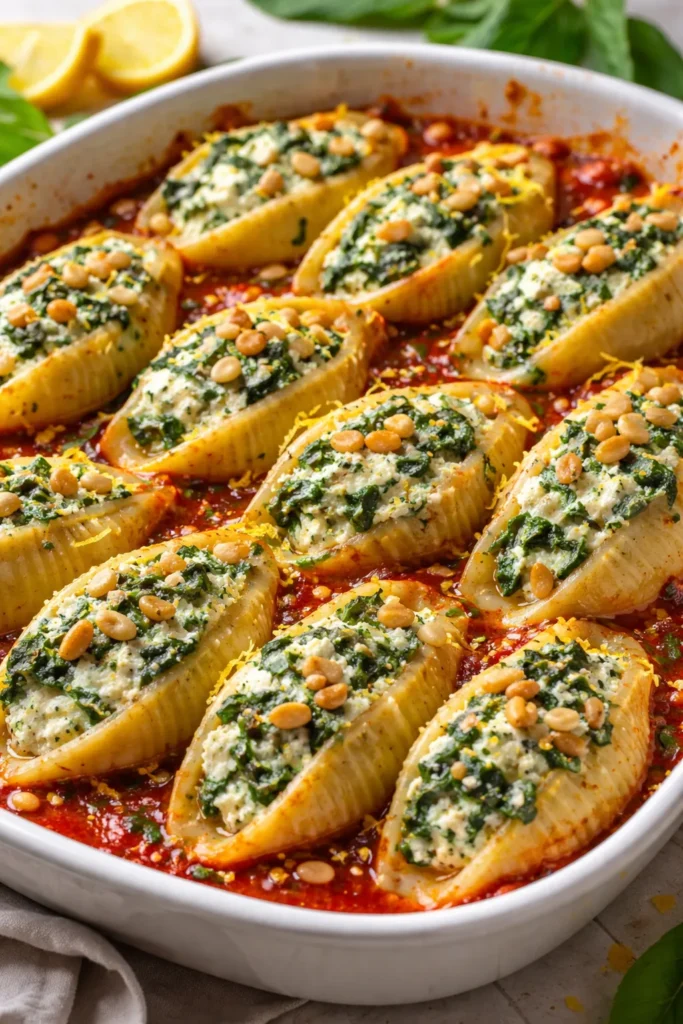
The final recipe in this lineup brings a genuinely elegant touch to an otherwise simple dish: toasted pine nuts. Stirred into the spinach-ricotta filling and scattered over the finished shells before serving, they add a rich, buttery crunch that elevates the entire dish into something that reads as restaurant-quality without requiring anything exotic.
The technique of sautéing the spinach and garlic before adding them to the filling (rather than simply steaming the spinach) makes a noticeable difference. Sautéing in a hot pan with a little olive oil drives off more moisture, concentrates the flavor, and gives the garlic a gentler, more mellow character than raw garlic would.
Fresh lemon zest and a squeeze of lemon juice brighten the filling noticeably. Low-moisture mozzarella, freshly grated, gives the shells a beautifully clean melt without releasing excess water onto the shells during baking.
What You Need
- 20 jumbo pasta shells, cooked just under al dente
- 1 tablespoon olive oil
- 2 garlic cloves, minced
- 6 oz fresh spinach
- 15 oz ricotta cheese
- ⅔ cup low-moisture mozzarella, freshly grated
- ⅔ cup Parmesan, plus more for garnish
- ⅔ cup toasted salted pine nuts, divided
- 1 egg
- Zest of 1 lemon + juice of ½ lemon
- 2 cups high-quality marinara sauce
- Fresh basil, for garnish
Toasting the Pine Nuts
If your pine nuts are raw and unsalted, toast them in a dry skillet over medium heat, stirring every 30 seconds, until they’re golden and fragrant — watch them closely because they go from perfectly toasted to burned in under a minute. Spread them immediately onto a flat plate to stop the cooking. Salt lightly while still warm.
Bake at 375°F, covered, for 30 minutes, then uncover and cook for an additional 5 to 8 minutes. Finish with fresh basil and the reserved pine nuts scattered across the top right before serving.
The Technique Tips That Make Every Version Better
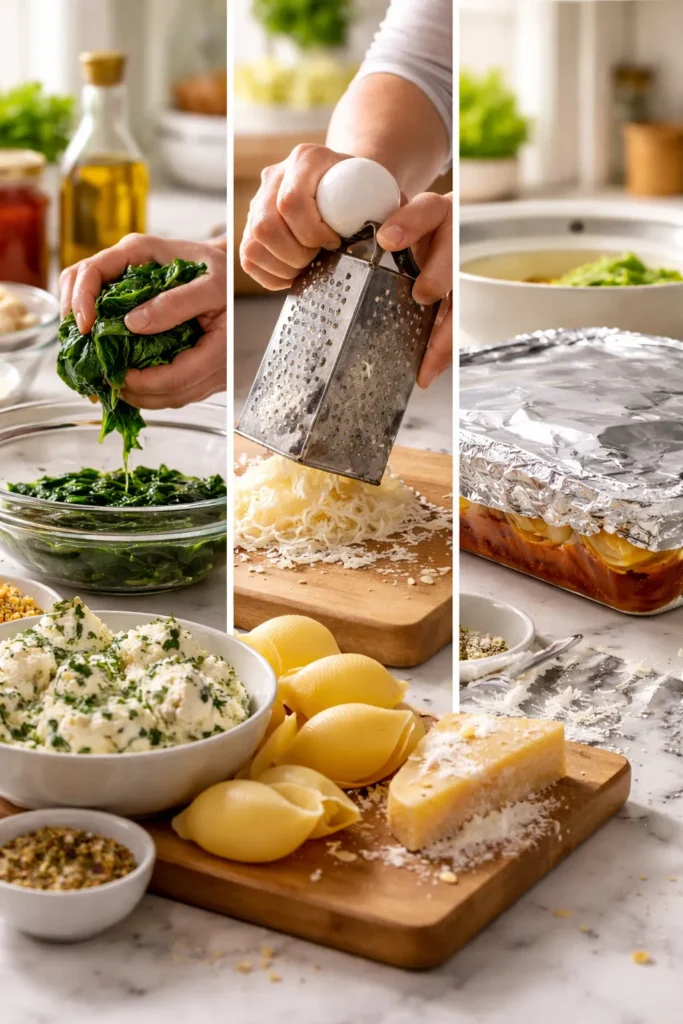
Across all ten recipes above, a handful of techniques separate shells that are merely good from shells that people request by name.
Undercook the pasta every single time. This is the single most important rule. Cook jumbo shells 1 to 2 minutes less than the package instructs, drain them, and rinse with cold water to stop the cooking process immediately. Shells that go into the oven already fully cooked will emerge mushy and unable to hold their filling properly.
Dry your fillings thoroughly. Whether you’re using sautéed spinach, steamed spinach, thawed frozen spinach, or cooked mushrooms — squeeze and drain aggressively. Any vegetable you add to a ricotta filling will release moisture during baking, and excess moisture means watery, loose shells that fall apart when served. A clean kitchen towel works better than paper towels for squeezing spinach dry.
Grate your own cheese. Pre-shredded mozzarella contains cellulose (a wood pulp derivative used as an anti-caking agent) that actively prevents smooth, even melting. A hand grater or box grater and a block of whole-milk mozzarella takes three extra minutes and produces noticeably superior results.
Don’t skip the foil for the first phase of baking. Covering the dish traps steam, which cooks the pasta evenly and keeps the cheese filling from drying out. Removing the foil for the final 8 to 10 minutes gives the top cheese its golden, slightly crisped finish.
How to Make Stuffed Shells Ahead and Freeze Them Successfully
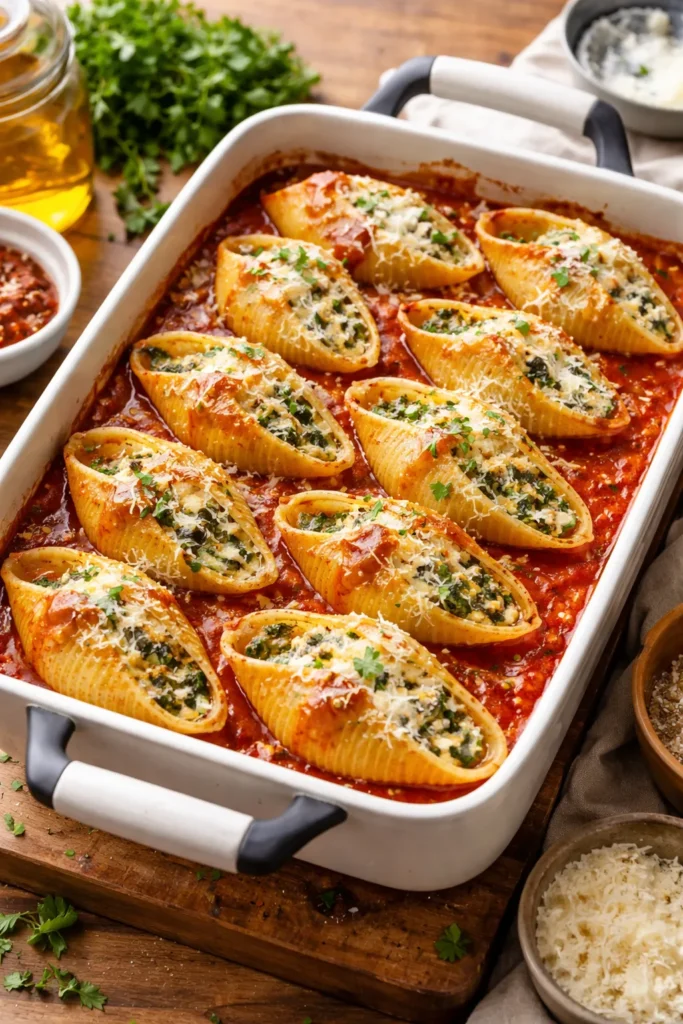
Every recipe here can be assembled entirely in advance, which is one of the most useful things about stuffed shells as a category. The make-ahead window and method depends on how far ahead you’re planning.
Same-day, up to 8 hours ahead: Assemble the shells fully in the baking dish, cover tightly with foil, and refrigerate. When you’re ready to bake, add an extra 5 to 10 minutes to the covered baking time since the dish is starting cold.
Freezing unbaked shells: Assemble the shells in the dish (sauce, filled shells, top sauce, cheese), cover tightly with two layers of foil, and freeze. They’ll keep for up to 3 months. To bake from frozen, transfer the dish to the refrigerator 10 to 12 hours before you want to serve — or the night before — to thaw gradually. Then bake covered at 375°F for 30 to 35 minutes until heated through, and uncover for the final 10 minutes.
Reheating leftover baked shells: Store cooled leftovers in an airtight container or covered in the baking dish for up to 4 days. Reheat in the microwave with a spoonful of extra marinara drizzled over the top (this prevents drying), or cover with foil and reheat in a 350°F oven for 20 to 25 minutes.
What to Serve Alongside Stuffed Shells
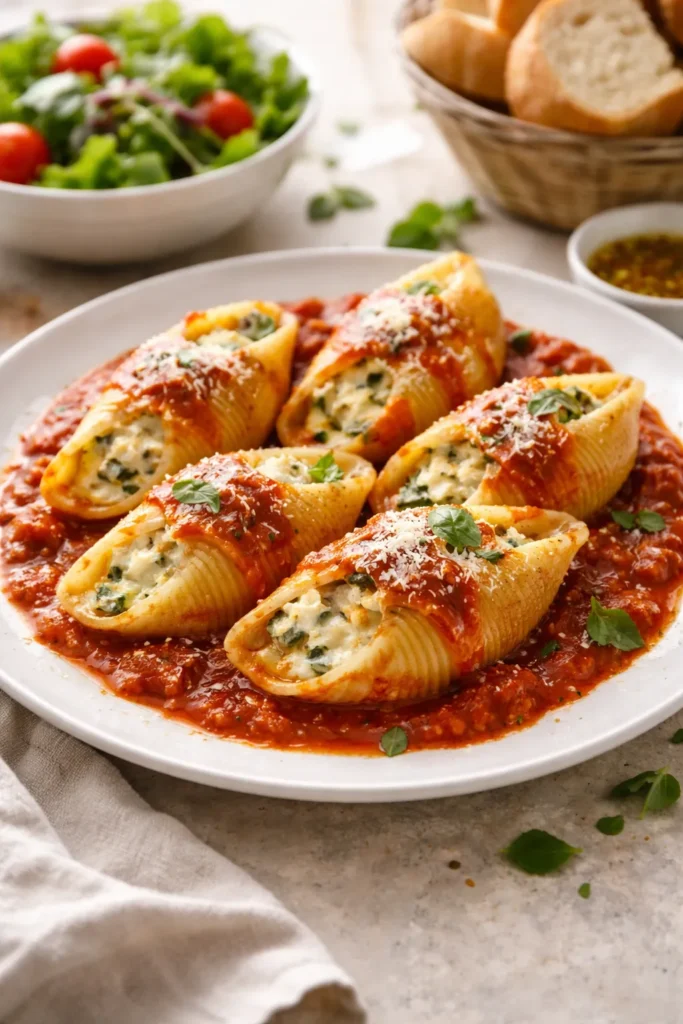
Stuffed shells are rich, substantial, and filling — which means the best accompaniments are light, fresh, and acidic enough to cut through the cheese.
Salads: A classic Caesar, a simple arugula salad with lemon vinaigrette, or a tomato-cucumber salad with basil and red wine vinegar all work well. The bitterness of arugula and the acidity of tomatoes balance the richness of the shells without competing for attention.
Bread: Garlic bread is the obvious choice, and it’s obvious because it’s right. Crusty Italian bread rubbed with garlic and brushed with olive oil is perfect for dragging through any extra marinara on the plate. Rosemary focaccia, garlic knots, or homemade dinner rolls are equally good options.
Vegetables: Roasted asparagus, prosciutto-wrapped green beans, or simple sautéed broccoli with garlic and lemon add color to the plate without overcomplicating the meal.
Cheese Selection Guide for Stuffed Shells
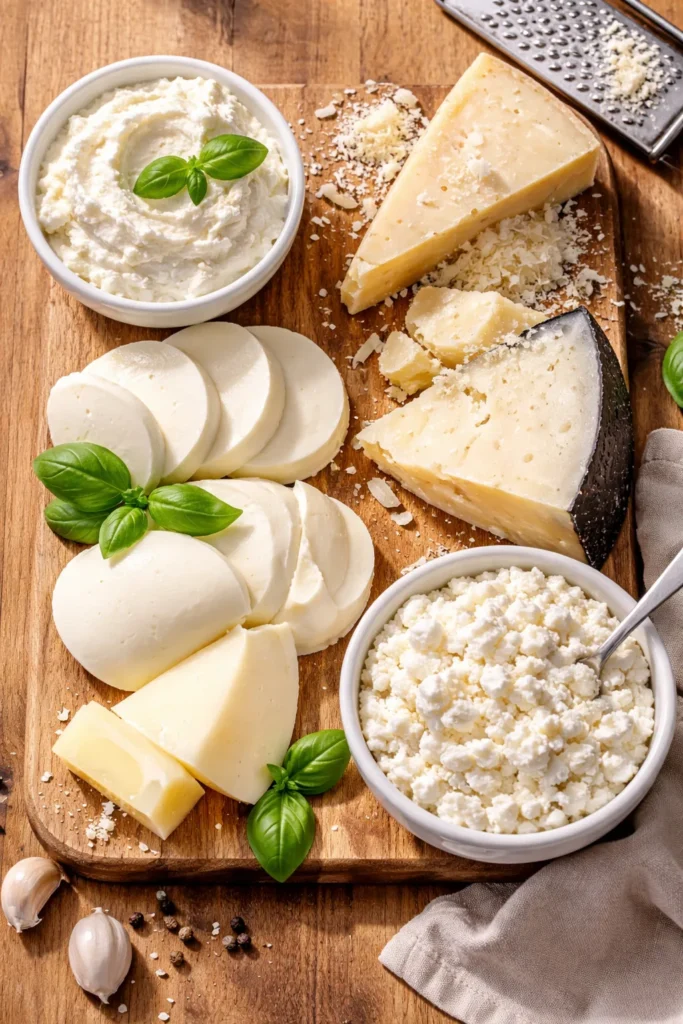
Not all cheese combinations produce the same result, and understanding what each cheese contributes helps you make better choices across every version.
Ricotta is the base — it provides creaminess and a mild, slightly sweet flavor that acts as a blank canvas. Whole-milk ricotta is richer and less prone to being grainy. Part-skim works fine and saves calories, but it can benefit from a brief drain through a strainer if it seems watery.
Mozzarella delivers the stretch and melt factor. Fresh mozzarella is beautiful but releases a lot of water; low-moisture mozzarella melts more cleanly and behaves better in a baked dish. For the top of the shells, low-moisture is the superior choice.
Parmesan and Pecorino Romano add sharpness, salt, and depth. Parmesan is milder and nuttier; Pecorino is more assertive and slightly more peppery. They’re interchangeable in most recipes, though Pecorino pairs particularly well with lemon-forward or spinach-heavy fillings.
Cottage cheese, as discussed in Recipe 7, works as a 1:1 ricotta substitute after blending. It adds more protein and a subtle tang. Some cooks mix it 50/50 with ricotta for a balance of texture and protein content.
Final Thoughts
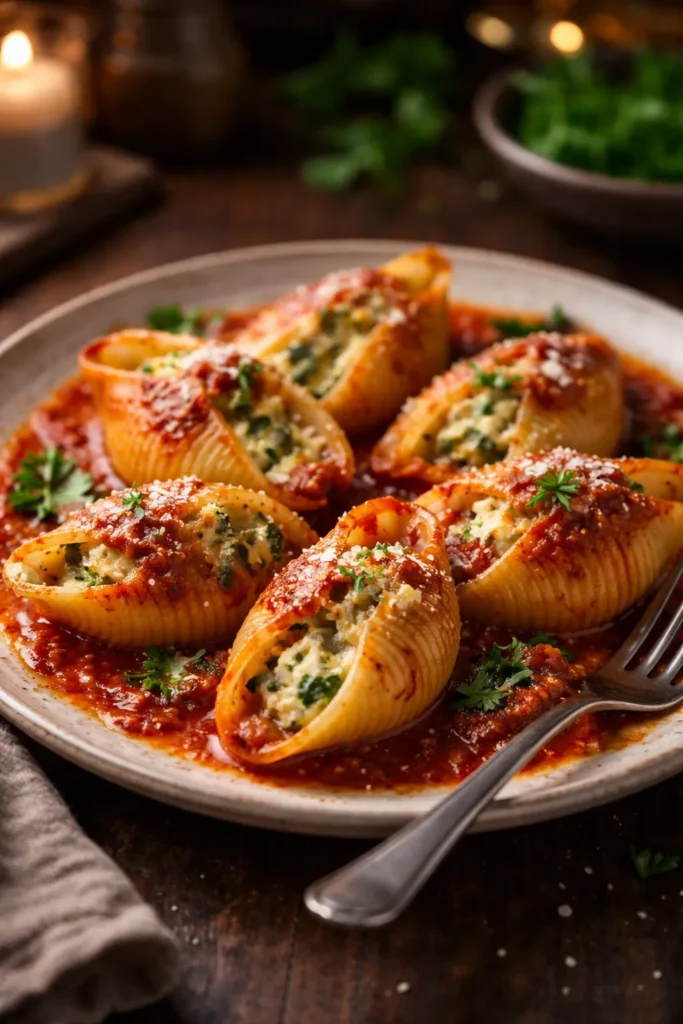
Stuffed shells are one of those genuinely versatile dishes where the technique is fixed but the creative range is enormous. Master the basic method — undercook the pasta, dry your fillings, cover first then uncover to brown — and you have a framework that supports everything from a simple midweek dinner to something worthy of a dinner party.
The ten recipes here span the full spectrum: the clean simplicity of classic three-cheese, the bright freshness of lemon-spiked spinach ricotta, the heartiness of ground beef and sausage versions, the elegance of pesto and pine nuts. None of them require special equipment or hard-to-find ingredients. Most can be assembled ahead of time and either refrigerated or frozen, which makes them one of the most practical dishes in the category of baked Italian pasta.
Start with whichever version fits what’s already in your pantry. Then work your way through the others — because the best thing about stuffed shells is that once you’ve made them once, you’ll want to try every variation.