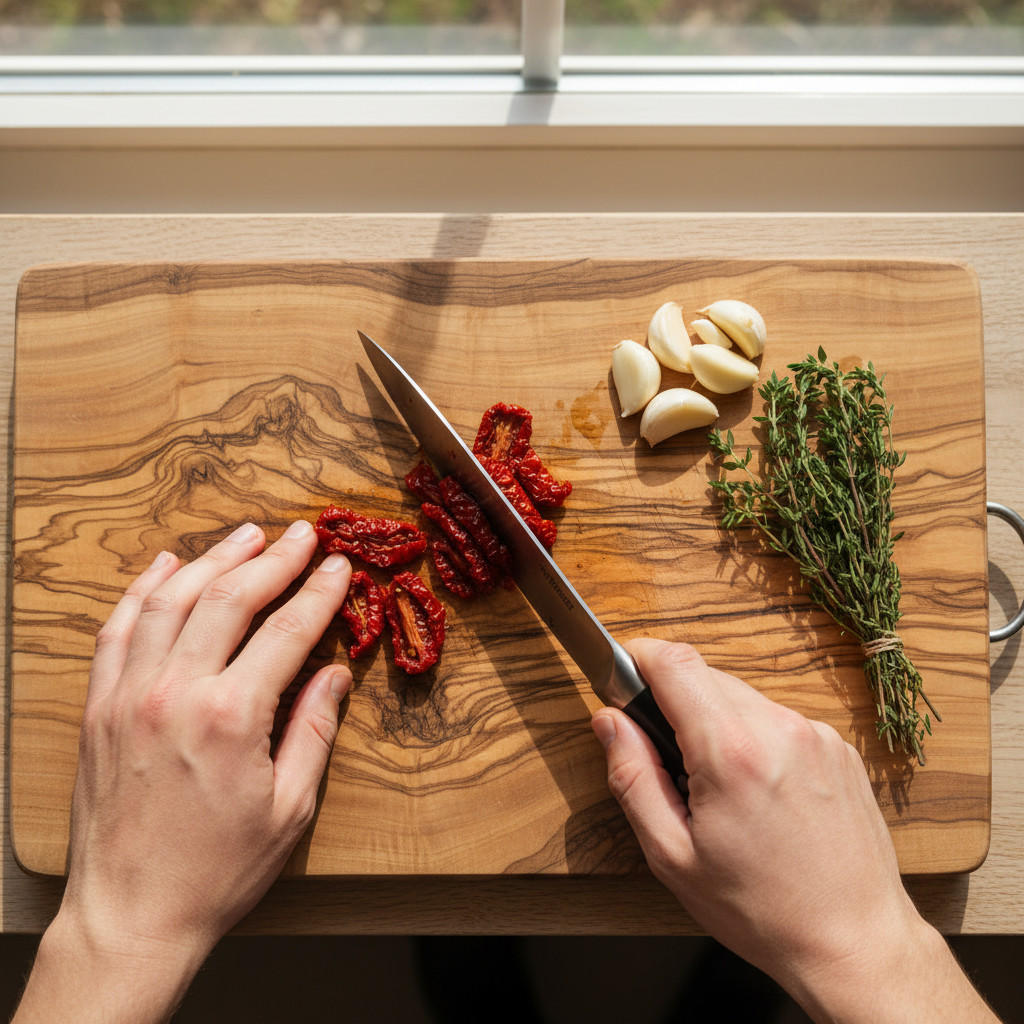
There’s a particular kind of magic that happens on a Sunday afternoon when something good is cooking low and slow in the oven or bubbling away on the stove. The house smells incredible, the pressure of the week hasn’t set in yet, and for a few hours, the kitchen becomes the center of everything. Sunday dinner isn’t just a meal — it’s a ritual, a reason to gather, and often the one moment in the week where everyone actually sits down together without a phone in hand.
The best Sunday dinners share a few things in common. They’re generous in flavor, forgiving in technique, and almost always taste better the next day as leftovers. They don’t need to be complicated — some of the most beloved Sunday tables are built around simple cuts of meat, pantry staples, and recipes that have been made so many times they’ve become second nature. But they do need to feel like something, a little more effort than Tuesday’s pasta, a little more heart than a rushed weeknight sheet pan.
Whether you’re feeding a multigenerational crowd or just your immediate household, the ten recipes gathered here span the full range of Sunday-dinner territory: slow-cooked roasts, bubbling casseroles, crispy fried chicken, and comforting pasta bakes. Each one has been built for the weekend pace — recipes that reward a little patience, fill the house with incredible aromas, and land on the table looking like you really meant it.
Table of Contents
- 1. Classic Slow Cooker Pot Roast
- Choosing the Right Cut
- Key Ingredients and Method
- Why It Works for Sunday
- 2. Buttermilk Fried Chicken
- The Buttermilk Brine Makes All the Difference
- Key Ingredients and Method
- Getting the Oil Temperature Right
- 3. Classic Bolognese Lasagna
- Building a Proper Bolognese
- Key Ingredients and Method
- Resting Is Non-Negotiable
- 4. Old-Fashioned Chicken Pot Pie
- The Filling That Makes It Worth Making
- Key Ingredients and Method
- Making It a True Sunday Project
- 5. Smothered Pork Chops with Onion Gravy
- Starting with the Right Chops
- Key Ingredients and Method
- The Gravy Is Half the Point
- 6. Baked Ziti with Italian Sausage
- Building the Sauce
- Key Ingredients and Method
- Why It’s a Crowd-Winner Every Time
- 7. Slow Cooker Pulled Pork Tacos
- The Spice Rub Builds the Flavor
- Key Ingredients and Method
- Making It a Taco Bar
- 8. Sheet Pan Spatchcock Roast Chicken
- How to Spatchcock Without Stress
- Key Ingredients and Method
- Resting and Serving
- 9. Spaghetti and Meatballs with Sunday Gravy
- Making the Meatballs
- Key Ingredients and Method
- Serving It Right
- 10. King Ranch Chicken Casserole
- The Cream Sauce That Ties It Together
- Key Ingredients and Method
- Why It’s a Sunday Table Staple
- Final Thoughts
1. Classic Slow Cooker Pot Roast
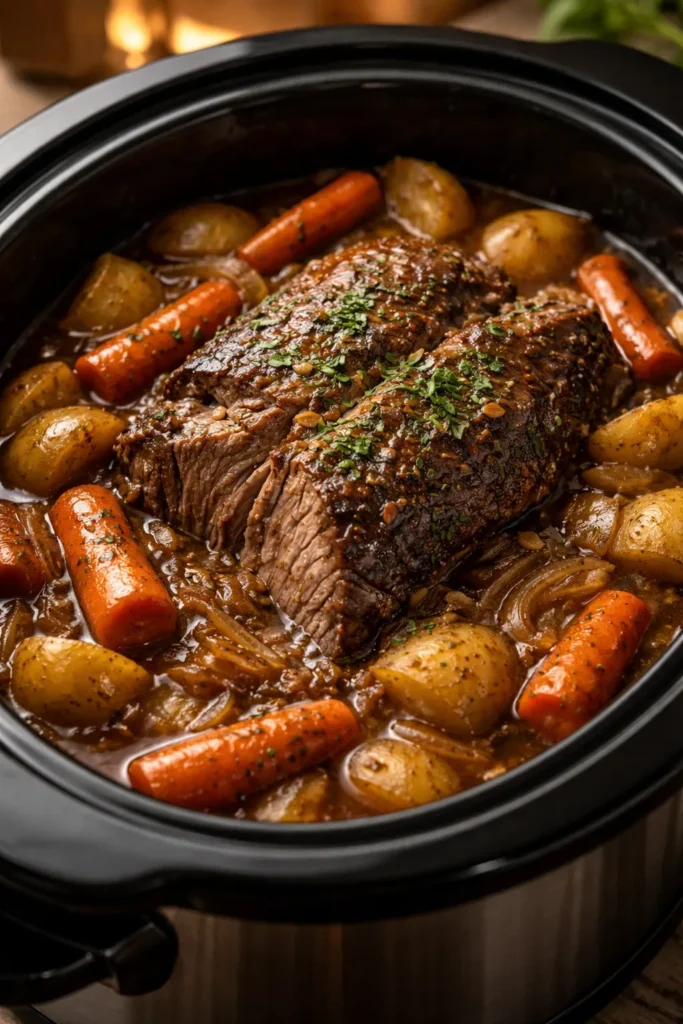
Few things in cooking are as satisfying as pulling a fork-tender pot roast out of a slow cooker after it’s been braising all afternoon. A well-made pot roast is practically self-sufficient — you do maybe 15 minutes of active work in the morning, and by dinnertime you’ve got something that tastes like it took hours of attention. Because it did, just not from you.
Choosing the Right Cut
Chuck roast is non-negotiable here. Cuts from the shoulder carry the right amount of fat and connective tissue to break down into that silky, pull-apart texture over a long, slow cook. Leaner cuts like eye of round or sirloin tip will turn dry and stringy by the time they reach an edible internal temperature. Aim for a 3- to 4-pound chuck roast, and don’t trim off the fat cap before cooking — it bastes the meat from the inside.
Key Ingredients and Method
- 3 to 4 lb chuck roast, patted dry
- 1 large onion, roughly chopped
- 4 garlic cloves, smashed
- 3 medium carrots, cut into 2-inch chunks
- 3 medium Yukon Gold potatoes, quartered
- 1 cup beef broth
- 2 tablespoons tomato paste
- 1 tablespoon Worcestershire sauce
- 1 teaspoon dried thyme and rosemary
- Salt and black pepper
Sear the roast in a cast-iron skillet over high heat for 3 to 4 minutes per side — that crust is where the flavor lives. Whisk the tomato paste, Worcestershire, and broth together, pour it over the meat and vegetables in the slow cooker, and set it on low for 8 hours. The liquid transforms into a rich, deeply savory braising jus that doubles as a gravy.
Why It Works for Sunday
The slow cooker does the heavy lifting while you’re at church, running errands, or watching football. When you lift that lid, the meat will shred with barely any effort and the vegetables will have absorbed every bit of that braising liquid. Ladle the pan juices over everything or whisk them into a quick gravy on the stovetop. Either way, this is the kind of dinner that gets requested every single week.
Pro tip: Add a splash of red wine to the braising liquid if you have an open bottle. Even a modest table wine adds depth and complexity you can’t replicate with broth alone.
2. Buttermilk Fried Chicken
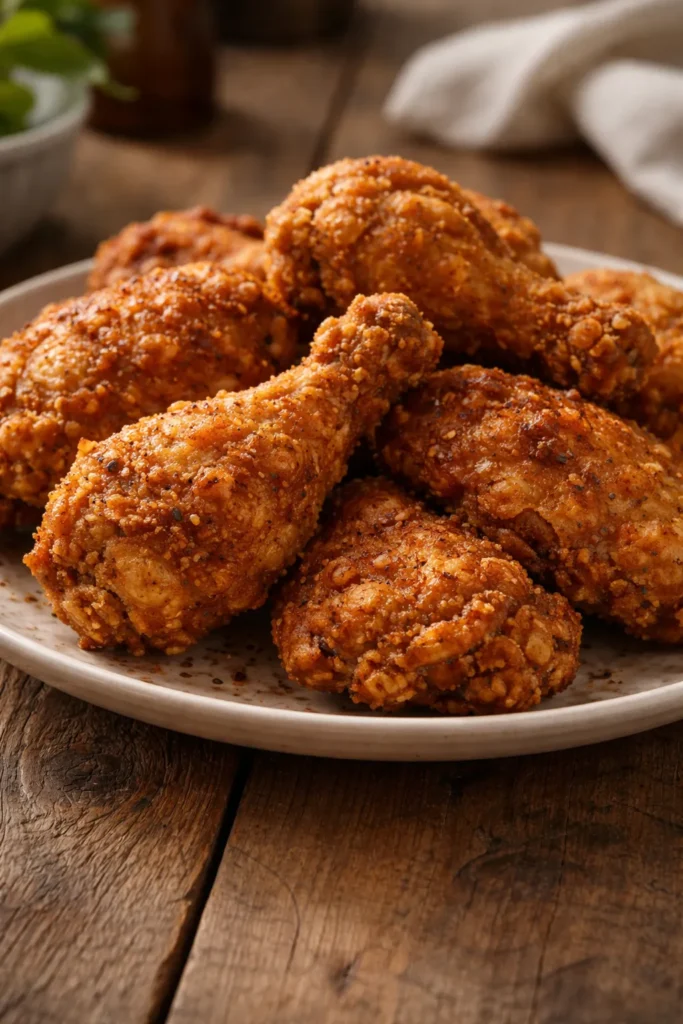
Nothing says Sunday dinner quite like fried chicken. Not the bucket kind — the homemade, buttermilk-soaked, crackling-crispy kind that takes a little planning but pays off in the best way possible. The difference between good fried chicken and unforgettable fried chicken almost always comes down to one thing: the soak.
The Buttermilk Brine Makes All the Difference
Submerging chicken pieces in seasoned buttermilk for at least 4 hours — and up to 24 — does two things simultaneously. The lactic acid gently tenderizes the meat without making it mushy, and the thick liquid clings to the surface, giving the flour dredge something to grab onto. That’s how you get that thick, shatteringly crispy crust that stays put even after the chicken cools down.
Key Ingredients and Method
- One 3½ to 4 lb chicken, cut into 8 pieces (or bone-in thighs and drumsticks)
- 2 cups buttermilk
- 1 tablespoon hot sauce (Frank’s or Crystal work well)
- 2 cups all-purpose flour
- 1 tablespoon garlic powder, onion powder, smoked paprika
- 1 teaspoon cayenne pepper
- 2 teaspoons fine salt
- Neutral oil for frying (peanut or vegetable), enough to come 3 inches up the sides of a Dutch oven
Combine the buttermilk and hot sauce, submerge the chicken, and refrigerate. When ready to fry, whisk the flour with all the spices. Shake off the excess buttermilk from each piece, dredge thoroughly in the seasoned flour, then press the coating on firmly. Fry in oil held at 325°F to 340°F — use a thermometer, not guesswork — for 13 to 15 minutes for dark meat, about 10 minutes for breasts, turning once halfway through.
Getting the Oil Temperature Right
Oil temperature is the single variable that separates crispy from greasy. Too hot and the coating burns before the meat cooks through. Too cool and the chicken absorbs excess oil instead of frying. A Dutch oven is the best vessel for frying — its thermal mass keeps the oil temperature more stable than a thin pan when cold chicken hits the oil. Let the oil come back up to temperature between batches.
Pro tip: Rest the fried chicken on a wire rack set over a sheet pan rather than on paper towels. Paper traps steam underneath and softens the crust within minutes. A rack lets air circulate on all sides.
3. Classic Bolognese Lasagna
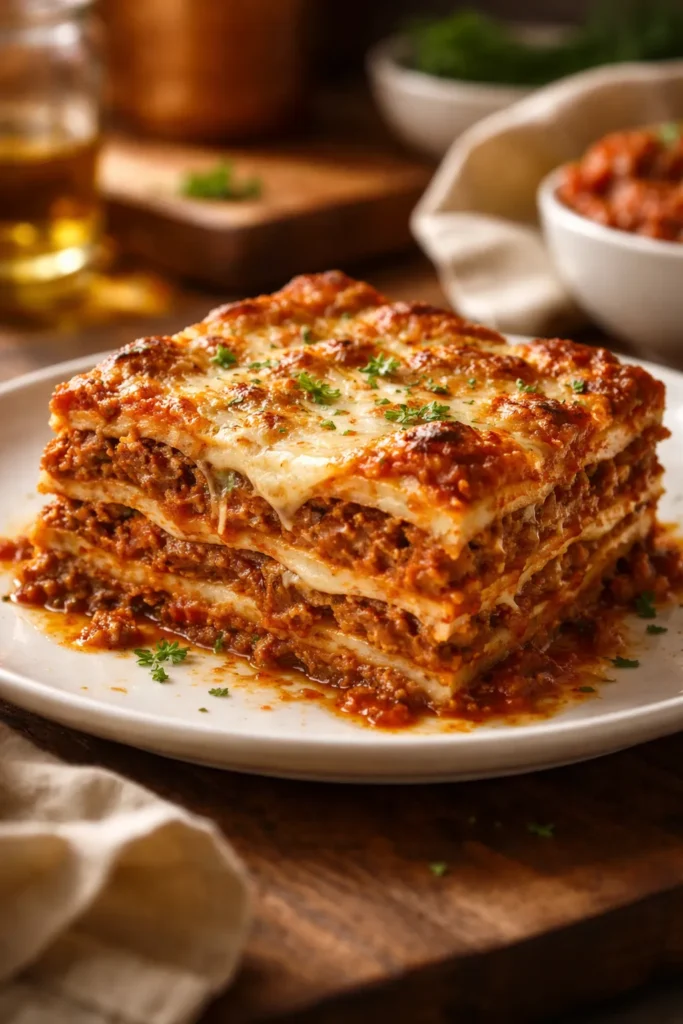
Lasagna is the Sunday dinner that means business. It takes a real commitment — there’s no way to rush a proper Bolognese, and the assembly requires both patience and a certain organizational willingness. But pull it out of the oven with that bubbling golden-brown cheese layer on top, and every minute you spent was worth it. It also feeds a crowd effortlessly and reheats beautifully, making it one of the most practical things you can cook on a Sunday.
Building a Proper Bolognese
A true Bolognese is not just meat in tomato sauce. It starts with a soffritto of finely diced onion, carrot, and celery cooked slowly in butter until deeply sweet. Add ground beef (or a mix of beef and pork), brown it properly, then deglaze with white wine and let it evaporate completely. Add whole milk — this is the step most people skip, and it’s responsible for that silky, rounded richness. Then and only then do you add crushed tomatoes. Simmer for at least 90 minutes.
Key Ingredients and Method
- 1 lb ground beef (85/15 fat ratio) or a mix of ½ lb beef and ½ lb ground pork
- 1 cup each: finely diced onion, carrot, celery
- 3 garlic cloves, minced
- ½ cup dry white wine
- ½ cup whole milk
- One 28-oz can crushed San Marzano tomatoes
- 3 tablespoons unsalted butter
- 15 dried lasagna noodles, cooked just under al dente
- 2 cups whole-milk ricotta, 3 cups shredded low-moisture mozzarella, ½ cup grated Parmigiano-Reggiano
- 1 egg, beaten into the ricotta
Layer the baking dish with a thin smear of Bolognese on the bottom (prevents sticking), then noodles, ricotta mixture, mozzarella, Bolognese, and repeat. Finish with a final layer of noodles, the remaining meat sauce, mozzarella, and a generous handful of Parmigiano. Cover tightly with foil and bake at 375°F for 45 minutes, then uncover and bake 15 more minutes until the top is bubbling and spotted with golden-brown patches.
Resting Is Non-Negotiable
Let the lasagna rest for at least 20 minutes before cutting. Slice into it straight from the oven and it’ll collapse into a molten pile. Rest it and every layer holds its shape on the spatula. This is the step that makes the difference between a beautiful serving and a beautiful mess.
Pro tip: Assemble the entire lasagna the night before and refrigerate it unbaked. Add 10 to 15 minutes to the covered baking time since it’s going into the oven cold, and you’ll have the most hands-off Sunday dinner imaginable.
4. Old-Fashioned Chicken Pot Pie
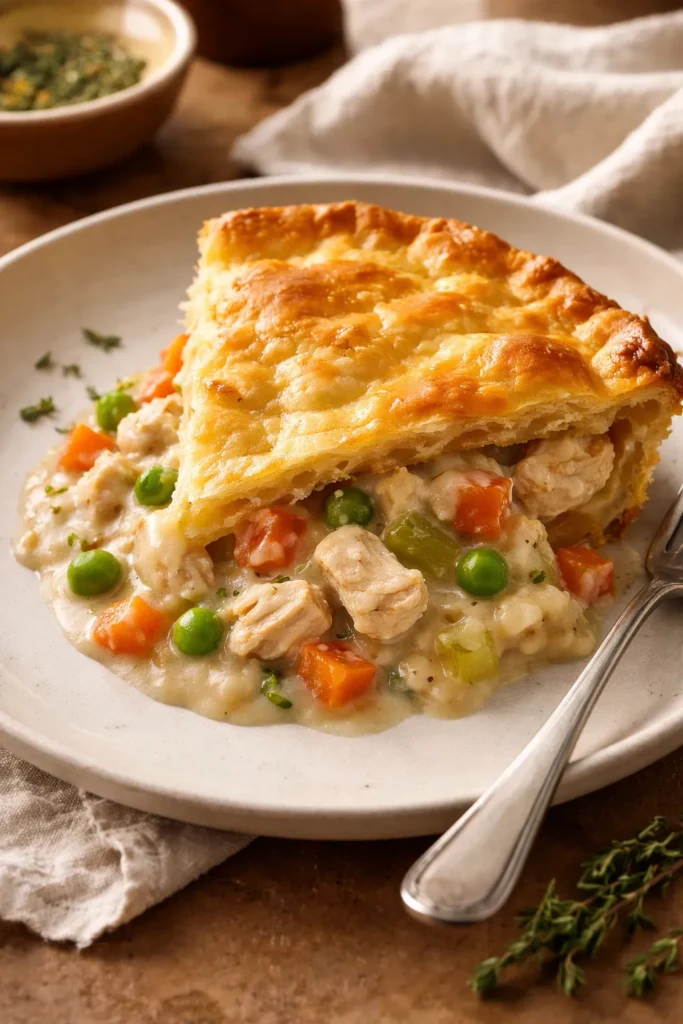
Chicken pot pie is comfort food in its purest form — a creamy, herb-flecked filling packed with chicken and vegetables, all tucked under a golden, buttery pastry crust. It’s also one of the most forgiving things you can make. The filling takes almost any vegetable graciously, the pastry can come from the refrigerator case without shame, and a rotisserie chicken from the grocery store cuts the prep time nearly in half.
The Filling That Makes It Worth Making
The filling starts with a roux — equal parts butter and flour cooked together until slightly golden — which forms the base of the cream sauce. Whisk in warm chicken broth and whole milk gradually, stirring constantly, and in about 5 minutes you have a thick, silky sauce that won’t break in the oven. Season it properly with salt, white pepper, dried thyme, and a small grating of fresh nutmeg. That nutmeg is small but important — it adds a quiet warmth that makes the filling taste complete.
Key Ingredients and Method
- 3 cups cooked shredded chicken (rotisserie works perfectly)
- 4 tablespoons unsalted butter
- 1 medium onion, diced; 3 celery stalks, sliced; 2 carrots, diced
- ⅓ cup all-purpose flour
- 1½ cups chicken broth, 1 cup whole milk
- 1 cup frozen peas
- 1 teaspoon dried thyme, salt, white pepper, and a pinch of nutmeg
- 2 refrigerated pie crusts (or homemade if you’re feeling ambitious)
Cook the onion, carrot, and celery in the butter until soft. Add the flour and cook 1 to 2 minutes. Whisk in the broth and milk, simmer until thickened, then fold in the chicken and peas. Pour into a 9-inch deep-dish pie plate lined with one crust, top with the second crust, crimp the edges, and cut three or four steam vents. Brush with egg wash and bake at 400°F for 35 to 40 minutes until the crust is deep golden.
Making It a True Sunday Project
The filling can be made completely ahead and refrigerated up to two days. Assemble the pie on Sunday, and it goes directly from the fridge into the oven. This make-ahead approach actually improves the flavor — the herbs and vegetables have time to meld overnight into a deeper, more cohesive filling.
Pro tip: Place the pie plate on a foil-lined sheet pan before baking. Pot pies bubble and drip over the edges, and the sheet pan saves you from a smoky oven cleanup.
5. Smothered Pork Chops with Onion Gravy
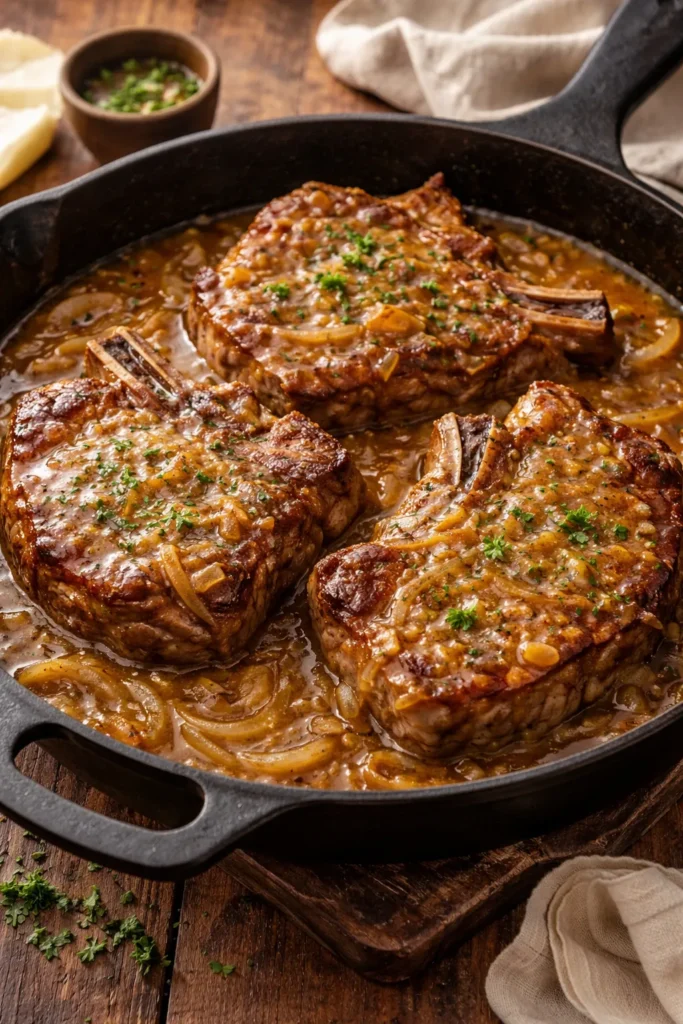
Smothered pork chops are Southern cooking at its most honest — thick-cut bone-in chops braised in a glossy, deeply savory onion gravy until the meat is tender enough to cut with a fork. The whole thing comes together in one cast-iron skillet in about 45 minutes, making it a faster Sunday dinner than most roasts while still feeling like a genuine occasion.
Starting with the Right Chops
Bone-in pork chops cut at least 1 inch thick are essential. Thin boneless chops cook through before the smothering process has a chance to tenderize them, leaving them dry and disappointing. The bone adds flavor to the gravy as the chops braise, and the thickness gives you a window to build a proper sear before the liquid goes in. Look for chops with good fat marbling — avoid overly lean cuts.
Key Ingredients and Method
- 4 bone-in pork chops, 1 to 1½ inches thick
- 2 large yellow onions, thinly sliced
- 4 garlic cloves, minced
- 3 tablespoons all-purpose flour
- 2 cups chicken broth
- ½ cup whole milk or heavy cream
- 1 teaspoon each: garlic powder, onion powder, smoked paprika
- 2 tablespoons vegetable oil, 2 tablespoons unsalted butter
- Salt and black pepper
Season the chops generously, sear in oil over high heat for 3 to 4 minutes per side until deeply browned, then remove. Add butter to the same skillet, cook the sliced onions for 15 to 18 minutes over medium heat until caramelized and mahogany-colored. Add garlic, cook 1 minute, then sprinkle in the flour and stir to coat. Whisk in the broth gradually, then the milk. Nestle the chops back in, cover, and simmer on low for 20 minutes.
The Gravy Is Half the Point
That onion gravy is the reason people request this meal on repeat. The long caramelization of the onions is not a step you can rush — they need time to soften, sweeten, and turn a deep amber before the flour goes in. Rushing this step produces a pale, sharp-tasting gravy that doesn’t have the depth you’re after. Be patient with it. Serve over mashed potatoes and spoon extra gravy over everything.
Pro tip: A splash of apple cider vinegar stirred into the finished gravy brightens it significantly — just a teaspoon cuts through the richness without making it taste acidic.
6. Baked Ziti with Italian Sausage
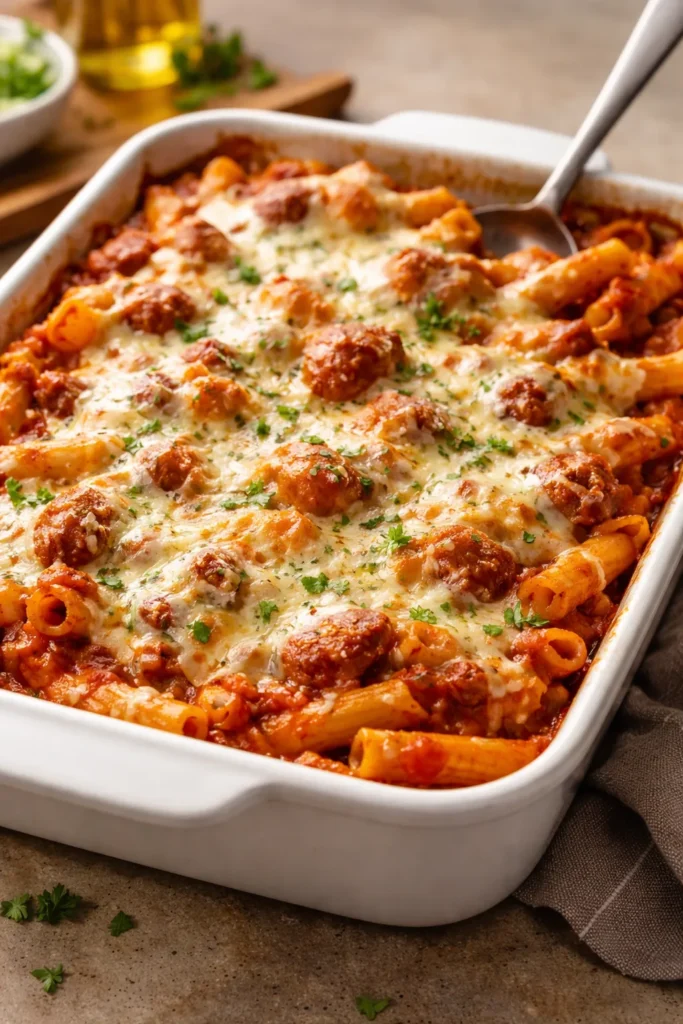
Baked ziti hits the table looking impressive and feeds a crowd without requiring much finesse. It’s somewhere between lasagna and a simple pasta bake — easier to assemble than layered lasagna but with all the same deeply comforting, cheesy satisfaction. Italian sausage gives the tomato sauce a natural richness and spice that ground beef alone can’t match.
Building the Sauce
Remove the casings from Italian sausage (sweet, hot, or a mix) and brown it in a large pot, breaking it into crumbles as it cooks. Once it’s browned and the fat has rendered, drain off most of the excess fat, leaving just enough to sauté a diced onion and a few cloves of garlic. Add a large can of crushed tomatoes, a pinch of red pepper flakes, dried basil, and oregano, and let it simmer for 20 to 25 minutes. The sauce should be thick enough that it doesn’t pool at the bottom of the baking dish.
Key Ingredients and Method
- 1 lb ziti (or rigatoni or penne rigate), cooked to very al dente
- 1 lb Italian sausage, casings removed
- One 28-oz can crushed tomatoes, 1 medium onion, 4 garlic cloves
- 1½ cups whole-milk ricotta
- 2 cups shredded mozzarella, ½ cup grated Pecorino Romano
- 1 egg beaten into the ricotta
- Fresh basil, salt, red pepper flakes
Toss the cooked pasta with most of the sauce, then fold in the ricotta mixture and half the mozzarella. Pour into a greased 9×13-inch baking dish, spread the remaining sauce on top, and blanket with the rest of the mozzarella. Bake covered at 375°F for 20 minutes, then uncover for another 20 minutes until bubbling and browned.
Why It’s a Crowd-Winner Every Time
The ricotta-and-egg mixture is what separates a great baked ziti from a forgettable one. It melts into pockets of creamy softness throughout the pasta rather than sitting as a dense layer like in lasagna. Some people skip the ricotta and just use mozzarella — don’t be one of those people. The textural contrast between the chewy pasta, the creamy ricotta pockets, and the browned, slightly crispy cheese on top is what makes every bite genuinely exciting.
Pro tip: Pull the dish together on Saturday and refrigerate it unbaked overnight. Sunday, it goes straight into the oven and comes out perfectly as if you spent all afternoon in the kitchen.
7. Slow Cooker Pulled Pork Tacos
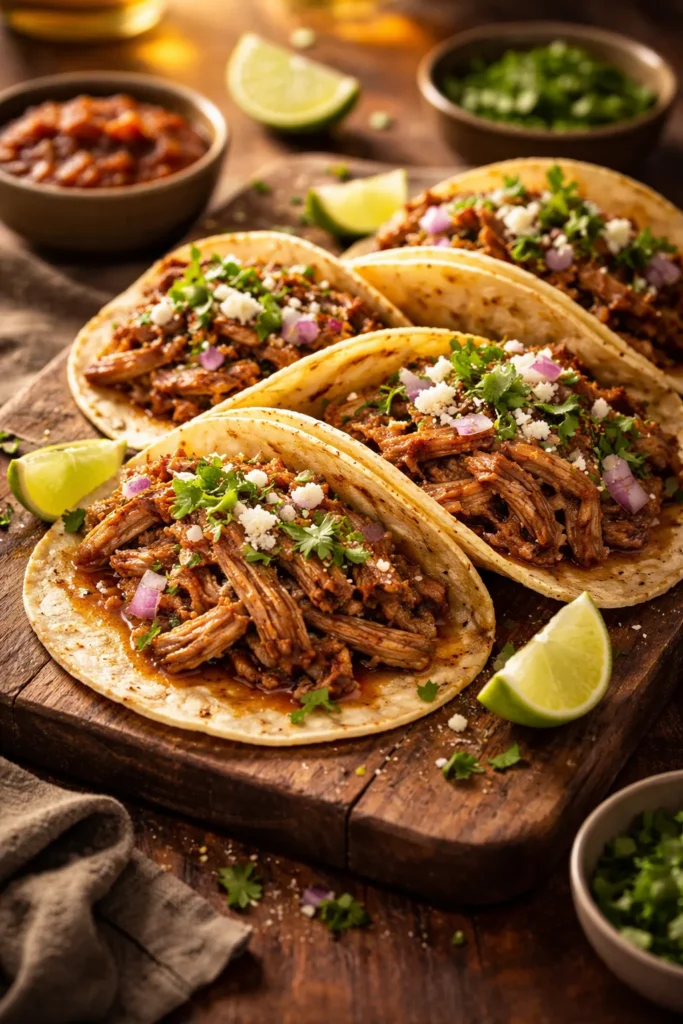
Pulled pork in a slow cooker is one of the most effort-to-reward ratios you’ll find in home cooking. A pork shoulder (also labeled Boston butt at most grocery stores) goes in with a spice rub and some liquid in the morning, and eight hours later you’ve got tender, shreddy, flavor-packed pork that can anchor tacos, sandwiches, bowls, or just a plate with coleslaw. For a Sunday dinner that keeps everyone happy — including picky eaters — a pulled pork taco bar is nearly unbeatable.
The Spice Rub Builds the Flavor
A good spice rub does more than season the outside of the pork — it forms the crust that caramelizes against the slow cooker walls and infuses the braising liquid with complexity. Combine 2 tablespoons each of brown sugar, smoked paprika, and cumin, with 1 tablespoon each of garlic powder, onion powder, and dried oregano, plus 1½ teaspoons of salt and a generous amount of black pepper. Press this all over a 4- to 5-pound bone-in pork shoulder and let it sit, covered, in the fridge overnight if you can.
Key Ingredients and Method
- 4 to 5 lb bone-in pork shoulder (Boston butt)
- Full spice rub (as above)
- ½ cup chicken broth or orange juice
- 4 garlic cloves, smashed
- 1 chipotle pepper in adobo sauce, finely chopped
- For serving: corn or flour tortillas, diced white onion, fresh cilantro, lime wedges, sliced avocado, crumbled cotija cheese, salsa verde
Place the pork in the slow cooker, add the broth, garlic, and chipotle. Cook on low for 8 to 9 hours or high for 5 to 6 hours. The meat should pull apart effortlessly with two forks. Shred it directly in the slow cooker and toss it in the accumulated juices. Taste and adjust salt.
Making It a Taco Bar
The beauty of this format for Sunday dinner is that everyone builds their own plate. Set up a taco bar with all the toppings in small bowls and let people go at it. It’s low-stress hosting at its best, and the pork holds well in the slow cooker on the warm setting for hours — meaning you don’t need to time anything precisely.
Pro tip: A squeeze of fresh orange juice into the slow cooker instead of plain broth adds a subtle sweetness that complements the smoky chipotle brilliantly.
8. Sheet Pan Spatchcock Roast Chicken
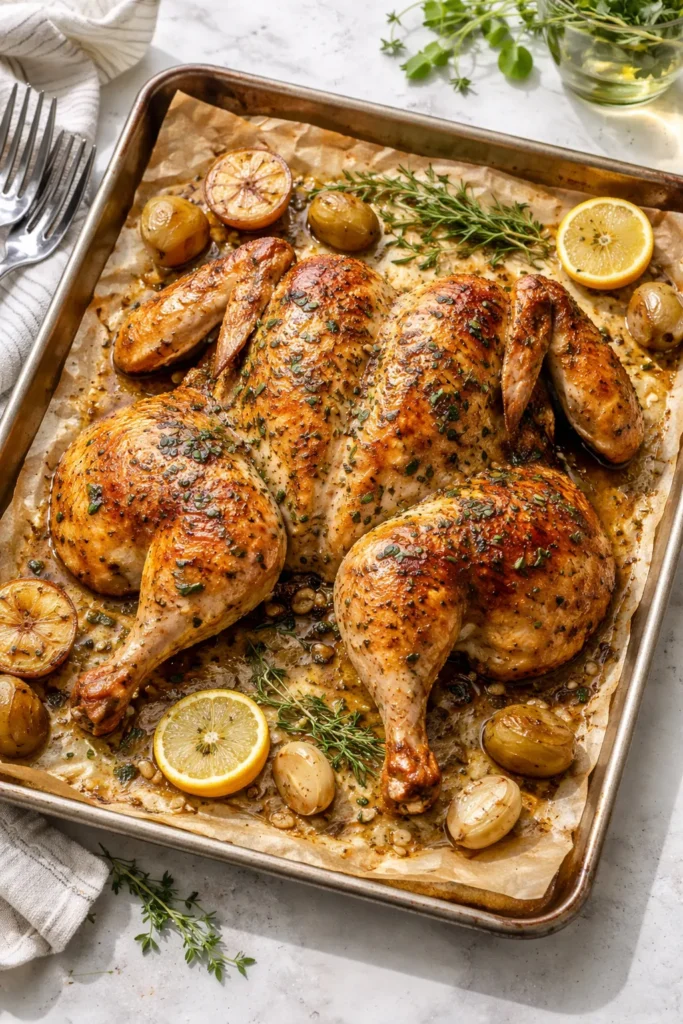
Roast chicken is perhaps the most honest Sunday dinner there is. It requires skill that anyone can learn, rewards proper technique generously, and makes the house smell like something genuinely wonderful is happening. Spatchcocking — removing the backbone and flattening the bird — cuts the cooking time nearly in half compared to a traditional trussed roast, and it produces dramatically better results: crispy skin across the entire bird and evenly cooked meat from breast to thigh.
How to Spatchcock Without Stress
The whole process takes about two minutes with a pair of sturdy kitchen shears. Place the chicken breast-side down, cut along both sides of the backbone and remove it (save it for stock). Flip the bird over and press down firmly on the breastbone with the heel of your hand until you feel it crack and the bird lies flat. Pat it completely dry with paper towels — this is the single most important step for achieving crispy skin.
Key Ingredients and Method
- One 3½ to 4 lb whole chicken, spatchcocked and patted dry
- 6 tablespoons softened unsalted butter
- 6 garlic cloves, minced into a paste with a pinch of salt
- 1 tablespoon each: chopped fresh rosemary and thyme
- Zest of 1 lemon
- 1 lb baby potatoes, halved; 2 carrots, sliced; 1 head of garlic, halved crosswise for the pan
- Olive oil, salt, black pepper
Combine the butter with garlic paste, herbs, and lemon zest. Slide most of it under the skin directly onto the breast and thigh meat. Rub the rest over the outside. Toss the vegetables with olive oil, salt, and pepper, spread on a large sheet pan, and place the chicken directly on top, skin-side up. Roast at 425°F for 45 to 50 minutes until the skin is deep golden and the thickest part of the thigh reads 165°F on an instant-read thermometer.
Resting and Serving
Rest the chicken for 10 minutes before carving. The juices redistribute during this time, and if you cut into it too soon you’ll lose them all to the cutting board. The vegetables on the pan will have roasted in the chicken drippings, which makes them arguably the best part of the meal. Serve with the squeezed roasted garlic from the halved head — it spreads like soft butter on bread.
Pro tip: Dry-brine the chicken uncovered in the fridge overnight. Salting the surface and allowing it to air-dry overnight produces skin that goes crispier and more golden than anything you can achieve with a same-day season-and-roast approach.
9. Spaghetti and Meatballs with Sunday Gravy
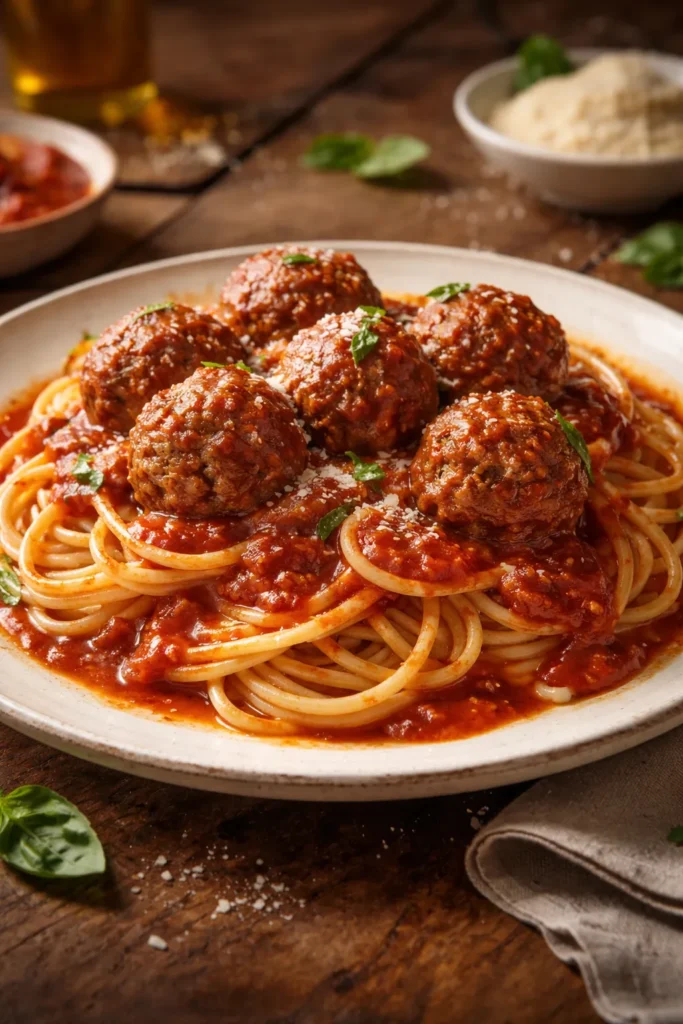
There’s a reason Italian-American families have been cooking Sunday gravy for generations. A proper Sunday red sauce simmers for hours, concentrating flavor and developing a depth that a 20-minute weeknight sauce simply cannot replicate. The meatballs are cooked directly in the sauce, not baked separately — they absorb the tomato as they cook, staying moist from within while the sauce absorbs the meat’s fat and seasoning. It’s a one-pot flavor exchange that takes both components to a completely different level.
Making the Meatballs
The key to tender meatballs is a panade — a mixture of breadcrumbs soaked in milk — mixed into the meat before forming. It keeps the interior soft and moist even after a long simmer. Use a combination of ½ lb ground beef and ½ lb ground pork for the richest flavor, along with grated Parmigiano-Reggiano (not the stuff in the green canister), fresh parsley, one egg, and the soaked breadcrumbs. Mix gently with your hands until just combined — overworking the mixture toughens the finished meatball.
Key Ingredients and Method
- ½ lb ground beef and ½ lb ground pork, combined
- ½ cup breadcrumbs soaked in ¼ cup whole milk
- ⅓ cup grated Parmigiano-Reggiano, 2 tablespoons chopped flat-leaf parsley
- 1 egg, 2 garlic cloves minced, salt and pepper
- For the sauce: two 28-oz cans whole San Marzano tomatoes (hand-crushed), 4 garlic cloves, ¼ cup olive oil, torn fresh basil, salt, and a pinch of sugar
- 1 lb spaghetti
Sear the meatballs in batches in olive oil until browned on two sides — don’t try to cook them through, just get color on them. Build the sauce in the same pot, crush the tomatoes, add the garlic and olive oil, and once it’s simmering, nestle the meatballs in. Simmer on very low for 1 hour 30 minutes to 2 hours, stirring occasionally.
Serving It Right
Cook the spaghetti to just shy of al dente, drain it, and finish it in a ladleful of the sauce directly in the pot. Finish-cooking pasta in the sauce rather than just pouring sauce on top of drained spaghetti is the single technique change that makes this taste like a restaurant plate rather than a home-cooked one. Serve the meatballs alongside or piled on top with extra sauce and a mountain of grated cheese.
Pro tip: Make a double batch of meatballs and freeze half, uncooked, on a sheet pan before transferring to a bag. Drop them frozen into simmering sauce next time — they’ll cook through in about 45 minutes.
10. King Ranch Chicken Casserole
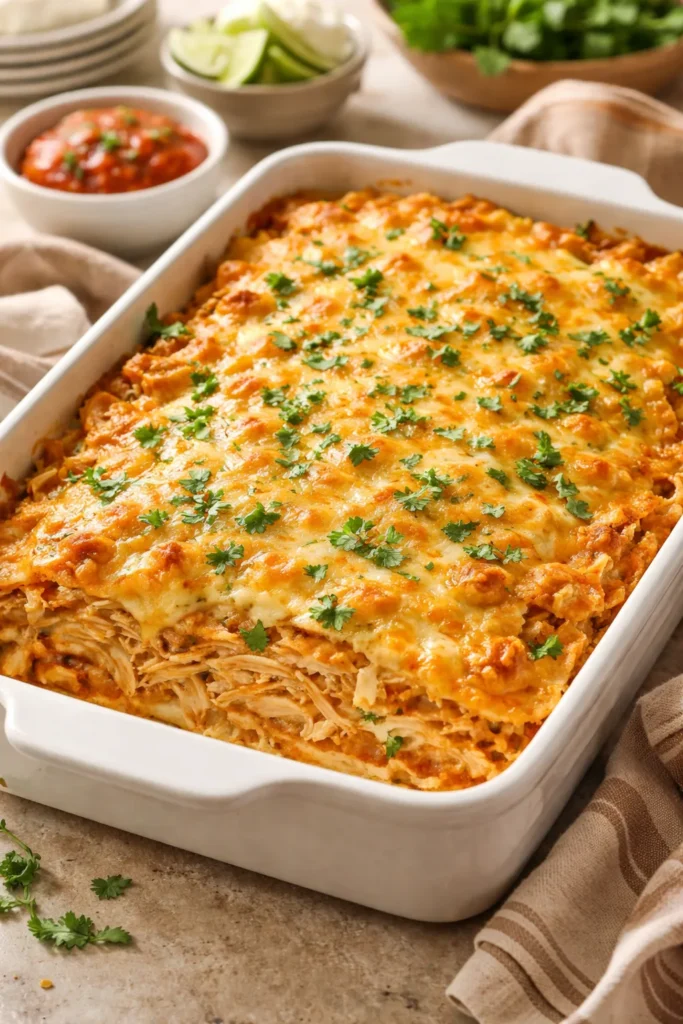
King Ranch Chicken is Texas’s answer to the question of what to do with a whole lot of chicken, two kinds of cheese, corn tortillas, green chiles, and a crowd of hungry people. It’s a Tex-Mex layered casserole that’s rich, smoky, creamy, and slightly spicy — and it’s the kind of dish that people scrape the dish clean for. Named for the legendary King Ranch in Texas, it’s one of those recipes that has legitimately earned its place in the canon of American comfort food.
The Cream Sauce That Ties It Together
The base of a proper King Ranch chicken is a sauce made from two cans of cream soup — cream of mushroom and cream of chicken — combined with diced Rotel tomatoes and green chiles, sour cream, chicken broth, cumin, and chili powder. This is not the place for from-scratch snobbery. Those cream soups are there for a reason, and the result is a clingy, savory sauce that coats every layer of tortilla and chicken and bakes into a deeply satisfying, almost enchilada-like filling. This is not a dish that pretends to be something it isn’t — it’s proud, unapologetic comfort food.
Key Ingredients and Method
- 4 cups cooked shredded chicken (rotisserie is ideal)
- One 10.5-oz can cream of mushroom soup, one 10.5-oz can cream of chicken soup
- One 10-oz can Rotel diced tomatoes and green chiles, undrained
- ½ cup sour cream
- ¼ cup chicken broth
- 1 teaspoon each: cumin, chili powder, garlic powder
- 10 to 12 corn tortillas, torn into quarters
- 1½ cups shredded sharp Cheddar, 1½ cups shredded Monterey Jack
- 1 cup diced yellow onion, 1 poblano pepper, diced and sautéed briefly in butter
Stir together both cans of soup, the Rotel, sour cream, broth, and spices. Fold in the shredded chicken and the sautéed onion and poblano. In a greased 9×13-inch baking dish, layer torn tortillas on the bottom, then a portion of the chicken mixture, then a handful of the combined cheeses. Repeat two more times, finishing with a generous layer of cheese on top. Bake at 350°F for 35 to 40 minutes until bubbling at the edges and the cheese is melted and beginning to brown in spots.
Why It’s a Sunday Table Staple
King Ranch Chicken can be assembled completely the night before and refrigerated overnight, which makes Sunday morning significantly easier. It slices cleanly when slightly cooled, holds well in a warm oven for an extra 20 minutes if people are running late, and reheats the next day even better than it tastes fresh — the flavors settle and deepen overnight in a way that makes Monday’s lunch something to look forward to.
Pro tip: Add a cup of frozen corn to the chicken mixture for sweetness and texture that balances the richness of the cream sauce. It’s not traditional, but it makes every single bite more interesting.
Final Thoughts

The ten recipes in this collection cover a lot of ground — slow cooker roasts, Southern fried chicken, Italian casseroles, Tex-Mex bakes, and everything in between. But they all share the qualities that make a Sunday dinner worth making: they’re deeply flavorful, designed to feed people generously, and built to bring a group of people around a table with genuine enthusiasm.
A few things hold across all of them. Make-ahead steps are your best friend. Whether it’s brining chicken overnight, assembling a casserole the evening before, or starting a spice rub on a pork shoulder Saturday morning, the small amount of forward planning pays dividends on Sunday when you’d rather be living your day than standing over a cutting board. Second, don’t underestimate the power of resting — whether it’s a roast chicken, a pot roast, or a lasagna, resting before serving is the non-negotiable step that separates a finished dish from a great one.
Pick one recipe that fits your Sunday — your energy level, your crowd size, your available time — and give it your full attention. A pot roast on a relaxed weekend, quick smothered pork chops when time is short, or pulled pork tacos when you want something fun and low-fuss. The best Sunday dinner is the one that gets made, eaten, and remembered.