There’s a running joke in most households with a self-proclaimed carnivore: the moment someone announces “pasta tonight,” nobody asks what kind of meat is in it. They just show up to the table. That instinct is exactly what makes vegetarian pasta the single most effective gateway to meatless eating — because pasta itself does half the persuasion before you even touch a pan.
But not every veggie pasta earns that universal approval. A watery marinara over plain ziti isn’t going to win anyone over. What does work are the dishes built on real depth of flavor — the kind that comes from deeply caramelized mushrooms, roasted vegetables, slow-cooked tomatoes, or a sauce so silky and rich that nobody stops to ask whether there’s meat in it. The key is building a dish with enough body, texture, and savoriness that the absence of protein goes entirely unnoticed.
Every recipe in this list was chosen for exactly that quality. Some are smoky and bold. Others are creamy and indulgent. A few are elegant enough for a dinner party, while others come together in under 25 minutes on a weeknight. What they all share is a total commitment to flavor that makes them crowd-pleasers regardless of dietary preferences — because at the end of the day, even the most devoted steak lover just wants something that tastes really, really good.
Table of Contents
- 1. Mushroom Marsala Tagliatelle
- Why Meat Lovers Go Back for Seconds
- What You’ll Need
- Tips for Getting It Right
- 2. Creamy Spinach and Ricotta Stuffed Shells
- The Texture Combination That Wins People Over
- What You’ll Need
- Make-Ahead Notes
- 3. Smoky Chickpea Pasta with Paprika Oil
- Why Chickpeas Work Here
- What You’ll Need
- Technique Notes
- 4. One-Pot Vegetable Pasta with Garlic Herb Tomato Sauce
- What Makes One-Pot Pasta So Effective
- What You’ll Need
- Timing and Watchpoints
- 5. Baked Feta Tomato Penne
- What Happens in the Oven
- What You’ll Need
- 6. Roasted Cauliflower Alfredo
- The Flavor Logic
- What You’ll Need
- Building Extra Flavor
- 7. Eggplant Parmesan Pasta Skillet
- Why Eggplant Convinces Meat Eaters
- What You’ll Need
- 8. Creamy Pumpkin Sage Rigatoni
- What You’ll Need
- The Brown Butter Technique
- 9. Lentil Bolognese with Spaghetti
- Getting the Texture Right
- What You’ll Need
- Make and Freeze
- 10. Butternut Squash Pasta Bake
- Why This Converts Even the Skeptics
- What You’ll Need
- Build the Sauce in Layers
- Building a Better Vegetarian Pasta: Flavor Principles That Apply to All Ten
- Pairing and Serving These Dishes
- Storing Leftovers Without Losing Quality
- Final Thoughts
1. Mushroom Marsala Tagliatelle
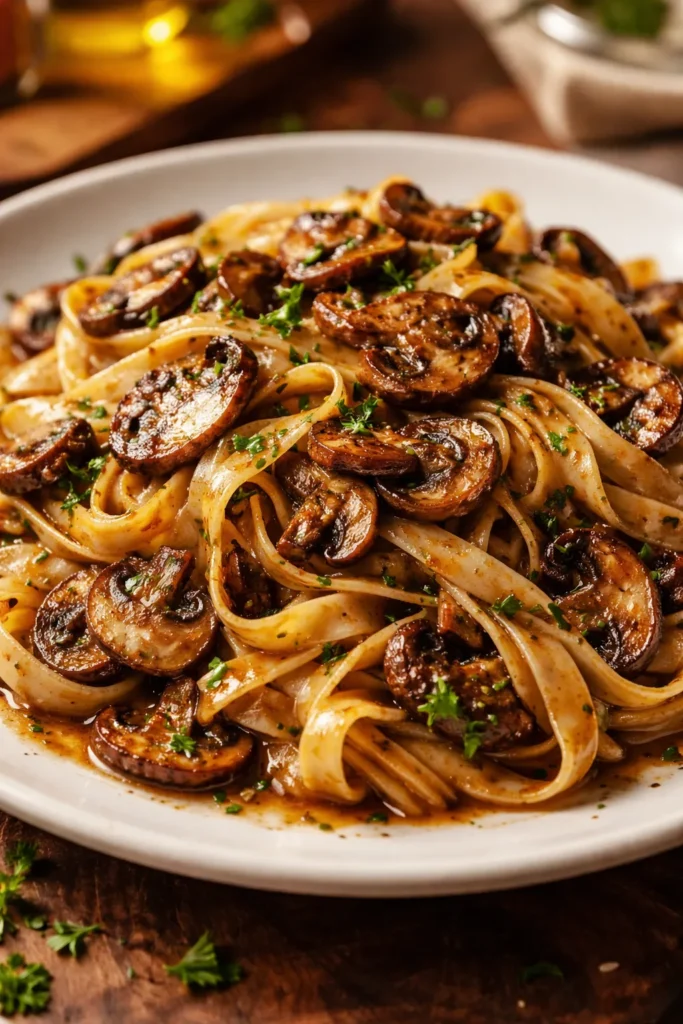
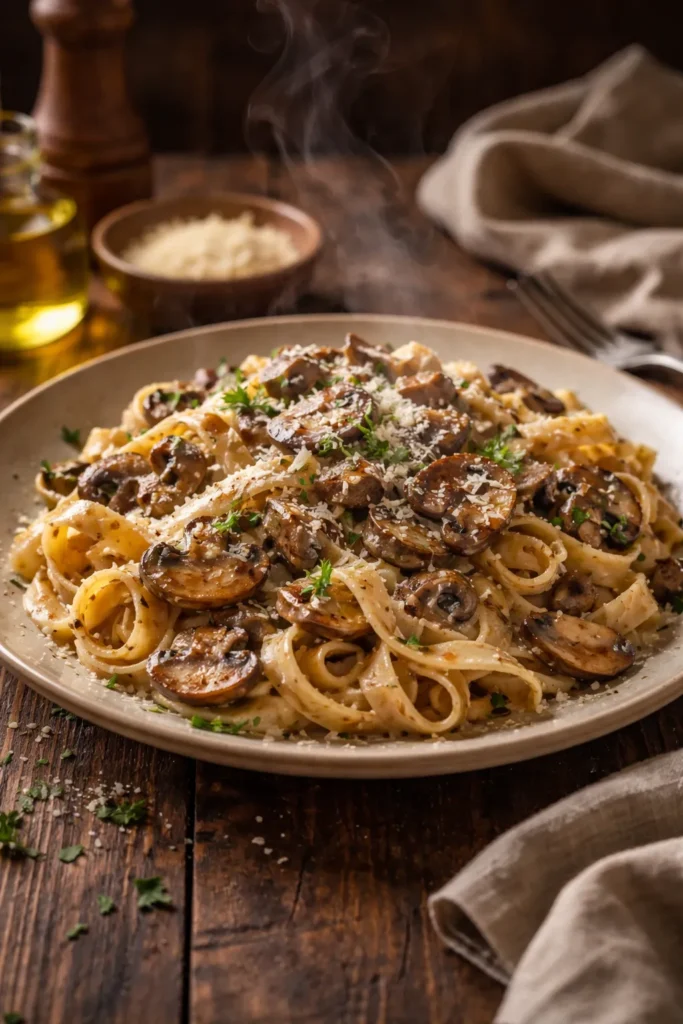
Mushrooms are one of the most underrated tools in meatless cooking, and this dish makes that case about as convincingly as anything on this list. Thinly sliced cremini or portobello mushrooms get cooked down in a combination of butter and olive oil until they’re deeply golden and caramelized — a process that draws out their natural glutamates and creates the kind of savory, umami-rich base that’s usually associated with a slow-braised meat sauce.
The marsala wine is what takes this from good to genuinely impressive. Once poured into the pan, it picks up all those browned bits from the bottom, reduces until syrupy, and wraps the mushrooms in a sweet, complex gloss that clings to every strand of tagliatelle. It’s the same logic behind chicken marsala, just without the chicken — and honestly, you don’t miss it.
Why Meat Lovers Go Back for Seconds
The texture of well-cooked mushrooms is the secret here. Unlike softer vegetables that disintegrate into a sauce, mushrooms hold their shape and provide a satisfying chew that reads as substantial in a way that most vegetables don’t. Pair that with the depth of marsala wine and a finishing swirl of cold butter, and the sauce has the kind of richness and body you’d expect from a meat-based ragù.
What You’ll Need
- 10 oz tagliatelle (or pappardelle for an even wider surface area)
- 1 lb cremini or mixed mushrooms, sliced
- 2 tablespoons butter
- 2 garlic cloves, minced
- ½ cup dry marsala wine
- ½ cup reserved pasta water
- Flat-leaf parsley and grated Parmesan to finish
Tips for Getting It Right
- Don’t crowd the pan — mushrooms need space to brown, not steam
- Let the marsala fully reduce before adding pasta water
- Finish with cold butter off the heat for an extra silky sauce
Worth knowing: Shiitake mushrooms add an even deeper, woodsier flavor and work beautifully alongside cremini in this dish.
2. Creamy Spinach and Ricotta Stuffed Shells
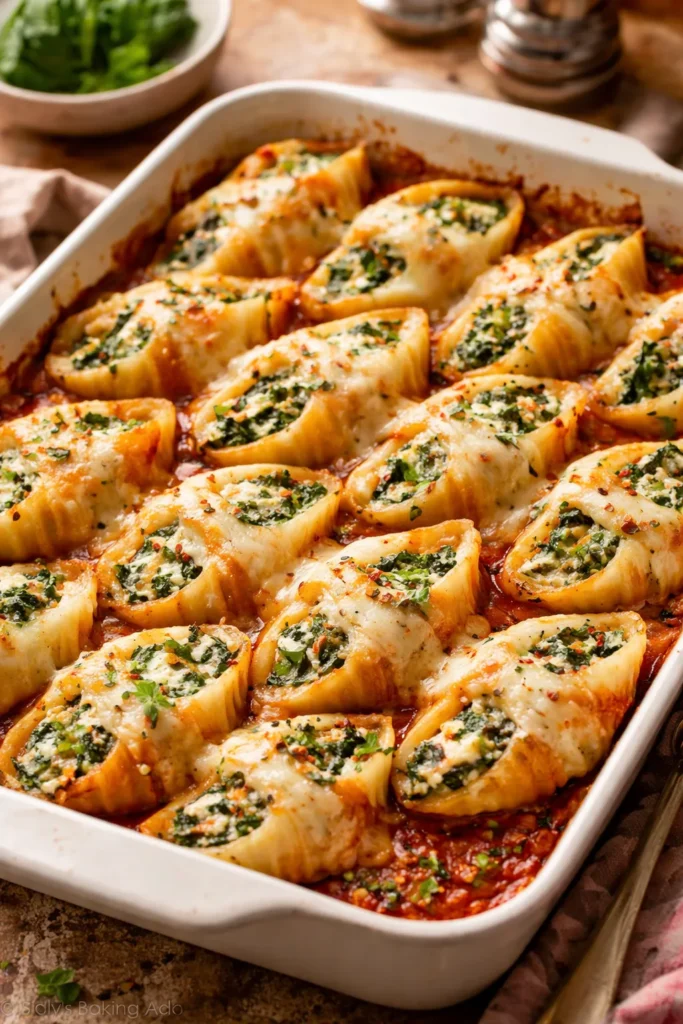
There’s something about a pan of stuffed shells that communicates warmth and generosity in a way few dishes manage. Each oversized pasta shell gets filled with a mixture of ricotta, sautéed spinach, egg, Parmesan, and a hint of garlic powder — then arranged snugly in a baking dish over marinara, topped with mozzarella, and baked until bubbling and golden at the edges.
This is comfort food at its most effective. The ricotta filling stays fluffy and light inside the shell while the exterior of the pasta soaks up the marinara and takes on this gorgeous, slightly glazed quality. When you cut into one with a fork and the filling holds together cleanly, there’s an almost architectural satisfaction to it.
The Texture Combination That Wins People Over
The contrast between the creamy, soft interior of each shell and the slightly firmer outer pasta is what keeps people going back for more. Add in the pull of melted mozzarella and the acidity of the tomato sauce cutting through the richness of the cheese — it’s a multi-layered eating experience that doesn’t leave any room to wonder about the absence of meat.
What You’ll Need
- 20 jumbo pasta shells, cooked al dente and cooled
- 1½ cups ricotta cheese
- 1 cup cooked spinach, squeezed very dry and roughly chopped
- ½ cup grated Parmesan
- 1 large egg
- 2 cups good marinara sauce
- 1 cup shredded mozzarella
- Salt, black pepper, and garlic powder to taste
Make-Ahead Notes
This dish reheats beautifully, which makes it a smart choice for batch cooking. Assemble everything the night before, cover tightly, and refrigerate. Bake directly from cold, adding an extra 10 minutes of covered cooking time. The filling actually firms up slightly overnight, making the shells easier to handle.
Pro tip: Add a pinch of lemon zest and freshly grated nutmeg to the ricotta mixture — it lifts the whole filling and makes it taste noticeably more elegant.
3. Smoky Chickpea Pasta with Paprika Oil
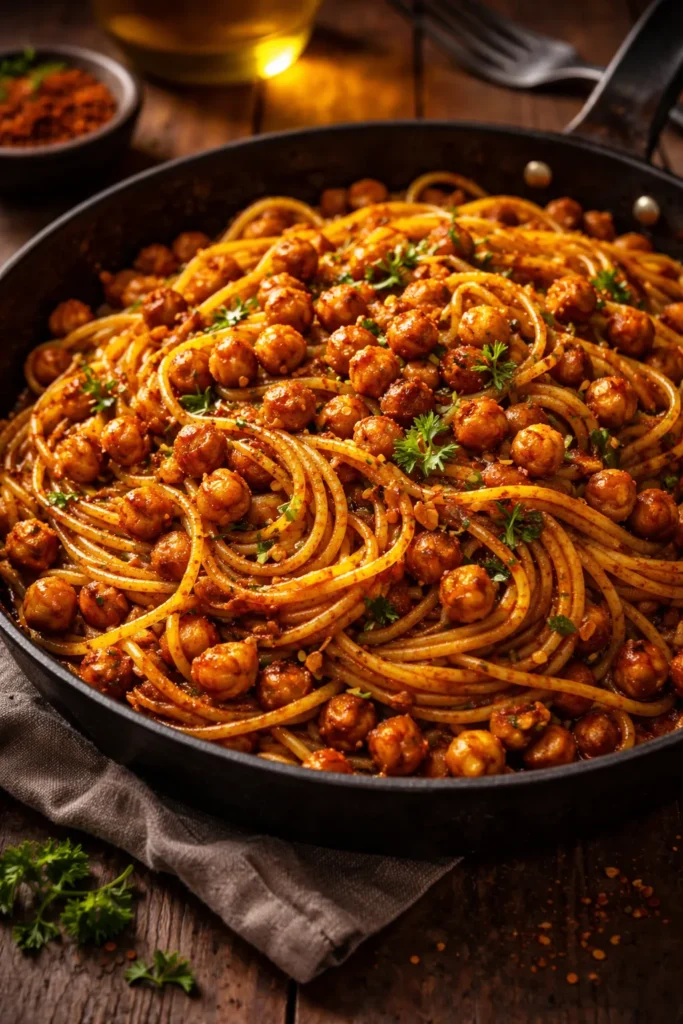
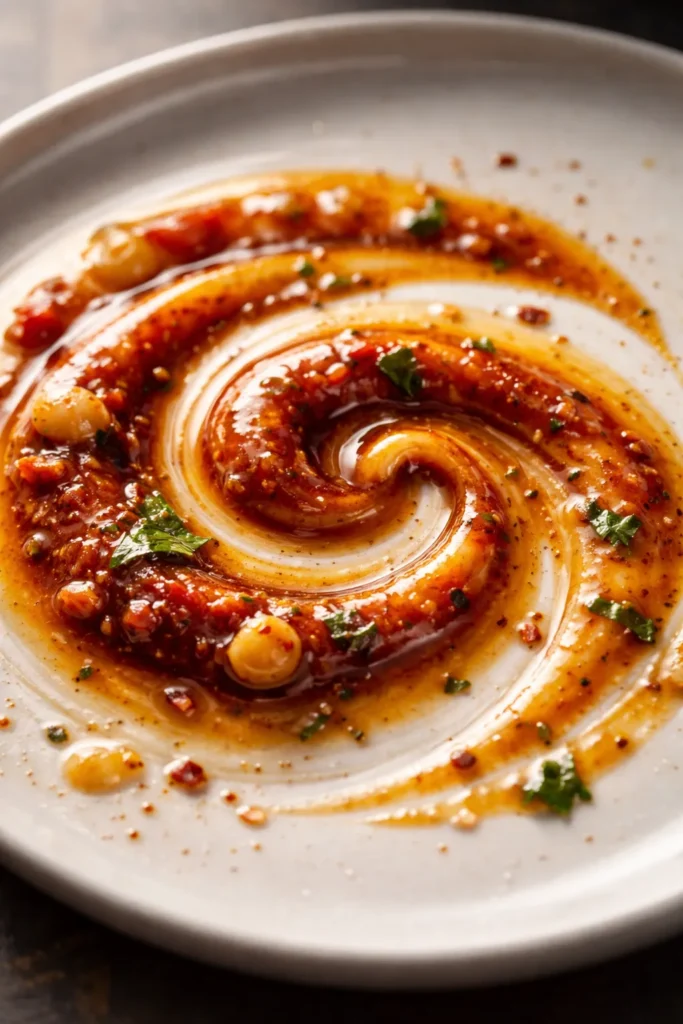
This is the pasta you make when the fridge is nearly empty and the pantry has to carry the whole dinner. Chickpeas get crisped up in a hot pan with olive oil until their exteriors turn golden and slightly crackling, then get tossed with spaghetti and a deeply smoky, spiced paprika oil that coats everything in a rich, rust-colored gloss.
It looks and smells like a serious dish. And it is — even though the ingredient list is short enough to fit on a Post-it note.
Why Chickpeas Work Here
The genius of chickpeas in pasta isn’t their flavor (which is mild on its own) — it’s their textural range. When properly crisped, they offer a bite that’s firm on the outside, creamy at the center, and genuinely satisfying in a way that resembles the chew of small pieces of sausage or ground meat. Combined with the bold smokiness of the paprika oil, they become the kind of ingredient you actively hunt for in every forkful.
What You’ll Need
- 12 oz spaghetti
- 1 can (15 oz) chickpeas, drained, rinsed, and patted completely dry
- 3 tablespoons good olive oil
- 2 teaspoons smoked paprika
- ½ teaspoon chili flakes
- 2 garlic cloves, minced
- ½ cup reserved pasta cooking water
- Fresh parsley and lemon zest to finish
Technique Notes
- Pat the chickpeas completely dry before adding to the pan — moisture is the enemy of crispiness
- Let them sit undisturbed for 2 full minutes before stirring, so the crust has time to form
- The pasta water is non-negotiable: it emulsifies the paprika oil into a sauce that actually coats the pasta instead of pooling at the bottom of the bowl
Pro tip: Smoked sea salt in place of regular salt doubles down on the smokiness without any extra ingredients.
4. One-Pot Vegetable Pasta with Garlic Herb Tomato Sauce
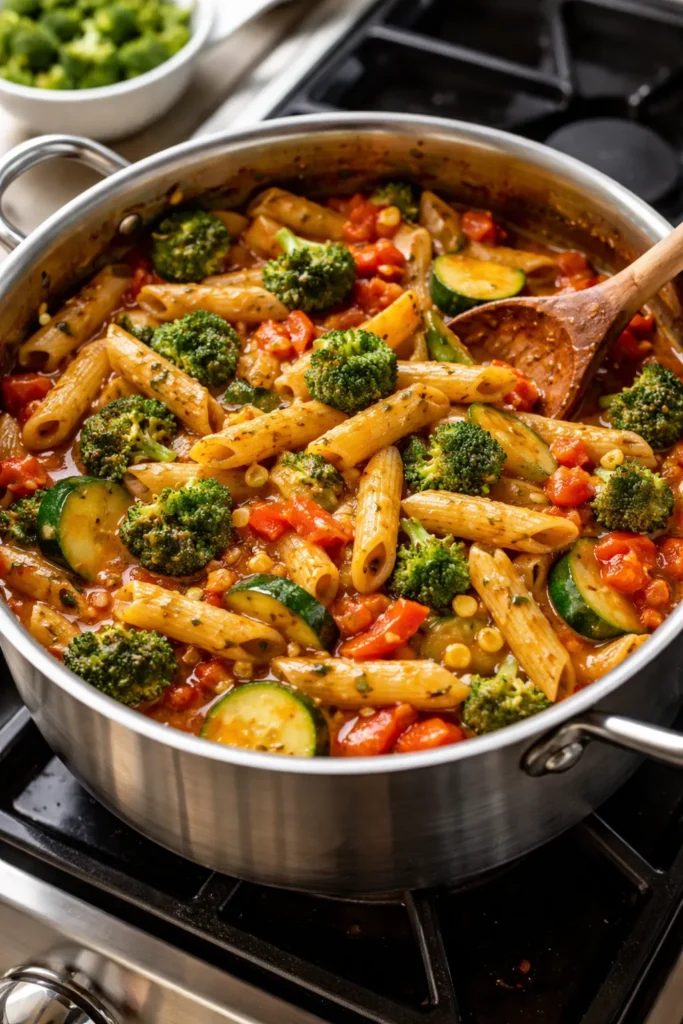
Not all weeknight pastas need to be fancy, and this one leans hard into simplicity without sacrificing substance. Everything — the pasta, the sauce, the vegetables — cooks together in a single pot, with the starchy pasta water thickening the tomato sauce naturally as the pasta absorbs the liquid. The result is a thick, glossy, coating sauce with a flavor that tastes far more developed than the cooking time suggests.
The vegetables are flexible, which is half the appeal. Broccoli, zucchini, corn, and bell pepper are a strong starting combination, but this works with virtually any combination of firm, chopped vegetables totaling around 7 to 8 cups.
What Makes One-Pot Pasta So Effective
Cooking pasta directly in the sauce rather than in separate salted water might seem like a shortcut, but it’s genuinely a technique. The starches released from the pasta as it cooks bind with the sauce, creating a naturally thick coating that no amount of stirring a separate sauce could replicate. Every piece of pasta comes out already flavored, not just coated.
What You’ll Need
- 250g (about 9 oz) short pasta — penne, ziti, or fusilli
- 1 tablespoon olive oil, 2 garlic cloves, 1 onion finely diced
- 2 zucchini, 1 bell pepper, 1 cup corn, 1 head broccoli in florets
- 800g (28 oz) crushed tomatoes + 1½ cups vegetable broth
- 2 tablespoons tomato paste
- 1 tablespoon Italian herbs, 1 teaspoon garlic powder, ½ teaspoon chili flakes
- 1½ teaspoons salt, ½ teaspoon black pepper
- Optional: 1½ cups shredded cheddar or mozzarella to melt over the top
Timing and Watchpoints
- Soften the onion and garlic slowly at first — 3 to 4 minutes on medium heat — so they sweeten and build a proper flavor base
- Add the broccoli on top of the pasta when you put the lid on: it steams first, then gets stirred in toward the end, which keeps it from going mushy
- Once the lid comes off, stir frequently — you want the pasta to finish cooking without burning on the bottom
5. Baked Feta Tomato Penne
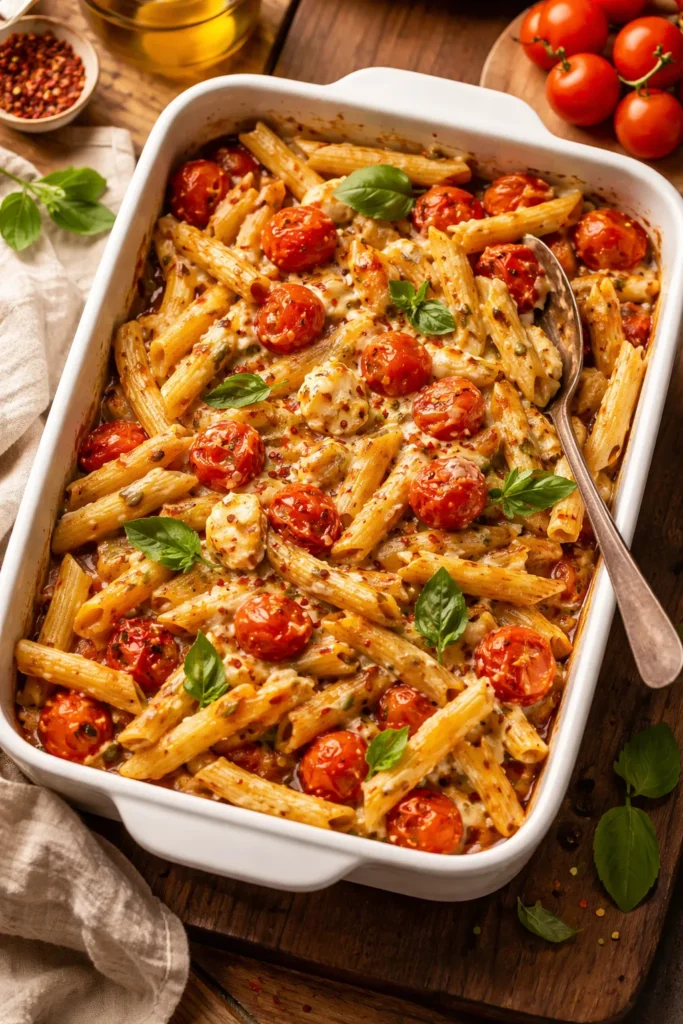
Few dishes in recent memory have earned the kind of widespread, cross-demographic approval that the roasted feta pasta method achieves. A whole block of feta sits nestled among cherry tomatoes, drizzled with olive oil and scattered with garlic and chili flakes, then roasted at high heat until the cheese is golden-edged and creamy at the center and the tomatoes have burst into pools of sweet, jammy sauce.
Stir it together, fold in the pasta, and you have something that tastes like it took an hour when it actually took about five minutes of active work.
What Happens in the Oven
High heat (400°F / 200°C) does two critical things here: it concentrates the tomatoes by evaporating their water content, intensifying their sweetness and acidity, and it transforms the feta from crumbly and sharp into something soft, creamy, and almost spreadable with a browned, slightly crispy surface. When combined, those two textures and flavor profiles meld into a sauce with more personality than most restaurant pastas manage.
What You’ll Need
- 12 oz penne, rigatoni, or fusilli
- 1 pint cherry or grape tomatoes
- 1 block (8 oz) good-quality feta cheese
- 3 tablespoons olive oil
- 3 garlic cloves, roughly sliced
- ½ teaspoon chili flakes
- Fresh basil to finish, black pepper throughout
Pro tip: Choose full-fat block feta packed in brine — the crumbled pre-dried variety doesn’t melt the same way, and the sauce will be grainy rather than creamy.
6. Roasted Cauliflower Alfredo
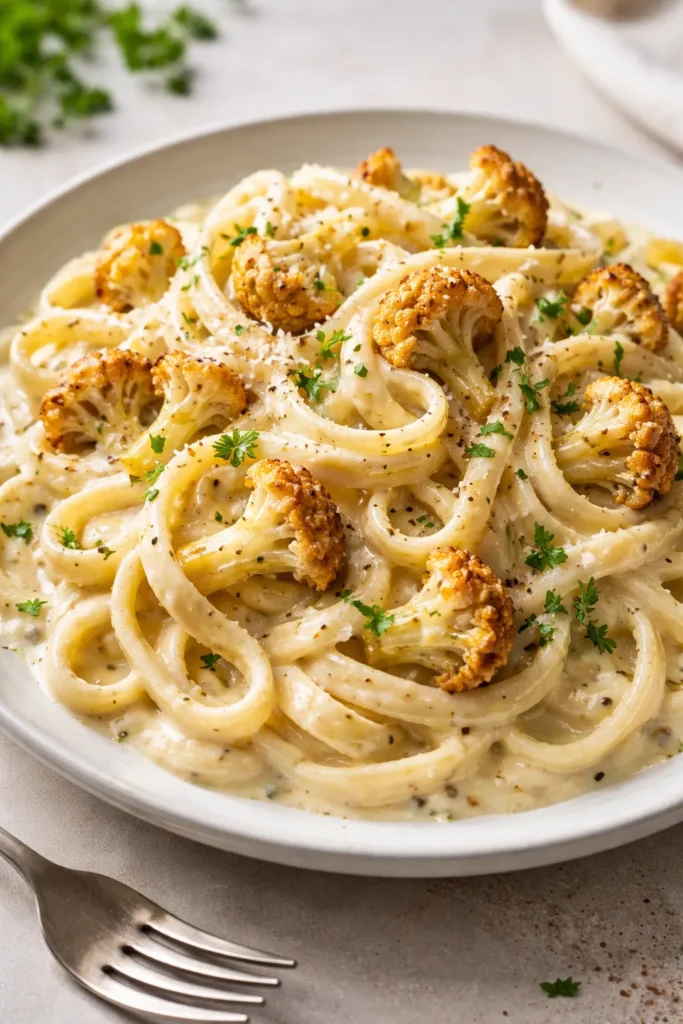
Cream-free pasta that manages to taste more indulgent than the original is not a common achievement. This recipe manages it by blending roasted cauliflower with garlic, a splash of good olive oil, and a ladle of starchy pasta water into a sauce that’s genuinely velvety — no cream, no butter, no tricks beyond the vegetable itself.
The roasting is non-negotiable. Raw or steamed cauliflower blended into sauce tastes flat and vegetable-forward in an unappetizing way. But roasted cauliflower, with its nutty, caramelized edges and concentrated sweetness, produces a sauce with actual depth and body that coats fettuccine the way a proper alfredo should.
The Flavor Logic
Roasting cauliflower at 425°F (220°C) for 25 to 30 minutes does something transformative: the natural sugars caramelize, the moisture evaporates, and the flavor shifts from raw and slightly sulfurous to mellow, nutty, and subtly sweet. Blended with roasted garlic and pasta water, that flavor becomes the backbone of a sauce that nobody identifies as “cauliflower” until you tell them.
What You’ll Need
- 1 medium head cauliflower, cut into florets
- 4 garlic cloves, roasted alongside the cauliflower
- 3 tablespoons olive oil
- ¾ to 1 cup reserved pasta water (add gradually until desired consistency)
- Salt, white pepper, and freshly grated nutmeg
- 12 oz fettuccine
- Parmesan and cracked black pepper to finish
Building Extra Flavor
- Toasted breadcrumbs add a textural contrast that the smooth sauce benefits from
- White miso whisked into the finished sauce adds a layer of savory depth that’s almost uncanny
- A squeeze of lemon at the end cuts through the richness in a way that makes the whole dish taste brighter
7. Eggplant Parmesan Pasta Skillet
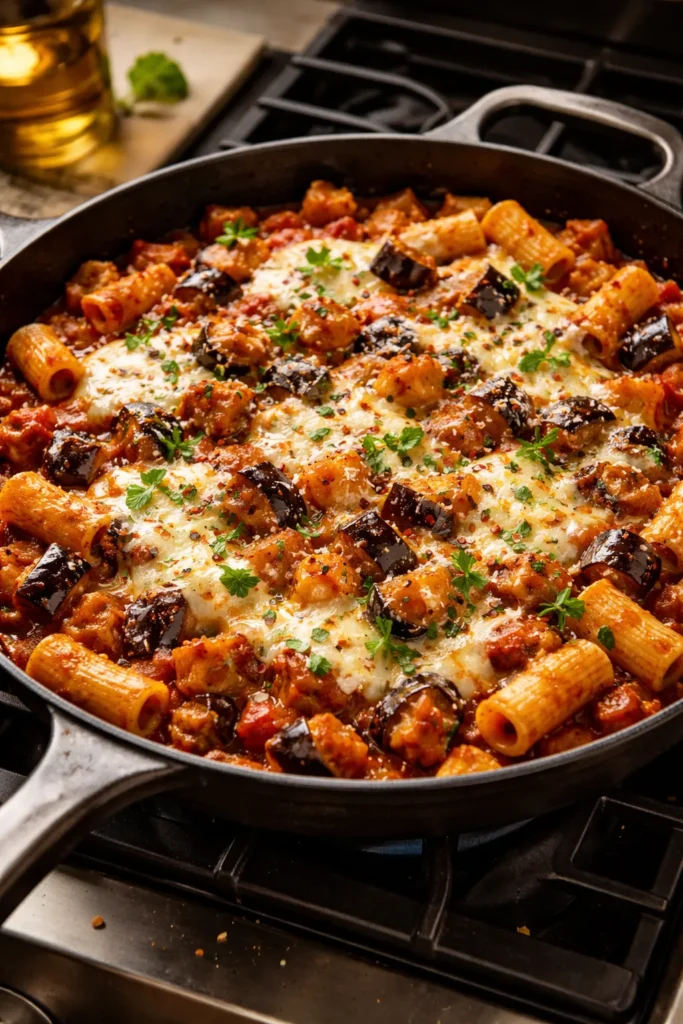
Classic eggplant parmesan is beloved but labor-intensive — the breading, the frying in batches, the layering and baking. This skillet version captures every flavor note that makes the original worth the effort: crispy eggplant, bold tomato sauce, melted mozzarella, salty Parmesan — but collapses it into a single pan dinner that’s ready in under 45 minutes.
The eggplant gets diced and pan-fried in olive oil until golden and tender, which achieves the same caramelized surface flavor as the breaded version without requiring a full frying setup. When folded into the tomato-sauced pasta and covered with a blanket of melting mozzarella, the distinction becomes academic.
Why Eggplant Convinces Meat Eaters
Eggplant has a fibrous, meaty texture when cooked properly — it holds up to heat, absorbs flavor aggressively, and develops a genuinely satisfying chew. It’s also one of the few vegetables that browns properly in oil, giving it that Maillard-reaction richness that our brains associate with cooked meat. When seasoned assertively and paired with a bold sauce, it’s as substantive as any protein.
What You’ll Need
- 12 oz rigatoni or penne
- 1 medium eggplant, cut into ¾-inch cubes
- 2 tablespoons olive oil
- 1½ cups marinara or arrabbiata sauce
- 1 cup shredded mozzarella
- ½ cup grated Parmesan
- Italian seasoning, salt, and red pepper flakes
Key technique: Salt the eggplant cubes and let them sit for 15 minutes before cooking — this draws out excess moisture and helps them brown rather than steam in the pan.
8. Creamy Pumpkin Sage Rigatoni
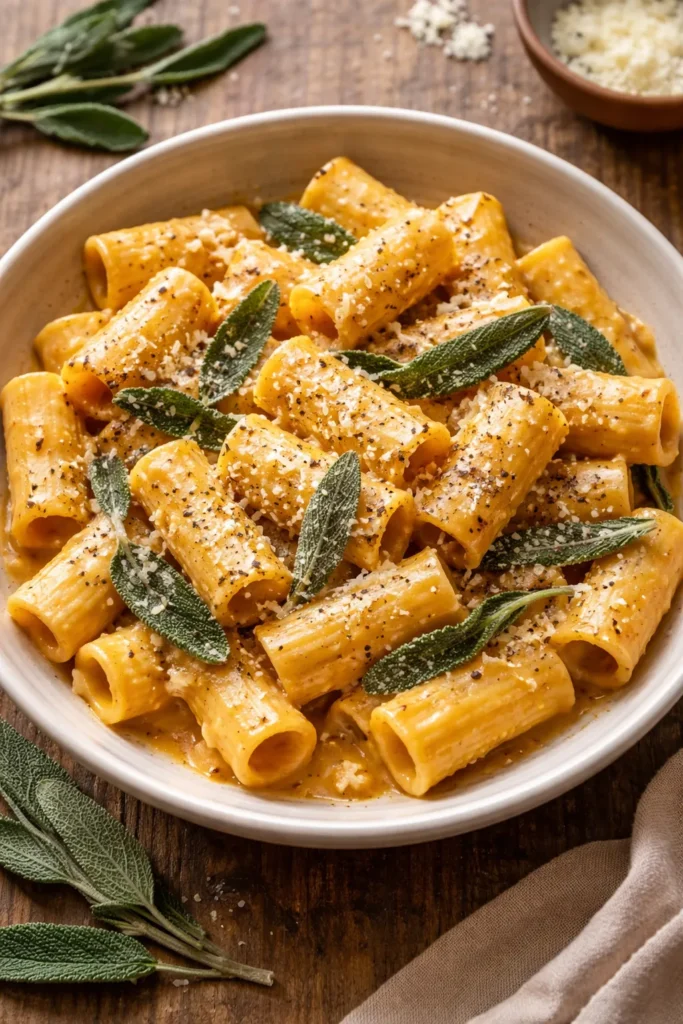
Pumpkin in pasta sounds like a stretch until you taste how well it works. Pumpkin purée mixed with a splash of pasta water and a handful of Parmesan forms a sauce that’s simultaneously light and intensely rich — similar in concept to a butternut squash or sweet potato base, but with a subtly earthier flavor that pairs with sharp, savory additions in a way squash doesn’t quite manage.
The sage is not optional. Brown butter and crisped sage leaves together create an aroma that might be the most compelling smell in all of autumn cooking — nutty, warm, almost caramelized — and when poured over the pumpkin sauce, it ties the whole dish together with a savory note that counters the sweetness of the squash.
What You’ll Need
- 12 oz rigatoni or penne
- 1 cup canned pumpkin purée (not pumpkin pie filling)
- 2 tablespoons unsalted butter
- 8 to 10 fresh sage leaves
- ½ cup grated Parmesan
- ¾ cup reserved pasta water
- ¼ teaspoon freshly grated nutmeg
- Salt and plenty of cracked black pepper
The Brown Butter Technique
Melt the butter over medium heat, swirling constantly, until it turns amber and smells like toasted hazelnuts — about 3 to 4 minutes. Add the sage leaves immediately; they’ll crackle and crisp in seconds. Remove them to a paper towel (they become edible chips that go on top of the finished dish) and use the brown butter as the base for your sauce. The flavored fat that remains has more depth than plain butter by a significant margin.
Pro tip: A small pinch of smoked paprika stirred into the pumpkin sauce adds a subtle warmth that makes the whole dish taste more complex without announcing itself.
9. Lentil Bolognese with Spaghetti
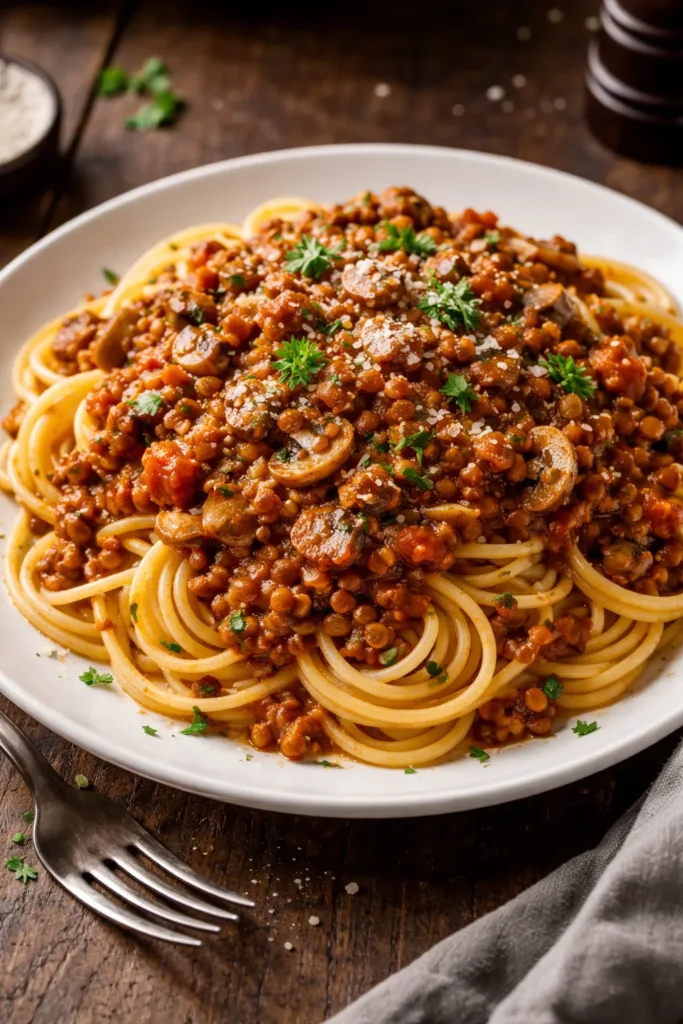
Of all the vegetarian substitutions for a classic Italian meat sauce, lentil Bolognese is the one that holds up to direct comparison most convincingly. Red lentils cook down completely into the tomato base, thickening it and lending a heartiness that mimics the texture of ground meat in a way that’s genuinely surprising the first time you eat it. Add finely diced mushrooms to the same pot and the umami doubles.
The key to making this taste like the real thing is time and technique, not a special ingredient. The soffritto base — slowly sweated onion, carrot, and celery — is where the flavor originates. A splash of red wine, a healthy amount of tomato paste cooked until it turns dark and jammy in the pan, and a long, low simmer build the complexity that makes people reach across the table for the last of the sauce.
Getting the Texture Right
Red lentils dissolve almost completely when cooked long enough, which is exactly what you want — the sauce should have body and substance without identifiable lentil pieces that broadcast the vegetarian status of the dish. Brown or green lentils hold their shape more, which creates a different but still satisfying texture if you want the individual lentils to remain distinct.
What You’ll Need
- 1 cup red lentils, rinsed
- 1 cup finely diced mushrooms
- 1 onion, 2 carrots, 2 celery stalks — all finely diced
- 3 garlic cloves, minced
- 2 tablespoons tomato paste
- 1 cup red wine
- 1 can (28 oz) crushed tomatoes
- 2 cups vegetable broth
- 1 teaspoon dried oregano, bay leaf, salt, pepper
- 12 oz spaghetti or tagliatelle
Make and Freeze
This sauce freezes exceptionally well for up to 3 months. Make a double batch, portion it into zip-lock bags or containers, and you have a weeknight dinner that requires nothing more than boiling pasta and reheating.
10. Butternut Squash Pasta Bake
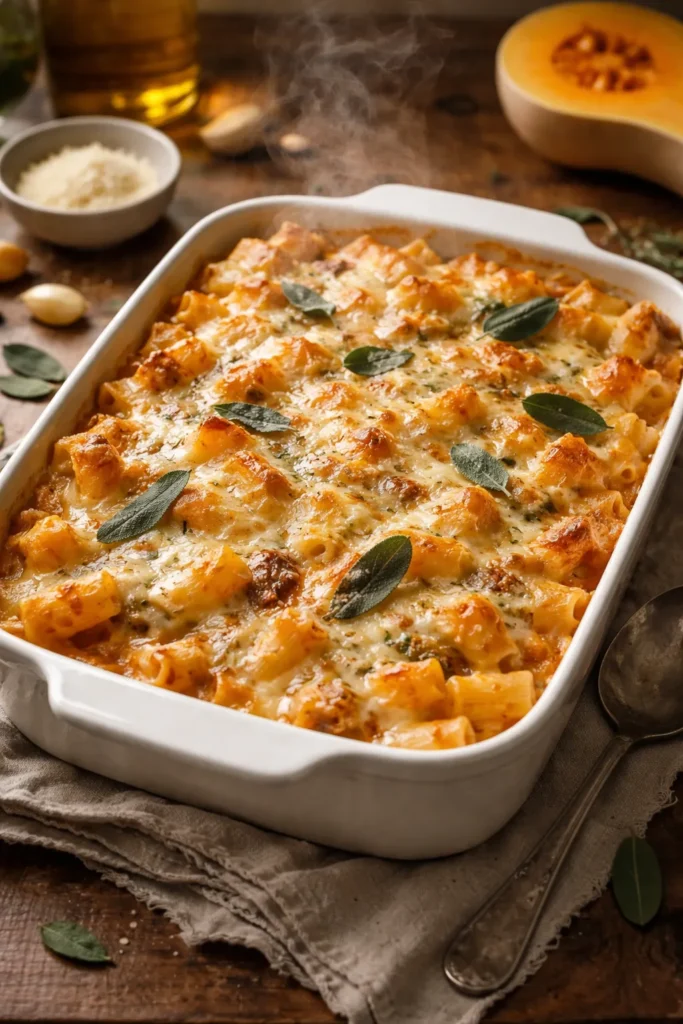
A baked pasta is the final argument in any debate about whether vegetarian food can be satisfying and indulgent. Everything about a pasta bake signals comfort — the bubbling sauce, the golden cheese on top, the way the pasta at the edges gets slightly crispy where it meets the baking dish. This butternut squash version adds the kind of sweet, nutty depth that makes the whole thing taste completely distinct from a standard marinara bake.
The squash gets roasted until deeply caramelized, then roughly mashed and stirred through the pasta with garlic, sage, Gruyère, and a splash of cream to make a sauce that’s thick, rich, and just sweet enough to make every bite interesting.
Why This Converts Even the Skeptics
Baked pasta dishes win people over through texture contrast: the creamy interior of each rigatoni tube versus the slightly crispy, cheese-browned exterior; the soft mashed squash throughout versus the occasional chunk that held its shape in roasting. These contrasts are what make a dish feel abundant — like there’s something new to discover in every bite.
What You’ll Need
- 12 oz rigatoni, penne, or ziti
- 3 cups butternut squash, cubed and roasted until golden
- 2 tablespoons butter, 2 garlic cloves minced, 6 fresh sage leaves
- ½ cup heavy cream or crème fraîche
- 1 cup vegetable broth
- 1 cup grated Gruyère (or a mix of Gruyère and mozzarella)
- ½ cup grated Parmesan
- Salt, pepper, and pinch of nutmeg
Build the Sauce in Layers
Once the squash is roasted, sauté the sage in butter until fragrant and slightly crispy. Add garlic, then cream and broth. Mash roughly half the squash into the liquid and stir — this creates the sauce. Leave the remaining squash cubes whole so the finished bake has textural variation. Fold in the parcooked pasta, transfer to a baking dish, top generously with cheese, and bake at 375°F (190°C) for 25 minutes until golden and bubbling.
Pro tip: Let the bake sit for 5 full minutes out of the oven before serving — the sauce tightens slightly and the portions hold together instead of collapsing into a heap.
Building a Better Vegetarian Pasta: Flavor Principles That Apply to All Ten
What separates a forgettable veggie pasta from one that earns a permanent spot in the weekly rotation comes down to a handful of consistent principles, and understanding them makes you a better pasta cook regardless of the recipe you’re following.
Umami is everything. In meat-based pasta, umami comes largely from the protein itself. In vegetarian cooking, you have to source it deliberately — from mushrooms, tomato paste cooked until dark and jammy, miso, Parmesan, aged cheese, capers, olives, and roasted vegetables. The more of these you layer into a dish, the more satisfying and complete it tastes.
Don’t skip the browning step. Whether it’s caramelizing onions, searing mushrooms, roasting eggplant, or cooking tomato paste until it darkens in the pan — that Maillard reaction is where flavor lives. It’s the difference between a sauce that tastes assembled and one that tastes cooked.
Pasta water is the most underused ingredient in home cooking. The starchy, salted water left in the pot after pasta cooks is an emulsifier, a sauce thickener, and a seasoning agent all at once. Reserving at least half a cup before draining is a habit that will improve every pasta dish you make, vegetarian or not.
Season in stages, not at the end. Add salt to the soffritto base, to the sauce as it builds, to the pasta water, and adjust again at the end. Seasoning only at the finish means you’re compensating for underseasoned layers rather than building a fully developed flavor throughout.
Pairing and Serving These Dishes
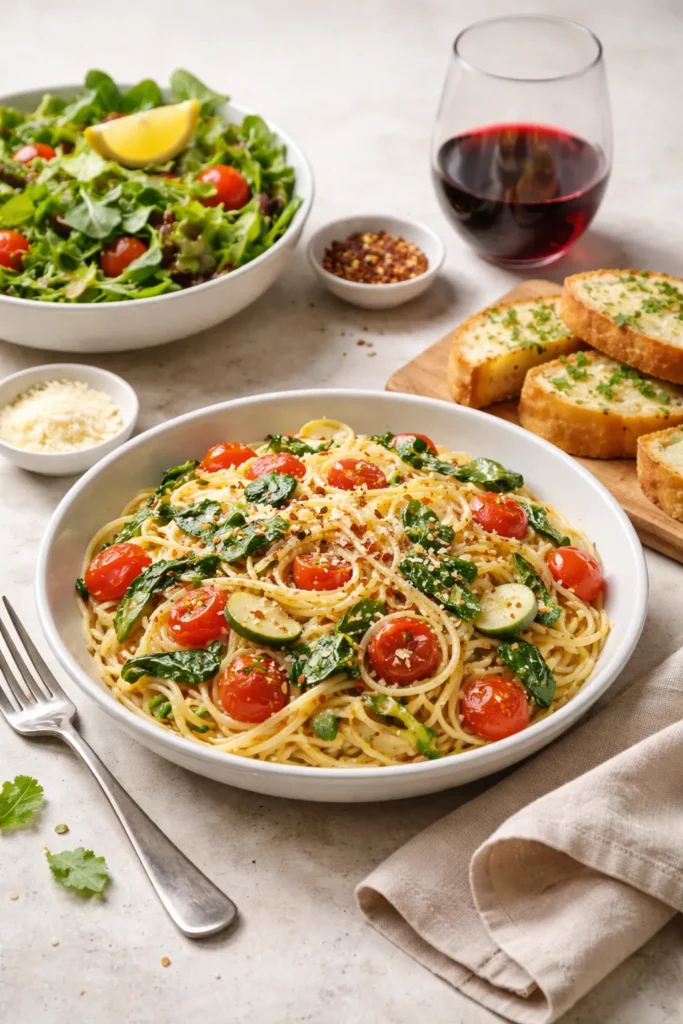
Most of these ten recipes are complete meals on their own, but a few thoughtful accompaniments can round out the meal without adding much work.
A simple green salad dressed with lemon juice and good olive oil works alongside almost any of these dishes — the acidity cuts through richer sauces like the pumpkin sage rigatoni or the butternut squash bake and cleanses the palate between bites. Garlic bread is the other obvious companion, and with a one-pot pasta or a tomato-based bake, it doubles as a sauce-mopping vehicle.
For the more elegant dishes — the mushroom marsala tagliatelle or the caramelized onion-based recipes — a glass of dry red wine served alongside makes the whole experience feel like a proper dinner rather than a weeknight shortcut.
Storing Leftovers Without Losing Quality
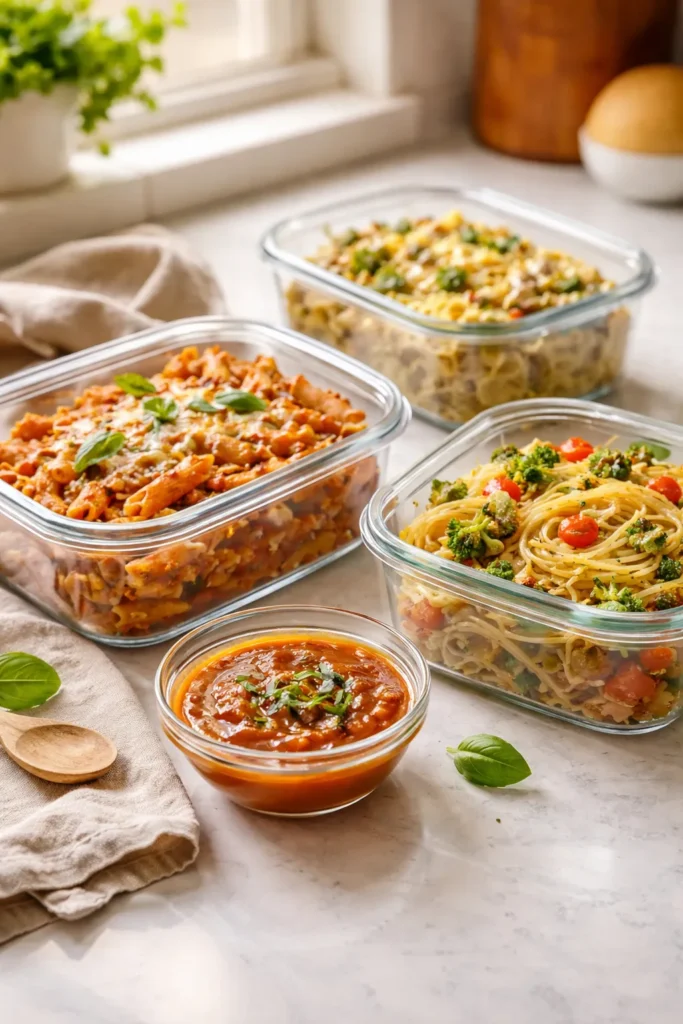
Pasta is one of the few foods that genuinely improves overnight in the fridge, with one caveat: the sauce soaks into the noodles, so the texture shifts. Whether that’s a problem depends on the dish.
Baked pastas like the stuffed shells and butternut squash bake reheat beautifully, since the sauce was already fully absorbed during baking. Add a splash of water or broth before reheating in a covered baking dish at 350°F (175°C) for 15 to 20 minutes.
Sauced pastas (the mushroom marsala, lemon zucchini, or smoky chickpea) are best stored with any extra sauce separate from the pasta when possible, then combined during reheating. If stored together, add a splash of water when reheating in a pan over medium-low heat and stir until the sauce loosens and recoats the noodles.
Delicate pastas with fresh herbs or lemon-dressed greens — like the sweet corn and basil spaghetti — are best eaten the day they’re made. The basil darkens and the citrus turns slightly bitter after sitting.
Final Thoughts
The best argument for cooking from this list isn’t a nutritional one, a moral one, or an environmental one — though all of those can be made. The best argument is purely sensory: these dishes are good, in the immediate, unqualified way that makes people ask for the recipe before they’ve finished eating.
What makes them work for meat eaters specifically is that none of them rely on novelty or virtue. They don’t ask anyone to accept a compromise. They work because they’re built on the same flavor principles as great meat-based pasta — deep browning, layered seasoning, textural contrast, and generous amounts of great cheese.
Start with the mushroom marsala if you want something showstopping, or the baked feta penne if you want something almost entirely hands-off. Either way, you’ll have your answer within the first forkful.