There’s a moment — somewhere between the first hit of Scotch bonnet heat and the deep, smoky pull of palm oil — when West African food stops being unfamiliar and starts feeling like something you’ve been missing your whole life. That’s not an exaggeration. It’s a cuisine built on bold, layered flavors that have been refined across hundreds of years and dozens of distinct cultures, from the Atlantic coastline of Senegal all the way to the landlocked savannahs of Mali and beyond.
West African cooking is one of the most misunderstood culinary traditions outside of the continent itself. People often assume it’s a single, unified cuisine — but the region spans more than a dozen countries, each with its own combinations of spices, fermented ingredients, starchy bases, and regional techniques. What ties it together is a shared philosophy: food is sustenance, yes, but it’s also ceremony, community, and identity. Dishes are made for weddings, funerals, Sunday church gatherings, and ordinary weeknights with equal care.
The good news is that most of these dishes are far more achievable at home than they might appear. The foundational flavor base — a trio of blended tomatoes, onions, and Scotch bonnet or habanero chillies — runs through many of the region’s most beloved recipes. Master that base, stock your pantry with a few key ingredients like red palm oil, dried crayfish, peanut butter, and a bag of your preferred grain, and you’re more than halfway there. What follows are ten West African recipes worth cooking at home, each one a genuine gateway into one of the world’s most extraordinary food traditions.
Table of Contents
- 1. Jollof Rice
- What Makes It Actually Work
- Key Ingredients and Tips
- 2. West African Peanut Stew
- Building the Flavor Layer by Layer
- Best Serving Approach
- 3. Akara (Black-Eyed Bean Fritters)
- The Frying Technique That Actually Works
- Flavoring and Serving Options
- 4. Egusi Stew
- Greens and Protein Additions
- What to Serve It With
- 5. Fufu with Groundnut Soup
- Groundnut Soup as the Perfect Partner
- Getting the Fufu Texture Right
- 6. Thieboudienne (Senegalese Rice and Fish)
- The Nokoss: The Secret at the Center
- Finishing Touches
- 7. Chicken Yassa (Poulet Yassa)
- Making It at Home
- Serving and Variations
- 8. Red Red (Ghanaian Bean Stew with Fried Plantains)
- The Plantain Question
- Quick-Cook Tips
- 9. Puff Puff
- Getting the Oil Temperature Right
- Variations Worth Trying
- 10. Obe Ata (Nigerian Pepper Stew)
- Protein Options and Cooking Times
- Serving Suggestions
- The Pantry Staples That Connect These Dishes
- Where to Find Ingredients Outside of West Africa
- Final Thoughts
1. Jollof Rice
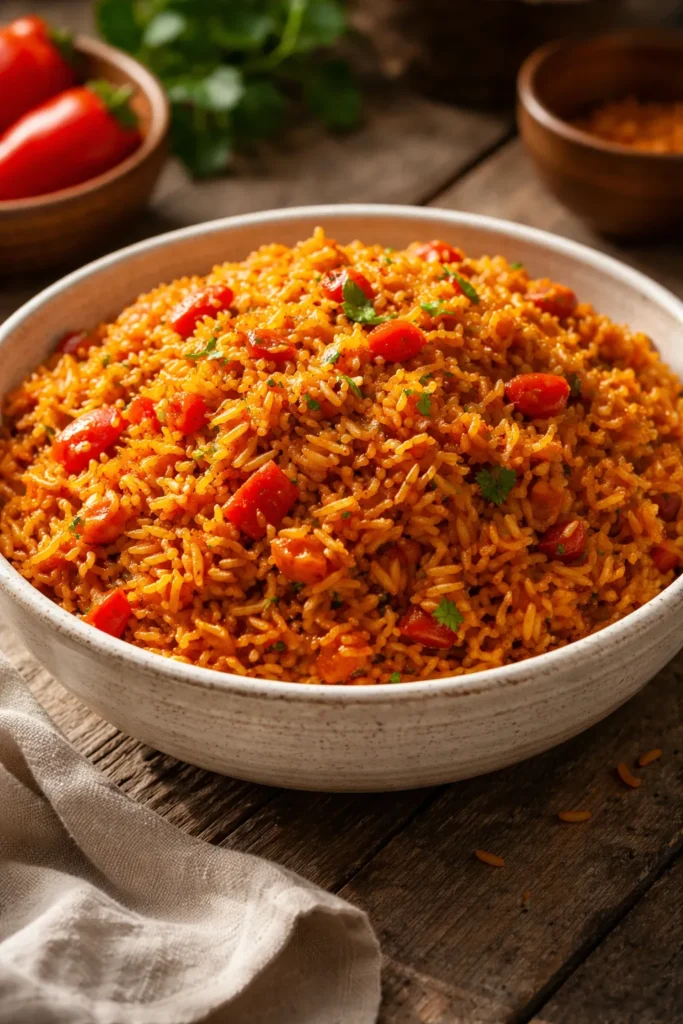
No dish in West African cuisine carries more cultural weight — or sparks more friendly argument — than jollof rice. It’s a one-pot wonder of long-grain rice cooked directly in a tomato-and-pepper base until each grain is stained a deep, burnished orange and infused with layers of flavor that no side sauce could replicate.
The dish appears across the region, but Nigeria and Ghana stake the loudest claims to the definitive version. Nigerian jollof uses a blend of tomato purée, red bell pepper, and Scotch bonnet chilli, cooked down until the raw, acidic edge is completely gone before the rice is added. Ghanaian jollof tends to favor tomato purée and paste without the bell pepper, resulting in a slightly denser, more concentrated base. Both are incredible, and the “rivalry” between them is mostly a source of great fun for anyone lucky enough to taste both.
What Makes It Actually Work
The most common mistake when making jollof rice at home is adding the raw rice to a sauce that hasn’t been cooked long enough. The base needs to simmer for at least 25 to 30 minutes — you’re looking for the oil to separate and rise visibly to the surface, which signals that the water content has cooked off and the flavors have concentrated. Add raw rice to an undercooked base, and the finished dish will taste sharp and tinny rather than deep and rounded.
The other secret most recipes gloss over: the steam-finishing step. Once the rice is nearly cooked, reduce the heat to the absolute minimum, cover the pot tightly (use foil under the lid if yours doesn’t seal well), and let the rice steam in its own trapped heat for another 10 to 15 minutes. This is what gives the best jollof its famously fluffy, separated texture — and it’s also how a thin layer of crust, called the “party rice” layer by Nigerian cooks, forms on the bottom of the pot.
Key Ingredients and Tips
- Use long-grain parboiled rice — it holds up to the wet cooking environment without turning mushy
- Blend your tomatoes with at least one Scotch bonnet chilli (or habanero), half a red bell pepper, and one large onion for the base
- Cook the blended base in a generous amount of neutral oil for 25–35 minutes before adding rice or stock
- Season with chicken or beef stock (or a bouillon cube dissolved in water) rather than plain water for a deeper flavor
- Serve with: fried plantains, grilled chicken, or a simple tomato fish stew
The aroma alone — that combination of caramelized tomatoes, smoky stock, and warm spices wafting through your kitchen — is worth the hour it takes to make.
2. West African Peanut Stew
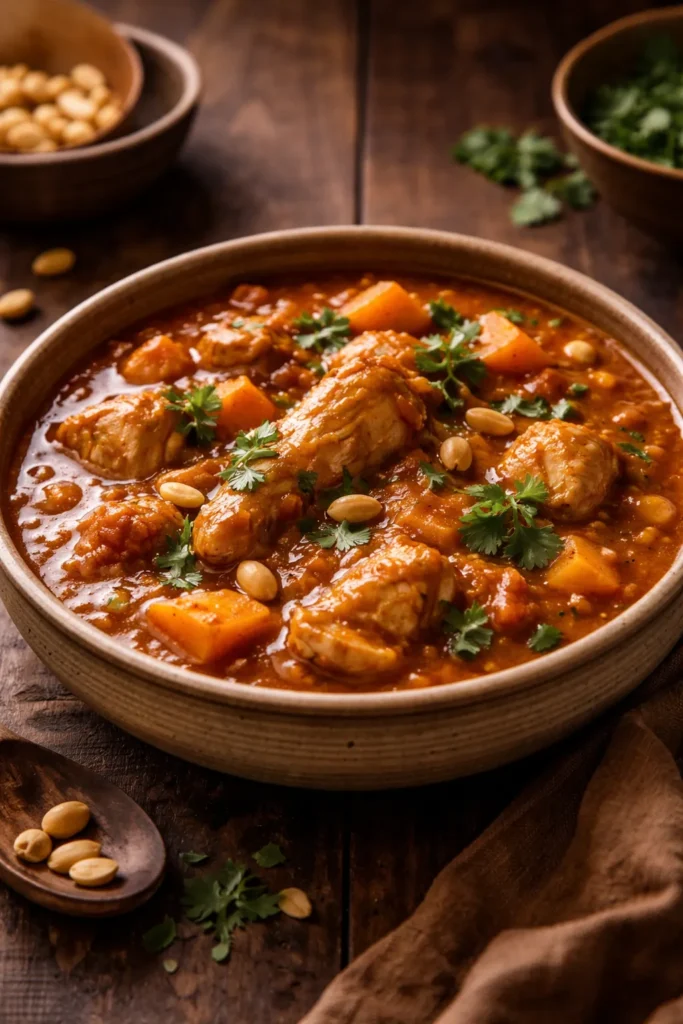
Called nkatsenkwan in Ghana, maafe in Senegal and Gambia, and mafé in Mali — where it’s believed to have originated among the Mandinka and Bambara people — West African peanut stew is one of those dishes that every home cook needs in their rotation. It’s rich, deeply savory, slightly sweet from the peanut butter, and it has that long-simmered quality that makes it taste like it took all day, even when it didn’t.
The base, at its core, is straightforward: aromatics (onion, garlic, ginger) sautéed in oil, a generous amount of blended tomatoes and peppers stirred in and cooked down, and then peanut butter folded in gradually until it dissolves into the sauce. Chicken, lamb, beef, or goat all work beautifully here. For a plant-based version, sweet potato chunks and chickpeas hold up wonderfully in the long simmer.
Building the Flavor Layer by Layer
The technique that separates a great peanut stew from a merely decent one is patience with the chalé sauce — the deeply cooked tomato base used across Ghanaian cooking. This base needs to be cooked until it transforms: the raw red color deepens to a darker, brownish-red, the oil separates visibly, and the sharp tomato smell mellows into something almost sweet and smoky. That transformation takes 30 to 40 minutes on a low-medium heat, and it’s non-negotiable.
Add the peanut butter one tablespoon at a time, stirring it in as you go. This prevents clumping and gives you control over the final thickness. The stew is ready when the peanut oil has separated and pooled visibly on the surface — a telltale sign that the dish has cooked through completely.
Best Serving Approach
- Serve over steamed white rice, boiled yam, or fufu for the full experience
- A pierced whole Scotch bonnet added during the last 20 minutes of cooking adds fragrance without overwhelming heat — remove it before serving if you prefer less spice
- Crushed roasted peanuts or dried, fermented cassava (gari) sprinkled on top add a satisfying textural contrast
- Leftovers improve dramatically overnight as the flavors continue to meld
Worth knowing: If the stew looks too thick after simmering, a splash of stock or water stirred in off the heat will loosen it without thinning the flavor.
3. Akara (Black-Eyed Bean Fritters)
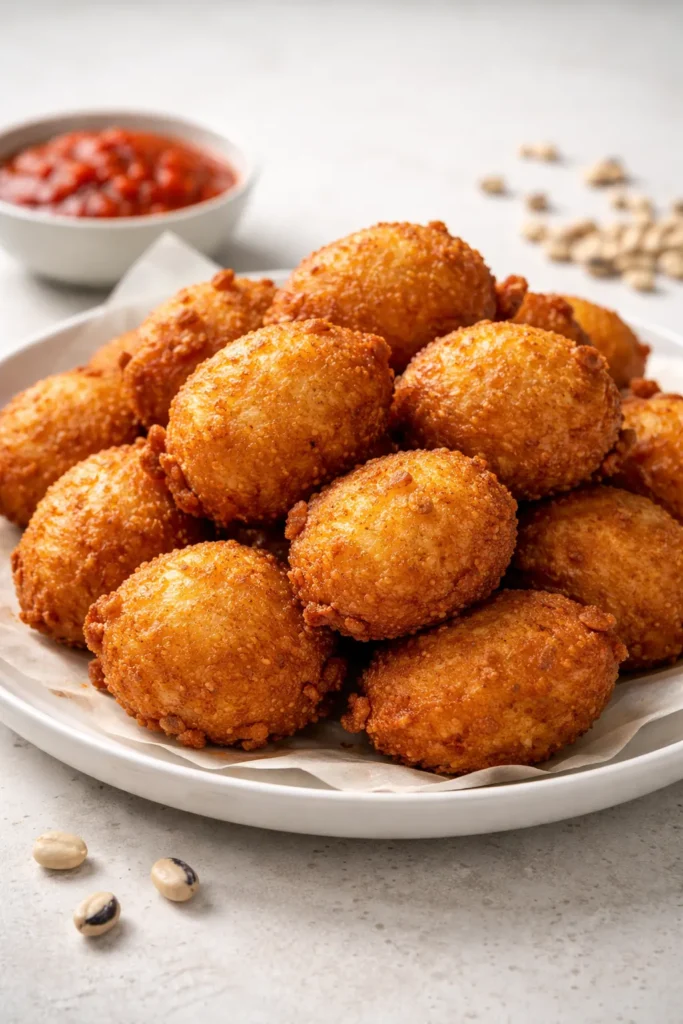
Akara might be one of the most globally traveled dishes in all of West African cooking. Originating with the Yoruba people of Nigeria, Togo, and Benin, these crisp, golden fritters made from soaked and peeled black-eyed beans traveled through the transatlantic slave trade all the way to Brazil — where they’re known as acarajé — and into the Caribbean, where variations survive in Cuba and Aruba to this day. That culinary journey alone makes akara worth knowing.
At home, the process starts with dried black-eyed peas soaked overnight (or for at least 8 hours) until the skins soften and loosen. After soaking, the skins are rubbed off and rinsed away, leaving you with clean, starchy beans that get blended into a thick, smooth paste. The key detail most recipes skip: whipping air into the batter before frying. A few minutes of vigorous beating with a wooden spoon or a brief spin with a hand blender makes the batter light enough to puff up in the oil rather than frying into dense, heavy balls.
The Frying Technique That Actually Works
Oil temperature matters more with akara than almost any other fried food. The ideal range is between 185°C and 195°C (365–385°F). Too cool, and the fritters absorb oil and turn greasy. Too hot, and the outside browns before the center cooks through. A thermometer is genuinely helpful here, though you can test readiness by dropping a small spoonful of batter into the oil — it should sink slightly, then immediately rise and start to sizzle actively.
Fry in small batches of no more than four or five at a time. Overcrowding the pot drops the oil temperature and produces soggy results.
Flavoring and Serving Options
- Classic seasoning includes finely diced onion, Scotch bonnet chilli, and salt beaten directly into the batter
- Add smoked dried shrimp (crayfish powder) to the batter for a more savory, umami-forward version
- Serve hot, split open, and stuffed with a spicy tomato salsa or grilled prawns for a contemporary presentation
- Traditionally eaten for breakfast alongside pap (fermented corn porridge) or alongside rice for a more substantial meal
Akara is best eaten immediately after frying, when the exterior is still crackling-crisp and the interior is spongy and hot all the way through.
4. Egusi Stew
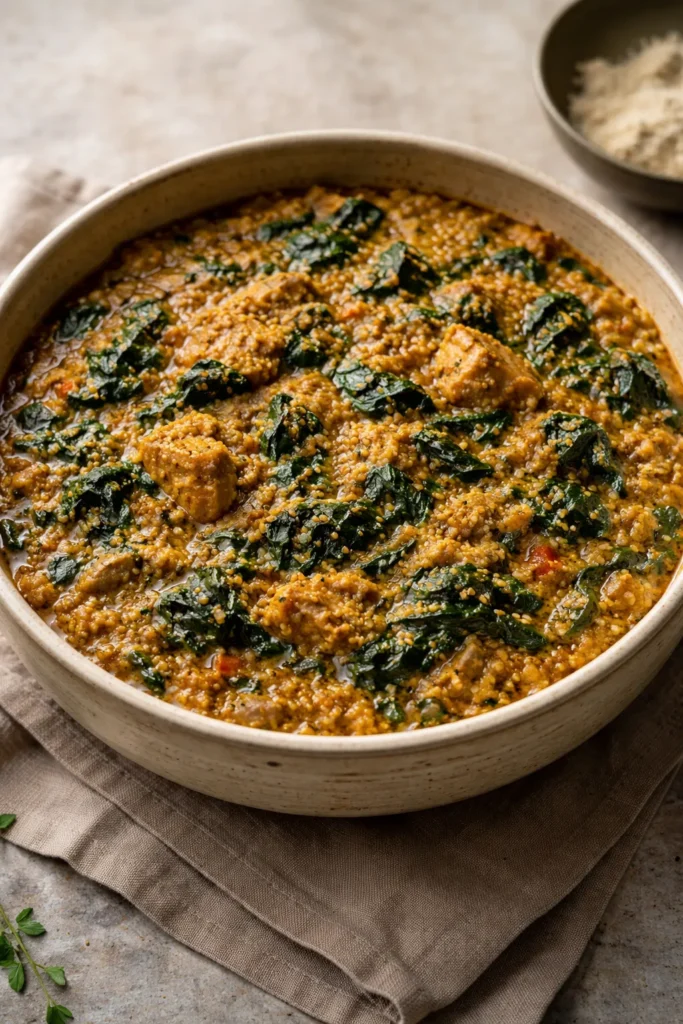
If you ask anyone who grew up eating West African food to name the dish they’d most want on a cold evening, there’s a strong chance egusi stew comes up. It’s one of those deeply comforting, unapologetically bold dishes built around egusi — the dried, ground seeds of a melon plant native to West Africa. The ground seeds have a slightly nutty, rich flavor and cook into the tomato-and-pepper base in a way that creates a uniquely thick, almost creamy texture.
Egusi stew is a major part of Nigerian, Ghanaian, and broader West and Central African cooking, though the specific technique and added ingredients vary considerably by region and family. In Nigeria, the egusi is typically fried first in palm oil before the tomato base is added — this “frying method” gives the finished stew a more distinct, toasted nutty character. A second approach, called the “swallow method,” dissolves the ground egusi directly into a small amount of water first to form a paste, which is then dropped in spoonfuls into the simmering stew for a softer, less crumbly texture.
Greens and Protein Additions
Egusi stew is almost always finished with some form of leafy green. In Nigeria, uziza leaves (with their distinctly peppery, anise-like bite) or spinach are the most common choices. Outside of West Africa, baby spinach or chopped kale work well and are easy to find. Add the greens only in the last 5 minutes of cooking to preserve both color and texture.
For protein, smoked turkey, stockfish (dried and rehydrated cod), goat, or beef short ribs all work brilliantly — the long simmering time turns tough cuts into fork-tender, flavor-soaked pieces that pair perfectly with the dense stew.
What to Serve It With
- Pounded yam is the most traditional pairing — the smooth, elastic dough is perfect for scooping
- Fufu, eba (gari balls), or steamed white rice all work well too
- Red palm oil is non-negotiable for authentic flavor — its deeply earthy, slightly smoky quality is irreplaceable here
Pro tip: Ground crayfish (dried, powdered shrimp) stirred into egusi stew adds a layer of savory depth that’s hard to identify but impossible to replicate without it. Find it at any African or Asian grocery store.
5. Fufu with Groundnut Soup
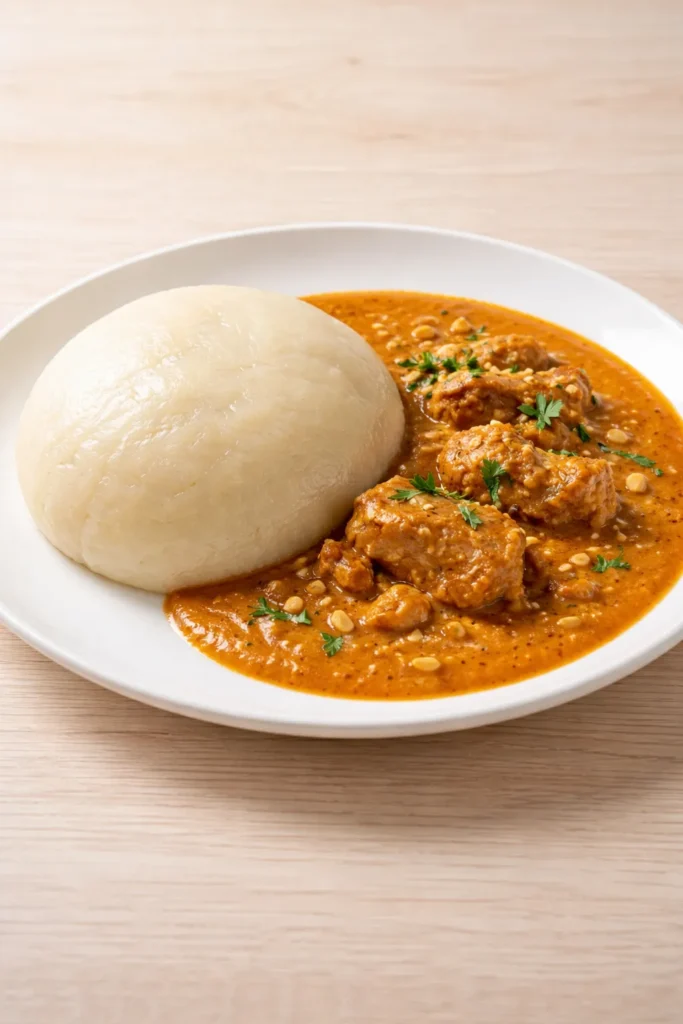
Fufu occupies a central place in West and Central African food culture that goes well beyond simple sustenance. It’s the starchy accompaniment around which many of the region’s soups and stews are built — a smooth, dense, elastic dough made from pounded cassava, yam, plantain, or a combination. The act of eating fufu is itself intentional: a portion is pinched off, shaped into a small well with the thumb, and used to scoop up whatever soup accompanies it. No cutlery required.
The traditional method — pounding cooked cassava and plantain in a large wooden mortar until the starch structure completely transforms — produces a texture that no blender or food processor can fully replicate. That said, fufu flours (plantain flour, cassava flour, cocoyam flour) available at African grocery stores produce an excellent stovetop version that’s far more practical for everyday cooking. The process involves cooking the flour with water in a non-stick pot, stirring constantly with a strong wooden spoon until the mixture pulls away cleanly from the sides and forms a smooth, glossy ball.
Groundnut Soup as the Perfect Partner
Groundnut soup — essentially Ghana’s Sunday roast equivalent, as chef Akwasi Brenya-Mensa describes it — is the most natural companion for fufu. Fresh or blended tomatoes, onion, garlic, and ginger form the base. Peanut butter is added gradually, giving the soup its creamy, earthy character. Pieces of chicken or goat on the bone simmer in the soup until they’re fall-apart tender and deeply infused with the flavors of the broth.
Getting the Fufu Texture Right
- Aim for a consistency that holds its shape when pinched but still feels soft and pliable — not sticky, not crumbly
- Always serve fufu hot — it firms up considerably as it cools
- Dip your spoon or hands in warm water while shaping for a cleaner result
- Don’t over-season the fufu itself — its mild, slightly fermented flavor is designed to contrast against boldly seasoned soups
A proper bowl of fufu and groundnut soup, eaten while still steaming, is as comforting as food gets anywhere in the world.
6. Thieboudienne (Senegalese Rice and Fish)
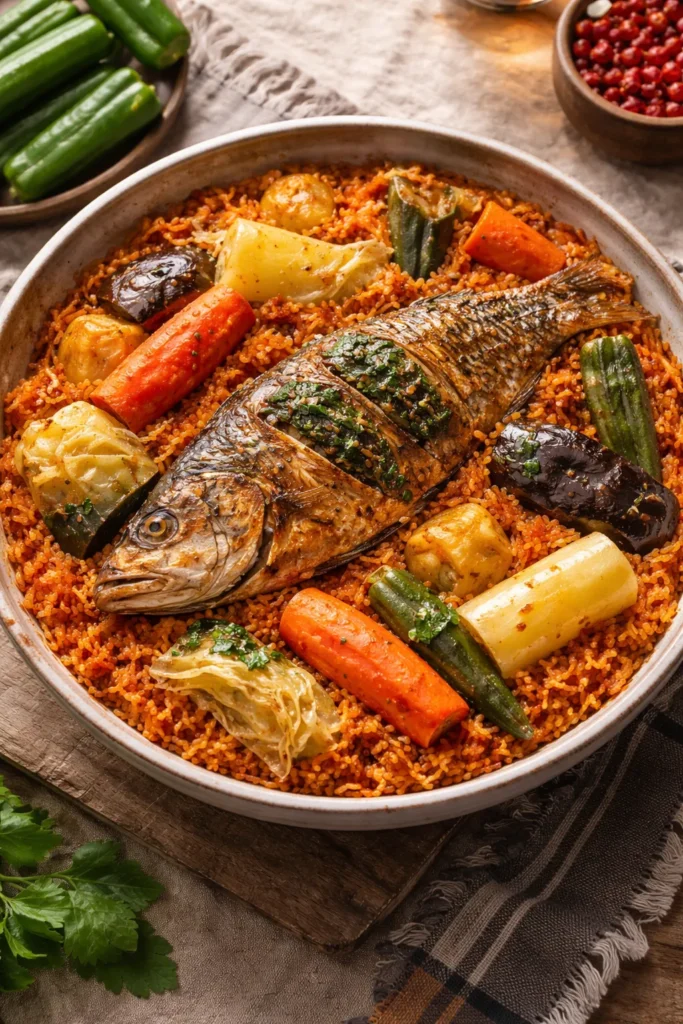
Senegal’s national dish is, by the assessment of many who have tasted it, the most magnificent expression of rice cookery in all of West Africa. Listed as UNESCO Intangible Cultural Heritage, thieboudienne (sometimes written thiéboudienne, or ceebu jen in Wolof) is a one-pot masterpiece of rice cooked in a rich tomato broth alongside firm, meaty fish and a generous assortment of vegetables — cassava, carrot, aubergine, cabbage, and okra.
Its historical roots trace back to the fishing region of Saint-Louis, Senegal, where a 19th-century cook named Penda Mbaye is credited, by oral tradition, with developing the dish using broken rice imported by French colonizers. The dish is widely considered the ancestor of modern jollof rice — the riz au poisson that inspired every subsequent tomato-and-rice dish across the region.
The Nokoss: The Secret at the Center
What sets thieboudienne apart from other West African rice dishes is the nokoss — a brilliantly fragrant green paste of blended spring onion, garlic, salt, black pepper, and sometimes fresh chilli. This paste is stuffed into slits cut into the fish before cooking, perfuming the flesh from the inside out. As chef Khadim Mbamba of London’s Little Baobab restaurant puts it, “That super fresh aroma of the nokoss as it hits the pan will tell you if it’s going to be good.”
Sea bass, snapper, and grouper all work well — any firm, white-fleshed fish that won’t fall apart during the long cooking process. The fish is cooked gently in the broth, removed and kept warm, and then the rice is cooked in that same flavored liquid until it absorbs every last bit of it.
Finishing Touches
- A small bowl of tamarind paste thinned with the cooking broth is served on the side as a dipping sauce — its sour punch cuts beautifully through the richness of the dish
- A squeeze of fresh lime over the plated rice and fish just before eating brightens the entire dish
- The rice ideally develops a light crust on the bottom of the pot — that’s a sign of a great thieboudienne, not a mistake
7. Chicken Yassa (Poulet Yassa)
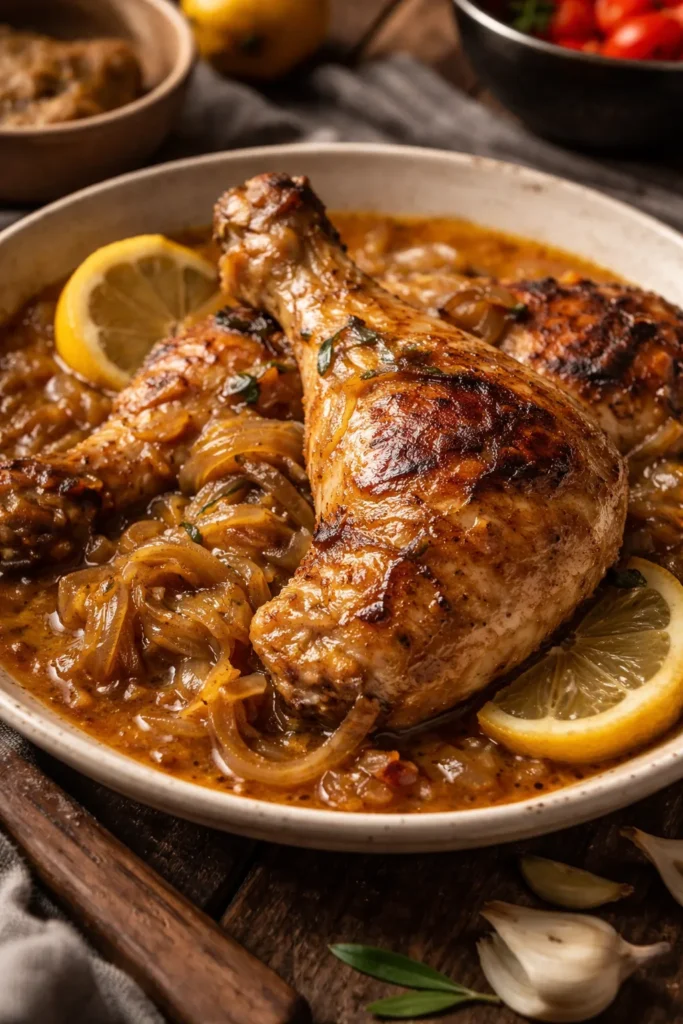
Chicken yassa is one of those dishes that looks deceptively simple on paper and then completely surprises you with how good it is. It’s a Senegalese classic — also widely eaten in the Gambia — built on a foundation of deeply caramelized onions spiked with lemon juice, Dijon mustard, garlic, ginger, and a whole Scotch bonnet chilli. The chicken marinates in this mixture for at least two hours (overnight is better), gets browned until golden, and then stews in the marinade until everything softens into a tangle of yielding onions and fall-off-the-bone chicken.
The mustard is the ingredient that catches most people off guard. It’s not a North American or European addition — Dijon mustard has been a staple in West African kitchens for generations, brought through French colonial influence and absorbed into local cooking so thoroughly that it now feels entirely native to the dish. It provides acidity, a subtle sharpness, and an emulsifying quality that makes the braising liquid glossy and coating rather than thin and watery.
Making It at Home
The key to chicken yassa that genuinely impresses is taking the onions seriously. They need to cook slowly in a good amount of oil — at least 25 to 30 minutes — until they’re completely soft, translucent, and beginning to caramelize at the edges. Don’t rush this step. Pale, barely-softened onions will give you a dish that tastes raw and sharp. Properly caramelized onions mellow into something almost sweet, which balances the lemon’s acidity perfectly.
Serving and Variations
- Serve over steamed white rice, which soaks up the glossy braising sauce beautifully
- Green olives are a common addition in many versions — their briny saltiness plays off the sweet onions and tart lemon
- Substitute fish (particularly whole tilapia or mackerel) for the chicken for a pescatarian version that’s equally excellent
- Leftover yassa reheated gently the next day is arguably better than the fresh version — the onions continue softening and the flavors deepen overnight
8. Red Red (Ghanaian Bean Stew with Fried Plantains)
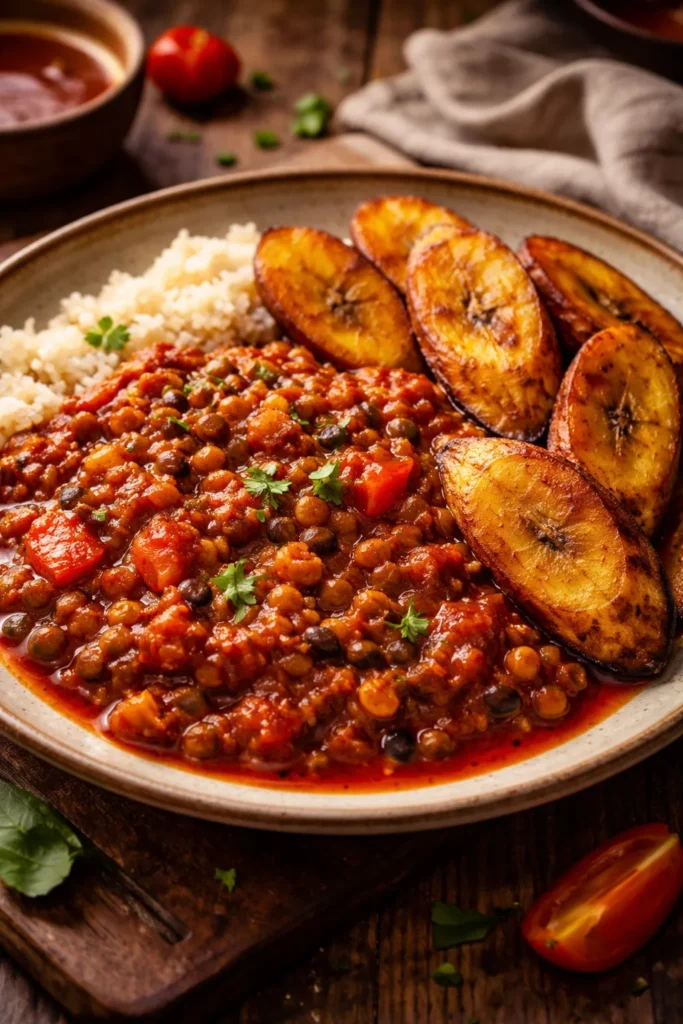
The name is a reference to the vivid, rust-red color of the dish — red from the palm oil, red from the tomatoes — and “red red” is arguably one of the most satisfying quick meals in the entire West African repertoire. It’s a Ghanaian black-eyed pea stew made with pre-cooked beans simmered in a tomato base built on red palm oil, and it’s almost always served alongside slices of ripe, golden-fried plantain.
This is the kind of dish that food writer Gabi Odebode describes as a memory food — the kind of thing a grandmother would have waiting when you came home from school. It’s humble, fast, and deeply nourishing. It’s also one of the most naturally vegan dishes in the entire West African canon, requiring no substitutions or workarounds.
The Plantain Question
The plantains served alongside red red must be fully ripe — skin blackened or heavily spotted, interior yellow and soft. Under-ripe plantain won’t caramelize the same way and will taste starchy rather than sweet. Slice them diagonally about 1 cm thick and fry in a generous amount of oil over medium-high heat until deeply golden on both sides — about 2 to 3 minutes per side. Don’t move them too soon; they need to develop a proper crust before flipping.
Quick-Cook Tips
- Canned black-eyed peas work perfectly well here and cut the cooking time dramatically — drain and rinse them before using
- Red palm oil is traditional and contributes significantly to the dish’s flavor and color; substitute with vegetable oil plus a tablespoon of tomato purée if necessary, though the result will be less authentic
- Add a pinch of smoked paprika if you’re cooking without palm oil to approximate some of that earthy warmth
- Gari — dried, fermented cassava granules with a slightly sour, crunchy quality — is a traditional accompaniment alongside the plantains and adds a pleasing textural contrast
9. Puff Puff

Puff puff holds a special place in West African food culture — not as a formal dessert (traditional West African cooking doesn’t tend toward a distinct dessert course), but as the beloved street food and party snack that appears at every celebration worth attending. In Nigeria it’s puff puff. In Togo, it’s botokin. In Liberia, kala. In Côte d’Ivoire, bofloto. The names change but the concept is consistent: yeasted dough, fried until golden and puffed, and eaten while still warm.
Good puff puff is light inside — airy, pillowy, with just a slight chew — and golden-crusted outside. The dough is flavored with nutmeg (about ¼ teaspoon per batch), which gives it that distinctive, slightly warm, aromatic quality you’ll recognize immediately if you’ve eaten them before. The yeast is what separates puff puff from other fried dough snacks: the dough needs to rest for 45 minutes to an hour after mixing, until it’s visibly risen and bubbly, before it hits the oil.
Getting the Oil Temperature Right
Drop a tiny piece of dough into the oil before committing the full batch. It should sink briefly, then rise immediately and begin to turn golden within 30 to 40 seconds. If it rises too fast and darkens within 15 seconds, the oil is too hot. If it sinks and sits without moving, the oil isn’t hot enough yet.
The dough is sticky — use two spoons or an ice cream scoop to drop portions into the oil rather than trying to shape them by hand. Aim for golf-ball-sized portions. They’ll puff and expand considerably as they fry.
Variations Worth Trying
- Roll hot puff puff in cinnamon sugar immediately after frying for a beignet-style finish
- Add a tablespoon of evaporated milk to the batter for extra richness
- Stuff a small cube of dark chocolate into the center of each ball before frying for a contemporary twist
- A dipping sauce of honey thinned with a little warm water and a pinch of chilli flakes pairs brilliantly with the fried dough
Pro tip: Puff puff is best eaten within 20 minutes of frying. They don’t hold particularly well — the crust softens as they cool, and the interior can become heavy. Make them to order, eat them immediately, and don’t plan on leftovers.
10. Obe Ata (Nigerian Pepper Stew)
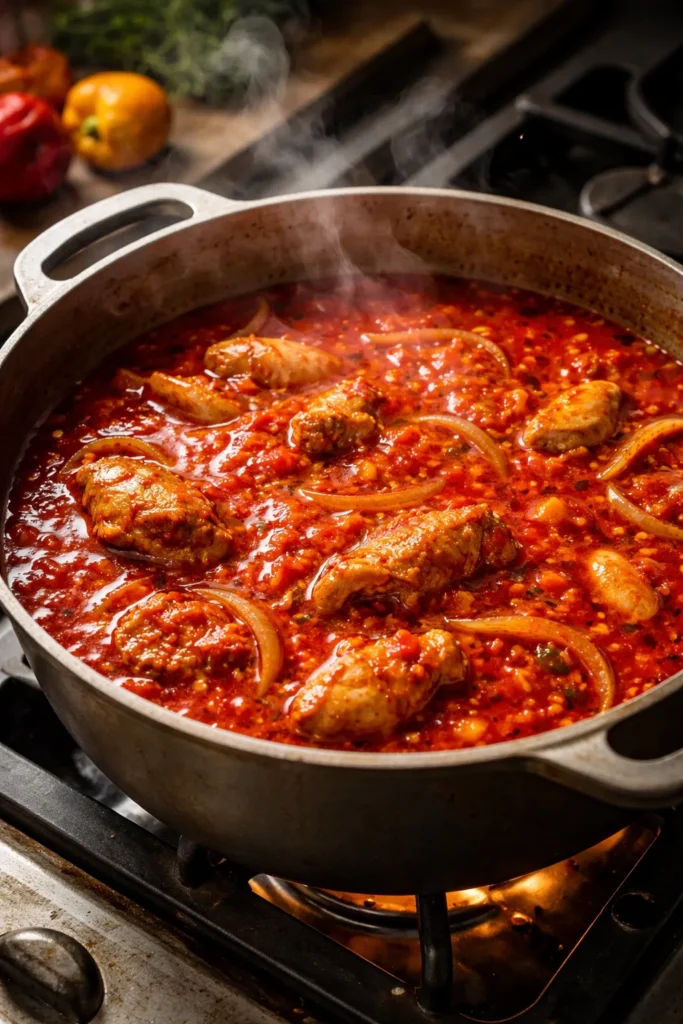
Obe ata — which translates simply as “pepper stew” or “pepper soup” in Yoruba — is one of the most versatile and underappreciated dishes in the Nigerian kitchen. It’s built almost entirely from tatashe (red bell peppers), tomatoes, onions, and Scotch bonnet chilli, blended together and simmered in oil with whatever protein you choose. The resulting stew is vibrantly red, deeply fragrant, and intensely flavorful despite using what is essentially a handful of fresh ingredients.
What makes obe ata special is the concentration of pepper flavor. The blended base is cooked in oil for 30 to 40 minutes before any protein is added — long enough that the water evaporates, the sugars in the peppers caramelize slightly, and the oil separates and pools on top. That oil, now beautifully infused with pepper flavor, bastes the protein as it finishes cooking in the stew.
Protein Options and Cooking Times
Chicken thighs (bone-in) are the most common choice and take about 25 minutes to cook through in the simmering stew after being pre-seasoned and lightly browned. Goat meat is a traditional preference in many West African homes — its stronger, gamier flavor pairs exceptionally well with the bold pepper base, though it needs a longer simmer (45 minutes to an hour for tenderness). Fish, particularly fried or grilled mackerel, can be added in the last 10 minutes.
Serving Suggestions
- Steamed white rice is the most common pairing — the oil-rich stew soaks into the rice beautifully
- Boiled yam, fried plantains, or even bread work well as alternatives
- Serve with a small side of fresh sliced onion and a wedge of lime for brightness
- Obe ata stores well — it improves noticeably after 24 hours in the fridge as the flavors deepen and meld
The dish is proof that extraordinary food doesn’t require extraordinary complexity. Sometimes the best cooking is simply about understanding your ingredients, treating them with patience, and trusting the process.
The Pantry Staples That Connect These Dishes
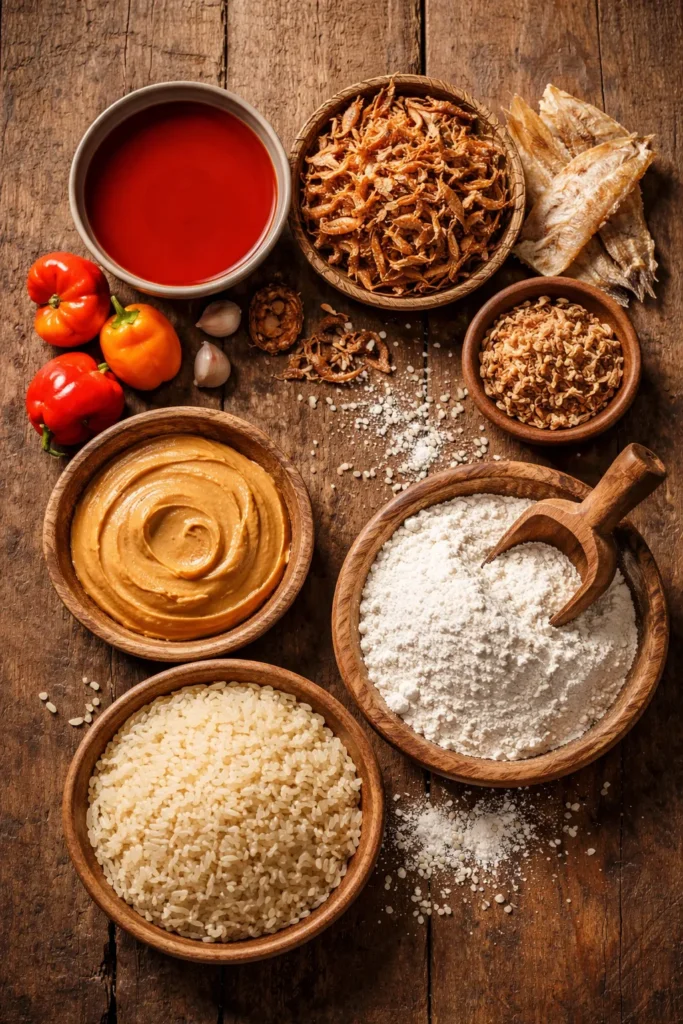
One thing you’ll notice once you start cooking West African food regularly is how many of these recipes pull from the same set of core ingredients. Stocking your pantry properly makes the entire cuisine dramatically more accessible.
The essentials to keep on hand:
- Red palm oil — earthy, slightly smoky, with a distinctive orange-red color; find it at African, Asian, or Caribbean grocery stores
- Scotch bonnet or habanero chillies — the heat backbone of the region; adjust quantity to your tolerance but don’t eliminate entirely
- Dried crayfish (ground shrimp powder) — a small amount adds profound umami depth to soups, stews, and egusi
- Stockfish or smoked fish — dried and pungent, used in small quantities as a seasoning agent rather than a main protein
- Peanut butter (natural, unsweetened) — the base of peanut stew and groundnut soup; look for brands with just one ingredient
- Tomato purée and tinned tomatoes — the backbone of nearly every stew in the region
- Fufu flour (plantain, cassava, or yam) — for quick stovetop fufu without a mortar and pestle
- Long-grain parboiled rice — holds up better to the wet-cooking method used in jollof rice than standard long-grain varieties
With these eight items, you can make most of the dishes on this list with only fresh produce additions. That’s the elegance of West African cooking — a relatively small set of foundational ingredients combines in endlessly different ways across the region.
Where to Find Ingredients Outside of West Africa
African grocery stores are the most reliable source, and they exist in almost every major city around the world. Beyond that, Caribbean grocery stores carry significant overlap — Scotch bonnet chillies, plantains, canned black-eyed peas, and palm oil are all staples in Caribbean cooking too. Many Asian supermarkets carry dried shrimp, various types of palm oil, and specialty flours.
Online retailers have made West African pantry staples increasingly accessible. Dried egusi, fufu flour, ogiri (fermented sesame seeds), and stockfish can all be ordered online and tend to have long shelf lives, making them worth buying in larger quantities.
One note on substitutions: the dishes in this list can be adapted with more widely available ingredients, but some substitutions change the flavor significantly. Red palm oil, in particular, is hard to replicate — its earthy, slightly nutty character is deeply embedded in the flavor identity of egusi stew, red red, and obe ata. If it’s unavailable, neutral vegetable oil works as a base, but the dish won’t taste the same. That’s not a failure — it’s just a different expression of the recipe.
Final Thoughts

West African cooking rewards curiosity. Each dish you make opens a door to another — you make jollof rice and find yourself wondering about thieboudienne; you make peanut stew and discover that it’s essentially a cousin to the peanut soup served alongside fufu. The connections between dishes, countries, and histories are part of what makes this food so endlessly interesting.
Start with jollof rice or chicken yassa if you want a relatively gentle introduction — both use ingredients that are easy to source and techniques that are forgiving. Once you’re comfortable with those, egusi stew and fufu will feel like a natural next step. Puff puff makes an ideal project for a weekend afternoon.
What matters most is approaching each dish with the same patience and respect that generations of West African home cooks have brought to their kitchens. These aren’t recipes to rush. Let the tomato base cook until the oil separates. Let the onions caramelize until they’re genuinely soft and golden. Let the stew finish at a low, gentle simmer rather than a boil. That patience is where the flavor lives.
