Something shifts when the air turns crisp and the days get shorter. Suddenly, grilled chicken salads feel wrong and roasted everything feels absolutely right. The produce changes — butternut squash and sweet potatoes crowd out the summer tomatoes, pears and apples show up at every farmers market stand — and your whole approach to weeknight cooking shifts along with it.
The problem most people run into? They have a short list of four or five go-to cold-weather meals they cycle through until everyone’s bored by mid-October. That’s where this collection comes in. These 12 easy fall dinner recipes lean into the season’s best flavors — apple cider braises, pumpkin-spiked pastas, hearty soups loaded with white beans and kale — without asking you to spend hours in the kitchen on a Tuesday night.
Every recipe here is weeknight-doable. Some are one-pan wonders, some use the slow cooker so dinner practically makes itself, and a few come together in 30 minutes or less. What they all share is that unmistakable cozy quality that makes you genuinely look forward to cooking again after a long day. Let’s get into it.
Table of Contents
- 1. Braised Chicken Thighs with Apple Cider and Caramelized Apples
- What Makes This Dish Work
- Make It Your Own
- 2. Butternut Squash Lasagna with Sage and Ricotta
- The Ricotta Layer
- Timing and Make-Ahead Tips
- 3. One-Pot Pumpkin Orzo with Spicy Italian Sausage and Kale
- Building the Base
- Finishing the Dish
- 4. Slow Cooker Beef Stew with Root Vegetables
- The Secret to a Thick, Rich Broth
- Slow Cooker Tips That Actually Matter
- 5. Pork Chops with Pear Chutney and Fresh Thyme
- Choosing the Right Pears
- How to Nail the Pork Chops
- 6. Creamy Butternut Squash Mac and Cheese
- The Sauce Ratio
- Variations and Upgrades
- 7. Sweet Potato Turkey Chili with Chipotle and Black Beans
- The Spice Strategy
- Serving and Topping Ideas
- 8. Sheet Pan Rosemary Chicken with Chickpeas and Root Vegetables
- Getting the Chickpeas Right
- Sheet Pan Strategy
- 9. Sausage, Kale, and White Bean Soup
- The Kale Question
- Finishing Touches That Elevate This Soup
- 10. Stuffed Acorn Squash with Wild Rice and Toasted Pecans
- Roasting the Squash
- The Wild Rice Filling
- 11. Double-Crust Chicken Pot Pie from Scratch
- The Crust Strategy
- Making the Filling
- 12. Gnocchi with Creamy Mushroom Sauce and Fresh Thyme
- Mushroom Selection for Maximum Flavor
- Getting the Gnocchi Right
- Final Thoughts
1. Braised Chicken Thighs with Apple Cider and Caramelized Apples
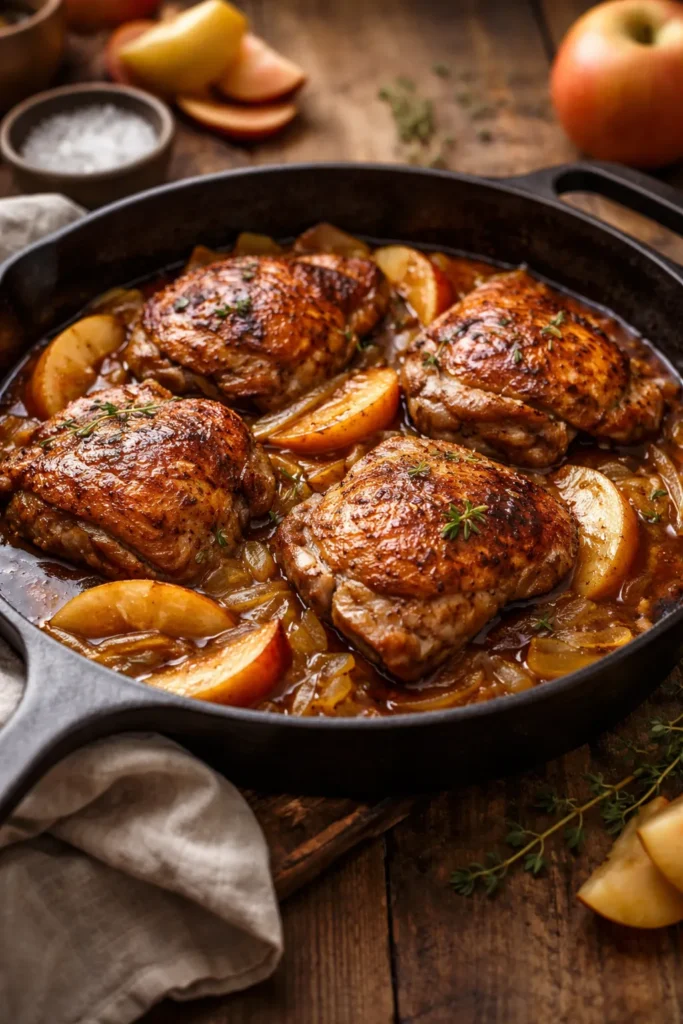
Chicken thighs are one of fall’s most underrated dinner heroes — they braise beautifully, stay juicy under high heat, and absorb surrounding flavors in a way that leaner breast meat simply doesn’t. Pair them with apple cider and sliced Granny Smith apples, and you’ve got a dish that tastes like it took three hours to develop even though the whole thing comes together in under 45 minutes.
The key to making this recipe sing is building flavor in layers. Start by searing the thighs skin-side down in a heavy skillet until the skin is genuinely golden and crispy — this can take 8 to 10 minutes, and you should resist the urge to move them. That rendered fat becomes the base for the whole sauce.
What Makes This Dish Work
After the chicken is seared, you cook diced Vidalia onion and apple slices in that same fat until they’re soft and starting to caramelize at the edges. Then apple cider goes in — about a cup — along with a splash of chicken stock and a few sprigs of fresh thyme. The chicken nestles back in, the pan goes partially covered over medium-low heat, and the braising liquid reduces into a glossy, sweet-savory sauce that coats everything beautifully.
Make It Your Own
- Swap Granny Smith for Golden Delicious if you want a sweeter, less tart flavor profile
- Add a teaspoon of whole-grain Dijon mustard to the braising liquid for extra depth
- Finish with a small pat of cold butter stirred into the sauce right before serving — it adds a silky richness that takes the dish to another level
- Serve over creamy mashed potatoes or polenta so nothing goes to waste
Worth knowing: Use bone-in, skin-on thighs for this — the bone adds flavor to the braising liquid and the skin provides that textural contrast against the tender meat.
2. Butternut Squash Lasagna with Sage and Ricotta
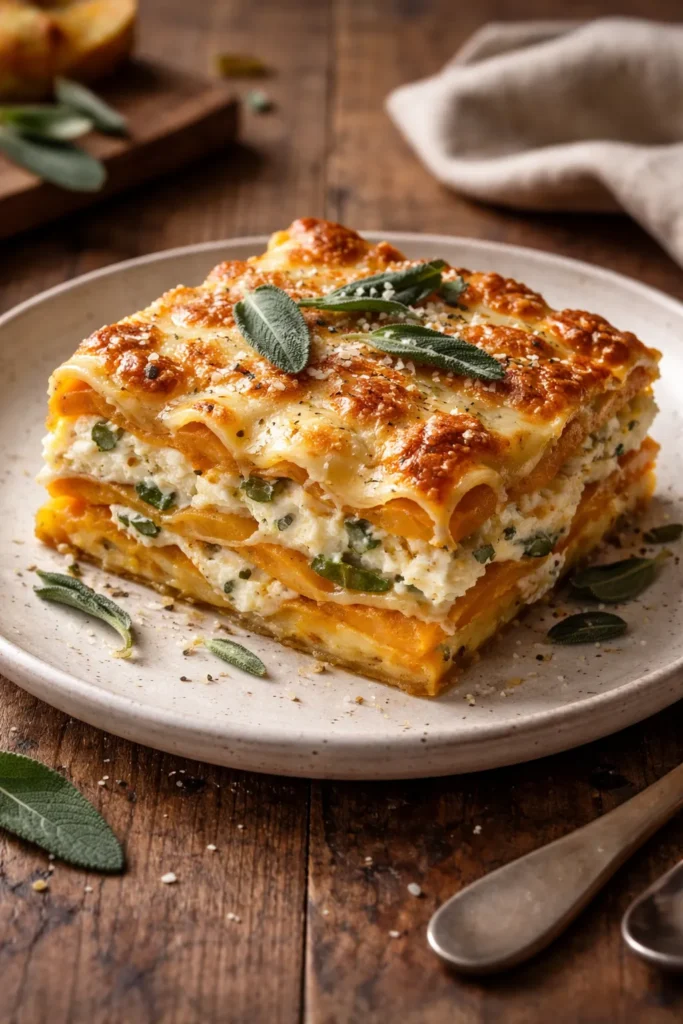
This lasagna doesn’t have a drop of meat in it, and nobody ever misses it. Cubed butternut squash gets boiled until just fork-tender (not mushy — there’s a difference, and overcooking is the most common mistake here), then layered with a ricotta mixture that’s brightened with lemon zest and warmed with a pinch of ground nutmeg. Shredded mozzarella and Pecorino Romano get scattered between each layer and across the top until the whole thing bakes into a bubbling, golden-edged masterpiece.
Fresh sage is non-negotiable in this dish. That earthy, slightly peppery herb is what keeps the sweetness of the squash from going cloying.
The Ricotta Layer
Combine two cups of whole-milk ricotta with chopped fresh sage, the zest of half a lemon, a pinch of nutmeg, salt, pepper, and a splash of milk to loosen the texture so it spreads easily without tearing your noodles. The lemon zest is a detail a lot of recipes skip, but it’s what keeps each bite from feeling heavy.
Timing and Make-Ahead Tips
- Boil the squash up to two days ahead and refrigerate — it holds well and saves significant time the day you bake
- Assemble the entire lasagna the night before, refrigerate it, and bake straight from the fridge (add 10 to 15 extra minutes to the covered baking time)
- Cover with foil for the first 40 minutes, then uncover for the last 20 so the top browns without the interior drying out
- Leftovers reheat beautifully in a 400°F oven, covered loosely with foil, for about 15 minutes
Pro tip: Coat your boiled noodles with a thin layer of olive oil on a baking sheet immediately after draining — they won’t stick together while you’re assembling the layers.
3. One-Pot Pumpkin Orzo with Spicy Italian Sausage and Kale

If there’s one recipe on this list that has the highest likelihood of becoming a permanent fixture in your rotation, it’s this one. Orzo simmers directly in a mixture of pumpkin puree, chicken stock, and coconut milk — absorbing all of that liquid as it cooks, which gives it a risotto-like creaminess without any of the constant stirring. Spicy Italian sausage, wilted kale, and garlic round out the pot into something that feels filling and nourishing at the same time.
The pumpkin here does something clever: it acts as a thickener, so the orzo develops this luxurious, almost velvety texture as it cooks. It’s not sweet the way you might expect — it’s earthy and savory, acting more like a butternut squash puree than anything dessert-adjacent.
Building the Base
Brown the sausage first, breaking it into irregular pieces (the uneven bits get crispier edges, which adds texture to the finished dish). Remove the sausage, sauté garlic in the rendered fat, then add the pumpkin puree, chicken stock, and coconut milk. Once it’s simmering, stir in the orzo and let it cook for about 10 minutes, stirring occasionally so nothing sticks to the bottom.
Finishing the Dish
- Stir in torn kale leaves during the last two minutes of cooking — it wilts perfectly without turning slimy
- Return the sausage to the pot and stir everything together
- Season generously with salt and red pepper flakes
- Finish with a squeeze of lemon juice to cut through the richness
Worth knowing: The orzo continues to absorb liquid as it sits, so serve this one fresh. If you’re reheating leftovers the next day, add a splash of broth to loosen it back up.
4. Slow Cooker Beef Stew with Root Vegetables
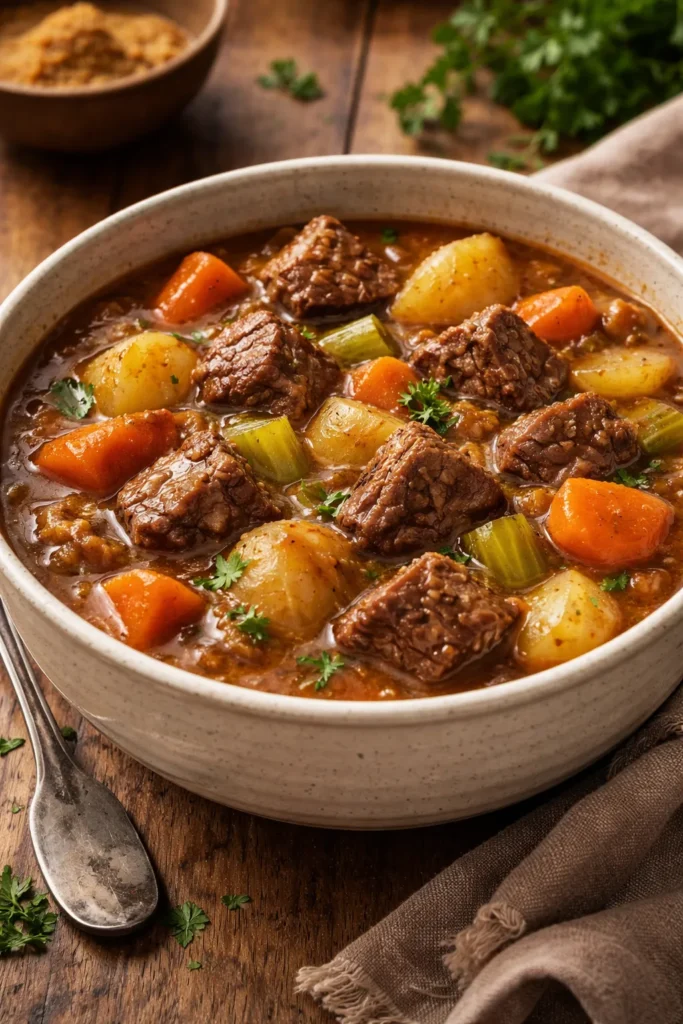
There’s a particular kind of satisfaction that comes from walking through the front door to the smell of something that’s been slowly cooking all day. This beef stew starts with chunks of chuck roast — the cut with enough fat and connective tissue to become genuinely tender over a long, slow cook — along with carrots, potatoes, celery, and a deeply flavored broth built from beef stock, Worcestershire sauce, tomato paste, and dried thyme.
Six to eight hours on low and you’ll have beef that practically falls apart when pressed with a spoon.
The Secret to a Thick, Rich Broth
Most slow cooker stews end up watery. The fix is simple: toss your beef cubes in flour before browning them in a hot skillet with a little oil. That flour coating not only builds a crust on the outside of the meat, it gradually thickens the broth as everything cooks together.
Slow Cooker Tips That Actually Matter
- Don’t skip the browning step — 10 minutes of searing before everything goes into the slow cooker adds a depth of flavor that can’t be replicated by just dumping everything in raw
- Add the potatoes halfway through cooking if your slow cooker runs hot, so they don’t turn to mush
- Pearl onions are a nice addition — they hold their shape better than diced onion and add a pleasant sweetness
- A splash of red wine stirred in after browning the meat and deglazing the pan makes the broth noticeably more complex
Pro tip: This stew tastes even better the next day after the flavors have had time to meld overnight in the fridge.
5. Pork Chops with Pear Chutney and Fresh Thyme
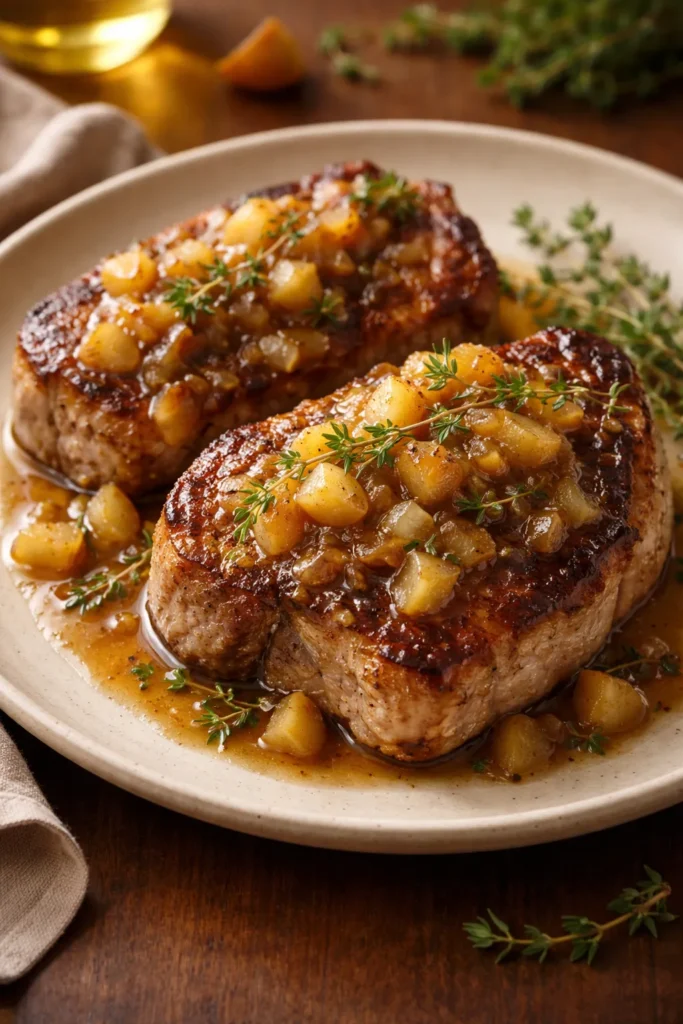
Pork and fruit is one of those flavor pairings that seems fancier than it actually is to execute. Thick-cut bone-in pork chops get seared in a cast iron pan until they have a proper golden crust, then they’re finished in the oven while you make a quick chutney on the stovetop with diced ripe pears, shallots, a splash of apple cider vinegar, brown sugar, fresh ginger, and a pinch of curry powder. The whole thing comes together in about 35 minutes.
The chutney takes maybe 12 minutes to make and it’s what turns a simple protein into something you’d genuinely be proud to serve at a dinner party.
Choosing the Right Pears
Bartlett pears are the easiest to work with here because they soften quickly and have a natural sweetness that caramelizes nicely in the pan. Bosc pears work if you want more texture in the finished chutney — they hold their shape better during cooking. Whatever you choose, use fruit that’s ripe but still firm enough to hold together when it’s diced and heated.
How to Nail the Pork Chops
- Bring the chops to room temperature for 20 minutes before cooking — this helps them cook evenly all the way through without the exterior drying out
- Pat them completely dry before they go into the hot pan — moisture is the enemy of a good sear
- Sear at medium-high heat for 3 to 4 minutes per side, then transfer to a 400°F oven for 8 to 10 minutes depending on thickness
- Rest the chops for 5 full minutes before plating — the juices redistribute and you’ll get visibly more moisture when you cut into them
6. Creamy Butternut Squash Mac and Cheese

Standard mac and cheese is already comfort food at its peak. Butternut squash mac and cheese is that, plus a sneaky layer of nutrition that even picky eaters can’t detect. Roasted or steamed squash gets blended with milk, a little cream cheese, sharp cheddar, and smoked paprika into a sauce that’s genuinely creamy without being heavy in the way a traditional roux-based sauce can be.
It also reheats better than classic mac — the squash keeps the sauce from breaking or turning grainy.
The Sauce Ratio
The ratio that works consistently: about 1½ cups of cooked butternut squash pureed with ¾ cup of whole milk, two ounces of cream cheese, and a full cup of sharp white cheddar. Season aggressively — the squash needs salt, pepper, smoked paprika, and a pinch of cayenne to keep it from tasting flat.
Variations and Upgrades
- Top with panko breadcrumbs toasted in butter and bake at 375°F for 15 minutes until crispy for a baked version
- Stir in crispy crumbled bacon or pancetta for a savory contrast to the sweetness of the squash
- Use whole wheat pasta or chickpea pasta if you want to add protein and fiber without changing the flavor
- Add a cup of frozen peas stirred in at the end for color and a pop of freshness
Worth knowing: This sauce works on any short pasta shape — rigatoni and orecchiette hold the creamy sauce in their ridges and curves even better than elbow macaroni.
7. Sweet Potato Turkey Chili with Chipotle and Black Beans
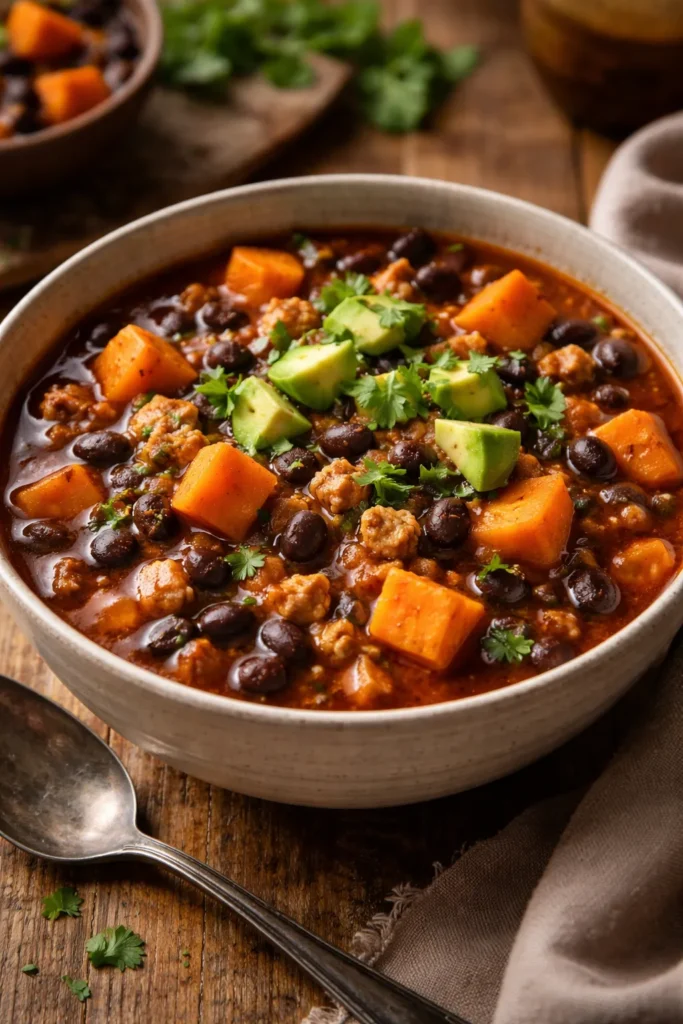
This chili has a smoky depth that most turkey chilis lack because it leans on chipotle peppers in adobo sauce — just one or two peppers, finely chopped, add a smokiness and mild heat that makes the whole pot taste like it’s been simmering all day. Sweet potato cubes absorb the spiced broth as they cook and practically melt into the chili by the time everything is done, adding body without any extra thickening.
Ground turkey works especially well here because it doesn’t compete with the other flavors the way fattier beef can.
The Spice Strategy
Build the spice profile in layers rather than adding everything at once. Bloom your chili powder, cumin, and smoked paprika in the pan with the onion and garlic before adding any liquid — 60 seconds in hot oil is enough to wake up the dried spices and give them a toasted depth that makes a noticeable difference in the finished chili.
Serving and Topping Ideas
- Sour cream or plain Greek yogurt cut through the heat beautifully
- Sharp cheddar, diced avocado, and sliced scallions are the classic trio
- A squeeze of lime right before serving brightens everything up
- Cornbread alongside is practically mandatory — it’s the perfect vehicle for soaking up the broth
Pro tip: This chili freezes exceptionally well. Make a double batch and freeze in individual portions for weeknight dinners that require zero effort.
8. Sheet Pan Rosemary Chicken with Chickpeas and Root Vegetables
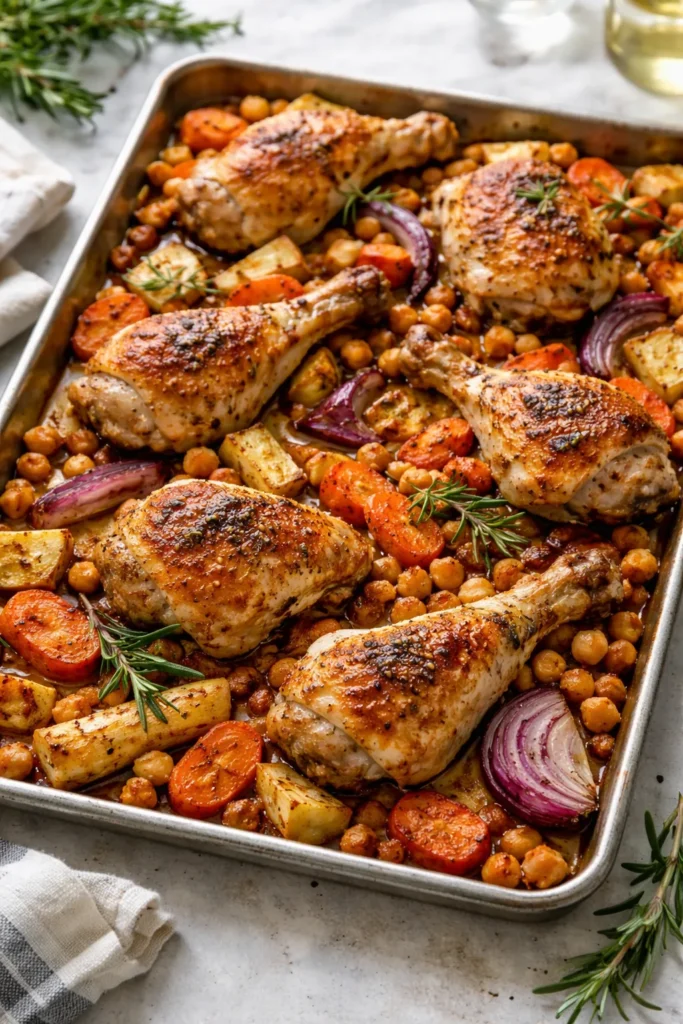
Sheet pan dinners are the weeknight cook’s best friend for one simple reason: maximum flavor, minimum cleanup. This version uses bone-in, skin-on chicken thighs and drumsticks seasoned with rosemary, garlic powder, smoked paprika, and olive oil, roasted alongside canned chickpeas (which turn wonderfully crispy in the high heat) and whatever root vegetables you have on hand — carrots, parsnips, and red onion all work beautifully.
Everything goes on one sheet pan, into a 425°F oven, and comes out 35 to 40 minutes later with crispy chicken skin, tender vegetables, and crunchy chickpeas that your family will fight over.
Getting the Chickpeas Right
Rinse and drain them, then pat them as dry as you possibly can with paper towels before adding them to the sheet pan. Any surface moisture will steam instead of roast, and you’ll miss out on that satisfying crunch. Toss with olive oil, salt, and smoked paprika, and spread them in a single layer so they get direct contact with the hot pan.
Sheet Pan Strategy
- Use two pans if needed — crowding is the enemy of browning
- Place the chicken skin-side up and never flip it during cooking
- Cut root vegetables into uniform pieces so they cook at the same rate as the chicken
- Add a handful of fresh rosemary sprigs directly to the pan for a fragrant, herb-forward aroma that perfumes the whole dish
9. Sausage, Kale, and White Bean Soup
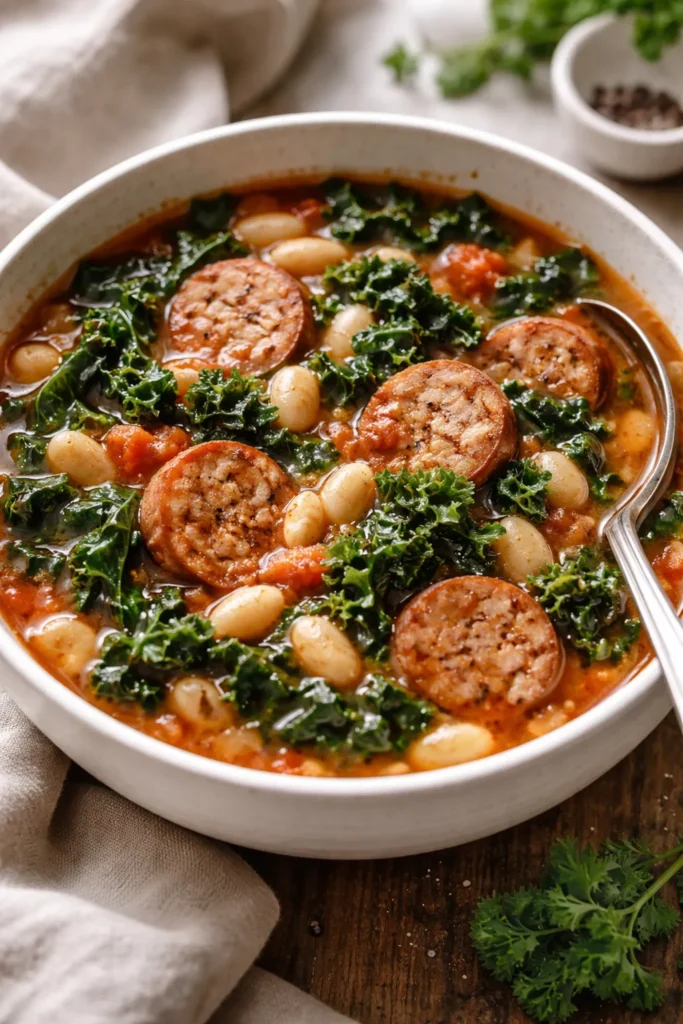
This soup is exactly what you want when you need something on the table in 30 minutes that also tastes like it took real effort. Italian sausage (sweet or spicy, depending on your preference) gets browned and crumbled, then simmered with kale, white beans, diced tomatoes, chicken broth, and smoked paprika into a hearty, brothy soup that’s deeply satisfying without being heavy.
The white beans do something useful here beyond just adding protein — they release a little starch as they simmer, which gives the broth a body and richness that you don’t get from a purely clear stock.
The Kale Question
Tuscan kale (also called lacinato or dinosaur kale) works best in soups because its leaves are sturdy enough to hold up to the heat without turning into mush. If you’re using curly kale, add it earlier so it has more time to soften. Baby spinach can be substituted for a more delicate result — add it in the last minute of cooking so it just wilts.
Finishing Touches That Elevate This Soup
- A Parmesan rind simmered in the broth for the last 15 minutes adds an umami depth that’s genuinely hard to describe until you try it
- A drizzle of good olive oil over each bowl right before serving adds richness and freshness simultaneously
- Crusty bread for dipping is not optional — it’s the whole point
- A squeeze of lemon juice brightened the finished soup in a way that takes the flavor from good to noticeably better
10. Stuffed Acorn Squash with Wild Rice and Toasted Pecans
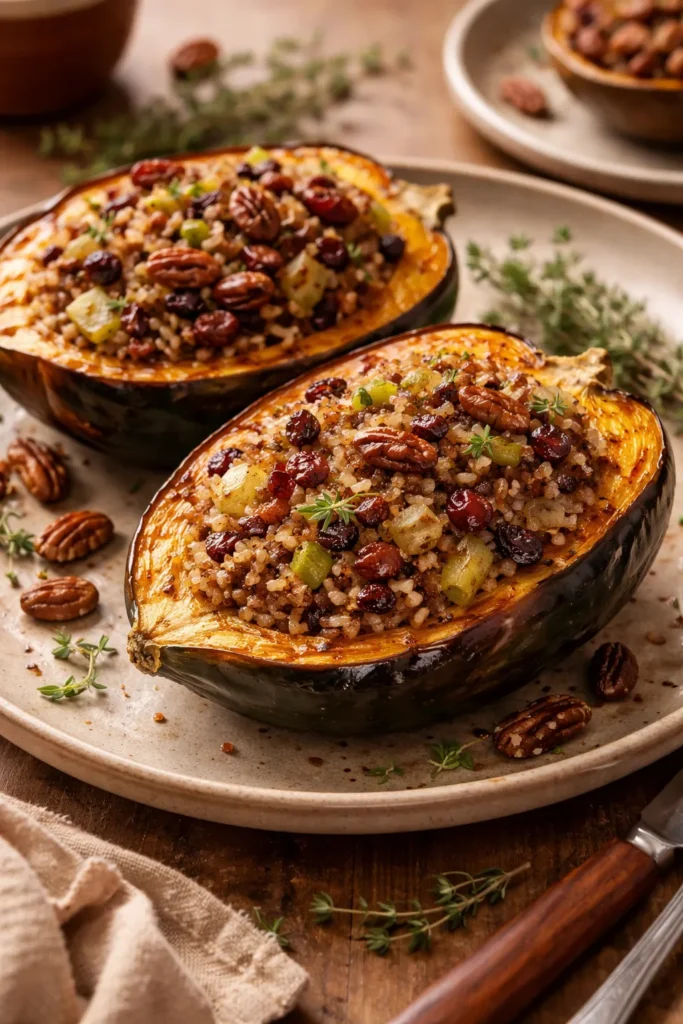
Acorn squash has a natural bowl shape that’s practically begging to be filled with something good. Halved and roasted until the flesh is tender, then loaded with a filling of cooked wild rice, sautéed leeks and celery, toasted pecans, dried cranberries, and fresh thyme — this dish feels simultaneously humble and impressive, and it works equally well as a vegetarian main or as a side alongside roasted turkey or pork.
The filling can be made completely ahead, which makes this one of the more practical recipes for entertaining.
Roasting the Squash
Cut each acorn squash in half from stem to base, scoop out the seeds, brush the cut sides generously with olive oil or melted butter, and season with salt and pepper. Place cut-side down on a baking sheet and roast at 400°F for 25 to 30 minutes until a fork slides easily into the thickest part of the flesh. Flipping them cut-side up for the last 5 minutes helps the interior dry out slightly, which gives it a better texture to hold the filling.
The Wild Rice Filling
- Toast the pecans dry in a skillet for 3 to 4 minutes before adding them — this deepens their flavor dramatically
- Season the wild rice cooking water with a bay leaf and a couple of thyme sprigs for more layered flavor
- The dried cranberries add a tartness that balances the sweetness of the squash — don’t skip them
- A crumble of goat cheese over the top before serving adds a creamy, tangy element that ties the whole dish together
Pro tip: Pre-cooked wild rice pouches from the store work perfectly here and cut the prep time down significantly.
11. Double-Crust Chicken Pot Pie from Scratch

A pot pie made entirely from scratch — buttery, flaky double crust and all — is one of those dishes that sounds intimidating but is actually more forgiving than most baked goods. The filling is a classic creamy gravy made with cooked chicken (rotisserie chicken works perfectly and saves considerable time), frozen peas and carrots, celery, onion, and a béchamel-style sauce built from butter, flour, chicken broth, and whole milk. The crust gets crimped around the edges and baked until deep golden brown.
This is cold-weather cooking at its most comforting.
The Crust Strategy
A simple all-butter pie crust made with cold butter, flour, salt, and ice water is all you need. The fat content in butter creates flakier layers than shortening, and the flavor is noticeably better. The trick is keeping everything cold — cold butter, ice water, and a bowl that’s been chilled in the freezer for 10 minutes. Work quickly so the butter stays in distinct pieces rather than melting into the dough.
Making the Filling
- Season the gravy assertively — pot pie filling needs more salt than you think because the crust absorbs some of it during baking
- Let the filling cool completely before it goes into the unbaked crust — hot filling causes the bottom crust to go soggy
- Cut steam vents in the top crust before baking so the filling doesn’t bubble up and crack the crust
- Brush the top crust with an egg wash (one egg beaten with a tablespoon of water) for a glossy, deeply golden finish
Worth knowing: You can assemble the pot pie completely, refrigerate it overnight, and bake it the next day — the crust may even come out a bit flakier for the extra cold rest.
12. Gnocchi with Creamy Mushroom Sauce and Fresh Thyme
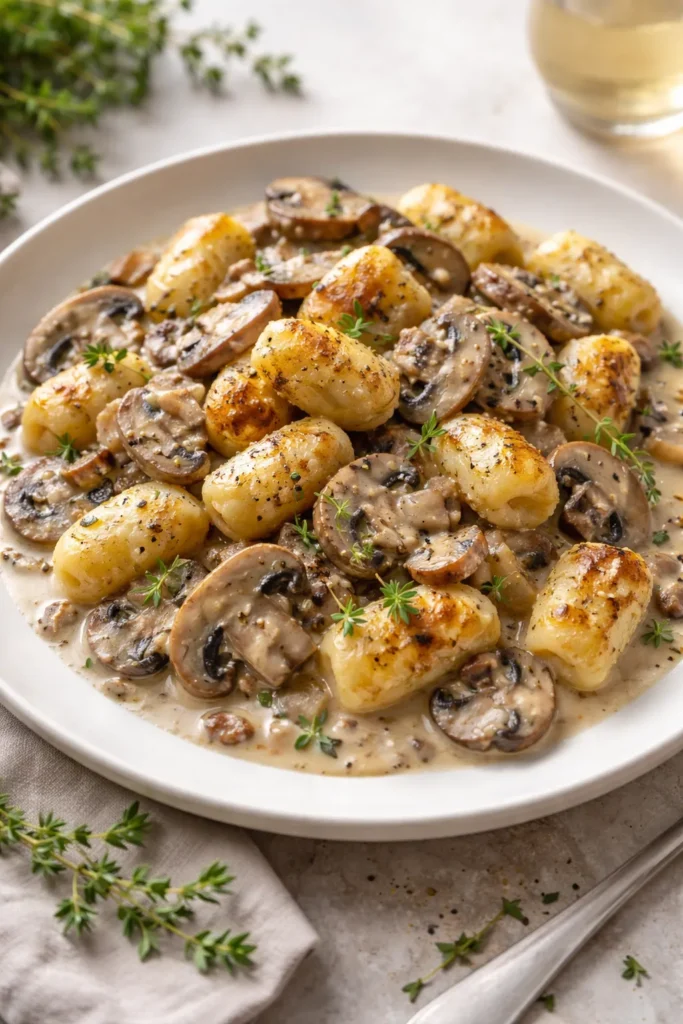
Store-bought potato gnocchi is one of the most underused shortcuts in weeknight cooking. It takes about 2 minutes to boil, goes golden and slightly crispy when pan-fried in butter, and pairs with an almost embarrassingly good mushroom cream sauce that comes together while the gnocchi is cooking. The whole dinner is on the table in 20 minutes, and it tastes like something from a proper Italian restaurant.
The mushroom sauce is where the magic happens: butter, shallots, garlic, and sliced cremini or mixed mushrooms cooked until deeply golden, then finished with a splash of dry white wine, a cup of heavy cream, and fresh thyme.
Mushroom Selection for Maximum Flavor
Cremini mushrooms are the reliable workhorse here, but mixing in a handful of shiitake or oyster mushrooms adds complexity that’s worth the minor extra expense. The key is not crowding the pan — mushrooms release water when they cook, and if they’re packed too tightly, they’ll steam instead of brown. Use a wide skillet over high heat and cook them in a single layer, resisting the urge to stir for the first 3 to 4 minutes so they develop a proper golden crust.
Getting the Gnocchi Right
- Pan-frying the boiled gnocchi in a bit of butter after draining adds a crispy exterior that transforms the texture entirely — 3 to 4 minutes in a hot pan with no moving until one side is golden
- The cream sauce should be thick enough to coat the back of a spoon before you add the gnocchi — if it’s too thin, simmer it for another 2 to 3 minutes uncovered
- Finish with a generous handful of freshly grated Parmesan and a few twists of black pepper
- Serve immediately — gnocchi in cream sauce waits for no one, and it starts to get heavy as it sits
Pro tip: Add a small handful of baby spinach or wilted arugula to the finished dish for color and a slight bitterness that cuts through the richness of the cream sauce beautifully.
Final Thoughts

Fall cooking doesn’t have to mean elaborate weekend projects or recipes with a dozen components. The best cool-weather dinners are the ones you’d actually make on a Wednesday — flavorful enough to feel satisfying, simple enough that they don’t require your full energy after a long day.
The common thread running through all 12 of these recipes is that they lean on the season’s actual ingredients rather than fighting against them. Apple cider, pumpkin puree, butternut squash, pears, sweet potatoes, kale — these aren’t just trendy seasonal additions. They’re genuinely better in the cooler months, and building your dinners around them means you’re cooking with produce at its peak flavor and value.
If you’re trying to figure out where to start, the sheet pan chicken with chickpeas and the sausage, kale, and white bean soup are the lowest-effort entries on this list and the most likely to become weekly staples. The braised chicken thighs with apple cider and the butternut squash lasagna are the ones worth making when you have a little more time and want something genuinely impressive. Either way, you’ve got a full season’s worth of dinners covered.