Korean cooking has a reputation for being complicated — all those fermented pastes, layered sauces, and specialized ingredients that send people running to the nearest Korean restaurant instead of their own stovetop. But that reputation is wildly unfair to a cuisine that, at its weeknight core, is built on speed, bold flavor, and pantry staples you can stock once and use for months.
The truth is, once you’ve got a jar of gochujang (Korean chili paste), some doenjang (fermented soybean paste), soy sauce, sesame oil, and a bag of short-grain rice in your kitchen, you’re already halfway to dozens of legitimate Korean meals. The dishes below don’t require a culinary degree or a three-hour window on a Tuesday night. Most come together in 30 minutes or less. A few take a little longer but reward you with almost zero active effort.
What makes these recipes genuinely weeknight-friendly isn’t just the cooking time — it’s the flavor payoff per minute invested. Korean food tends to be aggressively satisfying: deeply savory, a little sweet, punchy with heat and umami. You won’t find yourself wondering if dinner needed more seasoning. These are the meals that make people lean over the bowl and go quiet for a minute.
Table of Contents
- 1. Beef Bulgogi
- What Makes the Marinade Work
- How to Get the Best Sear
- 2. Kimchi Fried Rice
- Building the Flavor Base
- The Egg on Top
- 3. Tteokbokki (Spicy Rice Cakes)
- Getting the Texture Right
- Easy Variations to Try
- 4. Japchae (Glass Noodle Stir-Fry)
- The Sauce That Holds It Together
- Weeknight Shortcut
- 5. Dakgalbi (Spicy Chicken Stir-Fry)
- Timing the Vegetables
- How to Serve It
- 6. Kimchi Jjigae (Kimchi Stew)
- Why the Simmering Time Matters
- Weeknight Tips
- 7. Bibimbap (Korean Mixed Rice Bowl)
- The Vegetable Prep Shortcut
- The Mandatory Mix
- 8. Korean Chicken Bulgogi
- Broiling vs. Pan-Frying
- 9. Sundubu Jjigae (Soft Tofu Stew)
- The Gochugaru Blooming Step
- What Goes In
- 10. Doenjang Jjigae (Soybean Paste Stew)
- The Anchovy Base
- Serving It Right
- 11. Dubu Jorim (Spicy Braised Tofu)
- The Braising Sauce
- Why This Works as a Weeknight Staple
- 12. Haemul Pajeon (Seafood Scallion Pancakes)
- Getting the Crispy Edge
- The Dipping Sauce
- Building a Korean Weeknight Pantry
- Storing and Reheating Korean Weeknight Meals
- Final Thoughts
1. Beef Bulgogi
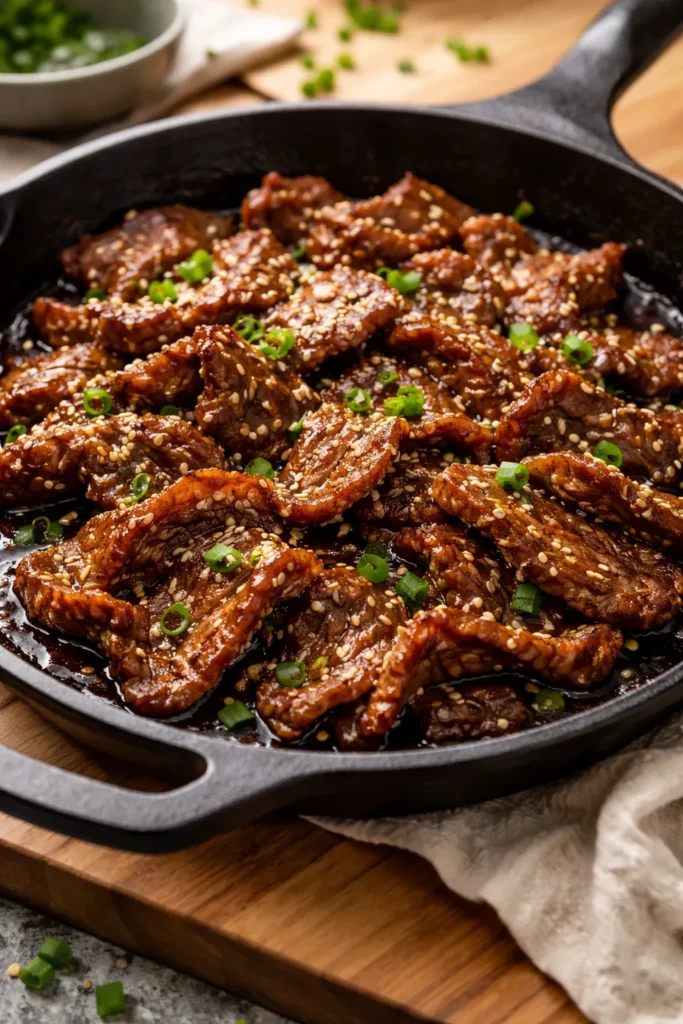
Bulgogi is the dish that converts people. Thin slices of ribeye or sirloin marinated in a sweet-savory sauce of soy, sesame oil, garlic, and grated Asian pear, then seared over high heat until the edges caramelize — it’s the kind of dinner that tastes like it took serious effort but actually comes together in under 30 minutes if you prep ahead.
The grated Asian pear is the detail most recipes skip explaining: it contains natural enzymes that break down protein fibers, which is why bulgogi is almost impossibly tender even with a brief marinade. Don’t swap it for apple if you can avoid it — the pear’s texture and enzyme profile are different enough to matter. If you absolutely can’t find Asian pear, grated kiwi works as a substitute.
What Makes the Marinade Work
The balance of sweet, salty, and savory in the marinade isn’t accidental. Soy sauce brings the salt and umami base, sugar (or honey) caramelizes under heat to create those glossy, slightly charred edges, and sesame oil adds a nutty richness that ties everything together. Garlic and ginger provide the aromatics that make the kitchen smell incredible while it cooks.
How to Get the Best Sear
- Freeze the beef for 20-30 minutes before slicing — it makes cutting paper-thin much easier
- Cook in small batches over very high heat; crowding the pan steams the meat instead of searing it
- A cast iron skillet or wok gives the best caramelization
- Serve immediately over steamed short-grain rice with whatever banchan you have on hand
Worth knowing: Day-old leftover bulgogi reheats beautifully in a hot pan with a splash of water — it’s just as good the next day tucked into a grain bowl or fried rice.
2. Kimchi Fried Rice
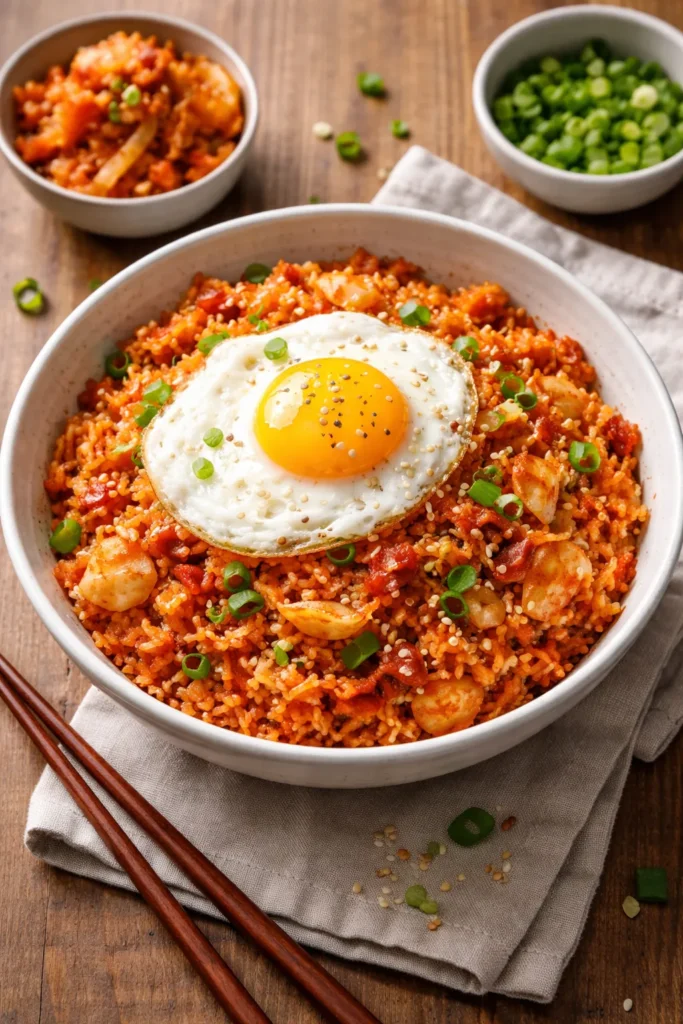
There’s a reason kimchi fried rice appears on nearly every list of weeknight Korean recipes: it’s the dish that saves you when the fridge looks sad and dinner needs to happen in 20 minutes flat. Day-old rice is non-negotiable here — freshly cooked rice has too much moisture and turns mushy instead of getting those slightly crispy bits that make this dish worth eating.
The kimchi does most of the flavoring work. Well-fermented kimchi (the kind that’s been sitting in your fridge for a few weeks) has a deeper tang and more complex flavor than fresh kimchi, and that acidity brightens the whole dish. Adding a tablespoon of the kimchi brine alongside the chopped cabbage is one of those small moves that makes a noticeable difference.
Building the Flavor Base
Start with bacon or pork belly for richness, cook the kimchi until it softens and its liquid reduces slightly, then add the cold rice and press it against the hot surface of the pan. That contact between the rice and the hot skillet is what creates the slightly toasted bottom layer that gives the dish texture.
The Egg on Top
- A fried egg with a runny yolk, laid directly on the hot rice, is the traditional finish
- The yolk acts as a sauce when broken and mixed through
- Drizzle a little toasted sesame oil just before serving — it adds aroma that hits you the moment the bowl reaches the table
- Finish with sliced scallions and a sprinkle of toasted sesame seeds
3. Tteokbokki (Spicy Rice Cakes)
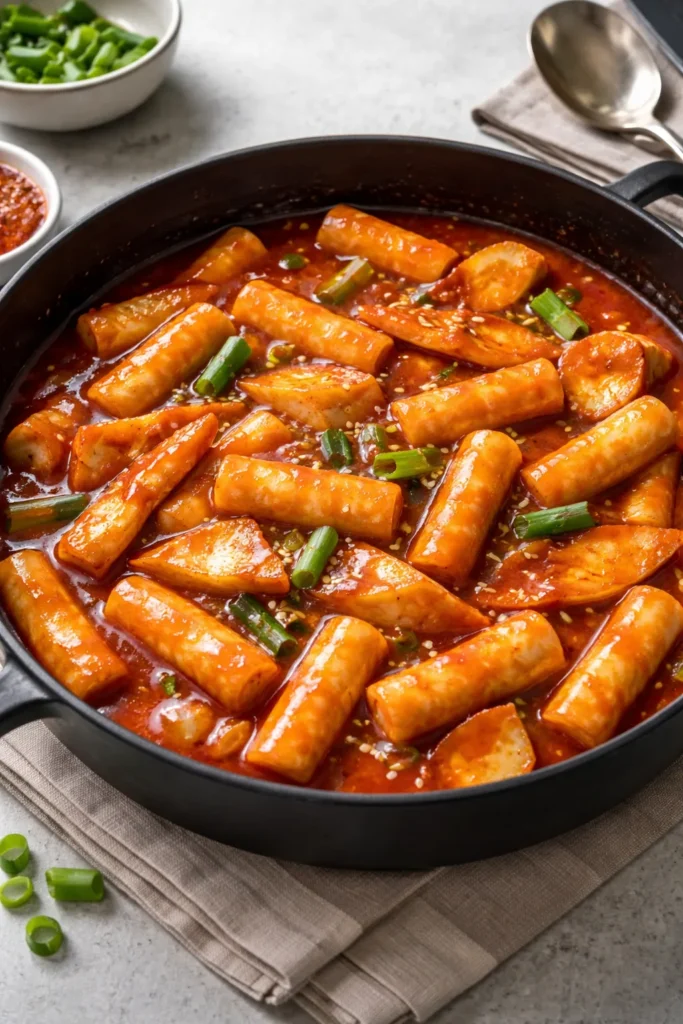
If you’ve ever walked through a Korean street market, you’ve seen tteokbokki — those plump, chewy cylinders of rice cake bobbing in a fiery red sauce, served in paper cups. Making it at home takes about 20 minutes and requires mostly pantry ingredients once you’ve sourced the rice cakes (available frozen or refrigerated at any Korean grocery store and most Asian supermarkets).
The sauce is built on gochujang, fish cakes, and a savory stock — traditionally anchovy-kelp broth, though chicken stock works perfectly well on a busy weeknight. The sauce thickens as the rice cakes cook, coating each piece in a sticky, spicy-sweet glaze that’s genuinely addictive. Fish cakes (eomuk) add an oceanic depth that cuts through the heat.
Getting the Texture Right
Rice cakes go from perfectly chewy to overdone surprisingly fast. Aim for the point where they’re tender all the way through but still have a gentle resistance when you bite — usually 8-10 minutes of simmering. If you’re using frozen rice cakes, soak them in cold water for 20-30 minutes first to prevent cracking.
Easy Variations to Try
- Add a soft-boiled egg and ramen noodles to make rabokki — a heartier, noodle-loaded version
- Tuck in slices of fish cake, cabbage, or scallions for extra substance
- A tablespoon of heavy cream stirred in at the end creates the rosé tteokbokki variation that’s massively popular — it tones the heat down and makes the sauce richer
4. Japchae (Glass Noodle Stir-Fry)
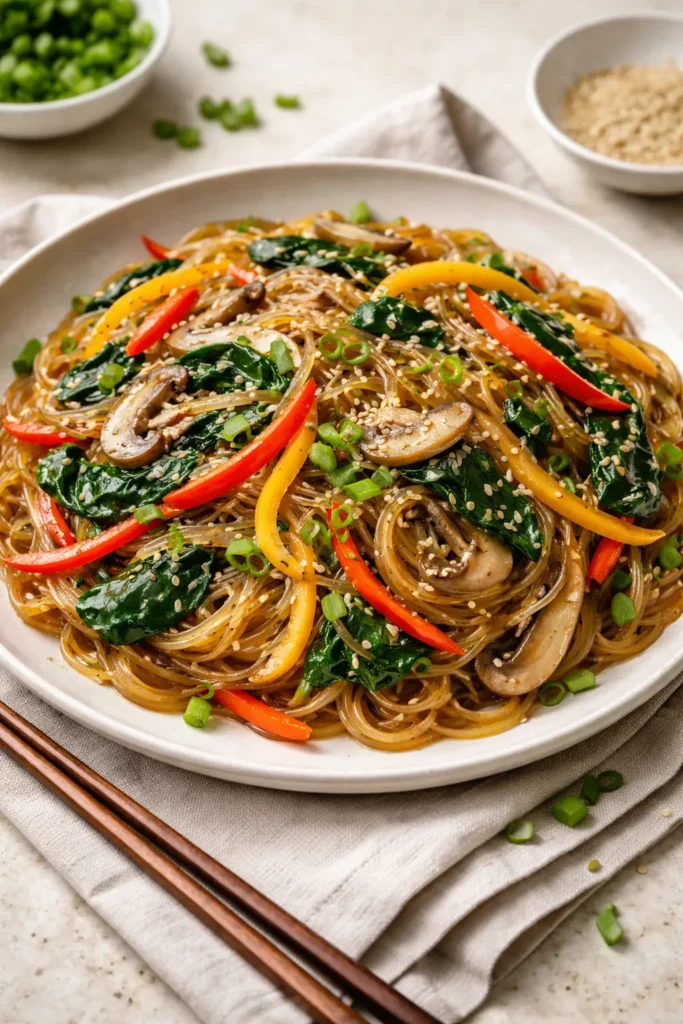
Japchae gets categorized as complicated, and it really isn’t — it just has a few components that are cooked separately before being combined. The sweet potato glass noodles (dangmyeon) have a uniquely springy, chewy texture that doesn’t exist in any other noodle, and once you’ve had them properly sauced with sesame oil and soy, you’ll understand why this dish shows up at every Korean celebration.
The vegetables — julienned carrots, thinly sliced bell pepper, spinach, onion — are stir-fried quickly to keep their color and crispness. Cooking them separately (rather than all at once) ensures nothing gets overcooked or waterlogged. It takes an extra pan or two, but the 35-minute total cook time puts this squarely in weeknight territory.
The Sauce That Holds It Together
A simple blend of soy sauce, sesame oil, sugar, and garlic coats every strand and vegetable. The key is tossing everything together while the noodles are still warm — they absorb the sauce differently once cold, and the texture suffers.
Weeknight Shortcut
- Prep and cook the vegetables while the noodles boil — multitasking cuts the total time significantly
- Japchae keeps well in the fridge for 2-3 days and can be eaten at room temperature or slightly warmed
- Add thinly sliced beef (marinated briefly in soy, garlic, and sesame oil) for a more substantial version
5. Dakgalbi (Spicy Chicken Stir-Fry)
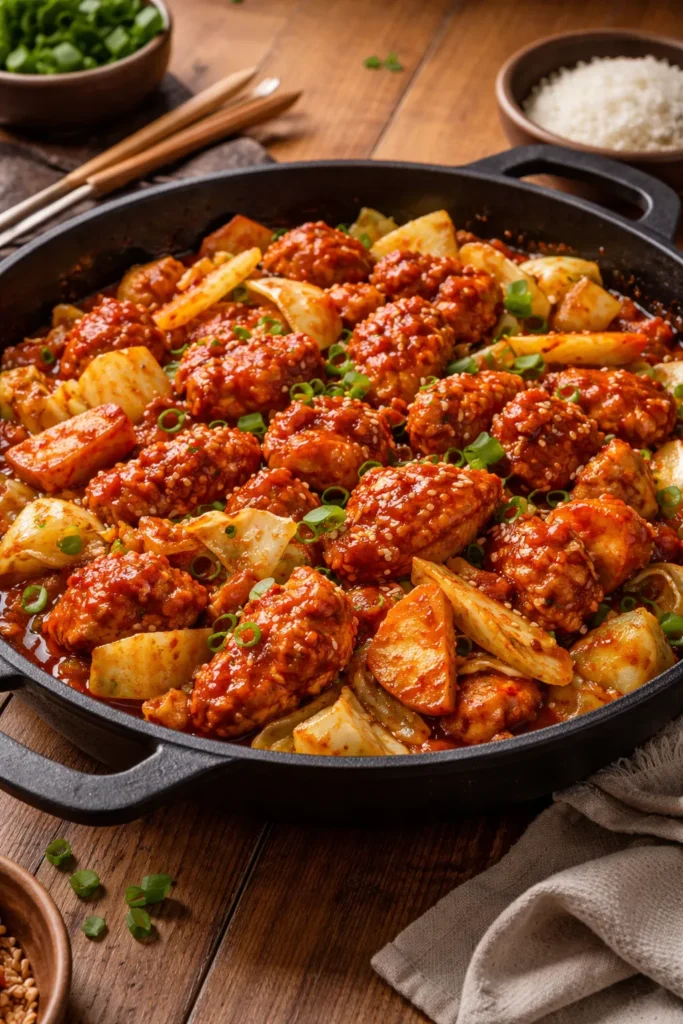
Dakgalbi is Chuncheon’s gift to the rest of Korea — a one-pan spicy chicken stir-fry with sweet potato, cabbage, and rice cakes in a punchy gochujang-based sauce. It’s the kind of meal that fills the kitchen with an incredible smell the moment the marinated chicken hits the hot pan. Boneless chicken thighs are the right cut here; they stay juicy through the high-heat cooking process where breast meat would dry out.
The marinade — gochujang, soy sauce, garlic, ginger, sesame oil, and a little honey — coats the chicken and then doubles as the sauce that glazes everything in the pan. Sweet potato adds a natural sweetness that balances the chili heat, while the cabbage wilts down into a soft, savory accompaniment that soaks up the sauce beautifully.
Timing the Vegetables
- Start the sweet potato first — it needs a 4-5 minute head start since it takes longer to cook through than the chicken
- Add onion next, then the marinated chicken, and cabbage last
- The whole stir-fry comes together in about 15 minutes of actual pan time
How to Serve It
Dakgalbi is traditionally eaten directly from the pan at the table, wrapped in fresh lettuce leaves or perilla leaves with a little extra gochujang. Garnish with sliced scallions and toasted sesame seeds. If you want to make it a proper rice dish, spoon it over steamed rice and add a fried egg on top.
6. Kimchi Jjigae (Kimchi Stew)
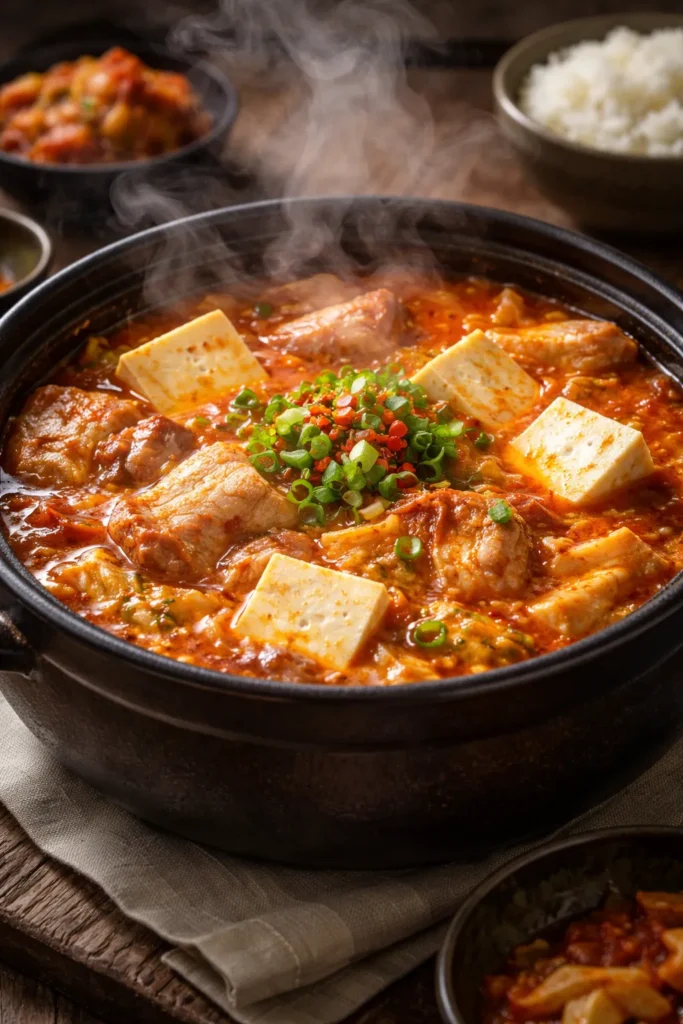
Kimchi jjigae is the stew that Korean home cooks make when they have a batch of kimchi that’s gotten very sour — the kind that’s too pungent to eat raw but transforms into something spectacular when simmered with pork belly, soft tofu, and a rich broth. If your kimchi is fresh, use it anyway, but know that the depth of flavor increases dramatically with older, well-fermented kimchi.
Pork belly is the traditional protein, and its fat renders into the broth, adding a silky richness that makes the base extraordinarily satisfying. The soft tofu added toward the end absorbs all of those flavors while adding a gentle, creamy contrast to the tangy stew.
Why the Simmering Time Matters
Twenty minutes of simmering transforms this from a simple soup into a deeply layered stew. The kimchi softens, the pork fat emulsifies into the broth, and the gochujang (if you add a spoonful) blooms and rounds out into something complex rather than just spicy.
Weeknight Tips
- Use a wide pot so the kimchi and pork have good contact with the bottom and caramelize slightly before liquid is added — that step adds serious flavor
- Serve directly from the pot, piping hot, alongside a bowl of steamed white rice
- A small drizzle of sesame oil right before serving lifts the whole dish
7. Bibimbap (Korean Mixed Rice Bowl)
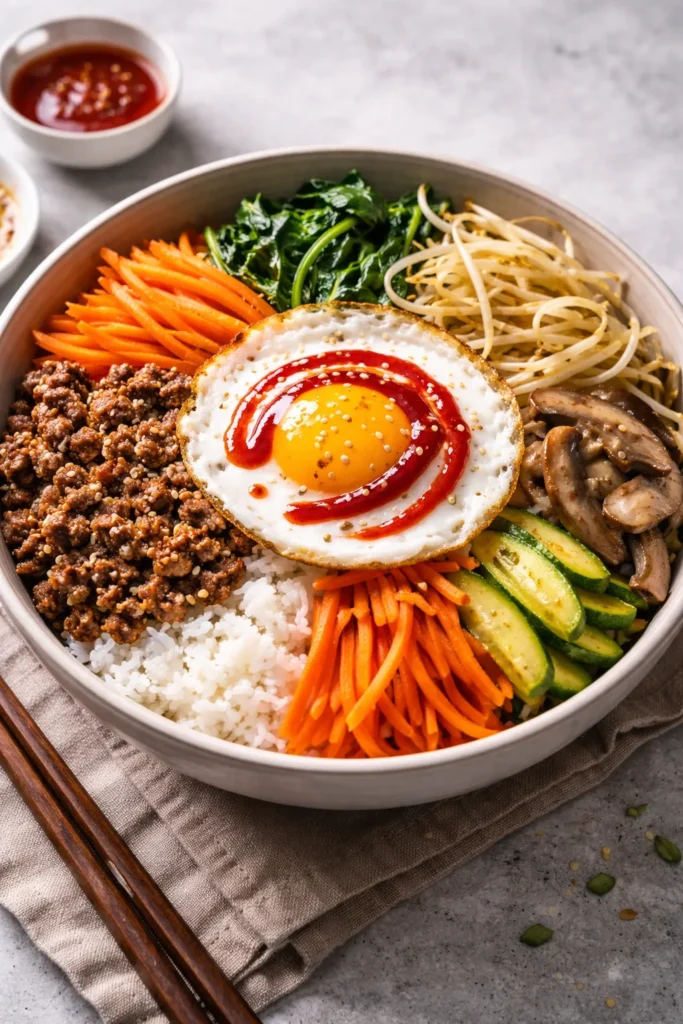
Bibimbap is one of the most adaptable weeknight meals in Korean cooking — a bowl of warm rice topped with seasoned vegetables, a protein, a fried egg, and a generous spoon of gochujang sauce. The beauty is in the flexibility: you can use whatever vegetables you have, swap the beef for ground pork or tofu, and adjust the heat level to suit the table.
The saucy ground beef version is faster than the traditional sliced-beef preparation. Cooked with soy sauce, garlic, gochujang, sesame oil, and a pinch of sugar, it’s sweet-savory and deeply satisfying in a way that takes under 10 minutes from start to finish.
The Vegetable Prep Shortcut
Traditional bibimbap features individually seasoned and sautéed vegetable side dishes. For weeknights, a simplified approach works just as well:
- Quickly stir-fry julienned carrots and zucchini together in the same pan, season with salt and sesame oil
- Blanch spinach for 60 seconds, squeeze out water, and toss with sesame oil and a little soy sauce
- Bean sprouts can be used raw for crunch, or blanched for 2 minutes
The Mandatory Mix
Bibimbap is not a bowl you eat by carefully taking a bit of each component in each spoonful. You mix it — thoroughly, aggressively, until the egg yolk breaks and coats everything and the gochujang sauce turns the rice a brick-red color. That’s when it becomes greater than the sum of its parts.
8. Korean Chicken Bulgogi
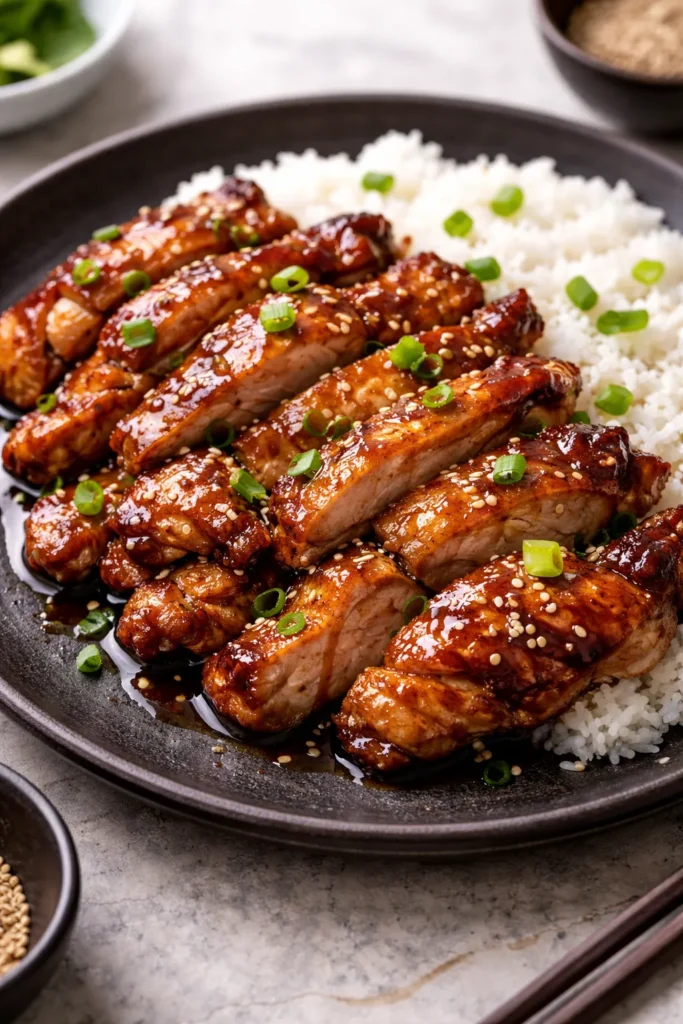
Chicken bulgogi doesn’t get as much attention as the beef version, but it deserves a spot in the weeknight rotation for one simple reason: gochujang-marinated chicken thighs are some of the most flavorful, efficient proteins you can cook on a busy weeknight. The marinade — gochujang, soy sauce, garlic, ginger, sesame oil, and a little brown sugar — coats the thighs in a sauce that chars beautifully under a broiler.
Pounding the chicken thighs slightly before marinating (just a few passes with a meat mallet, or even the bottom of a heavy pan) breaks down the fibers, helps the marinade penetrate, and ensures even cooking. The whole process from refrigerator to plate is about 30 minutes, including the short marination period.
Broiling vs. Pan-Frying
Both methods work well:
- Broiling gives the surface a slightly charred, caramelized finish that mirrors an outdoor grill — position the rack 5-6 inches below the heat source and flip once
- Pan-frying over medium-high heat works great for stovetop cooking; use a cast iron skillet for the best sear
- Slice the cooked chicken into bite-sized chunks before serving — it makes it easier to eat over rice and ensures everyone gets the caramelized edges
Pro tip: Thinly sliced fresh perilla leaves (kkaennip) scattered over the top just before serving add a distinctive herbal note that complements the spicy-sweet marinade far better than regular basil.
9. Sundubu Jjigae (Soft Tofu Stew)
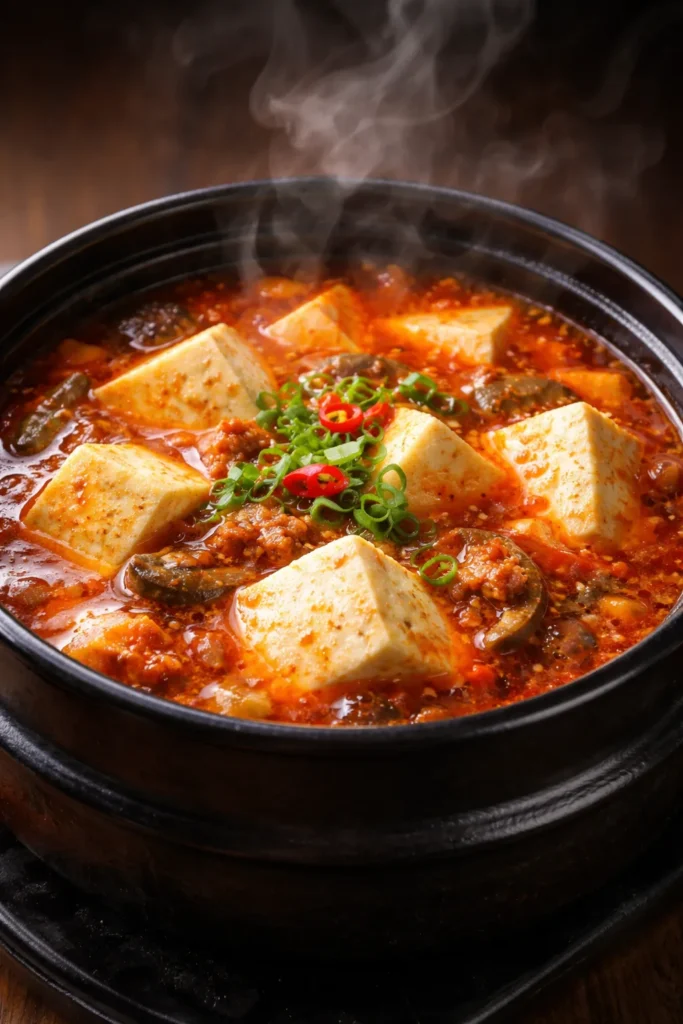
There’s something about sundubu jjigae that feels specifically designed for evenings when you’re tired and need comfort food fast. The silken tofu — broken into large, irregular chunks rather than cubed — absorbs the spicy, savory broth as it simmers, creating a stew that’s simultaneously light and deeply satisfying. An egg cracked directly into the bubbling stew in the last few minutes of cooking poaches gently and adds richness.
Anchovy-kelp stock is the traditional base, and if you have it, use it — it adds an oceanic depth that chicken broth can’t quite replicate. That said, a good low-sodium chicken stock gets you close enough on a weeknight, especially once the gochugaru (Korean chili flakes), garlic, and sesame oil have been added.
The Gochugaru Blooming Step
One move that makes a real difference: add the gochugaru to the hot oil before any liquid goes into the pot and cook it for 60-90 seconds, stirring constantly. This blooms the spice, deepening its color and releasing fat-soluble compounds that make the broth richer and more complex. It’s the same principle as blooming any spice in oil — don’t skip it.
What Goes In
- Ground pork or thinly sliced pork belly as the protein base
- Plenty of minced garlic and sliced onion
- Gochugaru bloomed in sesame oil
- Stock, soy sauce, and fish sauce for the broth
- Silken or soft tofu, added gently
- One egg per bowl, cracked in during the last 3-4 minutes
10. Doenjang Jjigae (Soybean Paste Stew)
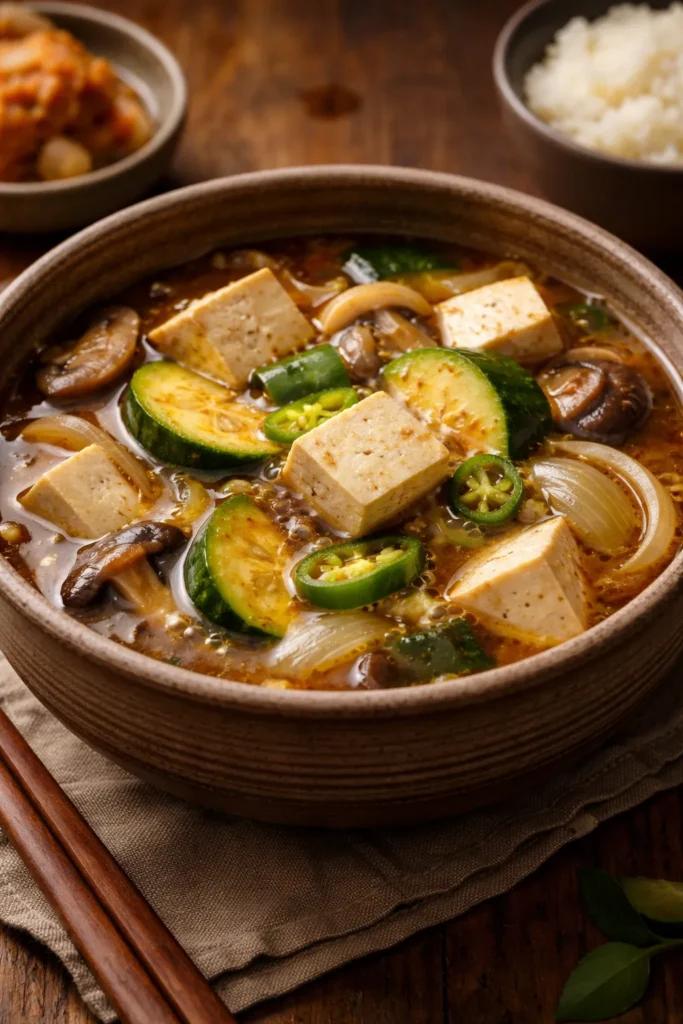
Doenjang jjigae is the Korean equivalent of miso soup, but more assertive, more textured, and far more filling. Doenjang (fermented soybean paste) has a funkier, earthier profile than Japanese miso — it’s been fermented longer and tastes accordingly more complex. A tablespoon or two stirred into a broth with tofu, zucchini, mushrooms, and onion creates a stew that tastes like it simmered for hours even if it only took 20 minutes.
This is also one of the most genuinely weeknight-ready Korean stews because it’s extremely forgiving with vegetables. Whatever you have — potatoes, Korean squash, shiitake mushrooms, enoki mushrooms, spinach — goes in and works. The doenjang is the backbone; everything else just needs heat and time.
The Anchovy Base
A quick anchovy-kelp stock made by simmering 5-6 dried anchovies and a small piece of dried kelp in water for 10 minutes is the traditional broth base. It sounds fussy but adds a clean, savory depth that makes the stew taste genuinely restaurant-quality. If you’re using store-bought stock instead, add a small piece of dried kelp and let it steep in the warm broth for a few minutes before proceeding.
Serving It Right
- Always serve doenjang jjigae piping hot, directly from the pot or in a hot stone bowl if you have one
- The stew is meant to be eaten alongside rice — spoon it over the rice or alternate bites
- A small plate of kimchi alongside completes the table
11. Dubu Jorim (Spicy Braised Tofu)
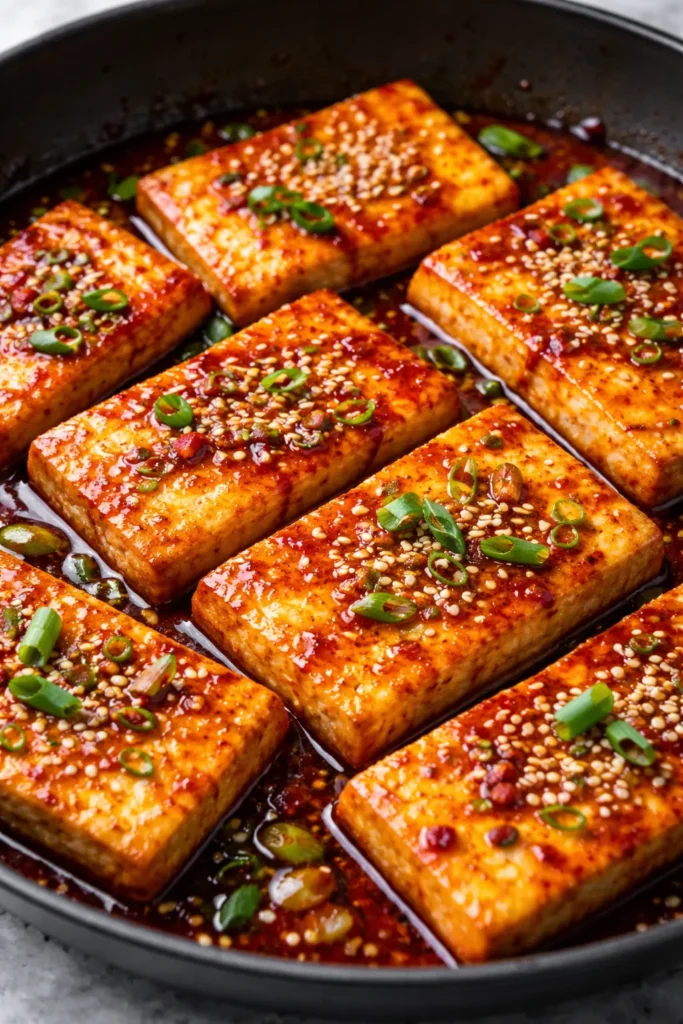
Dubu jorim converts tofu skeptics. Slabs of firm tofu are pan-fried until the exterior is golden and slightly crisp, then simmered in a bold sauce of soy, gochugaru, garlic, and sesame oil until the tofu absorbs the flavors and the sauce clings in a sticky, glossy coating. The contrast between the slightly crisp surface and the tender interior is what makes this dish work.
Pressing the tofu for at least 15 minutes before cooking is the step that makes the biggest difference. Excess water is the enemy of a good sear — a wet block of tofu steams in the pan instead of browning. Wrap it in a clean kitchen towel and set a heavy pot on top, or use a tofu press if you have one.
The Braising Sauce
- 3 tablespoons soy sauce
- 1 tablespoon gochugaru (or more to taste)
- 2 teaspoons sugar or honey
- 3 cloves garlic, minced
- 1 tablespoon sesame oil
- 3-4 tablespoons water to loosen
Combine these, pour over the seared tofu, and simmer on medium-low for 5-6 minutes, spooning the sauce over the top as it reduces. Finish with sliced scallions and sesame seeds.
Why This Works as a Weeknight Staple
The whole dish costs very little, requires no special equipment, and comes together in about 25 minutes. It works as a standalone side dish (banchan) alongside rice and whatever else you’re making, or it can anchor a full meal on its own. Leftovers reheat well and taste even better the next day once the sauce has had time to soak deeper into the tofu.
12. Haemul Pajeon (Seafood Scallion Pancakes)
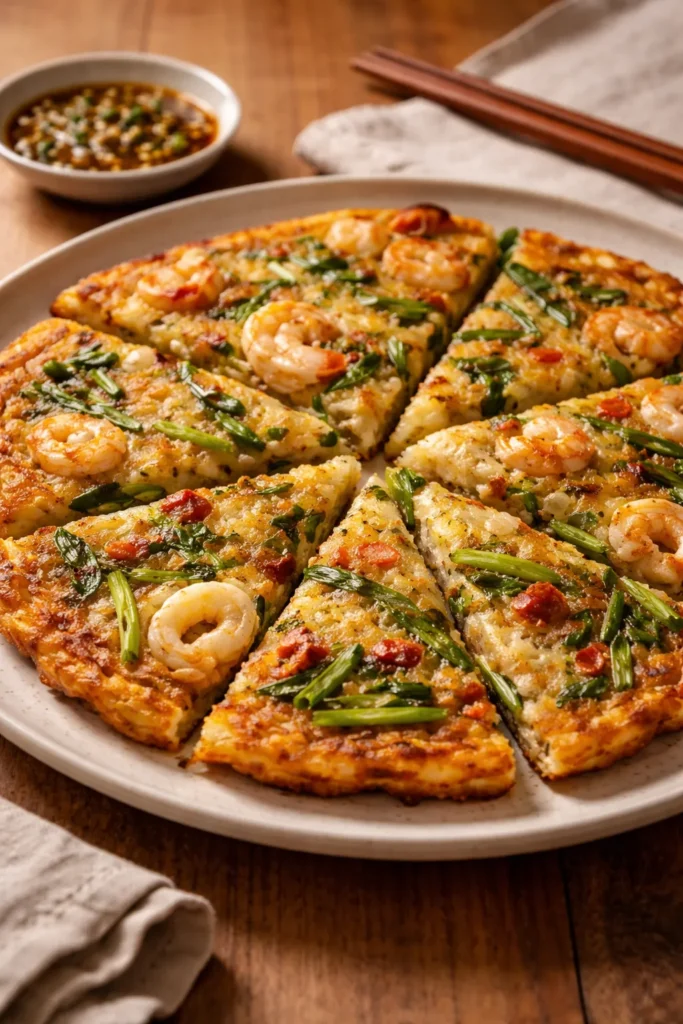
Pajeon is street food made practical for home cooking — a thick, crispy savory pancake loaded with scallions and whatever seafood you have on hand. The version with shrimp and squid (haemul pajeon) is the most popular, but even a simple scallion-only version (pa means scallion, jeon means pancake) is legitimately delicious and satisfying.
The batter technique is where most home versions go wrong: regular all-purpose flour batter doesn’t get crispy enough on its own. Using ice-cold water in the batter creates steam that crisps the exterior dramatically. Some cooks add a spoonful of potato starch or rice flour to push the crispness even further — either addition makes a noticeable difference in the final texture.
Getting the Crispy Edge
- Use enough oil — pajeon should fry, not just dry out on a lightly greased pan
- Medium-high heat, and resist the urge to move the pancake before the edges have set and turned golden
- Flip only once; flipping repeatedly prevents a proper crust from forming
- A non-stick or well-seasoned cast iron pan gives the most reliable results
The Dipping Sauce
The traditional dipping sauce is non-negotiable: equal parts soy sauce and rice vinegar, a few drops of sesame oil, a pinch of gochugaru, and a scatter of toasted sesame seeds. Mix it in 30 seconds and it transforms the pancake from good to genuinely memorable.
Pro tip: Serving the pancake straight from the pan while it’s still crackling-hot is worth planning around. It loses about 40% of its appeal once it sits and steams itself soft on a plate.
Building a Korean Weeknight Pantry
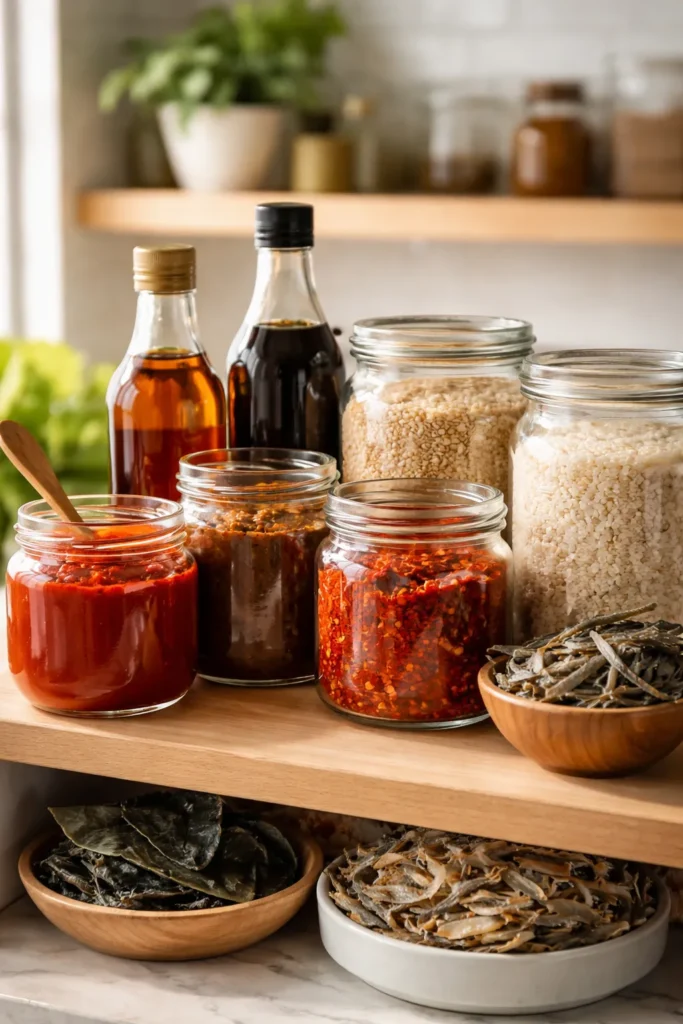
The 12 recipes above share a core set of ingredients that, once stocked, make Korean weeknight cooking accessible on any given evening without a special grocery run.
The non-negotiables:
- Gochujang — fermented chili paste; adds deep, complex heat and sweet-savory backbone
- Gochugaru — Korean chili flakes; used in marinades, stews, and braising sauces
- Doenjang — fermented soybean paste; the foundation of jjigae and many dipping sauces
- Soy sauce — low-sodium versions give you more control over the final salt level
- Sesame oil — always toasted; used as a finishing oil, not for high-heat cooking
- Toasted sesame seeds — used as garnish constantly across Korean cooking
- Short-grain rice — the right texture for absorbing sauces and eating alongside banchan
- Dried anchovies and kelp — for quick, authentic stock that takes 10 minutes to make
These ingredients keep for months in the fridge or pantry, which means the cost per meal drops dramatically over time. A 500g tub of gochujang, bought once, gets you through dozens of batches of tteokbokki, chicken bulgogi, dakgalbi, and more.
Storing and Reheating Korean Weeknight Meals
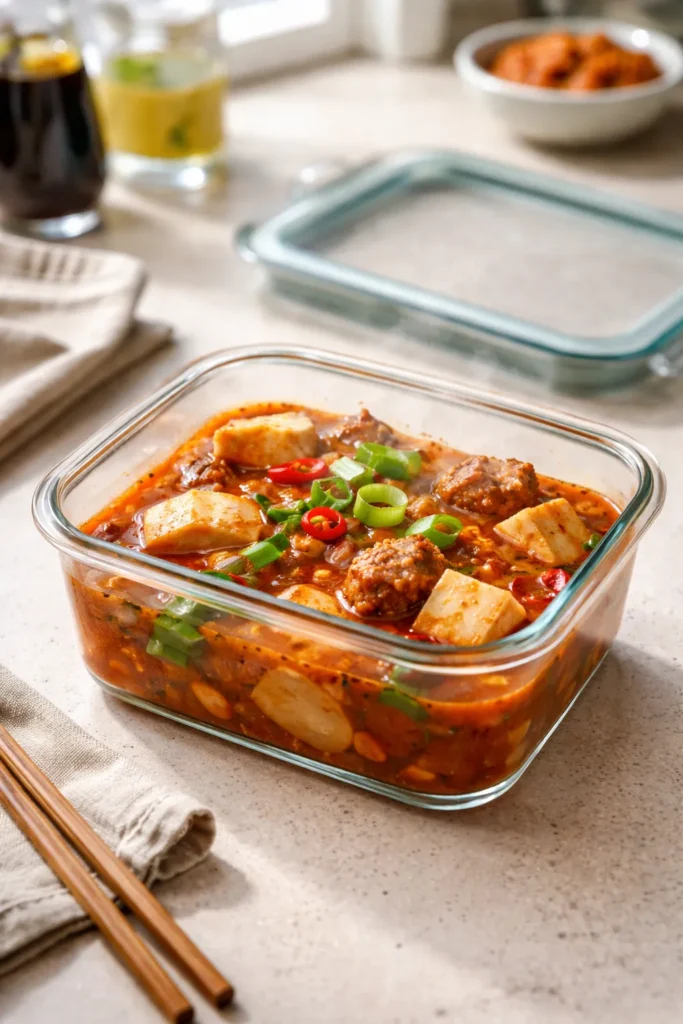
Most of the dishes in this lineup store and reheat without significant loss of quality, which makes them natural meal-prep candidates.
Stews and soups (kimchi jjigae, doenjang jjigae, sundubu jjigae) actually improve after a day in the fridge as the flavors continue to develop. Reheat gently over medium-low heat with a splash of water to prevent scorching.
Bulgogi and dakgalbi reheat well in a hot pan with a small splash of water to prevent the sauce from burning. Avoid the microwave if possible — the proteins tighten and the texture suffers.
Rice cakes (tteokbokki, dakgalbi) need to be reheated with added liquid since the rice cakes dry out and harden in the fridge. A few tablespoons of water or stock added to the pan before reheating on medium heat restores the texture almost completely.
Pajeon is best eaten fresh but can be reheated in a dry skillet over medium heat to restore some crispness. The microwave makes it irreversibly soggy.
Final Thoughts
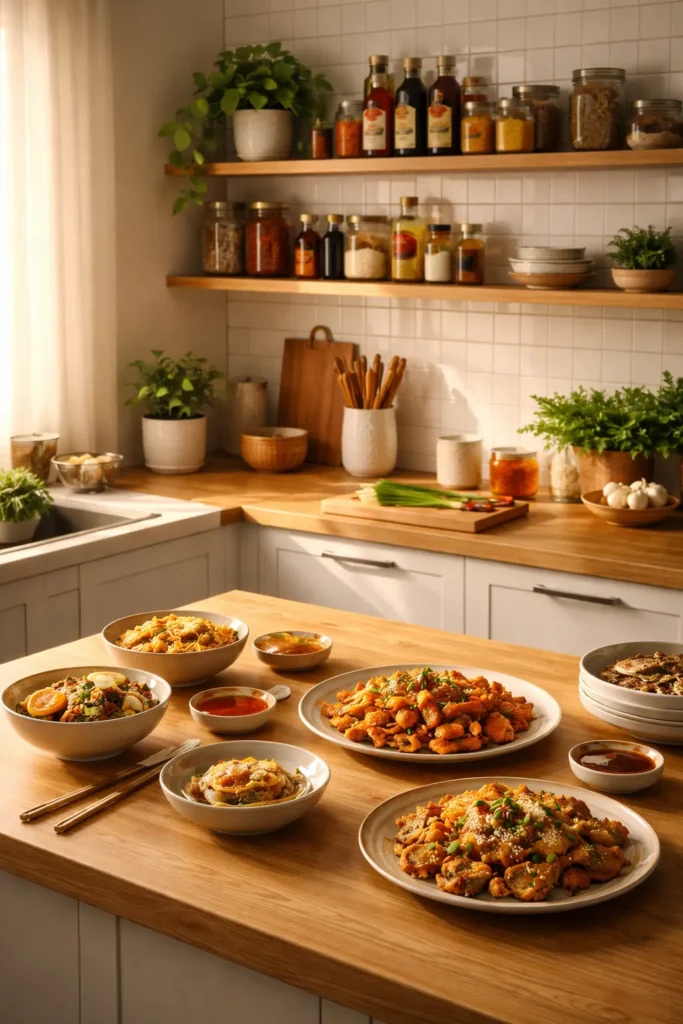
Korean weeknight cooking rewards a small upfront investment — mostly in pantry building — with an enormous return in flavor and variety. Once gochujang and doenjang are fixtures in your kitchen, dishes like kimchi jjigae and dubu jorim stop feeling exotic and start feeling like obvious Tuesday night answers.
The 12 recipes here aren’t a comprehensive survey of Korean cuisine — they’re a practical starting point built around speed, accessibility, and the kind of deeply satisfying flavor that makes weeknight cooking feel worth the effort. Start with bulgogi or kimchi fried rice if you’re brand new to cooking Korean food at home. They’re the most forgiving and deliver the highest immediate payoff.
What you’ll notice, after a few weeks of cooking from this list, is that the core techniques start to repeat: blooming chili paste in oil, building umami with soy and sesame, using acid (kimchi brine, rice vinegar) to balance richness. Those techniques translate across dozens of other Korean dishes, turning what felt like a specialized cuisine into a framework you actually understand.
The best weeknight dinner is one that’s fast enough to actually happen on a Tuesday. These twelve make that standard easy to meet.