Chicken nuggets have a special place in family dinner history. Nobody’s disputing that. But if you’ve found yourself staring at the same freezer bag every Tuesday and Thursday — and your kids have stopped even looking excited about what’s on the plate — it’s time to shake things up without triggering a full-scale dinner revolt.
The good news? There’s a whole world of kid-approved dinners that hit all the same notes children love: cheesy, handheld, mild, satisfying, and comforting. The difference is that these meals are more interesting, more nourishing, and honestly more fun to eat. They pull off the rare trick of making adults genuinely happy to be sitting at the same table.
What makes a dinner truly kid-friendly isn’t just about blandness or avoiding vegetables. It’s about familiar textures, approachable flavors, and a sense of control — which is why so many of the best family dinners involve some kind of customization, assembly, or fun presentation. Cheesy, saucy, and slightly hands-on? You’ve got a winner. The twelve recipes here check all those boxes, and most of them come together in 45 minutes or less on a weeknight.
One practical note before you start cooking: registered dietitians who work with families consistently recommend keeping at least one familiar, well-loved element on the table whenever you introduce something new. A bowl of fruit, good bread, or a simple side they already love gives even hesitant eaters a safe landing spot while they warm up to the new dish. Exposure matters more than enforcement — and these recipes are designed to make that first exposure as appealing as possible.
Table of Contents
- 1. Cheesy Skillet Taco Rice
- Why Kids Can’t Resist It
- What to Know Before You Cook
- 2. Sheet-Pan Honey Mustard Chicken and Broccoli
- The Honey-Mustard Effect on Picky Eaters
- Tips for Maximum Results
- 3. Baked Creamy Chicken Taquitos
- The Filling That Makes These Work
- Practical Details
- 4. One-Pot Pasta with Sneaky Hidden Vegetables
- Building the Hidden Veggie Foundation
- Keys to Getting This Right
- 5. Smashed Beef Skillet with Cucumber Yogurt
- Why the Format Wins Over Kids
- Assembly Tips
- 6. Homemade Crispy Fish Sticks
- Making Fish Actually Appealing to Kids
- What to Watch For
- 7. Cheesy Tuna and Tomato Orzo
- The Orzo Advantage
- Getting the Best Results
- 8. Ground Turkey Shepherd’s Pie with Mashed Potato Topping
- The Hidden Vegetable Opportunity Here
- Practical Tips
- 9. Cowboy Quesadillas
- Why Quesadillas Work So Well for Families
- Make It a Build-Your-Own Dinner
- 10. Bacon Ranch Chicken Sliders
- The Slider Appeal for Small Hands
- Tips to Make These Even Better
- 11. DIY Burrito Bowls
- Why the Bowl Format Beats Almost Everything
- Making the Base Properly
- 12. Pastina Soup with Parmesan and Vegetables
- Why This Works as a Weeknight Dinner
- Building the Best Version
- Final Thoughts
1. Cheesy Skillet Taco Rice
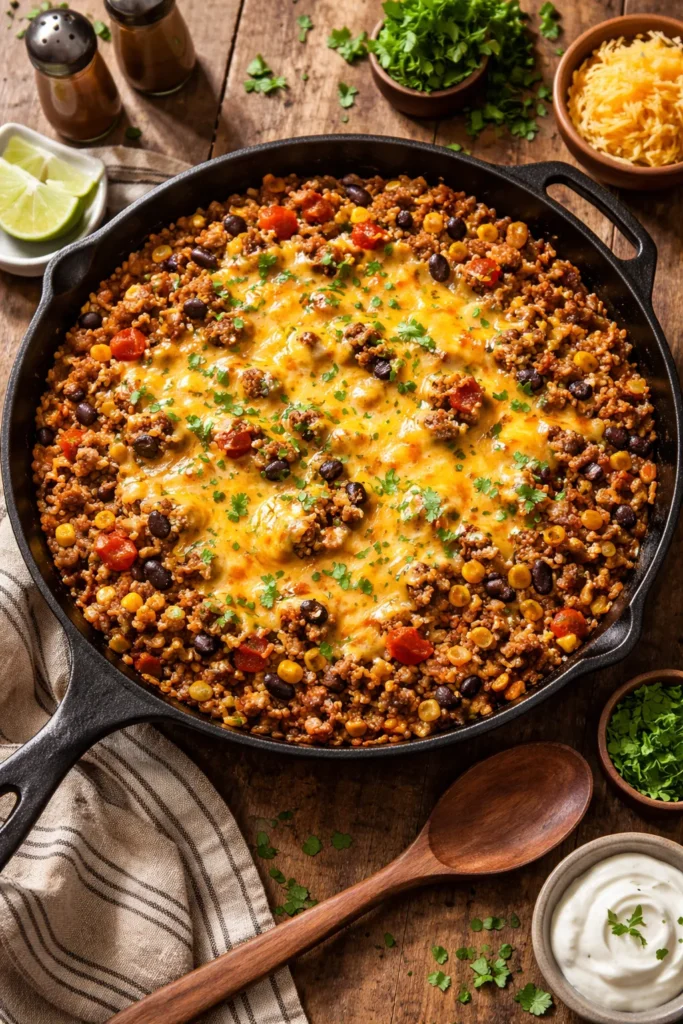
This is the kind of dinner that earns a spot in the permanent rotation after the first night you make it. Ground beef or turkey gets seasoned with taco spices, then simmers with rice, canned tomatoes, black beans, corn, and broth — all in one pan — until the rice absorbs everything and the whole thing becomes this thick, deeply savory dish. A generous layer of melted cheddar on top seals the deal.
Why Kids Can’t Resist It
The flavor profile is everything children already love from taco night, but in a format that’s even easier to eat. No assembly required, nothing falls apart, and the rice makes it filling enough that you won’t be fielding hungry complaints an hour later.
The real genius here is how well it takes to customization. Spice-averse kids get a mild version; adults can hit theirs with hot sauce or jalapeños. You can also serve the toppings — sour cream, salsa, shredded lettuce, crushed tortilla chips — separately so everyone builds exactly the bowl they want.
What to Know Before You Cook
- One skillet or deep sauté pan does the entire job — minimal cleanup
- Use long-grain white rice for the best texture; it absorbs liquid evenly without going mushy
- Brown the meat fully before adding the rice to develop deeper flavor in the base
- The rice needs about 18-20 minutes to cook through after you add the liquid — resist the urge to stir too much or it’ll get gummy
- Leftovers reheat beautifully with a splash of water to loosen things up
Worth knowing: A scoop of cottage cheese or plain Greek yogurt stirred in at the end adds protein and a creamy richness without any discernible dairy flavor — kids never notice, and it makes the texture even more satisfying.
2. Sheet-Pan Honey Mustard Chicken and Broccoli
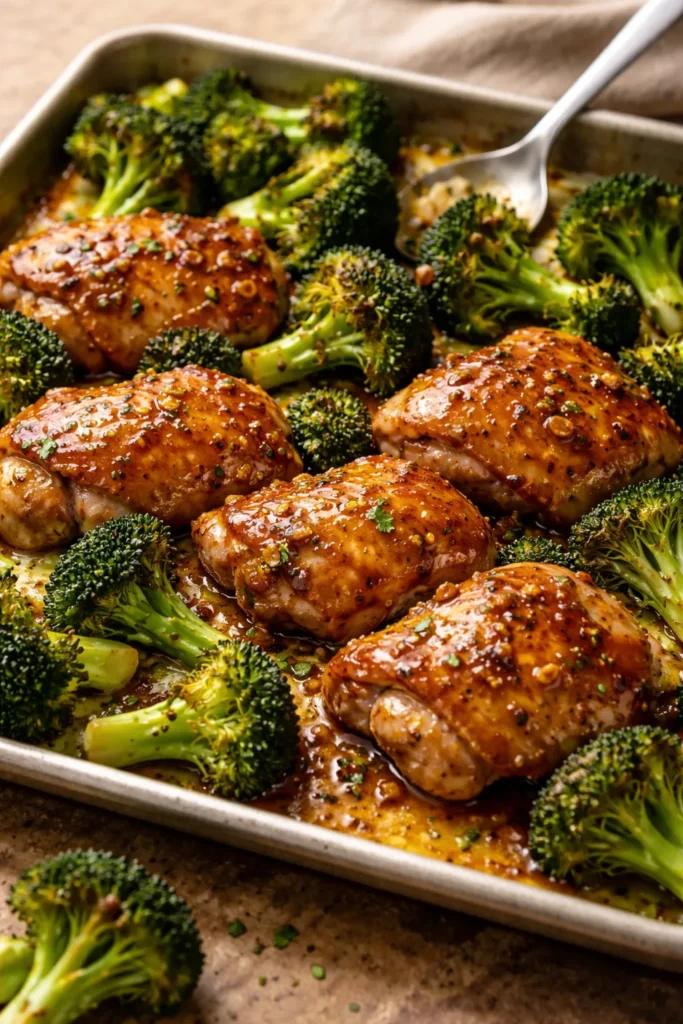
Sheet-pan dinners are a parent’s best friend for a reason. Everything goes on one pan, the oven does the work, and you get a proper protein-plus-vegetable meal without standing over a stove. This version uses boneless chicken thighs — which stay far more forgiving and juicy than breasts — coated in a sweet-tangy honey-Dijon marinade that caramelizes beautifully during roasting.
The Honey-Mustard Effect on Picky Eaters
Here’s the thing about honey mustard: it’s one of those flavors that reads as familiar and sweet to children rather than sharp or challenging. The honey takes the edge off the mustard, and roasting concentrates both into something almost jam-like on the surface of the chicken.
The broccoli is where this recipe pulls off a quiet miracle. Roasted broccoli — cut into coins from the stems, with florets spread flat — gets crispy at the edges in a way that steamed broccoli never achieves. Kids who firmly reject broccoli in most formats often find the roasted, slightly charred version entirely acceptable, even good.
Tips for Maximum Results
- Pat the chicken completely dry before adding the marinade — moisture is the enemy of caramelization
- Don’t crowd the pan. If pieces overlap, they steam instead of roast. Use two pans if needed
- Broccoli stems cut into thin coins cook at the same rate as florets when they’re sliced thin enough
- Roast at 425°F (220°C) for a full 35-40 minutes so the exterior gets properly golden rather than just cooked through
- Serve with rice or roasted potatoes to round out the plate
3. Baked Creamy Chicken Taquitos
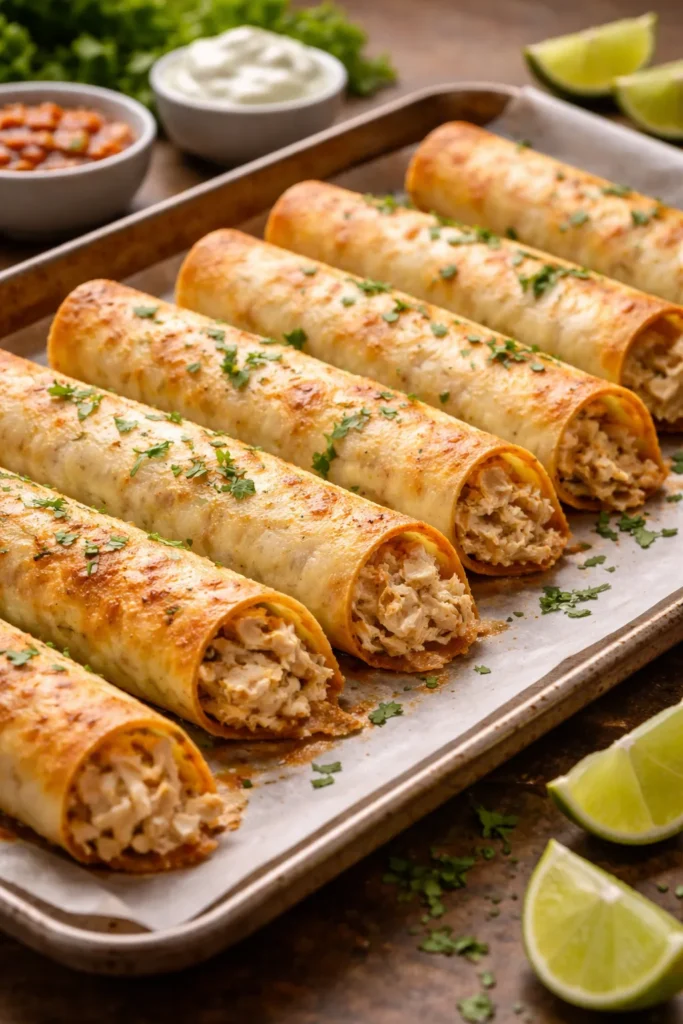
Taquitos have an almost unfair advantage with children: they’re hand-held, they’re crispy, and they look like a snack even when they’re dinner. Homemade baked versions skip the mess of frying entirely and come out genuinely crunchy after about 20 minutes in a hot oven.
The Filling That Makes These Work
The filling is straightforward — shredded cooked chicken (rotisserie chicken is the fastest path here), cream cheese, shredded cheddar, and a hint of mild taco seasoning. The cream cheese is the key. It binds everything together and keeps the filling moist inside the crispy shell, which means no dry, crumbly bites that kids find frustrating.
Rolling tight is the only technique you actually need to master. Loose taquitos fall open during baking and lose their structural integrity. Place them seam-side down on the pan and they’ll hold themselves closed.
Practical Details
- Small flour tortillas, about 6 inches, roll most easily without cracking
- Warm the tortillas for 20 seconds in the microwave before rolling — cold tortillas crack at the seam
- Brush the outsides lightly with oil before baking for maximum crispiness
- These freeze exceptionally well. Make a double batch, freeze flat on a sheet pan, then transfer to a bag. Reheat straight from frozen at 375°F (190°C) for 15 minutes
- Dipping sauces are non-negotiable: ranch, mild salsa, sour cream, or guacamole all work
4. One-Pot Pasta with Sneaky Hidden Vegetables
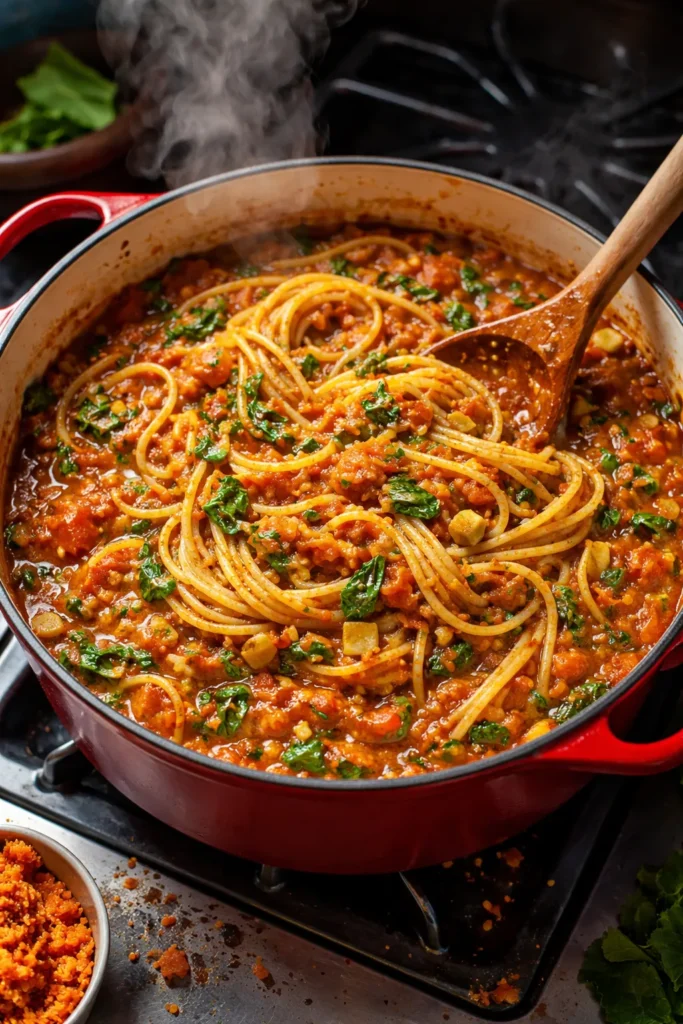
If you’ve ever finely diced a zucchini and watched it completely disappear into a tomato sauce, you already understand the magic of this technique. A quick one-pot pasta comes together with a base of sautéed onion, garlic, and crushed tomatoes — and whatever vegetables you want to blend or finely chop in — finished with pasta cooked right in the sauce and a heavy hand of Parmesan.
Building the Hidden Veggie Foundation
The trick isn’t deception for its own sake — it’s about exposing children to a wider nutritional base while the meal itself remains something they genuinely want to eat. Finely grated carrots, diced spinach, blended butternut squash, and shredded zucchini all dissolve seamlessly into tomato-based sauces. You’re not hiding nutrition; you’re integrating it into a form they’ll accept.
Cooking the pasta directly in the sauce — rather than in a separate pot of boiling water — does two things. The pasta absorbs flavor rather than just water, and the starch it releases naturally thickens the sauce to a glossy, clingy consistency that coats every piece.
Keys to Getting This Right
- Use short pasta shapes like penne, rigatoni, or shells — they hold sauce better than long strands for little ones
- Add about a half cup more liquid than you think you need, since pasta absorbs aggressively
- Stir every 3-4 minutes to prevent sticking to the bottom of the pot
- Finish with a tablespoon of butter and a generous amount of Parmesan off the heat — this step elevates a simple weeknight dish into something that feels indulgent
- Add a pinch of sugar if your tomatoes are particularly acidic; it smooths the whole thing out
5. Smashed Beef Skillet with Cucumber Yogurt
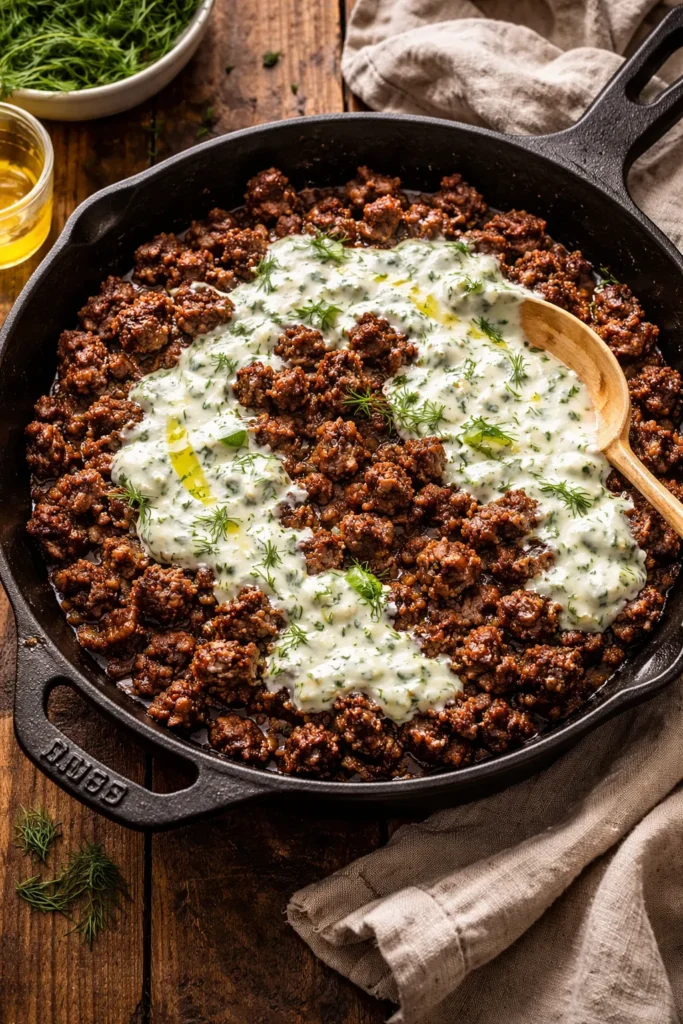
This one takes inspiration from Persian kabob koobideh — seasoned ground beef cooked in big chunks in a skillet until deeply browned and crispy-edged — but strips the technique down to something achievable on a Tuesday night. The meat gets seasoned with grated onion, a pinch of turmeric, and salt, then cooked in large portions and broken apart rather than shaped into individual kebabs.
Why the Format Wins Over Kids
Crispy-edged ground beef in a skillet hits a texture note that children find hard to resist — it’s somewhere between a burger and a taco filling, with those browned bits that pack all the flavor. Serving it with warm pita and a cool, garlicky cucumber yogurt gives the meal a composed quality that feels more interesting than a regular weeknight plate.
The cucumber yogurt is worth making. Greek yogurt, grated cucumber (squeezed dry), minced garlic, and a squeeze of lemon come together in five minutes. It acts as a natural cooling agent for the savory beef and doubles as a dip, which means kids will go back for more.
Assembly Tips
- Grate the onion on a box grater rather than dicing — the moisture and raw juice distribute flavor through the meat more evenly
- Don’t stir constantly. Let the beef sit in the pan undisturbed for 2-3 minutes per side to build a proper crust
- Serve deconstructed: beef in one bowl, yogurt in another, pita on the side — let kids assemble their own wraps
- For families new to the flavor profile, start with less turmeric (a pinch goes a long way) and build from there
6. Homemade Crispy Fish Sticks
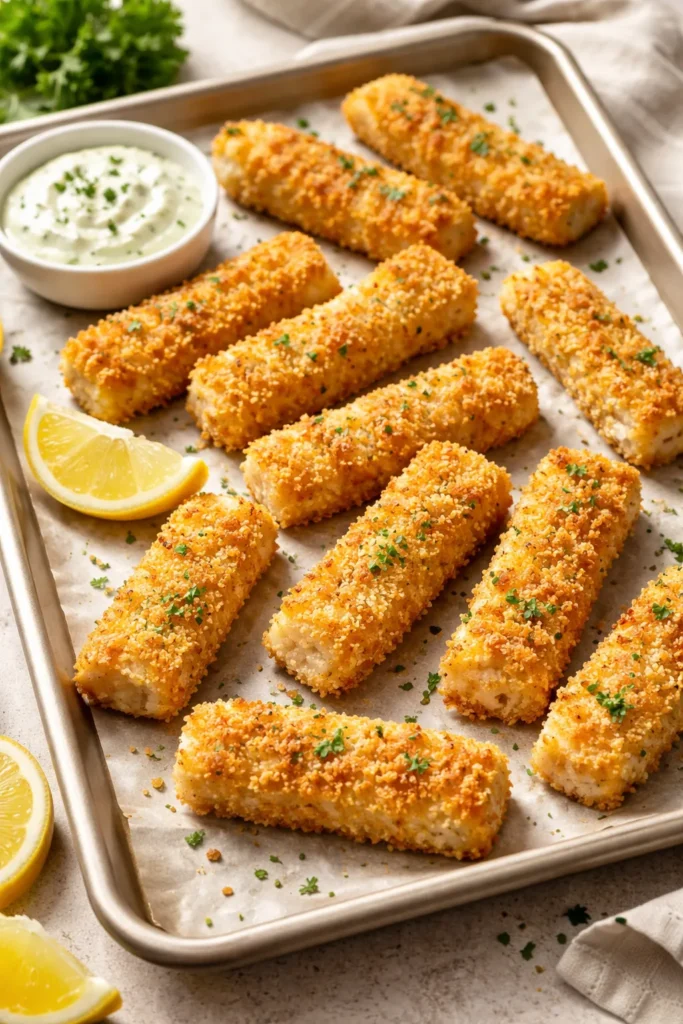
Store-bought fish sticks have a place in the world, but homemade ones exist on an entirely different level. Using fresh cod or tilapia cut into strips, dipped in egg, then coated in a seasoned panko mixture, you get fish sticks that are genuinely crispy on the outside and flaky-tender inside — and they cook in about 12 minutes in a 425°F oven or air fryer.
Making Fish Actually Appealing to Kids
The reason many children reject fish isn’t the flavor — it’s the texture and the smell. Fresh, mild white fish has neither issue. Panko breadcrumbs are the non-negotiable coating here because their coarser, airier texture creates a crust that shatters rather than getting soft. Adding grated Parmesan and a pinch of garlic powder to the panko gives the exterior an almost nutty, savory quality that takes the recipe well beyond anything from a freezer box.
Dipping sauce matters more than people give it credit for. Ketchup is classic; a quick honey-mustard or homemade tartar sauce (mayo, relish, lemon) elevates the whole experience and gives kids something to be excited about on the side.
What to Watch For
- Press the panko coating firmly onto each piece — gentle coating falls off during cooking
- The fish must be completely dry before breading; pat each piece with paper towels
- Air fryer method: 400°F (200°C) for 10-12 minutes, flipping once at the halfway mark
- Oven method: 425°F (220°C) on a wire rack over a sheet pan for 12-15 minutes — the wire rack lets heat circulate underneath for an evenly crispy bottom
- Cut fish into uniform strip widths so they cook at the same rate
7. Cheesy Tuna and Tomato Orzo
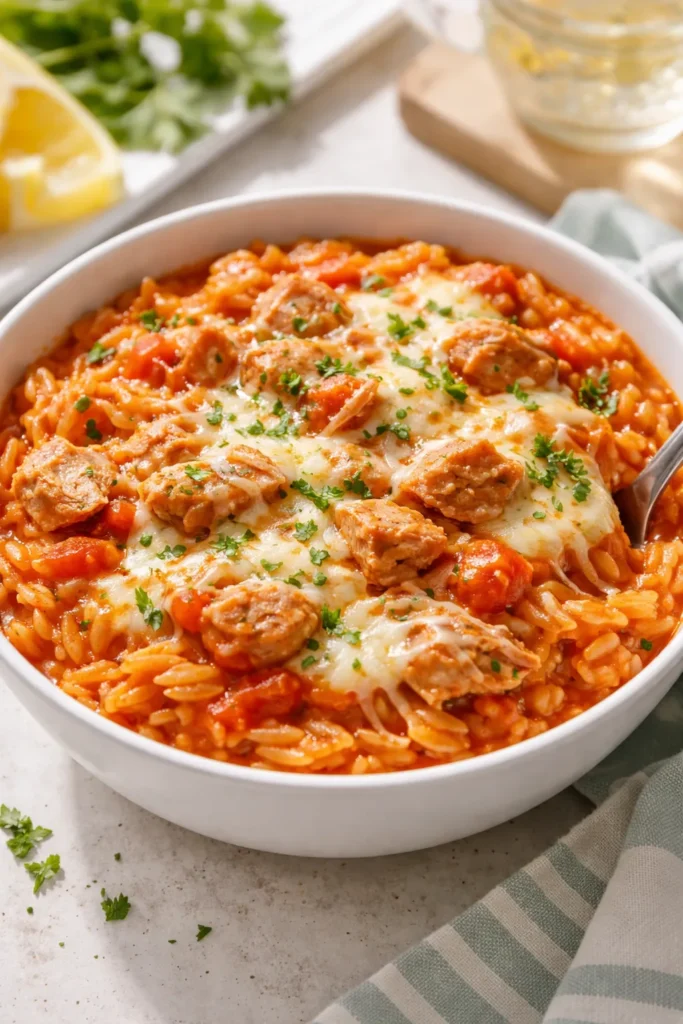
This is the weeknight dinner that asks almost nothing of you and delivers more than you’d expect. Orzo — that small, rice-shaped pasta — simmers directly in marinara sauce until it absorbs the tomato flavor all the way through. Canned tuna and shredded mozzarella or cheddar go in right at the end, and the whole thing finishes in one pot in about 20 minutes.
The Orzo Advantage
Orzo has a particular appeal with children that regular pasta sometimes doesn’t: it’s small enough to fit comfortably on a spoon, it has no complicated shapes or sharp edges, and its texture after cooking in sauce is soft and almost creamy. This is comfort food in the truest sense — the kind of bowl you want to eat curled up on the couch, which honestly makes it easier to get everyone to the table.
Canned tuna is one of those ingredients that divides children sharply. For tuna fans, this recipe is an immediate favorite. For skeptics, starting with a mild, water-packed tuna and ensuring it’s well-incorporated — so there are no large chunks — often makes the difference between acceptance and refusal.
Getting the Best Results
- Use a good-quality jarred marinara with a simple ingredient list — the quality of the sauce matters since it’s the primary flavor base
- Add the orzo to cold or room-temperature sauce and bring everything up to a simmer together for more even cooking
- Stir frequently once the orzo is in; it sinks and sticks to the bottom faster than regular pasta
- Cover the pot with a lid and reduce heat to low for the last 5 minutes to steam the orzo through completely
- Add a tablespoon of butter right before serving for a silkier, more cohesive texture
8. Ground Turkey Shepherd’s Pie with Mashed Potato Topping
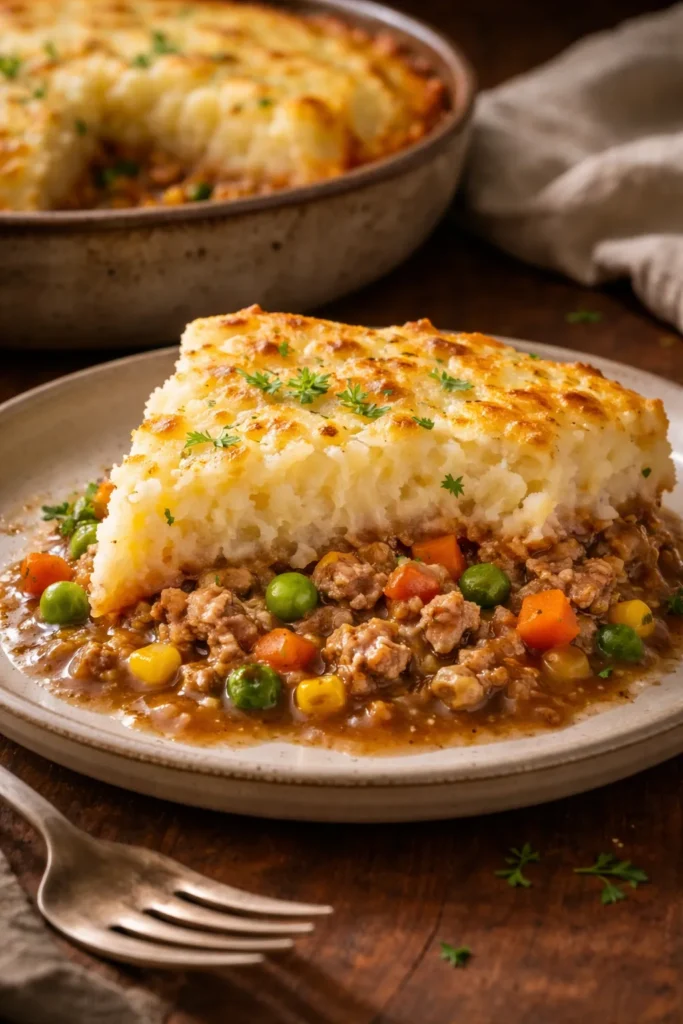
Shepherd’s pie is the kind of recipe that checks every box a child might have for a satisfying dinner: it has a recognizable top layer (mashed potatoes), something savory and filling underneath, and it’s warm, soft, and cohesive. Using ground turkey instead of lamb or beef makes it milder and quicker to cook, and finely diced vegetables can be worked into the filling with no trace left behind.
The Hidden Vegetable Opportunity Here
This filling is one of the better vehicles for vegetables in all of weeknight cooking. Finely diced carrots, peas, zucchini, celery, and even corn blend naturally into the savory turkey mixture with the right sauce — a combination of broth, a spoonful of tomato paste, and a splash of Worcestershire. The vegetables contribute body and sweetness without asserting themselves visually on the plate, which matters enormously when you’re cooking for young eaters with strong opinions about what they see.
The mashed potato topping should be properly creamy — not stiff or dry. Use enough butter and warm milk to make them genuinely smooth before spreading them on top. This is the layer kids pay attention to, and if it’s good, the whole dish wins.
Practical Tips
- Instant mashed potatoes work in a time crunch and produce a reliably smooth topping without peeling and boiling
- Score the potato topping gently with a fork before baking — those ridges brown and crisp during the oven time and add visual appeal
- Bake at 400°F (200°C) until the potato top is lightly golden and the filling is bubbling around the edges, about 25-30 minutes
- Let it sit for 5 minutes before serving — it scoops more cleanly when it’s had time to set slightly
- Make the filling a day ahead and refrigerate; add the potato topping right before baking
9. Cowboy Quesadillas
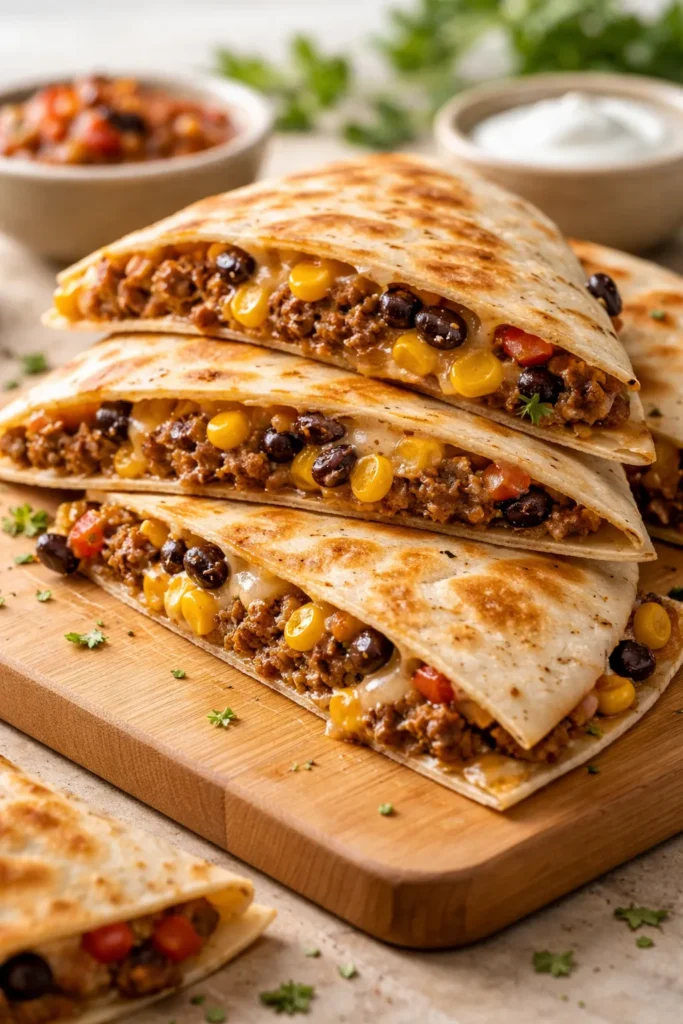
A regular cheese quesadilla is fine. Cowboy quesadillas are better in every measurable way — they’re loaded with seasoned ground beef or turkey, corn, black beans, and a two-cheese blend, then toasted in a pan until the outside is golden and the inside is molten and impossible to resist. They take about 20 minutes from start to finish and use pantry staples you almost certainly already have.
Why Quesadillas Work So Well for Families
The quesadilla’s genius is structural. Everything gets locked inside two layers of tortilla, which means even kids who refuse to let foods touch on their plates are essentially eating a unified, mixed meal without realizing it. The corn and beans add fiber, protein, and a natural sweetness that balances the savory beef beautifully.
Cooking them properly matters more than most people realize. A pan that’s too hot burns the tortilla before the filling heats through; a pan that’s too cool makes the cheese melt unevenly. Medium heat with a little oil or butter in the pan gives you a consistently golden exterior and fully melted interior every time.
Make It a Build-Your-Own Dinner
Set out the cooked filling in a bowl and let kids choose what goes into their quesadilla. Some want only cheese; others want the full works. Either outcome is a win because they’re eating a meal with actual substance, and the act of choosing their own fillings increases the likelihood they’ll eat it without complaint.
- Use a mix of cheddar and Monterey Jack — cheddar adds sharpness, Monterey Jack adds stretch and meltability
- Press down gently on the quesadilla with a spatula while it cooks — this helps the filling make full contact with the cheese
- Let it rest on a cutting board for 60 seconds before cutting; the cheese sets slightly and it doesn’t fall apart
- Serve with sour cream, mild salsa, and sliced avocado on the side
10. Bacon Ranch Chicken Sliders
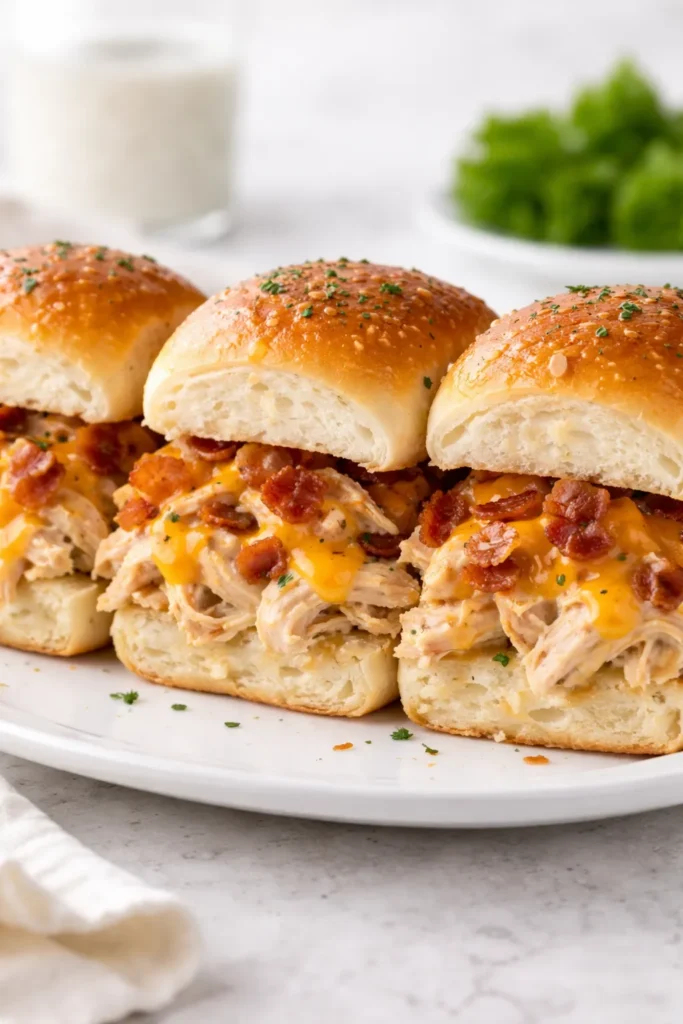
Rotisserie chicken is one of the most useful ingredients in family cooking, and this recipe makes brilliant use of it. Shredded chicken gets tossed with ranch dressing, crumbled bacon, and cheddar, then spooned onto soft Hawaiian rolls and baked until warm and melty. The rolls go into the oven as a unit, you pull them apart at the table, and every single one is perfectly soft and gooey.
The Slider Appeal for Small Hands
Sliders work on a physical level for children that full-sized sandwiches sometimes don’t. The portion size is right, the bread-to-filling ratio feels balanced, and the soft roll makes biting through easy for younger eaters who struggle with crusty bread. Hawaiian rolls in particular have a slight sweetness that pairs naturally with the savory ranch-and-bacon filling.
Melting extra cheese over the top during the last 3 minutes of baking creates a golden, slightly crispy cheese layer that adults will love as much as kids do. Covering the pan with foil for the first portion of baking keeps the rolls from overbrowning while the filling heats through.
Tips to Make These Even Better
- Season the ranch-chicken mixture with a pinch of garlic powder and black pepper beyond what the dressing alone contributes
- Real crumbled bacon beats bacon bits here — the texture and smokiness are noticeably different
- Don’t cut the rolls apart before baking. Keep the sheet intact, slice horizontally through the whole thing, fill, replace the top, and bake as one unit. Cut them apart at the table
- Brush the tops of the rolls with a little melted butter before the last few minutes for a glossy, bakery-like finish
- Serve alongside a simple fruit salad or roasted vegetables to complete the plate
11. DIY Burrito Bowls
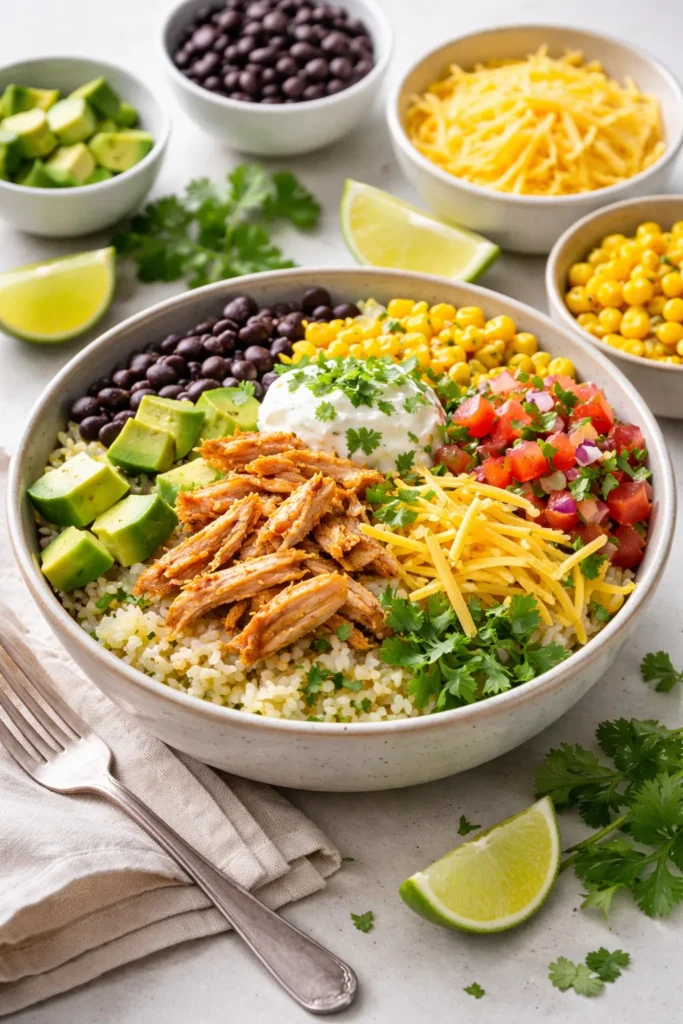
The burrito bowl is possibly the most universally successful format for feeding a family with wildly different preferences. Beans and rice cooked together in one pot form the base, and from there it’s an open buffet: shredded chicken or seasoned beef, roasted corn, diced avocado, shredded cheese, sour cream, salsa, fresh cilantro. Everyone builds their own bowl exactly as they want it.
Why the Bowl Format Beats Almost Everything
Children have a profound need to feel in control of their plates, and the DIY bowl format gives them genuine agency rather than the illusion of it. A three-year-old who refuses to eat anything mixed together can have plain rice and cheese. A ten-year-old adventurous eater can pile everything on. A parent can finally eat a complete, satisfying meal instead of what remains after distributing everyone else’s portions.
Cooking the beans and rice together — rather than separately — is a game-changer for both flavor and convenience. The beans release starch and body into the cooking liquid as the rice absorbs it, producing a cohesive, slightly creamy base that holds the bowl together better than plain white rice alone.
Making the Base Properly
- Use a 2:1 liquid-to-rice ratio and add the beans at the same time as the liquid
- Season the cooking liquid generously — a pinch of cumin, garlic powder, and salt go a long way in the base
- Cook on low heat after bringing to a boil, fully covered, without lifting the lid, for 18 minutes
- The toppings are where you can add nutrition: fresh pico de gallo, sliced radishes, shredded purple cabbage, and a squeeze of lime brighten the whole bowl
- Warm the proteins separately so the bowl is hot throughout rather than patchy
12. Pastina Soup with Parmesan and Vegetables
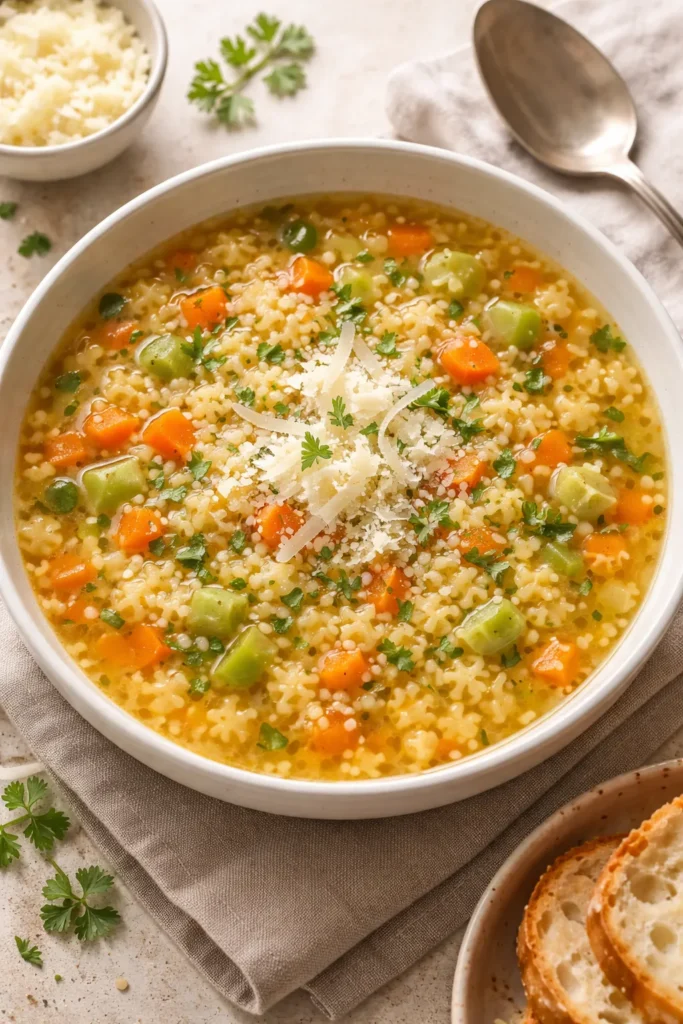
There is something about small pasta floating in a golden, vegetable-rich broth that works on a nearly physiological level with children. Pastina — the tiny star-shaped pasta called stelline, or any other miniature pasta shape — cooks down into a soft, slightly porridge-like consistency that’s comforting without being heavy. Combined with a simple base of chicken broth, sautéed onion, carrots, and celery, and finished with a generous snowfall of Parmesan, this is the soup version of a hug.
Why This Works as a Weeknight Dinner
Soup often gets dismissed as a side or a starter, but pastina soup is genuinely filling — especially for younger children who find large volumes of solid food overwhelming. The small pasta pieces are easy to eat at any age, the broth is warming and hydrating, and the Parmesan adds enough richness and umami that the soup feels satisfying rather than thin.
This is also one of the most effective recipes for picky eaters who go through phases of rejecting most foods. The flavor is mild, the texture is soft and consistent throughout, and there’s nothing visually surprising in the bowl. It wins by being gentle, approachable, and genuinely delicious — which is exactly the right strategy for challenging dinner phases.
Building the Best Version
- Start with quality broth. This soup has nowhere to hide behind heavy sauces or bold spices, so the broth carries the entire dish. Homemade or a good-quality low-sodium store-bought variety both work well
- Sauté the vegetables in butter rather than oil — the added richness comes through in the finished soup
- Add the pastina to already-simmering broth and stir frequently; it’s small enough to cook in 5-7 minutes and can become too soft quickly
- Grate Parmesan directly into each bowl at serving rather than into the pot — it melts more evenly and doesn’t make the broth cloudy
- A squeeze of lemon stirred in at the end brightens the whole bowl and balances the richness without making it taste citrusy
Final Thoughts
The best kid-friendly dinners aren’t about removing flavor or interest from the table — they’re about meeting children where they are while giving them something genuinely worth eating. Every recipe in this collection works because it respects what kids actually respond to: approachable textures, familiar bases, and enough customization that they feel some ownership over what’s on their plate.
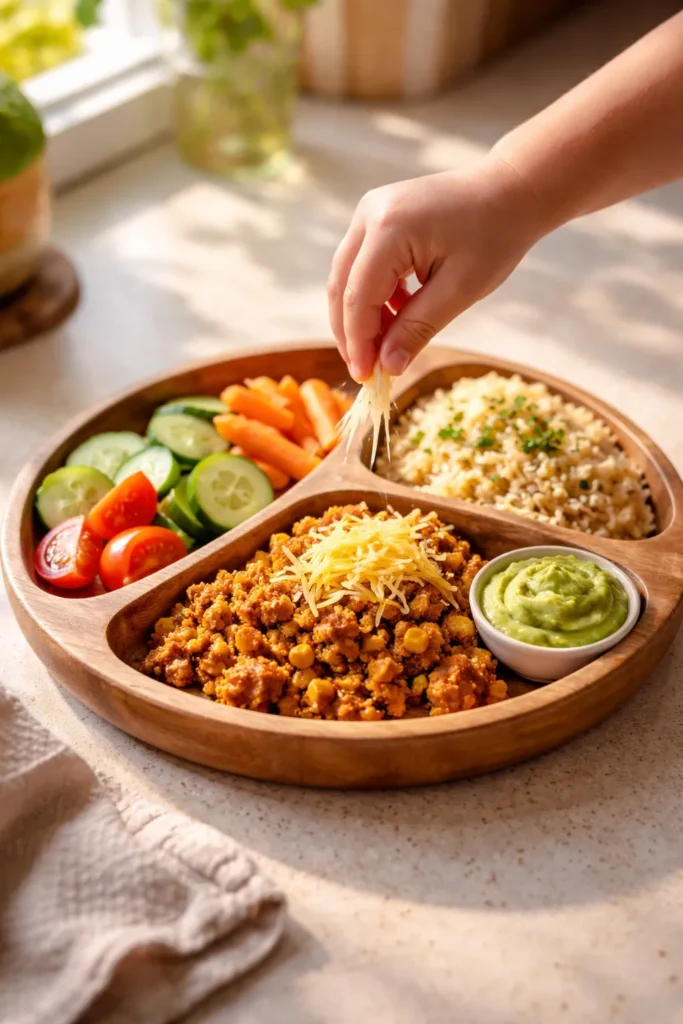
Two strategies make the biggest difference in practice. Deconstructing meals so components are served separately — rather than fully assembled — dramatically reduces dinnertime conflict with even the most selective eaters. And getting kids involved in even small cooking tasks, like stirring, sprinkling cheese, or choosing their toppings, turns the meal from something that happens to them into something they helped create.
Start with the two or three recipes that already sound closest to what your family enjoys, then branch out from there. Exposure is cumulative — a dish that gets a suspicious look the first time often gets a second chance (and genuine enthusiasm) a few weeks later when it reappears. The goal isn’t a perfect dinner every night. It’s a table where everyone gets fed, no one goes to bed hungry, and at least some nights, somebody asks for seconds.