There’s a specific kind of Sunday that calls for a stew. Not the ones where you’ve got errands to run or obligations stacking up — the real lazy ones, where the morning stretches into afternoon and the only thing you want is something warm simmering on the stove while you read, nap, or do absolutely nothing productive. That’s where a creamy stew earns its place.
Creamy stews sit in a different category from their broth-based cousins. The richness wraps around tender chicken and soft vegetables in a way that feels genuinely satisfying, not just filling. They reheat beautifully, they feed a crowd without drama, and they perfume the entire house with that particular smell — herbs, browned meat, a hint of garlic — that makes home feel like home.
What follows is a collection of eight distinct creamy stew recipes, each with its own personality. Some are weeknight-fast despite their Sunday-worthy flavor. Others lean into long, slow simmers and bold aromatics. A couple take unexpected turns — Japanese-style roux, rice flour slurries, lemon zest finishes — that prove creamy stew is a much wider genre than most people realize. Pick one for this weekend, or cook your way through all eight across the colder months. Either way, start with a good pot.
Table of Contents
- 1. Classic Creamy Chicken Stew with Yukon Gold Potatoes
- What Makes It Work
- Key Details
- 2. Japanese Cream Stew with Chicken Thighs and Broccoli
- The Texture Difference
- Key Details
- 3. Creamy White Wine Chicken Stew with Fresh Herbs
- The Rice Flour Trick
- Key Details
- 4. Creamy Chicken and Mushroom Stew with Lemon Zest
- Building the Roux Properly
- Key Details
- 5. Half-and-Half Creamy Chicken Thigh Stew with White Wine
- Getting the Most From Your Browned Bits
- Key Details
- 6. Slow Cooker Creamy Chicken Stew for Hands-Off Sundays
- Adjusting for the Slow Cooker
- Key Details
- 7. Creamy Chicken Stew with Bell Pepper and Green Beans
- Vegetable Timing Is Everything
- Key Details
- 8. Dairy-Free Creamy Chicken Stew with Coconut Milk
- Making It Work Without Dairy
- Key Details
- Tips That Apply to Every Creamy Stew on This List
- Serving Ideas That Complement Every Version
- Storage, Reheating, and Make-Ahead Strategy
- Final Thoughts
1. Classic Creamy Chicken Stew with Yukon Gold Potatoes
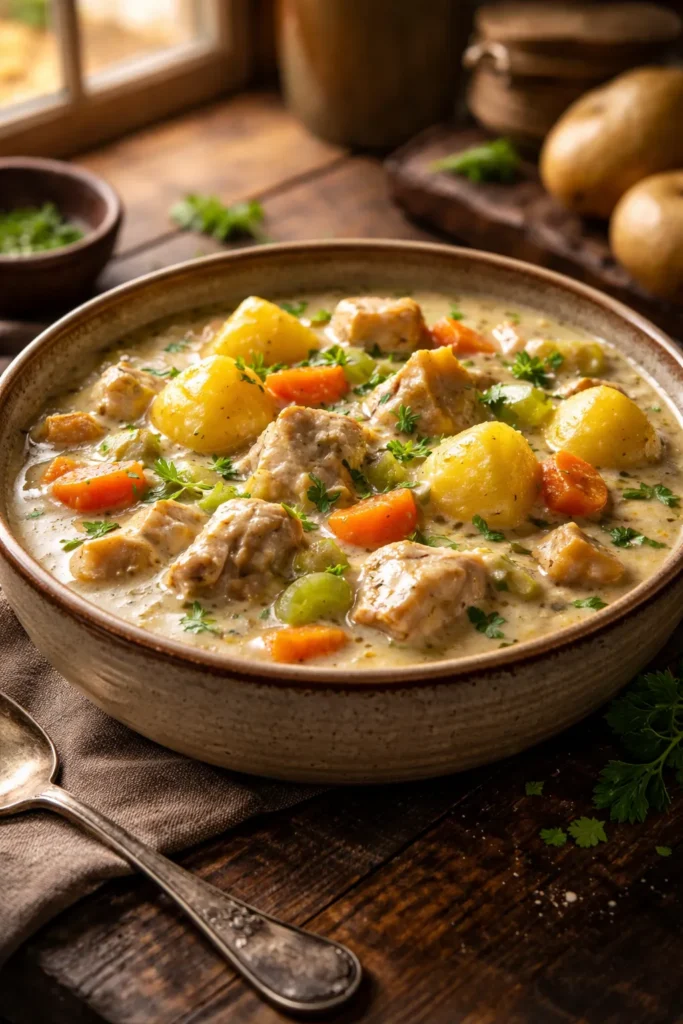
There’s a reason this version keeps showing up on dinner tables across generations. It uses a short list of humble ingredients — chicken, a classic mirepoix of onion, carrot, and celery, Yukon gold potatoes, a simple roux, and a finish of heavy cream and Parmesan — and turns them into something that tastes like it simmered all afternoon even when it didn’t.
The secret to why this works so well comes down to the roux. After browning the chicken and softening the vegetables, you stir flour directly into the aromatics and let it cook for a full minute before adding liquid. That step isn’t optional. It toasts out the raw flour taste and creates the foundation for a broth that thickens naturally as the potatoes release their starch during the simmer.
Yukon gold potatoes are the non-negotiable choice here. Their waxy, slightly buttery texture means they hold their shape through a 30-minute simmer without dissolving into the broth. Russets will fall apart and turn the stew starchy and gummy. Red potatoes work as a substitute but don’t contribute the same natural creaminess.
What Makes It Work
The finishing combination of freshly grated Parmesan and a quarter cup of heavy cream stirred in at the very end is where this stew goes from good to genuinely memorable. The Parmesan melts into the broth and acts almost like an emulsifier, giving the liquid a silky, cohesive quality that cream alone doesn’t achieve. Always grate the Parmesan fresh — the pre-bagged version contains anti-caking agents that prevent it from melting smoothly and can make the broth grainy.
Better Than Bouillon chicken base is the other upgrade most recipes don’t mention. A tablespoon stirred into the broth adds a depth of savory flavor that low-sodium stock alone can’t replicate. The broth ends up tasting like it was made from scratch rather than poured from a carton.
Key Details
- Protein: 1½ lbs chicken breast or thighs, browned in olive oil first
- Thickener: ¼ cup all-purpose flour, cooked into the aromatics as a roux
- Finish: ¼ cup heavy cream + ½ cup freshly grated Parmesan, stirred in at the end
- Cook time: About 50 minutes total, with 30 minutes of gentle simmering
- Serves: 6 generously
Pro tip: Brown the chicken whole, then cube it after it rests. You get better color, more control over the cook, and less time hovering over the cutting board.
2. Japanese Cream Stew with Chicken Thighs and Broccoli
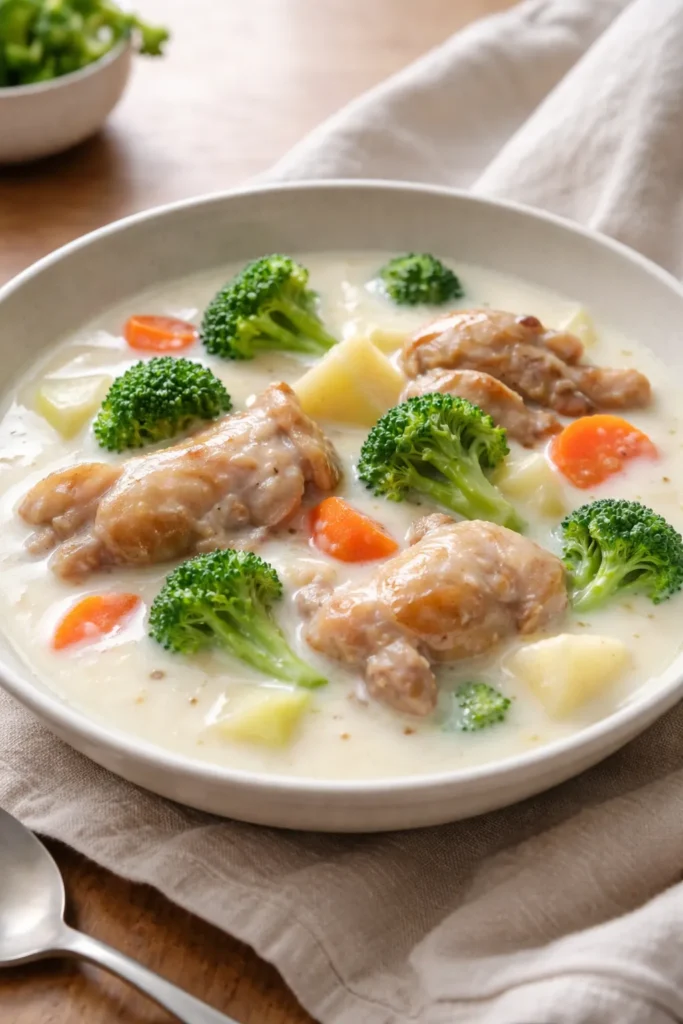
Most people outside Japan haven’t heard of kuriimu shichuu (クリームシチュー), and that’s a genuine gap in their stew knowledge. This one is lighter and silkier than Western-style cream stew — closer to a béchamel-based white stew than a roux-thickened broth — and it has a delicacy that makes it completely different from everything else on this list.
Cream stew arrived in Japan after World War II when powdered milk was distributed widely, and home cooks found creative ways to use it. By the mid-1960s, House Foods had introduced a boxed cream stew roux that became a pantry staple in Japanese households. The dish has been a beloved school lunch offering for decades, which explains its particular nostalgic comfort for anyone who grew up eating it.
The boxed roux makes this version genuinely fast — under 40 minutes from start to finish — and the technique of dissolving the roux cubes in a ladleful of hot broth before adding them to the pot prevents any lumping. The broccoli goes in blanched and at the very end, which keeps it vivid green and tender-crisp rather than army-grey and mushy.
The Texture Difference
Where Western cream stews use heavy cream and flour for richness, this version uses milk stirred in after the roux, which creates a lighter, almost velvety consistency. The result is filling without being heavy, which means it pairs just as naturally with steamed Japanese rice as it does with crusty bread. Spooning it over rice in a shallow bowl, the Japanese way, transforms it into something closer to a rice gratin than a soup.
Key Details
- Protein: 1 boneless, skinless chicken thigh (about 6 oz), cut into 1½-inch pieces
- Thickener: 4 cubes Japanese cream stew mix, dissolved in hot broth
- Vegetables: Carrot, Yukon gold potato, onion, cremini mushrooms, broccoli
- Finish: ⅓ cup milk stirred in after the roux
- Cook time: 40 minutes total
- Serves: 4
Pro tip: Avoid shiitake mushrooms in this one — their earthy intensity overpowers the gentle, milky flavor that makes Japanese cream stew distinctive. Cremini, white button, or shimeji are the right call.
3. Creamy White Wine Chicken Stew with Fresh Herbs
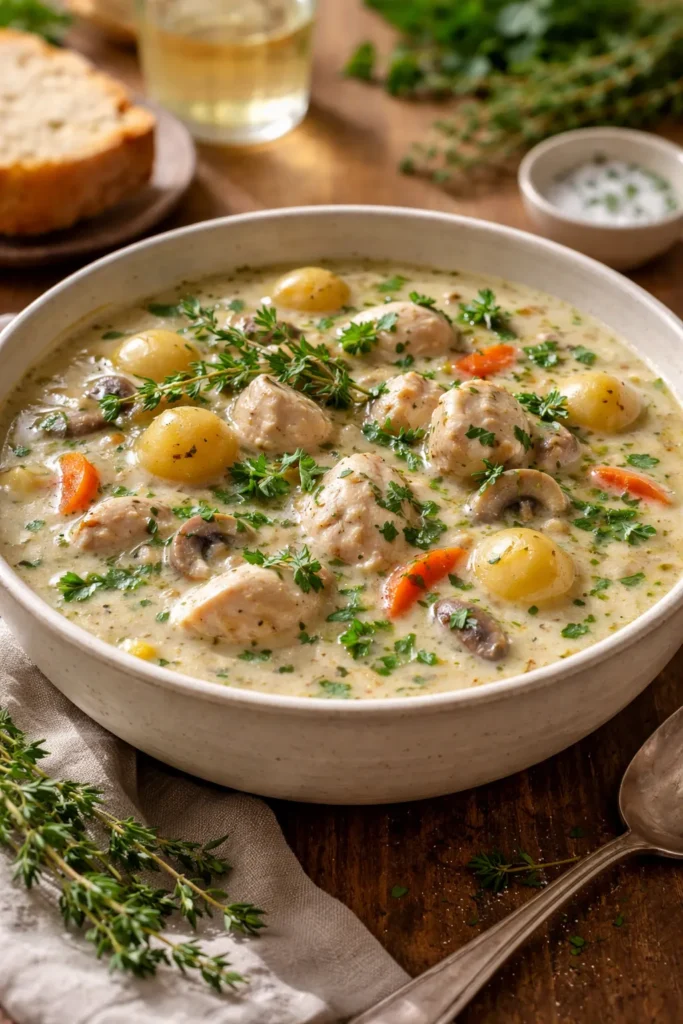
If the previous two recipes are about comfort and simplicity, this one is about flavor — the kind you’d expect from something that took significantly longer to make. The white wine deglazes all those browned bits from the bottom of the pot (the fond, which is where a huge amount of flavor is stored) and introduces a bright acidity that balances the richness of the cream beautifully.
Fresh herbs tied into a bundle with kitchen twine — rosemary, sage, and thyme — go into the pot whole and simmer with the chicken and vegetables for 20 to 25 minutes. No chopping, no measuring individual sprigs, and the stems release just as much flavor as the leaves. Pull the bundle out before serving and discard it. What stays behind is a deeply herbed broth with a complexity that dried herbs can’t replicate.
The white wine needs to be dry and unoaked. Pinot Grigio is the standard recommendation for a reason — its high acidity and clean flavor add brightness without overwhelming the stew with fruit or oak notes. If you’d rather skip the alcohol, an equal amount of chicken stock plus a small splash of apple cider vinegar provides the acidity without the wine.
The Rice Flour Trick
This version uses a rice flour slurry instead of a traditional roux — whisked into heavy cream and stirred into the simmering stew near the end. The result is naturally gluten-free and creates a velvety, smooth texture without any of the work of making a roux. The key is using finely ground rice flour (coarse varieties can leave a gritty texture) and whisking it very thoroughly into the cream before adding it to the hot stew.
Frozen peas go in right at the end, off heat, so they heat through gently without turning gray. A squeeze of fresh lemon juice at the very finish adds brightness that cuts through all that richness.
Key Details
- Protein: 2 lbs boneless, skinless chicken thighs, diced into 1-inch pieces
- Thickener: ½ cup rice flour whisked into 1 cup heavy cream (slurry method)
- Flavor bomb: 1 cup dry white wine, reduced by half after deglazing
- Fresh herb bundle: Rosemary, sage, thyme — tied with kitchen twine
- Extras: 2 cups frozen peas, juice of ½ lemon
- Cook time: 1 hour total
- Serves: 6 to 8
Pro tip: Add the halved head of garlic to the simmering pot — skin on, cut side down. It infuses the broth with mellow roasted garlic flavor. Fish it out before serving.
4. Creamy Chicken and Mushroom Stew with Lemon Zest

Mushrooms change the character of a cream stew significantly. Their earthiness adds an umami depth that makes the broth taste almost meaty even before the chicken contributes much, and their texture — slightly chewy, never soft the way carrots go soft — provides contrast in every spoonful.
Cremini mushrooms are the standard choice here, and they work well because their flavor is complex without being overwhelming. If you can find a mix of cremini and shiitake, use it — but keep shiitake to no more than half the mushroom quantity or their intensity will dominate the dish. Button mushrooms work fine if that’s what you have; they’re milder but absorb the broth beautifully during the simmer.
The unexpected addition in this version is lemon zest, stirred in along with the cream at the end. Not lemon juice — zest. The difference matters. Juice adds acidity that can make dairy curdle if the heat is too high. Zest adds the bright, citrus-forward aroma of lemon without changing the pH of the broth, so the cream stays silky and intact. It lifts the entire dish and stops the richness from feeling heavy.
Building the Roux Properly
This stew uses a technique slightly different from the classic approach — the flour goes in with the butter, garlic, and spices before the wine and broth, cooking directly with the mushrooms and aromatics rather than being added after. This means the flour has more time to cook out and absorb the flavors of everything it’s touching.
The chili flakes in the spice list are subtle but important. You won’t identify them as heat — there’s not enough for that — but they add a background warmth that keeps the stew from tasting flat.
Key Details
- Protein: 1½ lbs boneless skinless chicken breast or thighs, cubed
- Mushrooms: ½ lb cremini mushrooms, sliced
- Thickener: 4 tablespoons all-purpose flour, cooked into the butter and aromatics
- Finish: ½ cup heavy cream + 1 teaspoon lemon zest
- White wine: 1 cup, used to deglaze
- Cook time: 1 hour total
- Serves: 4
Pro tip: Don’t crowd the pan when browning the chicken. Crowding causes steam rather than sear, and you lose all the fond that makes the broth taste deep and complex. Brown in two batches if necessary.
5. Half-and-Half Creamy Chicken Thigh Stew with White Wine
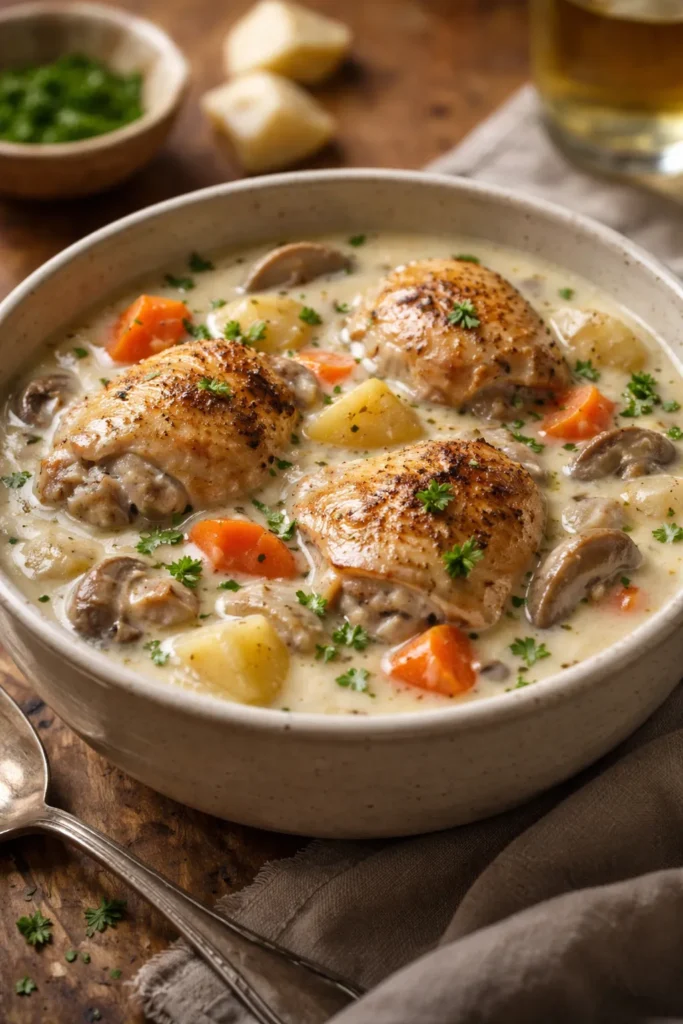
This version sits slightly lighter than the full-cream recipes — half-and-half instead of heavy cream gives the broth a richness that’s satisfying without being luxurious to the point of heaviness. It’s the stew to make when you want comfort food that doesn’t knock you sideways afterward.
Chicken thighs are non-negotiable in this recipe, and the reasoning is worth understanding. Thighs have a higher fat content and more connective tissue than breasts, which means they stay juicy even when simmered for 20 to 25 minutes and reheated multiple times. Chicken breast in the same stew tends to turn chalky after a simmer — fine straight from the pot, disappointing the next day.
The white wine is reduced by half before the broth goes in, which concentrates its flavor into the stew. A generous pinch of dried oregano alongside the thyme adds a slightly savory, almost Mediterranean note that plays well with the creamy broth.
Getting the Most From Your Browned Bits
When the wine hits the hot pot after the vegetables have cooked down, you’ll hear it sizzle and see the liquid immediately start lifting the brown bits from the bottom. Use a wooden spoon and work deliberately — every one of those bits is caramelized protein and fat that adds flavor to the broth. This is deglazing, and it takes about 2 minutes of active stirring before the fond is fully incorporated.
Bay leaves go in with the broth and simmer the entire time. Pull them out before serving. They don’t contribute visible flavor, but their subtle herbal bitterness adds a background note that rounds out the stew.
Key Details
- Protein: 1½ lbs boneless, skinless chicken thighs, cut into 2-inch chunks
- Thickener: ¼ cup all-purpose flour, stirred into the softened vegetables
- Cream: ¼ cup half-and-half, stirred in at the end
- White wine: ½ cup dry wine like Pinot Grigio, reduced by half
- Aromatics: Dried oregano, thyme, garlic, 2 bay leaves
- Cook time: 1 hour total
- Serves: 4 to 6
Pro tip: For extra creaminess without changing the recipe, swap half-and-half for heavy cream. For a lighter version, whole milk works — but reduce the heat carefully once it goes in, since whole milk scorches more easily than cream.
6. Slow Cooker Creamy Chicken Stew for Hands-Off Sundays
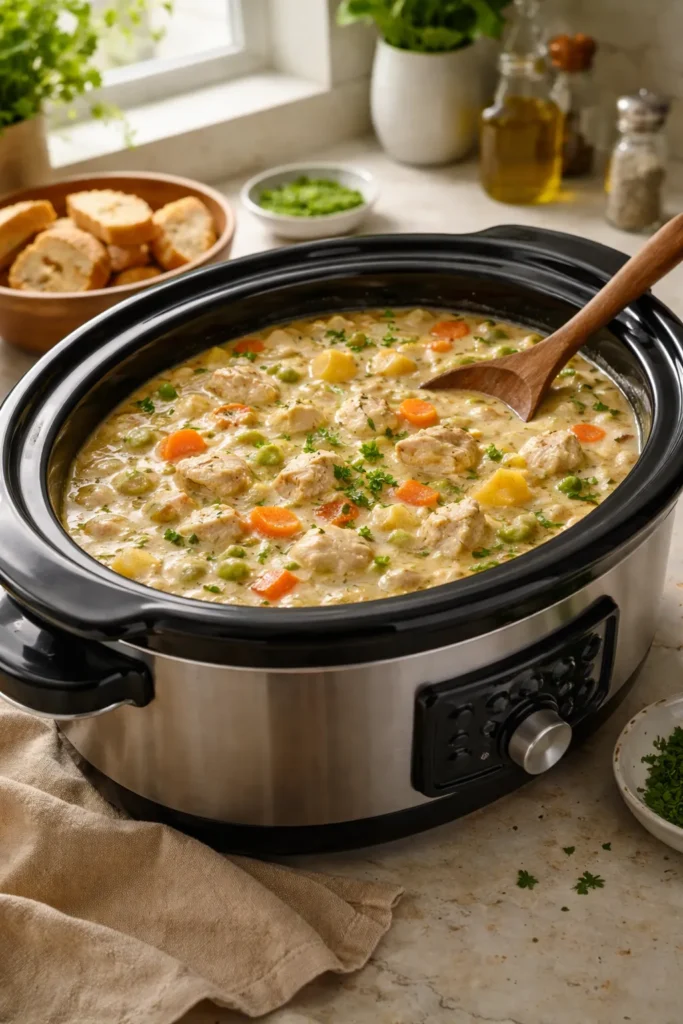
If “lazy Sunday” means you want dinner to cook itself while you nap, the slow cooker method is your answer. The flavor that develops over six hours of low-and-slow cooking is noticeably different from stovetop versions — deeper, more unified, with the vegetables and chicken almost merging into the broth rather than staying distinct.
The technique here requires one important stovetop step before the slow cooker takes over: brown the chicken and sauté the aromatics, then deglaze with wine and reduce. That step takes about 10 to 12 minutes and is entirely worth it. Skipping it and throwing everything raw into the slow cooker will work, but the flavor will be significantly flatter.
The flour-and-half-and-half thickener goes in at the end of the slow cook, not the beginning. Whisked together into a slurry and stirred into the hot stew, then cooked on high for 30 to 45 minutes, it thickens the broth without the risk of over-thickening during the long simmer.
Adjusting for the Slow Cooker
Slow cookers run at lower temperatures than a simmering stovetop, which means the broth concentrates less and the vegetables need to be cut slightly larger to avoid completely falling apart. Yukon gold potatoes cut into ¾-inch pieces hold their shape much better than smaller dice in the slow cooker. Carrots and celery should be chunked, not thinly sliced.
The cream and any fresh herbs go in during the last 30 minutes of cooking — adding them at the start would cause the dairy to separate and the herbs to turn bitter and gray from prolonged heat.
Key Details
- Active prep: 10 to 12 minutes (brown chicken, sauté aromatics, deglaze)
- Slow cook time: 6 hours on low
- Thickener: Flour whisked into half-and-half, added at the end
- Cook the slurry: 30 to 45 minutes on high after adding the cream mixture
- Total time: Approximately 7 hours, nearly all hands-off
- Serves: 4 to 6
Pro tip: If your slow cooker runs hot (they vary more than people expect), check the potatoes at the 5-hour mark. Overcooked potatoes in a slow cooker turn mealy and dissolve into the broth, which muddies the texture of the whole stew.
7. Creamy Chicken Stew with Bell Pepper and Green Beans

This version leans into color and textural variety more than the others. Red bell pepper adds a natural sweetness and a subtle brightness that’s distinct from the herbal, savory base most cream stews rest on. Green beans — frozen works perfectly — add a fresh snap that contrasts with the tender potatoes and soft chicken.
The red bell pepper specifically matters here. Green peppers have a more bitter, grassy flavor that can clash with a creamy broth. Orange peppers are sweeter but lack the slight savory edge of red. Stick with red for this recipe, and add it with the other aromatics so it softens into the stew rather than staying crisp and separate.
Heavy cream is the fat of choice, and it goes in at the end after the stew has been simmering for a full 20 to 25 minutes. The heat should be at a gentle simmer — not a rolling boil — when you stir it in. Boiling after adding cream risks splitting the dairy, which gives you a greasy, separated broth instead of a silky one.
Vegetable Timing Is Everything
The green beans go in right at the end, off heat or on the lowest possible simmer. Frozen green beans only need 3 to 4 minutes to warm through and soften slightly. Adding them earlier turns them mushy and drains their color completely.
If you want to use fresh green beans instead, add them about 10 minutes before the stew is done so they have time to become tender without overcooking. Trim them first and cut into 1½-inch pieces for even cooking.
Key Details
- Protein: 1½ lbs boneless skinless chicken thighs, cubed
- Extra vegetables: 1 red bell pepper, diced; 2 cups frozen green beans
- Thickener: All-purpose flour cooked into the aromatics
- Cream: Heavy cream, stirred in at the end over low heat
- Italian seasoning: Adds an herbal depth without requiring individual herbs
- Cook time: Approximately 1 hour
- Serves: 6
Pro tip: A splash of Worcestershire sauce stirred in with the broth adds an umami punch that makes the stew taste more complex without adding visible flavor. About 1 teaspoon is all it takes.
8. Dairy-Free Creamy Chicken Stew with Coconut Milk

The final recipe on this list is for everyone who assumed cream stew was off the table due to dairy restrictions — and it’s genuinely good, not just a consolation version of something better. Coconut milk gives the broth a rich, full-bodied consistency that holds up beautifully through a simmer, and its subtle sweetness pairs surprisingly well with warming spices.
Full-fat coconut milk is essential here — light coconut milk is too thin and watery to create the body a stew needs. Shake the can well before opening to recombine the cream and liquid, and make sure the milk is at room temperature before you stir it into a hot pot. Cold coconut milk hitting a hot stew can cause the fat to seize rather than blend smoothly.
The seasoning profile shifts slightly to complement the coconut. A pinch of cumin and smoked paprika alongside the standard thyme and rosemary adds warmth without making this feel like a curry. A squeeze of lime juice at the end (rather than lemon) echoes the tropical note of the coconut milk and keeps the whole thing from tasting too sweet.
Making It Work Without Dairy
The thickening mechanism is the same — a flour roux built into the aromatics — but the coconut milk replaces both the cream and some of the chicken broth. Using about 1 can (13.5 oz) of full-fat coconut milk combined with 2 to 2½ cups of chicken broth gives the stew the right consistency: thick enough to coat a spoon but not so dense it becomes gluey.
This version freezes better than the cream-based stews, because coconut fat separates and recombines more cleanly than dairy cream when thawed. Freeze in individual portions and reheat gently on the stovetop, stirring as it warms.
Key Details
- Protein: 1½ lbs chicken thighs, cut into 2-inch pieces
- Dairy-free cream: 1 can (13.5 oz) full-fat coconut milk
- Broth: 2 to 2½ cups chicken or vegetable broth
- Thickener: 3 tablespoons all-purpose flour (or cornstarch slurry for gluten-free)
- Seasoning shift: Add ½ tsp cumin + ¼ tsp smoked paprika alongside standard herbs
- Finish: Juice of ½ lime, stirred in off heat
- Serves: 4 to 6
Pro tip: Stir in a handful of fresh spinach or baby kale during the last two minutes of cooking. It wilts into the stew almost instantly, adds color and nutrition, and doesn’t change the flavor of the coconut-based broth.
Tips That Apply to Every Creamy Stew on This List

Before you commit to one of these recipes, a few technique notes that hold true regardless of which version you make.
Always brown the chicken first, and don’t rush it. The golden crust that forms on seared chicken creates fond on the bottom of the pot — caramelized proteins that dissolve into the broth during simmering and add a depth of savory flavor that unseared chicken can’t contribute. Give each piece at least 3 to 4 minutes of contact with the hot surface before moving it.
Cut your vegetables into even pieces. Unevenly sized vegetables cook at different rates, which means some will be perfectly tender while others are still firm or have turned completely mushy. Aim for pieces of roughly the same size — about ½ to ¾ inch for most vegetables.
Keep the heat low once cream goes in. Every cream-based stew on this list carries the same risk: if the temperature is too high when dairy hits the pot, the fat separates from the proteins and you get a greasy, curdled broth instead of a silky one. Reduce heat to a gentle simmer before adding cream, and never let it boil hard afterward. A slow bubble is all you need.
Taste for seasoning at the end, not during. The broth reduces and concentrates during simmering, which means seasoning added early often ends up too salty by the time the stew finishes cooking. If you’re using Better Than Bouillon or store-bought broth, hold off on adding extra salt until the last five minutes.
The stew is better tomorrow. Every single recipe on this list tastes better the next day. The flavors meld and deepen as the stew cools and rests, and the broth thickens to a more satisfying consistency in the fridge overnight. If you can, make it on Saturday. Sunday dinner will be even better for it.
Serving Ideas That Complement Every Version
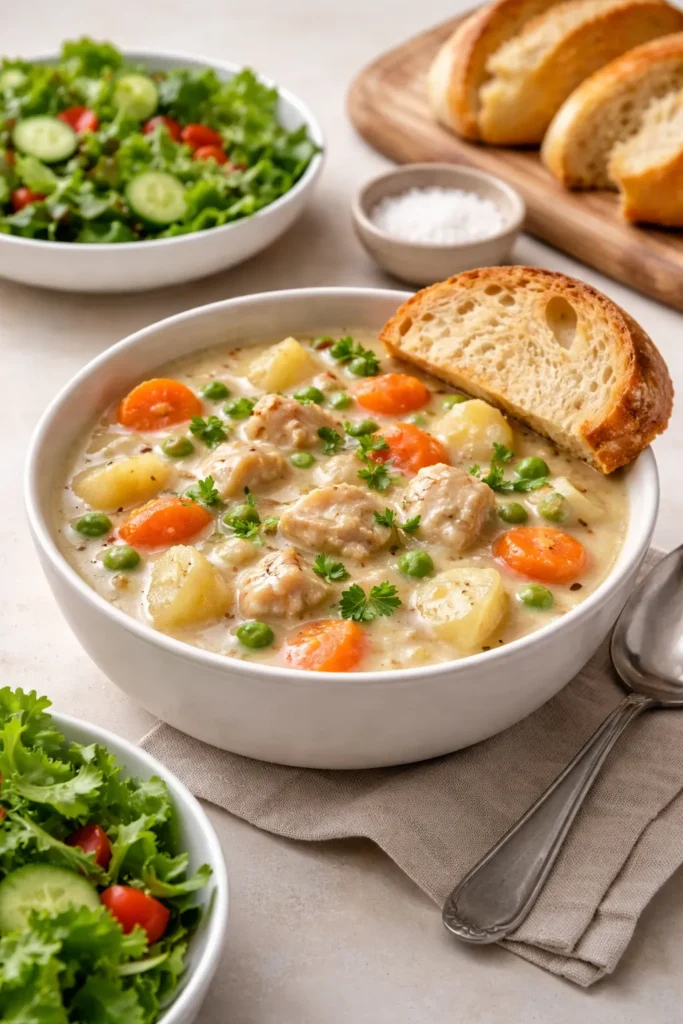
The bread question comes up every time someone makes a stew, and the answer is almost always crusty bread with a good crust and an open crumb — the kind that soaks up broth without dissolving into it. A baguette, a sourdough loaf, or homemade dinner rolls all work.
A simple green salad with an acidic vinaigrette is the best counterpoint to the richness of cream stew. The acidity of the dressing cuts through the fat in the broth and refreshes the palate between bites. Avoid creamy salad dressings alongside cream stew — the richness compounds rather than contrasting.
For the Japanese cream stew specifically, steamed short-grain rice served alongside or in the same bowl is the traditional approach. The stew ladled over rice absorbs into the grains beautifully and transforms the whole dish into something even more satisfying.
Biscuits, popovers, and cheese-topped dinner rolls all pair exceptionally well with the heartier versions on this list. The salty, buttery quality of a good biscuit against a silky, herb-forward cream stew is one of those combinations worth planning an entire Sunday around.
Storage, Reheating, and Make-Ahead Strategy
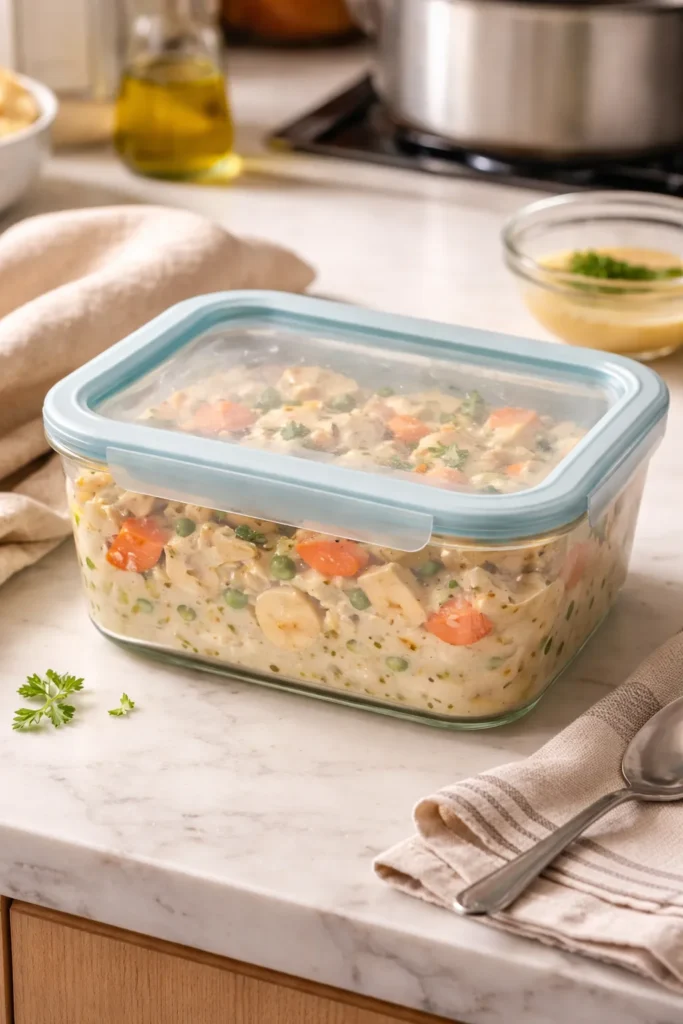
Every stew on this list keeps in the refrigerator for 3 to 4 days in a sealed container. The broth will thicken considerably as it cools — that’s normal and expected. Reheat on the stovetop over low to medium-low heat, stirring occasionally, and add a splash of chicken broth or water to loosen it back to serving consistency.
For freezing, cream-based stews are more cooperative than most people expect. The fat does separate slightly on thawing, but warming the stew gently on the stovetop while stirring continuously brings it back together. A small splash of fresh cream stirred in after reheating restores the silky finish. The dairy-free coconut milk version freezes most cleanly and is the best choice if you’re specifically cooking with a freeze-ahead strategy in mind.
The make-ahead approach that works best across all these recipes: brown the chicken, build the flavor base, and simmer everything through the vegetable-tender stage. Stop before adding cream. Refrigerate. The next day, reheat on the stovetop, add the cream, and finish. The flavor will be noticeably deeper for the rest.
Final Thoughts
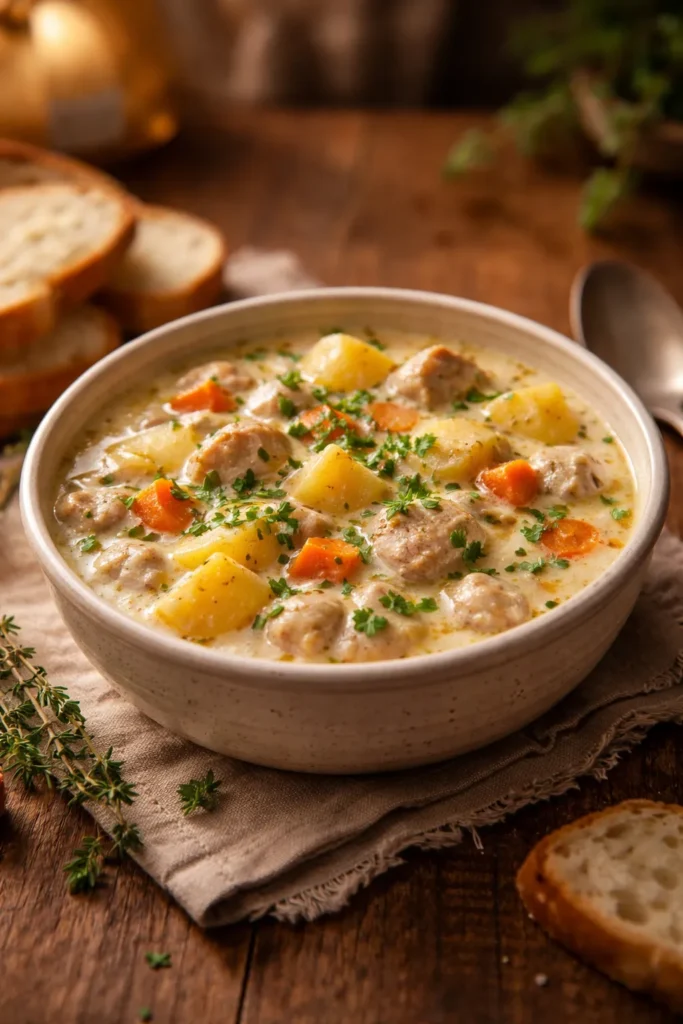
Eight recipes, one category, genuinely different results. That’s what makes creamy stew such a reliable part of a cooking repertoire — the technique stays consistent, but the direction can shift dramatically based on the aromatics, the fat, and the finishing touches you choose.
Start with the classic Yukon gold potato version if you’ve never made a cream stew from scratch. It’s forgiving, fast for its depth of flavor, and the result is the kind of dish people ask about when you serve it to them. Once you’re comfortable with the roux technique and the general timing, branch into the wine-deglazed versions and the Japanese-style iteration — both reward the extra nuance.
The most important thing isn’t which recipe you pick. It’s that you make one this weekend, let it simmer on the back burner while the house fills with the smell of browned chicken and herbs, and serve it in deep bowls with something to soak up the broth. That’s what a lazy Sunday was made for.