There’s a moment every weeknight cook knows well — you’re staring into the fridge at 6pm, vaguely hungry, totally uninspired, and the idea of yet another plate of leafy greens dressed in vinaigrette sounds about as exciting as doing your taxes. Salads have their place. But dinner bowls? They’re a different beast entirely.
The dinner bowl is one of the most satisfying formats in weeknight cooking. It borrows the freedom and flexibility of a salad — toss in what you have, customize per person, prep components ahead — but adds the kind of substance and flavor layering that makes you genuinely look forward to sitting down to eat. There’s something deeply satisfying about a bowl that’s warm in the middle, crunchy on top, and saucy throughout. It hits comfort food territory while still feeling like a decision you can feel good about.
What puts dinner bowls ahead of traditional salads isn’t the bowl itself, obviously. It’s the architecture. A great dinner bowl has a warm, hearty base — jasmine rice, brown rice, soba noodles, couscous, quinoa — topped with a boldly seasoned protein, a mix of textures from raw and cooked vegetables, and a sauce that ties the whole thing together with personality. That last element is where most salads lose the battle. Dressing is nice. But a punchy peanut sauce, a savory teriyaki glaze, or a garlicky spiced yogurt? That’s a whole different conversation.
Each of the eight dinner bowl recipes below delivers a complete, craveable meal in one vessel. Some pull from Korean and Thai cooking traditions, some lean Mediterranean, others are straight-up comfort food elevated by bold sauces and unexpected textures. All of them are faster than you probably expect, and every single one beats a sad salad on flavor, satiation, and the general will to live on a Tuesday evening.
Table of Contents
- What Makes a Dinner Bowl Better Than a Salad
- The Role of Temperature Contrast
- Sauce Is Everything
- How to Build a Great Dinner Bowl (The Formula)
- 1. Korean Beef Rice Bowl
- Building the Bowl
- Why It Beats a Salad
- 2. Thai Chicken Satay Bowl
- Jasmine Rice and Quick Pickled Cucumbers
- Variations Worth Trying
- 3. Teriyaki Salmon Bowl
- Homemade Teriyaki Glaze in Five Minutes
- Bowl Assembly
- 4. Mediterranean Falafel Bowl
- The Spiced Yogurt Sauce
- What Goes in the Bowl
- 5. Firecracker Chicken Meatball Bowl
- The Sauce Recipe
- Assembling the Bowl
- 6. Vegetarian Burrito Bowl with Roasted Vegetables
- The Bowl Build
- Why This Works Without Meat
- 7. Egg Roll Bowl
- The Sauce That Makes It
- Serving and Customization
- 8. Spicy Salmon Bowl with Brown Rice
- The Sauce: Sambal-Honey-Sesame
- Bowl Construction
- Making Dinner Bowls Work for Meal Prep
- Final Thoughts
What Makes a Dinner Bowl Better Than a Salad
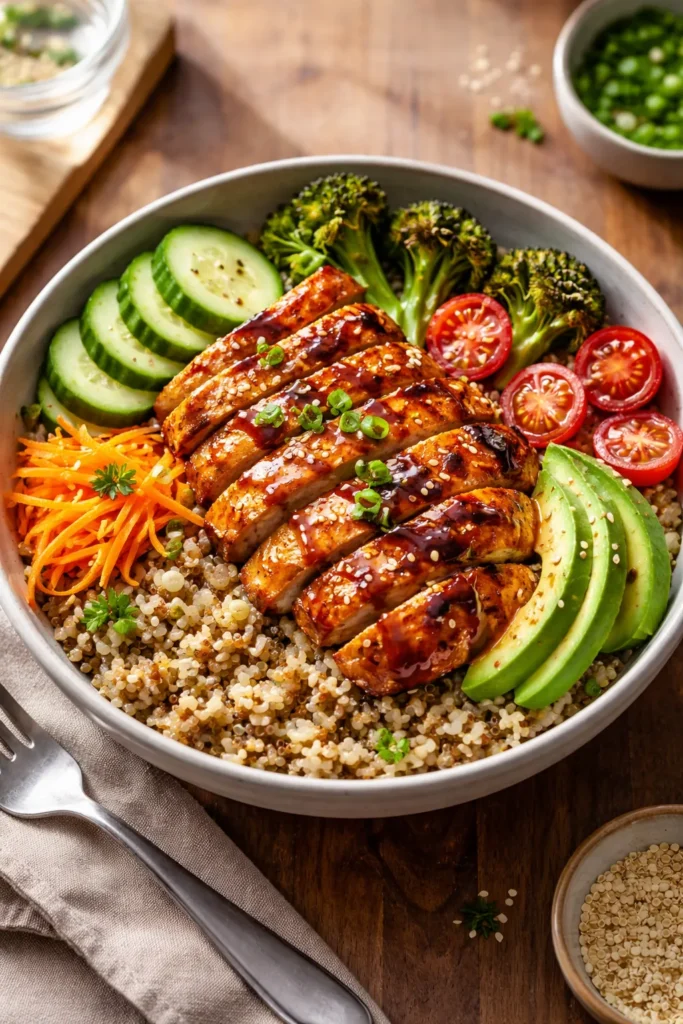
The core difference comes down to satiation architecture — a phrase that sounds fancier than it is. Basically, a dinner bowl is engineered to keep you full. A salad depends heavily on volume to create a sense of fullness, which means you’re often hungry again before the evening’s done.
Dinner bowls solve that problem at the structural level. The warm grain base — rice, quinoa, farro, noodles — delivers complex carbohydrates that digest more slowly and sustain energy. Protein on top adds staying power. A sauce with fat carries flavor and signals to your brain that you’ve eaten something substantial.
The Role of Temperature Contrast
One thing dinner bowls do that salads almost never achieve: temperature contrast. Warm rice under cool cucumber slices. Hot, seared salmon over cold avocado. Crispy roasted cauliflower meeting a cool yogurt drizzle. That interplay wakes up your palate in a way that a plate of uniformly room-temperature greens simply can’t.
Sauce Is Everything
The sauce in a dinner bowl isn’t a finishing touch — it’s the whole narrative. Teriyaki glaze, spicy peanut sauce, gochujang-spiked dressing, tahini with lemon, sambal-honey marinade: these flavors are bold enough to define the entire bowl. With a salad dressing, you’re typically enhancing the greens. With a bowl sauce, you’re building a complete flavor identity.
How to Build a Great Dinner Bowl (The Formula)
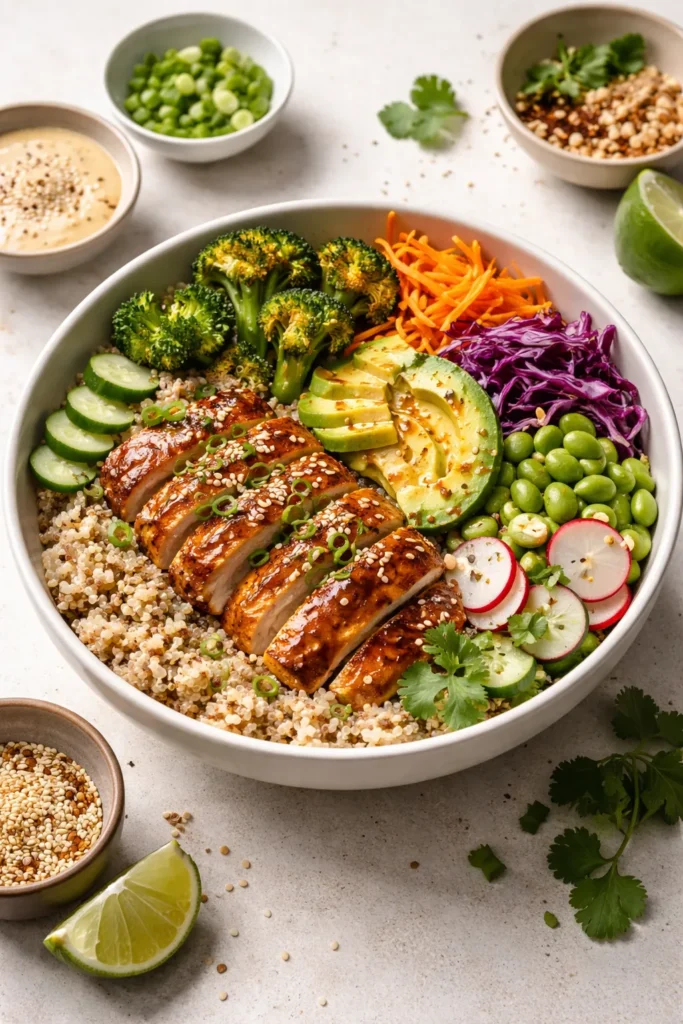
Before getting into the specific recipes, it’s worth knowing the underlying formula, because once you have it, you can riff endlessly.
Base (1 cup per person): Jasmine rice, brown rice, quinoa, soba noodles, couscous, cauliflower rice, or farro. Cook it in broth instead of water if you want an extra layer of flavor with no extra effort.
Protein (4–6 oz per person): Chicken thighs, ground beef, salmon fillets, shrimp, eggs, crispy tofu, ground turkey, or meatballs. Season it boldly — the grain base is relatively neutral and needs the protein to carry flavor into every bite.
Vegetables (raw + cooked): The contrast matters. A mix of roasted or sautéed veg alongside something crisp and raw — cucumber, shredded cabbage, pickled onion, sliced radish — adds the textural dimension that makes a bowl worth finishing.
Sauce (2–3 tablespoons per bowl): This is where bowls live or die. Make it yourself or use a quality store-bought version. It should have fat, acid, and salt at minimum — a hit of sweetness or heat takes it to the next level.
Toppings (1–2): Toasted sesame seeds, crushed peanuts, fried shallots, fresh herbs, a soft-boiled egg, crumbled cheese, crispy wonton strips. One or two toppings are enough. This is the finishing punctuation, not a second meal.
1. Korean Beef Rice Bowl
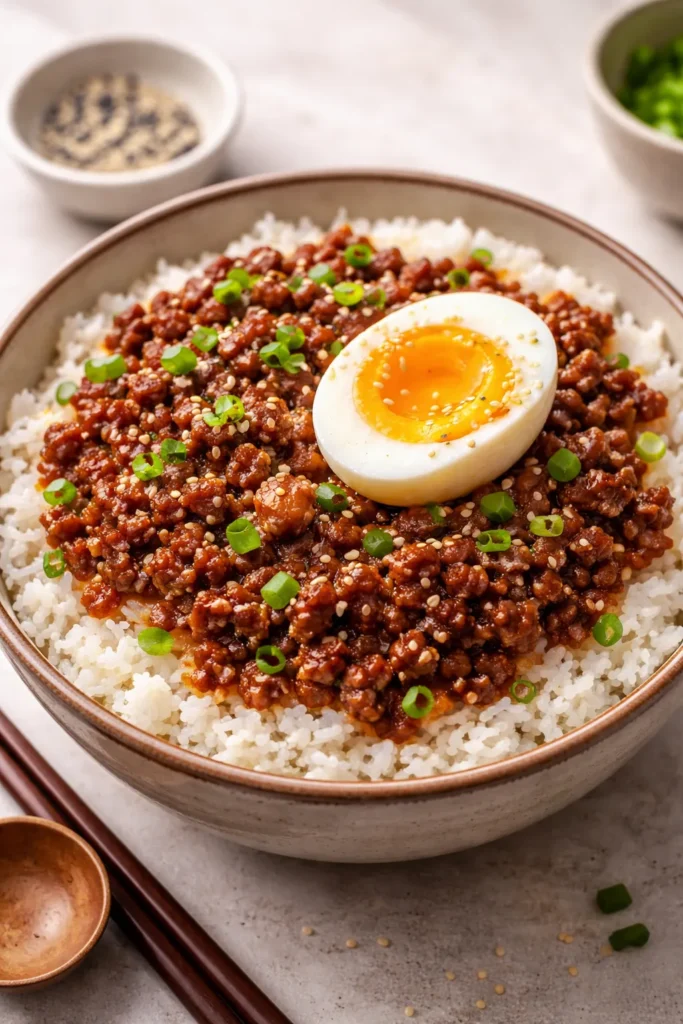
Ground beef doesn’t get nearly enough credit as a weeknight protein. It’s affordable, fast, and when you hit it with the right sauce, it absorbs flavor in a way that sliced chicken breast never quite manages. The Korean beef rice bowl exploits this perfectly — a simple umami-loaded sauce transforms a package of ground beef into something that tastes like it came from a restaurant with low lighting and a wait list.
The sauce is what makes this bowl work: soy sauce, brown sugar, toasted sesame oil, fresh ginger, and garlic, cooked together with the beef until it’s glossy, slightly caramelized, and deeply savory. The sugar isn’t there to make it sweet — it’s there to encourage that caramelization that gives the beef its sticky, almost lacquered quality.
Building the Bowl
Serve over steamed jasmine rice. Top with thinly sliced green onions, a drizzle of chili oil if you want heat, and a sprinkle of sesame seeds. A soft-boiled egg with a jammy yolk cut in half and placed on top turns this from a weeknight meal into something that photographs beautifully — though honestly, you’ll be eating it before you think to take a picture.
Why It Beats a Salad
The beef-to-rice ratio here creates a kind of harmony where every bite has a little of everything. The rice soaks up the sauce that collects at the bottom of the bowl. By the last bite, you’re eating concentrated flavor that would simply fall through the cracks of a salad.
Total time: Under 30 minutes, including rice cooking time. For meal prep, the beef keeps beautifully in the fridge for up to four days and reheats in about two minutes in a hot skillet.
2. Thai Chicken Satay Bowl
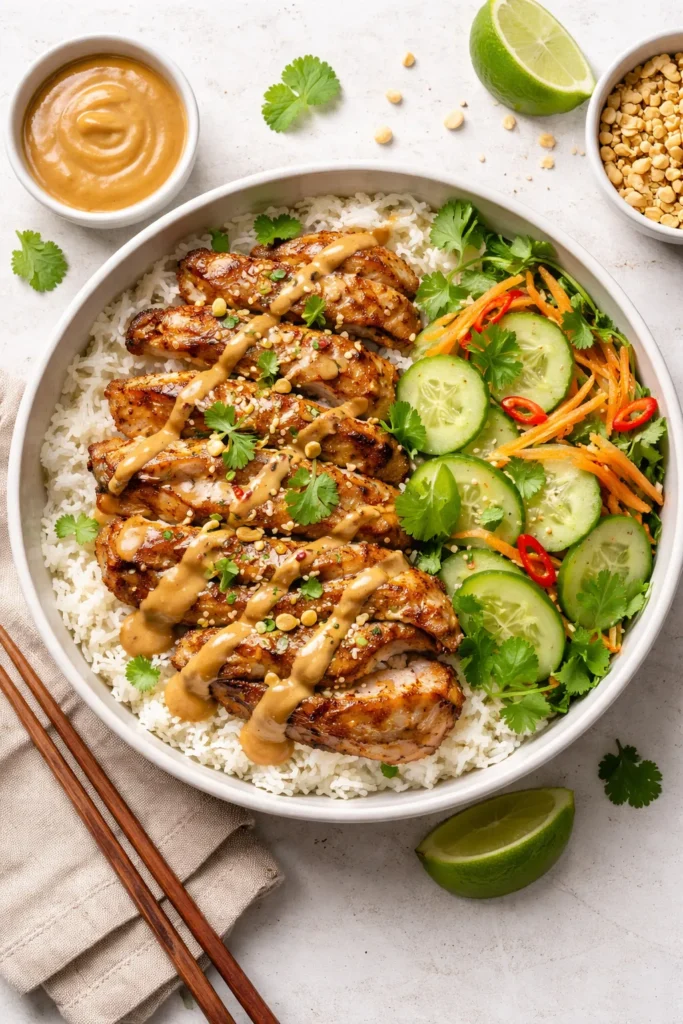
Chicken satay is one of those dishes where the peanut sauce does so much heavy lifting that the cooking method almost doesn’t matter — which is good news for weeknight cooks. The standard approach is to marinate chicken thighs (not breasts — thighs stay juicy) in a mixture of coconut milk, turmeric, lemongrass paste, and fish sauce, then cook them in a hot skillet or under the broiler.
But the real star is the peanut sauce. Not the jar of peanut butter stirred into hot water version. The proper version: peanut butter, coconut milk, lime juice, soy sauce, fresh ginger, a spoonful of brown sugar, and sriracha to taste, thinned to a drizzleable consistency. It should coat a spoon and pool slightly in the bowl’s base.
Jasmine Rice and Quick Pickled Cucumbers
Jasmine rice is the ideal base here — its slight floral quality complements the coconut in both the marinade and the sauce. The quick pickled cucumbers are the move that elevates this bowl from good to genuinely memorable. Slice cucumbers thin, toss with rice vinegar, a pinch of sugar, and a pinch of salt, and let sit for 15 minutes while everything else cooks. That light acidity cuts through the richness of the peanut sauce in exactly the right way.
Variations Worth Trying
Swap the chicken for firm tofu pressed and pan-fried until golden for a completely satisfying vegan version. The peanut sauce doesn’t care what protein it’s sitting on — it makes everything better.
Topping suggestion: Fresh cilantro leaves, crushed roasted peanuts, and a wedge of lime. Don’t skip the lime — a squeeze at the table brings the whole bowl into sharp, bright focus.
3. Teriyaki Salmon Bowl
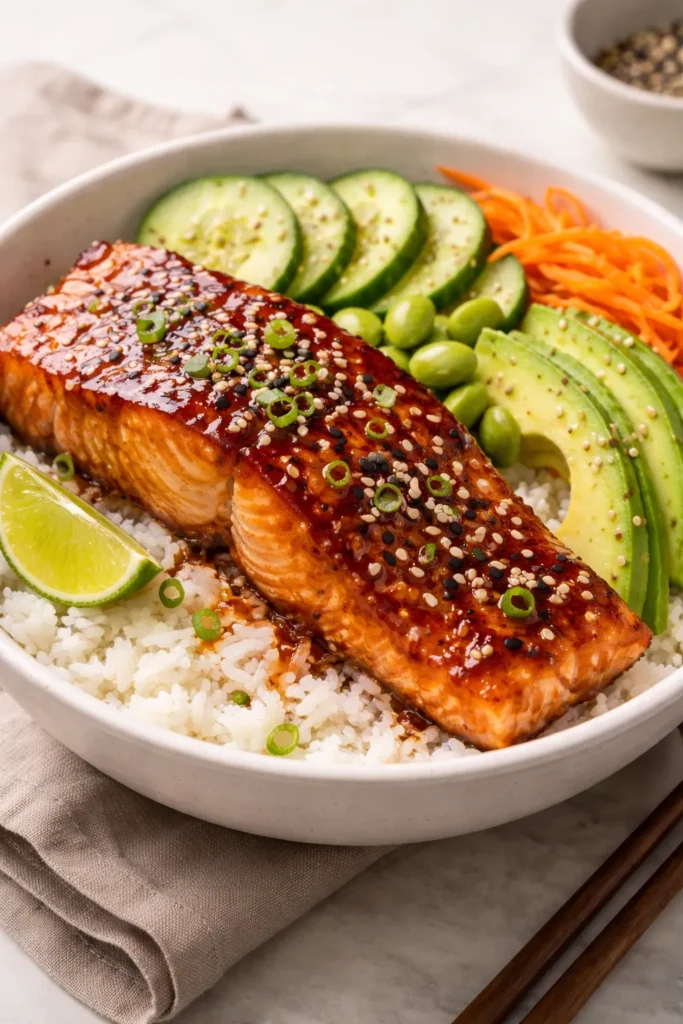
Teriyaki salmon has earned its place as one of the most reliably delicious weeknight proteins. What most home cooks get wrong is over-marinating and then steaming the fish instead of properly searing it. The goal is caramelization — that glossy, slightly charred exterior that concentrates the teriyaki flavor and gives you textural contrast against the tender fish inside.
The method: pat the salmon fillets completely dry before they hit the pan. Heat a skillet until you can feel heat radiating when you hold your hand a few inches above the surface. Add a thin film of oil, place the salmon skin-side up, and don’t touch it for three minutes. Flip, brush with teriyaki glaze — homemade or a quality store-bought — and cook another two minutes. That’s it.
Homemade Teriyaki Glaze in Five Minutes
Combine ¼ cup soy sauce, 2 tablespoons mirin, 1 tablespoon sake or dry sherry, and 1 tablespoon brown sugar in a small saucepan. Simmer over medium heat for three to four minutes until it thickens slightly and coats the back of a spoon. That’s your teriyaki glaze — no cornstarch required, no complicated steps.
Bowl Assembly
Serve over steamed white or brown rice. Add sliced avocado, edamame, shredded purple cabbage for color, and sliced cucumbers. Drizzle additional glaze over everything. A scattering of sesame seeds and thinly sliced green onions finish it off.
The salmon upgrade: If you want to lean into the Japanese flavor profile even harder, swap white rice for seasoned sushi rice — short-grain rice cooked and then tossed with a mixture of rice vinegar, sugar, and salt while still warm. It makes the bowl feel significantly more special for about three extra minutes of effort.
4. Mediterranean Falafel Bowl
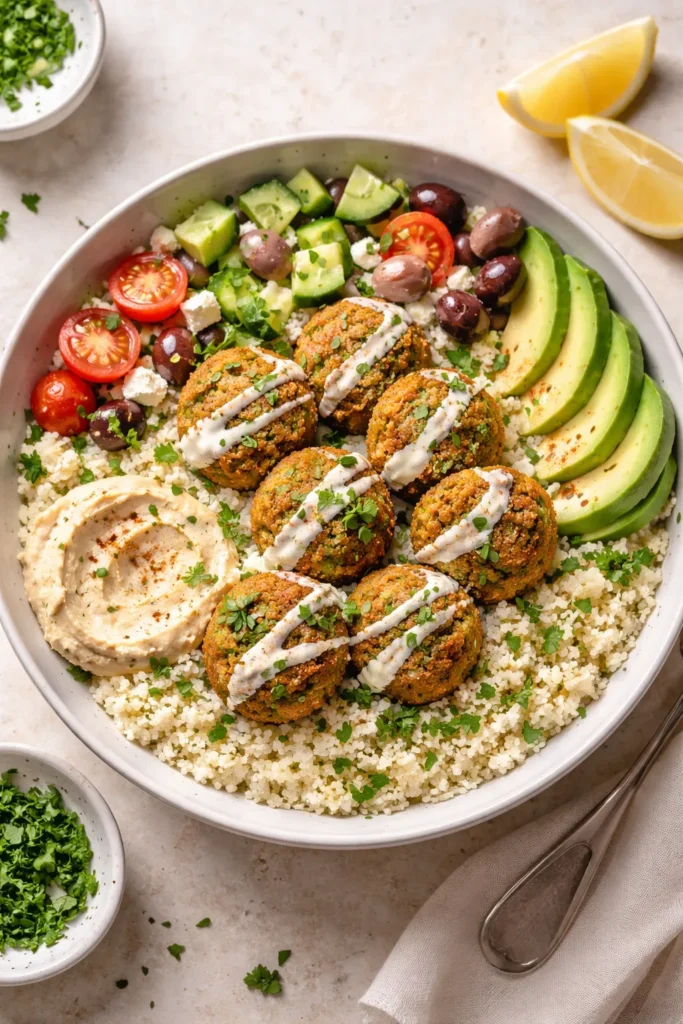
Falafel sits in an interesting position in the dinner bowl world: it’s technically a vegetarian protein, but it eats nothing like one. Herb-packed, lightly crispy on the outside, and tender-green inside from all the fresh parsley and cilantro, a well-made falafel has more personality than most chicken preparations.
The shortcut that actually works here is canned chickpeas combined with fresh herbs in a food processor — pulse, don’t blend, until you have a coarse, textured mixture that holds together when pressed. Form into small patties or balls and pan-fry in a thin layer of oil until deeply golden on both sides. They take about eight minutes total.
The Spiced Yogurt Sauce
The sauce for this bowl is lemon-garlic tahini — sesame paste thinned with fresh lemon juice, a minced garlic clove, water to consistency, and salt. The ratio: 3 tablespoons tahini, 2 tablespoons lemon juice, 1 tablespoon warm water, half a clove of garlic, and a pinch of salt. Whisk until smooth and pale. It thickens as it sits, so keep a splash of water nearby.
What Goes in the Bowl
Start with couscous — it cooks faster than rice and its light, fluffy texture pairs beautifully with the dense falafel. Add halved cherry tomatoes, sliced cucumber, thinly shaved red onion, and a generous handful of fresh parsley. Nestle the falafel on top, drizzle the tahini sauce, and finish with a pinch of sumac if you have it. Sumac has a lemony, slightly tart quality that amplifies everything else in the bowl without adding any liquid.
This bowl is naturally vegan, accidentally gluten-free if you swap couscous for quinoa, and completely satisfying without any meat in sight.
5. Firecracker Chicken Meatball Bowl
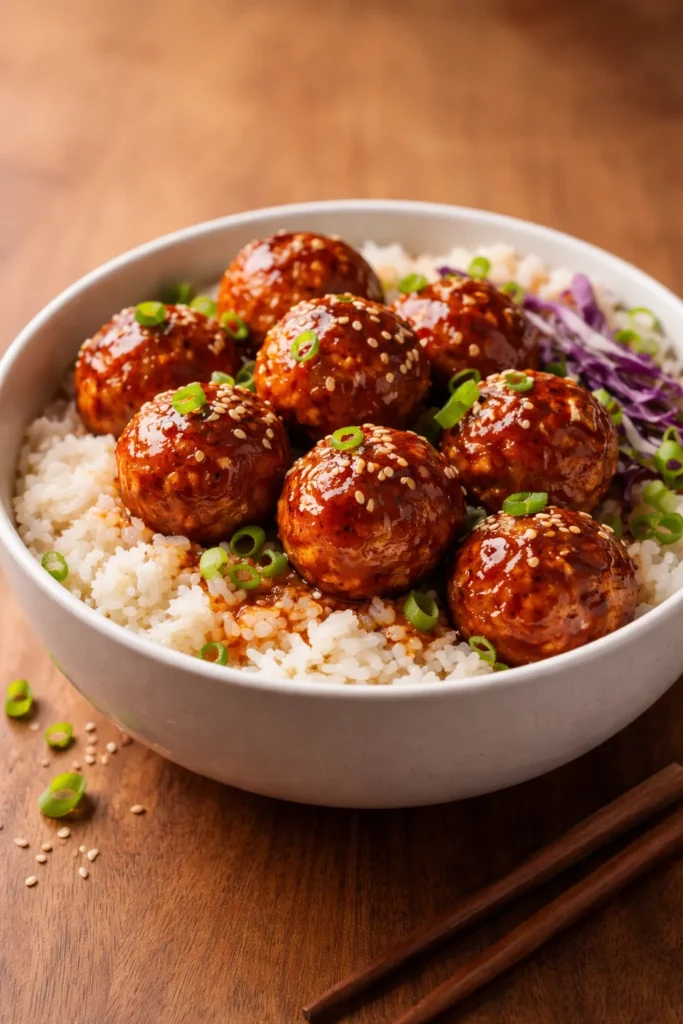
This is the bowl that converts people who think dinner bowls are “too healthy to be good.” The firecracker sauce — a sticky, spicy-sweet glaze made from sriracha, honey, soy sauce, and a splash of rice vinegar — is addictive in the truest sense. You’ll want to put it on everything.
The meatballs themselves are made from ground chicken (or ground turkey, which works equally well) mixed with fresh ginger, garlic, a touch of soy sauce, and a handful of breadcrumbs to bind. Roll them about the size of a golf ball, bake at 425°F for 15 minutes until cooked through, then toss them in the warm firecracker sauce. The sauce caramelizes slightly on the hot meatballs and forms a glossy coating that clings to every surface.
The Sauce Recipe
In a small saucepan, combine: 3 tablespoons sriracha, 2 tablespoons honey, 2 tablespoons soy sauce, 1 tablespoon rice vinegar, and 1 teaspoon sesame oil. Bring to a simmer over medium heat and cook for two minutes, stirring, until slightly thickened. Toss with the baked meatballs immediately.
Assembling the Bowl
Steamed jasmine rice is the anchor. Top with the sauced meatballs, thinly sliced green cabbage (the crunch against the sticky meatballs is outstanding), shredded carrots, and sliced scallions. A drizzle of sriracha mayo — just sriracha and mayo stirred together in whatever ratio suits your heat tolerance — adds richness.
Optional but worth it: Fried wonton strips or crispy shallots on top add a crunch that takes this bowl firmly into “better than takeout” territory.
6. Vegetarian Burrito Bowl with Roasted Vegetables
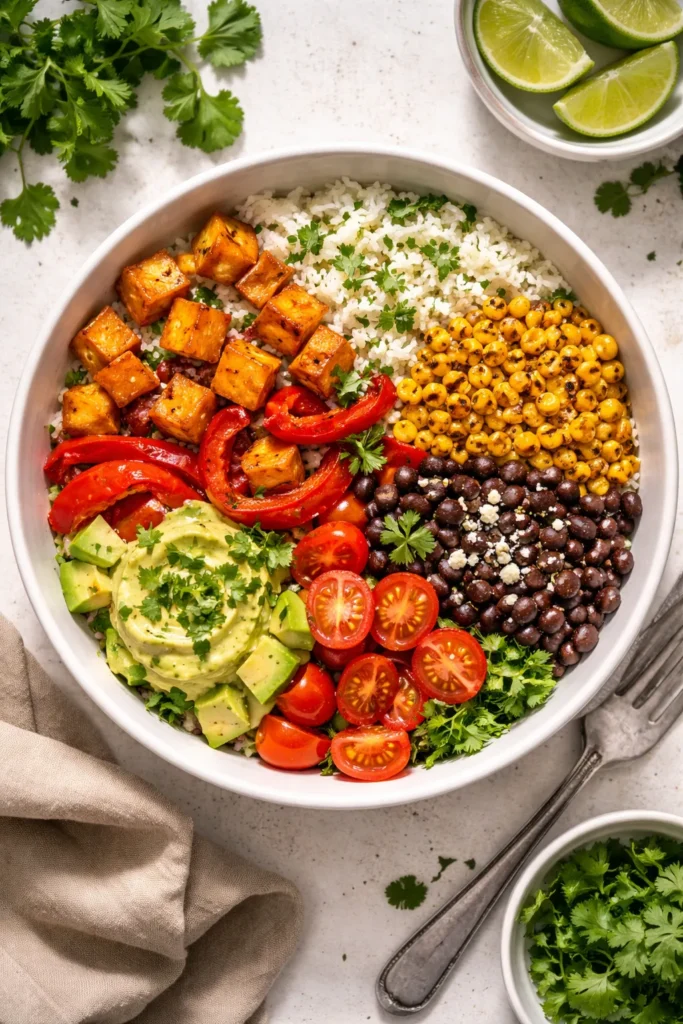
The burrito bowl format has been done many times, but the version with roasted vegetables instead of plain beans is the one that makes you forget meat was ever an option. Roasting transforms the vegetables — caramelized edges on butternut squash, blistered peppers, slightly charred corn — in a way that steaming or boiling simply can’t achieve.
The key vegetables for this bowl: butternut squash or sweet potato cut into 1-inch cubes, red bell pepper, and red onion. Toss with olive oil, cumin, smoked paprika, garlic powder, and salt. Spread in a single layer on a baking sheet — don’t crowd the pan or they steam instead of roast — and cook at 425°F for 25 to 30 minutes until the edges are starting to color.
The Bowl Build
Start with warm brown rice or cilantro-lime rice (white rice cooked, then tossed with lime juice, lime zest, and fresh cilantro). Add the roasted vegetables, a scoop of black beans warmed with cumin and a pinch of chipotle, sliced avocado or guacamole, pico de gallo, and pickled jalapeños. Finish with a drizzle of chipotle crema — sour cream or Greek yogurt mixed with lime juice and chipotle paste.
Why This Works Without Meat
The combination of roasted sweet potato and seasoned black beans provides more protein and fiber than most people expect from a vegetable-forward bowl. The fat from the avocado and the acidity from the pickled jalapeños and lime create a complete flavor profile that doesn’t leave you reaching for something more.
Leftovers reheat easily — keep the avocado separate and add it fresh when serving.
7. Egg Roll Bowl
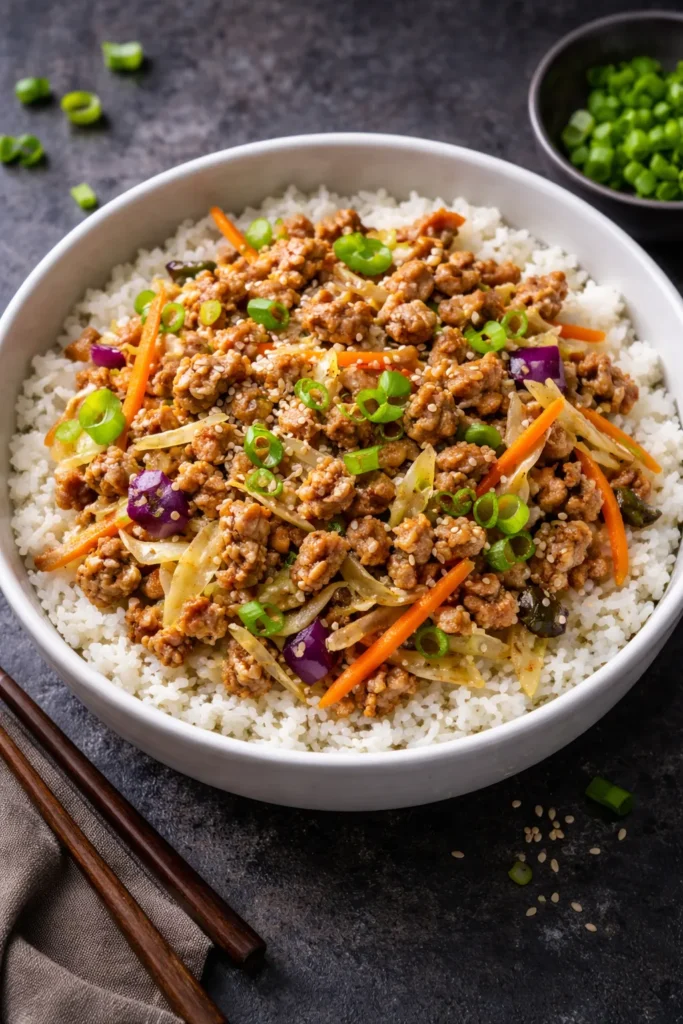
If there’s a bowl that delivers the most flavor per minute of cooking time, the egg roll bowl might be it. The concept is straightforward: instead of wrapping the filling in a wonton wrapper and frying it, you cook the filling in a hot skillet and serve it over rice. What you lose in the crunch of the wrapper, you more than gain in speed and approachability.
The filling: Ground pork is the traditional choice, though ground turkey or chicken work just as well. Brown the meat in a hot skillet with oil, breaking it up finely. Add minced garlic, fresh grated ginger, shredded green cabbage (a full bag of pre-shredded coleslaw mix saves real time here), shredded carrots, and sliced green onions. Season with soy sauce, sesame oil, rice vinegar, and a pinch of white pepper. The whole thing comes together in about 12 minutes.
The Sauce That Makes It
A dipping sauce drizzled over the top ties this bowl back to its egg roll roots: soy sauce, rice vinegar, sriracha, sesame oil, and a tiny amount of honey whisked together. It’s sharp, savory, and cuts through the richness of the pork.
Serving and Customization
Serve over jasmine rice. A soft-boiled egg placed on top adds richness and rounds out the protein. For a low-carb version, skip the rice entirely and serve the filling over cauliflower rice or on its own — it’s substantial enough to stand alone.
Families love this one because the filling is familiar (it tastes exactly like the inside of a restaurant egg roll) and endlessly adaptable. Swap the pork for shrimp, add a spoonful of chili garlic sauce for heat, or stir in a handful of mushrooms.
8. Spicy Salmon Bowl with Brown Rice
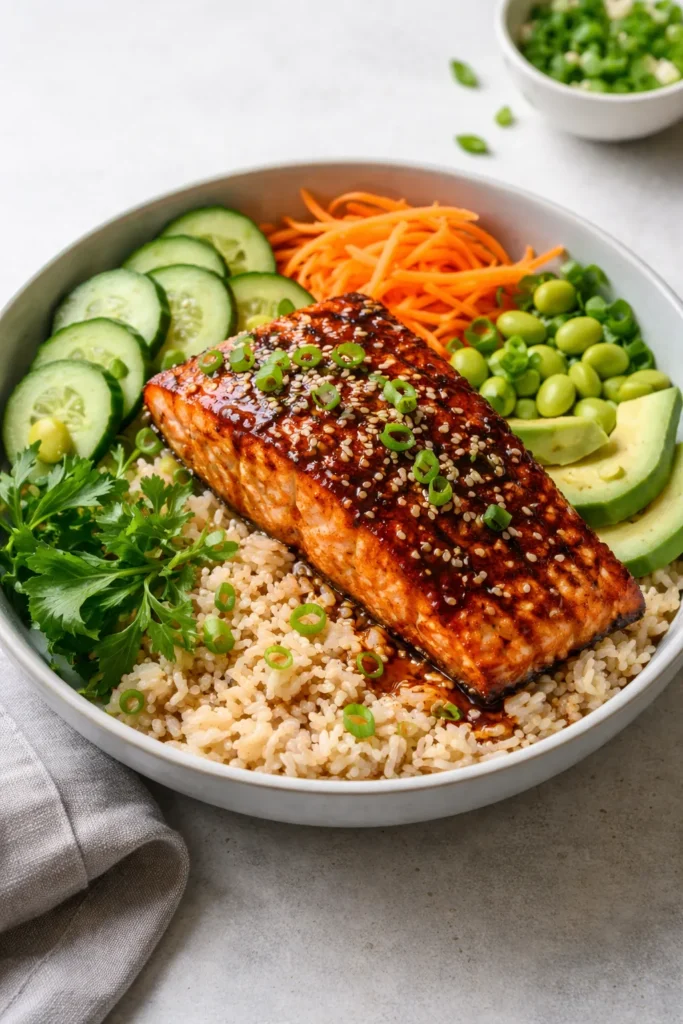
The last bowl on this list is the one that generates the most compliments relative to the effort involved. Spicy salmon over brown rice with crisp vegetables and a punchy sauce hits every note — it’s filling, genuinely bold in flavor, and looks restaurant-caliber when assembled carefully.
The salmon preparation here is different from the teriyaki version: pan-sear the salmon with a spice rub of smoked paprika, garlic powder, cayenne, and salt rather than a wet glaze. This creates a slightly crusty, deeply seasoned exterior. The heat level from the cayenne is real but manageable — adjust to your preference.
The Sauce: Sambal-Honey-Sesame
The sauce for this bowl is what makes it stand out: combine 1 tablespoon sambal oelek (Indonesian chili paste, available in most grocery stores), 1 tablespoon honey, 1 tablespoon soy sauce, 1 teaspoon rice vinegar, and 1 teaspoon sesame oil. Whisk together and drizzle over the finished bowl. It’s simultaneously sweet, spicy, savory, and slightly funky — exactly the kind of sauce that makes people ask for the recipe.
Bowl Construction
Brown rice is the right base here — its nuttier flavor and chewier texture hold up to the bold salmon and sauce in a way white rice doesn’t. Top with the seared salmon, sliced cucumber, thinly sliced radishes for color and bite, shelled edamame for extra protein, and sliced avocado for richness. The sauce goes on last, drizzled across everything.
Crunch element: Toasted sesame seeds and thinly sliced green onions keep this bowl from feeling heavy despite all the sauce. The spice from the salmon crust, the sweetness of the honey in the sauce, and the cool avocado create the kind of contrast that makes you eat more slowly just to pay attention to each bite.
Making Dinner Bowls Work for Meal Prep
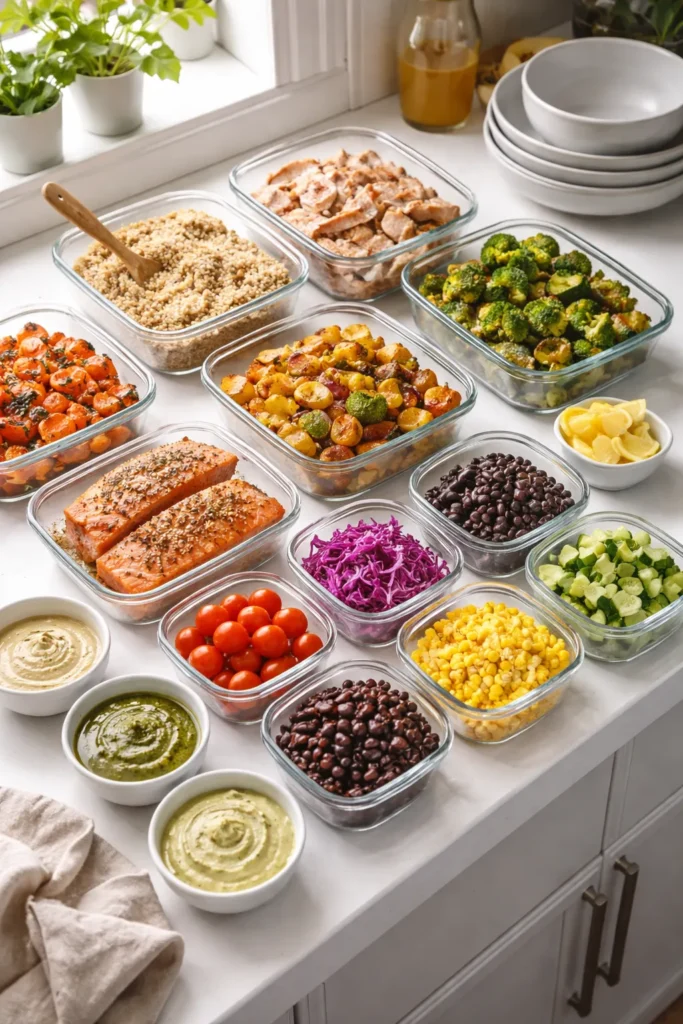
The dinner bowl format was practically designed for meal prep, and once you start cooking with that lens, weeknight dinners get dramatically easier.
The foundational move is to cook a large batch of grain at the start of the week. Two cups of dry rice makes roughly six cups cooked — enough for three to four bowl meals. It keeps in the fridge for five days and reheats in the microwave in two minutes with a splash of water to restore its texture.
Proteins are where you have the most flexibility. Some, like the Korean beef and the egg roll filling, reheat beautifully. Others, like seared salmon, are better cooked fresh but take less than ten minutes — worth it for the quality difference. Meatballs reheat in a low oven or in a saucepan with a splash of sauce and emerge nearly as good as fresh.
Keep your sauce separate until serving. This is the single most important meal prep rule for bowls. Sauced components get soggy, particularly grains. Store sauce in a small container and drizzle it on just before eating.
Raw vegetables — cucumber, cabbage, radish, green onion — stay crisp for three to four days when stored dry in the fridge. Avocado is the exception: slice it fresh each time. One lemon squeeze over a halved avocado buys you a few hours, but don’t rely on it for next-day freshness.
A practical approach: on Sunday, cook a grain, make one sauce, and prep two proteins. That gives you the building blocks for different bowls throughout the week without repeating the same meal. Swap the grain, change the vegetables, use a different topping — the same five components feel like five different dinners.
Final Thoughts
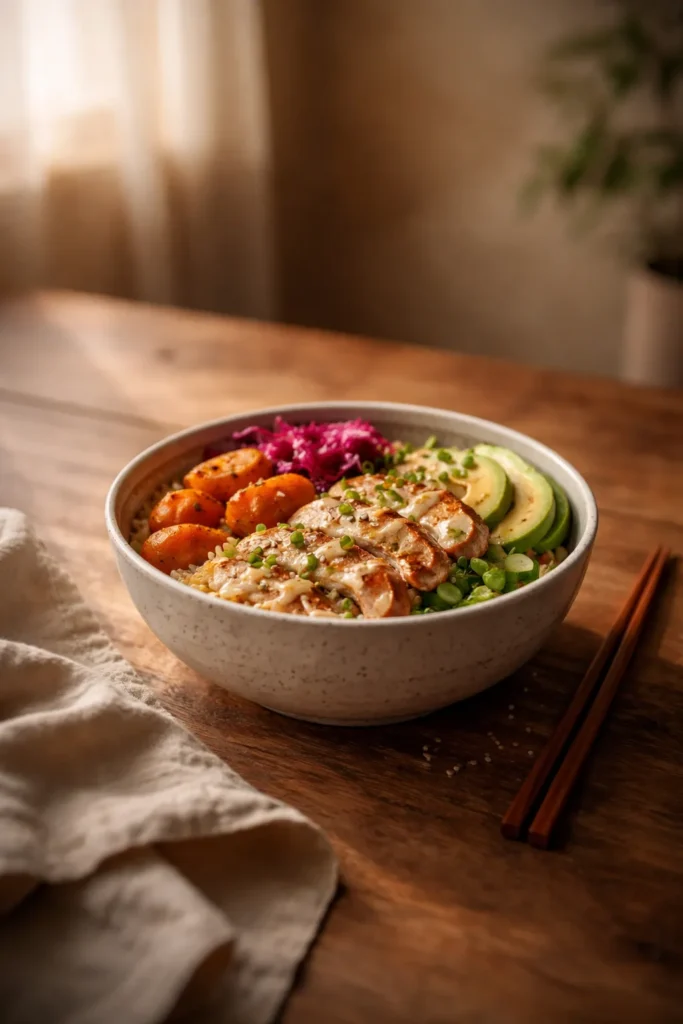
The dinner bowl isn’t a trend or a workaround for people trying to eat less. It’s a genuinely smart way to eat dinner — flexible, fast, nutritionally balanced, and endlessly interesting.
What these eight recipes share is that each one is built around a bold sauce and a thoughtful combination of textures. The sauce is the non-negotiable — nail that, and the rest of the bowl comes together almost automatically. Start there when you’re improvising your own versions.
Don’t feel obligated to follow any of these recipes exactly. The Korean beef sauce is delicious over noodles. The falafel works beautifully in a wrap. The firecracker meatballs would be excellent on their own as an appetizer. The structure of these bowls is a starting point, not a prescription.
Pick one bowl this week, make it with whatever you have closest to the ingredient list, and see what happens. Chances are, you’ll be building your own versions by the second time around — and that’s exactly what good weeknight cooking looks like.