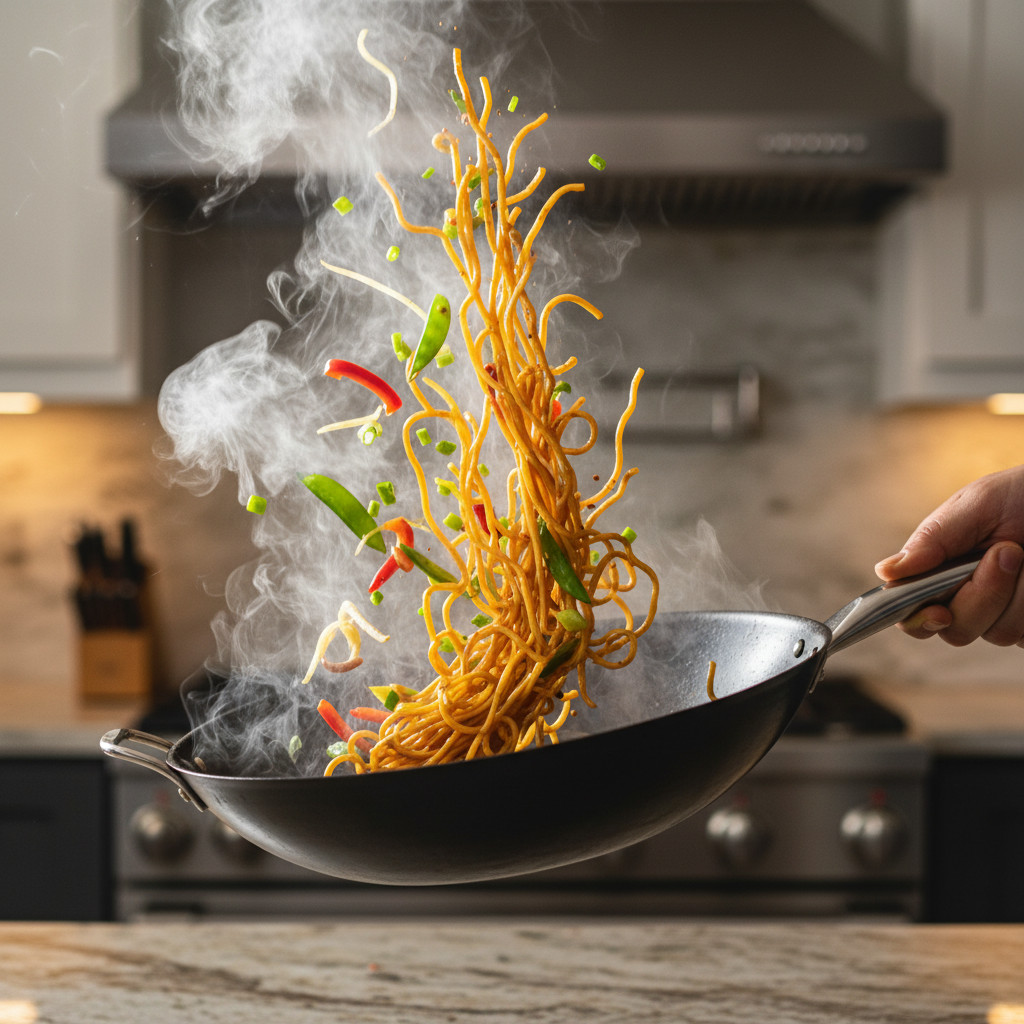
There’s a moment — somewhere between walking through the door after a long day and everyone asking “what’s for dinner?” — where a single pan and 30 minutes can feel like an absolute lifesaver. Pork stir fry is that meal. It’s fast, it’s genuinely flavorful, and it works with whatever vegetables you’ve got rolling around in the crisper drawer.
Pork is one of the most underused proteins in the weeknight rotation, which is honestly a shame. Cuts like pork tenderloin, boneless pork chops, and even ground pork cook through in under 10 minutes, absorb sauce beautifully, and stay tender when you don’t push them too hard. Pair that with a punchy, glossy sauce and some crisp-tender vegetables, and you’ve got something that genuinely beats takeout — both in cost and in flavor.
The eight recipes here range from a dead-simple honey-soy skillet situation to a rich peanut-sauced noodle bowl. Some use frozen vegetables for maximum speed. Others lean on fresh aromatics like ginger and garlic to build restaurant-worthy depth. All of them are on the table in 30 minutes or less, every single time.
Table of Contents
- 1. Classic Pork Tenderloin Stir Fry with Honey Soy Sauce
- The Sauce
- Cooking the Pork
- Bringing It Together
- 2. Garlic Ginger Pork Stir Fry with Snow Peas and Mushrooms
- The Sauce That Makes It
- The Pork Prep Trick
- Vegetables and Finish
- 3. Ground Pork Stir Fry with Mushrooms and Spinach
- The Flavor-Building Sauce
- Cooking the Pork and Mushrooms
- Spinach and Sauce
- 4. Orange Pork Stir Fry with Broccoli and Bell Peppers
- The Orange Sauce
- Building the Stir Fry
- The Final Toss
- 5. Peanut Sauce Pork Stir Fry with Noodles and Edamame
- The Peanut Sauce
- Cooking the Pork
- Noodles, Vegetables, and Assembly
- 6. 20-Minute Ground Pork Stir Fry with Shaoxing Wine
- The Sauce
- Aromatics First, Then Pork
- The Vegetable and Sauce Stage
- 7. Country-Style Pork Rib Stir Fry with Broccoli and Red Pepper
- Coating and Searing the Pork
- Vegetables and Aromatics
- Sauce and Finish
- 8. Sesame Pork Stir Fry with Bok Choy, Cabbage, and Chile
- The Simple Sauce
- Cooking Pork Tenderloin in Sesame Oil
- Stir Frying the Vegetables in Stages
- Tips for Getting Pork Stir Fry Right Every Time
- Serving and Storing Your Pork Stir Fry
- Final Thoughts
1. Classic Pork Tenderloin Stir Fry with Honey Soy Sauce
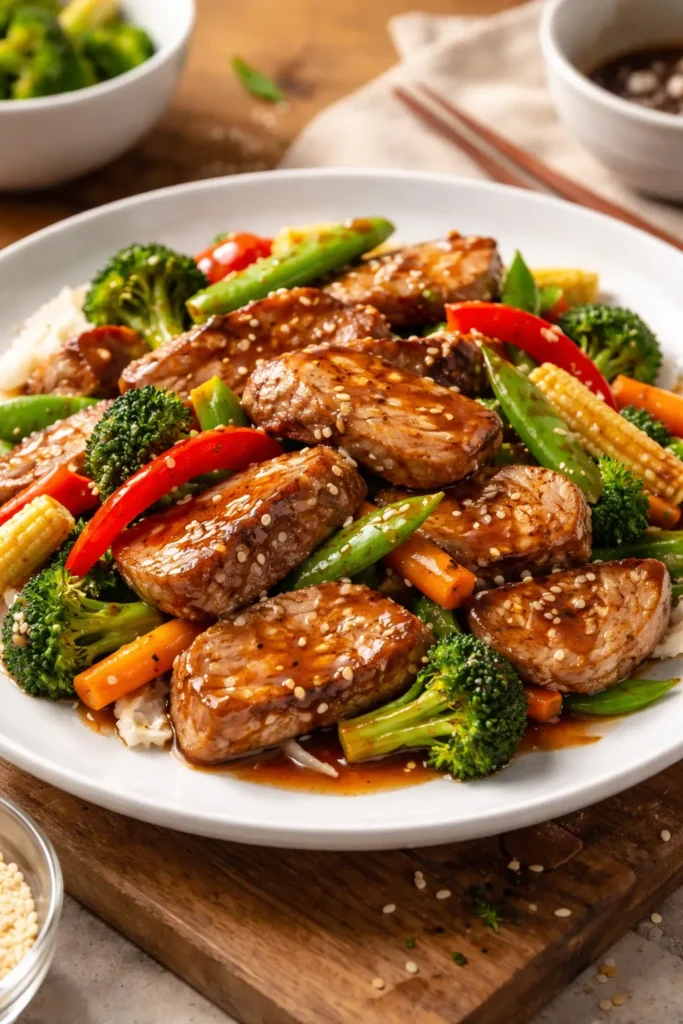
This is the one to make when you want a reliable, no-drama weeknight dinner that everyone at the table will actually eat. Pork tenderloin sliced thin, a sweet-savory sauce, and a bag of frozen stir fry vegetables — that’s the whole idea.
The Sauce
The sauce here is built around four pantry staples: ¼ cup reduced-sodium soy sauce, ½ cup water, ¼ cup honey, and 1 tablespoon cornstarch. Whisk them together with 1 teaspoon minced garlic and set aside before you touch anything else. Once the heat is on, this dish moves fast.
Cooking the Pork
Slice 1 pound pork tenderloin in half lengthwise, then cut across into ¼-inch pieces. Heat a large skillet over medium-high with 1 tablespoon olive oil. Add the pork and cook, stirring, for about 4 minutes until mostly cooked through. Don’t wander off — it goes quickly.
Bringing It Together
Add a 24-ounce bag of frozen stir fry vegetables straight from the freezer. Cook over medium-high until thawed and heated through, then crank the heat to high and pour in the sauce. Stir constantly until it boils, then reduce to low for 1–2 minutes. The sauce thickens as it cools and coats every piece.
Pro tip: Using frozen vegetables instead of fresh saves roughly an hour of washing, peeling, and chopping. On a weeknight, that’s not a small thing.
- Protein: Pork tenderloin, pork loin, or boneless pork chops all work
- Gluten-free swap: Use tamari or coconut aminos instead of soy sauce
- Serve over: Steamed jasmine rice, brown rice, or cauliflower rice
- Storage: Keeps in an airtight container in the fridge for up to 4 days
Nutrition per serving (approx.): 371 calories, 30g protein, 43g carbohydrates, 10g fat
2. Garlic Ginger Pork Stir Fry with Snow Peas and Mushrooms
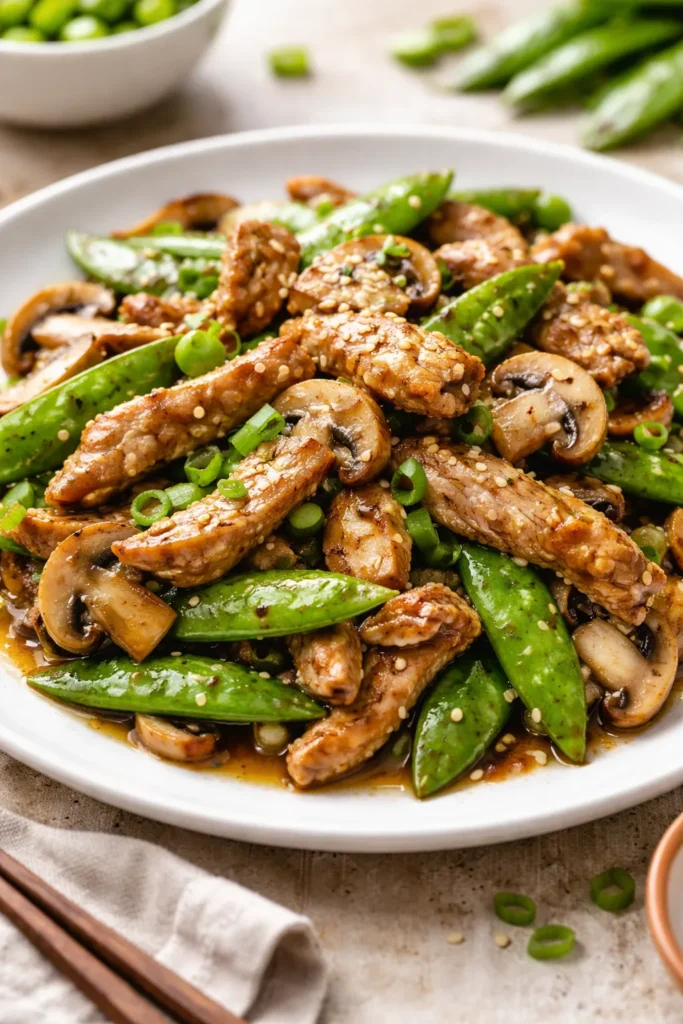
If you’ve been making the same chicken stir fry on repeat, this is your prompt to switch things up. Thin strips of boneless pork chop, snow peas, shredded carrots, and mushrooms — all pulled together with a sauce that’s savory, lightly sweet, and just a little spicy. It’s on the table in 20 minutes flat.
The Sauce That Makes It
Combine 1 cup reduced-sodium beef broth, 2 tablespoons cornstarch, 3 tablespoons light soy sauce, 2 teaspoons dark soy sauce (worth finding — it adds richness), 2 tablespoons brown sugar, ½ to 1 teaspoon sambal oelek chili paste, 1½ teaspoons grated fresh ginger, and ¼ teaspoon red pepper flakes. Whisk until the cornstarch is fully dissolved. The dark soy sauce is optional but brings a depth you’d notice if it wasn’t there.
The Pork Prep Trick
Slice 1 pound boneless pork chops into ¼-inch strips against the grain. Here’s a technique worth knowing: if the pork is partially frozen, it slices into paper-thin pieces with almost no effort. Pop it in the freezer for 15–20 minutes before cutting and you’ll get uniform, tender strips every time.
Cook the pork in 1 tablespoon vegetable oil over medium-high heat for 2–3 minutes until browned. Remove to a plate, then cook 4 cloves minced garlic and 1½ teaspoons fresh ginger in another tablespoon of oil for 30 seconds.
Vegetables and Finish
Add 1 cup snow peas, ½ cup shredded carrots, and 1 cup sliced mushrooms. Cook until crisp-tender. Stir the sauce to re-dissolve the cornstarch, pour it in, and bring to a boil — about 1 minute until thickened. Add the pork back and toss everything together.
Drizzle with a little toasted sesame oil at the end, and top with minced cilantro, sliced green onions, and crushed peanuts if you have them.
- Use hokkien or udon noodles instead of rice to make it a noodle bowl
- Heat level: Reduce sambal to ¼ teaspoon for a milder dish; double it for real heat
- Oil note: Use vegetable, canola, or peanut oil — not olive oil, which burns at the high heat this needs
3. Ground Pork Stir Fry with Mushrooms and Spinach
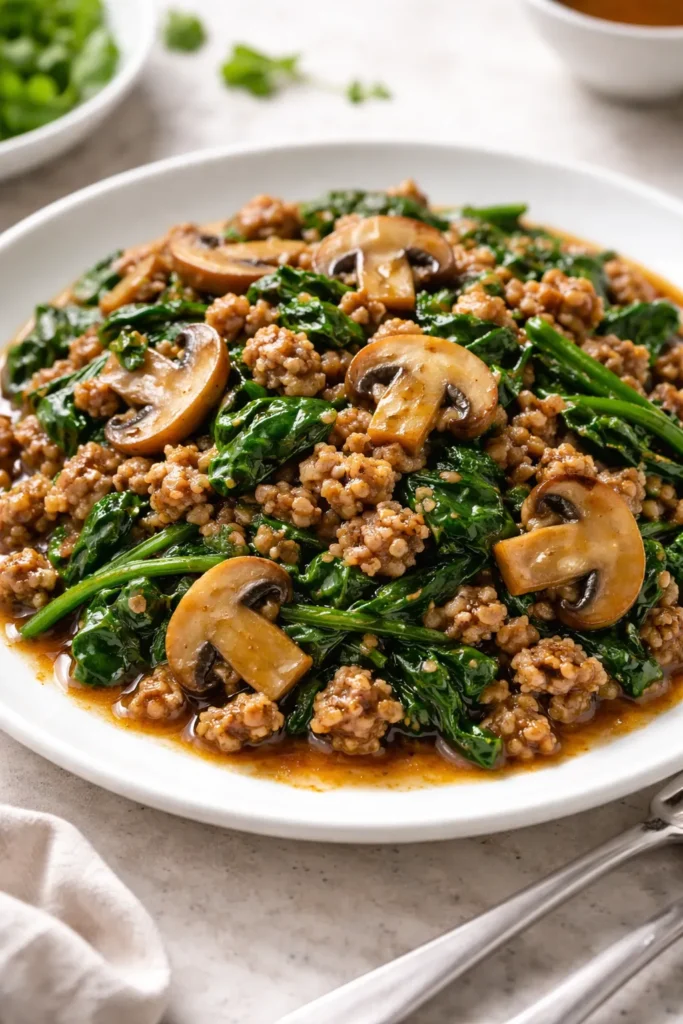
Ground pork is the most underrated stir fry protein in existence. It cooks in minutes, absorbs sauce like a sponge, and costs far less than tenderloin. This version pairs it with earthy mushrooms and baby spinach in a sweet-savory sauce that comes together before the rice has even finished cooking.
The Flavor-Building Sauce
Whisk together ¼ cup soy sauce, 3 tablespoons brown sugar, 2 tablespoons cornstarch, 1 tablespoon rice wine vinegar, 1 tablespoon sesame oil, 3 cloves minced garlic, and 3 teaspoons grated ginger. The sesame oil goes into the sauce raw here rather than being drizzled at the end — it perfumes everything from the inside out.
Cooking the Pork and Mushrooms
Heat 1 tablespoon of oil in a large nonstick skillet or wok over medium-high heat. Add 1 pound ground pork and break it up with a wooden spoon for 1–2 minutes. Add 16 ounces roughly chopped mushrooms and season with 1 teaspoon sea salt.
Here’s the thing about mushrooms in a stir fry: they release a lot of moisture as they cook. Don’t rush this step. Let them cook for 5–7 minutes, stirring occasionally, until the pork is cooked through and any excess liquid from the mushrooms has evaporated. That’s when the good stuff starts — the bits at the bottom of the pan start to brown and concentrate.
Spinach and Sauce
Add the sauce and 8–12 ounces baby spinach all at once. Toss everything together and cook until the spinach wilts and the sauce turns thick and glossy, about 2 minutes.
Serve over jasmine or basmati rice, topped with sliced green onions, sesame seeds, and a drizzle of chili garlic sauce or sriracha.
- Mushroom options: White mushrooms, baby bella, shiitake — all work well
- Prep the sauce up to a day in advance; shake or stir before using since the cornstarch settles
- Works beautifully over rice noodles, soba, udon, or even spaghetti
4. Orange Pork Stir Fry with Broccoli and Bell Peppers
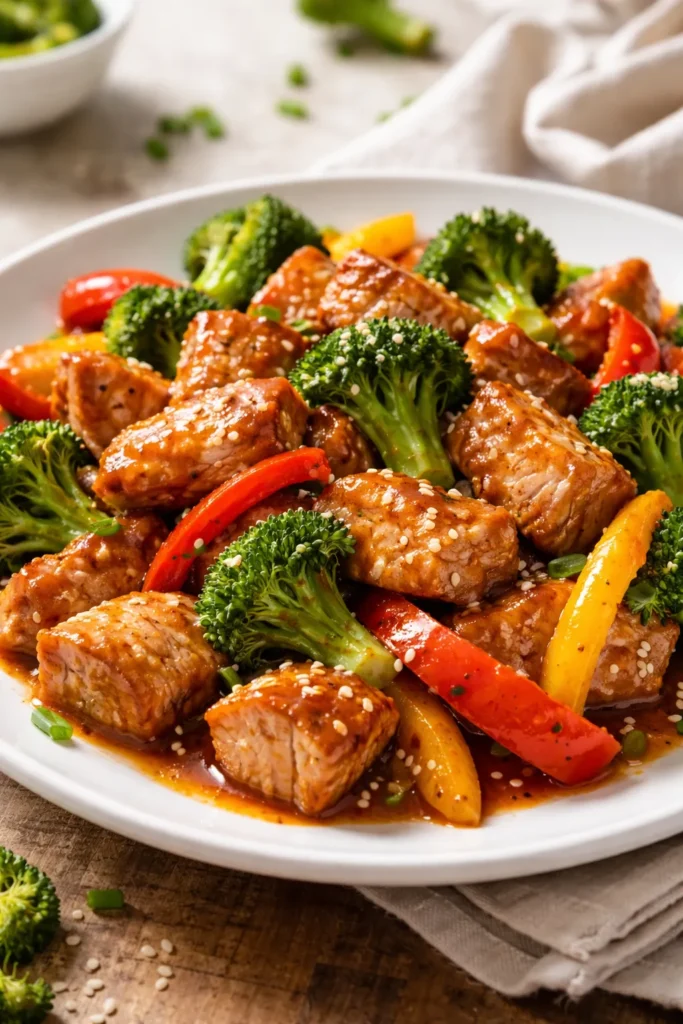
This one’s for anyone who loves the brightness of orange-glazed chicken but wants something a little different. Fresh orange juice and zest form the backbone of the sauce, and the result is sweet, tangy, garlicky, and genuinely more interesting than anything that comes in a takeout bag.
The Orange Sauce
Mix together ¾ cup coconut aminos (or low-sodium soy sauce), 2 teaspoons orange zest, ½ cup fresh orange juice (from about 2 large oranges), 4 cloves minced garlic, 2 teaspoons toasted sesame oil, 1½ teaspoons freshly grated ginger, and 2 tablespoons cornstarch. The coconut aminos keep this naturally sweeter and lower in sodium than traditional soy sauce.
One note: squeeze the oranges fresh. Bottled orange juice is more acidic and less fragrant. Two oranges takes about 45 seconds to juice and the difference in the sauce is noticeable.
Building the Stir Fry
Cut 1¼ pounds pork tenderloin into ¼-inch strips. Season with fine salt and pepper. Cook in 1 tablespoon oil over medium-high heat for 2–3 minutes per side until no longer pink. Remove to a plate.
In the same skillet, add another tablespoon of oil and cook 1 small head of broccoli cut into florets, 1 medium zucchini sliced into half moons, 2 thinly sliced carrots, 1 red bell pepper, and ½ small red onion. Cook for 7–9 minutes, stirring occasionally, until everything is tender.
The Final Toss
Return the pork to the pan, pour in the sauce (give it a quick stir first to reincorporate the cornstarch), and cook for 2–4 minutes, stirring constantly, until the sauce thickens and everything is glossy and coated.
Top with sesame seeds and serve over rice or cauliflower rice.
- Whole30/Paleo-friendly: Use coconut aminos and avocado oil
- The cooked stir fry keeps in the fridge for up to 4 days and freezes well for up to 3 months
- A splash of sriracha in the sauce adds a pleasant heat note that plays well against the orange sweetness
5. Peanut Sauce Pork Stir Fry with Noodles and Edamame
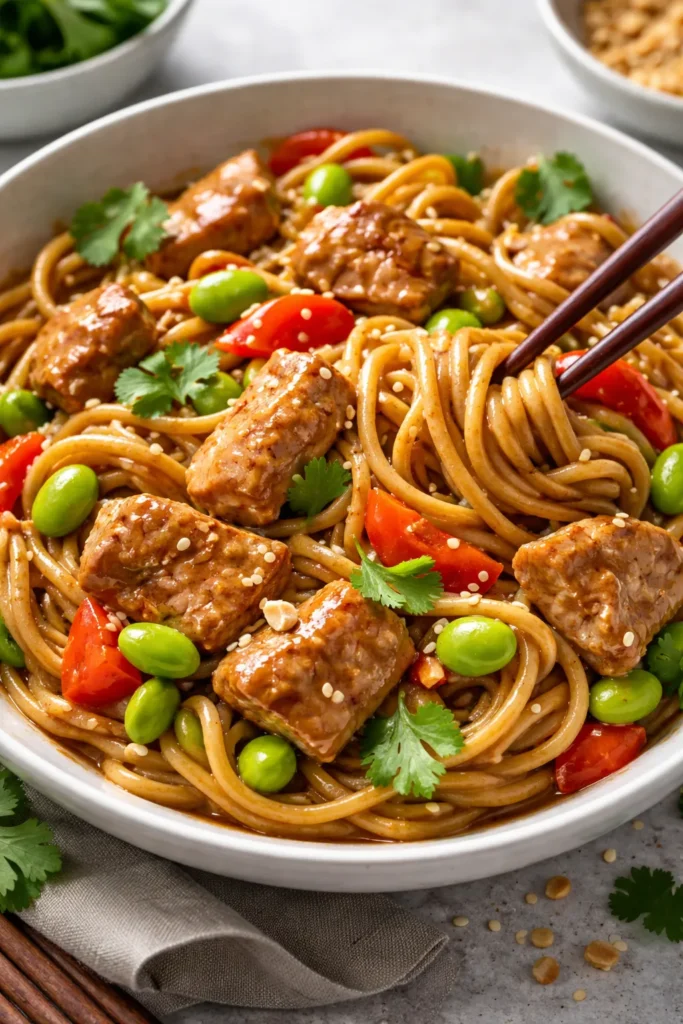
This is the stir fry for people who think they don’t like stir fry. Rich, nutty peanut sauce clings to whole-grain noodles, tender pork, and an entire bag of stir fry vegetables in a way that’s genuinely craveable. It makes fantastic leftovers — possibly better the next day, when the noodles have had time to soak up the sauce.
The Peanut Sauce
In a measuring cup, stir together 4 tablespoons low-sodium soy sauce, ¼ cup rice vinegar, 3 tablespoons hoisin sauce, 3 tablespoons creamy peanut butter, 1 tablespoon freshly grated ginger, and 3 cloves minced garlic. Keep it near the stove because you’ll add it fast.
A word on the peanut butter: go with a natural, no-stir variety if possible — the kind where oil and solids are mixed in. It dissolves into the sauce more smoothly and doesn’t leave greasy streaks.
Cooking the Pork
Cube 1 pound pork tenderloin into ¾-inch pieces, trimming any visible fat. Heat 1 tablespoon canola oil in a deep skillet or wok over medium-high to high heat. Cook the pork for about 3 minutes on all sides, then add 1 tablespoon soy sauce and stir. Continue for 2 more minutes until browned through. Transfer to a bowl.
Noodles, Vegetables, and Assembly
Cook 8 ounces whole-grain pasta or rice noodles in salted water to al dente. Reserve 1 cup of the starchy pasta water before draining — this is how you save the dish if the sauce gets too thick.
In the same skillet, cook 32 ounces frozen stir fry vegetables with 1 cup shelled edamame until hot and slightly crisp, about 7 minutes. Set aside with the pork. Reduce heat to medium, add the peanut sauce, and whisk for 1 minute. Add everything back in — noodles, pork, vegetables, 1 cup sliced green onions, ½ cup chopped dry-roasted peanuts, ¼ cup fresh cilantro, and ½ teaspoon red pepper flakes if you want heat. Toss with tongs to coat.
- Add a splash of pasta water if the sauce feels too thick after tossing
- Leftovers keep in the fridge for up to 5 days
- Freeze for up to 3 months (stick with firm, low-moisture vegetables if freezing)
6. 20-Minute Ground Pork Stir Fry with Shaoxing Wine
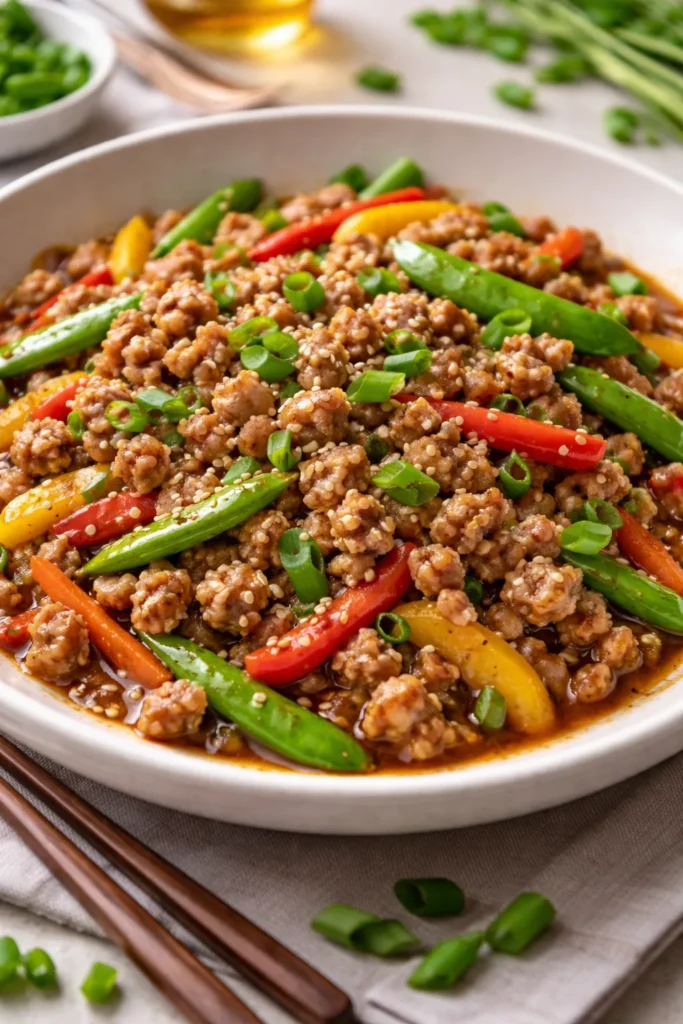
This version leans into traditional Chinese flavors in a way that makes it taste restaurant-level without any special technique. The addition of Shaoxing wine — a traditional Chinese cooking wine — is the single ingredient that takes this from “good home cooking” to something people ask you about. It adds a subtle depth and complexity that soy sauce alone can’t replicate.
The Sauce
Whisk together ½ cup soy sauce, 2 tablespoons honey, 2 tablespoons Shaoxing wine, 2 tablespoons rice vinegar, 2 tablespoons water, 1 tablespoon cornstarch, and 2 teaspoons sesame oil. Set aside. If you can’t find Shaoxing wine, mirin, cooking sake, or dry sherry all stand in reasonably well.
Aromatics First, Then Pork
This is where the flavor foundation gets built. Heat 1 tablespoon vegetable oil in a wok or large skillet over medium heat. Add 2 tablespoons finely minced shallots, 3 cloves minced garlic, and 1 tablespoon minced fresh ginger. Cook for 30–60 seconds — don’t let the garlic brown; you want it soft and fragrant, not bitter.
Turn the heat to medium-high, add 1 pound ground pork, and season with salt and white pepper. White pepper is worth seeking out here; it has a more mellow, earthy heat than black pepper and is common in Chinese-inspired cooking. Break up the pork and cook until there’s no pink and you start seeing golden edges forming. Set aside on a plate.
The Vegetable and Sauce Stage
Add chopped broccoli (about 1 large head) to the same pan with a drizzle of oil. Cook without stirring first to get a little char on the edges — about 2 minutes — then stir and cook for another 2 minutes until vibrant and crisp-tender.
Return the pork to the pan, pour in the sauce, and let it simmer for 2–3 minutes until thickened and glossy. Serve over sushi rice, chow mein, or ramen. Top with sliced green onions, sesame seeds, and chili flakes.
- Too salty? Add a splash of water or extra rice vinegar to balance
- Meal prep friendly: Stores well in the fridge for 4 days
7. Country-Style Pork Rib Stir Fry with Broccoli and Red Pepper
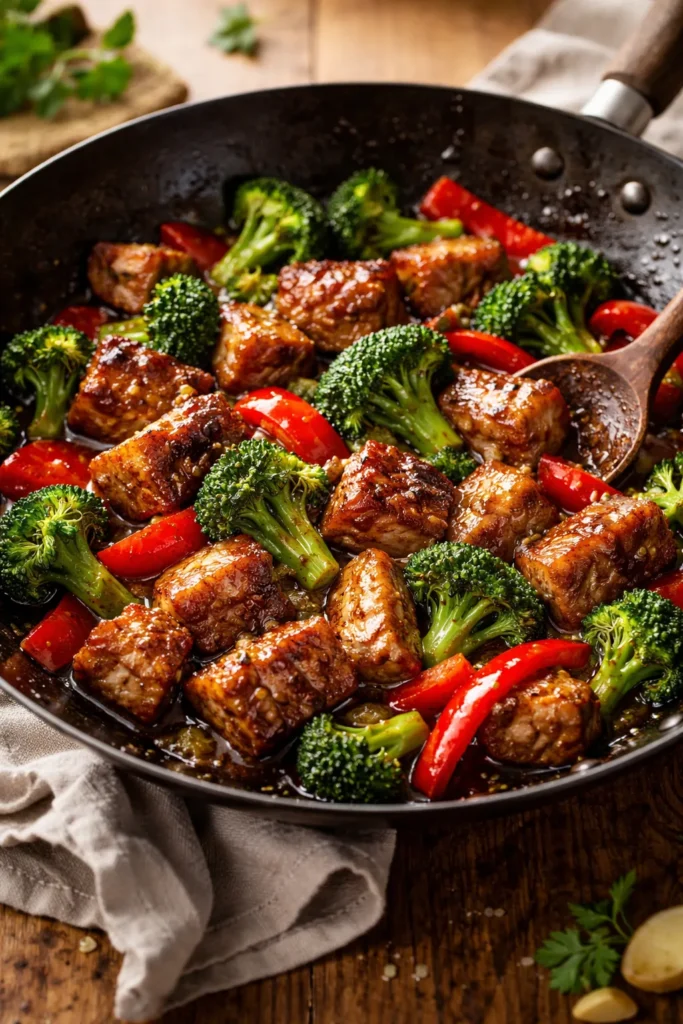
Most people sleep on country-style pork ribs for stir fry, but hear this out. Cut from the shoulder area, they’re meatier, slightly fattier, and pack more flavor than tenderloin. They’re also one of the more budget-friendly cuts at the butcher counter. Diced into 1-inch cubes and given a quick cornstarch coating, they develop a golden, slightly crispy exterior that holds up beautifully in a glossy stir fry sauce.
Coating and Searing the Pork
Dice 2½ pounds deboned country-style pork ribs into 1-inch cubes and toss with 3 tablespoons cornstarch and 2 teaspoons kosher salt until evenly coated. The cornstarch does two things: gives the outside a lightly crispy texture, and helps thicken the sauce later.
Heat 2 tablespoons olive oil in a large nonstick skillet or wok over medium-high heat. This is where a common mistake happens — don’t crowd the pan. If all the pork goes in at once, it steams instead of browning. Cook in two batches, 5–6 minutes each, until golden brown on all sides. Remove and set aside.
Vegetables and Aromatics
Add another tablespoon of oil to the same pan. Cook 1 red bell pepper cut into 1-inch strips and 2 cups broccoli florets over medium-high heat for about 5 minutes, stirring often. Add 4 cloves minced garlic and 1 tablespoon grated ginger, then return the pork to the pan. Cook everything together for 1 minute.
Sauce and Finish
Pour in 2 cups of your preferred stir fry sauce — homemade or store-bought. Reduce heat to low and cook for 2 minutes until the sauce has thickened and clings to everything. Garnish with chopped scallions and serve with rice or noodles.
- If using bone-in ribs, debone them yourself — it’s straightforward and takes about 5 minutes
- Asparagus, snap peas, and zucchini work well in place of the bell pepper or broccoli
- Leftovers keep in the fridge for 3–5 days and can be frozen for up to 3 months
8. Sesame Pork Stir Fry with Bok Choy, Cabbage, and Chile
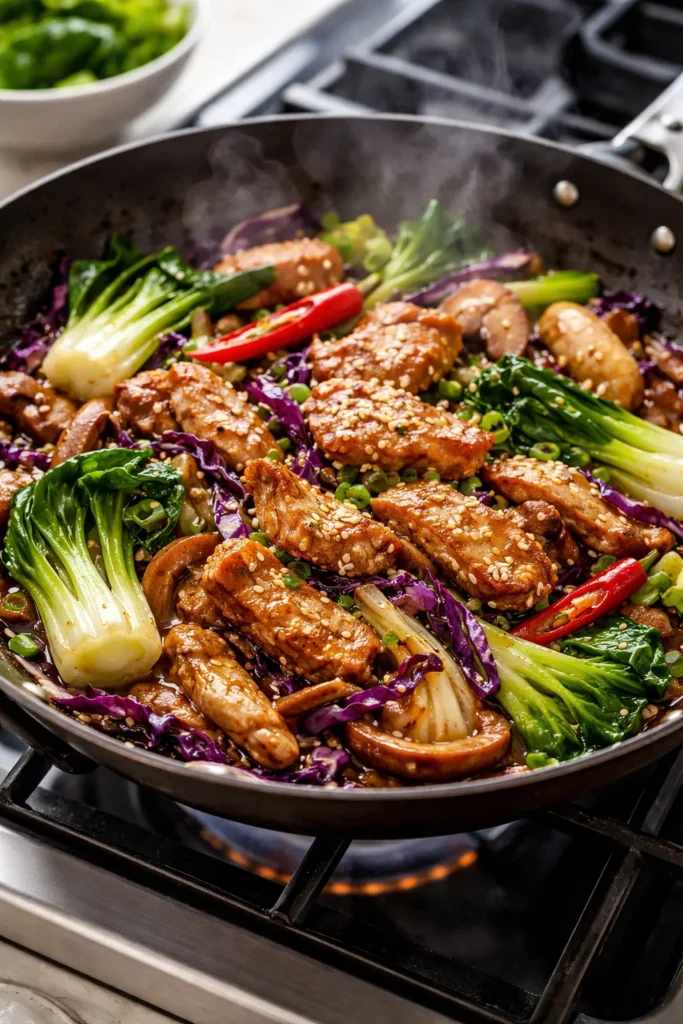
This is the stir fry that actually uses the bok choy sitting in your fridge before it wilts. Combined with shredded red cabbage, shiitake mushrooms, and a simple soy and rice vinegar sauce with sesame oil, it’s lighter and more aromatic than many of the heavier, cornstarch-thickened versions — closer in spirit to a traditional Chinese restaurant preparation.
The Simple Sauce
Whisk together 5 tablespoons reduced-sodium soy sauce, 2 tablespoons rice wine vinegar, 1 tablespoon cornstarch, and 1 teaspoon ground ginger. Set aside. This sauce is intentionally clean and simple — the real flavor comes from the fresh aromatics in the pan.
Cooking Pork Tenderloin in Sesame Oil
Slice 1 pound pork tenderloin into thin strips. Heat 1 tablespoon sesame oil in a wok over medium-high heat. Cook the pork strips for 2–4 minutes until just browned, then transfer to a plate.
Sesame oil has a lower smoke point than neutral oils, so medium-high is the right call here — high heat will burn it. If you want that deep wok heat, use vegetable oil for the pork and add a drizzle of sesame oil at the very end instead.
Stir Frying the Vegetables in Stages
This is where the technique matters. Add the remaining sesame oil, then cook 1 fresh red chile and 2 cloves minced garlic for 15–30 seconds. Add 1 chopped onion and 1 green bell pepper and cook 2–3 minutes until the onion starts to soften.
Stir in chopped bok choy stalks and cook until they begin to soften, about 3 minutes. Add 2 crowns chopped broccoli and cook another 2 minutes. Return the pork and bok choy leaves to the wok. Pour in the sauce and toss to combine. Cook until the leaves wilt and broccoli is tender, 5–7 minutes.
Top with toasted sesame seeds and serve immediately — this one doesn’t hold as well as the sauce-heavy versions.
- Kale or napa cabbage substitutes well for bok choy
- Add 1 cup thinly sliced shiitake mushrooms with the bok choy stalks for extra earthiness
- Serve with chopsticks over plain steamed rice to let the clean, bright flavors shine
Tips for Getting Pork Stir Fry Right Every Time
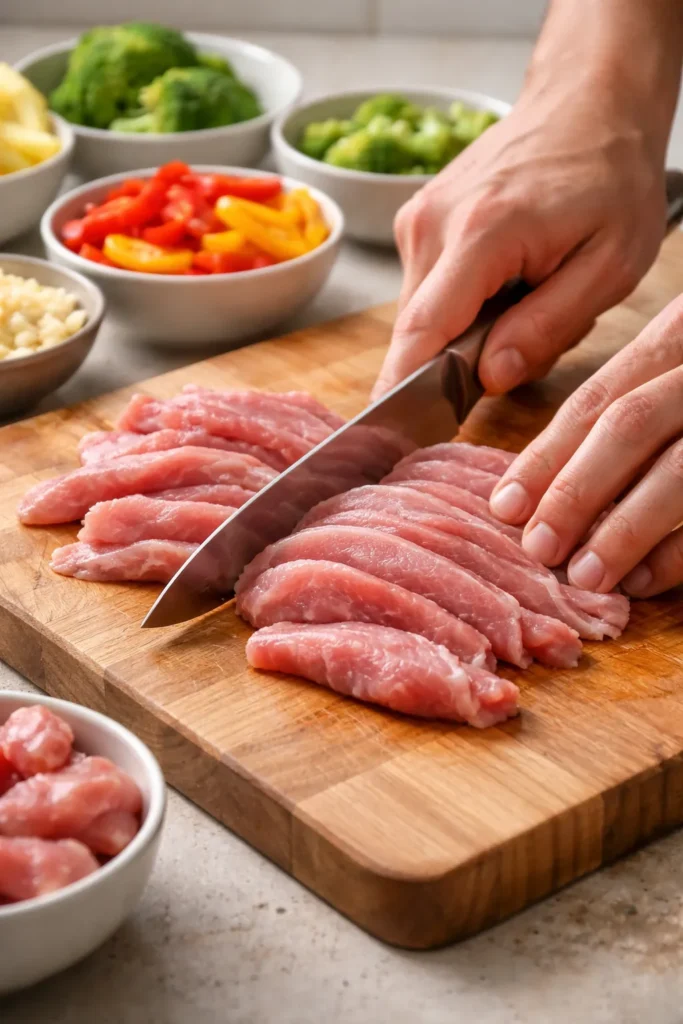
Even with the right recipe, a few habits separate a great stir fry from one that’s underwhelming. These aren’t things you’ll find printed on a recipe card — they’re the kind of details that only emerge after making this dish a dozen times.
Slice thin, always. Regardless of which cut you use, ¼-inch or thinner is the target. Thick chunks of pork take longer to cook and end up drying out before the center reaches temperature. Against the grain where possible — look for the faint lines running through the meat and slice across them.
Cook the pork to 145°F internal temperature, then stop. Use an instant-read thermometer if you have one. Pork is safe and genuinely tender at 145°F. Push it to 160°F and you’ll have dry, chewy pieces no amount of sauce can rescue.
Prep everything before the first piece of pork hits the pan. Stir frying happens at high heat with no downtime between steps. There’s no pausing to mince garlic mid-cook. Sauce whisked and ready, vegetables chopped, aromatics prepped — that’s the only way this works without burning something.
A quick note on pan size: use the largest skillet or wok you have. Crowding forces moisture release and steaming rather than searing. If you’re cooking for four people, a 12-inch skillet is the minimum. A 14-inch wok is better.
Serving and Storing Your Pork Stir Fry
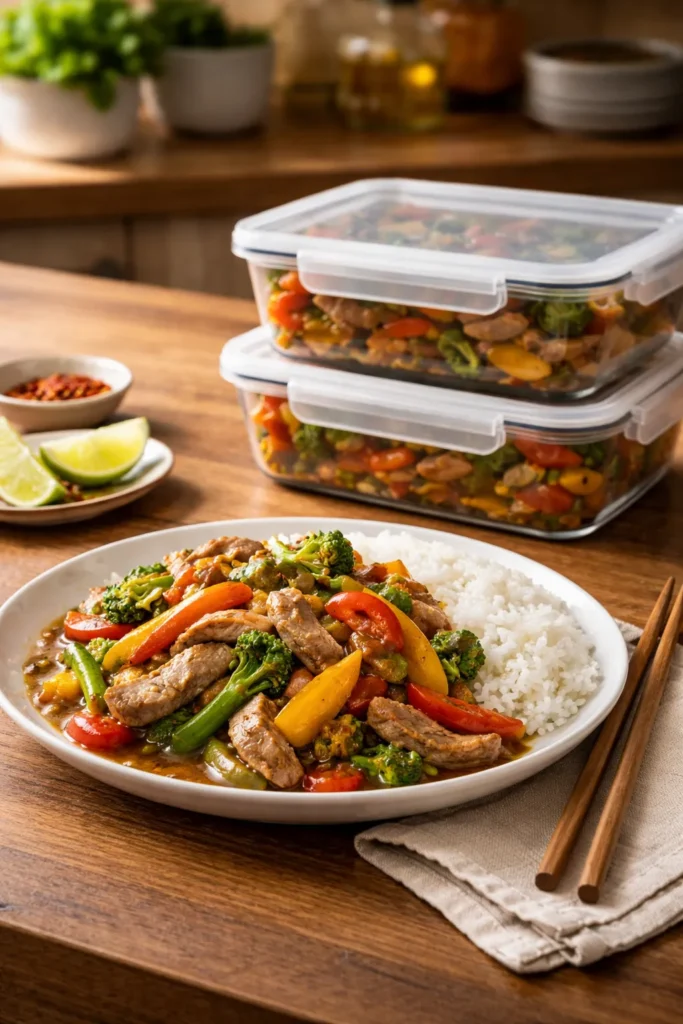
The right base makes a good stir fry even better. Jasmine rice is the classic for a reason — it’s slightly sticky, fragrant, and soaks up sauce without falling apart. Basmati works if that’s what you have. For a lower-carb option, cauliflower rice handles the sauce just as well and adds a barely-there earthiness that doesn’t compete with the stir fry flavors.
Noodles are worth considering too. Hokkien noodles, rice noodles, udon, soba — they all take on sauce in a different way, and each gives the dish a different personality. Udon noodles make it feel hearty and filling. Rice noodles keep it light. Soba adds a nutty undertone that works especially well with sesame-forward sauces.
For leftovers: store in an airtight container in the fridge for 3–5 days depending on the recipe. Reheat in a skillet over medium heat with a tablespoon of water to loosen the sauce, or in the microwave covered at 50% power to avoid drying out the pork. Freezing cooked stir fry is hit or miss — vegetables with high water content (zucchini, cabbage, leafy greens) turn mushy. If you plan to freeze, do it before adding the vegetables, or stick to firm vegetables like broccoli and carrots that hold their texture reasonably well.
Final Thoughts
Pork stir fry rewards you on two fronts: it’s genuinely fast, and the flavor return is disproportionate to the effort. A handful of pantry ingredients — soy sauce, garlic, ginger, a little sweetener, cornstarch — and one pan of high heat can produce something that feels nothing like a shortcut meal.
Pick one recipe from this list and make it this week. Once the process clicks — pork seared, vegetables crisp-tender, sauce glossy and clinging to everything — you’ll find yourself reaching for this formula again and again. It’s the kind of dinner that becomes a rotation staple not because you’re trying to be efficient, but because everyone actually asks for it.
The real flex with stir fry is flexibility. Treat these eight recipes as frameworks, not locked-in formulas. Swap the protein, change the vegetables, try a different sauce base. Once you’re comfortable with the technique, the variations are endless.