There’s a moment at noon when your brain goes completely blank staring into the fridge — nothing seems worth the effort, the takeout options feel stale, and you’re way too hungry to make anything complicated. That’s precisely where grain bowls earn their place in the lunch rotation. They’re fast when you want them to be, filling enough to carry you through a full afternoon, and genuinely good-looking in a way that makes the act of eating feel like something worth doing.
What makes grain bowls different from a sad desk salad or a pile of reheated leftovers is the structure. A cooked grain at the base creates warmth and substance. A protein keeps hunger at bay for hours. A mix of raw and roasted vegetables adds contrasting textures that make every forkful interesting. A well-made sauce pulls everything together into something cohesive rather than scattered. Get those four elements right, and the bowl practically assembles itself.
The eight recipes here range from a bright, herb-forward Mediterranean bowl to a rich fall farro situation with fried cheese and crispy shallots. Some take 15 minutes with pantry staples. Others are worth spending a Sunday afternoon prepping for the week. All of them are the kind of lunch that actually makes you look forward to the midday break — and several work just as well for dinner when you want something nourishing without much fuss.
Table of Contents
- 1. Mediterranean Quinoa Bowl
- What You’ll Need
- How to Build It
- Tips for Making It Work
- 2. Fall Farro Bowl with Roasted Butternut Squash and Crispy Chickpeas
- What You’ll Need
- How to Build It
- Tips for Making It Work
- 3. Tex-Mex Chicken Power Bowl
- What You’ll Need
- How to Build It
- Tips for Making It Work
- 4. Green Goddess Bowl with Cauliflower Rice and Soft-Boiled Egg
- What You’ll Need
- How to Build It
- Tips for Making It Work
- 5. Asian-Inspired Brown Rice Bowl with Peanut Sauce
- What You’ll Need
- How to Build It
- Tips for Making It Work
- 6. Roasted Veggie Bowl with Kale Pepita Pesto
- What You’ll Need
- How to Build It
- Tips for Making It Work
- 7. Sushi-Inspired Bowl with Salmon, Cucumber, and Avocado
- What You’ll Need
- How to Build It
- Tips for Making It Work
- 8. Breakfast Grain Bowl with Farro, Sausage, and Jammy Egg
- What You’ll Need
- How to Build It
- Tips for Making It Work
- How to Build Any Grain Bowl Without a Recipe
- The Best Grains to Use as a Base
- The Role of Sauce in Making or Breaking a Bowl
- Meal Prepping All Eight Bowls Efficiently
- Dressings You Can Make Once and Use All Week
- Storage and Reheating Without Ruining the Texture
- Final Thoughts
1. Mediterranean Quinoa Bowl
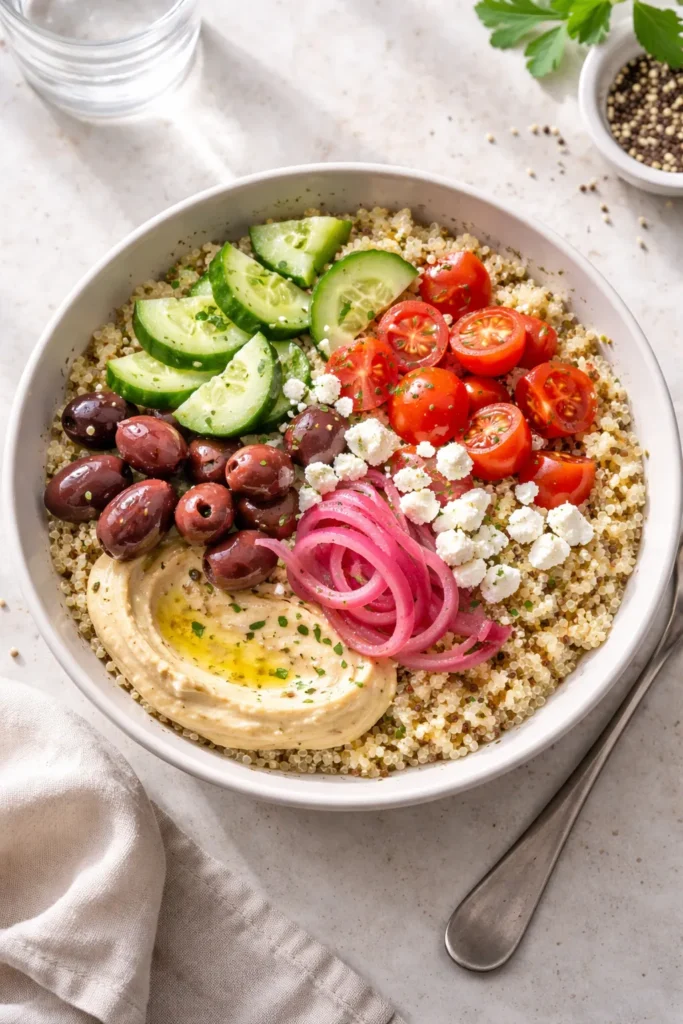
Quinoa is one of those rare grains that acts as a complete protein on its own — it contains all nine essential amino acids, which makes it particularly valuable as a base when you’re skipping meat. Combined with the salty, briny flavors of a Mediterranean spread, it creates a bowl that feels indulgent but lands light.
This bowl is built on a foundation of fluffy, well-seasoned quinoa topped with sliced cucumbers, halved cherry tomatoes, kalamata olives, pickled red onion, and a generous crumble of feta. A smear of roasted garlic hummus across the bottom of the bowl — before the quinoa goes in — acts as a creamy anchor that the dressing seeps into beautifully.
What You’ll Need
- 1 cup dry quinoa, rinsed and cooked in low-sodium vegetable broth instead of water (this alone adds noticeable depth of flavor)
- ½ cup cherry tomatoes, halved
- ½ cup Persian cucumber, sliced into half-moons
- ¼ cup kalamata olives
- ¼ cup pickled red onion
- 3 tablespoons crumbled feta cheese
- 2 tablespoons roasted garlic hummus
- 1 can chickpeas, drained, rinsed, and patted dry — then roasted at 425°F for 20 minutes until crispy
How to Build It
Swoosh the hummus across the inside of a wide, shallow bowl. Pile on a generous scoop of warm quinoa — about ¾ cup cooked. Arrange the tomatoes, cucumbers, olives, and pickled onion in separate sections around the bowl rather than mixing them, so the colors stay vibrant and each bite can be customized. Scatter the feta over everything, add the crispy chickpeas last so they don’t soften, and finish with a lemon-herb vinaigrette made from 2 tablespoons olive oil, 1 tablespoon fresh lemon juice, ½ teaspoon dried oregano, and a pinch of sea salt.
Tips for Making It Work
The pickled red onion makes a noticeable difference — quick-pickle thin slices in equal parts white wine vinegar and water with a pinch of sugar and salt for 20 minutes while the quinoa cooks. Don’t skip the crispy chickpeas; they provide the crunch that keeps this bowl from feeling monotonous bite after bite.
Meal prep note: Store all components separately and assemble just before eating. The hummus base keeps everything from going dry even after a day or two in the fridge.
2. Fall Farro Bowl with Roasted Butternut Squash and Crispy Chickpeas
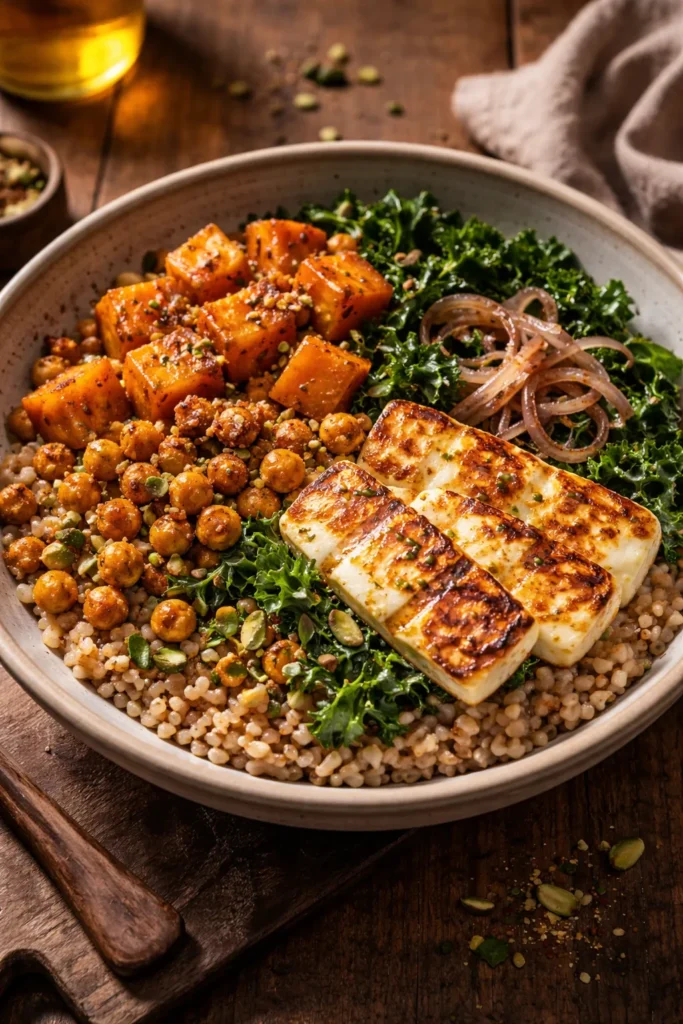
Farro is wildly underrated, and this bowl is the reason to start keeping a bag in your pantry permanently. One cup of cooked farro delivers around 15 grams of protein and 11 grams of fiber — numbers that rival many animal proteins. Its nutty, chewy texture holds up beautifully against roasted vegetables, which means it stays satisfying even after a day or two in the fridge.
This is the kind of bowl that tastes like autumn in the best possible way: sweet butternut squash, earthy kale, crispy chickpeas, and a honey-lemon dressing that’s bright enough to cut through the richness of roasted vegetables.
What You’ll Need
- 1 cup dry pearled farro (pearled cooks faster and is softer than whole farro — look for it in the natural foods aisle)
- 2 cups butternut squash, peeled and cut into ½-inch cubes
- 1 can chickpeas, drained, rinsed, and thoroughly patted dry
- 1 bunch Tuscan kale, stems removed, leaves thinly sliced
- 4 shallots, thinly sliced
- ½ cup pistachios, roughly chopped
- 3 oz bread cheese or halloumi, cut into ½-inch cubes and pan-fried until golden
For the honey-lemon dressing:
- 3 tablespoons fresh lemon juice + zest of 1 lemon
- 2 tablespoons honey or maple syrup
- 2 cloves garlic, finely minced
- ⅓ cup extra-virgin olive oil
- Pinch of red pepper flakes
How to Build It
Roast the squash and chickpeas together on a sheet pan at 450°F for 22 minutes, then push them aside, add the kale tossed with a drizzle of olive oil, and roast everything for another 8–10 minutes until the kale is crisp at the edges. While that’s happening, cook the farro in a pot of well-salted boiling water for about 30 minutes, drain, and fluff with a fork.
Fry the shallots in 2–3 tablespoons of olive oil over medium-high heat until they’re deep golden and crispy — this takes 7–9 minutes and is worth every second. Pan-fry the cheese cubes in the same pan until golden on each side, about 1 minute per side.
Toss everything together in a large bowl, drizzle with the honey-lemon dressing, and serve warm.
Tips for Making It Work
Time the components together: get the vegetables in the oven first, start the farro immediately after, then handle the shallots and cheese while both are cooking. Everything finishes within the same window if you’re organized about it. If you plan to have leftovers, store the crispy shallots separately — they’ll soften overnight but still taste like caramelized onions, which is honestly not a bad consolation prize.
Worth knowing: Sweet potatoes or delicata squash work as direct substitutes for butternut squash. If farro isn’t available, wild rice or cooked brown rice adapt beautifully here.
3. Tex-Mex Chicken Power Bowl
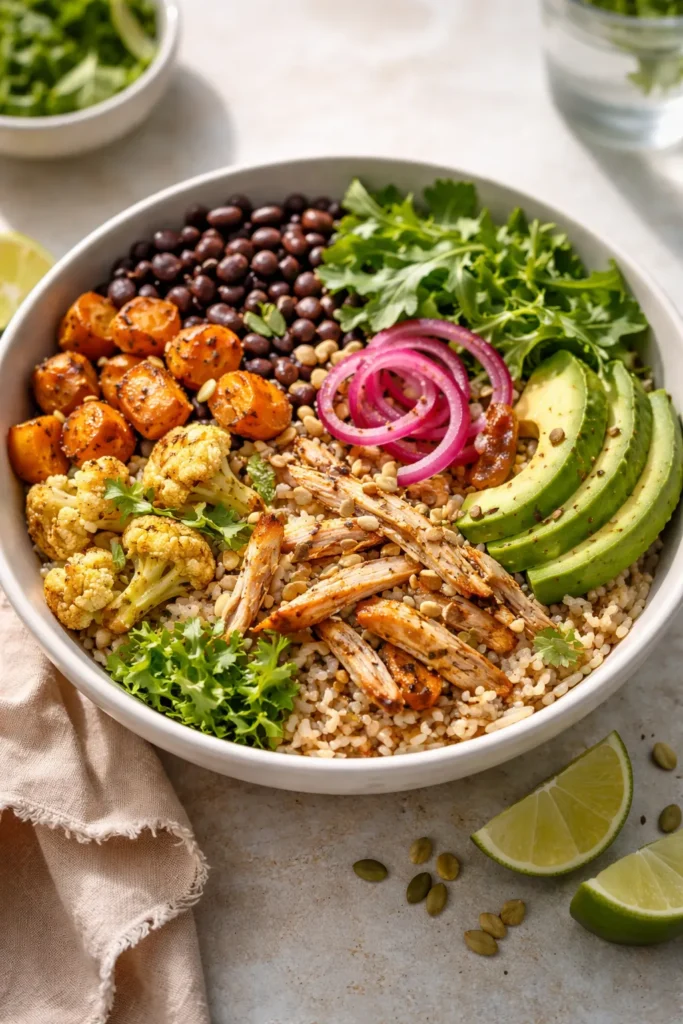
This is the grain bowl version of a burrito bowl — but built with more intention than most versions that end up at chains. The key difference is the base: instead of plain white rice, use a 50/50 mix of cooked brown rice and warm black beans, which adds fiber, protein, and a complexity that white rice alone can’t deliver.
Rotisserie chicken makes this one of the fastest bowls on the list. There’s no cooking involved beyond reheating, which means lunch can be assembled in about 10 minutes flat on any day when the chicken was prepped ahead.
What You’ll Need
- 1 cup cooked brown rice (warm)
- ½ cup cooked black beans, drained and seasoned with cumin, lime juice, and a pinch of salt
- ½ cup rotisserie chicken, shredded
- ¼ cup roasted sweet potato, cubed (roast a whole tray on Sunday for the week)
- ¼ cup roasted cauliflower
- ¼ avocado, sliced
- 2 tablespoons pickled red onion
- 1 tablespoon sunflower seeds or pepitas
- Handful of power greens or arugula
- 2–3 tablespoons honey-chipotle dressing (or a simple lime vinaigrette made from lime juice, olive oil, cumin, and a touch of honey)
How to Build It
Toss the greens with just enough dressing to coat lightly — this is the one step most people skip that makes a real difference. Warm greens wilted by undressed roasted vegetables taste flat; lightly dressed greens stay vibrant. Layer the rice and beans first, then arrange the chicken, sweet potato, and cauliflower in sections on top. Add the avocado, pickled onion, and seeds, then drizzle with additional dressing.
Tips for Making It Work
The roasted sweet potato is what makes this bowl feel substantive without being heavy. Cut it into ½-inch cubes, toss with olive oil, cumin, smoked paprika, and a pinch of cayenne, then roast at 425°F for 20–25 minutes until caramelized at the edges. Make a full sheet pan’s worth at the start of the week — it reheats in 60 seconds in the microwave.
Pro tip: A spoonful of guacamole or pico de gallo takes this from a weekday lunch to something you’d genuinely look forward to eating.
4. Green Goddess Bowl with Cauliflower Rice and Soft-Boiled Egg
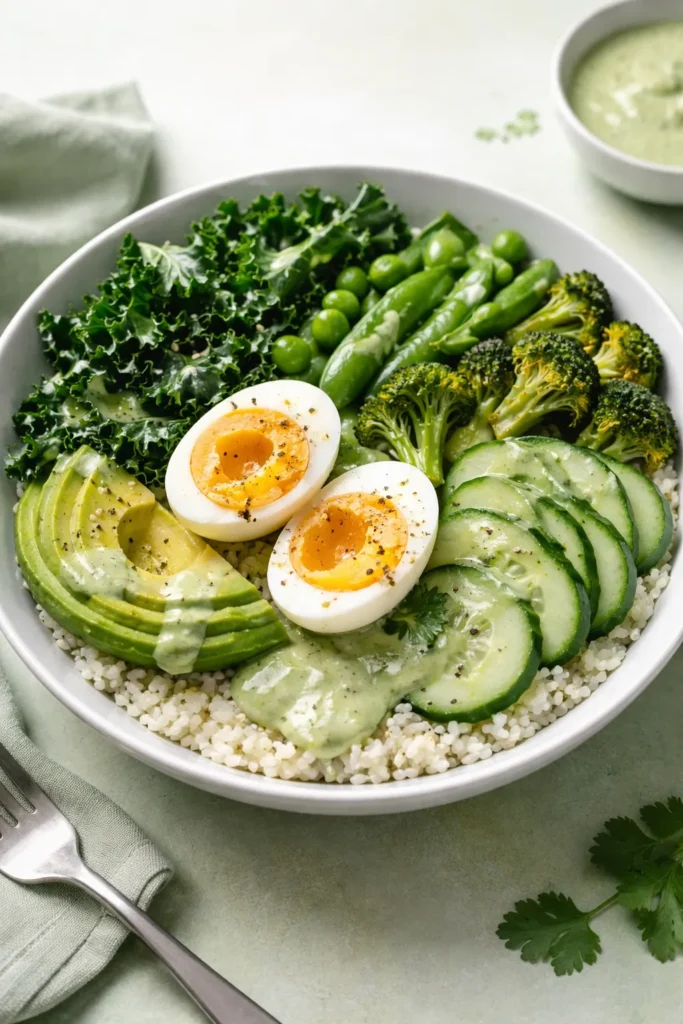
Not every grain bowl needs a traditional grain at the center. This one uses cauliflower rice as the base, making it lower in carbohydrates while still feeling filling — largely because the protein comes from a jammy soft-boiled egg and a thick green goddess dressing that’s far more substantial than it looks.
The visual impact of this bowl is striking: every element is some shade of green, from the massaged kale to the sliced cucumber to the sugar snap peas to the avocado. Eating with your eyes is real, and a bowl this color tends to feel energizing in a way that beige food never quite manages.
What You’ll Need
- 1½ cups cauliflower rice (fresh or frozen — gently warm in a pan over low heat until just heated through, about 3 minutes)
- 1 cup chopped kale, massaged with ½ teaspoon olive oil until softened, about 60 seconds
- ½ cup sugar snap peas, raw
- ½ cup roasted broccoli florets
- ½ cucumber, sliced thin
- ¼ avocado, sliced
- 1 soft-boiled egg (cook for exactly 7 minutes in boiling water, then transfer to ice water for 5 minutes — the yolk will be jammy and orange at the center)
- 2–3 tablespoons green goddess dressing
- Kosher salt, black pepper, and everything bagel seasoning to finish
How to Build It
Layer the warm cauliflower rice into the base of the bowl. Arrange the massaged kale alongside it. Pile on the snap peas, roasted broccoli, and cucumber in distinct sections. Add the avocado, halve the soft-boiled egg and nestle it on top, then drizzle the whole bowl generously with green goddess dressing. Finish with everything bagel seasoning — it sounds like a minor detail but adds garlic, sesame, poppy seed, and dried onion in a single sprinkle.
Tips for Making It Work
Massaging the kale is non-negotiable for palatability. Raw kale is tough, bitter, and chewy in a way that puts people off. Thirty seconds of working olive oil into the leaves with your hands breaks down the cell structure and transforms it into something genuinely pleasant to eat. It also reduces in volume significantly, so what looks like too much kale becomes exactly the right amount.
Note on the egg: The 7-minute timing works for large eggs at room temperature. If your eggs come straight from the fridge, add 30–60 seconds to the cook time.
5. Asian-Inspired Brown Rice Bowl with Peanut Sauce
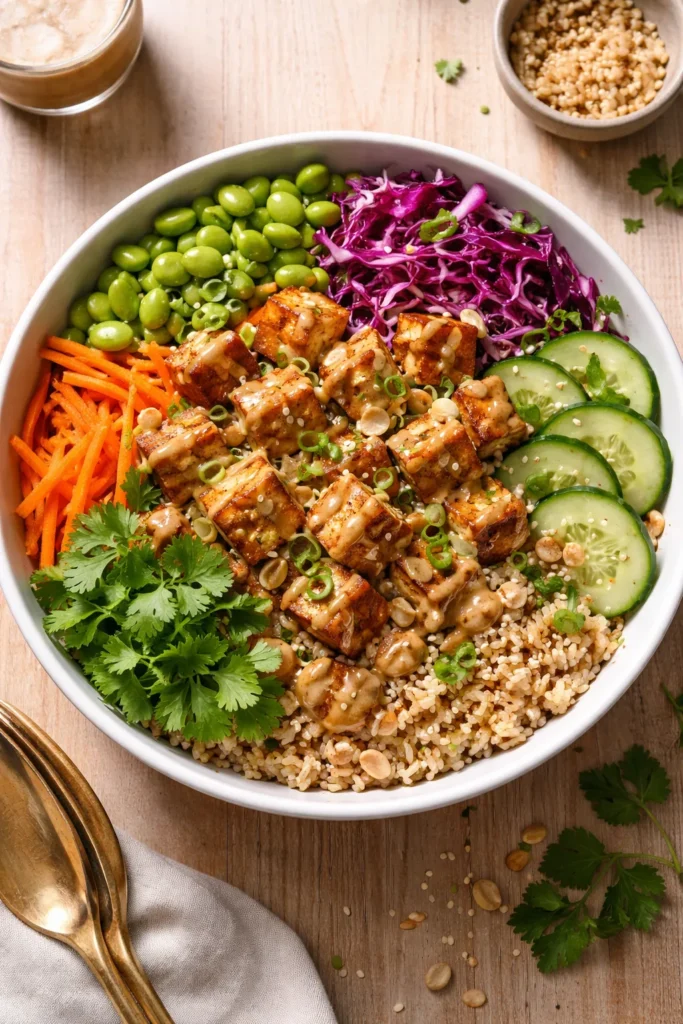
Peanut sauce has a remarkable ability to make almost any combination of vegetables and protein taste intentional. This bowl uses it to tie together brown rice, shredded purple cabbage, edamame, shredded carrots, sliced cucumber, and either grilled tofu or rotisserie chicken — a combination that works equally well plant-based or not.
Brown rice is a particularly good base here because its slightly nutty flavor complements the peanut sauce without competing with it. It also holds up well after refrigeration and reheats without becoming gluey, which makes it a reliable choice for multi-day meal prep.
What You’ll Need
- 1 cup cooked brown rice, warm
- ½ cup shelled edamame (frozen, thawed, or quickly boiled for 3 minutes)
- ¼ cup shredded purple cabbage
- ¼ cup shredded carrots
- ½ cup sliced cucumber
- ½ cup crispy baked tofu or shredded rotisserie chicken
- 2 tablespoons chopped peanuts or cashews
- 1 tablespoon sesame seeds
- Sliced scallions and fresh cilantro to finish
For the peanut sauce:
- 3 tablespoons natural peanut butter (the kind with no added sugar)
- 1 tablespoon low-sodium soy sauce or tamari
- 1 tablespoon rice vinegar
- 1 teaspoon sesame oil
- 1 teaspoon honey or maple syrup
- 1 clove garlic, grated
- 2–3 tablespoons warm water to thin to a drizzleable consistency
How to Build It
Whisk all peanut sauce ingredients together until smooth, adding warm water one tablespoon at a time until the sauce pours easily from a spoon. Arrange the brown rice in the base of the bowl, then add the edamame, cabbage, carrots, and cucumber in separate sections. Place the protein on top, drizzle the peanut sauce over everything, and scatter the chopped peanuts, sesame seeds, and scallions over the top.
Tips for Making It Work
For crispy tofu, press a block of firm tofu between clean towels for at least 20 minutes to remove excess moisture, then cut into ¾-inch cubes, toss with soy sauce, sesame oil, and a teaspoon of cornstarch, and bake at 400°F for 25–30 minutes until golden and chewy at the edges. Pressing out the moisture is the step most people skip, and it’s the reason their tofu stays soft instead of getting crispy.
Storage note: Store the peanut sauce separately if meal prepping — it thickens in the fridge and can be loosened back up with a splash of warm water before serving.
6. Roasted Veggie Bowl with Kale Pepita Pesto
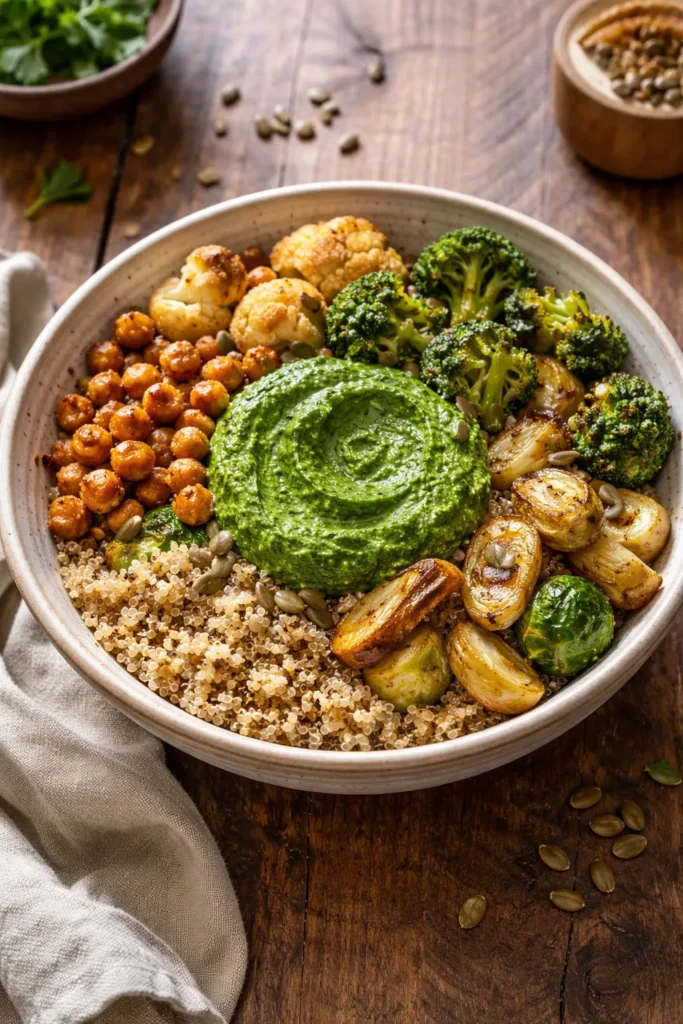
This is a fully plant-based bowl built around a vivid green sauce that does the heavy lifting on flavor. The kale pepita pesto is blended from raw kale, fresh cilantro, pepitas, lemon juice, garlic, and olive oil — and it’s bright enough to cut through the earthiness of roasted vegetables in a way that most store-bought dressings simply can’t.
The inspiration here comes from the roasted veggie grain bowl approach popularized by plant-forward food writers: cook a big batch of components at the start of the week, then reassemble them into different meals as the days progress. The pesto keeps well for four days in the fridge and doubles as a pasta sauce, sandwich spread, or dip.
What You’ll Need
- 1 cup dry quinoa, cooked (or use farro or brown rice)
- 2 cups mixed roasted vegetables: choose from cauliflower florets, broccoli, Brussels sprouts, and parsnips — all cut into similarly sized pieces for even cooking
- ½ can chickpeas, drained, rinsed, and roasted alongside the vegetables
- A spoonful of sauerkraut or pickled jalapeños for a briny, tangy counterpoint
- 2 tablespoons pepitas for crunch
For the kale pepita pesto:
- ½ cup raw pepitas
- 1 packed cup chopped kale
- 1 packed cup fresh cilantro
- 2 small garlic cloves
- ¼ cup fresh lemon juice
- ½ teaspoon sea salt
- ½ cup extra-virgin olive oil
- ½ cup water
- ½ teaspoon honey
How to Build It
Preheat the oven to 425°F and line two sheet pans with parchment. Toss the vegetables and chickpeas with olive oil, salt, and pepper, spread in a single layer (crowding leads to steaming rather than roasting — use both pans), and roast for 20–25 minutes until the edges are deeply caramelized.
While the vegetables roast, blend all pesto ingredients until smooth. Assemble bowls with a scoop of quinoa, the roasted vegetables, a spoonful of sauerkraut, a handful of pepitas, and a generous drizzle of pesto.
Tips for Making It Work
The parsnip is a quiet star here — when roasted at high heat, it sweetens dramatically and adds a dimension that cauliflower and broccoli alone can’t. If parsnips aren’t available, diced sweet potato delivers a similar effect. Roasting vegetables at 425°F rather than a lower temperature is the difference between caramelized and merely cooked — don’t be tempted to lower the heat.
Pesto tip: The water in the pesto recipe isn’t a mistake — it lightens the sauce so it coats the bowl generously without feeling heavy. Without it, the pesto is quite thick and dense.
7. Sushi-Inspired Bowl with Salmon, Cucumber, and Avocado
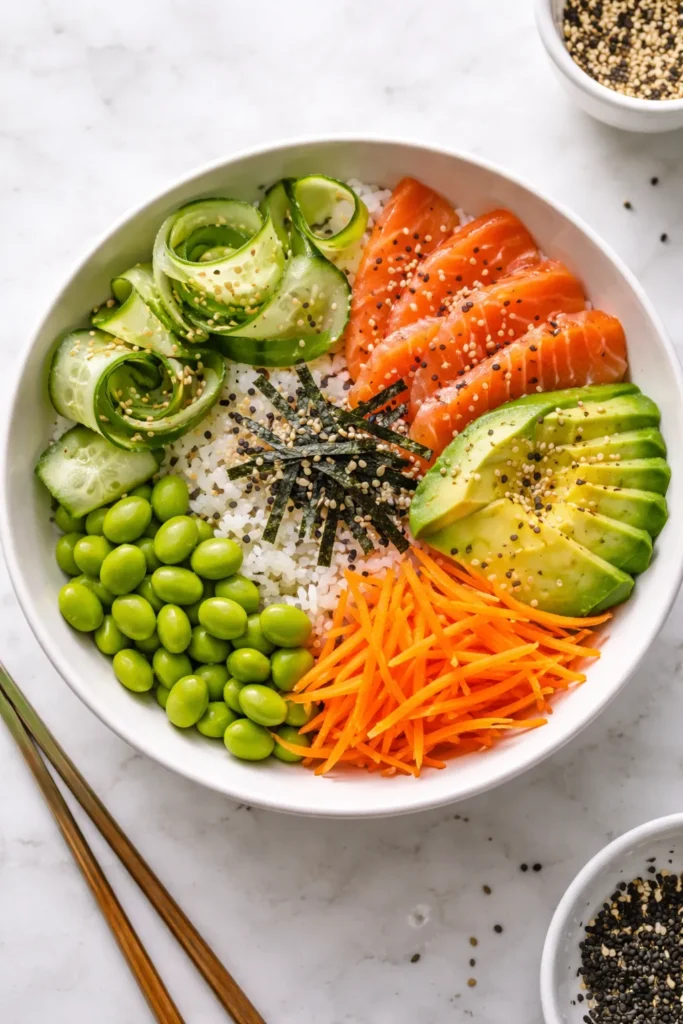
The sushi bowl concept exists for everyone who loves the flavors of a salmon roll but doesn’t want to spend the time (or money) on actually making sushi at home. All the same components appear here — seasoned rice, raw or cooked salmon, cucumber, avocado, shredded carrot, and a finishing sauce — assembled in a bowl in about 15 minutes.
Sushi rice is traditionally made with short-grain white rice seasoned with rice vinegar, sugar, and salt. For a more nutritious version that doesn’t sacrifice the flavor profile, use a 50/50 blend of short-grain white and short-grain brown rice. The white rice keeps the texture appropriately sticky while the brown rice adds fiber.
What You’ll Need
- 1 cup cooked short-grain white rice (warm), seasoned with 1 tablespoon rice vinegar, 1 teaspoon sugar, and ¼ teaspoon salt stirred in while the rice is still hot
- 3–4 oz sushi-grade salmon, sliced thin (or use canned salmon or air-fryer salmon if raw fish isn’t accessible)
- ½ cup cucumber, sliced into thin rounds or matchsticks
- ¼ cup shredded carrot
- ¼ avocado, sliced
- 1 tablespoon edamame
- 1 teaspoon sesame seeds
- Nori strips for crunch and that unmistakable ocean flavor
- Low-sodium soy sauce or tamari for drizzling
- 1–2 tablespoons sriracha mayo (mix equal parts mayo and sriracha, thin slightly with a drop of sesame oil)
How to Build It
Season the warm rice and let it cool for 5 minutes before building the bowl — hot rice on top of raw fish isn’t ideal. Arrange the rice in the base, then place the salmon, cucumber, carrot, avocado, and edamame in separate sections. Drizzle with soy sauce and sriracha mayo, scatter sesame seeds over everything, and add the nori strips right before eating so they stay crispy.
Tips for Making It Work
If using raw salmon, buy it from a reputable fishmonger and consume it the same day. For a more practical meal-prep version, use air-fryer salmon cooked at 400°F for 8–10 minutes, or a can of high-quality wild-caught salmon. The flavor profile holds up with cooked fish — the sauce and seasoned rice carry the bowl regardless.
Variation: Swap salmon for imitation crab, cooked shrimp, or sliced sashimi-grade tuna depending on preference and budget.
8. Breakfast Grain Bowl with Farro, Sausage, and Jammy Egg
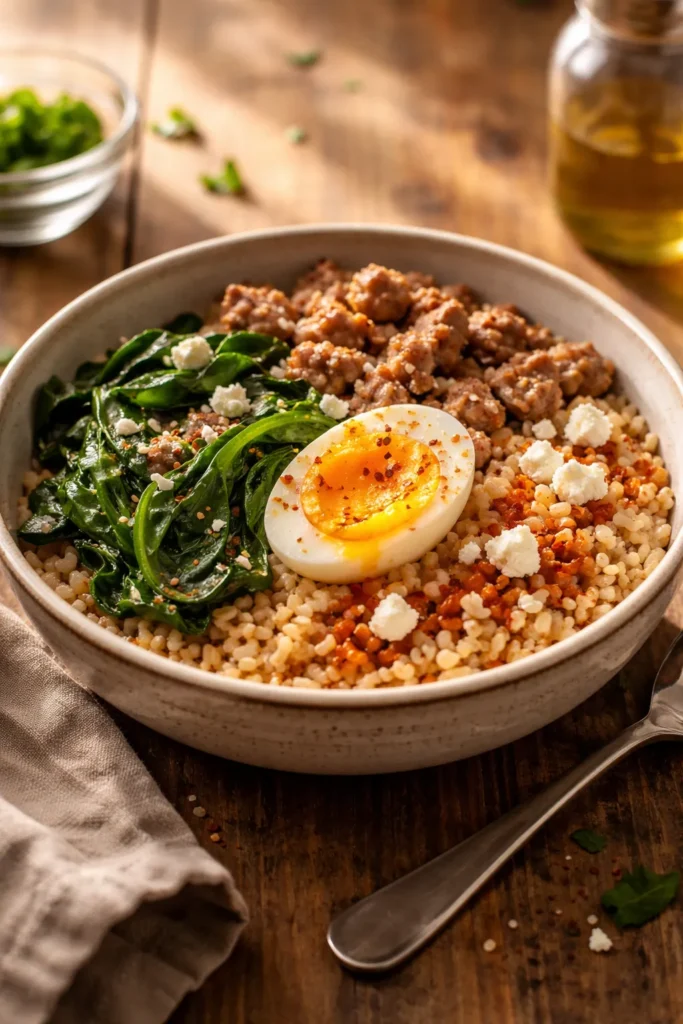
Grain bowls aren’t exclusively a lunch proposition. This breakfast version uses farro as the base — more interesting than oatmeal, more filling than toast — topped with breakfast sausage crumbles, a soft-cooked egg, sautéed kale or spinach, and a drizzle of hot sauce.
It’s the kind of breakfast that feels like a proper meal rather than a placeholder. The farro provides sustained energy that carries through the morning without the sugar crash that comes from most grab-and-go breakfast options. Make the farro in a large batch on the weekend and the actual morning assembly takes under 10 minutes.
What You’ll Need
- ¾ cup cooked pearled farro, warmed
- 2 oz breakfast sausage (pork, chicken, or plant-based), cooked and crumbled in a skillet
- 1 large egg, cooked to preference — a 6-minute egg gives a slightly runny yolk; a 7-minute egg gives a jammy, creamy center
- ½ cup baby spinach or finely chopped kale, wilted quickly in the same pan used for the sausage
- 1 tablespoon crumbled feta or shredded white cheddar
- Hot sauce, everything bagel seasoning, or a drizzle of good olive oil to finish
How to Build It
Warm the farro in a small saucepan with a splash of water or broth, stirring until heated through. Simultaneously cook the sausage in a skillet over medium heat, breaking it into small crumbles, until browned — about 5–6 minutes. Add the greens directly to the pan, toss with the residual fat from the sausage, and cook for 60–90 seconds until just wilted.
Scoop the farro into a bowl, add the sausage and greens, halve the egg and place it on top, scatter the cheese, and finish with whatever sauce or seasoning appeals.
Tips for Making It Work
The key to a consistently perfect soft-boiled egg is starting with room-temperature eggs in already-boiling water. Cold eggs dropped into boiling water often crack. Cold eggs in cold water that comes to a boil give inconsistent results because the timing depends on when the boil starts. Room-temperature eggs, 6–7 minutes in a rolling boil, then immediately into an ice bath — that’s the method that works every single time.
Variation: For a vegetarian breakfast bowl, skip the sausage and add roasted cherry tomatoes, sautéed mushrooms, or a scoop of white bean hummus alongside the egg.
How to Build Any Grain Bowl Without a Recipe
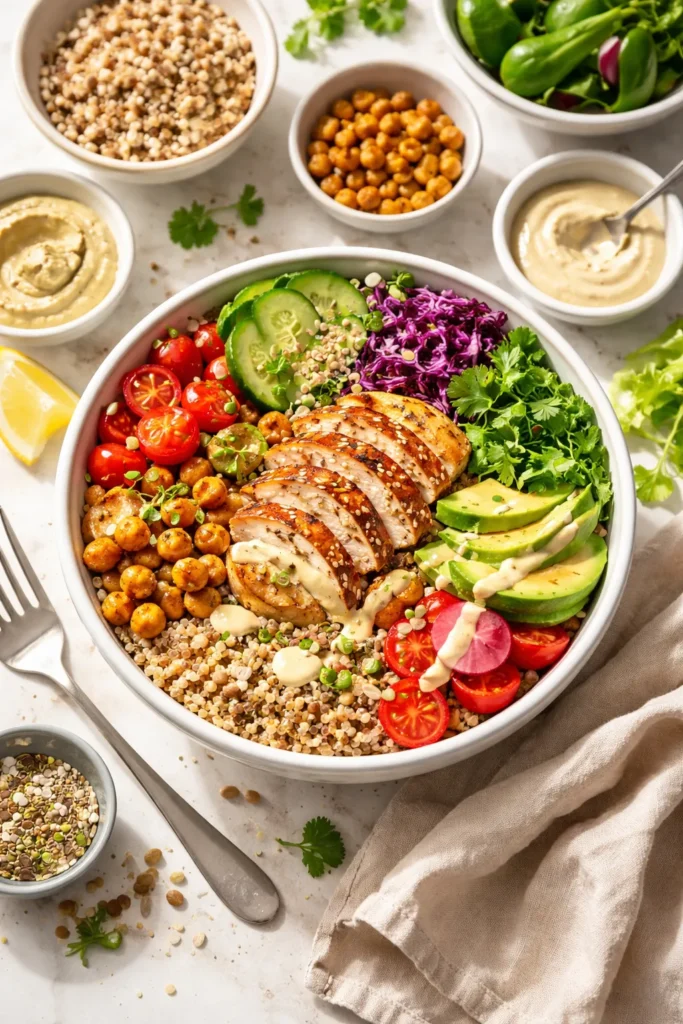
Every single bowl in this list follows the same underlying structure, and once you understand it, you don’t need to follow a recipe at all. The formula is: grain base (about ¾ to 1 cup cooked) + protein (about 3–4 oz) + roasted vegetables (½ to 1 cup) + raw or pickled vegetables (½ cup) + sauce (2–3 tablespoons) + a crunchy topping (1–2 tablespoons).
Aim for roughly half the bowl to be vegetables, a quarter grain, and the remaining quarter split between protein and healthy fats like avocado, nuts, or seeds. This proportion gives you a bowl that’s genuinely satisfying without tipping into heavy territory.
The crunchy element — toasted seeds, chopped nuts, crispy chickpeas, nori strips — is the detail most people overlook, and it makes a noticeable difference. Texture contrast is what keeps eating an entire bowl interesting from the first bite to the last.
The Best Grains to Use as a Base
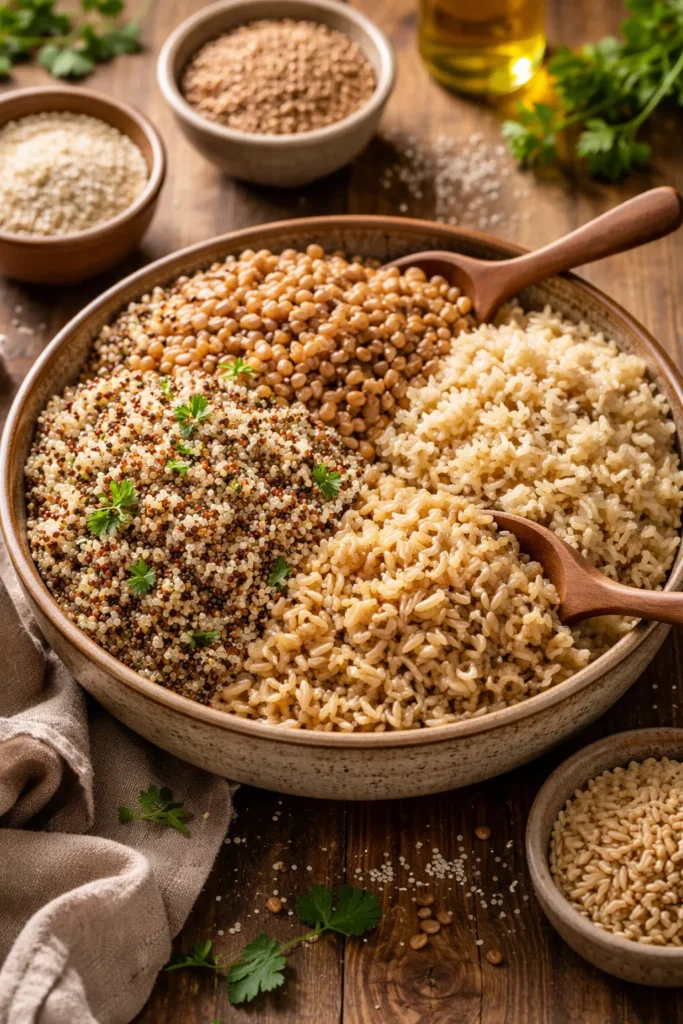
Quinoa cooks in 15 minutes and acts as a complete protein. It’s mild-flavored enough to work with any sauce direction — Mediterranean, Asian, Latin, or American. Farro takes 30 minutes but rewards the wait with a nutty, chewy texture that makes bowls feel more like a proper meal. Brown rice is the most universally available option and the easiest to meal prep in large batches.
For something less common, millet is naturally gluten-free, cooks in 20 minutes, and has a mild, slightly sweet flavor that pairs particularly well with roasted root vegetables and tahini-based dressings. Barley is another excellent choice — slightly chewy, high in beta-glucan fiber, and deeply satisfying. Wheat berries and freekeh round out the options for those willing to experiment; both have robust, earthy flavors that stand up to bold dressings.
The practical advice: cook whichever grain you’re using in vegetable or chicken broth instead of water. The difference in flavor is immediate and significant.
The Role of Sauce in Making or Breaking a Bowl
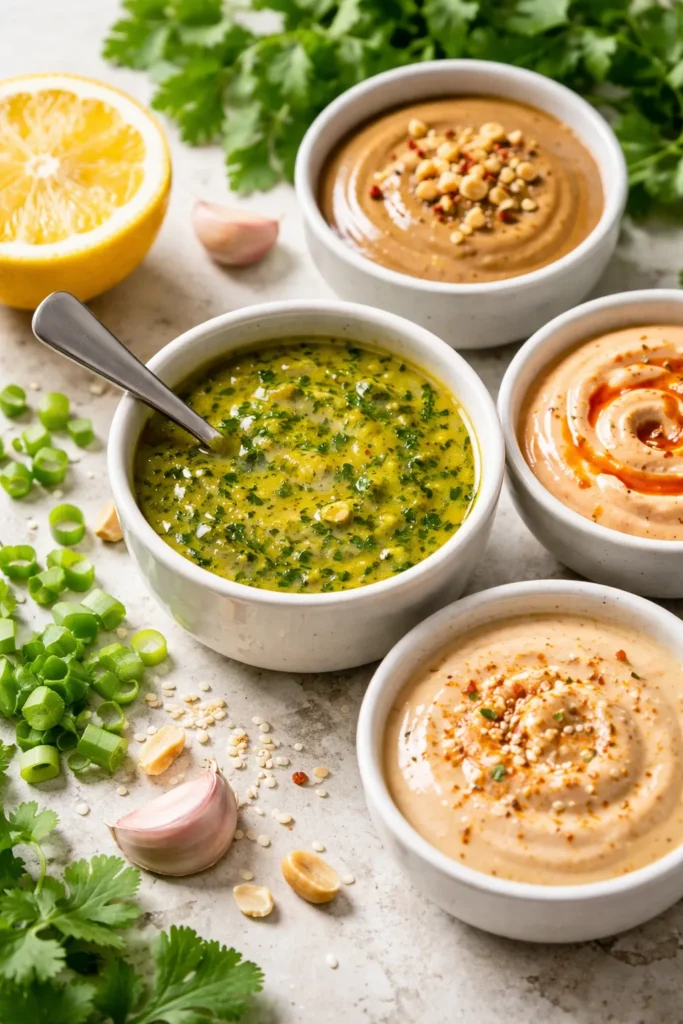
A bowl without sauce is a bowl that will disappoint you. The sauce is the element that transforms a collection of individual ingredients into something cohesive. Without it, even a well-assembled bowl tastes disjointed — like eating the components of a dish rather than the dish itself.
A lemon-herb vinaigrette (olive oil + lemon juice + dried oregano + garlic + Dijon mustard) handles Mediterranean and roasted vegetable bowls. Tahini sauce (tahini + lemon juice + garlic + water + cumin) works for Middle Eastern and vegetable-forward bowls. Peanut sauce covers Asian-inspired combinations. Sriracha mayo pulls double duty as both sauce and heat source on the sushi and Tex-Mex bowls.
The one rule that matters most: dress the greens lightly before building the bowl rather than drizzling everything at the end. Dressed greens stay vibrant and don’t wilt under the weight of warm grains.
Meal Prepping All Eight Bowls Efficiently
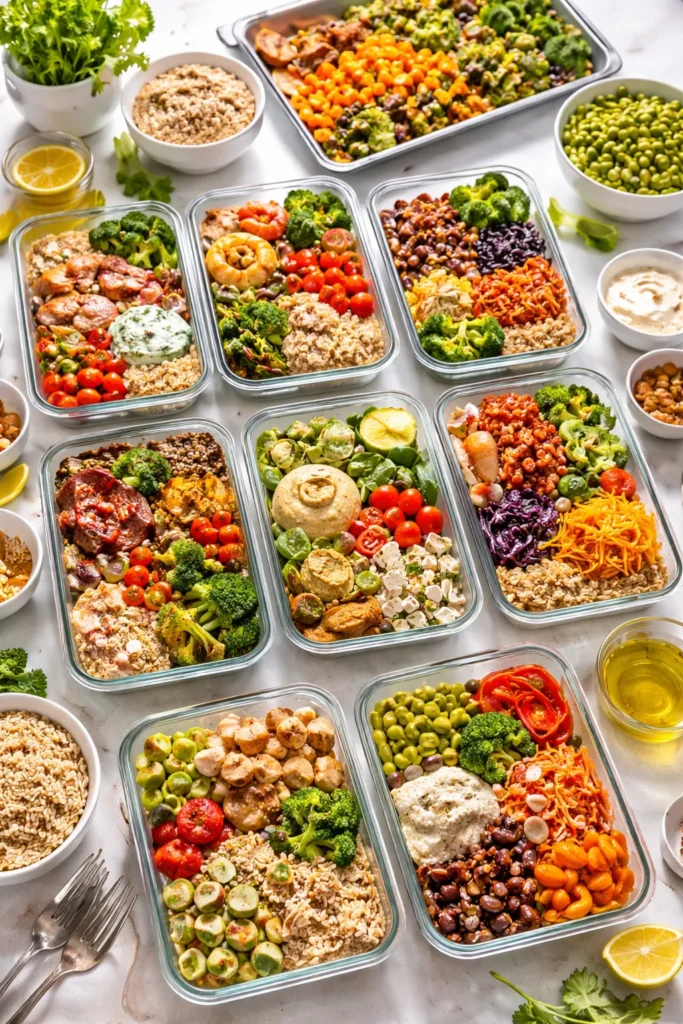
None of these eight bowls require starting from scratch on the day you eat them. The most efficient approach is to spend 60–90 minutes on a weekend prepping the components that store well, then assembling individual bowls throughout the week in under 5 minutes each.
Cook a large batch of two different grains — quinoa and farro, for example — and store them in separate airtight containers in the fridge. Cooked grains keep for up to three days refrigerated and up to four months frozen in zip-lock bags. For freezing, spread the grains on a sheet pan to cool completely first, then transfer to bags in ½-cup portions for easy defrosting.
Roast a large sheet pan of vegetables — or two pans using different vegetables — and store them together. Roasted vegetables reheat well in a 350°F oven for 8–10 minutes or in a skillet over medium heat, though they’re also perfectly good eaten at room temperature or cold.
The one component to prep fresh daily is the protein if you’re using fish or raw eggs. Everything else — grains, roasted vegetables, dressings, canned beans — holds beautifully for three to four days.
Food safety note: Never leave cooked grains at room temperature for more than two hours. Transfer them to shallow containers immediately after cooking and refrigerate uncovered for 30 minutes before covering — this allows steam to escape and prevents condensation from making the grains soggy.
Dressings You Can Make Once and Use All Week
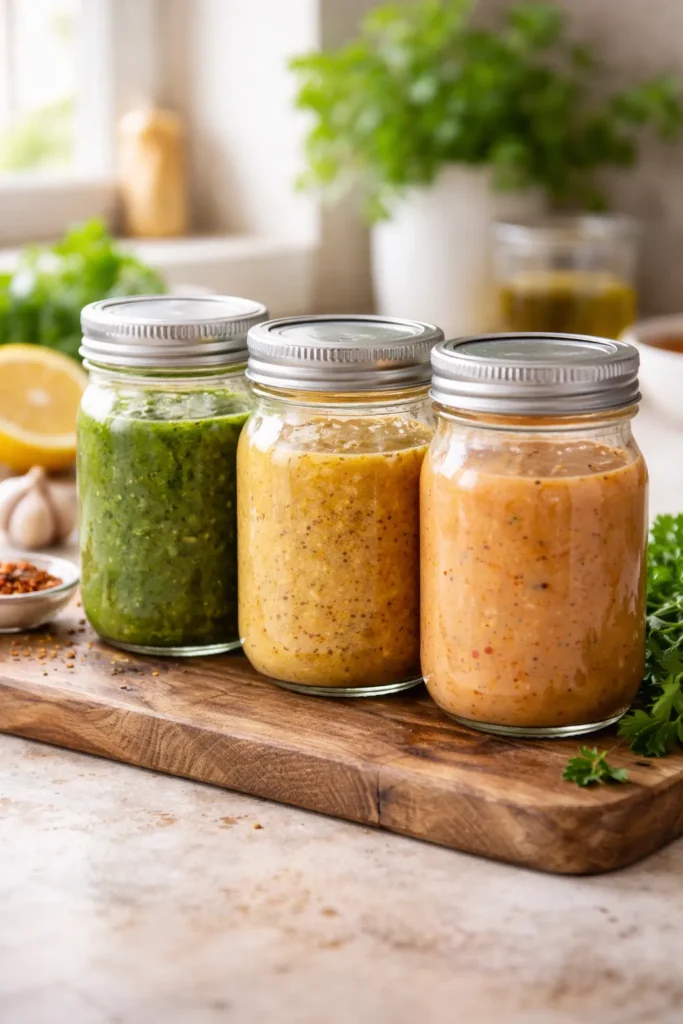
Making a single batch of a good dressing on the weekend means you have access to flavor for every bowl without any additional effort during the week. Most homemade dressings keep in a sealed jar in the fridge for up to a week.
Lemon-herb vinaigrette: Whisk 3 tablespoons olive oil, 1 tablespoon lemon juice, 1 teaspoon Dijon mustard, ½ teaspoon dried oregano, ½ teaspoon garlic powder, and a pinch of salt. Shake before using.
Tahini sauce: Whisk 3 tablespoons tahini, 2 tablespoons lemon juice, 1 small garlic clove grated, ¼ teaspoon cumin, and enough cold water to reach a pourable consistency — usually 3–4 tablespoons.
Peanut sauce: Whisk 3 tablespoons natural peanut butter, 1 tablespoon soy sauce, 1 tablespoon rice vinegar, 1 teaspoon sesame oil, 1 teaspoon honey, 1 clove garlic grated, and warm water to thin.
All three of these store well in mason jars and cover a wide enough range of bowl styles that you won’t hit flavor fatigue across a week of lunches.
Storage and Reheating Without Ruining the Texture
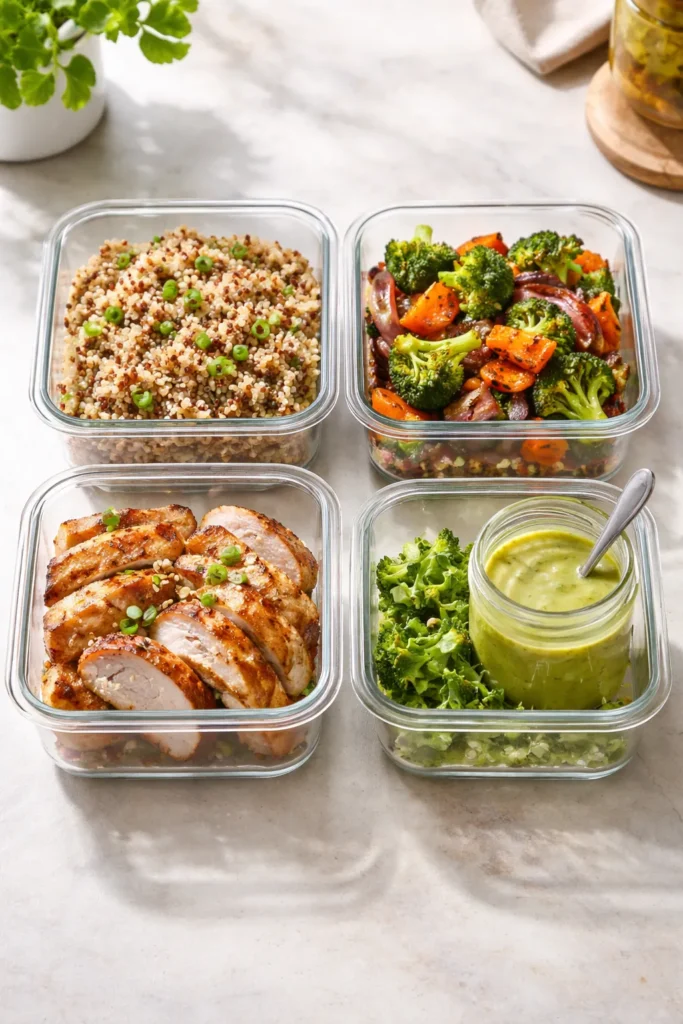
The most common mistake in grain bowl meal prep is assembling everything — including the dressing and the crunchy toppings — before storing. Dressed grains turn soggy overnight, and crispy elements like toasted seeds or fried chickpeas lose their texture entirely.
Store each component separately in the fridge: grains in one container, roasted vegetables in another, protein in a third, dressing in a jar. The raw vegetables — cucumber, cherry tomatoes, shredded cabbage — can be kept together since they don’t affect each other’s texture.
For reheating, warm the grains and roasted vegetables in the microwave for 60–90 seconds, or briefly in a skillet with a splash of broth or water to prevent drying out. Add the raw vegetables and dressing cold after reheating. Add crunchy toppings absolutely last, directly before eating.
Fully assembled (but undressed) bowls keep well for two to three days. After three days, the vegetables start to lose brightness and the grains can become gummy. The dressed versions of most bowls here are an exception — the farro bowl with honey-lemon dressing actually holds up dressed for up to four days because farro’s density prevents it from absorbing sauce the way softer grains do.
Final Thoughts
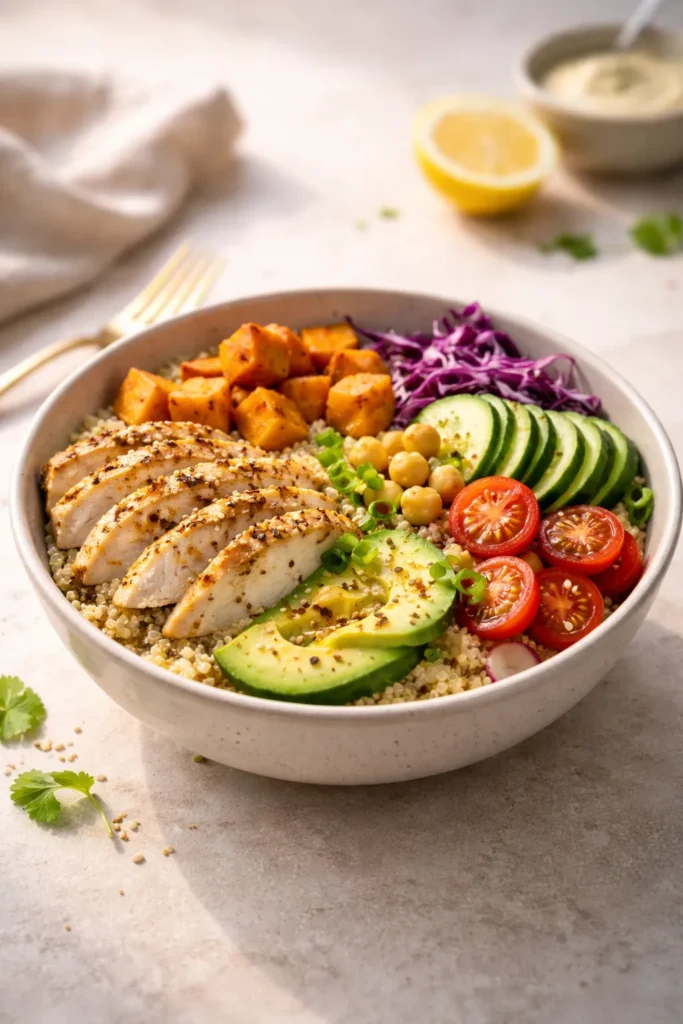
Grain bowls succeed as a lunch habit because they’re genuinely adaptable to whatever you already have on hand. The Mediterranean bowl works even if you skip the olives. The farro bowl still tastes great with sweet potato instead of butternut squash. The sushi bowl is excellent with canned salmon when fresh fish isn’t in the budget.
The structure matters more than the specific ingredients. Nail the grain, the protein, the sauce, and the crunchy topping — and you can swap everything else based on what’s in season, what’s in the fridge, and what sounds appealing on any given day.
Start with whichever bowl appeals most from this list, make it twice, then start riffing. That’s the point where grain bowls stop feeling like recipes and start feeling like second nature.