Somewhere between the buttery elegance of a Parisian creperie and the protein-forward practicality of a fitness-focused kitchen, a genuinely great breakfast idea was born. High protein crepes hit that rare sweet spot — they feel indulgent enough to make a weekend morning special, but they’re built from ingredients that actually support your energy, your muscles, and your appetite for the rest of the day.
The problem with most traditional crepe recipes is that they’re beautiful and delicious, but nutritionally closer to dessert than breakfast. A classic French crepe made with white flour, butter, and a whisper of egg delivers maybe 4–5 grams of protein per serving. That’s fine as an occasional treat, but it’s not doing much to keep you full until lunch. Protein crepes fix that by swapping in or layering on ingredients that dramatically boost the amino acid content — cottage cheese, egg whites, protein powder, Greek yogurt — without sacrificing that characteristic thin, pliable, slightly golden texture that makes a crepe a crepe.
What’s worth knowing before you even fire up the pan: the base ingredient you choose changes everything about the final result. Cottage cheese creates a crepe with a rich, slightly tangy flavor and a softer bite. Protein powder delivers a drier, more structured crepe that holds fillings firmly. Oat flour adds chewiness and fiber. Each approach has its strengths, and all eight of the recipes below prove that high protein doesn’t have to mean high effort or low flavor.
Whether you’re cooking for one on a Tuesday morning or staging a weekend brunch spread, these eight recipes give you a full range of options — sweet, savory, dairy-free, gluten-free, and everywhere in between.
Table of Contents
- 1. Classic Cottage Cheese Protein Crepes
- What You’ll Need
- Protein Per Serving
- Why This Version Works
- 2. Two-Ingredient Egg White and Protein Powder Crepes
- What You’ll Need
- Protein Per Serving
- Getting the Technique Right
- Choosing Your Protein Powder
- 3. Oat Flour Banana Protein Crepes
- What You’ll Need
- Protein Per Serving
- The Blending Step
- Flaxseed’s Hidden Role
- 4. Plant-Based Protein Crepes with Strawberries and Coconut Yogurt
- What You’ll Need
- Protein Per Serving
- Temperature Matters More Than You Think
- Serving
- 5. Apple Cinnamon Protein Crepes
- What You’ll Need
- Protein Per Serving
- The Technique
- 6. Savory Ham, Egg, and Cheese Protein Crepes
- What You’ll Need
- Protein Per Serving
- Building the Envelope Fold
- 7. Gluten-Free Cottage Cheese Crepes with Berries
- What You’ll Need
- Protein Per Serving
- Building the Filling
- 8. Simple 4-Ingredient Egg and Protein Powder Crepes
- What You’ll Need
- Protein Per Serving
- Making It Work
- Topping Ideas That Add Even More Protein
- Why High Protein Crepes Beat Regular Crepes for Breakfast
- The Non-Stick Pan Question (and Why It’s Non-Negotiable)
- What to Look For
- How Much Butter or Oil to Use
- How to Fold Crepes Like a Pro
- The Classic Triangle Fold
- The Envelope Fold
- The Roll
- Storing and Meal-Prepping Protein Crepes
- In the Refrigerator
- In the Freezer
- Make-Ahead Batter
- Choosing the Right Protein Powder for Crepes
- Whey vs. Plant-Based
- Flavored vs. Unflavored
- Final Thoughts
1. Classic Cottage Cheese Protein Crepes
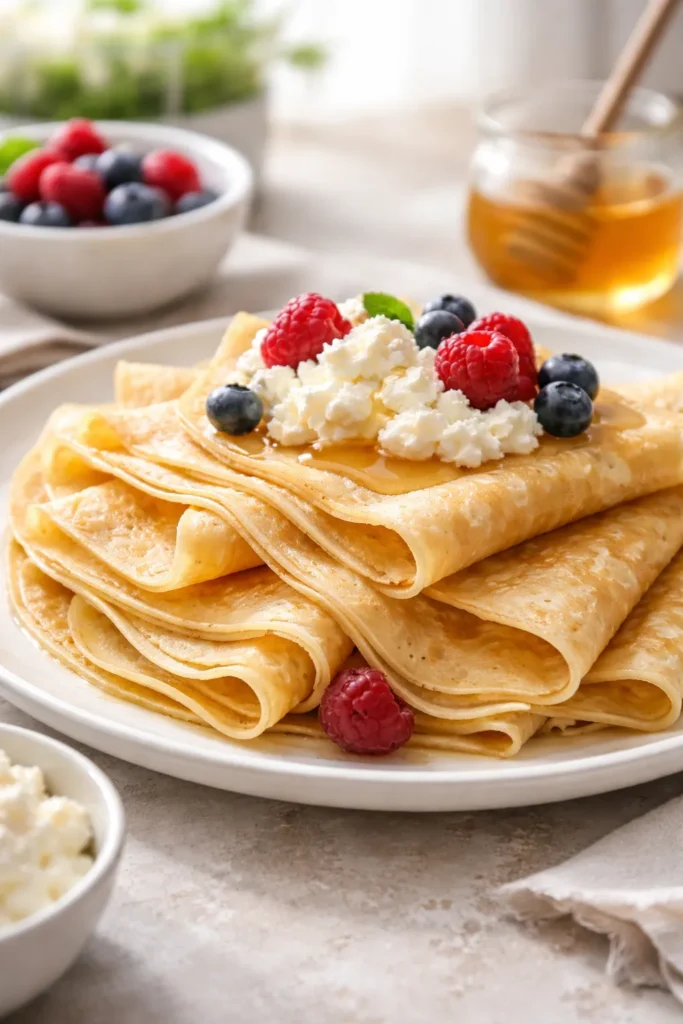
Cottage cheese in a crepe batter might sound like an experiment, but it’s genuinely one of the best-kept secrets in high-protein breakfast cooking. When blended smooth, cottage cheese disappears completely into the batter — no visible curds, no tangy aftertaste, just a beautifully silky crepe with a richness that eggs alone can’t quite replicate.
The key is the blender. Don’t try to whisk cottage cheese into submission by hand — it won’t work. Blend the batter for a full 60 seconds, scrape down the sides, and blend again until the texture is completely uniform. What you’re left with is a pourable, slightly thicker-than-usual batter that cooks up into golden, flexible crepes that hold fillings without tearing.
What You’ll Need
- 1½ cups low-fat (2%) cottage cheese
- 2 large eggs
- ½ cup egg whites
- ¾ cup oat flour
- 1 tablespoon vanilla bean paste (omit for savory versions)
- Pinch of salt
Protein Per Serving
Each crepe delivers roughly 14 grams of protein with only 140 calories — a macro profile that’s hard to argue with. The combination of cottage cheese and egg whites provides a complete amino acid profile, meaning your body can actually use all of it.
Why This Version Works
The oat flour (not rolled oats — oat flour specifically) holds the batter together far better than whole oats, giving the crepe enough structure to flip cleanly without crumbling. If you’ve made cottage cheese crepes before and struggled with them falling apart in the pan, switching to oat flour is almost certainly the fix.
Pro tip: Let the batter rest for 10 minutes after blending. The oats absorb the liquid during this time, creating a slightly thicker consistency that spreads more evenly in the pan.
Fill these with a blended Nutella-cottage cheese mixture and diced strawberries for a sweet version, or go savory with two slices of white cheddar, ham, and a cracked egg cooked right inside the folded crepe.
2. Two-Ingredient Egg White and Protein Powder Crepes
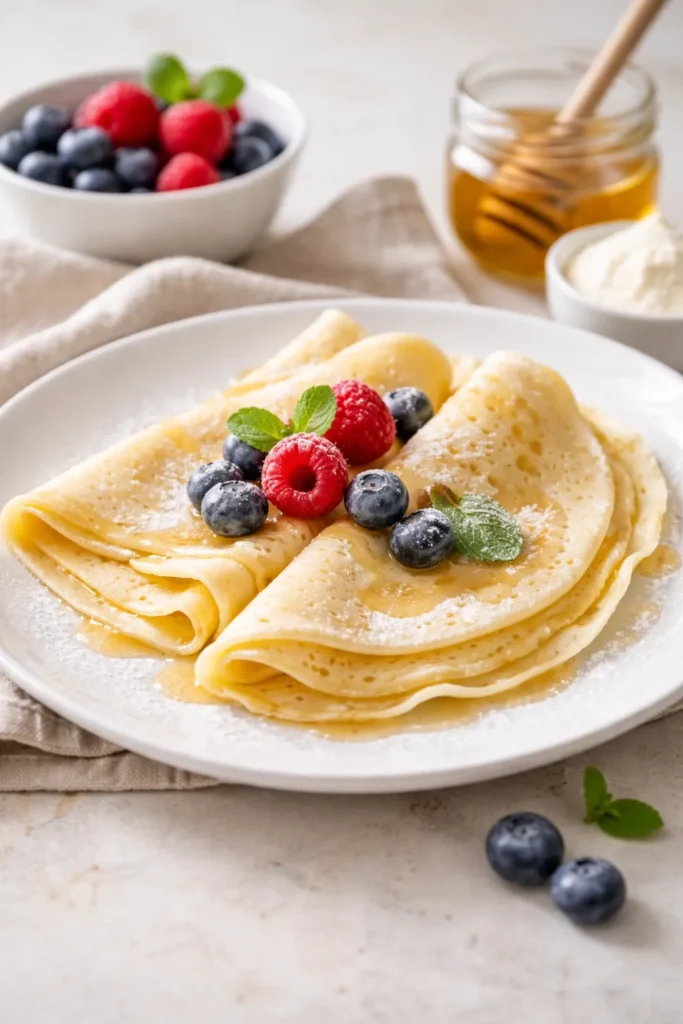
This is the recipe for when you want maximum protein with minimum thinking. Two ingredients, five minutes, done. It sounds too simple to be good, but egg whites and vanilla protein powder actually bind together into a surprisingly cohesive, thin batter that cooks into legitimately crepe-like results.
The egg whites provide structure and moisture. The protein powder adds flavor, body, and — obviously — a major protein hit. Together, they create a batter that’s lighter than a traditional egg-based crepe but sturdy enough to hold toppings without turning into a soggy mess.
What You’ll Need
- ½ cup egg whites (from carton or separated fresh)
- 1 scoop (30–38g) vanilla protein powder
Protein Per Serving
Depending on the protein powder you use, these crepes deliver 25–30 grams of protein per batch (2–3 crepes). That’s a full meal’s worth of protein from just two ingredients.
Getting the Technique Right
Whisk the egg whites and protein powder together until the powder is fully dissolved — no dry clumps remaining. A small blender or bullet blender makes this effortless. Pour about half the batter into an 8-inch non-stick pan that’s been lightly sprayed with cooking oil, and rotate immediately so the batter coats the bottom in a thin, even layer.
Cook on medium-high heat until the bottom is lightly golden and the edges look set, then flip carefully with a thin spatula. These crepes are delicate — don’t rush the flip.
Choosing Your Protein Powder
The flavor of your protein powder is the flavor of your crepe, so this is not the place for a protein powder you barely tolerate. Vanilla works universally well. Chocolate creates a genuinely dessert-worthy crepe. If you’re using a plant-based powder, use slightly more liquid in the batter — plant proteins tend to absorb moisture more aggressively than whey.
Top with cashew butter and banana, or fresh berries with a drizzle of honey, and you’ve got a breakfast that looks far more effortful than it actually was.
3. Oat Flour Banana Protein Crepes
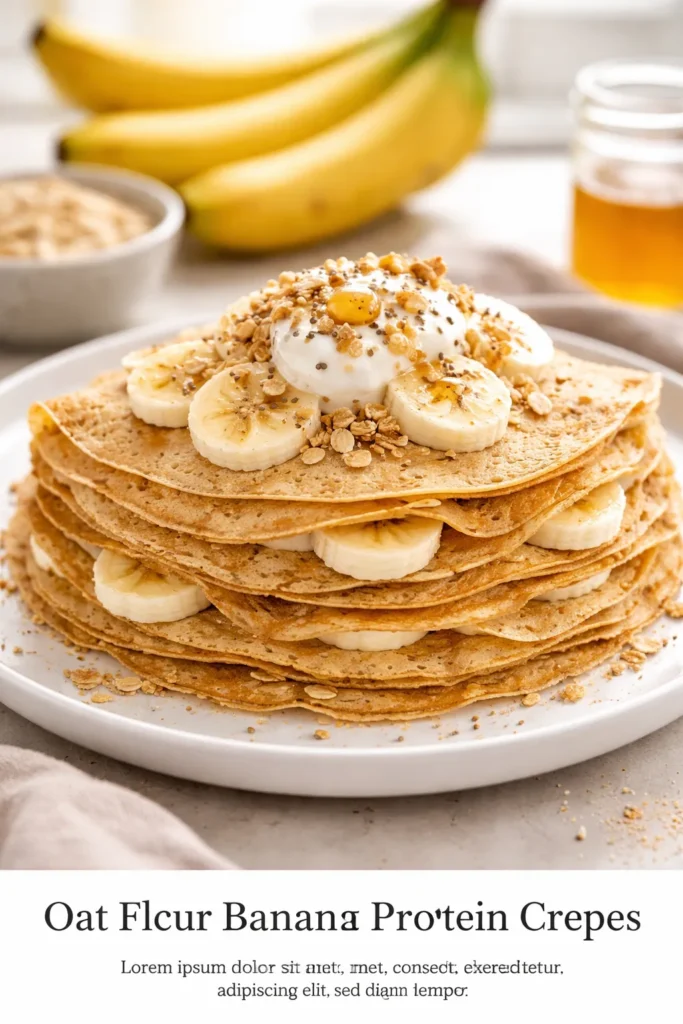
This recipe takes a different approach to protein loading — instead of leaning on a single high-protein ingredient, it layers several moderate-protein sources together: oat flour, egg whites, cottage cheese, and a scoop of protein powder. The result is a crepe with a heartier, more substantial texture than the two-ingredient version, plus natural sweetness from a ripe banana that means you barely need any topping at all.
The banana does two things here: it adds sweetness so you can skip added sugar, and it acts as a natural binder that helps the crepe hold together during flipping. Use a ripe banana — not green, not just yellow, but genuinely ripe with a few brown spots. The flavor difference is significant.
What You’ll Need
- ½ cup rolled oats (blended into oat flour)
- 2 tablespoons flaxseed meal
- ½ teaspoon ground cinnamon
- 1 scoop vanilla protein powder
- ½ cup fat-free cottage cheese (or Greek yogurt)
- ½ ripe banana
- ¾ cup liquid egg whites
- 1 teaspoon vanilla extract
Protein Per Serving
Each crepe comes in around 13–14 grams of protein with a solid fiber contribution from the oats and flaxseed — something you don’t get from the more stripped-down protein powder versions.
The Blending Step
Blend the rolled oats first until they resemble fine flour before adding anything else. Dumping whole rolled oats into the batter without blending them creates a lumpy, uneven mixture that produces patchy, fragile crepes. It’s an easy mistake to skip because it feels like an extra step, but it makes a noticeable difference.
Flaxseed’s Hidden Role
Flaxseed meal isn’t just nutritional filler here — it contributes healthy fats, fiber, and a small additional protein boost, and it adds a subtle nuttiness to the flavor that plays well with the banana and cinnamon. Don’t skip it.
Flavor variation: Swap the cinnamon for pumpkin pie spice and add a tablespoon of maple syrup to the batter for an autumn-inspired version that’s almost too good to qualify as a health food.
4. Plant-Based Protein Crepes with Strawberries and Coconut Yogurt

Dairy-free and egg-free protein crepes that actually taste good have historically been hard to come by. This version cracks that problem by using plant-based protein powder as a partial flour substitute, sparkling water for lightness, and coconut oil for that subtle richness that otherwise comes from butter.
The sparkling water trick deserves a special mention. The carbonation creates tiny air pockets in the batter that give the finished crepe a lighter, more tender texture than flat water would. Use unflavored sparkling water and keep the bottle sealed until right before you use it — you want to preserve as much carbonation as possible.
What You’ll Need
- ¼ cup vegan protein powder
- 1 cup sparkling water, divided
- 1¼ cups all-purpose flour (or gluten-free flour)
- 1 tablespoon cornstarch
- 1 tablespoon granulated sugar
- 1 cup almond milk
- 2 tablespoons coconut oil, melted (plus more for frying)
Protein Per Serving
Each serving (roughly 2 crepes) delivers around 10 grams of protein — modest compared to egg-based versions, but impressive for a completely dairy-free and egg-free recipe. Pair with vanilla coconut yogurt for an additional protein and probiotic boost.
Temperature Matters More Than You Think
If your coconut oil solidifies when it hits cold almond milk in the batter, don’t panic — just keep whisking. It will smooth out. To prevent it from happening at all, make sure your almond milk is at room temperature before mixing. Cold liquid causes the coconut oil to seize up almost immediately.
Don’t let your pan overheat. On too-high heat, the water evaporates before the batter has a chance to set, and the crepe scorches before you can flip it. Medium heat is the right call — patient and steady.
Serving
Top with sliced fresh strawberries and a dollop of vanilla coconut yogurt. The acidity of the strawberries against the subtle coconut flavor is genuinely lovely, and the whole thing looks like something from a brunch menu even though it came together in 20 minutes.
5. Apple Cinnamon Protein Crepes
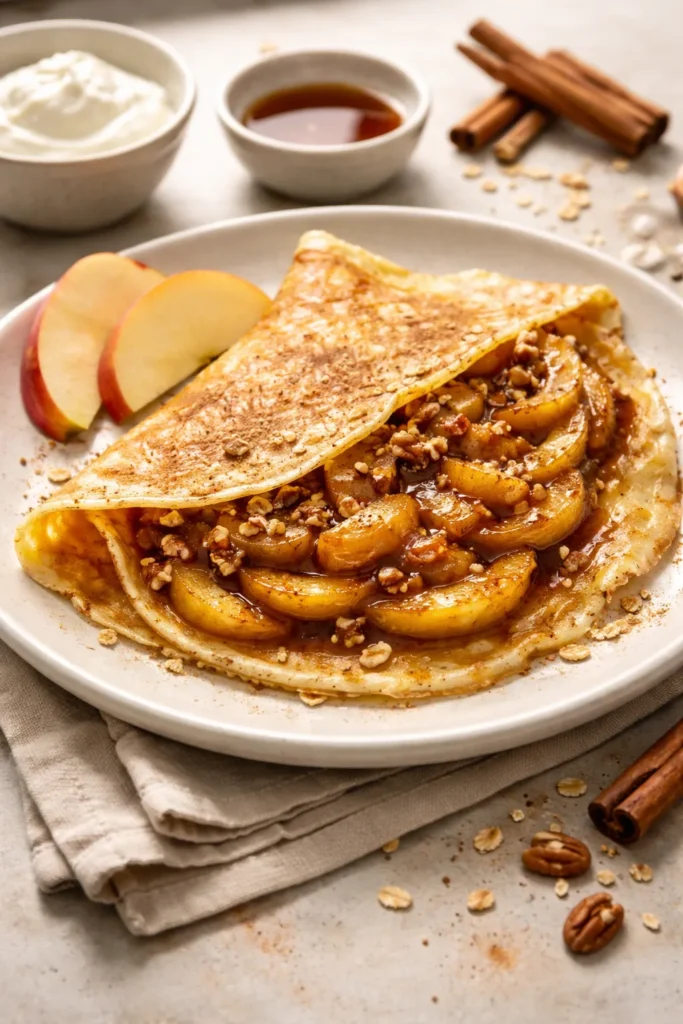
This recipe flips the usual formula by starting with the filling and building the crepe around it — literally. Thinly sliced apples are arranged in a spiral pattern in the bottom of a buttered pan, dusted with coconut sugar and pumpkin pie spice, and then the protein batter is poured directly over the top. When you flip the whole thing onto a plate, the caramelized apple layer ends up on top, and the effect is genuinely stunning.
It’s a technique borrowed from tarte tatin — cooking the “topping” underneath and inverting at the end — and it works beautifully with a thin crepe batter. The natural sugars in the apple caramelize against the pan while the batter sets above them.
What You’ll Need
For the apple layer:
- 1 apple, cored and thinly sliced (a mandoline gives the most even slices)
- ½ tablespoon coconut sugar
- ¼ teaspoon pumpkin pie spice
- 1 tablespoon butter
For the batter:
- 1 egg
- ¼ cup milk
- ¼ cup water
- Pinch of salt
- ½ cup all-purpose flour
- 1 scoop vanilla protein powder
- 1 tablespoon avocado oil or melted butter
Protein Per Serving
Around 18–22 grams of protein per crepe depending on the protein powder used, plus a good serving of fiber and potassium from the apple.
The Technique
Whisk the egg, milk, water, and salt together first, then add the flour, protein powder, and oil. Whisk until smooth and let the batter rest for 5 minutes. Meanwhile, melt butter in your pan and arrange the apple slices. Pour batter over the apples, cover with a lid, and cook on medium until the batter is set — about 7 minutes. Slide a plate over the pan and flip confidently. The lid is non-negotiable here: it traps steam, which cooks the batter from above without the need to flip.
Garnish with a spoonful of Greek yogurt and chopped pecans for added protein and crunch.
6. Savory Ham, Egg, and Cheese Protein Crepes

Not every high-protein breakfast has to lean sweet. This savory version uses a vanilla-free cottage cheese crepe as the base (just skip the vanilla and any sweetener from the batter) and fills it with white cheddar, ham, and a whole egg cooked right inside the folded crepe. The result is a complete breakfast — protein from the crepe itself, protein from the egg, fat and flavor from the cheese, and the satisfying meatiness of the ham.
The folding technique here is the envelope fold: fold two opposite sides of the crepe in toward the center by about 2 inches, then fold in the remaining sides to create a sealed square. The egg cooks inside this envelope with the lid on the pan, steaming gently to a runny or set yolk depending on your preference.
What You’ll Need
For the crepe batter:
- Base cottage cheese crepe recipe (see Recipe 1, omit vanilla)
For the filling (per crepe):
- 2 slices white cheddar
- 2 slices ham
- 1 large egg
- Salt and pepper to taste
Protein Per Serving
One complete savory crepe — batter plus filling — delivers approximately 34 grams of protein. That’s a serious breakfast by any standard.
Building the Envelope Fold
Take the pan off the heat after placing the crepe back in. Layer the cheese first (it melts better against the warm surface of the crepe), then the ham, then crack the egg directly in the center. Fold the crepe sides in, return the pan to low heat, and cover with a glass lid so you can monitor the egg without lifting the lid repeatedly.
If you’d rather avoid the raw egg step, fry the egg separately and simply warm the ham and cheese inside the folded crepe before adding the egg on top. Both methods work; the in-crepe method is more elegant for presentation.
Serve with hot sauce, a few sliced avocado pieces, or a side of simple dressed greens.
7. Gluten-Free Cottage Cheese Crepes with Berries

For anyone navigating gluten sensitivity without wanting to sacrifice the pleasure of a weekend crepe breakfast, this version delivers — and it’s genuinely hard to tell the difference from a conventional wheat-flour crepe if you use a good quality gluten-free all-purpose blend.
The secret to a successful gluten-free crepe is the batter rest. Gluten-free flours don’t have gluten to develop, so they need time to fully hydrate instead. A 30-minute rest period after blending allows the flour to absorb the liquid properly, resulting in a batter that spreads smoothly and a crepe that holds together during the flip.
What You’ll Need
For the crepes:
- 1 cup small-curd 2% cottage cheese
- 6 large eggs
- ½ cup gluten-free all-purpose flour (King Arthur or similar)
- ¼ cup milk of choice
- 2 tablespoons avocado oil
- ½ teaspoon vanilla extract
- ¼ teaspoon salt
For the filling:
- 1 cup small-curd cottage cheese
- 1–2 tablespoons sweetener of choice
- ½ teaspoon lemon or orange zest
- ½ teaspoon vanilla extract
- Fresh berries for serving
Protein Per Serving
With the creamy cottage cheese filling added, each 3-crepe serving reaches approximately 35 grams of protein — a figure that would be impressive even from a protein shake.
Building the Filling
Blend the filling cottage cheese with the sweetener, zest, and vanilla until completely smooth. The texture should be thick and creamy, similar to a whipped ricotta. Spread 2 tablespoons of filling across the center of each crepe before folding. Top with blueberries, raspberries, or sliced strawberries and a light dusting of powdered sweetener.
The lemon zest in the filling is what lifts the whole thing from “healthy breakfast” to “something you’d genuinely order in a restaurant.” Don’t skip it — that citrus brightness against the mild richness of the cottage cheese is exactly the kind of detail that makes people ask for the recipe.
8. Simple 4-Ingredient Egg and Protein Powder Crepes
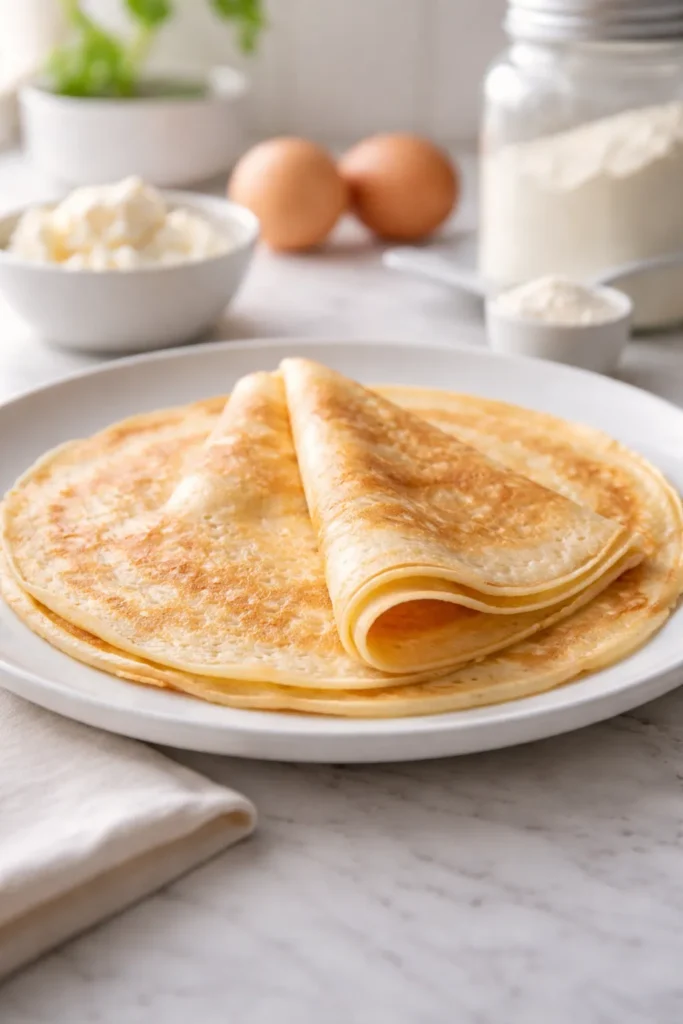
This is the recipe for cooking confidence beginners and anyone who finds the multi-ingredient versions slightly daunting. Four ingredients, one bowl, one pan, fifteen minutes. The eggs do the structural heavy lifting, the protein powder brings the flavor and the macro boost, a splash of milk thins the batter to the right consistency, and a touch of coconut or grapeseed oil keeps everything moving freely in the pan.
What these crepes lack in complexity, they more than make up for in sheer practicality. The batter whips together in under two minutes, there’s nothing to blend, and the crepes cook in 30–60 seconds per side. On a busy morning, that’s a genuinely meaningful advantage.
What You’ll Need
- 2 large eggs
- About 3 tablespoons protein powder (half a standard scoop — plain or flavored)
- 1 tablespoon milk or water (to thin the batter slightly)
- Small amount of coconut oil or grapeseed oil for the pan
Protein Per Serving
Two crepes from this batter come in at approximately 28 grams of protein with only 3 grams of carbohydrates — making this the most macro-efficient recipe on this entire list.
Making It Work
Whisk the eggs, protein powder, and milk together well, breaking up any clumps of powder. The batter will look thin — that’s correct. Pour about half the mixture into a preheated 8-to-9-inch non-stick pan that’s been lightly oiled over medium-high heat, and tilt immediately to spread it thin.
Watch for the small bubbles on the surface and the edges starting to look matte rather than glossy — that’s your signal to flip. These cook fast, so don’t walk away.
Topping Ideas That Add Even More Protein
- Greek yogurt with sliced pears and a drizzle of pure maple syrup
- Peanut butter with sliced banana and a sprinkle of chia seeds
- Cottage cheese with fresh pineapple and chopped macadamia nuts
- Almond butter with sautéed cinnamon apple slices
Worth knowing: These crepes don’t roll as cleanly as a flour-based version, so fold them in half or quarters rather than rolling burrito-style. The fold holds beautifully and makes for clean, appealing plating.
Why High Protein Crepes Beat Regular Crepes for Breakfast
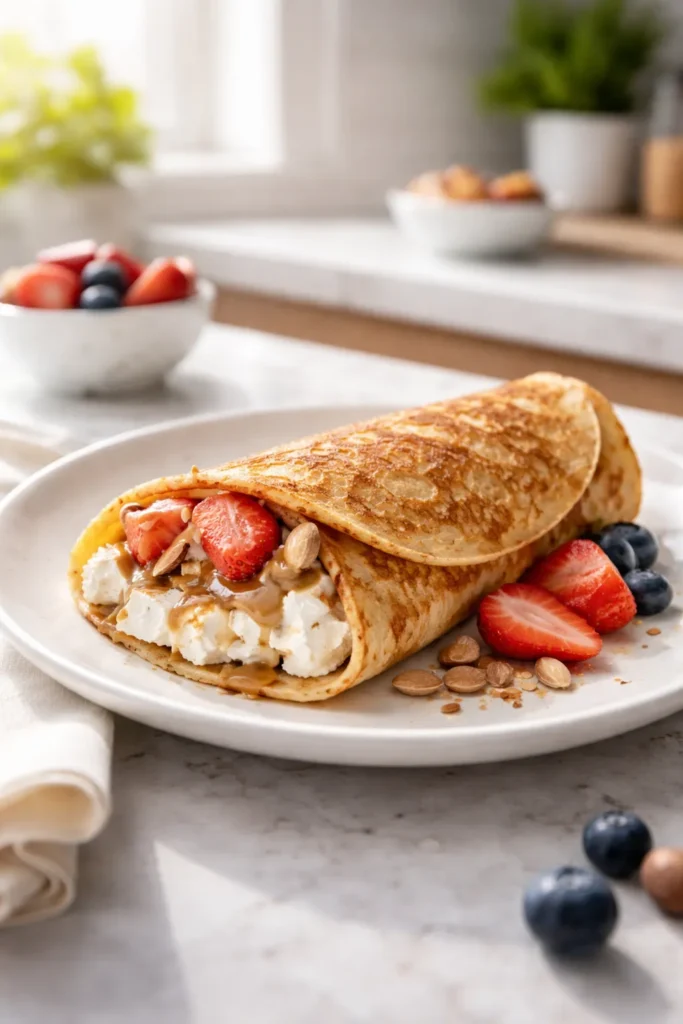
The case for choosing a protein-forward crepe over a traditional one isn’t about restriction — it’s about what happens in the two to three hours after breakfast. Standard crepes made with white flour and minimal egg spike blood sugar reasonably fast, and the energy that follows tends to crash not long after. Protein slows gastric emptying, which means the glucose from carbohydrates enters your bloodstream more gradually and your energy levels stay more consistent.
Research on protein’s effect on satiety consistently shows that a higher-protein breakfast reduces overall calorie consumption throughout the day — not through willpower, but through genuine appetite regulation. Hormones like ghrelin (the hunger signal) stay suppressed longer when a meal contains adequate protein. A breakfast delivering 25–35 grams of protein keeps most people comfortably full for 4–5 hours, which is a meaningful improvement over a traditional crepe breakfast that might leave you reaching for a snack by mid-morning.
There’s also the muscle maintenance angle. Whether you’re actively training or simply trying to maintain muscle mass as part of healthy aging, distributing protein across all three meals — rather than front-loading it at dinner — is consistently supported by the body of evidence on protein synthesis. A high-protein breakfast crepe makes that distribution genuinely easy and enjoyable.
None of this means you have to turn every meal into a macro calculation. These recipes are delicious first, and strategically nutritious second. That ordering matters.
The Non-Stick Pan Question (and Why It’s Non-Negotiable)
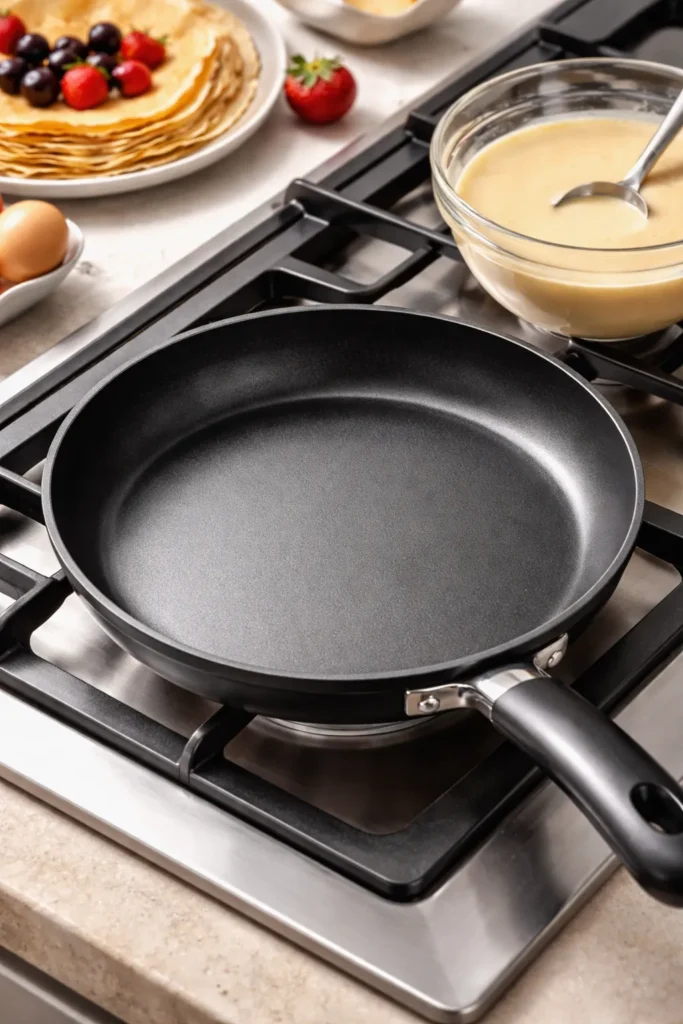
Every single one of these recipes depends on a good non-stick pan. This is not a suggestion or a nice-to-have — it’s structural to the entire cooking process. Crepes are too thin and too delicate to survive in a stainless steel or cast iron pan without meticulous buttering between every single crepe, and even then the results are inconsistent.
A quality non-stick pan with intact coating allows you to pour, swirl, and flip without any of the batter bonding to the surface. The crepe releases cleanly when the bottom is set, and the flip becomes something you do confidently rather than something you brace yourself for.
What to Look For
An 8-to-10-inch pan is the ideal size for individual crepes. Smaller pans produce adorable but fiddly crepes; larger pans make crepes that are harder to swirl evenly with a single wrist motion. The lower the sides of the pan, the easier the flip — a crepe pan has nearly vertical sides for exactly this reason, though a standard skillet works fine.
If your non-stick coating is scratched, peeling, or clearly past its prime, this is not the recipe to test it on. Even slightly degraded non-stick surfaces cause protein-rich batters to stick, because protein bonds to surfaces far more tenaciously than flour does.
How Much Butter or Oil to Use
For truly non-stick pans in good condition, you can often make 2–3 crepes with no added fat between them. For pans that aren’t quite as reliable, a small knob of butter or a light oil spray between each crepe is the move. Don’t over-grease, though — too much fat causes the batter to pool at the edges instead of spreading evenly, and the crepe “fries” rather than cooking through gently.
How to Fold Crepes Like a Pro
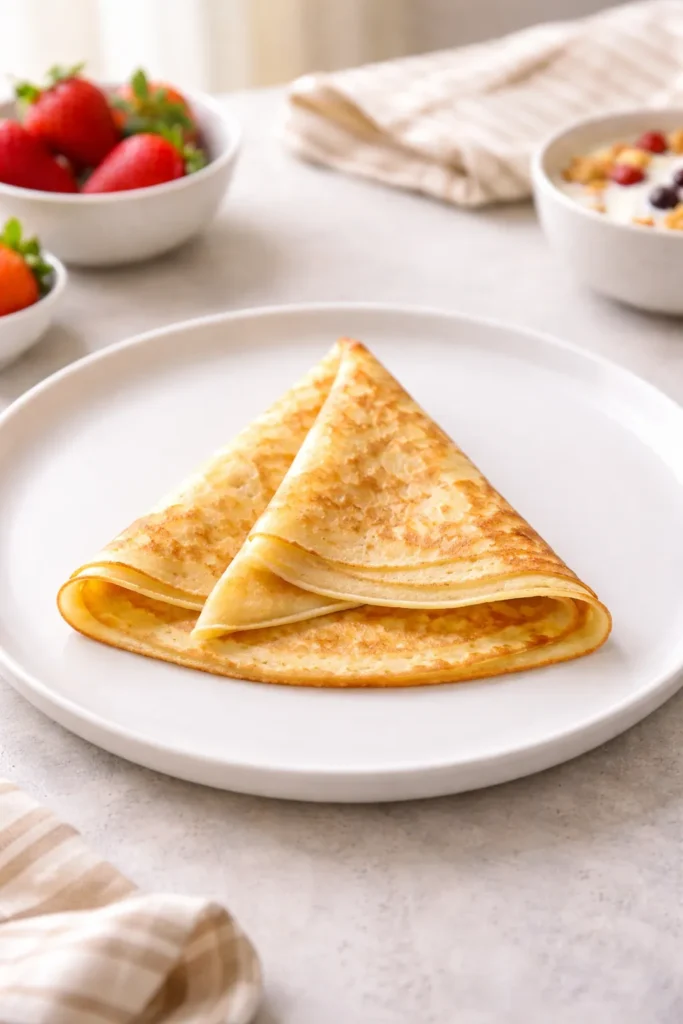
Once your crepe is cooked and ready for filling, the folding method you choose affects both presentation and practicality. There’s no single correct approach — it depends on the filling and how you want to eat it.
The Classic Triangle Fold
Fold the crepe in half to form a semicircle, then fold in half again to form a triangle. This is the most common method for sweet crepes with spreadable fillings. Spread the filling on the first half before the first fold, then add a smaller amount on the visible surface before the second fold. You end up with a neat triangular packet that sits beautifully on a plate.
The Envelope Fold
Fold two opposite edges of the crepe in toward the center by about 2 inches, then fold the remaining two edges in the same way to create a square parcel. This is the method for savory crepes where you want to fully contain a filling — particularly eggs, which will slide if the crepe isn’t fully closed. It looks more complex than it is; once you’ve done it twice, it becomes instinctive.
The Roll
Roll the crepe tightly around the filling like a very slim burrito. This works best for crepes made with flour (which have more flexibility) than for egg-heavy protein crepes, which can crack under tight rolling. If you want to roll, add a slightly smaller amount of filling and roll loosely.
Storing and Meal-Prepping Protein Crepes
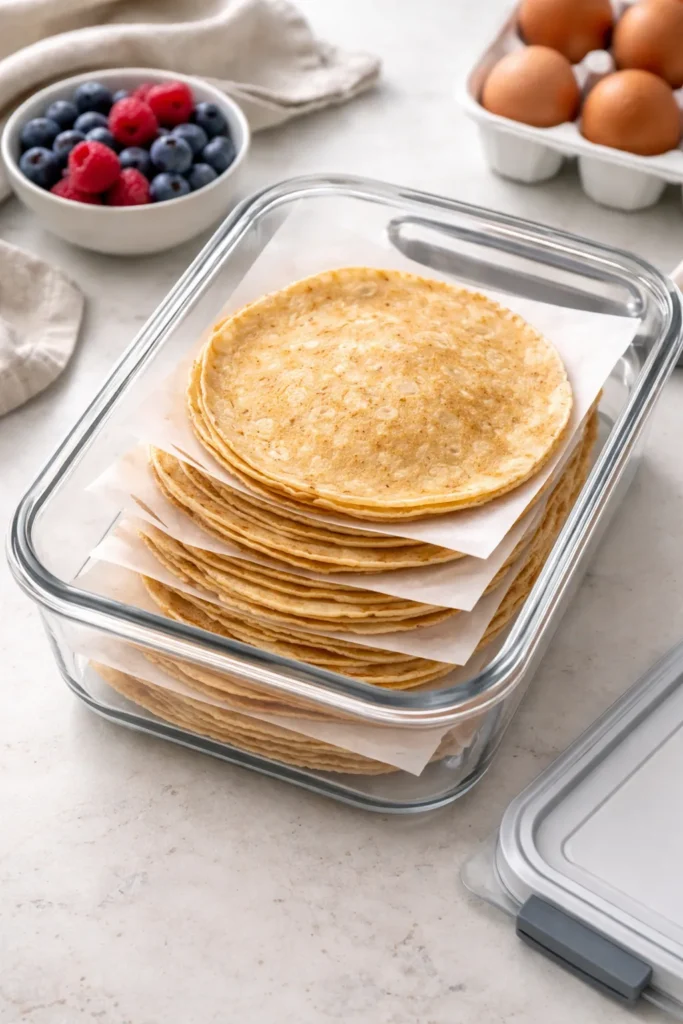
One of the most underrated advantages of any of these recipes is that the crepes themselves — unfilled — store remarkably well. Making a double or triple batch on the weekend means breakfast is genuinely ready in two minutes on busy weekday mornings. Just warm, fill, and fold.
In the Refrigerator
Stack cooled crepes with a small square of parchment paper between each one (this is the crucial detail — without parchment, they fuse together and tear when separated). Store the stack in an airtight container in the fridge for up to 3–5 days depending on the recipe. Egg-heavy crepes tend to keep for 3 days; oat flour and protein powder versions often hold for up to 5.
Reheat on a dry pan over low heat for 30–45 seconds per side, or in a microwave for 20–30 seconds. The stovetop method preserves texture better; the microwave is faster.
In the Freezer
Freeze crepe stacks with parchment between each layer in a freezer-safe bag or container with the air pressed out. They keep well for up to 3 months. Thaw overnight in the refrigerator, or go straight from freezer to a low pan with a lid on — the trapped steam rehydrates the crepe gently without making it rubbery.
Don’t freeze filled crepes. The fillings — especially cottage cheese, Greek yogurt, and fresh fruit — change texture when frozen and thawed, and the results are disappointing. Freeze the crepes plain, and add fresh fillings when you’re ready to eat.
Make-Ahead Batter
Most of these batters can be prepared the night before and stored in the refrigerator in a covered jar or container. Give it a good whisk or shake before cooking — some separation is normal, especially in batters containing protein powder. Cottage cheese batters may thicken slightly overnight; thin with a tablespoon or two of milk if needed.
Choosing the Right Protein Powder for Crepes
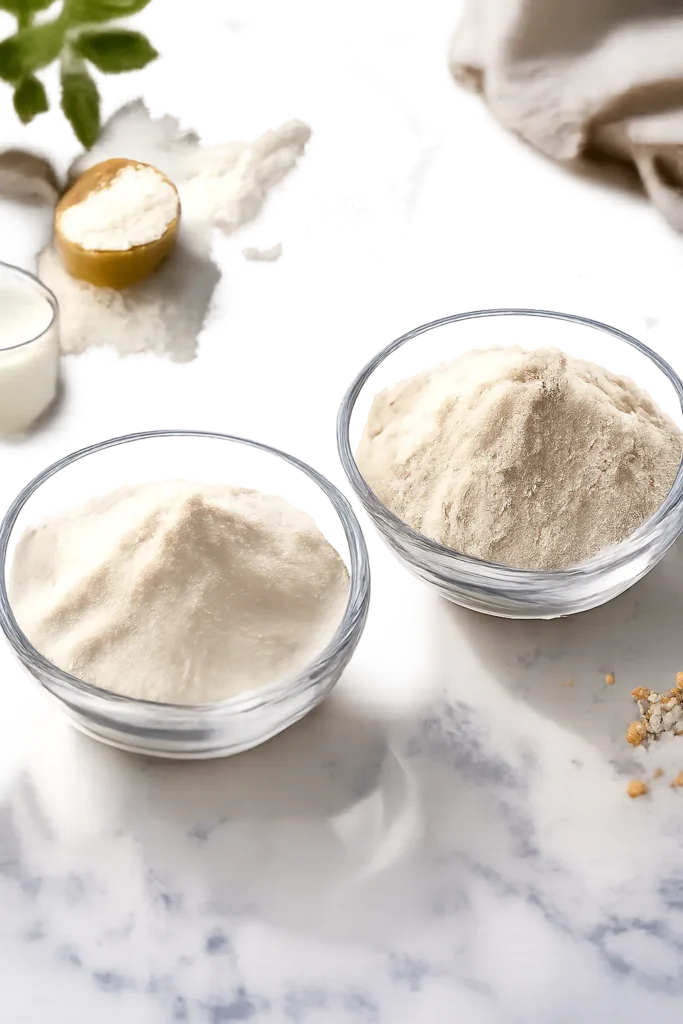
The protein powder decision matters more for some recipes than others. In the two-ingredient version, the powder is essentially the entire flavor profile of the crepe. In cottage cheese-based recipes, it plays a more supporting role or doesn’t appear at all.
Whey vs. Plant-Based
Whey protein isolate typically creates a smoother batter and a slightly more tender crepe than plant-based alternatives. It dissolves more readily in liquid, which means less whisking and fewer clumps. If lactose is a concern, whey isolate contains significantly less lactose than whey concentrate.
Plant-based powders (pea, hemp, rice blends) work well in crepe batters but generally require a bit more liquid than whey does. They also tend to produce a slightly denser, chewier texture — still good, just different. If you use a plant-based powder and the batter feels thick, add milk or water a tablespoon at a time until it reaches a pourable consistency.
Flavored vs. Unflavored
Vanilla is the safest choice for sweet crepes — it pairs with essentially every fruit and nut filling combination without competing. Unflavored powders work well if you want the filling to be the primary flavor source. Chocolate protein powder creates a genuinely dessert-worthy crepe that’s particularly good with peanut butter and banana, or raspberries and a dusting of cocoa powder.
Avoid protein powders that are heavily sweetened with stevia if you’re sensitive to that flavor — it can turn slightly bitter when heated, which is noticeable in a thin crepe where there’s not much else to mask it.
Final Thoughts
Protein crepes work because they meet you where you are. They don’t require a complete restructuring of what breakfast looks and tastes like. They’re still visually beautiful, still endlessly versatile in terms of fillings, and still special enough to make a weekend morning feel like something worth slowing down for.
The most important thing to take from these eight recipes is that there’s no single “correct” version — the right protein crepe is the one that fits your ingredients, your dietary preferences, and your honest level of patience at 7am on a Tuesday. Start with Recipe 8 if simplicity matters most. Work up to Recipe 7 if you want the most complete, restaurant-quality result. Explore the savory route with Recipe 6 if you’re tired of sweet breakfasts entirely.
Whatever you make, get the non-stick pan right, let the batter rest when the recipe calls for it, and don’t rush the swirl. The technique clicks faster than most people expect — usually by the second or third crepe of the first batch, you’ll be flipping with confidence.
A high-protein breakfast doesn’t have to feel like a compromise. These recipes are proof.