There’s a particular kind of disappointment that hits when you lift a spoonful of mashed potatoes and they stretch like wet cement. Gluey, dense, and faintly gummy — not at all what the occasion called for. The frustrating truth is that mashed potatoes look simple. Boil some potatoes, add butter, done. But the gap between decent mash and genuinely fluffy, cloud-like mashed potatoes is wider than most people realize, and it comes down to a handful of decisions that most recipes gloss right over.
Potato variety matters enormously. So does the mashing method, the temperature of your dairy, and whether you give those potatoes a chance to steam-dry before a single pat of butter goes in. Miss any one of these details and you’ll get edible mashed potatoes — not memorable ones. Nail all of them and you get the kind of mash that quietly steals the show at the dinner table, the thing people keep eating even when everything else is gone.
What follows are eight distinct mashed potato recipes, each built around a different technique, flavor profile, or occasion. Some are stripped-back and pure. Others are loaded and indulgent. A few use tools you might not have tried yet — a ricer, a food mill, a slow cooker on warm. All of them are designed with one non-negotiable outcome in mind: fluffy potatoes, every single time.
Table of Contents
- 1. Classic Buttery Russet Mashed Potatoes
- Ingredients
- Method
- The Key Thing Most People Miss
- 2. Ultra-Fluffy Potato Ricer Mashed Potatoes
- Ingredients
- Method
- Why the Rinsing Step Actually Matters
- 3. Yukon Gold and Garlic Mashed Potatoes
- Ingredients
- Method
- How to Adjust the Garlic Level
- 4. Sour Cream and Chive Mashed Potatoes
- Ingredients
- Method
- Temperature Matters for Sour Cream Too
- 5. Roasted Garlic and Brown Butter Mashed Potatoes
- Ingredients
- Method
- Serving Suggestion
- 6. Cream Cheese Mashed Potatoes
- Ingredients
- Method
- The Softened Cream Cheese Rule
- 7. Loaded Bacon and Cheddar Mashed Potatoes
- Ingredients
- Method
- Why Freshly Shredded Cheese Is Non-Negotiable Here
- 8. Make-Ahead Herb and Parmesan Mashed Potatoes
- Ingredients
- Method
- What Happens to the Texture After Refrigeration
- Troubleshooting Your Mash
- Pairing and Serving Ideas
- Storage, Reheating, and Freezing
- Final Thoughts
1. Classic Buttery Russet Mashed Potatoes
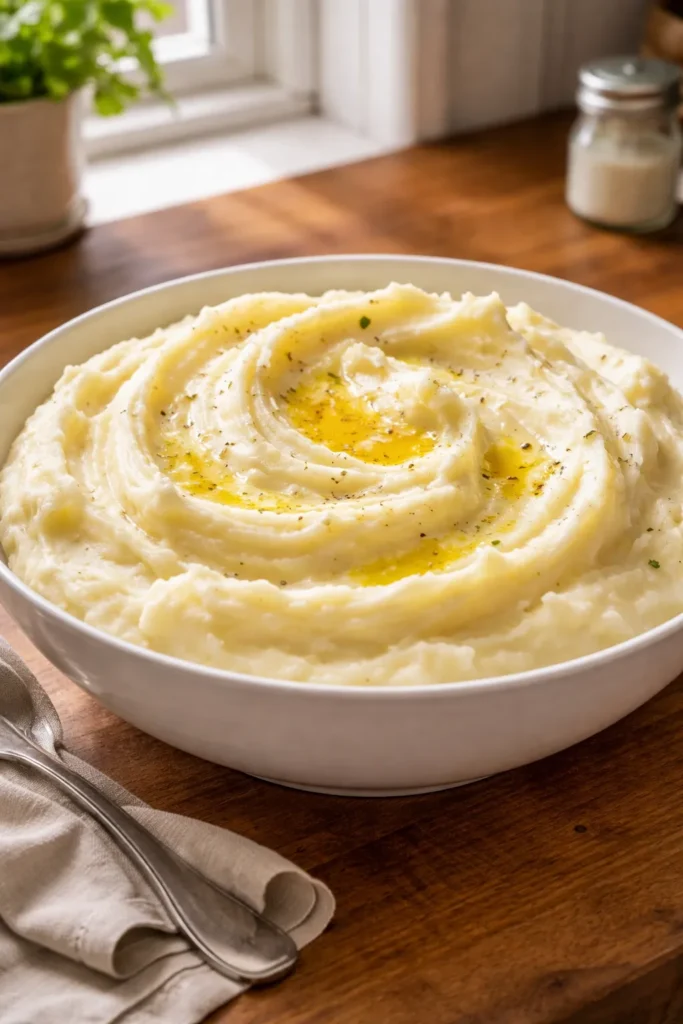
When someone says “mashed potatoes,” this is what they’re picturing. Ivory-white, smooth as silk, rich enough to stand on their own but humble enough to sit quietly beside roast chicken or a thick slice of meatloaf. This is the baseline — the version every cook should have completely memorized.
Russet potatoes are the foundation here, and that choice is deliberate. Their high starch content means the cells break apart with minimal effort during mashing, releasing less free starch into the mix. Less free starch equals less gummy texture, which is exactly what you’re after. Yukon Golds are excellent for their buttery flavor, but for maximum fluffiness, russets win every time.
Yield: Serves 6 to 8 Prep Time: 15 minutes Cook Time: 25 minutes Total Time: 40 minutes Difficulty: Beginner — only 4 ingredients and straightforward technique with no special equipment required.
Ingredients
- 4 pounds russet potatoes, peeled and cut into 2-inch chunks
- 1½ tablespoons kosher salt, plus more for the cooking water
- ½ cup (1 stick / 113g) unsalted butter, cut into tablespoon-sized pats, room temperature
- ¾ to 1 cup whole milk, warmed
- Freshly cracked black pepper, to taste
Method
- Place the potato chunks in a large pot and cover with cold water by at least 1 inch. Salt the water generously — it should taste faintly of the sea.
- Bring to a boil over high heat, then reduce to a steady medium simmer. Cook for 18 to 22 minutes, until a fork slides into the center of the largest chunk with zero resistance.
- Drain thoroughly in a colander, then return the empty pot to the burner over low heat. Add the drained potatoes back in and shake gently for 60 seconds — you’ll see steam rising from the surface. That’s excess moisture leaving the potato, and losing it is everything.
- Remove from heat. Mash with a hand masher until mostly smooth, then add the butter pats and mash again until fully incorporated.
- Pour in the warm milk a little at a time, mashing and folding between additions, until you reach a fluffy, creamy consistency. Season with salt and pepper, taste, adjust, and serve immediately.
The Key Thing Most People Miss
Don’t add the butter and milk at the same time. Butter goes in first, coating the starch granules before liquid arrives. This sequence produces a noticeably silkier texture — a trick borrowed from French pommes purée technique that makes a real, tangible difference at home.
2. Ultra-Fluffy Potato Ricer Mashed Potatoes
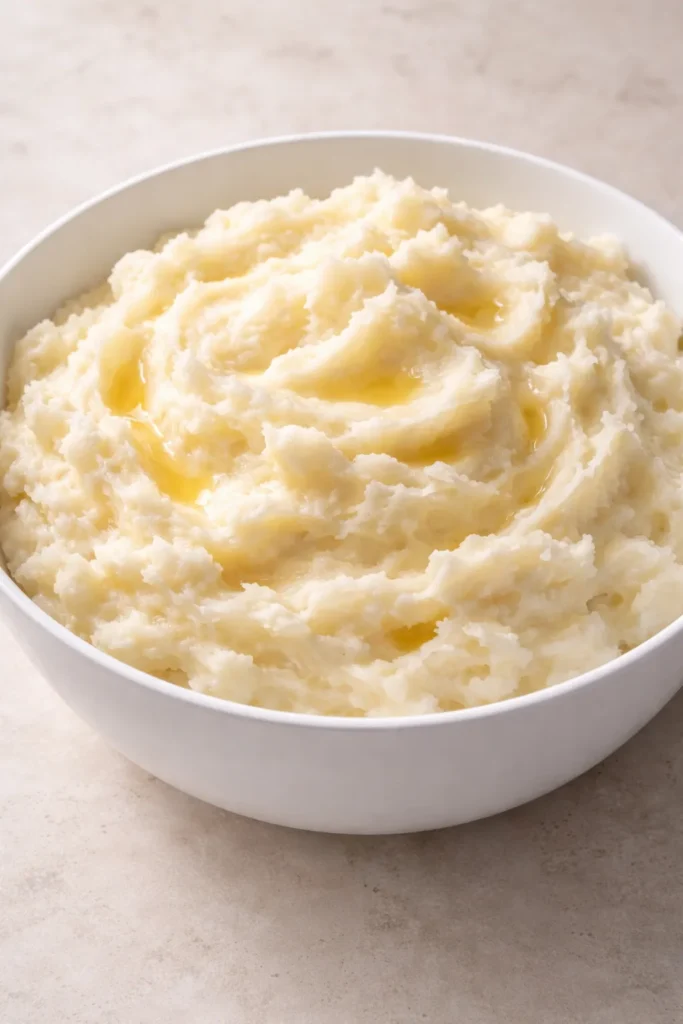
This is the version for people who want mashed potatoes that look like a snow drift on a plate — impossibly light, uniformly smooth, with almost no gumminess whatsoever. The secret is a potato ricer, a simple tool that costs about $15 and completely transforms the texture of the final dish.
A ricer works by pressing cooked potatoes through small holes using a plunger mechanism. Unlike mashing, which shears the potato cells and releases starch, the ricer gently separates the cells with almost no mechanical stress. The result is tiny, delicate strands of potato that can absorb butter and milk without turning dense. Serious Eats’ Kenji López-Alt has written extensively about potato starch mechanics, and the ricer method consistently produces the fluffiest result because it simply doesn’t rupture as many starch granules.
Yield: Serves 4 to 6 Prep Time: 15 minutes Cook Time: 25 minutes Total Time: 40 minutes Difficulty: Beginner to Intermediate — the ricer is an extra tool, but the technique is actually more forgiving than standard mashing.
Ingredients
- 2 pounds russet potatoes, peeled and cut into 1- to 2-inch cubes
- Kosher salt, for the water
- 6 tablespoons unsalted butter, room temperature, cut into ½-inch pats
- ½ to ¾ cup whole milk, warmed until steaming
Method
- Rinse the potato cubes under cold running water until the water runs completely clear — this removes surface starch before cooking even begins.
- Place in a pot, cover with cold salted water, and bring to a boil. Reduce to a gentle simmer and cook for 15 to 18 minutes, until fully tender.
- Drain in a colander, then rinse the drained potatoes under hot running water for 30 seconds. Let them steam-dry in the colander for 1 minute.
- Working while the potatoes are still steaming hot, press them through the ricer into the warm (now-empty) pot. Cold potatoes passed through a ricer turn stiff and dense — don’t let them cool before ricing.
- Add the butter pats and fold gently with a rubber spatula until absorbed. Mound the potatoes to one side of the pot, pour the warm milk around the outside edge, and set over medium-low heat until the milk just simmers at the edges. Fold the milk in gently.
- Season with salt, fold once more, and serve immediately.
Why the Rinsing Step Actually Matters
Both the pre-cook rinse and the post-cook rinse serve distinct purposes. Rinsing before cooking removes surface starch from the cut edges of the potato. Rinsing after cooking washes off the starch granules that burst and leached into the water during boiling. Together, these two steps mean your final mash starts with cleaner, starch-reduced potato — and the texture difference is noticeable.
3. Yukon Gold and Garlic Mashed Potatoes
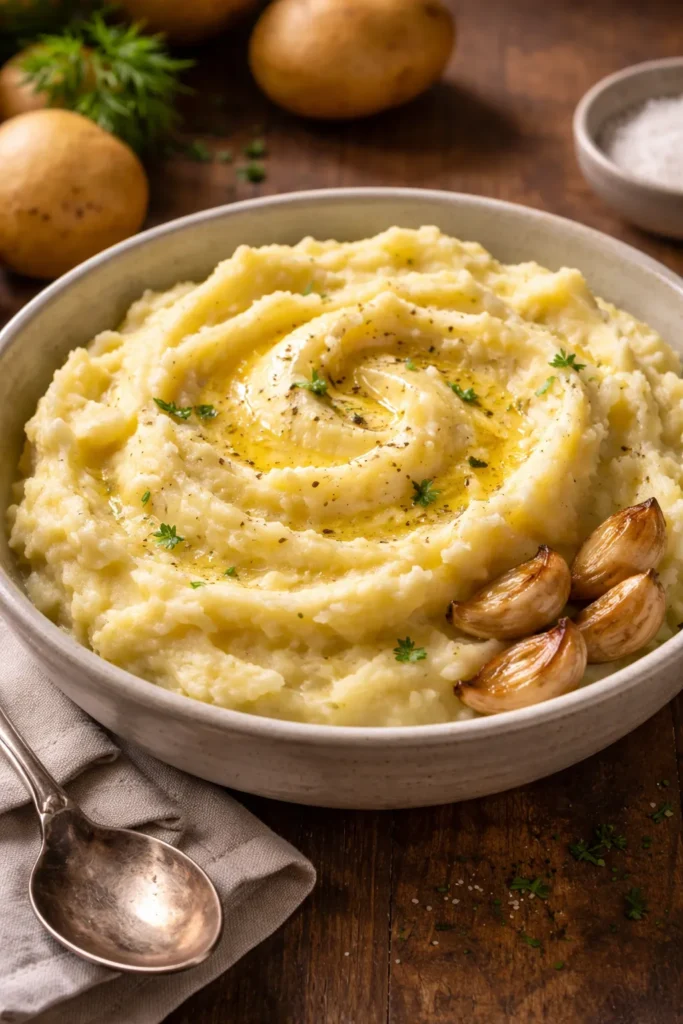
Yukon Gold potatoes have a natural butteriness that russets simply don’t possess — a richness baked into the variety itself, courtesy of their golden-hued flesh and slightly waxier cell structure. They’re not quite as fluffy as russets straight out of the pot, but they carry flavor in a way that makes every bite feel more complete. Add garlic that’s been simmered directly in the cooking water, and you get mashed potatoes with depth and warmth that needs very little else to shine.
The garlic-in-the-water technique is underrated. The cloves soften as the potatoes cook, absorbing the starchy cooking water and turning sweet and mellow. When you drain everything together and mash, the garlic almost disappears into the potatoes — no raw bite, no harsh edge, just a savory undercurrent that makes you go back for a third spoonful.
Yield: Serves 6 to 8 Prep Time: 15 minutes Cook Time: 25 minutes Total Time: 40 minutes Difficulty: Beginner — nothing technical here, just a smart technique applied to better ingredients.
Ingredients
- 3 pounds Yukon Gold potatoes, peeled and cut into large chunks
- 4 cloves garlic, peeled and left whole
- 1 tablespoon kosher salt, plus more to taste
- ½ cup (1 stick) unsalted butter, room temperature
- 1 cup whole milk, warmed
- Freshly ground black pepper
- Fresh chives, finely chopped, for serving
Method
- Place the potato chunks and whole garlic cloves in a large pot. Cover with cold water by 1 inch, add the tablespoon of salt, and bring to a boil over high heat.
- Reduce to a medium simmer and cook for 18 to 20 minutes, until a fork slides effortlessly through both the potatoes and the garlic cloves.
- Drain well, return to the pot over low heat, and shake for 60 seconds to drive off steam.
- Remove from heat and mash the potatoes and garlic together with a hand masher. The garlic will break down and blend seamlessly into the potatoes.
- Add the butter in pieces, mashing after each addition, then stream in the warm milk and fold until smooth. Taste, season with salt and pepper, and garnish with chives.
How to Adjust the Garlic Level
Four cloves produce a gentle background flavor that most people won’t immediately identify as garlic — it just tastes richer. Double it to six cloves for a more assertive garlic presence. For bold garlic mashed potatoes, roast a whole head of garlic at 400°F for 45 minutes, squeeze the softened cloves out, and fold them in at the mashing stage. The roasted version is sweeter and more complex than boiled garlic — completely different character, equally delicious.
4. Sour Cream and Chive Mashed Potatoes
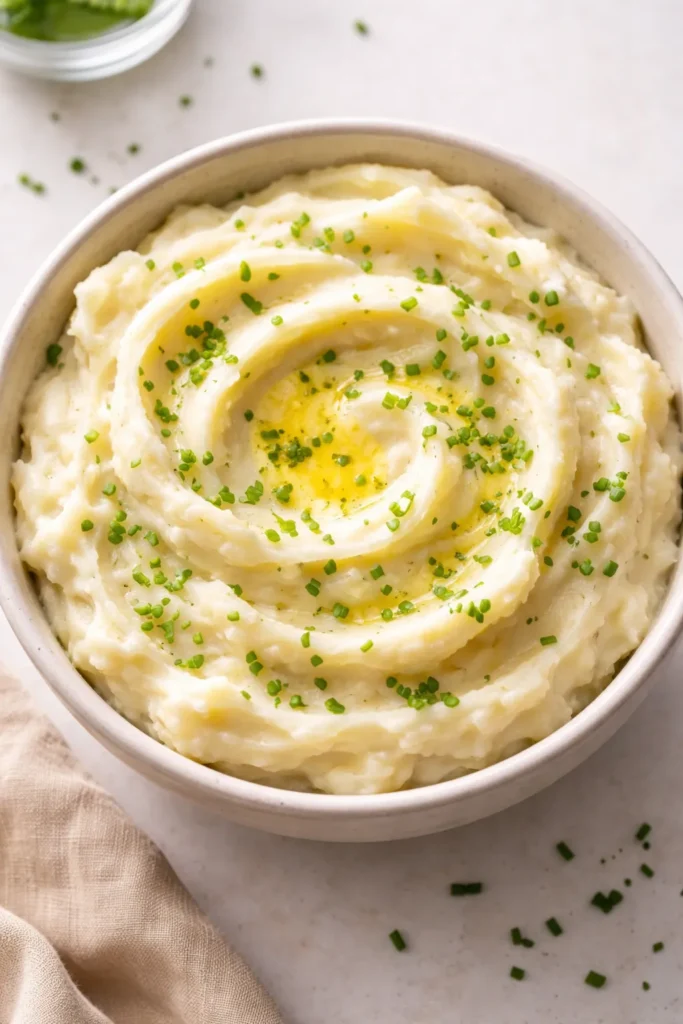
Sour cream is the ingredient that separates a good bowl of mash from a great one, and it’s wildly underused. A quarter cup folded in at the end adds a bright, tangy counterpoint to all that richness — it’s the same principle behind adding vinegar to a braise or lemon juice to a cream sauce. Fat needs acid to taste balanced, not heavy. Sour cream delivers both in one spoonful.
Pair that tang with the mild onion sharpness of fresh chives, and you’ve got a flavor combination that’s been beloved at steakhouses and holiday tables for generations. It’s not reinventing anything — it’s just doing the classic combination properly, with the ratios right and the dairy warm before it goes anywhere near the potatoes.
Yield: Serves 8 Prep Time: 15 minutes Cook Time: 25 minutes Total Time: 40 minutes Difficulty: Beginner — the sour cream folds in at the very end, making this completely low-risk.
Ingredients
- 3 pounds russet or Yukon Gold potatoes (or a 50/50 mix), peeled and cut into large chunks
- 3 garlic cloves, peeled (optional)
- 1 tablespoon kosher salt, for the water
- ½ cup unsalted butter, room temperature
- 1 cup whole milk, warmed
- 1½ teaspoons fine sea salt, plus more to taste
- ¼ to ½ cup full-fat sour cream, room temperature
- ¼ cup fresh chives, finely chopped
- Freshly ground black pepper
Method
- Add potatoes, garlic, and salt to a large pot of cold water. Bring to a boil, then simmer for 18 to 22 minutes until fork-tender.
- Drain and return to the pot over low heat. Shake the pot for 60 seconds to evaporate excess moisture.
- Remove from heat. Begin mashing, then add butter in pieces and continue mashing until incorporated.
- Pour in the warm milk gradually, folding with a spatula between additions.
- Add the sour cream last, folding gently with a spatula — not the masher. Overmixing after sour cream goes in is the fastest way to turn your mash gummy. A few folds is all it takes.
- Fold in half the chives, taste and season, and garnish with remaining chives and a few cracks of black pepper.
Temperature Matters for Sour Cream Too
Pull the sour cream from the fridge at least 30 minutes before you need it. Cold sour cream introduced to hot mashed potatoes can drop the temperature of the dish quickly and, more problematically, can cause the mixture to seize up slightly before you’ve had a chance to fold it through. Room temperature sour cream incorporates in two or three folds and leaves no streaks.
5. Roasted Garlic and Brown Butter Mashed Potatoes
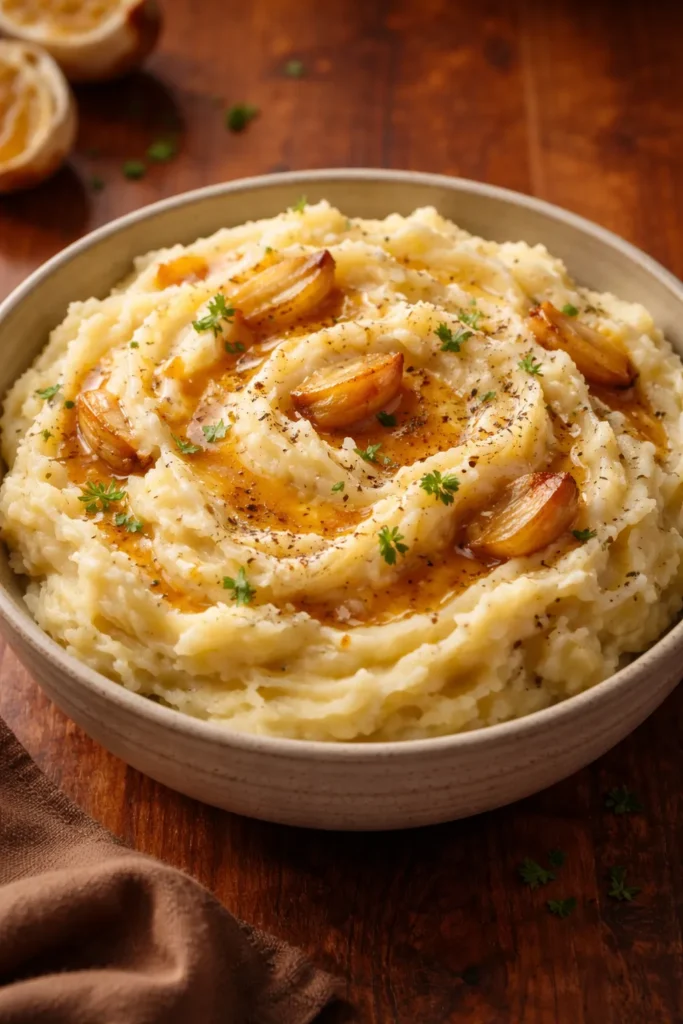
This version is for the nights when you want mashed potatoes to be the whole point of the meal. Roasted garlic brings a deep, caramel-sweet flavor that no amount of raw or boiled garlic can replicate. Brown butter adds a nutty, toasty complexity that makes an already rich dish taste sophisticated rather than just indulgent.
The extra effort here — about 45 minutes of mostly hands-off time while the garlic roasts — is a genuine upgrade, not a gimmick. Brown butter takes 5 minutes on the stovetop. Both techniques are well within reach on a weeknight, and the payoff is mashed potatoes that taste like they came out of a restaurant kitchen.
Yield: Serves 6 to 8 Prep Time: 20 minutes Cook Time: 45 minutes (including garlic roasting) Total Time: 1 hour 5 minutes Difficulty: Intermediate — requires managing the brown butter carefully so it doesn’t cross from nutty to burnt.
Ingredients
For the Roasted Garlic:
- 1 whole head of garlic
- 1 tablespoon olive oil
For the Mashed Potatoes:
- 3 pounds russet potatoes, peeled and cut into large chunks
- Kosher salt, for the water
- ½ cup (1 stick) unsalted butter
- ¾ to 1 cup whole milk, warmed
- 1 teaspoon fine sea salt, plus more to taste
- Freshly cracked black pepper
Method
Roast the Garlic First:
- Preheat your oven to 400°F (200°C). Slice the top ¼ inch off the head of garlic to expose the cloves. Drizzle with olive oil, wrap tightly in foil, and roast for 40 to 45 minutes, until the cloves are soft, golden, and yield to gentle pressure. Let cool slightly, then squeeze the softened cloves into a small bowl and mash with a fork.
Make the Brown Butter: 2. Melt the butter in a light-colored saucepan over medium heat. Swirl frequently. After 3 to 4 minutes, the butter will foam, then the foam will subside and you’ll see small brown specks forming at the bottom. The moment you smell toasted hazelnuts, pull the pan off the heat immediately. Pour into a heat-safe bowl to stop the cooking.
Make the Mashed Potatoes: 3. Boil the potatoes in salted water for 20 to 22 minutes until completely tender. Drain, return to the pot, and steam-dry over low heat for 60 seconds. 4. Mash the potatoes, then fold in the roasted garlic paste. Add the brown butter in a steady stream, folding gently to combine. 5. Stream in the warm milk and fold until you reach your desired consistency. Season with salt and pepper.
Serving Suggestion
Drizzle a small spoonful of extra brown butter over the top of each serving and finish with flaky sea salt. The contrast between the warm, nutty butter pooling on the surface and the fluffy potato below is genuinely hard to describe without eating a bowl immediately.
6. Cream Cheese Mashed Potatoes
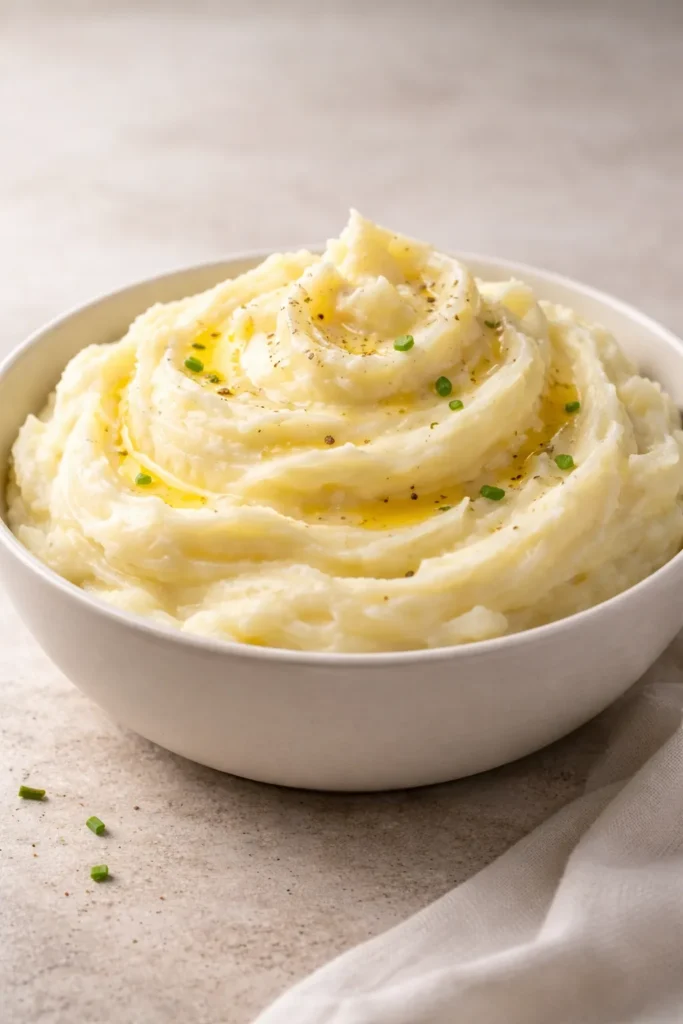
Cream cheese in mashed potatoes sounds like something invented at a potluck in the 1970s, but the science behind it is sound. Cream cheese is thicker than sour cream and slightly more neutral in flavor, which means it adds luxurious body to the mash without the tangy brightness of sour cream. The result is potatoes that hold their shape beautifully on a plate — substantial enough to pile a ladle of gravy on top without collapsing.
This version is the one to make when you’re doing a big holiday dinner and need the potatoes to stay warm and hold together for 30 to 45 minutes while other things finish. The cream cheese acts almost like a stabilizer, keeping the mash cohesive and silky even as it sits covered in a casserole dish in a warm oven.
Yield: Serves 10 to 12 Prep Time: 20 minutes Cook Time: 25 minutes Total Time: 45 minutes Difficulty: Beginner — fold in the cream cheese at the end and you’re done.
Ingredients
- 5 pounds Yukon Gold potatoes, peeled and cut into chunks
- 4 garlic cloves, peeled
- 1½ tablespoons kosher salt, plus more to taste
- ½ cup (1 stick) unsalted butter, room temperature
- 1 cup whole milk, warmed
- 4 ounces cream cheese, fully softened to room temperature
- Freshly cracked black pepper
- Fresh chives or green onions, sliced, for garnish
Method
- Place potatoes and garlic cloves in a large pot with cold salted water. Bring to a boil and simmer for 18 to 22 minutes until completely tender.
- Drain thoroughly, return to the pot over low heat, and shake for 60 seconds to steam off excess moisture.
- Mash until mostly smooth, then fold in the butter piece by piece until fully incorporated.
- Add the warm milk gradually, folding between additions until the mash is smooth and creamy.
- Add the softened cream cheese in three additions, folding gently after each. Do not beat or whip at this stage — fold only. The cream cheese needs to melt into the potatoes rather than being worked aggressively.
- Season well with salt and pepper. Garnish with chives and serve.
The Softened Cream Cheese Rule
This is worth repeating: softened, not melted, not cold. Cold cream cheese clumps. Melted cream cheese makes the mixture looser than you want it. Softened cream cheese — left out at room temperature for at least an hour — folds in smoothly and evenly without any lumps or temperature shock.
7. Loaded Bacon and Cheddar Mashed Potatoes
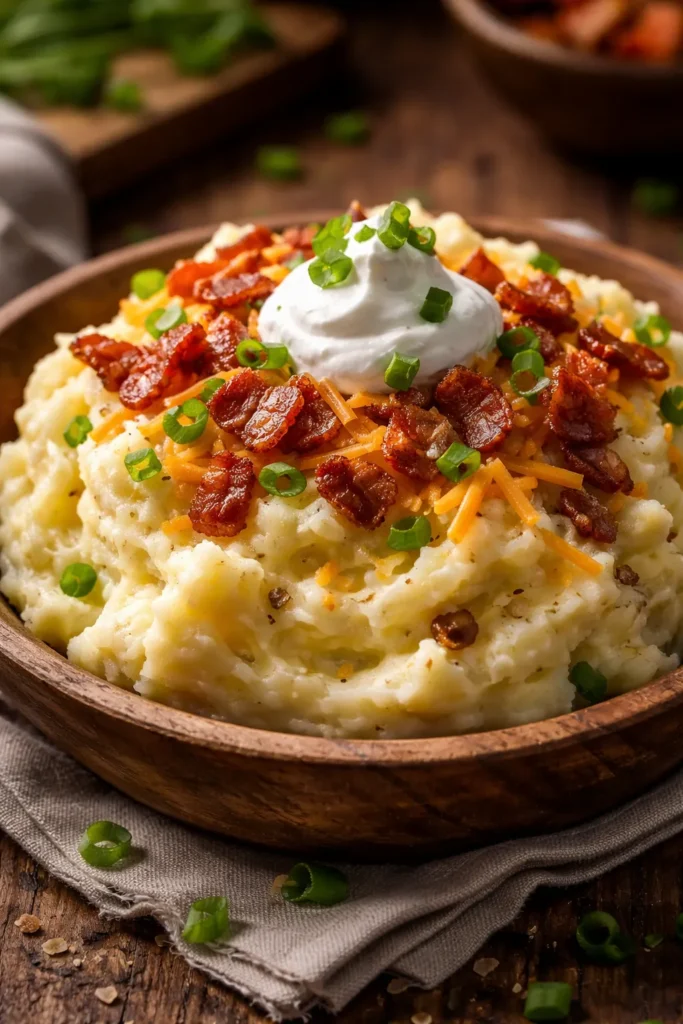
Mashed potatoes are inherently a comfort food, and this version commits to that completely. Crispy bacon, sharp cheddar, green onions, and a dollop of sour cream on top — these are the flavors of a loaded baked potato translated into a bowl of mash, and the combination is genuinely hard to resist. This is the recipe for casual weeknight dinners, game nights, or any occasion where you want something that feels indulgent and celebratory without requiring much effort.
The technique here borrows from every version above — warm dairy, butter first, steam-drying after draining — because all of those principles still apply. The toppings and mix-ins change the character of the dish, but they don’t exempt you from good technique. Gummy bacon-and-cheddar mash is worse than gummy plain mash.
Yield: Serves 8 to 10 Prep Time: 20 minutes Cook Time: 30 minutes Total Time: 50 minutes Difficulty: Beginner — cook the bacon while the potatoes boil and everything comes together at once.
Ingredients
For the Mashed Potatoes:
- 4 pounds russet potatoes, peeled and cut into large chunks
- Kosher salt, for the cooking water
- ½ cup (1 stick) unsalted butter, room temperature
- ¾ cup whole milk, warmed
- 1 cup sharp cheddar cheese, freshly shredded (not pre-shredded)
- ½ teaspoon fine sea salt, plus more to taste
- Freshly cracked black pepper
For the Toppings:
- 6 strips thick-cut bacon, cooked until crispy and roughly chopped
- ¼ cup sour cream
- 3 green onions, thinly sliced
- Extra shredded cheddar, for the top
Method
- Cook the bacon in a skillet over medium heat until fully crispy, turning occasionally — about 8 to 10 minutes. Drain on paper towels and chop into rough ½-inch pieces. Set aside.
- While the bacon cooks, boil the potatoes in cold salted water for 20 to 22 minutes until fork-tender.
- Drain well and return to the pot over low heat. Shake for 60 seconds to drive off steam.
- Mash until mostly smooth, then fold in butter piece by piece.
- Stream in the warm milk and fold to your desired consistency. Fold in the shredded cheddar immediately after the milk while the potatoes are still hot enough to melt the cheese completely. Season with salt and pepper.
- Transfer to a serving bowl, top with sour cream, chopped bacon, green onions, and extra cheddar. Serve immediately.
Why Freshly Shredded Cheese Is Non-Negotiable Here
Pre-shredded cheese is coated with starches and anti-caking agents that prevent it from melting cleanly. In a sauce or dip, that can sometimes be worked around. In mashed potatoes, where you’re folding the cheese into a hot, starchy base, pre-shredded cheese creates grainy, oily pockets instead of melting smoothly. Buy a block and grate it yourself — it takes 90 seconds and the difference is substantial.
8. Make-Ahead Herb and Parmesan Mashed Potatoes
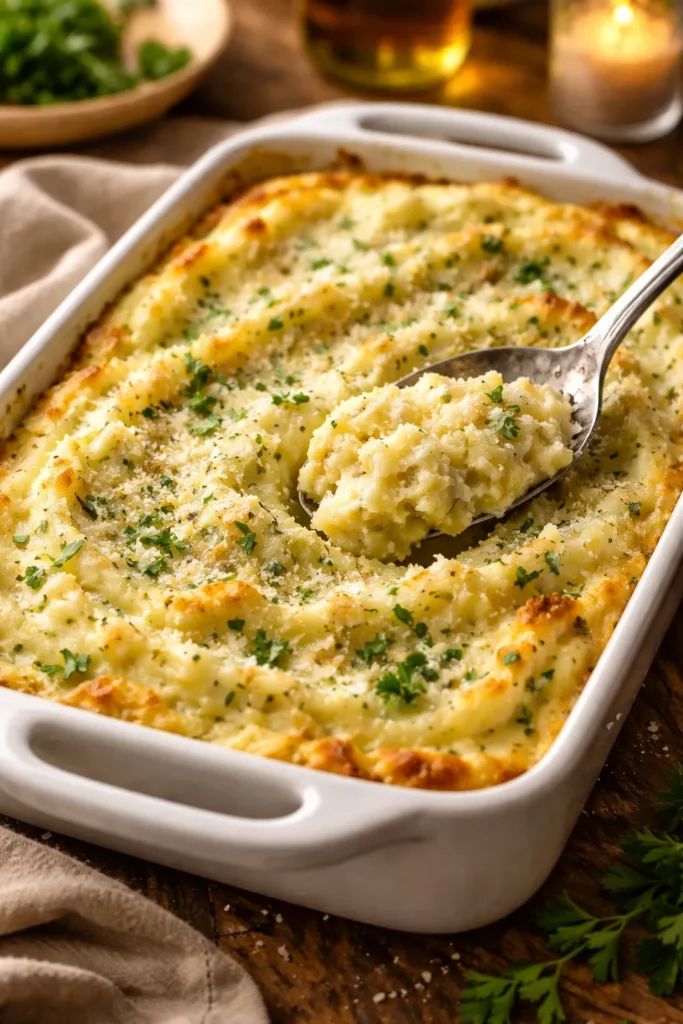
This is the holiday-dinner solution for cooks who want everything done ahead of time. These potatoes can be made a full 48 hours in advance, stored in a covered casserole dish, and reheated in the oven to a bubbling, golden-edged perfection while the roast rests on the counter. The Parmesan adds a savory, nutty depth that deepens as the potatoes sit, and fresh herbs folded in at the end keep everything tasting bright.
The oven reheating method actually makes these better than they are fresh — the edges brown slightly, the top develops a golden crust, and the interior stays fluffy and steaming. It’s the rare case where making a dish in advance is a genuine quality upgrade rather than a compromise.
Yield: Serves 10 to 12 Prep Time: 20 minutes Cook Time: 25 minutes, plus 30 to 35 minutes for reheating Total Time: 45 minutes active + reheating time Difficulty: Beginner to Intermediate — the make-ahead logistics require planning, but no advanced technique.
Ingredients
- 5 pounds Yukon Gold or russet potatoes (or a 50/50 mix), peeled and cut into large chunks
- 1½ tablespoons kosher salt, plus more for the water
- ¾ cup (1½ sticks) unsalted butter, room temperature, divided
- 1 cup whole milk, warmed
- ¾ cup Parmigiano-Reggiano, finely grated (about 2½ oz)
- 3 tablespoons fresh rosemary or thyme, finely chopped (or a mix)
- ¼ cup fresh flat-leaf parsley, chopped
- Freshly cracked black pepper, to taste
Method
To Make:
- Boil the potatoes in generously salted cold water for 20 to 22 minutes until completely tender. Drain well and return to the pot over low heat for 60 seconds to steam-dry.
- Mash until smooth, then fold in 10 tablespoons of the butter (reserving 2 tablespoons for reheating) and the warm milk, adding the milk gradually.
- Fold in the grated Parmesan and chopped herbs. Season with salt and pepper. The mixture should be slightly looser than you’d serve fresh — it will firm up in the refrigerator.
- Transfer to a buttered 9×13-inch casserole dish. Smooth the top with a spatula, dot with the remaining 2 tablespoons of butter, and cover tightly with foil. Refrigerate for up to 48 hours.
To Reheat: 5. Remove from the refrigerator 30 to 45 minutes before reheating so the chill comes off slightly. 6. Bake, covered, in a 350°F oven for 25 to 30 minutes, until heated through. Remove the foil for the final 10 minutes to allow the top to develop a light golden crust. 7. Stir gently once, taste, adjust seasoning, and garnish with a handful of fresh parsley before serving.
What Happens to the Texture After Refrigeration
Cold starch retrogrades — it firms up and can seem gluey when you pull it out of the fridge. That’s normal and expected. The oven reheating process reverses this. As the potatoes warm back through, the starch softens again and the butter melts back through the mixture. Don’t microwave this version — the casserole format exists precisely because the oven gives you more even, gentle heat that respects the texture. A microwave creates hot spots that dry out the edges while the center is still cold.
Troubleshooting Your Mash
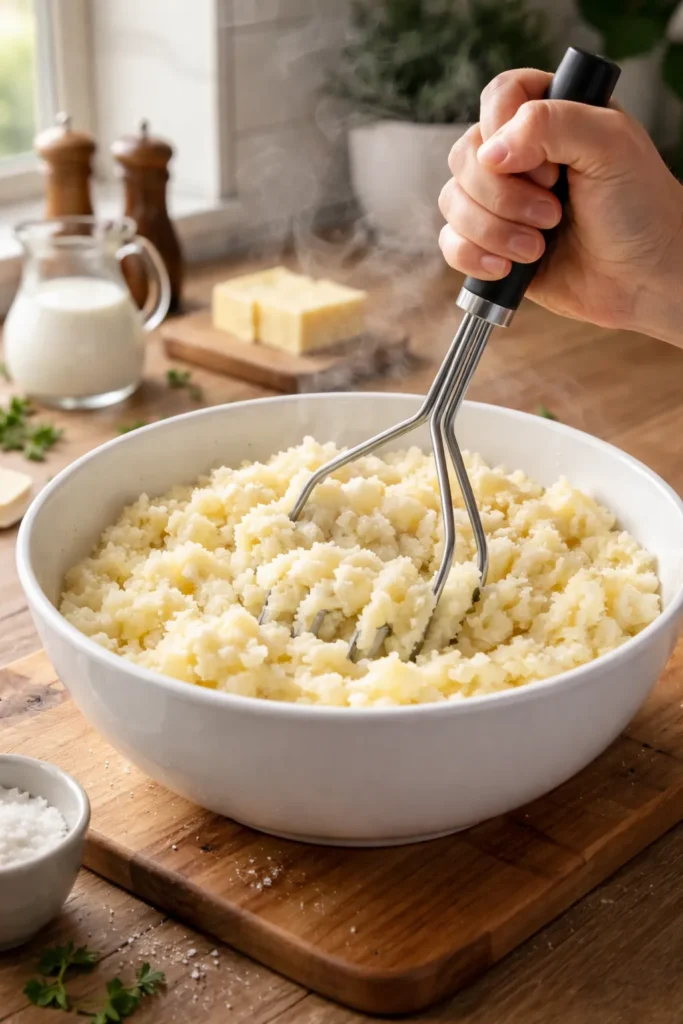
Even with the best recipe in hand, things go sideways sometimes. Knowing what went wrong and how to fix it saves the dish.
Gummy or paste-like texture: Almost always caused by overmixing, using a food processor, or using an electric mixer for too long. Starch was overworked and released too much into the mixture. Next time, mash by hand or use a ricer, and fold rather than beat once the dairy goes in. You can’t fully rescue gummy mash, but pressing it into patties and pan-frying it in butter makes excellent potato cakes.
Watery or thin texture: The potatoes weren’t drained well enough, or the steam-drying step was skipped. Always shake the drained potatoes over a low burner for at least 60 seconds before mashing. If your mash is already too thin, stir in an extra tablespoon of butter (which thickens as it absorbs) or a spoonful of sour cream or cream cheese, and keep the pot over low heat, stirring, until the excess moisture cooks off.
Lumpy texture: The potatoes were either undercooked or cut too unevenly, so some pieces finished cooking while others didn’t. Always start potatoes in cold water — not boiling water — so they cook from the outside in at a controlled rate. Check for doneness with a fork in the center of the largest piece, not the smallest.
Bland flavor despite salt: Salt added only at the end seasons the surface, not the interior. The cooking water needs to be properly salted — about 1 tablespoon of kosher salt per 4 pounds of potatoes. Potatoes absorb salt as they cook, and that absorbed seasoning makes the entire dish taste more three-dimensional.
Pairing and Serving Ideas
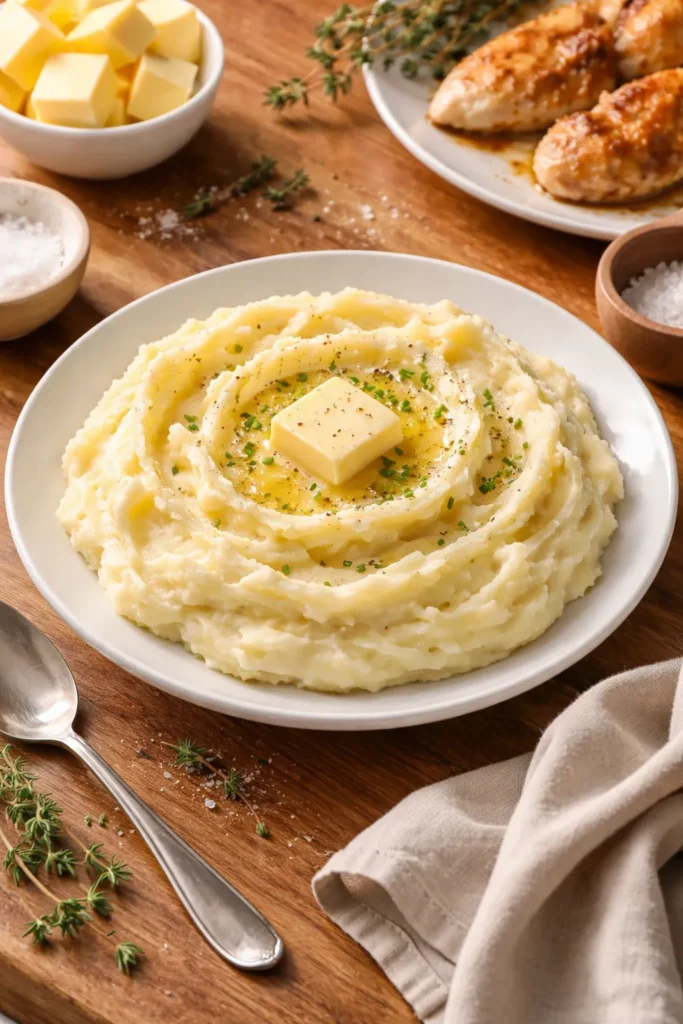
Mashed potatoes are arguably the most versatile side dish in the kitchen. They soften the edges of acidic tomato-based dishes, absorb the rich drippings from roasted meats, and provide a neutral base that lets bold sauces do their work.
Classic pairings include roast chicken, meatloaf, braised short ribs, beef tips with mushroom gravy, pan-seared pork chops, and turkey with pan gravy at a holiday meal. But don’t overlook the simple joy of mashed potatoes with a fried egg and hot sauce on a Tuesday morning.
For serving at the table, a shallow bowl works better than a deep one — the surface area lets the butter melt dramatically across the top rather than pooling invisibly at the bottom. A few cracks of black pepper, some flaky sea salt, and a small pool of melted butter in the center is all the presentation you need.
Storage, Reheating, and Freezing
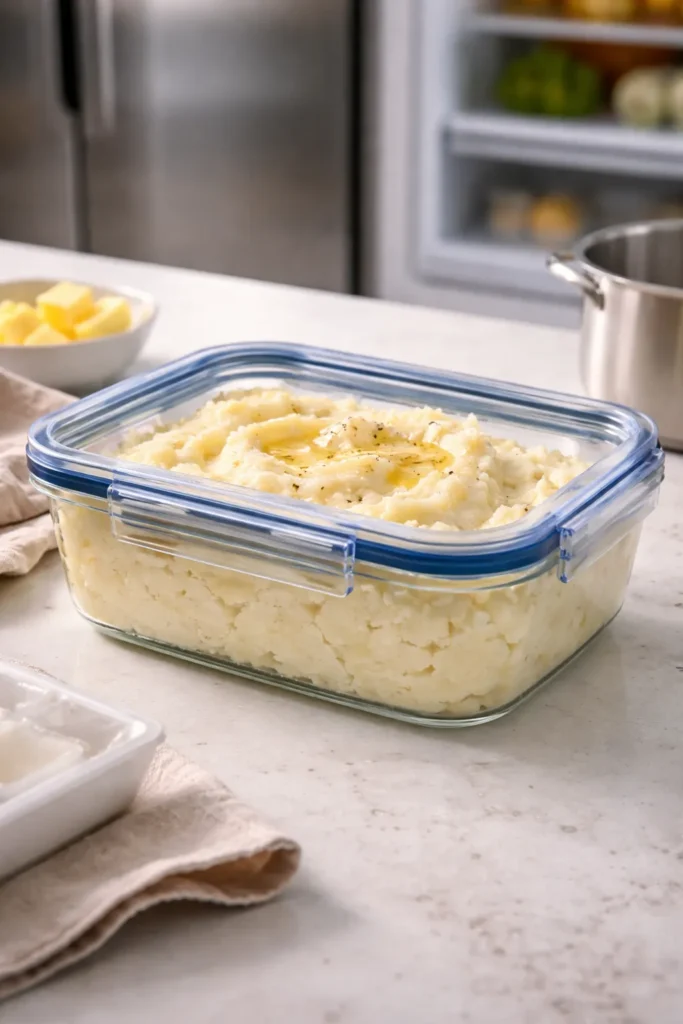
Leftover mashed potatoes store well in an airtight container in the refrigerator for up to 4 days. When reheating on the stovetop, add a splash of warm milk and stir frequently over low heat — they’ll come back to life in about 5 minutes. In the oven, spread into a casserole dish, dot with butter, cover with foil, and warm at 325°F for 30 to 40 minutes.
For freezing: spread cooled potatoes flat in freezer bags, press out the air, and freeze for up to 1 month. The texture changes slightly after freezing, but reheating slowly on the stovetop with a little extra milk and butter brings them close to their original consistency. Thaw overnight in the refrigerator before reheating — don’t try to go from frozen to hot in the microwave, as the result will be uneven and patchy.
Leftover mashed potatoes also open up a whole separate world of second-use cooking: shepherd’s pie topping, potato cakes pan-fried in butter, Duchess potatoes piped and baked until golden, or stirred into soups to add body without flour.
Final Thoughts
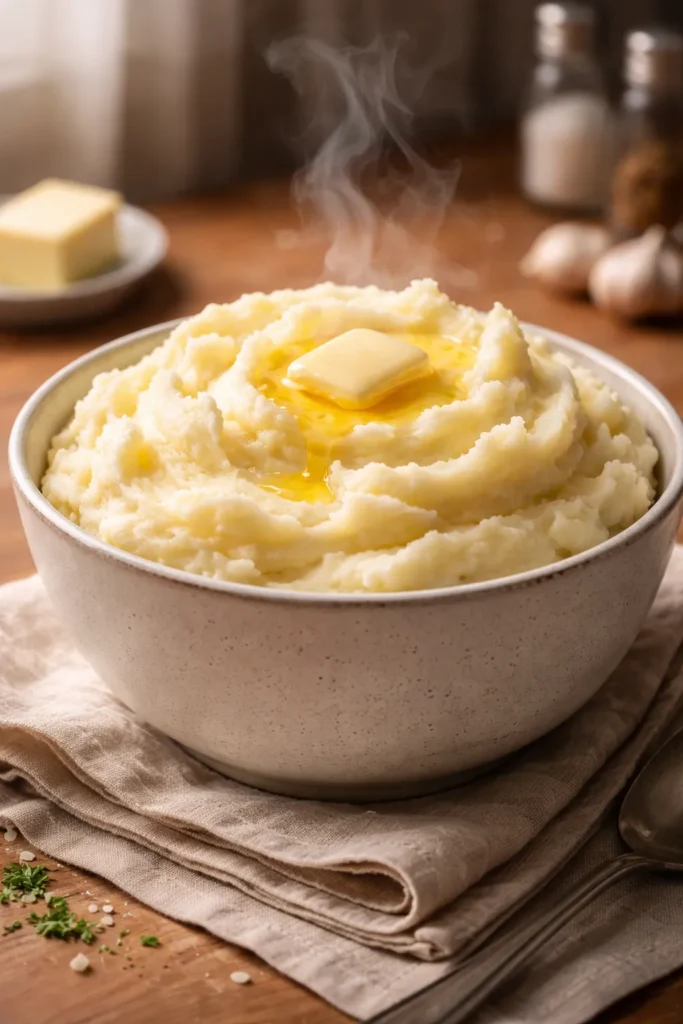
Eight recipes, one underlying truth: fluffy mashed potatoes aren’t luck. They’re the result of choosing the right potato, draining properly, steam-drying in the pot, warming your dairy, and folding rather than beating. Get those fundamentals right and every version on this list — from the stripped-back classic to the loaded, herb-flecked, make-ahead casserole — will come out of the pot exactly as it should.
Start with Recipe 1 or Recipe 2 if you’re building your confidence with the technique. Graduate to the roasted garlic brown butter version when you want something that earns a place at a proper dinner party. And bookmark the make-ahead Parmesan herb version for every holiday you host — it’s the one that frees you up to actually enjoy the meal instead of standing at the stove while everyone else sits down.
Pick one this week, make it twice, and you’ll have mashed potatoes in your muscle memory for life.