Few flavor combinations hit as hard as slow-cooked, citrus-drenched mojo pork piled over a steaming bowl of Cuban-style rice. There’s something almost alchemical about what happens when pork shoulder meets orange juice, lime, a full head of garlic, and a hit of cumin — the fat renders, the connective tissue melts away, and what emerges is pull-apart tender, deeply aromatic meat with a brightness you don’t expect from something that’s been cooking for hours.
Mojo (pronounced moh-hoh, not moh-joe) is a Cuban sauce rooted in the tradition of using sour orange juice — naranja agria — as both a marinade and a finishing condiment. Because sour oranges are hard to track down outside of Latin grocery stores, most recipes replicate the flavor by combining fresh orange juice with lime juice, and the results are remarkably close. The garlic, dried oregano, cumin, and olive oil round out a marinade that works beautifully on pork shoulder whether you’re braising it low and slow in the oven, dumping everything into a slow cooker before work, or pressure cooking it in under two hours.
What makes Cuban rice bowls so satisfying is the balance. The richness of the shredded pork gets cut by the acidity of the mojo, while a bed of rice and black beans grounds the whole thing with earthy, comforting weight. Add a few slices of avocado, a squeeze of lime, and some fresh cilantro — and you’ve got something that feels like a restaurant meal without much effort at all.
The eight recipes here range from oven-braised weekend showstoppers to weeknight-friendly slow cooker builds, each one showcasing a slightly different approach to the mojo base and the rice component. Some lean on coconut rice for a tropical richness; others go with cauliflower rice for a lighter bowl. A couple go entirely off-script with meatballs and tacos. Pick the one that fits your week and start cooking.
Table of Contents
- 1. Classic Slow Cooker Mojo Pork Bowl with Cuban Black Beans
- Building the Cuban Black Beans
- Serving It Right
- 2. Oven-Braised Mojo Pork with Crispy Fat Cap
- The Braise Setup
- Why the High-Heat Finish Matters
- 3. Instant Pot Cuban Mojo Pulled Pork Bowls with Yellow Cauliflower Rice
- The Yellow Cauliflower Rice Swap
- Building the Mojo Dipping Sauce
- 4. Cuban Mojo Pork with Coconut Rice
- How to Make Proper Coconut Rice
- The Garnish That Completes It
- 5. Smoked Mojo Pork Shoulder over White Rice and Black Beans
- The Foil Pan Braise Finish
- Why Smoke Makes the Mojo Better
- 6. Mojo Pork Meatballs with Citrus Mojo Sauce and White Rice
- Making the Blended Citrus Mojo Sauce
- The Cilantro Question
- 7. Cuban-Inspired Pulled Pork Bowl with Fresh Herb Mojo Sauce
- Searing Before Slow Cooking
- Bowl Customization Options
- 8. Mojo Pork Tacos with Cilantro-Lime Rice
- Making Quick Pickled Red Onions
- The Cilantro-Lime Rice
- What Makes Mojo Sauce So Good
- The Best Cut of Pork for Mojo Recipes
- How to Build the Perfect Cuban Rice Bowl
- Final Thoughts
1. Classic Slow Cooker Mojo Pork Bowl with Cuban Black Beans
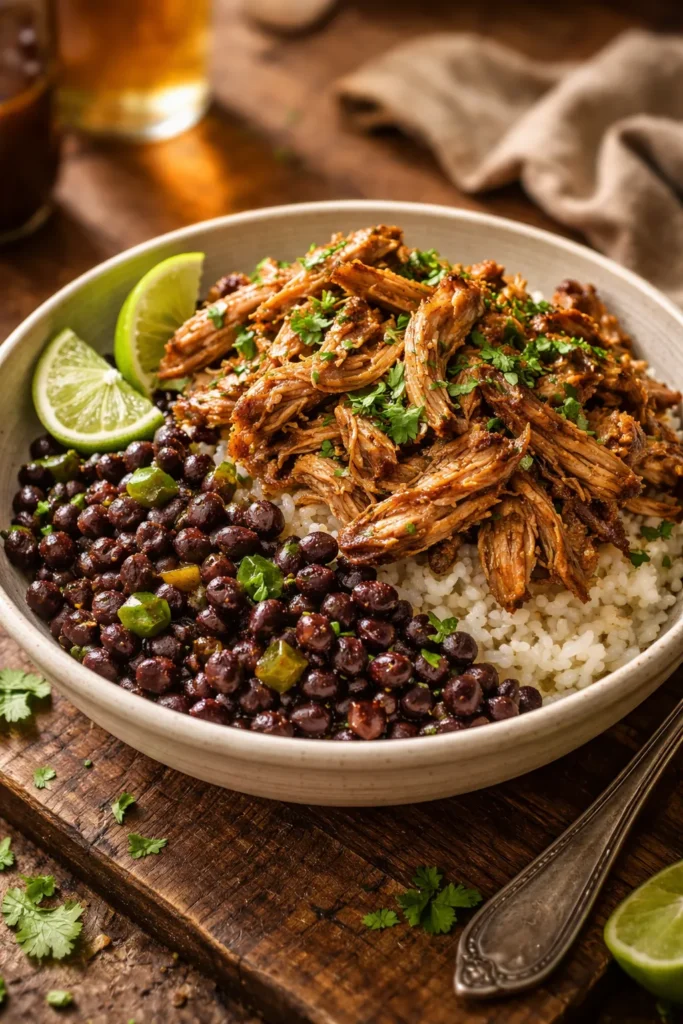
This is the one to start with if you’ve never made mojo pork before. It’s a true dump-and-go slow cooker recipe that delivers maximum payoff for minimal hands-on work — season the pork, add the citrus and aromatics, set the cooker on low, and come back eight to ten hours later to meat so tender it practically shreds itself.
The mojo base here uses a triple-citrus approach: orange juice for sweetness and body, lime juice for acidity, and lemon juice for a sharper brightness that edges the flavor toward something more complex than a simple orange marinade. A whole head of garlic with the cloves separated and peeled goes in raw — by the time the pork is done, those cloves will have turned buttery and soft, and you can mash them right into the shredded meat for an extra hit of depth.
Building the Cuban Black Beans
The beans are the real supporting star here and they take less than 30 minutes to pull together. Sauté half a diced onion and half a green bell pepper in olive oil until soft, then add a couple of minced garlic cloves and cook for another minute. Add a drained can of black beans, a splash of chicken broth, a teaspoon of dried oregano, and a teaspoon of red wine vinegar. Simmer until most of the liquid absorbs — the vinegar is what gives them that distinctly Cuban flavor, cutting the richness and making the whole bowl feel lighter.
Serving It Right
Pile cilantro-lime rice into a bowl, spoon on the shredded pork with a bit of its cooking liquid, and add the black beans alongside. A few slices of avocado, a wedge of lime, and a handful of tortilla chips if you want some crunch. Leftovers are outstanding stuffed into corn tortillas or layered onto nachos with Monterey Jack cheese.
Key specs:
- Pork cook time: 8–10 hours on low, or 6 hours on high
- Use a 3–4 lb boneless pork butt or shoulder
- Flavor boosters: smoked paprika, cumin, dried oregano, bay leaves, and fresh jalapeño
- Freezes well for up to 3 months
2. Oven-Braised Mojo Pork with Crispy Fat Cap
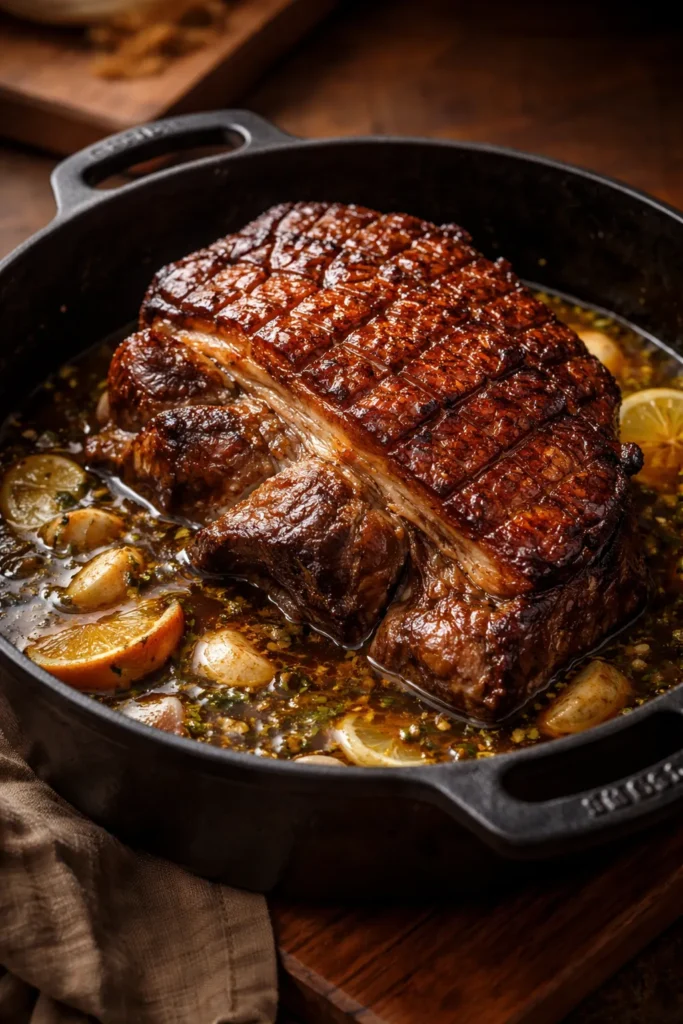
If you want something more dramatic — the kind of pork that comes out of the oven looking like it belongs on a restaurant pass — this oven braise with the fat cap scored and caramelized is it. The technique requires a bit more attention than the slow cooker version, but the result has layers of texture that a slow cooker simply can’t replicate.
Start by scoring the fat cap in a crosshatch pattern: parallel cuts about 1.5 inches apart, then rotate 90 degrees and repeat. This does two things — it lets the seasoning penetrate deeper into the meat, and it allows the fat to render more evenly during the braise. Tuck whole garlic cloves directly into the scored cuts before searing. When those cloves roast inside the meat for three hours, they infuse the pork from the inside out.
The Braise Setup
Season the scored pork generously with kosher salt, black pepper, dried oregano, onion powder, and a pinch of red chili flakes. Sear it in a large oven-safe skillet or braiser over medium-high heat until deeply golden brown on all sides — this step matters enormously, because that crust is where most of the flavor complexity lives. Add sliced onion, fresh orange slices, sprigs of fresh oregano and thyme, then deglaze with mandarin or fresh orange juice.
Cover tightly and braise at 300°F for 2.5 to 3 hours. When the pork pulls apart effortlessly with two forks, remove the lid, crank the oven to 450°F, and roast uncovered for the final 10 minutes. What comes out is a gloriously caramelized fat cap with meltingly tender meat underneath.
Why the High-Heat Finish Matters
That last 10 minutes at high heat triggers the Maillard reaction on the fat surface, developing roasted, slightly nutty flavors that contrast beautifully with the citrusy meat below. Let the pork rest for at least 10 to 15 minutes before shredding — this keeps the juices locked in and makes the meat easier to handle.
Serve over: garlic-lime white rice with black beans, or stuffed into warm corn tortillas with pickled red onion and fresh cilantro.
3. Instant Pot Cuban Mojo Pulled Pork Bowls with Yellow Cauliflower Rice
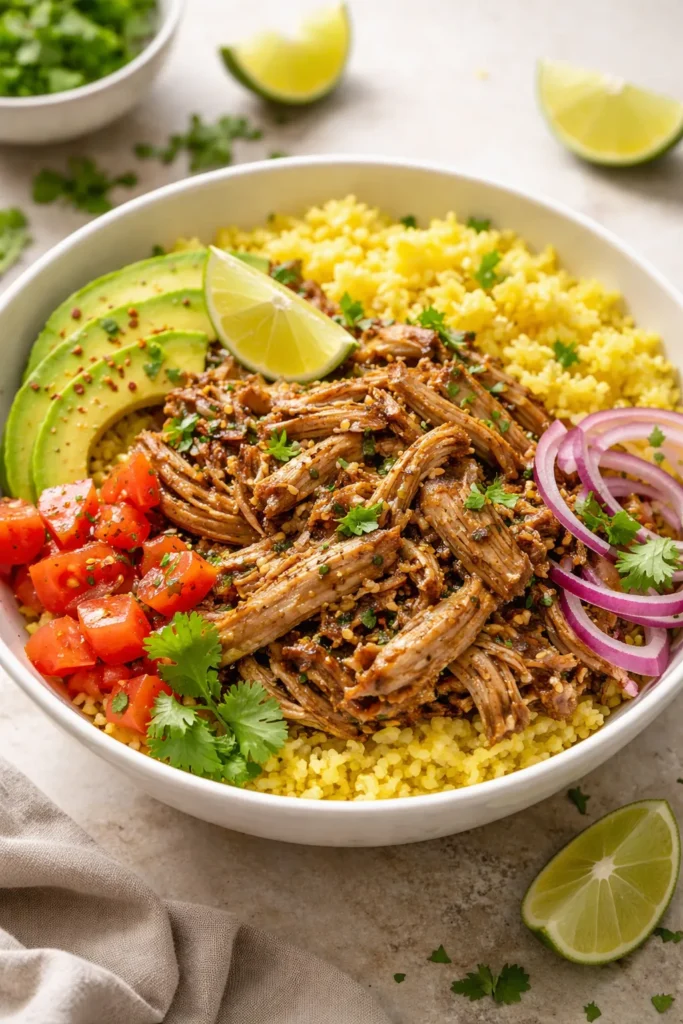
For those who want the depth of a long braise compressed into a weeknight-friendly timeline, the Instant Pot version of Cuban mojo pork is genuinely impressive. Sixty minutes at high pressure followed by a 30-minute natural release yields pork that’s every bit as tender as an all-day slow cooker batch — and the cooking liquid becomes the base for an easy finishing sauce.
Cut a 4-pound boneless pork shoulder into four large pieces rather than small chunks. This matters more than it sounds: smaller pieces cook unevenly and tend to dry out, even under pressure. Blend the mojo marinade until smooth — orange juice, lime juice, grapefruit juice, whole peeled garlic cloves, olive oil, cumin, Mexican oregano, and a touch of coconut sugar — and pour it over the seared pork.
The Yellow Cauliflower Rice Swap
The rice component here goes in a different direction entirely. Frozen riced cauliflower gets tossed with avocado oil, garlic powder, cumin, turmeric, onion powder, oregano, salt, and pepper, then spread on a sheet pan and roasted at 400°F for 25 minutes, stirring halfway through. The turmeric gives it a vibrant golden color, the cumin brings warmth, and roasting it (rather than steaming) removes excess moisture so the cauliflower stays fluffy rather than soggy.
Building the Mojo Dipping Sauce
Don’t discard the cooking liquid. Strain it through a fine mesh sieve into a fat separator, then combine one cup of the de-fatted liquid with extra grapefruit juice, lime juice, orange juice, a crushed garlic clove, cumin, and fresh cilantro. This pourable mojo sauce spooned over the bowl ties everything together and is arguably the best part of the whole meal.
Bowl assembly: Yellow cauliflower rice → shredded mojo pork → mojo sauce → smashed avocado → wavy plantain chips → fresh cilantro → lime wedge.
4. Cuban Mojo Pork with Coconut Rice
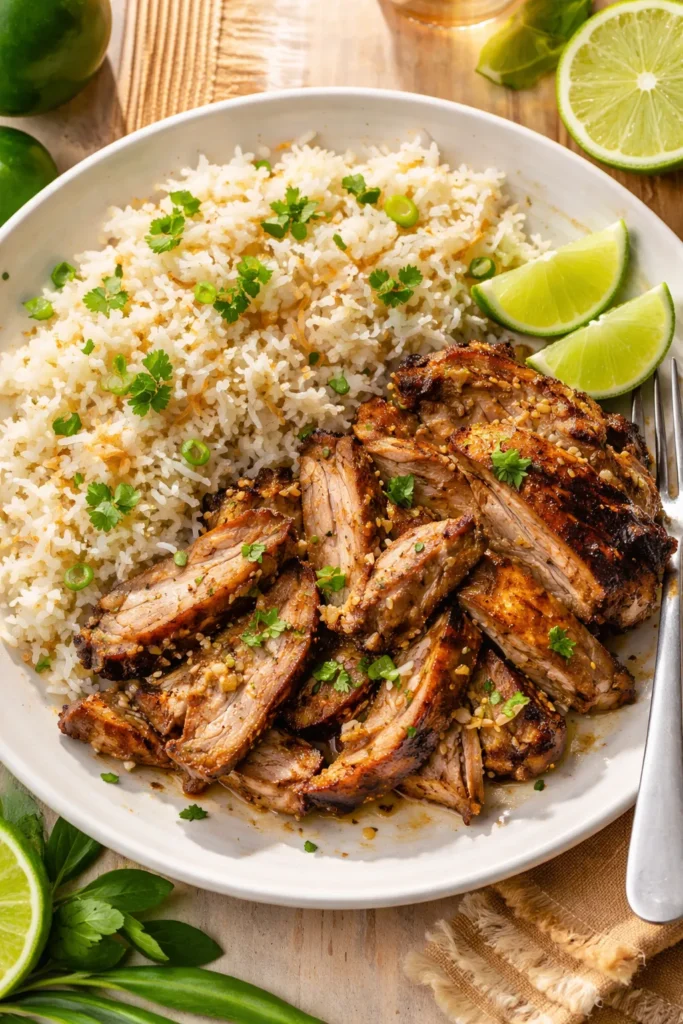
This version takes the classic mojo pork formula and pairs it with coconut rice instead of plain white rice, adding a subtle tropical richness that works beautifully against the garlicky, acidic pork. It’s a small change that makes a big difference in how complete the bowl feels.
For the pork, this recipe follows a straightforward slow cooker method — pork shoulder with orange juice, lime juice, olive oil, a full head of garlic (outer skin removed but intact), fresh oregano, cumin, salt, and pepper. Everything goes into the cooker on high for four hours or low for eight. Pour the leftover cooking liquid over the finished pork when serving; it’s too good to waste.
How to Make Proper Coconut Rice
The trick to great coconut rice is using the thick coconut cream that separates to the top of a refrigerated can of full-fat coconut milk. Chill two cans the night before, then scoop that thick cream off the top. Combine it with jasmine rice, water, a bit of sugar, and sea salt. Bring to a boil, then cover and simmer on low heat for 40 minutes. Turn off the burner and let the rice continue steaming covered for another 20 minutes — this gives it a slightly sticky, aromatic quality that pairs perfectly with the bold mojo pork.
The Garnish That Completes It
Diced avocado is non-negotiable here. The creaminess offsets the citrus punch of the pork and softens the sweetness of the coconut rice in exactly the right way. A drizzle of additional cooking liquid, some fresh cilantro, and a good squeeze of lime over the whole bowl before serving rounds everything out.
Make it a crowd meal: This recipe feeds 4 to 6 and doubles well. The pork keeps in the fridge for 4 days and reheats beautifully in a skillet with a splash of the cooking liquid.
5. Smoked Mojo Pork Shoulder over White Rice and Black Beans
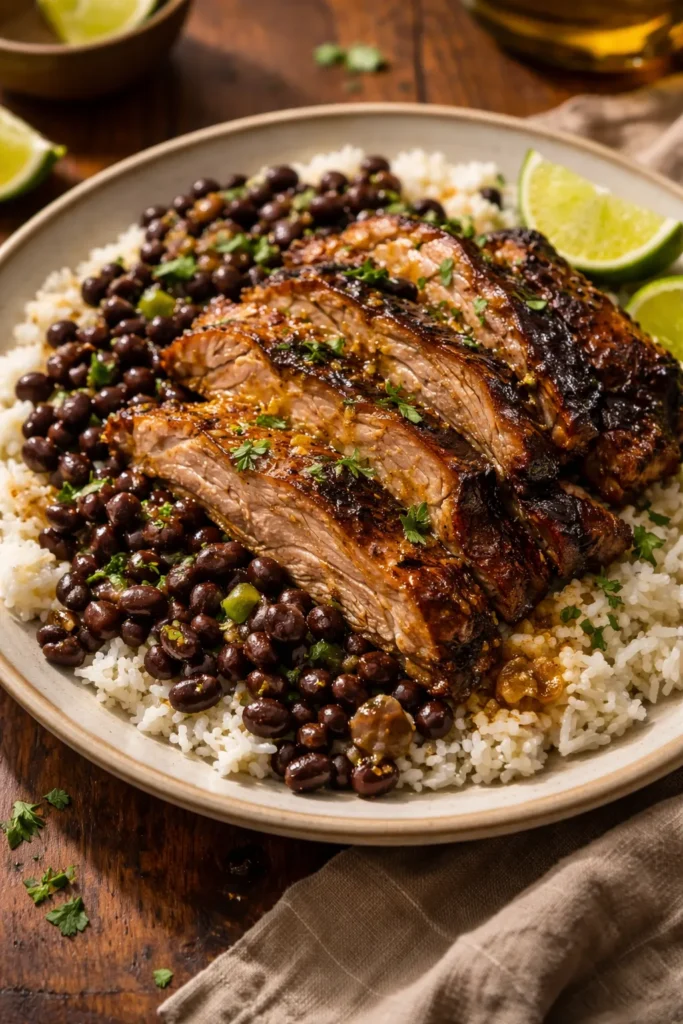
This is the most involved recipe in the lineup, but if you have a smoker and a free afternoon, the flavor payoff is in a different league. The mojo marinade does double duty as both a flavor base and a braising liquid, meaning the pork gets smoke-infused during the first phase and then steams in its citrus bath during the second — producing something with incredible bark on the outside and pull-apart tenderness inside.
Start by coating the pork butt with yellow mustard as a binder (you won’t taste it, but it helps the dry rub adhere evenly), then season generously with your preferred spice rub. Get the smoker running at 225°F and put the pork in — bone-in or boneless, either works — and smoke until the internal temperature hits 165°F. This typically takes several hours depending on the size.
The Foil Pan Braise Finish
Once the pork hits 165°F internally, transfer it to a foil pan lined with sliced onions. Mix together one cup of orange juice, half a cup each of lime juice, olive oil, and white wine, then stir in 12 minced garlic cloves, two teaspoons each of cumin and dried oregano. Pour this mojo sauce over the pork, cover tightly with foil, and return to the smoker. Continue cooking until the internal temperature reaches around 200 to 205°F and the meat probes tender with no resistance — a skewer should slide in and out like soft butter.
Why Smoke Makes the Mojo Better
The smoke adds a woody depth that the citrus-and-garlic marinade doesn’t have on its own, creating a more complex background flavor. When the pork shreds, those smoke-infused exterior pieces get mixed throughout the meat, distributing flavor evenly in every bite.
Serve with: plain white rice and saucy black beans, making sure to spoon plenty of the onion-and-mojo braising liquid over the finished bowl.
6. Mojo Pork Meatballs with Citrus Mojo Sauce and White Rice
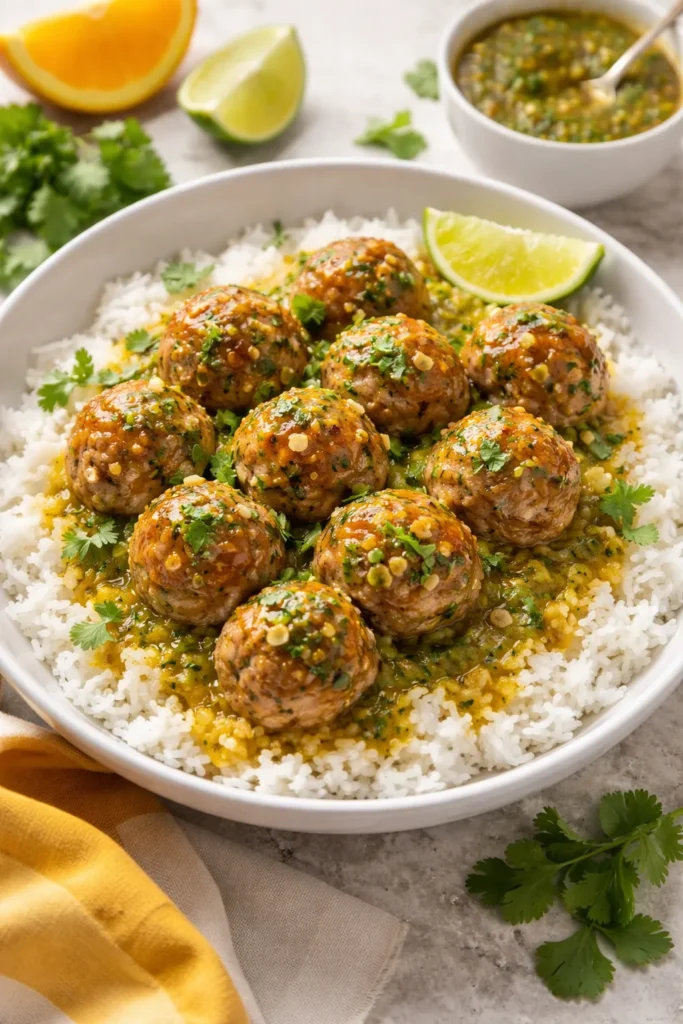
This is the most creative departure in this roundup — and one of the most weeknight-friendly. Instead of a long braise, lean ground pork gets mixed with mojo seasonings and baked into meatballs that cook in under 20 minutes. The citrus mojo gets blended into a punchy, herb-forward sauce that you pour right over the top.
Combine two pounds of ground pork with breadcrumbs, grated onion, two eggs, a seeded and diced serrano pepper, fresh cilantro, minced garlic, ground cumin, salt, and pepper. Roll into 1-inch meatballs, arrange on a parchment-lined baking sheet, drizzle with olive oil, and bake at 400°F for 18 to 20 minutes until golden brown and cooked through. They come out with a lightly crisp exterior and a juicy, spiced interior.
Making the Blended Citrus Mojo Sauce
This sauce is what ties the whole dish together. Combine fresh cilantro leaves, olive oil, fresh orange juice, lime juice, a seeded serrano, minced garlic, a pinch of sugar, and salt in a blender or food processor. Pulse until coarsely ground — you want some texture, not a completely smooth purée. The result is bright green, vibrantly citrusy, and has just enough heat from the serrano to keep things interesting.
The Cilantro Question
Cilantro haters, you’re not left out. Swap it for flat-leaf parsley in both the meatballs and the sauce — you’ll get a more subtle herbal note, so add an extra squeeze of lime to compensate for the brightness you’re losing. Fresh basil also works and brings a slightly sweeter quality to the sauce.
Serve over: Mahatma white rice or jasmine rice, with the citrus mojo spooned liberally over the meatballs. These also work rolled up in burritos or tucked into enchiladas with leftover rice.
7. Cuban-Inspired Pulled Pork Bowl with Fresh Herb Mojo Sauce
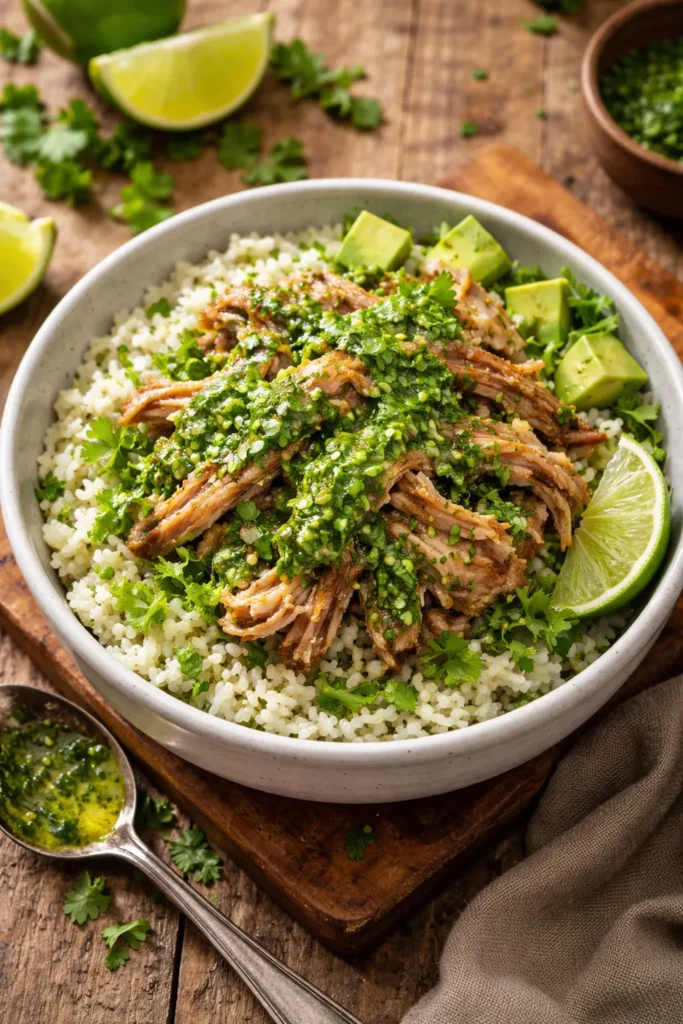
This version is the one to make when you want the mojo sauce to be a proper star rather than a byproduct of the cooking liquid. The blended fresh herb mojo — made separately and used both as a braising marinade and a finishing drizzle — is layered, vibrant, and complex in a way that changes the bowl entirely.
The mojo sauce here brings in cilantro, fresh mint, fresh oregano, garlic, jalapeño, orange juice, lime juice, smoked paprika, cumin, and olive oil, all blended until smooth. Half goes into the slow cooker or Instant Pot with the pork; the other half gets saved cold for serving. The reserved sauce has a freshness that the cooked portion loses, and drizzling it over the finished bowl right before eating brings everything alive.
Searing Before Slow Cooking
Don’t skip the sear, even if it feels like an extra step. Cutting the pork shoulder in half, dredging it in a little cassava flour (or regular flour), and searing it in a very hot pan until deeply golden brown on all sides before it goes into the cooker makes a measurable difference in the final flavor. That crust provides fond — caramelized protein and fat residue — that adds savory depth to the cooking liquid throughout the braise.
Bowl Customization Options
This is the most versatile recipe in the group. The shredded pork and fresh mojo sauce work in:
- Rice bowls with cilantro-lime rice, black beans, romaine, halved cherry tomatoes, and thinly sliced red onion
- Tacos in warm corn tortillas with a smear of guacamole
- Cuban sandwiches with Swiss cheese, pickled jalapeños, and yellow mustard pressed in a panini maker
- Quesadillas with black beans and pepper Jack cheese
- Nachos with black beans, shredded Monterey Jack, and pico de gallo
8. Mojo Pork Tacos with Cilantro-Lime Rice
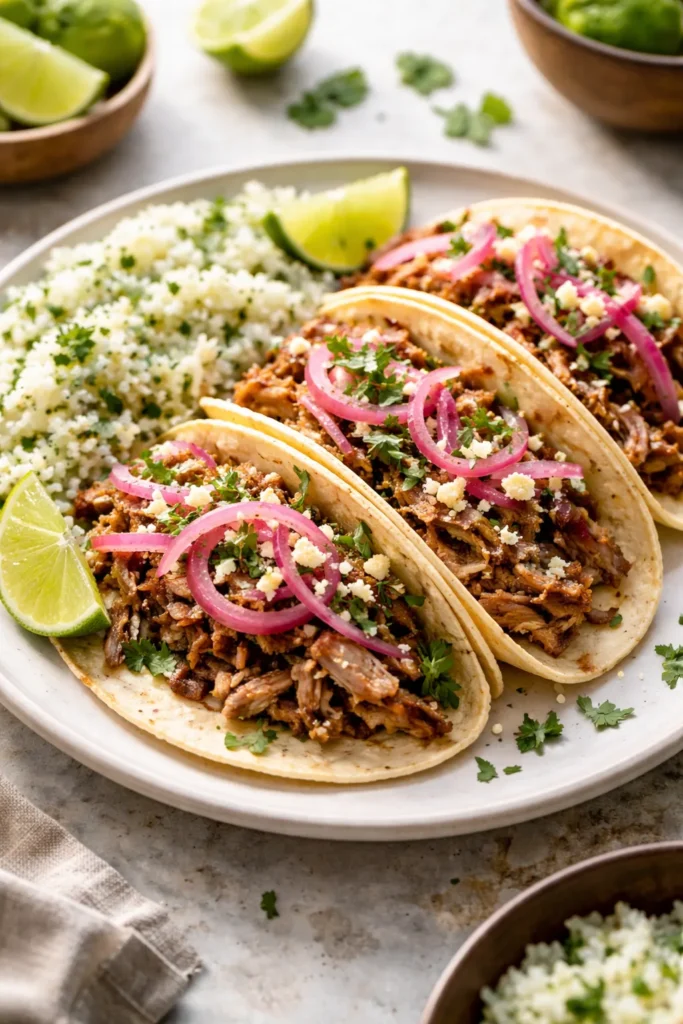
The final recipe here strips the bowl format down and leans into the taco build — still using the mojo pork as the core, but focusing on toppings and texture contrasts that make each bite a little different from the last. Pickled red onions, fresh cilantro, crumbled cotija cheese, a swipe of avocado crema, and a squeeze of lime over warm corn tortillas.
The pork for this version follows the basic slow cooker method — pork shoulder in orange juice, lime juice, garlic, cumin, smoked paprika, oregano, jalapeño, and salt. Eight to ten hours on low, then shredded with two forks right in the cooking liquid. The key step that elevates it: spread the shredded pork onto a sheet pan and pop it under the broiler for 5 to 8 minutes until the edges start to crisp up and caramelize. Those slightly charred, crispy bits distributed through the tender meat give you the textural contrast that makes great carnitas so irresistible.
Making Quick Pickled Red Onions
Thinly slice one red onion and pack it into a jar. Pour over a mixture of half a cup of red wine vinegar, half a cup of warm water, a teaspoon of sugar, and half a teaspoon of salt. Let it sit at room temperature for at least 30 minutes — the onions will turn a vivid pink and the sharp raw bite will soften into something tangy and slightly sweet. They keep in the fridge for up to two weeks and are worth having around for everything.
The Cilantro-Lime Rice
Cook long-grain white rice according to the package directions. While it’s still hot, stir in the zest and juice of one lime, a big handful of chopped fresh cilantro, a drizzle of olive oil, and a pinch of salt. The lime juice seasons every grain individually and the cilantro perfumes the whole bowl. Serve the tacos alongside a scoop of this rice and a spoonful of black beans.
Pro tip: Warm corn tortillas directly over a gas flame for 20 to 30 seconds per side until they’re lightly charred and pliable. It makes a much bigger difference than warming them in the microwave.
What Makes Mojo Sauce So Good
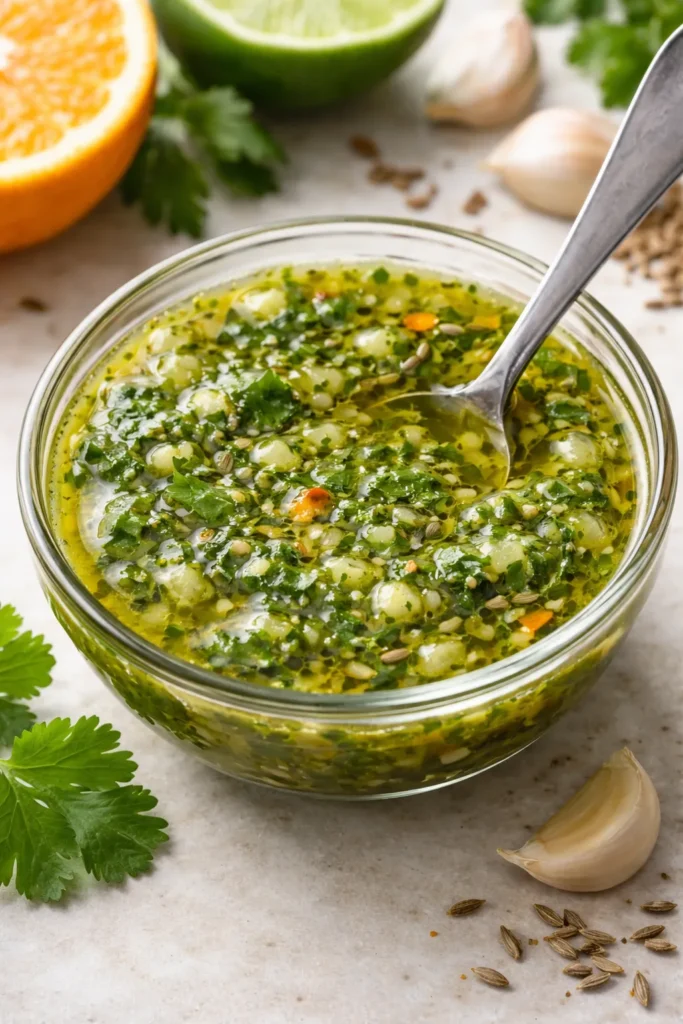
Understanding why mojo works as a marinade helps you use it more confidently across all these recipes. The acid in the citrus juice acts as a mild tenderizer for the exterior of the meat, but more importantly, it seasons the surface deeply and helps the pork retain moisture during the long cooking process — functioning almost like a flavorful brine.
Garlic is the backbone. Whether you’re using 6 cloves or a full head, the garlic mellows and sweetens during hours of cooking, losing its sharp bite and becoming something almost buttery. Fresh garlic gives you more punch than pre-minced jarred garlic, and the difference shows in the finished dish — use the real thing.
Cumin and dried oregano are the spices that anchor the mojo flavor profile and distinguish it from other citrus marinades. Together they add an earthy, slightly smoky complexity that keeps the bright acidity from reading as one-dimensional. Mexican oregano, where you can find it, has a more citrusy, slightly floral quality than Mediterranean oregano and is worth seeking out for these recipes.
The fat in the marinade — usually olive oil — isn’t just for flavor. It helps disperse the fat-soluble flavor compounds from the herbs and spices more evenly through the liquid, improving how well they penetrate the meat.
The Best Cut of Pork for Mojo Recipes
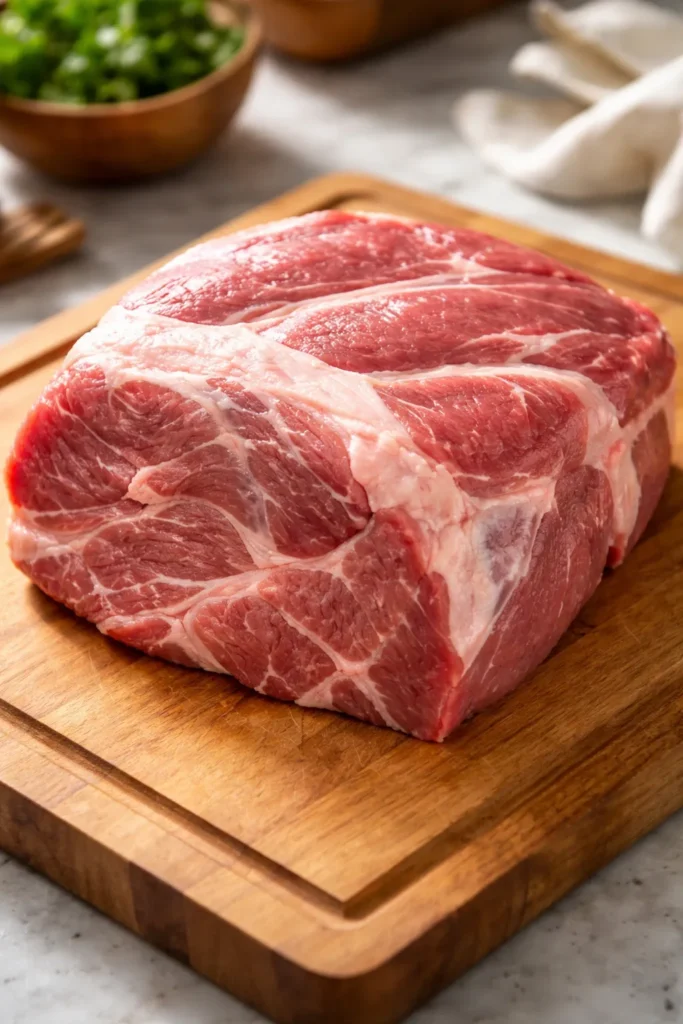
Every recipe in this list calls for pork shoulder or pork butt (the same muscle, just labeled differently by region), and that’s not arbitrary. This cut is heavily marbled with intramuscular fat and contains significant amounts of collagen — the connective tissue that breaks down into gelatin during long, slow cooking. That rendered collagen is what makes the meat so silky and moist, and why you can shred it with barely any effort after a proper braise.
Leaner cuts like pork loin or pork tenderloin don’t have enough fat or collagen to survive long cooking without drying out. A pork loin will be dry and tough after 8 hours in a slow cooker; a pork shoulder will be spectacular. If you only have access to pork loin, cut the cooking time dramatically and don’t expect the same shredding texture.
Bone-in versus boneless comes down to convenience. Bone-in shoulder has slightly more flavor because the marrow contributes to the cooking liquid, but boneless is easier to cut, sear, and shred. Either works perfectly in all eight recipes above.
For scoring the fat cap — which the oven-braised and smoked versions recommend — use a sharp knife and cut only through the fat layer, not into the meat itself. Deep cuts about 1.5 inches apart in a crosshatch pattern give the seasoning maximum surface area to work with.
How to Build the Perfect Cuban Rice Bowl
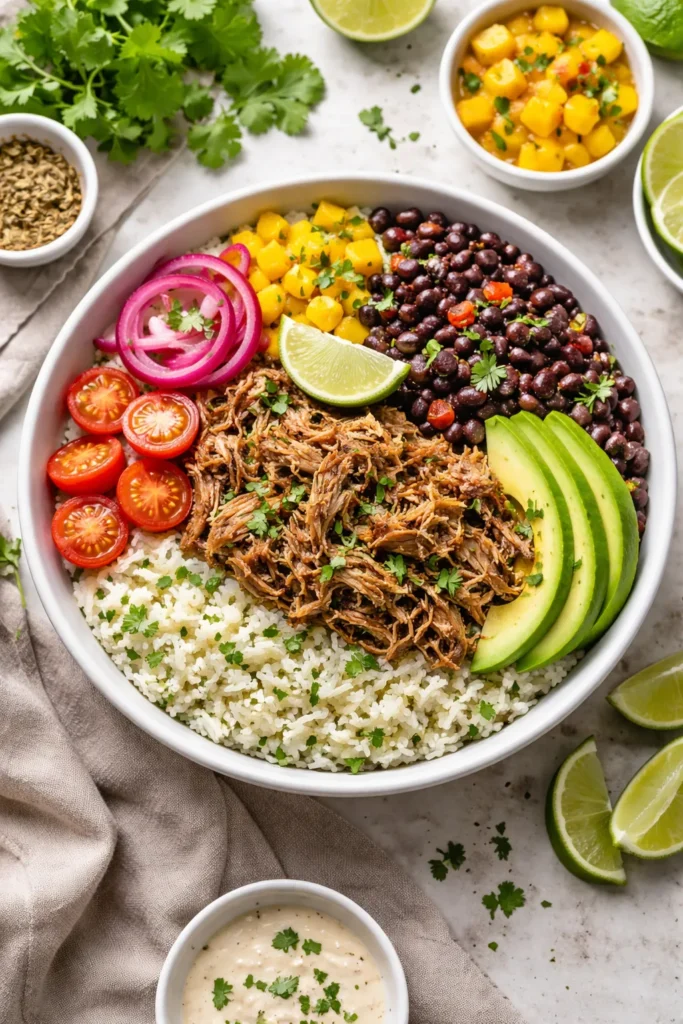
The bowl format works because each component serves a specific function, and understanding those functions lets you customize based on what you have on hand.
The base layer — rice, cauliflower rice, or chopped romaine — provides the neutral, starchy (or textural) platform that absorbs the mojo drippings and keeps the bowl from feeling too rich. Plain white rice, cilantro-lime rice, yellow turmeric rice, and coconut rice all work. Pick based on how much you want the rice to contribute versus stay in the background.
The protein layer — the shredded mojo pork — goes on next while still warm. The residual heat from the pork slightly warms the rice beneath it, making the whole bowl feel cohesive rather than like separate components piled together.
The bean layer brings both protein and a creamy, earthy counterpoint to the bright citrus. Cuban-style black beans with oregano and red wine vinegar are the traditional choice, but pinto beans work too. Don’t rinse canned beans before using them in a saucy preparation — the bean liquid (aquafaba) adds body to whatever you’re simmering them in.
The fresh toppings — avocado, tomato, cilantro, pickled onion, lime — are what transform the bowl from good to outstanding. These go on last and stay uncooked, providing the textural contrast and brightness that balances the richness of the meat. Don’t skip the lime wedge; a squeeze right before eating makes every element taste more vibrant.
The finishing sauce — whether it’s the reserved mojo cooking liquid, a blended fresh herb sauce, or a quick mojo vinaigrette — ties the whole bowl together and gives it that cohesive, restaurant-quality feeling.
Final Thoughts
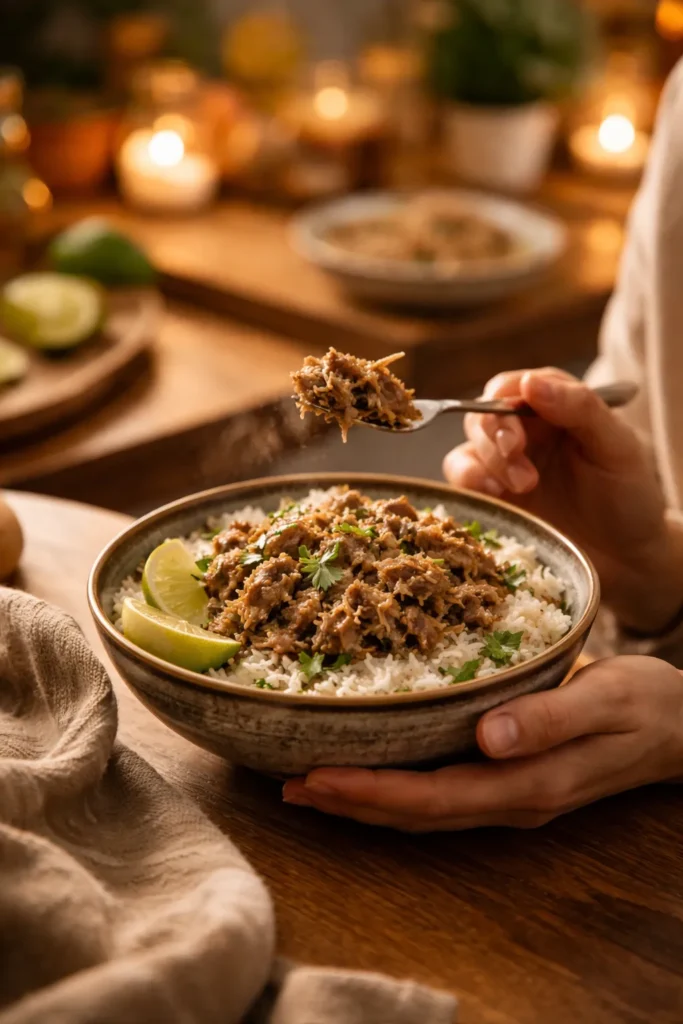
Mojo pork is one of those genuinely forgiving recipes where the technique varies but the results are consistently excellent. You can braise it in a Dutch oven, pressure cook it in an Instant Pot, smoke it over wood chips, or let it cook itself in a slow cooker — the garlic and citrus marinade does the heavy lifting every time.
The most important thing to remember across all eight recipes: use pork shoulder, don’t rush the cook, and always save the cooking liquid. That liquid, strained and either reduced or used as-is, is effectively a bonus sauce that takes the bowl from good to genuinely memorable.
If you’re cooking for a group, the slow cooker versions are the most practical — the meat stays warm on the keep-warm setting and people can build their own bowls. If you’re cooking for yourself and want something more considered, the oven-braised version with the caramelized fat cap is the one worth the extra attention.
Start with the classic slow cooker bowl if this is new territory. Once you see how straightforward it is and how dramatically good the results taste, the other seven variations will start looking much more approachable.