Your muscles have just been through a lot. Whether you pushed through a heavy squat session, finished a punishing HIIT circuit, or logged a long run, the moment you stop moving is the moment your body starts demanding resources to repair the damage you’ve deliberately done to it. That window right after training — roughly 30 to 90 minutes — is when your cells are primed to absorb nutrients most efficiently, and what you eat during that period has a direct impact on how quickly you recover and how much muscle you actually build.
Protein bowls have become one of the smartest answers to the post-workout meal question, and for good reason. They’re not a trend. They’re just good food science packaged in a convenient, customizable format: a lean protein source, a complex carbohydrate base, vegetables for micronutrients, and a sauce or fat source to tie it all together. The result is a balanced macronutrient meal that checks every recovery box without requiring a chef’s degree or an hour in the kitchen.
The eight recipes here range from a quick five-minute Korean tuna bowl to a deeply satisfying Indian-spiced lentil bowl that batch-cooks beautifully for the whole week. Some lean plant-based, some pack serious animal protein, and all of them deliver at least 20 grams of protein per serving — with several pushing past 35 grams. Grab your base grain, fire up your protein, and build something that actually earns back what you spent.
Table of Contents
- What Makes a Great Post-Workout Protein Bowl
- The Protein Bowl Formula
- Why Bowls Beat Most Post-Workout Alternatives
- 1. Mexican Chicken Burrito Bowl
- 2. Korean Bibimbap Bowl with Gochujang Chicken
- 3. Thai Peanut Tofu Bowl
- 4. Chicken and Freekeh Bowl with Avocado Cream
- 5. Korean Tuna Power Bowl with Sesame Dressing
- 6. Spicy Indian-Inspired Lentil and Chickpea Bowl
- 7. Blackened Salmon Farro Bowl with Miso Ginger Dressing
- 8. Basic Vegetarian Protein Bowl (The 10-Minute Option)
- How to Meal Prep These Bowls for the Whole Week
- Storage Guidelines That Actually Work
- Scaling Protein Up or Down for Your Goals
- Toppings That Add Real Nutritional Value
- Final Thoughts
What Makes a Great Post-Workout Protein Bowl
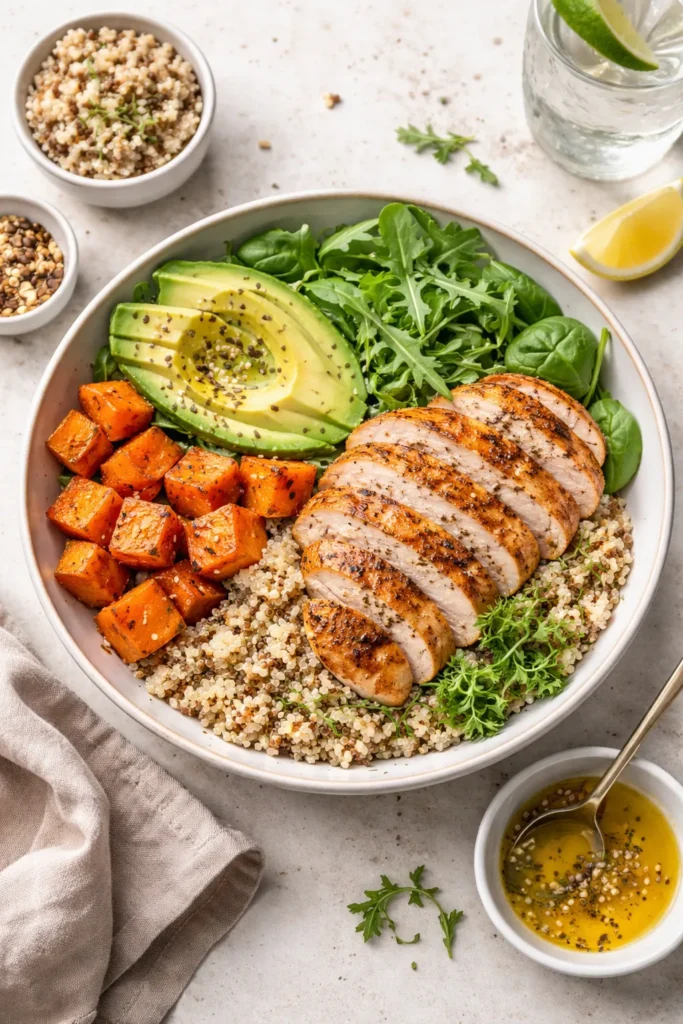
Before getting into specific recipes, it’s worth understanding what separates a genuinely effective post-workout bowl from one that just looks healthy on Instagram.
Your muscles experience micro-tears during resistance and high-intensity training. Protein provides the amino acids — particularly leucine — needed to trigger muscle protein synthesis and begin repairing those tears. The general target for a post-workout meal is 20–40 grams of protein, which research consistently points to as the range that maximally stimulates synthesis in most adults.
Carbohydrates matter just as much as people sometimes overlook. Hard training depletes muscle glycogen, and without replenishing those stores, your body can actually break down muscle tissue for fuel in the hours that follow. A base of brown rice, quinoa, farro, or sweet potato delivers the complex carbs your glycogen needs without spiking and crashing your blood sugar.
Healthy fats — from avocado, nuts, seeds, or tahini — slow digestion slightly and support the absorption of fat-soluble vitamins from your vegetables. They also help you stay full long enough that you’re not raiding the pantry an hour later.
The Protein Bowl Formula
Every bowl in this guide follows the same core architecture:
- Base layer: Brown rice, quinoa, farro, freekeh, or cauliflower rice
- Protein layer: Chicken, steak, salmon, tuna, tofu, lentils, eggs, or a combination
- Vegetable layer: Raw, roasted, or pickled — at least two types for texture contrast
- Sauce or dressing: The flavor anchor that ties everything together
- Finishing toppings: Seeds, nuts, fermented vegetables, fresh herbs, or citrus
Why Bowls Beat Most Post-Workout Alternatives
Protein shakes have their place, but they don’t satisfy hunger the way a full bowl does. The act of chewing activates satiety hormones more effectively than drinking the same calories in liquid form. Bowls also give you flexibility — you can scale the carb load up or down depending on whether you’re trying to build muscle or stay lean, without the rigid macro ceiling of a pre-made shake.
1. Mexican Chicken Burrito Bowl
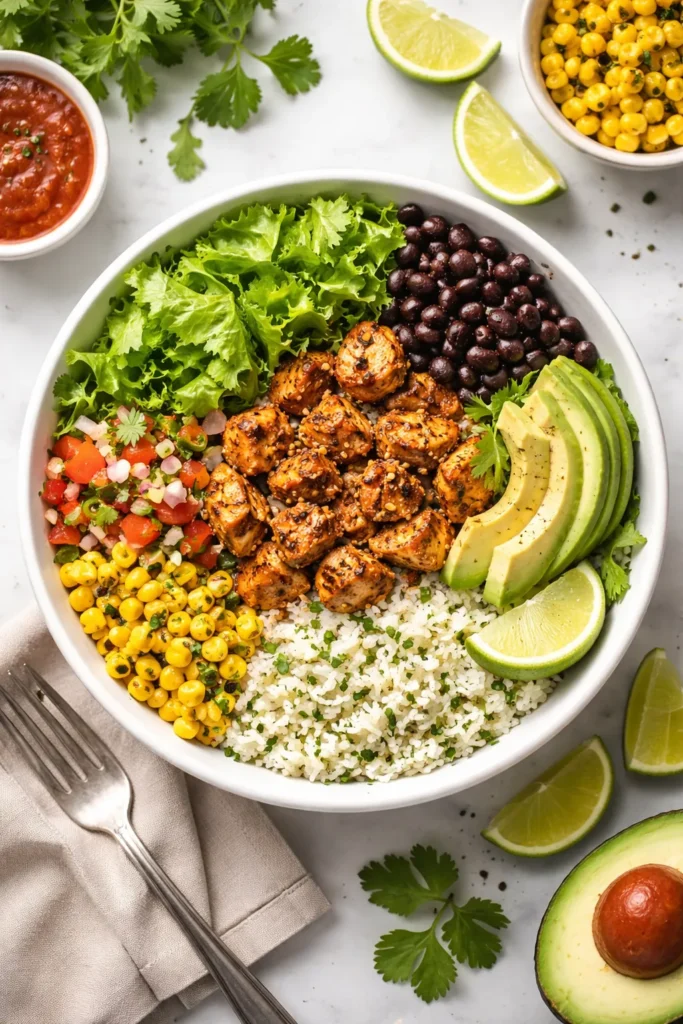
This is the post-workout workhorse. It’s under 350 calories per serving when portioned for fat loss, but it delivers close to 39 grams of protein — a genuinely impressive number for a bowl that takes about 30 minutes and uses ingredients most people already have. Think of it as Chipotle at home, but made with taco seasoning you control and lime rice that actually tastes like something.
The combination of seasoned chicken, black beans, and corn gives you three distinct protein sources hitting at once, and the romaine keeps it light without sacrificing volume. Meal prep this on Sunday for three lunches.
Yield: 3 bowls Prep Time: 10 minutes Cook Time: 20 minutes Total Time: 30 minutes Difficulty: Beginner — straightforward stovetop cooking, no special equipment needed.
For the Taco Chicken:
- 2 boneless, skinless chicken breasts, cut into thin filets
- 1 tablespoon taco seasoning (homemade or store-bought)
- Olive oil spray
For the Lime Rice:
- ½ cup white or brown rice
- 1 cup water
- 1 teaspoon fine salt
- Juice of 1 lime
For the Bowl:
- 1 can (15 oz) black beans, drained and rinsed
- ¾ cup frozen corn, thawed
- 1 small head romaine lettuce, chopped
- Optional toppings: sliced avocado, salsa, fresh cilantro, jalapeño slices, Greek yogurt in place of sour cream
Make the Taco Chicken:
- Season both sides of each chicken fillet generously with taco seasoning.
- Heat a skillet over medium heat and coat with olive oil spray. Once shimmering, add the chicken and cook 5–8 minutes per side, until the internal temperature reads 165°F and the exterior is slightly caramelized at the edges.
- Transfer to a cutting board and rest for 3 minutes before chopping into bite-sized pieces.
Make the Lime Rice:
- Combine rice and water in a small pot and bring to a boil over high heat. Reduce to low, cover, and cook until all water is absorbed — about 18 minutes for white rice, 35 minutes for brown.
- Fluff with a fork and immediately toss with the salt and lime juice while still warm.
Assemble:
- Divide the lime rice among three containers or bowls as the base. Layer on the chicken, black beans, corn, and romaine. Add your toppings of choice and serve immediately, or refrigerate for up to 4 days.
Pro tip: Marinate the chicken in the taco seasoning with a splash of lime juice the night before for noticeably deeper flavor and juicier texture.
2. Korean Bibimbap Bowl with Gochujang Chicken
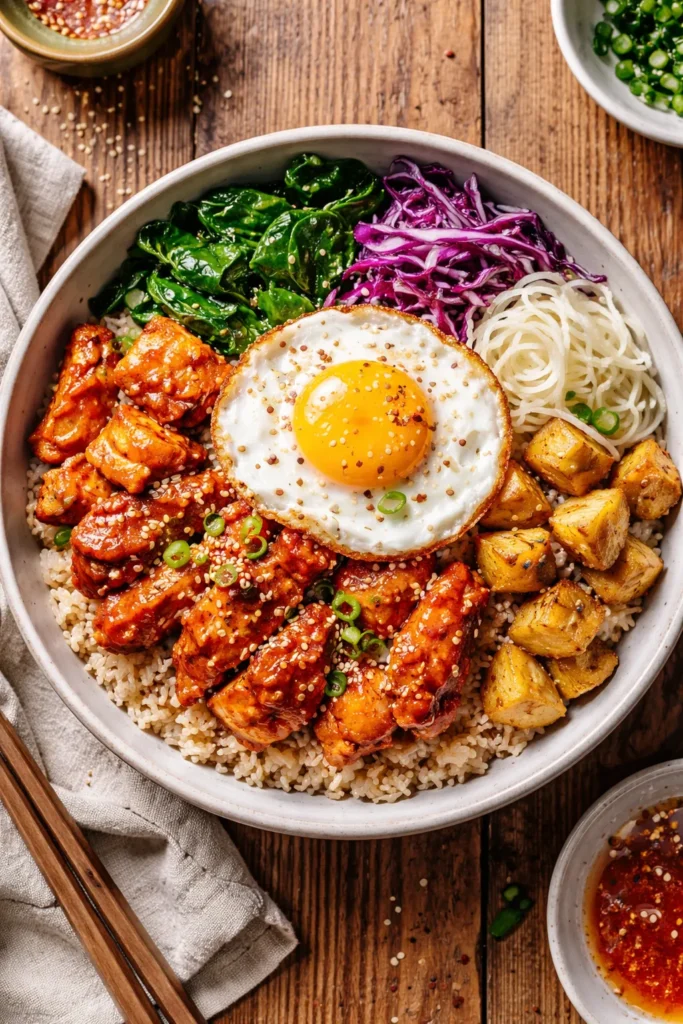
This one hits differently. The gochujang — a fermented Korean chili paste — adds heat, umami, and a slight sweetness that makes every component of this bowl taste intentional rather than assembled. A well-made bibimbap-style bowl delivers 30+ grams of protein, especially when you add a fried or soft-boiled egg on top, and the kimchi provides gut-supportive probiotics that are genuinely useful for inflammation recovery after hard training.
Roasted potatoes give this bowl a satisfying density that pure rice bowls sometimes miss — you finish it feeling like you actually ate a meal.
Yield: 2 bowls Prep Time: 10 minutes Cook Time: 25 minutes Total Time: 35 minutes Difficulty: Beginner — mostly assembly with simple stovetop cooking.
For the Bowl:
- 2 boneless, skinless chicken breasts (or thighs for more fat and flavor)
- 2 tablespoons gochujang paste
- 1 tablespoon low-sodium soy sauce
- 1 teaspoon sesame oil
- 1 cup cooked brown rice
- 1 cup baby spinach or shredded cabbage
- ½ cup daikon radish, thinly sliced
- ½ cup kimchi
- 1 cup roasted baby potatoes or sweet potatoes, cubed
- 2 eggs (fried or soft-boiled)
- 1 tablespoon toasted sesame seeds
- Sliced scallions, to finish
- Whisk together the gochujang, soy sauce, and sesame oil in a small bowl. Coat the chicken on all sides.
- Heat a nonstick pan over medium-high and cook the chicken 6–7 minutes per side until cooked through. Rest 3 minutes, then slice thin.
- Fry or soft-boil the eggs to your preference. For a jammy egg, bring water to a boil, lower eggs in gently, and cook exactly 7 minutes before transferring to ice water.
- Divide brown rice between two bowls. Arrange chicken, spinach, daikon, kimchi, and potatoes in sections around the bowl — presentation matters here.
- Nestle the egg in the center. Sprinkle with sesame seeds and scallions. Drizzle with extra gochujang if you like heat.
Worth knowing: Kimchi isn’t just a flavor add — its active fermentation cultures support gut health, and the capsaicin in chili has mild anti-inflammatory properties, both of which matter for post-workout recovery.
3. Thai Peanut Tofu Bowl
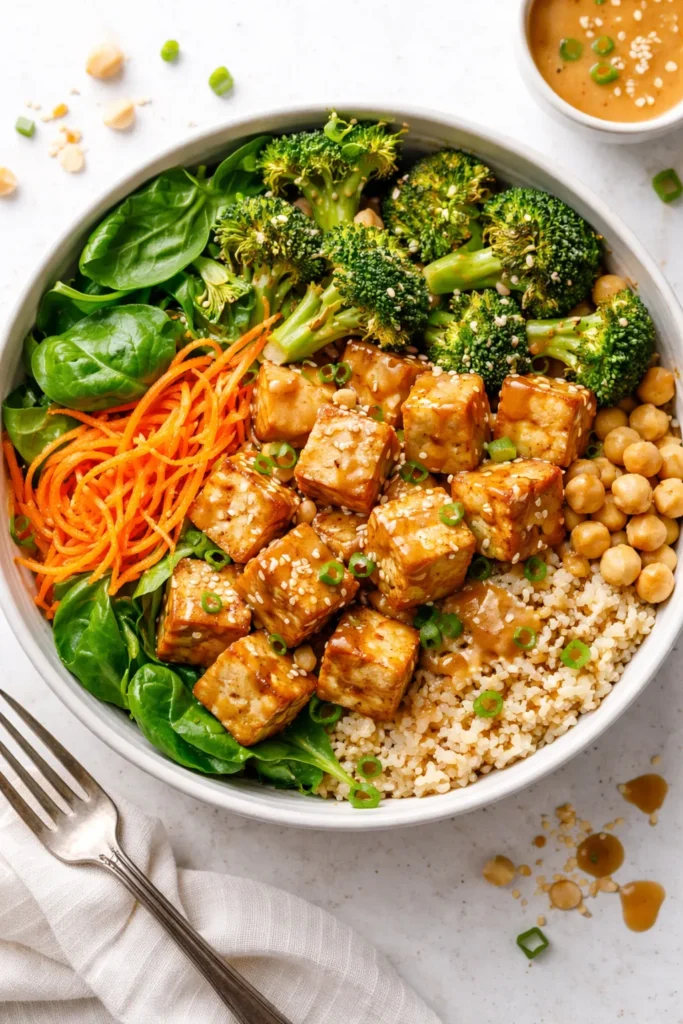
Plant-based doesn’t mean protein-deficient — you just have to build smarter. This bowl layers baked tofu over brown rice with roasted broccoli, shredded carrots, and a genuinely addictive homemade peanut sauce that you’ll want to put on everything. Add chickpeas alongside the tofu and you’re looking at 23+ grams of plant protein per serving, which is respectable for a fully vegan bowl.
The key to making tofu actually work in a post-workout bowl is pressing and baking it at high heat until the edges go golden and slightly crispy. Soft, watery tofu straight from the pack will disappoint you. Properly baked tofu has real texture and absorbs the peanut sauce like a sponge.
Yield: 4 bowls Prep Time: 15 minutes Cook Time: 25 minutes Total Time: 40 minutes Difficulty: Intermediate — requires pressing tofu and roasting simultaneously, but nothing technically difficult.
For the Bowl:
- 16 oz extra-firm tofu, pressed for at least 15 minutes and cubed
- 1 cup chickpeas, drained and rinsed
- 2 cups cooked brown rice
- 2 cups broccoli florets
- 1 cup shredded carrots
- 2 cups fresh spinach
- 2 teaspoons sesame or olive oil
- Salt and pepper
For the Peanut Sauce:
- ¼ cup creamy peanut butter
- ¼ cup low-sodium soy sauce
- ¼ cup pure maple syrup
- 2 teaspoons chili garlic sauce
- 1–2 tablespoons toasted sesame oil
- Preheat oven to 400°F (200°C). Spread tofu cubes in a single layer on a lined baking sheet. Bake 25 minutes, flipping once at the 15-minute mark, until golden and firm at the edges.
- Toss broccoli with oil, salt, and pepper. Roast on a separate tray for 20 minutes alongside the tofu.
- Whisk all peanut sauce ingredients together until smooth. Add 1–2 tablespoons of warm water if it’s too thick to drizzle.
- Toss half the peanut sauce with the hot tofu directly on the baking sheet. Return to the oven for 3–4 minutes until the sauce caramelizes slightly onto the cubes.
- Divide rice among four bowls. Layer in the broccoli, carrots, spinach, and chickpeas. Top with glazed tofu and drizzle generously with remaining peanut sauce.
Pro tip: Pressed tofu holds shape better and absorbs flavors more deeply. Wrap the block in a clean kitchen towel, set a heavy pan on top, and let it sit for 20 minutes before cutting.
4. Chicken and Freekeh Bowl with Avocado Cream
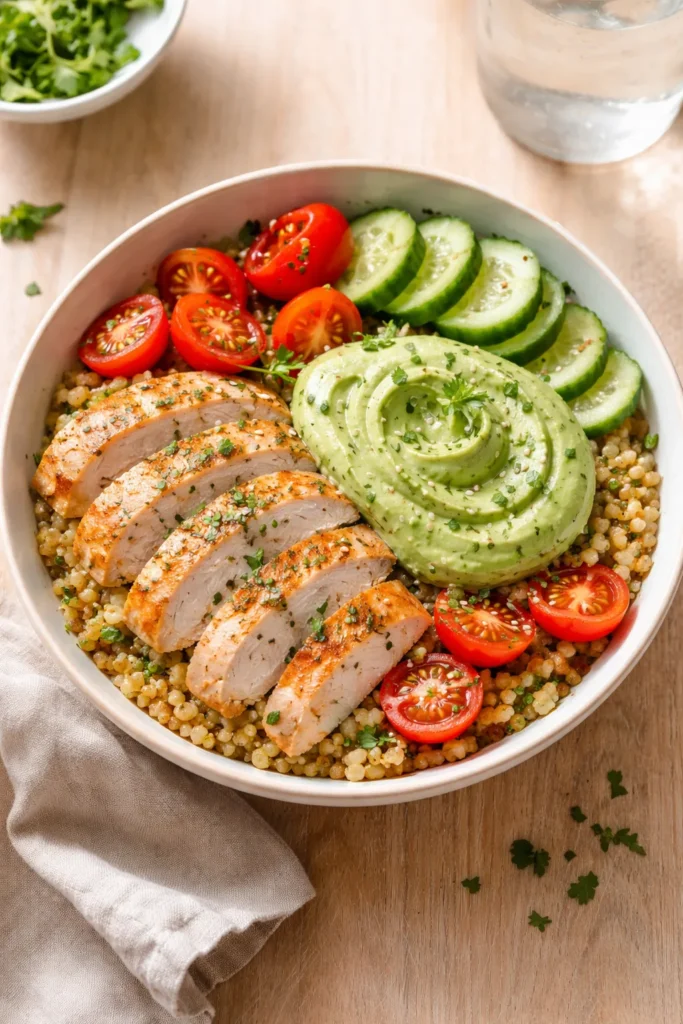
Freekeh is wheat that’s been harvested young and roasted, giving it a nutty, slightly smoky flavor that you won’t get from plain rice or quinoa. It also clocks in with more protein and fiber per serving than either of those, making it a legitimately better base for a post-workout bowl if you can find it. This bowl pairs freekeh with 48 grams of protein from chicken breast and avocado cream — a blended sauce made from avocado, Greek yogurt, lime, and chili powder that completely changes the texture of the final bowl.
It’s fresh, bright, and satisfying without being heavy — ideal when you’ve trained hard but don’t want to feel weighed down.
Yield: 2 bowls Prep Time: 15 minutes Cook Time: 20 minutes Total Time: 35 minutes Difficulty: Beginner — the avocado cream blends in under a minute.
For the Bowl:
- 8 oz cooked boneless, skinless chicken breast, sliced or shredded
- 1 cup cooked freekeh (or quinoa as a substitute)
- 20 cherry tomatoes, halved
- 1 cup cucumber, thinly sliced
- Fresh parsley or cilantro, to finish
For the Avocado Cream:
- 1 ripe avocado, halved and pitted
- ¼ cup plain fat-free Greek yogurt
- Juice of 1 fresh lime
- ½ teaspoon fine salt
- Pinch of chili powder, or more to taste
- Cook chicken to 165°F using your preferred method — grilled, baked, or pan-seared all work. Slice thin against the grain.
- Blend avocado, Greek yogurt, lime juice, salt, and chili powder in a blender or food processor for 30–45 seconds until completely smooth. Taste and add more chili powder if you want more heat.
- Divide freekeh between two bowls. Arrange sliced chicken, cherry tomatoes, and cucumber on top.
- Dollop the avocado cream generously over each bowl. Finish with fresh herbs.
Insider note: If the avocado cream oxidizes before you’re ready to serve, press a piece of plastic wrap directly onto its surface in the bowl to keep it bright green for up to an hour.
5. Korean Tuna Power Bowl with Sesame Dressing
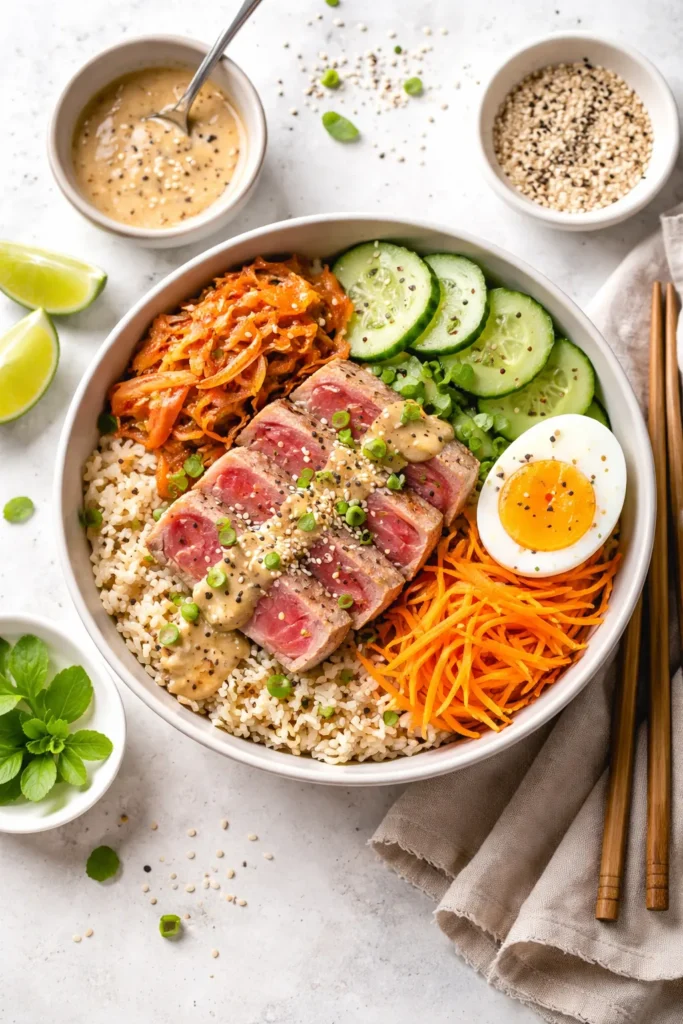
This one is for the days when you have exactly five minutes and zero desire to cook. Canned or pouched tuna — specifically the kind dressed with gochujang, a touch of soy, and mayo or mashed avocado — transforms into a Korean-inspired protein centerpiece that sits beautifully over brown rice with all the textural additions that keep it interesting: kimchi, crunchy cucumber, shredded carrot, and a hard-boiled egg.
Tuna is one of the leanest, highest-protein whole foods you can open from a can. A standard 8-ounce serving delivers 22–28 grams of protein with essentially no fat. Combined with a sesame-honey dressing and a solid grain base, this bowl comes together faster than most protein shakes, and it’s genuinely satisfying.
Yield: 1 bowl Prep Time: 5 minutes Cook Time: 0 minutes (using pre-cooked rice) Total Time: 5 minutes Difficulty: Beginner — zero cooking required if your rice is already made.
For the Korean Tuna:
- 8 oz canned or pouched tuna, drained
- 1 tablespoon mayonnaise (or mashed avocado for a lighter version)
- 1 teaspoon gochujang sauce (substitute: chili paste or red pepper flakes in a pinch)
- 1 teaspoon low-sodium soy sauce
- ¼ cup chopped celery
For the Sesame Dressing:
- 1 tablespoon toasted sesame oil
- 1 tablespoon low-sodium soy sauce
- 1 teaspoon honey
- Pinch of crushed red pepper
Bowl Assembly:
- 1 cup cooked brown rice
- 2 cups leafy greens (romaine, spinach, or mixed)
- ¼ cup shredded carrots
- ¼ cup cucumber, sliced thin
- 1 large hard-boiled egg, halved
- ¼ avocado, sliced
- 2 tablespoons kimchi
- 1 teaspoon toasted sesame seeds
- Mix all Korean tuna ingredients together in a small bowl until combined.
- Whisk together the sesame dressing in a separate small bowl.
- Layer rice and greens in your bowl. Arrange carrots, cucumber, avocado, and kimchi in sections.
- Spoon the tuna mixture on top. Place the halved egg alongside.
- Drizzle the sesame dressing over the entire bowl and finish with sesame seeds.
Pro tip: Hard-boil a batch of six eggs at the start of the week and keep them unpeeled in the fridge. They last up to seven days and turn any bowl into a more complete meal in seconds.
6. Spicy Indian-Inspired Lentil and Chickpea Bowl
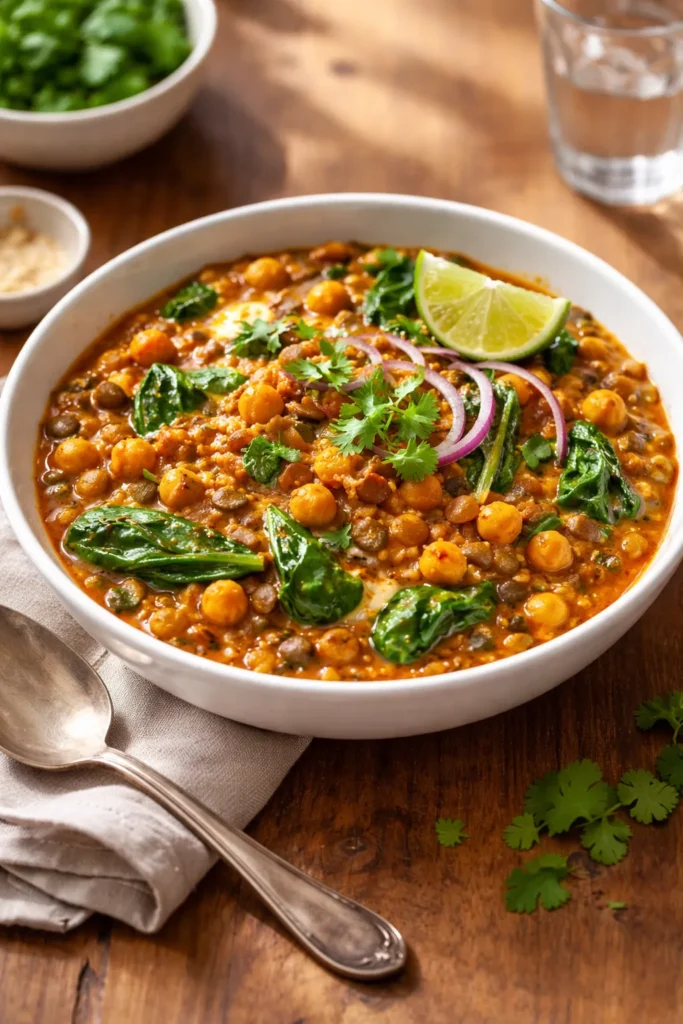
This is the bowl that convinces skeptics that plant-based eating can actually support serious training. Lentils and chickpeas together deliver 20+ grams of plant protein per serving, along with a fiber load that keeps you full for hours and a micronutrient profile — iron, folate, magnesium — that genuinely supports recovery and oxygen transport during your next session.
The sauce is a simplified version of an Indian butter-style base: canned tomatoes, Greek yogurt for creaminess, and a spice blend that leans warm and aromatic rather than face-melting. Served over brown rice with fresh microgreens or baby spinach on top, it’s a complete meal that batch-cooks for four servings in about 30 minutes.
Yield: 4 bowls Prep Time: 10 minutes Cook Time: 25 minutes Total Time: 35 minutes Difficulty: Beginner — one-pot sauce, minimal chopping.
For the Lentil Curry:
- 1 can (14 oz) green or brown lentils, drained and rinsed (or 1½ cups cooked from dry)
- 1 can (14 oz) chickpeas, drained and rinsed
- 1 can (14 oz) crushed tomatoes
- ½ cup plain Greek yogurt (full-fat works best)
- 1 small yellow onion, finely diced
- 3 cloves garlic, minced
- 1 tablespoon olive oil
- 1½ teaspoons garam masala
- 1 teaspoon ground cumin
- ½ teaspoon turmeric
- ½ teaspoon cayenne (adjust to your heat preference)
- Salt to taste
For the Bowl:
- 2 cups cooked brown rice, divided among 4 bowls
- 1 cup cherry tomatoes, halved
- ½ red onion, thinly sliced
- 2 handfuls microgreens or fresh baby spinach
- Fresh lemon juice, to finish
- Heat olive oil in a large saucepan over medium heat. Add the onion and cook 5 minutes until soft and translucent. Add garlic and cook another minute.
- Add garam masala, cumin, turmeric, and cayenne. Stir constantly for 30 seconds until fragrant — the spices will bloom in the oil and darken slightly.
- Pour in the crushed tomatoes. Stir and simmer 10 minutes, letting the sauce thicken.
- Add lentils and chickpeas. Stir to coat and simmer 8–10 minutes more, until everything is heated through and the sauce clings to the legumes.
- Remove from heat and stir in the Greek yogurt. Don’t add yogurt while the pan is on high heat or it will curdle — let it cool slightly first.
- Divide brown rice among four bowls. Spoon the lentil curry generously over the top. Add cherry tomatoes, red onion, and microgreens. Finish with a squeeze of fresh lemon.
7. Blackened Salmon Farro Bowl with Miso Ginger Dressing
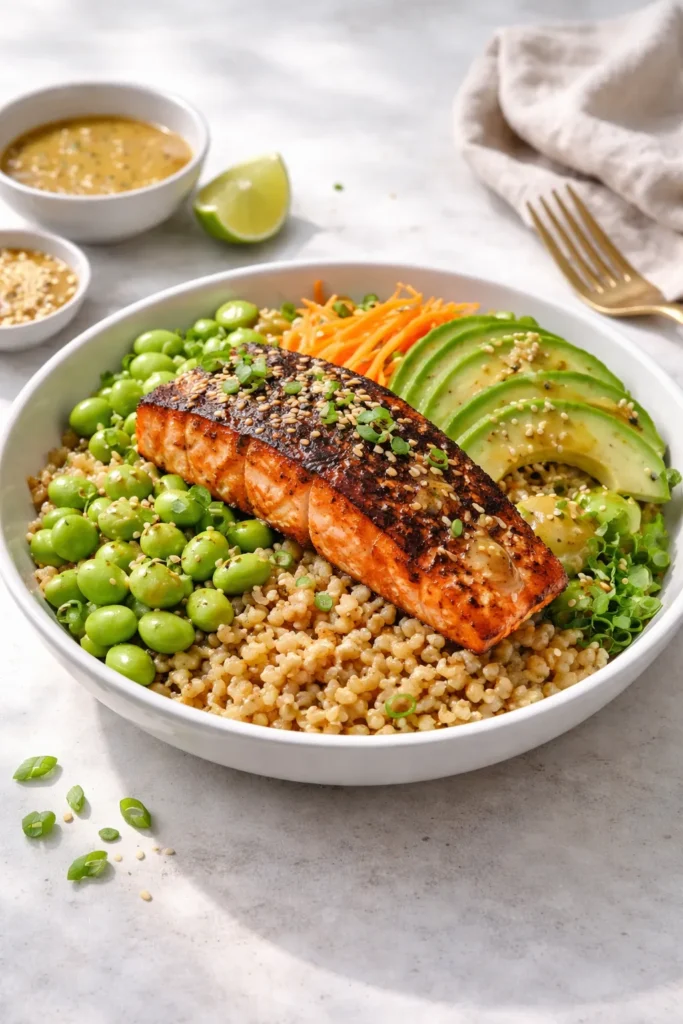
Salmon brings something to a post-workout bowl that chicken and tuna simply can’t: omega-3 fatty acids, specifically EPA and DHA, which have a well-documented role in reducing exercise-induced inflammation and supporting joint recovery. A 6-ounce fillet delivers 34–36 grams of protein alongside those anti-inflammatory fats, making this one of the most nutritionally complete recovery meals on this list.
Farro has a pleasantly chewy texture and a nuttier flavor than brown rice, and it holds up better to dressings without going mushy. The miso ginger dressing — just five ingredients whisked together — adds depth that makes this bowl feel restaurant-level.
Yield: 2 bowls Prep Time: 10 minutes Cook Time: 15 minutes Total Time: 25 minutes Difficulty: Intermediate — getting the salmon crust right requires attention, but the technique is simple once you’ve done it once.
For the Blackening Spice Rub:
- 1 teaspoon smoked paprika
- ½ teaspoon garlic powder
- ½ teaspoon onion powder
- ¼ teaspoon cayenne
- ¼ teaspoon dried oregano
- Salt and black pepper
For the Bowl:
- 2 salmon fillets (5–6 oz each), skin-on
- 1 cup cooked farro (or brown rice if you can’t find farro)
- 1 cup shelled edamame, thawed from frozen
- ½ cup cucumber, thinly sliced
- 1 cup shredded purple cabbage
- ¼ avocado per bowl, sliced
- 1 tablespoon sesame seeds
For the Miso Ginger Dressing:
- 2 tablespoons white miso paste
- 1 tablespoon rice vinegar
- 1 teaspoon fresh ginger, grated
- 1 teaspoon sesame oil
- 1 tablespoon warm water to thin
- Mix all blackening spice ingredients together. Pat the salmon fillets completely dry with paper towels — this step is non-negotiable for getting a proper crust. Press the spice mixture firmly onto the flesh side of each fillet.
- Heat a cast-iron or heavy skillet over high heat until it just starts to smoke. Add a thin layer of oil. Place salmon flesh-side down and cook 3–4 minutes without touching it — the crust needs uninterrupted contact to set properly.
- Flip skin-side down and cook 3–4 minutes more until the internal temperature reaches 125–130°F for medium or 145°F for fully cooked. The skin will crisp up beautifully.
- Whisk all miso ginger dressing ingredients together until smooth.
- Divide farro between two bowls. Arrange edamame, cucumber, cabbage, and avocado around the bowl. Place the salmon fillet on top — you can remove the skin or leave it on.
- Drizzle the miso ginger dressing over everything and finish with sesame seeds.
Worth knowing: If your salmon fillet has been refrigerated, let it sit at room temperature for 10 minutes before cooking. Cold fish hitting a hot pan drops the temperature and can cause it to steam rather than sear.
8. Basic Vegetarian Protein Bowl (The 10-Minute Option)
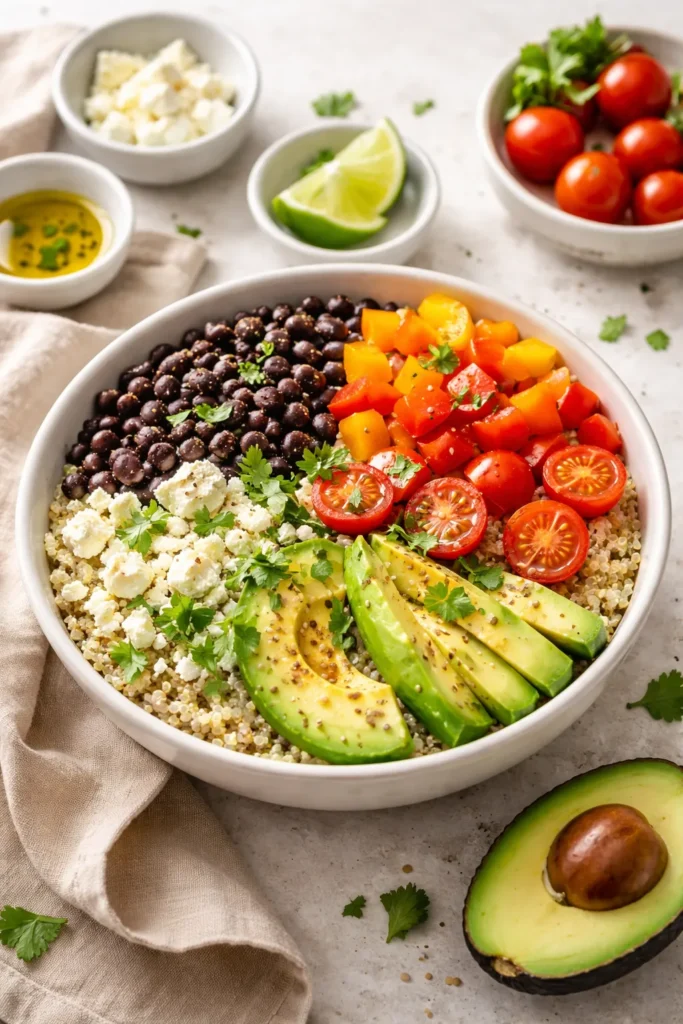
Not every post-workout meal needs to be a production. On the days when you’re tired, hungry, and have exactly 10 minutes before your energy crashes completely, this bowl is the answer. Black beans, fresh bell pepper, cherry tomatoes, avocado, and crumbled feta come together with a squeeze of lemon in the time it takes to change out of your gym clothes. No cooking required — just assembly.
This is more modest in protein at around 16 grams, which makes it better suited as a recovery snack or a light post-workout meal when you’ll be eating a full dinner within two hours. If you need to push it closer to 25–30 grams, add a pouch of tuna, leftover rotisserie chicken, or a couple of hard-boiled eggs alongside.
Yield: 1 bowl Prep Time: 5–10 minutes Cook Time: 0 minutes Total Time: 10 minutes Difficulty: Beginner — no cooking at all, pure assembly.
Ingredients:
- ½ cup black beans, drained and rinsed
- ¼ cup bell pepper, any color, chopped (orange and red are sweeter than green)
- ¼ cup cherry tomatoes, halved
- ½ ripe avocado, chopped (press the outside gently — it should yield slightly but not feel mushy)
- 2 tablespoons crumbled feta (or goat cheese for a creamier, milder flavor)
- Juice of ½ fresh lemon
- Salt, black pepper, and garlic powder to taste
Optional protein boosters:
- 1 pouch or can of tuna, drained (+22g protein)
- ½ cup cooked chickpeas (+7g protein)
- 2 tablespoons hemp seeds (+6g protein)
- ½ cup cooked quinoa or farro as a base layer
- Combine black beans, bell pepper, cherry tomatoes, avocado, and feta in a dinner-sized bowl.
- Squeeze the lemon juice over the top and season with salt, pepper, and garlic powder.
- Stir gently — the avocado will break down slightly and coat the other ingredients, acting as a natural binding fat that gives the bowl richness without a separate dressing.
- Taste and adjust seasoning. Eat cold or microwave for 30–45 seconds on high and stir before eating. Serve with multigrain crackers, pita chips, or over a base of cooked quinoa if you want more carbohydrates.
Pro tip: If you prep bell pepper, tomatoes, and rinsed beans ahead and keep them in separate containers in the fridge, you can build this bowl in under two minutes flat — just add fresh avocado and feta at assembly time.
How to Meal Prep These Bowls for the Whole Week
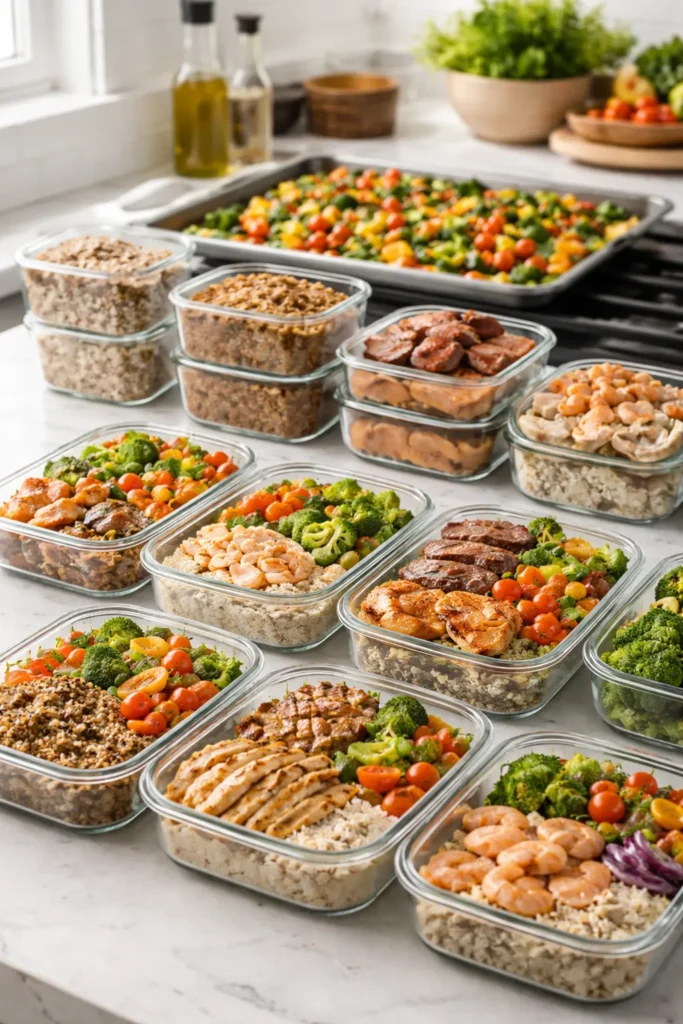
The smartest move with protein bowls isn’t making them one at a time — it’s building what cooks call a “base batch” system that cuts your total prep time by two-thirds.
On a Sunday afternoon, cook a double batch of brown rice, farro, or quinoa. It takes the same amount of time whether you make one cup or four, and cooked grains store perfectly in the fridge for five days. Roast a sheet pan of whichever vegetables you’re using across the week — broccoli, sweet potatoes, carrots, and bell peppers all roast well together at 400°F in about 25 minutes.
From there, your protein is the only component that changes day to day. Monday you slice up chicken breast. Wednesday you open a can of tuna. Thursday you bake tofu. The bowl assembles in four minutes when the foundation is already done.
Storage Guidelines That Actually Work
Cooked grains: airtight container in the fridge, 5 days maximum. They also freeze beautifully — portion them into freezer bags flat and they thaw in 60 seconds in the microwave.
Proteins: chicken and steak keep 3–4 days refrigerated; tuna and salmon are best the day of, though salmon holds well for two days when stored separately from any acid-based dressing. Lentils and bean-based curries actually improve after a day in the fridge as flavors deepen.
Avocado and fresh herbs: always add these right before eating, never ahead of time. A squeeze of lemon or lime juice on cut avocado buys you maybe two hours before it starts to oxidize.
Scaling Protein Up or Down for Your Goals
If your goal is muscle building, the rule of thumb is pushing each bowl toward 35–40 grams of protein and including a generous carbohydrate base — 1 to 1.5 cups of cooked grain per bowl. The steak and freekeh bowl and the salmon farro bowl are your best bets here.
Fat loss? Keep the carbohydrate base measured at around ½ cup cooked grain per bowl, and lean heavily on vegetables for volume. The Mexican chicken bowl at 333 calories per serving and the basic vegetarian bowl are structured for this.
Toppings That Add Real Nutritional Value
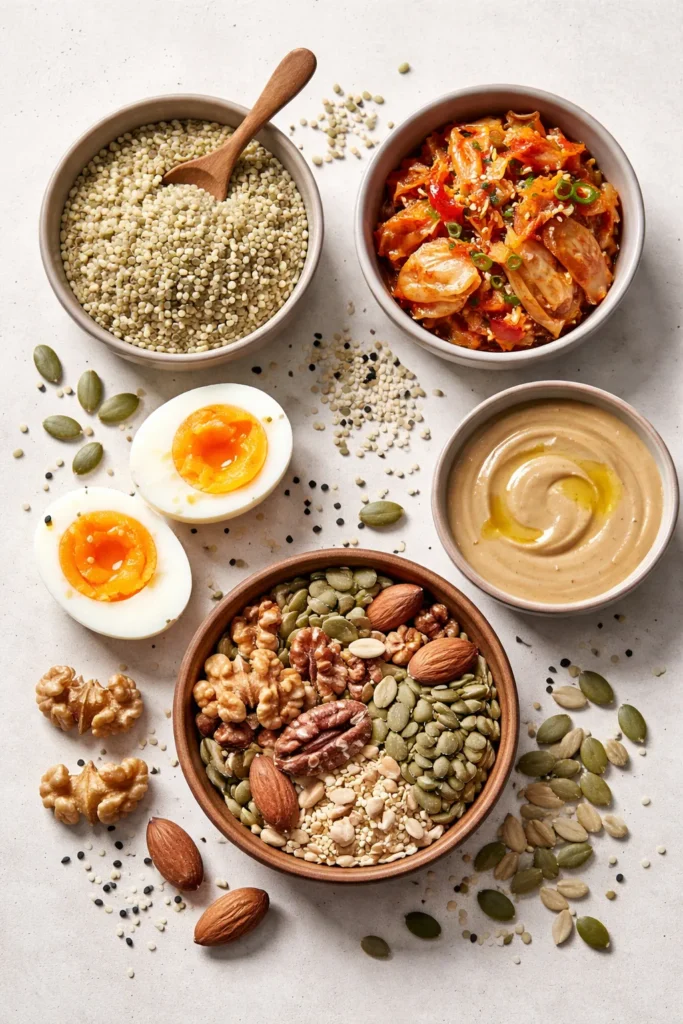
The difference between a bowl that just looks complete and one that actually functions as recovery nutrition often comes down to the toppings. These aren’t decoration — they’re micro-nutrient density in small, easy-to-add portions.
Hemp seeds deserve to be in your pantry permanently. Two tablespoons add 6 grams of complete plant protein — one of the few plant sources with all essential amino acids — plus omega-3 fats, and they taste like virtually nothing. They’re the stealth upgrade.
Kimchi and other fermented vegetables add probiotics that support gut health, which matters for nutrient absorption after exercise. They also add crunch and a sharp acidity that brightens otherwise neutral-tasting bowls without adding significant calories.
A soft-boiled egg is the single easiest way to add 6 additional grams of complete protein to any bowl without changing the flavor profile. Batch-boil six eggs on Sunday. Done.
Nuts and seeds — pumpkin seeds, toasted almonds, sesame seeds — add healthy fats, protein, magnesium, and zinc, all of which play roles in muscle function and recovery. Two tablespoons is the sweet spot for calories versus benefit.
A drizzle of tahini adds calcium, iron, and a depth of flavor that ties Middle Eastern and Mediterranean bowls together. Thin it with lemon juice and a little water and it becomes a pourable dressing in under 30 seconds.
Final Thoughts
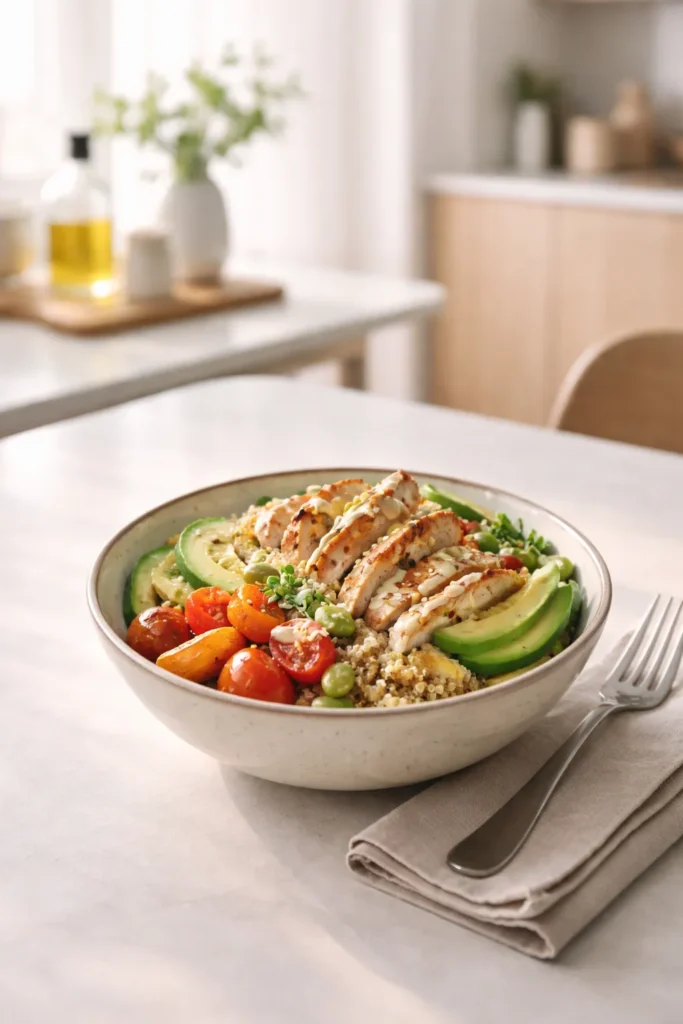
Post-workout nutrition doesn’t need to be complicated, but it does need to be intentional. A protein bowl hits every recovery marker — adequate protein for muscle repair, complex carbohydrates to replenish glycogen, healthy fats for sustained energy, and enough micronutrients from vegetables to support the biological processes that turn a tough workout into actual fitness progress.
The eight recipes here give you real variety across flavor profiles, protein sources, and prep times. Some take 5 minutes. Some take 35. All of them deliver what your body needs after training, and all of them are far more satisfying than a shake.
The most useful thing you can do is identify two or three of these bowls that genuinely appeal to you and build a rotation around them. Once you’ve made each a couple of times, you’ll find yourself assembling them on autopilot — which is exactly where good post-workout nutrition should live. Not stressful. Not complicated. Just good food, eaten at the right time, doing exactly what you need it to do.