There’s a particular kind of cold that settles into Nordic countries — the kind that seeps through double-paned windows and makes you want to pull every blanket in the house onto the couch. The Scandinavian response to that cold isn’t to fight it. It’s to lean into it, light some candles, put a pot on the stove, and cook something that fills the entire apartment with a smell so good it almost becomes a physical presence. That philosophy — warmth through food, comfort through ritual — is the beating heart of Scandinavian dinner culture.
What most people know about Nordic food barely scratches the surface. Swedish meatballs from a flat-pack furniture store or a jar of lingonberry jam from the supermarket ethnic aisle doesn’t capture what this cuisine actually feels like when it’s made with care. The real stuff is layered, nuanced, and deeply satisfying in a way that very few food traditions can match. It draws on smoked fish, root vegetables, cream-enriched sauces, rye bread, lamb slow-cooked until it surrenders, and spices like allspice, nutmeg, and cardamom that whisper rather than shout.
The eight recipes that follow span the full range of what a Scandinavian dinner can be — from a crackling, golden-crusted Swedish meatball swimming in velvety gravy to a Finnish salmon soup so silky it barely needs chewing. Some take under 30 minutes; others reward patience with something extraordinary. All of them are built for exactly the kind of night where you want your kitchen to do the emotional heavy lifting.
Table of Contents
- What Makes Scandinavian Dinner So Uniquely Comforting
- The Role of the Potato
- Fish as a Primary Protein
- The Cozy Philosophy of Hygge and Fika
- 1. Swedish Meatballs (Köttbullar) with Lingonberry Sauce
- What You’ll Need
- The Lingonberry Sauce
- Serving Notes
- 2. Finnish Salmon Soup (Lohikeitto)
- Building the Flavor Base
- The Dill Factor
- Serving and Pairing
- 3. Norwegian Lamb and Cabbage Stew (Fårikål)
- Why Bone-In Matters
- The Layering Technique
- How to Serve It
- 4. Danish Smørrebrød with Pickled Herring
- Assembling the Perfect Smørrebrød
- Toppings Beyond Herring
- Making It a Full Dinner
- 5. Icelandic Fish Stew (Plokkfiskur)
- Building the White Sauce
- Choosing the Fish
- Serving Suggestions
- 6. Swedish Jansson’s Temptation (Janssons Frestelse)
- The Julienne Cut
- Cream and Crust
- When to Serve It
- 7. Norwegian Fish Cakes (Fiskefrikadeller)
- Getting the Texture Right
- The Remoulade Connection
- Serving as a Full Dinner
- 8. Danish Frikadeller (Pork and Veal Meatballs)
- The Meat Blend
- The Shaping Technique
- The Complete Danish Dinner Plate
- How to Build the Perfect Scandinavian Dinner Table
- Bread and Condiments on the Table
- Drinks That Belong
- The Second Course That Often Isn’t
- Final Thoughts
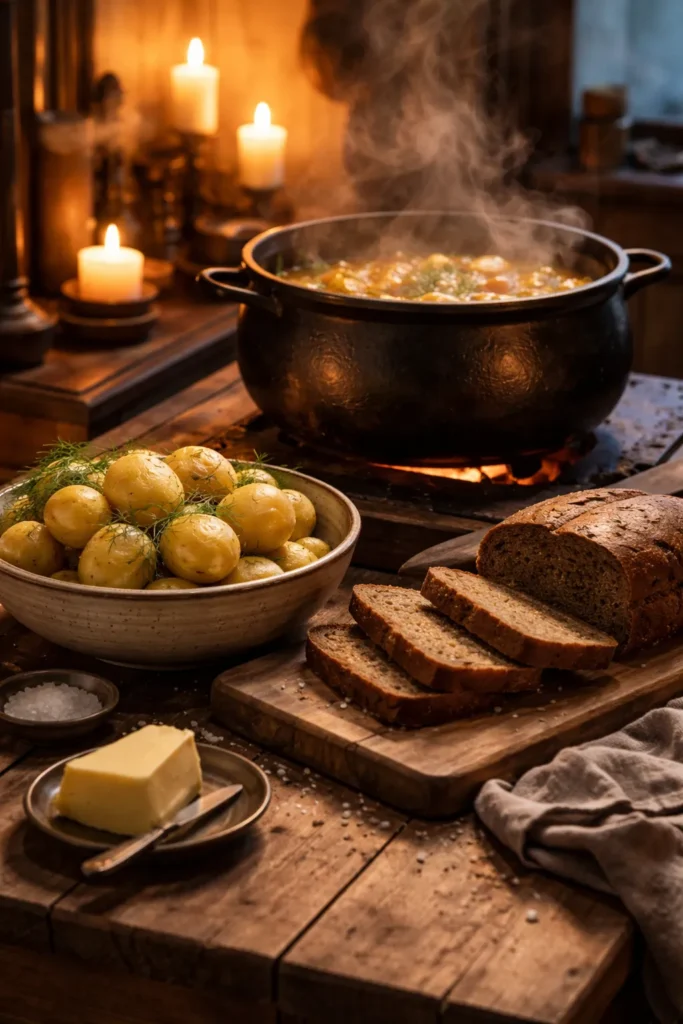
The Nordic countries — Sweden, Norway, Denmark, Finland, and Iceland — share a cooking philosophy rooted in a fundamental honesty about ingredients. Nothing is wasted. Everything earns its place on the plate. The fat from browning meat becomes the foundation for a sauce. The bones from fish become a quick stock. Leftover rye bread gets repurposed as crumbs for a casserole topping.
This restraint produces food that tastes more deeply of itself than cuisines that rely on complex spice blends or technique-heavy preparations. A bowl of Norwegian Fårikål — lamb and cabbage simmered with black pepper and nothing else — shouldn’t work as well as it does. It absolutely does, because the quality of the core ingredients and the patience of low-and-slow cooking carry the dish entirely.
The Role of the Potato
If any single ingredient defines Scandinavian dinner cooking, it’s the potato. Boiled, mashed, julienned into gratins, or stuffed with cream and cheese in Hasselback form, potatoes appear in almost every traditional dinner spread. They’re not treated as a background player — they’re genuinely celebrated. Yukon Golds are a reliable choice for their balance of creaminess and structure, holding up well in soups and stews without dissolving into mush.
Fish as a Primary Protein
Smoked salmon, cured gravlax, cod, herring, and eel all feature prominently in Nordic dinner tables, reflecting the geography of countries bordered by cold, fish-rich waters. The cold temperature of North Atlantic and Baltic waters produces fish with a cleaner, firmer flesh than warm-water varieties — which is why Norwegian salmon has become a global gold standard.
The Cozy Philosophy of Hygge and Fika
Danish hygge (the art of coziness, togetherness, and contentment) and Swedish fika (a meaningful pause for coffee and something sweet) aren’t just cultural concepts — they actively shape how Scandinavians cook and eat. A meal made slowly, eaten at a table with candles, shared with people you care about: that’s the goal. These eight recipes are built for exactly that kind of evening.
1. Swedish Meatballs (Köttbullar) with Lingonberry Sauce
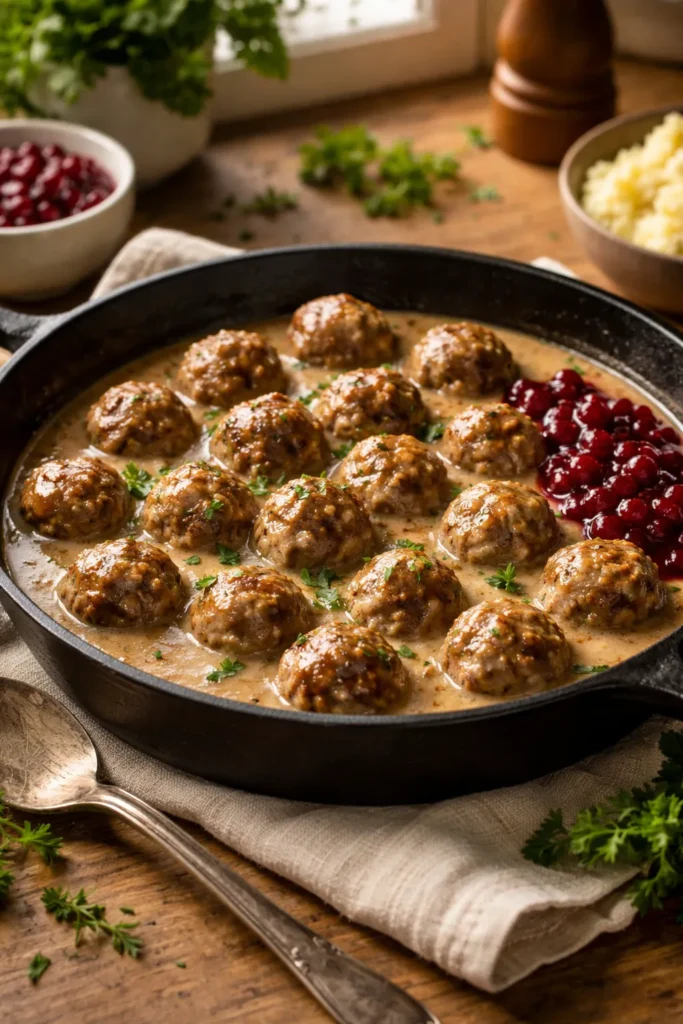
Ask anyone who grew up in Sweden what dish brings them immediately back to their grandmother’s kitchen, and nine times out of ten the answer involves a skillet of köttbullar. These aren’t the enormous, over-seasoned meatballs of Italian-American cooking — they’re smaller, delicately spiced with allspice and nutmeg, and served in a cream-enriched pan gravy that’s built from the browned bits left behind in the skillet.
The key difference between good Swedish meatballs and great ones comes down to two things: the meat blend and the mixing technique. Using a combination of ground beef and ground pork (roughly 2:1) gives you fat content high enough to keep the meatballs moist through cooking without making them greasy. The mixing must be gentle — overworking the meat activates proteins that tighten the texture and make meatballs dense and rubbery rather than tender and yielding.
What You’ll Need
- 500g ground beef (80/20 fat ratio) and 250g ground pork
- Panko breadcrumbs soaked in whole milk — this is called a panade and it’s non-negotiable for tenderness
- One finely minced yellow onion, cooked in butter until soft before adding to the mix
- ½ tsp freshly grated nutmeg and ¼ tsp ground allspice — use whole spices and grate/grind them yourself for noticeably better flavor
- Beef stock, heavy cream, and a touch of Dijon mustard for the gravy
The Lingonberry Sauce
Lingonberry jam is the traditional accompaniment, and its tartness serves a real culinary purpose — it cuts through the richness of the cream gravy and resets your palate between bites. If you can’t find lingonberry preserves, a high-quality cranberry sauce works as a substitute, though it’s sweeter and less bright. Look for lingonberry jam in IKEA food sections, Scandinavian specialty stores, or larger supermarkets with international aisles.
Serving Notes
Serve over buttery egg noodles or alongside boiled parsley potatoes. A small sprig of fresh dill over the finished plate adds color and a herbal note that pairs beautifully with the nutmeg in the meatballs.
Worth knowing: Chill the formed meatballs in the fridge for 20 minutes before cooking — this helps them hold their shape during searing and produces a more even, golden crust.
2. Finnish Salmon Soup (Lohikeitto)
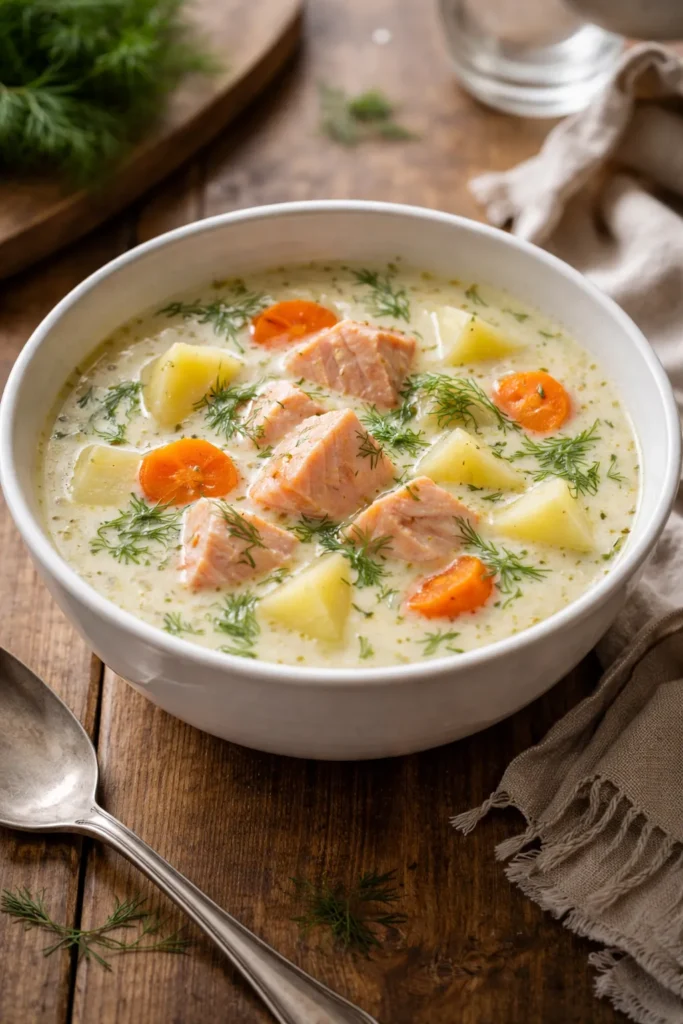
Lohikeitto is one of those soups that sounds simple until you taste it and realize something extraordinary is happening. A creamy, dill-scented broth holds chunks of just-poached salmon and soft Yukon Gold potatoes, with carrots adding sweetness and color throughout. The fish is added only at the very end and poached gently — it should barely be cooked through, still tender and flaking in large pieces rather than broken down into the broth.
What makes this soup taste the way it does is the fish stock base. Many recipes call for vegetable stock or even water as a shortcut, but a proper lohikeitto starts with a quick fish stock made by simmering the salmon skin and any trim with a bay leaf, a few peppercorns, and half an onion for 20 minutes. That stock turns a pleasant soup into something that tastes like the sea in the best possible way.
Building the Flavor Base
- Start with clarified butter, which has a higher smoke point than regular butter and won’t burn when you’re sweating the aromatics
- Cook diced onion until completely translucent — about 6 minutes — before adding carrots and stock
- Use white pepper rather than black in the finished soup; white pepper integrates more smoothly into creamy broths without the visual speckling
- Add heavy cream off the heat after the salmon is cooked — never let a cream-based fish soup boil after the cream goes in, or it can split
The Dill Factor
Fresh dill isn’t optional here. It’s structural. The grassy, slightly anise-forward flavor of dill is what gives lohikeitto its identity. Add half of it while the soup rests off the heat, and scatter the remaining half directly into bowls just before serving so you get two layers of dill flavor — cooked and fresh.
Serving and Pairing
A thick slice of dark rye bread is the traditional accompaniment — its earthy, slightly sour flavor is the perfect counterweight to the richness of the cream broth. Alternatively, serve with a few crispbreads spread with good butter alongside the bowl.
Pro tip: If you want an even more pronounced salmon flavor, add a teaspoon of fish sauce to the stock at the beginning. It sounds wrong; it tastes completely right.
3. Norwegian Lamb and Cabbage Stew (Fårikål)
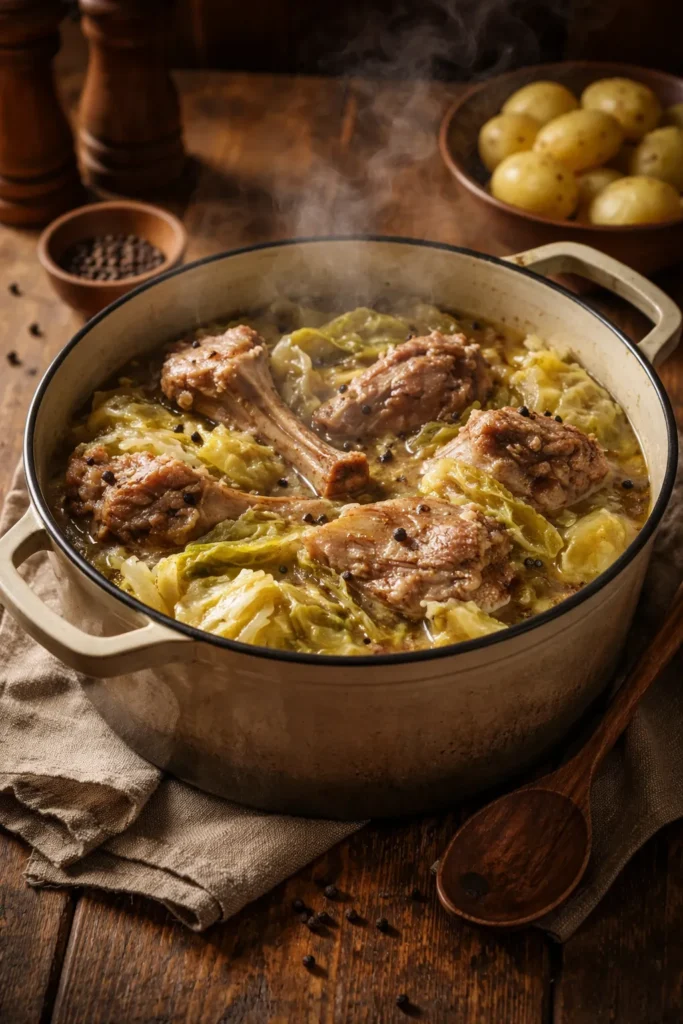
Fårikål is Norway’s national dish, and its simplicity is almost confrontationally humble. Bone-in lamb shoulder, green cabbage, whole black peppercorns, salt, water, and nothing else. That’s the recipe. No garlic, no tomato paste, no herbs. Just patience and a Dutch oven.
The magic happens over two and a half hours of unhurried simmering. The lamb collagen slowly dissolves into the broth, creating a naturally gelatinous, deeply savory liquid. The cabbage softens until it’s almost translucent, absorbing the lamb fat and becoming a completely different vegetable from the raw wedges that went in at the start. The peppercorns bob through the whole process, infusing a gentle heat that warms rather than burns.
Why Bone-In Matters
Boneless lamb shoulder works, but the flavor of fårikål made with bone-in pieces is noticeably richer. The bones release collagen and marrow as they cook, giving the broth a body and depth that no amount of seasoning can replicate. Ask your butcher to cut the shoulder into large chunks, keeping the bone in each piece.
The Layering Technique
Traditional fårikål is layered — alternating pieces of lamb and cabbage wedges in the pot, starting and ending with cabbage. This isn’t decorative. The cabbage on the bottom prevents the lamb from scorching before the liquid builds up, and the cabbage on top traps steam and bastes the upper layer continuously.
How to Serve It
Fårikål is always served in deep bowls, with the broth ladled generously over the meat and cabbage. A scattering of flat-leaf parsley brings a little color to what is otherwise a monochromatic dish. Serve with boiled potatoes on the side — their neutrality makes them the ideal vehicle for soaking up every drop of that extraordinary broth.
Worth knowing: Fårikål is genuinely better the next day. The collagen sets overnight in the fridge, and reheating it gently loosens everything into a broth that’s even more concentrated and satisfying than it was fresh.
4. Danish Smørrebrød with Pickled Herring
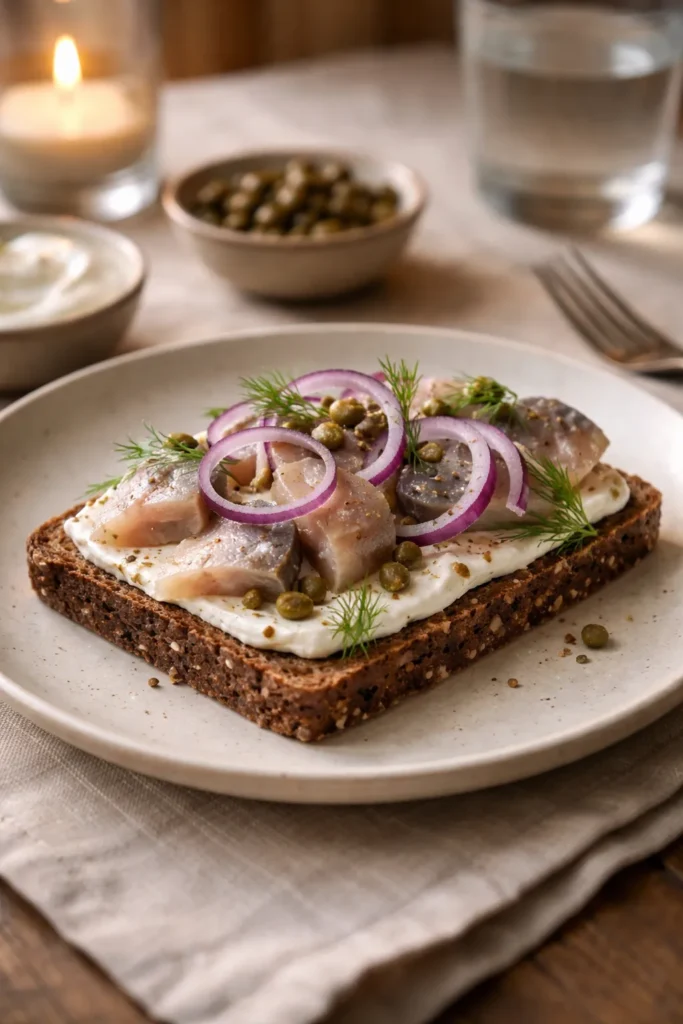
Smørrebrød — open-faced rye sandwiches — are the cornerstone of Danish lunch culture, but they translate brilliantly to a cozy dinner when assembled with care and served with a small schnapps or cold beer alongside. The pickled herring version is the most traditional and arguably the most satisfying: briny, firm fish layered over crème fraîche on dense dark rye, finished with thin-sliced red onion, capers, fresh dill, and hard-boiled egg.
The quality of the rye bread makes or breaks this dish. You want a bread with genuine density — the kind that’s sliced thin and holds its structure under wet toppings without going soggy. Danish-style rugbrød (sourdough rye) is the authentic choice. If you can find it at a Scandinavian specialty shop or make it yourself, use it. If not, a dense German-style dark rye from a good bakery is a reasonable substitute.
Assembling the Perfect Smørrebrød
The spread goes on first — crème fraîche rather than butter for the herring version, because its tang complements the pickle brine beautifully. Apply it thickly enough that it creates a moisture barrier between the bread and the wet toppings. Then layer with intention: herring off-center, egg slices overlapping slightly across the top, onion scattered loosely, dill placed last.
Toppings Beyond Herring
Smørrebrød is endlessly variable. Some of the best combinations include:
- Gravlax with dill mustard sauce, cucumber ribbons, and a squeeze of lemon
- Smoked eel with cultured butter, capers, and fresh horseradish
- Roast beef with pickled beets, crispy fried onion, and remoulade
- Shrimp with mayonnaise, lemon zest, and fresh dill (rejer is the classic Danish version)
Making It a Full Dinner
Set out three or four different smørrebrød per person, each with a different topping, and serve alongside a simple green salad with a sharp mustard dressing. Cold aquavit or Carlsberg beer are the traditional pairings — the aquavit especially, with its caraway backbone, cuts through the richness of the crème fraîche and fatty fish in a way that makes every bite feel clean.
5. Icelandic Fish Stew (Plokkfiskur)
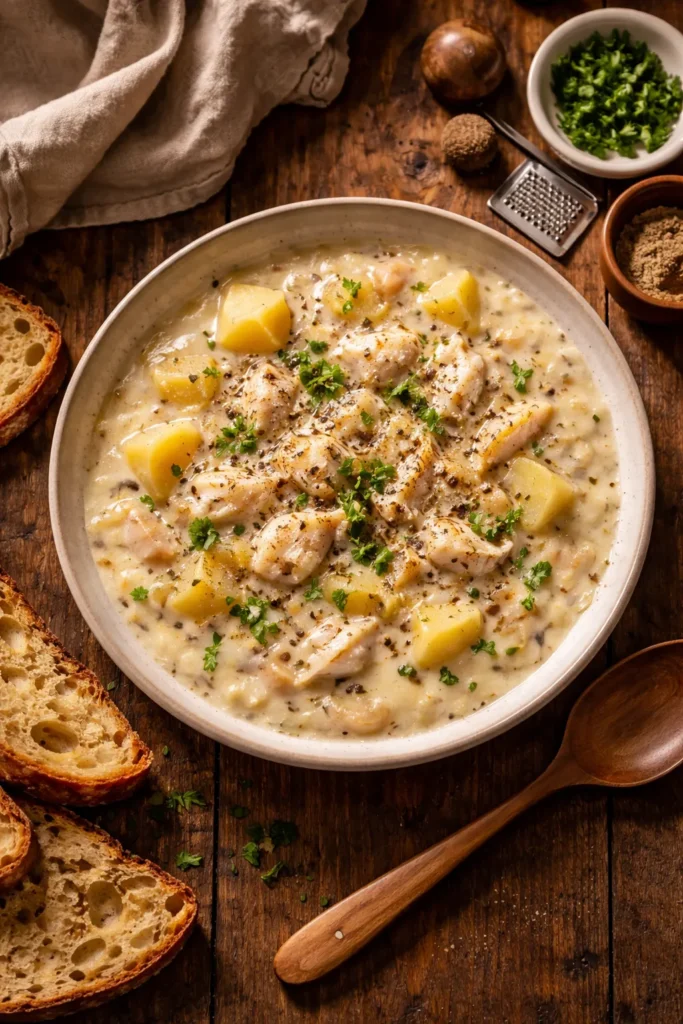
Iceland’s answer to comfort food is plokkfiskur — a thick, creamy stew of flaked cod and potatoes bound in a white sauce scented with nutmeg and white pepper. The name translates roughly to “plucked fish,” referring to the way the cooked cod is broken into large, uneven pieces before being folded gently into the sauce. Those uneven pieces are the point — some bites are almost entirely fish, others are more potato, and the variation keeps every spoonful interesting.
This is traditionally a dish made from leftovers: the cod and potatoes are almost always already cooked from a previous meal. That makes plokkfiskur a brilliant recipe for cooking in stages — poach a whole cod fillet and boil a pot of potatoes on a Sunday, and by Monday evening you can have dinner on the table in under 20 minutes.
Building the White Sauce
The base is a simple béchamel — butter, flour, whole milk — cooked until it thickens and loses the raw flour taste. What lifts it from ordinary is the nutmeg (use fresh-grated, not pre-ground), the white pepper, and finishing with two tablespoons of cold cubed butter stirred in off the heat. That final butter addition is a technique borrowed from French cooking, and it makes the sauce noticeably glossy and silky rather than starchy and flat.
Choosing the Fish
Cod is the traditional and preferred choice, but any firm white fish works: haddock, pollock, or hake all produce excellent plokkfiskur. What doesn’t work is oily fish like salmon or mackerel — the richness clashes with the cream sauce rather than complementing it.
Serving Suggestions
Plokkfiskur is typically served with dark rye bread for scooping, and a simple butter-wilted spinach or braised red cabbage on the side adds color and a slight bitterness that balances the richness of the stew.
Pro tip: A light sprinkle of crispy fried shallots over the top just before serving adds a textural contrast that makes the whole dish feel finished and restaurant-quality.
6. Swedish Jansson’s Temptation (Janssons Frestelse)
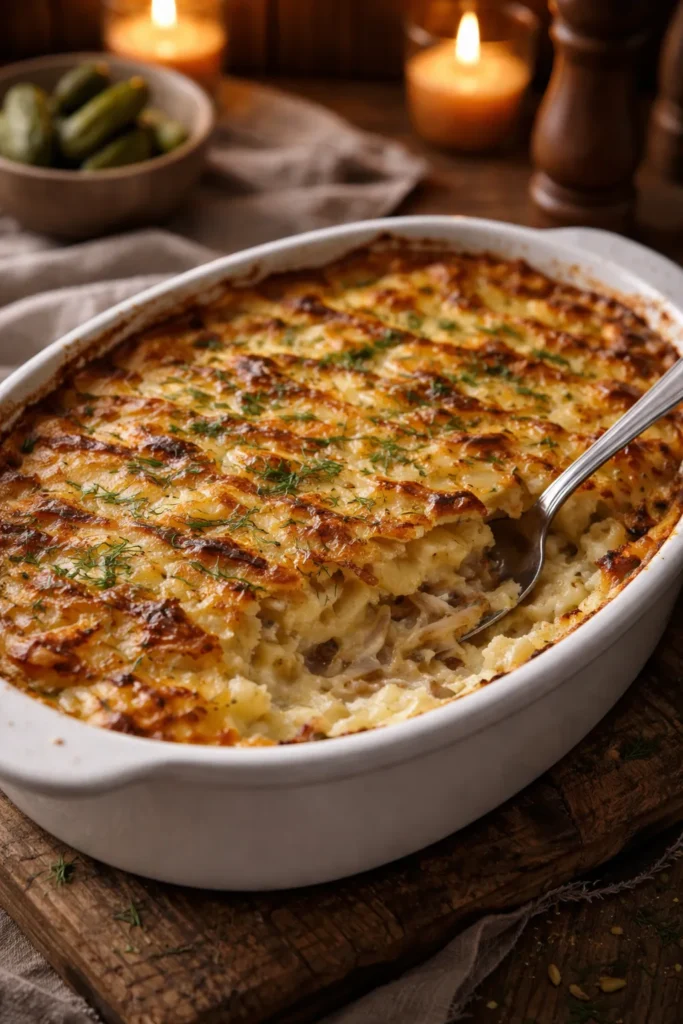
Janssons Frestelse is a Swedish potato gratin with a secret weapon: Swedish-style anchovy fillets, which melt completely into the cream during baking and leave behind a profound umami depth that doesn’t taste remotely fishy. If you served this to someone without mentioning the anchovies, they’d spend the entire meal trying to figure out why this potato dish tastes so much more complex and satisfying than any potato dish they’ve had before.
The Swedish anchovy used in traditional Janssons Frestelse is actually a type of sprat preserved in a sweet brine — it’s sold in tins and has a milder, more delicate flavor than Mediterranean-style anchovies in olive oil. If you can find Swedish anchovy tins (look for brands like Abba or Grebbestad), use them. In their absence, regular salt-packed anchovies work, but rinse them thoroughly and use slightly fewer.
The Julienne Cut
The potatoes need to be cut into thin matchsticks — roughly 3mm wide and 5-6cm long. This is important because the fine cut allows the potato strands to soften completely and absorb the anchovy-infused cream during the 60-minute bake. If you cut them too thick, the inside stays firm and starchy while the top browns. A mandoline with a julienne attachment makes this process far faster and more consistent than a knife.
Cream and Crust
Use heavy cream — not half-and-half, not single cream. The fat content of heavy cream is what allows it to reduce and concentrate during baking without splitting. Pour it in two stages: half over the first layer of potatoes, the rest over the top layer. Finish with buttered breadcrumbs scattered across the surface for a golden, slightly crunchy crust that contrasts beautifully with the creamy interior.
When to Serve It
Janssons Frestelse is the kind of dish that works as a main event or a generously portioned side. As a main, serve alongside a crisp green salad with a sharp lemon vinaigrette to cut through the cream. As a side, it pairs magnificently with roasted salmon or baked cod.
Worth knowing: The gratin needs 15 full minutes of resting time after leaving the oven. This isn’t optional — the cream continues setting as it cools slightly, and cutting into it too early produces a liquid pool rather than a sliceable, layered gratin.
7. Norwegian Fish Cakes (Fiskefrikadeller)
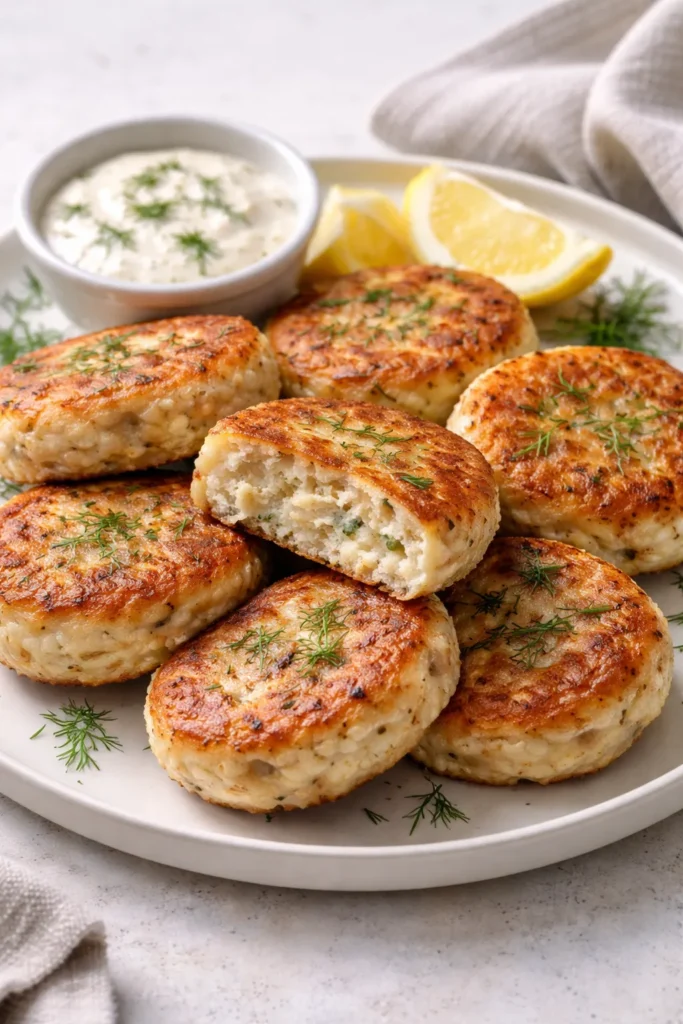
Norwegian fiskefrikadeller occupy a similar cultural space to Swedish meatballs — they’re the kind of unpretentious, weeknight comfort food that every home cook in the country has a version of. Made primarily from cod (though haddock and pollock work equally well), these pan-fried fish cakes are crispy on the outside, soft and almost custardy within, and deeply savory in a way that belies how simple the ingredient list really is.
The texture comes from the binding and the mixing method. Raw fish is minced in a food processor until it forms a smooth paste, then eggs, cream, and a small amount of flour are incorporated. The mixture gets seasoned with white pepper, nutmeg, and fresh dill, then shaped into oval patties and cooked in butter over medium heat until deeply golden on both sides.
Getting the Texture Right
The fish paste needs to be processed long enough that it becomes truly smooth — about 90 seconds in a food processor. Under-processed fish produces a grainy, coarse texture that doesn’t hold together well during cooking. Once the paste is smooth, fold in the remaining ingredients by hand rather than continuing to process, which would make the cakes too dense.
The Remoulade Connection
Traditional Norwegian fish cakes are served with remoulade — a tangy, mayonnaise-based sauce with capers, pickles, and a hint of curry powder. It sounds like an unusual pairing, but the acid and sharpness of the remoulade performs the same function as lingonberry does with Swedish meatballs: it resets the palate and keeps the meal feeling light despite the richness of the pan-fried cakes.
Serving as a Full Dinner
- Hasselback potatoes alongside — their crispy edges and creamy centers complement the soft fish cakes perfectly
- Braised red cabbage — its sweet-sour flavor is a classic Nordic accompaniment to fried fish
- A simple cucumber salad with white wine vinegar and fresh dill for brightness
Pro tip: Make the remoulade at least an hour before serving — the flavors need time to meld, and a freshly made remoulade tastes sharp and separate rather than smooth and cohesive.
8. Danish Frikadeller (Pork and Veal Meatballs)
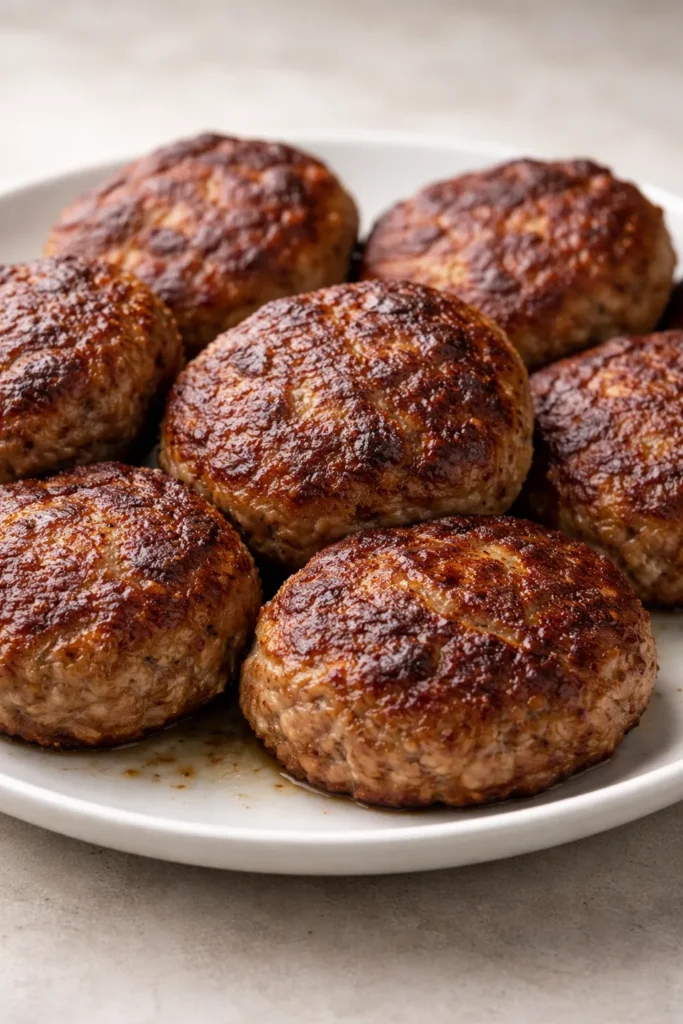
Danish frikadeller are Sweden’s köttbullar older, heartier cousin. Where Swedish meatballs are small, precisely spherical, and served in a cream gravy, frikadeller are larger, patty-shaped, and cooked in butter until they develop a genuinely crunchy, well-browned exterior. The inside stays moist because of the pork-veal combination and a panade of soaked rye bread rather than white breadcrumbs, which gives the finished meatball a more complex, slightly nutty flavor.
Every Danish grandmother has her own frikadeller recipe, and every version is “the correct one.” The non-negotiables across all of them: pork is the dominant meat, the onion is grated rather than minced (grating releases more moisture and integrates more completely), and the cakes must be cooked in real butter at a temperature high enough to brown properly without steaming.
The Meat Blend
A traditional frikadeller uses a combination of ground pork and ground veal in roughly a 2:1 ratio. The veal lightens the texture and adds a mild, clean flavor that balances the fattiness of the pork. If veal isn’t available, a lean ground beef (90/10) works as a substitute, though the flavor profile shifts slightly. Avoid pre-mixed meatball blends from supermarkets — grind your own or buy from a butcher who can portion the blend to order.
The Shaping Technique
Frikadeller are shaped into oval patties using two large spoons dipped in water, pushing the mixture between them to form a smooth, rounded oval about the size of a golf ball, slightly flattened. The dipped spoons prevent sticking and help produce a clean shape that sits flat in the pan without rolling around.
The Complete Danish Dinner Plate
The traditional accompaniment is definitive:
- Boiled parsley potatoes — small potatoes tossed in melted butter with a generous handful of flat-leaf parsley
- Pickled red cabbage (rødkål) — sweet, tangy, and vivid, it’s available jarred in most supermarkets or easy to make from scratch
- Thick brown gravy made from the pan drippings, enriched with a splash of cream
Worth knowing: Frikadeller are arguably even better cold, sliced thin on rye bread the next day with mustard and pickles. Make a double batch specifically for this purpose — you’ll be grateful for the second round.
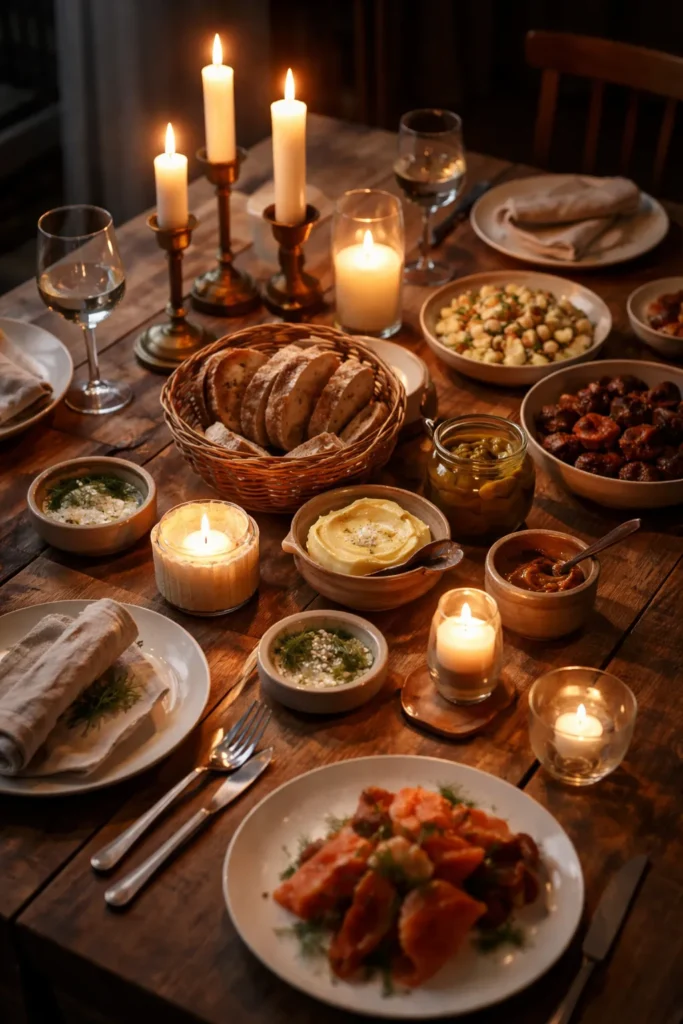
The individual recipes matter, but so does the ritual around them. A truly Nordic dinner isn’t just about what’s on the plate — it’s about how the table is set, what’s lit, and the pace at which the meal unfolds.
Candles are non-negotiable in Scandinavian homes during dinner. Not as decoration, but as atmosphere. A table with four candles at varying heights and no overhead lighting creates a completely different dining experience than a bright kitchen — softer, more intimate, more conducive to lingering over a second helping and a longer conversation.
Bread and Condiments on the Table
Scandinavian dinners almost always include bread on the table throughout the meal — not as a pre-course but as an active participant. Dark rye bread, crispbreads (knäckebröd), and sometimes a soft white bread are set out alongside butter, pickles, and mustard. These aren’t afterthoughts — they’re used to supplement every dish, scoop up gravies, and provide textural variety throughout the meal.
Drinks That Belong
Cold lager (Danish Carlsberg, Swedish Åbro, Norwegian Hansa) pairs naturally with any fish-forward dinner. For meat-centric meals, a medium-bodied red wine — something like a Pinot Noir or a lighter Grenache — works beautifully. Aquavit as a digestif or a small shot alongside smørrebrød is the most authentically Nordic touch of all.
The Second Course That Often Isn’t
Many traditional Scandinavian dinners skip a formal dessert in favor of coffee with something small and sweet — a cardamom bun, a few butter cookies, a square of dark chocolate. The meal ends not with ceremony but with the same quiet contentment with which it began.
Final Thoughts

Scandinavian dinner cooking asks for one thing above all else: your willingness to slow down. The dishes in this collection — from a 25-minute Finnish salmon soup to a three-hour Norwegian lamb stew — all reward patience and presence in the kitchen in ways that rushed cooking simply can’t replicate.
The philosophy behind Nordic food is worth borrowing even when you’re not following a specific recipe. Use good butter. Don’t rush the browning. Season with restraint and taste as you go. Let things rest before you cut into them. These aren’t complicated techniques — they’re just habits of attention that transform ordinary ingredients into meals people remember.
Pick one recipe from this list and make it this week on an evening when you have nowhere else to be. Set the table. Light something. Eat slowly. That’s the whole point.