Picture this: a long table scattered with small ceramic dishes, a chilled glass of Rioja within arm’s reach, and friends reaching across each other to grab just one more bite. That’s the spirit of a tapas dinner party — and it’s one of the most effortless yet impressive ways to entertain at home.
Spanish tapas have a history that goes back centuries, with origins as humble as a slice of bread placed over a glass of wine to keep flies out. What started as bar snacks in Andalusia and Madrid evolved into one of the world’s great social eating traditions. The beauty of tapas isn’t just in the food itself — it’s in the format. No single star dish. No pressure to nail a three-course timeline. Just a rotating parade of small, carefully crafted plates that keep the table animated and the conversation flowing.
The eight recipes gathered here are built specifically for a dinner party setting. They balance flavors across the spread — smoky and savory, bright and acidic, creamy and crisp — and most can be prepped ahead so you’re not trapped in the kitchen while your guests are having all the fun. A few require nothing more than a hot pan and three minutes of your attention. Others reward a little afternoon prep with results that taste far more impressive than the effort involved.
Every dish here is genuinely Spanish — rooted in regional traditions from Galicia to Andalusia — and each one has earned its place at the table through generations of bar menus and home kitchens alike. Get the ingredients right, pour a good wine, and the rest takes care of itself.
Table of Contents
- How to Build a Tapas Dinner Party Menu
- Balancing the Spread
- Timing Your Service
- 1. Gambas al Ajillo (Spanish Garlic Shrimp)
- What Makes It Work
- Make It for a Party
- 2. Patatas Bravas with Smoky Alioli
- The Two-Sauce Method
- Make It for a Party
- 3. Pan con Tomate (Catalan Tomato Bread)
- The Ingredient Question
- Make It for a Party
- 4. Chorizo al Vino Tinto (Chorizo in Red Wine)
- Choosing Your Wine
- Make It for a Party
- 5. Croquetas de Jamón (Ham Croquettes)
- The Rolling Technique
- Make It for a Party
- 6. Albóndigas in Smoky Tomato Sauce
- Getting the Texture Right
- Make It for a Party
- 7. Gilda Pintxo (Anchovy, Olive, and Pepper Skewer)
- Ingredient Non-Negotiables
- Assembly for a Party
- 8. Tortilla Española (Spanish Egg and Potato Omelette)
- The Flip
- Make It for a Party
- What to Drink with a Tapas Dinner Party
- Make-Ahead Timeline for a Stress-Free Party
- Serving, Presentation, and the Table Itself
- Final Thoughts
How to Build a Tapas Dinner Party Menu
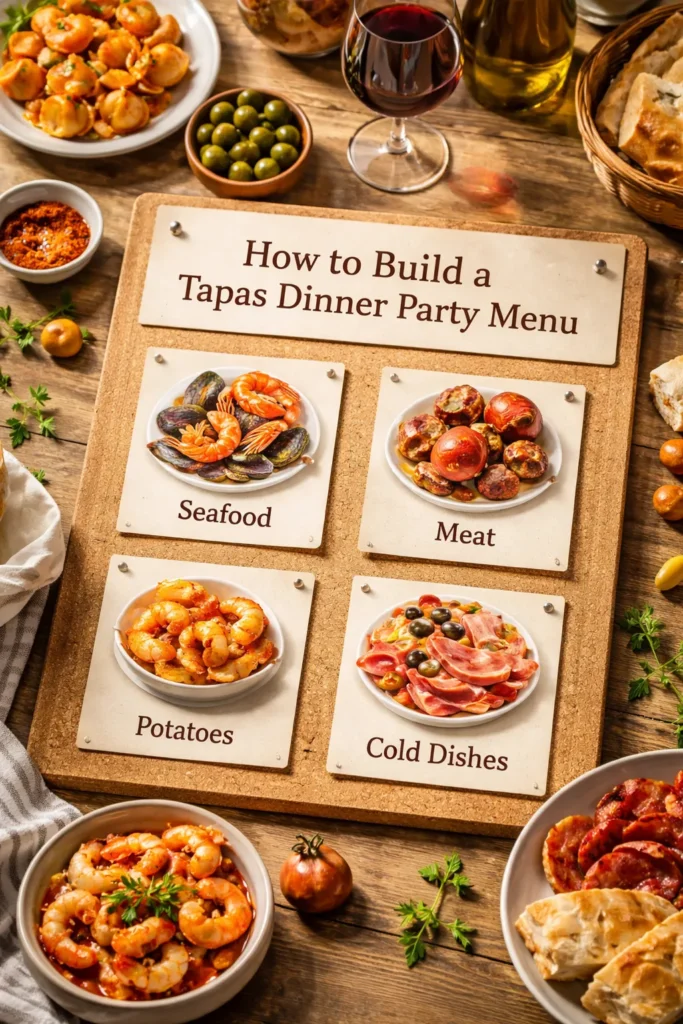
A great tapas spread isn’t just a pile of small dishes — it’s a curated conversation between flavors and textures. The goal is contrast: something fried next to something fresh, something rich next to something sharp, something cold next to something that arrives at the table still sizzling.
For eight guests, plan on six to eight different tapas, with two to three portions per person per dish. That sounds like a lot, but tapas portions are small by design, and people always eat more than you expect when the food is good and the company is better.
Balancing the Spread
A well-balanced tapas menu covers a few key categories. You want at least one seafood dish, one meat option, one potato-based dish (because Spain runs on potatoes), and at least one or two things that require zero last-minute cooking — cold plates, marinated items, or room-temperature classics that can sit out and look beautiful.
The eight recipes below cover all of those bases. Three can be fully prepped the day before. Two need only a few minutes on the stove right before serving. And three are genuinely impressive enough that your guests will ask for the recipe before they’ve finished their first glass of wine.
Timing Your Service
Don’t try to bring everything out at once. Start with the cold and room-temperature dishes — Pan con Tomate, Croquetas if they’ve been fried ahead, the marinated olives. Let people settle in and drink. Then bring out the hot dishes in waves: the Gambas first (always serve those sizzling), followed by the Patatas Bravas, then the Albóndigas. This keeps the energy up throughout the evening rather than front-loading everything.
1. Gambas al Ajillo (Spanish Garlic Shrimp)
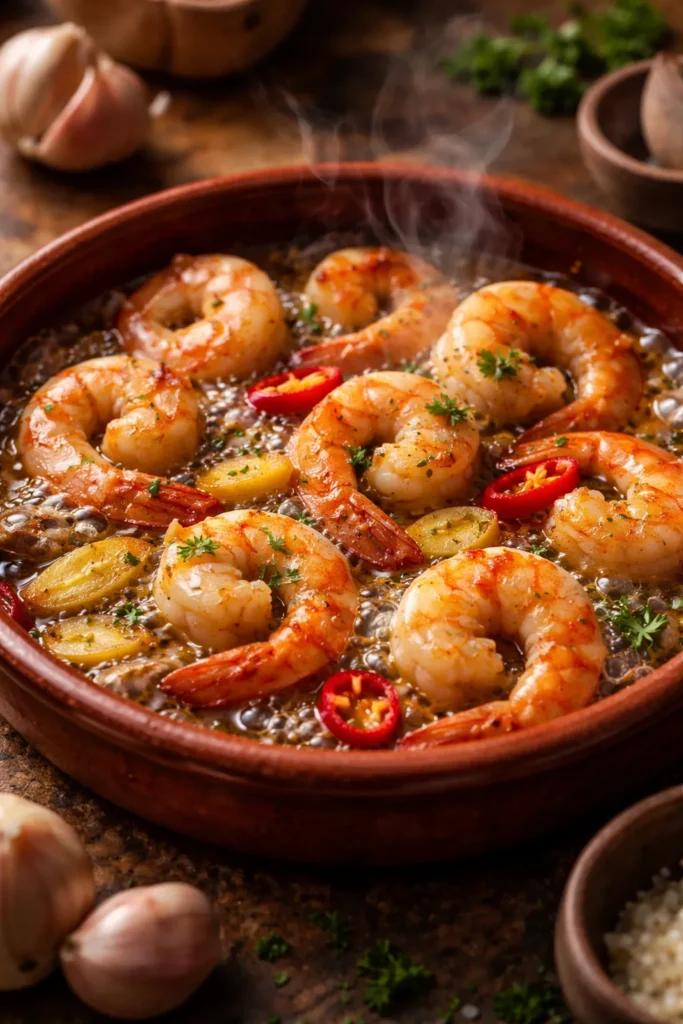
If there’s a single tapas dish that reliably makes the whole table go quiet for a moment, it’s gambas al ajillo. The dish arrives in a small clay dish, still bubbling, the olive oil infused with so much garlic it perfumes the whole room. Every Spanish tapas bar worth its sea salt has a version of this on the menu, particularly in Madrid and southern Spain, and for good reason — it’s one of the most rewarding dishes you can make in under ten minutes.
The technique here is everything. You’re not simply frying garlic in oil and adding shrimp. You’re building layers: some garlic goes into cold oil to infuse slowly as it heats, some gets sliced and fried until golden, some gets grated raw into the shrimp as a marinade. Use raw, shell-off king prawns — never pre-cooked. Pre-cooked shrimp turn rubbery within seconds of hitting hot oil.
What Makes It Work
The fat ratio matters more than most recipes admit. You need enough olive oil to cover the base of a cazuela (earthenware dish) generously — roughly 4 tablespoons for a portion serving four. That oil becomes the sauce, and it should be spooned over crusty bread at the end. Wasting it is a minor tragedy.
A small dried chili and a splash of dry sherry added in the final 30 seconds lift the whole dish from good to unforgettable. Don’t skip the sherry.
Make It for a Party
- Yield: Serves 4-6 as a tapa
- Prep Time: 10 minutes
- Cook Time: 5 minutes
- Make-Ahead: Marinate shrimp in garlic, olive oil, salt, and smoked paprika for up to 4 hours in the fridge. Cook to order — this one genuinely needs to be served the moment it’s done.
Ingredients:
- 500g raw king prawns, peeled and deveined
- 10 large garlic cloves (4 grated, 3 smashed, 3 thinly sliced)
- 6 tablespoons extra virgin Spanish olive oil
- 1 small dried chili (or ½ teaspoon chili flakes)
- 2 tablespoons dry sherry (Fino or Manzanilla)
- 1 teaspoon smoked paprika (pimentón de la Vera)
- Flaky sea salt, to finish
- Small handful flat-leaf parsley, finely chopped
- Crusty bread, to serve
Instructions:
- Toss the prawns with the 4 grated garlic cloves, ½ teaspoon smoked paprika, a pinch of salt, and 1 tablespoon olive oil. Set aside to marinate for at least 15 minutes (or up to 4 hours refrigerated).
- Add the remaining 5 tablespoons olive oil and the 3 smashed garlic cloves to a cold cazuela or heavy skillet. Place over medium heat and cook, stirring occasionally, until the garlic turns lightly golden and the oil begins to shimmer — about 3 to 4 minutes. Remove and discard the smashed cloves.
- Increase heat to high. Add the sliced garlic and dried chili. Fry for 30 seconds until the sliced garlic just begins to colour at the edges.
- Add the marinated prawns in a single layer. Do not crowd the pan — cook in two batches if needed. Cook for 60 to 90 seconds per side until the prawns are pink and just cooked through. They should curl into a loose C-shape; an O-shape means overcooked.
- Add the sherry and remaining ½ teaspoon paprika. Swirl the pan for 20 seconds, then remove from heat immediately.
- Scatter generously with flaky sea salt and fresh parsley. Serve in the cazuela, still sizzling, with torn bread on the side.
Pro tip: Serve this directly in a preheated clay dish — run it under a very hot oven or on the stovetop for a minute before adding the oil. The retained heat keeps it bubbling at the table, which is exactly the effect you want.
2. Patatas Bravas with Smoky Alioli
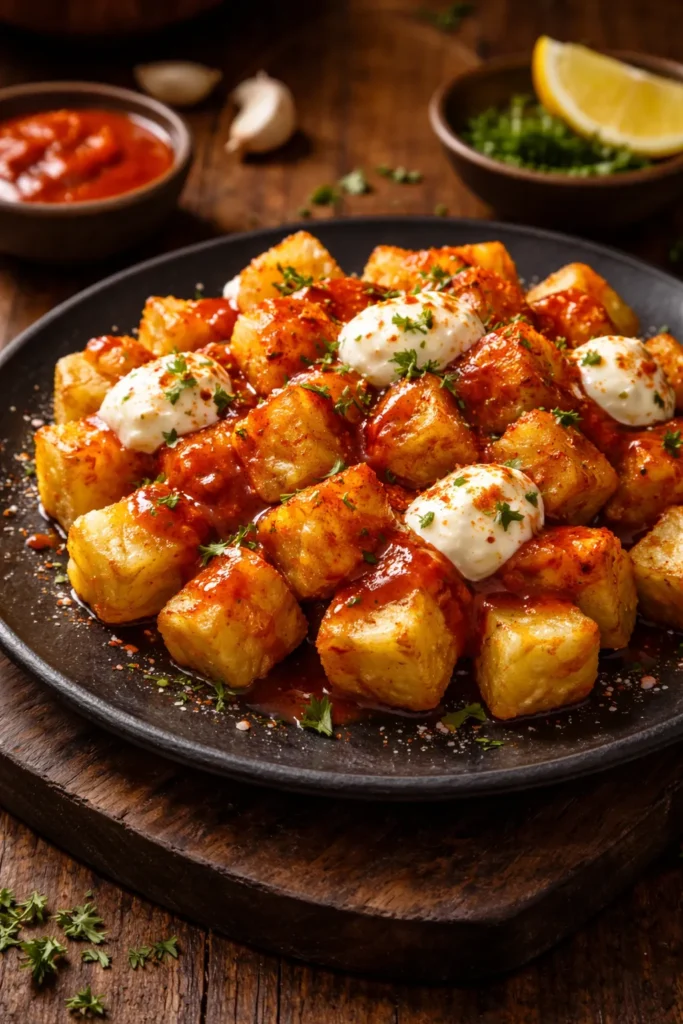
Patatas bravas might be the most universally recognised Spanish tapa on the planet. Ask anyone who’s visited Spain what they ate, and this dish comes up within the first three answers. The name translates as “fierce potatoes,” a reference to the spiced sauce — and the best versions absolutely earn that name.
What most people don’t realise is that the classic bravas sauce contains no tomato. The deep red colour comes entirely from smoked Spanish paprika — specifically pimentón de la Vera, which is made from peppers slow-dried over oak wood in the La Vera valley of Extremadura. That smoky depth is the whole personality of the dish.
The Two-Sauce Method
The best tapas bars in Madrid serve patatas bravas with both the bravas sauce and a garlic alioli — the creamy white against the rust-red makes the dish as visually striking as it is delicious. Drizzle both, don’t choose.
Par-boiling the potato chunks in salted water with a splash of white wine vinegar before frying is the move that guarantees a crispy exterior without drying out the interior. The vinegar slightly firms the outer layer of starch, which fries up shatteringly crisp.
Make It for a Party
- Yield: Serves 6-8 as a tapa
- Prep Time: 15 minutes
- Cook Time: 30 minutes
- Make-Ahead: Bravas sauce keeps refrigerated for up to 5 days. Par-boil and drain potatoes up to 2 hours ahead; fry just before serving.
Ingredients:
For the Bravas Sauce:
- 3 tablespoons extra virgin olive oil
- 1 medium white onion, finely diced
- 4 garlic cloves, minced
- 1½ tablespoons smoked hot paprika (pimentón picante de la Vera)
- 1 tablespoon sweet smoked paprika
- 1 tablespoon plain flour
- 250ml chicken or vegetable stock
- 1 tablespoon sherry vinegar
- Salt to taste
For the Potatoes:
- 1kg waxy potatoes (Maris Piper or similar), cut into 3cm irregular chunks
- 2 tablespoons white wine vinegar
- Sunflower oil, for frying
- Flaky sea salt
For the Quick Alioli:
- 4 tablespoons good-quality mayonnaise
- 2 garlic cloves, very finely grated
- 1 tablespoon extra virgin olive oil
- Squeeze of lemon juice
Instructions:
Make the Bravas Sauce:
- Heat olive oil in a medium saucepan over medium heat. Add the diced onion and cook, stirring regularly, for 8 to 10 minutes until completely softened and starting to turn golden at the edges.
- Add the minced garlic and both paprikas. Stir constantly for 60 seconds — the mixture will turn deep rust-red and smell intensely smoky. Do not let the paprika burn; it turns bitter fast.
- Add the flour and stir for another 30 seconds to cook out the raw taste.
- Pour in the stock gradually, whisking as you go to prevent lumps. Bring to a gentle simmer and cook for 5 minutes until the sauce thickens enough to coat the back of a spoon. Add the sherry vinegar and salt. Taste and adjust. Blitz smooth with a hand blender if you want a silky finish.
Prepare and Fry the Potatoes: 5. Place potato chunks in a large saucepan. Cover with cold salted water and add the white wine vinegar. Bring to a boil and cook for 8 minutes — potatoes should be mostly cooked but still hold their shape when pierced with a knife. 6. Drain very thoroughly and spread on a wire rack or lined tray. Pat dry with kitchen paper. Wet potatoes will spit aggressively in hot oil. 7. Heat sunflower oil in a deep pan to 180°C (350°F). Fry potatoes in batches for 4 to 5 minutes, turning occasionally, until deeply golden and crisp all over. Drain on kitchen paper and season immediately with flaky salt. 8. Stir together all alioli ingredients. Adjust lemon and garlic to taste. 9. Pile potatoes on a plate or in a bowl. Spoon warm bravas sauce over the top, then drizzle the alioli in a contrasting pattern. Serve immediately.
3. Pan con Tomate (Catalan Tomato Bread)
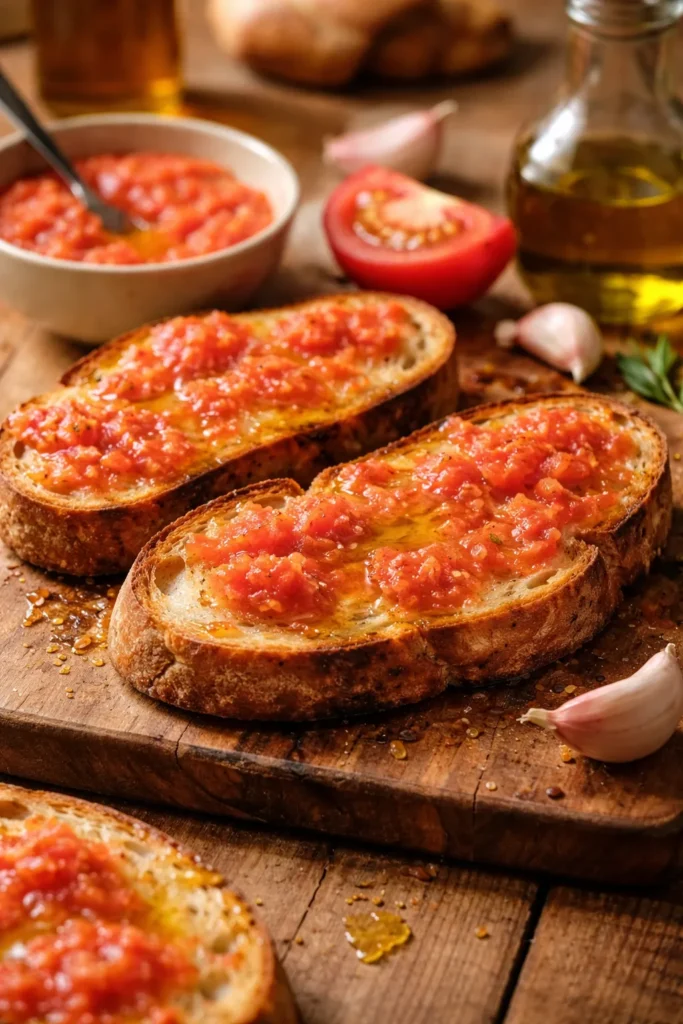
Don’t underestimate this one. Pan con tomate — or pa amb tomàquet in Catalan — is three ingredients and a technique, and it is one of the most perfect things Spain has ever produced. What started as a practical meal for farmers in Catalonia has spread across the entire country and into tapas bars worldwide, and for genuinely good reason.
The tomato isn’t sliced or chopped. It’s grated on the coarse side of a box grater directly over the bread, which collapses the tomato’s structure and spreads a layer of pulp, juice, and seeds that soaks into the toast in a way no other preparation achieves. The skin stays behind in your hand, which is convenient. The texture left on the bread is somewhere between sauce and fresh pulp — almost jammy.
The Ingredient Question
Because this dish is so stripped back, quality determines everything. Use the ripest, most flavourful tomatoes you can find — vine-ripened or heritage varieties work best. The bread must be sourdough or a rustic country loaf with an open crumb, grilled or toasted on a dry pan or griddle until genuinely charred at the edges. Drizzle with a grassy, peppery extra virgin Spanish olive oil — not a mild one — and finish with good flaky sea salt.
Make It for a Party
This is the easiest make-ahead tapa on this entire list. Set up a DIY station with toasted bread, grated tomato in a bowl, oil in a small jug, and salt alongside — guests can assemble their own, which is both interactive and removes all timing pressure from you.
- Yield: Serves 8
- Prep Time: 10 minutes
- Make-Ahead: Grated tomato keeps at room temperature for up to 2 hours. Toast bread just before serving.
Ingredients:
- 1 large rustic sourdough loaf or ciabatta, sliced 1.5cm thick
- 4 large, very ripe vine tomatoes (or 6 smaller heritage varieties)
- 3 garlic cloves, halved (optional, for rubbing)
- 4-5 tablespoons best-quality extra virgin Spanish olive oil
- Flaky sea salt
Instructions:
- Toast or griddle the bread slices over high heat until golden with char marks on both sides. Work in batches if needed.
- While still warm, rub each slice lightly with the cut side of a garlic clove if using — one or two passes, not more.
- Halve the tomatoes across their equator. Grate the cut side of each tomato half on the coarse side of a box grater held over a bowl, pressing gently as you go. Discard the skins.
- Spoon or spread the grated tomato generously over each toast, letting it soak in for 30 seconds.
- Drizzle with olive oil — don’t be shy — and finish with a generous pinch of flaky sea salt. Serve immediately.
Worth knowing: Adding a single anchovy fillet on top of each toast turns this from a vegetarian opener into one of the most complete single bites in the tapas canon. Highly recommended.
4. Chorizo al Vino Tinto (Chorizo in Red Wine)
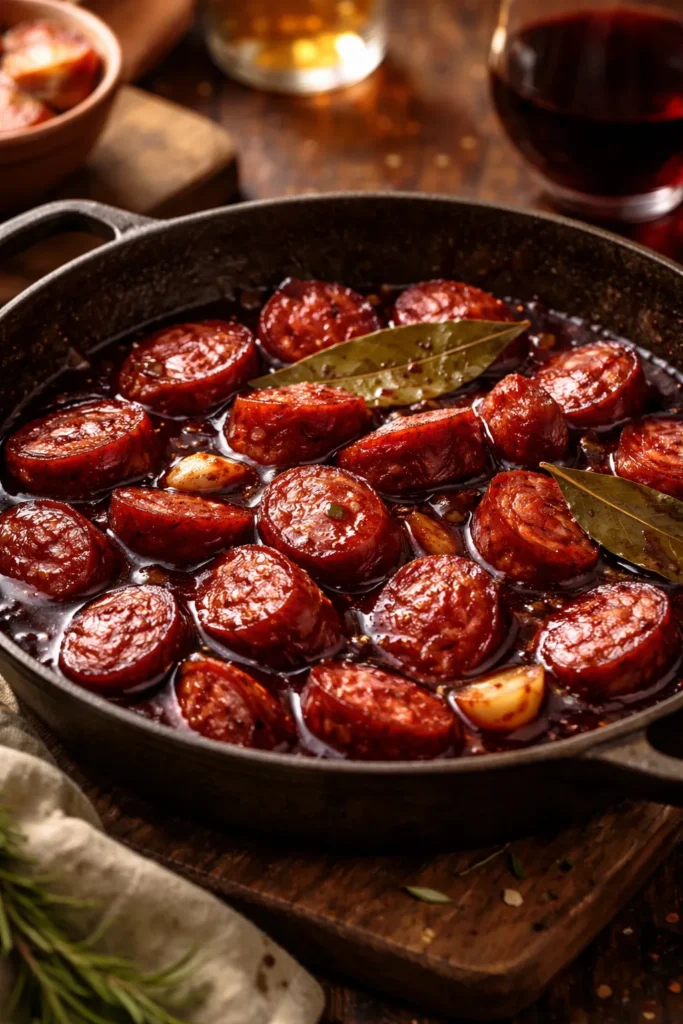
There’s a reason this dish appears on virtually every tapas bar menu across Spain. Sliced chorizo simmered in red wine with garlic and bay leaves until the wine reduces into a glossy, concentrated glaze — it takes 25 minutes start to finish and tastes like something that cooked all afternoon.
The key distinction here is cooking chorizo, not cured. Cured chorizo is wonderful on a board, but for this preparation you want the semi-cured cooking variety — it releases its fat into the wine as it cooks, which carries the paprika and pork fat flavour through the sauce in a way that makes you want to mop every drop with bread.
Choosing Your Wine
Use a Rioja Joven or any basic Spanish red — not expensive, but not something you wouldn’t drink. The wine reduces significantly, concentrating its flavour, so thin or excessively tannic wine makes a thin or harsh sauce. A medium-bodied, fruity red works best. If you’re already opening a bottle to pour for guests, use that.
Make It for a Party
The wine sauce can be made completely in advance and reheated gently. This dish actually improves after sitting overnight, which makes it one of the smartest options for a stress-free dinner party.
- Yield: Serves 6-8
- Prep Time: 5 minutes
- Cook Time: 25 minutes
- Make-Ahead: Fully make 24 hours ahead; reheat gently over low heat.
Ingredients:
- 400g semi-cured Spanish cooking chorizo, sliced into 1cm coins
- 250ml Spanish red wine (Rioja or similar)
- 3 garlic cloves, thinly sliced
- 2 bay leaves
- 1 tablespoon extra virgin olive oil
- 1 teaspoon smoked sweet paprika
- Fresh parsley to serve
- Crusty bread, to serve
Instructions:
- Heat olive oil in a wide skillet over medium heat. Add the chorizo slices and cook for 2 to 3 minutes per side until they release their fat and the edges are slightly caramelised and crisp.
- Add the sliced garlic and cook for 1 minute, stirring so it doesn’t burn.
- Pour in the red wine — it will sizzle dramatically. Add the bay leaves and smoked paprika. Stir to combine.
- Bring to a boil, then reduce to a steady simmer. Cook uncovered for 15 to 18 minutes, stirring occasionally, until the wine reduces by about two-thirds and coats the chorizo in a thick, syrupy glaze. The sauce should cling to the back of a spoon.
- Remove bay leaves. Scatter with parsley and serve warm in the pan or a small serving dish with plenty of bread alongside.
5. Croquetas de Jamón (Ham Croquettes)
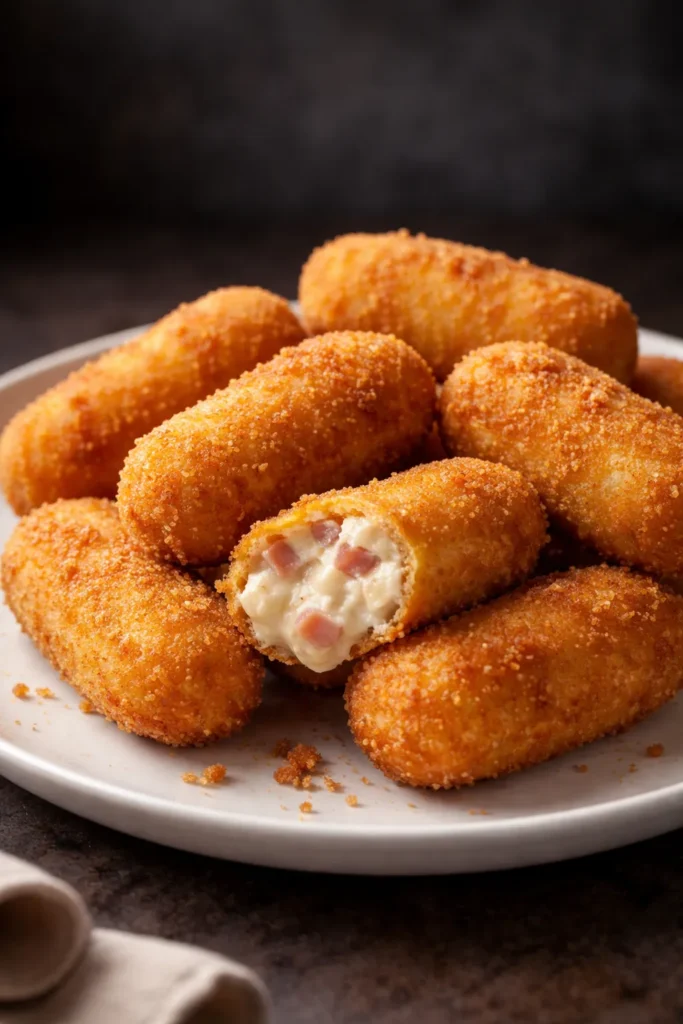
Croquetas might take a little more effort than the other dishes on this list, but they’re worth every minute. Bite into a properly made croqueta and you get a shatteringly crisp breadcrumb shell giving way to molten, silky béchamel studded with salty pieces of Serrano or Ibérico ham. It’s one of Spain’s great comfort foods dressed up in party clothes.
The béchamel is the soul of this dish. It needs to be cooked long enough that the flour is fully absorbed and the mixture pulls cleanly away from the sides of the pan — undercooking it produces a starchy, gluey filling. After that, the mixture is chilled until firm enough to shape, which is why making croquetas the day before a party is not just acceptable, it’s the smart move.
The Rolling Technique
Cold, well-chilled filling is the difference between croquetas that hold their shape during frying and croquetas that collapse into the oil. Chill for at least 4 hours; overnight is better. Shape into oval cylinders about 6cm long, then coat in plain flour, beaten egg, and fine panko breadcrumbs. Double-coating in egg and breadcrumbs gives extra insurance against blowouts in the oil.
Make It for a Party
- Yield: Makes 20-24 croquetas
- Prep Time: 40 minutes + 4 hours chilling
- Cook Time: 20 minutes frying
- Make-Ahead: Shape, breadcrumb, and freeze unfried — fry straight from frozen, adding 2 extra minutes.
Ingredients:
For the Filling:
- 60g unsalted butter
- 1 small onion, very finely minced
- 90g plain flour
- 600ml whole milk, warmed
- 150g Serrano or Ibérico ham, finely chopped (or torn into small pieces)
- Freshly grated nutmeg, to taste
- Salt and white pepper
For Coating:
- 80g plain flour
- 3 eggs, beaten
- 150g fine panko breadcrumbs
- Sunflower oil, for deep frying
Instructions:
Make the Filling:
- Melt butter in a medium heavy-bottomed saucepan over medium-low heat. Add the minced onion and cook for 8 to 10 minutes, stirring frequently, until completely soft and translucent — no colour.
- Add the flour all at once and stir vigorously for 2 minutes to cook out the raw flour taste. The mixture will form a thick, slightly grainy paste.
- Add the warm milk in four additions, whisking constantly after each addition until fully smooth before adding more. After all the milk is incorporated, cook over medium heat, stirring continuously, for 8 to 10 minutes until the béchamel is very thick, smooth, and pulls away from the sides of the pan cleanly.
- Remove from heat. Stir in the chopped ham, a grating of nutmeg, and season with salt (carefully — the ham is already salty) and white pepper.
- Spread the mixture into a lightly oiled baking dish to a depth of about 2cm. Press cling film directly onto the surface to prevent a skin forming. Refrigerate for a minimum of 4 hours, or overnight.
Shape and Fry: 6. Set up a breading station: flour in one shallow bowl, beaten egg in another, panko in a third. 7. Scoop portions of chilled filling (about 40g each) and shape into oval cylinders using two spoons or damp hands. Work quickly — the warmth of your hands will soften the mixture. 8. Roll each croqueta in flour, then beaten egg, then panko. For extra crunch, repeat the egg and panko dip a second time. Place on a tray and refrigerate for 20 minutes before frying. 9. Heat sunflower oil in a deep pan to 180°C (350°F). Fry croquetas in batches of 4 to 5, turning gently, for 2 to 3 minutes until deep golden all over. Do not overcrowd the pan — the oil temperature drops, and you’ll get soggy croquetas instead of crisp ones. 10. Drain on kitchen paper. Serve immediately, or hold in a warm oven at 120°C for up to 15 minutes.
6. Albóndigas in Smoky Tomato Sauce
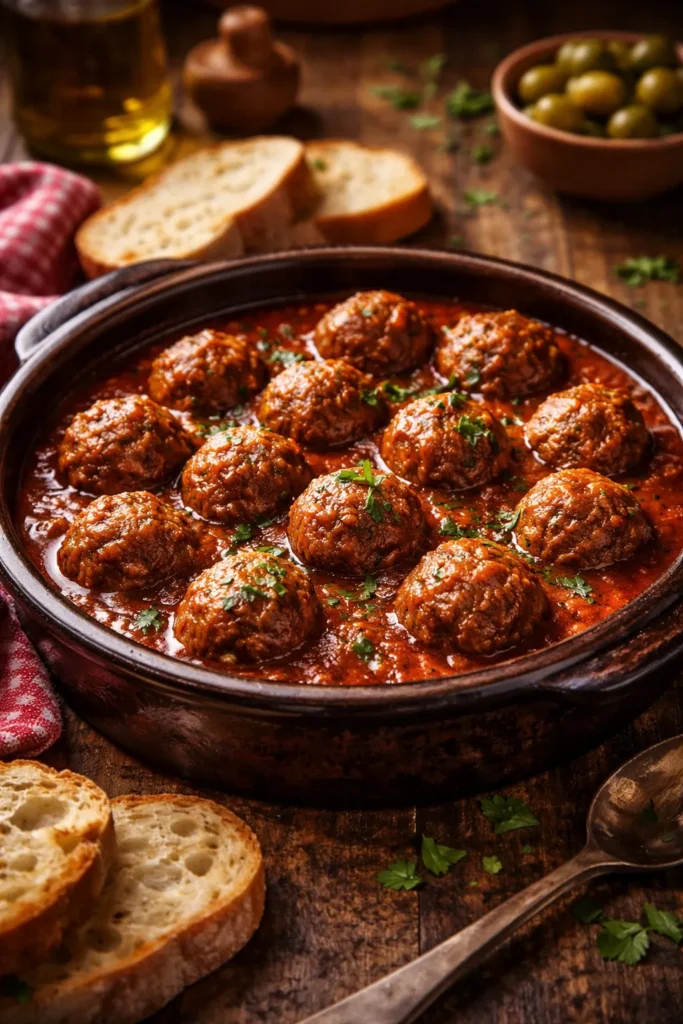
Spanish meatballs bear almost no resemblance to their Italian cousins. No pasta. No basil. Instead, albóndigas are small, dense spheres of pork and beef — sometimes lamb — simmered in a rich sauce of roasted red peppers, garlic, tomato, and a splash of Rioja wine. They arrive in a clay dish, glossy and dark, and they’re meant to be eaten with bread as the only accompaniment.
The Moorish influence is written all over this dish. Cumin and smoked paprika in the meatball mixture itself is the giveaway — that combination arrived in Spain during eight centuries of Moorish occupation and never left. The name albóndigas comes from the Arabic word al-bunduq, meaning hazelnut, which describes their shape.
Getting the Texture Right
A 50/50 blend of minced pork and beef gives the best balance of fat and flavour — pork alone can be too soft, beef alone too dense. Don’t overwork the mixture. Mix until just combined; overworking develops the protein and makes the meatballs tight and bouncy instead of tender and yielding. Chill shaped meatballs for 20 minutes before browning — they hold their shape better.
Make It for a Party
The sauce improves significantly after 24 hours. Make the entire dish the day before, refrigerate, and reheat gently before serving.
- Yield: Serves 6-8 (makes 24-28 small meatballs)
- Prep Time: 25 minutes
- Cook Time: 45 minutes
- Make-Ahead: Full dish can be made up to 2 days ahead.
Ingredients:
For the Meatballs:
- 250g minced pork
- 250g minced beef (15% fat)
- 1 small onion, grated
- 3 garlic cloves, grated
- 1 teaspoon ground cumin
- 1 teaspoon smoked sweet paprika
- 2 tablespoons flat-leaf parsley, finely chopped
- 1 egg
- 4 tablespoons fresh white breadcrumbs
- Salt and black pepper
- Olive oil, for browning
For the Tomato Sauce:
- 2 tablespoons extra virgin olive oil
- 1 medium onion, finely diced
- 4 garlic cloves, minced
- 2 roasted red peppers (from a jar), finely chopped
- 400g tin of quality chopped tomatoes
- 125ml Rioja or other Spanish red wine
- 1 teaspoon smoked sweet paprika
- 1 teaspoon sugar
- Salt to taste
Instructions:
Make and Brown the Meatballs:
- Combine the pork, beef, grated onion and garlic, cumin, paprika, parsley, egg, and breadcrumbs in a large bowl. Season well with salt and pepper. Mix with your hands until just combined — 30 seconds of mixing is enough.
- Roll into balls slightly smaller than a golf ball (about 30g each). Place on a tray, cover, and refrigerate for 20 minutes.
- Heat a thin layer of olive oil in a wide, heavy pan over medium-high heat. Brown the meatballs in batches, turning to colour on all sides — about 4 to 5 minutes per batch. They don’t need to be cooked through at this stage. Set aside.
Make the Sauce: 4. In the same pan, heat the olive oil over medium heat. Cook the diced onion for 8 minutes until soft and golden. Add the garlic and cook for 1 minute. 5. Add the chopped roasted peppers, paprika, and sugar. Stir for 1 minute. 6. Pour in the wine and let it bubble for 2 minutes to cook off the alcohol. Add the tinned tomatoes and stir to combine. Season with salt. 7. Simmer the sauce uncovered for 10 minutes until slightly reduced. Taste and adjust seasoning. 8. Return the browned meatballs to the sauce. Reduce heat to low, cover with a lid, and simmer gently for 20 to 25 minutes until the meatballs are completely cooked through and the sauce has thickened. 9. Scatter with fresh parsley and serve warm with crusty bread.
7. Gilda Pintxo (Anchovy, Olive, and Pepper Skewer)
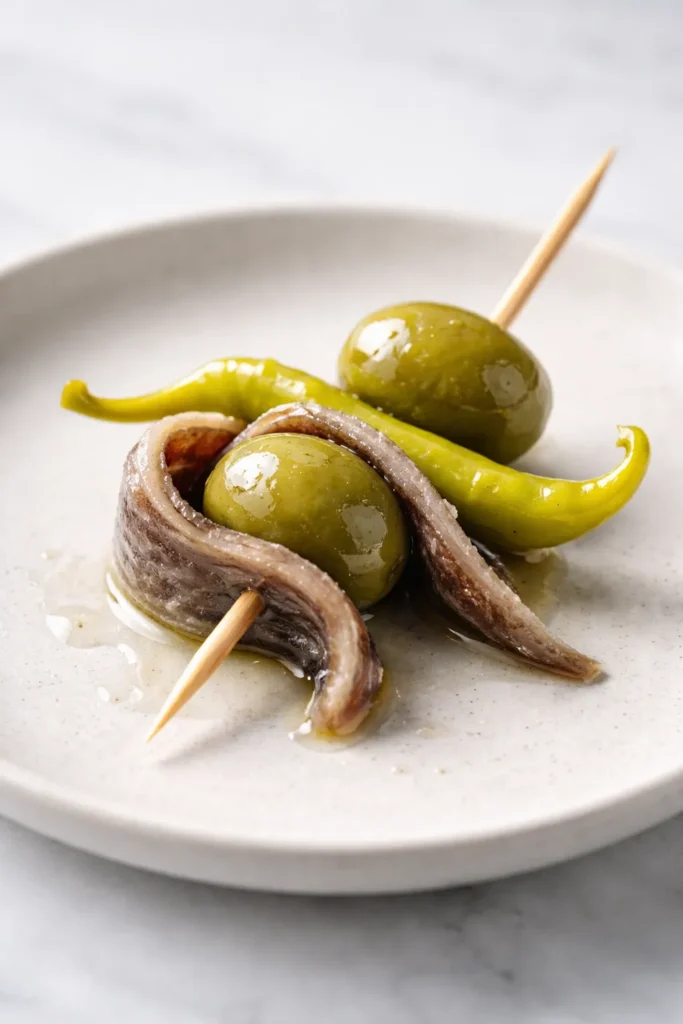
The Gilda is the oldest documented pintxo in existence, and it requires zero cooking. Sometime in 1946, a regular at Bar Casa Vallés in San Sebastián skewered a pickled guindilla pepper, a manzanilla olive, and a salt-cured anchovy onto a single cocktail stick and ordered a glass of wine. The combination was so perfect — salty, acidic, briny, with a gentle chili heat — that it spread across the Basque Country and never stopped.
It was named after the Rita Hayworth film Gilda, which was playing at the time. The pintxo was described as being like the film’s character: salty, green, and a little spicy. That might be the most fitting food description in culinary history.
Ingredient Non-Negotiables
The anchovy determines everything. Use salt-packed anchovies from the Cantabrian Sea — Ortiz is widely available and reliably excellent. They should be plump, red-brown, and intensely savoury, not grey or mushy. The olive should be a manzanilla, small and firm with a clean briny flavour. Guindilla peppers come pickled in jars; look for them in Spanish delis or online.
Assembly for a Party
Gildas are assembled cold in minutes and can be made up to two hours ahead, covered with cling film, and kept at room temperature. They’re the perfect aperitivo bite to hand around as guests arrive.
- Yield: Makes 20 skewers
- Prep Time: 10 minutes
- Make-Ahead: Up to 2 hours ahead at room temperature.
Ingredients:
- 40 salt-cured anchovy fillets (about 2 tins Ortiz anchovies)
- 20 small manzanilla olives, pitted or unstoned
- 20 pickled guindilla peppers (or pepperoncini)
- 1 tablespoon best extra virgin olive oil, for drizzling
- 20 cocktail sticks
Instructions:
- Fold each anchovy fillet into a compact curve — this makes threading easier and more visually elegant.
- Thread each cocktail stick with one guindilla pepper (or half a pepperoncini), one folded anchovy, and one manzanilla olive. The order isn’t critical, but anchovy in the middle looks cleanest.
- Arrange on a flat plate or slate board. Drizzle lightly with extra virgin olive oil.
- Serve immediately at room temperature, ideally alongside cold dry sherry or Spanish vermouth.
Worth knowing: The combination of anchovy and olive already provides significant salt. No additional salt is needed, and there’s nothing to cook. This is the genuine beauty of this pintxo — three world-class Spanish ingredients doing exactly what they’re best at.
8. Tortilla Española (Spanish Egg and Potato Omelette)
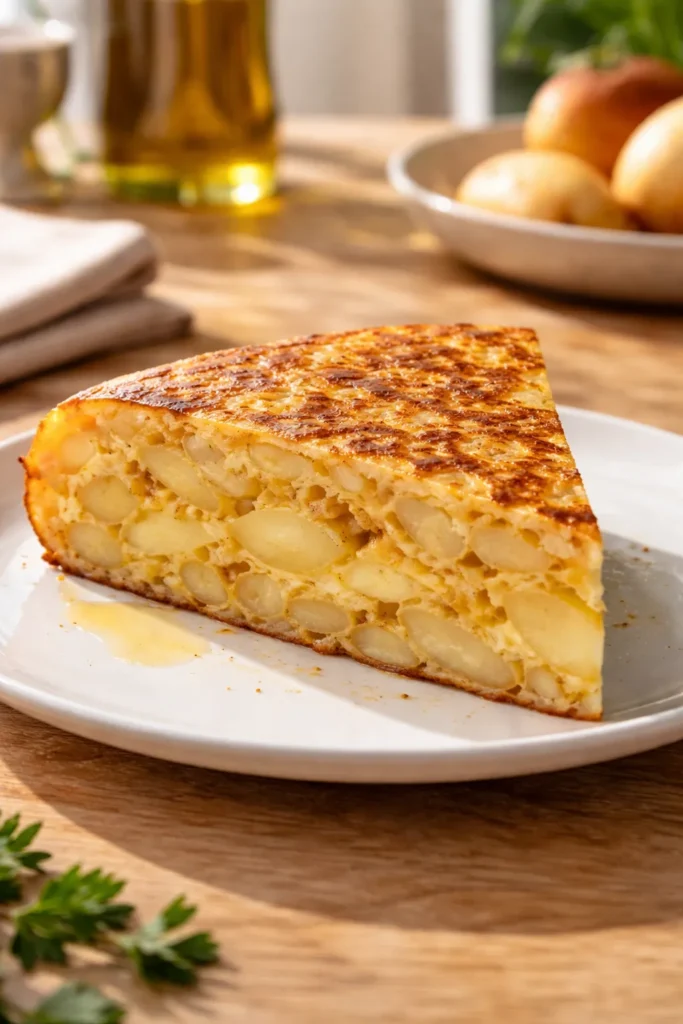
Every Spanish home has its version of tortilla española, and every Spanish grandmother will tell you hers is the best. It’s an argument that’s impossible to settle and entirely beside the point — what matters is that a well-made tortilla is one of the most satisfying things you can eat. Dense, custardy in the centre, with potato slices that have absorbed the olive oil they were cooked in, bound by softly set egg that jiggles slightly when you press the top.
The defining debate in Spain is whether to include onion. Purists from certain regions say no; others insist caramelised onion makes it sweeter and more complex. For a dinner party, include the onion — that extra sweetness and depth makes the tortilla more interesting alongside stronger-flavoured tapas like the chorizo and albóndigas.
The Flip
Flipping a tortilla is the one moment that intimidates people, but the technique is straightforward once you do it once. Use a plate slightly wider than your pan, place it firmly over the pan, and flip decisively in one motion. Hesitation is the enemy — commit to the flip. The uncooked side goes down into the pan for its final two to three minutes.
The interior should remain cuajada — set but not dry. Press the centre gently; it should feel firm with a slight give. If it wobbles dramatically, give it another minute. If it feels completely solid, you’ve gone too far. Serve at room temperature — tortilla española is actually better this way than hot.
Make It for a Party
This is the make-ahead tapa. A tortilla made the night before and kept at room temperature is arguably superior to one served the moment it’s cooked.
- Yield: Serves 8 as a tapa
- Prep Time: 15 minutes
- Cook Time: 30 minutes
- Make-Ahead: Make completely up to 24 hours ahead; store at room temperature (not the fridge) and slice before serving.
Ingredients:
- 700g waxy potatoes (Charlotte or Maris Piper), peeled and sliced 3mm thin
- 1 large white or yellow onion, halved and thinly sliced
- 7 large eggs
- 200ml extra virgin Spanish olive oil (you’ll pour most of it off)
- 1 teaspoon fine salt
Instructions:
- Heat the olive oil in a 24cm non-stick skillet over medium-low heat. Add the sliced potato and onion, season well with salt, and stir gently to coat everything in oil. The potatoes should poach in the oil, not fry — if they’re sizzling aggressively, reduce the heat. Cook for 20 to 25 minutes, stirring occasionally, until the potatoes are completely tender and slightly translucent but not coloured.
- Drain the potato and onion through a colander set over a bowl, collecting the olive oil. Set the cooked oil aside — you can reuse it for future cooking.
- Beat the eggs well in a large bowl with ½ teaspoon salt. Add the drained potato and onion mixture. Mix gently and let the mixture rest for 5 minutes, allowing the egg to soak into the potatoes slightly.
- Return 2 tablespoons of the collected oil to the non-stick pan over medium-high heat. When the oil shimmers, pour in the egg and potato mixture. Shake the pan gently to settle everything into an even layer.
- Reduce heat to medium-low. Cook for 5 to 6 minutes, shaking the pan occasionally, until the edges are set and the underside is golden. The centre will still look wet — that’s correct.
- Place a large flat plate or lid over the pan. In one confident motion, flip the pan and plate together so the tortilla lands on the plate, cooked-side-up. Slide the tortilla back into the pan, uncooked-side-down.
- Cook for another 2 to 3 minutes. The centre should feel set but still have the slightest give when pressed. Slide onto a clean plate. Allow to cool completely before slicing into wedges or squares.
What to Drink with a Tapas Dinner Party

The Spanish have thought long and hard about what to drink alongside tapas, and their conclusions are worth following. Forget heavy, tannic reds — the food is too varied and too delicate for that.
Fino or Manzanilla Sherry is the most authentic choice and arguably the most underrated wine pairing in existence. Bone dry, nutty, saline, and bone-chillingly cold from the fridge, a glass of Fino works with almost everything on this list. Start with this.
For red wine, a Garnacha or Rioja Joven — young, fruity, and lower in tannin — works far better than an aged, structured Rioja Reserva, which will overpower delicate dishes. Cava, Spain’s sparkling wine, is festive and extremely food-friendly, cutting through the richness of croquetas and albóndigas alike.
Sangria is genuinely great at a tapas party — especially a homemade version with good wine, brandy, orange, lemon, and a cinnamon stick. It’s crowd-pleasing, makes a large batch in advance, and people love it.
Make-Ahead Timeline for a Stress-Free Party
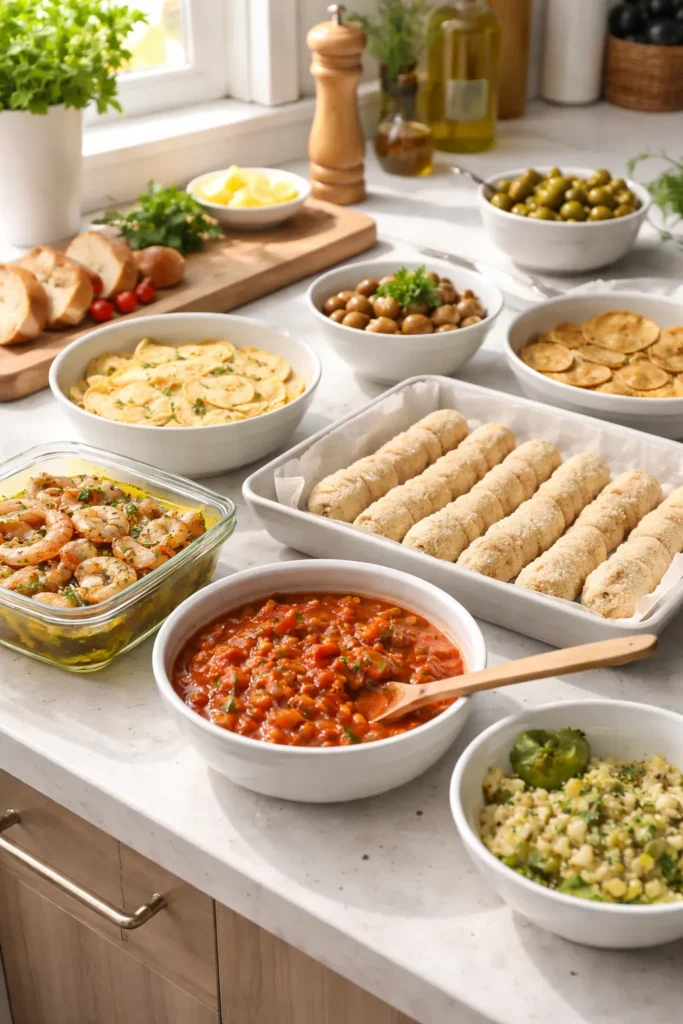
One of the most underrated skills in entertaining is knowing which dishes to make when. Here’s a practical schedule that means you’ll spend the actual party evening with your guests, not at the stove:
Two days before:
- Make the bravas sauce
- Make and refrigerate the albóndigas completely
- Make the croqueta filling and refrigerate
One day before:
- Shape and breadcrumb the croquetas; freeze or refrigerate
- Make the tortilla española completely
- Marinate the Gambas al Ajillo shrimp
Day of the party:
- Assemble Gildas (2 hours ahead)
- Slice the tortilla and arrange on a serving board
- Reheat albóndigas and bravas sauce gently
- Set up a Pan con Tomate station with pre-toasted bread and grated tomato
- Fry croquetas and Gambas al Ajillo to order, 10 to 15 minutes apart
This schedule leaves nothing stressful for the moment guests arrive. Two quick hot dishes — the gambas and the croquetas — come out in waves while everything else is already on the table.
Serving, Presentation, and the Table Itself
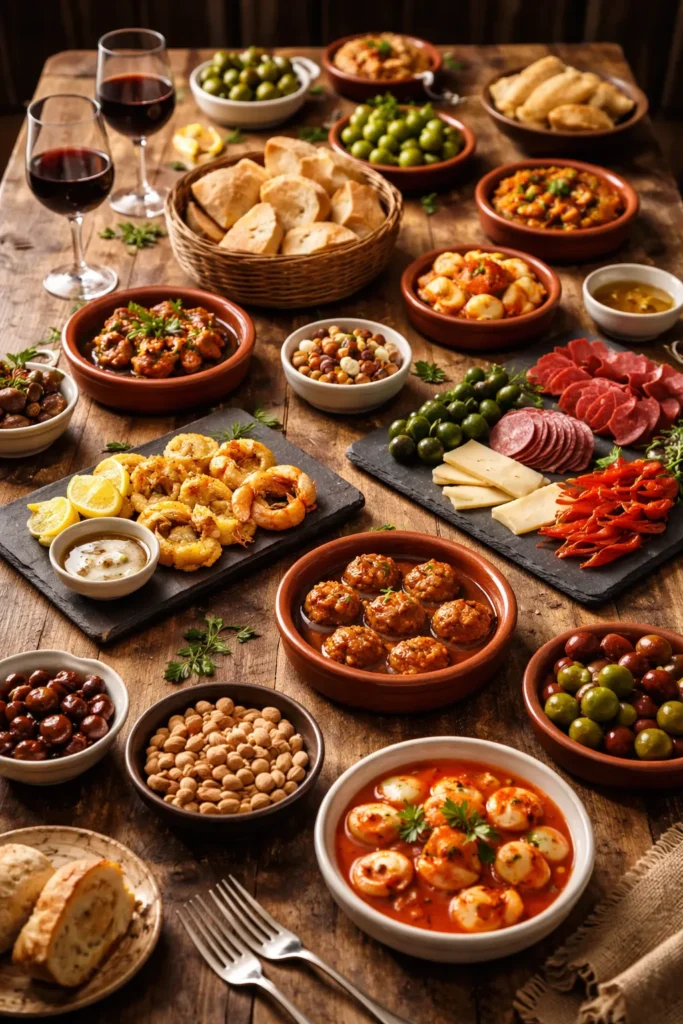
Spanish tapas don’t need elaborate plating. What they need is the right vessels and a laid table that looks generous from the moment guests sit down. Small clay cazuelas for anything served hot. Slate boards or wooden boards for charcuterie, Pan con Tomate, and Gildas. White ceramic dishes for albóndigas and patatas bravas so the sauce colours show clearly.
Set everything out so the table looks abundant — small bowls of marinated olives and Marcona almonds scattered between the main dishes, a basket of bread within reach of every guest, and small plates and napkins so people can serve themselves freely. Dim the lights slightly. Open the wine before anyone sits down.
The real magic of a tapas dinner party isn’t any single recipe — it’s the atmosphere those dishes collectively create. That combination of abundance, informality, and genuine flavour is what made tapas culture last centuries in Spain, and it translates perfectly to a home dinner table anywhere in the world.
Final Thoughts

The eight recipes here work as a complete tapas dinner party menu, but they’re also individually excellent additions to any Spanish-inspired spread. Start with just three or four of them if eight feels ambitious — Pan con Tomate, Gildas, Chorizo al Vino Tinto, and Tortilla Española are the four that require the least cooking and the most honest quality ingredients.
What ties all of these dishes together isn’t technique — it’s philosophy. Spanish tapas cuisine trusts its ingredients. It doesn’t hide flavour under complicated sauces or compensate for mediocre produce with clever technique. A good olive, the right paprika, properly sourced anchovy, and the best olive oil you can afford will make every single one of these dishes sing.
Cook one, cook all eight, or work through the list one dinner party at a time. Either way, the tradition you’re tapping into is a good one — food designed to be shared, in good company, with a glass in hand.