There’s a specific kind of panic that sets in around 5:30 PM when you realize you haven’t thought about dinner once all day. The fridge looks uninspiring, nobody wants to wait an hour for something to bake, and the idea of ordering takeout — again — feels like defeat. That’s exactly where stovetop cooking earns its keep.
A hot skillet or a single pot on the burner can go from cold to a complete, satisfying dinner faster than most ovens even finish preheating. No waiting. No guesswork. Just direct heat, a few solid ingredients, and 30 minutes or less standing between you and a meal the whole family will actually want to eat.
What separates a genuinely fast stovetop dinner from a mediocre one isn’t some complicated technique — it’s knowing which flavor combinations come together quickly without sacrificing depth. The 8 dinners below hit that mark. Each one uses ingredients you can keep stocked, requires minimal prep, and delivers something that tastes like you put in real effort even when you absolutely didn’t.
Table of Contents
- Why Stovetop Cooking Wins on Weeknights
- The Pantry Staples That Make These Meals Possible
- 1. One-Pot Stovetop Lasagna
- Why This Works So Well
- What to Know Before You Make It
- 2. Ground Beef Taco Skillet
- The Flavor Layer Most People Skip
- Topping Combinations That Actually Elevate It
- 3. Creamy Tuscan Chicken Skillet
- What Makes the Sauce Work
- Serving This Effectively
- 4. Garlic Butter Shrimp with Egg Noodles
- The Texture Trap to Avoid
- Variations That Work
- 5. Sausage and Potato Skillet
- The Pre-Cook Trick for Faster Potatoes
- What This Pairs With
- 6. Chicken Fajita Pasta
- Why Cooking Pasta Directly in the Sauce Matters
- Make It Your Own
- 7. Thai Peanut Noodles with Chicken
- Getting the Heat Right for Stir-Fry
- Finishing Touches That Matter
- 8. Skillet Salmon with Lemon, Capers, and Butter
- How to Know When Salmon Is Done
- What to Serve Alongside
- How to Cut Your Prep Time Even Further
- Matching the Right Dinner to the Right Night
- Final Thoughts
Why Stovetop Cooking Wins on Weeknights
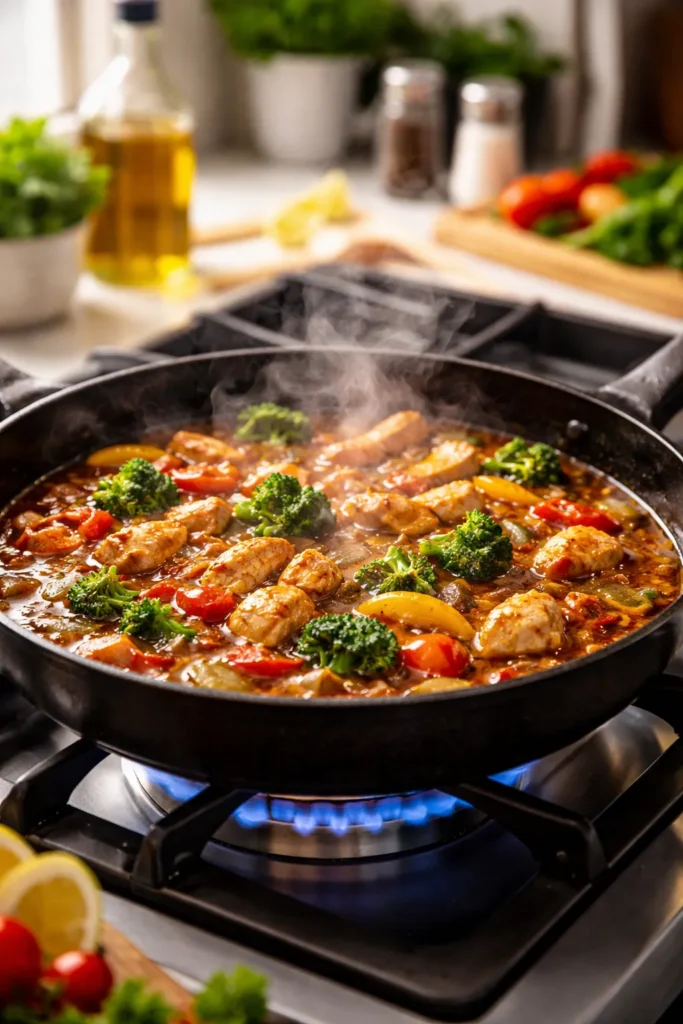
Before getting into the recipes themselves, it’s worth understanding why stovetop dinners are structurally faster than oven-based meals — not just marginally, but significantly.
An oven needs 10–20 minutes to reach temperature before your food even starts cooking. A stovetop burner on medium-high heat is ready in under 60 seconds. For weeknight cooking, that time gap compounds quickly: a dish that “only takes 25 minutes in the oven” often takes 40 minutes total when you factor in preheating and the extra rest time after pulling it out.
Stovetop cooking also gives you control in real time. You can adjust the heat, taste and season as you go, and pull the pan off the flame the moment everything looks right. There’s no opening the oven door to check and releasing heat, no guessing whether the center is done, and no burnt edges from a pan that ran too hot. The feedback loop is immediate, which makes you a more confident cook even on the nights when you’re exhausted.
One more underrated benefit: cleanup is dramatically easier. One skillet or one pot means one pan to wash, which makes post-dinner cleanup something you can actually deal with on a Tuesday night.
The Pantry Staples That Make These Meals Possible
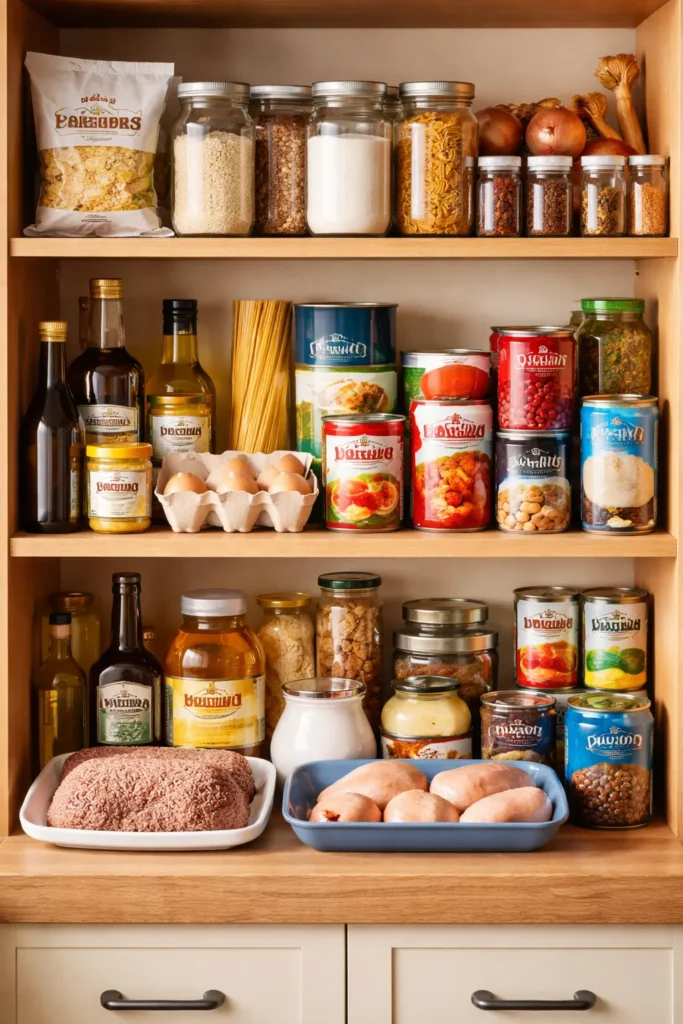
The recipes in this list share a common backbone — a set of ingredients that, if you keep them stocked, make it possible to pull off a fast dinner on any night of the week without a special grocery run.
Proteins to keep on hand:
- Boneless, skinless chicken thighs (more forgiving than breasts, cook faster than you’d think)
- Ground beef or turkey
- Raw or cooked shrimp (frozen works perfectly — thaw under cold water in 5 minutes)
- Smoked sausage or kielbasa (already cooked, just needs to be heated through)
Pantry staples that do heavy lifting:
- Canned diced tomatoes and tomato paste
- Low-sodium chicken or beef broth
- A good Italian seasoning blend, smoked paprika, and cumin
- Soy sauce, Worcestershire sauce, and a jar of your favorite pasta sauce
- Rice, egg noodles, and a box of pasta (short shapes cook faster)
Fresh aromatics that last:
- Garlic (a whole head keeps for weeks)
- Onions and bell peppers
- A lemon (zest and juice brighten almost any stovetop sauce instantly)
With these things in rotation, every recipe below becomes a “what do I have?” dinner rather than a “what do I need to buy?” problem.
1. One-Pot Stovetop Lasagna
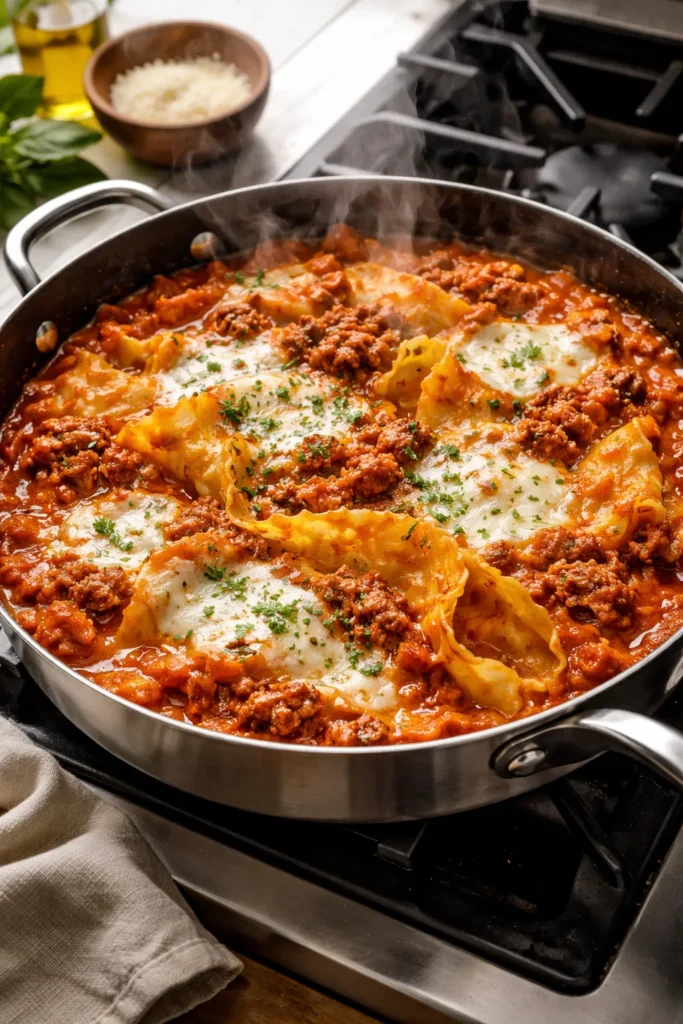
Classic lasagna is one of those meals that sounds like an event — layering noodles, making béchamel, waiting an hour for it to bake. The stovetop version collapses all of that into a single pot and 25 minutes, and the result is shockingly close to the real thing.
The method is straightforward: break lasagna noodles into rough quarters, cook them directly in a skillet with jarred marinara sauce, a splash of water, and whatever protein you’re working with — browned Italian sausage, ground beef, or even leftover rotisserie chicken. The noodles absorb the sauce as they cook, creating a thick, cohesive dish rather than a watery soup. The key is keeping the lid on so the steam does the work.
Why This Works So Well
The noodles release starch as they cook, which naturally thickens the sauce without any added steps. You end up with that rich, clingy lasagna texture — not because you layered anything, but because the cooking method builds it organically.
Cheese goes in at the very end. Stir half your shredded mozzarella (or provolone) into the mixture, then pile the rest on top, drop the lid back on, and let it sit for 5 minutes off the heat. The carry-over heat melts everything into a properly gooey, pull-apart finish.
What to Know Before You Make It
- Use a deep, wide skillet or a 5-quart pot — lasagna noodles are long even when broken, and you need room for them to lay flat and cook evenly
- Stir the pot twice during cooking (roughly every 7–8 minutes) to prevent the noodles from clumping together
- Add a pinch of red pepper flakes and a teaspoon of garlic powder to the sauce for extra depth — jarred marinara alone is good but benefits from a little reinforcement
- Fresh spinach stirred in at the end adds color and nutrition without any extra cook time
Approximate time: 5 minutes prep, 20–25 minutes cook time
2. Ground Beef Taco Skillet
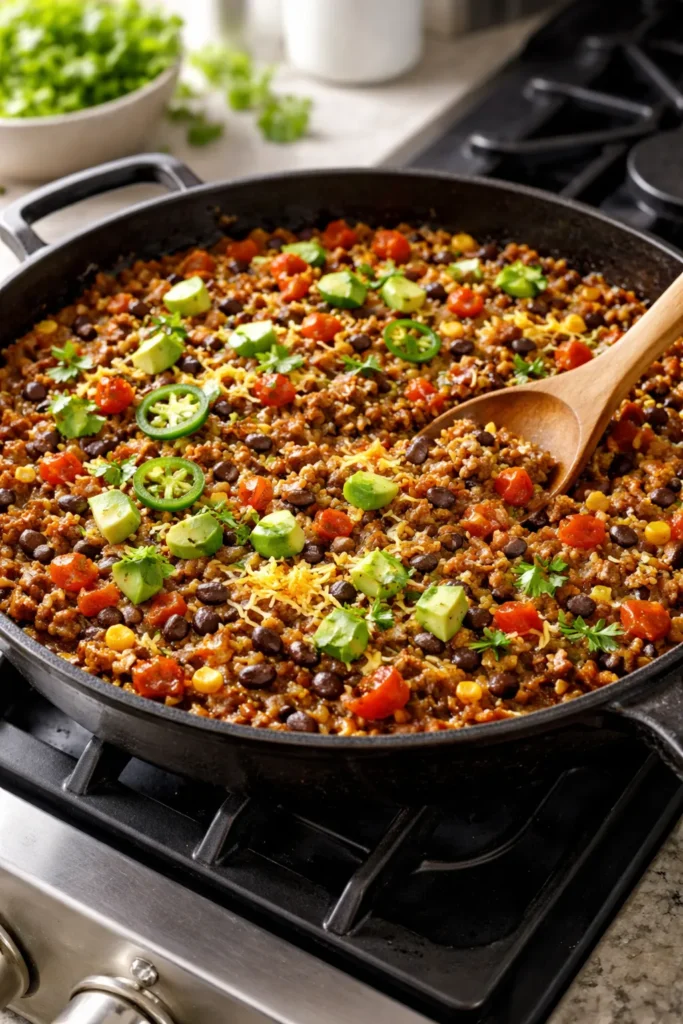
Taco night typically involves browning meat in one pan, warming tortillas in another, and then setting up a spread of toppings that somehow takes over the entire counter. The skillet version brings everything into one pan — the beef, the seasoning, the rice, the beans — and skips the tortilla entirely in favor of a scoopable bowl that’s just as satisfying.
Brown the ground beef in a large skillet over medium-high heat until fully cooked, about 6–8 minutes. Drain the fat, then add taco seasoning (homemade or store-bought), a can of drained black beans, a can of fire-roasted tomatoes, and ¾ cup of beef broth. Stir everything together and let it simmer for 10 minutes. If you want to add rice, use instant rice — stir it in with the broth and it’ll be cooked through by the time the liquid absorbs.
The Flavor Layer Most People Skip
A tablespoon of tomato paste stirred in with the seasoning adds a savory depth that taco seasoning alone doesn’t quite achieve. It takes 10 seconds and makes the beef taste like it’s been simmering far longer than it actually has. Smoked paprika alongside the cumin also makes a noticeable difference — it adds a subtle warmth that reads as complexity.
Topping Combinations That Actually Elevate It
- Shredded cheddar melted directly over the skillet, then a cold contrast of sour cream and fresh salsa
- Sliced avocado and a squeeze of lime right before serving
- Crushed tortilla chips on top for crunch
- Pickled jalapeños for anyone who wants heat
Approximate time: 5 minutes prep, 20 minutes cook time
3. Creamy Tuscan Chicken Skillet
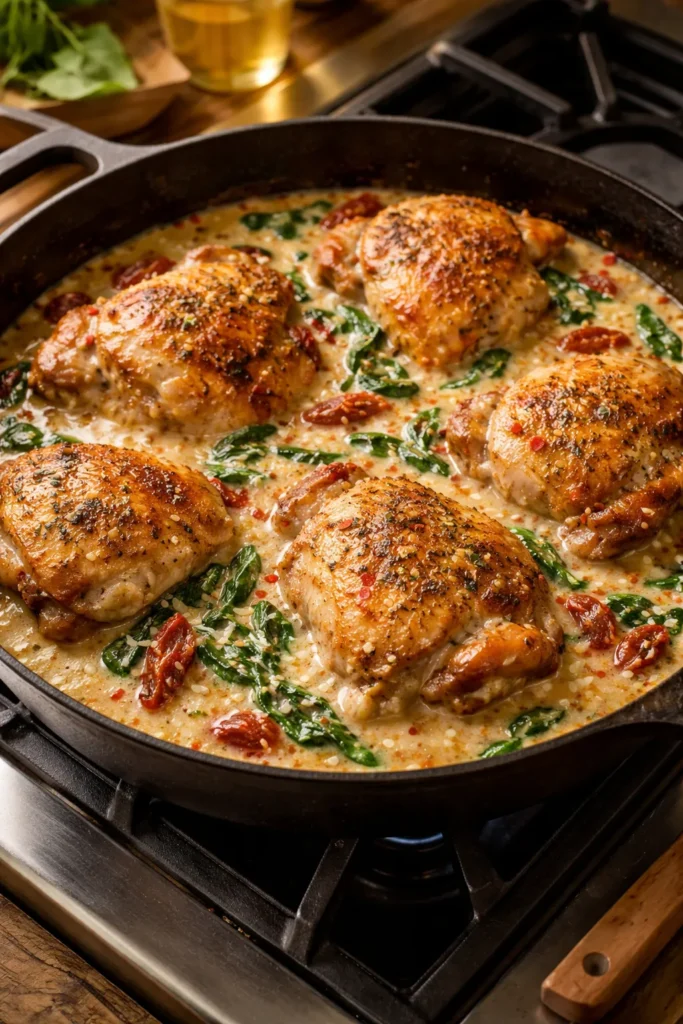
This one tastes like something from a sit-down Italian restaurant and takes under 30 minutes. Boneless chicken thighs are the right cut here — they cook faster than breasts, stay juicier at higher heat, and don’t dry out if you’re not watching the clock to the second.
Season the chicken generously with garlic powder, salt, and Italian seasoning, then sear in a hot skillet with a little olive oil until golden, about 4–5 minutes per side. Remove the chicken, lower the heat, and add minced garlic, sun-dried tomatoes (packed in oil, drained), and a splash of chicken broth to deglaze — scraping up all those browned bits stuck to the bottom of the pan. Those bits are flavor. Don’t skip this step.
Pour in heavy cream, a handful of fresh or frozen spinach, and a good amount of grated parmesan. Stir and let it simmer for 3–4 minutes until the sauce thickens. Slide the chicken back in, spoon the sauce over each piece, and serve.
What Makes the Sauce Work
Sun-dried tomatoes do something specific here that fresh tomatoes can’t — they’re concentrated and slightly acidic, which cuts through the richness of the cream and prevents the sauce from feeling heavy. If you don’t have them, a teaspoon of balsamic vinegar stirred into the cream achieves a similar balance.
Serving This Effectively
- Spoon over pasta, egg noodles, or mashed potatoes — the sauce is the real star and it needs something to cling to
- A crusty piece of bread to soak up the pan sauce is non-negotiable if you’re serving this to anyone who cares about food
- Leftover sauce reheats well with a splash of broth to loosen it
Approximate time: 5 minutes prep, 25 minutes cook time
4. Garlic Butter Shrimp with Egg Noodles
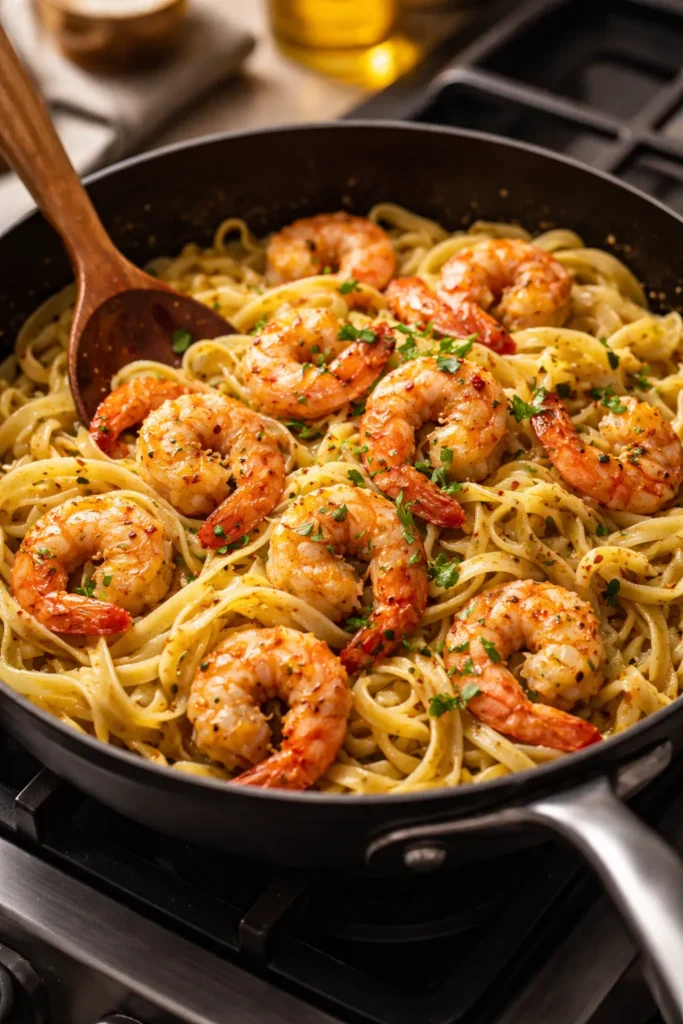
Shrimp is genuinely one of the fastest proteins in existence. It goes from raw to perfectly cooked in 2–3 minutes per side, which means the rest of your cooking time is really just about building the sauce.
Cook egg noodles separately (about 7–8 minutes) while you build the skillet. Melt 3 tablespoons of butter in a large pan over medium heat, add 4–5 cloves of minced garlic, and cook for 60 seconds until fragrant — watch this carefully, garlic burns fast and bitter garlic ruins the whole dish. Add the raw shrimp in a single layer, season with salt, smoked paprika, and a pinch of cayenne, and cook for 2 minutes per side. Deglaze with a quarter cup of chicken broth and a squeeze of lemon, let it reduce for 90 seconds, then toss the drained noodles directly into the pan.
The Texture Trap to Avoid
Overcooked shrimp is rubbery, not tender. Pull them the moment they’ve turned pink and curled into a loose C-shape. A tight curl (like an O) means they’ve gone too far. Once the shrimp come off the heat and rest in the noodles, they carry over slightly — so err on the side of just-done rather than fully firm.
Variations That Work
- Add a handful of cherry tomatoes to the skillet alongside the shrimp — they blister in the heat and burst into a light natural sauce
- Fresh parsley or basil stirred in at the end adds color and brightness
- Substitute the egg noodles for orzo or angel hair pasta for a slightly different texture
Approximate time: 5 minutes prep, 15 minutes cook time
5. Sausage and Potato Skillet
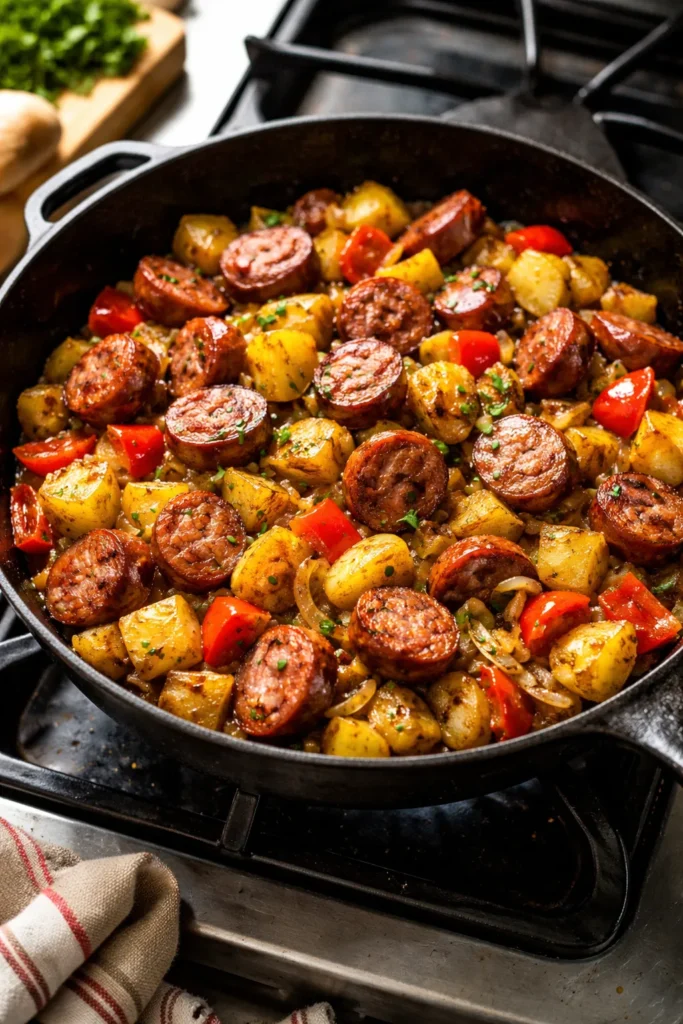
There’s something deeply satisfying about a meal that’s both filling and effortless, and a sausage and potato skillet checks both boxes without asking much of you. Smoked sausage is already fully cooked, which means you’re not building to a safe internal temperature — you’re just developing flavor through caramelization.
Slice a 12–14 oz package of smoked kielbasa or andouille into coins. Cook in a dry skillet over medium-high heat (no oil needed — the sausage renders its own fat) until browned on both sides, about 3–4 minutes. Remove and set aside. In the same pan, add diced baby potatoes, a sliced bell pepper, and a half-diced onion. Season with garlic powder, smoked paprika, salt, and black pepper. Cover and cook for 10–12 minutes, stirring occasionally, until the potatoes are fork-tender. Return the sausage to the pan, toss everything together, and cook uncovered for another 2–3 minutes until the edges of the potatoes start to get crispy.
The Pre-Cook Trick for Faster Potatoes
If you have an extra 4 minutes, microwave the diced potatoes with a splash of water, covered, for 3–4 minutes before they go into the skillet. They’ll finish cooking in the pan in half the time, and you’ll actually get more caramelization on the outside since they spend less time steaming and more time browning.
What This Pairs With
- A fried egg on top turns this into a complete one-pan dinner with next to no extra effort
- Whole-grain mustard on the side is a classic pairing for kielbasa that most people overlook
- A handful of chopped kale stirred in for the last 3 minutes wilts down beautifully and adds something green without complicating anything
Approximate time: 5 minutes prep, 20 minutes cook time
6. Chicken Fajita Pasta
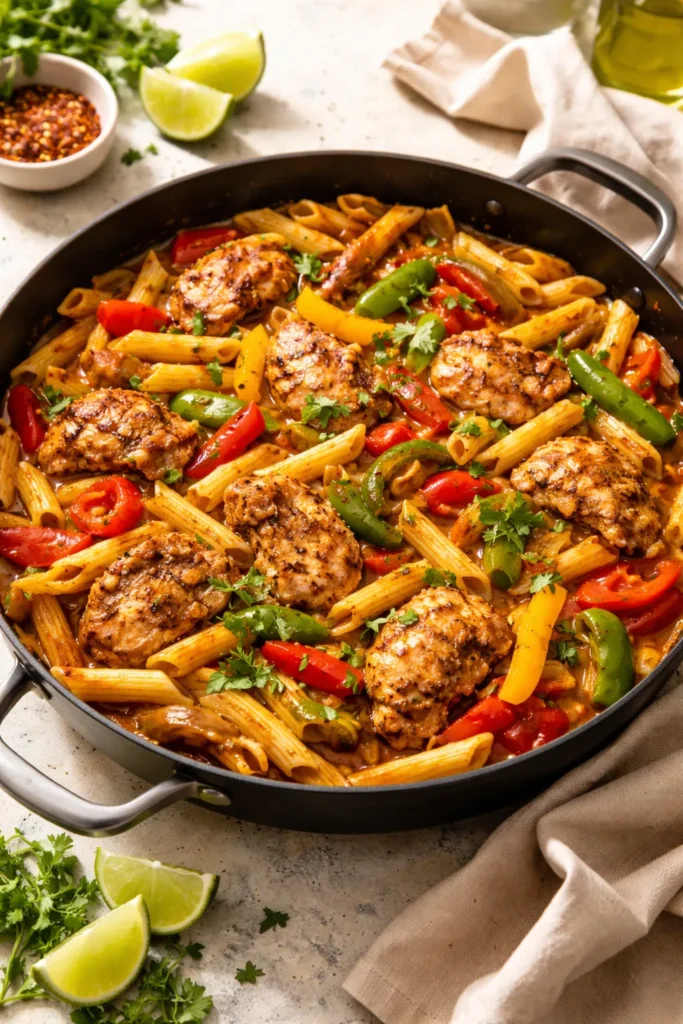
This isn’t a fusion gimmick — it’s a legitimately good dinner that takes two things (fajitas and pasta) and makes them better together than either would be alone. The fajita flavors — cumin, chili powder, lime, garlic — work beautifully with the starchiness of pasta, and the whole thing comes together in one skillet.
Season thin-sliced chicken thighs with a tablespoon of fajita seasoning (or a mix of cumin, chili powder, garlic powder, and salt). Sear in oil over high heat, 3–4 minutes per side, then set aside. In the same pan, soften sliced bell peppers and onion for 4 minutes. Add minced garlic, then pour in 2 cups of chicken broth and a can of diced tomatoes with their juice. Add 8 oz of penne or rotini directly to the skillet — the pasta cooks right in the liquid, absorbing all the flavor as it softens, about 10–12 minutes. Stir in a generous handful of shredded cheddar, slice the chicken back over the top, and finish with a squeeze of lime.
Why Cooking Pasta Directly in the Sauce Matters
When pasta cooks in plain water, it absorbs nothing but starch. When it cooks in seasoned broth with tomatoes and aromatics, it absorbs all of that — and the starch it releases as it cooks also thickens the surrounding liquid into a clingy, flavorful sauce. This is the same logic that makes one-pot pasta dishes taste more cohesive than pasta boiled separately.
Make It Your Own
- Swap the chicken for shrimp — add them in the last 4 minutes of cooking so they don’t overcook
- Add a can of black beans along with the tomatoes for extra protein and bulk
- A dollop of sour cream and some pickled jalapeños on top take this from weeknight dinner to genuinely impressive
Approximate time: 5 minutes prep, 25 minutes cook time
7. Thai Peanut Noodles with Chicken
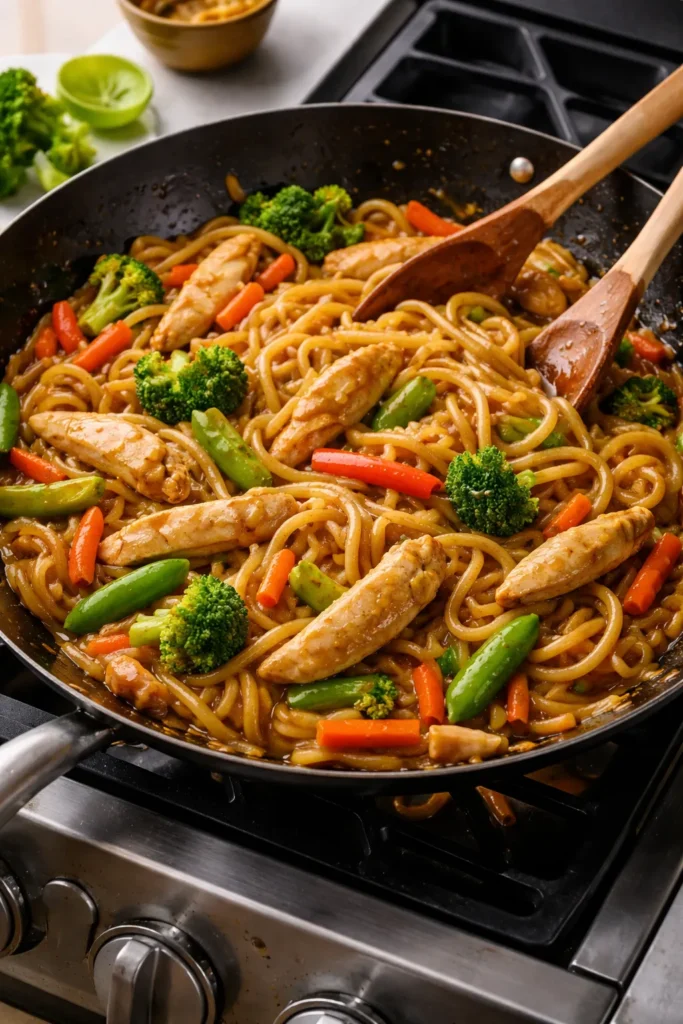
If you’ve never made a homemade peanut sauce, you’re about to realize how simple it is — and how much better it is than anything from a bottle. The sauce comes together in under 2 minutes and doubles as a marinade, a stir-fry sauce, and a finishing glaze all at once.
Quick peanut sauce: whisk together 3 tablespoons of peanut butter, 2 tablespoons of soy sauce, 1 tablespoon of rice vinegar (or lime juice), 1 teaspoon of honey, 1 teaspoon of sesame oil, a teaspoon of grated ginger, and 2–3 tablespoons of warm water to thin it to a pourable consistency.
Cook rice noodles or lo mein noodles according to package directions (most take 4–6 minutes). In a hot skillet or wok, stir-fry thin-sliced chicken with a little oil over high heat, 4–5 minutes. Add frozen stir-fry vegetables (no thawing needed — they go straight from the bag into the hot pan) and cook another 3 minutes. Toss the drained noodles into the skillet, pour the peanut sauce over everything, and toss for 1–2 minutes until evenly coated and heated through.
Getting the Heat Right for Stir-Fry
High heat is non-negotiable for this style of cooking. A medium flame will steam the vegetables instead of searing them, and you’ll end up with a soggy, gray stir-fry instead of something vibrant and slightly charred at the edges. Get the pan genuinely hot before anything goes in, and don’t overcrowd it — cook the chicken first, set it aside, then do the vegetables.
Finishing Touches That Matter
- Crushed peanuts, fresh cilantro, and sliced scallions on top make this look and taste restaurant-quality
- A drizzle of chili oil or sriracha for anyone who wants heat
- Lime wedges served alongside brighten every bite
Approximate time: 10 minutes prep, 15 minutes cook time
8. Skillet Salmon with Lemon, Capers, and Butter
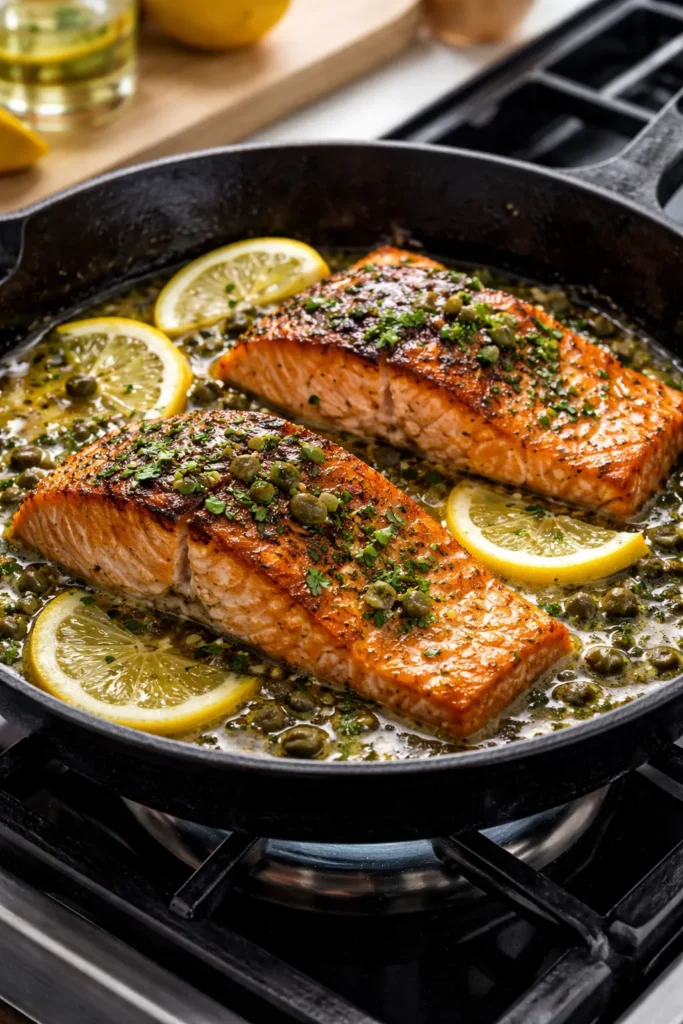
Salmon has an undeserved reputation for being difficult or time-consuming. A skin-on fillet in a hot skillet is actually one of the fastest proteins you can cook — 4 minutes on the skin side, 2 minutes flipped, and it’s done. The entire dish, including the sauce, takes under 20 minutes.
Pat the salmon fillets dry with a paper towel — this is the single most important step for getting a proper sear instead of a sad steam. Season with salt and pepper. Heat a tablespoon of olive oil in a skillet over medium-high heat until shimmering. Place the salmon skin-side down, press gently for the first 30 seconds to prevent curling, then don’t touch it for 4 minutes. Flip carefully, cook for 2 more minutes, then remove and set on a plate. Lower the heat, add 2 tablespoons of butter, the juice of a full lemon, a tablespoon of capers, and a minced clove of garlic. Let it sizzle for 60 seconds, then spoon the sauce over the salmon.
How to Know When Salmon Is Done
The flesh should be opaque on the outside but still have the faintest blush of pink in the very center — that’s medium, and it’s the best texture. Fully opaque all the way through means overcooked. Press the top of the fillet gently with your finger: it should yield slightly but not feel raw and translucent. If it flakes apart at the press, it’s past its peak but still edible.
What to Serve Alongside
- Quick-cooked asparagus or green beans in the same skillet after the salmon comes out — 3–4 minutes in the residual butter
- Fluffy rice or couscous to soak up the lemon-caper butter
- A simple arugula salad dressed with olive oil and more lemon keeps the whole plate feeling light
Approximate time: 5 minutes prep, 12–15 minutes cook time
How to Cut Your Prep Time Even Further
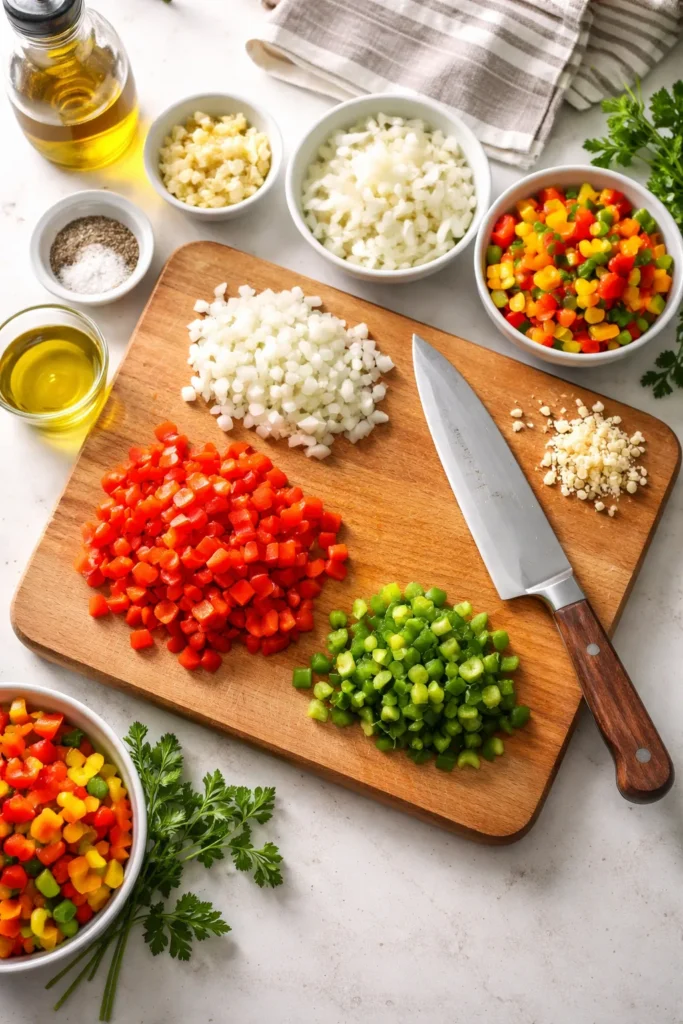
Each recipe above is already fast, but there are a few habits that can shave another 5–10 minutes off any stovetop dinner without cutting corners on flavor.
Mise en place, even informally. You don’t need a culinary school setup — just chop your garlic, onion, and protein before the pan goes on the heat. Scrambling to mince garlic while your butter is burning is where most weeknight cooking goes sideways.
Keep proteins thin. Thin-sliced chicken thighs, shrimp, fish fillets, ground meat — all of these cook in a fraction of the time that a whole chicken breast or thick cut needs. When time is the constraint, the thickness of your protein matters more than anything else.
Use the lid strategically. Covering a skillet traps steam and heat, which can cut cooking times for vegetables and pasta by 30–40%. It’s not cheating — it’s physics.
Freeze aromatics ahead of time. Minced garlic freezes well in small portions. Diced onion and sliced bell pepper freeze even better. Having these ready to go in the freezer means the most tedious parts of dinner prep are already handled.
Season in layers, not all at once. Adding seasoning at multiple stages — when the protein goes in, when the vegetables soften, and again right before serving — means you need less of everything and end up with more complex flavor.
Matching the Right Dinner to the Right Night
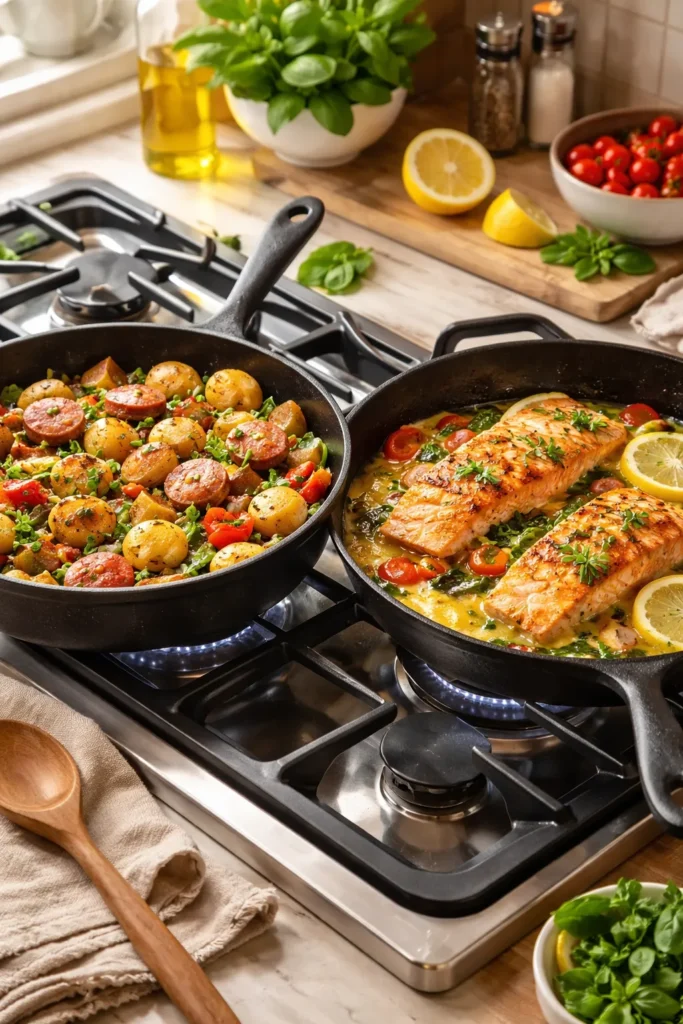
Not every busy weeknight is the same level of busy, and these 8 dinners don’t all require the same amount of mental bandwidth.
On nights when you’re barely functional: The taco skillet and the sausage and potato skillet are the right call. Minimal decisions, familiar flavors, hard to mess up.
When you want something that feels impressive but isn’t: The Tuscan chicken skillet and the lemon-caper salmon both look and taste far more involved than they are. These are the dinners to make when someone’s coming over and you’d rather not admit you started cooking at 5:45.
For feeding a crowd or hungry teenagers: The stovetop lasagna and the chicken fajita pasta stretch furthest — both can be doubled with no additional technique, just a bigger pot.
When you want something a little different: The Thai peanut noodles and the garlic butter shrimp pull from different flavor profiles than the typical rotation and break the monotony of default weeknight cooking without requiring any unusual ingredients.
Final Thoughts

Fast stovetop dinners aren’t a compromise — they’re a skill set. The more familiar you get with high heat, one-pan technique, and the flavor compounds that come together quickly, the more confident and efficient you become at making meals that actually satisfy people.
The 8 dinners here cover ground beef and salmon, Thai noodles and Italian chicken, simple sausage skillets and shrimp pasta — enough variety to break up any weekly dinner rotation without making you learn a new technique for each one. Pick two this week, stock your pantry with the basics they share, and watch how much faster dinner comes together once you stop starting from scratch every night.
The stove is always faster than you think. All it needs is a hot pan, a few good ingredients, and the confidence to let the heat do the work.