There’s a persistent myth that French cooking belongs exclusively to professional kitchens — places with copper pots hanging from the ceiling and chefs who trained for a decade before they were allowed near a sauce. That myth has kept a lot of home cooks from attempting dishes that are, frankly, well within reach on a Tuesday night.
The truth is that many of France’s most celebrated dinners were born from peasant kitchens. Beef bourguignon was a way to make tough, cheap cuts of beef worth eating. Coq au vin used old roosters that would’ve been too chewy any other way. Cassoulet started as a pot of beans stretched with whatever meat was on hand. What makes these dishes feel luxurious isn’t expensive ingredients or complicated technique — it’s patience, good wine, and a willingness to let things simmer.
What they all share is a quality the French call je ne sais quoi: that ineffable feeling of sitting down to something that’s been made with genuine care. The kind of dinner that makes guests go quiet for a moment when they take the first bite. These twelve recipes deliver exactly that — each one substantial enough to anchor a dinner party, yet honest enough to make any weeknight feel like a special occasion.
A word before you start: don’t be intimidated by French recipe names. Strip away the French and you’ll find a braised chicken, a baked egg dish, a fried fish fillet with butter sauce. The language is fancy; the cooking, most of the time, is not.
Table of Contents
- 1. Beef Bourguignon
- Why This Dish Earns Its Reputation
- What You Need to Know Before You Start
- 2. Coq au Vin
- The Technique That Changes Everything
- How to Make It Feel Restaurant-Worthy
- 3. French Onion Soup Gratinée
- The Patience Required (and Why It Pays Off)
- What Elevates It Beyond a Simple Soup
- 4. Sole Meunière
- The Method Is the Recipe
- What to Serve Alongside
- 5. Quiche Lorraine
- Getting the Custard Right
- Tips That Prevent a Soggy Bottom
- 6. Croque Monsieur
- Why the Béchamel Changes Everything
- How to Build It Properly
- 7. Chicken Tarragon (Poulet à l’Estragon)
- The Herb That Makes This Dish French
- Making the Sauce Sing
- 8. Cassoulet
- What Makes It Worth the Effort
- Practical Shortcuts That Don’t Compromise Quality
- 9. Salmon en Papillote
- Why This Method Is Foolproof
- What Goes Inside the Parcel
- 10. Ratatouille
- The Two Methods (and Which One to Choose)
- How to Serve It Without It Feeling Like a Side Dish
- 11. Steak au Poivre
- Cracking the Peppercorns Properly
- Building the Sauce in the Same Pan
- 12. Moules Marinières (Sailor-Style Mussels)
- Why Mussels Are Easier Than You Think
- The Cooking Process
- Putting a French Menu Together
- Final Thoughts
1. Beef Bourguignon
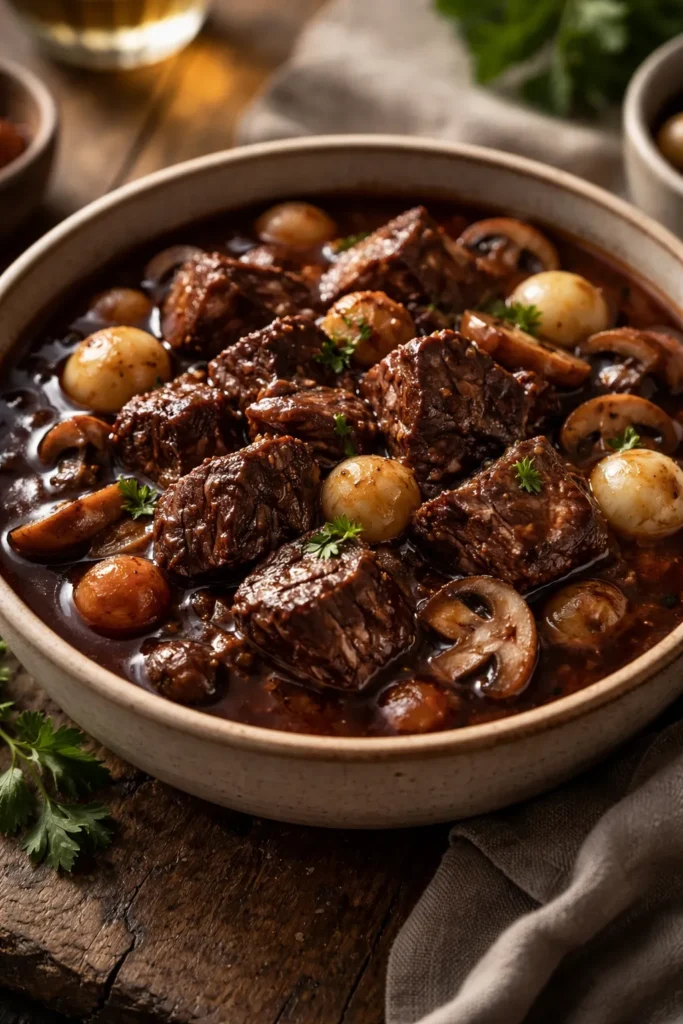
Ask anyone to name one French dish and there’s a reasonable chance they’ll say beef bourguignon. It has the kind of reputation that precedes it into a room — rich, deeply savory, the color of dark garnet, smelling of wine and thyme and something slow and patient. What it actually is: a braise. Beef cooked low and slow in red wine until it gives up any resistance and becomes something close to silken.
Why This Dish Earns Its Reputation
The magic happens in two stages. First, you sear the beef — collagen-rich chuck or brisket cut into large pieces — in a hot Dutch oven until a deep brown crust forms on all sides. That crust is flavor. Don’t rush it and don’t crowd the pot. Then everything goes into the wine — a full bottle of Burgundy if you want to be traditional, though any decent Pinot Noir works — along with aromatics and stock, and the oven takes over.
The secondary ingredients added in the final 30 minutes are what set this dish apart from a basic stew. Pearl onions, lardons (thick-cut bacon cubes), earthy mushrooms, and carrots go in late enough to retain their individual textures while absorbing the extraordinary braise liquid around them.
What You Need to Know Before You Start
- Meat choice matters more than anything else: chuck roast cut into 3-inch pieces, not stew beef, not sirloin — the collagen in chuck melts into gelatin and gives the sauce its glossy body
- Use a wine you’d actually drink; avoid anything labeled “cooking wine”
- A two-step process works beautifully: braise the beef the day before, refrigerate overnight, then skim the solidified fat from the surface and reheat gently
- Serve with buttered egg noodles, mashed potatoes, or crusty baguette — the sauce demands something to soak into
Worth knowing: The overnight refrigeration step isn’t just practical — it genuinely improves the dish. Cold causes the fat to separate cleanly, and the flavors deepen considerably after a night’s rest.
2. Coq au Vin
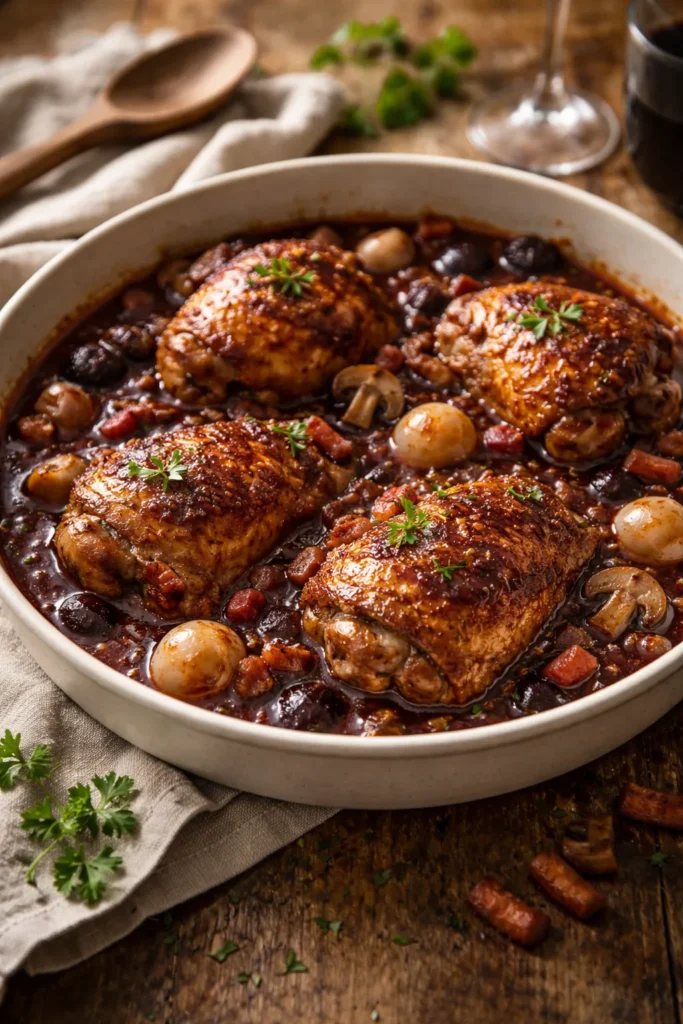
Coq au vin is beef bourguignon’s poultry-based sibling, and it’s the recipe that converts people who think they don’t like braised food. Unlike some braises that can feel heavy or muddy, a well-made coq au vin is surprisingly elegant — the wine sauce is lighter, the chicken stays tender without turning to mush, and the whole thing carries an aromatic brightness that makes it feel almost celebratory.
The Technique That Changes Everything
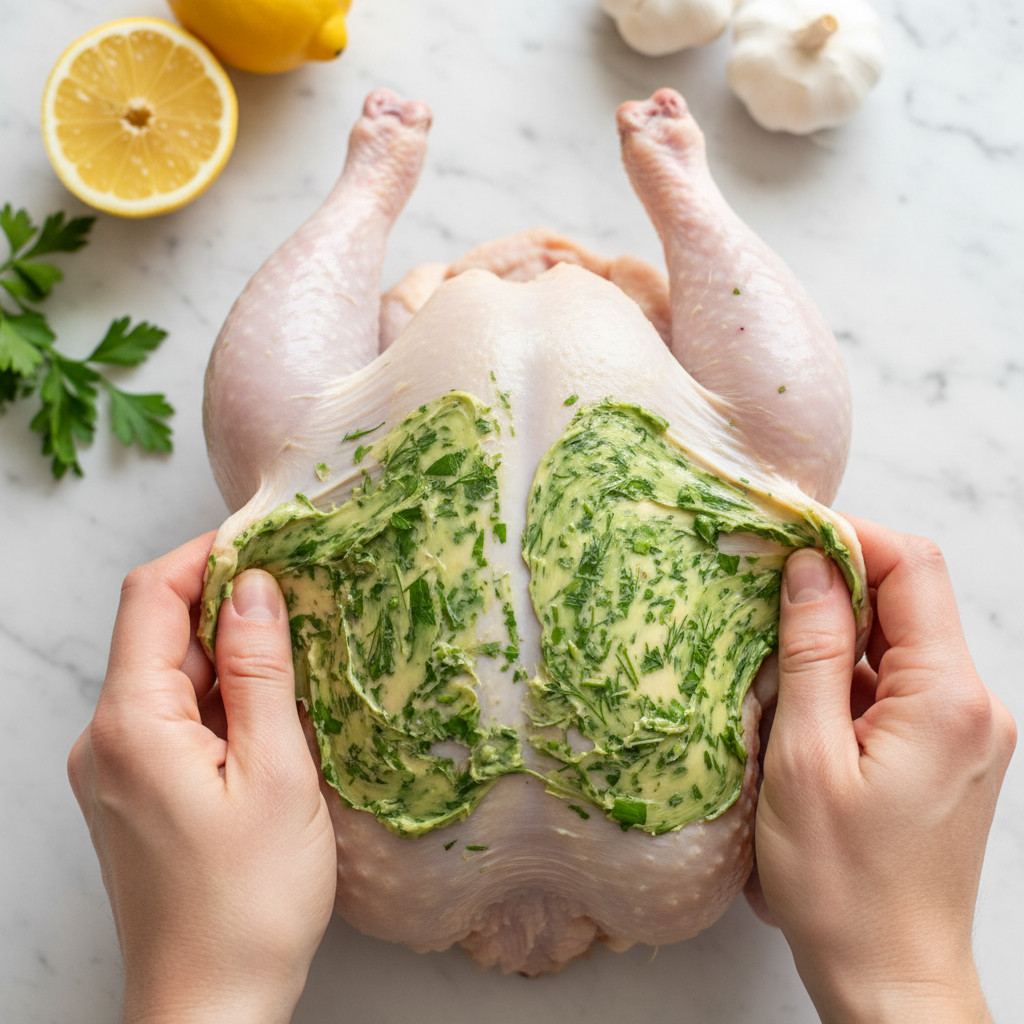
Bone-in, skin-on chicken thighs are the non-negotiable choice here. Chicken breasts will dry out and contribute nothing to the braising liquid’s depth. Thighs have the fat and connective tissue that a slow braise needs to develop richness. Marinating them in red wine overnight before cooking is a worthwhile step — it gives the finished dish the deep, complex flavor that usually only comes from hours of extra simmering.
The lardons — essentially thick-cut bacon cut into small rectangles — are rendered first, and the fat left behind is what you use to brown the chicken. That rendered pork fat is the foundation of the flavor that makes this dish taste like something from a proper French kitchen.
How to Make It Feel Restaurant-Worthy
- Flame the brandy after deglazing for an extra layer of flavor and to cook off the raw alcohol bite — it only takes 30 seconds and the effect is noticeable
- Strain the braising liquid and reduce it separately if you want a silkier, more intense sauce
- Mushrooms go in during the last 20 minutes; add them any earlier and they’ll become soft and flavorless
- A teaspoon of tomato paste stirred in at the beginning adds depth without making the dish taste tomato-forward
The classic version uses red Burgundy, but a white wine version — coq au vin blanc with cream and pearl onions — is equally impressive and slightly more approachable for those who find red wine sauces too heavy.
3. French Onion Soup Gratinée
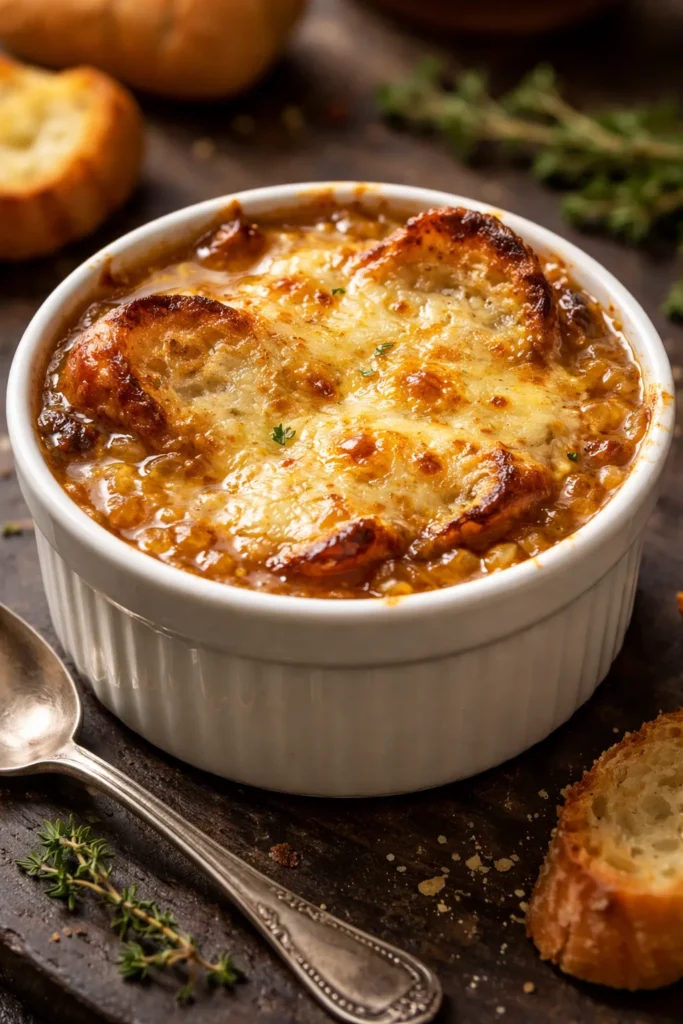
French onion soup has earned its place in the canon not because it’s complex, but because it delivers an almost unreasonable amount of satisfaction from three humble ingredients: onions, beef stock, and cheese. The gratinée — that blistered, bubbling lid of melted Gruyère over a toasted baguette croûton — is arguably one of the greatest things you can do with a broiler.
The Patience Required (and Why It Pays Off)
The caramelization process is where most home cooks make a mistake: they rush it. Properly caramelized onions take 45 to 60 minutes over medium-low heat, stirring occasionally, until they collapse into a deeply golden, jammy mass that smells almost sweet. Anything less and you get a soup that tastes pale and sharp. The full hour produces something that tastes like it’s been cooking for half a day.
A pressure cooker can do a reasonable approximation in 15 minutes, and for weeknights, it’s a legitimate shortcut. But when time allows, the low-and-slow stovetop method produces a noticeably more complex result.
What Elevates It Beyond a Simple Soup
- A splash of dry sherry or white wine stirred in after the onions caramelize adds a subtle sweetness and complexity
- Gruyère is traditional, but a mix of Gruyère and a small amount of Comté deepens the flavor considerably
- Use wide, oven-safe bowls so the croûton covers the entire surface — the cheese should seal the edges and puff in the center under the broiler
- A tiny grating of fresh nutmeg in the finished broth is a detail that most people can’t identify but everyone notices
The broiling step needs close attention — you want the cheese deep golden and blistered in places, not simply melted. Those charred spots are part of the experience.
4. Sole Meunière
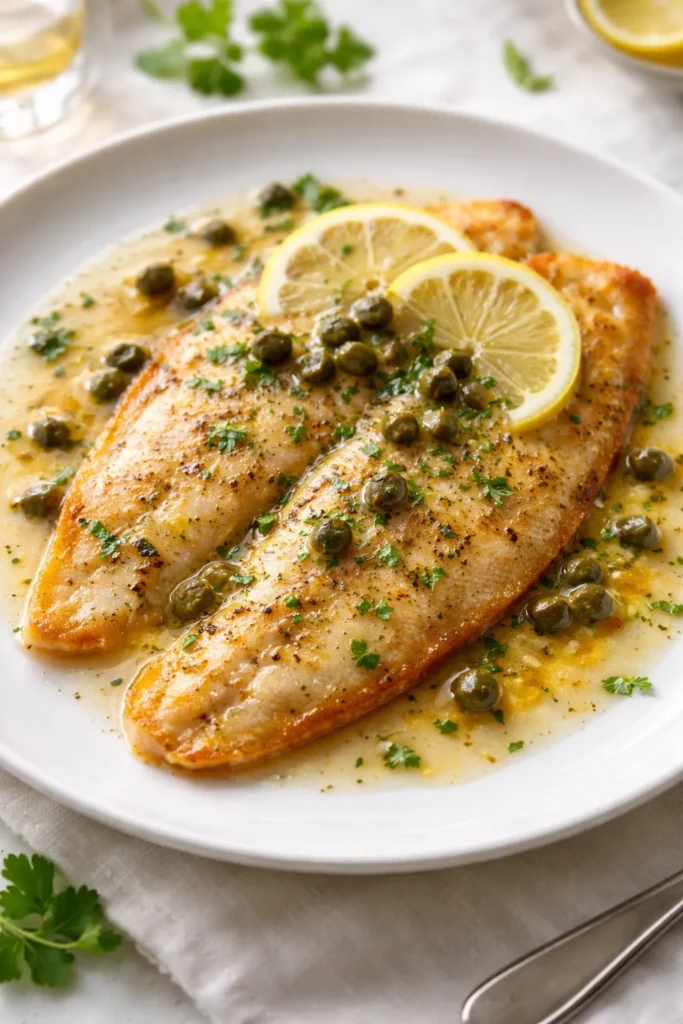
If beef bourguignon is the king of French comfort food, sole meunière is its elegant, lighter counterpart. It’s a dish that proves how far good technique and quality butter can take you. The preparation takes about 15 minutes from start to finish, and the result — golden, delicate fish in a foamy lemon butter sauce — looks and tastes like something you’d pay a significant amount of money for in a Parisian restaurant.
The Method Is the Recipe
Meunière translates to “miller’s wife” — a reference to the light coating of flour dusted over the fish before it hits the pan. That flour coating is the key to the whole dish. It creates a thin, crisp layer that protects the delicate fish flesh from the heat while simultaneously giving the butter something to cling to when you make the sauce.
Use clarified butter for the initial cooking so it can handle higher heat without burning, then add whole unsalted butter at the end for the sauce. That final butter — swirled in off the heat with lemon juice and a few capers — is what makes this a French dish rather than just fried fish.
What to Serve Alongside
- Steamed haricots verts tossed in a little butter and garlic keep the plate light and the fish as the focus
- Boiled new potatoes with parsley — nothing complicated, nothing that competes
- A chilled glass of Chablis or a Muscadet from the Loire Valley works beautifully with the lemon butter notes
- If sole isn’t available, thin flounder fillets or tilapia can substitute — the technique remains identical
This is one of those dishes where the quality of the butter matters enormously. A good European-style butter with higher fat content makes a noticeably silkier sauce than standard supermarket butter.
5. Quiche Lorraine
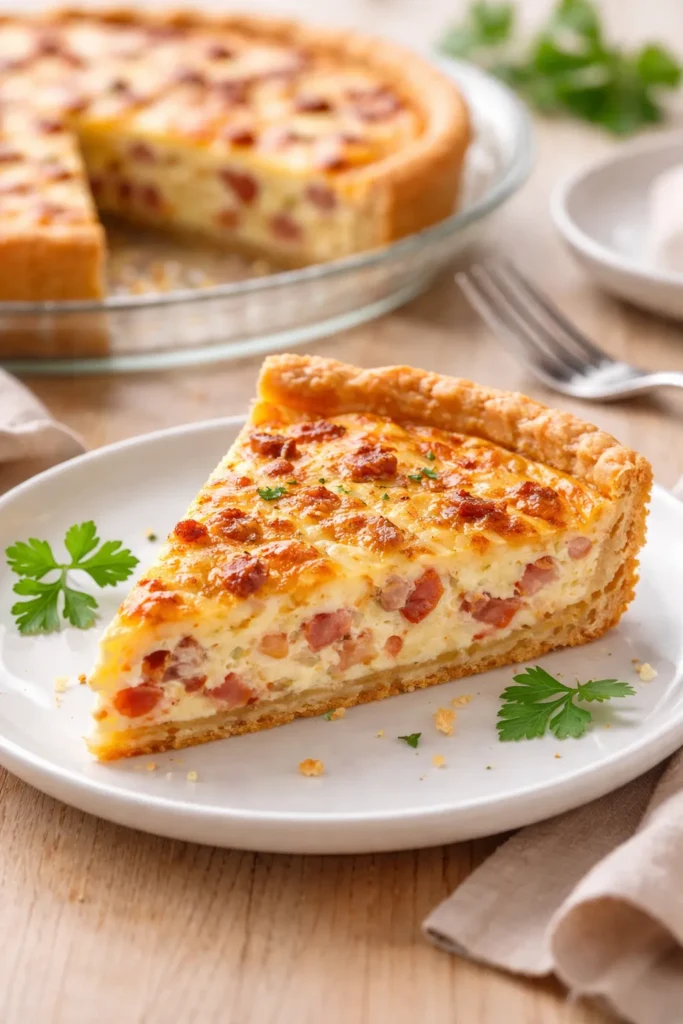
There are people who feel that quiche is old-fashioned, and those people are missing out. A properly made quiche Lorraine — a buttery, shattery pastry shell holding a custard that’s barely set, trembling slightly when you pull it from the oven — is one of the most quietly impressive things you can put on a dinner table.
Getting the Custard Right
The custard ratio is everything. Too many eggs and the texture becomes rubbery; too few and it won’t set properly. A reliable ratio is three whole eggs plus two yolks to one cup of heavy cream. The yolks add richness and a beautiful golden color, and the cream ensures the custard stays silky rather than spongy.
The filling is deliberately simple: smoked lardons (or thick-cut bacon), finely sliced shallots cooked until soft, and Gruyère cheese. No vegetables, no distracting additions. The beauty of quiche Lorraine is restraint — it lets the custard do the talking.
Tips That Prevent a Soggy Bottom
- Blind-bake the pastry shell before adding the filling: line with parchment, fill with dried beans or pie weights, and bake at 375°F for 15 minutes, then remove the weights and bake another 5 minutes until the bottom is dry and just beginning to color
- The lardons should be par-cooked so they don’t release excess fat into the custard during baking
- Bake low and slow at 325°F for 35 to 40 minutes — the custard should still wobble slightly in the center when you pull it; it sets as it cools
- Let it rest at least 15 minutes before slicing; cutting too early causes the custard to collapse
A store-bought all-butter shortcrust pastry works perfectly well and eliminates the most technically demanding part of the process.
6. Croque Monsieur
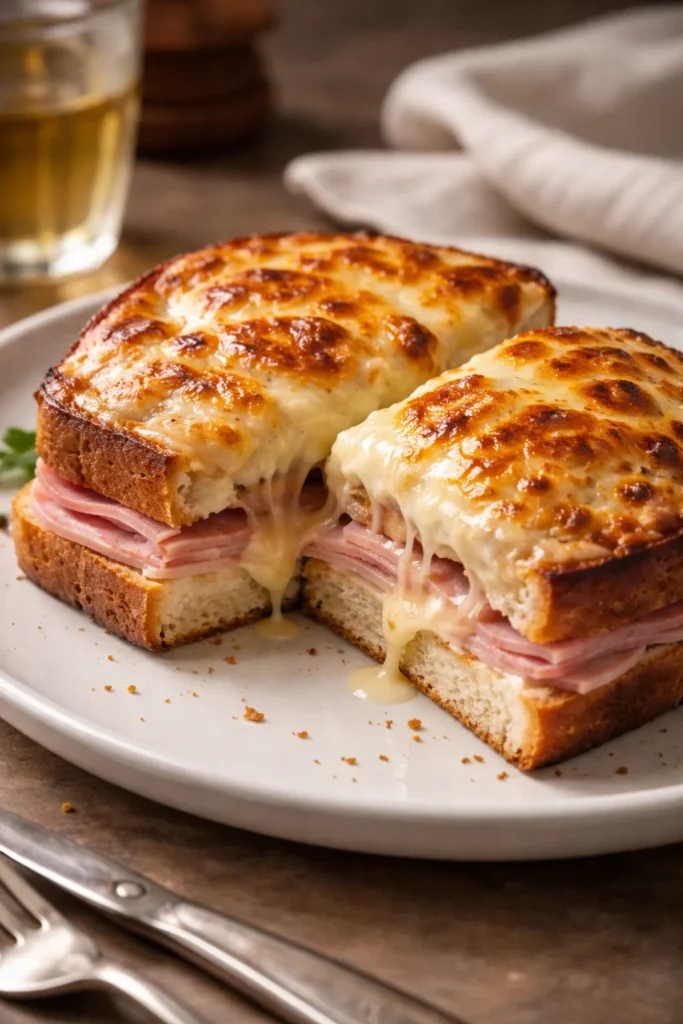
Don’t underestimate this sandwich. A croque monsieur made properly — with a proper béchamel sauce, real Gruyère, and good-quality ham on thick-cut pain de mie — is not a sandwich. It’s an event. It’s the thing French bistros have been serving at zinc bars for well over a hundred years, and the reason it endures is simple: it’s extraordinarily good.
Why the Béchamel Changes Everything
The version most people have had uses just cheese and ham between bread, and it’s fine. The bistro version uses béchamel — a simple white sauce made from butter, flour, and milk — spread inside the sandwich and on top before going under the broiler. That top layer bubbles and browns and forms a crust that’s simultaneously crispy and creamy, and it’s the detail that separates a great croque monsieur from a good one.
The béchamel should be thick enough to hold its shape on top of the bread without running off. Season it aggressively with white pepper, nutmeg, and salt — it needs to stand up to the saltiness of the ham and cheese.
How to Build It Properly
- Use bread that’s a little sturdier than regular sandwich bread — pain de mie, thick-cut brioche, or even a good white Pullman loaf
- Spread Dijon mustard on the inside surfaces before adding the ham
- Layer ham first, then Gruyère, then béchamel inside before closing the sandwich
- Spread more béchamel on top, add another layer of grated Gruyère, and broil until deeply golden and bubbling
- A croque madame adds a perfectly fried egg on top — an addition that turns this into a complete dinner with no further effort required
Serve with a simple green salad dressed in a sharp Dijon vinaigrette and you have a bistro dinner that costs almost nothing to make.
7. Chicken Tarragon (Poulet à l’Estragon)
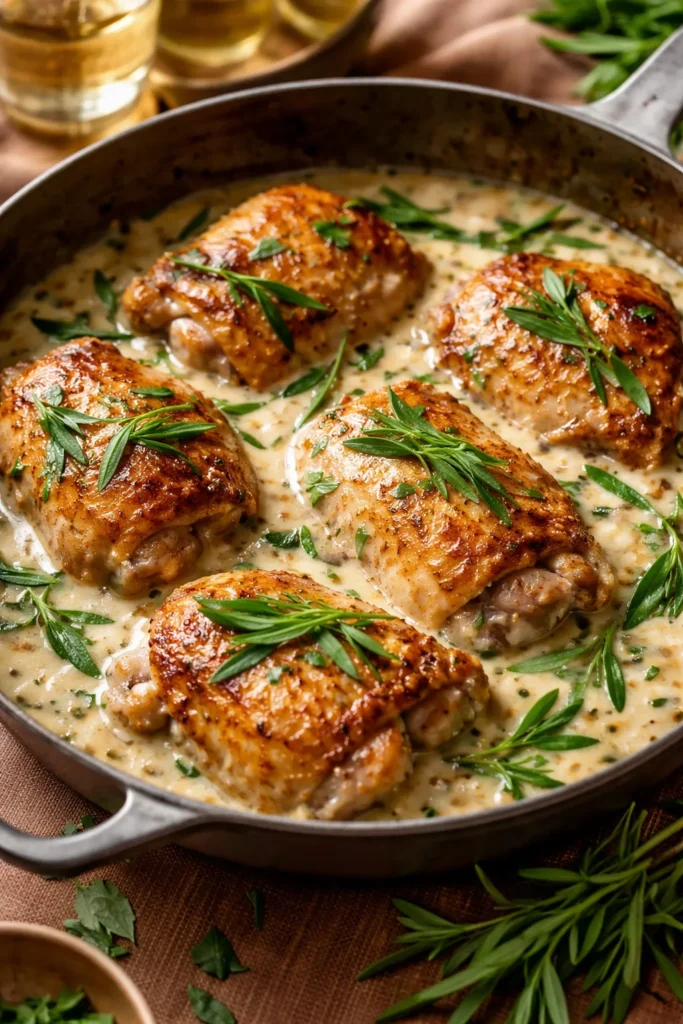
This is a weeknight dish that performs like a dinner party main. Chicken thighs in a creamy white wine and tarragon sauce — poulet à l’estragon — is one of those recipes that feels luxurious without requiring any particular skill or expensive ingredients. The combination of anise-forward fresh tarragon with crème fraîche and dry white wine creates a sauce that’s bright, creamy, and deeply aromatic.
The Herb That Makes This Dish French
Tarragon is one of those ingredients that instantly signals a certain style of cooking. It’s bold, slightly sweet, with a distinct herbal quality that has no real substitute. Fresh tarragon is significantly more vibrant than dried — the dried version loses much of the anise character that gives this dish its personality. If you can’t find fresh, use a small amount of dried and add a few drops of pastis or anisette to the sauce to bring back that brightness.
The technique is straightforward: brown the chicken well in butter, set it aside, cook shallots and garlic in the same pan, deglaze with white wine, add chicken stock, return the chicken, and let everything simmer gently for 25 minutes. The crème fraîche and tarragon go in only at the end.
Making the Sauce Sing
- Use bone-in thighs rather than boneless — they stay juicier and contribute more flavor to the sauce
- Crème fraîche is preferred over heavy cream because its slight acidity balances the richness; it also won’t curdle if the heat is too high
- Reduce the wine fully before adding the stock — raw wine flavor in the finished sauce is a common problem that a few extra minutes of simmering prevents
- Finish with a squeeze of fresh lemon juice just before serving to brighten everything
This dish pairs beautifully with buttered egg noodles, rice, or simply a half baguette per person for mopping the sauce.
8. Cassoulet
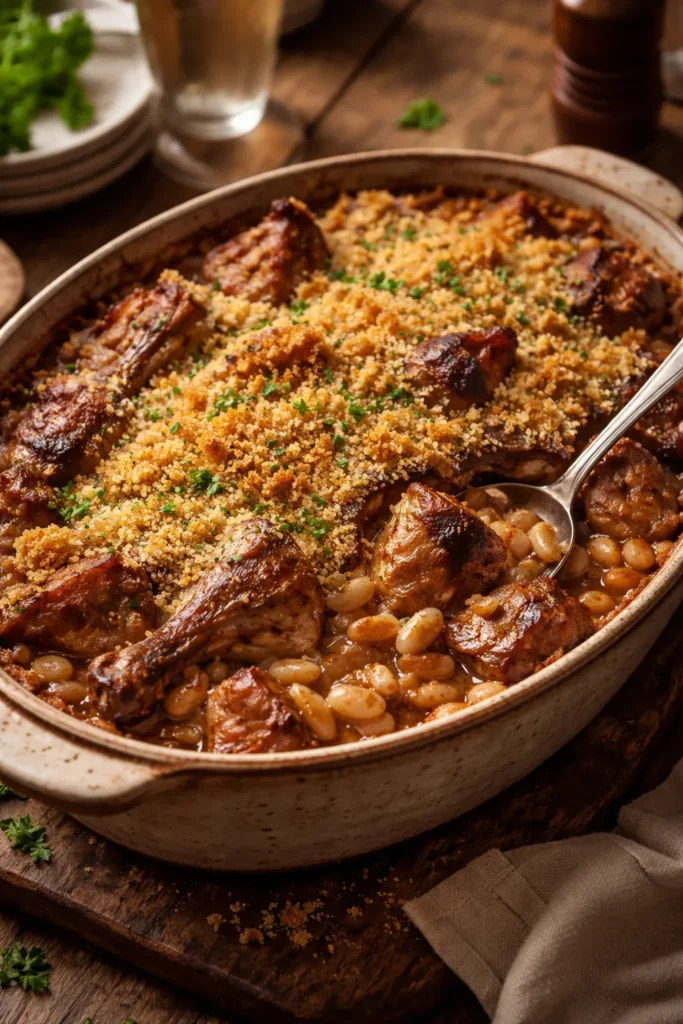
Cassoulet is the most generous dish in the French repertoire. It’s a slow-cooked casserole from the southwest — specifically the Languedoc region, where towns like Carcassonne, Castelnaudary, and Toulouse each claim the authentic version — built around white beans and a combination of meats that typically includes duck confit, garlicky Toulouse sausage, and pork. The surface develops a golden, breadcrumb-dusted crust that gets broken and stirred back into the beans multiple times during cooking.
What Makes It Worth the Effort
This is not a quick dish. A traditional cassoulet involves soaking dried beans overnight, making or sourcing duck confit, and giving the whole thing several hours in the oven. But almost every step can be broken up over two or three days, and the final result — a table-centerpiece casserole that serves six to eight people with minimal last-minute work — makes it ideal for dinner parties.
The beans are the soul of the cassoulet, not a supporting character. They should be cooked until tender but still holding their shape, and they absorb the rendered duck fat, pork juices, and garlic during the long braise in a way that makes each bean taste extraordinary.
Practical Shortcuts That Don’t Compromise Quality
- Store-bought duck confit legs are widely available and genuinely excellent — using them cuts hours off the process
- Dried Great Northern beans or cannellini beans work well; Tarbais beans are traditional but harder to source outside of specialty stores
- Cook the beans the day before and refrigerate them in their liquid — this actually improves texture and flavor
- Add the breadcrumb crust during the final 30 minutes, and don’t skip breaking it in at least twice — each reformation adds another layer of golden crust
This is a dish that rewards planning over skill, and leftovers — if there are any — taste even better the next day.
9. Salmon en Papillote
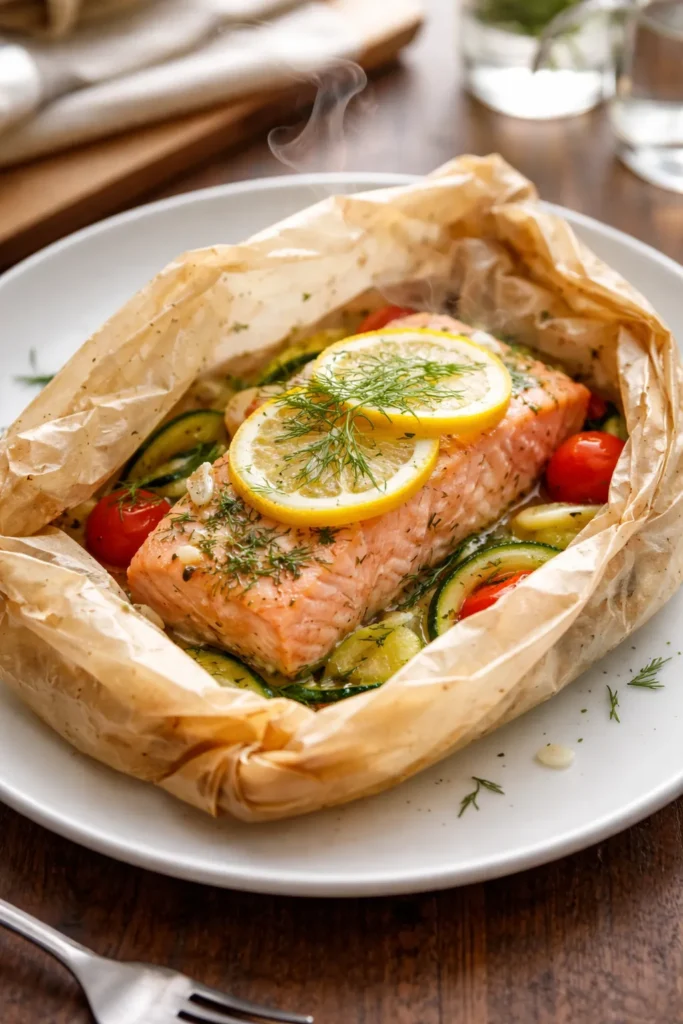
En papillote means “in paper” — a French technique in which fish or meat is sealed inside a folded parchment parcel and cooked in its own steam. The result is fish that’s impossibly moist, infused with whatever aromatics you’ve tucked inside, and presented in a way that’s genuinely theatrical: each guest opens their own parchment parcel at the table, releasing a fragrant cloud of steam.
Why This Method Is Foolproof
Unlike pan-searing or grilling, where timing precision is essential, cooking en papillote has a built-in margin for error. The sealed environment prevents overcooking by surrounding the fish in gentle, moist heat. A salmon fillet that might dry out in 2 extra minutes under the broiler can hold its texture for considerably longer inside parchment.
The preparation is also remarkably flexible. Layer the bottom of each parcel with thinly sliced fennel, leeks, or zucchini. Place the salmon on top, season with flaky salt and white pepper, add a few thin lemon slices, a sprig of dill or tarragon, and a small pour of dry white wine or a knob of butter. Seal the parchment tightly and bake at 400°F for 12 to 14 minutes.
What Goes Inside the Parcel
- Fennel and orange slices with a splash of pastis create a Provençal flavor profile
- Capers, cherry tomatoes, and olives with olive oil give a Mediterranean character
- Leeks, crème fraîche, and fresh dill produce something closer to Nordic bistro cooking
- Never overcrowd the parcel — the steam needs room to circulate, and too many vegetables prevent even cooking
The parchment parcels can be assembled several hours ahead and refrigerated, making this one of the most dinner-party-friendly fish dishes in any cook’s arsenal.
10. Ratatouille
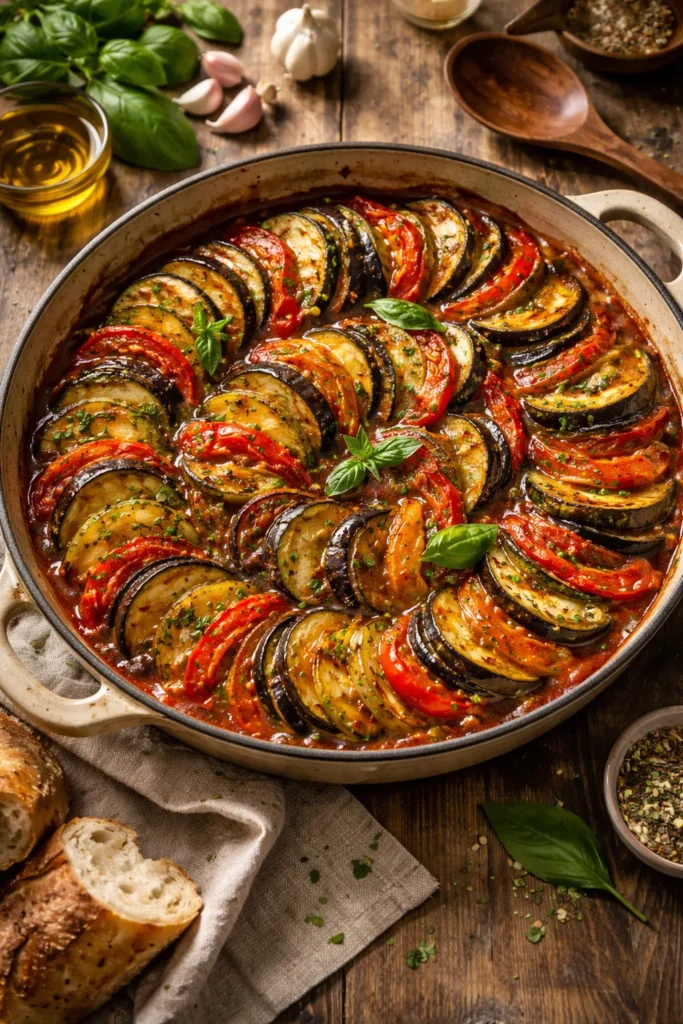
Ratatouille is proof that the simplest concept in French cooking — good vegetables, good olive oil, time — can produce something extraordinary. Originating in Provence, the dish is essentially a braise of summer vegetables: tomatoes, zucchini, eggplant, bell peppers, and onions, cooked slowly with garlic and herbs until they collapse into something greater than any individual component.
The Two Methods (and Which One to Choose)
There are two distinct schools of ratatouille. The rustic Provençal method sautées each vegetable separately in olive oil until just tender, then combines them and lets everything cook together briefly — this preserves distinct textures and keeps the dish from becoming a uniform mush. The more refined confit byaldi method (made famous by the 2007 Pixar film) arranges thin, overlapping rounds of vegetables over a bed of tomato sauce and slow-roasts them until tender — beautiful, impressive, and genuinely delicious.
For a weeknight dinner, the rustic method is the one to choose. It takes about 40 minutes from start to finish and produces a dish with body and texture. The confit version, while stunning, requires thin slicing, longer oven time, and more patience.
How to Serve It Without It Feeling Like a Side Dish
- Serve at room temperature over a thick slice of toasted sourdough rubbed with garlic and topped with a generous spoonful of fresh goat cheese — this turns ratatouille into a complete first course
- Stir in a tablespoon of good tapenade at the end for extra depth and salinity
- A fried egg on top makes it a satisfying vegetarian main
- Ratatouille improves significantly overnight; the vegetables continue absorbing the olive oil and herbs as it rests
Don’t add water — the vegetables release enough liquid on their own if you cook them gently.
11. Steak au Poivre
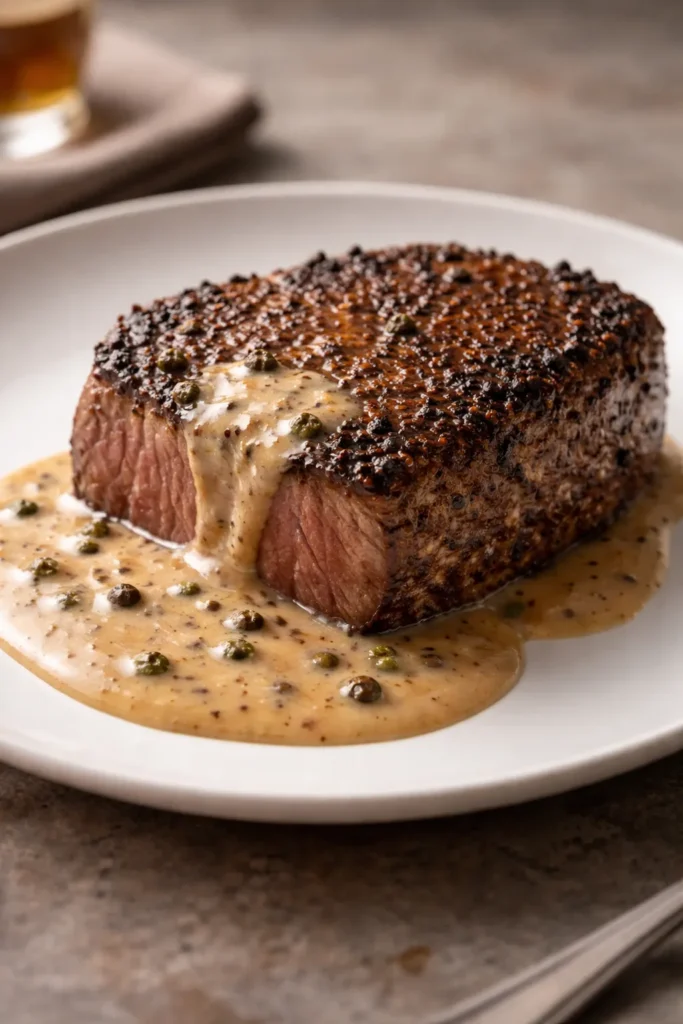
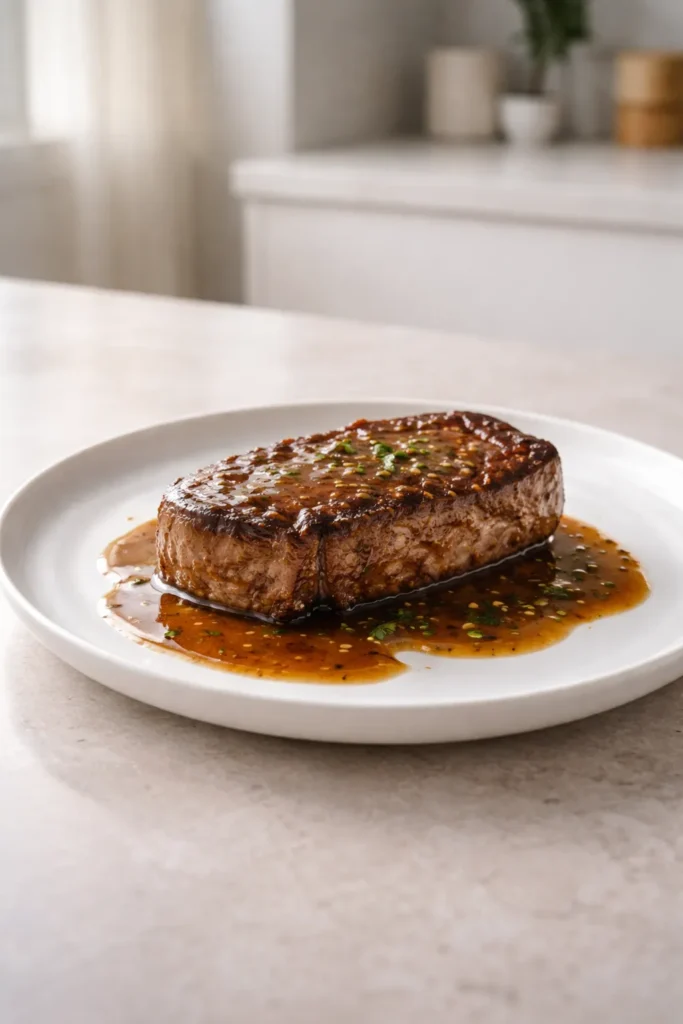
Every culture has a version of steak and sauce. The French version — steak au poivre, a pan-seared steak crusted in coarsely cracked black peppercorns and finished with a brandy cream sauce — is arguably the best of them. The pepper crust chars slightly in the hot cast iron pan, the brandy flames briefly when it hits the pan drippings, and the cream pulls everything together into a sauce that’s simultaneously bold and rich.
Cracking the Peppercorns Properly
Pre-ground black pepper will not work here. The dish depends on coarsely cracked whole peppercorns — not so coarse that they’re jagged and harsh, but substantial enough to form a textural crust that doesn’t disappear into the meat. Crack them using the bottom of a heavy skillet or a mortar and pestle. Press them firmly into both sides of the steak with the heel of your hand before cooking.
A strip steak works beautifully. So does a well-marbled ribeye or a trimmed tenderloin for something more elegant. Whatever cut you choose, bring it to room temperature before cooking and pat it completely dry — any moisture on the surface will steam rather than sear.
Building the Sauce in the Same Pan
- After removing the steak to rest, pour off any excess fat but leave the drippings
- Add shallots and cook 60 seconds, then add brandy — carefully, as it may flame — and let it reduce by half
- Pour in beef stock and reduce until syrupy, then stir in crème fraîche or heavy cream
- Add any steak juices that have accumulated on the resting plate back into the sauce — this is concentrated flavor
- Taste and adjust salt; the pepper in the sauce from the pan should be sufficient, but add a few extra cracked peppercorns if the sauce feels flat
Serve with classic pommes frites if you want the full bistro experience, or with sautéed watercress and a simple green salad to keep things lighter.
12. Moules Marinières (Sailor-Style Mussels)
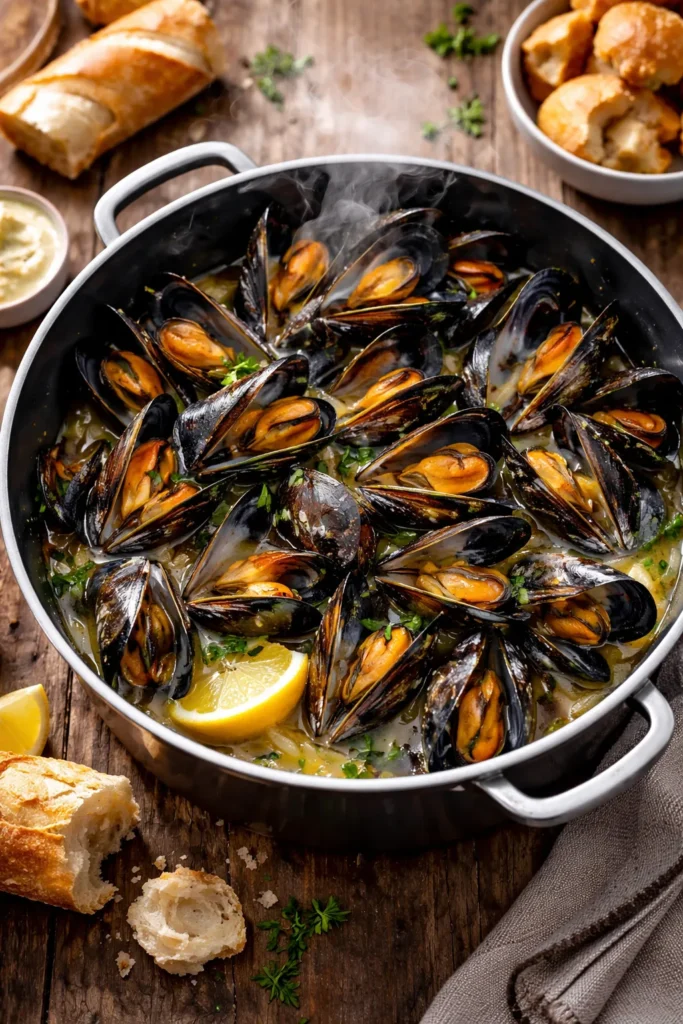
Moules marinières might be the most underrated dinner in this entire list. A kilogram of mussels costs very little, cooks in under five minutes, and produces a pot of briny, aromatic shells in a white wine and shallot broth that smells like the sea and a good French kitchen at the same time. Serve with a mountain of frites and a cold glass of muscadet and you have, without exaggeration, one of the most satisfying meals in French cuisine.
Why Mussels Are Easier Than You Think
The most common hesitation around mussels is food safety — people aren’t sure how to choose or check them. The rule is simple: live mussels have tightly closed shells, or shells that close when tapped. Any that remain open before cooking and don’t close when tapped should be discarded. Any that remain closed after cooking should also go. This sounds more complex than it is; in practice, you’ll discard very few.
Cleaning is straightforward: rinse the mussels under cold water and pull off the beards (the stringy, fibrous threads attached to the shell) by pulling firmly toward the hinge end. This takes about five minutes for a kilogram.
The Cooking Process
- Sweat shallots and garlic in butter in a large pot until translucent — about three minutes
- Add a full glass of dry white wine and bring to a rapid boil
- Add all the mussels, cover tightly, and cook over high heat, shaking the pot once or twice, for exactly two to three minutes — until the shells open
- Remove from heat immediately; overcooked mussels turn rubbery within seconds of going too long
- Finish with a large knob of cold butter swirled through the broth, a handful of fresh flat-leaf parsley, and cracked black pepper
The remaining broth — salty, buttery, deeply savory — is the best part. Provide everyone with a half baguette and let them get on with it.
Putting a French Menu Together
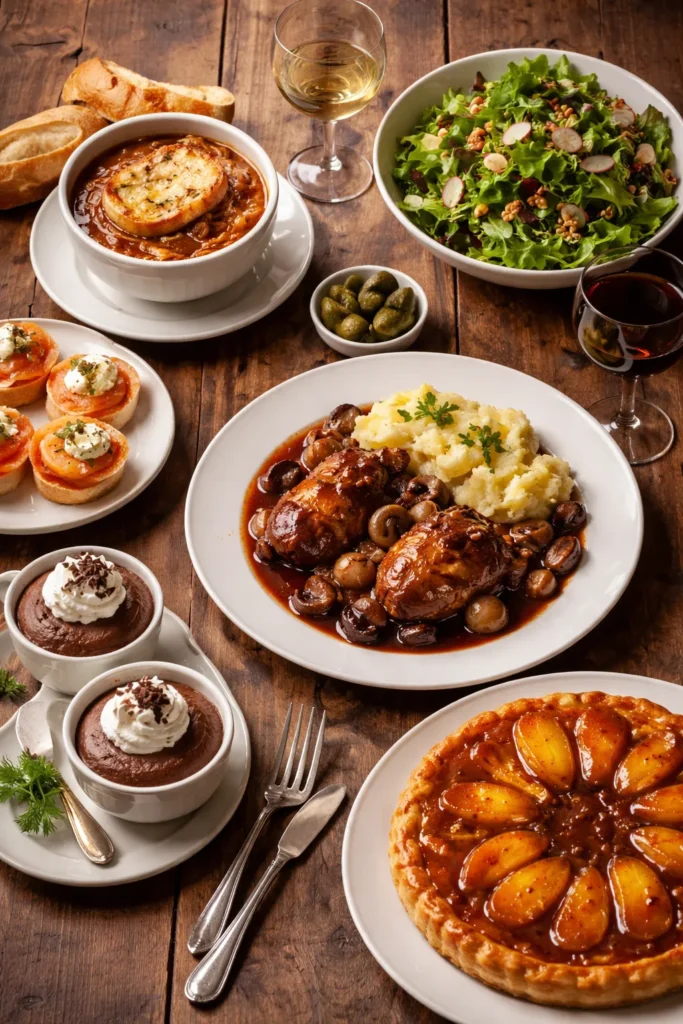
One of the most enjoyable things about these twelve dishes is that they work together as well as they do individually. A dinner party menu might start with a bowl of French onion soup, move to coq au vin with egg noodles and a simple green salad, and finish with a purchased tarte Tatin from a good bakery or a pot of chocolate mousse that you made the night before.
The French approach to dinner — unhurried, generous, built around good ingredients cooked simply well — doesn’t require a culinary degree. It requires a little patience, a bottle of something worth drinking, and the confidence to let good ingredients do most of the work.
Start with whichever recipe from this list catches your attention first. Make it once, make it again, and by the third time you’ll be adjusting it instinctively — more tarragon, less cream, a different wine. That’s how French home cooking actually works: not from a rigid formula, but from a growing familiarity with flavors and technique that eventually feels like second nature.
Final Thoughts
The recipes that hold up across decades of French cooking share a few qualities: they’re built on good stock, patient browning, and sauces that are given time to develop properly. Master those three habits and almost any dish in this list becomes accessible.
Don’t feel obligated to start with cassoulet or tackle a croque monsieur with homemade béchamel on your first attempt. Moules marinières or sole meunière — both ready in under 20 minutes — will give you a feel for French technique without demanding much time. Build from there.
The dishes that feel fanciest aren’t always the hardest ones. Sometimes it’s the simplicity that impresses — a plate of salmon en papillote opened at the table, or a perfectly seared steak in a pan sauce that took six minutes to make. French cooking, at its honest core, has always been about making the most of what you have. That’s an idea worth bringing into any kitchen.