There’s a reason people describe Southern dinner cooking as food that “feeds the soul.” It’s not just a phrase — it’s a lived experience. The moment that chicken-fried steak hits a cast-iron skillet, the second you catch the first waft of sausage gravy bubbling on the stovetop, or the exact instant a pot of gumbo starts to deepen into something rich and roux-dark — you understand. Southern dinner cooking is built on patience, generosity, and a deep respect for flavor.
What sets Southern comfort food apart from other regional cuisines isn’t just the ingredients. It’s the philosophy. Nothing gets wasted, every dish is built on a foundation of fat and aromatics, and the goal is always the same: feed people until they’re genuinely satisfied. Not trendy. Not light. Satisfied. That’s a different thing entirely.
These 12 dinner recipes pull from across the South — from the Cajun bayous of Louisiana to the Appalachian foothills of the Carolinas, from the Gulf Coast seafood traditions to the church-supper casseroles of Texas. Some take 30 minutes. Some take three hours. All of them are worth it, and every single one earns a permanent spot in your weeknight rotation.
Table of Contents
- What Makes Southern Comfort Food Different From Every Other Cuisine
- The Holy Trinity and Other Flavor Foundations
- The Role of Cast Iron in Southern Kitchens
- Essential Southern Pantry Staples Before You Start Cooking
- 1. Chicken-Fried Steak with Cream Gravy
- The Cream Gravy That Makes or Breaks It
- What to Serve Alongside
- 2. Classic Southern Shrimp and Grits
- Building the Shrimp Sauce
- Regional Variations Worth Knowing
- 3. Chicken and Dumplings
- Building the Broth From Scratch
- The Dumpling Technique
- 4. Southern Fried Chicken
- The Seasoned Flour Blend
- Frying in Batches Without Crowd the Pan
- 5. Biscuits and Sausage Gravy
- Making Proper Drop or Cut Biscuits
- The Sausage Gravy Formula
- 6. Louisiana Jambalaya
- The Order of Operations Matters
- Seasoning Jambalaya Properly
- 7. Southern Seafood Gumbo
- Making the Dark Roux Without Burning It
- Building the Gumbo After the Roux
- 8. King Ranch Chicken Casserole
- Layering for Maximum Flavor
- The Make-Ahead Advantage
- 9. Smothered Pork Chops with Onion Gravy
- Caramelizing the Onions Deeply
- Braising the Chops to Tenderness
- 10. Southern Baked Macaroni and Cheese
- The Cheese Blend for Depth
- Baking for the Right Texture
- 11. Classic Southern Collard Greens with Smoked Ham Hock
- Prepping and Cleaning the Greens
- The Low-and-Slow Cooking Method
- 12. Gulf Coast Seafood and Sausage Jambalaya Stew
- Building the Flavor Base
- Adding the Seafood at the Right Moment
- Tips for Making Southern Dinner Recipes Work Every Time
- Final Thoughts
What Makes Southern Comfort Food Different From Every Other Cuisine
Before diving into the recipes themselves, it’s worth understanding why Southern dinner food hits differently than most other cuisines. The answer lies in technique more than ingredients.
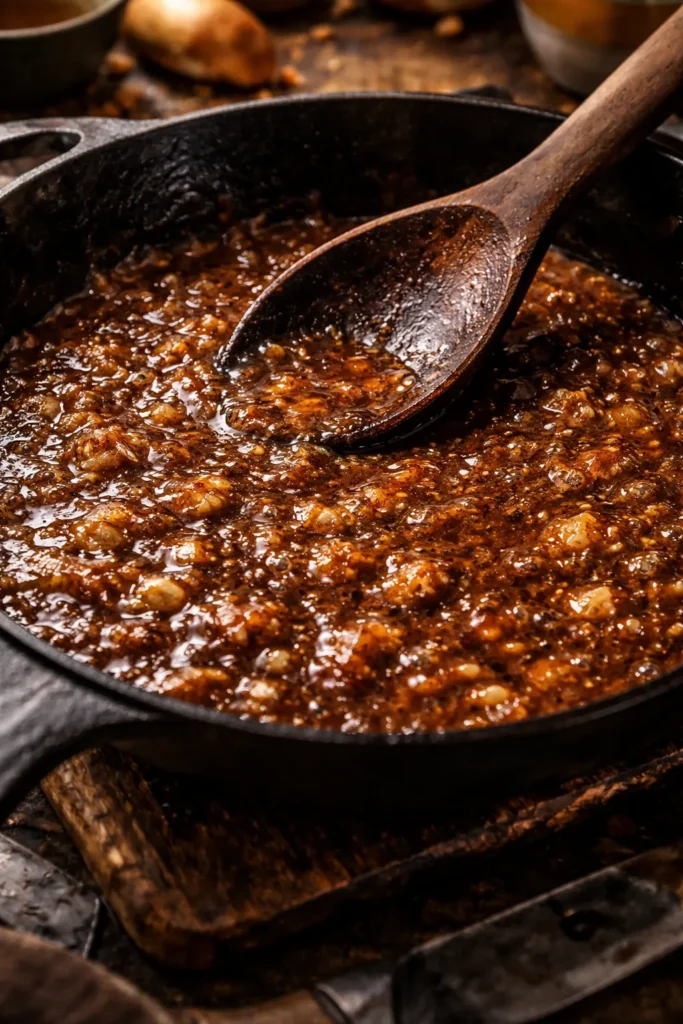
Southern cooks build flavor in layers. Bacon drippings go into the skillet before the onions. The roux gets cooked low and slow until it smells nutty. Chicken gets soaked in buttermilk overnight. These aren’t arbitrary steps — they’re the accumulated wisdom of generations of cooks who figured out how to coax maximum flavor from humble ingredients.
Fat is flavor in Southern cooking. Butter, lard, bacon grease, and cream are not the enemy — they’re the vehicle. Southern food doesn’t shy away from richness because richness is precisely the point. These are dishes designed to sustain people through hard work and long days, and they do their job beautifully.
The other hallmark is the layering of savory, sweet, and spicy elements. A proper jambalaya has heat, but it also has the sweetness of bell pepper and the earthiness of andouille. A bowl of shrimp and grits balances creamy, salty, and smoky in every spoonful. Southern cooking understands that contrast is what makes a dish memorable.
The Holy Trinity and Other Flavor Foundations
Louisiana cooking runs on what Cajun and Creole cooks call the “holy trinity” — onion, celery, and bell pepper. This trio forms the aromatic base for gumbo, jambalaya, red beans and rice, and dozens of other dishes. Across the broader South, a similar concept applies: always start with aromatics, always build the base before adding anything else.
The Role of Cast Iron in Southern Kitchens
A seasoned cast-iron skillet is the single most important piece of equipment in a Southern kitchen. It retains heat evenly, goes from stovetop to oven without complaint, and develops a natural nonstick surface that improves with every use. Cornbread baked in cast iron has a crust that no other pan can replicate. Fried chicken cooked in cast iron stays crispier longer.
Essential Southern Pantry Staples Before You Start Cooking
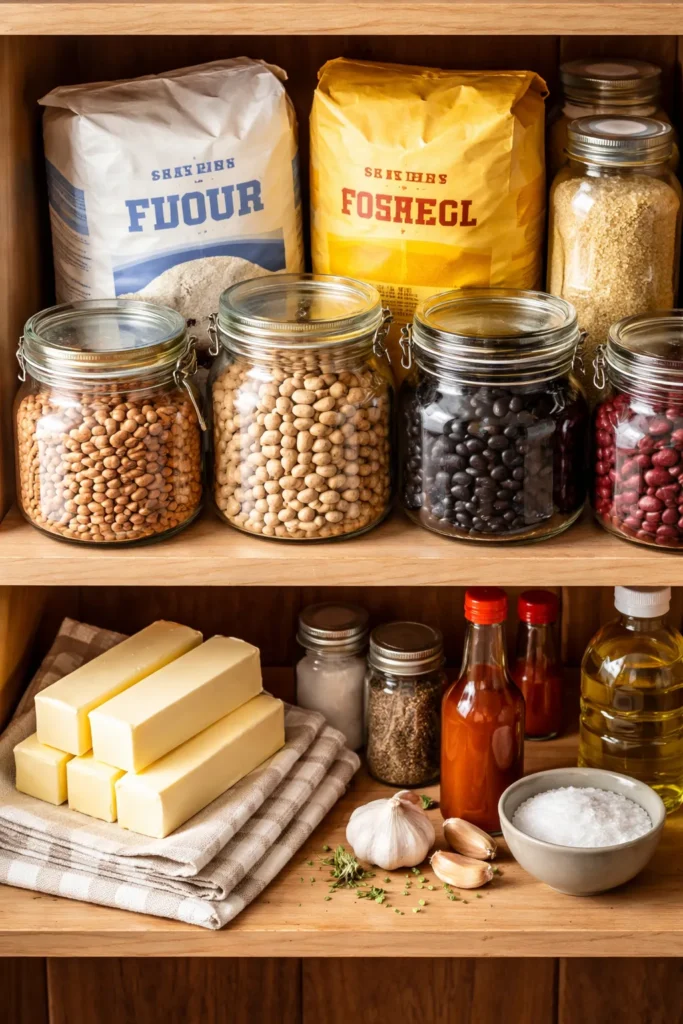
You’ll need a well-stocked pantry to pull off great Southern cooking consistently. These aren’t exotic ingredients — everything on this list lives at a regular grocery store — but having them on hand means you’re always 30 minutes away from a proper Southern dinner.
Dry goods: All-purpose flour, yellow cornmeal, white cornmeal, long-grain white rice, dried black-eyed peas, dried kidney beans, panko breadcrumbs.
Fats and dairy: Buttermilk (non-negotiable — buy a quart and keep it stocked), unsalted butter, heavy cream, sharp cheddar, whole milk.
Aromatics: Yellow onions, garlic, celery, green bell pepper, green onions.
Proteins and smoked meats: Andouille sausage, thick-cut bacon, smoked ham hock. These aren’t always the star of the dish, but they add the kind of depth that makes people ask for seconds.
Spices: Cayenne pepper, smoked paprika, garlic powder, onion powder, dried thyme, dried oregano, black pepper, and Tony Chachere’s Creole seasoning (a genuinely useful shortcut).
Once your pantry is set, every recipe below becomes dramatically more approachable.
1. Chicken-Fried Steak with Cream Gravy
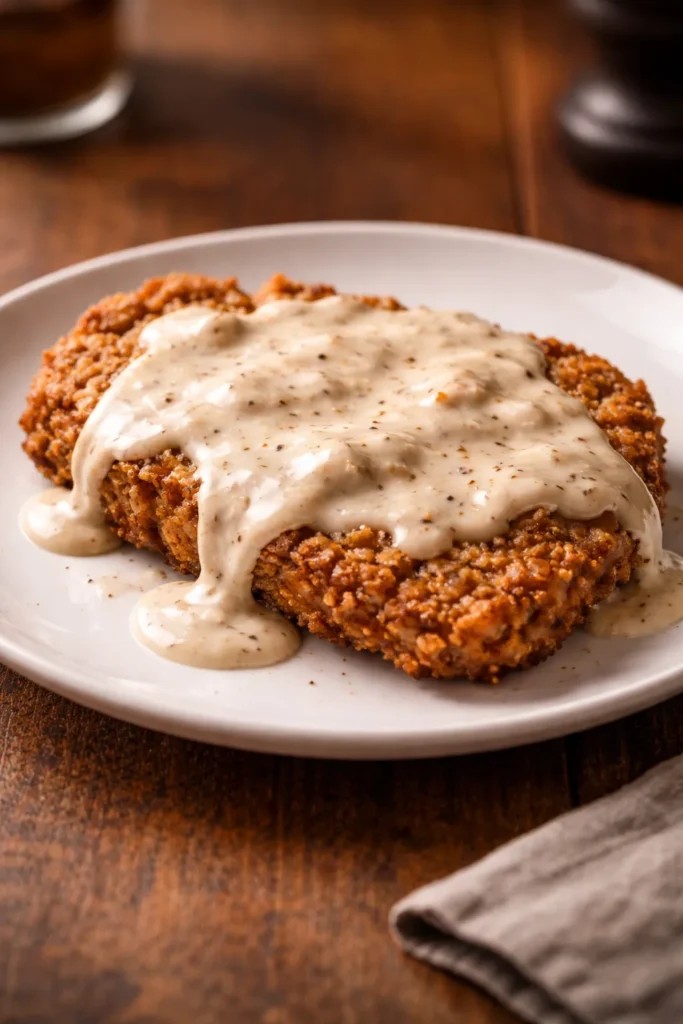
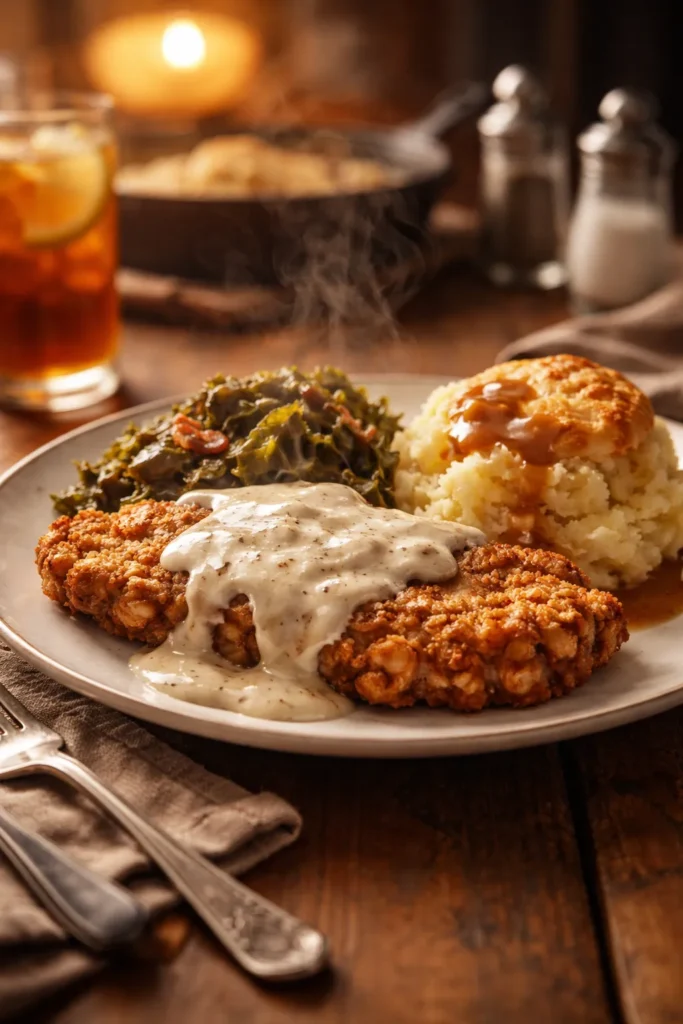
Chicken-fried steak is arguably the most iconic dish in the entire Southern dinner canon. Despite the name, there’s no chicken involved — the preparation takes its name from the same dredge-and-fry technique used for Southern fried chicken, applied instead to a tenderized beef cutlet. The result is a crispy, golden-crusted steak swimming in a thick, pepper-heavy cream gravy that could honestly make a cardboard box taste good.
The key to a proper chicken-fried steak is twofold: use cube steak (already tenderized at the butcher), and double-dredge it — flour, egg wash, flour again — before frying. This double coating is what gives you that thick, craggy exterior that holds up against the cream gravy without turning soggy.
The Cream Gravy That Makes or Breaks It
The gravy is the whole game here. After frying the steaks, pour off most of the oil but leave the browned bits and about 3 tablespoons of fat in the pan. Whisk in an equal amount of flour and cook it for 60 seconds over medium heat. Then pour in whole milk — slowly, while whisking constantly — and season aggressively with black pepper. The gravy should be thick enough to coat a spoon. Thin, pale gravy is a crime against the dish.
What to Serve Alongside
- Creamy mashed potatoes (essential — the gravy needs something to soak into)
- Southern-style green beans cooked with bacon
- Buttermilk biscuits for scooping up every last drop of gravy
Worth knowing: A cast-iron skillet holds heat more evenly than stainless steel, which means your crust develops more uniformly and you’re less likely to get hot spots that burn one end of the steak while the other stays pale.
2. Classic Southern Shrimp and Grits
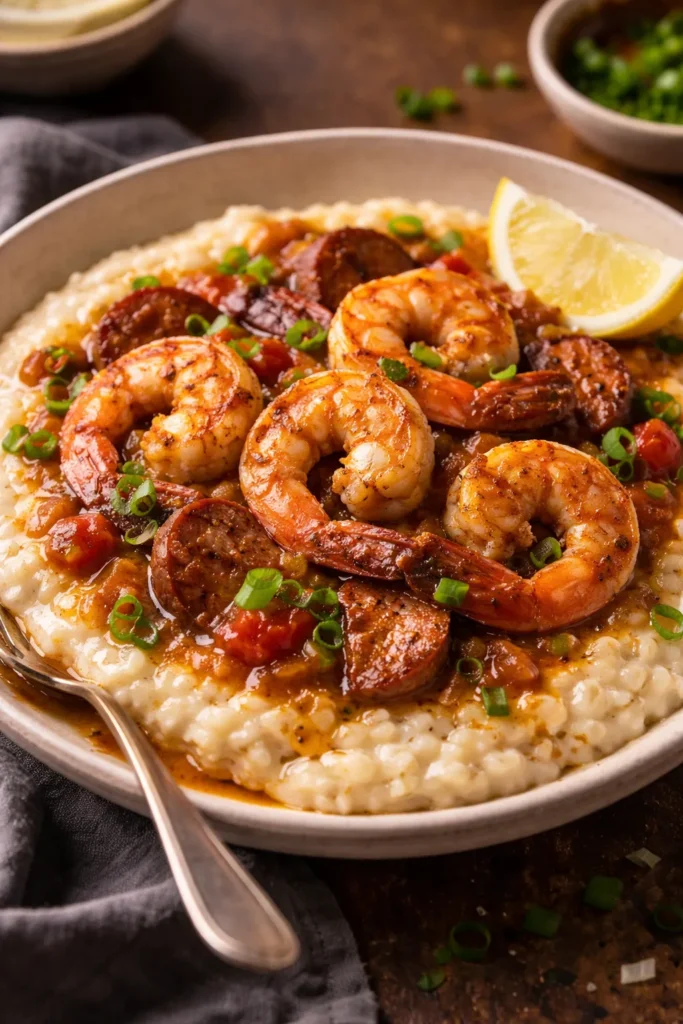
Shrimp and grits started as a humble Carolina Lowcountry breakfast — shrimpers eating grits with whatever they’d just caught — and evolved into one of the most beloved dinner dishes in the South. The version that’s earned legendary status involves stone-ground white grits cooked low and slow with butter and sharp cheddar, topped with plump shrimp sautéed with andouille sausage, garlic, and a splash of lemon.
The grits are everything. Don’t use instant grits. Use stone-ground or at minimum old-fashioned grits, and cook them in a 4:1 ratio of liquid to grits over medium-low heat for at least 25-30 minutes, stirring frequently. The starch needs time to break down fully, and that’s what gives you the creamy, almost porridge-like texture that makes this dish what it is.
Building the Shrimp Sauce
The shrimp shouldn’t just be plonked on top of the grits — they need a sauce. Brown diced andouille sausage until it’s crackling at the edges. Remove it, sauté garlic and green onion in the same pan, then add the shrimp and cook just until they curl and turn pink (about 2-3 minutes — overcooked shrimp are rubbery). Deglaze with chicken broth and lemon juice, toss the sausage back in, and spoon the whole thing over a mound of cheddar grits.
Regional Variations Worth Knowing
- New Orleans style: Adds bacon, mushrooms, and a Worcestershire-spiked sauce
- Carolina style: Often served with a tomato-based sauce and local sweet onion
- Savannah style: Leans into butter and cream, lighter on the spice
If you can find stone-ground grits from a Southern mill, order them. The flavor difference compared to grocery-store grits is significant enough that it changes the dish entirely.
3. Chicken and Dumplings
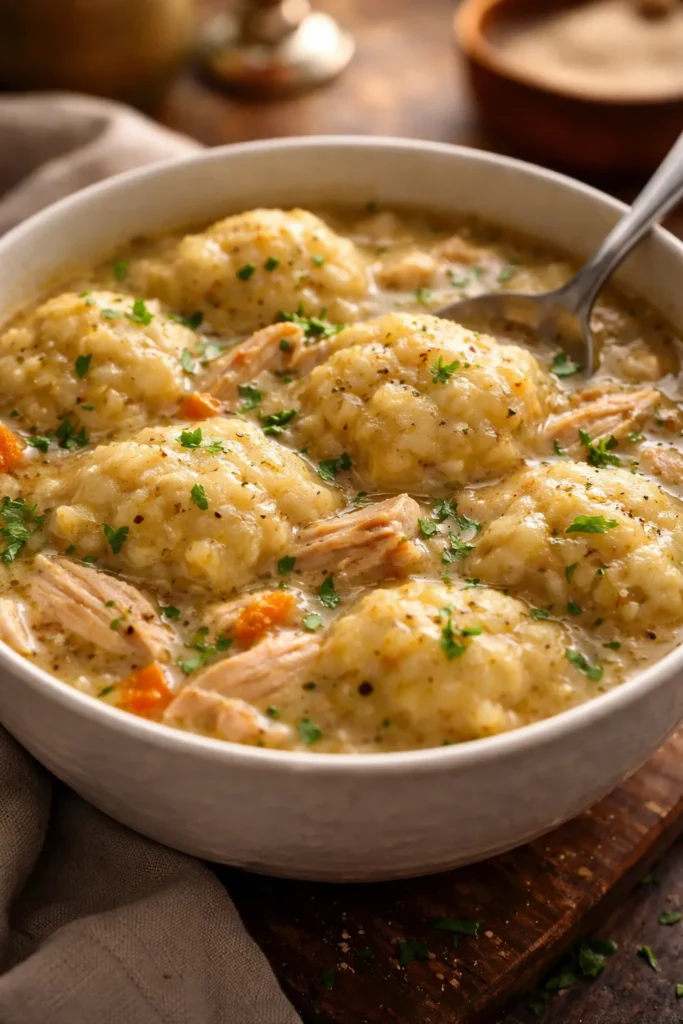
There are few dishes in the Southern dinner lineup that create as much warmth on a cold evening as chicken and dumplings. The base is a rich, golden chicken broth filled with tender chunks of dark and white meat chicken, root vegetables, and thick drop dumplings that cook right in the pot and absorb the broth as they steam.
The debate over dumpling style is genuinely passionate in Southern kitchens. Drop dumplings (made from a simple flour, butter, and buttermilk mixture dropped by spoonfuls into the simmering broth) are the most common and the easiest. Rolled and cut dumplings — sometimes called flat dumplings — have a slightly denser, chewier texture and hold their shape better in the broth. Both are correct; both are delicious.
Building the Broth From Scratch
Start with a whole chicken, a quartered onion, two stalks of celery, and a couple of carrots in a large Dutch oven. Cover with cold water, bring to a boil, then reduce to a steady simmer for 60-75 minutes. The broth that comes from this process has a depth you simply cannot get from store-bought stock. Pull the chicken out, shred the meat, strain the broth, and return everything to the pot.
The Dumpling Technique
Mix 2 cups of all-purpose flour, 1 tablespoon baking powder, 1 teaspoon salt, and 3 tablespoons cold butter (cut into small cubes) until the mixture resembles coarse crumbs. Stir in ¾ cup cold buttermilk until just combined — do NOT overmix. Drop heaping spoonfuls directly into the simmering broth, cover the pot immediately, and cook for 15 minutes without lifting the lid. Steam is doing the work, and interrupting it collapses the dumplings.
4. Southern Fried Chicken
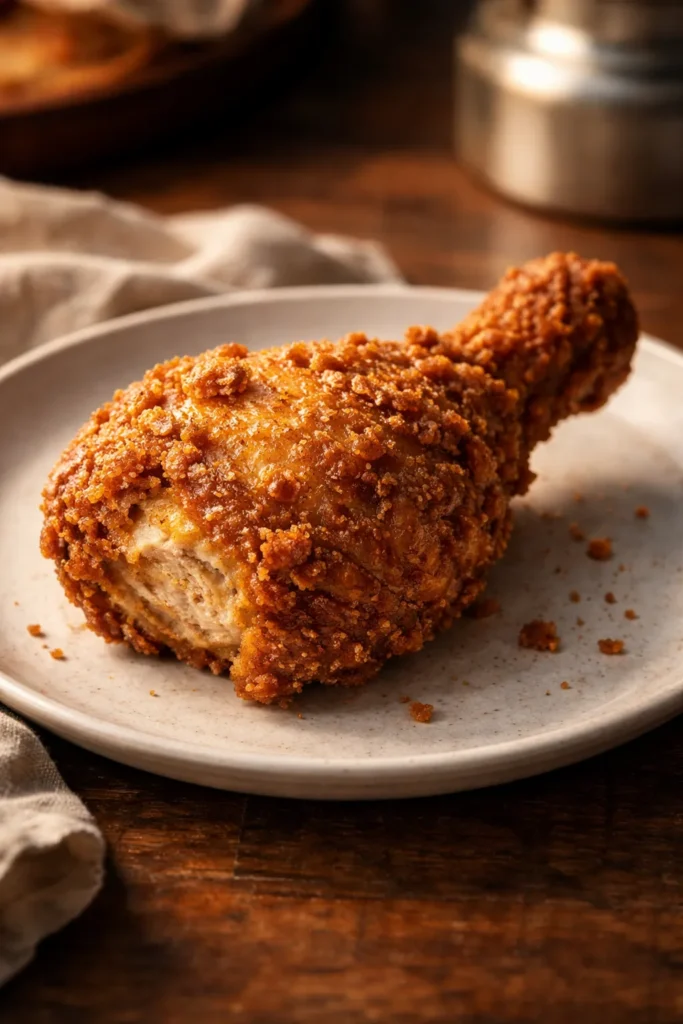
Fried chicken is the dish that Southern cooking is measured against, and for good reason. When it’s done right — a crust that shatters at the first bite, meat that’s juicy all the way to the bone, seasoning that penetrates every layer — it’s one of the most satisfying things you can eat for dinner.
The two non-negotiables are buttermilk soaking and proper frying temperature. The buttermilk soak (minimum 4 hours, overnight is better) tenderizes the meat and provides the moisture that helps the flour coating adhere properly. The frying temperature needs to stay between 325°F and 350°F — too hot and the exterior burns before the interior cooks through; too cool and the chicken absorbs excess oil and turns greasy.
The Seasoned Flour Blend
This is where cooks differentiate their fried chicken from everyone else’s. A solid base: 2 cups all-purpose flour, 1 teaspoon each of garlic powder, onion powder, smoked paprika, and black pepper, plus ½ teaspoon cayenne. Some cooks add a tablespoon of cornstarch for extra crispiness. Season the flour heavily — you want the crust itself to be flavorful, not just the meat underneath.
Frying in Batches Without Crowd the Pan
- Use a large cast-iron skillet or Dutch oven with at least 2 inches of oil
- Fry thighs and drumsticks together (they take longer), breasts and wings together
- Never crowd the pan — it drops the oil temperature drastically and results in greasy, pale chicken
- Use a thermometer: chicken is done when internal temperature hits 165°F
5. Biscuits and Sausage Gravy
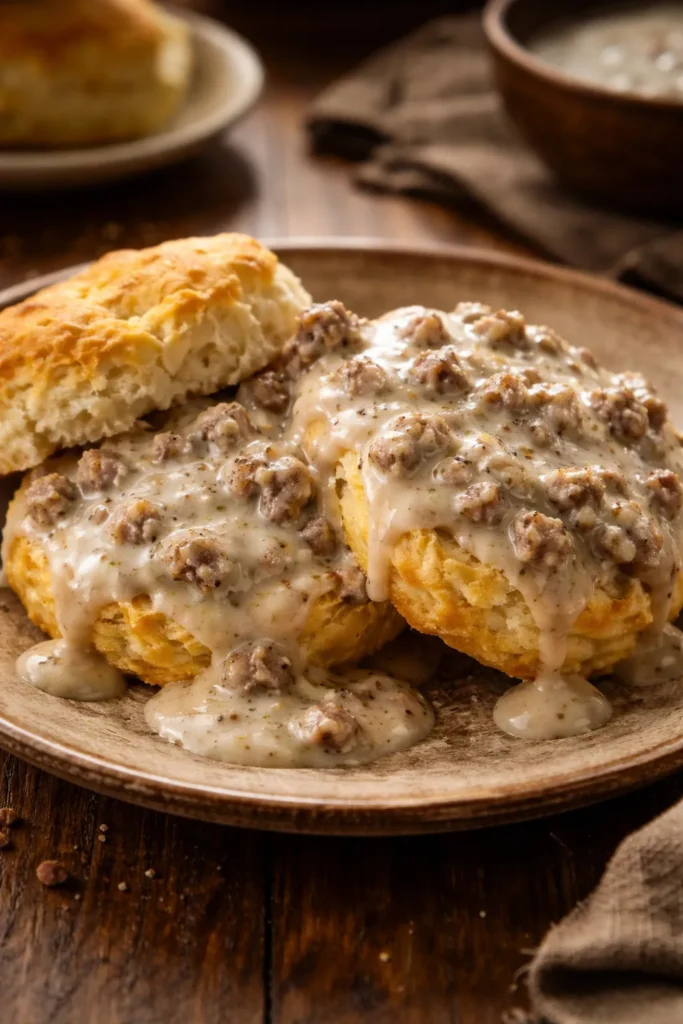
Biscuits and gravy is technically a breakfast dish in most places, but Southerners have long understood that breakfast foods make exceptional dinners — and this combination, in particular, is filling enough to qualify as a complete meal at any hour.
The biscuits must be homemade. Store-bought biscuits don’t have the flaky, buttery layers that you need to hold up against the thick, creamy sausage gravy. The good news is that homemade buttermilk biscuits take 25 minutes from start to finish and require only five ingredients: flour, butter, buttermilk, baking powder, and salt.
Making Proper Drop or Cut Biscuits
For flaky, layered biscuits: keep the butter ice cold (some bakers grate frozen butter directly into the flour), handle the dough as little as possible, fold it over itself 3-4 times to create layers, then cut straight down without twisting (twisting seals the edges and prevents rise). Bake at 450°F for 12-14 minutes until deeply golden on top.
The Sausage Gravy Formula
Brown ½ pound of breakfast sausage (pork, crumbled) in a skillet. Don’t drain the fat — it’s the base of the gravy. Sprinkle 3 tablespoons of flour over the cooked sausage and stir for 1 minute. Add 2 cups of whole milk slowly, whisking as you go. Season with black pepper and let it cook for 5-7 minutes until thick and creamy. Taste for salt — the sausage brings its own, so you may need very little.
A pinch of cayenne and a splash of hot sauce in the gravy transforms it from good to genuinely memorable.
6. Louisiana Jambalaya
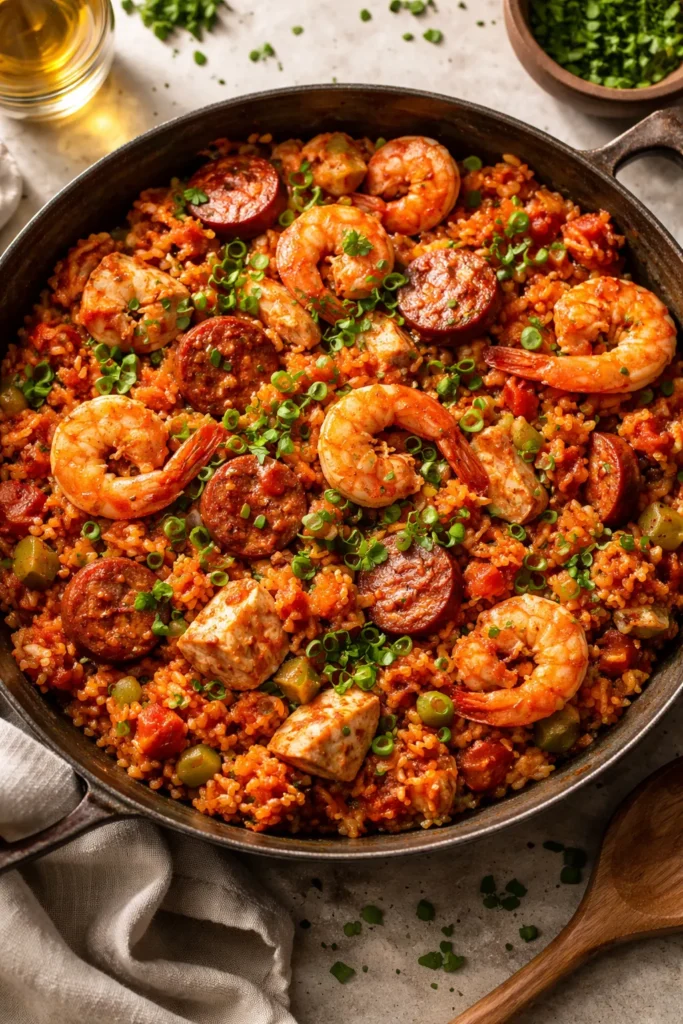
Jambalaya is one of the great one-pot dinners of the South — a deeply savory rice dish loaded with andouille sausage, chicken, and shrimp, built on a foundation of the Cajun holy trinity and simmered in a spiced tomato broth until the rice absorbs every drop of flavor.
There are two main camps: Creole jambalaya (also called “red jambalaya”) which includes tomatoes, and Cajun jambalaya (“brown jambalaya”) which gets its color and depth from the browned bits at the bottom of the pot rather than tomatoes. For a weeknight dinner, Creole jambalaya is slightly more forgiving because the tomatoes add moisture that gives you a bit more flexibility with timing.
The Order of Operations Matters
Brown the andouille first and set it aside. Brown the chicken in the same pot (the sausage fat is seasoned gold). Add the holy trinity and cook until softened. Add garlic, then tomatoes, then broth. Bring to a boil, add the rice, reduce to a simmer, cover, and cook until the rice is done. Stir in the shrimp in the last 5 minutes — they’ll cook perfectly in the residual heat.
Seasoning Jambalaya Properly
- Use a Cajun or Creole seasoning blend as your backbone (about 2 teaspoons per pound of protein)
- Layer dried thyme, bay leaves, and smoked paprika into the base
- Taste the broth before adding the rice — it should taste slightly over-seasoned, because the rice absorbs salt as it cooks
The bottom-of-the-pot crust that develops in a properly cooked jambalaya is considered a prize in Cajun households. It’s called gratin and it’s deeply savory and slightly crisp.
7. Southern Seafood Gumbo
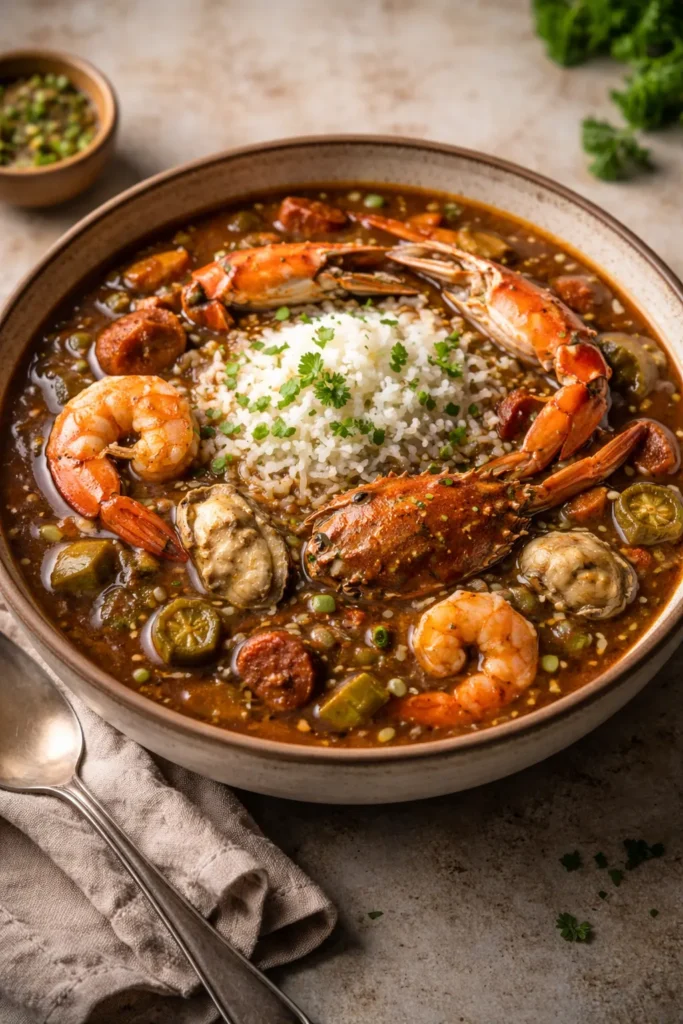
Gumbo is the dish that defines Louisiana cooking. It’s a thick, stew-like soup built on a dark roux — flour and fat cooked together over medium heat for 30-45 minutes until it turns the color of dark chocolate and smells deeply nutty. That roux is the backbone of the entire dish, and it cannot be rushed.
Seafood gumbo specifically features a mix of shellfish: shrimp, crab, and oysters are the most traditional combination. The broth is built from the roux, the holy trinity, okra (which both flavors and thickens the gumbo naturally), and a rich seafood or chicken stock. The whole thing gets ladled over white rice.
Making the Dark Roux Without Burning It
Equal parts fat (preferably vegetable oil or lard) and all-purpose flour. Whisk constantly over medium heat. The roux will go from white to blonde to peanut butter color to brick red to dark chocolate over the course of 30-45 minutes. Never stop stirring, and never turn the heat above medium. A burned roux tastes bitter and cannot be saved — you have to start over.
Building the Gumbo After the Roux
Once the roux reaches the right color, immediately add your diced onion, celery, and bell pepper. The vegetables will sizzle dramatically and instantly stop the roux from darkening further. Cook until softened (8-10 minutes), then add garlic, diced okra, diced tomatoes, and stock. Season with Cajun seasoning, thyme, and bay leaves. Simmer for 45 minutes before adding your seafood in the final 10 minutes.
8. King Ranch Chicken Casserole
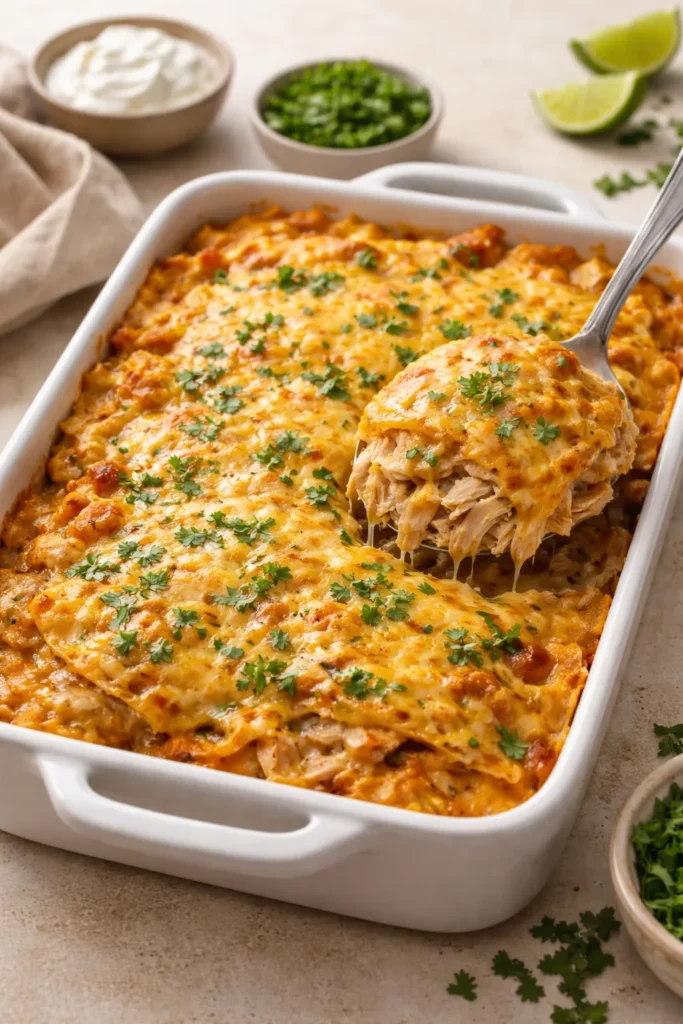
If you grew up in Texas, King Ranch Chicken Casserole was at every church potluck, every neighborhood gathering, and probably on your family’s regular dinner rotation. It’s Texas comfort food at its most practical: layers of corn tortillas, shredded chicken, a creamy Tex-Mex sauce, and melted cheddar cheese, baked until bubbling and golden.
The casserole gets its flavor from a sauce built with cream of chicken soup, diced tomatoes with green chiles (Rotel is the standard), chicken broth, sautéed onion and bell pepper, and a generous dose of chili powder and cumin. It’s richer than standard casserole fare, with a Tex-Mex spice profile that makes it genuinely distinctive.
Layering for Maximum Flavor
- Tear (don’t stack whole) corn tortillas into thirds and layer them at the bottom and middle of the casserole dish
- Season the shredded chicken before adding it — don’t just dump plain chicken in and expect the sauce to do all the work
- Two layers of tortillas, two layers of chicken, two layers of sauce, and cheese throughout
- Bake at 350°F for 35-40 minutes until the edges are bubbling and the cheese on top is lightly browned
The Make-Ahead Advantage
This casserole is one of those dishes that genuinely improves overnight. Assemble it the evening before, cover tightly with foil, and refrigerate. The tortillas soften slightly and absorb more of the sauce, and the flavors meld in a way that same-day cooking doesn’t achieve. Add 10-15 minutes to the bake time if cooking from cold.
9. Smothered Pork Chops with Onion Gravy
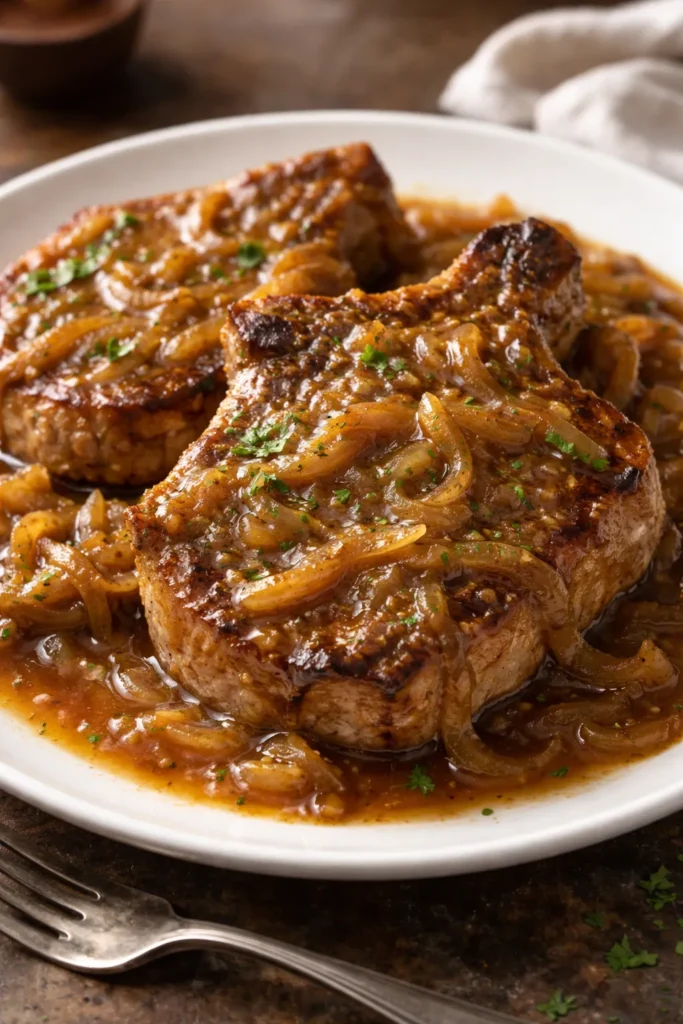
Smothered pork chops are the kind of Southern dinner that makes you understand why the phrase “comfort food” exists. Thick bone-in pork chops get seasoned, seared until golden, and then braised in a thick onion gravy until they’re fall-apart tender. Served over white rice or mashed potatoes, this dish is Southern home cooking at its most straightforward and most satisfying.
The word “smothered” in Southern cooking specifically means braised under a heavy layer of gravy or sauce. The long, slow braise is what transforms an otherwise tough cut into something that pulls apart with a fork. Bone-in chops are strongly preferred — the bone adds flavor to the braising liquid as it cooks, and the meat around the bone tends to stay juicier than boneless.
Caramelizing the Onions Deeply
The onion gravy is the whole point of this dish. Slice 2 large yellow onions thin, cook them in butter and a little oil over medium-low heat for 25-30 minutes, stirring every few minutes. You’re looking for deep golden-brown, not just softened — this level of caramelization adds sweetness and depth that you can’t get any other way. Once caramelized, add flour, then broth, and scrape up every browned bit from the bottom of the pan.
Braising the Chops to Tenderness
- Sear chops on both sides in a cast-iron skillet until deeply browned (about 3-4 minutes per side)
- Pour the onion gravy over and around them, cover tightly, and cook at 325°F for 45-60 minutes
- The internal temperature should reach 145°F, but the braising environment means the texture is fork-tender rather than just cooked-through
10. Southern Baked Macaroni and Cheese
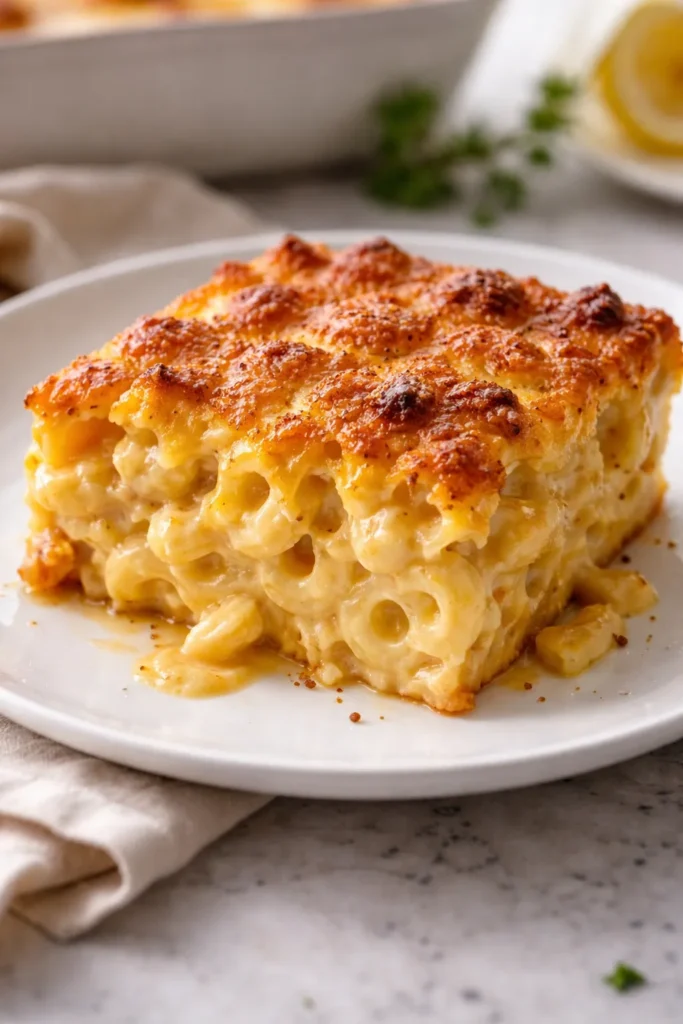
The Southern version of baked macaroni and cheese is fundamentally different from anything that comes in a blue box or from a stovetop recipe. It’s thick, custard-based, deeply cheesy, and baked until the top develops a slightly crunchy, browned crust while the interior stays creamy and set. It’s not saucy — it slices.
The custard base is what distinguishes Southern baked mac and cheese: eggs beaten with evaporated milk and sometimes regular milk, mixed with butter and grated cheese, poured over cooked pasta. As it bakes, the eggs set and hold everything together into a cohesive, sliceable casserole. The cheese matters enormously — use sharp cheddar as your base, grated from a block yourself. Pre-shredded cheese contains anti-caking agents that prevent proper melting.
The Cheese Blend for Depth
- 2 parts sharp cheddar (the backbone)
- 1 part Colby Jack (melts smoothly and adds mild creaminess)
- Optional: a handful of Gruyère for nuttiness, or a small amount of Velveeta for extra creaminess in the custard layer
Baking for the Right Texture
Pour the cheese and egg mixture over the pasta in a buttered baking dish, top with a thick layer of shredded cheese, and bake at 350°F for 35-40 minutes. The top should be deeply browned and slightly crunchy. Let it rest for 10 full minutes before cutting — the custard needs time to set, and cutting too soon gives you a puddle instead of clean slices.
A small amount of dry mustard powder and a dash of hot sauce in the custard base are the two additions that most professional Southern cooks include. They don’t read as “spicy” in the finished dish — they just make everything taste more like itself.
11. Classic Southern Collard Greens with Smoked Ham Hock
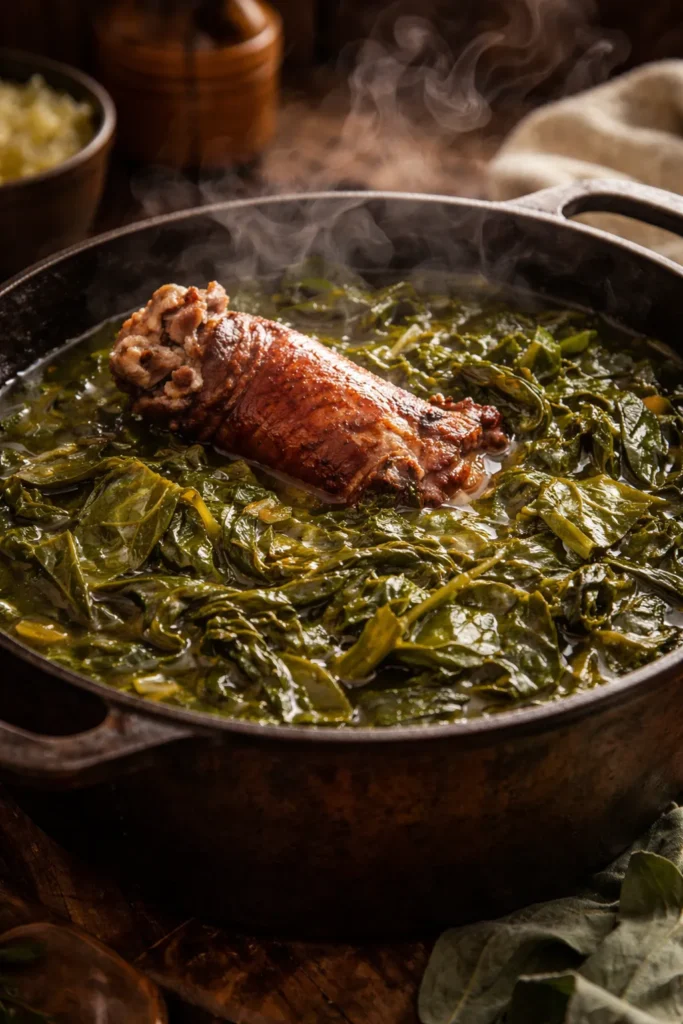
Collard greens cooked the Southern way — low and slow with a smoked ham hock in the pot — are not the same vegetable as the bitter, undercooked greens that get a bad reputation. Given enough time (and enough pork), collards transform into something silky, savory, and deeply satisfying. The pot liquor — the cooking liquid left behind — is so flavorful that Southerners mop it up with cornbread and consider it a delicacy in its own right.
The ham hock is non-negotiable for the traditional version. A smoked ham hock cooks into the water over 1.5-2 hours and imparts a smoky, pork-fat richness that seasons the greens from the inside out. Smoked neck bones or thick-cut bacon work as substitutes, but the hock gives you the longest, deepest flavor.
Prepping and Cleaning the Greens
Strip the leaves from the thick center rib by folding the leaf in half along the stem and pulling the stem out. Rinse the leaves multiple times in cold water — collards from a farmers’ market or garden can carry a surprising amount of dirt. Stack the cleaned leaves, roll them into a cylinder, and slice into 1-inch ribbons.
The Low-and-Slow Cooking Method
- Start the ham hock in 6 cups of water with a chopped onion, 3 garlic cloves, salt, pepper, and a pinch of red pepper flakes
- Bring to a boil, reduce to a low simmer, and cook for 45 minutes before adding the greens
- Add the greens in batches (they shrink dramatically), stir to submerge, cover, and cook for another 60-90 minutes
- Taste for seasoning near the end — a splash of apple cider vinegar brightens everything
12. Gulf Coast Seafood and Sausage Jambalaya Stew
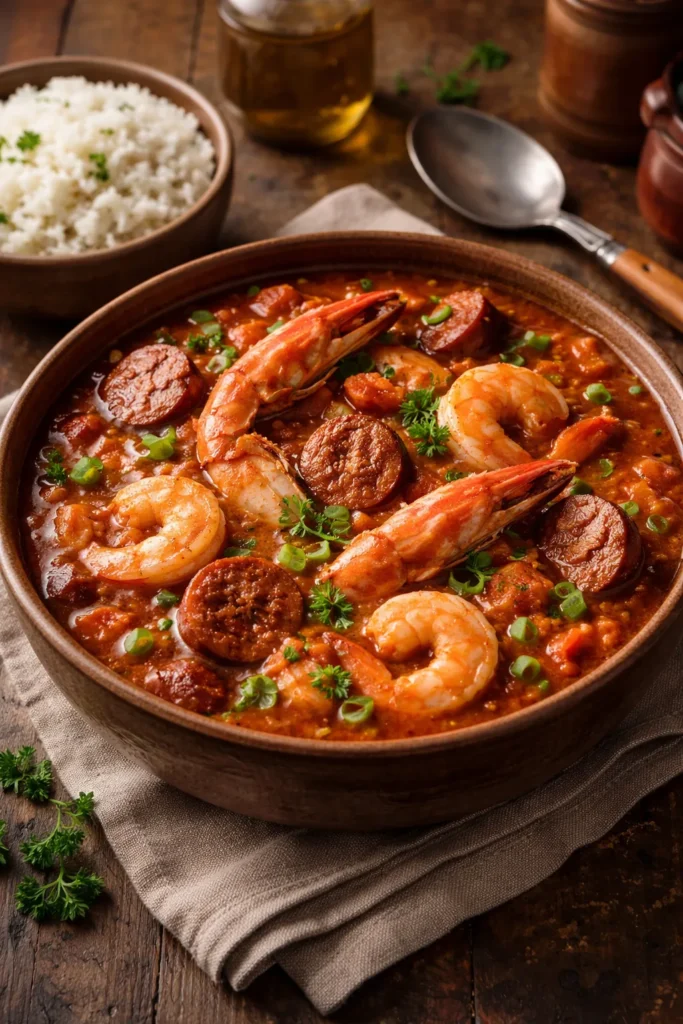
This last dish bridges the gap between jambalaya and gumbo — a heartier, stewier version of the Gulf Coast classic that works beautifully as a weeknight dinner because it’s slightly more forgiving with timing than either of its parent dishes. It features andouille sausage, shrimp, and crab (or imitation crab if you’re working within a budget), simmered in a deeply seasoned tomato-based broth alongside long-grain white rice.
The distinguishing factor here is that the rice cooks separately and gets added to individual bowls, rather than absorbing all the liquid in the pot. This means the stew itself stays saucy and intensely flavored, and you can control exactly how much rice each person wants — a practical advantage when feeding people with different appetites.
Building the Flavor Base
Brown andouille sausage slices in a Dutch oven until they’re caramelized at the edges. Build the holy trinity in the same pot, scraping up the sausage drippings as the vegetables soften. Add crushed garlic, a can of diced tomatoes with their liquid, bay leaves, dried thyme, smoked paprika, cayenne, and chicken broth. Bring to a boil, reduce the heat, and let it simmer uncovered for 20 minutes.
Adding the Seafood at the Right Moment
Shrimp and crab cook fast. Add large peeled shrimp in the last 5-6 minutes of cooking and stir gently — they’re done the moment they turn completely pink and curl into loose C shapes. Crab meat (if using picked blue crab) goes in even later, just long enough to heat through. Overcooked shellfish turns rubbery and loses its sweetness, which is the single most common mistake with this dish.
Serve it over rice in wide, deep bowls. Garnish with sliced green onions and a piece of crusty French bread for sopping up the stew.
Tips for Making Southern Dinner Recipes Work Every Time
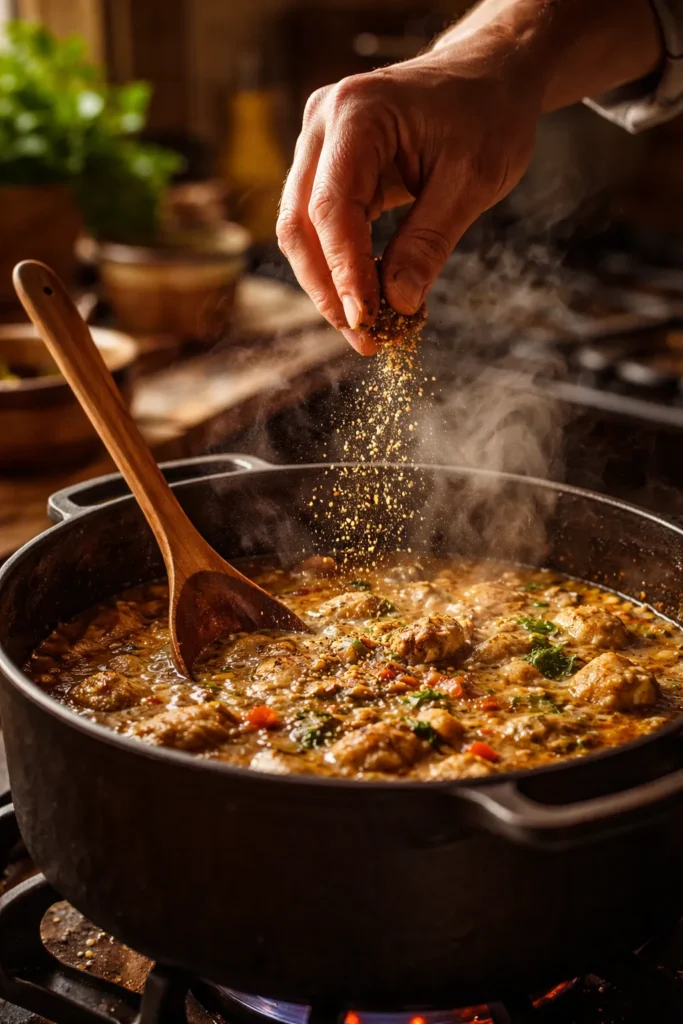
Southern cooking has a reputation for being fussy, but that reputation is mostly undeserved. What Southern recipes actually require is patience and attention — not advanced technique. A few principles that apply across every dish on this list:
Build every dish in layers. Season each component individually, not just at the end. If you’re making gumbo, season the roux, then the vegetables, then the broth, then adjust at the end. The depth you get from layered seasoning is impossible to replicate by dumping everything in at once.
Don’t rush the heat. Biscuits bake at high heat. Gravy finishes on low heat. Fried chicken cooks at a specific medium temperature. Collard greens need a long, slow simmer. Southern cooking uses different heat levels for different purposes, and fighting that — cranking the heat because you’re impatient — is almost always the source of failures.
Taste constantly. Southern food gets seasoned throughout the cooking process, not just at the end. Develop the habit of tasting the base before you add the protein, tasting the broth before you add the rice, and tasting the finished dish before it hits the table.
Rest your proteins. Let fried chicken sit on a wire rack (not paper towels, which trap steam) for 5 minutes after frying. Let a seared pork chop rest for 3-5 minutes before cutting. Resting allows the juices to redistribute and keeps the meat from bleeding out onto the plate.
Fat is your friend, not your enemy. The instinct to cut fat from these recipes to make them “lighter” usually results in a dish that’s missing its character entirely. If you want a lighter version of a Southern dish, serve a smaller portion alongside more vegetables — but don’t strip out the butter, cream, or bacon drippings and expect the same result.
Final Thoughts
Southern dinner cooking rewards commitment. These 12 recipes span the full breadth of what the South has to offer — the coastal seafood traditions of the Gulf, the smoky braised meats of the Carolinas, the spice-forward Cajun and Creole dishes of Louisiana, and the deeply satisfying casseroles that define church-supper cooking across the entire region.
Pick one to start with — probably the chicken-fried steak or the shrimp and grits if you want an immediate win — and make it properly, following the techniques rather than shortcutting around them. Taste everything. Adjust the seasoning. Trust the process.
The thing about Southern comfort food is that it rewards you generously. Spend the time on the dark roux, and the gumbo pays you back tenfold. Soak the chicken in buttermilk overnight, and the fried chicken is a different dish entirely. These recipes have stood for generations because the techniques genuinely work, and the flavors genuinely deliver.
Make one of these for dinner tonight. By the time the plates are cleared, everyone at your table will already be asking when you’re making it again.