Few things tell you more about a country than what it puts on the dinner table at the end of a long day. American dinners aren’t defined by a single culinary tradition — they’re the beautiful, messy, deeply satisfying result of centuries of immigrants, regional ingenuity, and the kind of home cooking that gets passed down through handwritten index cards and whispered kitchen secrets. From the smoky BBQ pits of Texas to the creamy chowder pots of New England, these dishes carry weight. They carry memory.
What makes a dinner truly “classic American”? It’s not just about popularity. A dish earns that title when it crosses state lines and still feels like home, when it shows up at both backyard cookouts and Sunday family suppers, and when it’s the first thing someone reaches for when they need comfort. The recipes on this list do all of that — and then some.
Whether you grew up eating these dishes or you’re just now getting acquainted with the full breadth of American home cooking, every one of these dinners deserves a permanent spot in your rotation. Pull up a chair. Dinner’s ready.
Table of Contents
- 1. Texas-Style Beef Brisket
- What Makes It Distinctly American
- Pro Tips for Your Best Brisket
- 2. Southern Buttermilk Fried Chicken
- The Regional Variations Worth Knowing
- Quick Notes on Frying Success
- 3. Chicken and Dumplings
- Building the Right Broth
- What to Serve Alongside
- 4. Shrimp and Grits
- Regional Takes on the Classic
- Getting the Grits Right Every Time
- 5. Creamy Baked Mac and Cheese
- The Breadcrumb Topping Debate
- Variations Worth Exploring
- 6. Chicken Pot Pie
- Tips for a Flawless Pot Pie
- 7. Classic American Meatloaf
- The Glaze That Makes or Breaks It
- Classic Pairings
- 8. Creole Jambalaya
- Getting the Rice Right
- Seasoning Notes
- 9. New England Clam Chowder
- Manhattan vs. New England: The Eternal Debate
- What to Serve With It
- 10. Philly Cheesesteak
- The Proper Building Technique
- Classic Add-Ons (According to the Customer)
- 11. Carolina-Style Pulled Pork BBQ
- Pulled Pork Serving Traditions
- Smoking vs. Slow Cooker
- 12. New England Lobster Roll
- The Bun Is Not Optional
- Stretching the Budget Without Sacrificing Quality
- Final Thoughts
1. Texas-Style Beef Brisket
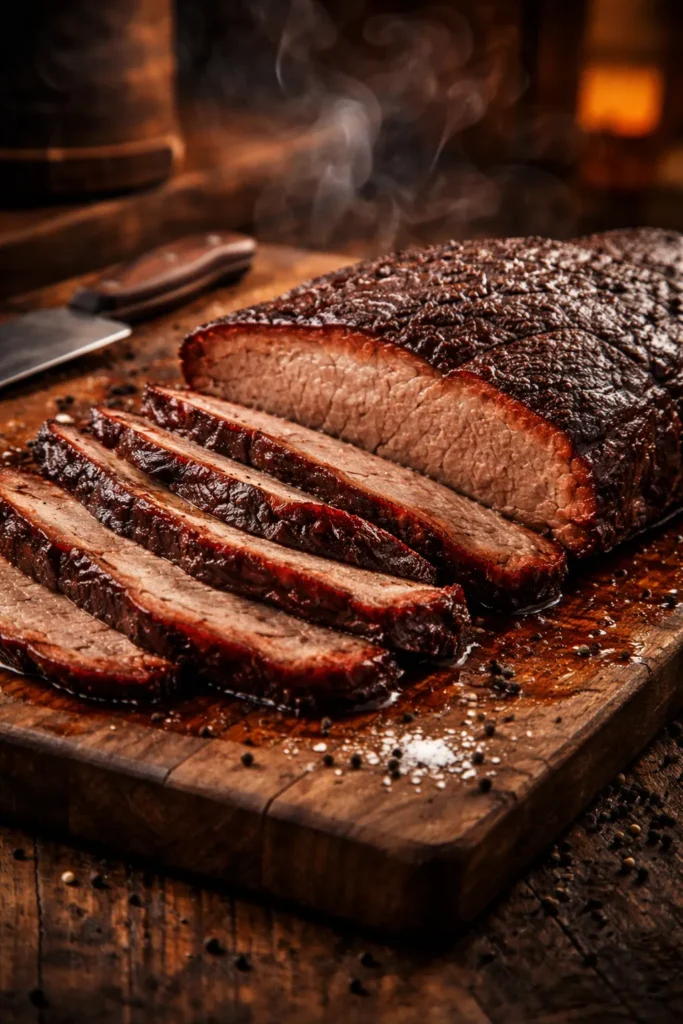
There’s a reason Texas brisket has its own devoted following — people drive hours, wait in lines, and make entire road trips just to eat it. A properly smoked brisket is one of the most technically demanding and deeply rewarding things you can cook. The flat and point cuts of the beef brisket come together under a simple salt-and-black-pepper rub, then spend anywhere from 10 to 16 hours in a smoker, slowly breaking down tough connective tissue into something that slices clean and melts against the tongue.
The key to brisket greatness is the fat cap. Leave it intact. As the brisket smokes, that fat renders slowly and bastes the meat from the outside in, keeping every slice moist even as the bark on the exterior turns deep mahogany and crackles under your knife. The “stall” — when the internal temperature plateaus around 150°F to 165°F — is where most beginners panic and pull the meat too early. Resist that urge. Let it sit through the stall.
Texas pitmaster tradition keeps the flavoring minimal on purpose. The rub is usually nothing more than coarse kosher salt and coarsely cracked black pepper, because high-quality beef shouldn’t need much help. The smoke does the flavor work — post oak wood is the traditional choice in Central Texas, delivering a clean, medium-intensity smoke that complements rather than overwhelms the beef.
What Makes It Distinctly American
Brisket as a concept isn’t uniquely American, but the Texas interpretation absolutely is. Jewish communities brought brisket braising traditions to American tables, while cattle-ranching culture in Texas shaped the smoking method. The result is a dish that belongs entirely to American BBQ culture.
Pro Tips for Your Best Brisket
- Fat side up or fat side down depends on your smoker — fat side up works best in offset smokers where heat comes from the side
- Rest the finished brisket for at least one hour (ideally two) wrapped in butcher paper before slicing
- Slice against the grain, and adjust your cutting direction at the point where the flat meets the point
- Leftover brisket makes transcendent breakfast tacos, burnt-end chili, and sandwiches
Worth knowing: A whole packer brisket weighing 12 to 16 pounds is the right call. Half-briskets cook unevenly and dry out faster.
2. Southern Buttermilk Fried Chicken
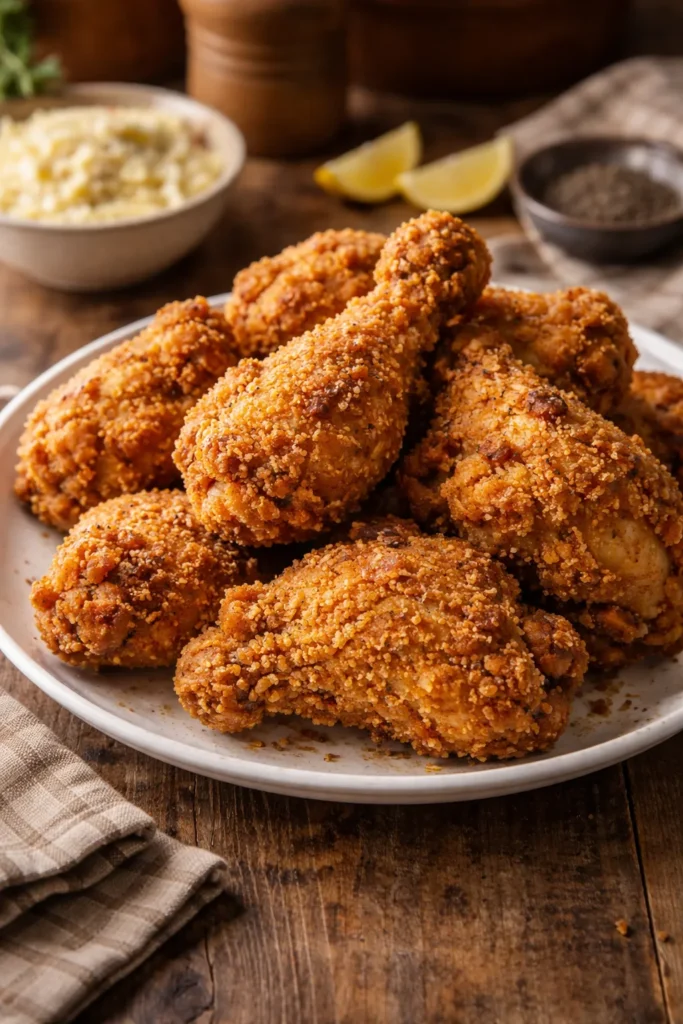
Ask a hundred different cooks what makes perfect fried chicken and you’ll get a hundred different answers — but every one of them will start with buttermilk. The acid in buttermilk works into the meat over several hours, tenderizing muscle fibers and leaving behind a tangy depth of flavor that no quick marinade can replicate. The ideal soak runs between 8 and 24 hours in the refrigerator, with bone-in pieces fully submerged.
The coating comes next, and this is where regional and family variations really diverge. A seasoned all-purpose flour dredge is the backbone. Garlic powder, onion powder, smoked paprika, cayenne, white pepper, and a pinch of dried thyme all earn their place. Some cooks add a beaten egg to the buttermilk for extra adhesion. Others do a double-dredge — flour, back into the buttermilk, flour again — for a dramatically thicker, crunchier crust.
The fat temperature is everything. Fry in peanut oil or vegetable shortening at a steady 325°F to 340°F. Too hot and the crust burns before the interior cooks through. Too cool and the chicken absorbs excess oil and turns greasy. A cast iron skillet holds heat more evenly than a thin-bottomed pan and is worth every bit of its heft here.
The Regional Variations Worth Knowing
- Nashville Hot Chicken: The finished pieces get brushed with a cayenne-laced chili paste — a tradition born in Nashville that’s spread across the country
- Maryland Fried Chicken: Typically served with a pan cream gravy made from the drippings
- Korean-American Fried Chicken: Double-fried for exceptional crunch, often glazed with sweet soy or spicy gochujang sauce
Quick Notes on Frying Success
- Bring chicken to room temperature for 30 minutes before frying — cold chicken drops the oil temperature dramatically
- Don’t crowd the pan; fry in batches and keep finished pieces warm in a 200°F oven
- Use a meat thermometer — white meat needs to reach 165°F internally, dark meat is best at 175°F
3. Chicken and Dumplings
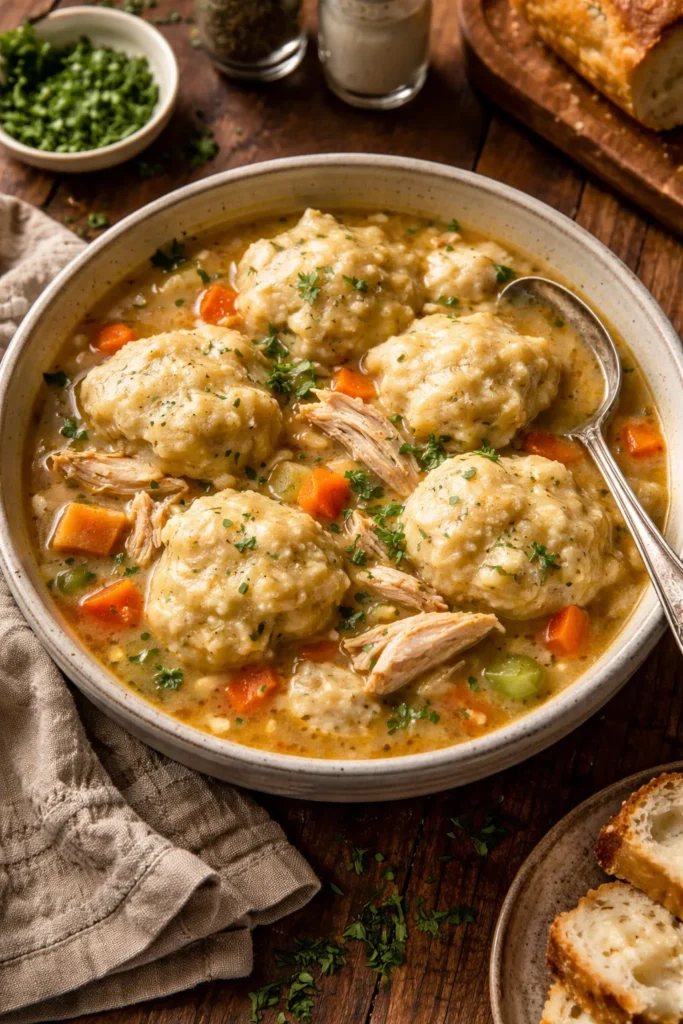
Chicken and dumplings is what happens when a simple chicken stew refuses to be ordinary. The dish traces its roots to Appalachian and Southern cooking traditions, where resourceful cooks stretched one chicken into a full meal that could feed an entire family. The broth — rich, golden, and deeply savory from hours of simmering bone-in chicken with celery, onion, carrot, and fresh thyme — is the foundation everything else builds on.
The dumpling debate is one of American cooking’s most passionate. Two distinct camps exist: the Northern flat dumpling, rolled thin and cut into strips like pasta, which cooks into something chewy and almost noodle-like; and the Southern drop dumpling, scooped by the spoonful into the simmering broth, where it puffs up into a pillowy cloud with a tender, doughy interior. Both are correct. Both are delicious. The Southern version tends to produce a thicker, creamier broth as the dumplings release starch while cooking.
The most common mistake is overcooking the dumplings. Once dropped, they need 12 to 15 minutes of simmering with the lid on — resist lifting that lid. Steam is doing the work, and interrupting it leads to dense, gummy dumplings that haven’t had the chance to fully set.
Building the Right Broth
Start with a whole chicken or bone-in thighs rather than boneless breast meat. Bones contribute collagen to the broth, which gives it a lip-coating richness that store-bought broth can’t match. Simmer for at least 45 minutes before pulling the chicken to shred, then return the shredded meat back to the pot before adding the dumplings.
What to Serve Alongside
- Simple roasted green beans with garlic
- A quick cucumber and dill salad to cut the richness
- Warm buttermilk biscuits for those who want to double down on comfort
4. Shrimp and Grits
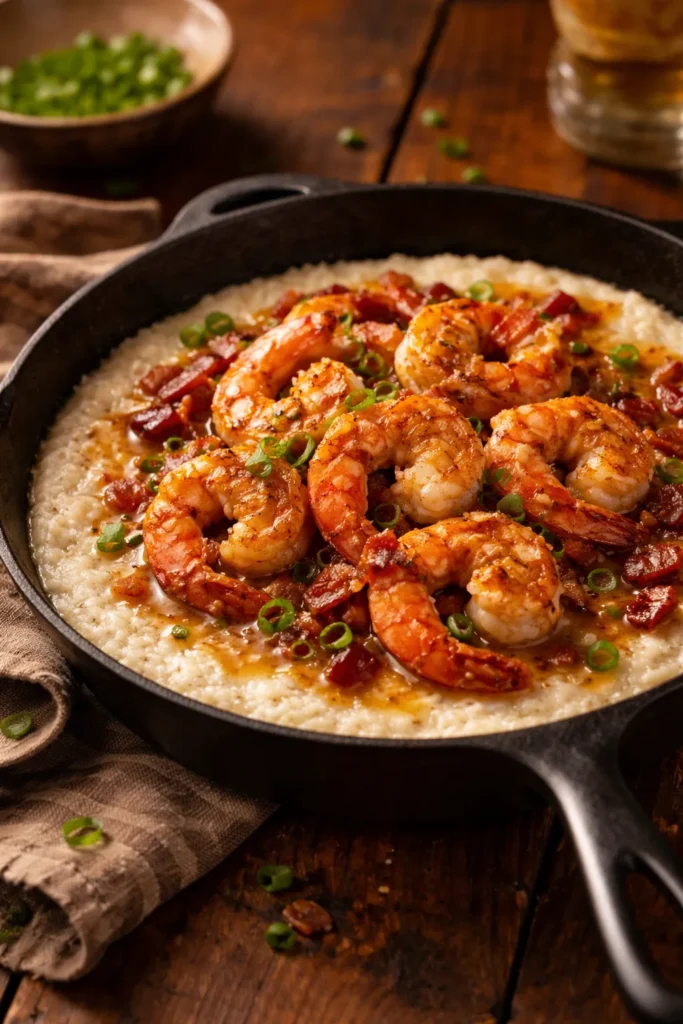
South Carolina gave the world shrimp and grits, and the world has been better for it ever since. What started as a humble coastal breakfast — a practical meal for shrimpers coming off the water at dawn — evolved into one of the most celebrated dishes in Southern cooking. The contrast is what makes it work: creamy, buttery grits on the bottom, and a bold, savory, slightly spicy shrimp situation on top.
Stone-ground grits are not the same thing as quick-cooking grits, and that distinction matters. Stone-ground grits retain the germ of the corn, which means they carry more flavor, more texture, and more nutrition. They take 45 minutes to an hour to cook properly, with constant stirring and generous additions of butter and sharp white cheddar stirred in at the end. The consistency to aim for is thick and creamy, not stiff — they should flow slowly when you tilt the pot, not sit in a solid block.
The shrimp component typically involves rendered bacon or andouille sausage, sliced mushrooms, garlic, green onions, and the shrimp themselves — tossed in a cast iron skillet over high heat so they get a proper sear in under three minutes. A splash of chicken broth, a squeeze of lemon, and a pinch of smoked paprika pull the pan sauce together.
Regional Takes on the Classic
Charleston-style shrimp and grits leans heavily on the bacon and green onion combination with a light pan sauce. New Orleans variations often incorporate a more complex roux-based sauce and andouille in place of bacon. Neither approach is wrong — they’re just different expressions of the same great idea.
Getting the Grits Right Every Time
- Use a 4:1 ratio of liquid to grits — half water, half whole milk produces the best texture
- Season the cooking liquid generously with salt before the grits go in
- Finish with unsalted butter and aged cheddar, stirred in off the heat
- Never rinse the shrimp after peeling — pat dry and season right before cooking
5. Creamy Baked Mac and Cheese
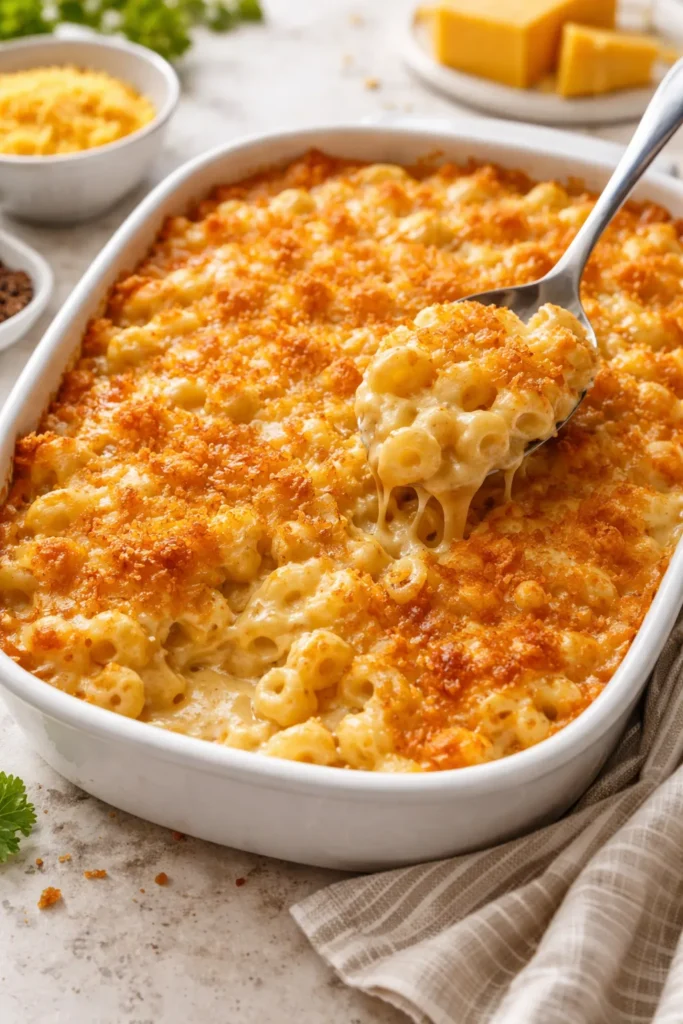
There’s a reason mac and cheese appears on menus from upscale restaurants to church potlucks — it occupies a category of comfort that no other dish quite reaches. The American version, particularly the baked casserole style with its golden crust and creamy interior, is descended from a recipe Thomas Jefferson reportedly brought back from France and Italy, though the dish has clearly taken on a life of its own.
The sauce is a béchamel — butter, flour, whole milk — loaded with cheese. And the cheese choice matters more than almost any other decision you’ll make. Sharp cheddar is the non-negotiable anchor. Gruyère adds nuttiness. A touch of cream cheese brings an almost spreadable richness. Fontina melts seamlessly and contributes a buttery, mild flavor. Avoid pre-shredded cheese: the cellulose coating added to prevent clumping also prevents smooth melting, and the sauce turns grainy.
The pasta itself gets partially cooked — just barely al dente — before mixing with the sauce, because it will continue to cook in the oven. Sharp elbow macaroni is traditional, but cavatappi, shells, and campanelle all hold sauce beautifully in the spirals and curves.
The Breadcrumb Topping Debate
Some purists insist on a bare, golden cheese crust formed purely from the baking process. Others want panko breadcrumbs toasted in brown butter scattered across the top, adding a contrasting crunch to each creamy spoonful. Both are legitimate. The breadcrumb version does offer textural interest that makes every bite more layered.
Variations Worth Exploring
- Smoked gouda and pulled pork mac for a BBQ-meets-comfort-food mashup
- Lobster mac with Gruyère and a whisper of Dijon mustard
- Green chile mac, popular in New Mexico, with roasted Hatch chiles stirred directly into the sauce
6. Chicken Pot Pie
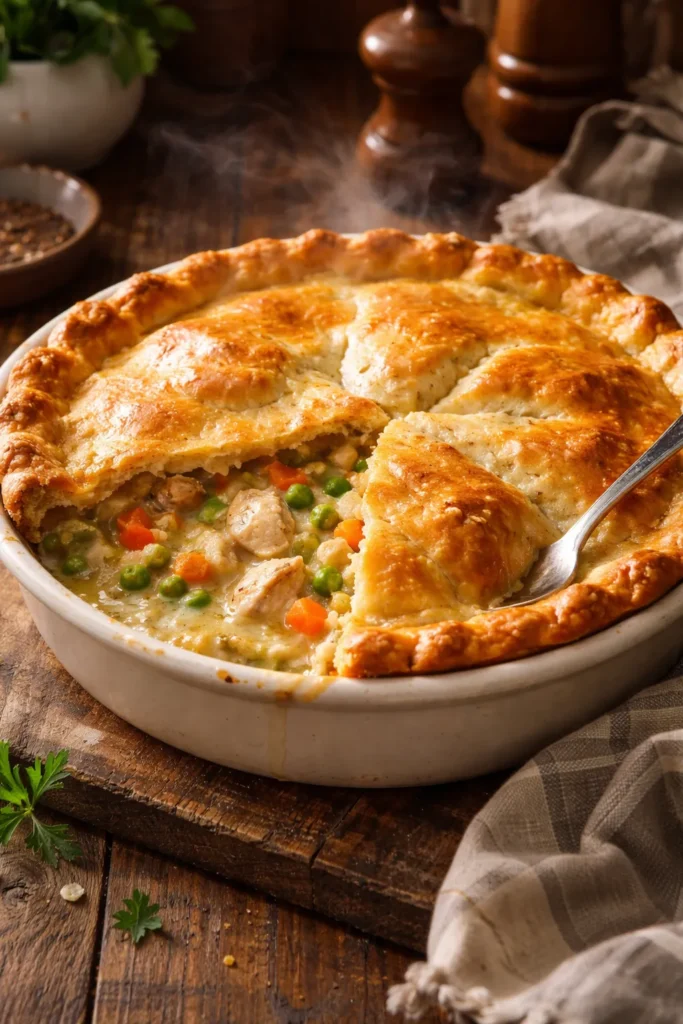
A properly made chicken pot pie is an act of love disguised as a casserole. The filling — tender chunks of chicken thigh, sweet carrots, peas, celery, and pearl onions swimming in a thick, herb-flecked cream sauce — gets sealed under a buttery, golden pastry crust that shatters beautifully on the first cut. It’s the kind of dish that makes people audibly sigh when it arrives at the table.
The cream sauce works best when built from the pan drippings of sautéed vegetables. Start with butter and diced onion, then add flour to make a quick roux, then slowly whisk in chicken broth and whole cream until the sauce thickens. Fresh thyme, a bay leaf, salt, white pepper, and a tiny grating of nutmeg round everything out. The filling should be noticeably thick before it goes into the pie dish — it will loosen slightly with the steam of baking, and a thin filling produces a soupy, disappointing slice.
The crust can go several directions depending on your patience and skill level. An all-butter shortcrust pastry, made with cold butter worked into flour until pea-sized, produces a flaky, deeply flavorful shell. Puff pastry is a faster alternative that still delivers dramatic, shatteringly crisp results. Either way, cut a few steam vents in the top crust before baking so the filling can breathe.
Tips for a Flawless Pot Pie
- Use chicken thighs rather than breast meat — they stay moist and tender even after a second round of oven heat
- Cool the filling slightly before adding to the pie dish so it doesn’t melt the bottom crust
- Brush the top crust with egg wash (one egg beaten with a tablespoon of water) for a deep golden finish
- Let the finished pie rest for 10 minutes before serving so the filling tightens up slightly and slices cleanly
7. Classic American Meatloaf
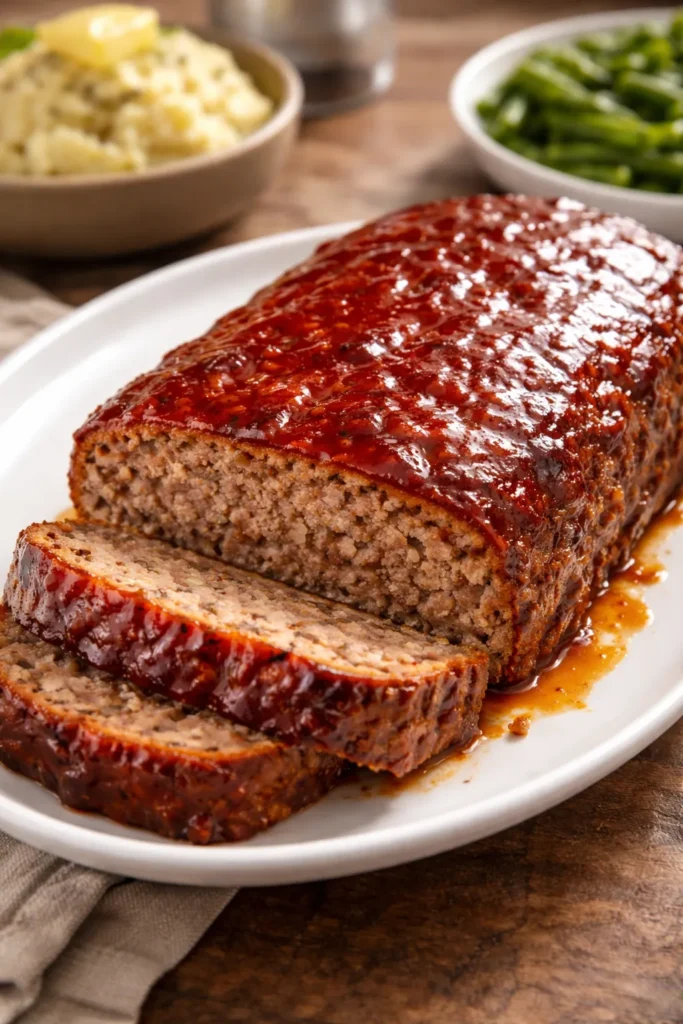
Meatloaf has suffered decades of bad press, mostly from overcooked versions made with lean ground beef and coated in an overly sweet ketchup glaze. A properly made meatloaf is something entirely different — moist, savory, and complex, with a glaze that caramelizes into something sticky and deeply flavored in the last 20 minutes of baking.
The fat content of your ground beef matters enormously. An 80/20 blend (80% lean, 20% fat) keeps the loaf moist throughout baking. Going leaner produces a dry, crumbly result regardless of how carefully you handle everything else. Many experienced home cooks use a blend: part ground beef, part ground pork, and sometimes a small amount of ground veal, which adds a tenderness that straight beef can’t quite match.
The panade — a mixture of breadcrumbs soaked in milk — is the structural secret most recipes gloss over. The soaked breadcrumbs bind the meat together without making it dense, and they contribute moisture from the inside out during the long baking time. Mix just until combined; overworking the meat develops toughness.
The Glaze That Makes or Breaks It
A basic meatloaf glaze blends ketchup, brown sugar, Worcestershire sauce, and a splash of apple cider vinegar into a tangy-sweet lacquer. Apply half the glaze 20 minutes before the end of baking, then the remaining glaze in the last 5 minutes. This layered approach builds depth and prevents burning.
Classic Pairings
- Mashed potatoes with plenty of butter and a splash of cream — the traditional pairing for a reason
- Roasted green beans with garlic and lemon zest
- Brown onion gravy poured tableside for those who prefer a more savory finish over the sweet glaze
8. Creole Jambalaya
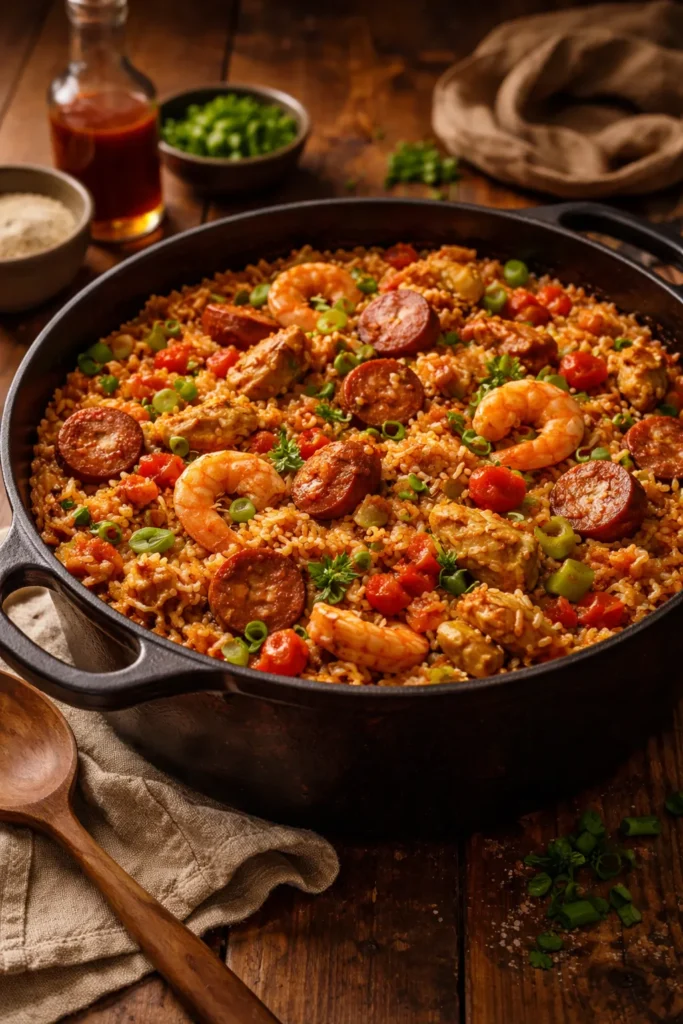
New Orleans put Creole jambalaya on the American food map, and it’s never left. The dish draws from Spanish, French, and West African cooking traditions, blending them into something that belongs entirely to Louisiana. The defining characteristic of Creole jambalaya — sometimes called “red jambalaya” — is the inclusion of tomatoes, which distinguishes it from the brown, Cajun-style version made farther west in the state.
A proper jambalaya starts with “the holy trinity” of Louisiana cooking: onion, celery, and bell pepper, sautéed until soft in a wide, heavy pot. Andouille sausage goes in next, sliced into coins and browned until the fat renders and the cut surfaces caramelize. Then chicken, then the tomatoes and aromatics, then long-grain rice, then chicken broth — and from that point on, the pot does its own thing, simmering low and covered until the rice absorbs every drop of that layered, smoky, spiced broth.
Shrimp go in last, about 5 minutes before the dish is finished cooking. They need almost no time — once they curl and turn pink-orange, they’re done. Adding them too early turns them rubbery and diminishes their flavor.
Getting the Rice Right
Long-grain white rice is traditional and performs best here. It cooks up separate and fluffy rather than sticky, which is the texture jambalaya needs. The ratio of rice to liquid in a large pot runs roughly 1:2, but the tomatoes and rendered fat from the sausage contribute additional moisture, so pull back slightly on the broth compared to what you’d use for plain rice.
Seasoning Notes
- Smoked paprika, dried oregano, dried thyme, cayenne, garlic powder, and black pepper form the spice base
- Season in layers — season the vegetables, season the meat, and season the rice when it goes in
- Taste and adjust before serving; Creole food should be assertively seasoned, not timidly
9. New England Clam Chowder
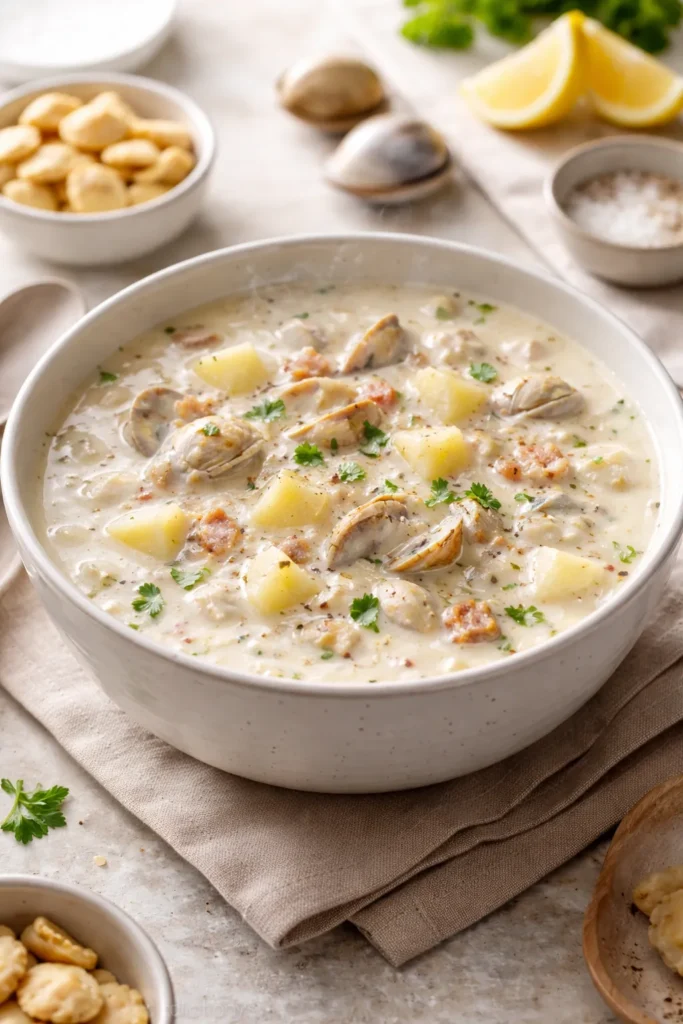
No dish is more firmly attached to a place than New England clam chowder is to the Northeast coast. Boston and its surrounding harbor towns have been making versions of this thick, cream-based soup for generations, and the basic formula hasn’t needed much changing: clams, potatoes, onion, salt pork or bacon, cream, and patience.
The clams are everything. Fresh littleneck or cherrystone clams, steamed open and chopped, deliver a briny sweetness that canned clams approximate but never fully match. If fresh clams aren’t available, use quality canned chopped clams and supplement with a bottle of clam juice to boost the seafood flavor in the broth. Never let the soup come to a full boil after the cream is added — a rolling boil causes cream-based soups to break, turning them greasy and curdled. Low and slow from that point forward.
The potatoes should be cut into rough half-inch cubes. Russets break down slightly and thicken the broth naturally. Waxy potatoes like Yukon Gold hold their shape better and give the soup a chunkier texture. Some cooks deliberately mash a few potato cubes against the side of the pot to thicken without adding flour — an old technique that works beautifully.
Manhattan vs. New England: The Eternal Debate
Manhattan clam chowder replaces the cream with a tomato-based broth and is firmly in its own, equally legitimate camp. Rhode Island chowder uses neither cream nor tomato — just a clear clam broth. New England’s cream version has the widest following, but all three deserve respect.
What to Serve With It
- Oyster crackers are non-negotiable for New England purists
- A hollow sourdough bread bowl for a dramatic, satisfying presentation
- A simple green salad with lemon vinaigrette to balance the richness
10. Philly Cheesesteak
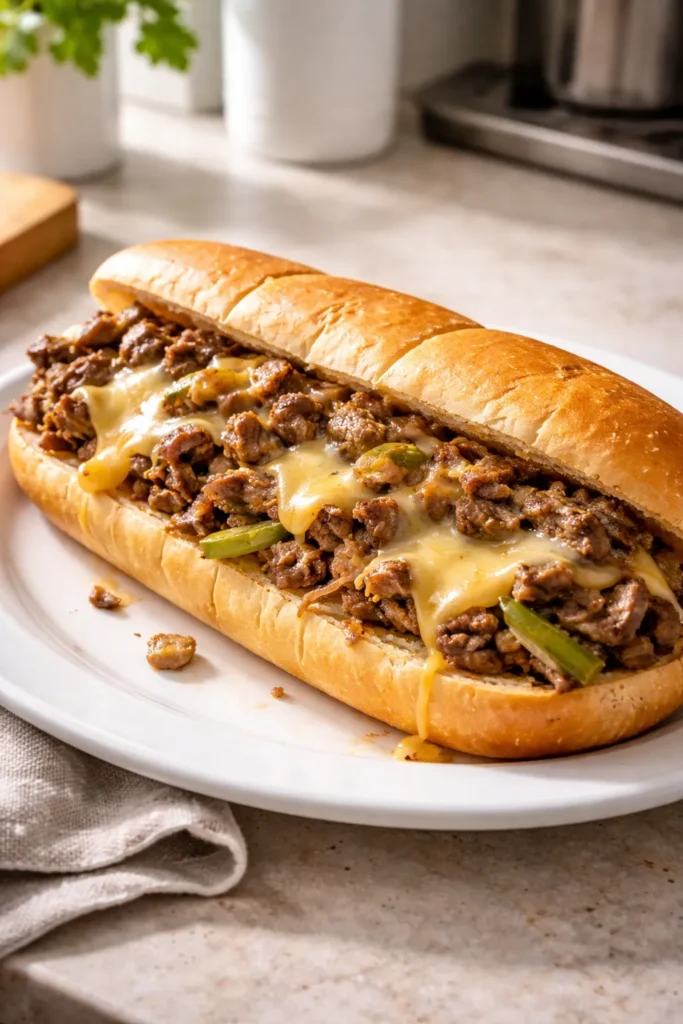
Philadelphia’s most famous export was born on the streets of South Philly, and the core argument about what makes a genuine cheesesteak has been going strong among locals for as long as the sandwich has existed. The beef — thinly shaved ribeye, cooked on a flat-top griddle — is not negotiable. The bread — a soft, slightly chewy hoagie roll with a thin, crackling crust — is not negotiable. Everything else is where the opinions get loud.
The cheese options divide into roughly three camps: Cheez Whiz (the original, and still the choice of most old-school South Philly shops), provolone (for those who prefer something less processed but still melty), and American cheese (a middle-ground choice that melts like Whiz but has a more mild, dairy-forward flavor). Each produces a different sandwich. They’re all valid.
The beef must be frozen partially before slicing — about 30 minutes in the freezer — so a sharp knife or meat slicer can shave it thin enough. Thick slices don’t cook through quickly enough on a hot griddle, and they can become tough. Paper-thin ribeye hits the hot surface and practically melts in seconds.
The Proper Building Technique
Cook onions until deeply caramelized and sweet — this takes 20 to 25 minutes over medium-low heat and cannot be rushed. Lay the beef on the griddle in a thin layer, let it brown for 30 seconds, then chop and fold it. Mound the meat into the shape of the roll, lay cheese on top, let it melt with a splash of water and a cover from a dome lid or inverted bowl, then scoop the whole thing into the waiting roll.
Classic Add-Ons (According to the Customer)
- Fried onions (the standard)
- Sautéed mushrooms and bell peppers (the popular variation)
- Hot or sweet cherry peppers for heat
11. Carolina-Style Pulled Pork BBQ
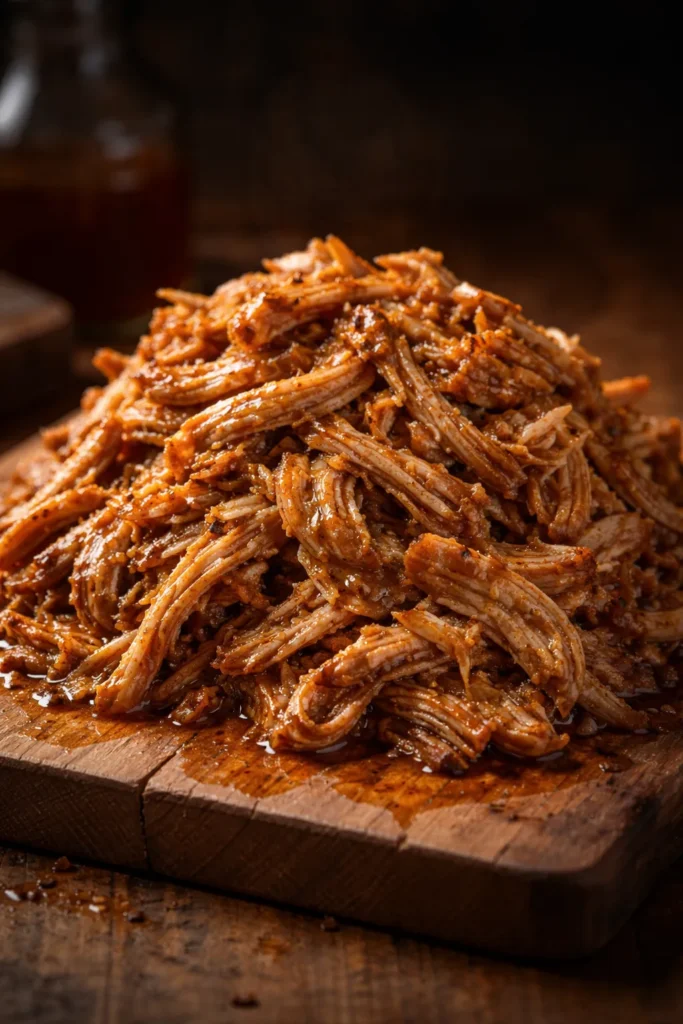
Carolina BBQ is a religion, and the split between Eastern and Western North Carolina — plus South Carolina’s mustard-forward tradition — makes it one of the most regionally specific food debates in the country. What unites them all is the pork itself: a whole shoulder or Boston butt, cooked low and slow until the collagen completely breaks down and the meat pulls apart with nothing more than two forks and zero effort.
Eastern North Carolina keeps it as pure as BBQ gets: the only sauce is a thin mixture of apple cider vinegar, red pepper flakes, salt, and black pepper. No tomato. No sweetener. Just acid and heat cutting through the richness of the pork. Western NC (Lexington-style) adds a bit of ketchup to the vinegar base, creating a slightly thicker sauce with a hint of sweetness. South Carolina goes its own way entirely with a yellow mustard sauce that sounds unusual until you try it, at which point it becomes the only thing you want.
A bone-in Boston butt is the best choice for pulled pork. The bone conducts heat into the center of the meat, and it’s an easy way to check for doneness — when the bone wiggles freely and nearly pulls out clean, the pork is ready.
Pulled Pork Serving Traditions
- Served on a white hamburger bun with tangy coleslaw piled directly on top of the pork inside the sandwich
- As a plate with hushpuppies, collard greens, and red potato salad
- Topped with the region-appropriate sauce and a pile of pickled jalapeño slices
Smoking vs. Slow Cooker
A smoker with hickory or apple wood produces the authentic experience — a dark bark, a pink smoke ring just beneath the surface, and a smokiness that penetrates every fiber of meat. A slow cooker can produce tender, shreddable pork with good seasoning, but it won’t replicate that bark or depth. For indoor cooking, a Dutch oven in a 300°F oven for 5 to 6 hours gets closer than a slow cooker.
12. New England Lobster Roll
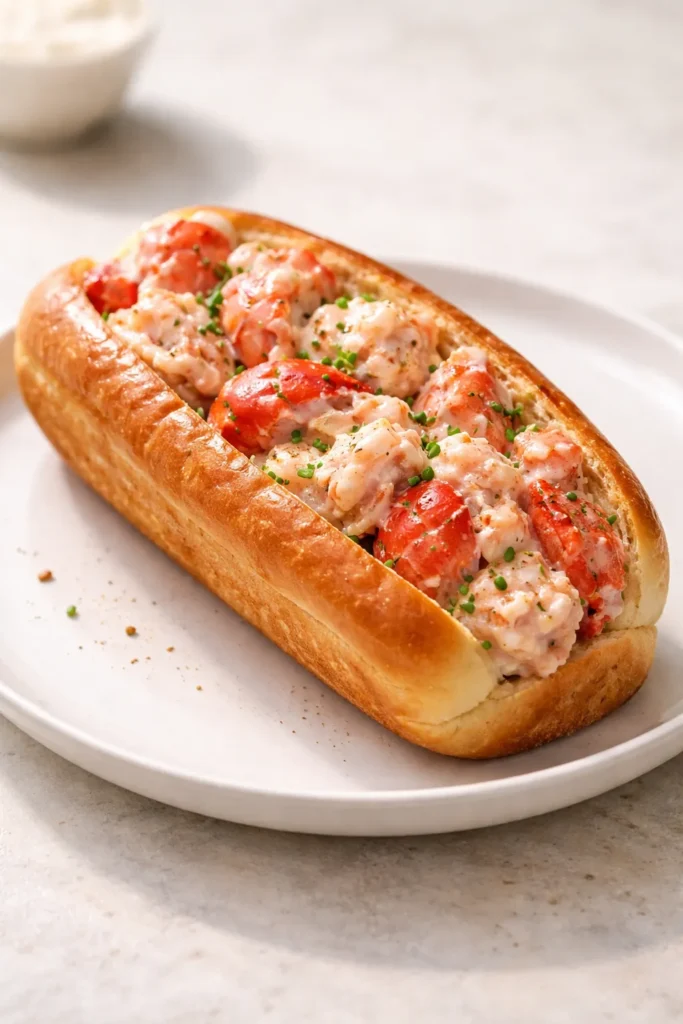
The lobster roll is arguably the most elegant thing the American sandwich tradition has ever produced. Maine, Connecticut, and the broader New England coast have been arguing for generations about the definitive version — cold dressed with mayo, or warm and buttered — and neither side shows any sign of conceding.
The Maine-style (cold) version chills the cooked lobster meat and folds it with just enough mayonnaise to hold it together, a squeeze of fresh lemon juice, a few leaves of fresh tarragon or chives, and nothing else. The Connecticut-style (hot) version splits a top-loading New England hot dog bun, toasts it in butter until golden, and piles warm, butter-drenched lobster claw and tail meat inside. No mayonnaise. No herbs beyond maybe a whisper of chive.
The lobster itself deserves quality attention. Hard-shell lobsters contain more meat and a firmer, sweeter flavor than soft-shells. A pound and a quarter to a pound and a half lobster yields roughly 5 to 6 ounces of usable meat — roughly the right amount for one generous roll. The claw meat is richer and more tender; the tail is firmer and has a slightly different texture. A good lobster roll contains both.
The Bun Is Not Optional
The split-top, flat-sided New England hot dog bun is specific to the region and worth tracking down at specialty grocery stores if you’re outside New England. The flat sides toast beautifully in butter, creating a crisp, golden surface that contrasts with the soft interior — an entirely different structural experience than a standard round hot dog bun.
Stretching the Budget Without Sacrificing Quality
- Mix lobster meat with a small amount of cooked shrimp or lump crab — it extends the filling without dramatically changing the flavor profile
- Buy whole live lobsters and cook them yourself rather than purchasing pre-picked lobster meat, which is significantly more expensive per ounce
- Focus the best (and most expensive) lobster for the filling; use any extra shells to make a quick bisque the next day
Final Thoughts
American dinners are proof that great cooking doesn’t require a single origin story. Brisket carries the traditions of Texas ranching and immigrant ingenuity simultaneously. Jambalaya reflects the layered cultural history of New Orleans in every aromatic bite. Even something as seemingly simple as a lobster roll tells you exactly where in the country you are the moment you hold one in your hands.
What ties all twelve of these dishes together isn’t geography or a shared cooking technique — it’s the intention behind them. They’re built to be shared, remembered, and passed down. The best version of any of these recipes isn’t the one that wins a competition; it’s the one someone makes from memory at 6 PM on a Tuesday because the people around that table deserve something real.
Start with the dish that already feels like home, and work outward from there. Every one of these classics rewards the attention you give them.