Few culinary traditions on earth treat the relationship between stew and rice with as much reverence as Persian cooking does. In Iran, the stew — called khoresh — and the rice — polo — are not side dishes to each other. They are partners, equals, two halves of a complete meal that has been refined over centuries in home kitchens from Tehran to Shiraz to the northern provinces along the Caspian Sea.
What makes Iranian stews so distinct from anything else you’ve cooked before is the layering. It’s not just about browning meat and simmering it in broth. It’s about building complexity through dried limes, toasted herbs, saffron-stained rice, barberries sharp enough to make your mouth water, and spice blends that smell like nothing in the Western pantry. Even the rice is its own art form. The goal isn’t just fluffy grains — it’s tahdig, that legendary golden crust at the bottom of the pot that Persian families fight over at the dinner table.
The eight recipes here range from weeknight-friendly to weekend project, from deeply traditional to warmly approachable. Some take 30 minutes. Some take 6 hours. All of them are worth making.
Table of Contents
- 1. Ghormeh Sabzi — Persian Herb and Kidney Bean Stew
- What You’ll Need
- How to Cook It
- Why This Recipe Rewards Patience
- 2. Khoresh Gheymeh — Lamb Stew with Yellow Split Peas and Dried Limes
- What Makes It Special
- Key Ingredients and Method
- 3. Khoresh Fesenjan — Pomegranate and Walnut Chicken Stew
- Balancing Sweet and Sour
- What You’ll Need
- 4. Persian Herb and Beef Stew with Turmeric and Lemon
- Three Ways to Cook It
- Ingredients
- 5. Iranian Beef and Green Bean Stew with Warm Spice Blend
- The Spice Blend
- The Stew
- 6. Zereshk Polo Ba Morgh — Saffron Chicken with Caramelized Barberry Rice
- Sourcing Barberries
- Key Steps
- 7. Baghali Polo Ba Mahicheh — Fava Bean and Dill Rice with Lamb Shanks
- Preparing the Lamb Shanks
- The Fava Bean Dill Rice
- 8. Persian Herb and Chickpea Stew with Basmati Rice
- What Sets This Apart From Other Chickpea Stews
- Ingredients and Method
- Mastering Persian Basmati Rice — The Foundation Every Stew Needs
- The Parboil Stage
- The Steam Stage and Tahdig
- Saffron: The Non-Negotiable Ingredient
- Essential Tips for Cooking Persian Stews Successfully
- On Browning the Meat
- On Building the Spice Base
- On Seasoning Throughout
- On Leftovers
- What to Serve Alongside Iranian Stews
- Final Thoughts
1. Ghormeh Sabzi — Persian Herb and Kidney Bean Stew
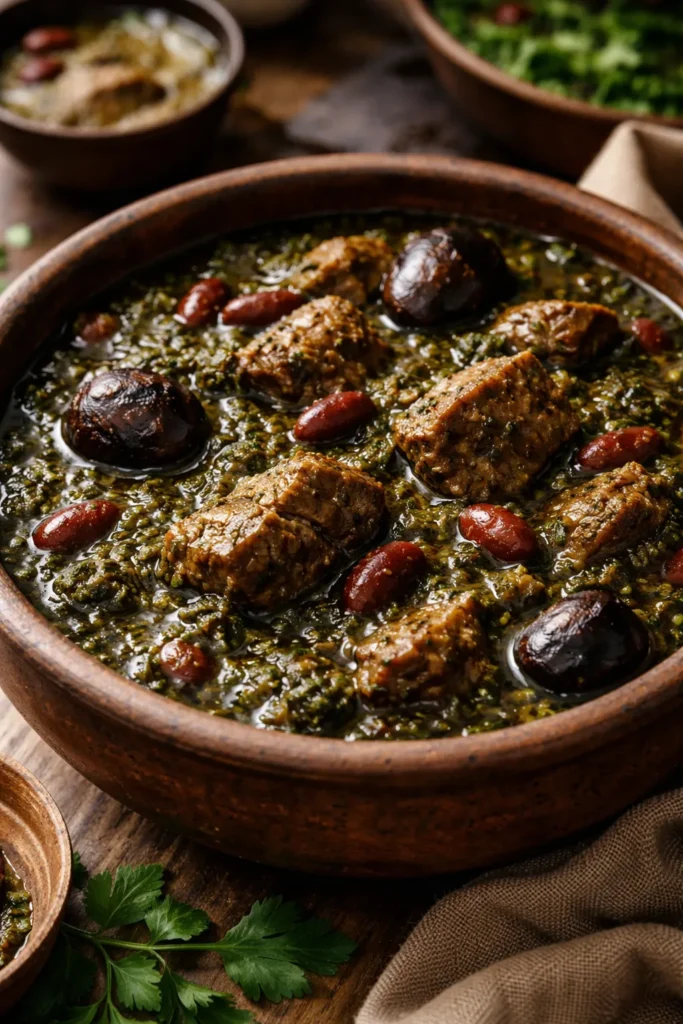
Ghormeh Sabzi is, without much argument, the king of Persian stews. It’s dark, intensely savory, sour from dried limes, and earthy in a way that’s completely unlike anything in the European stew canon. If you’ve never eaten Persian food before and you want to understand what the cuisine is actually capable of, this is the dish to make first.
The flavor comes from a technique that surprises most cooks the first time they encounter it: the herbs are fried, not just wilted. A full pound of fresh parsley and half a pound of cilantro get finely chopped and then cooked in olive oil for 20 minutes or more until they’re deeply dark green, concentrated, and intensely fragrant. This step is what separates Ghormeh Sabzi from any herb-forward dish you’ve made before. Skip it, and you get a green stew. Do it right, and you get something closer to a revelation.
Dried limes — limoo amani in Farsi — are equally non-negotiable. These sun-dried, brine-cured limes from Oman get pierced with a knife and dropped whole into the simmering pot, releasing a musky, tart, deeply complex sourness that you simply cannot replicate with fresh lime juice alone. They’re available at Middle Eastern grocery stores and online, and if you’re serious about cooking this dish properly, they’re worth tracking down.
What You’ll Need
- 1½ pounds stewing beef, cut into 2-inch pieces
- 1 pound fresh parsley, woody ends removed and finely chopped
- ½ pound fresh cilantro, finely chopped
- 2 tablespoons dried fenugreek leaves, crumbled
- Green tops of 5 scallions, finely diced
- 1 small leek, white part finely sliced
- 2 cans (15 oz each) red kidney beans, drained and rinsed
- 4 dried limes, pierced several times with a knife
- 1 teaspoon ground turmeric
- 1 onion, finely diced
- ¼ cup plus 2 tablespoons extra virgin olive oil
- Kosher salt, black pepper, and juice of 2 limes
How to Cook It
Brown the onion in 2 tablespoons of olive oil until golden — this takes about 8 minutes over medium-high heat. Add the beef and cook until browned on all sides, then stir in the turmeric and cover with 3 cups of water. Bring to a boil, then reduce to a low simmer while you handle the herbs.
In a separate large pan, heat the remaining ¼ cup of oil and cook the leek until softened. Add all the chopped herbs and scallions and sauté for 5 minutes on medium-high heat, then reduce to medium-low and continue stirring for another 15 minutes. The herbs should be a very dark green — not burnt, but concentrated and almost paste-like. Add the fried herbs to the beef pot along with the kidney beans, dried limes, and 2 more cups of water. Simmer for a minimum of 90 minutes, longer if you have the time. Season with salt, pepper, and lime juice before serving over fluffy basmati rice.
Why This Recipe Rewards Patience
The longer Ghormeh Sabzi cooks, the better it tastes. Many Persian home cooks make it the night before and reheat it for dinner, which gives the herbs, dried limes, and beef time to fully meld. If you can give it 3 hours on a low flame with occasional checks to prevent it from drying out, you’ll be rewarded with a stew that tastes like it took years to master — because, in a sense, it did.
2. Khoresh Gheymeh — Lamb Stew with Yellow Split Peas and Dried Limes
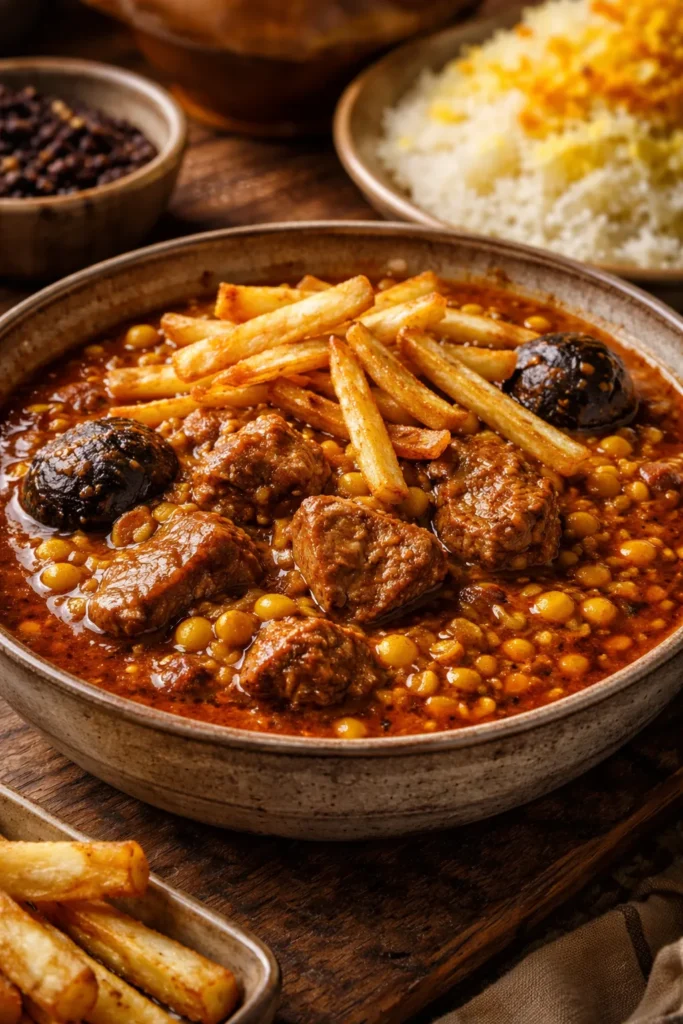
Khoresh Gheymeh is arguably the most beloved everyday Persian stew, the one that shows up at family dinners, at sofre spreads laid out for guests, and at funerals and celebrations alike. It’s more accessible than Ghormeh Sabzi in flavor — warmer, slightly sweet from the tomato base, and unmistakably savory — which makes it an excellent entry point into Persian cooking.
The defining ingredients here are yellow split peas (lapeh) and dried limes. The split peas break down partially during cooking, lending the stew a thick, velvety body. The dried limes do their usual work of adding a background tartness that lifts what would otherwise be a very rich, heavy stew into something bright and craveable.
What Makes It Special
Traditional versions are topped with crispy homemade potato fries — thin-cut, golden, and stacked over the stew just before serving. This might sound unusual, but the textural contrast between the silky stew and the crunchy fries is genuinely one of the best things you’ll experience in Persian food. Don’t skip the fries.
Key Ingredients and Method
- 1½ pounds bone-in or boneless lamb shoulder, cut into pieces
- ¾ cup yellow split peas, soaked in cold water for 30 minutes
- 4 dried limes, pierced with a knife
- 2 tablespoons tomato paste
- 1 large onion, finely chopped
- 1 teaspoon turmeric
- ½ teaspoon ground cinnamon
- Salt and black pepper
- 2 tablespoons olive oil or ghee
Brown the onion in oil until deep golden, then add the lamb and brown on all sides. Stir in the turmeric, cinnamon, and tomato paste and cook for 2 minutes. Add the soaked and drained split peas, the dried limes, and enough water or broth to cover everything by about 2 inches. Simmer over low heat for 1½ to 2 hours, until the lamb is completely tender and the split peas have softened but still hold their shape. Season generously and serve over saffron-scented basmati with a pile of crispy fries on top.
3. Khoresh Fesenjan — Pomegranate and Walnut Chicken Stew
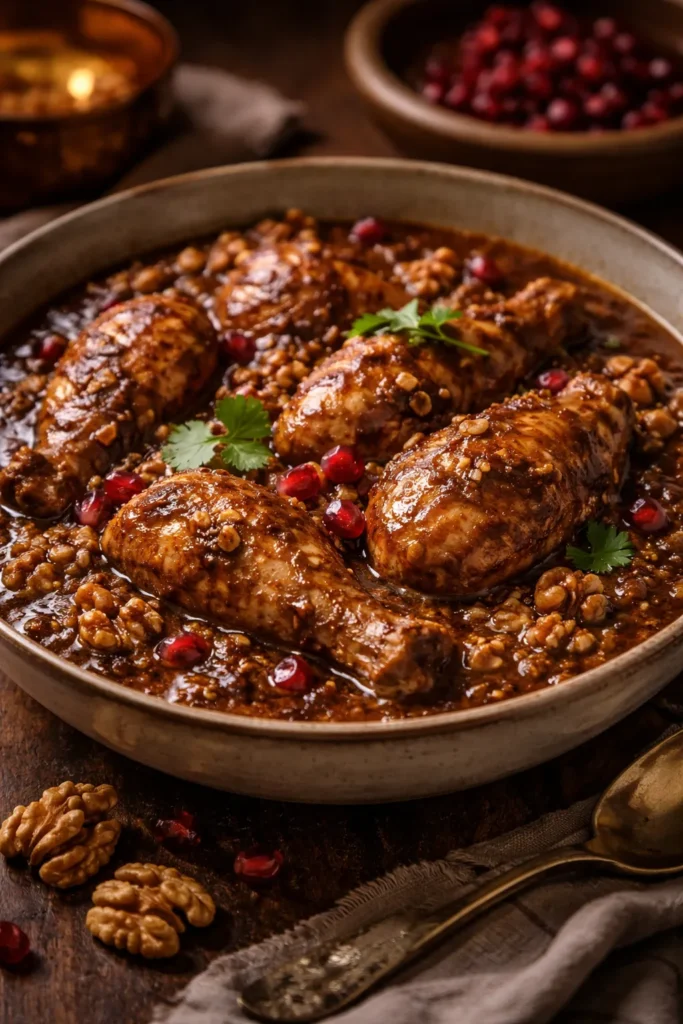
If Ghormeh Sabzi is the king of Persian stews, Fesenjan is unquestionably the queen. This is the stew that tends to stop non-Persian diners mid-bite, fork suspended, genuinely struggling to identify what they’re tasting. The sauce is built from two ingredients that seem almost absurdly simple: ground walnuts and pomegranate molasses. The result is something so rich, tangy, nutty, and deeply savory that it barely resembles anything in the usual Western flavor vocabulary.
The key to Fesenjan is cooking the walnuts correctly. You’ll toast and grind them first — the oils that release during toasting become the fat base of the sauce. Combined with pomegranate molasses, which is sour and almost bittersweet, the sauce becomes an intensely complex coating for the chicken that thickens beautifully over a long, slow simmer.
Balancing Sweet and Sour
The biggest variable in Fesenjan is finding the right sweet-to-sour balance for your palate. Pomegranate molasses brands vary wildly in their tartness. Taste the sauce after 30 minutes of simmering and adjust: if it’s too sour, add a teaspoon of honey or a tablespoon of pomegranate juice; if it needs more punch, a squeeze of lemon juice and an extra tablespoon of pomegranate molasses will sharpen it right up.
What You’ll Need
- 4 bone-in, skin-on chicken thighs and drumsticks
- 2 cups (about 200g) walnuts, lightly toasted
- 3-4 tablespoons pomegranate molasses, to taste
- 1 large onion, finely chopped
- 1 cup chicken or vegetable broth
- ½ teaspoon turmeric
- ½ teaspoon ground cinnamon
- Pinch of ground cardamom
- Salt and pepper
- Pomegranate arils for serving
Grind the toasted walnuts in a food processor until they resemble coarse breadcrumbs — don’t go all the way to a paste. Cook the onion in oil until soft and golden, brown the chicken pieces all over, then add the ground walnuts, pomegranate molasses, broth, and spices. Cover and simmer over low heat for 45 minutes to an hour, until the sauce is thick and glossy and the chicken is falling-tender. Scatter fresh pomegranate arils over the top just before serving, and pair with plain saffron rice to balance the intensity of the sauce.
4. Persian Herb and Beef Stew with Turmeric and Lemon
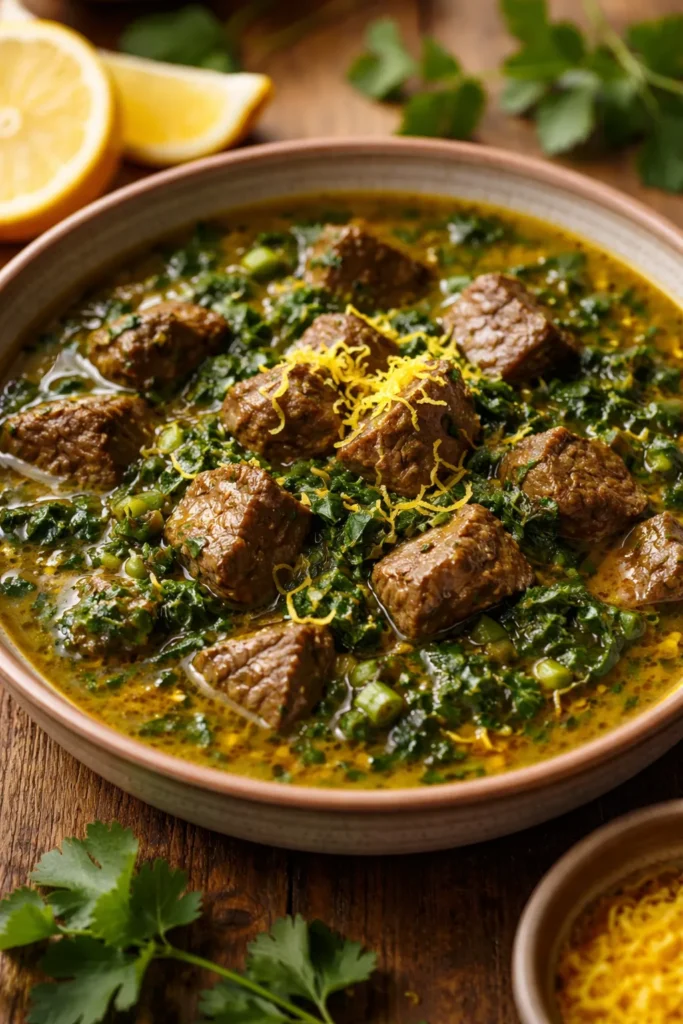
This is the more weeknight-friendly cousin of Ghormeh Sabzi — inspired by the same Persian flavor profile of herbs and lemon but built around beef chuck, white beans, and a shorter cooking time. It’s bright, fresh, and surprisingly light for a beef stew, with the herbs stirred in at the very end to preserve their green color and vibrancy.
The turmeric here does double duty. It seasons the beef with a warm, earthy depth and turns the broth a beautiful golden color that makes the final bowl look as good as it tastes. A generous amount of lemon zest and lemon juice keeps everything from feeling heavy, cutting through the richness of the beef the way a squeeze of citrus lifts a cream sauce.
Three Ways to Cook It
This recipe works in a slow cooker (6-8 hours on low), an oven (2½ to 3 hours at 325°F), or an Instant Pot (35 minutes on high pressure). The slow cooker version produces the most deeply flavored result, but the Instant Pot version is genuinely impressive for a weeknight — the beef comes out tender and not at all chewy, which is a testament to how pressure cooking handles cheap cuts.
Ingredients
- 3 pounds beef chuck, trimmed and cubed
- ¼ cup extra virgin olive oil
- 1 yellow onion, chopped
- 3 cloves garlic, minced
- 1 teaspoon ground turmeric
- ½ teaspoon crushed red pepper flakes
- 2 teaspoons lemon zest plus 2 tablespoons lemon juice
- 3-4 cups low-sodium beef broth
- 1 can (14 oz) fire-roasted diced tomatoes
- 1 can (14 oz) white beans, drained
- 2 cups baby spinach
- ½ cup fresh cilantro, roughly chopped
- ½ cup fresh parsley, roughly chopped
- ¼ cup fresh dill, roughly chopped
- 1 tablespoon chopped chives
- Crumbled feta or goat cheese, for serving
- Cooked basmati rice, for serving
Sear the seasoned beef in olive oil until well-browned — don’t rush this step, and don’t crowd the pan. Transfer to your cooking vessel of choice with the onion, garlic, spices, lemon, broth, and tomatoes. Cook using whichever method fits your schedule. In the final stretch of cooking, stir in the white beans, spinach, and all the fresh herbs. A sprinkle of crumbled goat cheese over each bowl adds a creamy, tangy finish that’s not traditional but, frankly, makes this dish even better.
5. Iranian Beef and Green Bean Stew with Warm Spice Blend
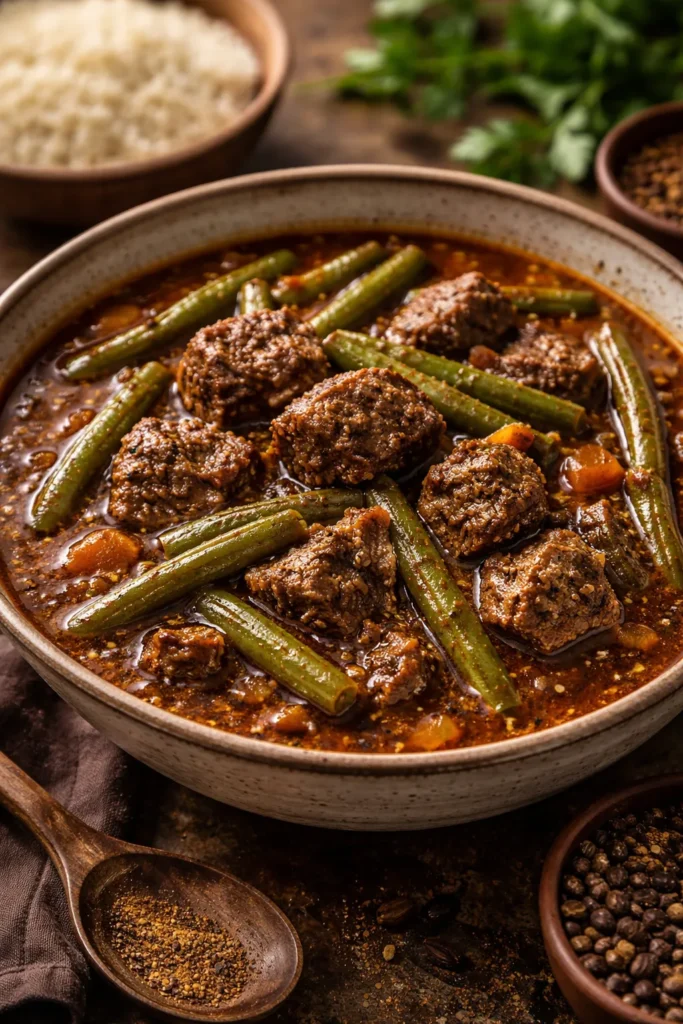
This is a home-cook’s stew in the truest sense — the kind of recipe that gets passed between neighbors and friends rather than appearing in restaurant menus. It uses a custom spice blend that’s closer to a Persian advieh than to the herb-forward stews above, layering ground cumin, coriander, cloves, cardamom, nutmeg, and cinnamon into a warm, fragrant seasoning that smells extraordinary from the moment it hits the hot pan.
The smart move here is making a larger batch of the spice blend upfront. The full recipe produces about half a cup of the mix, but you only need 1 tablespoon per pot of stew — which means you’re set for eight more batches. Store the rest in an airtight jar away from direct light, and it’ll stay potent for up to six months.
The Spice Blend
- 2 tablespoons ground cumin
- 2 tablespoons freshly ground black pepper
- 1 tablespoon ground coriander
- 1 tablespoon ground cloves
- ½ teaspoon ground cardamom
- 1 to 1½ teaspoons freshly grated nutmeg
- Pinch of ground cinnamon
Mix everything together and store in a sealed jar. Use 1 tablespoon per batch of stew.
The Stew
- ¼ cup olive oil
- 2 medium onions, chopped
- 2 cloves garlic, minced
- 2 pounds lean beef (trimmed chuck or round), cut into 1-inch cubes
- 2 medium tomatoes, seeded and chopped
- ⅓ cup fresh cilantro, chopped
- 2 cups beef broth
- 1 package (16 oz) frozen cut green beans
- 1 tablespoon of the spice blend
- Salt to taste
Brown the onion and garlic in olive oil, then add the beef and cook until browned on all sides. Add the tomatoes, cilantro, salt, and the tablespoon of spice blend. Cook and stir for a minute, then pour in the broth and bring to a boil. Reduce the heat, cover, and simmer for 90 minutes. Add the green beans and cook for a further 30 minutes. The beans should be tender but not mushy, and the broth should have thickened into a deeply flavored, warmly spiced sauce. Serve over basmati rice — and if you want to attempt the legendary golden crust at the bottom of the pot (see Recipe 8 below), this is a great stew to pair it with.
6. Zereshk Polo Ba Morgh — Saffron Chicken with Caramelized Barberry Rice
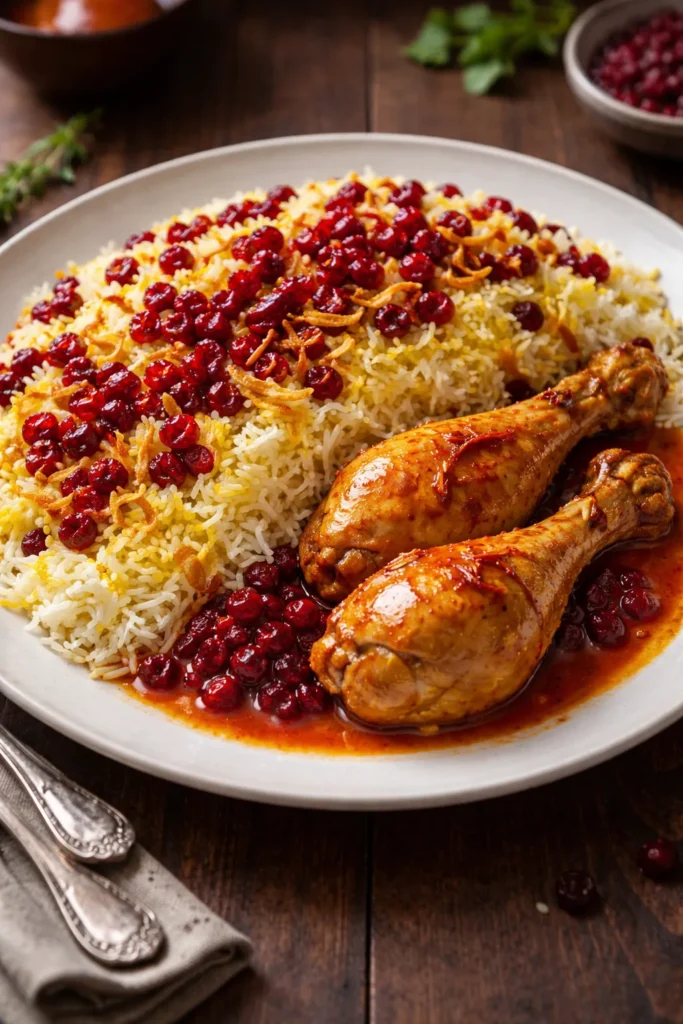
This dish is often described as the Iranian equivalent of a Sunday roast — the meal you make when you want to honor your guests, when there’s something to celebrate, or when you simply want to eat something beautiful. Zereshk Polo Ba Morgh translates to barberry rice with chicken, and every element of it is deliberately elegant.
Zereshk — barberries — are tiny dried red berries that taste sharply sour and bright, like a cranberry crossed with a pomegranate seed. They’re caramelized with butter, fried onions, and a pinch of saffron until they plump up and glisten, then layered through and over saffron-scented basmati rice. The chicken is braised separately in a saffron and onion sauce until it’s silky and tender. Served together, this is a genuinely stunning plate of food.
Sourcing Barberries
Zereshk is available at Persian or Middle Eastern grocery stores and online. They need to be picked through carefully before use — small stones occasionally slip through during drying — then soaked briefly in cold water to soften. Do not substitute with dried cranberries, which are far too sweet and will completely alter the flavor balance of the dish.
Key Steps
- Brine and poach or braise the chicken pieces in a turmeric-and-onion base, adding saffron water in the last 15 minutes of cooking
- Cook basmati rice using the parboil-and-steam method (see Recipe 8 for full tahdig technique)
- Sauté the barberries with butter and a pinch of saffron just until they plump — about 2 minutes on low heat
- Layer the finished rice in a serving dish, interspersing barberry mixture throughout and piling extra on top
- Arrange the chicken alongside and pour the cooking juices over everything
The visual contrast of the golden saffron rice studded with ruby-red barberries is one of the most striking things you’ll put on a dinner table.
7. Baghali Polo Ba Mahicheh — Fava Bean and Dill Rice with Lamb Shanks
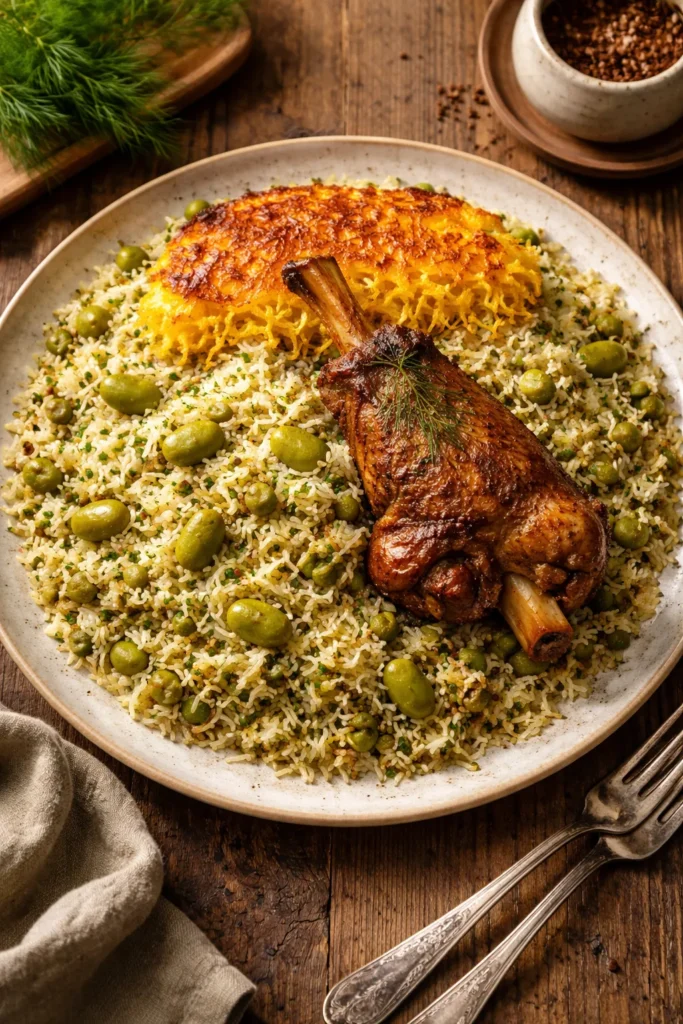
Baghali Polo Ba Mahicheh is the kind of dish that becomes a milestone in a cook’s memory — the first time you smell dill and fava beans folded through saffron-scented basmati rice while a lamb shank braises in the oven until its meat falls away from the bone at the gentlest touch. This is a Persian dinner-party centerpiece, and it earns that status completely.
The rice is the showpiece here. Fava beans (broad beans) and chopped fresh dill get layered with the parboiled basmati before it steams — the dill perfumes every grain, the beans add a sweet, grassy character, and the saffron turns parts of the rice a beautiful amber yellow. A tahdig crust forms at the bottom, which gets flipped out onto a serving platter like a golden crown before the fluffy rice goes on top.
Preparing the Lamb Shanks
- Season 2 lamb shanks generously with salt, pepper, and turmeric
- Brown on all sides in a heavy pot in olive oil over high heat
- Add 1 large onion (quartered), 4 cloves garlic, 1 teaspoon ground cinnamon, ½ teaspoon ground cardamom, a pinch of saffron dissolved in 2 tablespoons of warm water, and enough broth to come halfway up the shanks
- Cover and braise in a 325°F oven for 2½ to 3 hours, turning once, until the meat is completely tender and pulling away from the bone
- Let the cooking juices reduce on the stovetop for 10 minutes to concentrate them into a sauce
The Fava Bean Dill Rice
Follow the standard Persian parboil-and-steam method. After parboiling the basmati for 7-10 minutes until the grains are soft on the outside but still firm at the center, drain and rinse. For the tahdig base, heat oil and butter in a nonstick pot, add a layer of lavash or thin potato slices, then pile the rice over the top in alternating layers with 1½ cups of thawed fava beans and 1 cup of chopped fresh dill. Wrap the lid in a clean kitchen towel to trap steam, and cook on medium-low for 45 minutes to an hour.
Serve the lamb shank directly over the rice on a large platter, with the cooking juices spooned liberally over everything.
8. Persian Herb and Chickpea Stew with Basmati Rice
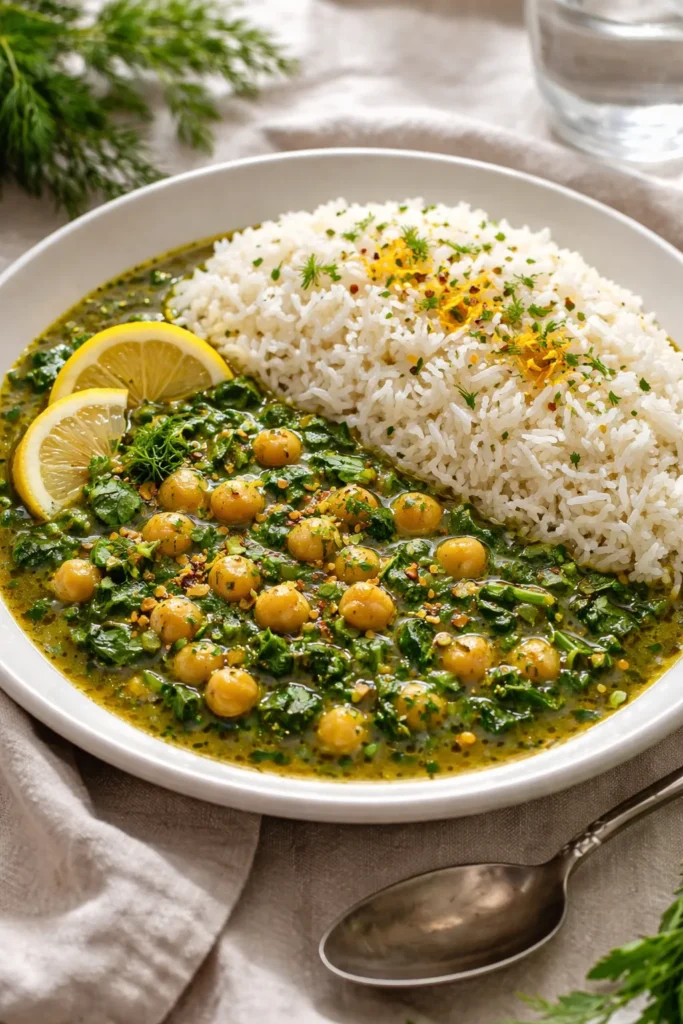
This is the weeknight stew that earns a permanent place in the rotation. It comes together in about 30 minutes in a single pan, it’s built around pantry ingredients you can keep on hand indefinitely, and it delivers enough flavor to make it feel like far more effort was involved than actually was. It’s also naturally plant-based, which makes it one of the most versatile recipes in this list.
The technique here is borrowed directly from traditional Persian herb stews: the chickpeas get cooked in olive oil until they develop some color and a light crispiness, which gives them a texture that holds up against the broth rather than turning to mush. The herbs — cilantro, parsley, dill, and chives — go in at the very end, just long enough to wilt slightly while keeping their bright green color and fresh flavor.
What Sets This Apart From Other Chickpea Stews
Most chickpea stews add spices to build flavor. This one uses the Persian technique of treating the herbs as the primary seasoning — they’re not a garnish but the actual body of the dish. The turmeric warms the broth to a golden color. The lemon zest adds a lifted citrus note to what would otherwise be a flat, one-dimensional base. Crushed red pepper gives a gentle background heat that you feel rather than taste.
Ingredients and Method
- ¼ cup extra virgin olive oil
- 1 yellow onion, chopped
- 2 cans (14 oz each) chickpeas, drained
- 3 cloves garlic, minced
- 1 teaspoon ground turmeric
- ½ teaspoon crushed red pepper flakes
- 2 teaspoons lemon zest
- 2 tablespoons lemon juice
- 3-4 cups low-sodium vegetable broth
- 2 cups baby spinach
- ½ cup fresh cilantro, roughly chopped
- ½ cup fresh parsley, roughly chopped
- ¼ cup fresh dill, roughly chopped
- 1 tablespoon chopped chives
- Plain Greek yogurt and fresh mint for serving
- Cooked basmati rice for serving
Heat the oil over medium heat, cook the onion until soft, then add the chickpeas and cook until they begin to develop some color — about 5 minutes. Add the garlic, turmeric, red pepper flakes, and lemon zest and cook for another minute. Pull out about 1 cup of the chickpeas and set them aside (they’ll go on top as a crunchy garnish). Add the broth and lemon juice, bring to a boil, then reduce to a low simmer and stir in all the herbs and the spinach. After 10-15 minutes, the spinach is wilted, the broth is fragrant, and dinner is ready. Serve over rice with a spoonful of Greek yogurt, the reserved crispy chickpeas scattered on top, and a few torn fresh mint leaves.
Mastering Persian Basmati Rice — The Foundation Every Stew Needs
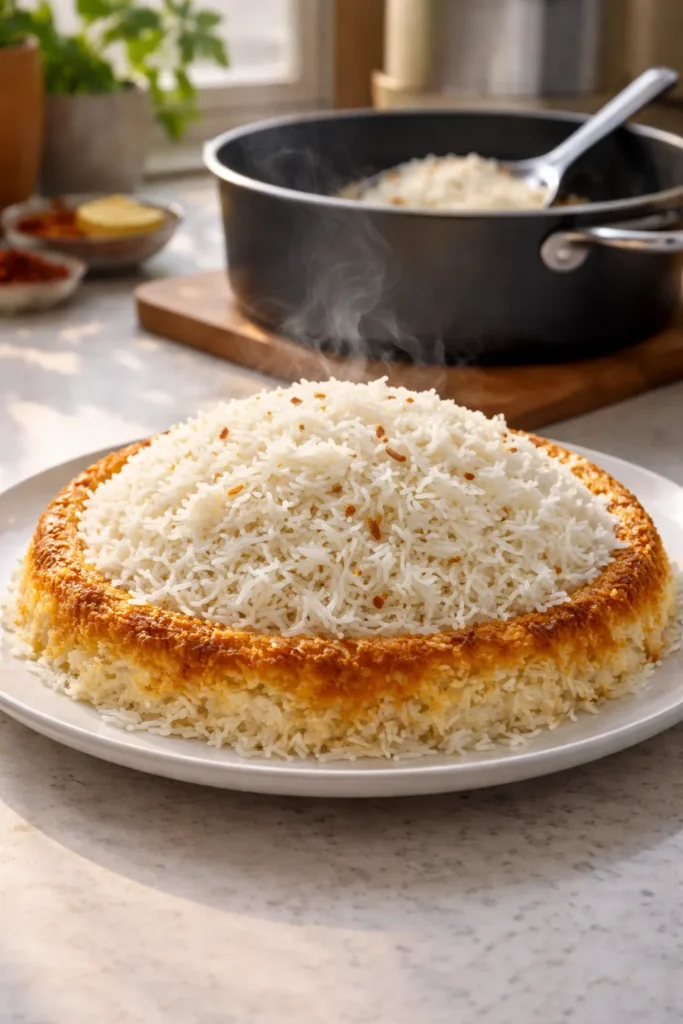
Every recipe above gets better when the rice is done properly. Persian steamed basmati isn’t boiled and drained the way you might cook rice for a stir-fry. It uses a two-stage method — parboiling followed by slow steaming — that produces grains so long, fluffy, and separate that they almost look like tiny, polished crystals.
The Parboil Stage
Rinse the basmati under cold water three or four times until the water runs noticeably clearer. Bring a large pot of generously salted water to a rolling boil — use more water than you think you need, as the grains need room to move. Add the rice and cook at a full boil for 7 to 10 minutes, checking frequently. The grain is ready for the next stage when it’s tender and soft all the way around the edges but still has a firm, slightly chalky bite at the very center. Drain immediately through a fine-mesh sieve and rinse briefly with cool water to stop the cooking.
The Steam Stage and Tahdig
This is where the magic happens. Use a nonstick pot — this is genuinely non-negotiable for getting the tahdig crust right, because even a small amount of sticking can ruin the flip. Heat a generous amount of oil and butter in the pot over medium-high heat. For a yogurt-and-saffron tahdig, mix 1 cup of the parboiled rice with 2 tablespoons of plain yogurt, 2 tablespoons of neutral oil, and 2 tablespoons of saffron water (saffron threads steeped in warm water for 10 minutes). Spread this mixture over the bottom of the pot — this is your crust layer.
Pile the remaining rice over the top in a mound, working the pile into a loose dome rather than pressing it down flat. Wrap the pot lid tightly in a clean kitchen towel (a damkesh) to absorb rising steam and prevent it from dripping back onto the rice. Cover the pot, cook on medium heat for 5 minutes to build steam, then reduce to the lowest possible heat and cook for 45 minutes to an hour. The towel-wrapped lid and the low heat work together to steam the rice from above while the bottom layer crisps into a golden crust.
To serve, place a large flat plate or platter over the pot and invert it in one confident move. If everything has gone to plan, the tahdig will come out golden and intact, sitting on top of a mound of fluffy rice. If some of it sticks to the pot, use a wooden spoon to help it free — and remember that even a broken tahdig tastes spectacular.
Saffron: The Non-Negotiable Ingredient
Good Persian rice needs saffron. Not a huge amount — a ½ teaspoon of threads steeped in ¼ cup of warm water for at least 10 minutes will do beautifully. Drizzle a few tablespoons of the deep amber saffron water over the top of the rice before covering the pot, and use the rest to color specific layers or add to the cooking stew. The flavor it adds is subtle and floral, but the visual effect — those threads of golden color running through white grains — is what makes Persian rice look the way it does.
Essential Tips for Cooking Persian Stews Successfully
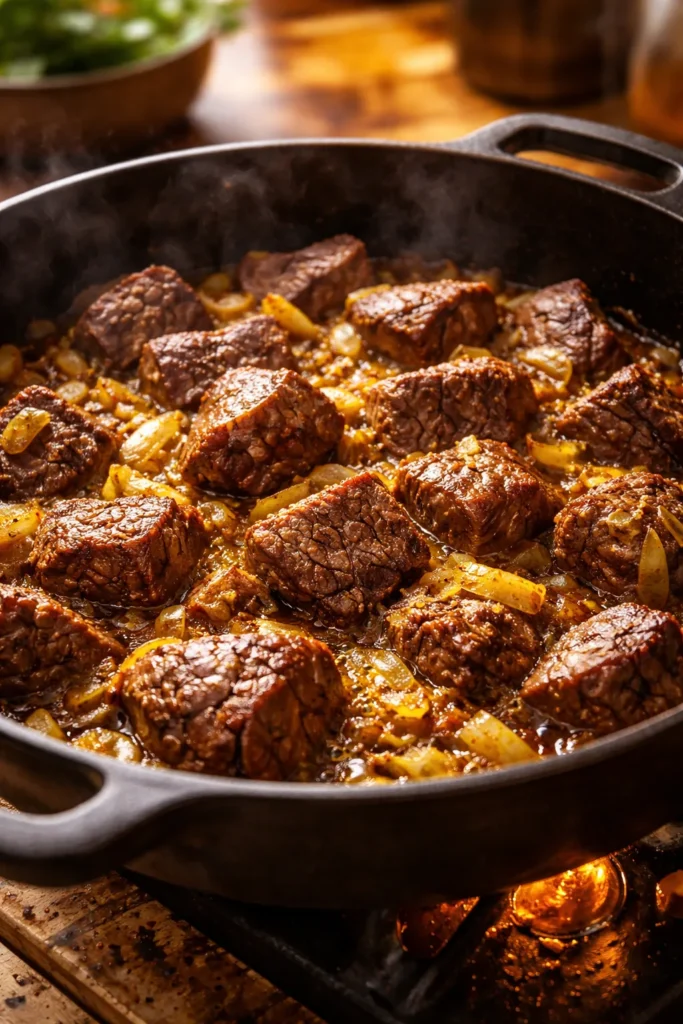
The biggest mistake first-timers make with Persian stews is rushing them. These are long-simmering dishes by design. The flavors don’t arrive until the collagen in the beef or lamb has fully broken down, the dried limes have released their musky tartness into the broth, and the herbs have had time to move from sharp and grassy to something rounder and more complex.
That said, a few practical adjustments make a real difference.
On Browning the Meat
Brown it properly or don’t bother starting. Pat the meat dry with paper towels before it goes into the pan — wet meat steams instead of searing, and you’ll lose the Maillard crust that gives the final stew its savory backbone. Work in batches if necessary. A good sear takes 2-3 minutes per side over high heat; don’t flip early, and resist the urge to move the meat around.
On Building the Spice Base
Turmeric goes in with the onions and meat, not later. It needs fat and heat to bloom properly — added to a watery liquid, it just floats on the surface. The same applies to any spice blend: let it cook in the hot oil for at least 60 seconds before adding liquid, long enough for the aromatics to release their volatile oils and deepen in flavor.
On Seasoning Throughout
Persian stews are seasoned aggressively, but the seasoning happens in layers. Add salt when the onions go in, again when the liquid is added, and again right before serving after the flavors have had time to develop and concentrate. Lemon juice goes in at the end — always at the end — because it loses its brightness and can turn slightly bitter if it simmers for too long.
On Leftovers
Every stew in this list is better the next day. The herbs mellow, the proteins relax further into the broth, and the spices integrate into something more harmonious than what you tasted the night before. Make double batches when you can, and refrigerate in airtight containers for up to 4 days or freeze for up to 3 months. Reheat gently over low heat with a splash of broth to restore the original consistency.
What to Serve Alongside Iranian Stews
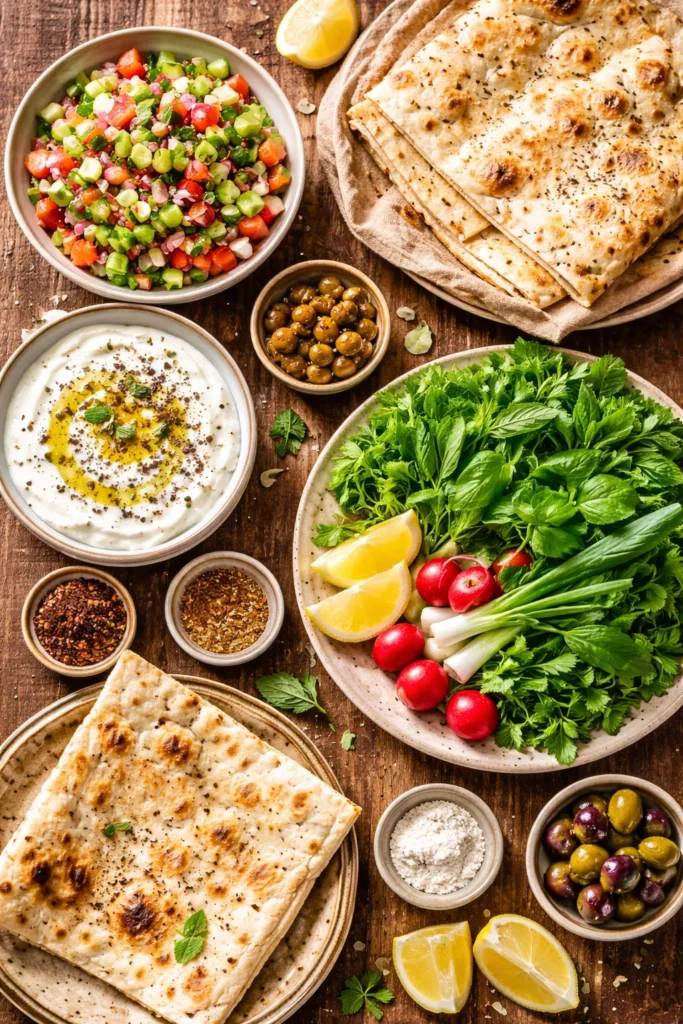
The stew-over-rice combination is complete on its own, but a few accompaniments take the meal from dinner to full Persian spread.
Salad Shirazi is the classic choice — a finely chopped salad of cucumber, tomato, and onion dressed with lime juice, olive oil, dried mint, and a pinch of salt. Its fresh acidity cuts through the richness of heavier stews like Fesenjan and Gheymeh beautifully.
Fresh flatbread — naan-e sangak or any warm flatbread — is the other essential. It’s used to scoop up extra stew, to soak up the sauce at the bottom of the bowl, and to eat alongside the tahdig. There’s a reason virtually every Persian recipe blogger recommends pairing these stews with naan: the combination is straightforwardly one of the best things you can eat at a dinner table.
A bowl of plain Greek yogurt on the side works as a cooling counterpoint to the spiced stews, particularly for the herb and chickpea version and the beef stew with turmeric and lemon. Some families serve a small dish of fresh herbs — sabzi khordan — a raw mix of mint, basil, tarragon, radishes, and spring onions placed on the table for guests to eat between bites, the way Europeans might offer a side salad.
Final Thoughts
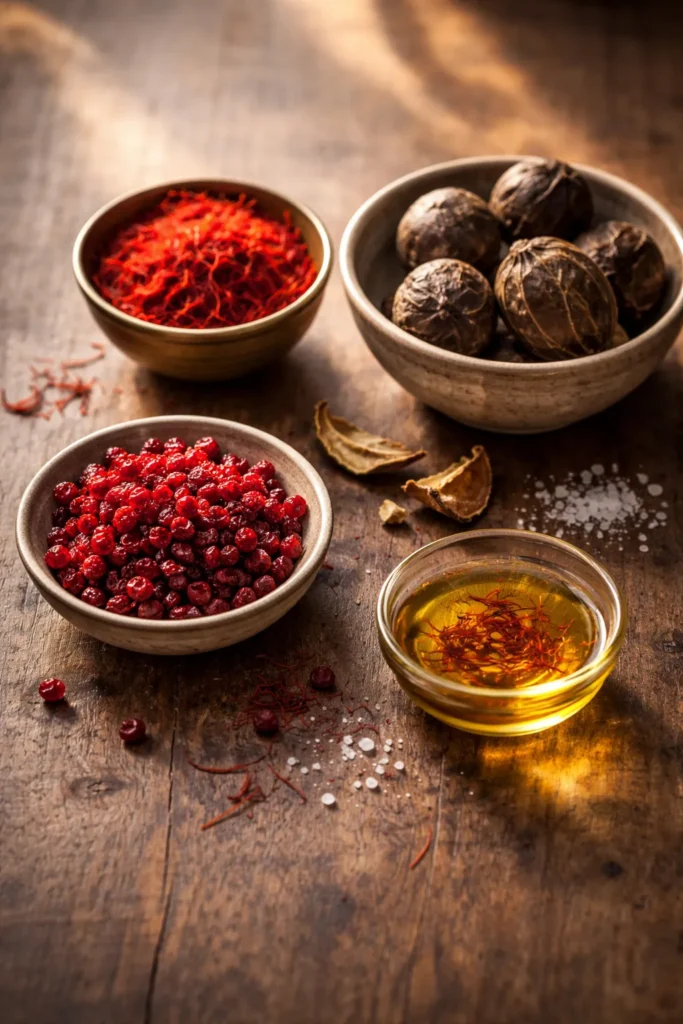
Persian stew and rice cooking rewards investment — of time, of attention, and of a willingness to seek out ingredients that might not be in your usual grocery store. Dried limes, barberries, fenugreek leaves, and good saffron are worth the effort of sourcing because they simply cannot be approximated with substitutes. Once you have them in your pantry, the barrier to making these dishes again drops dramatically.
Start with the herb and chickpea stew if you want something achievable on a weeknight. Move to the herb and beef stew once you’re comfortable with the flavor profile. Work your way toward Ghormeh Sabzi when you’re ready for something that will genuinely change how you think about what a stew can be.
And practice the rice. The tahdig is technically the simplest element of Persian cooking, but it takes a few attempts to get the heat right, to learn exactly when the crust has developed without burning, and to find the confidence to flip the pot decisively. When you finally see that perfect golden crust come out in one clean piece, it feels like a genuine achievement — because it is one.