South African food doesn’t get nearly enough attention on the global stage, and that’s a genuine shame. This is a cuisine shaped by Dutch settlers, Cape Malay spice traders, indigenous African traditions, Indian laborers who built the railways, and Portuguese fishermen who mapped the coastline — all layered together into something that’s bold, deeply comforting, and unlike anything else you’ll find anywhere in the world.
What makes cooking South African food at home so rewarding is that most of these dishes weren’t born in professional kitchens. They came from braai fires, grandmother’s potjies, township street stalls, and Cape Malay homes in the Bo-Kaap. The techniques are accessible, the ingredients are mostly pantry staples, and the flavors punch well above their weight. A pot of bobotie filling your kitchen with turmeric and apricot jam. A tray of malva pudding sending a wave of caramel warmth through the house. A pan of roosterkoek dough puffing up beautifully before hitting the grill.
These ten dishes cover the full range of what South African cooking looks and tastes like — savory braai staples, slow-cooked stews, fried street food, and iconic desserts. Some are weeknight-easy. Others reward a slower Sunday afternoon. All of them are worth making, and every single one will give you a genuinely delicious meal at the end.
Table of Contents
- 1. Bobotie — South Africa’s Most Famous Baked Dish
- Ingredients
- Instructions
- Tips for Getting It Right
- 2. Malva Pudding — The Cape Dutch Dessert That Wins Every Time
- Ingredients
- Instructions
- 3. Roosterkoek — Braai Bread You’ll Make on Repeat
- Ingredients
- Instructions
- 4. Chakalaka — The Spiced Relish That Goes With Everything
- Ingredients
- Instructions
- 5. Melktert (Milk Tart) — The Dutch Legacy That Became a South African Icon
- Ingredients
- Instructions
- 6. Vetkoek with Curried Mince — South Africa’s Beloved Fried Bread
- Ingredients
- Instructions
- 7. Tomato Bredie — The Cape Malay Slow-Cooked Stew
- Ingredients
- Instructions
- 8. Sosaties — Lamb and Apricot Skewers for the Braai
- Ingredients
- Instructions
- 9. Pampoenkoekies — Spiced Pumpkin Fritters in Syrup
- Ingredients
- Instructions
- 10. Peppermint Crisp Tart — No-Bake, No-Fuss, Completely Irresistible
- Ingredients
- Instructions
- What These Dishes Have in Common
- Key Ingredient Notes Before You Start
- Serving Suggestions for a South African Spread
- Final Thoughts
1. Bobotie — South Africa’s Most Famous Baked Dish
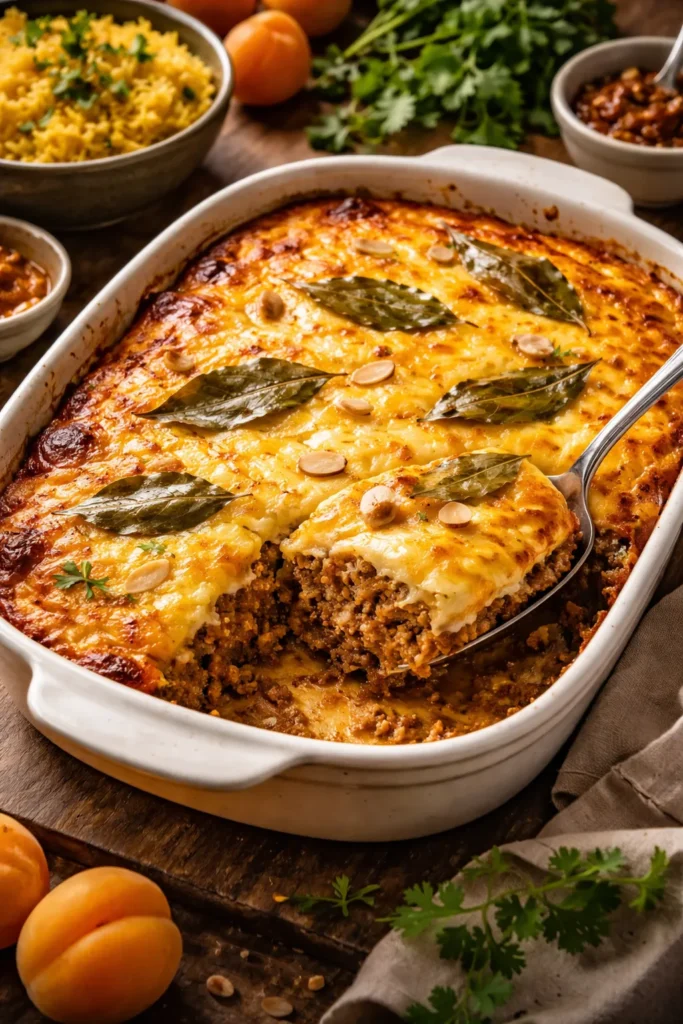
If South Africa has a national dish, bobotie is the most credible candidate. It was selected for an international cookbook published by the United Nations Organisation as far back as 1951, and its flavor profile tells the whole story of Cape culinary history in a single bite. Spiced mince, sweetened with dried fruit, topped with a silky egg custard and baked until just set — it sounds unusual until you actually eat it, and then it makes perfect, complete sense.
The dish traces its roots to the Cape Malay community, the descendants of Indonesian and Malaysian people brought to the Cape as slaves and indentured servants from the 17th century onward. They brought turmeric, cumin, coriander, cinnamon, and the sweet-sour balance that defines so much of Cape cooking. Bobotie is the most visible expression of that culinary inheritance, and it’s been eaten in South African homes across every culture for centuries.
What makes bobotie work is the contrast between the savory-spiced mince base and the mildly sweet, custardy top. The apricot jam in the mince and the egg-milk bake on top shouldn’t work on paper. They absolutely do in practice. Serve it with yellow rice (geelrys) and a simple chutney, and you have a meal that tastes like a whole continent’s history.
Ingredients
For the Mince:
- 500g beef mince (or a mix of beef and lamb)
- 1 thick slice of white bread, crusts removed
- 250ml (1 cup) full-cream milk, divided
- 1 medium onion, finely chopped
- 2 tablespoons sunflower oil
- 2 tablespoons curry powder (mild to medium, your preference)
- 1 teaspoon turmeric
- 1 teaspoon salt
- 1 teaspoon sugar
- ¼ teaspoon black pepper
- 2 tablespoons lemon juice
- 2 tablespoons apricot jam (or chutney)
- 1 tablespoon Worcestershire sauce
- 1 egg
- A small handful of raisins or chopped dried apricots (optional but traditional)
- 4–6 fresh or dried bay leaves (lemon leaves are traditional if you can find them)
For the Custard Topping:
- 2 large eggs
- 100ml (just under ½ cup) full-cream milk
- ¼ teaspoon turmeric
- Pinch of salt
Yield: Serves 4–6 | Prep Time: 15 minutes | Cook Time: 40 minutes | Total Time: 55 minutes | Difficulty: Beginner — straightforward technique with pantry-friendly ingredients.
Instructions
Prepare the Base:
-
Preheat the oven to 180°C (350°F). Grease a medium baking dish (approximately 25x20cm) and set aside.
-
Soak the bread in 150ml of the milk for 5 minutes, then squeeze out the excess milk with your hands and set the soaked bread aside. Reserve the milk.
-
Heat the oil in a large frying pan over medium heat. Add the onion and cook, stirring occasionally, for 6–8 minutes until soft and lightly golden at the edges.
-
Add the curry powder and turmeric to the onion and stir constantly for 1 minute until the spices are fragrant and coating the onion.
-
Add the mince to the pan and break it up with a wooden spoon. Cook over medium-high heat for 8–10 minutes, stirring frequently, until the meat is browned throughout and no pink remains.
-
Reduce the heat to medium-low. Add the lemon juice, apricot jam, Worcestershire sauce, sugar, salt, and pepper. Stir well to combine. Add the raisins or dried apricots if using.
-
Squeeze the soaked bread thoroughly and add it to the meat mixture. Stir well, using the back of your spoon to break the bread into the meat until it’s fully incorporated. The mixture should be moist but not wet — if it looks dry, add a splash of the reserved milk.
-
Remove the pan from the heat. Beat 1 egg and stir it into the meat mixture. Taste and adjust seasoning — it should be lightly sweet, warmly spiced, and savory.
-
Spoon the mince mixture into the greased baking dish and press it into an even, compact layer. Tuck the bay leaves (or lemon leaves) down into the meat at intervals.
Make the Custard and Bake:
-
In a jug or bowl, whisk together the 2 eggs, 100ml milk, turmeric, and a pinch of salt until smooth and uniform in color.
-
Pour the custard mixture evenly over the mince layer. Do not stir — the custard should sit on top as a separate layer.
-
Bake uncovered for 30–35 minutes until the custard is set and lightly golden on top and pulling away from the edges slightly.
-
Rest for 5 minutes before serving. Remove the bay leaves before plating. Serve with yellow rice, a spoonful of chutney, and a simple green salad.
Tips for Getting It Right
The bread soaked into the mince is not optional — it’s what gives bobotie its distinctive soft, almost creamy texture rather than the dry crumble of a regular mince bake. Don’t rush the onion stage either; under-cooked onion creates a harsh, raw flavor that overpowers the spices. And if your custard top cracks during baking, your oven is probably running hot — drop it by 10°C next time.
2. Malva Pudding — The Cape Dutch Dessert That Wins Every Time
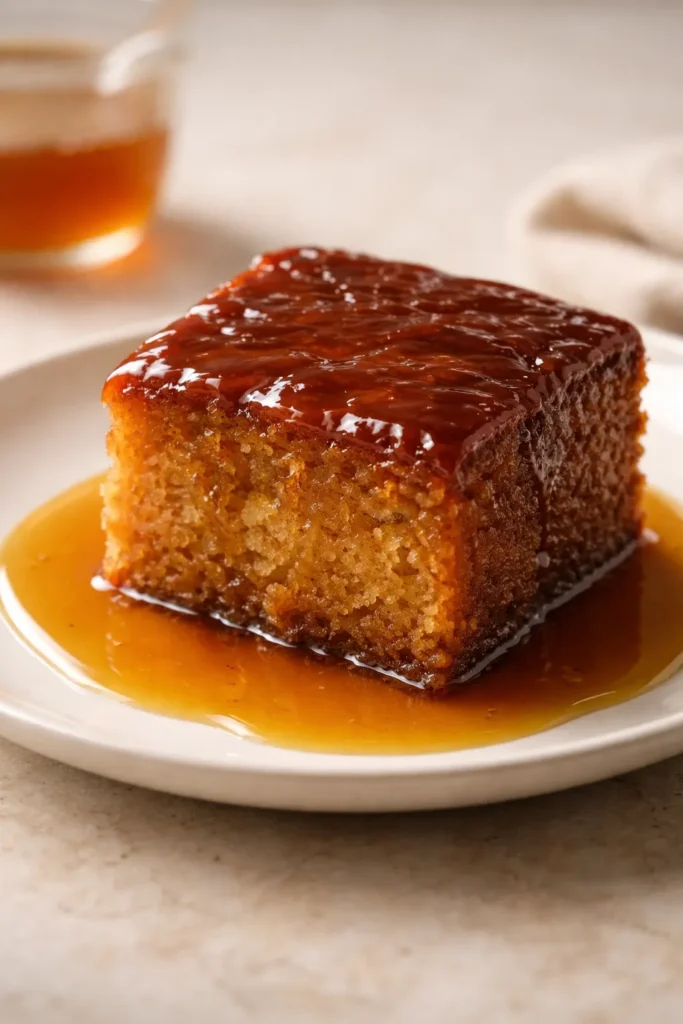
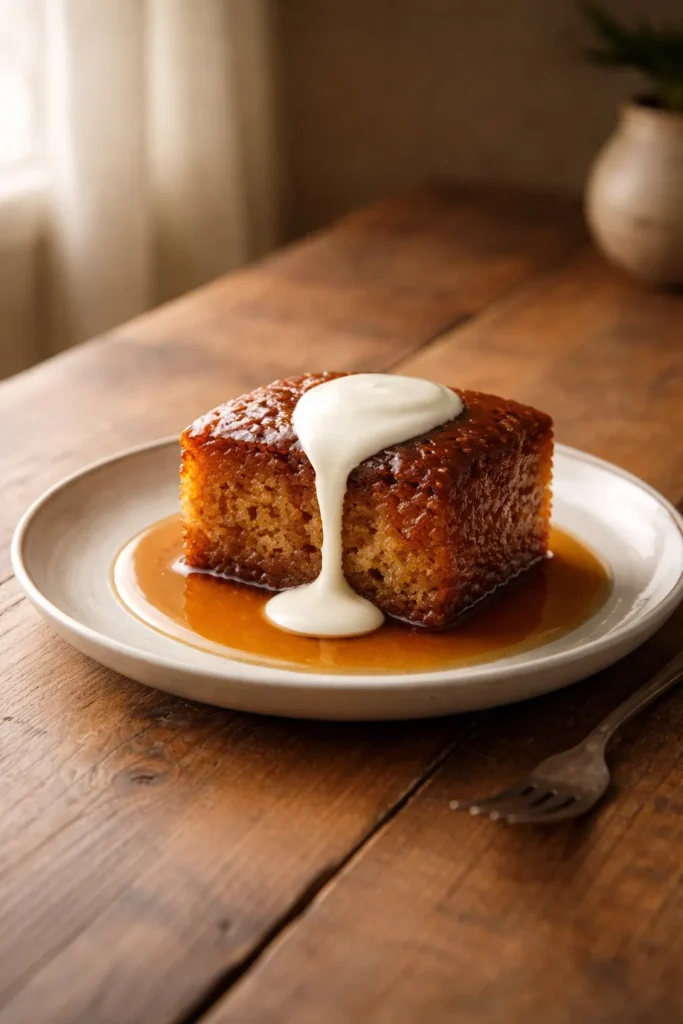
Ask any South African living abroad what they miss most about home food, and malva pudding is usually in the top three answers. It’s a dense, sticky, caramelized sponge pudding of Cape Dutch origin, and it’s often described as the country’s answer to British sticky toffee pudding — though malva devotees would argue it’s a step above.
The batter contains apricot jam, which caramelizes during baking and gives the pudding its characteristic dark, lacquered top. A hot, buttery sauce is poured over the pudding the moment it comes out of the oven, soaking through the sponge as it cools slightly. The result is somewhere between a pudding and a sauce-soaked cake — simultaneously crisp on top and completely yielding in the middle.
The word “malva” is thought to come from the Afrikaans word for marshmallow, a nod to the pudding’s soft, pillowy interior. Serve it warm with a generous pour of fresh cream, a scoop of vanilla ice cream, or both. It holds overnight beautifully and some people argue it’s even better the next day once the sauce has fully absorbed.
Ingredients
For the Pudding:
- 65ml (¼ cup) unsalted butter, softened
- 250ml (1 cup) white sugar
- 1 large egg
- 15ml (1 tablespoon) apricot jam
- 250ml (1 cup) self-raising flour
- 5ml (1 teaspoon) bicarbonate of soda
- 250ml (1 cup) full-cream milk
- 15ml (1 tablespoon) white wine vinegar
For the Butter Sauce:
- 1 x 385g can evaporated milk
- 100ml (just under ½ cup) sugar
- 50g unsalted butter
Yield: Serves 6–8 | Prep Time: 10 minutes | Cook Time: 40 minutes | Total Time: 50 minutes | Difficulty: Beginner — simple creaming method, no special equipment needed.
Instructions
-
Preheat the oven to 180°C (350°F). Grease a medium baking dish (approximately 25x20cm or a similarly sized round ovenproof dish) with butter.
-
In a large bowl, beat the softened butter and sugar together until pale and creamy, about 2–3 minutes by hand or 1 minute with an electric mixer.
-
Add the egg and beat well until fully combined. Add the apricot jam and mix in.
-
In a separate small bowl or jug, stir the bicarbonate of soda into the milk until dissolved. Add the vinegar to the milk and let it sit for 30 seconds — it will curdle slightly, and that’s exactly right.
-
Add the flour alternately with the milk mixture to the butter-sugar base, beginning and ending with flour. Mix gently until just combined. Do not overmix — a few small lumps are fine and will bake out.
-
Pour the batter into the prepared dish. It will be thinner than a standard cake batter. Bake for 35–40 minutes until the top is deep golden-brown, the edges are pulling away from the dish, and a skewer inserted in the center comes out clean.
-
While the pudding bakes, make the sauce: combine the evaporated milk, sugar, and butter in a small saucepan over medium heat. Stir constantly until the sugar dissolves and the butter melts, then simmer for 3 minutes. Remove from heat.
-
The moment the pudding comes out of the oven, use a skewer or fork to poke holes all over the surface. Pour the hot sauce evenly over the pudding — all of it. The sauce will look like too much. Pour it all in anyway. The sponge will absorb it.
-
Allow the pudding to rest for at least 10 minutes before serving so the sauce can be absorbed. Serve warm.
3. Roosterkoek — Braai Bread You’ll Make on Repeat

Roosterkoek (literally “grid cake” in Afrikaans) is a simple, pillowy bread that’s cooked over braai coals on a grid rather than in an oven. It’s essentially a flattened ball of dough that puffs up beautifully over medium coals, developing a slightly charred crust while staying soft and bread-like inside. Split one open and eat it immediately with butter — it’s one of those simple pleasures that’s hard to match.
The traditional recipe uses buttermilk to give the dough a slight tang and a tender crumb. You don’t need yeast because a combination of baking soda and cream of tartar provides the lift. The dough comes together in about five minutes, and the whole process from mixing to eating can be done in under an hour — which is perfect braai timing.
No braai? Roosterkoek adapts well to a griddle pan or even a cast iron pan on the stove. You lose a bit of the smoky character, but the bread itself is still excellent. They also work beautifully as burger buns, which is a very popular twist.
Ingredients
- 4 cups (500g) cake or all-purpose flour
- 1 teaspoon bicarbonate of soda (baking soda)
- 1 teaspoon cream of tartar
- ½ teaspoon fine salt
- 50ml (about 3½ tablespoons) cold butter, cut into cubes
- 375ml (1½ cups) buttermilk (or substitute: 1½ cups full-cream milk + 1½ tablespoons lemon juice, left to curdle for 5 minutes)
Yield: Makes 8–10 rolls | Prep Time: 15 minutes + 30 minutes rising | Cook Time: 20 minutes | Total Time: 65 minutes | Difficulty: Beginner — no yeast, no oven required.
Instructions
-
Sift the flour, bicarbonate of soda, cream of tartar, and salt together into a large bowl.
-
Add the cold butter cubes to the flour mixture. Rub the butter into the flour using your fingertips, lifting and crumbling as you go, until the mixture resembles coarse breadcrumbs with no visible butter pieces remaining.
-
Make a well in the center of the flour mixture. Pour in the buttermilk gradually, mixing with a fork or your hand as you go, until a firm but not sticky dough forms. You may not need all the buttermilk — add it slowly until the dough just comes together.
-
Turn the dough onto a lightly floured surface and shape into a smooth ball. Divide into 8–10 equal portions and roll each into a smooth ball, then flatten gently to about 2cm thick.
-
Cover the flattened dough pieces with a clean kitchen cloth and leave them to rest and rise for 20–30 minutes.
-
Cook over medium braai coals (you should be able to hold your hand 15cm above the grid for 4–5 seconds) for 8–10 minutes per side, until the surface is golden-brown and slightly charred in spots, and the bread sounds hollow when tapped on the underside. If coals are too hot, the outside will char before the center is cooked. Move the grid higher or wait for the coals to settle.
-
Serve immediately with butter, cheese, jam, or as a burger bun.
4. Chakalaka — The Spiced Relish That Goes With Everything
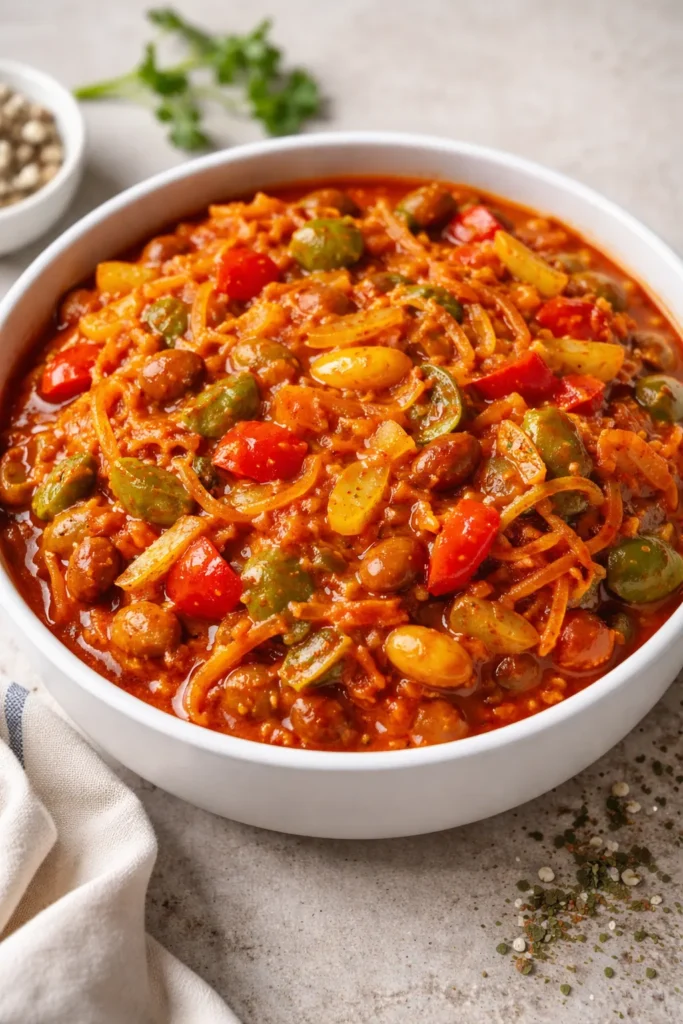
Chakalaka is a spiced vegetable relish that appears on tables across South Africa — braai tables, family dinners, and quick weeknight meals alike. It’s tangy, warmly spiced, packed with vegetables, and impossible to place neatly into a single culinary tradition. Its origins blend Zulu, Indian, and Cape Malay influences, and no two families make it the same way. The result is one of South Africa’s most democratic dishes.
The base always includes onion, garlic, tomato, peppers, and carrots. From there, cooks diverge — some add baked beans for substance, others include cabbage, green beans, or even hot peppers for serious heat. The spice mix typically centers on curry powder, though cumin, paprika, and fresh chilli are common additions.
Chakalaka punches above its weight as a condiment. A spoonful transforms a bowl of pap from a plain starch into something genuinely exciting. It sits beautifully alongside braai meat, pairs with grilled fish, works as a sandwich spread, and holds in the fridge for up to five days — actually improving as the flavors meld.
Ingredients
- 2 tablespoons sunflower oil
- 1 large onion, finely diced
- 4 garlic cloves, minced
- 1 thumb of fresh ginger, grated
- 1 large green pepper, finely diced
- 1 large red pepper, finely diced
- 2 medium carrots, grated
- 2 tablespoons curry powder (medium heat)
- 1 teaspoon paprika
- ½ teaspoon cumin
- 1–2 fresh red chillies, finely sliced (adjust to heat preference)
- 2 medium tomatoes, roughly chopped (or 1 x 400g can chopped tomatoes)
- 1 x 400g can baked beans in tomato sauce
- Salt and black pepper to taste
- Fresh coriander or flat-leaf parsley to finish (optional)
Yield: Serves 6–8 as a side | Prep Time: 15 minutes | Cook Time: 25 minutes | Total Time: 40 minutes | Difficulty: Beginner — a one-pot recipe with simple technique.
Instructions
-
Heat the oil in a large, heavy-based pot or deep frying pan over medium heat. Add the onion and cook, stirring, for 5–6 minutes until soft and translucent.
-
Add the garlic and ginger and cook for 1 minute, stirring, until fragrant.
-
Add the curry powder, paprika, and cumin. Stir continuously for 1 minute to toast the spices in the oil. Add the chilli at this stage too.
-
Add the green and red peppers and cook for 3–4 minutes until beginning to soften.
-
Add the grated carrot and stir well to combine with the spiced base. Cook for 2 minutes.
-
Add the tomatoes and stir through. Cook over medium heat for 8–10 minutes, stirring occasionally, until the tomatoes have broken down and the mixture has thickened considerably.
-
Stir in the baked beans and cook for a further 5 minutes until everything is heated through and the flavors have come together. Season with salt and pepper to taste.
-
Scatter with fresh coriander before serving if you like. Serve warm or at room temperature alongside pap, braai meat, rice, or bread.
5. Melktert (Milk Tart) — The Dutch Legacy That Became a South African Icon
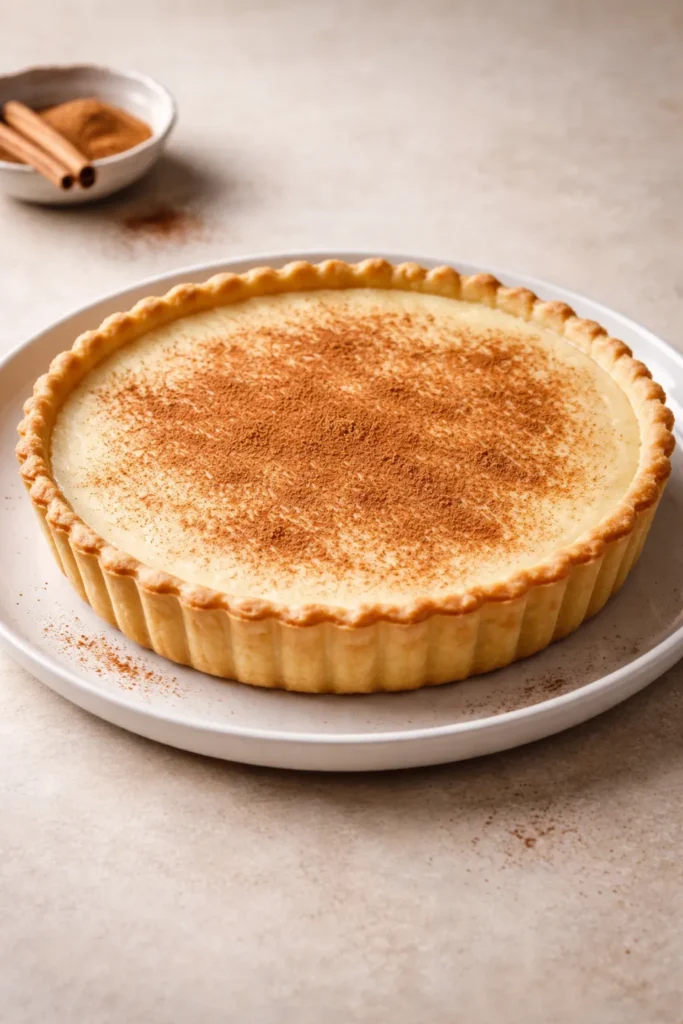
Melktert is one of those dishes that sits at the core of South African identity. You’ll find it at every bakery, every school fête, every grandmother’s kitchen table. The name is Afrikaans for “milk tart,” and that simple description doesn’t do justice to what’s actually happening here: a crisp, buttery pastry shell holding a filling that’s simultaneously custard, pudding, and something entirely its own.
The filling is made primarily from milk, which gives it a lighter, more delicate texture than egg-heavy custards like crème pâtissière. The ratio of milk to egg is higher than in most tarts, which means the texture is softer and silkier — almost quivering when set. A generous dusting of ground cinnamon on top is non-negotiable.
Two versions exist: the baked milk tart, where the filling is poured into the raw pastry shell and baked together, and the unbaked version, where the filling is made on the stove and poured into a pre-baked shell to set in the fridge. Both are excellent. The baked version has a slightly denser, more custardy set. The unbaked version is silkier and lighter.
Ingredients
For the Pastry Shell:
- 125g cold butter, cubed
- 250ml (1 cup) all-purpose flour
- 30ml (2 tablespoons) icing sugar (powdered sugar)
- 1 egg yolk
- 30ml (2 tablespoons) cold water
For the Filling:
- 1 liter (4 cups) full-cream milk
- 3 large eggs, separated
- 250ml (1 cup) white sugar
- 60ml (¼ cup) all-purpose flour
- 30ml (2 tablespoons) cornflour
- 2 tablespoons unsalted butter
- 1 teaspoon vanilla essence
- Pinch of salt
- Ground cinnamon for dusting
Yield: Makes one 24–26cm tart, serves 8 | Prep Time: 20 minutes + 30 minutes chilling | Cook Time: 45 minutes | Total Time: 1 hour 35 minutes + chilling | Difficulty: Intermediate — requires a bit of stove attention for the filling.
Instructions
Make and Blind-Bake the Pastry:
-
Rub the cold butter into the flour and icing sugar until the mixture resembles coarse crumbs. Add the egg yolk and cold water and mix until the dough just comes together. Do not overwork it.
-
Press the pastry into a 24–26cm tart tin with a removable base, working it up the sides evenly. Refrigerate for 30 minutes.
-
Preheat the oven to 190°C (375°F). Line the chilled pastry with baking paper, fill with baking weights or dried beans, and blind-bake for 15 minutes. Remove the weights and bake for a further 8–10 minutes until golden. Set aside to cool.
Make the Filling:
-
Heat 750ml of the milk in a medium saucepan over medium heat until it just reaches a simmer — small bubbles forming at the edges.
-
In a bowl, whisk together the egg yolks, sugar, flour, cornflour, and remaining 250ml cold milk until completely smooth with no lumps.
-
Gradually ladle the hot milk into the egg mixture, whisking constantly as you pour to temper the eggs. Once you’ve added about half the hot milk, pour the whole mixture back into the saucepan.
-
Cook over medium heat, stirring constantly with a wooden spoon or heatproof spatula, for 5–8 minutes until the mixture thickens enough to coat the back of the spoon. Don’t stop stirring or the bottom will scorch. Remove from heat and stir in the butter and vanilla.
-
Beat the egg whites to stiff peaks. Fold them gently into the warm filling in two additions until just combined.
-
Pour the filling into the cooled pastry shell. Dust generously with ground cinnamon. Refrigerate for at least 2 hours until set before slicing.
6. Vetkoek with Curried Mince — South Africa’s Beloved Fried Bread

Vetkoek (pronounced “fet-cook,” meaning “fat cake” in Afrikaans) is a deep-fried yeast dough that’s crispy on the outside, pillowy on the inside, and absolutely essential to South African street food culture. You’ll find them at markets, school tuck shops, roadside stalls, and family kitchens across the country — split open and filled with curried mince, cheese, jam, or honey.
The dough itself is a basic yeasted bread dough — flour, yeast, sugar, salt, milk, and oil — but the magic is in the frying. When the dough hits hot oil, the exterior seals immediately while the interior steams and puffs, creating that characteristic contrast between the crisp outer shell and the cloud-like crumb within.
Curried mince is the classic filling, and it’s a natural pairing — the richness of the mince cutting through the slight oiliness of the fried dough, the spice playing against the neutral bread base. A spoonful of apricot jam alongside is controversial to purists but beloved by most South Africans who grew up eating these.
Ingredients
For the Dough:
- 500g (4 cups) bread flour or cake flour
- 1 x 10g sachet instant dry yeast
- 1 teaspoon salt
- 1 tablespoon white sugar
- 30ml (2 tablespoons) sunflower oil
- 300ml (just over 1 cup) lukewarm water (or half water, half lukewarm milk for a richer dough)
- Sunflower oil for deep frying (enough to fill your pot 8–10cm deep)
For the Curried Mince Filling:
- 500g beef mince
- 1 medium onion, finely diced
- 2 tablespoons sunflower oil
- 2 tablespoons curry powder
- 1 teaspoon turmeric
- 1 tablespoon apricot jam
- 200ml (just under 1 cup) beef stock or water
- Salt and pepper to taste
Yield: Makes 10–12 vetkoek | Prep Time: 20 minutes + 1 hour rising | Cook Time: 30 minutes | Total Time: 1 hour 50 minutes | Difficulty: Intermediate — requires attention during frying for consistent results.
Instructions
Make the Dough:
-
Combine the flour, yeast, salt, and sugar in a large bowl. Make a well in the center.
-
Pour the oil and lukewarm water (or water-milk mixture) into the well and mix with your hands or a wooden spoon until a soft, slightly sticky dough forms.
-
Turn onto a lightly floured surface and knead for 8–10 minutes until smooth and elastic — the dough should spring back when pressed. Place in a lightly oiled bowl, cover with a damp cloth, and leave to rise in a warm spot for 45 minutes to 1 hour until doubled in size.
Make the Filling (while the dough rises):
-
Heat the oil in a pan over medium heat. Cook the onion for 5 minutes until soft. Add curry powder and turmeric and stir for 1 minute.
-
Add the mince and break it up well. Cook for 8 minutes until browned. Add the apricot jam and stock. Simmer for 10 minutes until the mixture is moist but not watery. Season to taste.
Fry the Vetkoek:
-
Heat oil in a deep pot to 170–180°C. To test without a thermometer, drop a small piece of dough into the oil — it should sizzle immediately and rise to the surface within 3 seconds. If the oil is too hot, the outside browns before the inside cooks. If too cool, the dough absorbs excess oil.
-
Punch down the risen dough and tear off golf ball-sized pieces. Roll into smooth balls and flatten slightly.
-
Fry 3–4 at a time for 4–5 minutes per side until deep golden brown all over. Drain on kitchen paper.
-
Split each vetkoek open with a knife while still warm. Fill generously with curried mince and serve immediately.
7. Tomato Bredie — The Cape Malay Slow-Cooked Stew
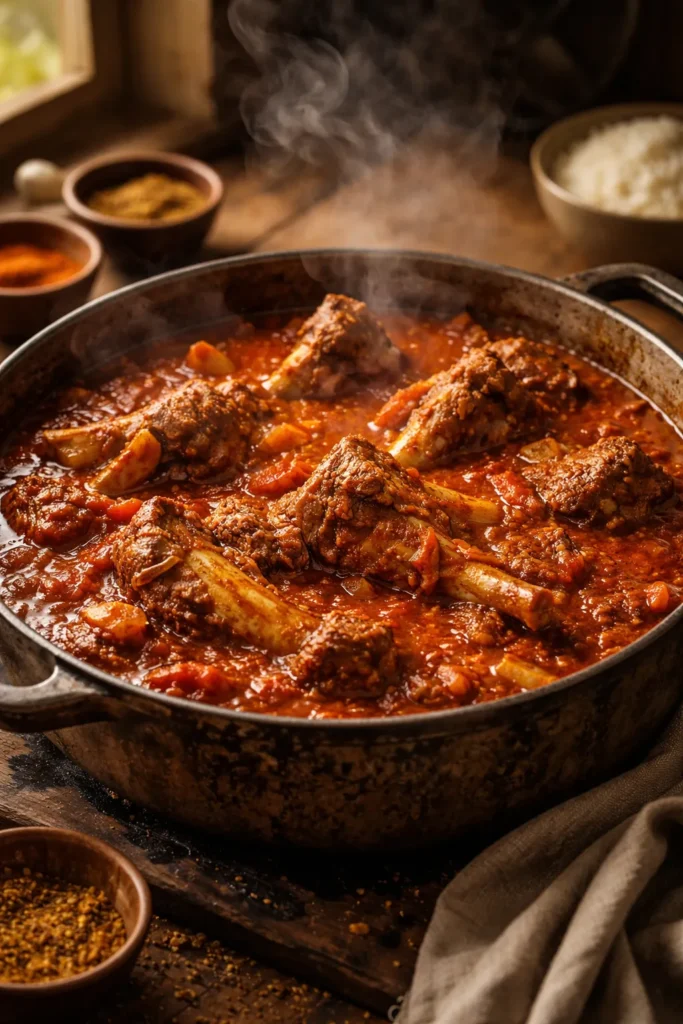
Bredie is the Cape Malay word for a slow-braised stew, and tomato bredie is the most widely made version. It’s a lamb stew — traditionally using lamb rib or knuckle for the collagen-rich bones — braised low and slow with a mountain of ripe tomatoes, onions, and just enough warm spice to give it that distinctive Cape Malay edge.
What makes bredie so striking is the simplicity of the technique against the depth of the flavor. You’re essentially giving tomatoes and lamb a very long time to get acquainted in a pot, and the result is a sauce that’s thick, rust-colored, and deeply savory — with the tomato transforming completely from fresh and bright into something rich and almost jammy.
Serve it over white rice or yellow rice, and it qualifies as one of the most satisfying cold-weather meals you can make. It also reheats beautifully — many would argue it’s better the next day, which makes it an ideal make-ahead dish for a dinner party.
Ingredients
- 1kg lamb rib, chops, or shoulder pieces, bone-in for best flavor
- 2 tablespoons sunflower oil
- 2 large onions, sliced into rings
- 4 garlic cloves, minced
- 1 teaspoon fresh ginger, grated
- 1 teaspoon ground cinnamon
- ½ teaspoon ground cloves
- 1 teaspoon paprika
- 1 small dried chilli or ½ teaspoon dried chilli flakes
- 800g (about 6 medium) ripe tomatoes, roughly chopped (or 2 x 400g cans whole peeled tomatoes)
- 1 tablespoon tomato paste
- 1 tablespoon brown sugar
- 250ml (1 cup) lamb or chicken stock
- Salt and black pepper to taste
- Small handful of fresh flat-leaf parsley to finish
Yield: Serves 4–6 | Prep Time: 20 minutes | Cook Time: 1 hour 30 minutes | Total Time: 1 hour 50 minutes | Difficulty: Beginner — low-effort, high-reward stew technique.
Instructions
-
Pat the lamb pieces dry with kitchen paper and season with salt and pepper.
-
Heat the oil in a heavy-based pot or Dutch oven over high heat. Brown the lamb pieces in batches — don’t crowd the pot — for 3–4 minutes per side until deeply browned. Set aside.
-
Reduce the heat to medium. In the same pot, cook the onion rings for 8 minutes until soft and turning golden. Add the garlic and ginger and cook for 1 minute.
-
Add the cinnamon, cloves, paprika, and dried chilli. Stir for 1 minute until the spices are fragrant.
-
Add the tomatoes, tomato paste, and brown sugar. Stir well and cook for 5 minutes until the tomatoes begin to break down.
-
Return the browned lamb to the pot. Pour in the stock. The liquid should come about halfway up the meat — add a little more stock or water if needed.
-
Bring to a gentle boil, then reduce the heat to very low. Cover and simmer for 1 hour, stirring every 20 minutes, until the lamb is completely tender and falling away from the bone.
-
Remove the lid and cook for a further 15–20 minutes to reduce and thicken the sauce if it’s still quite liquid. Taste and adjust seasoning. Scatter with parsley and serve over rice.
8. Sosaties — Lamb and Apricot Skewers for the Braai

Sosaties are South Africa’s answer to the kebab, and they’re in a category of their own. The word comes from the Cape Malay “sate” (skewered meat) and “saus” (sauce), and they involve lamb or mutton marinated overnight in a Cape Malay-spiced sauce with onion, apricot jam, and vinegar, then threaded onto skewers with dried apricots and onion rings before hitting the braai.
The overnight marinade is what sets sosaties apart from basic grilled meat. The acidity from the vinegar tenderizes the lamb while the spices penetrate deeply, and the apricot jam caramelizes on the outside over the coals, creating a lacquered glaze that’s sweet, smoky, and extraordinary. Dried apricot pieces threaded between the meat soften on the grill and turn jammy, delivering bursts of intense sweetness against the savory lamb.
Shoulder or leg of lamb cut into 3–4cm cubes works best — enough fat to stay moist over direct heat, enough structure to stay on the skewer. Mutton is more traditional and delivers a stronger flavor if you can find it.
Ingredients
For the Marinade:
- 2 tablespoons sunflower oil
- 1 large onion, finely diced
- 4 garlic cloves, minced
- 2 tablespoons medium curry powder
- 1 teaspoon turmeric
- 1 teaspoon ground cumin
- 60ml (¼ cup) apricot jam
- 45ml (3 tablespoons) brown sugar
- 60ml (¼ cup) red wine vinegar or apple cider vinegar
- 250ml (1 cup) water
- Salt and pepper to taste
For the Skewers:
- 1kg boneless lamb shoulder or leg, cut into 3–4cm cubes
- 150g dried apricots
- 2 large onions, cut into wedges, layers separated
- 8–10 metal skewers (or wooden skewers soaked in water for 30 minutes)
Yield: Makes 8–10 skewers, serves 4–5 | Prep Time: 30 minutes + overnight marinating | Cook Time: 15 minutes | Total Time: 45 minutes active + overnight | Difficulty: Beginner — the work is in the prep, not the cooking.
Instructions
-
Make the marinade: heat the oil in a saucepan over medium heat. Cook the onion for 5 minutes until soft. Add the garlic, curry powder, turmeric, and cumin and cook, stirring, for 2 minutes.
-
Add the apricot jam, brown sugar, vinegar, water, salt, and pepper. Stir well and bring to a simmer. Cook for 5 minutes until slightly thickened. Remove from heat and leave to cool completely.
-
Place the lamb cubes in a large bowl or zip-lock bag. Pour the cooled marinade over the meat. Cover and refrigerate overnight, or for a minimum of 6 hours. Turn the meat once or twice if possible.
-
When ready to cook, thread the marinated lamb onto skewers, alternating with dried apricot pieces and onion wedge layers. Reserve the marinade.
-
Pour the reserved marinade into a small saucepan and simmer for 5 minutes to make a basting sauce.
-
Braai (or grill) over medium-hot coals for 12–15 minutes, turning every 3–4 minutes and basting with the sauce each time, until the lamb is cooked through with charred, caramelized edges and the apricots are softened and sticky.
-
Rest the skewers for 5 minutes before serving. Excellent alongside yellow rice and a simple green salad.
9. Pampoenkoekies — Spiced Pumpkin Fritters in Syrup

Pampoenkoekies (pumpkin fritters) are one of South Africa’s most loved winter sweet treats, and they’re deceptively simple to make. The batter is nothing more than cooked, mashed pumpkin or butternut mixed with flour, egg, baking powder, and a pinch of cinnamon. Pan-fried in butter and oil until golden and slightly crisp on the outside, they’re tender and warmly spiced within.
What elevates pampoenkoekies from pleasant snack to something genuinely special is the syrup. A sauce made from butter, sugar, milk, and a little cornflour is poured over the warm fritters just before serving, pooling in the spaces between them and caramelizing against the crisp edges. The contrast of textures — crisp outside, soft inside, silky syrup — is what makes this dish so hard to stop eating.
Butternut squash works equally well as pumpkin and is often easier to find. The key is to steam the vegetable well and drain it thoroughly before using — any excess moisture will thin the batter and make the fritters spread too much and absorb too much oil.
Ingredients
For the Fritters:
- 500ml (2 cups) cooked, mashed pumpkin or butternut squash, well drained and cooled
- 250ml (1 cup) all-purpose flour
- 10ml (2 teaspoons) baking powder
- ½ teaspoon ground cinnamon
- ¼ teaspoon salt
- 1 large egg, lightly beaten
- Butter and sunflower oil for frying
For the Syrup:
- 300g (1½ cups) white sugar
- 200ml (just under 1 cup) full-cream milk
- 15ml (1 tablespoon) butter
- 15ml (1 tablespoon) cornflour
- 175ml (¾ cup) cold water
Yield: Makes 14–16 fritters | Prep Time: 15 minutes + 40 minutes to steam the pumpkin | Cook Time: 25 minutes | Total Time: 1 hour 20 minutes | Difficulty: Intermediate — the oil temperature needs attention during frying.
Instructions
-
Steam the pumpkin or butternut until completely tender, 30–40 minutes. Drain well, then mash thoroughly. Spread on a tray and allow to cool and any remaining steam to escape — this step matters for a thicker batter.
-
Combine the cooled pumpkin mash, flour, baking powder, cinnamon, salt, and beaten egg in a bowl. Mix well. The batter should be thick enough to hold a spoon upright — if it’s too wet, add a little more flour one tablespoon at a time.
-
Heat a non-stick frying pan over medium heat. Add a small knob of butter and a splash of oil. The combination of butter and oil gives flavor without burning.
-
Drop rounded tablespoons of batter into the pan — don’t crowd it. Fry for 3–4 minutes per side until deep golden brown with a slight crust. Medium heat is critical here; high heat burns the outside before the center sets.
-
Keep cooked fritters warm in a low oven while you fry the remaining batches.
-
Make the syrup: heat the sugar, milk, and butter in a small saucepan over medium heat, stirring constantly until the sugar dissolves and the mixture comes to a boil. Dissolve the cornflour in the cold water and pour it into the boiling milk mixture, stirring quickly. Simmer for 2–3 minutes until the sauce thickens to a light, pourable consistency.
-
Arrange the warm fritters on a serving plate and pour the hot syrup over them. Serve immediately.
10. Peppermint Crisp Tart — No-Bake, No-Fuss, Completely Irresistible
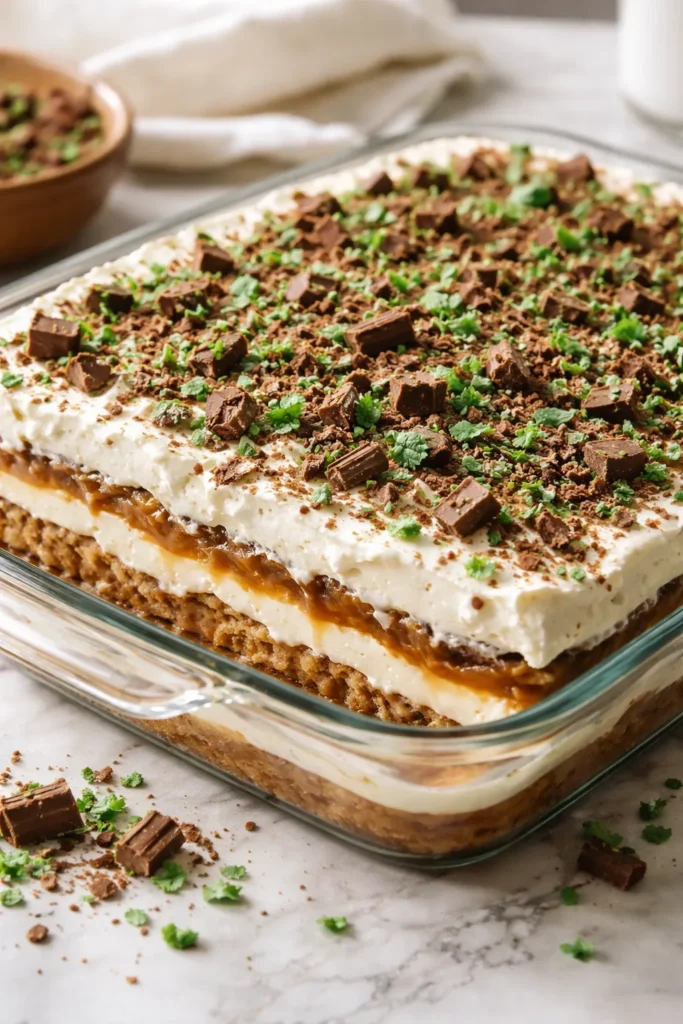
Peppermint Crisp Tart is one of South Africa’s most beloved no-bake desserts, and it has a devoted following that extends far beyond the country’s borders. The recipe requires zero cooking skills, zero special equipment, and about fifteen minutes of active work — yet it produces a layered fridge tart that tastes rich, indulgent, and completely achieved.
The classic version uses Tennis biscuits (a South African coconut-flavored biscuit similar to a digestive), canned caramel treat (a thick, spreadable cooked condensed milk), whipped cream, and crumbled Peppermint Crisp chocolate bars — a South African chocolate bar with a toffee-like peppermint crisp center. The layers are built in a dish and the whole thing goes into the fridge for a minimum of four hours, during which the biscuit layers soften into a cake-like texture as they absorb moisture from the cream and caramel.
Outside South Africa, digestive biscuits or graham crackers work as a substitute for Tennis biscuits. For the Peppermint Crisp chocolate, look for York Peppermint Patties, After Eight chocolates (broken up), or any chocolate with a minty crisp or crunch — the mint is essential to the identity of this dessert.
Ingredients
- 200g Tennis biscuits (or digestive biscuits, or graham crackers)
- 1 x 360g can caramel treat (Nestlé Caramel Treat or Dulce de Leche)
- 500ml (2 cups) cold heavy whipping cream
- 2 x 49g Peppermint Crisp chocolate bars, roughly broken or grated (reserve some for topping)
- Optional: 1 tablespoon icing sugar to sweeten the cream, or a small splash of peppermint extract to intensify the mint flavor
Yield: Serves 8–10 | Prep Time: 20 minutes + 4 hours chilling | Cook Time: None | Total Time: 20 minutes active + 4 hours minimum chilling | Difficulty: Beginner — genuinely one of the easiest desserts you can make. | Best Served: Straight from the fridge.
Instructions
-
Whip the cold cream in a large bowl using an electric mixer or by hand to stiff peaks — it should hold its shape when the whisk is lifted. If using icing sugar, add it partway through whipping.
-
Spoon the caramel treat into a separate bowl. Stir it briskly to loosen it slightly — this makes it easier to spread and fold. If the caramel is very thick, add 1–2 teaspoons of warm water and stir until smooth.
-
Fold about two-thirds of the whipped cream into the caramel until you have a light, pale caramel cream mixture. Reserve the remaining third of the cream for the top layer.
-
Add the roughly broken Peppermint Crisp pieces to the caramel-cream mixture (reserve a small handful for topping). Fold in gently — you want visible pieces distributed through the mix, not pulverized.
-
Arrange a single layer of biscuits in the base of a medium-sized rectangular or square dish (approximately 22x30cm works well). Break biscuits to fill gaps at the edges.
-
Spoon half the caramel-cream mixture over the biscuit layer and spread it gently into an even layer.
-
Add a second layer of biscuits directly on top of the caramel cream.
-
Spread the remaining caramel cream mixture over the second biscuit layer.
-
Spoon the reserved plain whipped cream over the top and spread it to cover the surface.
-
Scatter the reserved Peppermint Crisp pieces over the cream topping. Cover the dish with cling wrap and refrigerate for a minimum of 4 hours, or overnight for best results.
-
Serve straight from the fridge, cut into squares. The biscuits will have softened completely into a cake-like base.
What These Dishes Have in Common
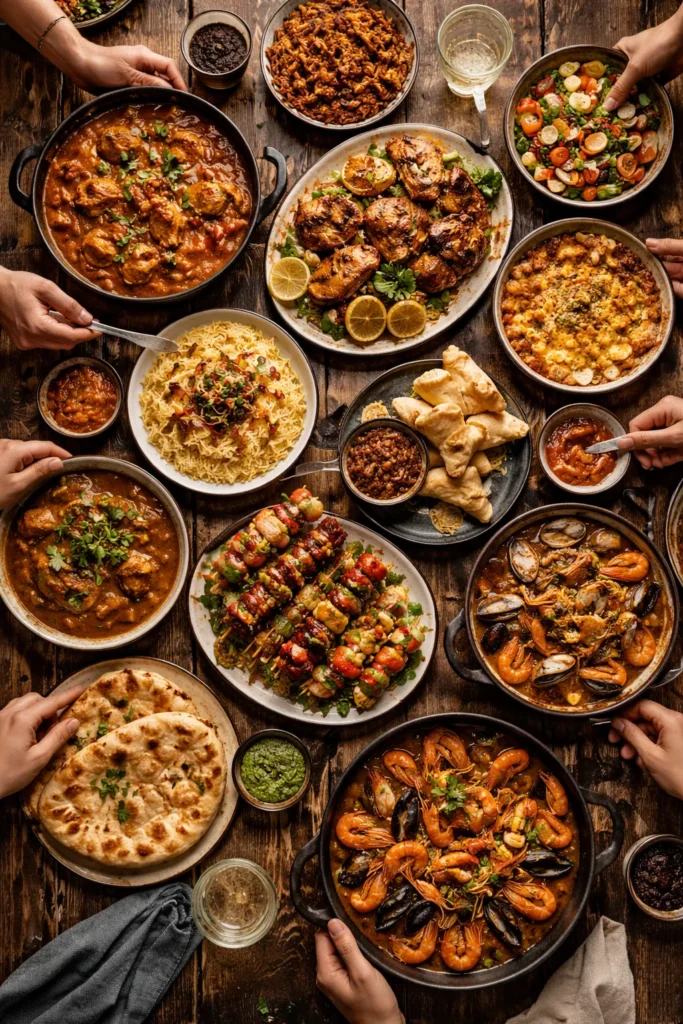
The ten dishes on this list span braai fires and fridge tarts, centuries-old slow stews and quick fried doughs, custard-filled pastry shells and five-ingredient layered desserts. What ties them together isn’t a single flavor profile or technique — it’s the generosity behind them.
South African cooking has always been food made for sharing. Roosterkoek is cooked on a communal grill where everyone stands around the fire. A malva pudding gets poured over with sauce while the whole table watches. Sosaties are passed around still hot off the coals. Peppermint Crisp Tart gets spooned out of a communal dish. These aren’t dishes built for plating individually in tall towers. They’re dishes built for a table full of people.
That spirit makes them genuinely satisfying to cook at home. There’s very little fussiness, very little ego, and a lot of flavor per unit of effort.
Key Ingredient Notes Before You Start
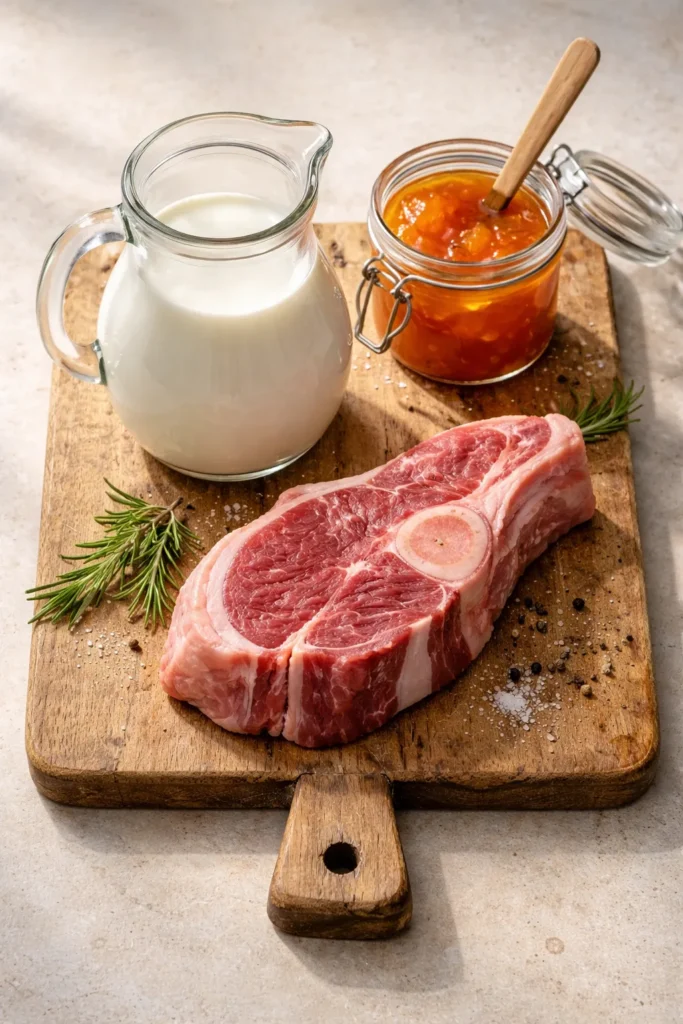
A few things make the difference between these dishes landing well or falling short.
Full-cream milk matters for both the bobotie custard and the melktert — the fat content in full-cream milk carries flavor and gives the filling its correct body. Reduced-fat milk will produce a thinner, less satisfying result in both.
Apricot jam appears in three of these recipes — bobotie, malva pudding, and sosaties — and that’s not coincidence. It’s a load-bearing flavor in Cape Malay-influenced cooking, providing a fruity sweetness that balances spice and acid. A good-quality jam (or fresh smooth apricot jam from the bottom shelf) makes a noticeable difference.
Lamb on the bone is called for in the bredie and recommended for the sosaties. The collagen from the bones enriches the cooking liquid and produces a body and richness you simply can’t replicate with boneless meat. If you have to use boneless, increase the cooking liquid slightly and don’t expect quite the same sauce depth.
Serving Suggestions for a South African Spread

If you want to build an entire South African meal from this list, here’s how the dishes work together.
A braai-centered spread works beautifully with roosterkoek as the bread, sosaties and a boerewors (purchased ready-made if you can find it at a specialty deli) as the main protein, chakalaka as the relish, and pampoenkoekies or peppermint crisp tart as dessert.
A Cape Malay dinner party starts with yellow rice (simply cook basmati rice with turmeric, a cinnamon stick, and a small handful of raisins), serves bobotie as the centerpiece, keeps chakalaka on the table as a condiment, and finishes with malva pudding and cream.
A casual weekend lunch built around tomato bredie over white rice with fresh bread on the side and melktert for dessert hits every note — warming, filling, and completely satisfying without requiring more than two hours of kitchen time total.
Final Thoughts
South African cooking is worth spending time with. These ten dishes only scratch the surface of a cuisine that includes braised snoek on the fire, Cape Malay pickled fish, the extraordinary crunch of koeksisters soaked in cold syrup, slow-cooked potjiekos that’s been sitting on the coals for three hours, and a dozen regional variations of every dish on this list.
Start with the recipes that appeal most to what you have on hand — the peppermint crisp tart if you want zero cooking involved, the chakalaka if you want something quick and vegetable-forward, the bobotie if you want to understand what Cape Malay cooking is really about.
One dish will lead to another. That’s always how it goes with South African food — you make the bobotie and then you realize you need to make geelrys, and then you want a braai with roosterkoek, and then someone mentions malva pudding and the whole afternoon disappears. There are far worse ways to spend your time.