Portugal has one of the most underrated dinner tables in all of Europe. While the world obsesses over Italian pasta and French sauces, Portuguese home cooking quietly delivers some of the most deeply satisfying, soul-warming food you’ll ever put in your mouth — built on honest ingredients, centuries-old techniques, and a generosity of flavor that’s hard to explain until you’ve tasted it firsthand.
What makes Portuguese dinner food so approachable for home cooks is that it doesn’t rely on obscure techniques or hard-to-find equipment. Most dishes are built around a short list of pantry staples — good olive oil, garlic, white wine, paprika, bay leaves — and the kind of slow, patient cooking that rewards you with tender meat, rich broths, and layers of flavor that feel far more complex than the method deserves.
The eight recipes here draw from both the north and south of Portugal, mixing coastal seafood traditions with the hearty mountain cooking of regions like Trás-os-Montes and Minho. Some are weeknight-friendly. Others deserve a Sunday afternoon. All of them are genuinely worth making.
Table of Contents
- What Makes Portuguese Cooking Different From Other European Cuisines
- How to Stock Your Pantry for Portuguese Cooking
- 1. Caldo Verde
- What You’ll Need
- How to Make It
- 2. Bacalhau à Gomes de Sá
- What You’ll Need
- How to Make It
- 3. Francesinha
- What You’ll Need
- How to Make It
- 4. Arroz de Pato
- What You’ll Need
- How to Make It
- 5. Bifanas
- What You’ll Need
- How to Make It
- 6. Frango com Piri-Piri
- What You’ll Need
- How to Make It
- 7. Feijoada à Transmontana
- What You’ll Need
- How to Make It
- 8. Rojões
- What You’ll Need
- How to Make It
- Serving Portuguese Dinners the Right Way
- Final Thoughts
What Makes Portuguese Cooking Different From Other European Cuisines
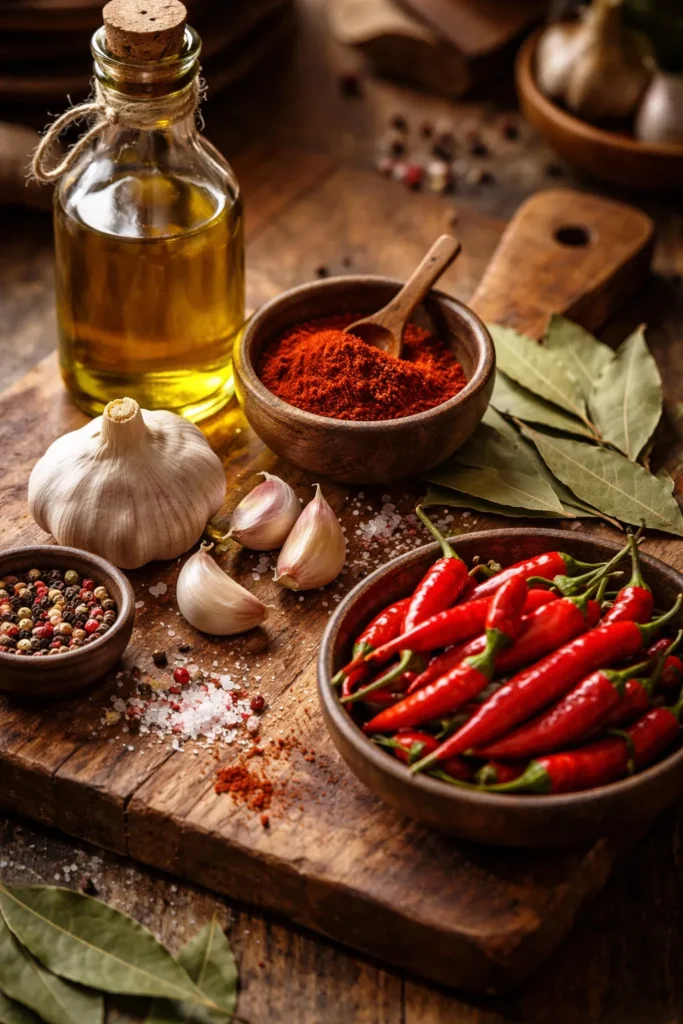
Before jumping into the recipes themselves, it helps to understand what gives Portuguese food its distinctive character. Unlike many European cuisines that shy away from bold seasoning, Portuguese cooking embraces spice confidently — piri-piri chili, smoked paprika, cumin, cloves, and bay leaf all appear frequently. These aren’t subtle whispers in the background. You’ll know they’re there.
Olive oil is used with a generosity that borders on extravagant by some standards, but it’s this liberal hand that gives dishes their silkiness and depth. White wine shows up in marinades, braises, and soups, not just on the table beside the meal. And garlic is treated not as a seasoning but practically as a vegetable — used in quantity, often raw or gently sautéed to preserve its sharpness.
Portugal’s history as a seafaring nation also shaped its pantry in unusual ways. Bacalhau (dried, salted cod) became a cornerstone protein not because fresh fish wasn’t available, but because preservation allowed sailors and families alike to have reliable, nutritious food year-round. That tradition of preservation and patience is woven into nearly every dish on this list.
How to Stock Your Pantry for Portuguese Cooking
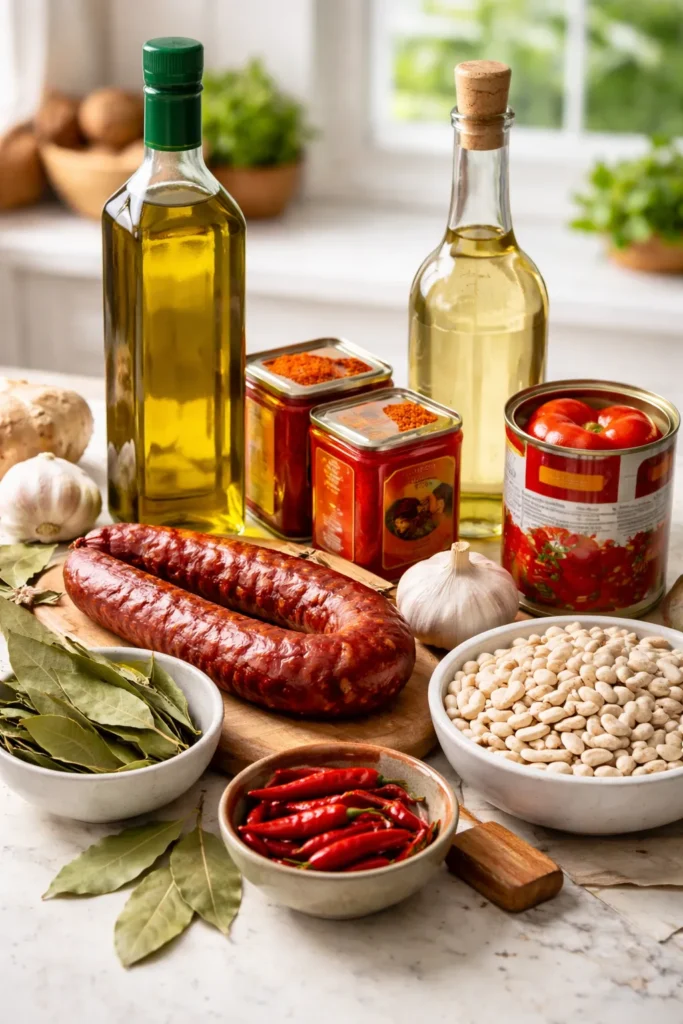
You don’t need to track down specialty ingredients for most of these recipes. A well-stocked Portuguese-inspired pantry covers a lot of ground.
The non-negotiables are good olive oil (don’t skimp — you’ll use it in almost every dish), smoked paprika (sweet and hot versions are both useful), dried bay leaves, white wine for cooking (any dry, unoaked white works), whole garlic, and white or kidney beans for the stew-based dishes.
If you want to get a little more authentic, look for chouriço — Portuguese-style smoked sausage with paprika and garlic — at specialty food stores or online. Spanish chorizo is a reasonable substitute in most recipes. Piri-piri sauce or dried piri-piri peppers open up the spicier dishes on this list.
- Olive oil — buy more than you think you need
- Smoked paprika (sweet and hot)
- Dried bay leaves
- Dry white wine
- Canned whole peeled tomatoes or passata
- White beans and kidney beans (dried or canned)
- Portuguese chouriço or Spanish chorizo
- Piri-piri sauce or cayenne as a substitute
With these basics in your kitchen, you can tackle every recipe below without a last-minute panic shop.
1. Caldo Verde
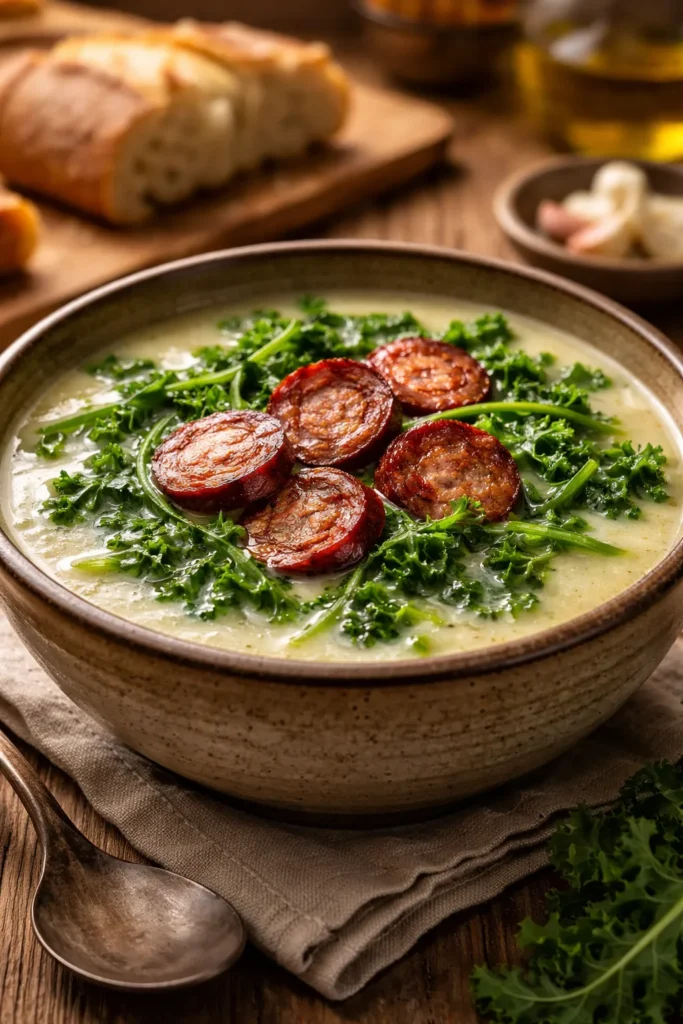
Caldo verde is the soup that Portugal would choose to represent itself if soup could run for office. It originated in the Minho province of northern Portugal, but you’ll find it everywhere — from farmhouse kitchens to Lisbon’s most celebrated restaurants — because it earns its place at every table without question.
The genius of caldo verde is how much flavor it extracts from almost nothing. Silky potato purée forms the base, thin ribbons of kale (or Portuguese couve galega, if you can find it) add texture and a gentle bitterness, and slices of chouriço float on top, giving the whole bowl a smoky, garlicky warmth that’s deeply comforting.
What You’ll Need
- 500g floury potatoes, peeled and roughly chopped
- 200g kale or savoy cabbage, very finely shredded into thin ribbons
- 1 chouriço sausage (about 150g)
- 1 onion, chopped
- 3 garlic cloves, minced
- 4 tablespoons olive oil
- 1.5 liters water or light chicken stock
- Salt and freshly ground black pepper
How to Make It
Sauté the onion and garlic in olive oil until soft — about 5 minutes over medium heat. Add the chopped potatoes and the water or stock, bring to a boil, and simmer until the potatoes are completely tender, roughly 20 minutes. Add half the chouriço to the pot while the potatoes cook. Remove the sausage, then use an immersion blender to purée the soup completely smooth. Return the pot to medium heat, add the finely shredded kale, and cook for 3 to 4 minutes — just long enough to wilt the greens without losing their color. Slice the remaining chouriço into rounds and add them back in.
Why the ribbons matter: The kale must be cut as thin as possible — we’re talking almost paper-thin strips. This is the defining texture of proper caldo verde. Thick chunks of cabbage belong in a different soup entirely.
Serve with crusty cornbread or a thick slice of sourdough for dunking. This soup genuinely tastes better the next day once the flavors have had time to settle.
2. Bacalhau à Gomes de Sá
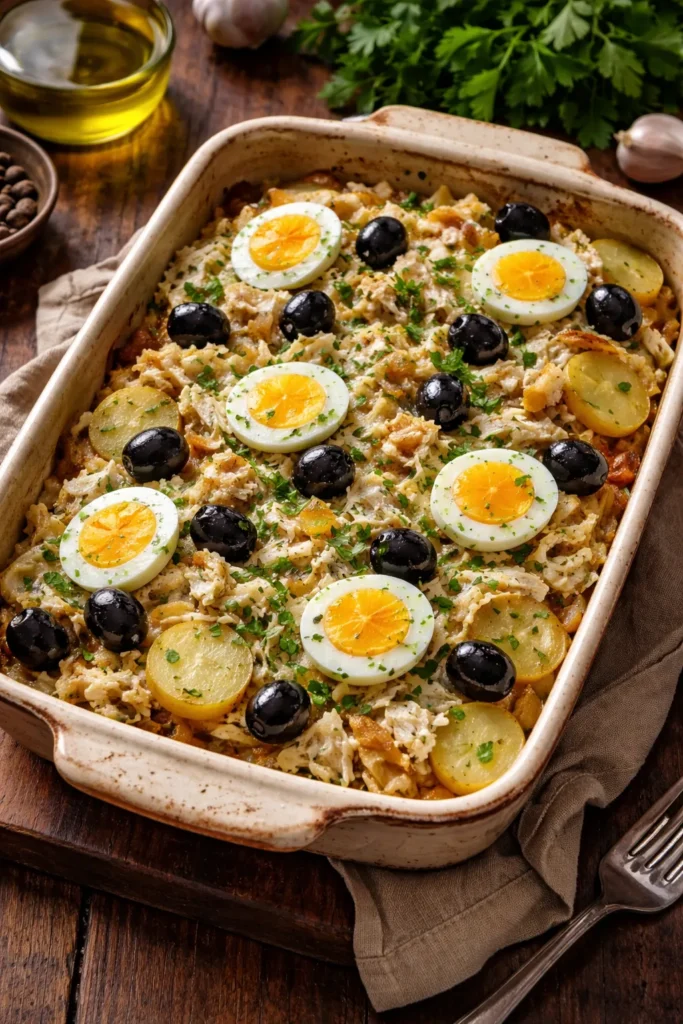
This dish is named after José Luís Gomes de Sá, a Porto merchant from the 19th century who is credited with its creation — and if the story is true, he deserves a monument. Bacalhau à Gomes de Sá is one of the most beloved salt cod preparations in all of Portugal, and it’s a dish that converts skeptics with its first bite.
Flaked salt cod mingles with thick slices of potato, softly caramelized onions, garlic-rich olive oil, hard-boiled eggs, and briny black olives. It’s baked until golden and fragrant, then finished with a shower of fresh parsley. The combination of textures — silky fish, creamy potato, firm egg — makes it feel far more composed than its humble ingredient list suggests.
What You’ll Need
- 500g salt cod (bacalhau), soaked in cold water for 24-48 hours, water changed 3-4 times
- 400g waxy potatoes, skin-on
- 3 medium onions, thinly sliced into half-moons
- 4 garlic cloves, sliced
- 150ml good olive oil, plus more for drizzling
- 3 bay leaves
- 4 hard-boiled eggs
- 80g pitted black olives
- Fresh flat-leaf parsley, roughly chopped
- Salt and white pepper
How to Make It
After soaking, place the salt cod in a pot of cold water, bring to a gentle simmer (not a full boil), and poach for about 15 minutes until it flakes easily. Remove, cool slightly, then pull away all skin and bones and break the fish into large, rustic flakes.
Boil the potatoes whole in their skins until just tender — slightly undercooked is fine since they’ll finish in the oven. Once cool enough to handle, peel and slice into rounds about 1cm thick.
In a wide, heavy pan, warm the olive oil over medium-low heat. Add the onions, garlic, and bay leaves. Cook slowly for 20 to 25 minutes, stirring occasionally, until the onions are completely soft and beginning to turn golden. This step is where the dish builds its character — don’t rush it.
In a baking dish, layer the potato rounds and the flaked cod, then pour the onion and olive oil mixture over everything. Toss gently. Bake at 200°C (390°F) for 15 to 20 minutes. Arrange sliced hard-boiled eggs and olives over the top, drizzle with a little extra olive oil, and finish with parsley before serving straight from the dish.
Worth knowing: The quality of your olive oil genuinely changes this dish. Use something fruity and grassy rather than a neutral, cheap blending oil.
3. Francesinha

Porto’s greatest contribution to the sandwich world is not subtle. The francesinha is a towering, cheese-draped, sauce-drenched monster of a meal that looks like it was designed specifically to challenge your willpower and your shirt buttons simultaneously.
The name translates loosely to “little Frenchie” — a nod to its inspiration from the French croque-monsieur, though the Portuguese version expanded the concept in every direction possible. Between thick slices of white bread, you layer ham, fresh sausage, smoked sausage, and grilled beef or pork steak. The whole thing is then blanketed in sliced cheese and melted under the grill. The defining element is the sauce — a deep, brick-red gravy made from beer, port wine, tomato, and chili that gets poured over the finished sandwich until it’s practically swimming.
What You’ll Need
For the Sauce:
- 1 liter light lager beer
- 200ml port wine
- 400ml passata or blended peeled tomatoes
- 2 onions, finely chopped
- 3 garlic cloves, minced
- 2 tablespoons olive oil
- 2 bay leaves
- 1 teaspoon piri-piri or hot sauce (adjust to your heat tolerance)
- 1 tablespoon cornstarch mixed with 2 tablespoons cold water
For the Sandwich (per person):
- 2 thick slices white sandwich bread
- 1 thin pork or veal steak, grilled
- 1 slice ham
- 2-3 slices fresh sausage or frankfurter, cooked
- 2-3 slices smoked sausage
- Enough sliced cheese to completely cover the sandwich (Edam or Gouda work well)
- 1 egg, fried
How to Make It
Start with the sauce, since it needs at least an hour to develop properly. Sauté the onions and garlic in olive oil until golden. Add the beer, port, and tomato, plus the bay leaves. Simmer over medium-low heat for 45 to 60 minutes until reduced and slightly thickened. Remove bay leaves, blend until smooth, then return to the heat and add the piri-piri. Stir in the cornstarch slurry and cook for another 2 minutes until the sauce coats a spoon.
Build each sandwich with ham, grilled meat, and sausages layered between the bread slices. Completely cover the top and sides with cheese — every exposed millimeter should be covered. Grill until the cheese melts and begins to bubble and brown at the edges. Transfer to a deep plate or bowl, ladle sauce generously over and around the sandwich, and crown with a fried egg. Serve with thick-cut fries and a cold Portuguese lager.
The sauce is the reason to make this dish. If you have leftovers, it freezes beautifully and makes an excellent base for other stews.
4. Arroz de Pato

Duck rice is exactly what the name promises and exactly what comfort food aspires to be. Arroz de pato is a dish where short-grain rice is cooked in the braising liquid from slowly cooked duck, absorbing every bit of flavor from the meat, the sausage, and the wine. It then gets spread into a baking dish and finished in a hot oven until the top layer crisps into something that crunches with each spoonful.
This dish comes from central Portugal but is beloved nationwide. It’s the kind of thing you make for a dinner party when you want people to feel genuinely cared for — it looks and tastes considerably more involved than it actually is.
What You’ll Need
- 4 duck legs (or 2 duck breasts, though legs give more flavor)
- 1.5 liters water
- 100ml red wine
- 150g chouriço, half left whole, half sliced into rounds for the topping
- 100g smoked bacon, in one piece
- 2 bay leaves
- 1 onion, halved
- 3 garlic cloves
- 400g short-grain white rice
- 2 tablespoons olive oil
- 1 tablespoon tomato paste
- Smoked paprika, salt, and black pepper
How to Make It
Place the duck legs, water, red wine, whole chouriço, bacon, bay leaves, onion halves, and a generous pinch of salt into a large pot. Bring to a boil, skim any foam, then reduce heat and simmer for 40 to 45 minutes until the duck is completely tender. Strain the cooking liquid and reserve it — this is your rice cooking stock.
Shred the duck meat from the bones and discard the skin if you prefer. Slice the cooked chouriço and dice the bacon. In a wide pan, heat olive oil, add the minced garlic, and cook for a minute before adding the tomato paste and a teaspoon of paprika. Add the shredded duck, diced bacon, and sliced chouriço to the pan and stir to combine.
Rinse the rice, then add it to the pan along with 800ml of the reserved duck stock. Bring to a boil, then reduce heat and simmer for 10 minutes — the rice should be almost but not fully cooked at this stage. Transfer everything to a baking dish, spreading evenly. Arrange the fresh chouriço rounds across the top. Bake at 170°C (340°F) for 15 to 20 minutes until the surface is golden and slightly crisp.
The top layer of rice should shatter slightly when you press it with a spoon. That texture is the whole point.
5. Bifanas
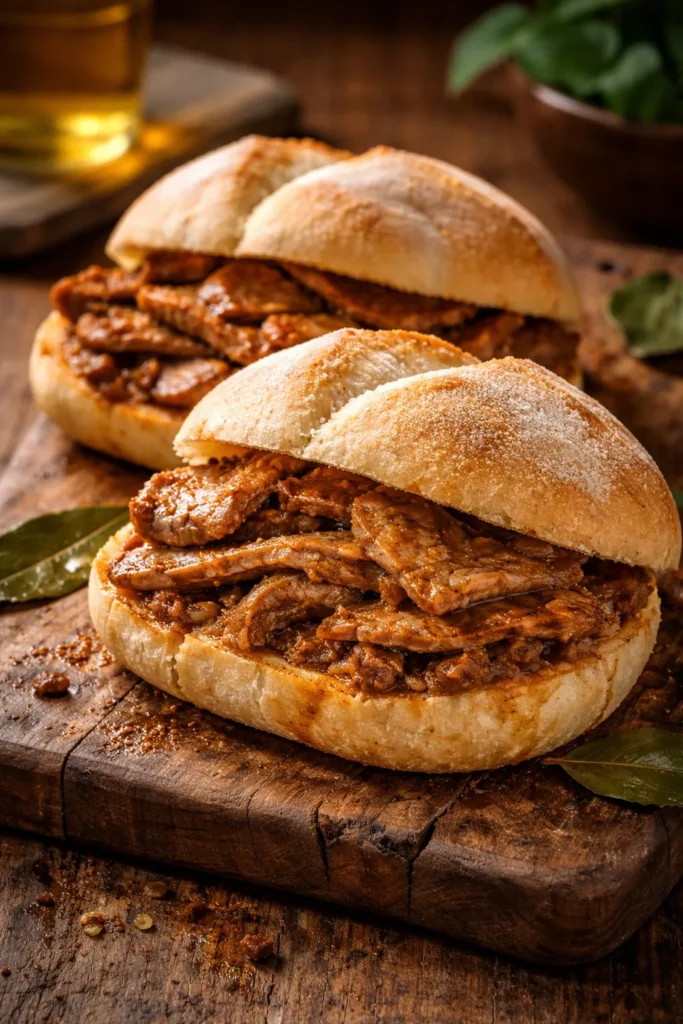
If you’ve never had a bifana, think of it as Portugal’s answer to the pork sandwich — except no other country’s version comes close. Thin slices of pork loin are marinated and then simmered in a deeply savory sauce of white wine, garlic, paprika, and bay leaf until they’re tender enough to practically fall apart. These get stuffed into a soft Portuguese bread roll (papo seco) and eaten immediately, ideally with mustard and a shake of piri-piri sauce.
The bifana is considered by many Portuguese people to be the quintessential quick meal — a lunch counter staple, a late-night snack, a festival food eaten standing up. But made properly at home, it’s something you’ll find yourself craving repeatedly.
What You’ll Need
- 600g pork loin, sliced very thin (ask your butcher, or briefly freeze the pork to make slicing easier)
- 4 garlic cloves, minced
- 200ml dry white wine
- 1 teaspoon sweet paprika
- ½ teaspoon hot paprika or piri-piri
- 2 bay leaves
- 2 tablespoons olive oil
- Salt and black pepper
- Soft bread rolls, mustard, and piri-piri sauce to serve
How to Make It
Combine the pork slices with the garlic, white wine, both paprikas, bay leaves, salt, and pepper. Toss well to coat every piece of meat and marinate for at least 1 hour — overnight in the refrigerator gives noticeably better results.
Heat olive oil in a wide pan over medium-high heat. Add the pork and marinade together and cook, stirring occasionally, for about 20 to 25 minutes. The liquid will first come to a boil and steam the meat, then reduce down until the pork is left sizzling gently in a thick, concentrated sauce. You want most of the liquid gone, with the meat coated in the glossy, garlicky reduction.
Taste and adjust seasoning. Load generously into split bread rolls, add mustard and piri-piri to taste, and eat while the meat is still hot.
The secret most home cooks miss: Don’t rush the sauce reduction. That concentrated, slightly sticky coating on the pork is what separates a great bifana from a forgettable one.
6. Frango com Piri-Piri

Portuguese piri-piri chicken is one of those dishes that proves a short ingredient list and proper technique beat complexity every single time. A whole chicken — or spatchcocked for faster, more even cooking — gets marinated in garlic, olive oil, lemon juice, white wine, paprika, and piri-piri, then roasted or grilled until the skin is crackling and the meat is falling-tender.
The piri-piri chili, originally brought to Portugal from coastal Africa during the Age of Discovery, gives the dish its signature heat. It’s not a nuclear-level spice experience — it’s a warm, fruity, building heat that makes the dish impossible to stop eating.
What You’ll Need
- 1 whole chicken (about 1.5kg), spatchcocked (backbone removed, pressed flat), or use 4 bone-in chicken pieces
- 4 garlic cloves, crushed to a paste
- 3 tablespoons olive oil
- Juice of 1 lemon
- 100ml dry white wine
- 2 teaspoons sweet smoked paprika
- 1 to 2 teaspoons piri-piri sauce or 1 fresh red chili, finely chopped
- 1 teaspoon dried oregano
- Salt and black pepper
How to Make It
Mix the garlic paste, olive oil, lemon juice, white wine, paprika, piri-piri, oregano, salt, and pepper into a marinade. Score the chicken through the skin with a sharp knife and rub the marinade deep into every crevice. Cover and refrigerate for at least 4 hours, though overnight is where the flavor really develops.
To roast: Preheat your oven to 210°C (410°F). Place the chicken skin-side up in a roasting tin, pour the remaining marinade over it, and roast for 35 to 45 minutes until the skin is deep golden and the juices run clear when you pierce the thigh.
To grill: Cook over medium-high heat, turning every 5 to 6 minutes, for about 35 to 40 minutes total. The key is patience — don’t rush the char and don’t let the skin burn before the inside is cooked through.
Serve with crispy roasted potatoes and a simple green salad dressed with olive oil and lemon. Spoon any pan juices back over the chicken just before serving — those juices are concentrated flavor.
Add more piri-piri after cooking if you want extra heat at the table. Starting mild and adjusting is always smarter than making the dish uneatable for half your guests.
7. Feijoada à Transmontana
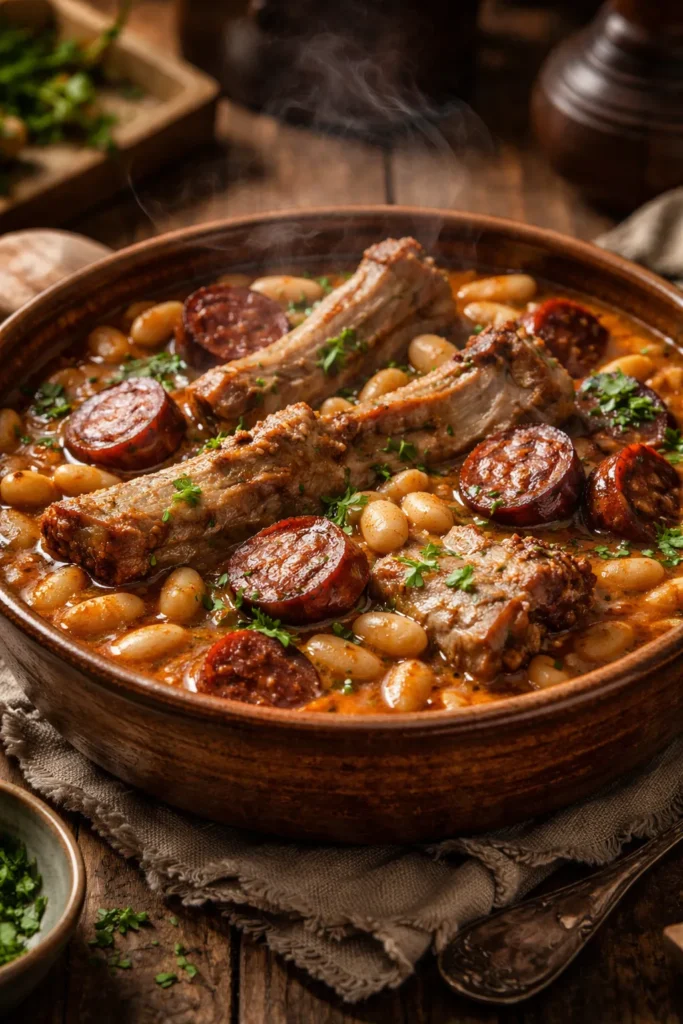
From the rugged northeastern region of Trás-os-Montes comes one of Portugal’s most fortifying dinner dishes. Feijoada à Transmontana is a white bean stew thick with pork ribs, smoked sausage, bacon, and vegetables — a dish that was designed to sustain farmworkers through hard days and cold nights, and it still delivers on that promise with authority.
This is different from Brazilian feijoada in that it uses white beans rather than black, and the flavor profile leans less smoky and more toward the herbaceous, aromatic side. It’s the kind of stew that makes your house smell extraordinary for hours while it simmers.
What You’ll Need
- 500g dried white beans, soaked overnight
- 350g pork ribs, chopped into segments
- 150g chouriço, sliced
- 100g smoked bacon, diced
- 2 onions, finely chopped
- 2 garlic cloves, minced
- 3 tablespoons olive oil
- 1 bay leaf
- 100ml dry white wine
- 200g canned peeled tomatoes, crushed
- 2 carrots, peeled and sliced
- 150g savoy cabbage or kale, shredded
- Salt and black pepper
How to Make It
Drain and rinse the soaked beans. Cook them in fresh, lightly salted water until nearly tender — about 45 minutes to an hour depending on the age of the beans. Don’t overcook them at this stage; they’ll continue cooking in the stew.
In a separate large pot, cover the pork ribs and bacon with water and bring to a boil. Cook for 20 minutes, skimming any foam. Drain and set the meat aside.
In your largest heavy pot or Dutch oven, heat olive oil over medium heat. Add the onions, garlic, and bay leaf and cook until the onions are soft and translucent — about 8 minutes. Add the white wine and let it bubble for 2 minutes. Add the crushed tomatoes, sliced carrots, chouriço, the par-cooked pork ribs and bacon, and enough of the bean cooking water to just cover everything. Simmer for 25 minutes.
Add the drained beans and shredded cabbage, season generously with salt and pepper, and cook for another 15 to 20 minutes until everything is unified and the broth is rich and thick.
Serve in deep bowls with plenty of crusty bread. This stew is one of those dishes that improves significantly by the second day — the beans absorb more flavor overnight and the broth thickens further.
8. Rojões
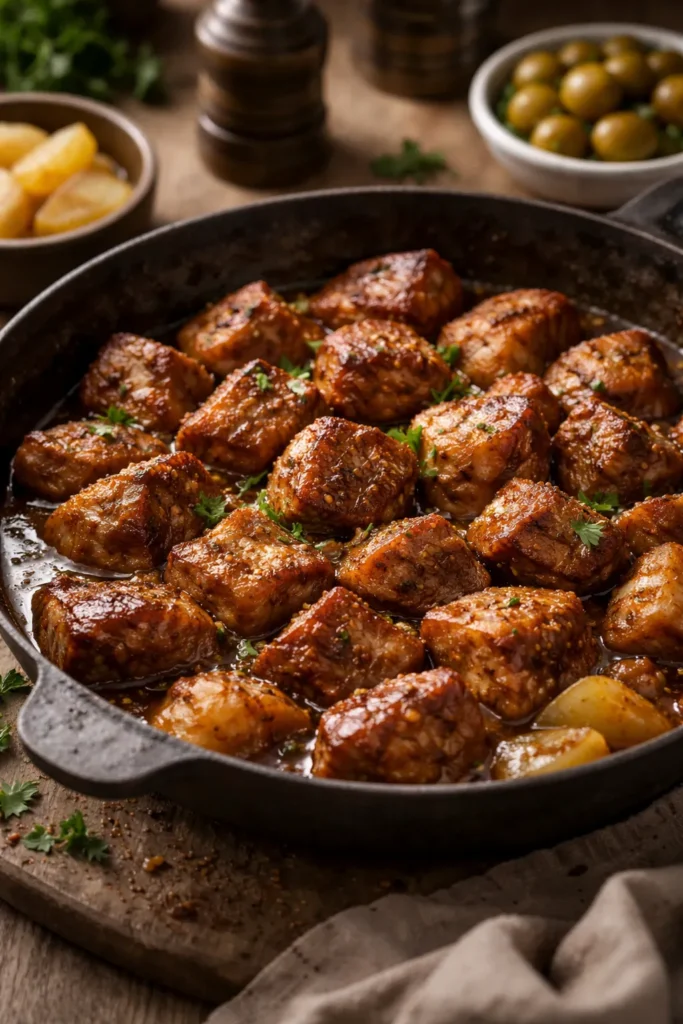
Rojões is the dish that northern Portuguese home cooks pull out when they want to make something genuinely impressive without spending all day in the kitchen. Chunks of pork — usually from the shoulder or loin — are marinated in white wine, garlic, cumin, and bay leaf, then cooked on the stovetop until the outside is golden and caramelized and the inside is completely tender.
The cumin is what sets rojões apart from other pork preparations. It gives the dish an earthy, slightly exotic warmth that distinguishes it from anything else on this list. The finished pork is traditionally served alongside crispy fried potatoes, pickled gherkins, and olives — the contrast between the rich, fatty pork and the sharp, acidic garnishes is deliberate and perfect.
What You’ll Need
- 700g pork shoulder or loin, cut into roughly 4cm chunks
- 3 garlic cloves, minced
- 150ml dry white wine
- 2 tablespoons lard or olive oil
- 1 teaspoon ground cumin
- 2 teaspoons sweet paprika
- 2 bay leaves
- Salt and black pepper
- Gherkins, olives, and crispy fried potatoes to serve
- Fresh parsley, roughly chopped
How to Make It
Combine the pork with garlic, white wine, cumin, paprika, bay leaves, salt, and a good amount of black pepper. Mix thoroughly to coat every piece of meat. Cover and marinate in the refrigerator for at least 2 hours — 4 to 6 hours gives a noticeably deeper flavor throughout the meat.
Melt the lard in a wide, heavy pan over high heat. Remove the pork from the marinade (reserve the marinade) and add to the hot pan in a single layer — don’t crowd the pan or the meat will steam instead of sear. Cook for about 8 to 10 minutes over high heat, turning the pieces until they’re well-browned on all sides.
Reduce the heat to medium-low. Pour in the reserved marinade, cover the pan, and cook for a further 30 to 35 minutes until the pork is completely tender and the sauce has reduced to a thick, glossy coating. If the pan gets dry before the pork is tender, add a small splash of hot water.
Taste and adjust salt. Arrange on a serving platter with fried potato chunks, scattered olives, and sliced gherkins. Finish with chopped parsley and serve immediately while the pork is still sizzling.
The lard matters here. Olive oil works as a substitute, but traditional rojões made with lard have a depth and richness that’s worth seeking out. Your local butcher can usually supply it.
Serving Portuguese Dinners the Right Way
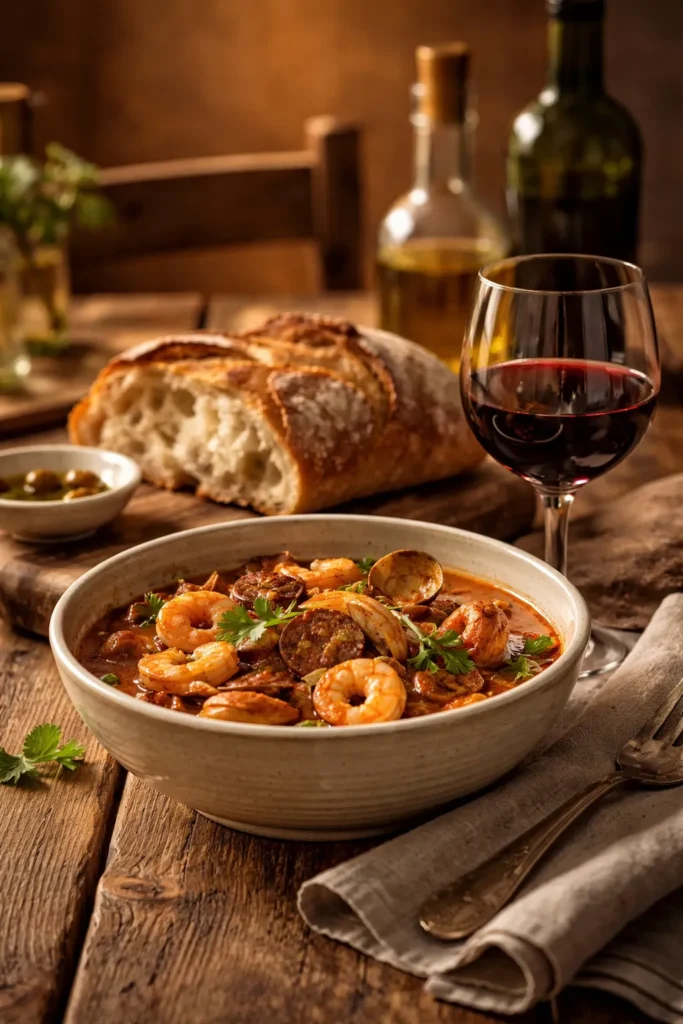
Portuguese meals aren’t typically rushed affairs. Dinner is meant to be shared, discussed, and lingered over — which means the way you serve these dishes matters almost as much as how you cook them.
Bread belongs on the table before the main dish arrives. In Portugal, this isn’t optional. A basket of crusty bread (or cornbread for the northern dishes) acts as both an appetizer and a utensil throughout the meal. Soup gets soaked up with it. Stew juices get mopped with it at the end.
Wine is the traditional pairing for all eight dishes here. For the heavier meat-based dishes like rojões, feijoada, and arroz de pato, reach for a red from the Douro or Alentejo regions — wines with firm tannins and ripe dark fruit that can hold their own against braised pork and duck. For the lighter dishes like caldo verde and bacalhau à Gomes de Sá, a vinho verde (Portugal’s famous light, slightly sparkling white wine from the Minho region) is the obvious and excellent choice.
Don’t overthink the table setting. A simple ceramic bowl, a glass of wine, and good company are all the context these dishes need.
Final Thoughts
Portuguese cooking rewards anyone willing to spend a little time with it. None of these eight recipes require professional skill or specialized equipment — what they require is patience with a marinade, attention during a slow braise, and enough confidence to use garlic and olive oil generously.
Start with caldo verde if you want an easy, low-pressure first attempt that delivers extraordinary results. Move toward the francesinha or arroz de pato when you’re ready to spend a Sunday afternoon cooking something genuinely special. The rojões and bifanas sit in the middle — they’re weeknight-achievable once you’ve done the marinade the night before.
What ties all of these dishes together is the Portuguese philosophy that great food doesn’t need to be complicated. It needs to be made with care, cooked long enough to develop depth, and shared with people you actually want to eat with. That’s a philosophy worth bringing to your own kitchen regardless of where you live.