There’s a particular kind of cold that only Canadians truly understand. Not just the kind that bites at your face when you step outside, but the deep, bone-settling chill that settles in after hours of snowshoeing, skating, or just braving the commute when windchills dip below -20°C. That cold demands something serious in response — and Canadians have spent generations developing exactly the right arsenal of dishes to fight it.
Canadian comfort food doesn’t get nearly enough international attention. While French cassoulet and American mac and cheese have their devoted followings, the cooking that evolved across this vast country — shaped by Indigenous traditions, French settlers, Eastern European immigrants, and Maritime fishing communities — is some of the most soul-satisfying cold-weather food anywhere on earth. These aren’t fussy dishes. They’re built for warmth, for feeding a table full of people, and for that specific satisfaction that only a bowl of something rich and steaming can provide after a day spent in the cold.
What follows are 10 recipes rooted in Canadian culinary tradition — from the squeaky cheese-curd magic of Quebec poutine to the slow-simmered comfort of a Newfoundland Jiggs Dinner. Each one carries a story, a region, and a reason to love the coldest months of the year.
Table of Contents
- 1. Quebec Poutine
- Getting the Gravy Right
- Fry Technique That Actually Works
- Key Tips
- 2. Newfoundland Jiggs Dinner
- The Vegetable Timing Problem
- Figgy Duff: The Dessert You Need
- What to Know
- 3. Prairie Perogies with Caramelized Onions and Bacon
- Making the Dough
- The Finishing Step That Separates Good Perogies from Great Ones
- Serving and Toppings
- 4. Montreal Smoked Meat Sandwich
- The Sandwich Assembly Matters
- A Home Version That Actually Works
- 5. Acadian Rappie Pie
- Why the Liquid Exchange Is Everything
- Ingredient Ratios That Work
- 6. Quebec Split Pea Soup with Ham
- Low and Slow Is the Only Way
- Finishing Touches
- 7. Bannock Fry Bread
- Cast Iron Is the Right Tool
- Sweet and Savoury Variations
- 8. Tourtière
- The Filling
- Pastry and Assembly
- 9. BeaverTails Fried Dough
- Frying and Toppings
- Classic Topping Combinations
- 10. Cheesy Potato and Leek Soup
- Building Layers of Flavour
- Finishing Details
- Final Thoughts
1. Quebec Poutine

Few dishes carry the cultural weight of poutine. Born somewhere in rural Quebec — with the town of Drummondville’s Le Roy Jucep staking a credible claim to its invention — poutine has become the defining comfort food of the entire country. The formula sounds almost absurdly simple: crispy fries, dark savoury gravy, and fresh cheese curds. But executed properly, it’s genuinely spectacular.
The cheese curds are non-negotiable. They need to be fresh — ideally no more than a day old — because that’s what gives them their signature squeak against your teeth. Old curds lose their bounce and just melt into greasy puddles. If you can find them at a Quebec dairy or a well-stocked deli, don’t hesitate.
Getting the Gravy Right
The gravy is where most homemade poutine goes wrong. It needs to be deeply savoury, slightly thick, and hot enough to warm the curds without fully melting them. A good base starts with beef or chicken stock reduced with a dark roux, a splash of Worcestershire sauce, and a small amount of white vinegar for brightness. Season carefully — the fries and curds are already salty.
Fry Technique That Actually Works
Double-fry your potatoes. First at 325°F (160°C) until they’re just cooked through but not coloured, about 4 minutes. Then drain, let them cool for at least 15 minutes, and fry again at 375°F (190°C) for 2 to 3 minutes until golden and genuinely crispy. The double fry removes surface moisture that would otherwise make them go limp the moment gravy hits them.
Key Tips
- Use Yukon Gold or Russet potatoes — waxy potatoes won’t crisp properly
- Cut fries to about ½ inch thick so they hold up under the gravy
- Pour the gravy over the fries first, then add curds on top so they warm from the steam
- Serve immediately — poutine waits for no one
Worth knowing: La Banquise in Montreal serves poutine around the clock and offers dozens of variations. Their classic remains the gold standard against which every homemade version should be measured.
2. Newfoundland Jiggs Dinner
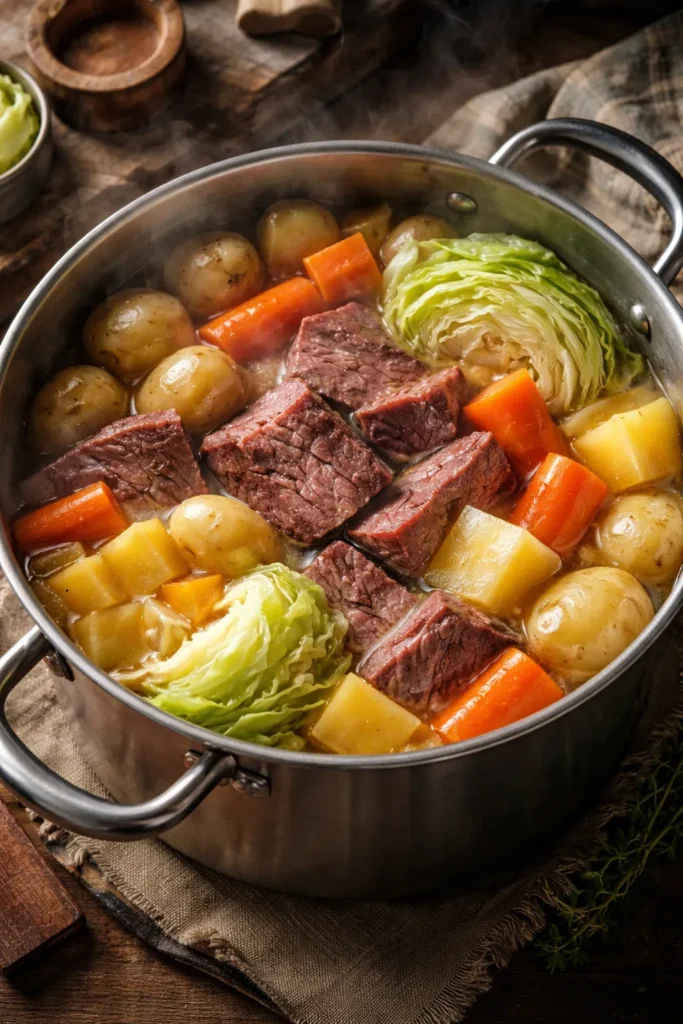
If you’ve never been invited to a Newfoundlander’s home for Sunday dinner, you’ve missed one of the most genuinely communal eating experiences this country offers. Jiggs Dinner is everything on the table at once — salt beef, potatoes, carrots, turnip, and cabbage all cooked together in one enormous pot, filling the kitchen with a smell that no candle company has ever managed to bottle.
The salt beef is the backbone. It needs to be soaked overnight in cold water to draw out excess salt before cooking. Don’t skip this step — undersoaked salt beef will make the entire dish aggressively salty. After soaking, cover it fresh cold water, bring it slowly to a simmer, and cook it low for about 2 hours before adding the vegetables.
The Vegetable Timing Problem
This is where most first-timers go wrong: the vegetables don’t all go in at the same time. Turnip and carrots need about 45 minutes. Potatoes need 30. Cabbage needs only 15 to 20 minutes and turns to mush if overcooked. Add each vegetable at staggered intervals so everything finishes together.
Figgy Duff: The Dessert You Need
No Jiggs Dinner is complete without Figgy Duff — a dense, spiced boiled pudding made with breadcrumbs, molasses, and either raisins or blueberries, traditionally cooked in a cloth bag right in the same pot as the dinner during the final 45 minutes. It absorbs the cooking liquid from the salt beef and takes on a deeply savoury-sweet character that’s unlike anything else in Canadian baking.
What to Know
- Salt beef is available at most Atlantic Canadian grocery stores and some specialty shops elsewhere
- The cooking liquid from the pot makes an outstanding broth — save it and use it as the base for pea soup the next day
- Turkey is sometimes served alongside the boiled dinner, particularly on special occasions
- Leftovers reheated with a little butter in a cast-iron pan are arguably better than the original
3. Prairie Perogies with Caramelized Onions and Bacon

The Prairie provinces owe a profound debt to their Ukrainian and Polish settler communities, who brought perogies — those pillowy, half-moon dumplings stuffed with cheese and potato — as both sustenance and culture. Edmonton and Winnipeg both have neighbourhoods where finding fresh, hand-made perogies from a family-run deli is still entirely possible, and that version will always be better than frozen.
The filling is a mashed potato base made with sharp old cheddar, not mild. The sharpness cuts through the starch and gives the filling actual flavour. Season it aggressively with salt and white pepper while it’s still warm, then let it cool completely before filling — warm filling makes the dough sticky and difficult to seal.
Making the Dough
Perogy dough should be soft, smooth, and just slightly elastic. The standard ratio is 3 cups of all-purpose flour to 1 cup of warm water, 1 large egg, and 1 teaspoon of salt. Mix, knead for 5 minutes until smooth, then rest under a damp towel for 30 minutes. The rest is non-negotiable — it relaxes the gluten and makes rolling and stretching infinitely easier.
The Finishing Step That Separates Good Perogies from Great Ones
Boiling perogies is only step one. Drop them into salted boiling water until they float and then give them another 2 minutes — about 4 to 5 minutes total. Then transfer them directly into a hot buttered skillet and sear each side for 2 minutes until they develop golden, lightly crispy patches. That contrast between the chewy dough, creamy filling, and toasted exterior is the whole point.
Serving and Toppings
- Caramelized onions: slice 3 large onions thin and cook them in butter over low heat for 45 minutes, stirring occasionally, until they’re deep amber and jammy
- Crispy bacon lardons: dice and render in their own fat until genuinely crunchy
- Full-fat sour cream for dolloping — not a garnish, a structural component
- Fresh dill if you have it — it brightens the whole plate
4. Montreal Smoked Meat Sandwich
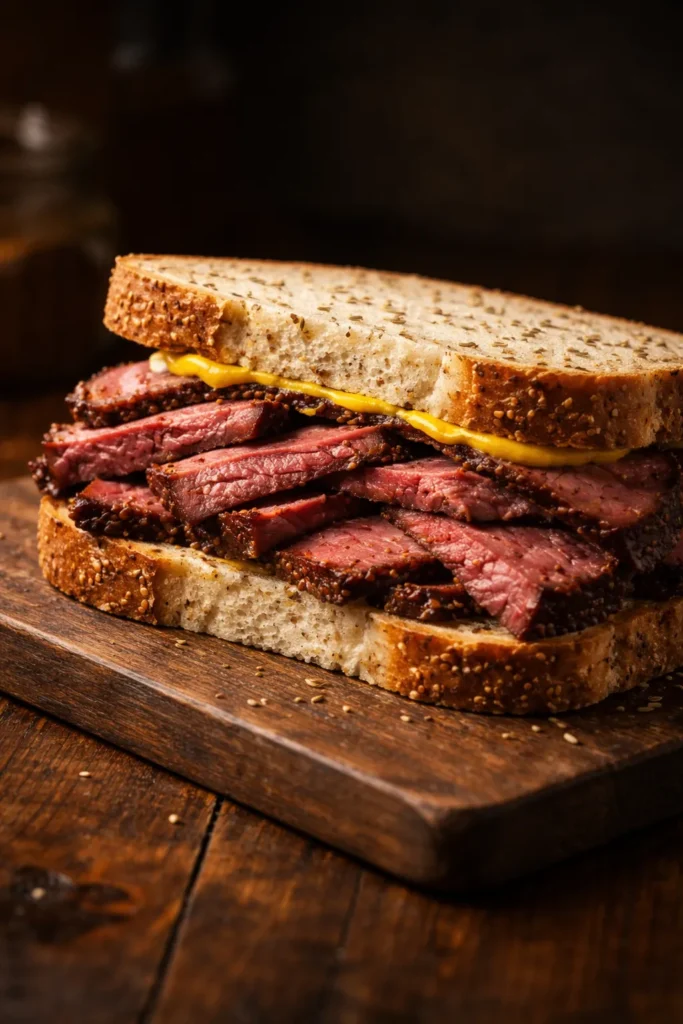
Montreal smoked meat is not pastrami. The two are related but distinct, and any Montrealer will correct you if you confuse them. Smoked meat uses brisket cured with a blend of black pepper, coriander, garlic, and mustard seeds — a spice profile with Eastern European Jewish roots — then smoked and steamed low and slow until the fat runs through the meat like rivers through a map.
Schwartz’s Deli on Boulevard Saint-Laurent is the most famous source, but the lineup in cold weather can stretch around the block. Lester’s Deli in Outremont is a worthy alternative with more than 70 years of smoked meat heritage behind it. If you’re making it at home, a whole brisket requires a 4 to 5 day dry cure followed by a cold smoke at around 225°F (107°C) for 6 to 8 hours, then a final steam for 3 hours to bring it to sliceable tenderness.
The Sandwich Assembly Matters
Smoked meat is sliced to order — and the thickness matters. Medium-lean is the classic choice, giving you some fat marbling without the sandwich becoming a greasy mess. Pile it high on seeded rye bread (never sourdough, never white), add a stripe of yellow mustard on each slice of bread, and absolutely nothing else. No Swiss cheese. No sauerkraut. The meat is the point.
A Home Version That Actually Works
If you don’t want to cure a full brisket, a good smoked meat approach for home cooks starts with a 4-pound flat-cut brisket rubbed with 2 tablespoons black pepper, 1 tablespoon coriander, 1 teaspoon garlic powder, 1 teaspoon brown sugar, and 1 teaspoon smoked paprika. Wrap tightly and refrigerate for 48 hours. Smoke at 250°F (120°C) with hickory or cherry wood until the internal temperature reaches 165°F (74°C), then wrap in foil and braise in a small amount of beef stock until 200°F (93°C). Rest for 30 minutes, slice thin, and serve.
5. Acadian Rappie Pie
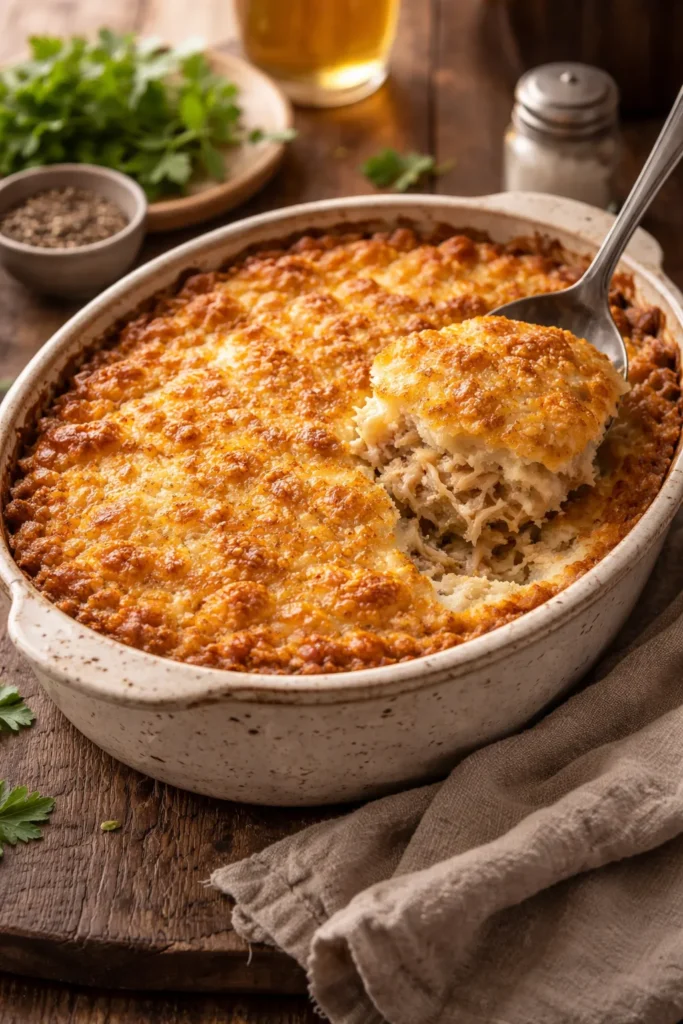
Rappie Pie — pâté à la rapure in French — is the kind of dish that looks humble and tastes like a revelation. It’s the defining dish of Nova Scotia’s Acadian communities, particularly around the Yarmouth area, and it’s been feeding people through Maritime winters for generations.
The technique is genuinely unique. You grate a very large quantity of potatoes — far more than you’d think necessary — then squeeze out every drop of liquid using cheesecloth or a clean kitchen towel. That potato starch-water is replaced, measure for measure, with hot chicken or clam stock. The result is a dense, silky potato base layered with chicken, clams, or salt pork, then baked until the top turns deeply golden and the interior becomes something halfway between a casserole and a dumpling.
Why the Liquid Exchange Is Everything
This is the step that confuses first-timers. You’re not just squeezing out excess water for convenience — you’re replacing the natural potato starch liquid with flavoured stock, which fundamentally changes the texture of the final dish. The ratio is precise: measure the liquid you squeeze out, then add exactly that same volume of boiling stock back in. Don’t approximate.
Ingredient Ratios That Work
- 5 pounds russet potatoes, grated and squeezed (yields about 3 cups liquid to replace)
- 3 cups hot chicken stock (or clam broth for a seafood version)
- 2 pounds cooked chicken, shredded or diced
- 1 large onion, finely diced and sweated in butter
- Salt, white pepper, and summer savory to season
Bake at 375°F (190°C) for 90 minutes until the top is deeply browned. Serve with molasses on the side — the sweet-savoury contrast is a specifically Acadian touch that works better than it has any right to.
6. Quebec Split Pea Soup with Ham

Soupe aux pois has been the defining winter soup of Quebec for more than 400 years. The Habitant-style version — thick, golden, barely blended — built on dried yellow split peas and a meaty ham hock is the kind of food that turns a cold afternoon into something bearable. It’s also one of the cheapest, most nutritious meals you can put together, which explains its staying power.
Start with dried yellow split peas, not green — the yellow variety has a slightly sweeter, nuttier flavour that suits the ham. No soaking is required. Rinse them, add them to a large pot with a smoked ham hock, a whole yellow onion quartered, 2 bay leaves, a few sprigs of fresh thyme, and enough cold water or light chicken stock to cover by 3 inches.
Low and Slow Is the Only Way
Bring the pot to a simmer, skim any foam that rises, then drop the heat as low as it will go. Cook uncovered for 2 to 2½ hours. The peas will completely dissolve and thicken the soup naturally — no blending required. Remove the ham hock, pull the meat from the bone, chop it roughly, and stir it back in. Discard the bay leaves and onion if it’s broken down completely.
Finishing Touches
- Season with salt only at the end — the ham provides significant saltiness as it cooks
- A teaspoon of cider vinegar stirred in off the heat adds brightness that cuts through the richness
- Cracked black pepper is essential here — add it generously
- Serve with thick slices of crusty bread and a slab of salted butter
The Newfoundland variation adds “doughboys” — large, soft dumplings dropped into the simmering soup during the last 20 minutes. They puff up and absorb the pea broth, turning into something spectacular.
7. Bannock Fry Bread
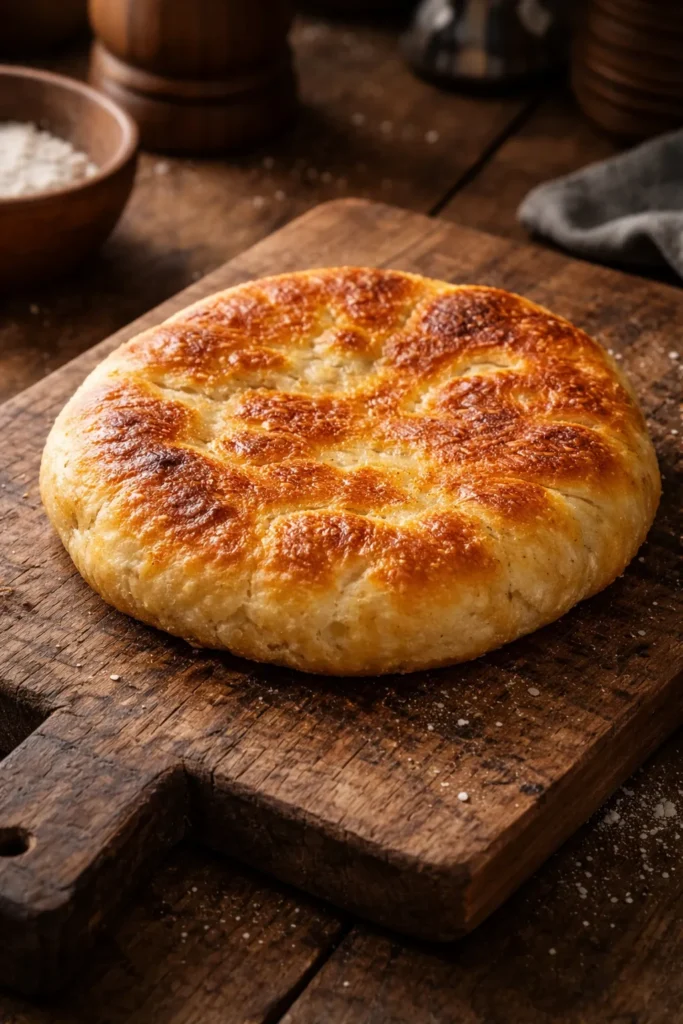
Bannock is one of the oldest and most widely made breads in Canada, with deep roots in Indigenous communities across the country. The unleavened bread — cooked traditionally in a cast-iron pan over an open fire or on the stovetop — is exactly what you want after a day of snowshoeing or winter camping. It’s fast, it’s filling, and it pairs with almost anything.
The basic recipe requires nothing more than 2 cups of flour, 1 tablespoon of baking powder, ½ teaspoon of salt, 2 tablespoons of lard or butter, and enough water to bring it together into a shaggy dough — usually about ¾ cup. Mix until just combined; do not overwork it, or the bread becomes dense and tough rather than slightly crispy on the outside with a tender crumb inside.
Cast Iron Is the Right Tool
Heat a cast-iron pan over medium heat with a generous tablespoon of lard or butter until shimmering. Flatten the dough to about ¾ inch thick — either as one large round or smaller individual pieces — and cook for 4 to 5 minutes per side until deep golden brown and cooked through. The interior should feel firm when pressed but not wet.
Sweet and Savoury Variations
- Sweet bannock: Add 2 tablespoons of sugar and a handful of dried blueberries or raisins to the dough — a breakfast option with maple butter
- Savoury bannock: Fold in sharp cheddar, chopped green onion, and cracked pepper before cooking
- Camp-fire bannock: Wrap the dough around a thick stick and cook over hot coals, rotating slowly for 8 to 10 minutes
The Mr. Bannock food truck in Vancouver has done more for introducing bannock to new audiences than almost any other culinary institution in the country — their flavour combinations are worth seeking out if you’re in the city.
8. Tourtière
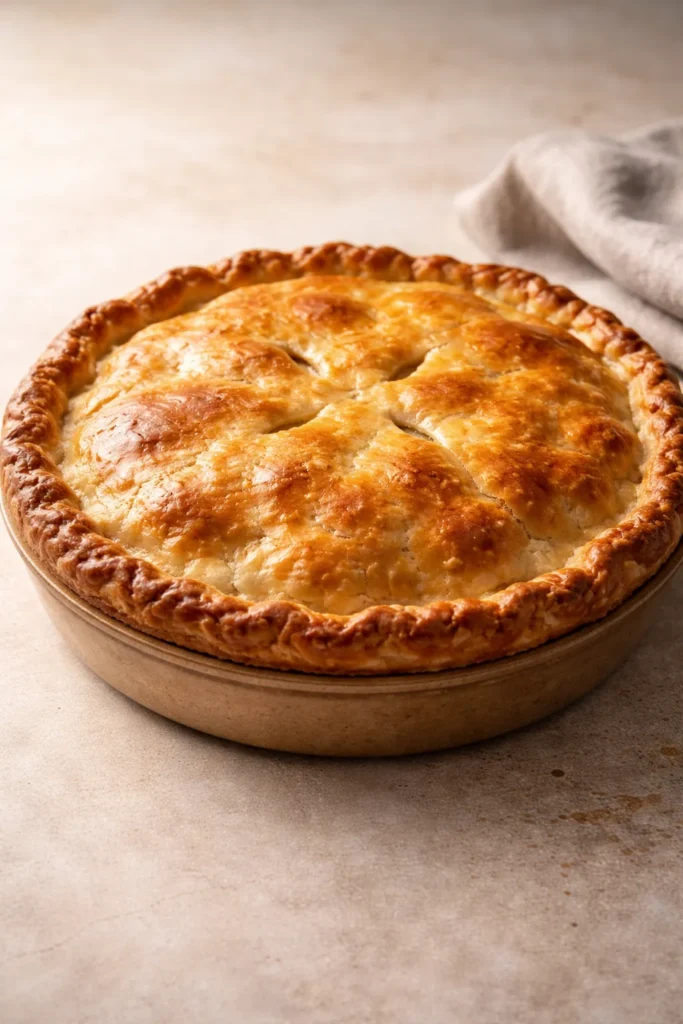
Tourtière is arguably the most deeply Canadian dish on this entire list. This Quebec meat pie — spiced with cinnamon, cloves, and allspice in a way that is wholly distinctive and unlike any other savoury pie — has been served at Réveillon (Christmas Eve) celebrations for centuries. But it’s equally at home on any cold winter table, and it reheats beautifully.
The spice blend is what makes tourtière recognizable. Ground cinnamon, ground cloves, and allspice aren’t optional — they’re the defining character of the filling. Don’t be timid with them. A proper tourtière should smell like winter itself when it comes out of the oven.
The Filling
A classic tourtière uses a combination of ground pork and ground beef in a 2:1 ratio — the pork provides fat and tenderness while the beef adds depth. Brown the meat with a finely diced onion and 2 minced garlic cloves. Drain most of the fat, then add ½ cup of beef stock, ½ teaspoon each of cinnamon, allspice, and dried savory, and ¼ teaspoon of ground cloves. Simmer until the liquid is nearly absorbed, then stir in ½ cup of plain mashed potato — this binds the filling and keeps it from crumbling when sliced.
Pastry and Assembly
- Use an all-butter pie crust — the flakiness and flavour cannot be replicated with shortening
- Fill the bottom crust with the cooled meat mixture — never fill a pie with hot filling; the steam will make the bottom crust soggy
- Cut steam vents in the top crust, brush with an egg wash (1 egg beaten with 1 tablespoon of milk), and bake at 400°F (205°C) for 35 to 40 minutes until deeply golden
- Rest for 15 minutes before slicing so the filling holds together
Serve with a side of ketchup aux fruits — Quebec’s spiced fruit ketchup — or a simple green salad with a sharp vinaigrette.
9. BeaverTails Fried Dough

BeaverTails are not a recipe you can fully replicate at home — the original experience, served from a small shack on the Rideau Canal Skateway in Ottawa on a -15°C afternoon, with cold hands wrapped around warm fried dough, is about location as much as ingredients. But a very satisfying home version is entirely achievable, and the result is the kind of fried-dough comfort that belongs firmly in the winter cooking canon.
The dough is an enriched yeasted dough — eggs, milk, a touch of sugar, and active dry yeast, brought together into a soft, slightly sticky mass that gets kneaded for 8 minutes and left to rise for 1 hour. The key to the signature shape is stretching the dough by hand into a long oval that genuinely resembles a beaver’s wide, flat tail — about ¼ inch thick — rather than rolling it, which compresses the air bubbles you want for a light interior.
Frying and Toppings
Fry at 375°F (190°C) in neutral oil for about 90 seconds per side until golden and puffed. Drain briefly, then dress immediately while hot — the toppings need heat to stick and melt properly.
Classic Topping Combinations
- The original: cinnamon sugar with a squeeze of fresh lemon juice
- The Killaloe Sunset: cinnamon sugar with freshly squeezed lemon and orange zest
- The Triple Trip: Nutella, banana slices, and strawberries
- The Avalanche: cream cheese spread, crushed Oreos, chocolate sauce, and caramel — rich enough to qualify as a meal
The dough recipe makes enough for 6 to 8 BeaverTails. Make the topping decisions before you fry, because once they come out of the oil, you have about 30 seconds before they start cooling and the window for optimal topping adhesion closes.
10. Cheesy Potato and Leek Soup

Every region in Canada has its version of a potato-based winter soup, and the combination of potato, leek, and aged cheddar represents the Canadian home-kitchen ideal — three humble ingredients that together produce something deeply warming, creamy without being heavy, and rich with savoury depth.
Leeks need patience. Trim off the dark green tops, halve them lengthwise, wash them thoroughly (sand hides in every layer), and slice them into half-moons. Cook them low and slow in 3 tablespoons of butter for 12 to 15 minutes until completely wilted, sweet, and almost jammy. Don’t rush this step — the quality of the soup depends on how well you’ve coaxed sweetness out of the alliums at the beginning.
Building Layers of Flavour
Add 1.5 pounds of peeled, diced Yukon Gold potatoes along with 4 cups of good chicken stock and 1 cup of whole milk. Bring to a gentle simmer and cook for 20 minutes until the potatoes are completely tender. Use an immersion blender to purée about half the soup — this creates a creamy base while leaving visible potato chunks for texture. Stir in 1.5 cups of grated aged white cheddar off the heat, letting the residual warmth melt it smoothly.
Finishing Details
- A pinch of dry mustard powder added with the cheese amplifies the cheddar flavour noticeably
- Season with salt, white pepper, and a tiny grating of fresh nutmeg
- Crispy bacon crumbled on top adds texture contrast and smokiness
- Serve with buttered sourdough or a thick slice of white Cheddar toasted on rye
This soup also freezes beautifully — make a double batch and freeze before adding the cheese, then stir in fresh cheddar when reheating for best results.
Final Thoughts

Canadian comfort food is built on a particular philosophy: feed people well, use what’s available, and don’t overcomplicate what doesn’t need to be complicated. From the ancient simplicity of bannock cooked in a cast-iron pan to the generations-deep ceremony of a Newfoundland Jiggs Dinner, these dishes carry cultural memory as much as flavour.
What ties all ten of these recipes together isn’t geography — it’s purpose. Each one was developed to answer cold weather, to feed hungry people, and to make the harshest months of the year feel manageable, even genuinely enjoyable. That’s not a small thing.
If you’re new to Canadian cooking, poutine or the cheesy potato leek soup are the most accessible starting points. If you’re looking for a project worth committing a full weekend to, tourtière or Montreal smoked meat will reward the effort in ways that genuinely surprise you. And if you want to understand the country through its food — which is one of the better ways to understand any place — a bowl of Quebec split pea soup and a piece of bannock on a cold afternoon will tell you more than most travel guides ever could.