There’s a particular magic that happens when Trinidadian curry hits a hot pot of oil. The spices bloom, the kitchen fills with that unmistakable golden-turmeric fragrance, and suddenly you’re transported to the twin-island nation where curry is practically a birthright. Trinidad and Tobago carries one of the most fascinating culinary histories in the Caribbean — a deep Indo-Caribbean tradition born from the arrival of indentured workers from South Asia in the 19th century, layered over African, Creole, and Latin influences. The result is a curry culture unlike anything else in the world.
What makes Trinidadian curry so distinctive isn’t just the spice blend, though that matters enormously. It’s the technique. Locals call it choonkaying — cooking the curry paste in hot oil until it turns grainy and fragrant, removing the raw bitterness and unlocking deep, earthy warmth. It’s the green seasoning (a fresh herb paste of chadon beni, thyme, cilantro, and garlic) that marries with the chicken overnight. It’s the careful addition of water in stages to build a thick, clinging gravy rather than a watery soup.
And then there’s the rice. Whether it’s plain steamed basmati, a turmeric-tinted curry rice, or a full one-pot pelau, rice in Trinidadian cooking is never an afterthought — it’s the vehicle that makes every drop of that sauce count.
The eight recipes below span the full range of what Trini curry and rice cooking looks like at home. Some are weeknight staples. Others are weekend projects worth every minute of effort. All of them bring something genuinely different to the table, from the classic curried drumstick that falls clean off the bone to a plant-based channa curry that makes non-vegetarians forget about meat entirely.
Table of Contents
- 1. Classic Trinidad Curry Chicken with Steamed White Rice
- The Technique That Makes It Authentic
- Recipe Essentials
- 2. Trini Curry Chicken with Coconut Milk and Jasmine Rice
- Where Coconut Milk Changes the Dish
- Recipe Essentials
- 3. Trinidad Curry Fish with Potatoes and Rice
- Choosing the Right Fish
- Recipe Essentials
- 4. Curry Aloo (Potato Curry) with Rice — The Essential Side Dish
- Why Trini Curry Potatoes Taste Different
- Recipe Essentials
- 5. Curry Channa (Chickpea Curry) with Rice — Plant-Based and Proud
- Getting the Texture Right
- Recipe Essentials
- 6. Curry Goat and Rice — The Weekend Showstopper
- Sourcing and Preparing the Meat
- Recipe Essentials
- 7. Pelau — The One-Pot Curry Rice with Chicken
- The Browning: The Heart of Pelau
- Recipe Essentials
- 8. Trini Curry Rice — Turmeric-Spiced Rice Served Every Way
- How to Build Flavor in the Rice
- Recipe Essentials
- Wrapping Up
1. Classic Trinidad Curry Chicken with Steamed White Rice
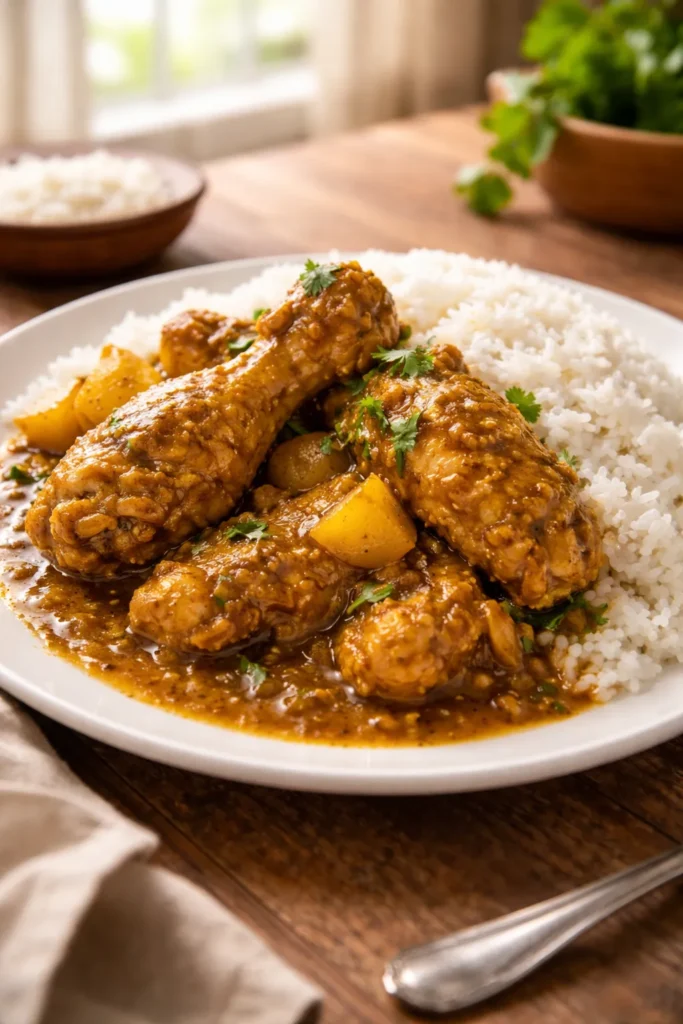
This is the one that started it all for most Trinidadians — bone-in chicken pieces marinated in curry paste and green seasoning, then simmered low and slow until the meat pulls away from the bone and the gravy is thick, deeply spiced, and impossible to resist. It’s comfort food in the truest sense, and it’s the dish that defines what Trini curry means to most people who grew up on the island.
The Technique That Makes It Authentic
The single most important step in this recipe is choonkaying the curry — cooking the curry powder in hot oil before adding any liquid or protein. Add your oil to a heavy-bottomed pot over medium-high heat, mix your curry powder with just enough water to form a thick paste (about 2–3 tablespoons), and pour that paste into the hot oil. Stir constantly for 3 to 5 minutes until the paste loses its wet sheen, turns grainy, and darkens slightly. This removes the raw, sharp edge of the spice and gives Trini curry that characteristic rounded, earthy depth.
A secondary traditional step: add 1–2 garlic cloves to the oil before the curry paste, let them cook until dark golden brown, then remove them. They flavor the oil without overpowering the dish. You’ll add them back later.
Recipe Essentials
For the Curry Paste & Marinade:
- 1 whole chicken (approximately 3–4 lbs), cut into 8–10 bone-in pieces
- 3 tablespoons Chief or Turban curry powder (or any Caribbean-style curry powder)
- ½ cup green seasoning (blended chadon beni, thyme, cilantro, garlic, and onion)
- 1 teaspoon roasted geera (ground cumin)
- 1 teaspoon salt, plus more to taste
- Black pepper to taste
- 3 tablespoons water (to form curry paste)
For Cooking:
- 3 tablespoons coconut oil or neutral vegetable oil
- 2 cloves garlic
- ½ medium onion, sliced
- 2 stalks chive (green onion), chopped
- 1½ to 2 cups water, added in stages
- 1 whole scotch bonnet pepper (optional — keep it whole so it flavors without igniting)
For Serving:
- 2 cups long-grain white rice, cooked according to package directions
- Fresh cilantro or chadon beni for garnish
Yield: Serves 4 to 6 Prep Time: 20 minutes (plus at least 1 hour marinating, ideally overnight) Cook Time: 45 minutes Total Time: 1 hour 5 minutes active Difficulty: Intermediate — the technique requires attention but the steps are straightforward once you understand the choonkay method.
Season the chicken pieces with green seasoning, 1 tablespoon of the curry powder, salt, and black pepper. Let it marinate covered in the refrigerator for a minimum of 1 hour. Overnight is what separates a good Trini curry from a great one — the flavors penetrate right to the bone.
When ready to cook, mix the remaining 2 tablespoons curry powder with 3 tablespoons water to form your cooking paste. Heat oil in a heavy pot, brown the garlic until dark, remove and set aside. Add onion and chive, sauté until soft. Add the curry paste and stir constantly until it turns grainy and fragrant, about 4 minutes. Add the marinated chicken, stir to coat completely, cover, and cook on high heat for 15 to 20 minutes until the chicken releases its juices and that liquid reduces down. Add 1½ cups water, return the browned garlic, drop in the whole scotch bonnet if using, cover, and simmer on medium heat for another 20 to 25 minutes until the chicken is tender and the gravy is thick. Serve over steamed white rice with fresh herbs scattered on top.
Pro tip: The scotch bonnet adds incredible flavor when left whole. If it bursts, the dish gets extremely hot — keep the heat low and don’t stir aggressively once it’s in the pot.
2. Trini Curry Chicken with Coconut Milk and Jasmine Rice
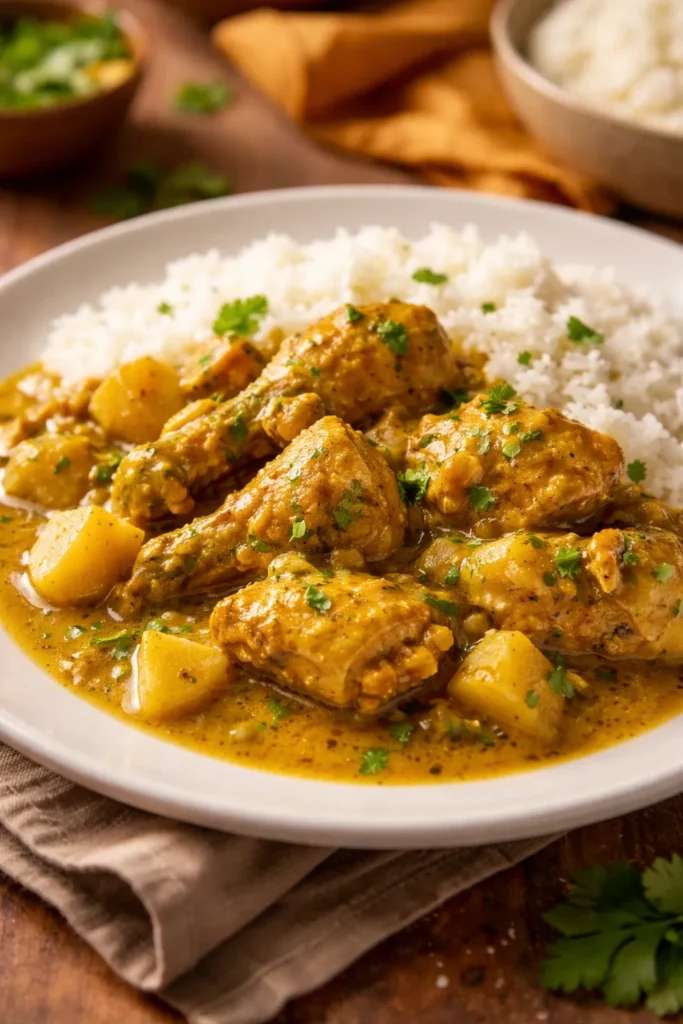
This version takes the same foundational technique as the classic and introduces coconut milk at the sauce-building stage, creating a curry that’s simultaneously bolder and smoother. The coconut rounds out the heat of the scotch bonnet without canceling it, and it makes the gravy cling to jasmine rice in the most satisfying way. It’s a common variation made in households across Trinidad, particularly for Sunday dinners when a bit of extra richness feels right.
Where Coconut Milk Changes the Dish
Coconut milk doesn’t thin out the curry — it enriches it. Add 1 cup of full-fat coconut milk after the chicken has released and reduced its juices (the same stage you’d normally add plain water). Then add ½ cup water to control the thickness as it simmers. The result is a gravy that has a gentle creaminess without ever tasting like an Asian-style coconut curry. The Trini curry powder — high in turmeric and earthy spices — holds its character completely.
Recipe Essentials
Ingredients:
- 2 lbs bone-in chicken thighs and drumsticks
- 2 tablespoons Caribbean curry powder
- ½ cup green seasoning
- 1 teaspoon geera (ground cumin)
- 1 teaspoon salt
- 3 tablespoons coconut oil
- 1 medium onion, finely diced
- 3 garlic cloves, minced
- 1 inch fresh ginger, grated
- 1 cup full-fat coconut milk
- ½ cup water
- 1 whole habanero or scotch bonnet (optional)
- 2 cups jasmine rice, cooked
Yield: Serves 4 Prep Time: 15 minutes (plus marinating time) Cook Time: 40 minutes Total Time: 55 minutes active Difficulty: Beginner — coconut milk makes this version more forgiving than the traditional water-only method.
Season and marinate the chicken with green seasoning, 1 tablespoon curry powder, salt, and black pepper for at least 1 hour. Choonkay the remaining curry powder in coconut oil with onion, garlic, and ginger until aromatic and grainy. Add chicken and cook uncovered until juices evaporate. Pour in coconut milk and water, add whole pepper, cover and simmer 25 to 30 minutes until the chicken is cooked through and the sauce coats the back of a spoon. Serve over fluffy jasmine rice.
Worth knowing: If the sauce separates slightly (oil rising to the top), that’s normal and traditional. Stir it back together before serving — it’s not a flaw, it’s a sign the fat has done its job.
3. Trinidad Curry Fish with Potatoes and Rice
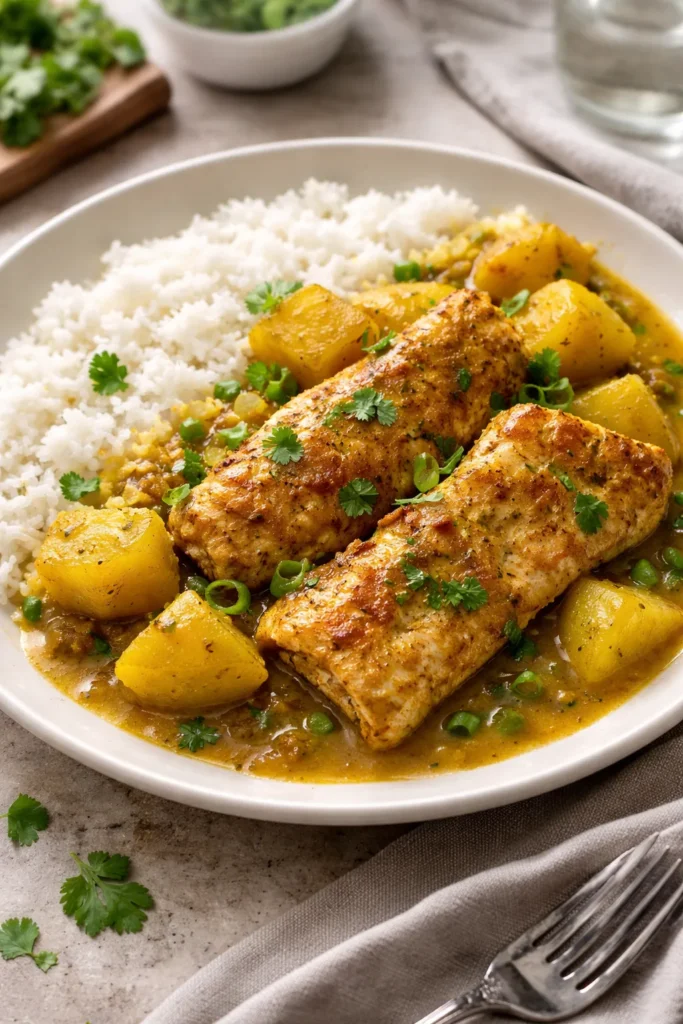
Curry fish is the other pillar of Trinidadian curry cooking, and it works differently from chicken. The fish is typically fried first until golden brown, then briefly added to a prepared curry sauce for the last few minutes — just long enough to absorb the spice without falling apart. The potatoes in the sauce create body and give the gravy something starchy to cling to. It’s a dish that looks humble and tastes extraordinary.
Choosing the Right Fish
In Trinidad, firm-fleshed fish like king fish, snapper, carite, or grouper are the standard choices because they hold their shape through frying and the brief simmer in curry sauce. Avoid flaky white fish like tilapia or cod — they’ll disintegrate. Ask your fishmonger for 1-inch thick steaks or thick fillets. Season the fish with green seasoning, salt, and a squeeze of lime juice, and let it sit for 20 minutes before you dust it in flour and fry it.
Recipe Essentials
Ingredients:
- 1½ lbs king fish or snapper steaks (cut into 4–5 pieces)
- Juice of 1 lime
- 2 tablespoons green seasoning
- ½ cup all-purpose flour (for dusting)
- Salt and black pepper to taste
- Oil for shallow frying (about ½ cup)
- 2 tablespoons curry powder
- 2 tablespoons water (for curry paste)
- 1 medium onion, sliced
- 3 garlic cloves, minced
- 2 medium potatoes, peeled and cut into 1-inch cubes
- 1 cup water (for curry sauce)
- 2 cups white rice, cooked
Yield: Serves 4 Prep Time: 20 minutes Cook Time: 30 minutes Total Time: 50 minutes Difficulty: Intermediate — frying and building the sauce are two separate processes that need to happen in the right sequence.
Season fish with lime juice, green seasoning, salt, and pepper. Rest 20 minutes, then dust lightly in flour. Fry in hot oil until golden brown on both sides, about 3 minutes per side. Set fried fish aside on paper towels. In the same pan with drained oil (leave 2 tablespoons), build the curry sauce: choonkay the curry powder paste until grainy, add onion and garlic, cook 3 minutes, add potatoes and water. Simmer 10 to 12 minutes until potatoes are fork-tender. Gently slide the fried fish into the sauce and simmer 3 to 4 minutes — no more. Serve immediately over white rice.
4. Curry Aloo (Potato Curry) with Rice — The Essential Side Dish
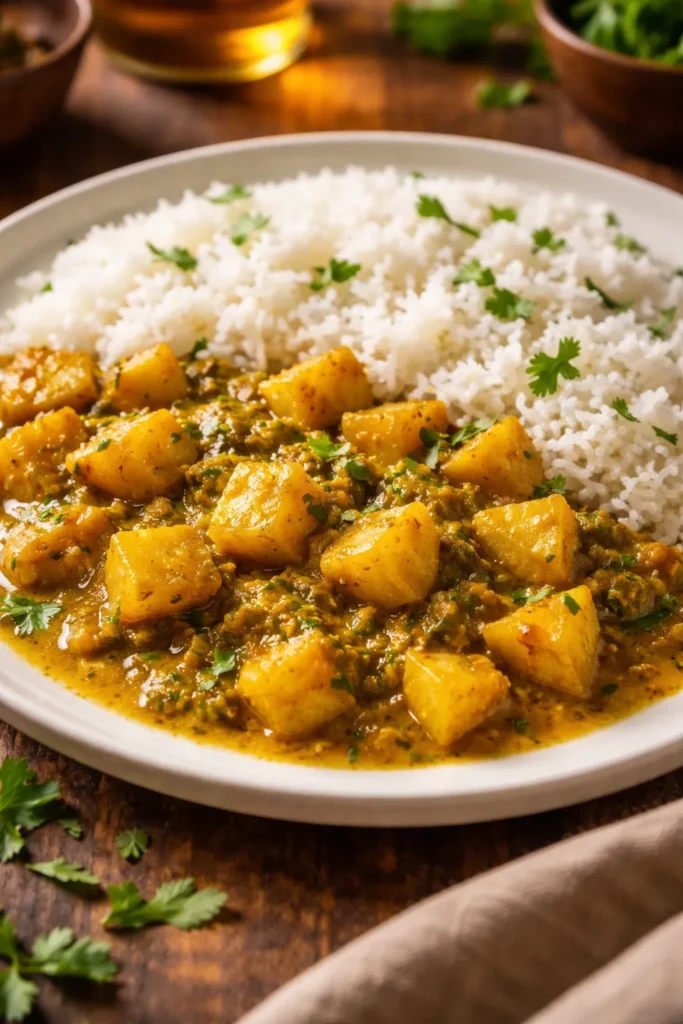
Curry aloo is what gets served alongside curry chicken or curry fish, but it deserves its own spotlight because it’s also a complete, satisfying meal on its own. Potatoes absorb curry spice better than almost any other vegetable — they soak it up from the outside while staying fluffy inside, and they thicken the sauce naturally as they cook down. This is weeknight cooking at its most efficient and most delicious.
Why Trini Curry Potatoes Taste Different
The secret is cutting the potatoes small — roughly ¾-inch cubes — so they break down at the edges and contribute starch to the sauce while the centers stay intact. The other key is letting them cook in the dry curry paste first, before any water is added, so the spice coats and penetrates each piece before the liquid brings them to tenderness. The geera (cumin) matters here more than anywhere else in Trini cooking — it gives curry aloo that warm, nutty undercurrent.
Recipe Essentials
Ingredients:
- 4 medium russet or Yukon gold potatoes (about 2 lbs), peeled and cut into ¾-inch cubes
- 2 tablespoons Caribbean curry powder
- 1 teaspoon ground geera (cumin)
- 3 tablespoons oil (coconut oil preferred)
- 1 small onion, diced
- 3 garlic cloves, minced
- 1 whole scotch bonnet or habanero (keep whole)
- 1 to 1½ cups water
- Salt to taste
- 2 stalks chive, chopped
- 2 cups white rice, cooked
Yield: Serves 4 as a main, 6 as a side Prep Time: 10 minutes Cook Time: 25 minutes Total Time: 35 minutes Difficulty: Beginner — one pot, minimal prep, straightforward technique.
Mix curry powder and geera with 3 tablespoons water to form a paste. Heat oil, sauté onion and garlic until soft. Add curry paste and cook, stirring, until grainy and darkened, about 4 minutes. Add potato cubes and stir to coat each piece in the curry. Cook dry for 3 minutes, stirring frequently. Add 1 cup water and the whole scotch bonnet. Cover and simmer 15 to 18 minutes, stirring every 5 minutes, until potatoes are tender and the sauce is thick. Season with salt, scatter chive on top, and serve with rice.
5. Curry Channa (Chickpea Curry) with Rice — Plant-Based and Proud
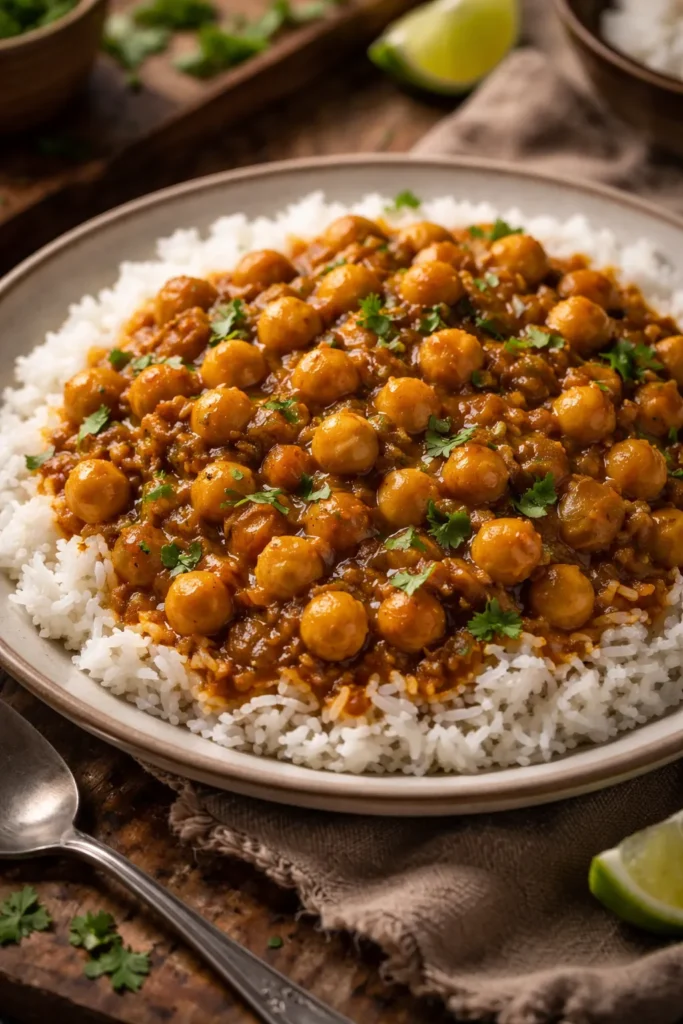
Chickpeas — called channa in Trinidad — hold a special place in Trini food culture. Curried channa is street food, home cooking, and Sunday meal prep all at once. It’s the filling inside the famous doubles (fried bara with curried chickpeas), but it’s equally at home piled over rice with a drizzle of shadow beni sauce. This is one of those plant-based dishes that doesn’t apologize for the absence of meat — it’s rich, filling, and so satisfying you won’t think twice about what’s missing.
Getting the Texture Right
Canned chickpeas work, but dried chickpeas soaked overnight and cooked until just tender produce a firmer, meatier texture that holds up better in the curry. If you use canned, drain and rinse them, then pat dry before adding to the pot — excess moisture dilutes the curry paste and steams the chickpeas instead of letting them pick up spice. Either way, cook them in the curry paste for 3 to 4 minutes before adding water, so the exterior of each chickpea is coated and slightly toasted in the spice.
Recipe Essentials
Ingredients:
- 2 cans (15 oz each) chickpeas, drained and rinsed (or 1½ cups dried, soaked overnight and cooked until tender)
- 2 tablespoons Caribbean curry powder
- 1 teaspoon geera (ground cumin)
- ¼ teaspoon amchar masala or garam masala
- 3 tablespoons coconut oil
- 1 medium onion, finely diced
- 4 garlic cloves, minced
- 1 inch fresh ginger, grated
- 1 whole scotch bonnet (optional)
- ¾ cup water or vegetable broth
- Salt to taste
- Fresh chadon beni or cilantro, to finish
- 2 cups white rice, cooked
Yield: Serves 4 Prep Time: 10 minutes Cook Time: 25 minutes Total Time: 35 minutes Difficulty: Beginner — this is genuinely one of the easiest curries to make well.
Choonkay the curry powder, geera, and masala in hot coconut oil until grainy and fragrant. Add onion, garlic, and ginger, cook until soft. Add chickpeas and stir to coat, cooking dry for 4 minutes. Add water and whole scotch bonnet, cover and simmer 15 to 20 minutes until the sauce thickens and the chickpeas are fully infused with spice. Finish with fresh chadon beni or cilantro, adjust salt, and serve over rice.
Pro tip: A small handful of spinach stirred in during the last 2 minutes adds color, nutrition, and a mild earthiness that works beautifully with the curry. It’s not traditional, but it’s a natural fit.
6. Curry Goat and Rice — The Weekend Showstopper
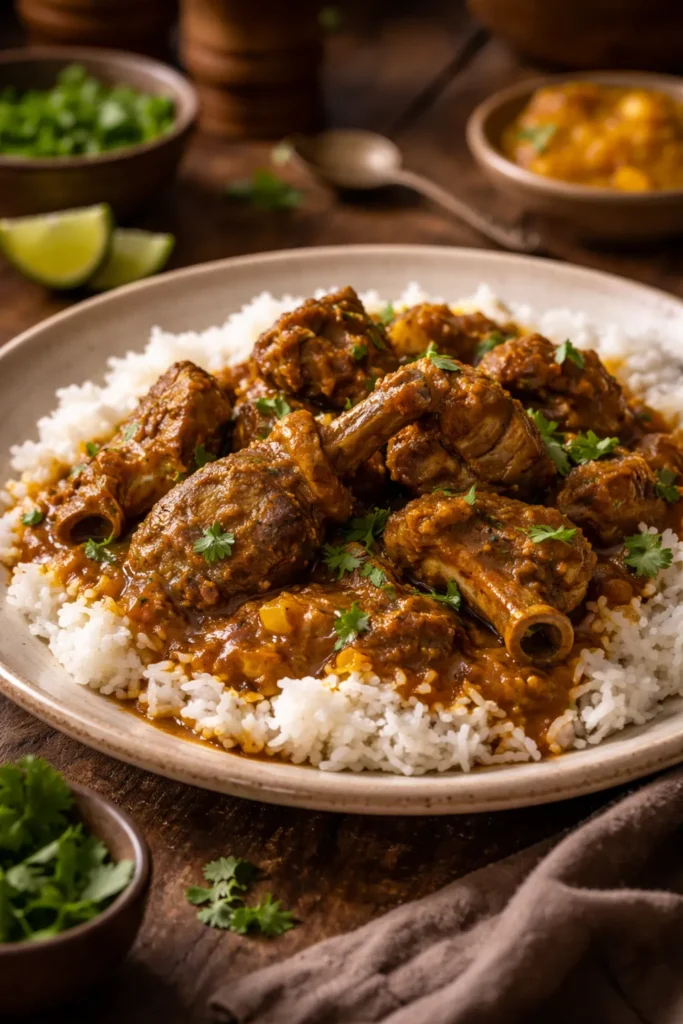
Goat meat is the most authentic protein for Trinidadian curry, historically speaking — it’s what was used in the earliest Indo-Caribbean kitchens, and many older Trinidadians will tell you that chicken curry is what you make when goat isn’t available. Curry goat requires patience: the meat is tougher and more flavorful than chicken, and it needs a long, slow simmer to become fork-tender. The reward is a deeply complex, gamey-sweet curry that no other protein can replicate.
Sourcing and Preparing the Meat
Goat meat is available at most Caribbean, African, and Middle Eastern grocery stores, sold bone-in and cut into roughly 2-inch pieces. Don’t try to substitute lamb — it works but it’s a different dish. The bones are essential; they release collagen into the curry as it cooks, creating a sauce with a silky, almost sticky body that clings to rice in the best possible way. Marinate the goat for at least 4 hours, and ideally 24 hours — the meat is dense and needs time for the green seasoning to penetrate.
Recipe Essentials
Ingredients:
- 2½ lbs bone-in goat, cut into 2-inch pieces
- ½ cup green seasoning
- 3 tablespoons Caribbean curry powder
- 1 teaspoon geera (ground cumin)
- 1 teaspoon amchar masala or garam masala
- 1 teaspoon salt
- 4 tablespoons coconut oil
- 2 garlic cloves (for oil infusion)
- 1 medium onion, diced
- 3 stalks chive, chopped
- 2 to 2½ cups water, added in stages
- 1 whole scotch bonnet
- 3 medium potatoes, cubed (optional but recommended)
- 2 cups white rice, cooked
Yield: Serves 4 to 6 Prep Time: 25 minutes (plus minimum 4 hours marinating) Cook Time: 1 hour 15 minutes to 1 hour 30 minutes Total Time: 1 hour 40 minutes active Difficulty: Intermediate — technique is the same as curry chicken, but the longer cook time requires monitoring.
Marinate the goat with green seasoning, 1 tablespoon curry powder, geera, masala, and salt for at least 4 hours. Choonkay the remaining curry powder in hot coconut oil with the browned garlic (removed and reserved). Add onion and chive, sauté until soft. Add marinated goat, stir to coat in curry, cook covered on high heat for 15 minutes until juices release. Add 1 cup water and whole scotch bonnet, reduce heat to medium-low, cover and simmer 45 minutes. Add potatoes and remaining water, continue simmering covered until goat is fork-tender and potatoes are cooked, another 20 to 25 minutes. Serve over steamed white rice.
7. Pelau — The One-Pot Curry Rice with Chicken
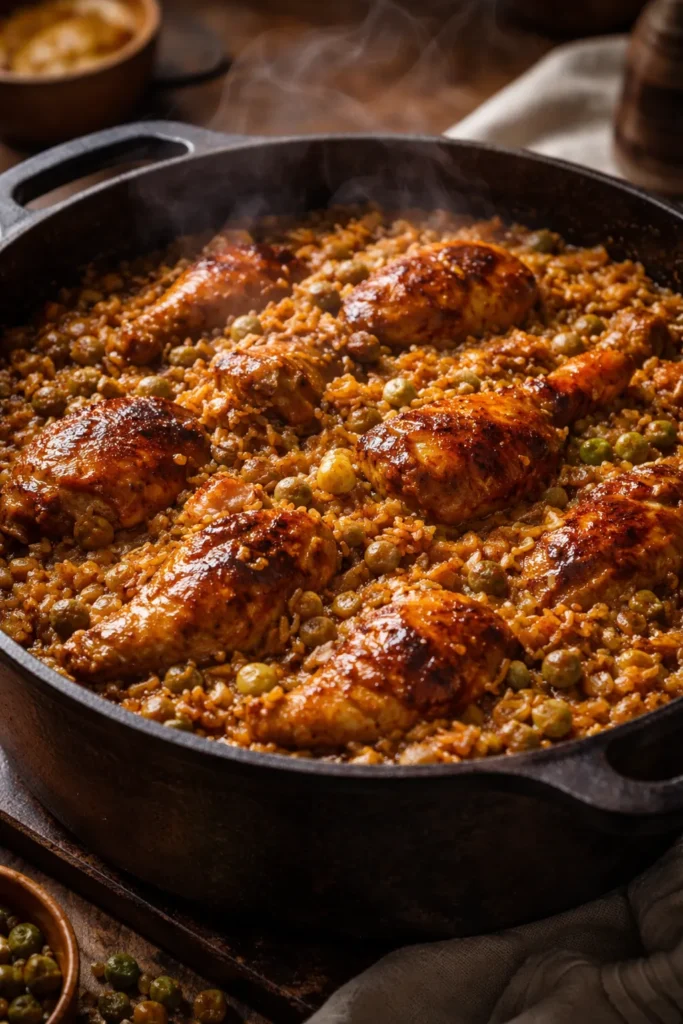
Pelau is where curry and rice stop being separate things and become one gloriously unified dish. It’s cooked in a single pot with caramelized sugar (the hallmark of Trini browning), seasoned rice, pigeon peas, coconut milk, and chicken, all simmering together until the rice has absorbed every drop of color, smoke, and flavor. It’s not technically a curry, but it uses green seasoning and is deeply spiced — it lives comfortably in the curry-and-rice family while being entirely its own thing.
The Browning: The Heart of Pelau
Browning the chicken in caramelized sugar is non-negotiable in pelau. Add 2 tablespoons of white granulated sugar to your pot with 2 tablespoons of oil over medium-high heat. Let it melt and bubble without stirring until it turns a deep amber-brown (almost burnt-looking). Then add the seasoned chicken quickly and stir to coat — the caramelized sugar chars the outside of the chicken pieces, giving pelau its signature dark color and smoky-sweet depth. Don’t skip this, and don’t be afraid of the dark color. It’s correct.
Recipe Essentials
Ingredients:
- 2 lbs bone-in chicken pieces
- ½ cup green seasoning
- 1 teaspoon curry powder
- 1 teaspoon geera
- Salt and black pepper
- 2 tablespoons white granulated sugar (for browning)
- 2 tablespoons vegetable oil
- 1 medium onion, diced
- 3 garlic cloves, minced
- 1 can (15 oz) pigeon peas (or green pigeon peas), drained
- 2 cups parboiled or long-grain white rice, rinsed
- 1 can (14 oz) full-fat coconut milk
- 1½ cups water
- 1 whole scotch bonnet
- 2 stalks chive, chopped
- Pumpkin (½ cup diced, optional but traditional)
Yield: Serves 6 Prep Time: 20 minutes Cook Time: 50 minutes Total Time: 1 hour 10 minutes Difficulty: Intermediate — the browning step takes confidence, but once you’ve done it once, it becomes second nature.
Marinate chicken with green seasoning, curry powder, geera, salt, and pepper for at least 1 hour. In a heavy pot over medium-high, melt sugar in oil until deep amber. Add chicken, stir to coat, and cook 8 minutes until browned. Add onion, garlic, and pumpkin, stir 2 minutes. Add pigeon peas, rice, coconut milk, water, and scotch bonnet. Stir everything once, bring to a boil, then reduce heat to low, cover tightly, and cook 25 to 30 minutes without lifting the lid. When the rice is cooked through and has absorbed the liquid, remove from heat and let it steam covered for 10 more minutes. Fluff with a fork and serve directly from the pot.
8. Trini Curry Rice — Turmeric-Spiced Rice Served Every Way
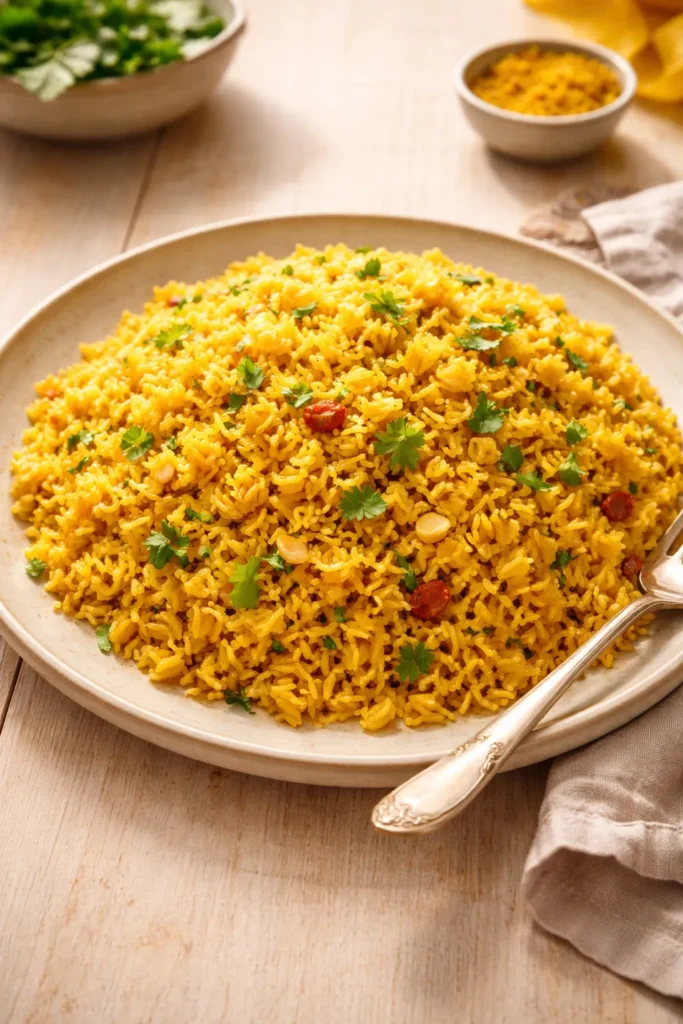
This is less a recipe and more of a technique that transforms plain white rice into something that can stand independently alongside any curry dish — or as a base for leftovers the next day. Trinidadian curry rice is fragrant with turmeric (called saffron powder locally), seasoned with geera, sweet peppers, onion, and garlic, and it carries a beautiful golden color that makes any plate look warm and inviting. It’s not fried rice and it’s not pilaf — it sits somewhere in between, with a distinctly Trini character.
How to Build Flavor in the Rice
The key is cooking the aromatics and spices in butter and oil before the rice is added, so each grain gets coated in the seasoned fat. Add the rinsed, drained rice to the pot and stir it for 2 full minutes in the spiced butter — you’ll hear a slight toasting sound and notice the grains turning lightly opaque. Only then add your liquid. This toasting step is what prevents mushy, clumped curry rice and gives each grain a clean, separate texture.
Recipe Essentials
Ingredients:
- 2 cups long-grain white rice, rinsed until water runs clear
- 1 tablespoon butter
- 1 tablespoon vegetable or coconut oil
- 2 teaspoons curry powder
- 1 teaspoon turmeric powder (saffron powder)
- 1 teaspoon ground geera (cumin)
- ½ small onion, finely diced
- 2 garlic cloves, minced
- 1 small red bell pepper, finely diced
- 1 small green bell pepper, finely diced
- ¼ cup water (for blooming spices)
- 2½ cups water or low-sodium chicken broth (for cooking rice)
- Salt and pepper to taste
- 25 chopped almonds, toasted (optional, for texture)
Yield: Serves 6 Prep Time: 10 minutes Cook Time: 25 minutes Total Time: 35 minutes Difficulty: Beginner — this is a one-pot side dish that comes together with almost no effort.
Heat butter and oil in a medium saucepan over medium heat. Add curry powder, turmeric, and geera, cook 2 minutes until fragrant. Add ¼ cup water and stir into a paste, cook until liquid mostly evaporates, about 3 minutes. Add onion, garlic, and bell peppers, cook 3 minutes until softened. Add rinsed rice and stir constantly for 2 minutes to coat every grain in the spiced oil. Pour in 2½ cups water or broth, add salt, and bring to a boil. Reduce heat to low, cover, and cook 15 to 18 minutes until the rice is tender and liquid is fully absorbed. Remove from heat and let steam covered for 5 minutes. Fluff with a fork, scatter toasted almonds over the top if using, and serve.
Worth knowing: This curry rice reheats beautifully the next day. Add 2 tablespoons of water and cover the pot while reheating on low — the steam revives the texture without drying it out.
Wrapping Up
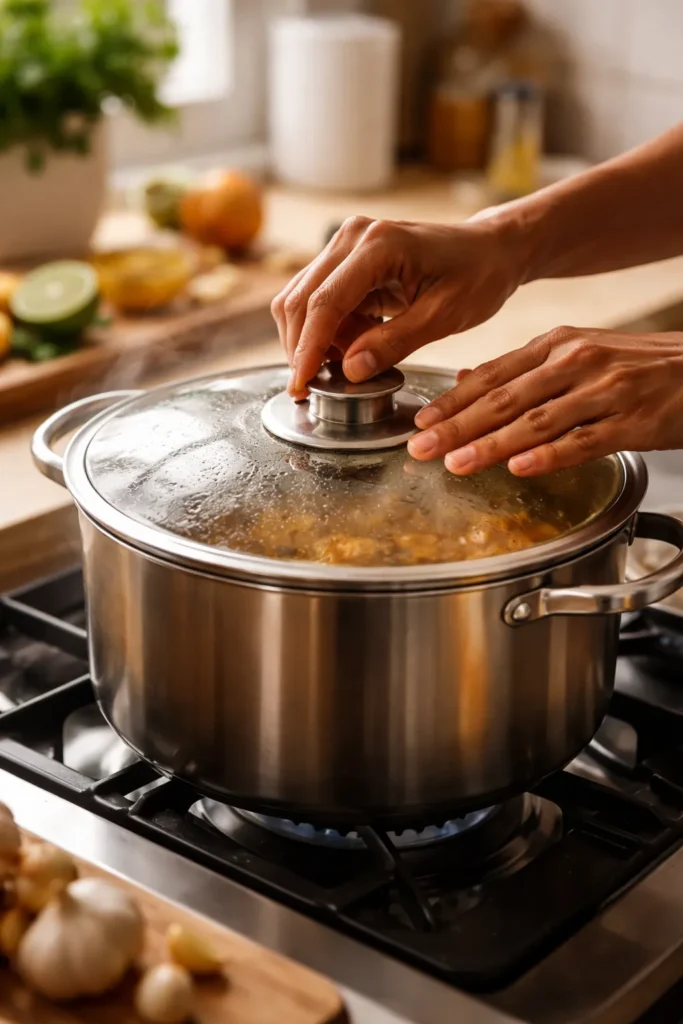
What these eight dishes show, collectively, is that Trinidadian curry and rice cooking is a living, adaptable tradition — not a fixed set of rules. The core technique stays constant: bloom the curry in fat, build in layers, cook with patience. But the proteins, the accompaniments, and the variations shift endlessly depending on the occasion, the season, the household, and the cook’s mood.
If you’re starting out, begin with the classic curry chicken (Recipe 1) — it teaches you everything you need to know about choonkaying and building a Trini curry from scratch. Once you’ve got that down, the rest follows naturally.
The biggest mistake new cooks make is rushing. Trinidadian curry rewards time. A longer marinate means deeper flavor. Letting the chicken cook dry before adding water means a richer gravy. Keeping the scotch bonnet whole means a warm, fruity heat rather than a punishing burn. These aren’t optional refinements — they’re the difference between curry that tastes like home and curry that just tastes like spiced chicken.
Whether you serve it with roti, steamed white rice, or the turmeric-tinted curry rice from Recipe 8, the goal is the same: a plate that tells a story of culture, migration, and a culinary tradition that has spent generations perfecting itself one pot at a time.