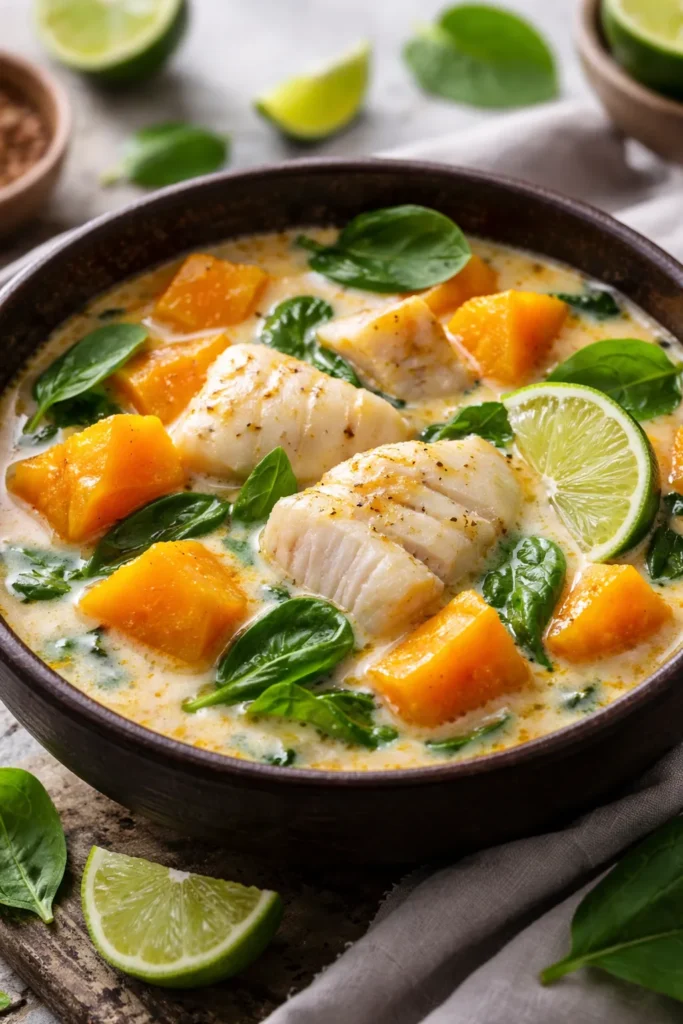
There’s a particular kind of magic that happens when you lift the lid off a simmering tagine. The steam rises in a slow curl, and then the smell hits you — warm cinnamon, earthy cumin, sweet dried fruit, and something deeper underneath that you can’t quite name but immediately crave. It’s the smell of Moroccan cooking done right, and it has the effect of making everyone in the house quietly drift toward the kitchen.
Moroccan tagine is one of those dishes that feels far more complex than it actually is to prepare. The flavors are layered and nuanced — sweet meets savory, spice meets acid, tender meat meets yielding vegetables — yet the technique is mostly hands-off once everything goes into the pot. That balance between sophistication and simplicity is exactly why tagine has earned such devoted fans far outside Morocco’s borders.
What makes these recipes genuinely special isn’t just the spice blends (though those are essential). It’s the slow, gentle braising method that coaxes every ingredient into a unified, harmonious sauce. Whether you’re working with chicken thighs, lamb shoulder, ground beef kefta, or nothing but vegetables and chickpeas, the tagine approach transforms humble ingredients into something that tastes like it took all day — even when it didn’t.
Eight recipes follow. Some are rooted in tradition passed down through generations of Moroccan family kitchens. Others are smart, practical adaptations that respect the spirit of the dish while working with ingredients you can find at any well-stocked grocery store. Every one of them is worth making on a cold evening when you want dinner to feel like a real occasion.
Table of Contents
- The Art and Soul of Moroccan Tagine Cooking
- What You Need to Cook a Tagine at Home
- Spices to Have on Hand
- Key Flavor Builders
- 1. Classic Moroccan Chicken Tagine with Preserved Lemons and Olives
- Why Bone-In Thighs Make All the Difference
- The Spice Blend and Technique
- Quick Recipe Facts
- 2. Moroccan Vegetable Tagine with Chickpeas and Dried Apricots
- Building Flavor Without Meat
- The Sweet-Savory Architecture
- Quick Recipe Facts
- 3. Slow-Cooked Lamb Tagine with Prunes and Almonds
- Choosing and Preparing the Lamb
- Spice and Braise
- Finishing Touches
- Quick Recipe Facts
- 4. Kefta Meatball Tagine with Eggs in Spiced Tomato Sauce
- Making the Kefta
- The Tomato Sauce Base
- The Egg Finish
- Quick Recipe Facts
- 5. Moroccan Beef Tagine with Sweet Caramelized Onions and Raisins
- Why Caramelized Onions Matter Here
- Building the Tagine
- Quick Recipe Facts
- 6. Chermoula Fish Tagine with Potatoes and Peppers
- What Is Chermoula?
- Assembling and Cooking
- Quick Recipe Facts
- 7. Honey and Saffron Chicken Tagine with Caramelized Onions
- Using Saffron Correctly
- The Onion and Honey Base
- Quick Recipe Facts
- 8. Lamb and Artichoke Tagine with Green Peas
- Working with Artichoke Hearts
- Building the Tagine
- Finishing the Dish
- Quick Recipe Facts
- What to Serve Alongside Your Tagine
- Tips for Making Any Tagine Taste More Authentic
- Final Thoughts
The Art and Soul of Moroccan Tagine Cooking
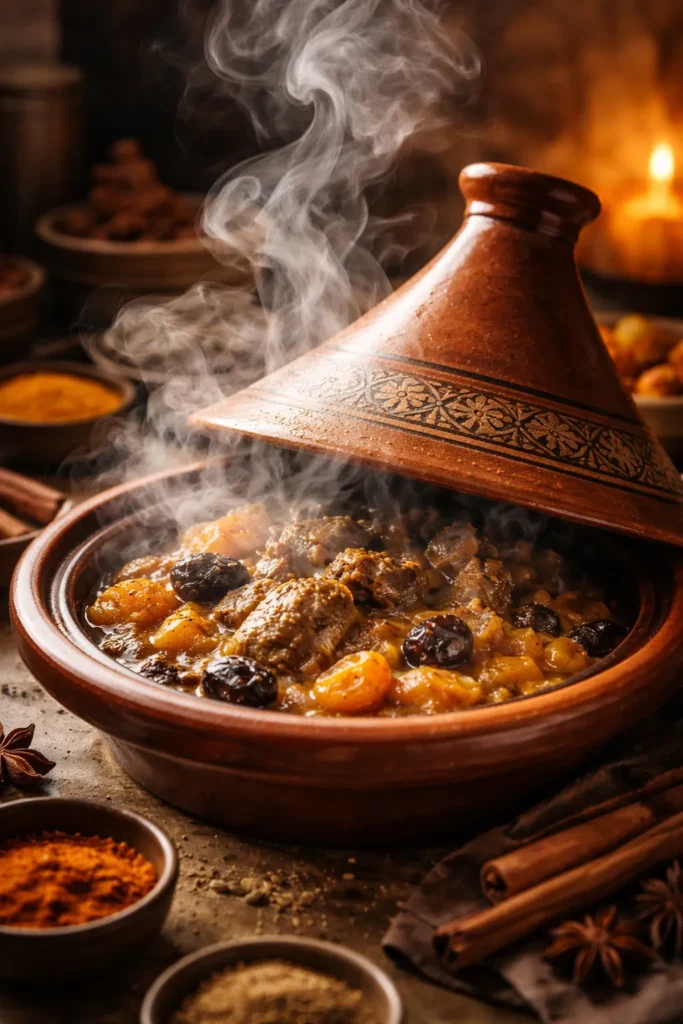
The word tagine refers to two things at once: the cooking vessel and the dish made inside it. The vessel is a wide, shallow clay base topped with a distinctive cone-shaped lid. That conical lid isn’t decorative — it’s engineering. Steam rises from the simmering ingredients, condenses on the sloping inner walls, and runs back down into the dish. This constant recycling of moisture keeps the contents tender and moist without requiring added liquid at every turn.
What distinguishes a tagine from a generic stew is the spice philosophy. Moroccan cooking doesn’t use heat-forward spices the way Indian or Thai cooking does. The spice blends here — ras el hanout, harissa, chermoula — build warmth and depth rather than straight-up fire. Cinnamon appears in savory dishes. Turmeric adds color and earthiness without much heat. Ginger provides a gentle bite. Coriander rounds everything out with a floral, citrusy note. The result is layers of flavor that evolve as the dish cooks, becoming more integrated and complex over time.
Dried fruits play a fascinating role too. Apricots, prunes, and raisins introduce a measured sweetness that balances the saltiness of olives, the acidity of preserved lemon, and the warmth of the spice base. This sweet-savory axis is the signature of North African cooking, and once you understand it, you start to see why tagines taste like nothing else on earth.
The other hallmark is patience — or at least, the appearance of it. Most tagines need 45 minutes to an hour of simmering, but the active prep is usually under 20 minutes. That’s a generous ratio of payoff to effort.
What You Need to Cook a Tagine at Home
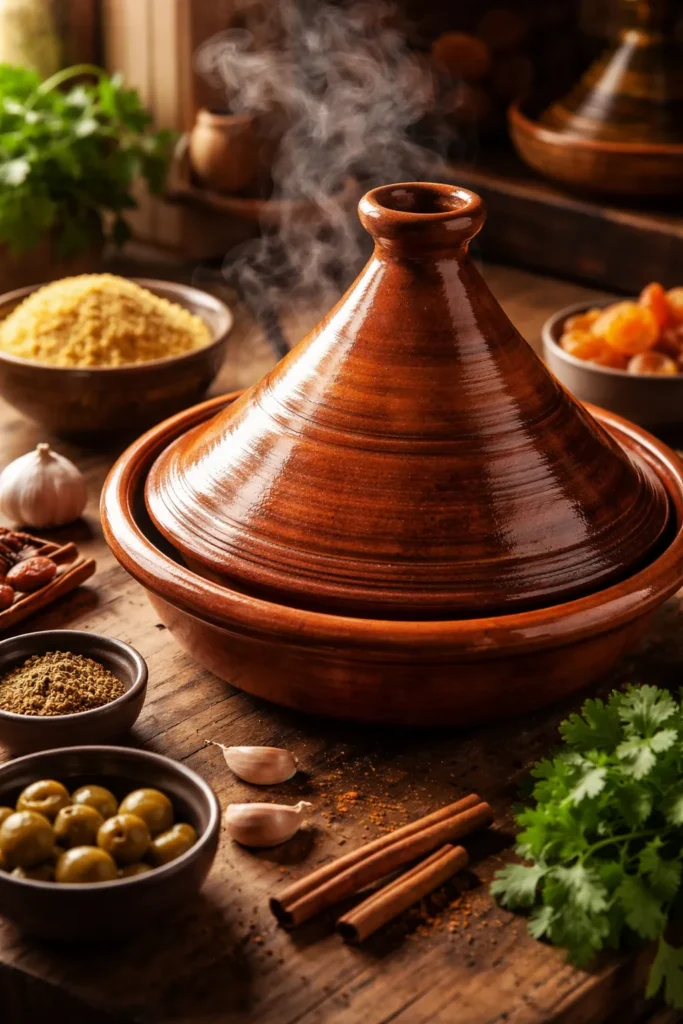
You don’t need an actual tagine pot to make any of these recipes. A Dutch oven or a large, heavy-bottomed pot with a tight-fitting lid will produce outstanding results. The important qualities are even heat distribution and a lid that traps steam effectively.
If you do want to invest in a tagine pot, there are a few things to know. Traditional Moroccan clay tagines are beautiful and authentic, but they require curing before first use — soak the base and lid submerged in water for 24 hours, dry them off, rub the interior with olive oil, then place the whole thing in a cold oven set to 225°F for two hours. This process draws the olive oil into the porous clay, preventing cracking and creating a naturally seasoned surface. On a gas stove, always use a heat diffuser between the burner and the clay — direct flame will crack it.
Cast-iron tagines and enameled ceramic options from brands like Emile Henry sidestep the curing requirement and work on any stovetop without a diffuser. They’re heavier and less traditional, but genuinely practical for everyday cooking.
Spices to Have on Hand
Before diving into the recipes, stock your pantry with these workhorses:
- Ras el hanout — a pre-made or homemade blend of cumin, coriander, ginger, cinnamon, allspice, and black pepper, among others
- Cumin — ground, essential to nearly every tagine
- Coriander — ground, a natural partner to cumin in Moroccan cooking
- Turmeric — for color and mild earthiness
- Ground ginger — provides a warm, slightly sharp background note
- Cinnamon — both ground and whole sticks, used in savory contexts here
- Saffron — optional but transformative when budget allows
- Harissa spice — a chili-forward blend that adds heat and depth
Key Flavor Builders
- Preserved lemons — pickled in salt until the rind softens and the flavor deepens; use only the rind, rinsed and minced
- Dried apricots, prunes, or figs — essential for sweet-savory balance
- Green or Kalamata olives — salty, briny contrast
- Fresh cilantro and flat-leaf parsley — stirred in at the end to brighten everything
1. Classic Moroccan Chicken Tagine with Preserved Lemons and Olives
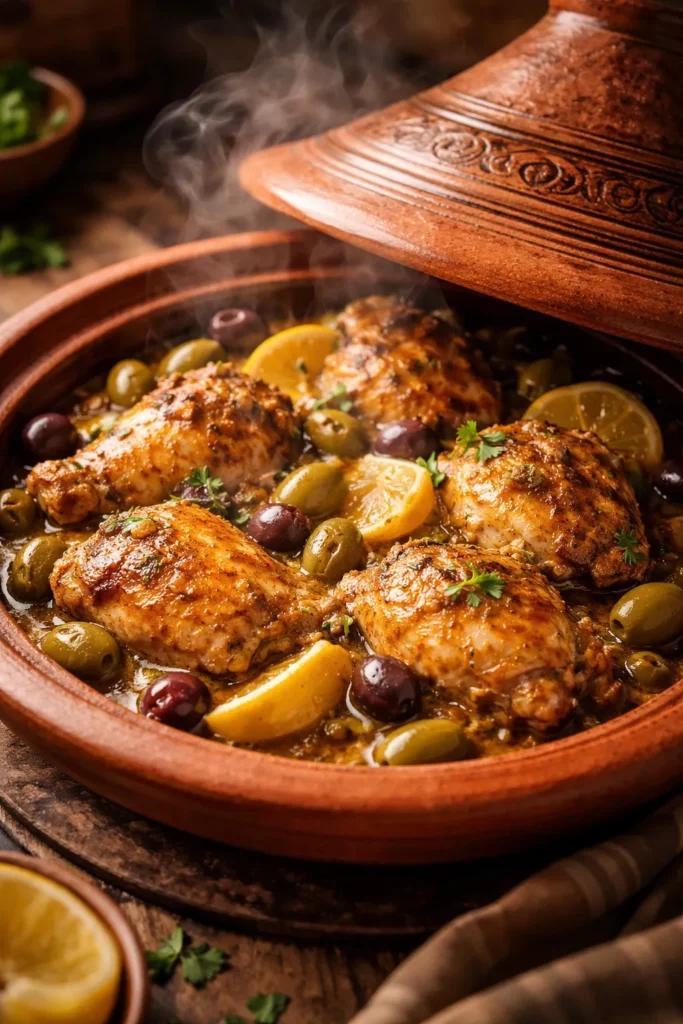
This is the tagine that started it all for most people. Bone-in, skin-on chicken thighs braise in a spiced sauce alongside cracked green olives and preserved lemon rind, producing a dish that is simultaneously briny, citrusy, savory, and warming. It’s the kind of recipe that gets requested again and again.
Why Bone-In Thighs Make All the Difference
Chicken breasts have no place in a tagine. The long braising time that develops the sauce’s depth will turn breast meat dry and stringy. Bone-in thighs, by contrast, stay juicy and tender even slightly past the ideal done temperature, and the bones contribute collagen and flavor to the braising liquid that transforms it into a rich, clingy sauce.
Brown the chicken skin-side down in olive oil until deeply golden — 8 to 10 minutes, resisting the urge to move it. That browning creates the fond, the browned bits stuck to the pan that dissolve into the sauce and give it body and complexity. Pull off and discard the skin before the braise begins; it’s done its job.
The Spice Blend and Technique
Combine 1 teaspoon each of paprika and ground cumin with ¼ teaspoon cayenne, ½ teaspoon each of ground ginger and coriander, and ¼ teaspoon cinnamon. Sauté onions in the chicken drippings until they take on some color at the edges — about 6 minutes — then add garlic and the spice blend, stirring for 30 seconds until fragrant. Add chicken broth, a tablespoon of honey, the remaining lemon zest, and the browned chicken back in. Simmer covered for 10 minutes, then add sliced carrots and simmer uncovered for another 15 minutes. Stir in cracked green olives, minced preserved lemon rind, and fresh cilantro at the very end.
Quick Recipe Facts
- Serves: 4 to 6
- Total time: About 1 hour
- Best served: Over a pillow of plain couscous to absorb the sauce
- Make-ahead: Completes the braise beautifully up to 2 days ahead; add olives and lemon only when reheating to serve
Pro tip: A 1-inch piece of preserved lemon rind, rinsed and minced, contributes more authentic depth than a whole squeeze of fresh lemon. Both have their place, but the preserved version changes character entirely.
2. Moroccan Vegetable Tagine with Chickpeas and Dried Apricots
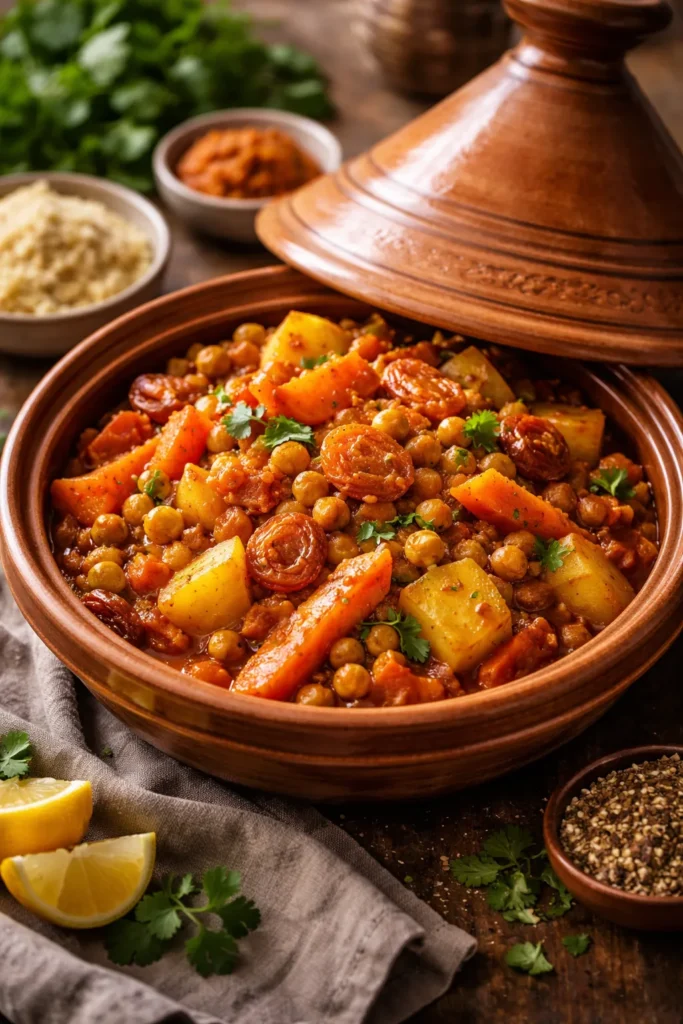
Proof that a tagine doesn’t need meat to be deeply satisfying. This one layers potatoes, carrots, sweet potato, and chickpeas in a tomato-based sauce seasoned with harissa spice, cinnamon, coriander, and turmeric. The dried apricots provide a subtle sweetness that makes the whole pot taste almost impossibly complex for a vegan meal.
Building Flavor Without Meat
The key to a rich vegetable tagine is two things: proper browning of the aromatics and sufficient cooking time for the spices to bloom. Start with ¼ cup of good olive oil — don’t be shy — and sauté two chopped yellow onions over medium-high heat for 5 minutes. Add 8 to 10 cloves of chopped garlic along with all the chopped vegetables, season with salt, and stir in the spices. Cook this mixture for 5 to 7 minutes, stirring regularly, letting everything pick up some color before any liquid goes in.
The Sweet-Savory Architecture
Add two cups of canned whole peeled tomatoes (crushed by hand as you add them), a generous half cup of chopped dried apricots, and one quart of low-sodium vegetable broth. Cook uncovered on medium-high for 10 minutes, then reduce the heat, cover, and simmer for 20 to 25 minutes until the potatoes and sweet potato are completely tender. Stir in two cups of cooked chickpeas — canned work perfectly — and cook for another 5 minutes. Finish with a full lemon’s worth of juice and a handful of torn flat-leaf parsley. This acid addition at the end brightens the whole dish, lifting those deep spice notes rather than dulling them.
Quick Recipe Facts
- Serves: 6
- Total time: About 55 minutes
- Dietary: Vegan and gluten-free as written
- Serve with: Warm flatbread or couscous — avoid rice here, the sauce is too flavorful to waste on something neutral
Worth knowing: Harissa spice blend and harissa paste are two different products. The spice blend is a dry powder; the paste is a condiment with oil and chili. This recipe calls for the dry spice blend, not the paste.
3. Slow-Cooked Lamb Tagine with Prunes and Almonds
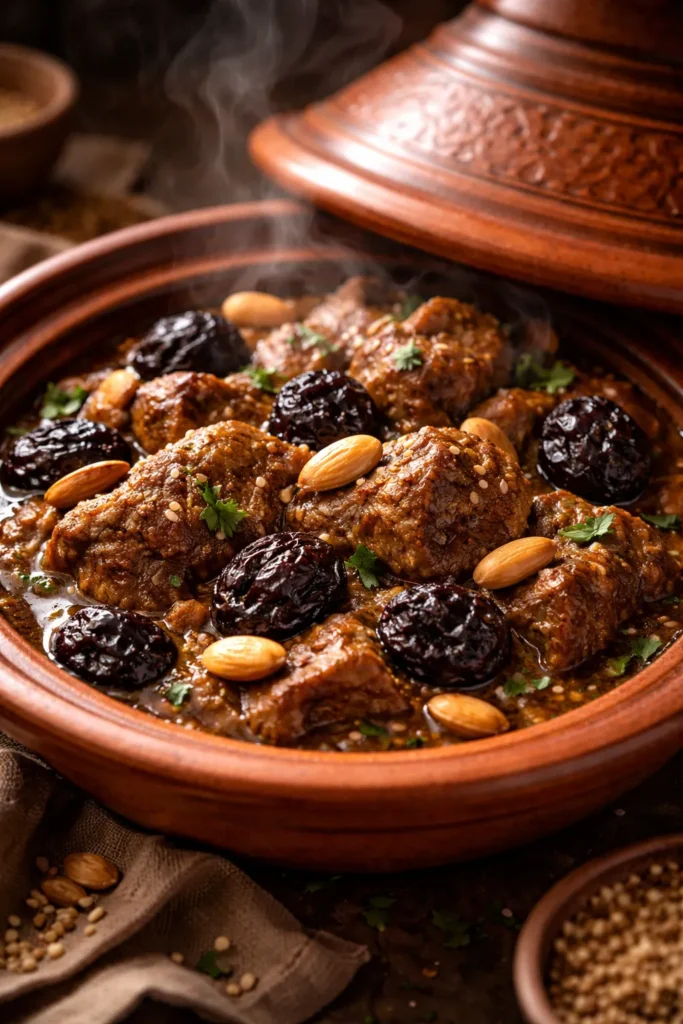
Lamb and prunes together might sound unconventional if you grew up outside Moroccan cooking, but this combination is one of the most celebrated in the entire culinary tradition. The lamb — ideally shoulder, cut into 2-inch cubes — becomes meltingly tender after 1.5 to 2 hours of braising, while the prunes dissolve into the sauce and contribute a jammy, almost caramelized sweetness that’s unlike anything else.
Choosing and Preparing the Lamb
Lamb shoulder beats lamb leg here by a significant margin. The higher fat content in the shoulder means it doesn’t tighten or dry out during the extended cooking time — it actually becomes more tender as the connective tissue breaks down. If you buy a bone-in shoulder and have a butcher cut it into pieces, the bones add even more depth to the braise. Brown the lamb in batches in a hot pan with olive oil — don’t crowd the pan or you’ll steam instead of sear.
Spice and Braise
Season the browned lamb with a blend of 1 teaspoon cumin, 1 teaspoon coriander, ½ teaspoon cinnamon, ½ teaspoon ground ginger, ¼ teaspoon turmeric, and a pinch of saffron dissolved in 2 tablespoons of warm water (the saffron is optional but worth every penny here). Sauté onions and garlic in the lamb drippings, add the spices, then add the lamb back with 2 cups of water or lamb broth and a tablespoon of honey. Simmer covered for 1 hour. Add 1 cup of pitted prunes in the final 30 minutes of cooking so they soften without disintegrating entirely.
Finishing Touches
Toast a handful of blanched almonds in a dry pan until golden and scatter them over the finished tagine. They add crunch and a pleasant buttery richness that contrasts beautifully with the soft, yielding lamb and prunes.
Quick Recipe Facts
- Serves: 4 to 6
- Total time: 2 to 2.5 hours
- Difficulty: Intermediate — patience required, but the hands-off braising time does most of the work
- Best served: Over buttered couscous with a side of harissa on the table
4. Kefta Meatball Tagine with Eggs in Spiced Tomato Sauce
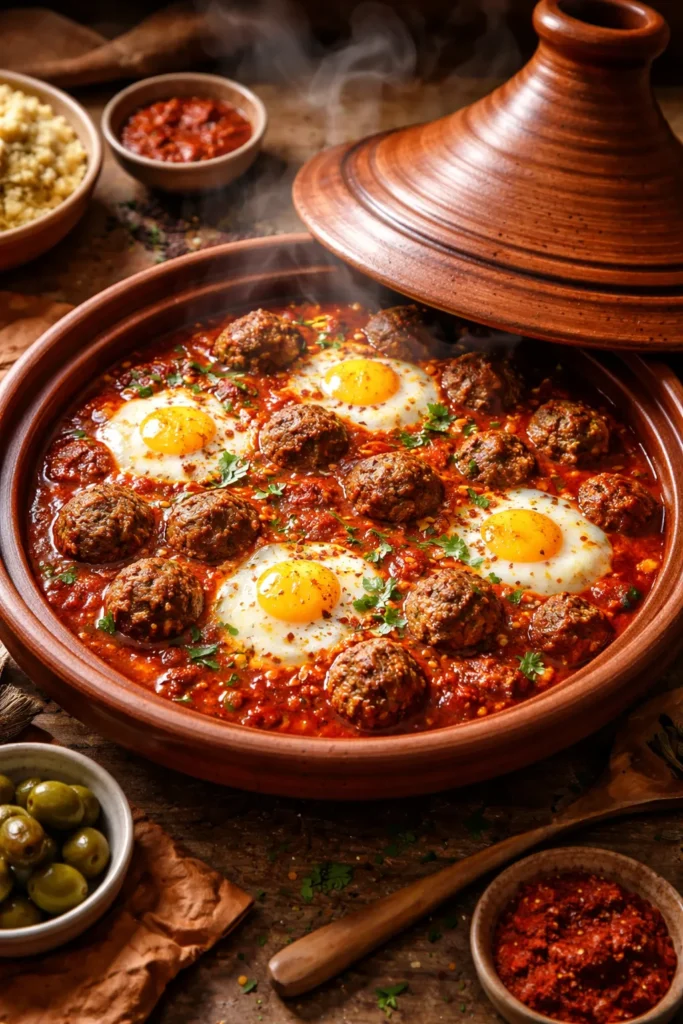
This one is built differently from the others — no whole pieces of meat, no long braise. Instead, spiced ground beef or lamb meatballs cook directly in a bubbling tomato sauce, and eggs are cracked in at the very end and poached until just set. It’s the Moroccan equivalent of shakshuka, only meatier and richer.
Making the Kefta
The meatballs — kefta — are the soul of this dish. Combine 1 pound of ground beef (or lamb) with 1 small grated onion, 2 tablespoons of finely chopped fresh parsley, 1 tablespoon of fresh cilantro, 1 teaspoon of cumin, 1 teaspoon of paprika, ½ teaspoon of cinnamon, ¼ teaspoon of cayenne, and 1 teaspoon of salt. Mix well with your hands and form into walnut-sized balls — about 1 inch in diameter. Don’t compact them too tightly or they’ll be dense; roll them just until they hold their shape.
The Tomato Sauce Base
Sauté 1 medium onion and 3 cloves of garlic in olive oil until soft. Add 1 teaspoon of paprika, 1 teaspoon of cumin, ½ teaspoon of cinnamon, and ¼ teaspoon of cayenne and stir for 30 seconds. Pour in one 28-ounce can of crushed tomatoes, season with salt, and bring to a simmer. Nestle the raw kefta balls into the sauce, cover, and cook on medium-low for 20 minutes, turning the meatballs once halfway through.
The Egg Finish
Create small wells in the sauce with a spoon and carefully crack an egg into each well — 4 to 6 eggs depending on the crowd. Cover the pan and cook for 5 to 8 minutes until the whites are just set but the yolks are still slightly runny. Serve immediately, straight from the pot, with torn flatbread for scooping.
Quick Recipe Facts
- Serves: 4
- Total time: 45 minutes
- Difficulty: Beginner — straightforward technique with dramatic results
- Best served: Straight from the pot at the table, with plenty of crusty bread
Pro tip: A small pinch of jalapeño or a drizzle of fresh yogurt sauce over the finished dish adds a cooling, acidic contrast that really makes the whole thing pop.
5. Moroccan Beef Tagine with Sweet Caramelized Onions and Raisins
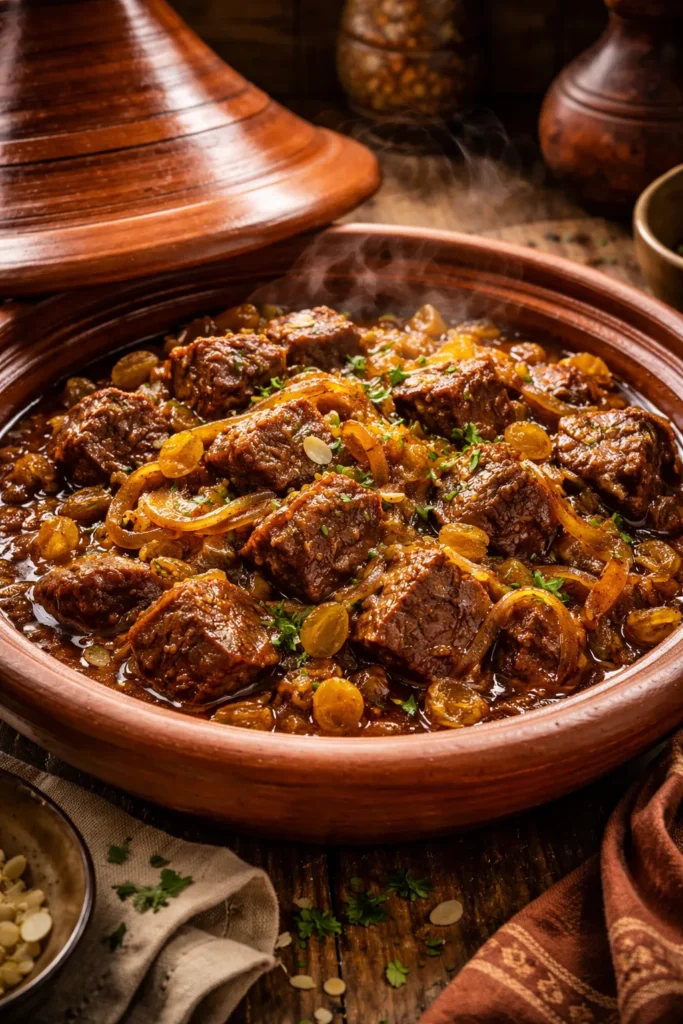
This is mrouzia territory — a tagine tradition from Morocco that pushes the sweet-savory balance further than almost any other version. Beef chuck, braised until it nearly falls apart, is paired with deeply caramelized onions and plump golden raisins in a sauce touched with ras el hanout, cinnamon, and a generous tablespoon of honey.
Why Caramelized Onions Matter Here
Don’t rush the onions. Slice two large yellow onions thin and cook them in olive oil over medium-low heat for a full 25 to 30 minutes, stirring occasionally, until they’re deeply golden, jammy, and reduced to about a quarter of their original volume. This process concentrates their natural sugars and creates a completely different flavor than simply sautéed onions — this is non-negotiable for the sweet depth this recipe depends on.
Building the Tagine
Brown 2 pounds of beef chuck (cut into 2-inch cubes) in batches in a hot Dutch oven. Set aside. Add the caramelized onions to the pot along with 4 minced garlic cloves and 1.5 teaspoons of ras el hanout, ½ teaspoon of cinnamon, ½ teaspoon of ground ginger, and ¼ teaspoon of turmeric. Stir for 30 seconds, then add the beef back in with 1.5 cups of beef broth and 1 tablespoon of honey. Simmer covered for 1 hour 15 minutes. Add ½ cup of golden raisins in the last 15 minutes.
Quick Recipe Facts
- Serves: 4 to 6
- Total time: 2 hours (including onion caramelization)
- Best served: Over couscous with toasted slivered almonds scattered over the top
- Make-ahead: Gets noticeably better the next day
6. Chermoula Fish Tagine with Potatoes and Peppers
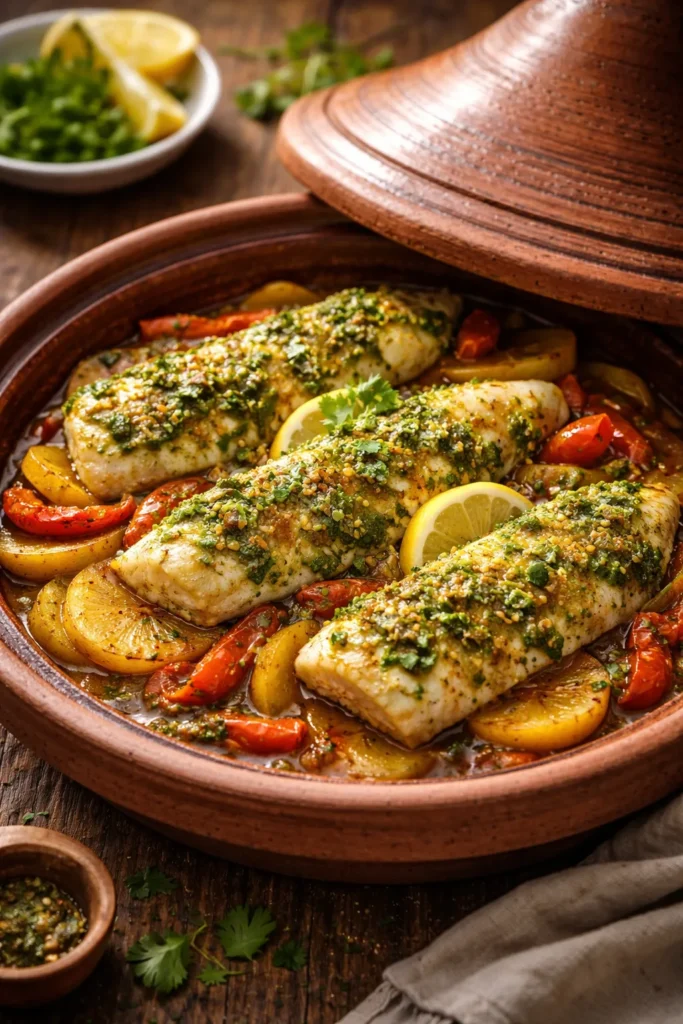
Fish tagine is dramatically underrated outside of Morocco, which is a shame because the coastal city of Essaouira has been producing extraordinary versions of it for centuries. White fish fillets — snapper, cod, or sea bass work well — are marinated in chermoula, a vibrant paste of cilantro, parsley, garlic, cumin, paprika, and lemon juice, then cooked on a bed of sliced potatoes and roasted peppers.
What Is Chermoula?
Chermoula is Morocco’s answer to chimichurri or gremolata — a punchy herb-and-spice marinade used on fish and seafood throughout North Africa. Combine ½ cup of packed fresh cilantro, ¼ cup of flat-leaf parsley, 3 garlic cloves, 1 teaspoon of cumin, 1 teaspoon of paprika, ¼ teaspoon of cayenne, the juice of one lemon, and 3 tablespoons of olive oil in a food processor or blender. Blend to a rough paste, season with salt. Coat the fish fillets in half the chermoula and let them marinate for at least 30 minutes (up to 4 hours in the fridge).
Assembling and Cooking
Layer the bottom of a wide pan or tagine base with thinly sliced potatoes (about ¼ inch thick) drizzled with olive oil and seasoned with salt and cumin. Add sliced roasted red peppers and diced tomatoes over the potatoes. Add ½ cup of water or fish broth. Cover and cook on medium heat for 20 minutes until the potatoes are nearly tender. Lay the marinated fish fillets on top, spoon the remaining chermoula over them, cover again, and cook for 12 to 15 minutes until the fish flakes easily.
Quick Recipe Facts
- Serves: 4
- Total time: 1 hour (including marinating)
- Best served: With warm Moroccan bread for scooping straight from the pot
- Note: Fish tagine doesn’t reheat as well as meat tagines — plan to eat it fresh
7. Honey and Saffron Chicken Tagine with Caramelized Onions
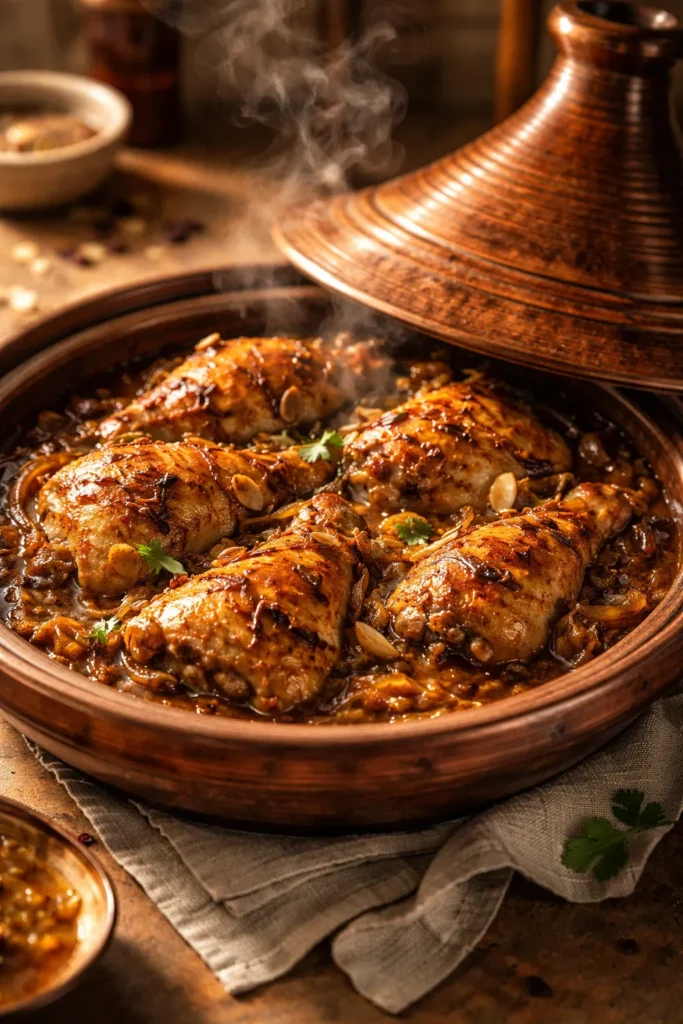
A more refined, slightly celebratory version of chicken tagine. This one leans into the sweetness of honey and the floral complexity of saffron rather than the brininess of olives or preserved lemon. The result tastes almost luxurious — richly golden, aromatic, with onions so soft and sweet they practically melt into the sauce.
Using Saffron Correctly
Saffron is expensive because harvesting the stigmas from Crocus sativus flowers is entirely done by hand. You don’t need much — just a generous pinch of threads, about ¼ teaspoon — but you do need to bloom it properly. Crumble the threads between your fingers directly into 3 tablespoons of warm water and let them sit for at least 10 minutes. The water will turn a deep amber-gold, and that saffron water is what you add to the pot, not dry threads. Adding dry saffron to a wet, hot braise wastes most of its flavor compounds.
The Onion and Honey Base
After browning the chicken (bone-in thighs, as always), use the drippings to cook 3 thinly sliced large yellow onions over medium heat for a full 20 minutes until they collapse and take on a deep golden color. Add ½ teaspoon each of ground ginger and cinnamon, then stir in the saffron water and 2 tablespoons of honey. Add 1 cup of chicken broth and the browned chicken. Cover and simmer for 35 to 40 minutes, removing the lid for the final 10 minutes to let the sauce concentrate into something syrupy and glossy.
Quick Recipe Facts
- Serves: 4
- Total time: 1 hour 15 minutes
- Difficulty: Intermediate — the caramelized onion step requires attention but rewards patience
- Garnish: Toasted sesame seeds and a scattering of fresh flat-leaf parsley
Worth knowing: This tagine is traditionally served at Moroccan celebrations and family gatherings. It’s a dish that signals occasion without requiring enormous effort.
8. Lamb and Artichoke Tagine with Green Peas
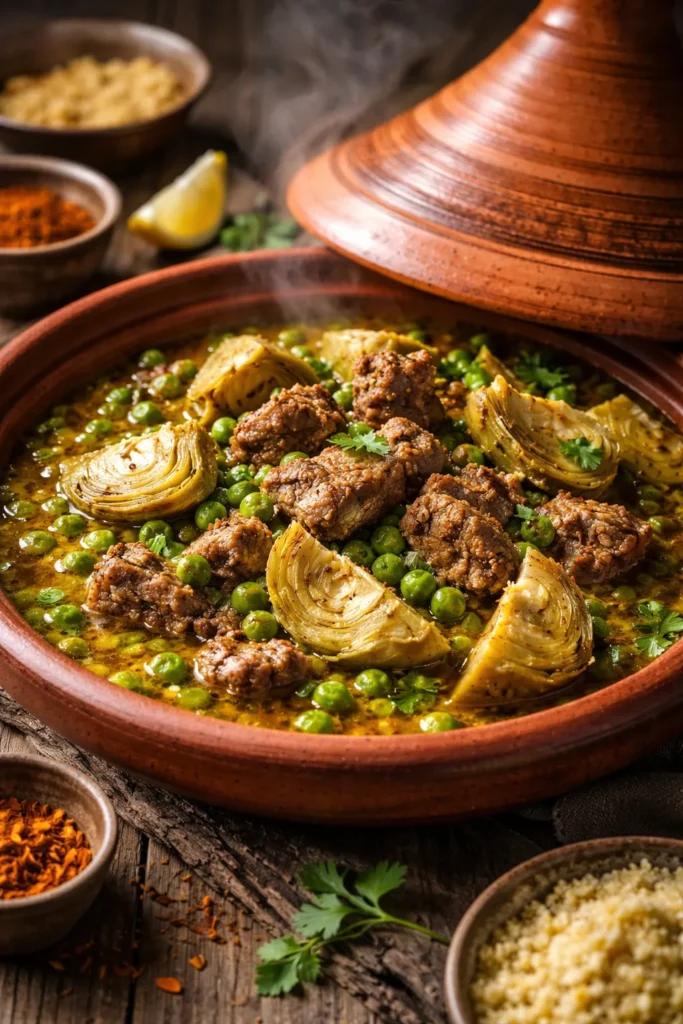
Lamb tagines with artichoke hearts and green peas are one of the most vibrant-looking preparations in Moroccan cooking — emerald green peas, pale artichoke hearts, and golden lamb in a saffron-touched broth. It’s a springtime classic in Morocco, though frozen artichoke hearts and peas make it practical throughout the year.
Working with Artichoke Hearts
Fresh globe artichokes require trimming down to the heart, which is fiddly but worth it if you want the best texture. Rub the cut surfaces immediately with a lemon half to prevent oxidation. Alternatively — and this is the practical weeknight approach — frozen artichoke hearts work remarkably well here and skip all the prep entirely. Canned artichoke hearts in water (not oil, not marinated) are a reasonable third option; just rinse them well.
Building the Tagine
Brown 2 pounds of lamb shoulder pieces in olive oil, season with salt, pepper, ½ teaspoon of turmeric, ½ teaspoon of ground ginger, and a pinch of saffron dissolved in warm water. Sauté one large chopped onion and 4 minced garlic cloves in the drippings, return the lamb to the pot with 1.5 cups of chicken or vegetable broth and a preserved lemon rind (minced). Cover and simmer for 45 minutes. Add the artichoke hearts in the final 20 minutes and the green peas in the last 5 minutes — the peas only need heat, not cooking, or they’ll turn gray and mushy.
Finishing the Dish
Stir in the juice of half a lemon and a generous handful of chopped fresh cilantro just before serving. The combination of the saffron broth, the minerality of the artichokes, and the sweetness of the peas alongside tender lamb is something you’ll return to repeatedly.
Quick Recipe Facts
- Serves: 4 to 6
- Total time: 1 hour 15 minutes
- Difficulty: Intermediate
- Best served: With warm Moroccan khobz (flatbread) for scooping, or over plain couscous
What to Serve Alongside Your Tagine
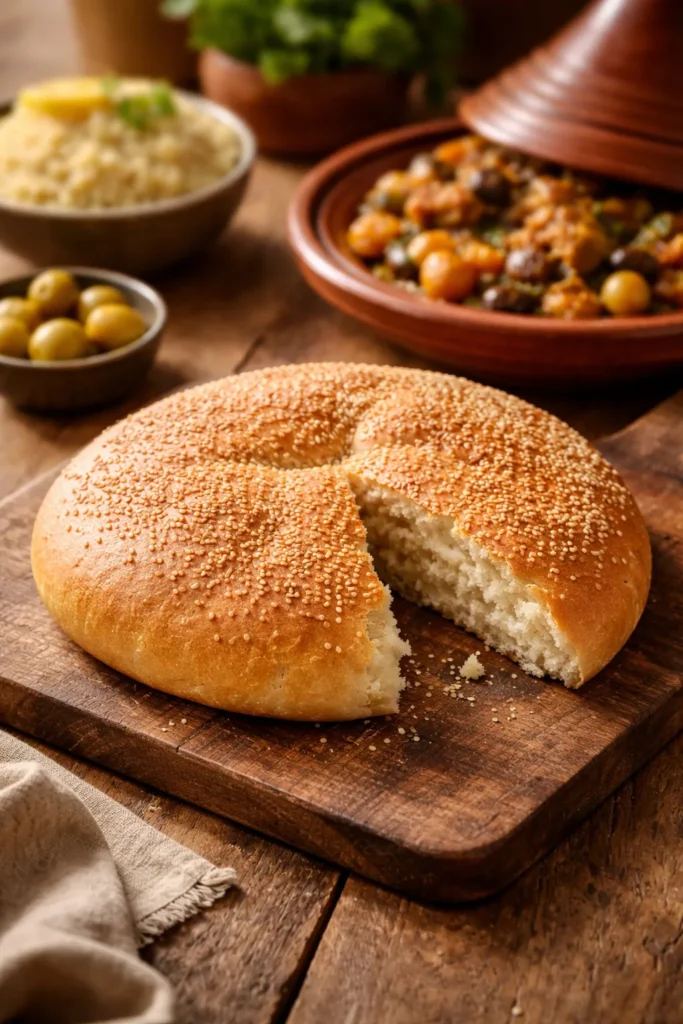
In Morocco, tagine is not served over couscous — a distinction worth knowing if you want to be historically accurate. Couscous is its own Friday dish, a separate tradition entirely. Tagine is traditionally eaten with Moroccan khobz, a round, slightly dense flatbread with a chewy crust, used as the utensil for scooping. The bread tears, scoops, and absorbs the sauce in a way that no fork or spoon can replicate.
That said, outside of Morocco, couscous has become the nearly universal accompaniment, and it’s genuinely delicious under tagine sauce. Plain couscous made with chicken broth instead of water, finished with a knob of butter and a pinch of salt, is the easiest and most satisfying base. Pearl couscous (also called Israeli couscous, though that’s a disputed name) has a more substantial, chewy texture that holds up especially well under the richer meat-based tagines.
Rice — white basmati or jasmine — works as a neutral alternative. Pita bread or any good flatbread you can find will handle the sauce-scooping function if khobz isn’t available.
Moroccan cooked salads traditionally accompany tagine as well. Zaalouk (roasted eggplant with tomatoes and cumin), taktouka (roasted tomatoes and peppers), and carrot salad with harissa dressing all complement the tagine’s richness with something bright and vegetable-forward.
Tips for Making Any Tagine Taste More Authentic
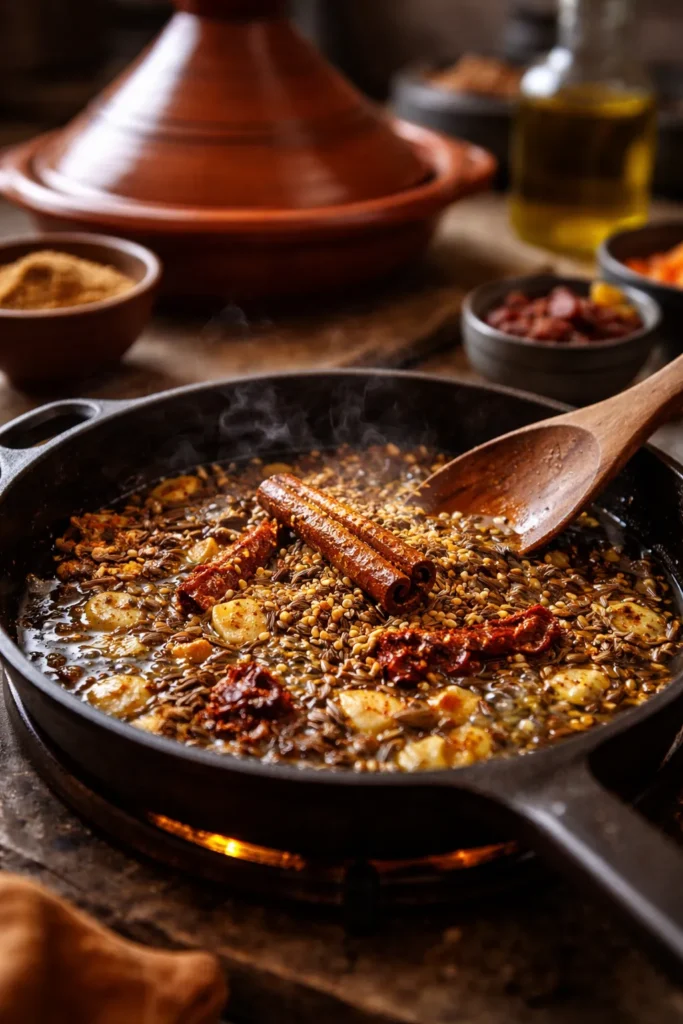
The single biggest difference between a home-cooked tagine and a deeply authentic one is the quality and freshness of the spice blend. Spices lose their volatile aromatic compounds within 6 to 12 months of grinding. If your cumin or coriander has been sitting in a drawer for two years, it will contribute almost no flavor to the dish — just a faint ghost of itself. Buy whole spices and grind them in small batches, or source pre-ground spices from shops with high turnover.
Bloom your spices. Always sauté them in fat — olive oil or the meat’s drippings — for at least 30 seconds before adding any liquid. Those aromatic compounds are fat-soluble, not water-soluble, meaning they release their flavor most fully into oil rather than broth. Skipping this step produces a noticeably flat, less complex final sauce.
Don’t rush the protein. Whether it’s chicken, lamb, or beef, browning is not optional. A properly browned piece of meat has undergone the Maillard reaction across its surface, creating hundreds of new flavor compounds that a pale, steamed piece of meat simply doesn’t have. Those flavors go into the sauce and define the dish.
Use good olive oil generously. Moroccan cooking traditionally uses quite a bit of it. A finishing drizzle of extra-virgin olive oil over the tagine just before serving isn’t a garnish — it’s a flavor component, adding richness and a fruity note that the cooked-in oil can’t provide by that point.
Add acid at the end, not the beginning. Lemon juice, preserved lemon, fresh tomatoes — all of these are better stirred in during the final few minutes of cooking. Long exposure to heat dulls acidity. That bright, citrusy lift you want from lemon juice disappears if it simmers for an hour.
Finally, taste and adjust before serving — every time. The amount of salt needed varies with the saltiness of your broth, olives, and preserved lemons. The amount of harissa or cayenne depends on your spice blend’s heat level. A tagine that smells spectacular but tastes flat usually just needs more salt and a squeeze of lemon.
Final Thoughts

Moroccan tagine cooking rewards anyone willing to spend thirty minutes in the kitchen at the start of the week. The techniques — building a spice base, browning protein properly, building a braising liquid with sweet and acidic counterpoints — apply across all eight of these recipes and dozens more beyond them. Master the method once and you’ll find yourself improvising confidently with whatever is in your refrigerator.
The sweet-savory balance is the one principle to internalize above all others. That interplay between spice, fruit, briny olives, and bright lemon is what makes Moroccan cooking distinctive and deeply satisfying in a way that pure heat-forward cooking rarely achieves. Trust the apricots. Trust the cinnamon in the savory sauce. They know what they’re doing.
Start with the classic chicken tagine with preserved lemons and olives if you want a guaranteed crowd-pleaser on your first attempt. Move to the kefta meatball tagine when you want something quick and dramatic. Work your way toward the lamb and prune or the saffron and honey versions when you want to cook something that feels genuinely special.
Every one of these eight dishes is worth making on a cold, quiet evening when dinner deserves to feel like more than just fuel. That’s the entire point of a tagine.