There’s a specific kind of panic that hits around 6 p.m. on a Tuesday — the fridge is half-stocked, the day was longer than expected, and the idea of spending an hour cooking feels laughable. That’s exactly where skillet dinners earn their place in your weekly rotation. Not just because they’re fast, but because a hot skillet does something genuinely special: it builds real, layered flavor in a fraction of the time any oven dish can manage.
The magic comes down to a few things — intense direct heat, the concentrated fond that develops on the pan’s surface, and the way fat carries flavor from one ingredient straight to the next. A single well-seasoned skillet can take you from raw protein to a finished, restaurant-quality plate in 20 minutes flat. That’s not a compromise. That’s smart cooking.
What follows are eight skillet dinners that prove weeknight meals don’t have to be sad or simple. These dishes pull from French bistro technique, Japanese comfort food tradition, Cuban American home cooking, and Southern Italian cucina povera — all adapted for a single pan and a tight clock. Every one of them can be on the table before takeout would even arrive at your door.
Table of Contents
- Why the Skillet Is Your Best Friend on Busy Nights
- The One-Pan Cleanup Advantage
- Cast Iron vs. Stainless vs. Nonstick
- 1. Chicken Paillard with Lemon-Herb Butter Sauce
- What Makes It Work
- Quick Reference
- 2. Oyakodon (Japanese Chicken and Egg Rice Bowl)
- The Half-Set Egg Trick
- Why Chicken Thighs Beat Breasts Here
- Quick Reference
- 3. Shrimp with Cilantro Sauce
- Building the Chutney
- Quick Reference
- 4. Eggs in Purgatory (Italian-Style Eggs in Spicy Tomato Sauce)
- Why Canned Tomatoes Work Better Here Than Fresh
- Making It a Full Dinner
- Quick Reference
- 5. Kenyan Beef Wet Fry
- The Tomato Sauce Build
- Quick Reference
- 6. Palomilla (Cuban Steak and Onions)
- The Onion Technique
- Making It a Full Plate
- Quick Reference
- 7. Spicy Mexican Shrimp Pasta
- The Baking Soda Brine
- Balancing the Heat Level
- Quick Reference
- 8. Chicken with Warm Bulgur Pilaf and Tomatoes
- The Bulgur Trick
- Quick Reference
- The Secret to Making Skillet Dinners Even Faster
- Small Cuts Cook Faster
- Keep Your Pan Actually Hot
- How to Choose the Right Skillet for Quick Cooking
- The Skillet Size That Matters More Than Material
- Building Flavor Fast: The Pan Fond Advantage
- Pantry Staples That Make 20-Minute Dinners Possible
- What to Serve Alongside Skillet Dinners
- Final Thoughts
Why the Skillet Is Your Best Friend on Busy Nights
A skillet’s real advantage isn’t speed — it’s heat control. Unlike a slow braise or an oven roast, stovetop cooking gives you immediate, responsive feedback. You can crank the heat to sear a steak in 90 seconds or drop it low to gently poach eggs in sauce. That flexibility makes a skillet the single most versatile piece of cookware in any kitchen.
There’s also the flavor-building aspect that too many home cooks overlook. When proteins sear, they leave behind a thin layer of caramelized, browned bits called fond. Every good skillet dinner uses that fond — deglazing it with a splash of wine, broth, or even lemon juice to form an instant sauce with depth that took zero extra effort.
The One-Pan Cleanup Advantage
Beyond flavor and speed, there’s a deeply practical reason to love skillet dinners: you’re cleaning one pan. Washing a single cast iron or stainless steel skillet takes about two minutes. Compare that to the post-roast kitchen aftermath of sheet pans, casserole dishes, and a cutting board covered in vegetable scraps, and the choice becomes obvious.
Cast Iron vs. Stainless vs. Nonstick
Each skillet type has its moment. Cast iron holds heat beautifully and creates an unmatched sear on proteins — but it takes a few minutes to preheat properly. Stainless steel is ideal for building fond and making pan sauces, since nothing sticks permanently and everything releases cleanly with liquid. Nonstick shines with eggs and delicate fish. For the eight dinners below, cast iron or stainless will deliver the best results.
1. Chicken Paillard with Lemon-Herb Butter Sauce
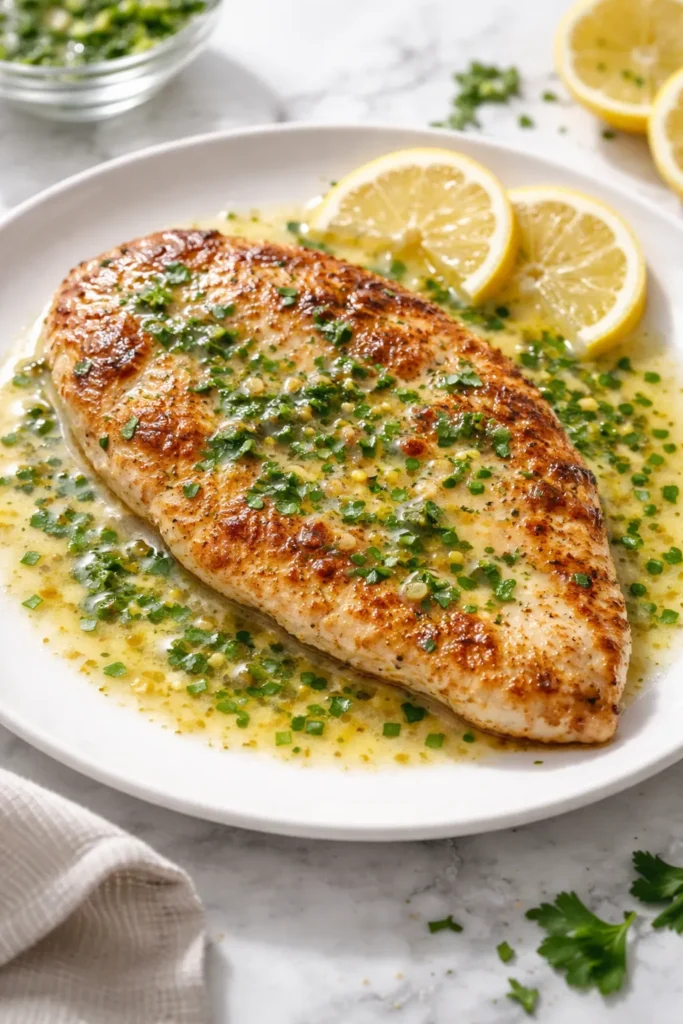
Pound a boneless, skinless chicken breast thin enough — about half an inch — and something remarkable happens. It cooks through in under four minutes per side, stays genuinely juicy, and develops a golden, lacy crust that would look at home on a French brasserie plate. This is paillard technique, and it’s one of the most underused tricks in home cooking.
The sauce comes together directly in the pan while the chicken rests. A handful of cold butter whisked into the hot pan juices emulsifies into something glossy and rich — not at all greasy, but bright and velvety. Lemon zest, a squeeze of fresh juice, and a mix of parsley, chives, and tarragon finish it with an herbaceous lift that cuts through the butter.
What Makes It Work
Cold butter is non-negotiable here. If you use softened or melted butter, the sauce will break — it’ll look greasy and separated instead of glossy and emulsified. Pull the butter straight from the fridge, cut it into small cubes, and drop them in one at a time while swirling the pan off the heat.
The tarragon is doing more work than it looks like. It has a faint anise note that rounds out the lemon and makes the whole sauce taste more complex than its three-minute preparation would suggest.
Quick Reference
- Protein: Boneless, skinless chicken breasts, pounded to ½ inch thickness
- Key flavors: Lemon zest, fresh tarragon, chives, parsley
- Timing: 8 minutes start to finish
- Serve with: A simple green salad, steamed asparagus, or crusty bread to catch the sauce
Worth knowing: If you don’t have tarragon, fresh basil works well in warmer months. Dried tarragon is a poor substitute — it loses its delicate flavor almost entirely when dried.
2. Oyakodon (Japanese Chicken and Egg Rice Bowl)
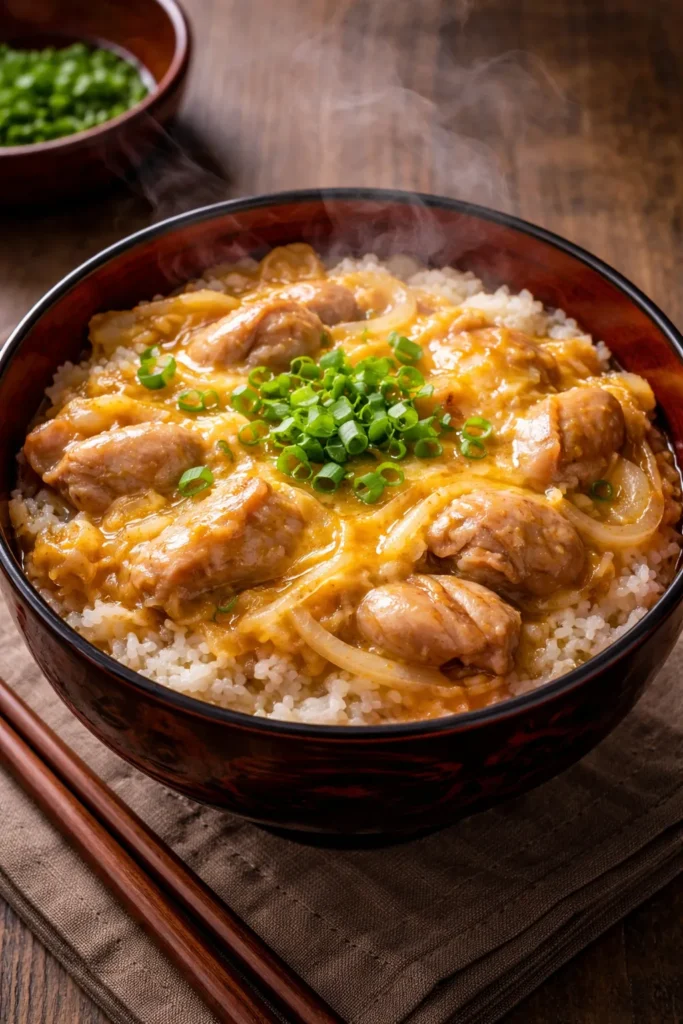
Oyakodon translates literally to “parent and child rice bowl” — a poetic nod to the fact that both chicken and egg appear in the same dish. It’s been a fixture on Japanese restaurant menus for generations, and for good reason: the combination of sweet-savory dashi broth, tender chicken thigh, and barely-set egg draped over steamed rice is one of the most satisfying things you can eat on a cold evening.
The entire stovetop portion takes about 12 minutes, which means you can have it ready in the time it takes to steam rice. The broth — built from dashi, soy sauce, mirin, sake, and a pinch of sugar — simmers the sliced chicken and onion until just cooked through. Then you drizzle in lightly beaten eggs and pull the pan off the heat while the eggs are still half-set.
The Half-Set Egg Trick
This is where most first-timers go wrong. Fully cooked, scrambled-texture eggs will make oyakodon feel dry and heavy. You want the eggs to still be custardy and barely opaque when you plate it — they’ll finish cooking from residual heat as you carry the bowl to the table. The window between underdone and overdone is about 30 seconds, so stay close.
Why Chicken Thighs Beat Breasts Here
Thighs are more forgiving because of their higher fat content — they stay tender even if you accidentally simmer a minute too long. Chicken breast in the same dish can turn stringy fast. This isn’t a recipe where breast is worth the substitution.
Quick Reference
- Protein: Boneless, skinless chicken thighs, thinly sliced
- Key flavors: Dashi, soy sauce, mirin, sake, sugar
- Timing: 12 minutes active + rice steaming simultaneously
- Serve with: Steamed short-grain rice and thinly sliced scallions
3. Shrimp with Cilantro Sauce
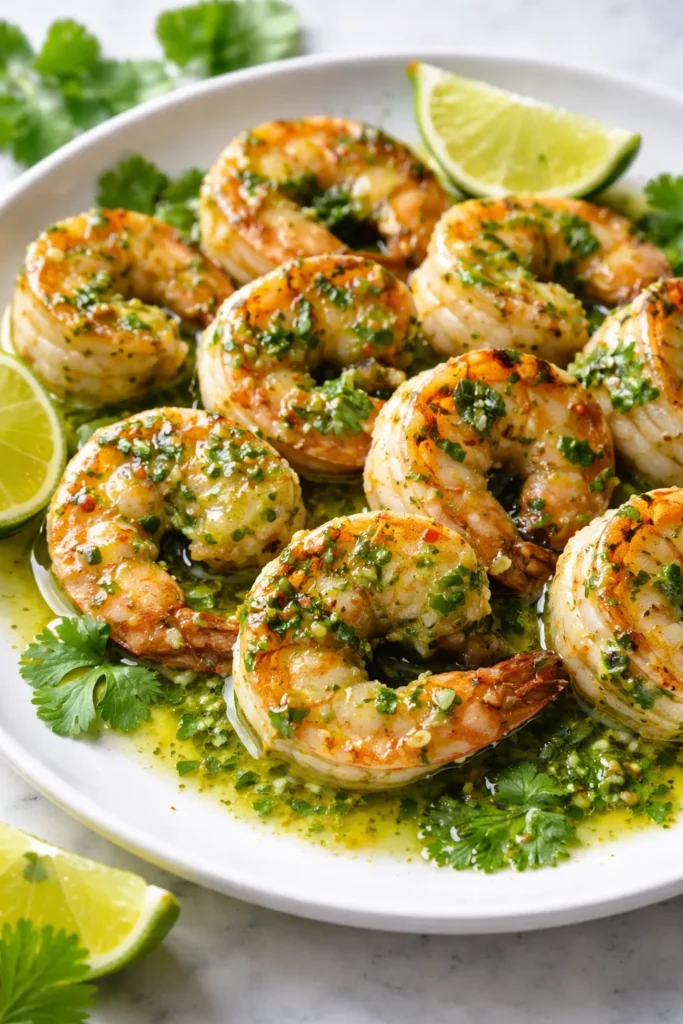
This one is built backward from most shrimp dishes. Instead of making a sauce after the shrimp cooks, you make the sauce first — a punchy cilantro, fresh chile, garlic, and lime chutney that doubles as a marinade and a finishing sauce. A spoonful of it goes onto the raw shrimp with a pinch of baking soda and salt, and after five minutes, you’ve got shrimp that are plump, seasoned all the way through, and ready to hit the pan.
The baking soda is a technique borrowed from Chinese restaurant cooking. It raises the surface pH of the shrimp slightly, which makes the exterior brown faster and keeps the interior snappy rather than rubbery. It sounds like food science, but the practical result is unmistakable — the shrimp taste better every single time.
Building the Chutney
A blender or small food processor handles this in under two minutes. You’re not going for a completely smooth paste — some texture is good. The heat level is adjustable: one serrano gives a gentle warmth, two makes it genuinely spicy. Taste the chutney before you use it and adjust lime juice to balance the heat with brightness.
The onions, cooked in the same pan with turmeric and cumin, give the finished dish an aromatic foundation that makes the whole thing taste like it took much longer than it did.
Quick Reference
- Protein: Large shrimp (21-25 count), peeled and deveined
- Key flavors: Fresh cilantro, green chile, lime, turmeric, cumin
- Timing: 5 minutes marinating + 8 minutes cooking
- Serve with: Steamed basmati rice or warm flatbread
Pro tip: Make a double batch of the cilantro chutney. It keeps in the fridge for up to five days and works as a sandwich spread, a yogurt dip, or a finishing drizzle on roasted vegetables.
4. Eggs in Purgatory (Italian-Style Eggs in Spicy Tomato Sauce)
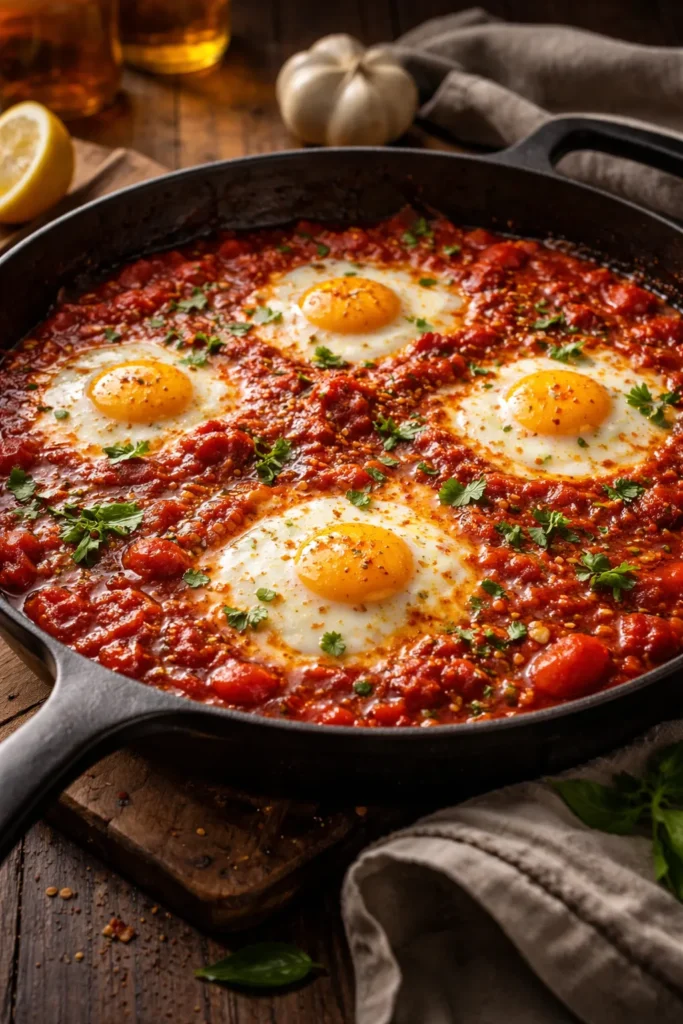
The name sounds dramatic, and the dish backs it up. Eggs in Purgatory — or uova al purgatorio — is a Southern Italian tradition of poaching eggs directly in a bold, spicy tomato sauce. The eggs go in whole, the whites cook through in the sauce, and the yolks stay jammy and golden. When you break a yolk into the tomato with a torn piece of crusty bread, that’s the moment you understand why this dish has survived for centuries.
The sauce itself comes together in about eight minutes from a pantry that most home cooks already have stocked: canned whole tomatoes, garlic, olive oil, red pepper flakes, and dried oregano. Crush the tomatoes by hand as they go into the pan — whole tomatoes have better flavor and texture than pre-crushed, and breaking them yourself gives you more control over the final texture.
Why Canned Tomatoes Work Better Here Than Fresh
Out-of-season fresh tomatoes will give you a pale, watery sauce with almost no depth. Good quality canned San Marzano or plum tomatoes are picked at peak ripeness and processed immediately, giving them a concentrated sweetness and acidity that no mid-winter fresh tomato can match. This is one of those cases where the pantry ingredient genuinely outperforms the fresh one.
Making It a Full Dinner
Two eggs per person makes a light dinner; three makes it substantial. A fried egg on top of extra sauce — with a piece of focaccia and a side salad — turns this into a genuinely filling meal for minimal effort.
Quick Reference
- Protein: Eggs (2-3 per serving)
- Key flavors: San Marzano tomatoes, garlic, red pepper flakes, oregano
- Timing: 8 minutes for sauce + 5-6 minutes to poach eggs
- Serve with: Crusty bread, focaccia, or toasted sourdough
5. Kenyan Beef Wet Fry
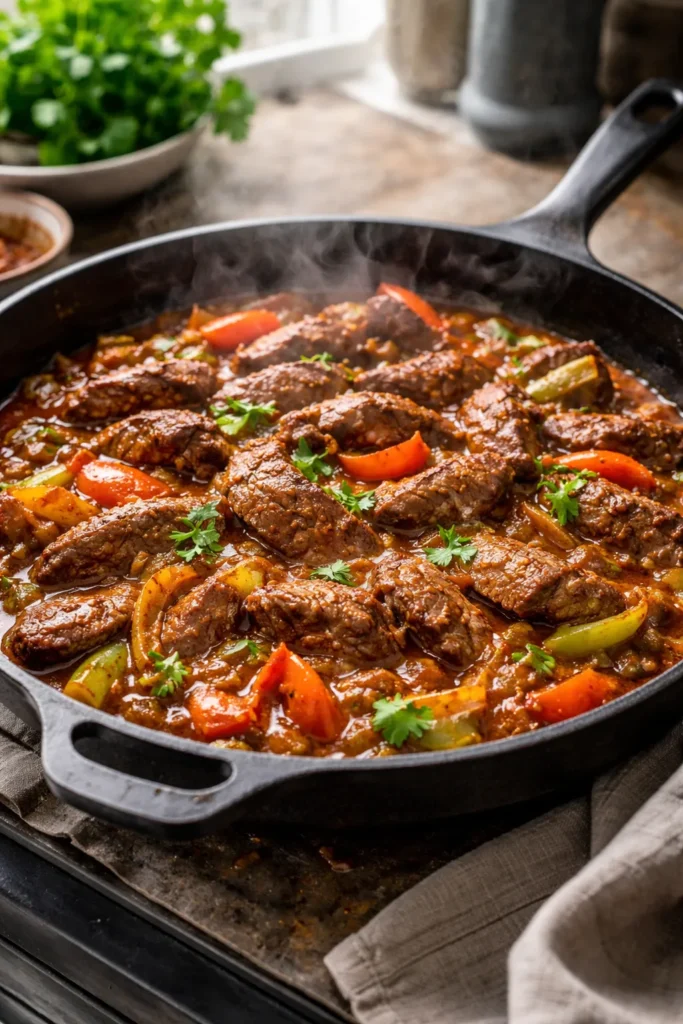
Wet fry is a cornerstone of Kenyan home cooking — a technique where meat is first seared hard to develop a deep, browned crust, then finished in an aromatic tomato sauce that’s savory and fragrant with garam masala, ginger, garlic, and tomato paste. It’s called “wet fry” because unlike a dry fry (which is just the sear), this version finishes in liquid. The result lands somewhere between a stir-fry and a braise, but achieves the depth of the latter in a fraction of the time.
The key to pulling this off in 20 minutes is choosing the right cut. Sirloin or another naturally tender cut skips the long simmer that tougher cuts like chuck would require. Slice it thin, get the pan ripping hot, and sear in batches — crowding the pan is the single most common mistake that turns a proper sear into a sad steam.
The Tomato Sauce Build
Once the beef is seared and resting, the sauce builds in the same pan. Onions and bell peppers soften in the residual beef fat, pulling up every bit of fond from the sear. Garlic, ginger, and garam masala go in next — just 60 seconds in the oil is enough to bloom the spices without burning them. Tomato paste deepens everything before a splash of water loosens the pan.
Quick Reference
- Protein: Sirloin steak, sliced thin against the grain
- Key flavors: Garam masala, fresh ginger, garlic, tomato paste, bell pepper
- Timing: 18-20 minutes total
- Serve with: Ugali, plain white rice, or chapati
Worth knowing: Garam masala varies significantly between brands — some lean heavily on clove and cardamom, others are more pepper-forward. Taste your spice blend before using it and adjust accordingly. A blend that’s more than six months old has probably lost most of its punch.
6. Palomilla (Cuban Steak and Onions)
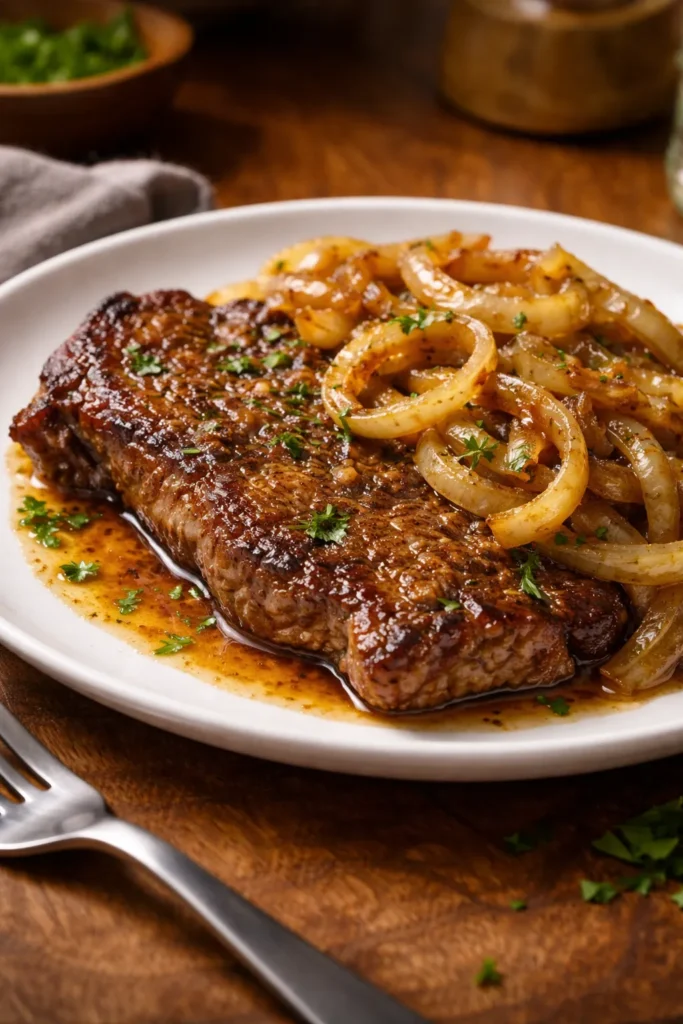
Palomilla is Cuban American comfort food in its purest form — thin-cut top sirloin, aggressively seasoned with salt, lime juice, and grated garlic, then seared hard until deeply browned and served alongside caramelized onions that soaked up every drop of fat and juice the steak left behind.
The marinade does double duty: the salt draws out surface moisture, which then reabsorbs along with the lime and garlic to season the meat through the first quarter-inch. Twenty minutes of marinating time makes a real difference, but if you’re truly short on time, even five minutes helps. What you can’t skip is the high heat. The steak needs to hit a properly preheated, lightly oiled pan and stay there undisturbed for a full 90 seconds before you touch it. Move it too early and you’ll pull it off the pan instead of getting a clean release with a brown crust.
The Onion Technique
The onions go in after the steak comes out, straight into the fat left in the pan. Medium-low heat, about six minutes, stirring occasionally. They should be golden and slightly translucent — not caramelized to jam, but tender enough that they collapse into the plate. The residual beef fat gives them a depth of flavor that olive oil alone can’t match.
Making It a Full Plate
Black beans and rice are the traditional accompaniment, and they transform this from a protein dish into a complete meal. A squeeze of extra lime at the table and a handful of fresh parsley bring it back to brightness after all that richness.
Quick Reference
- Protein: Thin-cut top sirloin, about ¼ inch thick
- Key flavors: Lime juice, garlic, cumin, salt
- Timing: 5-20 minutes marinating + 10 minutes cooking
- Serve with: Black beans and rice, sliced avocado
7. Spicy Mexican Shrimp Pasta
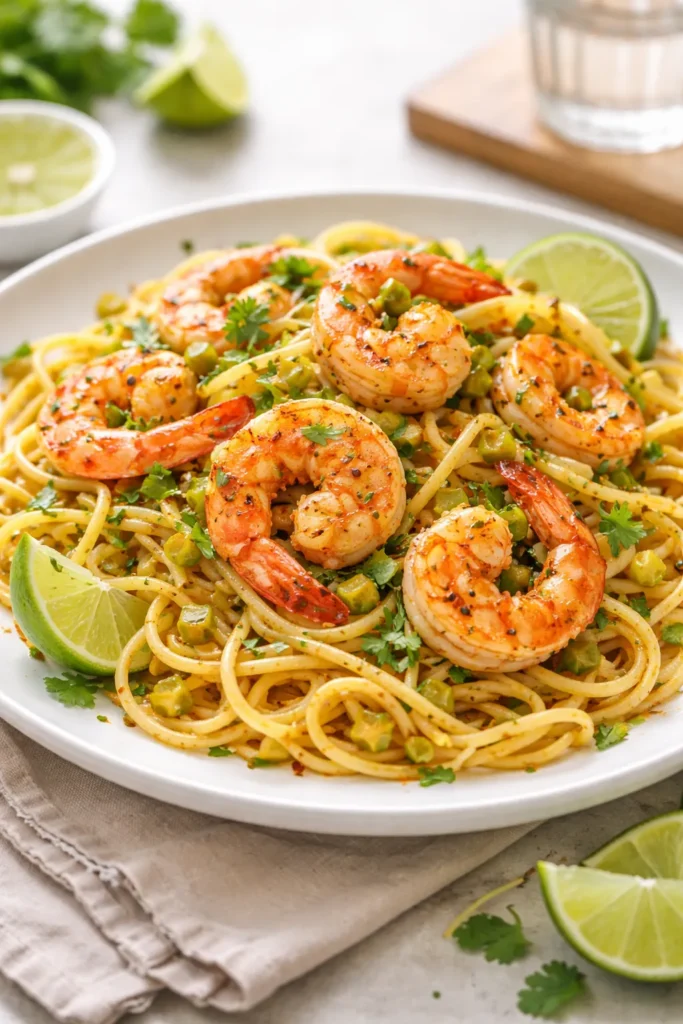
This dish shouldn’t work as well as it does. Mexican flavors — fresh green chiles, lime, and cilantro — have no business being applied to Italian-style pasta. And yet this combination produces a sauce with a complexity that far outpaces the effort.
The move that makes this exceptional is cooking the shrimp shells in butter before you use the shrimp. It sounds fussy, but it takes two minutes and the payoff is enormous — the butter absorbs every bit of flavor from the shells, turning a basic cooking fat into a bright, citrusy, nutty base that carries the entire sauce. The shells go in the bin, the infused butter stays in the pan, and everything built on top of it tastes richer for it.
The Baking Soda Brine
As with the cilantro shrimp earlier, a quick five-minute brine of salt and baking soda changes the texture of the shrimp completely. The proteins on the surface set faster during cooking, which means the interior stays tender and the exterior gets a slight snap. It’s a two-minute extra step with a noticeable result.
Balancing the Heat Level
Fresh green chiles vary dramatically in heat. Serranos are reliably spicy; jalapeños are milder and fruitier. Taste your chile before you commit to two — one serrano can be plenty. The lime at the end is not optional. Without it, the sauce reads as heavy and one-dimensional; with it, the whole dish snaps into focus.
Quick Reference
- Protein: Large shrimp, peeled, deveined (shells reserved for the sauce)
- Key flavors: Fresh green chile, lime, cilantro, butter
- Timing: 15-18 minutes total
- Serve with: Linguine or spaghetti; garnish with extra cilantro and lime wedges
8. Chicken with Warm Bulgur Pilaf and Tomatoes
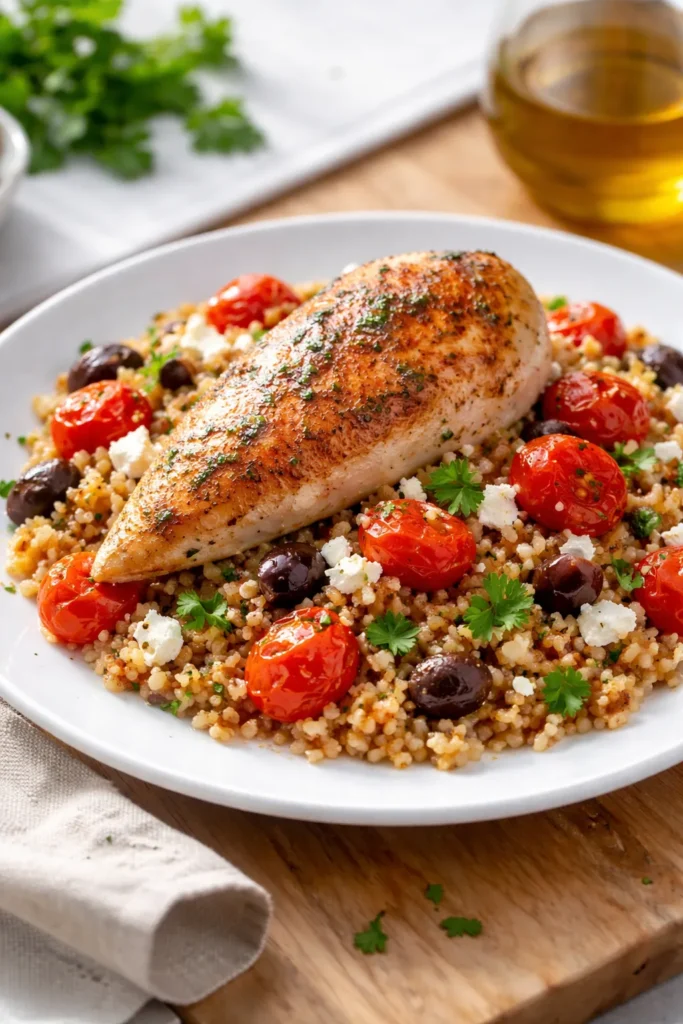
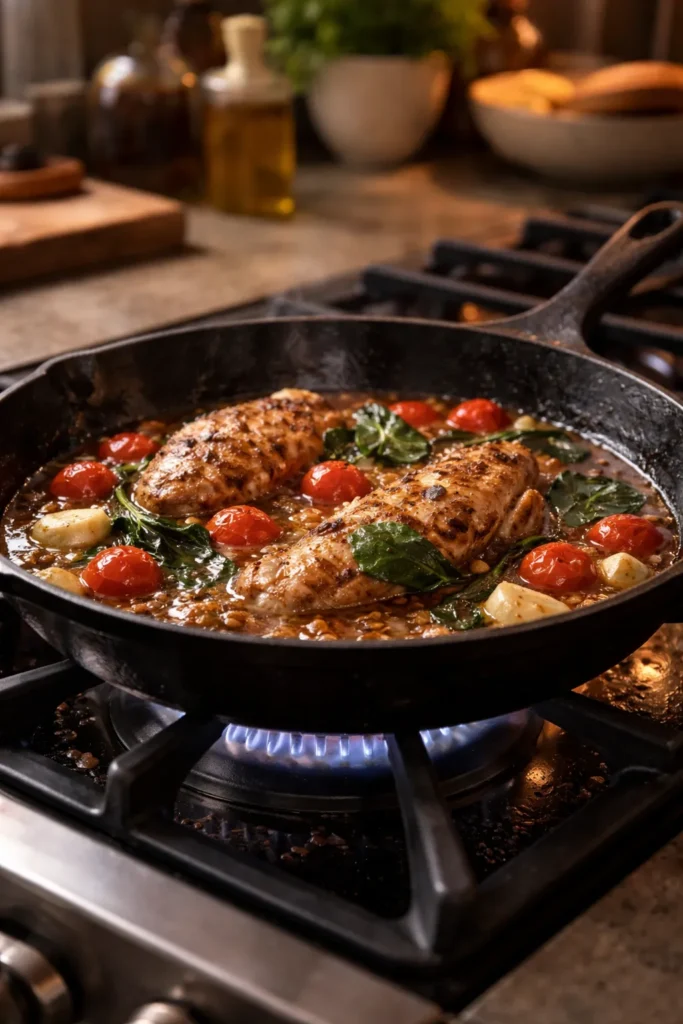
Six ingredients. Under 20 minutes. The kind of dinner that looks like you put more thought into it than you actually did. This one earns its place on any weeknight list by using a technique that most home cooks don’t know: starting chicken breasts in a cold pan.
It sounds counterintuitive, but placing chicken in a cold skillet and bringing the heat up gradually renders the fat more evenly and results in a juicier breast with more consistent browning. Frequent flipping — every 90 seconds or so — ensures even color on both sides without overcooking either surface. The fond that builds in the pan throughout this process becomes the flavoring agent for the bulgur.
The Bulgur Trick
Bulgur is pre-cooked cracked wheat, which means it only needs hot liquid and about 10 minutes of covered resting time to become tender and fluffy. In this dish, it absorbs the pan drippings and tomato juices from blistered cherry tomatoes, which gives it a savory, slightly sweet depth without any additional stock or seasoning beyond salt and pepper.
Scallions, briny kalamata olives, and crumbled feta finish the pilaf. The olives are doing more than adding flavor — their brine seasons everything nearby and keeps the whole dish from tasting flat.
Quick Reference
- Protein: Boneless, skinless chicken breasts
- Key flavors: Cherry tomatoes, kalamata olives, feta cheese, scallions
- Timing: 18-20 minutes total
- Serve with: Lemon wedges, a drizzle of Greek yogurt, fresh mint
Pro tip: If you want to stretch this for four people, add a second cup of bulgur and increase the liquid by the same amount — the pan drippings will still be the flavor base, and everything scales cleanly.
The Secret to Making Skillet Dinners Even Faster
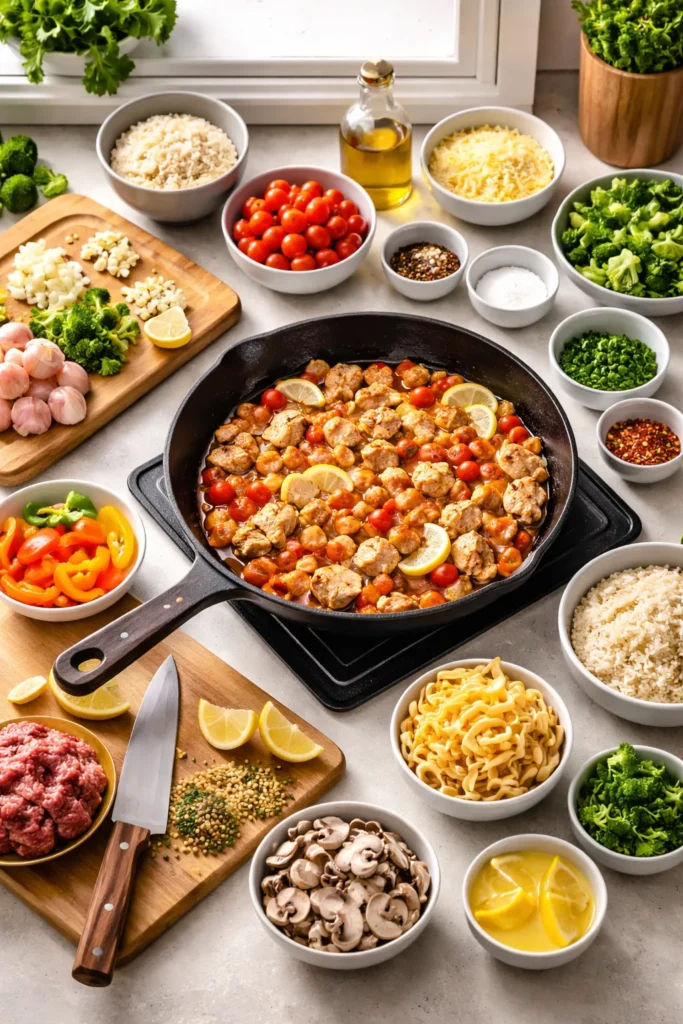
Speed in skillet cooking comes down to preparation, not shortcuts. The dishes above are already fast, but a few habits will cut another five minutes off most of them without sacrificing anything.
Read the full recipe before you start. This sounds basic but it’s the single highest-impact habit for faster cooking. Knowing what comes next means you’re chopping the second ingredient while the first one cooks, instead of stopping to figure out what goes in after the onions.
Prep as you go, not all at once. Professional cooks call it mise en place, but the home cook version is more practical: while the oil heats, chop the garlic. While the garlic softens, slice the protein. While the protein sears, make the sauce components. Stacking tasks within the cooking window rather than front-loading all the prep saves three to six minutes on most dishes.
Small Cuts Cook Faster
Cutting chicken into one-inch cubes instead of cooking whole breasts reduces the stovetop time from 12-14 minutes down to 5-6. The tradeoff is that you lose the option for a dramatic whole-piece presentation, but on a Tuesday night, nobody is scoring you on plating.
Keep Your Pan Actually Hot
Waiting until a pan is properly preheated before adding oil — and waiting until the oil shimmers before adding protein — is the difference between a sear and a steam. An underprepared pan traps moisture and pushes your 20-minute dinner to 30. A properly heated pan creates the Maillard reaction within seconds and locks flavor in.
How to Choose the Right Skillet for Quick Cooking
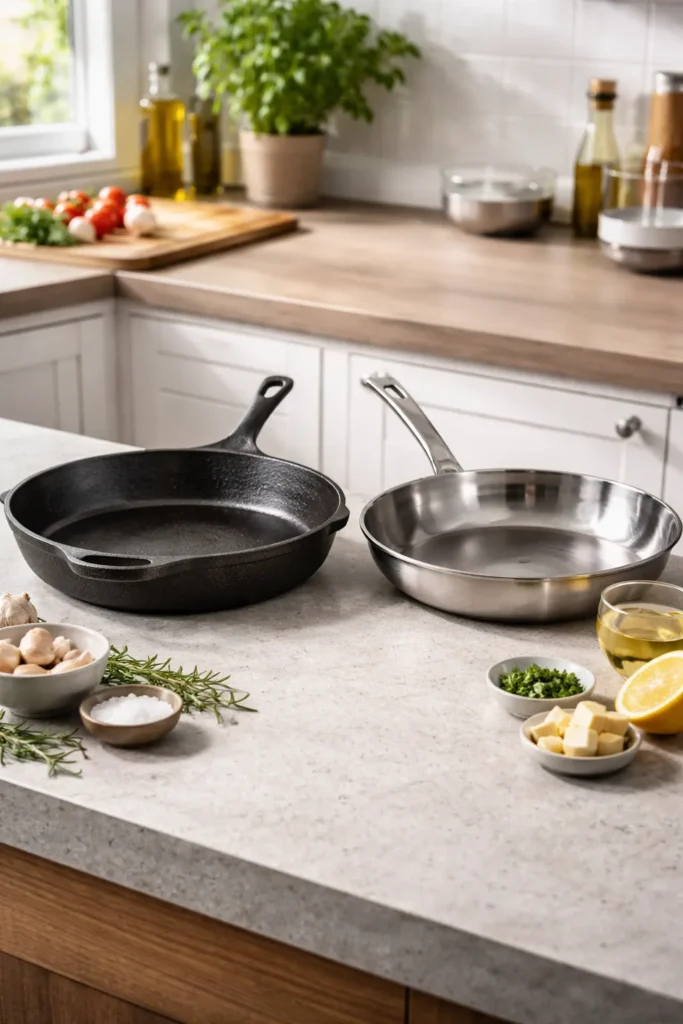
The right skillet isn’t about price. It’s about matching the pan’s properties to the technique you’re using.
Cast iron is the best choice for dishes that require a hard sear — the Kenyan beef wet fry, the palomilla, any dish where you need intense browning. It holds heat like no other material, which means it doesn’t lose temperature when cold protein hits the surface. The downside: it takes 5-7 minutes to fully preheat, which eats into your 20-minute window if you forget to start it early.
Stainless steel is the better choice for dishes with pan sauces — the chicken paillard, any dish where you’re building flavor from fond. Fond forms on stainless more readily than cast iron, and it releases cleanly when you add liquid. The sear quality is excellent too, second only to cast iron.
The Skillet Size That Matters More Than Material
A 12-inch skillet is the right size for almost every dinner for two to four people. Too small and proteins crowd, steam, and turn grey instead of browning. Too large and the sauce spreads thin and reduces too fast, burning before it comes together. Twelve inches is the sweet spot.
Building Flavor Fast: The Pan Fond Advantage
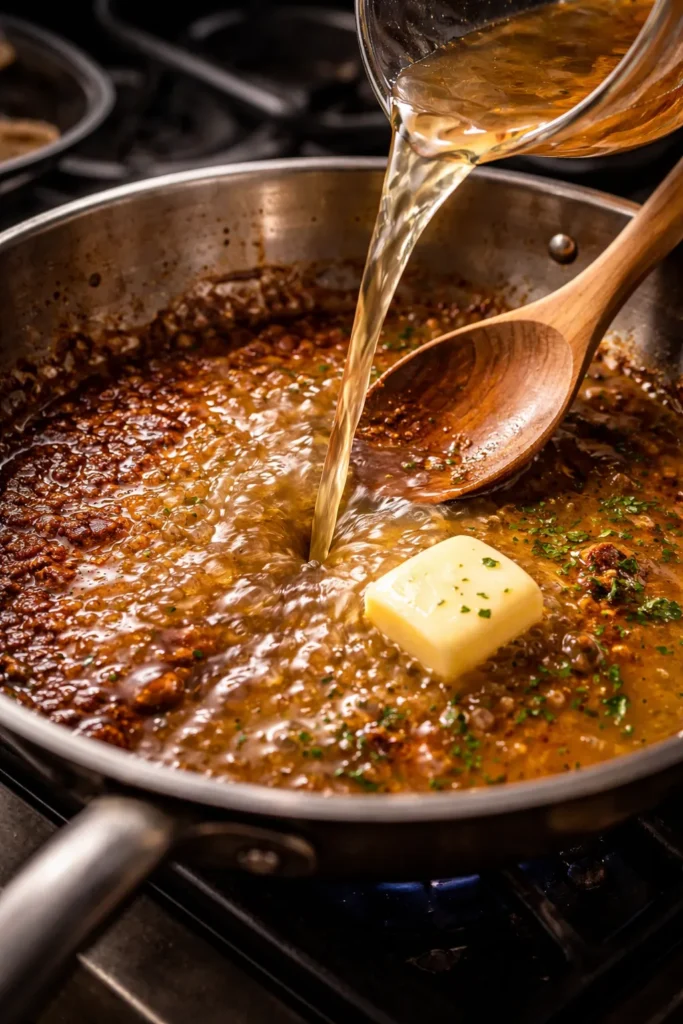
Every experienced cook knows that the best part of a skillet dinner happens after the protein comes out — when the browned bits left on the pan’s surface get lifted by liquid and turned into an instant sauce.
That thin layer of caramelized proteins and sugars is called fond, and it’s the difference between a pan sauce with real depth and a sauce that tastes like it came from a packet. A tablespoon of wine, a squeeze of lemon, or even a splash of water is enough to dissolve fond and pull it into whatever liquid you’re using.
The technique is called deglazing. You don’t need a recipe to use it. Any skillet dinner that leaves a brown (not black — black is burned) residue on the pan is an invitation to make a sauce. Add liquid, scrape the pan with a wooden spoon, let it reduce for 60 seconds, and finish with a knob of cold butter. That’s a restaurant-quality pan sauce in under two minutes.
Pantry Staples That Make 20-Minute Dinners Possible
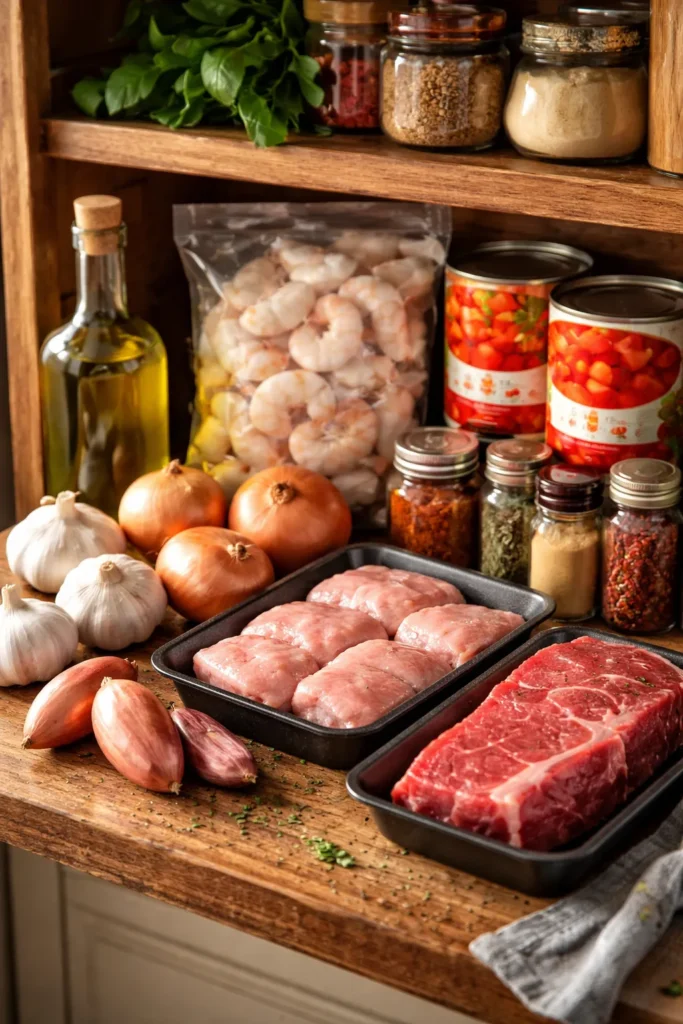
The eight dinners above are only fast because they draw heavily on ingredients you can keep stocked indefinitely. A well-organized pantry removes the moment of “I’m missing something” that derails quick cooking more than anything else.
Fats and aromatics to always have on hand:
- Good olive oil and neutral oil (vegetable or avocado)
- Whole garlic heads — not pre-minced, which loses potency within days
- Yellow onions and shallots
- Canned whole tomatoes (San Marzano or plum variety)
Proteins that keep well:
- Frozen large shrimp — they thaw in 15 minutes under cold running water
- Boneless, skinless chicken thighs — they freeze and thaw better than breasts
- Sirloin steak, thinly cut, freezes well individually wrapped
Flavor builders:
- Baking soda — for the shrimp-brining technique
- Dashi granules or dashi packets — for the oyakodon
- Garam masala, cumin, turmeric, red pepper flakes
- Soy sauce, mirin, and sake — they keep for months after opening
- Capers, kalamata olives, and feta packed in brine
Having these within arm’s reach means that on any given night, at least four or five of the above dishes are possible without a grocery run.
What to Serve Alongside Skillet Dinners
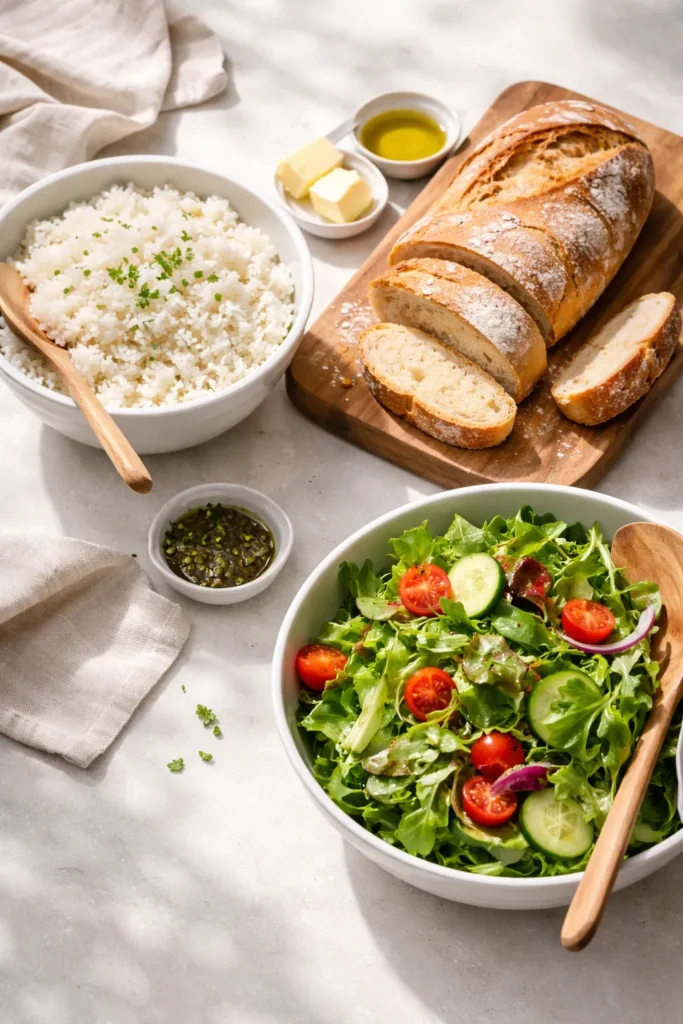
The beauty of a 20-minute main is that it pairs best with sides that require equally little work — or no work at all.
Rice is the most versatile option. A rice cooker handles it without any attention, meaning it’s done exactly when your skillet dinner is. Instant rice works in a true pinch but lacks the texture of properly steamed rice.
Crusty bread is the fastest possible side and the right call for saucier dishes like eggs in purgatory, the shrimp pasta, and the cilantro shrimp. No preparation needed — just slice and serve.
A simple green salad dressed while the protein rests rounds out any of the more protein-heavy dishes above. Two minutes of whisking good olive oil, lemon juice, salt, and pepper makes a better dressing than most bottled options.
For dishes that already contain a grain component — like the bulgur pilaf or the oyakodon — you don’t need a starch at all. A few slices of cucumber dressed with salt and rice vinegar, or a handful of dressed arugula, gives the meal brightness without adding significant prep time.
Final Thoughts
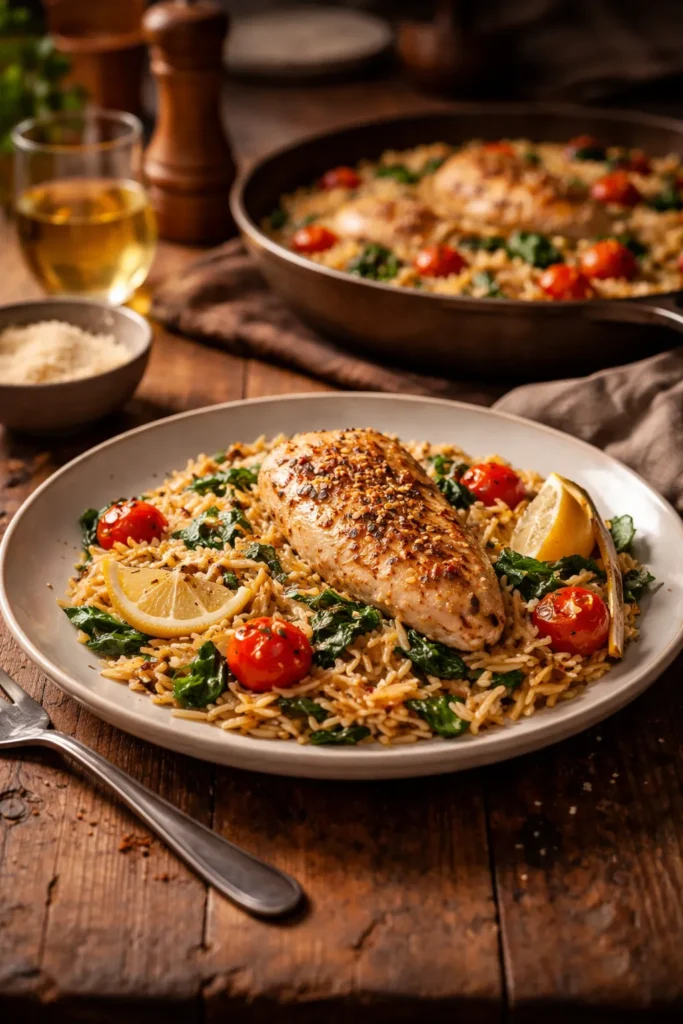
Twenty minutes is genuinely enough time to cook a dinner worth eating — if you’re working with the right techniques and the right ingredients. The eight dishes above each demonstrate a specific principle: a well-executed sear, an emulsified pan sauce, a chutney that works three ways, a half-set egg that finishes itself on the plate.
What they share is an understanding that flavor doesn’t come from time alone. It comes from heat management, quality pantry staples, and techniques like fond-building, brining, and blooming spices. Once those become second nature, a 20-minute dinner stops feeling like a workaround and starts feeling like the actual standard.
Pick one dish from this list to try first — ideally the one whose ingredient list overlaps most with what you already have. Make it once to learn its rhythms, then make it again faster. That’s how weeknight cooking actually gets easier: not through new gadgets or complicated meal plans, but through building a short library of dishes you know by heart.