There’s a particular kind of evening that feels almost impossible to improve: the grill is hot, the light is going golden, and something genuinely good-smelling is happening over the flame. No pots to scrub, no hot kitchen to escape from, just food that tastes better for having met fire.
The trouble is, a lot of people get stuck grilling the same three things on rotation. Burgers, basic chicken, maybe a hot dog if someone asks nicely. And while none of those are bad, the grill is capable of so much more — and the effort required to pull off something spectacular is often less than you’d expect.
What follows is a lineup of eight grilled dinners that cover the full range of summer evenings: fast weeknights, unhurried Saturday gatherings, and everything in between. Each one has been chosen because it brings something distinct — a flavor profile, a technique, or a presentation that makes it feel like a real occasion even on a Tuesday. A few use marinades that do the heavy lifting overnight. Others come together in under 15 minutes. All of them are worth firing up the grill for.
Table of Contents
- 1. Grilled Oregano Shrimp Skewers
- Why Shrimp Works So Well on the Grill
- How to Serve Them
- 2. Curried Pork Tenderloin
- Getting the Cook Right
- Pairing and Plating
- Quick Facts
- 3. Carne Asada with Red Chimichurri
- The Red Chimichurri Factor
- The Slicing Rule That Changes Everything
- 4. Grilled Salmon Tacos with Avocado Crema
- Building the Avocado Crema
- The Taco Assembly That Matters
- 5. Beer-Marinated Skirt Steak
- Choosing the Right Beer
- What to Serve Alongside
- Quick Facts
- 6. Hot Honey Grilled Chicken Thighs
- The Two-Zone Grill Setup
- Serving Suggestions
- 7. Grilled Swordfish with Roasted Red Pepper Sauce
- Grilling Swordfish Without It Sticking
- Building the Pepper Sauce
- 8. Miso-Glazed Cedar Plank Salmon
- How Cedar Plank Cooking Actually Works
- Finishing Touches That Matter
- Quick Facts
- Making the Most of Your Grill Night
- Final Thoughts
1. Grilled Oregano Shrimp Skewers
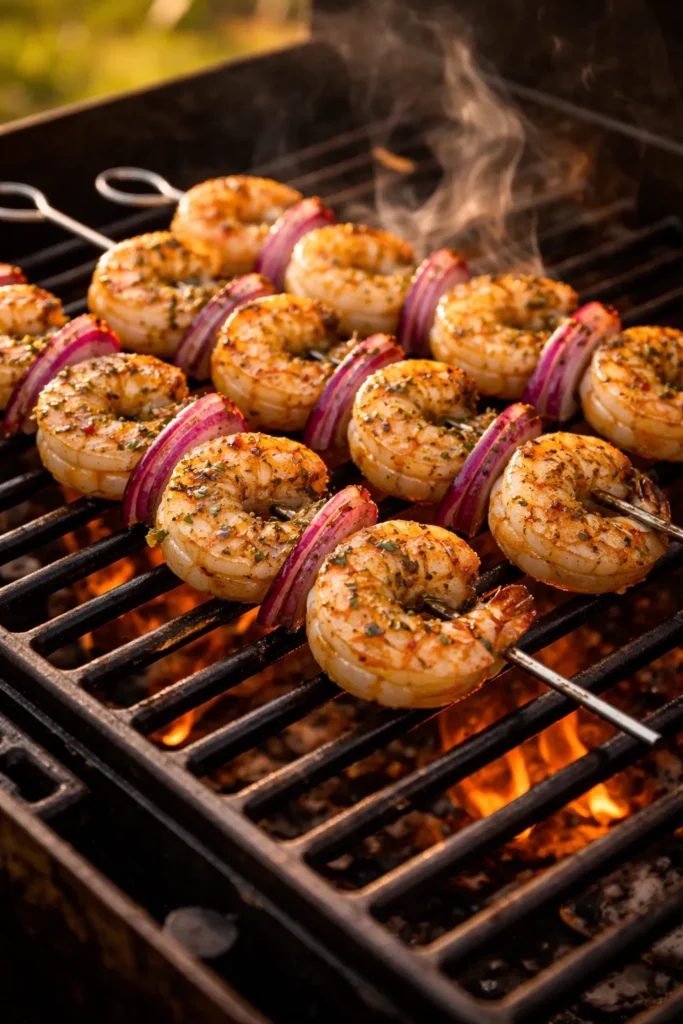
Shrimp might be the single most forgiving protein on a grill — and also one of the most impressive-looking when you pull a skewer off the grates and set it in front of someone. The trick is keeping it stripped down. Shrimp doesn’t need a complicated marinade or a long prep window; it needs heat, fat, and an herb that can stand up to both.
This version uses dried oregano crumbled into olive oil with thin-sliced red onion. That’s it. Four ingredients, including the shrimp itself, and the result is bright, savory, and deeply satisfying. The onion chars slightly at the edges and takes on a sweetness that plays beautifully against the herb-forward oil coating each piece of shrimp.
Why Shrimp Works So Well on the Grill
Shrimp cooks in 2 to 4 minutes total — which means it fits neatly into the first act of a dinner party before the mains go on. Thread them onto metal skewers (they conduct heat and don’t need soaking) with a half-slice of red onion between each shrimp, and the whole thing comes together faster than you can pour a drink.
The single biggest mistake people make with grilled shrimp is walking away. A few seconds past perfectly cooked, and shrimp turns rubbery and tight. Watch for the moment they curl into a loose C-shape and turn fully opaque pink — that’s your signal to pull them immediately.
How to Serve Them
- Toss with a squeeze of fresh lemon right off the grill
- Serve over a bed of arugula dressed with olive oil and flaky salt
- Pair with a crisp Sauvignon Blanc or a sparkling water with plenty of citrus
- Works as a starter before a heavier main or as the centerpiece of a lighter summer meal for two
Worth knowing: If you’re feeding a crowd, double the batch and keep the skewers warm on the grill’s upper rack, off direct heat. They hold better than most people expect.
2. Curried Pork Tenderloin
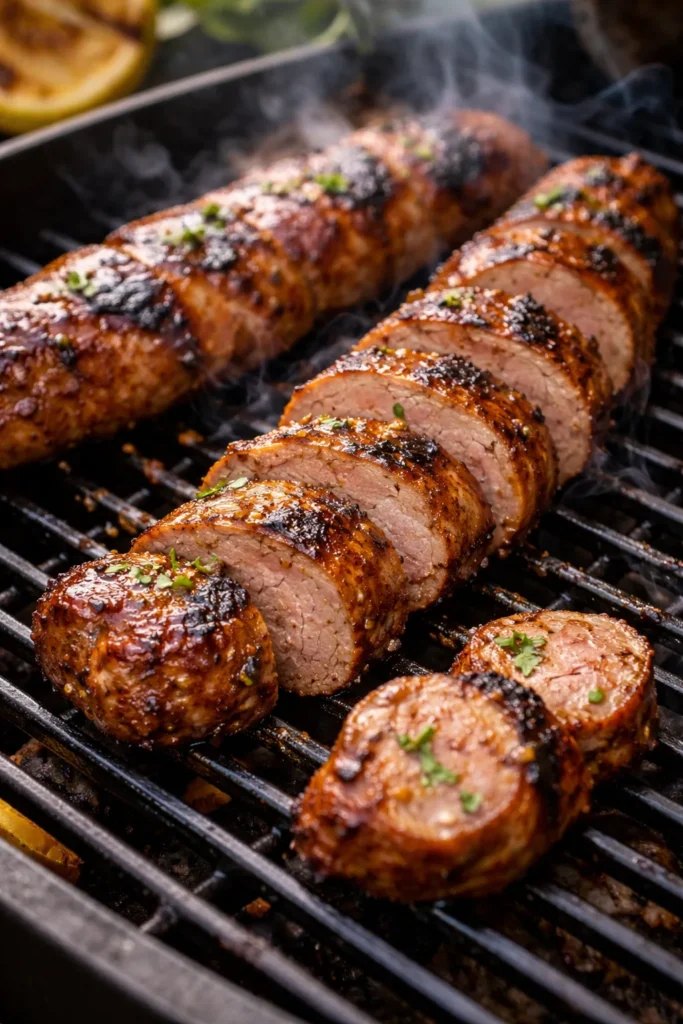
Pork tenderloin has a slightly undeserved reputation for being bland — a side effect of too many years of overcooked, gray medallions served at mediocre dinner parties. The solution isn’t a fancier cut. It’s a better marinade and the respect to pull the pork off the grill before it’s overdone.
This version uses soy sauce, olive oil, curry powder, honey, fresh ginger, and a pinch of cayenne. The soy brings umami depth, the curry powder adds a warmth that blooms beautifully over fire, and the honey helps the exterior caramelize into something almost lacquered. Marinate the tenderloins for at least two hours — overnight is even better.
Getting the Cook Right
Pork tenderloin is a narrow, tapered cut, which means one end always threatens to overcook before the thicker middle is done. The fix is to fold the thin tail under and secure it with a toothpick before it goes on the grill, so the whole piece cooks more evenly.
The interior should be slightly pink when you slice it — not raw, but not white all the way through. Pull it at an internal temperature of 145°F (63°C) and let it rest for five minutes before cutting. A rested tenderloin stays significantly juicier than one sliced straight off the grill.
Pairing and Plating
- Slice on the diagonal for a cleaner, more elegant presentation
- Serve alongside grilled peaches or a simple cucumber salad to balance the warmth of the curry
- A chilled Pinot Noir works remarkably well here — lighter-bodied reds pair with pork far better than most people expect
- Leftovers slice thin and fold into lettuce cups with rice noodles and fresh herbs
Quick Facts
- Prep time: 10 minutes active, plus 2 hours marinating
- Cook time: approximately 20 to 25 minutes over medium-high heat
- Feeds 4 generously from two standard tenderloins (about 1½ lb total)
- The marinade doubles as a sauce — just reserve a portion before adding raw meat
3. Carne Asada with Red Chimichurri
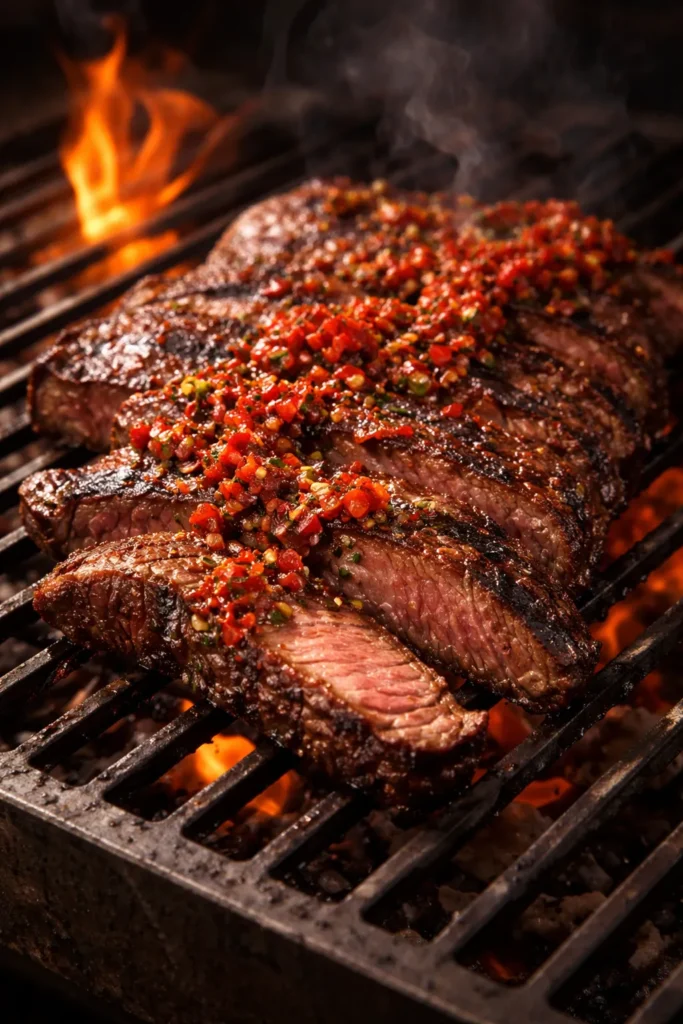
Few grilled dinners hit with the kind of crowd-wide enthusiasm that carne asada does. There’s something about thin-sliced, citrus-marinated skirt steak with a little char that appeals to almost everyone, and the prep is genuinely simple once you’ve got the marinade sorted.
Skirt steak is the traditional cut here, and for good reason: it’s well-marbled, cooks fast over high heat, and absorbs marinade aggressively. A puree of citrus, garlic, herbs, and spice — sometimes with a splash of beer or vinegar added — does the tenderizing work overnight. By the time it hits a screaming-hot grill, the exterior caramelizes in minutes while the interior stays pink and juicy.
The Red Chimichurri Factor
Standard green chimichurri (parsley, garlic, olive oil, red wine vinegar) is excellent on carne asada. Red chimichurri takes that same base and deepens it with roasted red peppers, smoked paprika, Fresno chiles, and sherry vinegar. The result is smokier, slightly sweet, and bold enough to hold its own against the char on the steak.
Make the chimichurri at least an hour ahead and let the flavors settle. It genuinely improves as it sits, and any leftovers keep well in the fridge for several days, making them excellent on eggs, roasted vegetables, or grilled fish.
The Slicing Rule That Changes Everything
Skirt steak has long, prominent muscle fibers running in one direction. Slice with the grain, and every bite will be tough and chewy no matter how good the marinade was. Slice against the grain — perpendicular to those fibers — and the same steak becomes tender and easy to eat. This one step is the difference between a good carne asada and a great one.
- Rest the steak 5 minutes before cutting
- Slice thin, against the grain, on a slight diagonal
- Serve with warm tortillas, sliced avocado, and lime wedges for a full spread
- Or plate simply over cilantro-lime rice with chimichurri spooned generously over the top
4. Grilled Salmon Tacos with Avocado Crema
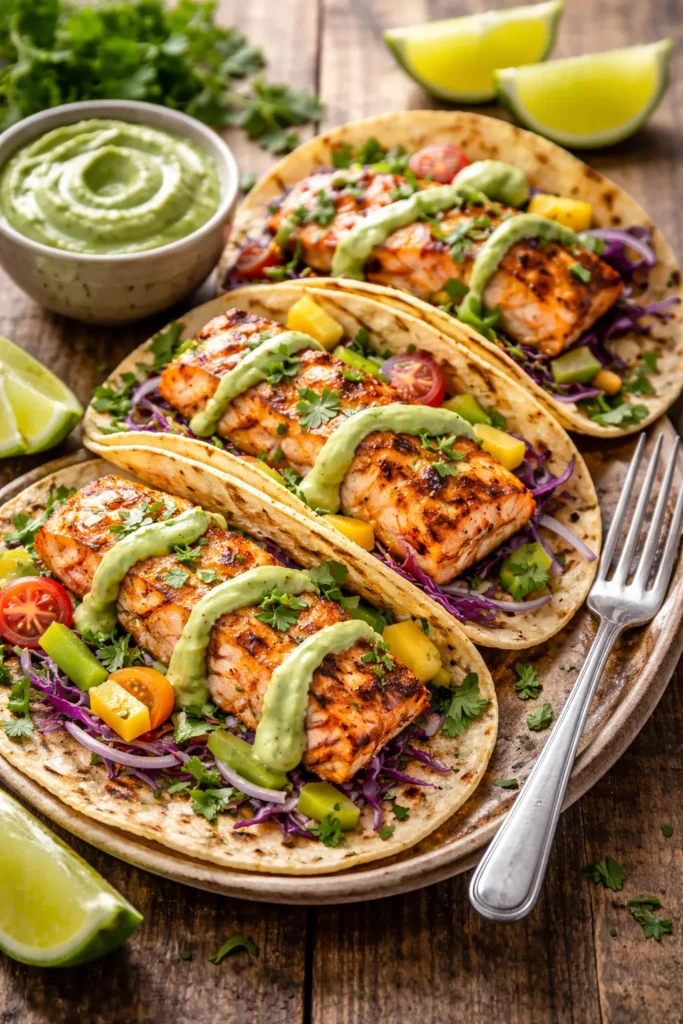
Salmon on the grill is one of those things that looks and tastes far more impressive than the effort involved. A large fillet can feed four people, cooks in under 10 minutes over medium-high heat, and takes on char and smokiness in a way that almost no other fish does.
For tacos, a chili-lime marinade is the move. Combine lime juice, a little honey, smoked paprika, cumin, garlic, and olive oil, and let the salmon soak for 20 to 30 minutes (no longer — acid starts to cook the fish). The grill does the rest, leaving edges charred and centers just barely cooked through.
Building the Avocado Crema
The crema is what elevates this from “grilled fish in a tortilla” to something you’d happily put in front of guests. Blend ripe avocado with Greek yogurt or sour cream, lime juice, garlic, salt, and a small handful of cilantro. The texture should be thick enough to spoon but smooth enough to drizzle — adjust with a splash of water if needed.
Avocado crema holds better than guacamole because the yogurt helps stabilize the color and texture. It stays green and fresh-tasting for a few hours in the fridge, making it easy to prep ahead of time while the grill heats up.
The Taco Assembly That Matters
- Warm corn tortillas directly on the grill grate for 30 seconds per side — they pick up char marks and a toasted flavor that flour tortillas simply can’t replicate
- Add grilled peppers and onions from the same grill session for a full fajita-style setup
- Crumble Cotija cheese over the top for a salty, slightly funky counterpoint to the rich crema
- A drizzle of hot sauce and a squeeze of fresh lime finish each taco
Pro tip: Grill the salmon skin-side down first and leave it alone. Resist the urge to flip it until the flesh has turned opaque about halfway up the fillet. It will release cleanly from the grates when it’s ready — trying to force it early just tears the fish.
5. Beer-Marinated Skirt Steak
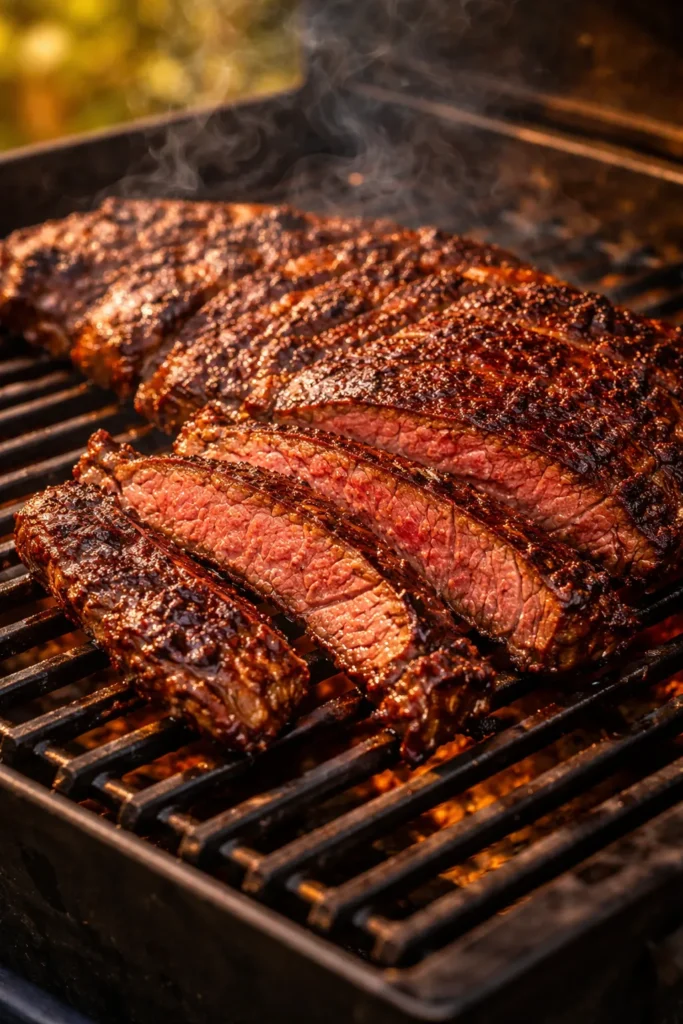
There’s a reason skirt steak appears twice in this lineup. It’s one of the most flavorful, fast-cooking, grill-friendly cuts of beef you can buy — and it genuinely transforms when marinated properly. The beer version approaches the same cut from a completely different flavor angle than carne asada, with deeply savory results.
A good beer marinade layers flavors: malty sweetness from the beer itself, garlic, Worcestershire sauce, a splash of soy for umami, and maybe a spoonful of brown sugar to encourage caramelization. Skirt steak can handle a longer soak than leaner cuts — even overnight — because the connective tissue benefits from the acid and enzymes in the beer.
Choosing the Right Beer
Not all beers make equal marinades. A hoppy IPA can turn bitter as it reduces and penetrates the meat. Opt for a lager, amber ale, or dark beer like a stout or porter. Darker beers especially add a molasses-adjacent depth that reads as almost barbecue-like after the steak spends time over high heat.
The residual sugar in malt-forward beers also helps create that caramelized exterior — the crust that makes the first bite of a properly grilled steak so satisfying.
What to Serve Alongside
- Grilled corn on the cob with garlic butter and lime
- Simple black beans with cumin and fresh cilantro
- Smashed potatoes with herbs and flaky salt
- A grilled romaine salad dressed with Caesar dressing and shaved Parmesan
Quick Facts
- Marinate for a minimum of 1 hour, ideally 4 to 8 hours
- Grill on high heat, 3 to 4 minutes per side for medium-rare
- Always slice against the grain — this rule applies just as firmly here as with carne asada
- Excellent sliced cold the next day in sandwiches or grain bowls
6. Hot Honey Grilled Chicken Thighs
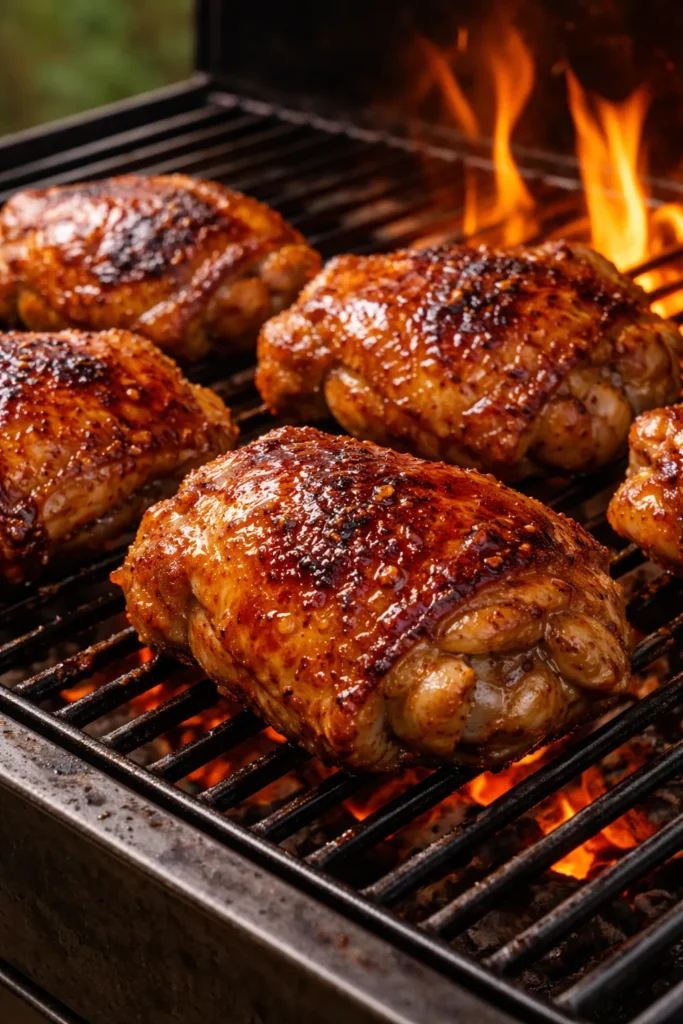
Bone-in, skin-on chicken thighs are arguably the most forgiving protein on a grill. Unlike breasts, which dry out quickly and punish any lapse in attention, thighs tolerate a bit of extra time on the grates without suffering. The fat content keeps them moist, and the skin crisps into something almost impossibly good when the grill is set up correctly.
The hot honey glaze is where this version earns its place. A mix of honey, Sriracha, cayenne, and a splash of soy sauce gets brushed onto the thighs in the final minutes of cooking, caramelizing into a sticky, sweet-heat coating that clings to the charred skin. It’s simultaneously the kind of thing you’d find at a proper barbecue restaurant and something you can pull off on any grill on a weeknight.
The Two-Zone Grill Setup
Chicken thighs with skin benefit enormously from a two-zone setup. Bank the coals (or turn burners) to one side for direct high heat, and leave the other side cooler for indirect cooking. Start the thighs skin-side down over direct heat for 4 to 5 minutes to render the fat and get the skin crispy, then move them to the indirect side for the remaining 20 minutes of cooking time.
Brush the hot honey glaze on only in the last 3 to 4 minutes. Applied too early, the sugar in the honey burns before the chicken is cooked through. Timed correctly, it lacquers beautifully without scorching.
Serving Suggestions
- Pair with grilled vegetable kebabs for color and contrast
- Cool the heat with a simple yogurt sauce and a handful of fresh herbs
- Serve over a bed of cilantro-lime rice or alongside grilled corn salad
- The leftovers are exceptional cold, packed into sandwiches with slaw and pickles the next day
7. Grilled Swordfish with Roasted Red Pepper Sauce
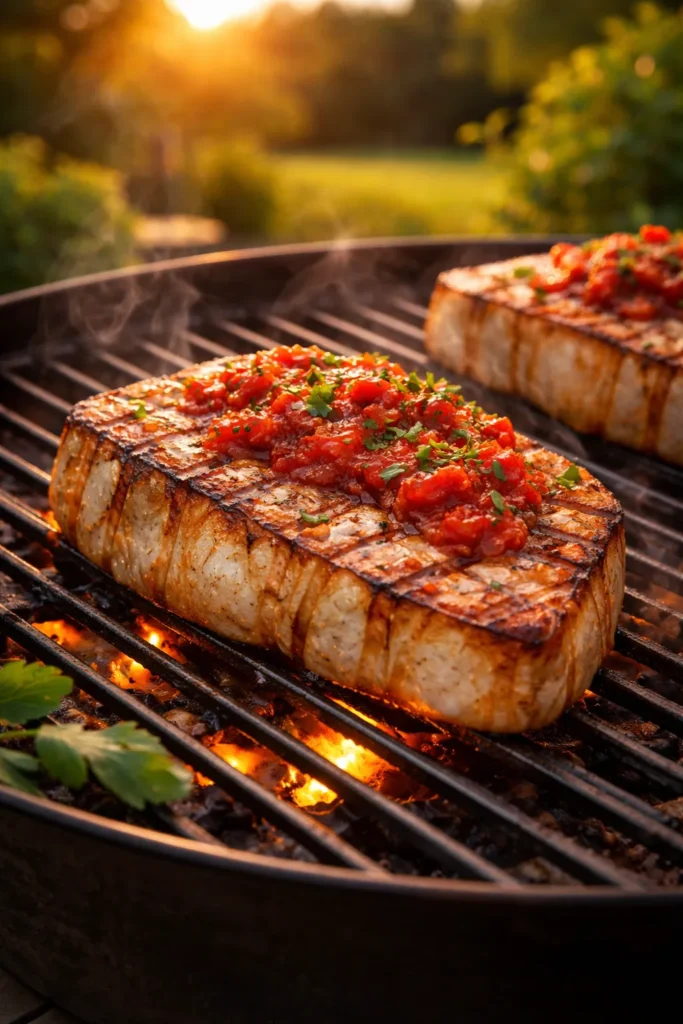
Swordfish is the steak of the seafood world — dense, meaty, and able to hold up to direct high heat without falling apart or sticking to the grates the way delicate fish can. It’s a griller’s fish, and it suits summer dinners that want to feel a little elevated without requiring complicated technique.
The roasted red pepper sauce is a Provençal-inspired blend of charred peppers, garlic, fresh basil, olive oil, and a small amount of Greek yogurt to give it body. It’s creamy without being heavy, vibrant without being sharp, and it complements the mild, slightly sweet flavor of swordfish the way a good sauce should — by making the main thing taste more like itself.
Grilling Swordfish Without It Sticking
Swordfish steaks should be at least 1 inch thick — thinner cuts dry out before they develop any exterior color. Pat them dry with a paper towel, brush generously with olive oil, and make sure the grill grate is both clean and hot before the fish goes down.
Don’t move the swordfish for at least 3 minutes after it hits the grate. Like a good sear on beef, the fish will release naturally when it’s ready. Forcing it early tears the flesh. Flip once, cook another 3 to 4 minutes, and check the center — it should be opaque but still slightly translucent at the very middle.
Building the Pepper Sauce
- Char whole red peppers directly on the grill until blackened all over
- Transfer to a bowl, cover with plastic wrap, and let steam for 10 minutes
- Peel and seed the peppers, then blend with garlic, basil, olive oil, and yogurt
- Season with salt, pepper, and a splash of sherry vinegar for brightness
Worth knowing: The pepper sauce can be made two days ahead and stored in the fridge. It actually improves overnight as the flavors settle and the garlic mellows slightly.
8. Miso-Glazed Cedar Plank Salmon
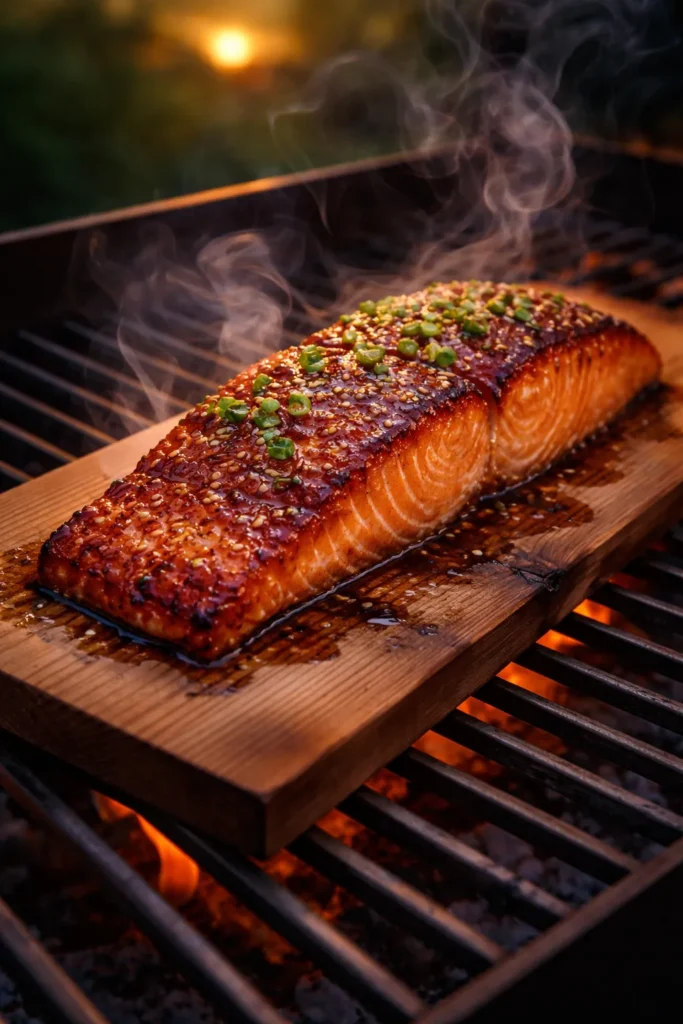
This is the one to pull out when you want the grill to do something genuinely impressive — the kind of dish that makes guests ask how you did it even though the process is simpler than it looks. Cedar plank cooking infuses salmon with a deep, resinous smokiness that no marinade alone can replicate, and the miso glaze creates a caramelized, umami-rich crust that plays against that smokiness with remarkable elegance.
The prep involves soaking a cedar plank in water for at least an hour before it goes on the grill (this prevents it from catching fire and also generates the steam that keeps the salmon moist). The miso glaze — white or yellow miso, rice vinegar, soy sauce, sesame oil, and a spoonful of brown sugar — gets brushed on the salmon before it goes on the plank.
How Cedar Plank Cooking Actually Works
The soaked plank sits over direct medium heat. As it heats, it begins to smoke and steam simultaneously. The salmon cooks gently from below with the heat of the plank, while the smoke from the cedar penetrates the flesh from all sides. The skin doesn’t stick to the grates because it never touches them — which also means you don’t need to flip the fish.
The whole cook takes 12 to 15 minutes with the grill lid closed. You’ll know it’s done when the thickest part of the fillet flakes easily under gentle pressure but still looks slightly darker at the center.
Finishing Touches That Matter
- Sprinkle with toasted sesame seeds and thinly sliced scallions right before serving
- A few drops of chili oil add heat and shine without competing with the miso
- Bring the whole plank to the table — the presentation is part of the experience
- Serve with steamed jasmine rice and a simply dressed cucumber salad to keep the focus on the salmon
Quick Facts
- Soak the plank for at least 1 hour (2 hours is better)
- Use skin-on salmon fillets — the skin protects the bottom of the fish and peels off cleanly after cooking
- White miso is milder and sweeter; red miso gives a stronger, saltier glaze
- One large fillet feeds 4 people and slices beautifully at the table
Making the Most of Your Grill Night
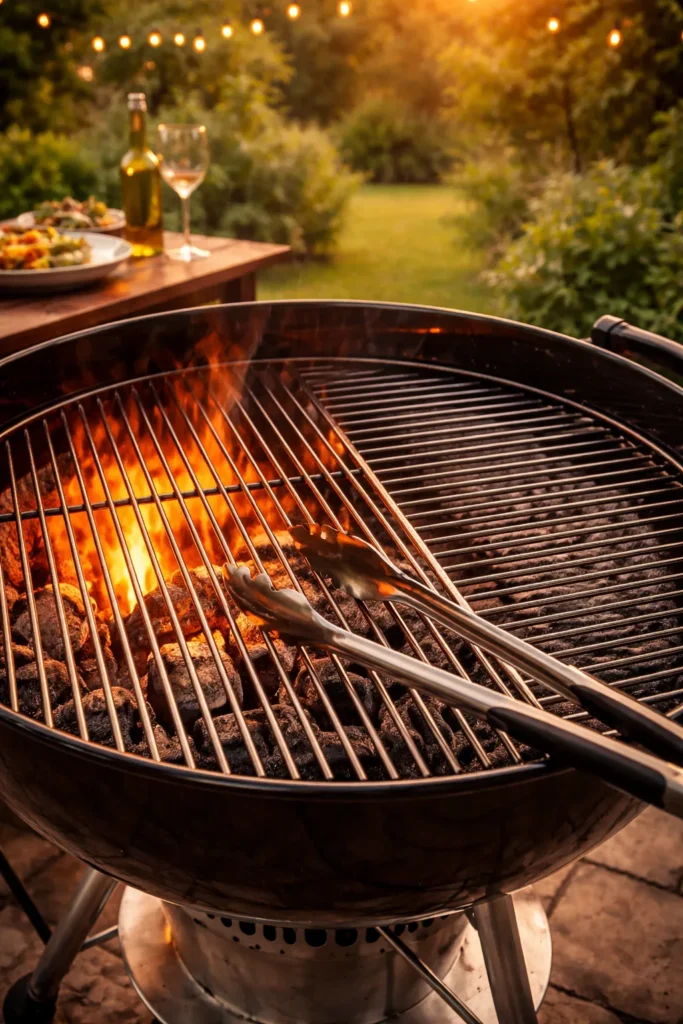
One thing experienced grillers learn quickly is that the setup matters as much as the recipes. A clean grill grate, properly preheated to the right temperature, and a pair of reliable long-handled tongs are more valuable than any marinade shortcut.
For most of the dinners above, a two-zone fire is the most useful configuration. High direct heat for searing and charring, lower indirect heat for finishing. This setup lets you control the cook without babysitting every second.
Marinades deserve more planning time than most people give them. With the exception of delicate seafood like shrimp (which needs only 15 to 20 minutes), most proteins benefit from a 4-to-8-hour soak, and many — particularly skirt steak and pork tenderloin — become noticeably better with an overnight rest in the marinade.
Wine is worth thinking about for any grill night. A chilled Sauvignon Blanc cuts through the richness of shrimp and salmon. Rosé works across the entire lineup. And contrary to what many people assume, a lightly chilled Pinot Noir handles grilled pork and even certain beef dishes with real grace — the key is serving it cool, not cold, and not at room temperature.
Final Thoughts
Eight dinners, one grill, and a completely different summer evening for each one. The shrimp skewers and carne asada are your fast, crowd-pleasing weeknight options. The cedar plank salmon and swordfish with pepper sauce are for when you want to slow down and make something that feels genuinely special. The chicken thighs and pork tenderloin sit comfortably in the middle — reliable enough for a Tuesday, impressive enough for Saturday guests.
What ties all of them together is the same principle: fire makes food better, and the grill rewards confidence more than technique. Get the grill hot, trust the timing, and resist the urge to move things before they’re ready to be moved.
Pick one to start with, get comfortable, and then work through the rest over the course of the season. By the time the weather turns, you’ll have a personal lineup you can return to for years.