Few pasta dishes have earned their place at the dinner table quite the way baked feta pasta has. What started as a quiet Finnish food blog post — credited to blogger Tiiu Piret back in 2018 — eventually turned into one of the most searched recipes on the internet, sparking genuine feta cheese shortages at grocery stores across Finland and, eventually, the world. There’s a reason it spread so fast: the method is almost absurdly simple, and the results taste like you spent far more effort than you actually did.
The core concept is brilliant in its restraint. A block of feta cheese sits in the center of a baking dish, surrounded by cherry tomatoes and drizzled generously with good olive oil. Into the oven it goes. What comes out forty-ish minutes later is a jammy, blistered, salty-sweet situation that you stir into cooked pasta for one of the most satisfying weeknight dinners imaginable. No chopping, no stirring, no standing over a hot stove. The oven does everything.
But here’s what most people haven’t explored yet: the base method is just a starting point. Swap in a handful of kalamata olives. Add harissa. Throw in some butternut squash. Tuck in a block of creamy sheep’s milk feta with shrimp scattered around the edges. The dish transforms with each addition, and every variation is genuinely worth making. What follows are eight versions of baked feta pasta — from the original classic to bold, creative riffs — each with enough detail that you can walk into your kitchen and make any one of them tonight.
Table of Contents
- 1. Classic Cherry Tomato Baked Feta Pasta
- What Makes This Version So Reliable
- Tips for the Best Classic Version
- 2. Baked Feta Pasta with Spinach and Roasted Garlic
- How the Spinach Changes Everything
- The Roasted Garlic Advantage
- 3. Spicy Harissa Baked Feta Pasta
- Matching the Heat to the Feta’s Saltiness
- How to Dial the Heat Up or Down
- 4. Greek-Style Baked Feta Pasta with Olives and Bell Peppers
- Why the Extra Vegetables Work So Well
- Serving This Version
- 5. Baked Feta Pasta with Lemon Zest and Fresh Herbs
- The Role of Acid in Feta Pasta
- 6. Butternut Squash and Sage Baked Feta Pasta
- Why Butternut Squash Belongs Here
- 7. Shrimp Baked Feta Pasta
- Getting the Shrimp Timing Right
- Pairing Notes
- 8. Chicken and Spinach Baked Feta Pasta
- Why Searing the Chicken Separately Matters
- Why Block Feta Always Beats Crumbled Feta
- Choosing the Right Pasta Shape for Baked Feta
- How to Get the Best Sauce Every Time
- Storing, Reheating, and Making Ahead
- Final Thoughts
1. Classic Cherry Tomato Baked Feta Pasta
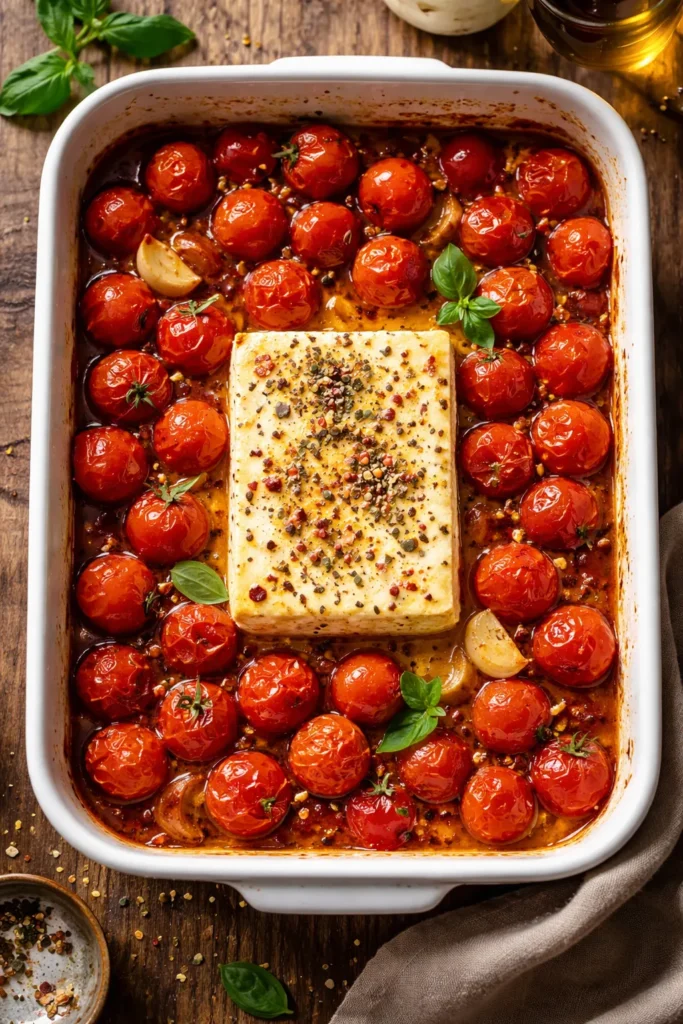
This is the one that started it all, and there’s a reason it hasn’t faded from dinner rotation for anyone who’s made it. The original combination of cherry tomatoes, a whole block of feta, and olive oil produces a sauce that tastes like it took hours — briny, lightly tangy, sweet from the burst tomatoes, and rich from both the cheese and the oil. Every other version on this list builds on this foundation.
What Makes This Version So Reliable
The magic here is the Maillard reaction working on both the cheese and the tomatoes simultaneously. As the feta softens and the tomatoes burst and caramelize at the edges, their juices mingle with the olive oil to form an emulsified, glossy sauce. Adding the garlic raw, directly to the hot dish the moment it comes out of the oven, is a key detail most people overlook. The residual heat blooms the garlic’s flavor without any harsh, acrid bite.
Yield: Serves 4 to 6 Prep Time: 10 minutes Cook Time: 40 minutes Total Time: 50 minutes Difficulty: Beginner — four main ingredients and one baking dish is all you need.
Ingredients:
- 2 pints (about 20 oz) cherry or grape tomatoes
- 1 block (8 oz) Greek sheep’s milk feta cheese, drained
- ½ cup extra-virgin olive oil
- ¼ teaspoon kosher salt
- ¼ teaspoon freshly ground black pepper
- 2 large garlic cloves, finely grated or minced
- ¼ cup fresh basil leaves, thinly sliced
- Pinch of crushed red pepper flakes (optional)
- 10 oz short pasta (penne, rigatoni, cavatappi, or rotini)
- ½ cup reserved pasta water
Instructions:
Prepare and Bake:
-
Preheat the oven to 400°F (200°C) and position the rack in the center.
-
Add the cherry tomatoes to a 2½- to 3-quart baking dish. Pour the olive oil over the top, season with salt and pepper, and toss to coat. The tomatoes should be snug and crowded — if they have too much space, they’ll dry out rather than becoming saucy.
-
Place the feta block in the center of the tomatoes. Flip it once or twice to coat it lightly with the oil. Leave it whole — do not crumble it.
-
Bake at 400°F for 30 minutes, until the tomatoes begin to burst.
-
Raise the oven temperature to 450°F, move the rack to the upper third of the oven, and return the baking dish. Bake for an additional 10 to 15 minutes until the tomatoes and top of the feta are lightly golden and blistered. Watch closely during this stage — the difference between beautifully caramelized and burnt can be just two or three minutes.
Finish the Sauce:
-
Meanwhile, bring a large pot of water to a boil. Add enough salt so the water tastes distinctly seasoned — about 1 tablespoon per 4 quarts. Cook the pasta until al dente according to the package directions. Reserve ½ cup of pasta cooking water before draining.
-
The moment the baking dish comes out of the oven, immediately add the grated garlic and basil. Stir everything together right away — the heat from the tomatoes and oil cooks the garlic in about 30 seconds, softening its raw edge without any bitterness.
-
Use the back of a wooden spoon to smash the tomatoes and feta together into a rough, creamy sauce. It won’t be perfectly smooth, and that’s exactly right — some texture is part of the appeal.
-
Add the drained pasta to the baking dish and toss to coat. If the sauce feels thick or the pasta seems dry, add the reserved pasta water two tablespoons at a time, stirring after each addition, until the sauce is silky and coats the pasta evenly.
-
Taste and adjust salt and pepper. Serve immediately, topped with extra fresh basil and a pinch of flaky sea salt if you have it.
Tips for the Best Classic Version
Use sheep’s milk feta if you can find it — the flavor is more complex and it melts into a creamier sauce than cow’s milk varieties, which tend to be drier and sharper. Don’t skip the two-temperature bake. Starting at 400°F cooks the tomatoes through and softens the feta, while the final blast at 450°F adds the golden color and caramelized edges that make the sauce taste deeper and richer.
Pro tip: If your cherry tomatoes are on the tart side (common out of season), add a small drizzle of balsamic glaze when you stir in the garlic. It rounds out the acidity and adds a subtle sweetness that pulls the whole sauce together.
2. Baked Feta Pasta with Spinach and Roasted Garlic
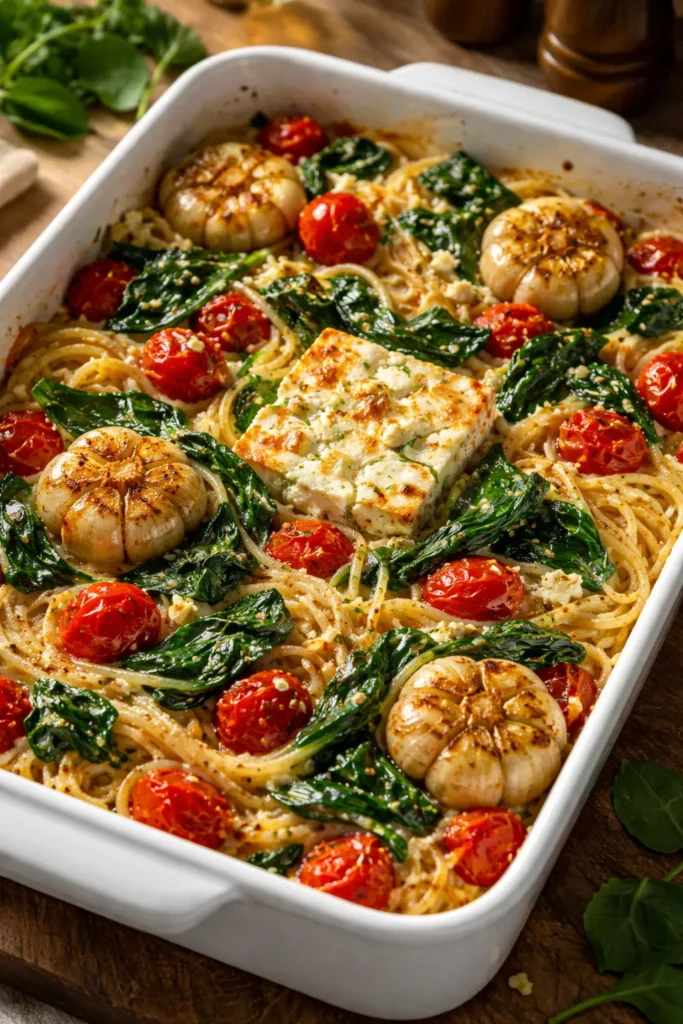
Adding spinach and whole garlic cloves to the classic formula takes the dish in a slightly more substantial, deeply savory direction. The whole garlic cloves roast alongside the feta, turning soft and almost sweet over the course of the bake — completely different from the punchy raw garlic added at the end in the classic version. When you smash them into the sauce, they dissolve into a mellow, aromatic base that rounds out every bite.
How the Spinach Changes Everything
Spinach added right before serving — either wilted into the pasta water at the last minute or stirred directly into the hot sauce — gives the dish a pop of color and just enough vegetal earthiness to balance the richness of the feta and olive oil. The method borrowed from some of the best versions out there involves dropping the spinach into the pasta pot for the last 30 seconds before draining. It wilts instantly and coats evenly when tossed with the sauce.
Yield: Serves 4 to 5 Prep Time: 10 minutes Cook Time: 40 minutes Total Time: 50 minutes Difficulty: Beginner — the whole garlic technique is straightforward and the results are impressive.
Ingredients:
- 2 pints cherry or grape tomatoes
- 5 medium garlic cloves, peeled and halved lengthwise
- 1 block (7 to 8 oz) Greek sheep’s milk feta, drained
- ½ cup extra-virgin olive oil
- ¼ teaspoon kosher salt
- ¼ teaspoon freshly ground black pepper
- ¼ teaspoon crushed red pepper flakes
- 8 oz fresh baby spinach, roughly chopped
- ¼ cup fresh basil leaves, thinly sliced
- 2 tablespoons fresh flat-leaf parsley, minced
- 10 oz short pasta (campanelle, rigatoni, or penne)
- ½ cup reserved pasta water
Instructions:
Build the Baking Dish:
-
Preheat the oven to 400°F. Place the cherry tomatoes and halved garlic cloves in a 3-quart baking dish. Drizzle with olive oil and season with salt, black pepper, and red pepper flakes. Toss gently to coat.
-
Nestle the feta block in the center. Turn it once or twice so it picks up the oil. Do not break the block apart — keeping it whole ensures it softens into a creamy texture rather than drying out.
-
Bake at 400°F for 30 minutes. Move the rack to the upper third of the oven, raise the temperature to 450°F, and bake for another 8 to 10 minutes until the tomatoes and cheese are lightly browned.
Cook the Pasta with Spinach:
-
Bring a large, well-salted pot of water to a boil. Cook the pasta to al dente. About 30 seconds before draining, add the spinach directly to the pot and push it under the water — it will wilt almost immediately. Reserve ½ cup of pasta water, then drain pasta and spinach together.
-
Remove the baking dish from the oven. Smash the garlic cloves and tomatoes together with the feta using the back of a spoon. The roasted garlic should practically melt into the sauce without any effort.
-
Add the pasta and spinach. Toss to combine. Stir in basil and parsley. Thin with pasta water as needed until the sauce moves freely and coats each piece of pasta.
-
Taste, adjust seasoning, and serve warm.
The Roasted Garlic Advantage
Five whole cloves might look like a lot going into the dish raw, but they’re unrecognizable after 40 minutes at high heat. They become sweet, nutty, and barely pungent — contributing depth rather than sharpness. This version handles beautifully as a vegetarian main that feels genuinely hearty without needing any protein additions.
3. Spicy Harissa Baked Feta Pasta
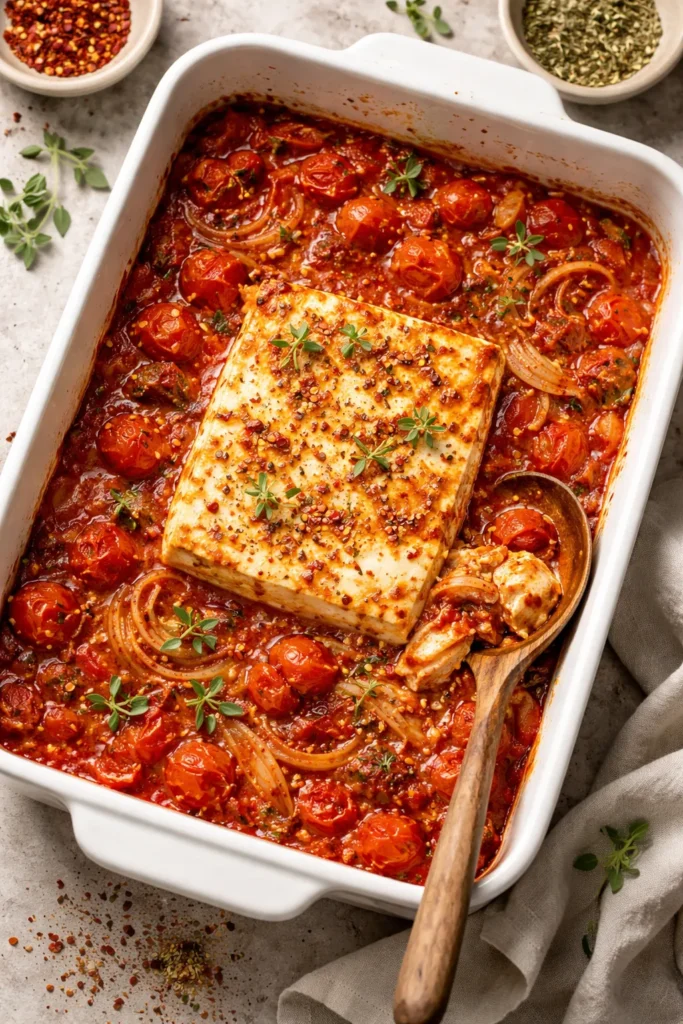
This is the version for anyone who finds the original a little too mild. Harissa — the North African chile paste built on roasted red peppers, garlic, and spices like cumin and coriander — adds a smoky, complex heat that transforms the tomato-feta sauce into something with real backbone. Use harissa sauce (not the concentrated paste, which is far too intense) for a balanced heat level that enhances rather than overwhelms.
Matching the Heat to the Feta’s Saltiness
Feta’s natural saltiness and tang are a perfect foil for harissa’s smokiness. The two flavors don’t fight each other — they amplify one another in a way that makes the finished sauce taste considerably more layered than the short ingredient list would suggest. Shallots added to the baking dish bring a subtle sweetness that rounds the whole thing out.
Yield: Serves 6 Prep Time: 15 minutes Cook Time: 40 minutes Total Time: 55 minutes Difficulty: Beginner — harissa does all the heavy lifting on flavor.
Ingredients:
- 2 pints cherry tomatoes (about 1¼ lbs)
- 2 medium shallots, roughly chopped
- 4 large garlic cloves, thinly sliced
- 1 teaspoon fresh oregano, chopped (or ½ teaspoon dried)
- 1 teaspoon kosher salt
- ½ teaspoon black pepper, plus more for serving
- ½ teaspoon crushed red pepper
- 6 tablespoons extra-virgin olive oil, divided
- 1 block (8 oz) Greek feta cheese in brine, drained
- 5 tablespoons harissa sauce (such as Mina brand)
- 1 lb short pasta (fusilli, penne rigate, or fusillotti)
- ½ cup reserved pasta water
- Fresh basil, thinly sliced, for serving
Instructions:
Assemble and Bake:
-
Preheat the oven to 400°F. In a 9×13-inch baking dish, combine the cherry tomatoes, shallots, sliced garlic, oregano, salt, black pepper, crushed red pepper, and 4 tablespoons of the olive oil. Toss until everything is evenly coated.
-
Place the feta block in the center of the baking dish. Drizzle the remaining 2 tablespoons of olive oil directly over the cheese.
-
Bake until the tomatoes are blistered, the shallots are soft, and the sauce is bubbling around the edges — about 35 minutes. The tomatoes should be fully collapsed and jammy, not just slightly softened.
Finish the Dish:
-
While the baking dish is in the oven, bring a large pot of generously salted water to a boil. Cook the pasta to al dente. Reserve ½ cup cooking liquid and drain.
-
Remove the baking dish from the oven. Use the back of a large spoon to mash the feta into the tomatoes and their juices until a rough sauce forms. The shallots and sliced garlic will have melted into the sauce naturally.
-
Stir in the harissa sauce until fully incorporated. Add the cooked pasta and toss. Add reserved cooking water two tablespoons at a time until the sauce is loose enough to coat the pasta evenly.
-
Taste and adjust salt. Garnish with fresh basil and additional black pepper. Serve immediately.
How to Dial the Heat Up or Down
Five tablespoons of harissa sauce is the sweet spot for a medium heat level. Drop it to 3 tablespoons if you want just a hint of warmth, or push it to 7 or 8 tablespoons if you genuinely love heat. The harissa you choose matters — some brands are dramatically spicier than others, so taste yours before adding it. A squeeze of lemon over the finished dish adds brightness that cuts through the richness beautifully.
4. Greek-Style Baked Feta Pasta with Olives and Bell Peppers
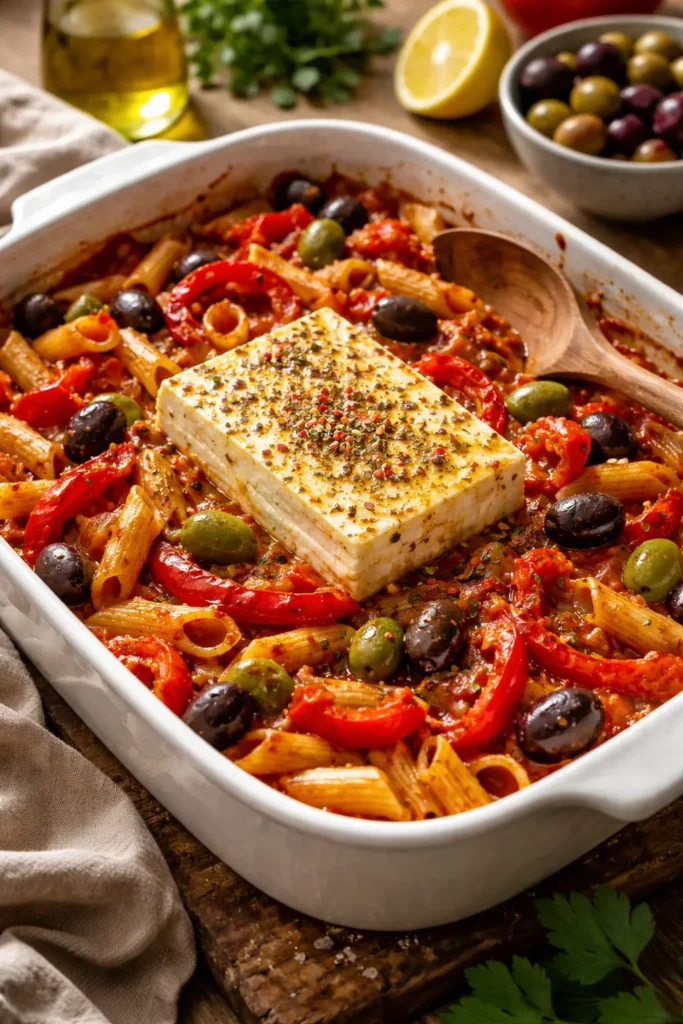
This version leans fully into the Mediterranean ingredients that feta naturally pairs with. Kalamata olives, sliced bell peppers, and fresh herbs like rosemary and thyme join the tomatoes in the baking dish, creating a sauce that’s more complex and textured than the basic version. The olives add a briny depth that makes each bite feel more substantial, and the roasted peppers bring a soft sweetness that balances the tang of the cheese.
Why the Extra Vegetables Work So Well
Bell peppers and olives are sturdy enough to hold up to 40 minutes of high heat without turning to mush, which makes them ideal additions to the baking dish. They roast and caramelize alongside the tomatoes, their flavors concentrating as the moisture evaporates. Ten cloves of garlic might sound alarming on paper, but roasted at this temperature for this length of time they become soft, almost nutty, and nothing like raw garlic in intensity.
Yield: Serves 6 Prep Time: 15 minutes Cook Time: 40 minutes (plus 5 minutes under the broiler) Total Time: 55 minutes Difficulty: Beginner — the only active work is prepping the vegetables before they go into the oven.
Ingredients:
- 2 pints cherry tomatoes
- 1 red bell pepper, sliced into strips
- 1 yellow bell pepper, sliced into strips
- 10 garlic cloves, peeled and left whole
- ½ cup kalamata olives, pitted and halved
- ¼ cup extra-virgin olive oil
- 1 sprig fresh rosemary
- 2 sprigs fresh thyme
- ¼ teaspoon crushed red pepper flakes
- ¼ teaspoon black pepper
- ¼ teaspoon kosher salt
- 1 tablespoon red wine vinegar
- 1 block (8 oz) sheep’s milk feta, drained
- 10 oz short pasta (fusilli, rotini, or cavatappi)
- ½ cup fresh basil, torn or thinly sliced
- ½ cup reserved pasta water
Instructions:
Prep the Baking Dish:
-
Preheat the oven to 400°F. In a 9×13-inch baking dish, combine the cherry tomatoes, bell pepper strips, whole garlic cloves, olives, olive oil, rosemary, thyme, red pepper flakes, black pepper, and salt. Toss to coat evenly.
-
Nestle the feta block in the center of the vegetables. Flip it once or twice to coat with the oil.
-
Bake uncovered for 35 minutes, until the tomatoes have burst and the peppers are soft and lightly caramelized at the edges.
-
Switch the oven to broil and cook for an additional 4 to 5 minutes until the tops of the vegetables and cheese are lightly charred. Stay near the oven during broiling — the difference between charred and burned happens quickly.
Build the Sauce:
-
Meanwhile, cook pasta in well-salted boiling water to al dente. Reserve ½ cup pasta water and drain.
-
Remove the herb sprigs from the baking dish. Add the red wine vinegar directly to the hot dish — it will sizzle and deglaze the bottom, lifting any caramelized bits.
-
Smash the garlic cloves and feta into the tomatoes and peppers until a chunky, creamy sauce forms.
-
Toss in the drained pasta. Add pasta water gradually until the sauce coats every piece. Stir in the fresh basil, taste, and adjust seasoning.
Serving This Version
A crusty loaf of bread alongside this dish is close to mandatory — the sauce is too good to leave in the bowl. A simple arugula salad dressed with lemon juice and olive oil cuts through the richness and rounds out the meal beautifully.
5. Baked Feta Pasta with Lemon Zest and Fresh Herbs
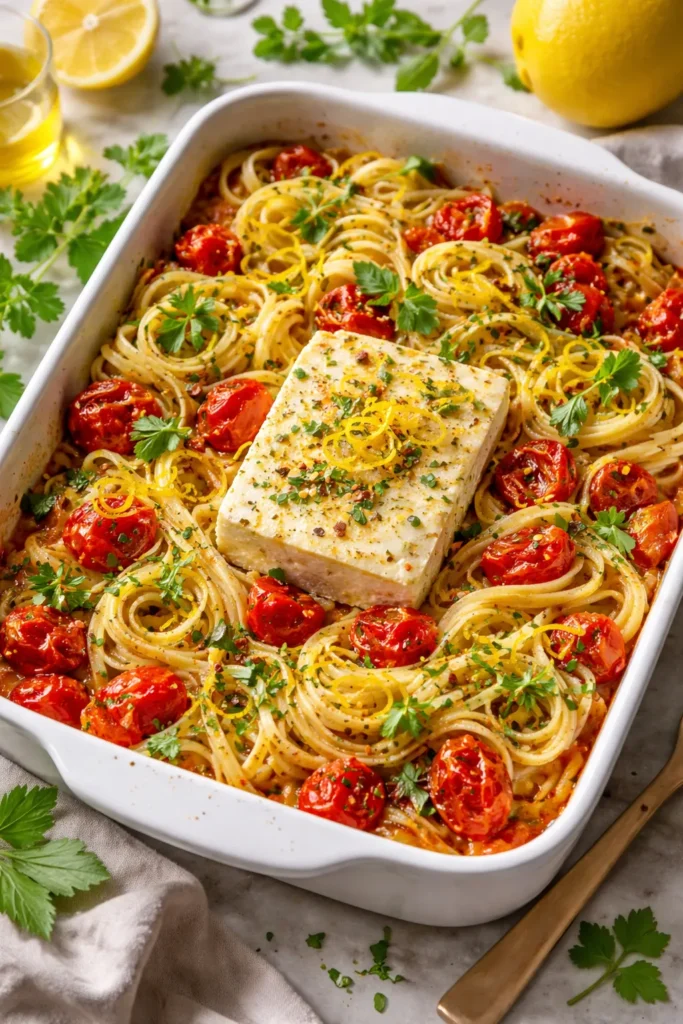
Bright, clean, and just a little lighter-feeling than the richer versions, this lemon and herb variation is the one to make when the tomatoes are peak-ripe and you want the freshness to shine. Lemon zest stirred in right at the end cuts through the saltiness of the feta and adds an aromatic lift that makes the whole dish feel spring-like, even in the middle of winter.
The Role of Acid in Feta Pasta
Feta is already acidic — that’s part of what makes it so distinctive. Adding more acid in the form of lemon zest and a small squeeze of juice might seem counterintuitive, but it actually does something important: it sharpens all the other flavors in the dish, making them more vivid and defined. Without it, the sauce can taste a little flat once it hits the pasta. The lemon doesn’t make the dish taste like lemon — it makes everything else taste more like itself.
Yield: Serves 4 to 5 Prep Time: 10 minutes Cook Time: 35 minutes Total Time: 45 minutes Difficulty: Beginner — this is as simple as the classic version with one extra step at the end.
Ingredients:
- 2 pints cherry or grape tomatoes
- ½ cup extra-virgin olive oil
- ¼ teaspoon kosher salt
- ¼ teaspoon black pepper
- 1 block (8 oz) Greek sheep’s milk feta, drained
- 2 garlic cloves, finely grated
- Zest of 1 large lemon
- 1 tablespoon fresh lemon juice
- ¼ cup fresh basil, thinly sliced
- 2 tablespoons fresh flat-leaf parsley, minced
- 1 tablespoon fresh thyme leaves
- 10 oz short pasta
- ½ cup reserved pasta water
- Flaky sea salt, for finishing
Instructions:
-
Preheat the oven to 400°F. Add the cherry tomatoes to a 2½- to 3-quart baking dish. Drizzle with olive oil, season with salt and pepper, and toss. Place the feta block in the center; flip once to coat with the oil.
-
Bake for 30 minutes at 400°F. Raise the temperature to 450°F and bake for an additional 8 to 10 minutes until the tomatoes are blistered and the feta has golden patches on top.
-
Cook pasta in generously salted water to al dente. Reserve ½ cup pasta water and drain.
-
The moment the baking dish comes out of the oven, add the grated garlic, lemon zest, and lemon juice. Stir immediately. The residual heat blooms the garlic and the lemon zest releases its oils into the sauce.
-
Smash the tomatoes and feta together into a rough sauce. Add the fresh basil, parsley, and thyme.
-
Toss in the drained pasta and stir to coat. Add pasta water gradually to loosen the sauce. The finished sauce should coat the pasta generously — if it’s clumping together, it needs more pasta water.
-
Taste, adjust seasoning, and finish with a pinch of flaky sea salt over the top before serving.
6. Butternut Squash and Sage Baked Feta Pasta
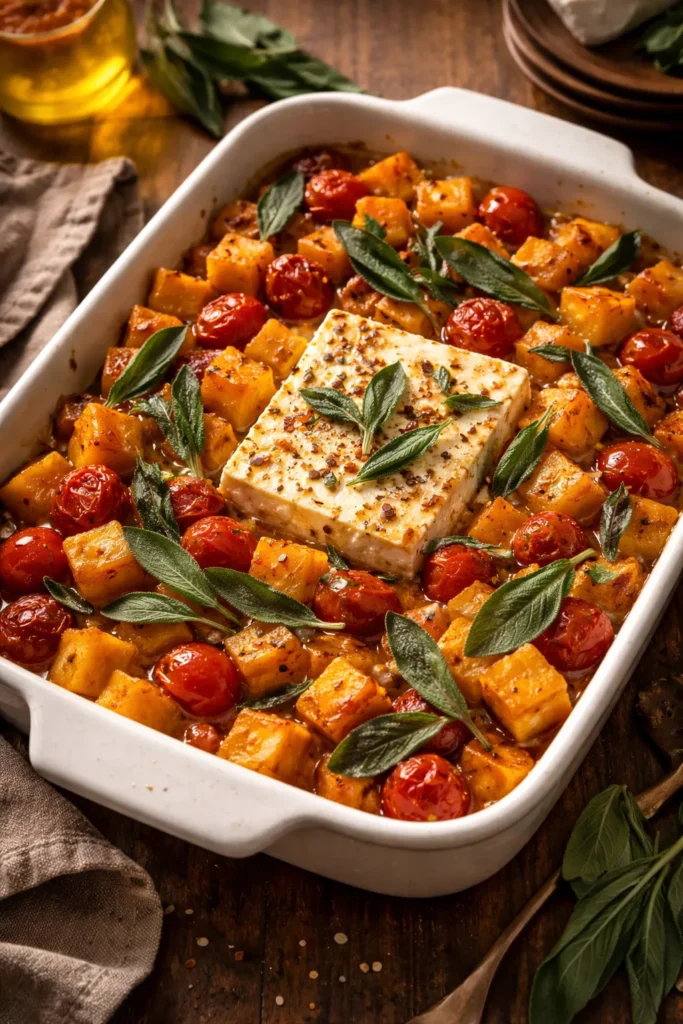
This is the version built for cooler months. Cubes of butternut squash roast alongside the tomatoes and feta, caramelizing at their edges and adding a sweet, starchy element that makes the sauce silkier and more substantial. Fried sage leaves scattered over the top at the end add a crispy, aromatic contrast that turns this dish into something genuinely special.
Why Butternut Squash Belongs Here
Butternut squash has a natural sweetness and high moisture content that works beautifully in this format. As it roasts, it softens and begins to break down, some pieces dissolving into the sauce while others remain in distinct chunks that add textural variety. The combination of sweet squash, salty feta, and tart burst tomatoes hits all the major flavor notes at once — it’s the kind of balance that makes a dish feel thought-out even when it came together in a single baking dish.
Yield: Serves 4 to 6 Prep Time: 20 minutes (including peeling and cubing the squash) Cook Time: 45 minutes Total Time: 65 minutes Difficulty: Intermediate — the squash requires more prep than the other versions, and the timing needs a little attention.
Ingredients:
For the Bake:
- 1 small butternut squash (about 1½ lbs), peeled and cut into ¾-inch cubes
- 1 pint cherry tomatoes
- ½ cup extra-virgin olive oil, plus 2 tablespoons for the sage
- ¼ teaspoon kosher salt
- ¼ teaspoon black pepper
- ¼ teaspoon nutmeg
- ¼ teaspoon crushed red pepper flakes
- 1 block (8 oz) sheep’s milk feta, drained
- 2 garlic cloves, finely grated
For Finishing:
- 10 oz short pasta (rigatoni or penne work particularly well here)
- 12 to 15 fresh sage leaves
- 2 tablespoons olive oil (for frying the sage)
- ½ cup reserved pasta water
- Freshly grated Parmesan, for serving (optional)
Instructions:
Build and Bake:
-
Preheat the oven to 400°F. In a 9×13-inch baking dish, combine the butternut squash cubes, cherry tomatoes, ½ cup olive oil, salt, pepper, nutmeg, and red pepper flakes. Toss until the squash and tomatoes are evenly coated.
-
Place the feta block in the center of the vegetable mixture. Flip once to coat with oil.
-
Bake for 40 to 45 minutes, until the squash is fork-tender and caramelized at the edges and the tomatoes have fully collapsed. The squash takes longer to soften than tomatoes alone, so don’t rush this stage.
Cook the Pasta and Fry the Sage:
-
Cook pasta in well-salted water to al dente. Reserve ½ cup pasta water; drain.
-
In a small skillet, heat 2 tablespoons of olive oil over medium-high heat until shimmering. Add the sage leaves in a single layer. Fry for 45 to 60 seconds per side until crisp and bright green. Transfer to a paper towel-lined plate. They’ll crisp up further as they cool.
-
Remove the baking dish from the oven. Add the grated garlic immediately and stir. Smash some of the squash pieces and all of the tomatoes and feta into the oil to form a creamy, textured sauce. Leave some squash pieces intact for texture.
-
Add the cooked pasta. Toss to coat, adding pasta water as needed to reach a loose, saucy consistency.
-
Serve topped with crispy sage leaves and, if you like, a light dusting of grated Parmesan.
7. Shrimp Baked Feta Pasta
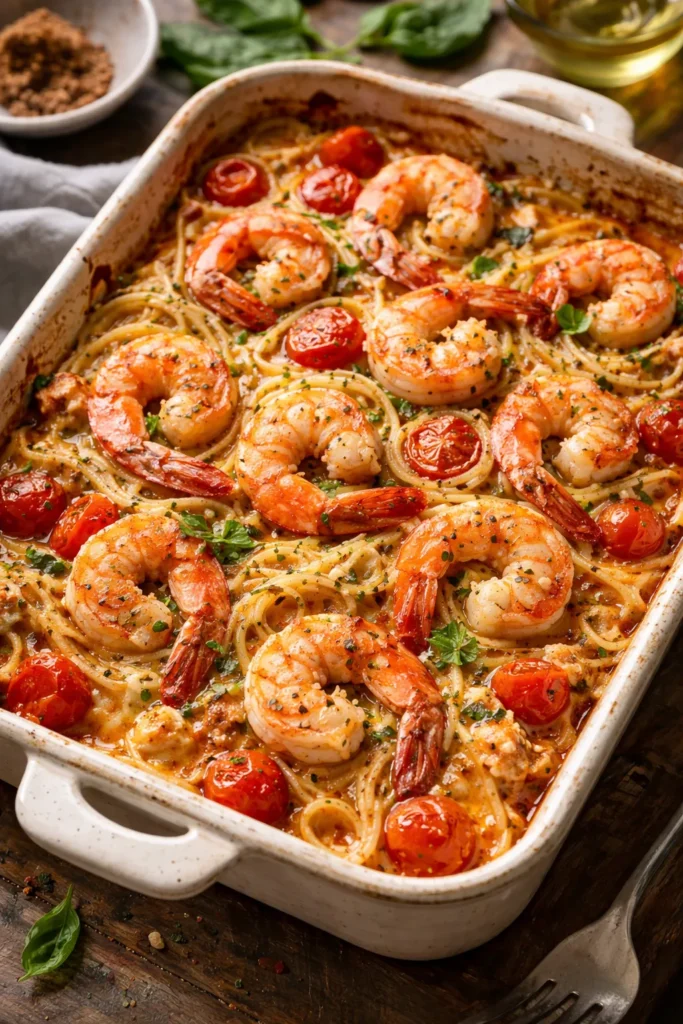
Adding shrimp to this dish is one of the most popular and satisfying ways to make it a complete protein-forward meal without complicating the method much at all. The key is timing — shrimp cook in about 10 minutes, so they go into the baking dish for only the final stretch of cooking, not from the beginning. Overcooked shrimp are rubbery and flavorless, and this recipe sidesteps that entirely.
Getting the Shrimp Timing Right
The tomatoes and feta need about 30 to 35 minutes at 400°F before the shrimp arrive. Nestle the raw shrimp into the half-baked tomato mixture, then return the dish to the oven. The shrimp will cook through in 8 to 10 minutes and pick up all the flavor from the tomatoes, olive oil, and feta surrounding them. They come out plump, seasoned, and perfectly cooked every time.
Yield: Serves 4 Prep Time: 15 minutes Cook Time: 45 minutes Total Time: 60 minutes Difficulty: Beginner — the two-stage cooking method is easy to follow and prevents overcooked shrimp.
Ingredients:
- 2 pints cherry tomatoes
- ½ cup extra-virgin olive oil
- ¼ teaspoon kosher salt
- ¼ teaspoon black pepper
- ¼ teaspoon crushed red pepper flakes
- 1 block (8 oz) Greek feta, drained
- 1 lb large shrimp (21-25 count), peeled and deveined, tails on or off
- 3 garlic cloves, finely grated
- 1 teaspoon lemon zest
- 2 tablespoons fresh lemon juice
- ¼ cup fresh basil, thinly sliced
- 2 tablespoons fresh parsley, minced
- 10 oz short pasta (cavatappi or penne)
- ½ cup reserved pasta water
Instructions:
Stage One — Bake the Tomatoes and Feta:
-
Preheat the oven to 400°F. Add the tomatoes to a 9×13-inch baking dish. Pour in the olive oil, season with salt, black pepper, and red pepper flakes, and toss. Place the feta block in the center; flip once to coat.
-
Bake for 30 to 35 minutes until the tomatoes are very soft and beginning to burst and the feta is noticeably softened.
Stage Two — Add the Shrimp:
-
Remove the baking dish from the oven. Pat the shrimp dry with paper towels (dry shrimp cook more evenly and pick up better color than wet ones). Season lightly with salt and pepper, then nestle them into the tomato and feta mixture, spreading them out in a single layer as much as possible.
-
Return the dish to the oven and bake for 8 to 10 minutes until the shrimp are pink, opaque, and just cooked through. Pull the dish the moment the shrimp curl into a loose C shape — that’s perfectly cooked. A tight O shape means they’ve gone too far.
Finish and Serve:
-
While the shrimp are in the oven, cook the pasta to al dente in well-salted water. Reserve ½ cup pasta water; drain.
-
Remove the dish from the oven. Add the garlic, lemon zest, and lemon juice immediately; stir. Smash the tomatoes and feta together into a rough sauce, working around the shrimp gently.
-
Add the pasta, basil, and parsley. Toss to combine, adding pasta water gradually to loosen the sauce. Serve immediately.
Pairing Notes
A crisp, dry white wine — something with good acidity like a Greek Assyrtiko or a Sauvignon Blanc — cuts through the richness and brightens the lemon notes. Garlic bread alongside this version borders on mandatory.
8. Chicken and Spinach Baked Feta Pasta
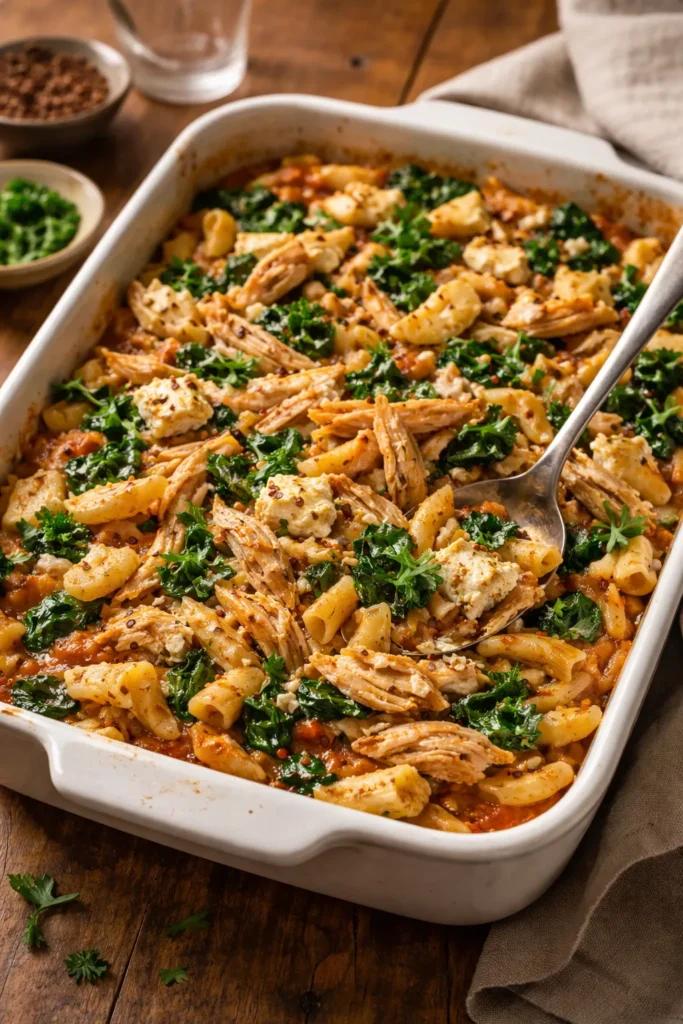
This is the heartiest version on the list — the one that feeds a hungry crowd and leaves nobody at the table wishing there was more. Seared, seasoned chicken breasts are cooked separately while the feta and tomatoes do their thing in the oven, then shredded and folded into the finished pasta along with wilted spinach. It’s the kind of dinner that earns repeat requests.
Why Searing the Chicken Separately Matters
Baking raw chicken alongside the feta is tempting in theory — fewer dishes — but it doesn’t work as well as cooking it separately. Chicken needs to reach 165°F internally, and at 400°F that takes long enough that the tomatoes would overcook or the shrimp would dry out. Searing the chicken in a hot skillet first gives you golden, flavorful exterior crust, and shredding it afterwards means the chicken distributes evenly through every bite of pasta rather than sitting in chunks.
Yield: Serves 4 to 6 Prep Time: 15 minutes Cook Time: 50 minutes Total Time: 65 minutes Difficulty: Intermediate — cooking the chicken and the baked feta simultaneously requires a little multitasking, but each component is straightforward on its own.
Ingredients:
For the Baked Feta:
- 2 pints cherry tomatoes
- 4 to 5 garlic cloves, peeled and whole
- ¼ cup extra-virgin olive oil
- ¼ teaspoon kosher salt
- ¼ teaspoon black pepper
- 1 block (8 oz) Greek sheep’s milk feta, drained
- 4 cups fresh baby spinach, roughly chopped
- ¼ cup fresh basil, torn
- ½ cup reserved pasta water
For the Chicken:
- 3 medium boneless, skinless chicken breasts
- 2 tablespoons avocado oil or neutral cooking oil
- ½ teaspoon kosher salt
- ¼ teaspoon black pepper
- ½ teaspoon garlic powder
- ½ teaspoon smoked paprika
For the Pasta:
- 1 lb penne, fusilli, or rigatoni
Instructions:
Start the Feta Bake:
-
Preheat the oven to 400°F. Combine the tomatoes and garlic cloves in a 9×13-inch baking dish. Add the olive oil, salt, and pepper, and toss. Place the feta in the center; flip once to coat with oil.
-
Bake for 40 minutes, until the tomatoes have burst fully and the garlic is completely soft.
Cook the Chicken:
-
While the feta is baking, pat the chicken breasts completely dry. Season generously on both sides with salt, pepper, garlic powder, and smoked paprika.
-
Heat a large skillet over medium-high heat and add the avocado oil. When the oil shimmers and just begins to smoke, add the chicken breasts. Sear without moving for 5 to 6 minutes until deeply golden on the first side. Flip and cook for another 5 to 6 minutes until the internal temperature reaches 165°F at the thickest point.
-
Transfer the chicken to a cutting board and allow it to rest for 5 minutes. Shred with two forks into bite-sized pieces. Set aside.
Cook the Pasta:
- Bring a large pot of generously salted water to a boil. Cook the pasta to al dente. Reserve ½ cup pasta water; drain.
Bring It All Together:
-
Remove the baking dish from the oven. Smash the garlic cloves and tomatoes into the feta, stirring to create a chunky, creamy sauce.
-
Add the spinach directly to the hot baking dish. The heat from the sauce will wilt it within 30 to 60 seconds. Stir it through.
-
Add the drained pasta and shredded chicken. Toss everything together, adding pasta water gradually until the sauce coats the pasta generously.
-
Stir in the fresh basil, taste, adjust seasoning, and serve immediately, topped with extra black pepper.
Why Block Feta Always Beats Crumbled Feta
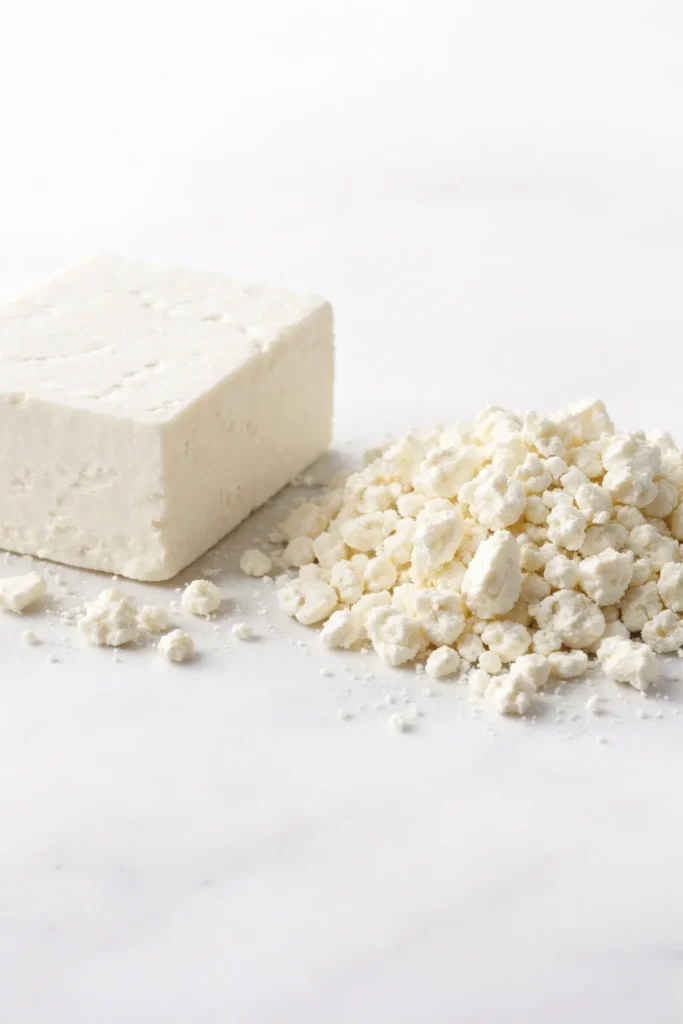
This point comes up in every version of this recipe, and for good reason — the type of feta you use genuinely changes the outcome in ways that go beyond a minor textural difference.
Block feta is brined and sold in a solid form with a higher moisture content than pre-crumbled versions. When it bakes, it softens into a creamy, cohesive mass that you can smash into a proper sauce. Pre-crumbled feta contains anti-caking agents that prevent it from melting the same way — the result is a grittier, drier sauce that doesn’t cling to pasta as well.
Beyond texture, block feta is less processed and typically has a more complex, nuanced flavor. Sheep’s milk Greek feta — the kind that carries a Protected Designation of Origin (PDO) label — tends to be the creamiest and most flavorful, with a tangy, slightly funky depth that cow’s milk varieties can’t quite match. French feta, typically creamier and milder, is another excellent option.
If you absolutely can’t find block feta, crumbled works in a pinch — just push it all into a pile in the center of the dish to mimic the density of a block. The result won’t be quite as silky, but it’ll still be good.
Choosing the Right Pasta Shape for Baked Feta
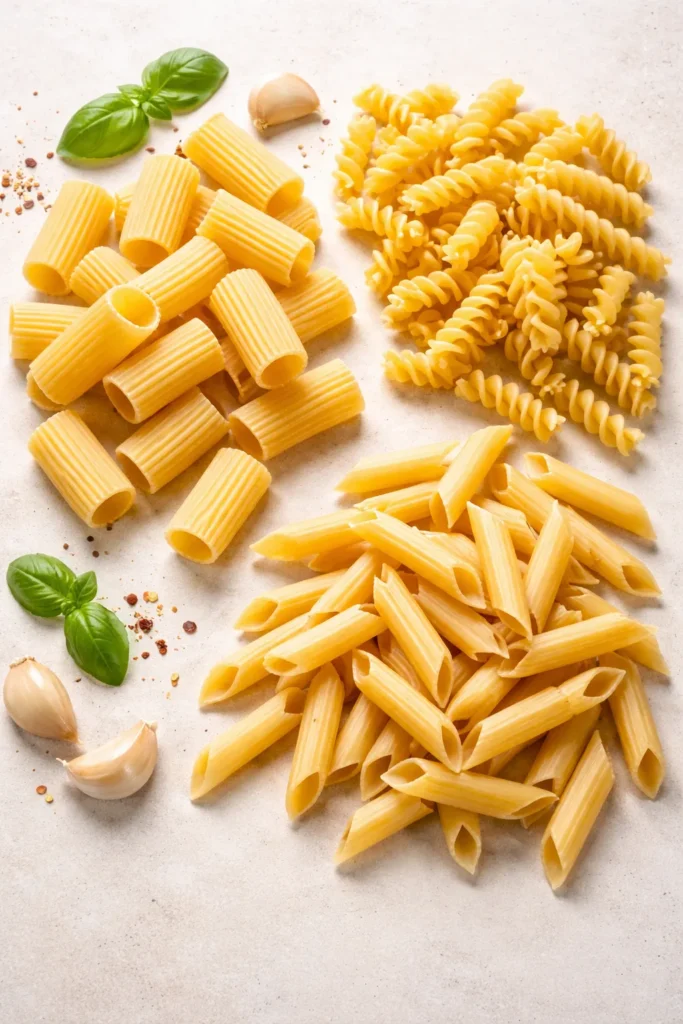
Short, textured pasta shapes consistently outperform long pasta in this dish, though it absolutely works with spaghetti or linguine if that’s what you have.
The reason comes down to sauce pickup. Rigatoni, cavatappi, penne rigate, fusilli, campanelle, and rotini all have ridges, curves, or tubes that trap the thick, oil-rich sauce. Each bite delivers more sauce per pasta piece than a smooth, flat noodle would. Short shapes also stir more easily into the baking dish without requiring a separate bowl.
For the lightest, most delicate variation — particularly the lemon and herb version — orzo or small shells are worth trying. They create an almost risotto-like consistency when tossed with the sauce. For the heartier versions with chicken or lots of vegetables, rigatoni is the move. Its wide tubes hold the chunky sauce inside each piece and make every forkful substantial.
Cook everything to al dente — genuinely al dente, with a slight bite at the center. By the time you toss the pasta with the hot sauce and let it sit for even a minute or two on the table, it will have softened another notch. Starting with over-cooked pasta means ending with mushy pasta.
How to Get the Best Sauce Every Time
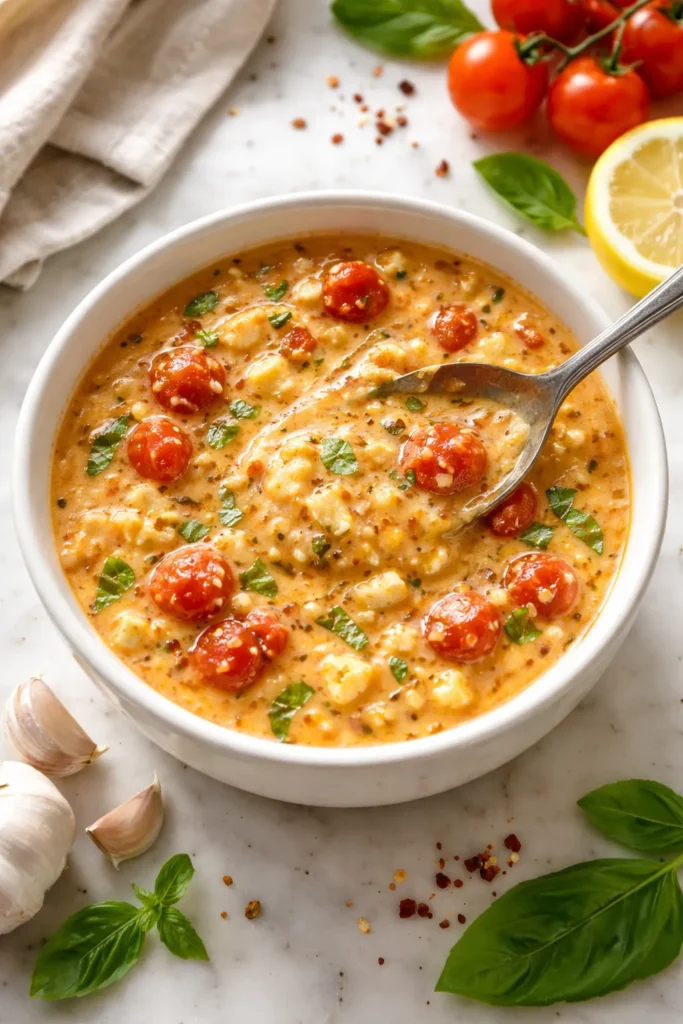
A few techniques separate a great baked feta pasta from a merely good one, and none of them are complicated.
Crowd the baking dish. Tomatoes spread too thin will dry out and roast rather than releasing their juice into the oil. You want them packed close together so they steam and burst into a saucy pool. An 8×11-inch or 9×13-inch dish is ideal for two pints of tomatoes.
Don’t skip the pasta water. This is the step most people forget until the pasta looks dry and they’re wondering what went wrong. The starchy water acts as an emulsifier — it binds the olive oil, tomato juice, and feta into a cohesive, smooth sauce rather than a greasy, separated mess. Add it gradually, two tablespoons at a time, and stir after each addition.
Add garlic and herbs off the heat. Raw garlic added to the hot dish the moment it comes out of the oven cooks gently from the residual heat in about 30 to 60 seconds. If you add it while the dish is still in the oven, it risks burning and turning bitter. The same logic applies to fresh, delicate herbs — basil and parsley added to a 450°F dish would scorch immediately.
Taste before serving. Every block of feta has a different salt level, and different brands of tomatoes bring different levels of sweetness and acidity. The sauce might need a pinch of extra salt, a crack of black pepper, or a squeeze of lemon to pull everything into focus.
Storing, Reheating, and Making Ahead
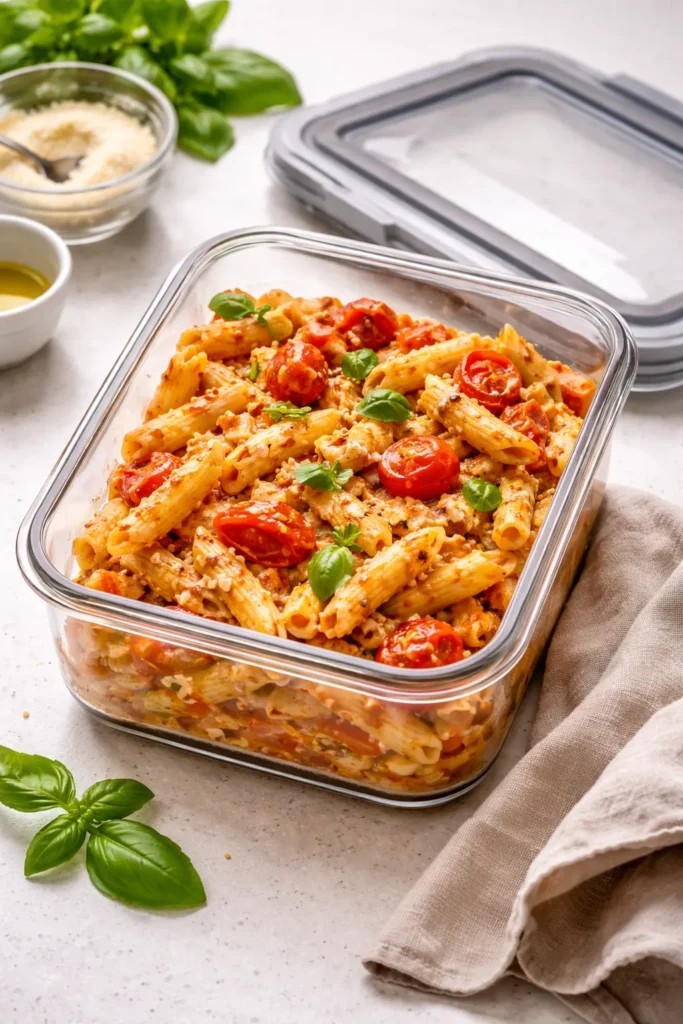
Every version of this dish is best eaten straight from the baking dish while everything is hot and the sauce is at its creamiest. The pasta continues to absorb the sauce as it sits, which means leftovers will be noticeably thicker and drier the next day — that’s not a flaw, just a reality of pasta dishes in general.
For storage, transfer cooled leftovers to an airtight container and refrigerate for up to 3 to 4 days. The shrimp version should be eaten within 2 days for the best quality.
Reheating works best with a little added liquid. Warm leftovers in a skillet over low heat with a splash of water or olive oil, stirring until the sauce loosens and the pasta is heated through. The microwave works in a pinch — add a tablespoon of water before covering and heating in 60-second intervals, stirring between each one.
Freezing cooked pasta dishes is possible but not ideal here. The sauce separates slightly upon thawing and the pasta texture suffers. If you want to get ahead, you can bake the tomatoes and feta up to a day in advance, refrigerate the sauce, and then toss with freshly cooked pasta when you’re ready to eat. That approach gives you all the flavor with none of the leftover-pasta texture issues.
Final Thoughts

What makes baked feta pasta so enduring is the fact that it never gets boring. The core technique — roast feta and tomatoes together, stir into pasta — is a vehicle for dozens of flavor directions, and each version feels like a complete dish in its own right rather than a variation on a theme.
The most important variable across every recipe here isn’t the specific herbs or vegetables you add — it’s the quality of the feta and olive oil. With a handful of main ingredients doing all the heavy lifting, each one needs to be genuinely good. A quality block of sheep’s milk feta and a bottle of extra-virgin olive oil you’d be happy to drizzle on a salad will take every single one of these recipes from good to memorable.
Pick whichever version sounds most appealing tonight, read through the steps once before you start, and keep ½ cup of pasta water held back without fail. The rest takes care of itself — that’s been the whole point of this dish from the beginning.