There’s a reason casseroles have been the go-to dish at potlucks, church suppers, holiday tables, and neighborhood gatherings for generations. When you need to feed a crowd without standing over a stove all evening, a good casserole does everything at once — it bakes unattended, holds heat well, travels in the pan it cooked in, and somehow tastes even better the next day. That’s not an accident. That’s design.
But not all casseroles are created equal when you’re feeding 10, 12, or 15 people. The ones that truly shine for a crowd share a few important traits: bold, deeply layered flavor that doesn’t fade after reheating, a texture that holds up when scooped and served, and enough substance to satisfy a wide range of appetites — from the hungriest guest at the table to the pickiest kid in the bunch.
What follows is a collection of eight comfort food casseroles that genuinely deliver on all three counts. Each one has earned its place at the center of a table full of hungry people, and each one comes with specific tips for scaling, prepping ahead, and getting the most out of what might be the most underrated category in home cooking.
Table of Contents
- How to Choose a Casserole for a Large Group
- Why Casseroles Actually Improve When You Scale Them Up
- Picking the Right Protein and Starch Combination
- ## 1. King Ranch Chicken Casserole
- The Sauce Is the Secret
- What Makes It Work for a Crowd
- Quick Facts
- ## 2. Classic Tuna Noodle Casserole — The Upgraded Version
- Getting the Noodles Right
- The Topping That Changes Everything
- Quick Facts
- ## 3. Spaghetti and Meatball Casserole
- The Mini Meatball Advantage
- Making It Feed More People
- Quick Facts
- ## 4. Breakfast Sausage and Hash Brown Casserole
- The Night-Before Advantage
- Pressing the Hash Browns Matters
- Quick Facts
- ## 5. Chicken and Wild Rice Casserole
- Wild Rice Timing Is Everything
- Scaling It for a Large Crowd
- Quick Facts
- ## 6. Green Bean Casserole — From Scratch
- Why Fresh Beans Change the Whole Dish
- The Topping: Store-Bought Is Fine (With Caveats)
- Quick Facts
- ## 7. Baked Beef and Bean Taco Casserole
- The Toppings Are Half the Experience
- Budget-Friendly for a Large Group
- Quick Facts
- ## 8. Sweet Potato Casserole with Pecan Crust
- Roasting vs. Boiling: Why It Matters
- The Pecan Topping: Streusel Over Marshmallows
- Quick Facts
- Smart Make-Ahead Strategies for Feeding a Crowd
- Which Casseroles Freeze Best
- Crunchy Toppings Always Go On Last
- The Best Baking Dishes for Crowd Casseroles
- Covering vs. Not Covering
- Feeding Vegetarians and Picky Eaters Without Losing the Crowd
- Final Thoughts
How to Choose a Casserole for a Large Group
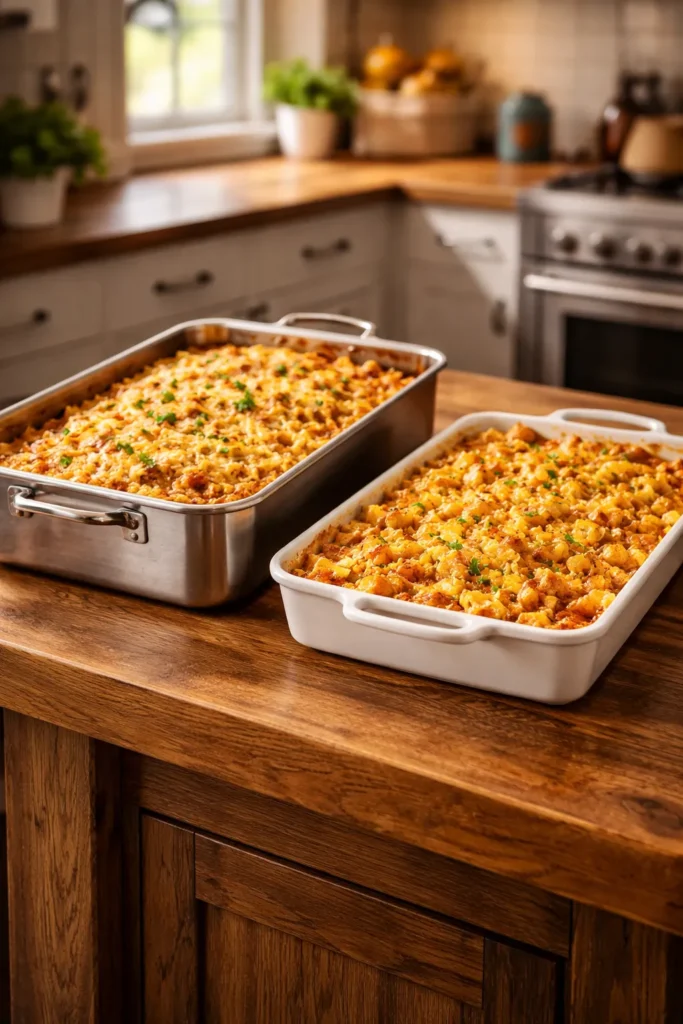
Before even picking a recipe, it’s worth thinking about who’s at the table. A great crowd casserole accounts for dietary needs without being a compromise — the best ones are so satisfying that nobody feels like they’re missing anything. Think about whether you’re feeding kids alongside adults, whether anyone avoids meat, and whether the dish needs to travel or stay warm for an extended period.
The other factor most people underestimate is pan size math. A standard 9×13-inch baking dish serves roughly 8 to 10 people with generous portions. For 12 to 15 guests, you have two options: use a deep 11×15 roasting pan, or make two 9×13 pans simultaneously. Two pans is often the smarter move — it gives you a backup if one disappears fast, and you can keep the second warm in a low oven while the first gets devoured.
Why Casseroles Actually Improve When You Scale Them Up
One thing experienced cooks know is that casseroles often benefit from being made in larger quantities. More mass in the pan means slower, more even heat distribution, which gives the center more time to develop flavor before the edges over-bake. A large pan of lasagna or chicken and rice comes out more cohesive than a small one.
Picking the Right Protein and Starch Combination
The most crowd-pleasing casseroles tend to anchor around a combination of protein and a starch — pasta, rice, potatoes, or tortillas — bound together with a creamy or saucy element. This combination travels well, reheats without drying out (especially when there’s enough sauce), and provides enough caloric substance to satisfy without needing a dozen side dishes alongside.
## 1. King Ranch Chicken Casserole
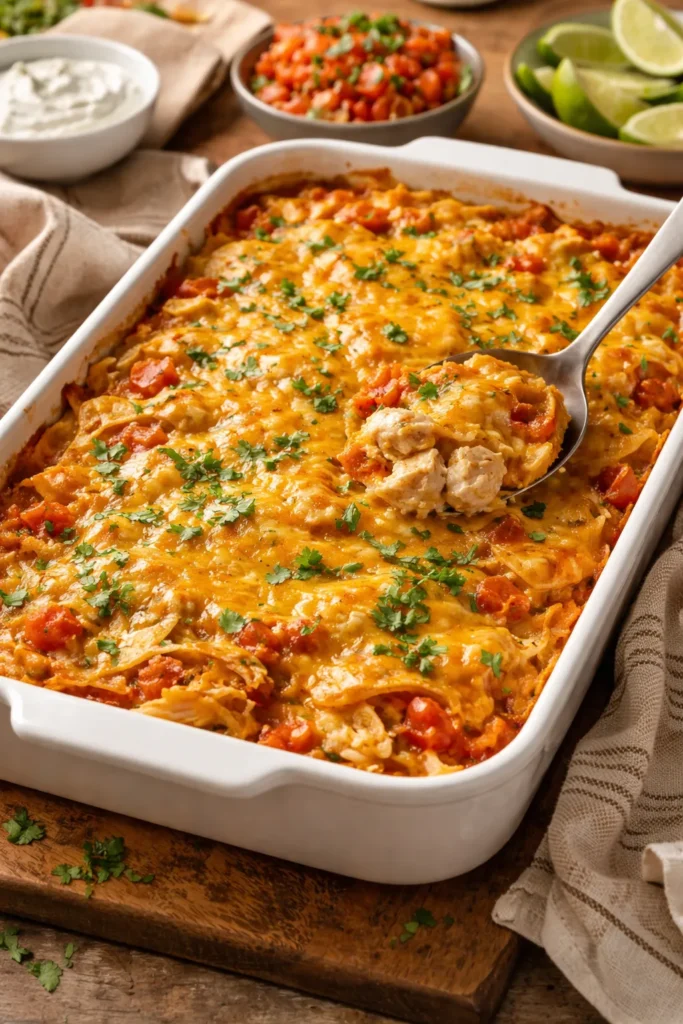
If you’ve ever been to a Texas potluck, you already know this dish. King Ranch Chicken Casserole is the gold standard of Southern crowd cooking — layers of shredded chicken, corn tortillas, Rotel tomatoes, and a creamy, spiced sauce all baked under a thick blanket of melted cheddar. It feeds a crowd effortlessly, holds heat for a long time, and generates compliments that outlast the event.
The name doesn’t come from a specific recipe — it’s a dish that evolved across Texas kitchens over decades, named loosely after the famous King Ranch in South Texas. What makes it so dependable for a crowd is its structure: the tortillas act like pasta layers, soaking up the sauce and holding the casserole together in clean, scoopable squares rather than a soupy mess.
The Sauce Is the Secret
Most versions use cream of mushroom and cream of chicken soup as the binding sauce, and while that shortcut works, the best versions doctor those soups with sautéed onion, garlic, diced green chiles, cumin, and chili powder before mixing. That extra 10 minutes of building flavor makes an enormous difference. The sauce should coat the back of a spoon before it goes into the pan — if it’s too thin, the tortilla layers will separate.
What Makes It Work for a Crowd
Rotisserie chicken is your best friend here. Two birds will shred enough meat to fill a deep 9×13 pan generously, and the pre-cooked chicken stays moist during baking because it’s surrounded by sauce rather than exposed to direct heat. Corn tortillas — not flour — are non-negotiable. They absorb liquid without turning to paste, creating a lasagna-like structure that holds its shape when served.
Quick Facts
- Serves: 10 to 12
- Prep time: 30 minutes
- Bake time: 40 to 45 minutes at 350°F (175°C)
- Make-ahead: Assembles fully the night before; add an extra 10 minutes to bake time straight from the fridge
- Finish each serving with fresh cilantro, sliced avocado, and a squeeze of lime for a dish that feels genuinely alive at the table
Worth knowing: If you’re making this for a group with varying spice tolerance, use mild Rotel and let guests add hot sauce at the table rather than baking in a heat level that half the crowd can’t handle.
## 2. Classic Tuna Noodle Casserole — The Upgraded Version
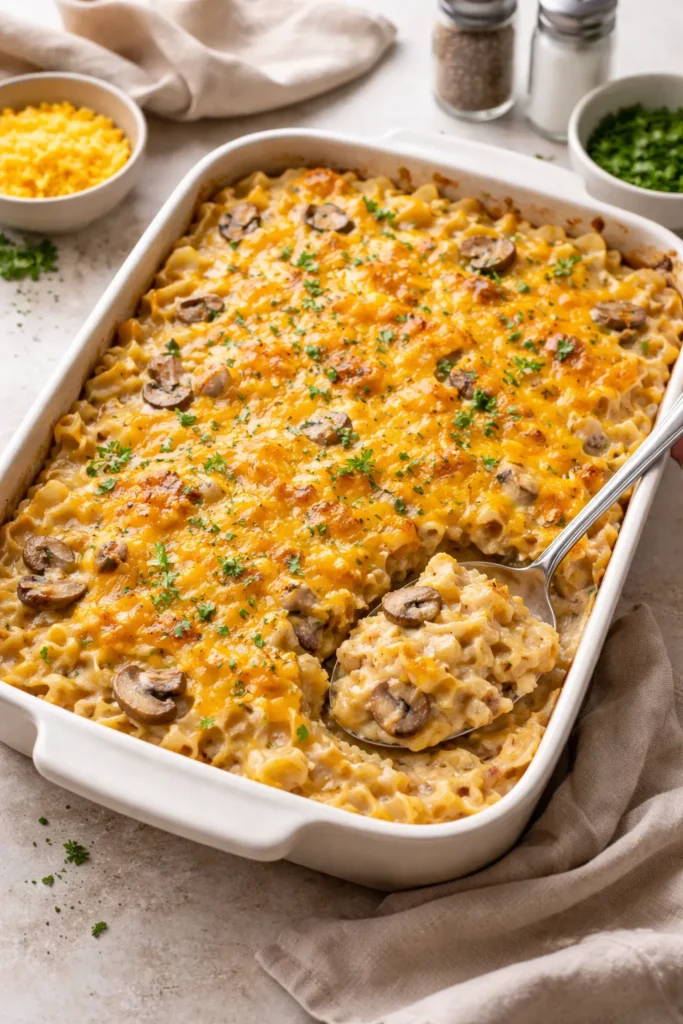
Tuna noodle casserole has a reputation problem. Too many people remember a gluey, gray version from their school cafeteria, made with canned cream of mushroom soup and overcooked egg noodles. But when you make it right — with a from-scratch sauce, fresh mushrooms, and proper pasta that’s only parboiled before baking — it becomes one of the most genuinely satisfying casseroles you can put on a table.
The key upgrade is ditching the canned soup entirely and building a quick béchamel-inspired sauce using butter, flour, chicken broth, heavy cream, and a generous amount of sharp white cheddar. That sauce has actual body and flavor. It doesn’t turn gelatinous when it cools, and it reheats to a silky, creamy texture rather than a cement block.
Getting the Noodles Right
Cook the egg noodles to just barely al dente — about 2 minutes less than the package directions. They’ll finish cooking in the oven and absorb sauce as they bake. Fully cooked noodles will become mushy and break apart when you try to serve scoopable portions. This is the single most common mistake made with this casserole, and it’s also the easiest to avoid.
The Topping That Changes Everything
A crunchy topping is non-negotiable. The contrast between the creamy interior and the crisp, buttered breadcrumb crust is what elevates this dish from cafeteria food to something worth making repeatedly. Crush Ritz crackers and toss them with melted butter, or use panko breadcrumbs toasted in butter with a little garlic and lemon zest. Spread the topping generously and don’t pack it down — you want a loose, airy crust that browns evenly.
Quick Facts
- Serves: 8 to 10
- Prep time: 25 minutes
- Bake time: 30 minutes at 375°F (190°C), uncovered the entire time so the topping crisps properly
- Make-ahead: Assemble without the topping and refrigerate; add topping right before baking
- Use good-quality tuna packed in olive oil rather than water — it’s noticeably more flavorful and stays moist after baking
## 3. Spaghetti and Meatball Casserole
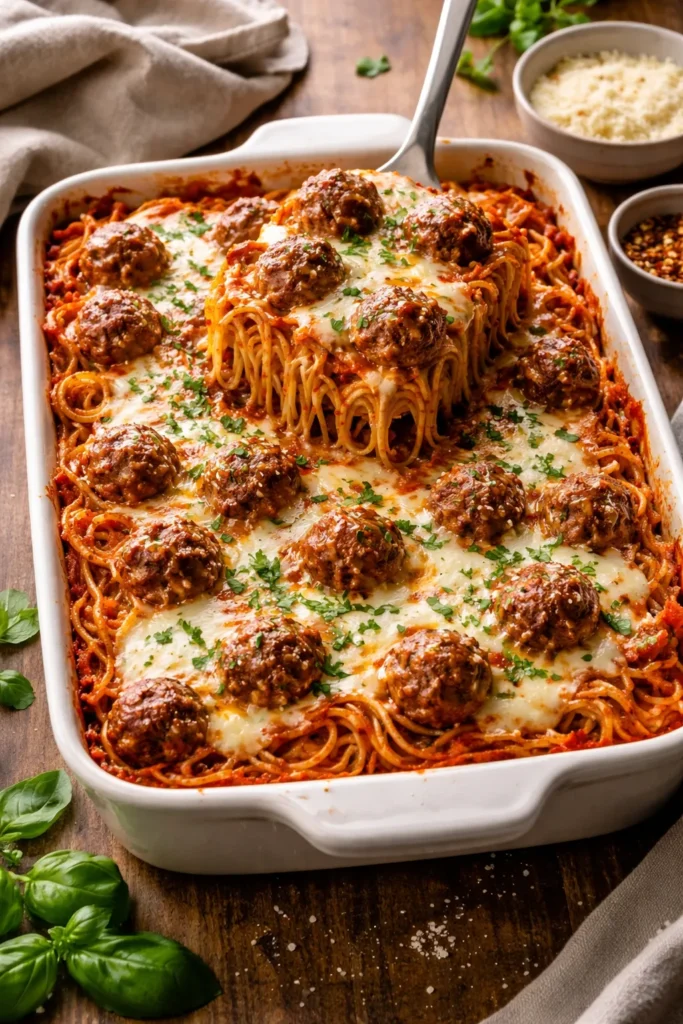
Here’s an idea that sounds novel but makes complete practical sense: instead of serving spaghetti from a pot and meatballs from a separate pan, you bake the whole thing together as a sliceable casserole. Every square of this dish has pasta, meatballs, marinara, and pockets of melted mozzarella built right in. It’s spaghetti by the slice, not the bowl, and it’s one of the most crowd-pleasing casseroles you can bring to any gathering.
The structure works because you cook the spaghetti to al dente, toss it with beaten eggs, marinara, and a generous amount of Parmesan, then pack it into a buttered baking dish and press it down firmly. The eggs act as a binder, setting the pasta into a cohesive layer as it bakes. Nestle small meatballs — homemade or store-bought — into the pasta before topping with more marinara and a thick layer of shredded mozzarella.
The Mini Meatball Advantage
Standard-sized meatballs create awkward, uneven portions in a sliceable casserole. Use meatballs no larger than 1 inch in diameter — small enough that every slice gets 3 to 4 of them distributed evenly. If you’re using store-bought frozen meatballs for convenience, thaw them fully and pat them dry before adding to the casserole. Excess moisture from frozen meatballs will make the bottom layer soggy.
Making It Feed More People
This recipe doubles beautifully. Use a 15×10-inch roasting pan, double all ingredients, and add 10 to 15 minutes to the bake time. The casserole will be slightly taller, which means more time for the center to set. Cover with foil for the first 20 minutes, then uncover to let the cheese bubble and brown.
Quick Facts
- Serves: 10 to 12
- Prep time: 35 minutes
- Bake time: 35 to 40 minutes at 375°F (190°C)
- Make-ahead: Fully assembled casserole refrigerates for up to 24 hours before baking; add 15 minutes to covered bake time
- Finish with fresh basil leaves torn directly over the hot casserole just before serving — it wilts gently from the heat and adds a brightness that cuts through all the richness
## 4. Breakfast Sausage and Hash Brown Casserole
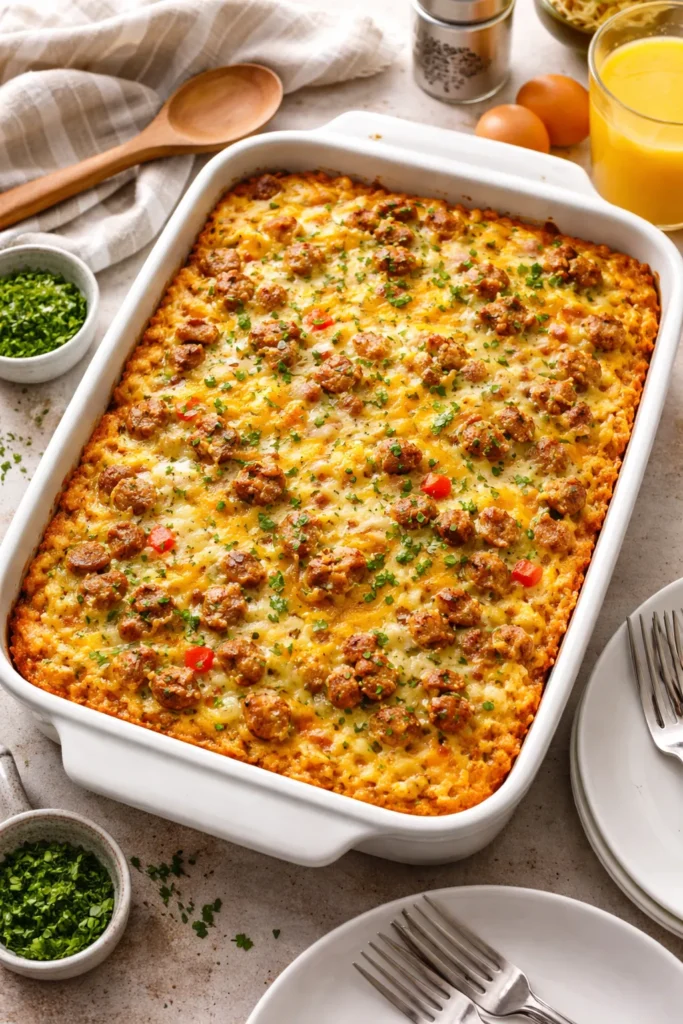
Crowd casseroles aren’t only for dinner. A well-built breakfast casserole is arguably the most practical dish for any gathering that starts in the morning — a holiday brunch, a weekend with houseguests, or a work breakfast event where nobody wants to flip individual omelets for 20 people.
This version layers frozen shredded hash browns (thawed and pressed dry), crumbled breakfast sausage browned with diced onion and bell pepper, and a custard made from beaten eggs, whole milk, sour cream, and shredded cheddar. Everything gets poured into a buttered 9×13 pan and baked until the egg is fully set and the top is golden. It’s the kind of breakfast that satisfies for four to five hours.
The Night-Before Advantage
This casserole is specifically built to be assembled the night before. After mixing everything together in the baking dish, cover it tightly with plastic wrap and refrigerate overnight. The hash browns absorb a little of the egg mixture, the flavors meld, and the whole thing bakes more evenly the next morning because it’s starting from a partially hydrated state rather than completely raw ingredients.
Pull the casserole from the fridge 30 minutes before baking. Cold ceramic or glass dishes can crack in a hot oven, and a room-temperature start also means more even baking from edge to center.
Pressing the Hash Browns Matters
Frozen hash browns hold an enormous amount of water. If you skip drying them, that water releases during baking and creates a soggy, steamed base rather than a crispy, golden one. Spread the thawed hash browns on a clean kitchen towel, fold it over, and press firmly. You’ll be surprised how much liquid comes out. This single step is the difference between a good breakfast casserole and a great one.
Quick Facts
- Serves: 10 to 12
- Prep time: 20 minutes + overnight rest
- Bake time: 45 to 50 minutes at 350°F (175°C)
- Variations: Swap breakfast sausage for cooked, crumbled chorizo and add pickled jalapeños for a Tex-Mex version; or use diced ham and Swiss cheese for a more classical approach
- Leftovers reheat in a 325°F oven, covered with foil, for 15 to 20 minutes — they taste just as good on day two
## 5. Chicken and Wild Rice Casserole
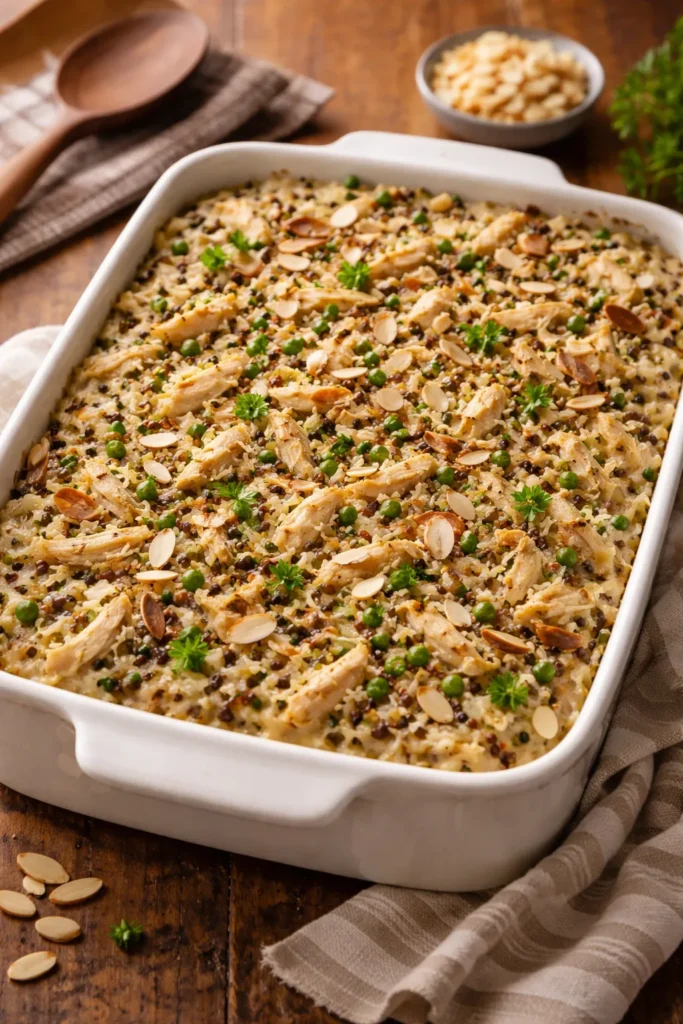
If King Ranch Chicken owns the Tex-Mex category, chicken and wild rice casserole owns the Midwestern comfort food lane — and it’s earned that position through decades of reliable performance at church potlucks and family reunions. Wild rice adds a nutty, slightly chewy texture that regular long-grain rice can’t replicate, and it holds up to long baking times without turning to mush.
The base is a creamy sauce made from sautéed onion, garlic, celery, and chicken broth thickened with a little flour and finished with sour cream or cream cheese. Mix in cooked wild rice, shredded rotisserie chicken, thawed frozen peas, and slivered almonds for crunch. The almonds aren’t optional — they add a textural contrast that keeps the casserole from feeling heavy and one-dimensional.
Wild Rice Timing Is Everything
Wild rice takes 45 to 55 minutes to cook fully on the stovetop — longer than most people expect. Don’t rush it and don’t use parboiled wild rice blends as a shortcut. Those blends contain mostly white or brown rice with a little wild rice added for color. Pure wild rice is what gives this casserole its distinctive flavor and firm, separate grains after baking.
Cook the wild rice the day before if you’re prepping ahead. It refrigerates perfectly for three days and actually improves slightly after an overnight rest, as the grains firm up and separate more cleanly than freshly cooked rice.
Scaling It for a Large Crowd
For 15 or more people, two 9×13 pans is the right move. Keep one covered with foil while the other bakes, then swap them and bake the second pan while guests start on the first. This staggered approach keeps every serving fresh and hot rather than sitting in a warming oven where the rice at the edges will dry out.
Quick Facts
- Serves: 10 to 12 per 9×13 pan
- Prep time: 25 minutes (plus wild rice cooking time)
- Bake time: 30 to 35 minutes at 350°F (175°C), covered for the first 20 minutes
- Make-ahead: Fully assembled casserole freezes for up to 3 months before baking; thaw overnight and bake as directed
## 6. Green Bean Casserole — From Scratch
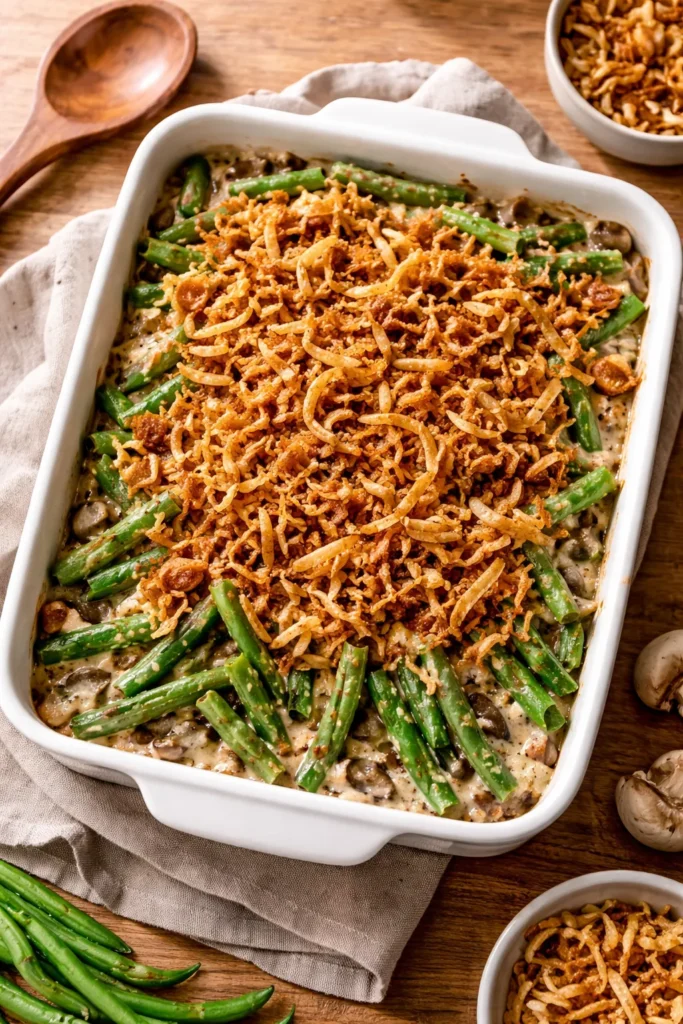
The canned soup version of green bean casserole exists somewhere on almost every holiday table, and while it’s comforting in a nostalgic way, it’s also possible to make the same dish from scratch in almost the same amount of time — and the difference in flavor is not subtle.
The from-scratch approach starts with a proper mushroom sauce: sauté sliced cremini mushrooms in butter with shallots and thyme until deeply golden, then add garlic, flour, chicken broth, and half-and-half. Let it reduce until thick enough to coat a spoon. Blanch fresh green beans for exactly 3 minutes in aggressively salted boiling water, then shock them in ice water to lock in their color and snap. Mix beans and sauce, pour into a casserole dish, and top with homemade fried shallots or high-quality crispy onions.
Why Fresh Beans Change the Whole Dish
Canned green beans have been cooked twice — once in the canning process and once in the oven. By the time they reach the table, they’re soft enough to fall apart with a fork and have very little flavor of their own. Blanched fresh green beans stay bright, slightly firm, and genuinely taste like vegetables. That contrast against the rich mushroom sauce is the whole point of the dish.
For a crowd, blanch the beans in two batches to avoid dropping the water temperature, which would result in uneven cooking.
The Topping: Store-Bought Is Fine (With Caveats)
Fried shallots from scratch are worth making if you have time — they’re crispier and more flavorful than any packaged option. But good-quality store-bought crispy onions are an acceptable substitute when you’re cooking for 15 people and already managing four other dishes. What’s not acceptable is applying them too early. Add the topping in the last 10 minutes of baking only — any longer and they’ll absorb steam from the casserole and go soft.
Quick Facts
- Serves: 8 to 10
- Prep time: 30 minutes
- Bake time: 25 to 30 minutes at 375°F (190°C)
- Make-ahead: Sauce and blanched beans can be combined and refrigerated separately from the topping for up to 2 days; assemble and bake when ready
## 7. Baked Beef and Bean Taco Casserole
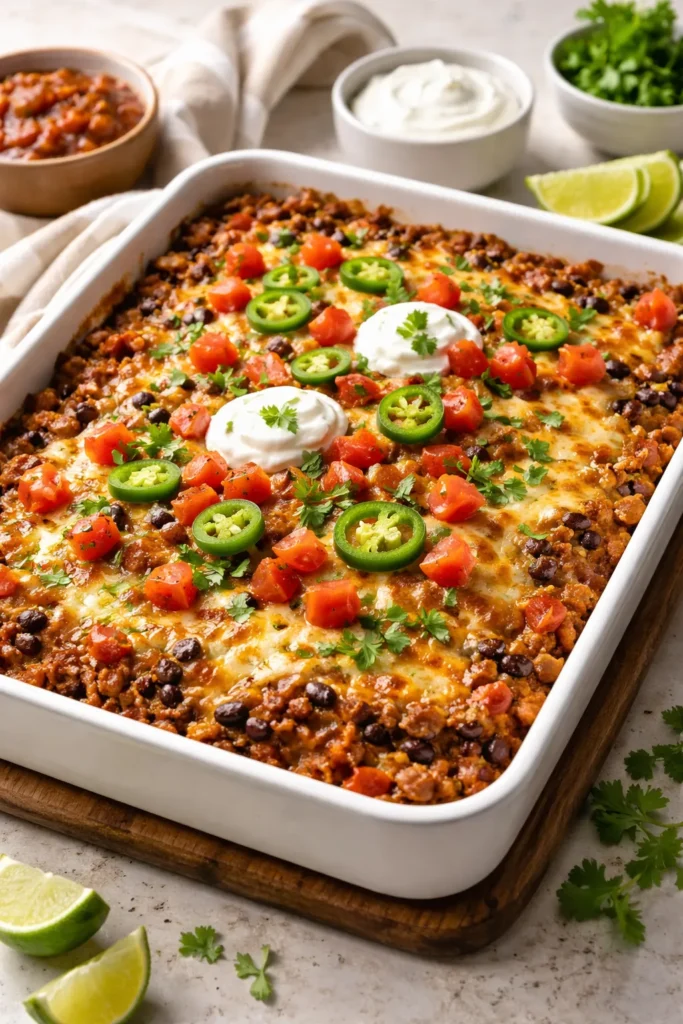
This is the casserole for anyone who’s ever served tacos to a crowd and spent 45 minutes managing fillings, shells, and toppings for 12 people with different preferences. You get every taco flavor — spiced ground beef, beans, tomatoes, green chiles, and melted cheese — in a baked casserole that slices cleanly and serves fast.
Tortilla chips form the foundation. Spread a single layer of sturdy corn chips across the bottom of a buttered 9×13 pan, pressing them into an even base. They’ll soften slightly during baking, which actually works in the casserole’s favor — they absorb the sauce and become almost like a thick tortilla layer rather than a crunchy cracker. Top with a mixture of browned ground beef, canned black beans (drained and rinsed), Rotel tomatoes, taco seasoning, and a can of enchilada sauce. Finish with a thick blanket of shredded Mexican blend cheese.
The Toppings Are Half the Experience
The casserole itself bakes for about 25 minutes, but the moment it comes out of the oven is when you add what makes it actually feel like taco night: shredded iceberg lettuce, diced fresh tomato, sliced pickled jalapeños, sour cream, guacamole, and fresh cilantro. Let every guest customize their plate. The contrast between the hot, cheesy casserole and cold, crisp toppings is what makes this dish so genuinely fun to eat.
Budget-Friendly for a Large Group
Ground beef and canned beans stretch further than most proteins in a casserole format, making this one of the most budget-friendly options for a crowd of 12 or more. Use 1.5 pounds of beef for 10 to 12 servings, extended with two cans of black beans. Nobody will notice the ratio — the beans add body and a slightly different texture that makes the filling more interesting, not thinner.
Quick Facts
- Serves: 10 to 12
- Prep time: 20 minutes
- Bake time: 25 to 30 minutes at 375°F (190°C)
- Make-ahead: Beef and bean filling can be made 2 days ahead and refrigerated; assemble with chips and cheese right before baking for maximum texture
Pro tip: Don’t crush the chips — use them whole or in large pieces. Finely crushed chips dissolve into the casserole and lose their structural purpose.
## 8. Sweet Potato Casserole with Pecan Crust
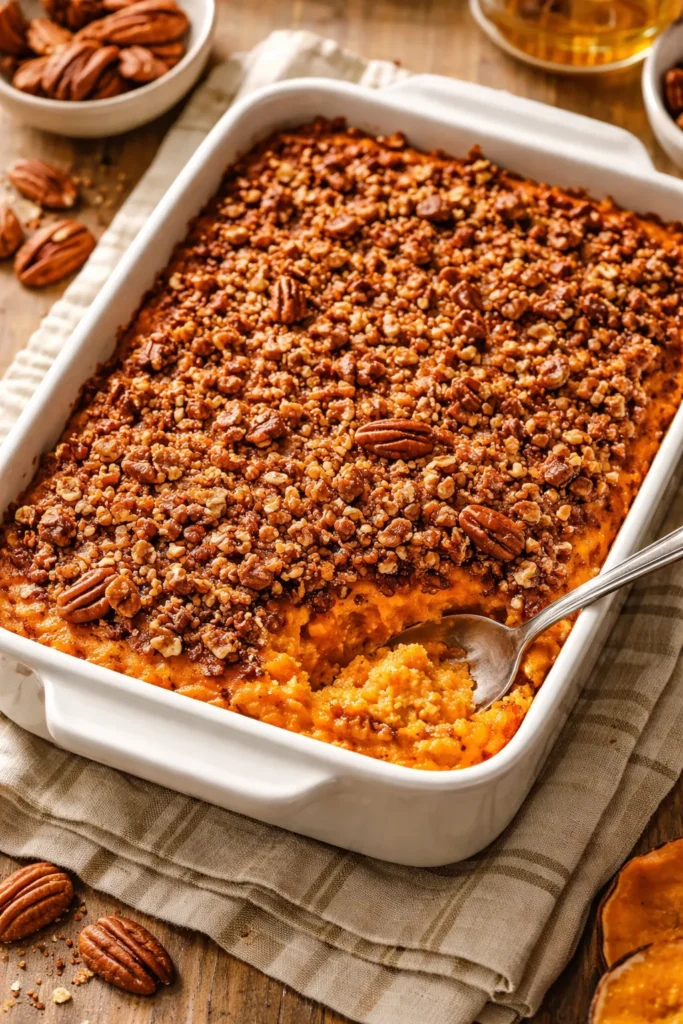
Sweet potato casserole occupies a unique space in crowd cooking — it works as a side dish, but it’s so naturally sweet and filling that it stands comfortably alongside lighter proteins as the center of a vegetarian meal. It’s also one of the few casseroles that everyone at the table, including the most reluctant vegetable eaters, genuinely loves.
The base is mashed sweet potatoes — roasted rather than boiled, which concentrates their natural sweetness and eliminates excess moisture. Mix the hot mashed potatoes with butter, brown sugar, vanilla, eggs, and just enough cinnamon and nutmeg to suggest warmth without tipping into dessert territory. The filling should be smooth, rich, and slightly custardy, not loose.
Roasting vs. Boiling: Why It Matters
Boiling sweet potatoes waterlogged them. The flesh absorbs water as it cooks, which means you spend extra time trying to evaporate moisture back out of the mash — and even then, it’s not as concentrated in flavor as roasted. Roast whole sweet potatoes at 400°F (205°C) for 45 to 55 minutes until they collapse when squeezed. The skin peels off effortlessly, and the flesh inside is dry, sweet, and intensely flavored. This is the only approach worth using for a crowd.
The Pecan Topping: Streusel Over Marshmallows
The marshmallow version is iconic, and if that’s what your crowd expects, absolutely use it. But the pecan streusel version is arguably better — a mix of chopped pecans, brown sugar, flour, and cold butter rubbed into coarse crumbs. It bakes into a shatteringly crisp, buttery crust that adds genuine textural contrast and a toasty, caramelized depth that marshmallows can’t provide.
For a gathering where you’re unsure which camp your guests belong to, do half and half: pecan streusel on one side of the pan, marshmallows on the other. You’ll quickly find out which side disappears first.
Quick Facts
- Serves: 8 to 10
- Prep time: 20 minutes (after roasting the potatoes)
- Bake time: 25 to 30 minutes at 350°F (175°C)
- Make-ahead: Filling can be made and refrigerated for up to 3 days; add topping and bake the day of
- For a deeper caramel flavor in the filling, add 2 tablespoons of bourbon — it bakes off almost completely but leaves a warm, complex note that pairs with both the pecan topping and the sweet potato itself
Smart Make-Ahead Strategies for Feeding a Crowd
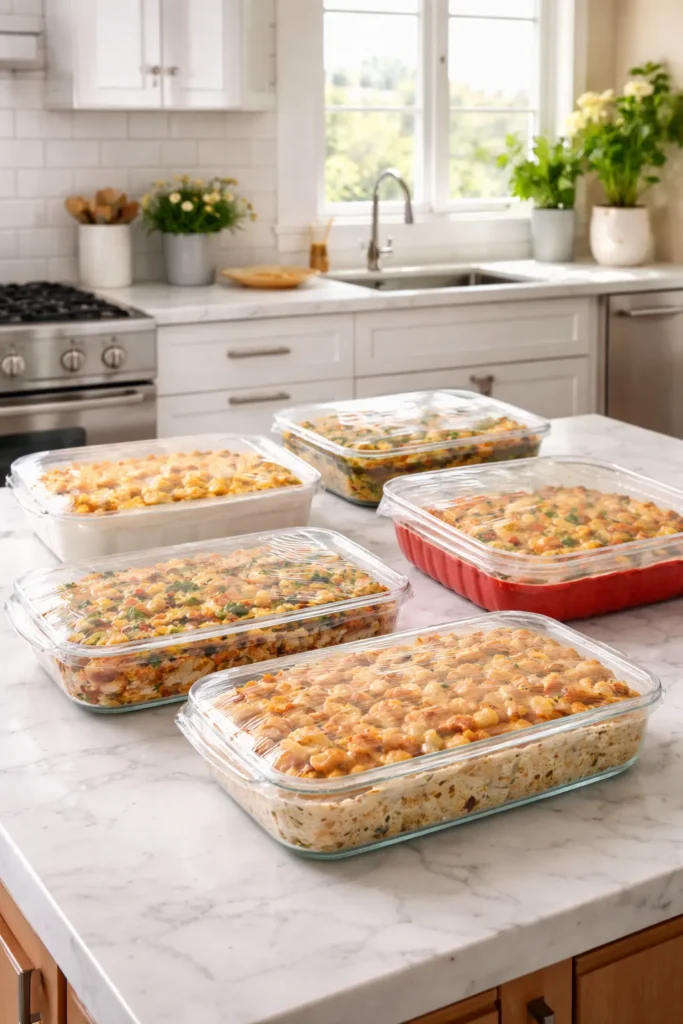
The single biggest advantage of casseroles over other crowd-feeding options is the make-ahead factor, but there’s a right way and a wrong way to do it.
Most assembled casseroles refrigerate for 24 to 48 hours without any loss of quality. In fact, many — like the tuna noodle and the breakfast hash brown — actively improve after an overnight rest because the starches absorb some of the sauce and the flavors meld more completely.
Which Casseroles Freeze Best
Not all casseroles take to freezing equally well. High-starch casseroles like pasta bakes and rice-based dishes freeze without issue. Potato-based casseroles (hash browns, sweet potato) also freeze well because the starches are already cooked and stable.
Cream-based casseroles made with heavy cream or sour cream can sometimes separate when thawed — the fat and liquid come apart. To avoid this, slightly under-bake the casserole before freezing, which allows the sauce to come together fully during the final bake after thawing.
Crunchy Toppings Always Go On Last
This is the one non-negotiable rule of make-ahead casseroles: never add a crunchy topping before refrigerating or freezing. Panko crumbs, crushed crackers, crispy onions, and pecan streusel will all absorb moisture and turn to a soft, gummy layer overnight. Apply toppings right before the casserole goes into the oven, always.
The Best Baking Dishes for Crowd Casseroles
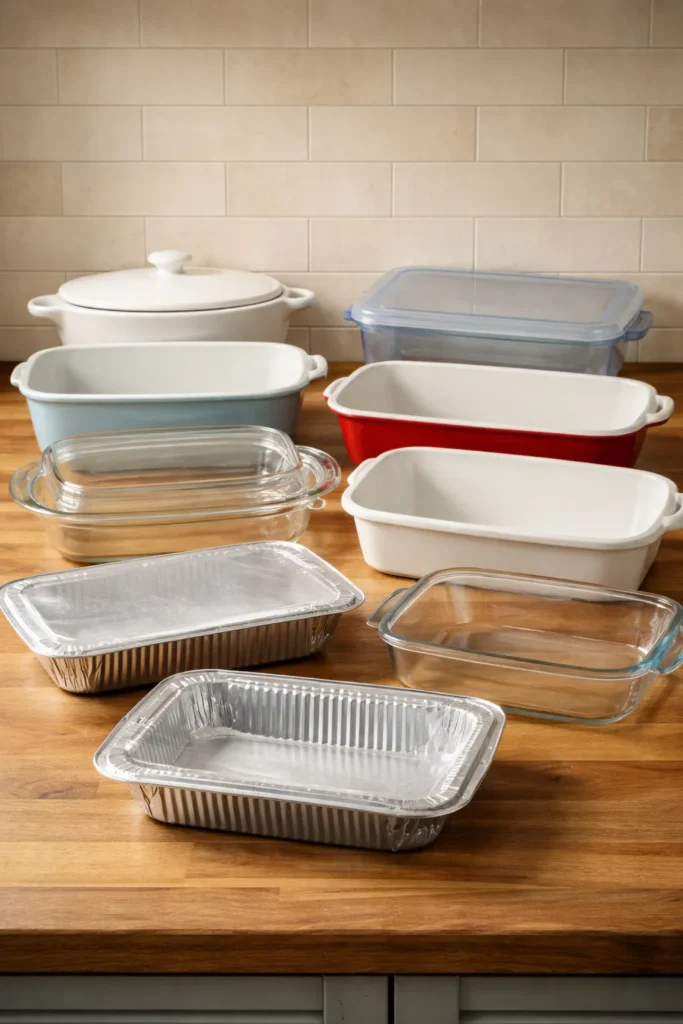
The pan you choose affects not just baking time but the texture of the finished dish, and it’s worth knowing the differences before you’re 30 minutes into preheating the oven.
Glass dishes (Pyrex-style) heat slowly and retain heat exceptionally well. They’re the best choice for egg-based casseroles and anything that needs gentle, even heat from edge to center. The downside is that they can crack if moved directly from a cold refrigerator to a hot oven — always let glass dishes come closer to room temperature before baking.
Ceramic dishes behave similarly to glass but are heavier and more attractive for serving directly at the table. They hold heat longer than metal, which makes them ideal for casseroles that need to stay warm through a long dinner.
Aluminum roasting pans are the practical choice when you’re bringing a casserole to an event and don’t want to worry about getting your dish back. They conduct heat quickly and evenly, brown the bottom and edges nicely, and go directly in the recycling bin afterward. For the crispiest bottom on a potato casserole or pasta bake, aluminum is actually the best material.
Covering vs. Not Covering
The general rule: cover casseroles that contain raw vegetables or uncooked rice and grain, because they need steam to cook through without drying out. Uncover for the last 15 to 20 minutes to allow browning and crust formation.
Pasta casseroles and egg-based casseroles should bake uncovered the entire time — they need the direct oven heat to set properly and develop a golden crust on top.
Feeding Vegetarians and Picky Eaters Without Losing the Crowd
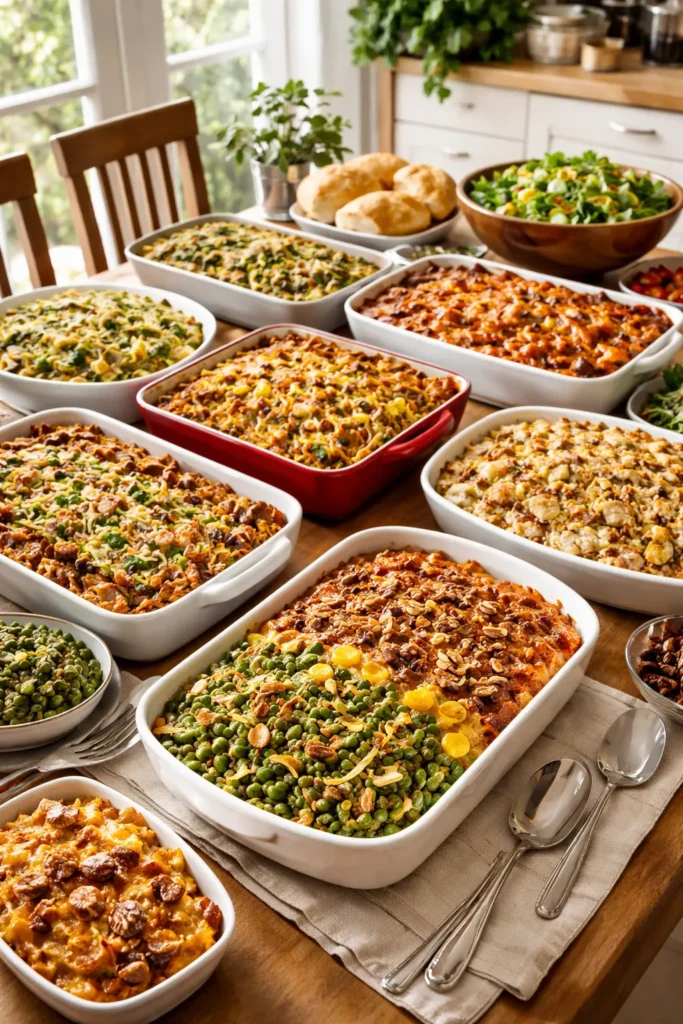
Feeding a mixed group — some meat-eaters, some vegetarians, some kids who refuse anything green — sounds like a logistics puzzle, but two or three casseroles from this list can cover every person at the table without any special-order cooking.
A practical pairing that works for almost any gathering: King Ranch Chicken Casserole for the meat-eaters, Green Bean Casserole and Sweet Potato Casserole as sides that everyone (including vegetarians) can eat freely. The combination covers protein, vegetables, and a sweet complement without requiring any separate menu planning.
If you know vegetarians will be at the table, the from-scratch green bean casserole is easily made fully vegetarian by using vegetable broth instead of chicken broth in the mushroom sauce — no other changes needed. It tastes just as good either way.
Final Thoughts
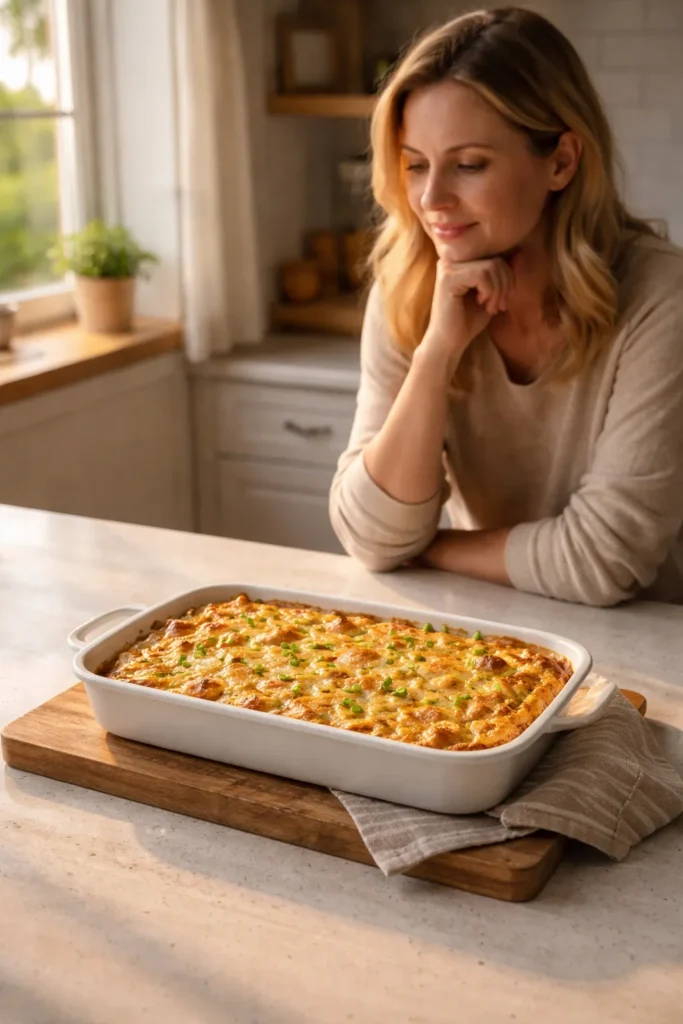
Casseroles are one of the most practical forms of cooking ever invented, and the eight in this collection represent the full range of what the format can do — from spiced Tex-Mex layers to creamy pasta bakes to naturally sweet roasted vegetable dishes. Each one feeds a crowd without requiring a professional kitchen or a full day of active cooking.
The make-ahead potential is what sets these apart from almost any other type of crowd meal. Assemble the night before, refrigerate, and bake when guests arrive. That’s not a shortcut — that’s smart cooking.
If you’re new to cooking for a crowd, start with either the breakfast hash brown casserole or the baked taco casserole. Both are nearly impossible to get wrong, both are crowd-proven, and both deliver exactly the kind of uncomplicated, deeply satisfying flavors that make people reach for seconds before they’ve finished their first serving. That’s the whole point of a great casserole — it feeds people well, it brings them back to the table, and it makes the cook look like they had everything completely under control.