There’s something almost medicinal about a pot of vegetable soup simmering on the stove. The steam, the fragrance of garlic and herbs drifting through the kitchen, the way the whole house warms up around it — it’s one of the most reliable forms of comfort food that exists, and it doesn’t need meat or a complicated technique to earn that reputation.
Cold nights have a way of making you crave something simple and restorative. A bowl of vegetable soup delivers exactly that: nourishment without heaviness, flavor without fuss, and a kind of satisfaction that’s hard to explain but easy to recognize the moment you taste it. Whether you’re fighting off a cold, trying to squeeze more vegetables into your week, or just want dinner on the table without much effort, a good pot of vegetable soup solves the problem beautifully.
The eight recipes collected here range from a deeply savory classic loaded with potatoes and green beans to a ginger-turmeric healing broth that works like a warm reset button for your body. Some take under 30 minutes. Others develop low and slow into something with real depth. All of them are flexible — swap vegetables based on what’s in your fridge, adjust the seasonings to your taste, and make them yours. That’s the beauty of vegetable soup. There are no strict rules, only good instincts.
Table of Contents
- 1. Classic Hearty Vegetable Soup
- Ingredients
- How to Make It
- Tips for the Best Results
- 2. Immune-Boosting Winter Vegetable Soup
- Ingredients
- How to Make It
- Why This Works When You’re Under the Weather
- 3. Fire-Roasted Tomato Vegetable Soup with Chickpeas
- Ingredients
- How to Make It
- The Vinegar Trick Most People Skip
- 4. Tuscan White Bean and Winter Vegetable Soup
- Ingredients
- How to Make It
- Why the Pesto Topping Changes Everything
- 5. Curry-Spiced Vegetable Soup with Lemon
- Ingredients
- How to Make It
- Building Flavor in Stages
- 6. Caramelized Vegetable Soup with White Wine and Parmesan Rind
- Ingredients
- How to Make It
- The Parmesan Rind: Your New Favorite Pantry Trick
- 7. Sweet Potato, Kale, and Chickpea Vegetable Soup
- Ingredients
- How to Make It
- Making It More Substantial
- 8. Ginger-Turmeric Healing Vegetable Broth Soup
- Ingredients
- How to Make It
- Why Kombu Makes the Broth Special
- The Secret to a Deeply Flavorful Vegetable Broth
- Finishing Touches That Make All the Difference
- Umami Builders Worth Adding
- How to Customize Any Vegetable Soup
- Swapping Proteins and Beans
- Adjusting for Spice and Heat
- Storage, Freezing, and Reheating Guide
- Refrigerator Storage
- Freezing Instructions
- Reheating Without Ruining the Texture
- What to Serve Alongside Vegetable Soup
- Simple Garnishes Worth Using
- Final Thoughts
1. Classic Hearty Vegetable Soup
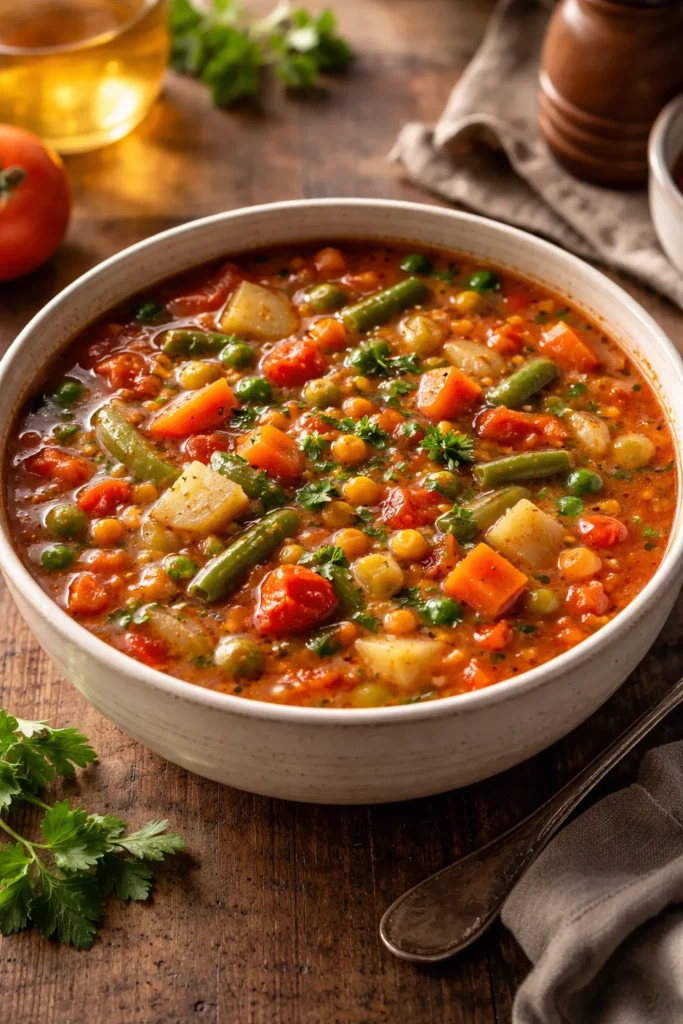
This is the soup everyone’s grandmother made, and for good reason. It’s built on a simple foundation — onion, carrot, celery, tomatoes, potatoes, and broth — and it produces a pot of something deeply satisfying without requiring a single complicated ingredient or technique. It’s the vegetable soup you’ll make again and again.
The key to making this one sing is giving the aromatics enough time in the pot before you add the liquid. Eight full minutes of softening the onion in olive oil, with a generous pinch of salt, builds a savory base that makes everything that comes after taste richer. Don’t rush that step.
Ingredients
- 2 tablespoons extra-virgin olive oil
- 1 medium yellow onion, diced
- 3 carrots, peeled and chopped into ½-inch pieces
- 3 celery stalks, chopped
- 4 cloves garlic, minced
- 2 (14.5 oz) cans diced tomatoes, undrained
- 4 cups vegetable broth (or low-sodium chicken broth)
- 2 cups water
- 3 medium Yukon gold potatoes, cut into ½-inch cubes
- 1½ cups green beans, trimmed and cut into 1-inch pieces
- 1 cup frozen corn
- 1 cup frozen peas
- 2 bay leaves
- ½ teaspoon dried thyme
- ¼ cup fresh parsley, chopped
- Salt and freshly ground black pepper, to taste
Yield: Serves 6–8 Prep Time: 15 minutes Cook Time: 40 minutes Total Time: 55 minutes Difficulty: Beginner — no special equipment required and the method is completely forgiving.
How to Make It
- Heat olive oil in a large Dutch oven or stockpot over medium heat. Add the onion, carrots, and celery with a generous pinch of salt. Cook, stirring occasionally, for 8 minutes until the onion is soft and translucent.
- Add the garlic and cook for 1 minute, stirring constantly, until fragrant.
- Pour in the diced tomatoes with their juices. Stir and cook for 2 minutes.
- Add the broth, water, potatoes, green beans, bay leaves, and thyme. Season generously with salt and pepper. Raise the heat to bring everything to a boil.
- Reduce the heat to a gentle simmer, partially cover the pot, and cook for 20–30 minutes until the potatoes are just tender when pierced with a fork.
- Stir in the corn, peas, and parsley. Simmer for 5 more minutes.
- Remove the bay leaves. Taste and adjust the seasoning — this soup almost always needs more salt than you’d expect. Serve hot.
Tips for the Best Results
Using Yukon gold potatoes instead of russets matters here. Russets fall apart and turn the broth starchy and cloudy. Yukons hold their shape and have a naturally buttery flavor that works beautifully in this context. If you want to stretch the protein, stir in a drained can of cannellini beans or kidney beans along with the corn and peas.
Pro tip: Add a Parmesan cheese rind to the broth while the soup simmers, then remove it before serving. It melts slowly into the liquid and adds an extraordinary savory depth that’s difficult to achieve any other way in a meat-free soup.
2. Immune-Boosting Winter Vegetable Soup
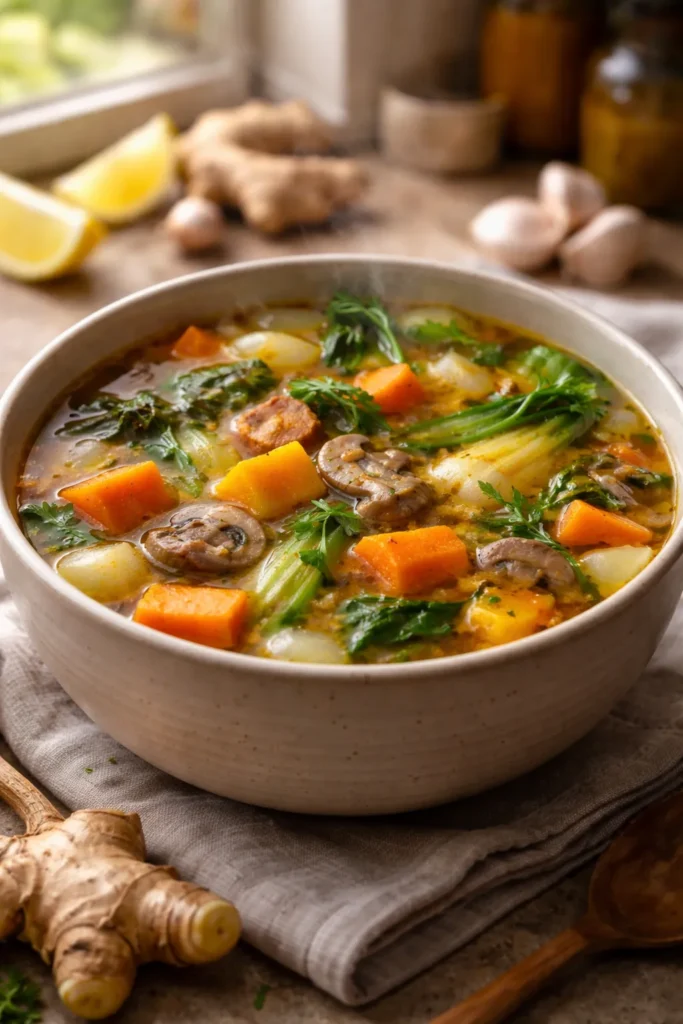
This is the soup you make the moment you feel a cold coming on — or better yet, before it arrives. Every ingredient was chosen with intention: sweet potatoes for vitamin D and B6, mushrooms for immune-boosting compounds, ginger for its anti-inflammatory and anti-nausea properties, turmeric for its powerful antioxidant activity, and lemon for a hit of vitamin C and acidity that ties the whole pot together.
It’s a gentler, simpler soup than many on this list — no sautéing required, just a dump-and-simmer method that means even someone who’s already feeling awful can manage it. The broth that results from a long, slow simmer is as valuable as the soup itself. Strain a cup or two and sip it from a mug throughout the day.
Ingredients
- 3 carrots, peeled and chopped into 1-inch chunks
- 1 medium sweet potato, unpeeled, chopped into 1-inch chunks
- 8 ounces white mushrooms, stems removed and quartered
- 1 large white onion, chopped into 1-inch chunks
- 1 leek, white and pale green parts only, washed well and chopped
- 1 small head bok choy, chopped (discard tough dark green tops)
- 3 garlic cloves, smashed
- 1 (2-inch) piece fresh ginger, peeled and left whole
- 1 tablespoon ground turmeric
- Juice of 1 large lemon
- 2 tablespoons coconut oil (or olive oil)
- 1 teaspoon fine sea salt, plus more to taste
- 1 teaspoon freshly ground black pepper
- 6 quarts water
Yield: Makes approximately 6 quarts (serves 8–10) Prep Time: 15 minutes Cook Time: 1 hour 30 minutes Total Time: 1 hour 45 minutes Difficulty: Beginner — there’s no technique required beyond chopping and waiting.
How to Make It
- Combine all the vegetables, garlic, whole ginger piece, turmeric, coconut oil, salt, and pepper in a very large stockpot or Dutch oven.
- Fill the pot with 6 quarts of water, leaving about 1 inch of headspace.
- Bring to a boil over medium-high heat, then reduce the heat and simmer, covered, for 1 hour.
- After 1 hour, taste the broth. If you want a mild ginger flavor, remove the ginger piece now. If you want more heat, leave it in for another 30 minutes.
- Continue simmering for 30 to 60 minutes longer, until all the vegetables are very soft and the broth is deeply fragrant and golden from the turmeric.
- Stir in the lemon juice. Taste and adjust salt. For pure broth, strain 2 quarts into jars before serving.
Why This Works When You’re Under the Weather
The long simmer draws the micronutrients, vitamins, and minerals from the vegetables into the broth itself. Even if someone can barely eat, sipping the warm liquid delivers nutrition in a form that’s easy to absorb. The ginger actively helps with nausea and inflammation. Turmeric’s active compound, curcumin, is better absorbed in the presence of fat — which is exactly why the coconut or olive oil matters here.
Worth knowing: Leaving the sweet potato skin on is intentional. The skin contains a concentrated layer of nutrients, and after 90 minutes of simmering it becomes completely soft and edible.
3. Fire-Roasted Tomato Vegetable Soup with Chickpeas
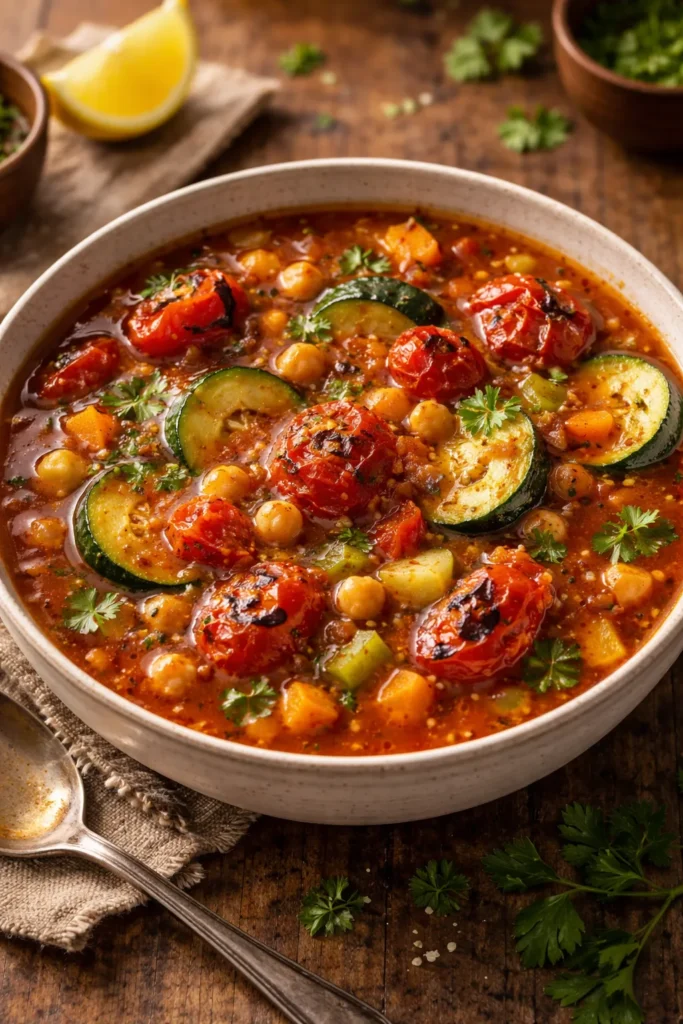
Fire-roasted tomatoes are one of the most underused pantry ingredients in a home cook’s arsenal. The process of charring the tomatoes before canning adds a subtle smokiness and a sweetness that ordinary diced tomatoes simply don’t have. Pair them with chickpeas, zucchini, and a finishing splash of white wine vinegar, and you get a vegetable soup with a genuinely complex flavor profile that took about 40 minutes to build.
This recipe follows a layered approach: sturdier vegetables go in first, delicate ones come in later, and a hit of acid at the very end ties everything together. That sequence — often overlooked in simple soups — is what separates a pot of vegetables floating in liquid from an actual soup you’d want to eat twice.
Ingredients
- 2 tablespoons extra-virgin olive oil
- 1 medium yellow onion, diced
- 1 teaspoon sea salt, plus more to taste
- 1 medium carrot, diced
- 1 small sweet potato, peeled and diced
- 4 garlic cloves, roughly chopped
- 1 (14.5 oz) can fire-roasted diced tomatoes
- 2 teaspoons dried oregano
- ¼ teaspoon red pepper flakes
- 4 cups vegetable broth
- 2 bay leaves
- 1 cup cherry tomatoes, halved
- 1 cup green beans, trimmed and cut into 1-inch pieces
- 1 medium zucchini, diced
- 1 (15 oz) can chickpeas, drained and rinsed
- 2 tablespoons white wine vinegar
- 1½ cups kale, roughly chopped, thick stems removed
- Freshly ground black pepper
Yield: Serves 6 Prep Time: 10 minutes Cook Time: 35 minutes Total Time: 45 minutes Difficulty: Beginner — this recipe is as straightforward as soup gets.
How to Make It
- Heat olive oil in a large pot over medium heat. Add the onion, salt, and several grinds of black pepper. Cook for 8 minutes, stirring occasionally, until the onion is completely softened.
- Add the carrot and sweet potato, stir, and cook for 2 more minutes.
- Add the fire-roasted tomatoes, garlic, oregano, and red pepper flakes. Stir everything together and cook for 2 minutes.
- Pour in the broth and drop in the bay leaves. Bring to a boil, then reduce to a gentle simmer and cook, covered, for 20 minutes.
- Stir in the cherry tomatoes, green beans, zucchini, and chickpeas. Cover and continue simmering for 10 to 15 minutes, until the green beans are tender but still have a slight bite.
- Stir in the white wine vinegar and kale. Cook for 5 minutes until the kale is wilted and bright green.
- Remove the bay leaves. Season to taste with additional salt and pepper, and serve immediately.
The Vinegar Trick Most People Skip
The white wine vinegar added at the end isn’t optional — at least not if you want this soup to taste its best. Acid brightens every flavor in the pot, cuts through the richness of the olive oil, and makes the tomatoes taste more intensely of themselves. If you don’t have white wine vinegar, fresh lemon juice works equally well. Start with 1 tablespoon and taste before adding more.
4. Tuscan White Bean and Winter Vegetable Soup

This is a heartier, more filling take on vegetable soup that draws inspiration from the Italian countryside. Cannellini beans add a creamy, almost buttery texture that turns this from a light broth into something genuinely sustaining. Parsnip, sweet potato, and cabbage bring earthy sweetness, while dried thyme and a bay leaf keep the aromatics quietly present without overwhelming.
The secret move here is cooking the onion, carrot, celery, and parsnip together for a full 10 to 15 minutes before adding anything else. It’s longer than most recipes suggest, and it makes an enormous difference — the vegetables develop golden edges, the natural sugars concentrate, and the base of the soup takes on a depth that you simply can’t shortcut your way to.
Ingredients
- 3 tablespoons olive oil
- 1 medium onion, diced
- 3 carrots, peeled and chopped
- 2 celery stalks, chopped
- 1 parsnip, peeled and chopped
- 1 small sweet potato, chopped (no need to peel)
- 2 medium Yukon gold potatoes, chopped (no need to peel)
- 2 garlic cloves, minced
- ½ tablespoon dried thyme (or 1 tablespoon fresh)
- 1 (14 oz) can cannellini beans, drained and rinsed
- 1 (14 oz) can diced tomatoes
- 600ml (2½ cups) vegetable stock
- 250g (about 3 cups) green cabbage, roughly chopped
- 150g (about 5 cups loosely packed) fresh spinach
- Salt and freshly ground black pepper
- Freshly grated Parmesan cheese and a spoonful of pesto, to serve
Yield: Serves 8 Prep Time: 10 minutes Cook Time: 40 minutes Total Time: 50 minutes Difficulty: Beginner — this is a truly forgiving and flexible soup.
How to Make It
- Heat the olive oil in a large, heavy-bottomed pot over medium heat. Add the onion, carrots, celery, parsnip, sweet potato, and potatoes. Cook, stirring frequently, for 10 to 15 minutes. You’re looking for the vegetables to soften and the edges of the onion to just begin to turn golden.
- Add the garlic and thyme. Stir and cook for 2 more minutes until fragrant.
- Add the drained cannellini beans, diced tomatoes (with juices), and vegetable stock. Stir to combine.
- Bring to a boil, then reduce the heat and simmer for 20 minutes.
- Stir in the cabbage and spinach. Season generously with salt and pepper. Cook for a further 5 minutes until the greens are just wilted.
- Serve topped with a spoonful of pesto and a sprinkle of freshly grated Parmesan.
Why the Pesto Topping Changes Everything
A spoonful of pesto stirred into the bowl at the table transforms this soup into something that feels almost luxurious. The bright, herby oil cuts right through the earthiness of the root vegetables and ties the whole bowl together. If you don’t have pesto, a drizzle of really good extra-virgin olive oil and a few fresh basil leaves accomplish something similar. Don’t skip the garnish on this one — it matters.
5. Curry-Spiced Vegetable Soup with Lemon
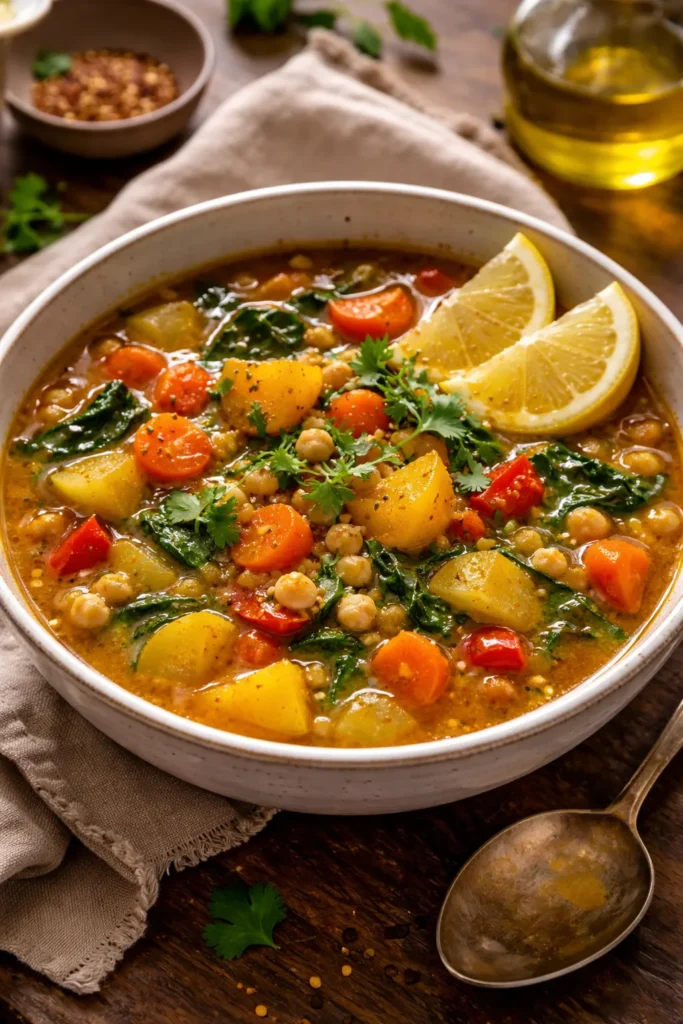
Curry powder in vegetable soup sounds like a bold choice, but the effect is subtle. You won’t bite into this and think “curry dish” — instead, you’ll pick up warmth, earthiness, and a quiet complexity that you can’t quite pin down. That’s exactly the point. A small amount of curry powder (just half a teaspoon) acts as a background note that makes you wonder what makes this version taste so much better than the usual.
Paired with fresh lemon juice and a final drizzle of good olive oil, this soup is bright, warming, and deeply satisfying. The addition of seasonal vegetables — butternut squash, bell pepper, zucchini, whatever you have — keeps it interesting across different cooks and different weeks.
Ingredients
- 4 tablespoons extra-virgin olive oil, divided
- 1 medium yellow onion, chopped
- 3 carrots, peeled and chopped
- 2 celery stalks, chopped
- 2 cups seasonal vegetables (butternut squash, sweet potato, green beans, zucchini, or bell pepper — choose 1 or 2)
- 1 teaspoon fine sea salt, divided
- 6 cloves garlic, minced
- ½ teaspoon curry powder
- ½ teaspoon dried thyme
- 1 (28 oz) can diced tomatoes, with juices
- 4 cups vegetable broth
- 2 cups water
- 2 bay leaves
- ½ teaspoon red pepper flakes
- 2 cups chopped kale, thick ribs removed
- 1 tablespoon fresh lemon juice
- Freshly ground black pepper
Yield: Serves 6 Prep Time: 15 minutes Cook Time: 45 minutes Total Time: 1 hour Difficulty: Beginner — this follows a simple sauté-and-simmer method.
How to Make It
- Warm 3 tablespoons of the olive oil in a large Dutch oven over medium heat. Add the onion, carrots, celery, and your chosen seasonal vegetables along with ½ teaspoon of the salt. Cook, stirring often, for 6 to 8 minutes until the onion is soft and translucent.
- Add the garlic, curry powder, and thyme. Cook for 1 minute, stirring constantly, until you can smell the spices blooming.
- Pour in the diced tomatoes and cook for 2 to 3 minutes, stirring occasionally, to cook off any raw, tinny edge.
- Add the broth, water, remaining ½ teaspoon salt, bay leaves, and red pepper flakes. Season generously with black pepper. Bring to a boil, then reduce the heat, partially cover, and simmer for 25 minutes.
- Remove the lid, add the chopped kale, and simmer for 5 more minutes until it softens to your liking.
- Remove from heat and remove the bay leaves. Stir in the lemon juice and the remaining 1 tablespoon of olive oil. Taste and adjust salt, pepper, and lemon juice as needed.
Building Flavor in Stages
The moment you add acid (lemon juice) and a second pour of olive oil at the end, the soup transforms. Taste it before those additions, then taste it after — the difference is striking. The lemon lifts everything and creates contrast with the savory, earthy base. The extra drizzle of oil adds body and richness to what is otherwise a lean broth. These finishing touches are non-negotiable.
6. Caramelized Vegetable Soup with White Wine and Parmesan Rind
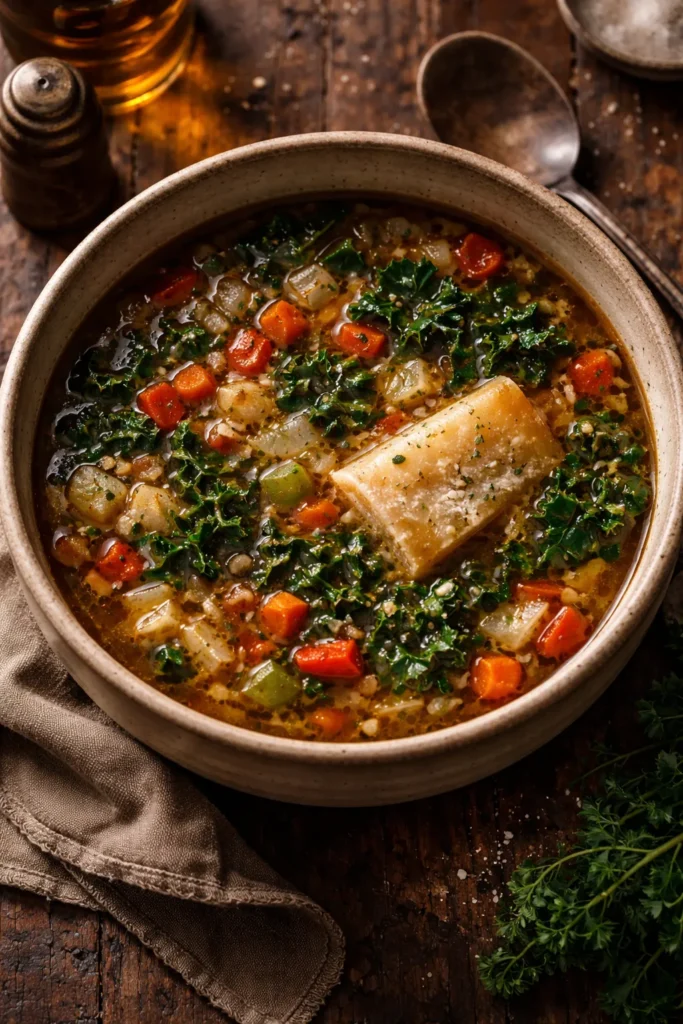
This is the most technique-forward recipe on this list, and the payoff is a vegetable soup with an almost meaty depth of flavor. The key is in the name: caramelizing, not just softening, the vegetables. Cooking the aromatics over higher heat until their edges genuinely brown creates a layer of flavor that no amount of herbs or spice can substitute.
A splash of dry white wine deglazes the pot and picks up every bit of flavor stuck to the bottom. Then the addition of a Parmesan rind — tucked in with the broth and vegetables and left to slowly dissolve as everything simmers — adds a salty, umami richness that makes this vegetable soup taste like it took hours longer than it actually did.
Ingredients
- 1 tablespoon extra-virgin olive oil
- 1 cup carrots, peeled and sliced (about 2 medium)
- ½ cup celery, diced (about 2 stalks)
- ½ cup red bell pepper, diced
- 1 medium onion, diced
- 3 garlic cloves, minced
- 1 teaspoon tomato paste
- ½ cup dry white wine (Sauvignon Blanc or Pinot Grigio)
- 8 cups vegetable stock
- 1 (14 oz) can fire-roasted diced tomatoes
- 1 medium Yukon gold potato, diced into ½-inch cubes
- 2 cups kale, chopped, stems removed
- 1–2 oz Parmesan cheese rind
- ½ teaspoon dried oregano
- ½ teaspoon paprika
- ⅛ teaspoon red pepper flakes
- ⅛ teaspoon ground thyme
- 6 oz fresh green beans, cut into ¾-inch pieces
- ½ cup fresh or frozen corn
- ½ cup fresh or frozen peas
- 2 tablespoons fresh parsley, chopped
- 1 teaspoon white balsamic vinegar (or lemon juice)
- Salt and freshly ground black pepper
Yield: Serves 6 Prep Time: 15 minutes Cook Time: 45 minutes Total Time: 1 hour Difficulty: Intermediate — the caramelization step requires attention but the rest is straightforward.
How to Make It
Caramelize:
- Heat a large Dutch oven over medium heat. Add the olive oil, then the carrots, celery, onion, and red bell pepper. Cook for 10 minutes, stirring occasionally, until the vegetables have released their moisture and are beginning to brown at the edges.
- Add the garlic and tomato paste. Cook for 1 to 2 minutes, stirring constantly. Let the tomato paste darken slightly — this caramelization adds flavor, so don’t rush it or skip it.
Deglaze:
- Pour in the white wine. Scrape up every browned bit from the bottom of the pot with a wooden spoon — this is flavor. Cook for 2 to 3 minutes until the alcohol smell fades.
Simmer:
- Add the stock, fire-roasted tomatoes, potato, kale, Parmesan rind, oregano, paprika, red pepper flakes, and ground thyme. Bring to a boil, then reduce to a steady simmer and cook for 10 minutes.
- Add the green beans, corn, peas, and fresh parsley. Simmer for 5 more minutes until the green beans are just tender.
Finish:
- Remove from heat. Stir in the white balsamic vinegar. Season with salt and pepper. Remove or finely chop any remaining Parmesan rind pieces. Serve immediately.
The Parmesan Rind: Your New Favorite Pantry Trick
Start saving Parmesan rinds in a small freezer bag the moment you finish a wedge of cheese. They keep for months and transform any broth-based dish. The rind slowly releases salty, savory compounds into the liquid over the course of the simmer, creating a depth that’s essentially impossible to replicate with dried herbs or extra seasoning. One small piece makes a noticeable difference.
7. Sweet Potato, Kale, and Chickpea Vegetable Soup
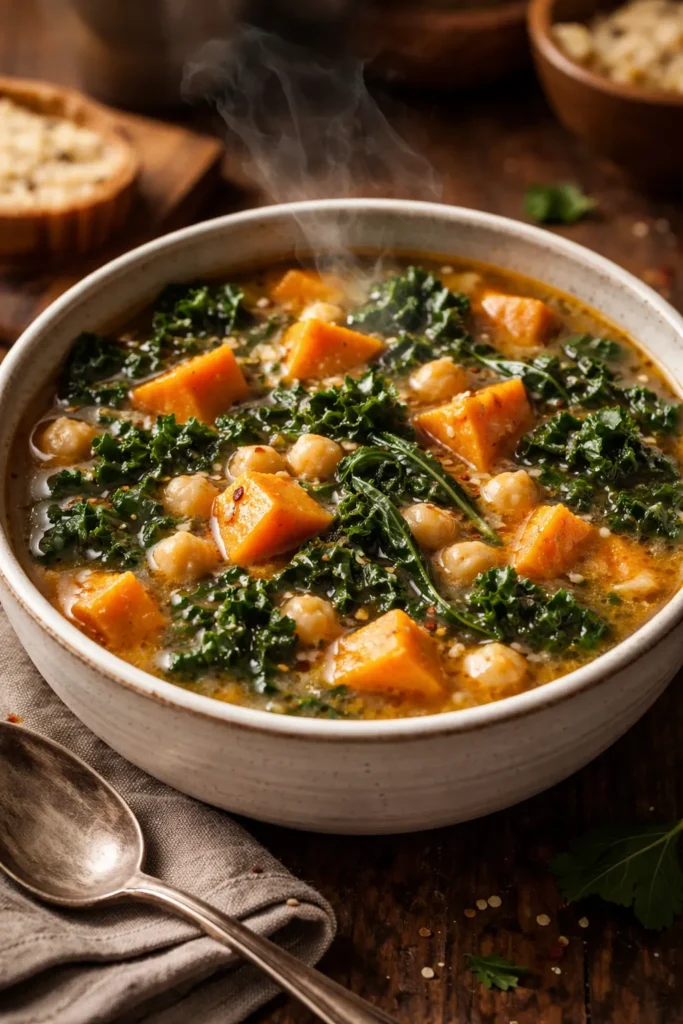
Sweet potato and chickpea is one of those ingredient pairings that just works every single time. The sweet potato brings sweetness and body; the chickpeas add protein and a pleasant chewiness; the kale provides a slight bitterness that keeps everything in balance. Together in a garlicky, herb-forward broth, they make a soup that’s filling enough to serve as a complete meal with nothing more than a slice of good bread.
This one comes together in about 35 minutes, which makes it a practical option for a weeknight. It freezes beautifully and tends to taste even better the second day, once the flavors have had time to settle and deepen.
Ingredients
- 2 tablespoons extra-virgin olive oil
- 1 medium yellow onion, diced
- 3 garlic cloves, minced
- 1 teaspoon ground cumin
- ½ teaspoon smoked paprika
- ¼ teaspoon red pepper flakes
- 1 large sweet potato, peeled and cut into ½-inch cubes
- 1 (15 oz) can chickpeas, drained and rinsed
- 1 (14.5 oz) can diced tomatoes, with juices
- 5 cups vegetable broth
- 2 cups kale, chopped, thick stems removed
- 1 tablespoon fresh lemon juice
- Salt and freshly ground black pepper
- Fresh parsley or cilantro, to garnish
Yield: Serves 4–5 Prep Time: 10 minutes Cook Time: 25 minutes Total Time: 35 minutes Difficulty: Beginner — this is one of the simplest and fastest soups on this list.
How to Make It
- Heat the olive oil in a large pot over medium heat. Add the onion with a pinch of salt and cook for 5 to 6 minutes until softened.
- Add the garlic, cumin, smoked paprika, and red pepper flakes. Stir and cook for 1 minute until fragrant.
- Add the sweet potato cubes and stir to coat in the spices. Cook for 2 minutes.
- Pour in the diced tomatoes and broth. Bring to a boil, then reduce the heat and simmer for 15 minutes, until the sweet potato is completely tender when pierced with a fork.
- Stir in the chickpeas and kale. Simmer for 5 more minutes until the kale has wilted.
- Remove from heat. Stir in the lemon juice, taste, and adjust the salt. Garnish with fresh parsley or cilantro and serve hot.
Making It More Substantial
This soup is already a complete meal with the chickpeas providing protein, but if you want to stretch it further, stir in a handful of small pasta shapes (like orzo or ditalini) 10 minutes before the end of cooking. Add an extra cup of broth to compensate, since the pasta will absorb liquid as it cooks. Alternatively, a scoop of cooked brown rice stirred in at serving turns this into something genuinely filling.
8. Ginger-Turmeric Healing Vegetable Broth Soup

This is the gentlest, most medicinal soup on this list — the one you make when you or someone you love is genuinely unwell. It’s deliberately simple: a clean, golden broth built from kombu (edible seaweed rich in zinc and vitamin C), soy sauce, and mirin, loaded with vegetables chosen specifically for their reported immune-supporting properties.
Daikon radish has been used in Japanese and Chinese home remedy cooking for generations. Mushrooms — shiitake in particular — contain beta-glucans that research has consistently linked to improved immune function. Ginger eases nausea and inflammation. Turmeric contributes its celebrated curcumin. Together, they make a broth that feels genuinely restorative rather than medicinal. It’s also incredibly easy to digest, which matters when your appetite is low.
Ingredients
- 2 pieces dried kombu, about 4 inches each (do not rinse before using)
- 2 tablespoons gluten-free soy sauce or tamari
- 1 tablespoon mirin
- 8 oz (about 2 cups) pumpkin or butternut squash, peeled and cubed
- 1 cup shiitake mushrooms, stems removed and sliced
- 1 cup oyster mushrooms, torn into pieces
- 1 medium onion, roughly chopped
- 3 garlic cloves, smashed
- 1 medium carrot, sliced into rounds
- ½ daikon radish, peeled and sliced into half-moons
- 1 small red bell pepper, chopped
- 2 cups broccoli florets
- 1 teaspoon dried thyme
- 2 teaspoons dried basil
- 2 bay leaves
- 1-inch piece fresh ginger, peeled and sliced (or ½ teaspoon ground ginger)
- ½ teaspoon ground turmeric
- Salt and freshly ground black pepper, to taste
- 4 cups water or light vegetable broth
- 7 oz (198g) konjac noodles (shirataki noodles), rinsed well (optional)
Yield: Serves 4 Prep Time: 10 minutes Cook Time: 20–25 minutes Total Time: 35 minutes Difficulty: Beginner — this is a dump-and-simmer method with minimal prep.
How to Make It
- Prepare the konjac noodles if using: drain, rinse thoroughly under cold water, and set aside. They have a strong smell straight from the package — rinsing well removes it.
- In a large pot, combine the water or broth with the kombu pieces, soy sauce, and mirin. Add the pumpkin, mushrooms, onion, garlic, carrot, daikon radish, ginger, turmeric, thyme, basil, and bay leaves.
- Add the konjac noodles if using. Bring the pot to a boil over medium-high heat, then reduce to a steady simmer. Cover and cook for 20 minutes.
- In the last 5 minutes of cooking, add the broccoli florets and red bell pepper. Simmer until just tender but still bright green.
- Remove from heat. Discard the kombu pieces and bay leaves. Taste and add salt and pepper as needed.
- Serve immediately. If making this for someone who’s sick, strain some of the golden broth into a mug for sipping separately throughout the day.
Why Kombu Makes the Broth Special
Do not rinse the kombu before using it. The white coating on the surface is not mold — it’s a concentration of natural glutamates, the compounds responsible for umami flavor. Rinsing washes this away, and the result is a noticeably thinner, less complex broth. Kombu is widely available at Asian grocery stores and online, and a small package goes a long way since you only need a few pieces per pot.
The Secret to a Deeply Flavorful Vegetable Broth
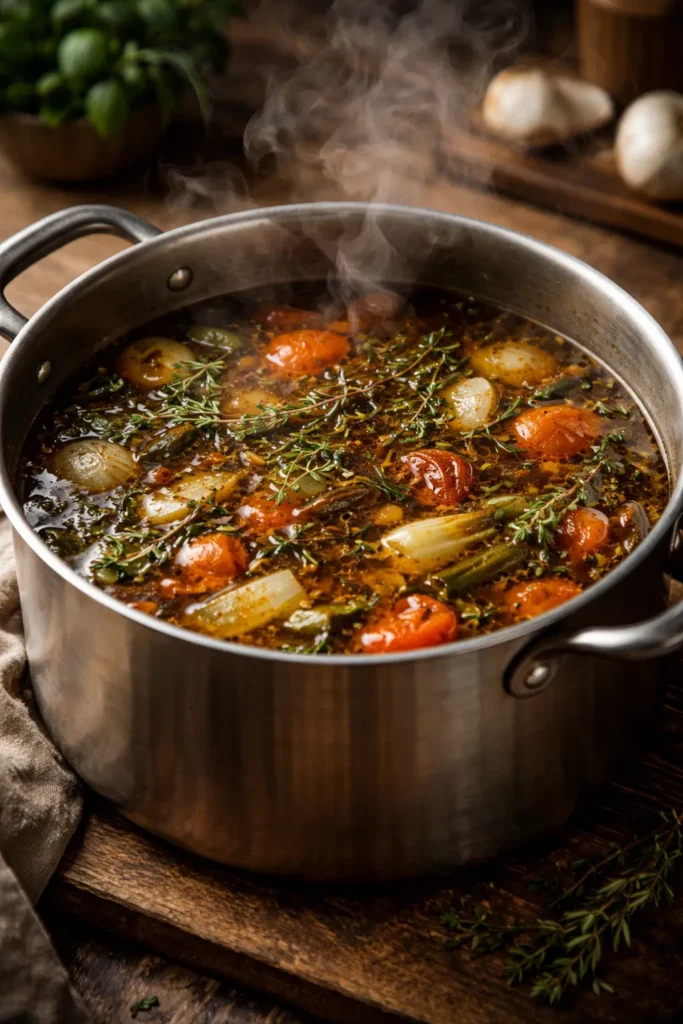
A common frustration with vegetable soup is that the broth can taste thin and forgettable, especially compared to meat-based soups that benefit from gelatin and rendered fat. The fix doesn’t require meat — it requires strategy.
Building flavor in layers is the single most important technique across all these recipes. Sautéing aromatics before adding liquid, caramelizing tomato paste until it darkens, and allowing vegetables to cook long enough to release their natural sugars each adds a measurable layer of flavor that no amount of seasoning at the end can replicate.
Finishing Touches That Make All the Difference
Acid is the most overlooked flavor enhancer in soup. A tablespoon of fresh lemon juice, white wine vinegar, or white balsamic vinegar added right before serving brightens every other flavor in the bowl and creates a contrast that makes the soup taste more complete. Add it off the heat, taste, and adjust.
A final drizzle of good extra-virgin olive oil at the table does something similar — it adds richness and a slight fruitiness that pulls the broth together. Combined with the acid, these two finishing moves transform a decent vegetable soup into an excellent one.
Umami Builders Worth Adding
For additional depth without meat, consider these additions:
- Parmesan rind — simmer in the broth and remove before serving
- Soy sauce or tamari — add 1 tablespoon to the broth for savory depth
- Tomato paste — cook it in the pot for 2 minutes before adding liquid
- Mushrooms — any variety adds earthiness and natural glutamates
- Miso paste — stir 1 tablespoon into finished soup off the heat for a subtle fermented depth
- Umami powder — ground mushrooms sold as a seasoning; excellent for amplifying savory flavor
How to Customize Any Vegetable Soup
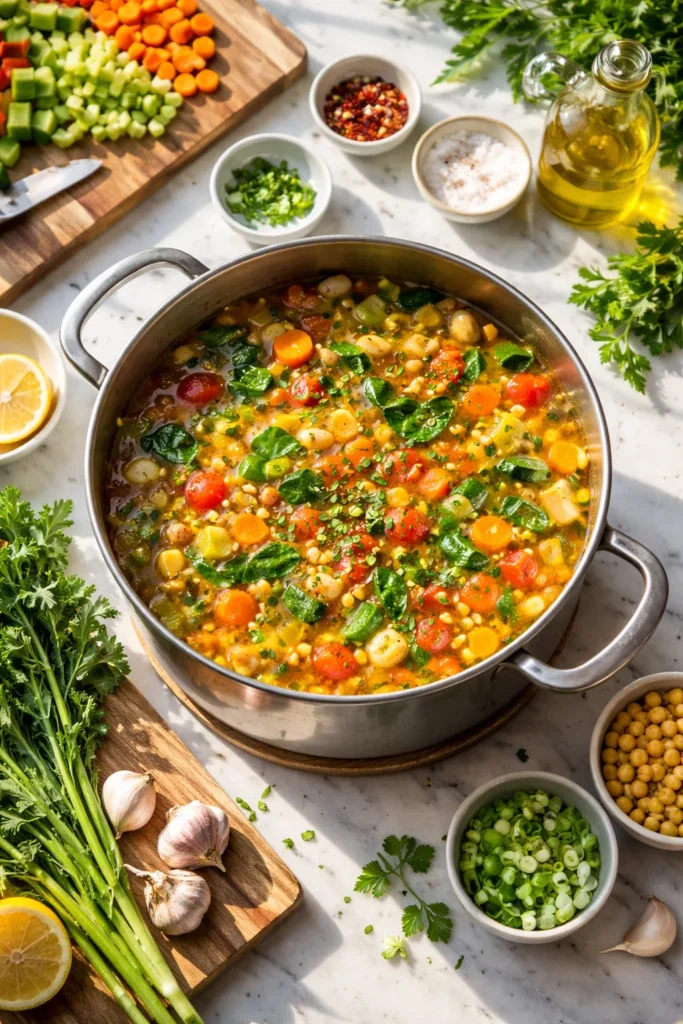
Every recipe above is a starting point, not a fixed formula. The ingredient in your refrigerator that needs to be used — the slightly tired zucchini, the half a head of cabbage, the bunch of kale you bought three days ago — can almost certainly find a home in one of these pots.
The general rule is to think in terms of timing. Dense, starchy vegetables (sweet potato, carrot, parsnip, potato, butternut squash) need 20 to 30 minutes of simmering and should go in early. Medium-density vegetables (green beans, zucchini, bell pepper, broccoli, corn) need 10 to 15 minutes and should be added after the starchy ones are nearly done. Delicate greens (kale, spinach, chard, bok choy) need 5 minutes at most and should go in last.
Swapping Proteins and Beans
Chickpeas, white beans (cannellini, great northern, navy), red kidney beans, and lentils all work as protein additions in any of these recipes. Add them in the last 10 to 15 minutes so they heat through without turning mushy. Cooked lentils added at the end also thicken the broth slightly, which works nicely in heartier soups.
Adjusting for Spice and Heat
Red pepper flakes are a variable you can control entirely. Start with ¼ teaspoon for a mild background warmth — most people won’t even notice it’s there, but they’ll notice the soup tastes more interesting. At ½ teaspoon, the heat is present but not aggressive. Go beyond that only if you know your audience appreciates spice.
Storage, Freezing, and Reheating Guide
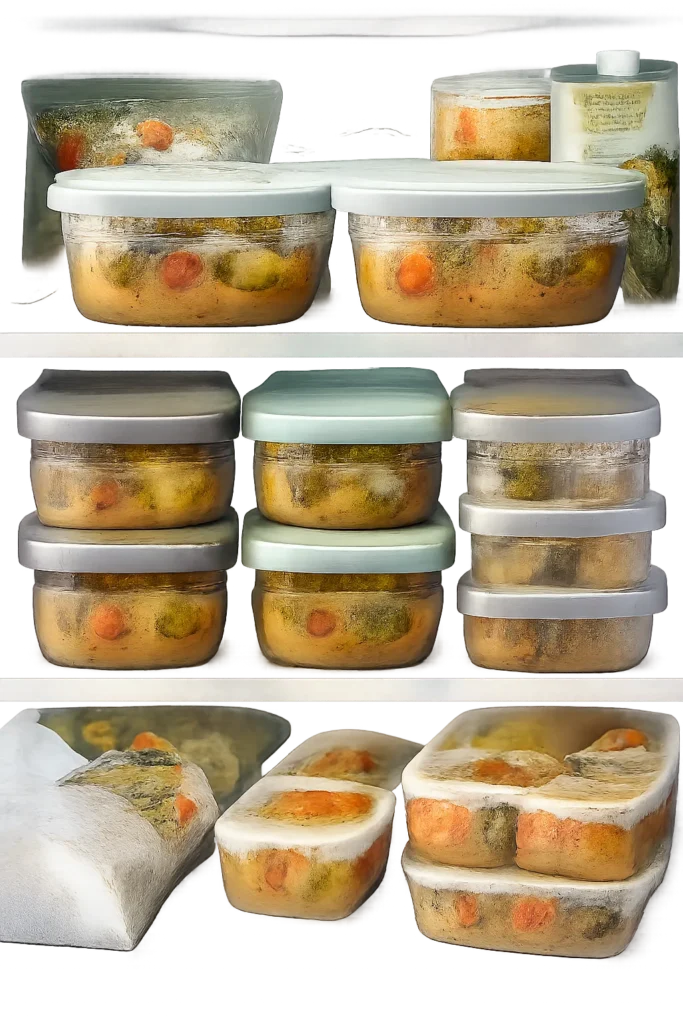
One of the great practical advantages of vegetable soup is that it stores so well. In fact, most of these recipes taste better the next day, once the flavors have had time to meld and deepen in the refrigerator overnight. Make a full pot on the weekend and you have lunch or dinner ready for the next three or four days with zero additional effort.
Refrigerator Storage
All of these soups keep well in an airtight container in the refrigerator for 4 to 5 days. The exception is the immune-boosting broth soup (Recipe 2), which keeps for up to 7 days and actually develops more flavor as it sits.
Freezing Instructions
Vegetable soup freezes exceptionally well. Allow the soup to cool completely at room temperature first — never transfer hot soup directly into freezer containers, as this raises the temperature inside the freezer and can affect other stored foods.
Portion into 2-cup freezer-safe containers or heavy-duty zip-lock bags, leaving at least 1 inch of headspace in each container. Liquid expands when it freezes, and sealed containers without headspace will crack or burst. Label each container with the recipe name and date. Most of these soups keep their quality in the freezer for 3 to 4 months.
Reheating Without Ruining the Texture
To reheat from the refrigerator, warm gently in a saucepan over medium-low heat, stirring occasionally. Avoid boiling — the vegetables, especially any greens or delicate additions, will disintegrate if the soup is brought to a rolling boil again. From frozen, thaw overnight in the refrigerator and then reheat on the stovetop. For a quick option, frozen soup can go directly into the microwave in 3-minute intervals, stirred between each one, until hot throughout.
What to Serve Alongside Vegetable Soup
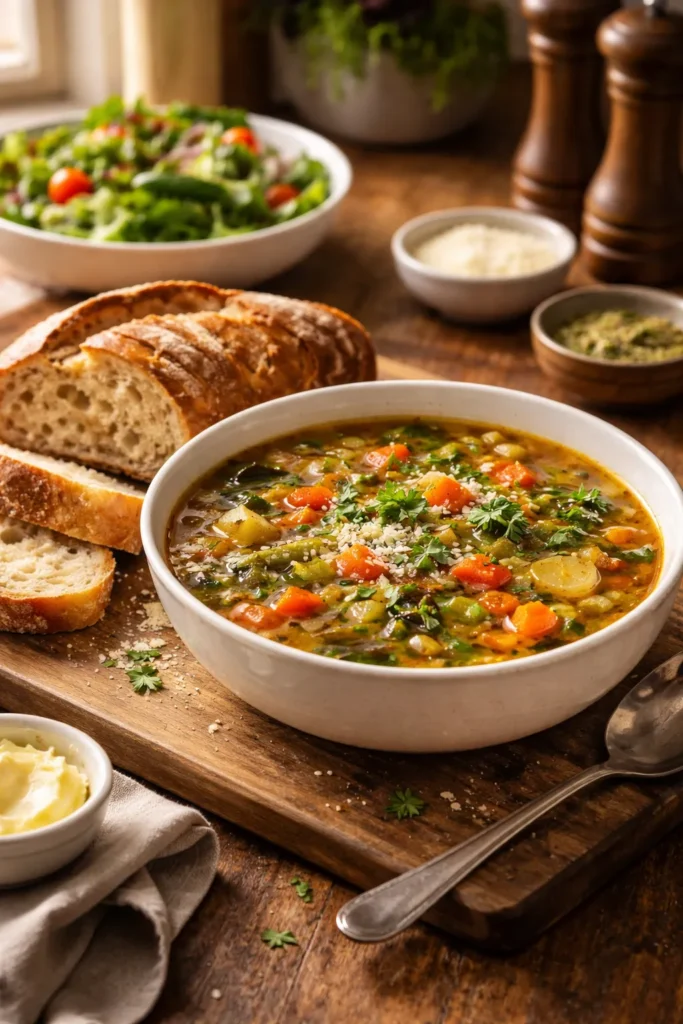
A bowl of vegetable soup is a complete meal on its own, but the right accompaniment makes it feel special rather than just practical. Crusty bread is the obvious choice — sourdough, a French baguette, or a simple no-knead loaf all work wonderfully for soaking up the broth.
A grilled cheese sandwich alongside a lighter soup like the fire-roasted tomato version (Recipe 3) is a genuinely satisfying combination, especially for cold nights when you want something a bit indulgent. For heartier soups like the Tuscan white bean version (Recipe 4) or the caramelized vegetable version (Recipe 6), a simple green salad with a sharp vinaigrette provides a nice contrast in texture and temperature.
Simple Garnishes Worth Using
Don’t underestimate what a well-chosen garnish does for a bowl of soup. These take 30 seconds each and make a real visual and flavor difference:
- A spoonful of fresh or jarred pesto stirred in at the table
- A handful of small croutons — store-bought or torn sourdough tossed with olive oil and toasted in the oven
- A sprinkle of freshly grated Parmesan or Pecorino
- A drizzle of good extra-virgin olive oil and a crack of black pepper
- Fresh herbs: flat-leaf parsley, basil, dill, or a small amount of fresh thyme
- A squeeze of fresh lemon directly into the bowl before eating
Final Thoughts

Vegetable soup is one of those deceptively simple things that rewards attention. The difference between a forgettable pot and one you’ll remember is almost always in the small details: giving the aromatics enough time, adding acid at the end, choosing vegetables that hold up to simmering rather than dissolving into mush.
The eight recipes here cover the full range — from a quick weeknight classic ready in under an hour to a slow-simmered healing broth built specifically for recovery. Pick the one that matches your mood and your refrigerator, then adjust freely.
Make a big pot. Freeze the leftovers in portions. Keep a container in the back of the refrigerator for the moment someone in your house feels under the weather or just needs something warm and nourishing at the end of a long day. That’s exactly what vegetable soup is for — and it never fails to deliver.