Peanut sauce has a way of making everything taste better. A plain grain bowl that might otherwise feel like a chore to eat? Transformed. A wrap stuffed with leftover roasted vegetables and some rice? Suddenly something you’d actually crave. That magnetic pull — nutty, salty, tangy, with just enough heat — is why a good jar of peanut sauce in the fridge feels like having a secret weapon on standby.
The thing is, “peanut sauce” isn’t a single recipe. It’s more of a flavor direction, and the variations are endless. Thai versions lean on coconut milk and fish sauce for a restaurant-style depth. Vietnamese-inspired takes stay lighter and brighter with lime. Some are built for drizzling — thin enough to coat every grain of rice. Others are thick enough to function as a dip or a spread inside a wrap. The base is almost always the same: peanut butter, something salty, something acidic, something sweet, and enough liquid to bring it all together.
What follows are eight distinct peanut sauce recipes, each dialed in for a specific use case with bowls and wraps in mind. Some take five minutes with a whisk. Others benefit from a blender for an ultra-smooth result. A few draw on coconut milk, miso, or almond butter to push the flavor somewhere new. All of them are genuinely good — the kind you’ll eat straight off a spoon while you’re assembling your bowl.
Table of Contents
- Why Peanut Sauce Belongs in Every Bowl and Wrap
- The Core Ingredients That Make Peanut Sauce Work
- 1. Classic Sesame-Ginger Peanut Sauce
- Where It Works Best
- Make It Your Own
- 2. Thai Coconut Peanut Sauce
- The Coconut Milk Difference
- Best Bowl and Wrap Pairings
- 3. Spicy Sriracha Peanut Sauce
- Pairing With Spicy Bowls
- A Note on Chili Paste Varieties
- 4. Lime-Forward Vietnamese-Style Peanut Sauce
- What Makes This Different
- Best With
- 5. Almond Butter Peanut Sauce
- Cashew Butter Variation
- The Flavor Difference in Practice
- 6. Garlic-Forward Savory Peanut Sauce
- Why So Much Garlic?
- 7. Sweet Maple-Miso Peanut Sauce
- Choosing Your Miso
- What to Serve It On
- 8. Creamy Coconut-Lime Peanut Sauce with Chili Oil
- Chili Oil vs. Sriracha — The Real Difference
- How to Thin, Thicken, and Adjust Any Peanut Sauce
- Smart Storage Tips That Keep Peanut Sauce Fresh
- Building the Ideal Bowl or Wrap Around These Sauces
- Matching Sauce Weight to Bowl Components
- Texture Is the Secret Ingredient
- Fresh Herbs Are Non-Negotiable
- Final Thoughts
Why Peanut Sauce Belongs in Every Bowl and Wrap
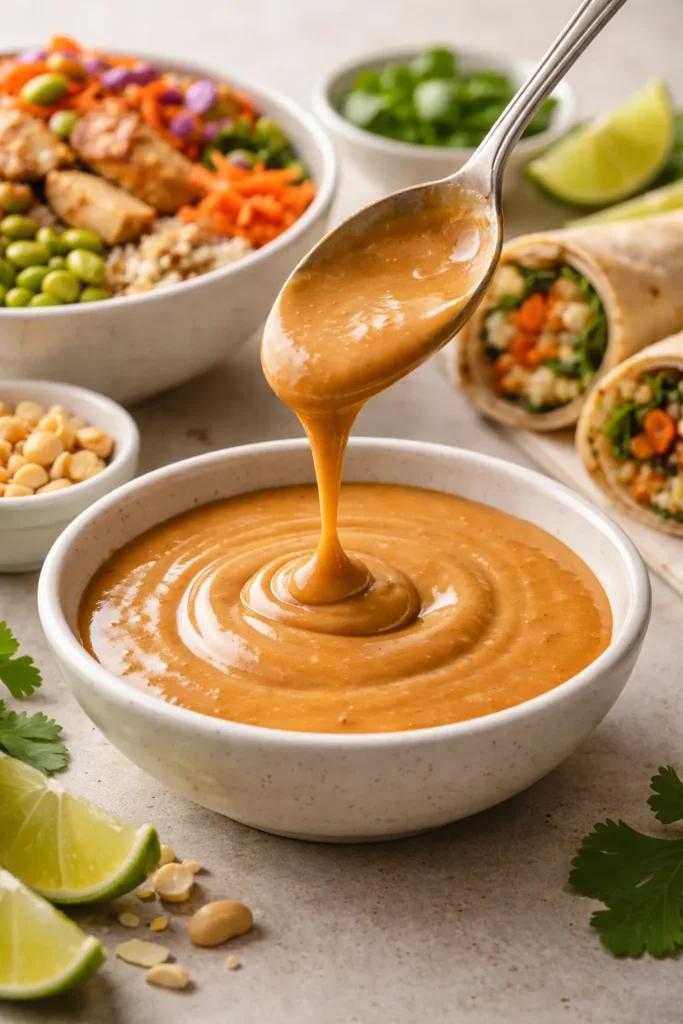
Bowl meals and wraps share a structural problem: they’re assemblies of separate components that need something to tie them together. Rice, roasted vegetables, greens, protein — these are all delicious on their own, but without a sauce, they’re just ingredients sitting next to each other. Peanut sauce solves that problem better than almost any other condiment.
Part of it is the fat content. Peanut butter provides a creamy base that clings to noodles, coats grain, and soaks into wrapped fillings in a way that thin vinaigrettes simply don’t. That richness carries flavor deeper into each bite rather than pooling at the bottom of the bowl.
The flavor profile also covers a lot of territory. Peanut sauce naturally delivers salt (from soy sauce or tamari), acid (from lime or rice vinegar), sweetness (from maple syrup or honey), and heat (from sriracha or chili paste) — all the components that make a sauce feel balanced and complete. You don’t need to build complexity from scratch when the sauce is already doing that work for you.
Practically speaking, peanut sauce is also one of the few sauces that works equally well warm or cold, which matters for meal prep. It doesn’t break when refrigerated, doesn’t congeal unpleasantly, and can be thinned back to the right consistency with a splash of water or coconut milk before serving.
The Core Ingredients That Make Peanut Sauce Work
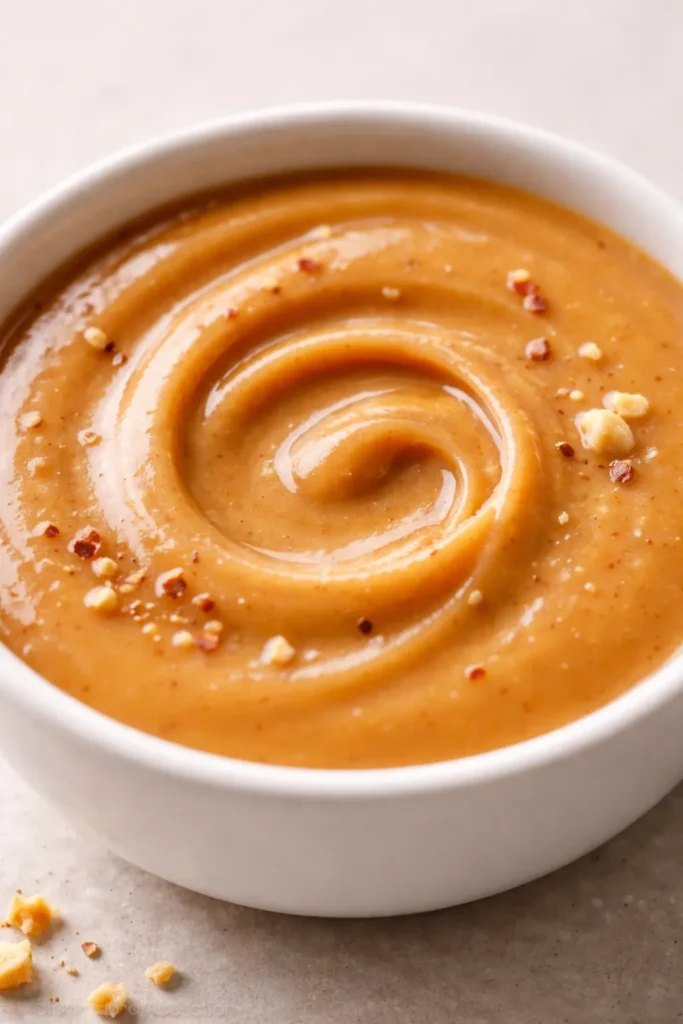
Before getting into the eight recipes, it’s worth understanding what each ingredient actually does — because once you know the function, you can adjust any of these recipes with confidence.
Peanut butter is the foundation. Natural peanut butter (made from just peanuts and salt) gives the cleanest, most intense peanut flavor and the smoothest texture when whisked. Conventional peanut butter like Jif or Skippy adds more sweetness and a slightly thicker body because of stabilizers. Both work — you’ll just want to taste before adding sweetener if you’re using a conventional brand.
Soy sauce or tamari provides the salty, umami backbone. Low-sodium versions are strongly recommended here. Full-sodium soy sauce can tip a peanut sauce into overpoweringly salty territory fast, especially as the sauce reduces or sits. Tamari is a great gluten-free swap with almost identical flavor.
An acid — lime juice, rice vinegar, or both — cuts the richness of the peanut butter and keeps the sauce from feeling heavy. Lime juice brings a brighter, fruitier edge. Rice vinegar is mellower and slightly sharper. Many of the best peanut sauces use both.
A sweetener balances the salt and acid. Maple syrup integrates the smoothest because it’s already liquid. Honey adds a slightly floral quality. Brown sugar adds depth. Most recipes need surprisingly little — between one and three teaspoons is usually enough.
Heat comes from sriracha, sambal oelek, chili garlic sauce, or red pepper flakes. Sriracha is the most familiar and adds a slight garlicky sweetness along with the heat. Sambal oelek is rawer and hotter with less sweetness. Red pepper flakes work well in recipes that are already being blended.
Liquid to thin — water is the simplest choice. Coconut milk makes the sauce richer and creamier. Warm water incorporates more easily than cold when whisking by hand.
1. Classic Sesame-Ginger Peanut Sauce
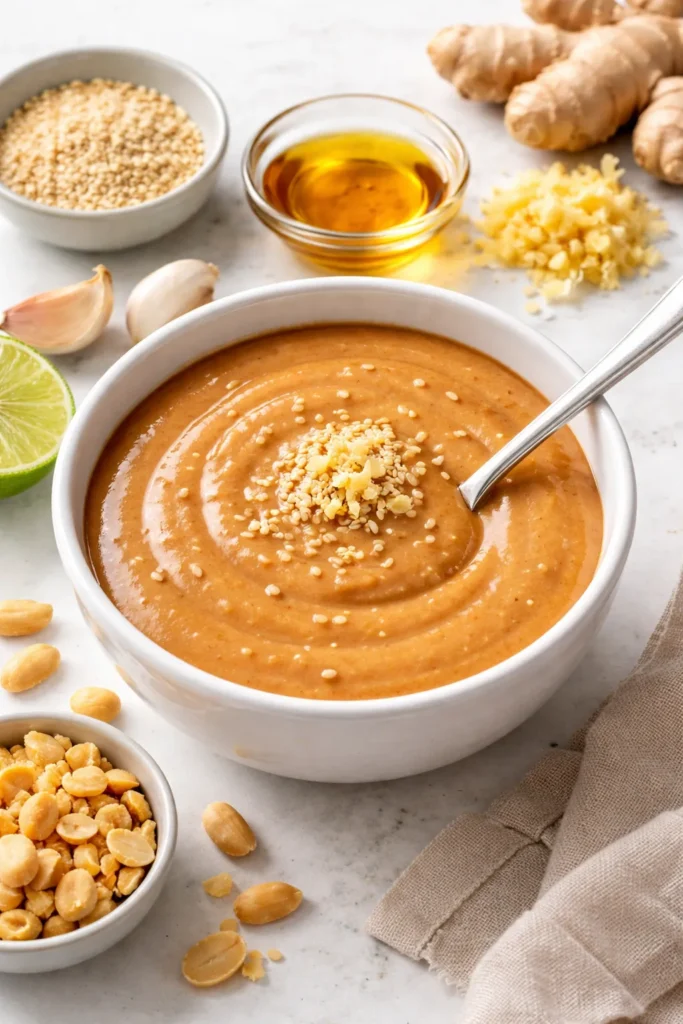
This is the baseline — the version that most people picture when someone says “peanut sauce.” It’s built around toasted sesame oil and fresh ginger, which give it that characteristic nutty warmth and bright kick. It’s drizzleable enough for grain bowls and thick enough to work as a wrap spread.
Yield: About 1 cup (serves 4) | Prep Time: 5 minutes | Total Time: 5 minutes | Difficulty: Beginner — everything whisks together in one bowl with no special equipment.
Ingredients:
- ½ cup natural creamy peanut butter, room temperature
- 2 tablespoons low-sodium tamari or soy sauce
- 2 tablespoons rice vinegar
- 1 tablespoon toasted sesame oil
- 1 tablespoon fresh lime juice
- 1 teaspoon maple syrup
- 1 teaspoon fresh ginger, finely grated (about a ½-inch knob)
- 1 small clove garlic, finely grated
- 4–6 tablespoons warm water, added gradually
Instructions:
- Add the peanut butter, tamari, rice vinegar, sesame oil, lime juice, maple syrup, grated ginger, and garlic to a medium mixing bowl.
- Whisk vigorously until the mixture comes together into a thick, smooth paste. It will look chunky at first — keep whisking and it will smooth out within 30–45 seconds.
- Add warm water one tablespoon at a time, whisking between each addition, until the sauce reaches a pourable, drizzleable consistency. For a thicker wrap spread, stop at 3–4 tablespoons. For a bowl drizzle, continue to 5–6 tablespoons.
- Taste and adjust: add another splash of tamari for more salt, more lime juice for brightness, or a pinch more ginger for kick.
Where It Works Best
This sauce is particularly good over cold soba noodle bowls, rice bowls with edamame and shredded carrots, and any wrap that includes cucumber and fresh herbs. The sesame oil note pairs naturally with both tofu and chicken.
Make It Your Own
- Swap toasted sesame oil for a neutral oil if you want the peanut flavor front and center
- Add ½ teaspoon of miso paste for an extra layer of umami
- Use almond butter in place of peanut butter for a slightly lighter result
2. Thai Coconut Peanut Sauce
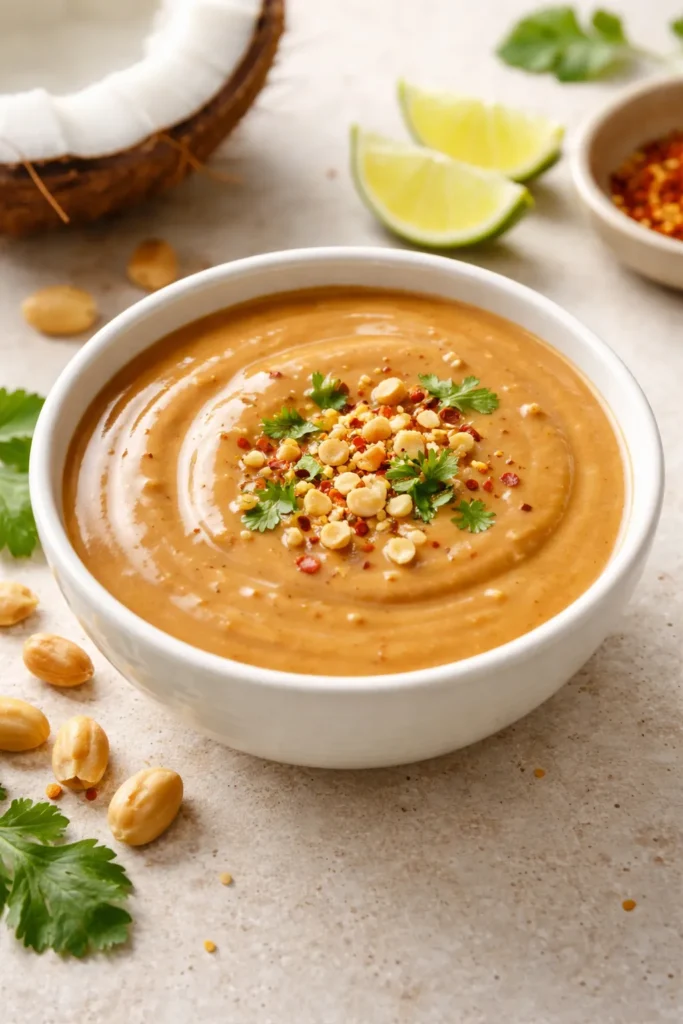
This is the one that tastes like it came from a restaurant. Coconut milk replaces water as the thinning liquid, which takes the texture from simply creamy to velvety. Fish sauce adds an umami depth that’s hard to replicate with soy sauce alone, though it’s optional if you want to keep things vegan.
Yield: About 1¼ cups (serves 4–5) | Prep Time: 5 minutes | Total Time: 5 minutes | Difficulty: Beginner — blending produces the smoothest result, but whisking works too.
Ingredients:
- ½ cup natural creamy peanut butter
- ½ cup canned unsweetened coconut milk (full-fat for the best texture)
- 2 cloves garlic, roughly chopped
- 1 teaspoon fresh ginger, grated
- 1 tablespoon low-sodium soy sauce
- 2 tablespoons fresh lime juice
- 2 teaspoons fish sauce (optional — omit for vegan)
- 1½ tablespoons brown sugar or honey
- Water as needed to adjust consistency
Instructions:
- Combine the peanut butter, coconut milk, garlic, ginger, soy sauce, lime juice, fish sauce (if using), and brown sugar in a blender or food processor.
- Blend on high for 30–45 seconds until completely smooth. Scrape down the sides and blend again for another 15 seconds.
- Check the consistency — it should pour easily off a spoon. If it’s thicker than you’d like, add water one tablespoon at a time and pulse to combine.
- Taste carefully. The fish sauce adds significant salt, so taste before adding any extra soy sauce. Adjust sweetness with a little more brown sugar if needed, or add more lime juice for brightness.
The Coconut Milk Difference
Full-fat canned coconut milk is meaningfully different from the carton kind here. The higher fat content emulsifies with the peanut butter to create a sauce that’s genuinely rich and smooth rather than thin and watery. Don’t substitute the carton version if you can help it.
Best Bowl and Wrap Pairings
- Chicken satay-style wrap with shredded cabbage and fresh cilantro
- Rice bowls with roasted sweet potato, edamame, and pickled red onion
- Spring roll bowls with rice noodles, cucumber, and shredded carrot
3. Spicy Sriracha Peanut Sauce
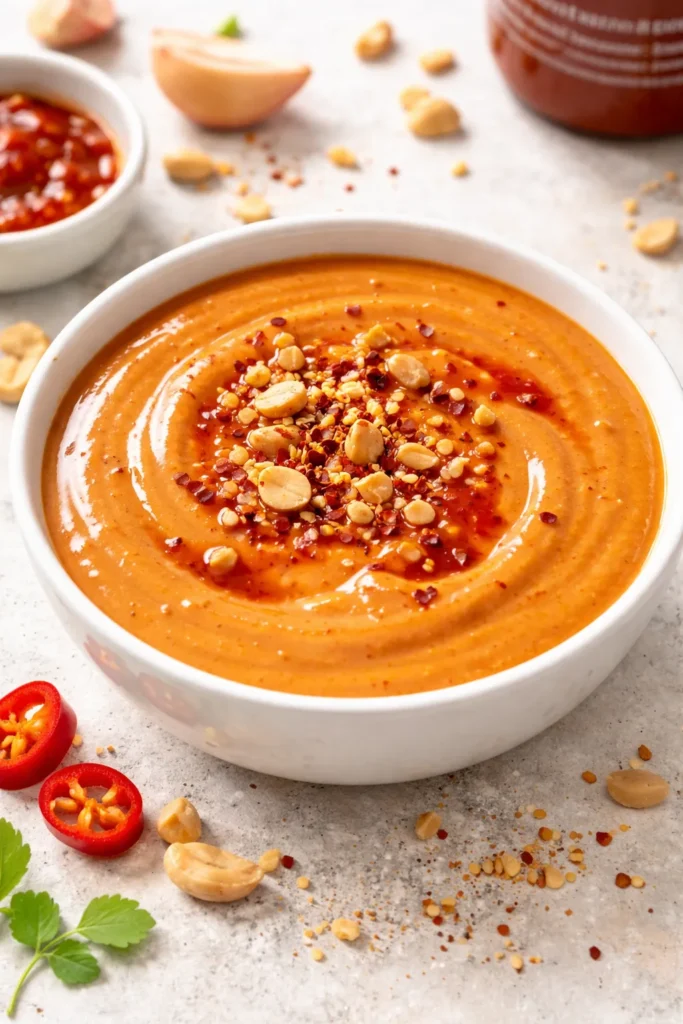
This version is built for people who want heat that actually registers. It uses a genuinely generous pour of sriracha — not a polite teaspoon — along with sambal oelek for an additional layer of chili complexity. The maple syrup is there to keep it from tipping into aggressive territory.
Yield: About 1 cup (serves 4) | Prep Time: 5 minutes | Total Time: 5 minutes | Difficulty: Beginner — no equipment needed beyond a bowl and whisk.
Ingredients:
- ½ cup natural creamy peanut butter
- 2 tablespoons low-sodium tamari
- 1 tablespoon rice vinegar
- 1 tablespoon fresh lime juice
- 2 tablespoons sriracha (reduce to 1 tablespoon for moderate heat)
- 1 tablespoon sambal oelek
- 1½ teaspoons maple syrup
- 1 teaspoon toasted sesame oil
- 4–5 tablespoons warm water
Instructions:
- Whisk together the peanut butter, tamari, rice vinegar, lime juice, sriracha, sambal oelek, maple syrup, and sesame oil in a medium bowl until smooth and well combined.
- Add warm water one tablespoon at a time, whisking after each addition, until the sauce is thin enough to drizzle freely.
- Taste the heat level. This sauce intensifies slightly as it sits, so if it seems borderline hot now, it will be spicier in 10 minutes. Adjust accordingly.
- Stir in an extra half-teaspoon of maple syrup if the heat needs balancing.
Pairing With Spicy Bowls
Spicy peanut sauce pairs especially well with cooling ingredients — sliced cucumber, shredded iceberg lettuce, and a handful of fresh mint do a lot to balance the heat. Think of it as a counterweight: the hotter the sauce, the more cooling the bowl components should be.
A Note on Chili Paste Varieties
Sriracha and sambal oelek behave differently. Sriracha is smoother, slightly sweet, and more tomatoey. Sambal oelek is chunkier, rawer in flavor, and packs more direct heat per tablespoon. Using both creates a layered chili flavor rather than just raw heat.
4. Lime-Forward Vietnamese-Style Peanut Sauce
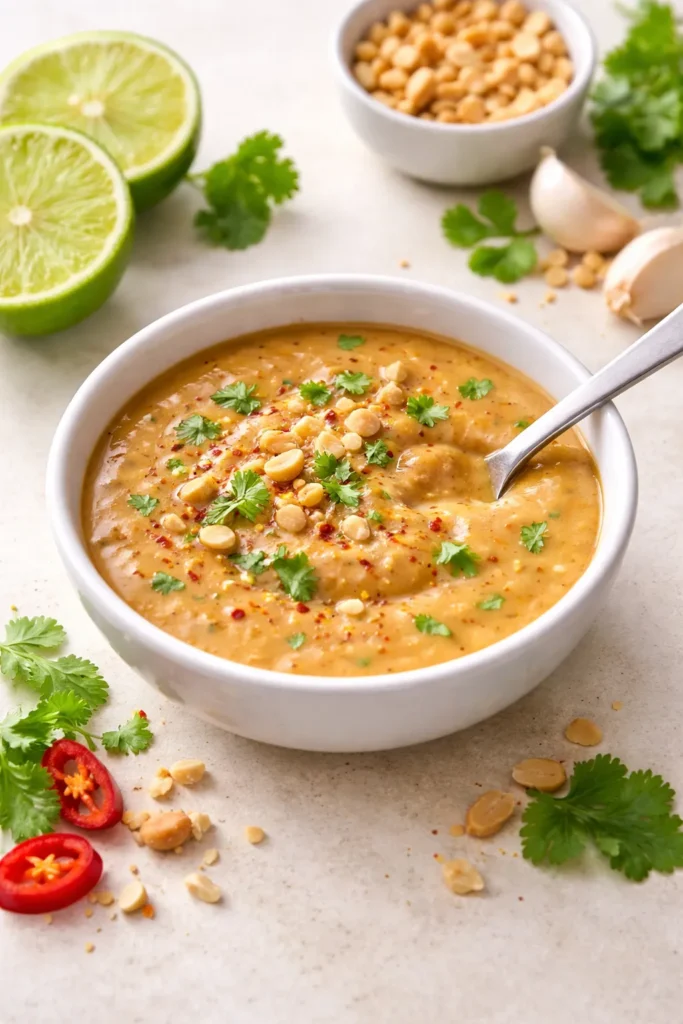
Traditional Vietnamese peanut sauce — the kind served alongside fresh spring rolls (gỏi cuốn) — is lighter and brighter than its Thai counterpart. It relies heavily on lime juice and skips the sesame oil entirely, letting the peanut flavor stay clean and unadorned. Hoisin sauce often makes an appearance, adding a sweet-savory complexity that’s distinct from maple syrup.
Yield: About ¾ cup (serves 3–4) | Prep Time: 5 minutes | Total Time: 5 minutes | Difficulty: Beginner — straightforward whisking, no blender required.
Ingredients:
- ⅓ cup natural creamy peanut butter
- 2 tablespoons hoisin sauce
- 3 tablespoons fresh lime juice
- 1 tablespoon low-sodium soy sauce or tamari
- 1 teaspoon rice vinegar
- 1 small clove garlic, finely grated
- ¼ teaspoon red pepper flakes (optional)
- 3–5 tablespoons warm water
- Crushed roasted peanuts, for garnish
Instructions:
- Combine the peanut butter, hoisin sauce, lime juice, soy sauce, rice vinegar, and garlic in a small bowl.
- Whisk until smooth — the hoisin will integrate more slowly than the other ingredients, so give it a full minute of whisking.
- Add warm water one tablespoon at a time until the sauce is thin and pourable. This style is meant to be lighter than the Thai version, so don’t be afraid to add more water.
- Stir in red pepper flakes if using. Taste and adjust — this sauce often benefits from an extra squeeze of lime at the end.
- Serve with crushed roasted peanuts scattered over the top for texture.
What Makes This Different
The hoisin sauce is the key distinguishing ingredient. It adds a fermented, slightly smoky sweetness that maple syrup or honey doesn’t replicate. The high lime juice ratio keeps the sauce from feeling heavy, which is why it works so well with fresh, raw vegetables rather than roasted ones.
Best With
Fresh spring roll bowls (rice noodles, shrimp or tofu, cucumber, mint, bean sprouts), lettuce wraps, and any build that leans toward raw vegetables over cooked ones.
5. Almond Butter Peanut Sauce
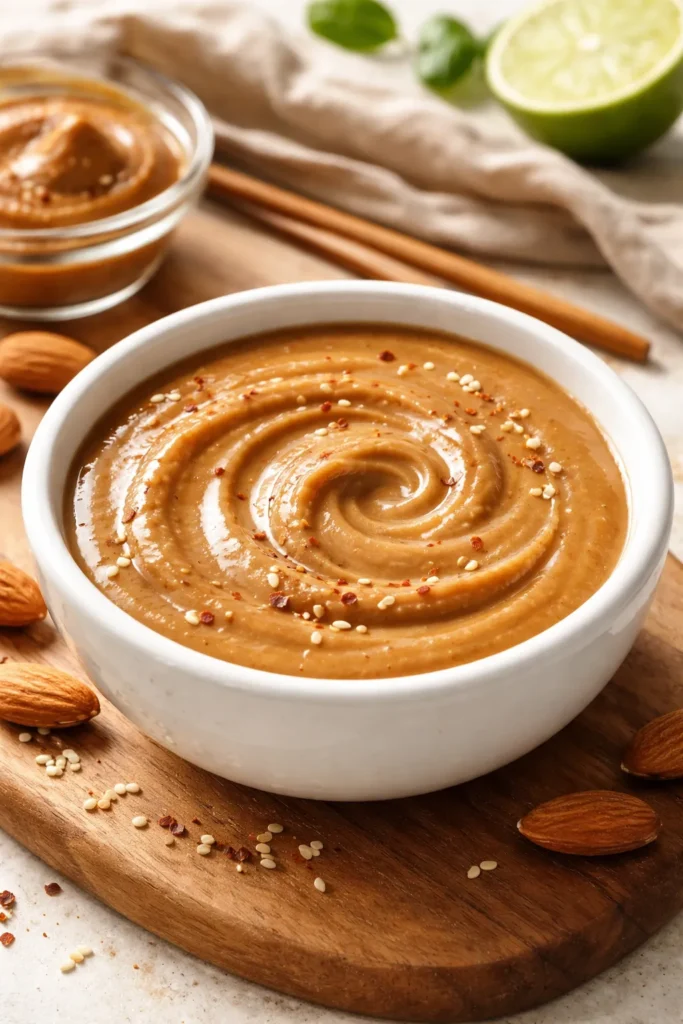
Not everyone can eat peanuts — and even those who can sometimes want something a little different. Almond butter brings a milder, slightly sweeter nuttiness compared to peanut butter, and it produces a sauce with a noticeably cleaner flavor. It’s less assertive, which actually makes it a better match for delicate proteins like salmon or white fish.
Yield: About 1 cup (serves 4) | Prep Time: 5 minutes | Total Time: 5 minutes | Difficulty: Beginner — works with a simple whisk.
Ingredients:
- ½ cup natural creamy almond butter (no added sugar or oil)
- 2 tablespoons low-sodium tamari
- 1½ tablespoons rice vinegar
- 1 tablespoon fresh lime juice
- 1 tablespoon maple syrup or honey
- 1 teaspoon toasted sesame oil
- 1 teaspoon fresh ginger, grated
- 1 small clove garlic, grated
- ½ teaspoon sriracha (or more to taste)
- 4–6 tablespoons warm water
Instructions:
- Add all ingredients except the water to a medium mixing bowl.
- Whisk until the almond butter fully incorporates — natural almond butter can be slightly thicker than peanut butter at room temperature, so give it an extra 30 seconds of whisking. If your almond butter has been refrigerated, bring it to room temperature first or the sauce will be very difficult to whisk smooth.
- Add warm water gradually, one tablespoon at a time, until the consistency is pourable and smooth.
- Taste and adjust. Almond butter is less salty than peanut butter, so you may want an extra splash of tamari. The sweetness often needs a touch more maple syrup to balance.
Cashew Butter Variation
Cashew butter works just as well here and produces an even creamier, slightly richer result. It’s a great option if you want to eliminate the slight bitterness that almond butter can occasionally have.
The Flavor Difference in Practice
Where peanut butter sauce has a bold, assertive nuttiness that can stand up to strong flavors, almond butter sauce stays more neutral. That subtlety works well in bowls where the other components — roasted vegetables, herbs, pickled elements — are doing the heavy lifting.
6. Garlic-Forward Savory Peanut Sauce
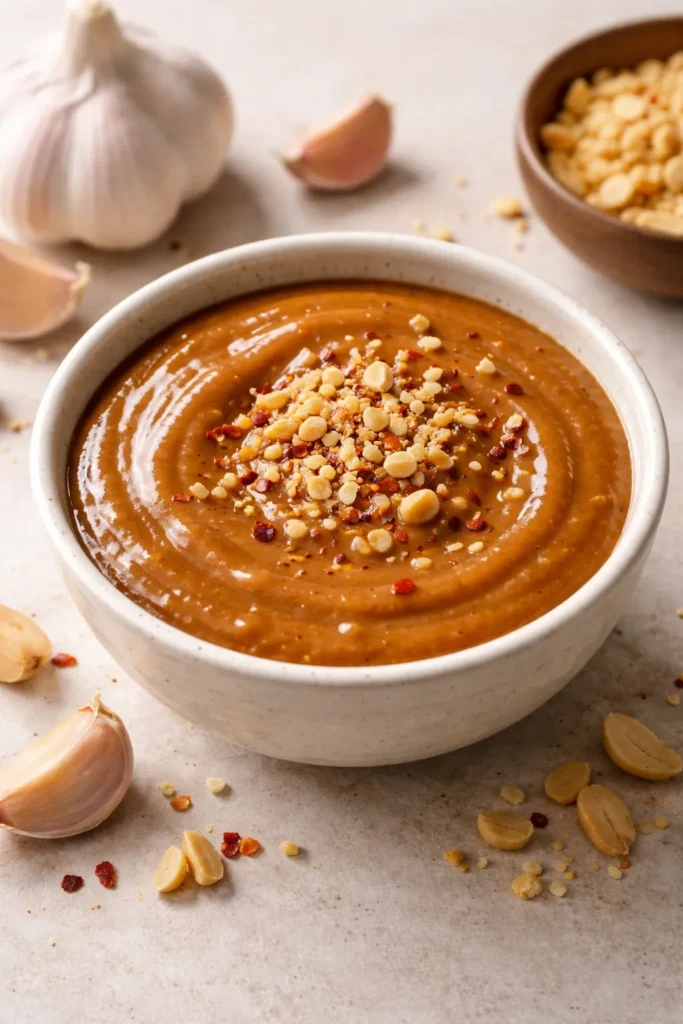
Some peanut sauces are sweet-forward. This one isn’t. Built around three full cloves of garlic and a notably restrained sweetener, this version skews deeply savory and is particularly suited to heartier bowls — grain bowls with roasted broccoli or Brussels sprouts, wraps loaded with caramelized onion and sautéed mushrooms, or noodle bowls where the sauce needs to compete with bold toppings.
Yield: About 1 cup (serves 4) | Prep Time: 5 minutes | Total Time: 5 minutes | Difficulty: Beginner — a blender is recommended for fully smooth garlic incorporation.
Ingredients:
- ½ cup natural creamy peanut butter
- 3 cloves garlic, roughly chopped
- 2 tablespoons low-sodium soy sauce or tamari
- 1½ tablespoons rice vinegar
- 1 tablespoon fresh lime juice
- 1 teaspoon maple syrup (just enough to balance — not more)
- 1 tablespoon toasted sesame oil
- ½ teaspoon red pepper flakes
- ¼ teaspoon ground black pepper
- 4–5 tablespoons warm water
Instructions:
- Add the peanut butter, garlic, soy sauce, rice vinegar, lime juice, maple syrup, sesame oil, red pepper flakes, and black pepper to a small blender or food processor.
- Blend until completely smooth, about 30–45 seconds. The garlic needs to be fully pulverized — a whisk alone won’t break it down finely enough for a smooth sauce. If you don’t have a blender, use a garlic press or microplane zester to grate the garlic before whisking.
- With the blender running on low, add warm water slowly until the sauce reaches a pourable consistency.
- Taste. This sauce can feel intense — a pinch more maple syrup softens it if needed, but resist adding too much. The savory, slightly sharp edge is the point.
Why So Much Garlic?
Three cloves sounds like a lot, and raw garlic is pungent. But blending disperses it evenly throughout the sauce and softens the sharpest edges of its bite. The result is deeply savory rather than aggressively garlicky. If you’re concerned, start with two cloves and taste before adding the third.
7. Sweet Maple-Miso Peanut Sauce
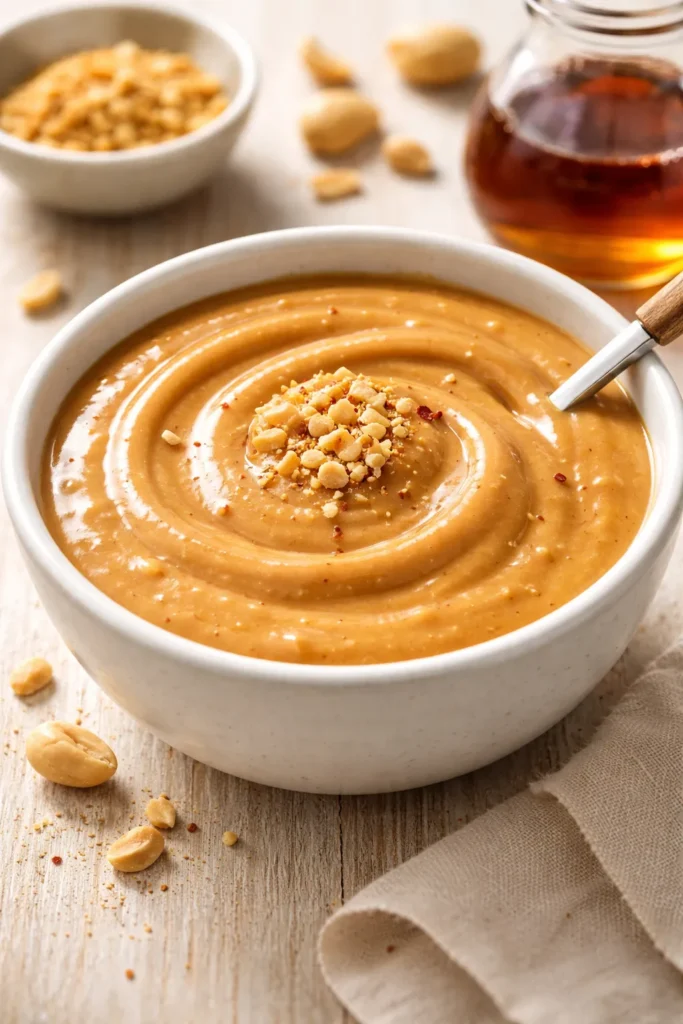
This is the most unexpected sauce in the lineup, and arguably the most complex. White miso paste brings a fermented, savory depth that you can’t quite put your finger on — most people just know the sauce tastes “more interesting” than a standard version without knowing why. Paired with a generous pour of maple syrup, it creates a sweet-savory balance that works particularly well on grain bowls with roasted root vegetables.
Yield: About 1 cup (serves 4) | Prep Time: 5 minutes | Total Time: 5 minutes | Difficulty: Beginner — whisk together in one bowl.
Ingredients:
- ½ cup natural creamy peanut butter
- 1½ tablespoons white miso paste
- 1½ tablespoons maple syrup
- 1 tablespoon rice vinegar
- 1 tablespoon low-sodium tamari
- 1 teaspoon toasted sesame oil
- 1 teaspoon fresh ginger, grated
- ½ teaspoon sriracha (optional)
- 4–6 tablespoons warm water
Instructions:
- Add the peanut butter and miso paste to a medium bowl. Miso paste can be stubborn to incorporate — use the back of a spoon to press and smear it into the peanut butter before switching to a whisk. This prevents lumps of miso floating in the finished sauce.
- Add the maple syrup, rice vinegar, tamari, sesame oil, ginger, and sriracha (if using). Whisk until everything is smooth and well combined.
- Add warm water gradually until the sauce reaches your desired consistency. This sauce tends to be slightly thicker than others because miso adds body — expect to use the full 6 tablespoons for a drizzleable consistency.
- Taste carefully. Miso varies significantly in saltiness between brands. You may need less tamari than the recipe calls for — add it gradually and taste as you go.
Choosing Your Miso
White miso (shiro miso) is the mildest option and the right choice here — it adds sweetness and light umami without overpowering the peanut base. Red miso is more fermented and assertive; it can work but may clash with the maple syrup. Yellow miso falls in between and is a decent middle-ground substitute.
What to Serve It On
Roasted sweet potato bowls, grain bowls with farro or brown rice, and wraps filled with miso-glazed tofu or tempeh. The miso-on-miso pairing sounds redundant but actually creates a beautifully coherent flavor through the whole dish.
8. Creamy Coconut-Lime Peanut Sauce with Chili Oil
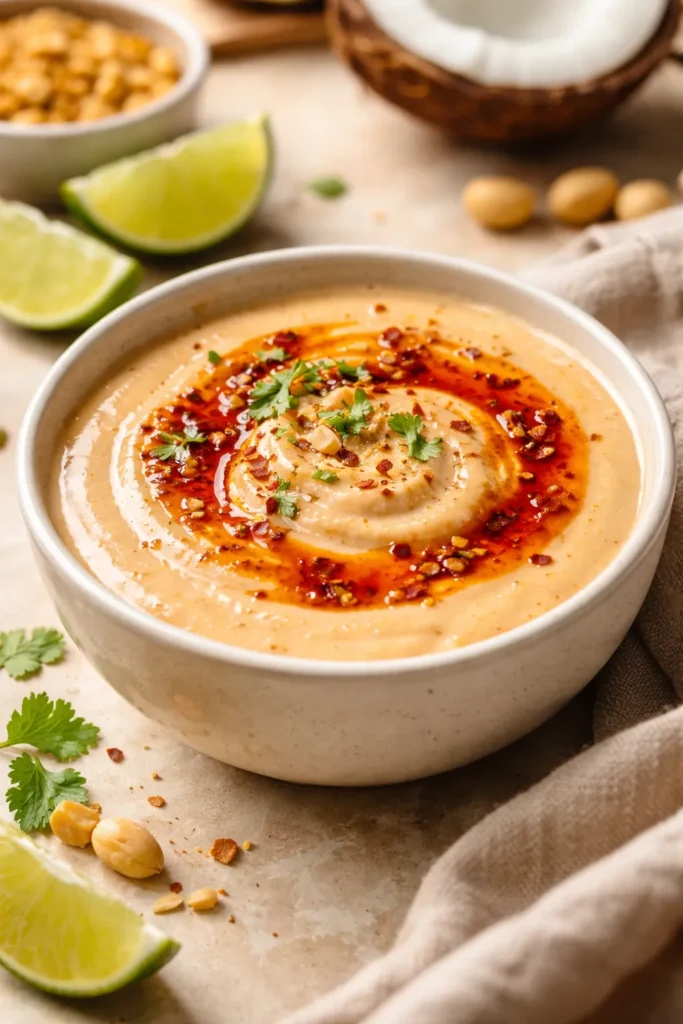
The final recipe is the richest of the eight. Coconut milk brings creaminess; lime juice keeps it bright; chili oil adds heat that blooms slowly rather than hitting immediately. This is the sauce for special occasions — when you’re making a proper noodle bowl or a wrap you actually want to photograph. It takes five minutes but tastes like it took longer.
Yield: About 1¼ cups (serves 4–5) | Prep Time: 5 minutes | Total Time: 5 minutes | Difficulty: Beginner — whisk together in one bowl, or blend for an even smoother result.
Ingredients:
- ½ cup natural creamy peanut butter
- ⅓ cup canned unsweetened full-fat coconut milk
- 3 tablespoons fresh lime juice (from about 2 limes)
- 1 tablespoon low-sodium tamari
- 1 teaspoon toasted sesame oil
- 1 tablespoon maple syrup or honey
- 1 teaspoon fresh ginger, finely grated
- 1 small clove garlic, finely grated
- 1–2 teaspoons chili oil (adjust to your heat tolerance)
- Pinch of flaky sea salt, to finish
- Water as needed to adjust consistency
Instructions:
- Warm the peanut butter slightly — 15 seconds in the microwave is enough. This makes it significantly easier to whisk smooth with the coconut milk, which can be cool from the can.
- Add the peanut butter, coconut milk, lime juice, tamari, sesame oil, maple syrup, ginger, and garlic to a mixing bowl. Whisk firmly for about 60 seconds until the sauce is smooth and cohesive.
- Add the chili oil starting with 1 teaspoon. Taste, then add more if desired. Chili oil varies enormously in heat level between brands — what’s mild in one brand is genuinely spicy in another. Start conservative.
- Add water one tablespoon at a time if the sauce needs thinning. The coconut milk already thins it considerably compared to water-based versions.
- Finish with a pinch of flaky sea salt and taste one final time. The salt added at the end brightens every other flavor in the sauce.
Chili Oil vs. Sriracha — The Real Difference
Chili oil provides heat that builds slowly and then lingers. Sriracha hits fast and sharp. For this particular sauce, the slow build of chili oil suits the rich coconut base better — it doesn’t fight the creaminess, it works with it. If you don’t have chili oil, a combination of sesame oil and red pepper flakes gets you partway there.
How to Thin, Thicken, and Adjust Any Peanut Sauce
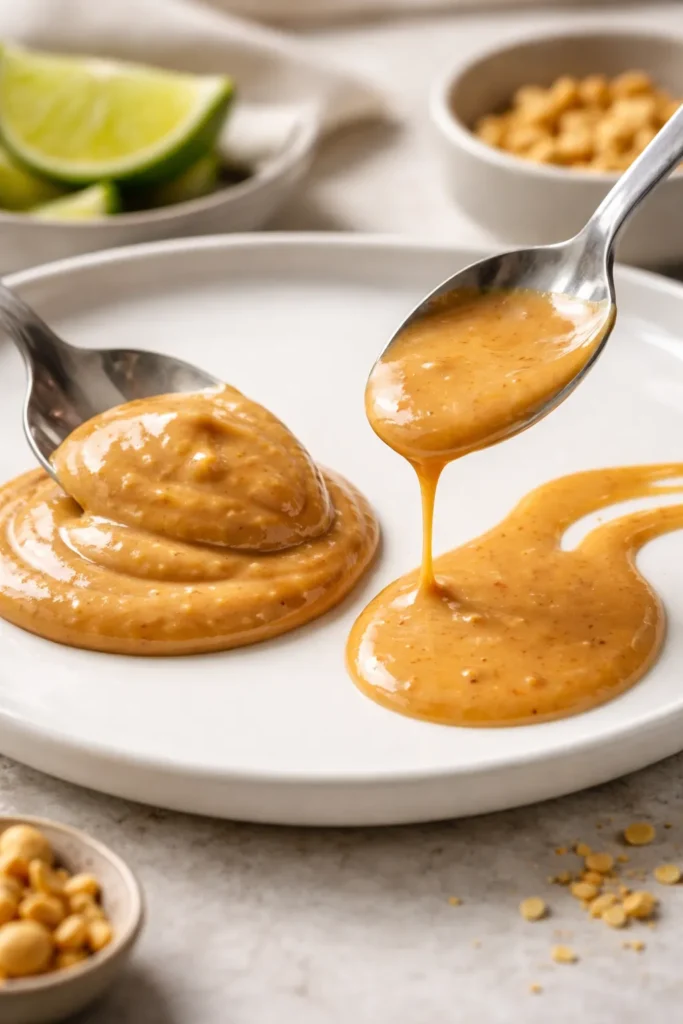
One of the most common frustrations with peanut sauce is getting the consistency right. The good news: it’s easy to fix in either direction.
Too thick? Add liquid one tablespoon at a time — warm water is the most neutral choice. Coconut milk adds richness. A splash of extra lime juice or rice vinegar thins it and adds brightness simultaneously.
Too thin? Stir in more peanut butter, a tablespoon at a time. The sauce will thicken almost immediately. Alternatively, let it sit for five minutes — peanut sauce naturally thickens as it rests and as the peanut butter continues to absorb the liquid.
Too salty? Add more peanut butter, a squeeze of lime, and a touch more sweetener. These three together dilute and mask saltiness without making the sauce taste watered down. Avoid adding plain water when the sauce is too salty — it just makes it salty and thin.
Too bland? This usually means the acid is too low. Add lime juice or rice vinegar a teaspoon at a time and taste after each addition. Acid brightens peanut sauce dramatically — it’s the single most impactful adjustment you can make.
Peanut butter temperature matters. Cold peanut butter straight from the fridge resists whisking and can produce a grainy, lumpy sauce. Room temperature peanut butter whisks smooth in under a minute. If you’re in a hurry, 10–15 seconds in the microwave makes a real difference.
Smart Storage Tips That Keep Peanut Sauce Fresh
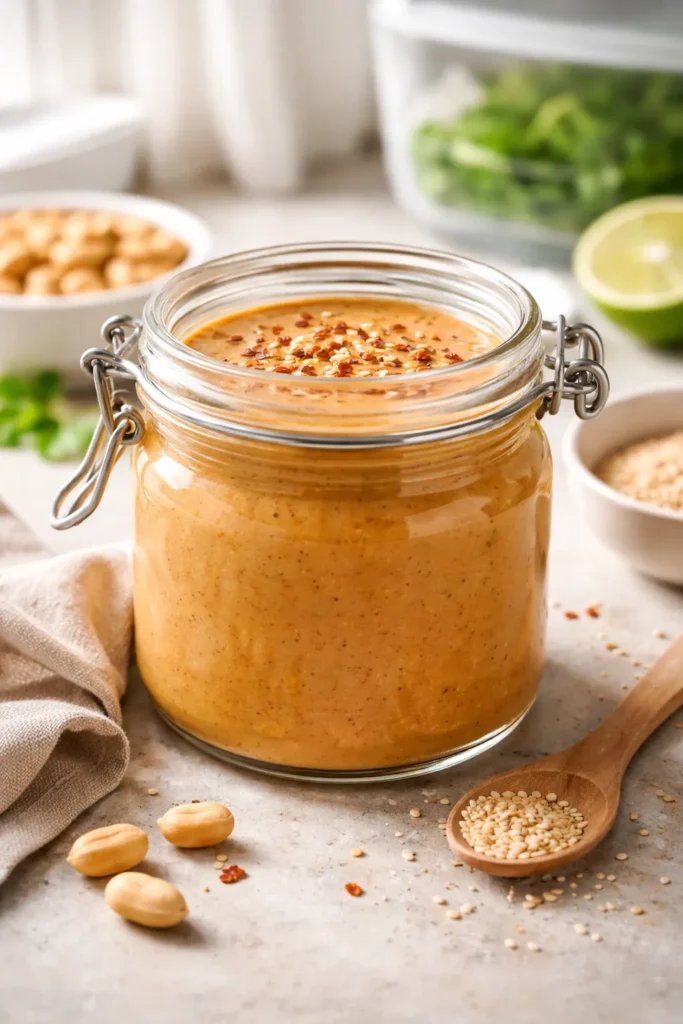
All eight of these sauces store well in the refrigerator for up to 5–7 days in an airtight container. The coconut milk-based versions (recipes 2 and 8) are best used within 5 days, since coconut milk can begin to separate and develop off-flavors faster than water-based sauces.
Peanut sauce always thickens in the fridge. Don’t be alarmed when you open the container and find what looks like peanut butter paste — that’s completely normal. Let it sit at room temperature for 20–30 minutes before serving, or thin it back down with a tablespoon of warm water and a quick stir.
For freezing: Most peanut sauces freeze reasonably well for up to 2 months. Store in small portions — ice cube trays work particularly well for this — so you can defrost only what you need. Thaw in the refrigerator overnight, then stir or blend to re-emulsify before using. The coconut milk versions may separate more on thawing; a quick blitz in the blender fixes this.
Meal prep strategy: Make a double batch of whichever sauce you use most, store it in a mason jar in the fridge, and your weeknight bowl or wrap assembly becomes almost instant. The sauce genuinely improves after 24 hours in the fridge as the ginger, garlic, and sesame flavors meld together.
Building the Ideal Bowl or Wrap Around These Sauces
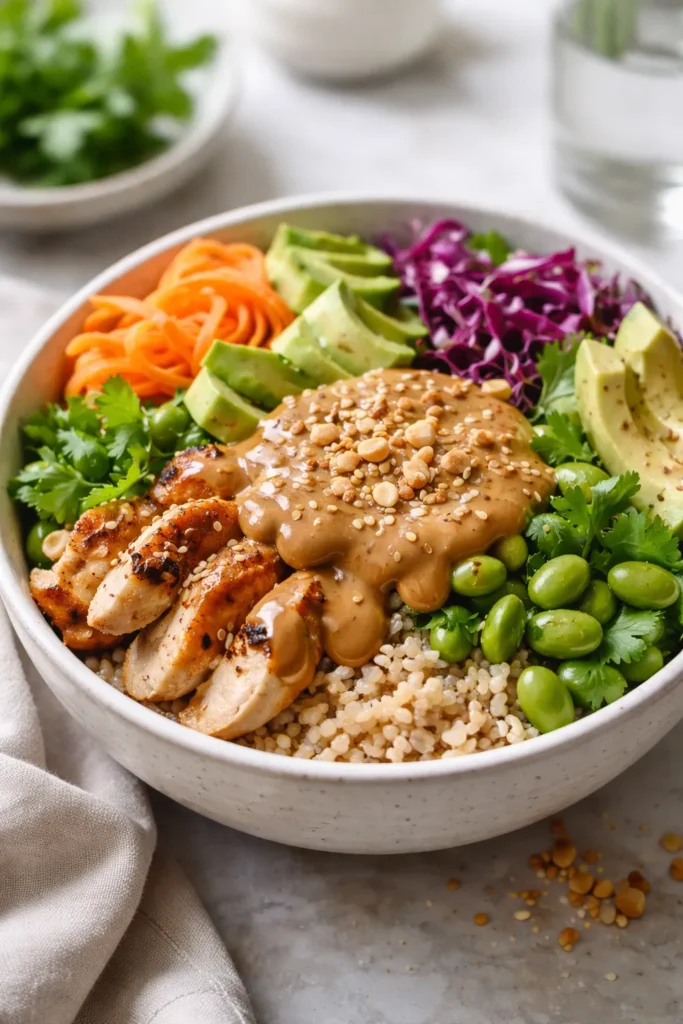
The sauce is only one part of the equation. Here’s how to think about what goes around it:
Matching Sauce Weight to Bowl Components
Lighter, more acidic sauces (the Vietnamese-style lime version, the classic sesame-ginger) pair best with raw or lightly cooked vegetables — thin rice noodles, shredded cabbage, cucumber, bean sprouts. These components don’t need the richness and would actually feel heavy under a coconut milk-based sauce.
Richer sauces (the Thai coconut version, the coconut-lime with chili oil) can handle heartier components — roasted root vegetables, caramelized proteins, thicker grains like farro or brown rice. The extra body in the sauce stands up to the deeper flavors without being lost.
Texture Is the Secret Ingredient
The best bowls and wraps always have textural contrast. A creamy peanut sauce calls for something crunchy — crushed roasted peanuts, toasted sesame seeds, thinly sliced radish, crispy shallots, or shredded raw carrot. The crunch cuts through the richness and keeps each bite interesting.
Fresh Herbs Are Non-Negotiable
Fresh cilantro, Thai basil, fresh mint, or a combination of all three do something that no other garnish can: they lift the entire dish. A peanut sauce bowl without fresh herbs tastes good. The same bowl with a generous handful of fresh herbs scattered over the top tastes genuinely great. Don’t skip them.
Final Thoughts
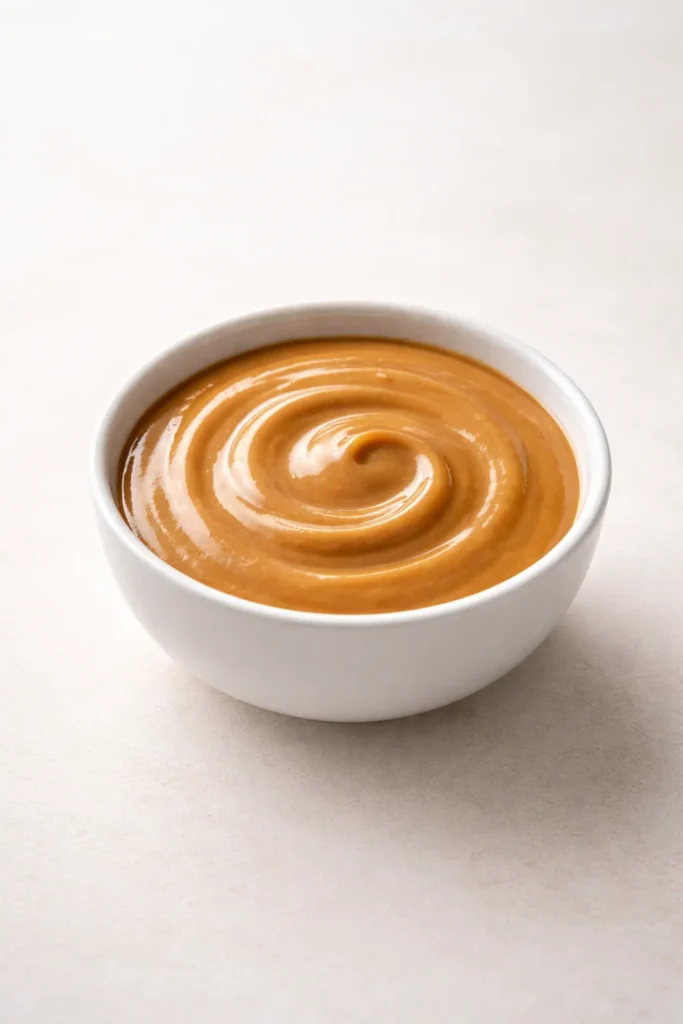
Peanut sauce is one of those things where knowing a few variations opens up your entire weeknight cooking. You’re not locked into one version — you can dial up the heat, lean into coconut milk, push the lime juice further, or add miso for complexity depending on what you’re making and who you’re cooking for.
The most important takeaway across all eight recipes: taste as you go and adjust freely. Peanut butter brands vary in saltiness. Limes vary in juiciness. Sriracha heat levels differ between bottles. No recipe can account for all of those variables, which is why the “taste and adjust” step at the end of each recipe isn’t optional — it’s where you transform a good sauce into your peanut sauce.
Start with the classic sesame-ginger version if you’re new to making peanut sauce from scratch. It’s the most forgiving and the most versatile. Once you’ve made it a few times and have a feel for the ratios, branch out. The maple-miso version and the Thai coconut version are both worth making on the same day, side by side, just to experience how dramatically different the same base ingredient can taste.