There’s a particular kind of hunger that only hits when the temperature drops — not just physical, but emotional. You walk through the door after a cold, gray day and you don’t want something quick. You want something warm, filling, and deeply satisfying. You want your kitchen to smell like something good has been happening in there for a while.
Cold nights have a way of making the right dinner feel almost medicinal. A bowl of rich, slow-simmered chili or a bubbling dish of baked pasta straight from the oven doesn’t just feed you — it resets you. And the best winter dinners share a few things in common: they’re built on bold, layered flavors; they tend to improve the next day as leftovers; and they ask very little of you at the exact moment you have the least to give.
What follows is a collection of 12 cold-weather dinners worth building your weekly routine around. Some cook themselves in a slow cooker while you go about your day. Others are oven-baked and hands-off once assembled. A few come together in under 40 minutes on the stovetop. All of them deliver the kind of comfort that makes you genuinely glad to be inside.
Table of Contents
- Why Winter Cooking Calls for a Different Approach
- Pantry Staples That Make Winter Cooking Easier
- The Equipment That Does Most of the Work
- 1. Slow-Cooker Chicken and Dumplings
- Why Thighs Beat Breasts Here
- Tips for Dumplings That Actually Work
- 2. Texas-Style Pressure Cooker Chili
- Building the Chile Paste
- How It Gets Better as the Week Goes On
- 3. No-Boil Baked Ziti
- Sauce Matters More Than You Think
- Cheese Layering Strategy
- 4. Chicken Pot Pie with Store-Bought Puff Pastry
- Making the Most of Rotisserie Chicken
- Why Leeks Over Onions
- 5. Loaded Baked Potato Soup
- The Sour Cream Rule
- The Topping Bar Approach
- 6. Creamy White Chicken Chili
- The Cream Cheese Trick
- Toppings That Make the Difference
- 7. Sheet-Pan Chicken with Sweet Potatoes and Brussels Sprouts
- Seasoning That Works for Everything on the Pan
- Repurposing Leftovers Across the Week
- 8. Slow-Cooker Pulled Pork
- Building a Week of Meals from One Shoulder
- The Finishing Step Most People Skip
- 9. Chickpea, Coconut, and Cashew Curry
- Why Canned Chickpeas Work Better Here Than Dried
- Serving It Right
- 10. Classic Beef Stew
- Building the Braise
- Adding the Vegetables at the Right Time
- 11. Broccoli Cheddar Soup
- The Texture Balance
- The Move with the Base
- 12. Red Wine Braised Pot Roast
- The Sear Is Not Optional
- Low and Slow vs. Pressure Cooker
- Getting the Most from Winter Leftovers
- Final Thoughts
Why Winter Cooking Calls for a Different Approach
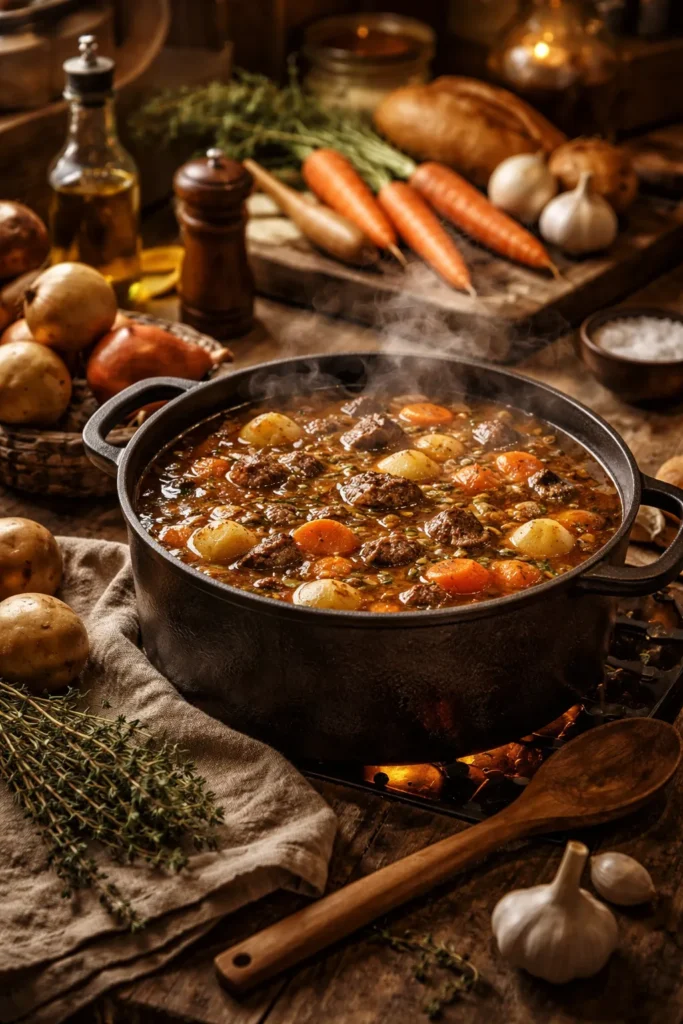
Cold-weather cooking has its own logic. The ingredients shift toward root vegetables, dried beans, canned tomatoes, and tougher cuts of meat that reward slow cooking. The methods lean into braising, roasting, and simmering rather than quick stir-fries or grilling.
One of the smartest moves you can make in the colder months is to cook with the next day in mind. A big pot of chili made on Sunday doesn’t just solve Sunday’s dinner — it solves Monday’s lunch and Wednesday’s leftovers too. Cooking with that mindset removes a huge amount of daily decision fatigue.
Pantry Staples That Make Winter Cooking Easier
A well-stocked winter pantry is the real key to getting dinner on the table without stress. Keep these on hand and most of the recipes below come together with minimal shopping:
- Canned diced tomatoes, crushed tomatoes, and tomato paste
- Dried pasta in at least two shapes (ziti or rigatoni, plus a small pasta like orzo)
- Canned white beans, chickpeas, and black beans
- Dried red chiles and a solid collection of whole spices (cumin, coriander, smoked paprika, cinnamon)
- Low-sodium chicken and beef broth
- Coconut milk (full-fat, not light)
- Frozen peas, corn, and spinach — all frozen at peak ripeness and genuinely useful
The Equipment That Does Most of the Work
You don’t need a fully kitted-out kitchen to pull off these dinners. A heavy Dutch oven, a reliable sheet pan, and either a slow cooker or electric pressure cooker will cover almost every recipe on this list. The Dutch oven in particular is worth the investment — it transitions from stovetop browning to oven braising without blinking.
1. Slow-Cooker Chicken and Dumplings
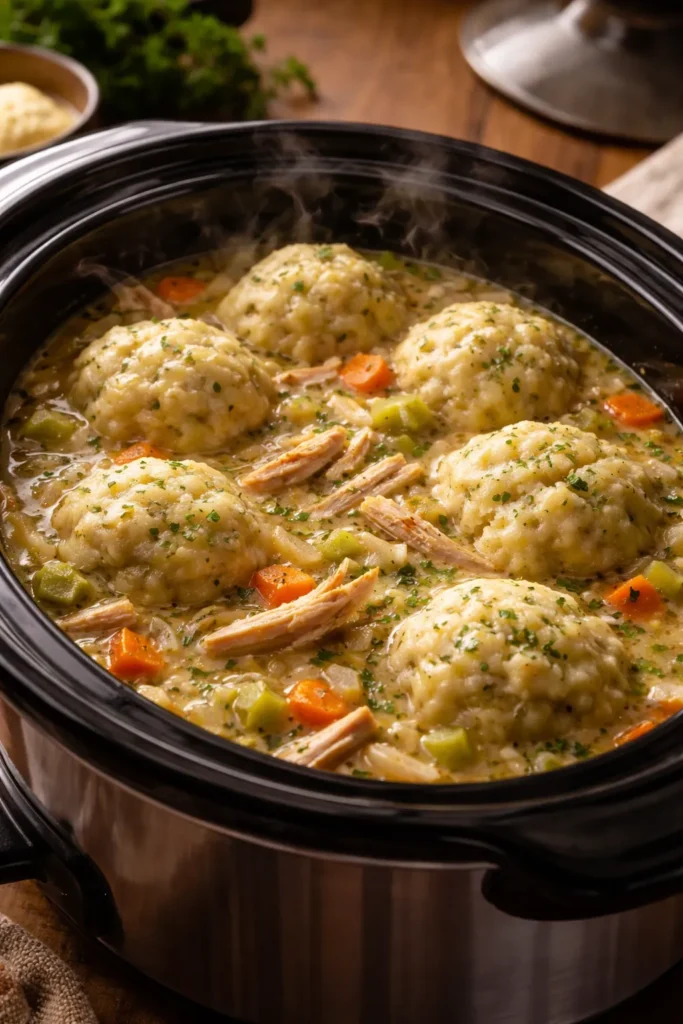
Few dishes carry the kind of nostalgic weight that chicken and dumplings does. It’s one of those meals that feels like it came straight from someone’s grandmother’s kitchen — tender pulled chicken floating in a thick, herb-scented broth, topped with soft, pillowy dumplings that absorb all that flavor as they cook.
The slow cooker version is ideal for busy nights. Chicken thighs, chopped carrots, celery, onion, garlic, and chicken broth go into the pot in the morning. By evening, the meat is fall-apart tender and the broth has developed real depth. Drop spoonfuls of biscuit dough into the hot broth for the last 30 minutes of cooking, cover, and let them steam into dumplings that are light on the inside and just slightly firm on the outside.
Why Thighs Beat Breasts Here
Chicken thighs are non-negotiable for this recipe. Breasts turn dry and stringy after hours of slow cooking, but thighs become progressively more tender and flavorful. The fat in the thigh meat also enriches the broth in a way that no amount of added butter can replicate.
Tips for Dumplings That Actually Work
- Use a cold biscuit mix or cold butter cut into flour — warmth makes fat melt before the dumplings set, which leads to dense, gummy results
- Don’t lift the lid during the last 30 minutes — the steam is what cooks the dumplings through
- Drop them from a tablespoon so they’re roughly uniform in size; uneven dumplings cook unevenly
Worth knowing: A small splash of heavy cream stirred in during the last 10 minutes of cooking makes the broth noticeably richer without making it heavy.
2. Texas-Style Pressure Cooker Chili
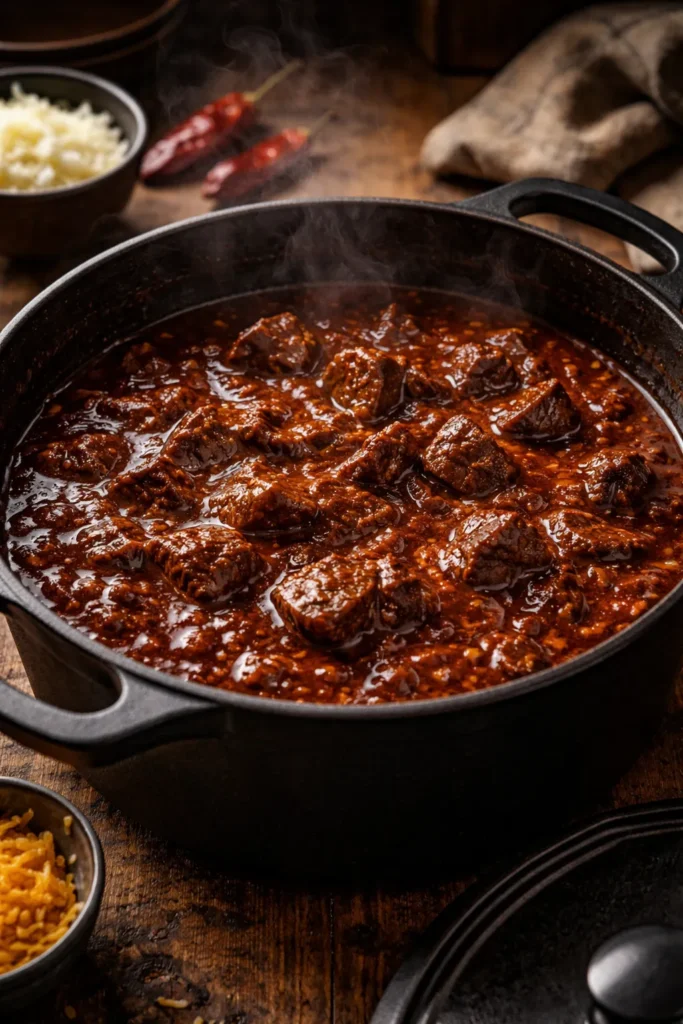
Texas chili is unapologetically beef-forward. There are no beans, no tomatoes — just cubed chuck, dried chiles, and a deeply spiced cooking liquid that reduces into something thick, dark, and extraordinary. The pressure cooker makes this achievable on a weeknight rather than a weekend project.
The process starts with making a paste from rehydrated dried chiles — ancho, guajillo, and pasilla work well together. Sear the beef in batches until it’s deeply browned on all sides (this step matters more than almost anything else for flavor), then deglaze with beef broth and cook under pressure for about 45 minutes. What comes out tastes like it simmered on a back burner all day.
Building the Chile Paste
The paste is where the flavor lives. Toast dried chiles in a dry skillet for 30 to 45 seconds per side until fragrant, then soak them in just-boiled water for 20 minutes. Blend the softened chiles with some of the soaking liquid, garlic, cumin, and a small amount of oregano. The paste freezes well — make a double batch and keep half for next time.
How It Gets Better as the Week Goes On
Chili is one of the rare dishes that genuinely improves with time. The fat redistributes, the spices mellow and integrate, and the texture tightens. Day-two chili reheated in a cast iron skillet until the edges caramelize slightly is arguably better than fresh.
- Serve over rice for a full meal
- Ladle into baked potatoes for loaded chili potato night
- Use as a topping for nachos or corn chips
3. No-Boil Baked Ziti
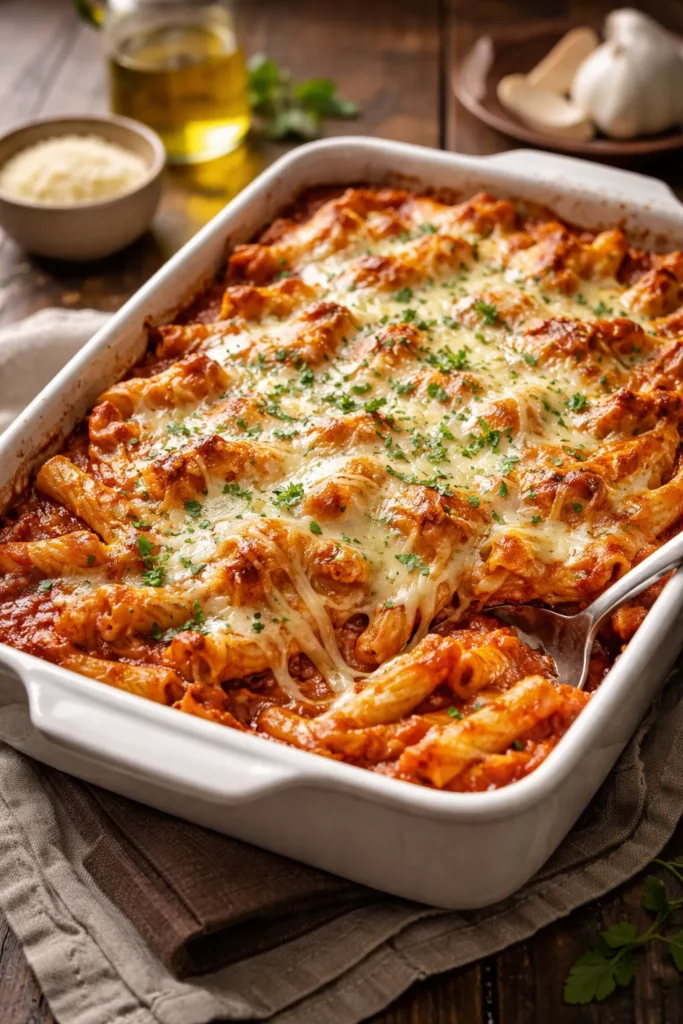
Baked ziti sits in a perfect sweet spot between lasagna and a simple bowl of pasta. It has all the layered, cheesy depth of lasagna, but it comes together in a fraction of the time and requires almost no technique. The no-boil method — where dry pasta gets soaked in cold water rather than boiled — is a genuine game-changer.
Soaking raw ziti for 30 minutes before assembling the dish allows it to absorb moisture gradually. When it bakes in the sauce, it finishes cooking without turning mushy, and you skip the step of boiling and draining an entire pot of water. The pasta ends up with a slightly firmer bite than parboiled pasta, which holds up beautifully under the weight of the sauce and cheese.
Sauce Matters More Than You Think
A thin, watery sauce will produce baked ziti that’s wet and loose. You want a sauce with enough body to coat the pasta and hold its shape when served. If you’re using jarred marinara, reduce it in a saucepan with a little tomato paste for 10 minutes before assembling. That small step concentrates the flavor and thickens the texture.
Cheese Layering Strategy
- Bottom layer: a thin spread of sauce, then the soaked pasta
- Middle layer: dollops of whole-milk ricotta mixed with an egg and fresh basil, plus a handful of shredded mozzarella
- Top layer: more sauce, an aggressive blanket of mozzarella, and a shower of grated Parmesan
Cover tightly with foil for the first 30 minutes of baking, then uncover for the last 15 to let the top blister and brown. Those caramelized cheese edges are non-negotiable.
4. Chicken Pot Pie with Store-Bought Puff Pastry
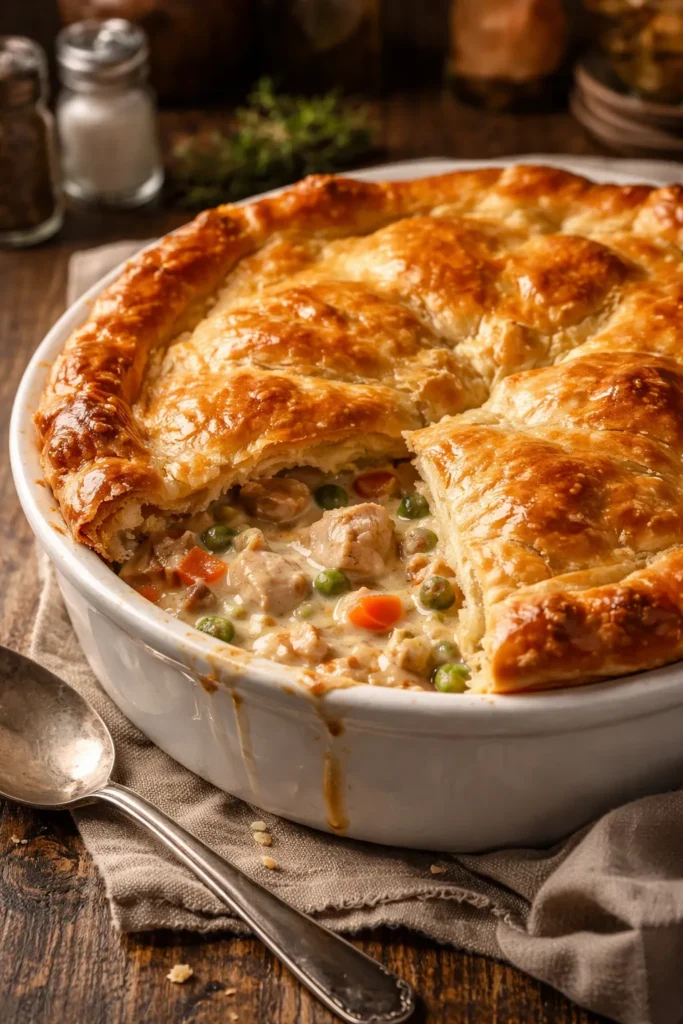
Homemade chicken pot pie has a reputation for being a project — and it can be, if you’re making your own pastry from scratch. But using store-bought puff pastry collapses the effort dramatically without sacrificing the end result. The filling does the real work anyway.
The filling starts with a roux of butter and flour, then builds with chicken broth and whole milk into a thick, creamy sauce. Diced carrots, celery, leeks, and peas go in next, followed by shredded roast chicken. A strip of lemon zest added while the sauce simmers adds a brightness that keeps the filling from feeling heavy. Ladle everything into a baking dish, drape puff pastry over the top, brush with egg wash, and bake at 400°F (200°C) until golden and puffed.
Making the Most of Rotisserie Chicken
A store-bought rotisserie chicken is the ideal protein for pot pie. Shred both breasts and one thigh for a generous filling — the slightly darker thigh meat adds more flavor than breast meat alone. The carcass, meanwhile, can go straight into a pot with water, onion, and a bay leaf to make a quick stock for next week’s soup.
Why Leeks Over Onions
Leeks cook down into something sweeter and more delicate than onions, which suits the gentle flavor of the filling. Make sure to wash them well after slicing — grit tends to hide between the layers.
5. Loaded Baked Potato Soup

Potato soup has no business being as satisfying as it is. It’s humble, inexpensive, and straightforward to make — yet a bowl of it on a cold night hits harder than almost anything else. The key is texture: you want the soup creamy but not gluey, with some potato pieces still intact for contrast.
The method that produces the best texture is ricing (or roughly mashing) only a portion of the cooked potatoes, then folding them back into the broth. An immersion blender turned directly on a pot of potato soup will produce something starchy and gummy every time. Avoid it. Instead, cook diced potatoes in seasoned broth until completely tender, remove about half, rice them through a potato ricer or mash with a fork, and stir them back in. The remaining chunks add body and interest.
The Sour Cream Rule
Sour cream deserves a prominent role here — both stirred into the soup itself and added as a topping. It provides the tanginess that balances the starchy, slightly sweet potato flavor. Add it off the heat so it doesn’t break or curdle.
The Topping Bar Approach
Set out toppings and let people build their own bowls:
- Sharp cheddar, finely grated
- Crispy bacon or pancetta, crumbled
- Sliced scallions or chives
- Extra sour cream
- Crushed kettle chips for crunch (genuinely worth doing)
6. Creamy White Chicken Chili
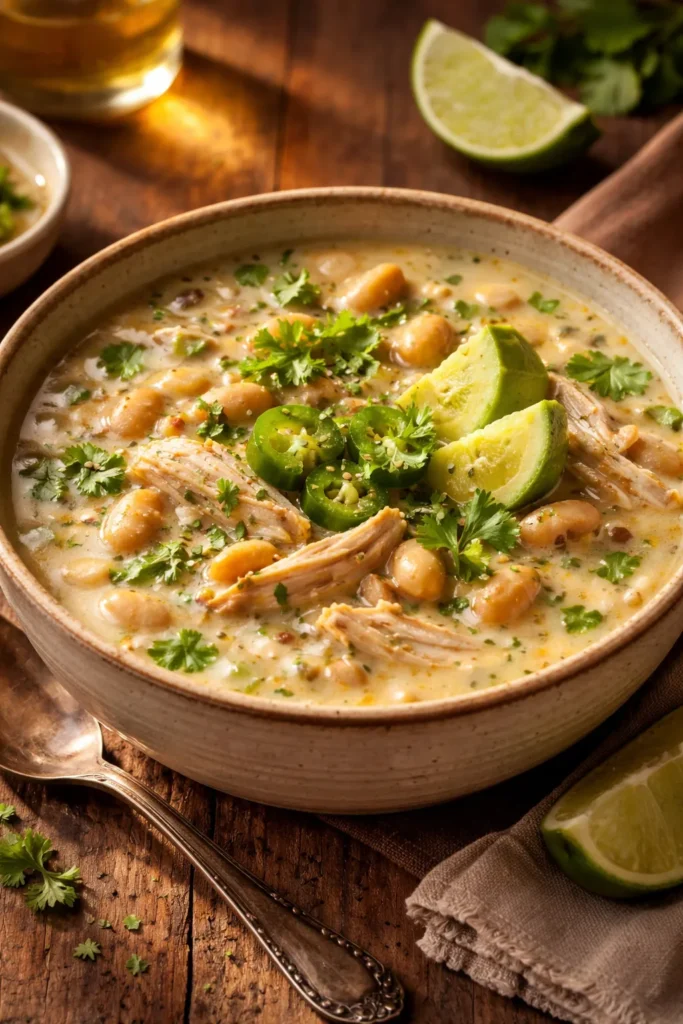
White chicken chili occupies a different flavor territory than red chili. It’s milder, creamier, and relies on white beans and chicken rather than beef and red chiles — but it’s no less satisfying. A good version has a silky broth with a gentle heat, punctuated by the earthiness of cumin, the brightness of lime, and the richness of cream cheese stirred in at the end.
The slow cooker version asks almost nothing of you. Chicken breasts or thighs, canned white beans, green chiles, diced onion, garlic, chicken broth, and a solid hit of cumin go into the pot. Six to eight hours later, shred the chicken directly in the pot, stir in a block of softened cream cheese and a splash of heavy cream, and serve.
The Cream Cheese Trick
Softened cream cheese stirred into the finished chili thickens the broth and adds a richness that sour cream or regular cheese can’t replicate. Cut the block into cubes before adding so it incorporates evenly without clumping.
Toppings That Make the Difference
- Sliced avocado or a spoonful of guacamole
- Pickled jalapeños for acid and heat
- Crushed tortilla chips for texture
- Shredded Monterey Jack melted over the top
Pro tip: A squeeze of fresh lime juice added just before serving (not during cooking) lifts the entire pot.
7. Sheet-Pan Chicken with Sweet Potatoes and Brussels Sprouts
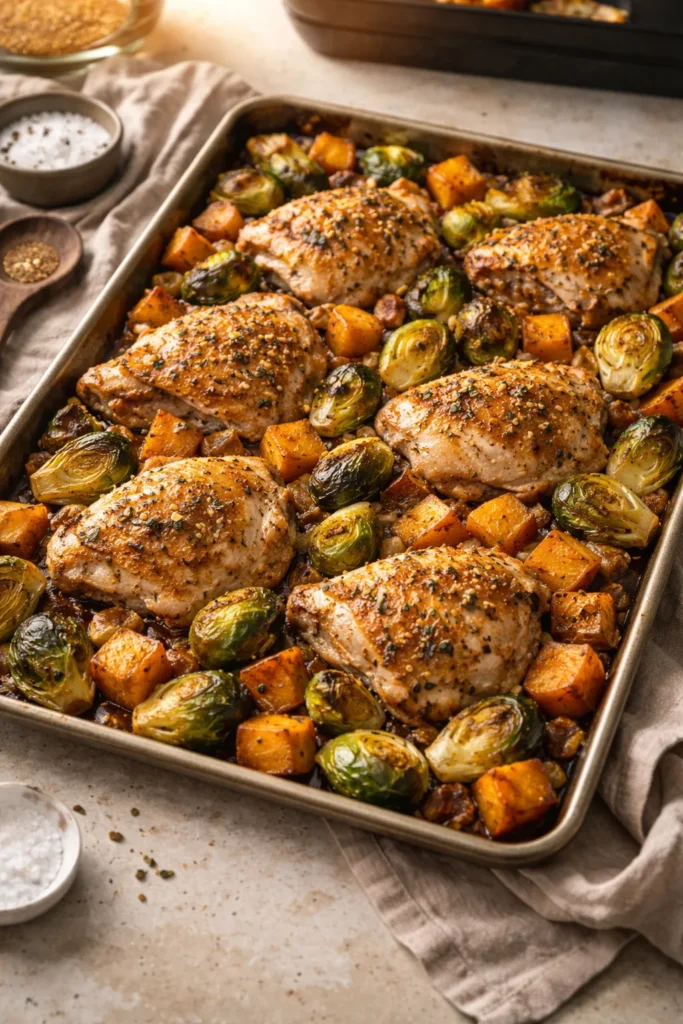
Sheet-pan dinners are the unsung heroes of weeknight cooking. Everything goes on one pan, the oven does the work, and cleanup is minimal. But the difference between a good sheet-pan dinner and a mediocre one comes down to a single detail: staggered cooking times.
Sweet potatoes and Brussels sprouts take longer than chicken thighs at the same temperature. The fix is to start the vegetables first — 15 minutes on a preheated pan before the chicken goes on. That head start lets the vegetables caramelize properly without drying out the meat. A preheated sheet pan also helps the vegetables brown on the bottom rather than steam.
Seasoning That Works for Everything on the Pan
A simple blend of smoked paprika, garlic powder, olive oil, salt, and black pepper works on both the chicken and the vegetables. Add a drizzle of honey over the sweet potatoes halfway through cooking for caramelized edges. A scatter of fresh thyme over everything in the last five minutes adds an herbal note that ties the whole dish together.
Repurposing Leftovers Across the Week
Store the chicken and vegetables separately after the first night:
- Shred leftover chicken into a grain bowl with quinoa and tahini dressing
- Toss leftover Brussels sprouts and sweet potato into a wrap with hummus
- Chop leftover chicken and add to a quick broth for a light soup
8. Slow-Cooker Pulled Pork
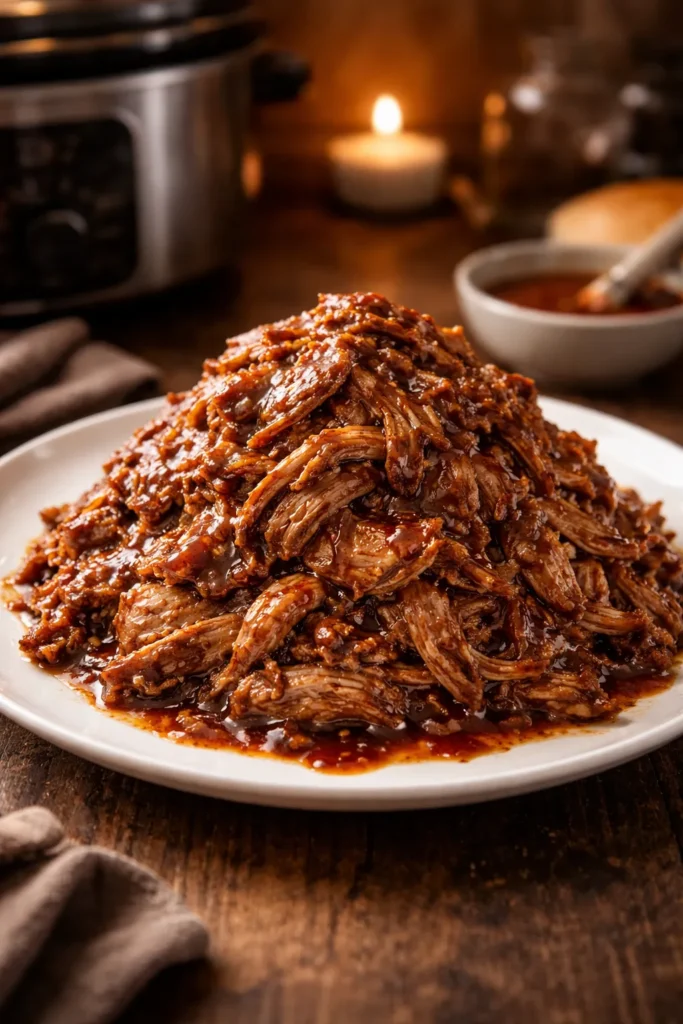
Pulled pork is one of the most versatile cold-weather cooking projects there is. A single pork shoulder — rubbed with smoked paprika, brown sugar, garlic powder, cumin, and black pepper — goes into the slow cooker in the morning. Ten hours later, it falls apart at the touch of a fork and fills the house with a smell that makes everyone wander into the kitchen asking when dinner is ready.
The unexpected flavor booster that shows up in countless pulled pork recipes is a dark, sweet soda — Dr Pepper, root beer, or cola. The sweetness balances the smoke and salt in the rub, and the carbonation breaks down the meat fibers slightly over the long cook. Don’t skip it.
Building a Week of Meals from One Shoulder
A 4-pound pork shoulder produces enough pulled meat to feed 6 to 8 people — or one household across multiple meals:
- Night one: pulled pork sandwiches on toasted brioche buns with coleslaw
- Night two: pulled pork tacos with pickled red onion and cotija
- Night three: pulled pork fried rice or grain bowls
- Freeze remaining portions in 1-cup bags for future use
The Finishing Step Most People Skip
After pulling the pork, spread it in a single layer on a rimmed sheet pan and broil for 3 to 4 minutes until the edges caramelize. This adds a texture contrast that slow cooking alone can’t deliver.
9. Chickpea, Coconut, and Cashew Curry
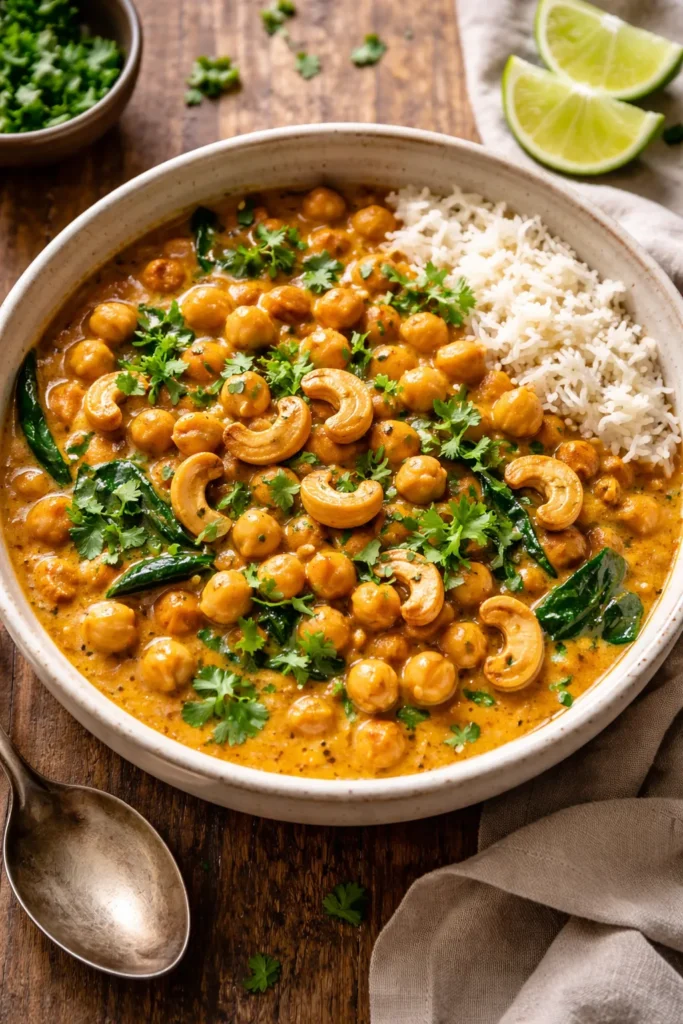
A well-made chickpea curry delivers something remarkable: the depth and complexity of a dish that simmered for hours, achieved in under 40 minutes. The secret is in building the spice foundation properly — blooming whole and ground spices in hot oil before anything else goes in, and browning the aromatics until they’re darker than you think they should be.
The spice blend that makes this work includes cumin, coriander, smoked paprika, cinnamon, and green cardamom. Onion, garlic, and fresh ginger get cooked down until deeply golden — 12 to 15 minutes of patient stirring — before canned tomatoes and coconut milk go in. The chickpeas absorb all of that flavor as the curry simmers and thickens. Cashews, toasted in a dry pan and added at the end, bring a buttery crunch that contrasts with the creamy sauce.
Why Canned Chickpeas Work Better Here Than Dried
Dried chickpeas cooked from scratch have a firmer, more defined texture — excellent for salads and cold dishes. But for curry, canned chickpeas are ideal. They’re slightly softer and absorb flavors more readily from the sauce, and they hold their shape without turning mushy over the 20-minute simmer time.
Serving It Right
Serve over basmati rice with warmed naan on the side. A dollop of plain yogurt and a handful of fresh cilantro on top add cooling contrast to the warm spice. Squeeze a wedge of lime over the bowl just before eating.
10. Classic Beef Stew
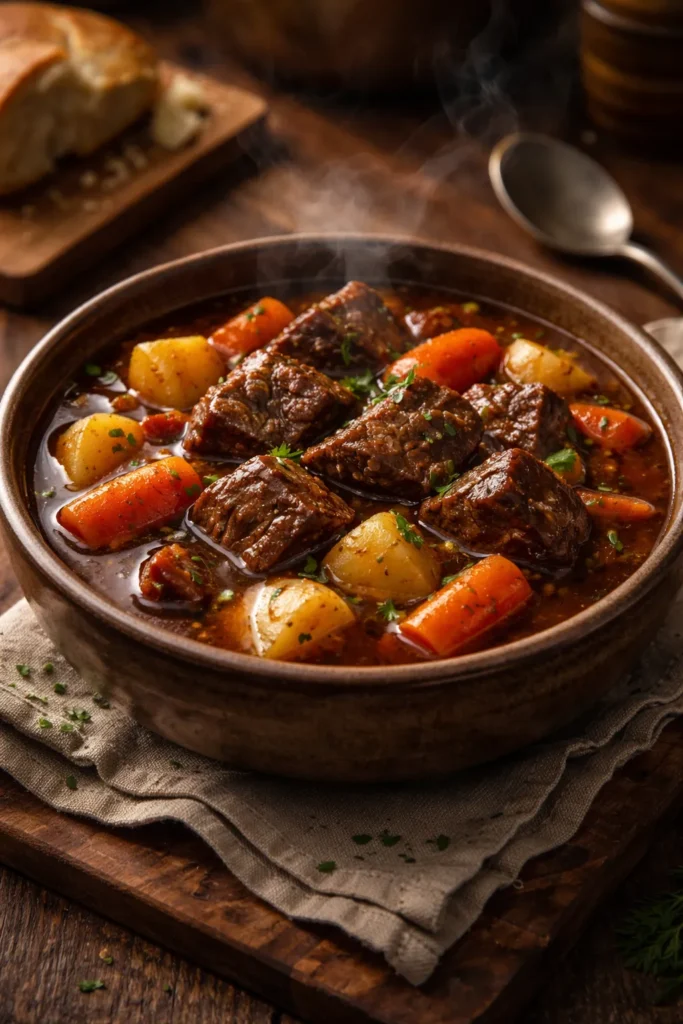
Beef stew is cold-weather cooking in its most essential form. Braised beef, root vegetables, and a rich, wine-darkened broth — it’s the kind of dish that improves every time you look at it. The method is forgiving, the ingredients are affordable, and the result is profoundly satisfying.
Chuck roast is the cut for stew. It’s well-marbled with connective tissue that breaks down into gelatin during the long braise, giving the broth a body and richness that no lean cut can match. Cut it into 2-inch cubes (larger than you think you need — they shrink), season aggressively with salt and pepper, and sear in a hot Dutch oven in small batches. Never crowd the pan; crowding creates steam and prevents browning.
Building the Braise
After browning the beef and setting it aside, cook diced onion and garlic in the same pot until soft. Add tomato paste and cook for two minutes until it darkens. Pour in a full cup of dry red wine and scrape up every browned bit from the bottom of the pot — that’s flavor. Add beef broth, thyme, a bay leaf, and the browned beef. Cover and braise in a 325°F (160°C) oven for 2 to 2.5 hours.
Adding the Vegetables at the Right Time
Add carrots and potatoes only in the last 45 minutes of cooking. Vegetables added from the beginning will turn to mush. For extra depth, add frozen peas off the heat just before serving — they maintain their color and texture without cooking to nothing.
11. Broccoli Cheddar Soup
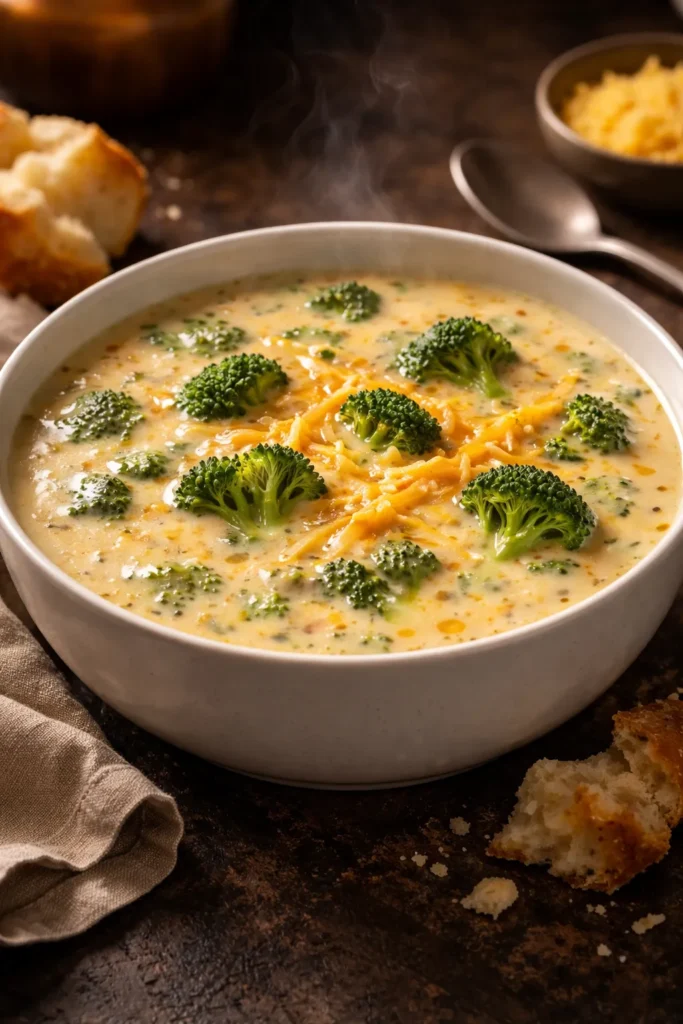
Broccoli cheddar soup has a reputation as simple comfort food, which it is — but the gap between a mediocre version and a genuinely great one is wider than most people expect. The issue is almost always the cheese: wrong type, added at the wrong temperature, or both.
Sharp cheddar is the move. Aged cheddar or a good-quality sharp Vermont cheddar gives the soup a pronounced, tangy flavor that mild cheddar can’t touch. Grate it yourself from a block — pre-shredded cheese contains anti-caking agents that prevent it from melting smoothly, leading to a grainy soup. Add the grated cheese off the heat, stirring constantly, to prevent it from seizing.
The Texture Balance
The soup should be creamy with visible pieces of broccoli — not blended completely smooth (that’s broccoli cream soup, which is a different thing entirely). Blend or mash only about a third of the cooked broccoli to thicken the base while keeping the rest intact for texture and visual interest.
The Move with the Base
Start with a classic base: butter, diced onion, garlic, flour, chicken broth, and whole milk. Cook the flour in the butter for a full two minutes before adding liquid — this removes the raw flour taste and creates the foundation for a soup that feels thick and substantial rather than chalky.
Pro tip: A small pinch of dry mustard powder added with the flour intensifies the cheddar flavor without adding any mustard taste of its own.
12. Red Wine Braised Pot Roast
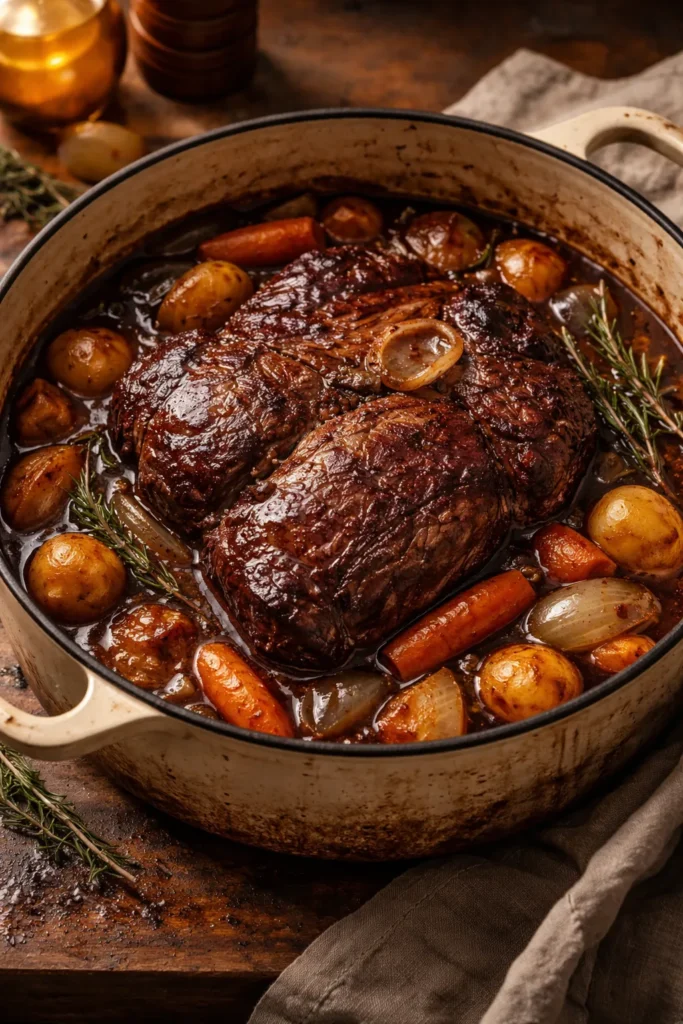
If there’s a single winter dinner recipe that earns the label of “special occasion made easy,” pot roast is it. A bone-in chuck roast braised low and slow in red wine and beef broth produces meat so tender it barely needs cutting, surrounded by vegetables that have absorbed hours of deeply savory liquid.
The braising liquid is where the personality comes in. Use a wine you’d actually drink — a Cabernet Sauvignon or Côtes du Rhône works well. Cheap cooking wine has an off-flavor that concentrates and becomes more pronounced over a long braise. Add whole garlic cloves, fresh rosemary, thyme, and a bay leaf. The aromatics infuse the broth and the meat simultaneously.
The Sear Is Not Optional
Brown the roast on all sides in a screaming-hot Dutch oven with a thin film of oil. This takes 10 to 12 minutes and fills the kitchen with smoke — do it anyway. The Maillard reaction happening on the surface of that meat is responsible for a significant portion of the finished dish’s flavor. Skipping it produces a pale, steamed result no matter how long the braise runs.
Low and Slow vs. Pressure Cooker
A traditional oven braise at 300°F (150°C) for 3 to 3.5 hours produces the most evenly tender, deeply flavored result. But if time is short, a pressure cooker at high pressure for 70 to 80 minutes produces a remarkably similar texture — the broth won’t reduce quite as much, but the meat will be genuinely excellent.
Serve with buttery mashed potatoes, egg noodles, or crusty bread for mopping up the braising liquid. Save any leftover braising liquid — it freezes beautifully and works as a base for next week’s soup or sauce.
Getting the Most from Winter Leftovers
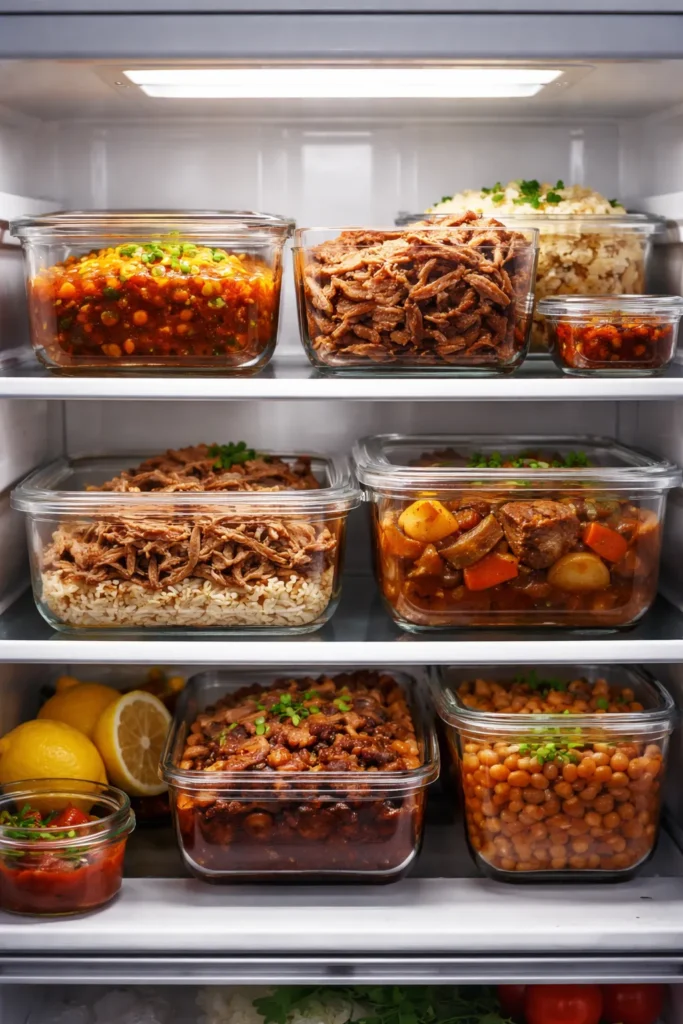
One of the biggest advantages of cold-weather cooking is that most of these dishes produce generous portions that hold and reheat beautifully. Chili, pulled pork, pot roast, and braised beans all improve over 24 to 48 hours as the flavors continue to develop.
The smarter approach is to plan for leftovers intentionally rather than treating them as an afterthought. If you’re making pulled pork on Sunday, you’re also solving Tuesday’s tacos and Thursday’s lunch without cooking twice. If you braise a pot roast on the weekend, the leftover braising liquid becomes Monday’s soup base.
A few reheating rules worth following:
- Soups and braises: Reheat gently over medium-low heat, adding a small splash of broth if the liquid has thickened too much
- Baked pasta: Cover with foil and reheat at 350°F (175°C) for 20 minutes, uncovering for the last 5 to restore the crispy top
- Pulled pork: Add a tablespoon of water or broth before covering and microwaving; dry reheated pork is a tragedy easily avoided
Final Thoughts
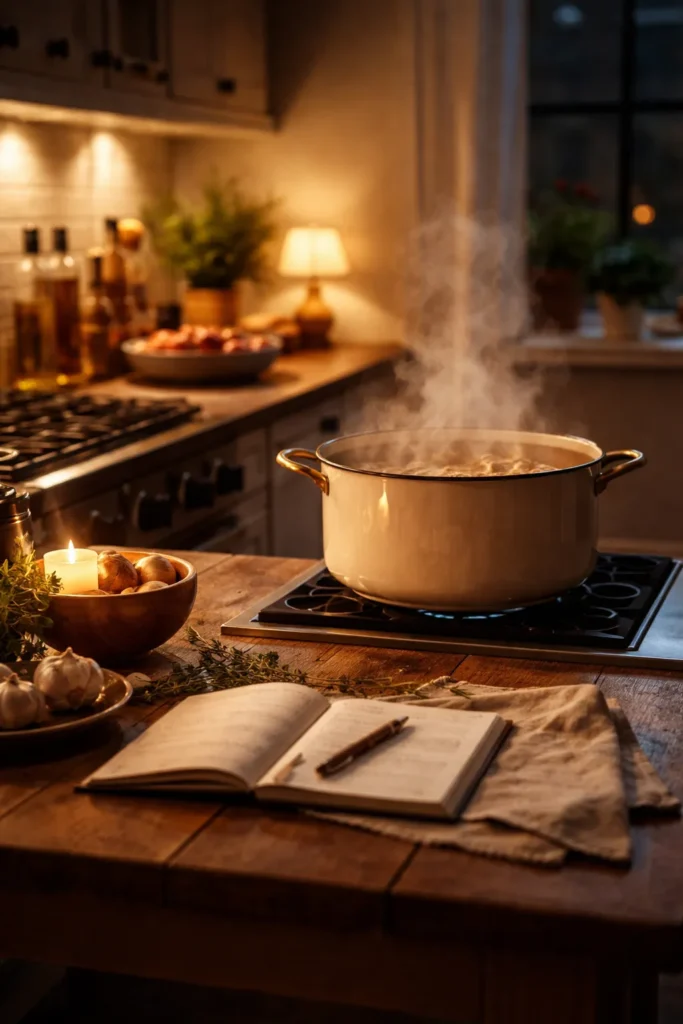
Cold nights have a way of making you genuinely appreciate the kitchen. The recipes on this list weren’t chosen to impress — they were chosen because they work, consistently, with ingredients most people already have or can pick up without a special trip.
The most important thing is to stop treating winter dinners as a daily challenge and start treating them as a weekly project. Make one big batch of something braised or slow-cooked, keep leftover portions organized in the fridge, and let Tuesday and Wednesday take care of themselves. That simple shift — thinking one or two days ahead — is what separates a stressful dinner routine from a genuinely enjoyable one.
Pick one recipe from this list, make it this week, and pay attention to how the leftovers perform the next day. Chances are, that’s the version you’ll like best.