Rain has a way of making you want to do absolutely nothing — except eat something warm. The moment the first drops hit the window, something shifts in the kitchen. The slow cooker comes out. The Dutch oven gets a spot on the stove. And whatever was on the meal plan quietly gets replaced by whatever sounds most like a hug in bowl form.
There’s real psychology behind this. Cold, damp weather causes a drop in your core body temperature, and your body instinctively craves warm, calorie-dense foods to compensate. A pot of soup simmering on the stove doesn’t just smell good — it physically changes the mood of a room, filling it with steam and the kind of low, rich aroma that makes everyone wander into the kitchen asking, “What’s for dinner?”
But not all soups are built equally for a rainy evening. Some are light and broth-forward, better suited to a quick lunch. What you want on a proper grey, drizzly night is something that satisfies on multiple levels: warming enough to chase the chill, hearty enough to feel like a real meal, and flavorful enough that you find yourself scraping the bowl.
The ten soups and stews below are exactly that. They range from deeply savory to subtly creamy, from pantry-friendly to weekend-worthy — but every one of them belongs on your table when the rain won’t quit.
Table of Contents
- Why Rainy Evenings Call for Something Hot in a Bowl
- 1. Classic French Onion Soup
- What Makes the Onions So Important
- Quick Soup Facts
- 2. Hearty Beef and Barley Stew
- Choosing the Right Cut of Beef
- Quick Soup Facts
- 3. Creamy Broccoli Cheddar Soup
- Getting the Cheese Right
- Quick Soup Facts
- 4. Chicken and Dumpling Soup
- Drop Dumplings vs. Rolled Dumplings
- Quick Soup Facts
- 5. Spicy Red Lentil Soup
- The Spice Foundation That Changes Everything
- Quick Soup Facts
- 6. New England Clam Chowder
- Building the Clam Flavor Properly
- Quick Soup Facts
- 7. Zuppa Toscana
- Making It as Good as the Restaurant Version
- Quick Soup Facts
- 8. Butternut Squash Soup
- Balancing Sweetness and Savory Depth
- Quick Soup Facts
- 9. White Chicken Chili
- Building Flavor Without a Long Simmer
- Quick Soup Facts
- 10. Classic Tomato Basil Soup
- The Grilled Cheese Connection
- Quick Soup Facts
- The Equipment That Makes Soup Night Easier
- How to Store and Reheat Leftover Soup Properly
- The Best Things to Serve Alongside a Bowl of Soup
- Final Thoughts
Why Rainy Evenings Call for Something Hot in a Bowl
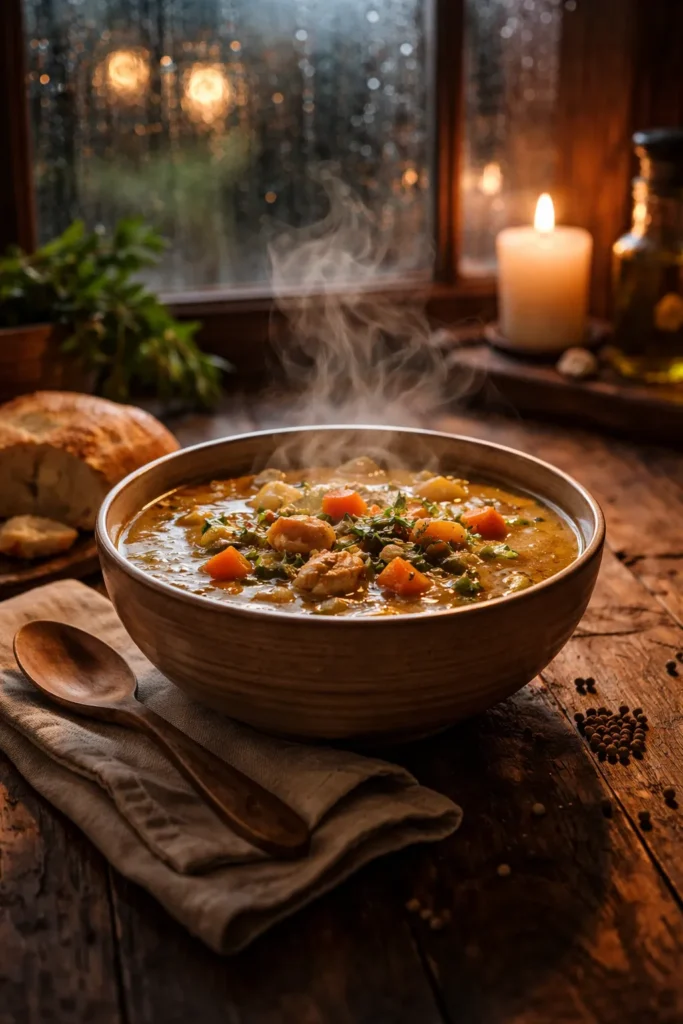
Soup occupies a special place in food culture across almost every part of the world, and it’s not a coincidence. It’s one of the most practical forms of cooking ever developed — a single vessel, water, heat, and whatever ingredients are on hand can produce something extraordinary.
What makes soup particularly suited to rainy evenings is the combination of warmth, hydration, and slow-cooked depth. A broth-based soup warms you from the inside in a way a plate of roasted vegetables simply doesn’t. The steam, the heat, the sodium — it all works together to make your body feel genuinely comfortable.
There’s also the time element. Most of the soups and stews on this list develop better flavor the longer they cook. Rainy days naturally slow your pace. You’re not rushing out the door. You’re settling in, maybe watching something, and a pot that needs two hours of simmering is no inconvenience at all — it’s part of the ritual.
Whether you use a Dutch oven on the stovetop, a slow cooker set to low in the morning, or an Instant Pot for a weeknight shortcut, you’ve got options. What you don’t need is a reason to make soup when it’s raining. That’s reason enough.
1. Classic French Onion Soup
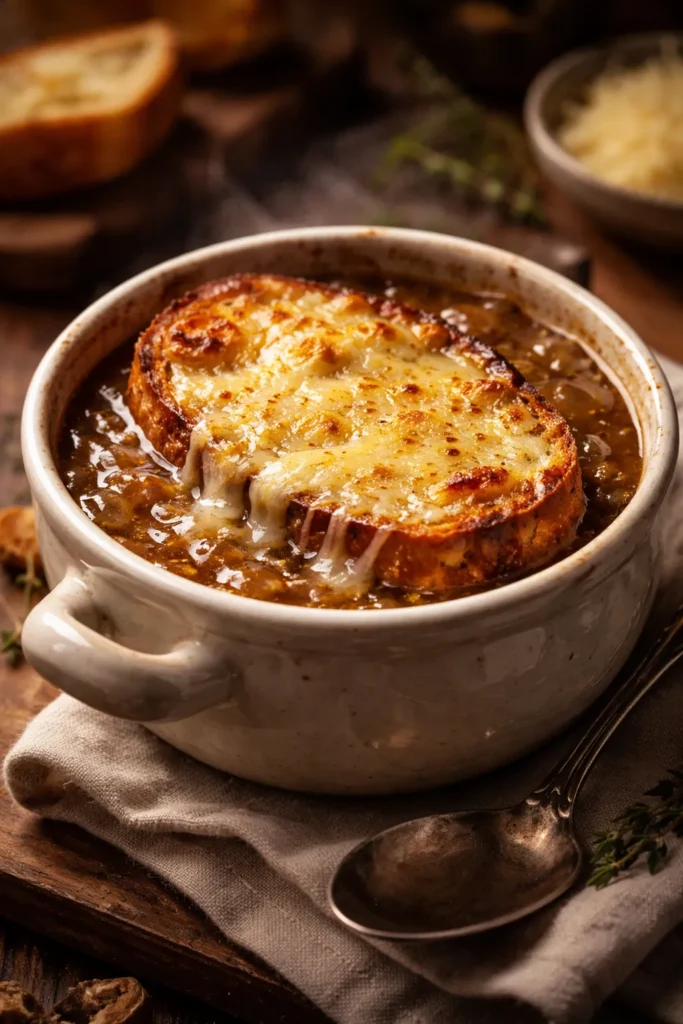
If there’s one soup that feels like it was specifically designed for grey, miserable weather, it’s French onion soup. The whole process of making it — slowly caramelizing onions until they collapse into a jammy, sweet, deeply savory mass — takes time, but that time is the point. The payoff is a broth so rich and complex it tastes like it was simmered for days.
The iconic finish of toasted baguette and bubbling Gruyère cheese adds texture and richness that turns a simple broth-based soup into something close to a full meal. When you pull it out from under the broiler and the cheese is deeply golden and starting to crisp at the edges, it’s hard to imagine anything more satisfying.
What Makes the Onions So Important
The flavor foundation of French onion soup is entirely dependent on how well you caramelize the onions. This is the step most people rush, and it’s also the step that separates a mediocre bowl from a restaurant-quality one. You need at least 45 to 60 minutes over medium-low heat, stirring every 8 to 10 minutes, until the onions turn a deep amber-brown. Not golden. Not pale. Deep, nearly mahogany brown.
The sugars in the onion break down slowly during this process, developing hundreds of flavor compounds through the Maillard reaction. You can’t replicate that on high heat in 15 minutes — the onions steam instead of caramelize, and the soup tastes flat by comparison.
Quick Soup Facts
- Use yellow onions for the best balance of sweetness and savory depth
- Beef broth gives the richest result; chicken broth makes a lighter, more delicate version
- A splash of dry sherry or white wine added after caramelization adds real complexity to the broth
- Gruyère is traditional, but Swiss cheese or even a mix of provolone and mozzarella works beautifully
- The bread should be thick-cut, toasted dry, and slightly stale — fresh bread turns soggy under the broth
Worth knowing: Caramelized onions freeze well. Make a double batch when you have time and store half in the freezer — you’re then only 20 minutes away from French onion soup on any given evening.
2. Hearty Beef and Barley Stew
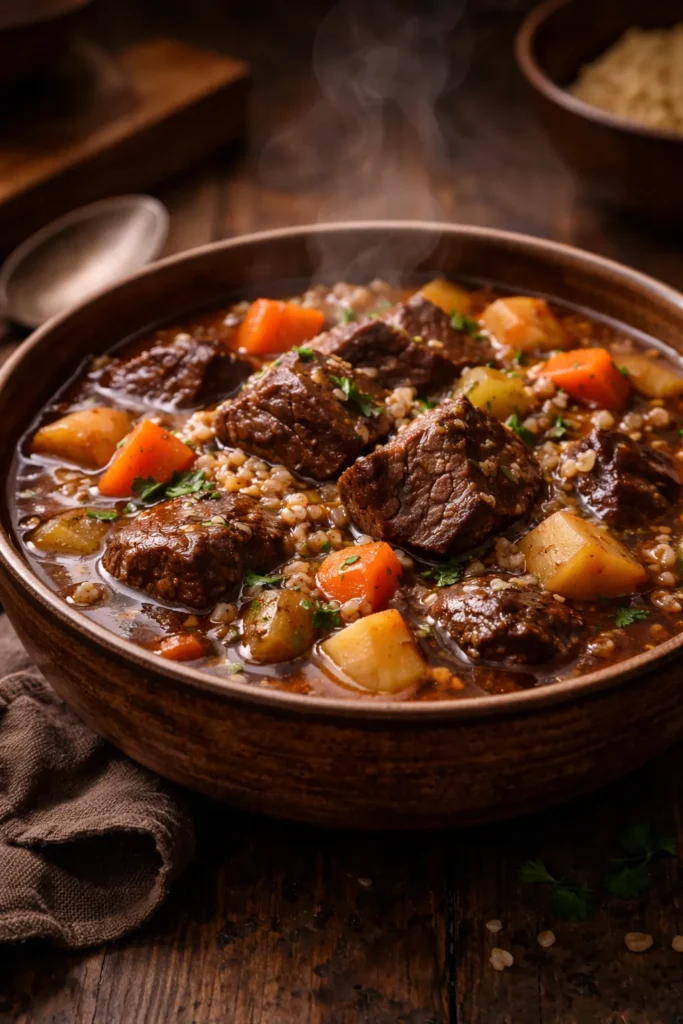
Beef and barley stew is the kind of food that earns the word hearty without any exaggeration. Chunks of braised beef, tender root vegetables, and pearl barley in a deep, mahogany broth — this is a stew built for the worst kind of weather.
What makes barley such a perfect addition is its texture. Unlike pasta or rice, which can become mushy when reheated, barley holds its shape and its pleasant chewiness. It also absorbs the surrounding broth as it cooks, swelling slightly and contributing a subtle nutty flavor that ground beef or pasta simply can’t offer.
Choosing the Right Cut of Beef
Chuck roast is the gold standard for this stew. It’s a well-worked muscle with significant connective tissue, which means it needs time and moist heat to break down — exactly what a long braise provides. As it cooks, that connective tissue converts to gelatin, which gives the broth its body and silky texture.
Cut the beef into 1½-inch cubes and sear them in batches before adding any liquid. This step is non-negotiable. The crust that forms on the surface of the beef through searing is pure flavor — it’s what gives the broth its deep color and complexity. Crowding the pan causes steaming instead of browning, so work in batches even if it takes longer.
Quick Soup Facts
- Pearl barley takes 40 to 50 minutes to become tender; pot barley takes longer but has more fiber
- Add the barley in the last 40 minutes of cooking so it doesn’t turn mushy from over-simmering
- A tablespoon of tomato paste stirred in with the onions before adding broth adds depth and color
- Root vegetables like parsnip and turnip hold up better than potato in this stew and add subtle sweetness
- A splash of Worcestershire sauce in the broth amplifies the savory, umami notes significantly
Pro tip: This stew genuinely tastes better the next day, once the barley has soaked up more broth overnight and the flavors have continued to develop. Make it the evening before a truly grey, miserable day.
3. Creamy Broccoli Cheddar Soup
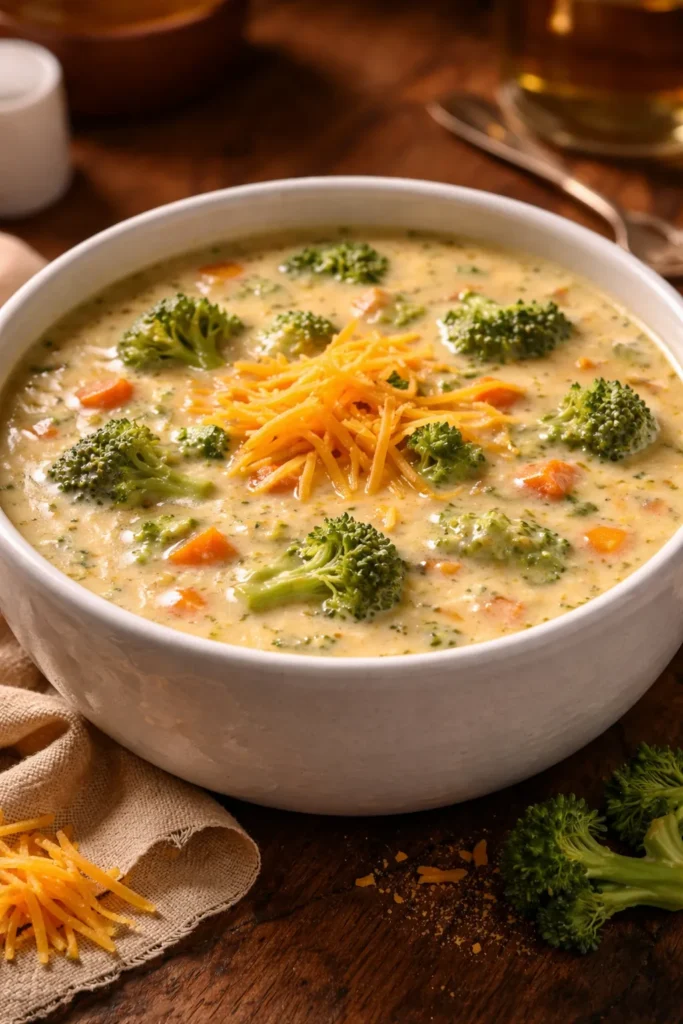
Broccoli cheddar soup sits comfortably in the pantheon of great comfort soups because it delivers on so many levels simultaneously. It’s creamy without being heavy, vegetable-forward but indulgent, and quick enough to make on a weeknight without much planning.
The secret to a great broccoli cheddar is texture management. You want some of the broccoli blended smooth into the base — which gives the soup its body and color — but you also want visible pieces of broccoli and carrot that give each spoonful something to bite into. Pureeing the entire pot produces something that looks and tastes more like a vegetable smoothie than a soup.
Getting the Cheese Right
Cheese is the most technically challenging part of this soup, and it’s where most home cooks run into trouble. Sharp cheddar gives the best flavor, but if you add it incorrectly, you’ll end up with a grainy, broken sauce instead of a smooth, silky soup.
The key: always remove the pot from the heat before adding cheese, and add it in small handfuls, stirring between each addition. Direct heat causes the proteins in cheese to seize and clump. Grate your own cheese from a block rather than using pre-shredded bags — those are coated in anti-caking starches that prevent smooth melting.
Quick Soup Facts
- A roux (equal parts butter and flour cooked together) builds the base and prevents the soup from being watery
- Half-and-half gives a richer result than whole milk without the heaviness of heavy cream
- Smoked paprika adds a quiet depth that works beautifully with the sharpness of the cheddar
- Serve in a sourdough bread bowl for full comfort food commitment
- A pinch of dry mustard powder enhances the sharpness of the cheese without being detectable on its own
4. Chicken and Dumpling Soup
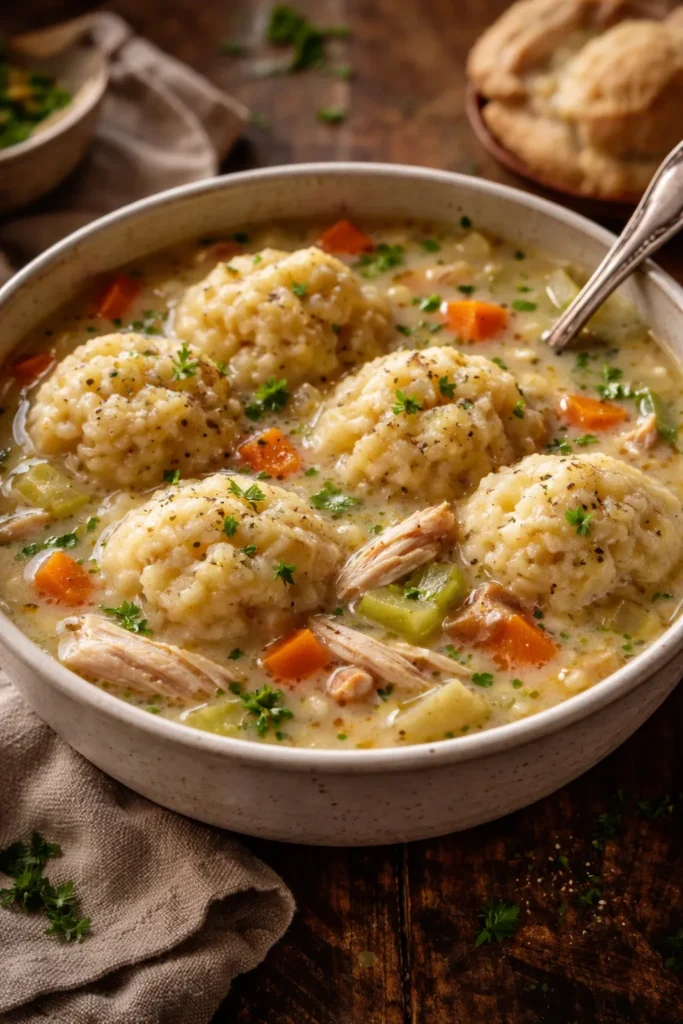
Chicken and dumpling soup is pure, unapologetic comfort. Tender shredded chicken, soft vegetables, a creamy broth, and pillowy dumplings that cook right in the pot — it’s the kind of dish that has a way of making even a genuinely bad day feel slightly more manageable.
The dumplings are where this soup distinguishes itself from every other chicken soup on the list. When dropped by the spoonful into simmering broth, they puff up as they cook, absorbing flavor from the broth while developing a soft, almost pillowy interior with a slightly firmer exterior. They’re not pasta. They’re not bread. They’re something entirely their own, and they make this soup unlike anything else.
Drop Dumplings vs. Rolled Dumplings
There are two camps when it comes to dumplings, and they’re both worth understanding. Drop dumplings are made from a sticky dough (flour, baking powder, salt, and milk or buttermilk) that you scoop directly into the simmering broth. They’re faster, softer, and more rustic. Rolled dumplings are made from a stiffer dough that gets rolled out and cut into strips or squares, giving you a chewier, slightly more noodle-like result.
For a rainy evening when you want something on the table without a great deal of fuss, drop dumplings win every time. Stir the dough until just combined — overmixing develops the gluten and makes them dense rather than tender.
Quick Soup Facts
- Bone-in, skin-on chicken thighs produce a far richer broth than chicken breasts
- Simmer the chicken whole in the broth, then remove and shred — the bones contribute flavor that’s impossible to replicate
- Don’t lift the lid while the dumplings cook; the steam is what makes them puff up properly
- A splash of cream or half-and-half added at the end gives the broth a lovely silky finish
- Frozen peas added in the last 2 minutes add color and a pop of sweetness without turning mushy
5. Spicy Red Lentil Soup
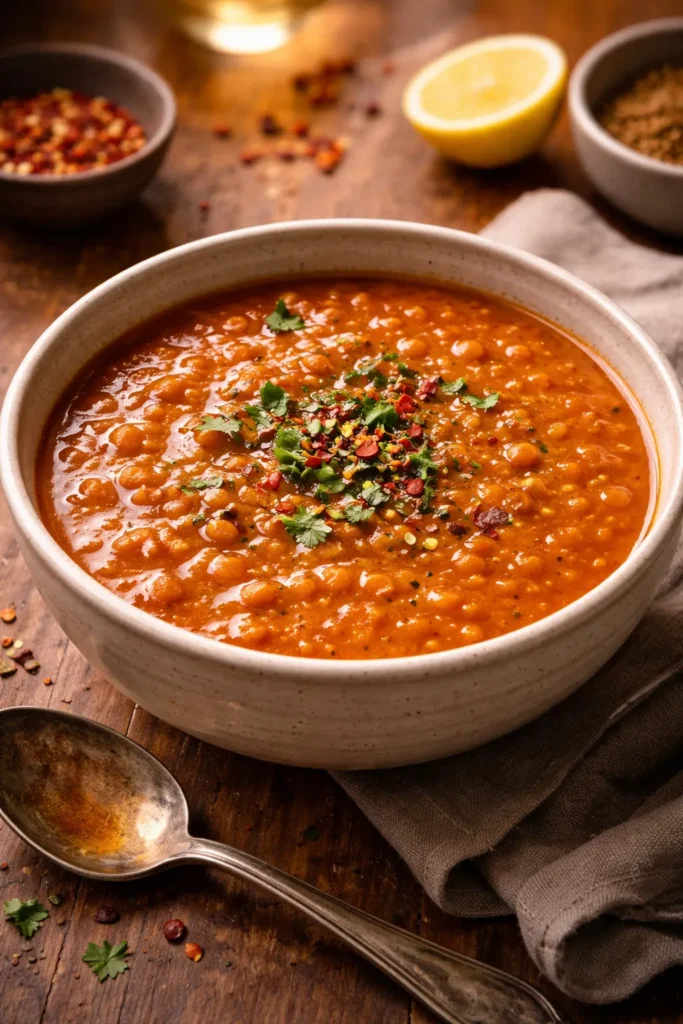
Red lentil soup is the most underestimated bowl on this list. People often dismiss it as austere or plain — and then they taste a properly made version and immediately ask for the recipe. Red lentils cook quickly, break down naturally as they simmer, and produce a thick, creamy soup without any dairy whatsoever.
The flavor comes from building a proper spice foundation in the pot before the lentils even go in. Blooming spices in oil — cumin, smoked paprika, coriander, a pinch of cayenne — takes less than two minutes and produces a depth of flavor that no amount of seasoning added at the end of cooking can replicate.
The Spice Foundation That Changes Everything
Blooming is not optional. When you add whole or ground spices directly to hot oil and let them sizzle for 30 to 60 seconds before adding aromatics, you’re releasing fat-soluble flavor compounds that dissolve into the oil and permeate every element of the soup. Add spices to water or broth instead and a significant portion of their flavor potential is never realized.
Add diced onion, garlic, and fresh ginger after the spices have bloomed. Let them soften fully before adding your rinsed red lentils and liquid. For the liquid, a mix of vegetable broth and one can of crushed tomatoes gives the soup both savory depth and the slight acidity that balances the earthiness of the lentils beautifully.
Quick Soup Facts
- Red lentils cook in 20 to 25 minutes and don’t need soaking — they’re one of the most weeknight-friendly legumes available
- A squeeze of fresh lemon juice stirred in just before serving brightens the entire bowl and cuts through the richness
- Coconut milk added at the end makes this soup even creamier and adds a subtle sweetness that works with the spices
- Serve with warm flatbread or naan for a complete, filling meal
- This soup keeps well in the fridge for 4 to 5 days and the flavor actually improves by day two
Pro tip: Fry a handful of thinly sliced shallots in a little oil until deep golden and crispy, then scatter them over each bowl just before serving. It takes five minutes and adds a textural contrast that elevates the whole dish.
6. New England Clam Chowder
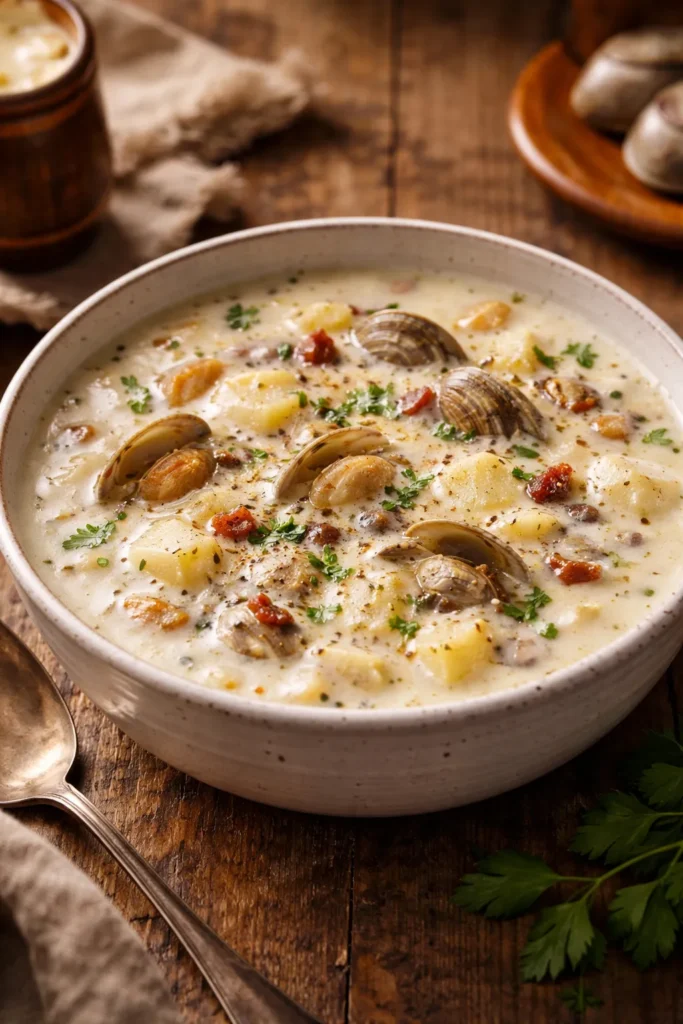
New England clam chowder is one of those soups where the gap between a mediocre version and a great one is significant — and most of the difference comes down to the clams. A good clam chowder tastes unmistakably of the sea. A bad one tastes mostly of cream and potato with a vague, distant suggestion that shellfish may have been involved at some point.
The richness of this chowder — the cream, the butter, the starchy potato — makes it one of the most genuinely warming soups on this list. It’s thick without being heavy, and the brininess of the clams cuts through the dairy in a way that keeps every spoonful interesting from start to finish.
Building the Clam Flavor Properly
The clam liquor (the liquid from steamed or canned clams) is the backbone of this chowder, and it should never be discarded. If you’re using fresh clams, steam them open separately, strain the cooking liquid through a fine mesh strainer to catch any sand, and use that liquid as part of your base. If you’re using canned clams — which work well and require no apology — drain the liquid from the cans and add that to the broth along with bottled clam juice.
Salt pork or thick-cut bacon renders first in the pot, giving the soup a foundational smokiness. The fat from the pork is then used to soften the onion and celery before any liquid goes in.
Quick Soup Facts
- Yukon Gold potatoes hold their shape better than russets and have a naturally buttery flavor that works beautifully in chowder
- Never let the chowder reach a rolling boil after the cream is added — it can cause the dairy to break and separate
- Oyster crackers are the traditional accompaniment, but thick-cut sourdough toast works equally well
- Fresh thyme added with the vegetables contributes an herbal note that plays well against the briny clam flavor
- A pinch of smoked paprika sprinkled over the finished bowl adds both color and a gentle warmth
7. Zuppa Toscana
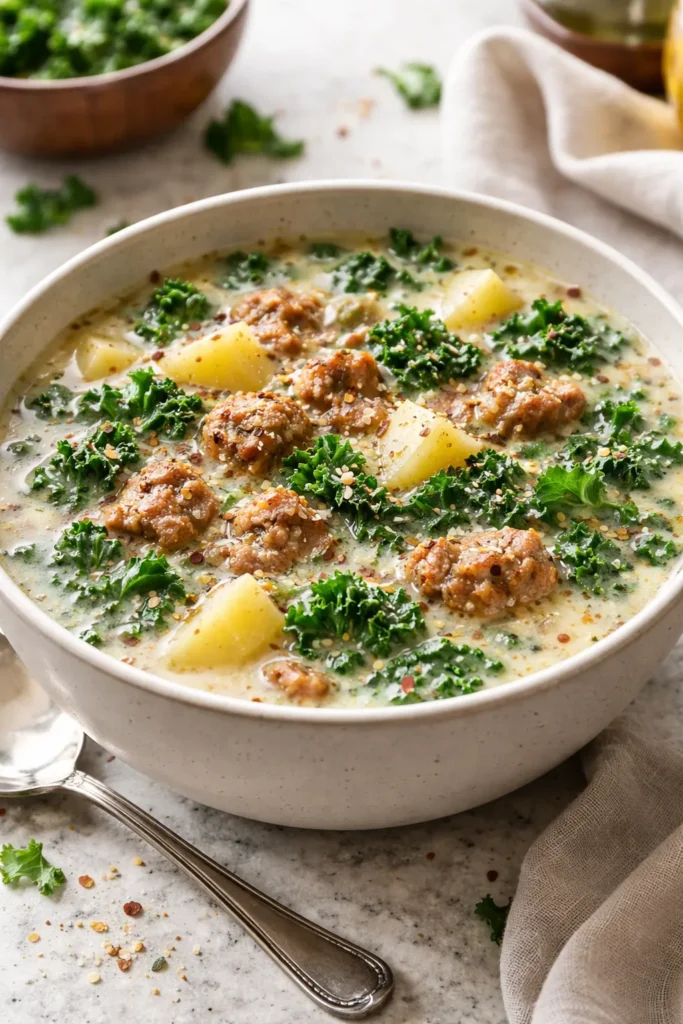
Zuppa Toscana — a Tuscan-style soup with Italian sausage, tender potatoes, and kale in a cream-enriched broth — has earned its reputation as one of the most popular restaurant-style soups to recreate at home. And for good reason. It’s fast, it’s deeply flavorful, and the combination of spicy sausage with creamy broth is genuinely hard to resist.
The kale is what gives this soup its distinctive character. It wilts into the broth in the final minutes of cooking, softening enough to become tender without losing its structure entirely. The slight bitterness of the kale provides a counterpoint to the richness of the cream and the saltiness of the sausage that keeps the soup from becoming one-note.
Making It as Good as the Restaurant Version
The key difference between a restaurant-quality Zuppa Toscana and a flat homemade version is browning the sausage properly. Remove it from the casing, break it into rough, irregular pieces, and cook it in the pot over medium-high heat without disturbing it for at least two to three minutes per side. The dark, caramelized bits that form on the bottom of the pot are going to flavor the entire soup when you deglaze with broth — don’t skip that step and don’t cook the sausage in a hurry.
Spicy Italian sausage gives the most authentic flavor profile, but mild sausage with a pinch of red pepper flakes added separately works just as well if you prefer to control the heat level.
Quick Soup Facts
- Russet potatoes work well here because they absorb the broth as they cook, adding body to the soup
- Add the kale in the last 5 minutes of cooking — any longer and it turns dull and overly soft
- Heavy cream stirred in at the end gives the broth its signature silky richness; use half-and-half for a lighter result
- A Parmesan rind simmered in the broth for the duration of cooking adds an umami depth that’s subtle but unmistakable
- This soup reheats beautifully and is an excellent candidate for batch cooking
8. Butternut Squash Soup
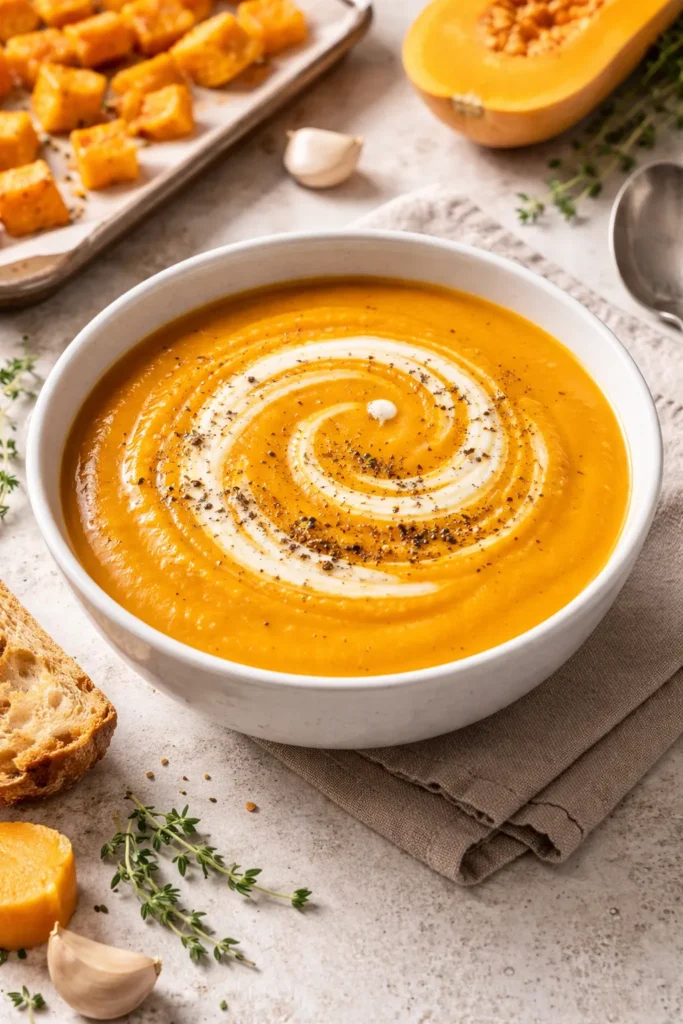
Butternut squash soup is proof that a short ingredient list and a simple technique can produce something that genuinely impresses. At its core, it’s roasted squash, aromatics, and broth blended smooth — and yet the depth of flavor you can achieve is remarkable.
The critical step is roasting the squash before it goes into the pot. Cut the squash in half, brush it with oil, season it with salt and pepper, and roast it cut-side down at 400°F until the flesh is completely tender and the edges have started to caramelize. That caramelization — not steaming, not boiling — is what gives the soup its warmth and sweetness.
Balancing Sweetness and Savory Depth
Butternut squash is naturally sweet, and if you don’t counterbalance that, the soup can taste more like a dessert than a dinner. A combination of caramelized onion, garlic, and a small amount of broth-based seasoning brings the savory elements forward without suppressing the natural sweetness of the squash.
Fresh ginger and a small amount of warming spice — nutmeg, or a pinch of cayenne — add complexity without turning the soup into something overly exotic. A finishing drizzle of heavy cream or a swirl of crème fraîche tempers the sweetness and adds richness. Toasted pepitas scattered over the top add crunch and a nutty, contrasting flavor.
Quick Soup Facts
- Pre-cut butternut squash from the grocery store works perfectly here and cuts down on prep time significantly
- Vegetable broth lets the squash flavor shine; chicken broth adds a slightly richer, more savory background note
- Blend in an immersion blender directly in the pot for easier cleanup — no need to transfer to a countertop blender
- A tablespoon of apple cider vinegar stirred in before serving adds brightness that keeps the soup from feeling heavy
- This soup freezes well for up to 3 months — freeze before adding any cream
Pro tip: Pour leftover butternut squash soup into a wide, shallow pan and reduce it further over medium heat until it thickens into a sauce — it becomes a wonderful pasta coating with toasted sage and brown butter.
9. White Chicken Chili
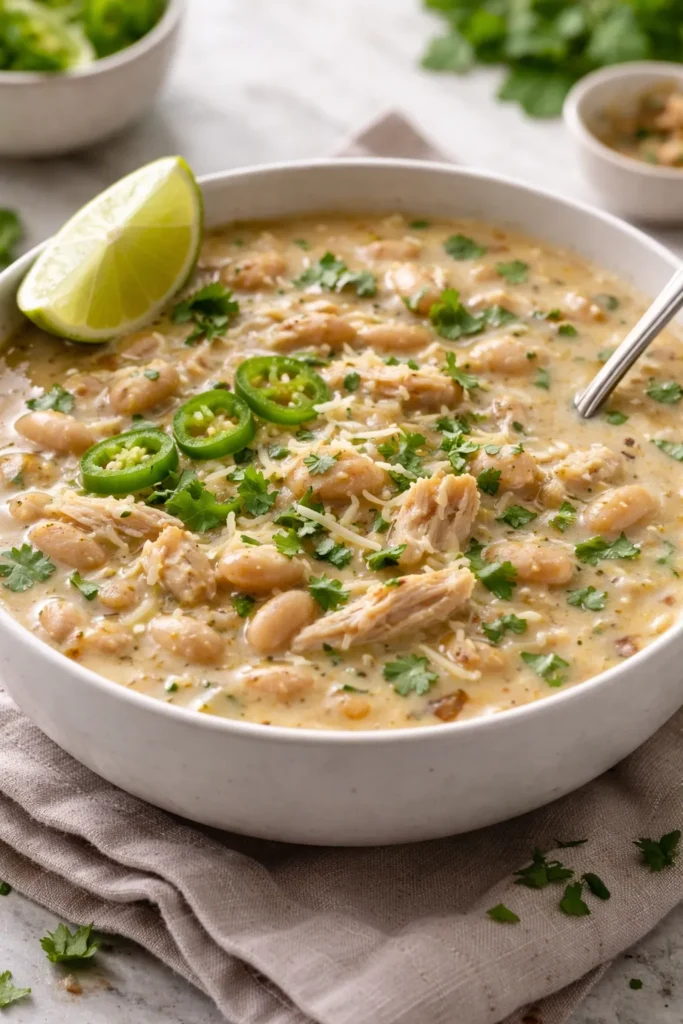
White chicken chili occupies its own category — technically a chili, but closer in texture and character to a thick, creamy soup. It’s lighter in color than traditional beef chili, with a broth base flavored by green chiles, cumin, and garlic, finished with white beans and shredded chicken.
What makes white chicken chili so appealing on a rainy evening is its approachability. It comes together in under an hour, uses largely pantry ingredients, and the flavor is rich and satisfying without requiring the hours-long simmer that a traditional red chili demands. The cream cheese or sour cream stirred in at the end gives it a velvety, luxurious finish.
Building Flavor Without a Long Simmer
The shortcut here is working with ingredients that carry their own strong flavor profiles. Canned green chiles, cumin, smoked paprika, garlic powder, and a small amount of chicken broth concentrate are doing a lot of heavy lifting. Toast your dry spices directly in the pot with a little oil before adding any liquid — 60 seconds in a dry pan activates them and produces noticeably more depth in the finished chili.
Poaching chicken breasts directly in the broth, then shredding them, is more efficient than cooking them separately. The chicken releases its juices into the broth as it cooks, and the broth in turn flavors the chicken — it’s a two-way exchange that makes both elements better.
Quick Soup Facts
- Great Northern beans or cannellini beans are the traditional choice; mash a small portion of the beans against the pot wall to thicken the broth naturally
- A block of cream cheese (about 4 ounces), cut into cubes and stirred in at the end, creates an incredibly silky texture
- Garnish generously: sliced avocado, fresh cilantro, lime juice, sour cream, and crushed tortilla chips are all excellent here
- Jalapeño pepper adds heat; poblano pepper adds mild, earthy flavor with very little spice — use either depending on your preference
- This chili works well in a slow cooker on low for 6 to 8 hours if you prefer a hands-off approach
10. Classic Tomato Basil Soup
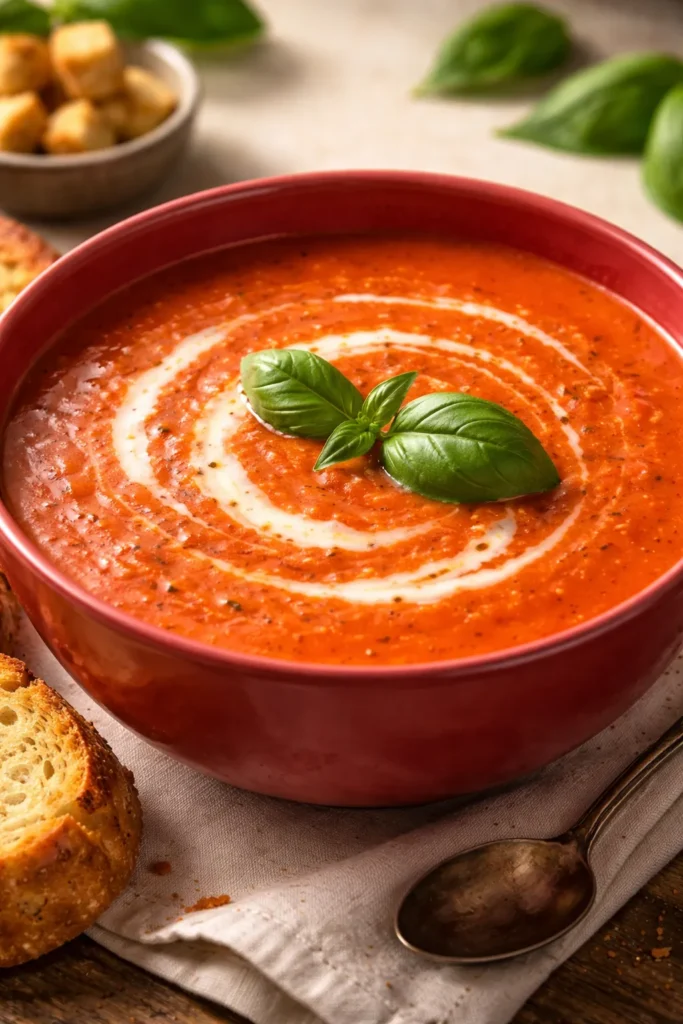
Tomato basil soup might be the most iconic bowl of soup in the Western world, and for good reason. Ripe, roasted tomatoes blended smooth with basil, garlic, and a finishing touch of cream — it’s a soup that requires almost no technique, produces almost no washing up, and delivers more flavor than its simplicity seems to warrant.
Roasting the tomatoes rather than simply simmering canned tomatoes in broth is the single most impactful upgrade you can make. Roasting concentrates the sugars, deepens the color, and develops a subtle smokiness that you can’t replicate any other way. It takes 35 to 40 minutes in a hot oven, and every minute is worth it.
The Grilled Cheese Connection
Tomato soup and grilled cheese are one of the great food pairings in any cuisine, and it’s not nostalgia talking — the flavors work on a fundamental level. The acidity of the tomato cuts through the fat in the cheese; the fat in the cheese softens the acidity of the tomato. It’s a balance that makes both components taste better together than either does alone.
If you’re going to serve grilled cheese alongside, use sourdough bread and a combination of sharp cheddar and Gruyère. Butter the outside of each slice generously and cook over medium-low heat until deeply golden — it takes longer than you think, and the patience is rewarded.
Quick Soup Facts
- San Marzano tomatoes, whether fresh or canned, have a lower acidity and higher sweetness than standard Roma tomatoes and produce a noticeably superior soup
- Fresh basil stirred in at the end (not cooked) preserves its bright, floral flavor — heat destroys it quickly
- A pinch of sugar balances any excessive acidity if your tomatoes are less ripe
- For extra richness, stir in two tablespoons of butter just before blending — it emulsifies into the soup and gives it a silky sheen
- This soup freezes well for up to 3 months; add cream only after reheating, not before freezing
The Equipment That Makes Soup Night Easier
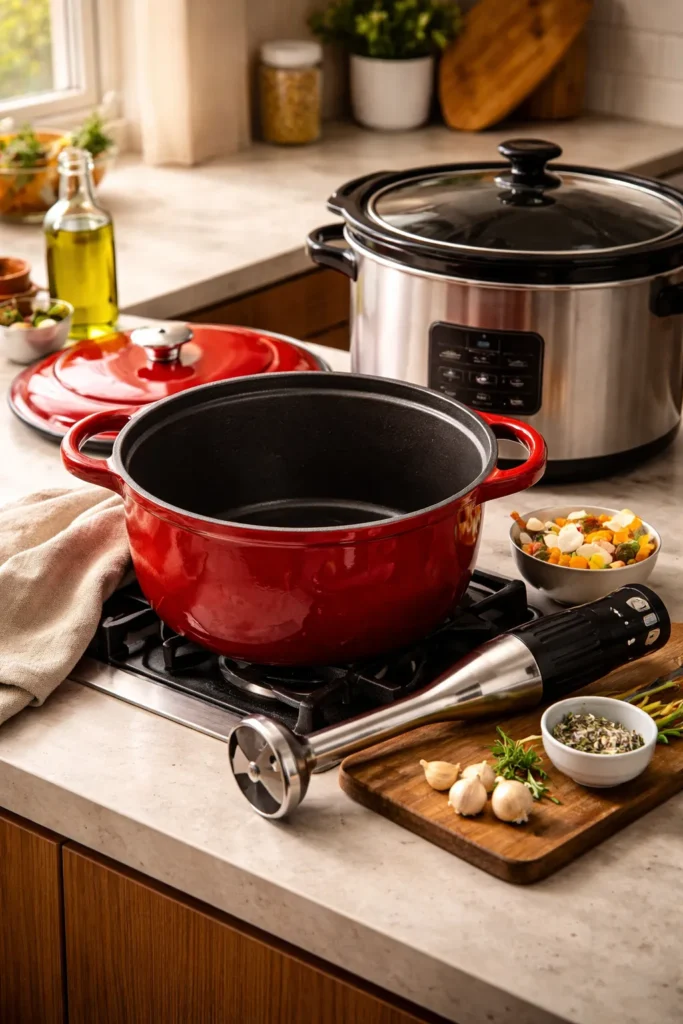
You don’t need much to make excellent soup, but a few specific tools make the process noticeably smoother.
A Dutch oven (4.5 to 7 quarts) is the most versatile piece of equipment you can own for soup. Its heavy base distributes heat evenly, which means no scorching at the bottom during long simmers. The tight-fitting lid traps steam and keeps liquid from evaporating too quickly. It goes from stovetop to oven without any issue, and it’s the right vessel for anything that benefits from slow braising.
An immersion blender eliminates the risk of hot liquid erupting from a countertop blender — a genuine hazard that anyone who has made soup long enough has encountered at least once. Stick it directly in the pot, blend to your preferred consistency, and move on. For soups like butternut squash or red lentil that need to be fully smooth, it’s indispensable.
A slow cooker is worth having on rotation for soups that benefit from all-day cooking. Start it in the morning, walk away, and come home to a pot that has been quietly developing flavor for eight hours. Split pea soup, beef and barley stew, and chicken tortilla soup are all candidates for the slow cooker treatment.
How to Store and Reheat Leftover Soup Properly
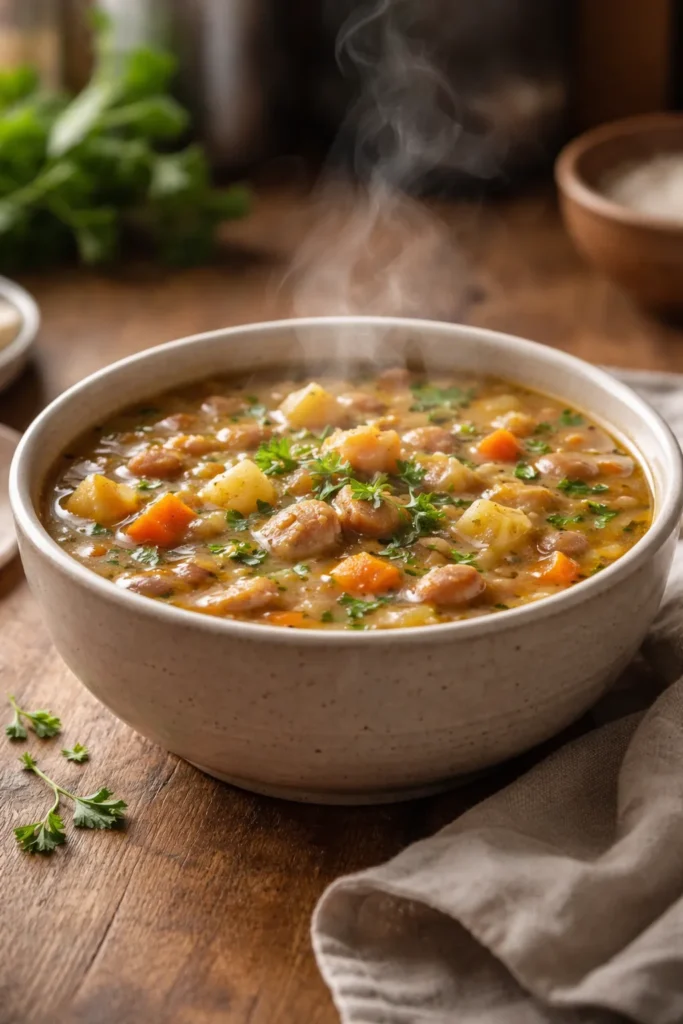
Soup is one of the few foods that genuinely improves with time. The flavors meld and deepen overnight, the broth thickens slightly as starches from potatoes or pasta absorb more liquid, and the seasoning seems to settle into a more cohesive whole.
Refrigerator storage: Most soups keep well for 3 to 5 days in a sealed container. Cream-based soups and chowders tend to thicken significantly in the fridge — thin them with a splash of broth or water when reheating.
Freezer storage: Broth-based soups freeze extremely well for up to 3 months. Cream-based soups and chowders are trickier — dairy can separate when frozen and reheated. For these, freeze the soup before adding cream, and stir in fresh cream during the reheating process. Let soup cool completely before transferring to freezer-safe containers, and leave an inch of space at the top for expansion.
Reheating: The stovetop over medium-low heat is always preferable to the microwave for soups. Stir occasionally, add a splash of broth if the soup has thickened too much, and taste for seasoning before serving — cold storage can dull salt and spice levels slightly, so a small adjustment is often needed.
The Best Things to Serve Alongside a Bowl of Soup
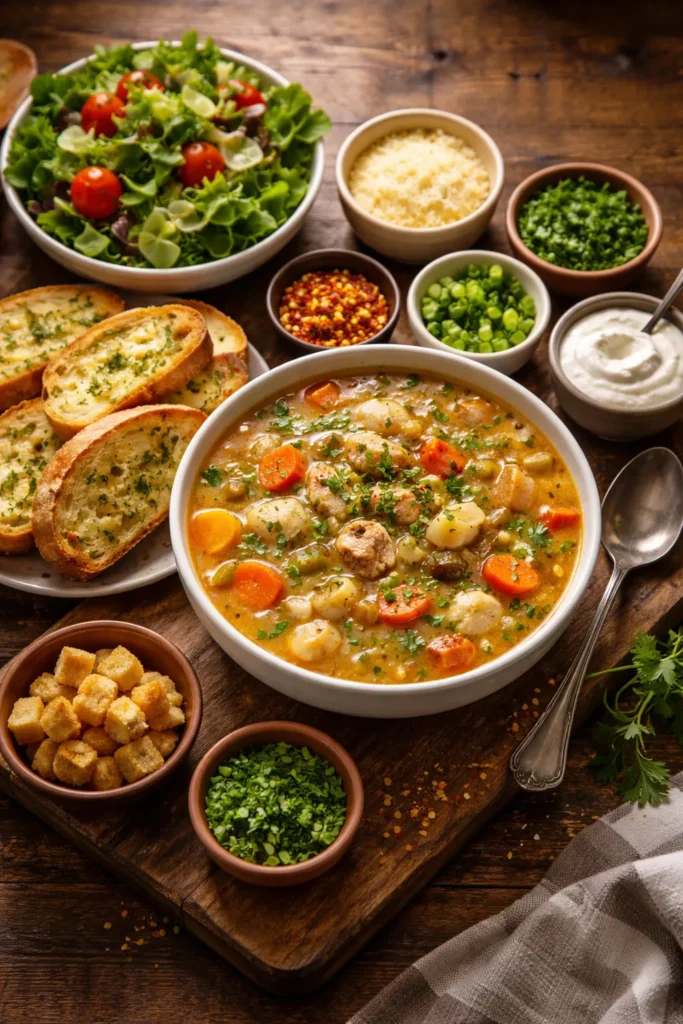
A great soup is a complete meal with the right accompaniments, and the bread situation deserves serious thought.
Crusty bread — sourdough, a French baguette, or a sturdy country loaf — is the universal soup companion because it does double duty as both a vehicle for the broth and a filling component in its own right. There’s a particular pleasure in tearing a piece of bread and using it to capture the last of a good French onion broth.
Garlic bread pairs especially well with tomato-based soups, chowders, and Italian-inspired soups like Zuppa Toscana. The butter and garlic echo flavors already present in the soup without clashing.
A simple side salad adds the textural contrast and freshness that a creamy or starchy soup can sometimes lack. Something with a sharp dressing — a balsamic vinaigrette, or a simple lemon and olive oil combination — cuts through the richness and rounds out the meal.
Toppings applied at the table are one of the easiest ways to make soup feel more interactive and customizable. A set of small bowls with options like shredded cheese, sour cream, fresh herbs, croutons, crushed crackers, sliced avocado, or a drizzle of chili oil lets everyone adjust their bowl to their own preference.
Final Thoughts
Soup is one of the most forgiving, adaptable, and satisfying categories of cooking you can explore. Every single recipe on this list can be adjusted to your preferences, your pantry, and your schedule — and most of them get better with repetition, as you learn exactly how much spice, how much cream, or how much time suits your taste.
The rainy evening is just a good excuse to start. Once you’ve settled into the rhythm of a soup habit — a pot simmering while the rain falls outside, the kitchen warm and fragrant — it becomes something you reach for well beyond grey days. Because the truth is, a good bowl of soup doesn’t need a reason. It just needs a pot, some decent ingredients, and a bit of time.
Start with whichever recipe called to you most on this list. Make it once. Then make it again and adjust it. That’s how good home cooking actually works — not from following a recipe perfectly the first time, but from getting comfortable enough with it to make it your own.