There’s a particular kind of satisfaction that only a backyard grill can produce. It’s not just the food — it’s the smoke curling up through the late-afternoon air, the sizzle that announces dinner is almost ready, and the way everyone gravitates toward the heat without being asked. A grill has a way of turning an ordinary Tuesday into something worth remembering.
But here’s what separates a good cookout from a great one: the recipes. Too many backyard grilling sessions default to dry chicken breast and burgers that taste like nothing without the condiments. The truth is that grilling rewards boldness — bold marinades, bold technique, bold flavor combinations that you’d never think to put together until the first bite convinces you completely.
The recipes below pull from a range of culinary traditions, from the streets of Los Angeles to the coastlines of the Mediterranean, from Jamaican jerk traditions to Colombian-style beef preparations. Some are done in under 20 minutes; others reward a little patience with results that are genuinely show-stopping. All of them are built for the backyard, designed to be shared, and tested enough to be trusted. Whether you’re firing up a gas grill for a weeknight dinner or settling in for a Sunday afternoon of tending to the coals, these are the recipes worth making.
Table of Contents
- 1. Pork Smashburger with Bourbon Peach Seasoning
- The Flavor Combination That Makes It Work
- What to Know Before You Make It
- 2. Carne Asada with Green Chimichurri
- Chimichurri: The Sauce That Completes the Dish
- Quick Reference
- 3. Thai-Style Grilled Chicken with Sweet-Hot Dipping Sauce
- Building the Dipping Sauce
- Technique Notes
- 4. Louisiana Low Country Skewers
- The Butter Situation
- Assembly and Grilling Details
- 5. Mediterranean Stuffed Salmon on the Grill
- Keeping the Skin On
- Technical Notes for Perfect Execution
- 6. BBQ Chicken Quesadillas on the Griddle
- Assembling Directly on the Griddle
- Key Details
- 7. Mexican Street Corn Salad (Esquites)
- Building the Dressing
- What Takes This From Good to Exceptional
- 8. Whole Grilled Fish with Herbs and Lemon
- Scoring and Oil — Two Steps You Cannot Skip
- Practical Grill Notes
- 9. Extra-Juicy Grilled Shrimp with Herb Chermoula
- The Skewer Packing Technique
- Chermoula: North Africa’s Most Versatile Herb Sauce
- 10. Grilled Cauliflower Steaks with Smoky BBQ Rub
- The Marinade and the Rub
- Jalapeño Yogurt Sauce
- 11. Grilled Flatbread with Olive Oil and Za’atar
- Za’atar: The Herb Blend That Transforms the Dish
- Serving Versatility
- 12. Grilled Banana Pudding with Toasted Vanilla Wafers
- Building the Assembled Dessert
- Making It Ahead
- Getting More From Your Grill This Season
- Final Thoughts
1. Pork Smashburger with Bourbon Peach Seasoning
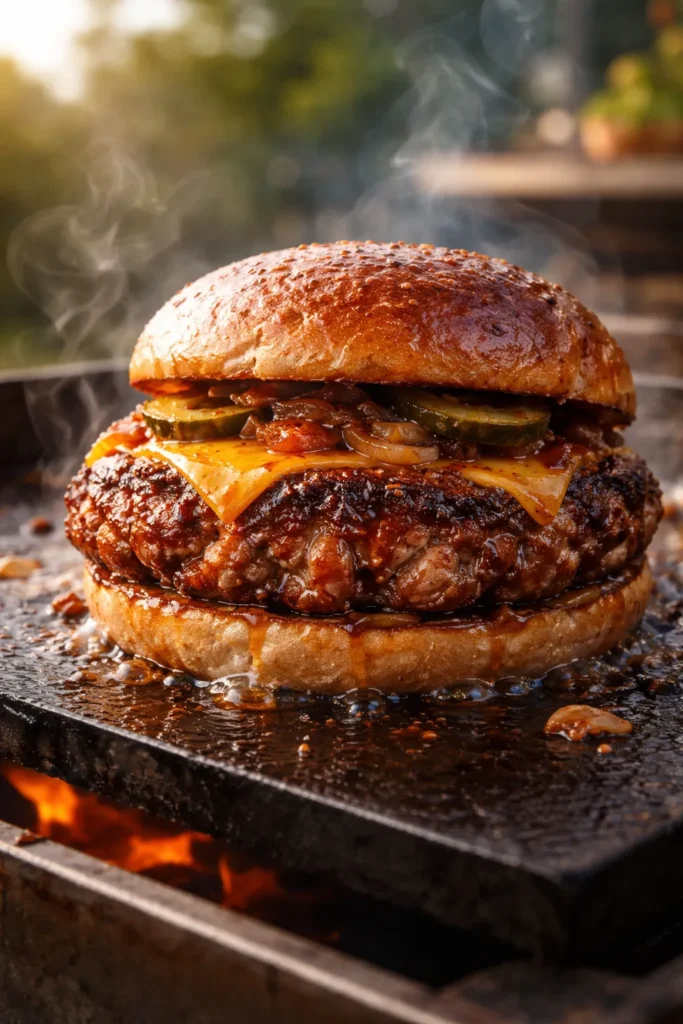
The smashburger has earned its devoted following for good reason — smashing a loose ball of ground meat against a hot flat surface creates an unbeatable crust through what food scientists call the Maillard reaction. Using pork instead of beef takes that already compelling technique somewhere new entirely.
Why it works: Ground pork has a higher fat content and a slightly sweeter flavor than standard 80/20 beef, which means it develops a caramelized edge even more quickly on a screaming-hot griddle or cast iron grate. The crust is crispier, the interior stays juicy longer, and the overall flavor profile is more nuanced than a traditional beef smashburger.
The Flavor Combination That Makes It Work
Bourbon peach seasoning — whether store-bought or made by combining smoked paprika, brown sugar, a pinch of cayenne, garlic powder, and dried peach powder — creates a sweet and smoky glaze on the crust as the sugars cook into the fat. It’s not a Southern dessert vibe; it’s more like a barbecue joint decided to make a burger. The sweetness cuts through the richness of the pork beautifully.
What to Know Before You Make It
- Use 80/20 ground pork, not leaner blends — the fat is non-negotiable for the crust
- Heat your griddle or cast iron to at least 450°F before adding the meat
- Smash within the first 10 seconds of the ball hitting the surface — after that, it starts to set and you lose the opportunity for a thin, craggy patty
- Don’t smash twice — one firm press is all it takes; pressing again squeezes out moisture
- A brioche bun toasts in under 90 seconds on the same griddle — use the residual fat
Pro tip: Stack two thin smashed patties with a single slice of American cheese between them. The cheese melts into both patties as they rest together, creating a cohesive, layered bite instead of a burger that slides apart.
2. Carne Asada with Green Chimichurri
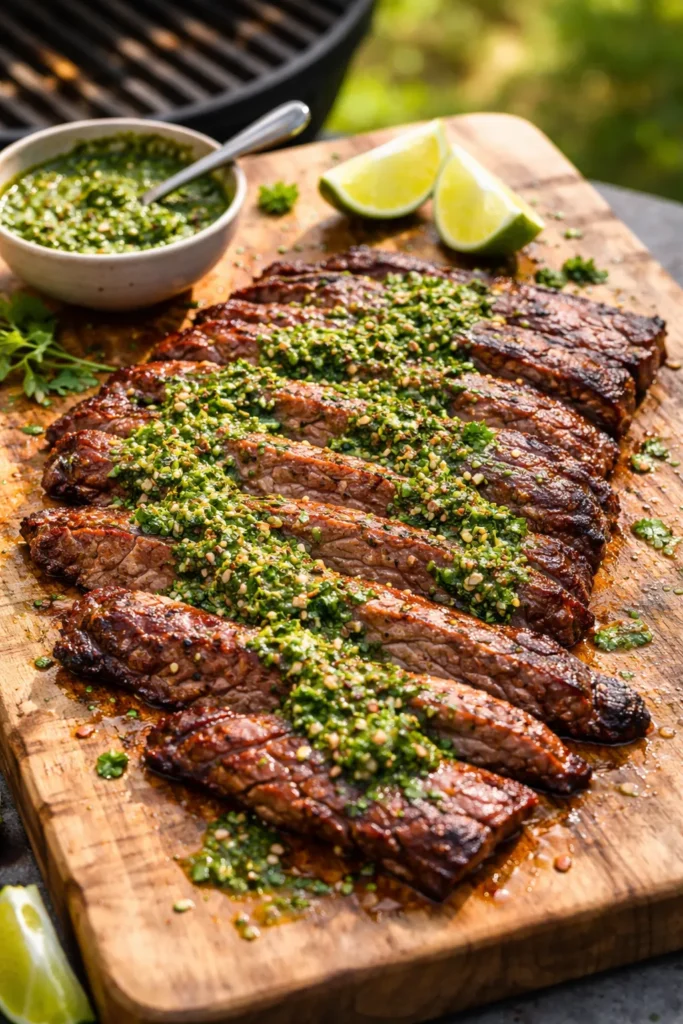
Carne asada at its most stripped-down is just skirt steak with salt and pepper, kissed by high heat. But the version that earns its place at the backyard table goes further — a marinade built on dried chilies, fresh citrus juice, garlic, and just a splash of fish sauce for an umami depth that’s invisible to the palate but impossible to miss when it’s absent.
Why it works: Skirt steak has a loose, open grain structure that drinks up a marinade aggressively. Acids from orange and lime juice begin to denature the surface proteins slightly, allowing the fat-soluble flavor compounds from the dried chilies and garlic to penetrate deeper than they would on a denser cut. The fish sauce amplifies the beef’s natural savory flavor without adding any fishy note.
Chimichurri: The Sauce That Completes the Dish
Chimichurri is a vibrant, piquant herb sauce made from flat-leaf parsley, fresh oregano, garlic, red wine vinegar, olive oil, and a pinch of red pepper flakes. It comes together in a blender in under 60 seconds and serves double duty — use half as a finishing sauce for the sliced steak and reserve the other half as a table condiment. The acidity of the vinegar cuts through the richness of the charred beef in a way that makes each bite feel fresh.
Quick Reference
- Best cut: Skirt steak or flank steak, 1 to 1.5 inches thick
- Marinade time: 2 hours minimum, 6 hours maximum — beyond that, the citrus breaks the texture down too aggressively
- Grill temperature: High direct heat, 450–500°F; cook 3–4 minutes per side for medium-rare
- Rest before slicing: 5 minutes minimum; always slice against the grain
- Serving suggestion: Warm corn tortillas, sliced radishes, and a squeeze of lime turn this into tacos in under 5 minutes
Pro tip: Grill the leftover marinade in a small foil pouch directly on the grate for 10 minutes to cook off the raw meat proteins, then drizzle it over the sliced steak alongside the chimichurri for double the flavor impact.
3. Thai-Style Grilled Chicken with Sweet-Hot Dipping Sauce
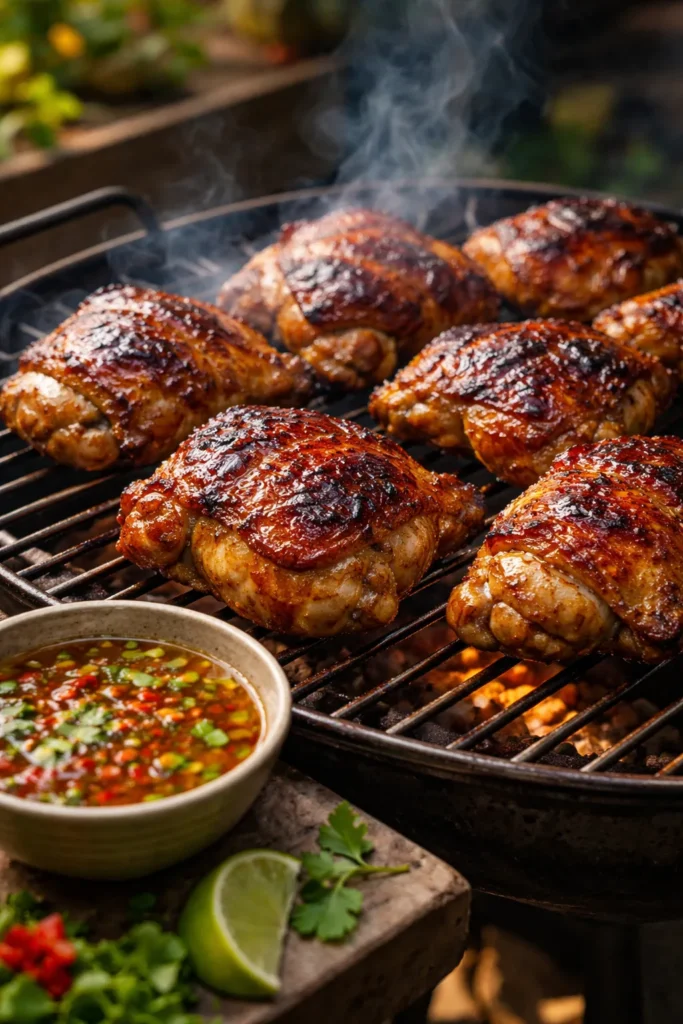
There’s a reason this preparation — known in Thailand as gai yang — has become a fixture on backyard grills far outside its country of origin. Bone-in chicken thighs and drumsticks are marinated in a paste of lemongrass, coriander root, white pepper, fish sauce, and palm sugar, then cooked slowly over indirect heat before finishing over direct flame for crispy skin.
Why it works: The bone-in pieces cook more slowly and evenly than boneless cuts, giving the collagen time to melt into the meat and keep it incredibly juicy even as the skin crisps. The sugar in the marinade caramelizes on the skin during the direct-heat finish, creating a lacquered exterior that crackles when you bite through it.
Building the Dipping Sauce
The accompanying sweet-hot dipping sauce — made from fish sauce, lime juice, toasted rice powder, chili flakes, palm sugar, and fresh cilantro — is not optional. It’s the acid-sweet-heat contrast that makes the richness of the chicken sing. The toasted rice powder, made by dry-roasting raw rice in a pan until golden and grinding it to a coarse powder, adds a subtle nuttiness and helps the sauce cling to the meat.
Technique Notes
- Marinate overnight if possible — the lemongrass and coriander need time to penetrate bone-in pieces
- Start on indirect heat at 325°F for 25–30 minutes, then move to direct high heat for 5–7 minutes to crisp the skin
- Internal temperature should reach 165°F at the thickest part, away from the bone
- Serve with sticky rice and a few sprigs of fresh cilantro
Pro tip: If you can’t find coriander root, use 1 tablespoon of ground coriander seed plus a small bunch of cilantro stems — they carry a similar aromatic quality and work as a reliable substitute in the marinade paste.
4. Louisiana Low Country Skewers
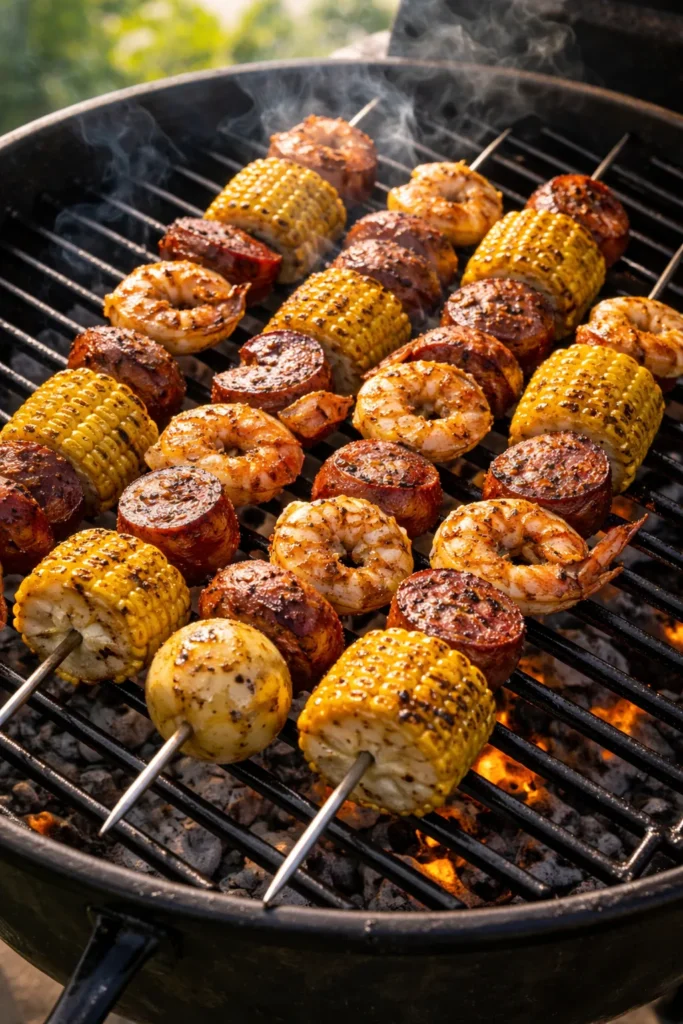
Low Country cooking from the Gulf Coast is built on abundance — shrimp, sausage, corn, and potatoes, all cooked together with enough seasoning to make you pay attention. These skewers take that tradition and move it to direct grill heat, which adds a char and smokiness that the classic boil preparation simply can’t replicate.
Why it works: Threading the ingredients onto skewers rather than throwing them into a pot means each element gets individual exposure to flame. The shrimp develops a lightly charred exterior while staying tender inside; the sausage slices get caramelized edges; and the corn, cut into 1-inch rounds, picks up grill marks that sweeten the sugars on the cut surface.
The Butter Situation
This is not the time for restraint. Make a compound butter from softened unsalted butter, Old Bay seasoning, Cajun spice blend, fresh garlic, lemon zest, and a pinch of cayenne. Press it into a log shape using plastic wrap, refrigerate until firm, then slice rounds directly onto the hot skewers as they come off the grill. The cold butter melts into every crack and crevice of the shrimp, sausage, and corn simultaneously.
Assembly and Grilling Details
- Parboil the potatoes for 12 minutes before threading — they need a head start or they’ll still be raw when the shrimp overcooks
- Use andouille sausage for the most authentic Low Country flavor; kielbasa works as a milder substitute
- Grill over medium-high heat (375–400°F) for 8–10 minutes, turning every 2–3 minutes
- Make the compound butter up to 3 days in advance and refrigerate it
Pro tip: Soak wooden skewers in water for at least 30 minutes before threading. Better yet, use flat metal skewers — they prevent ingredients from spinning when you rotate them, which means more even grill marks on every side.
5. Mediterranean Stuffed Salmon on the Grill
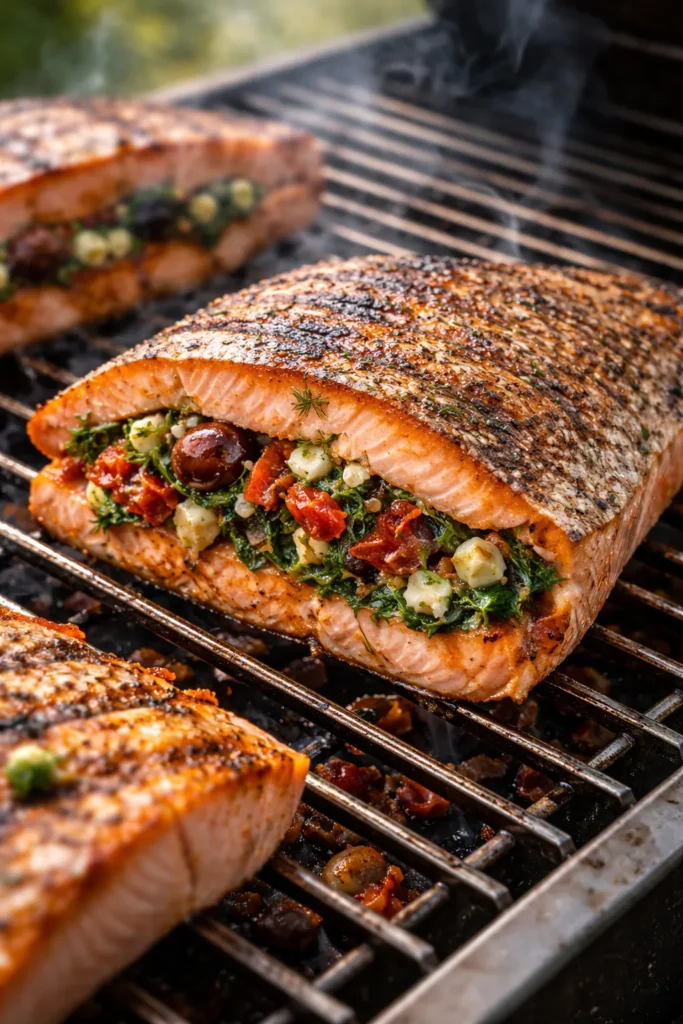
Grilled salmon with a simple seasoning is a reliable weeknight protein. Grilled salmon with a cavity packed full of spinach, sun-dried tomatoes, Kalamata olives, crumbled feta, and fresh dill is something else entirely — a dish that looks architectural on the plate and tastes like a meal from a restaurant you’d actually want to return to.
Why it works: The stuffing serves two functions. The moisture from the spinach and tomatoes steams the interior of the fish as it grills, preventing the flesh from drying out even over direct heat. The fat from the feta and olives bastes the interior continuously as it melts, distributing rich, briny flavor through every bite of the fish.
Keeping the Skin On
Leaving the skin on the salmon is non-negotiable for this recipe. It creates a protective barrier between the delicate flesh and the grill grates, preventing the fish from breaking apart when you flip it. Brush the skin lightly with olive oil and season it with flaky salt — it crisps beautifully and adds a textural contrast to the soft, herb-flecked interior.
Technical Notes for Perfect Execution
- Score the flesh with shallow diagonal cuts before stuffing — this prevents the fillet from curling on the grill and creates small channels for the filling flavors to penetrate
- Secure the stuffed fillet with two or three toothpicks or short metal skewers running parallel to the length of the fish
- Grill over medium heat (350°F) for 6–8 minutes skin-side down, then 3–4 minutes on the other side
- The fish is done when the flesh flakes easily with a fork and reaches an internal temperature of 125–130°F for medium doneness
Pro tip: If you’re nervous about the salmon sticking, place it on a sheet of heavy-duty foil with the edges folded up to create a makeshift tray. You still get the grill flavor, but the fish lifts out cleanly every time.
6. BBQ Chicken Quesadillas on the Griddle
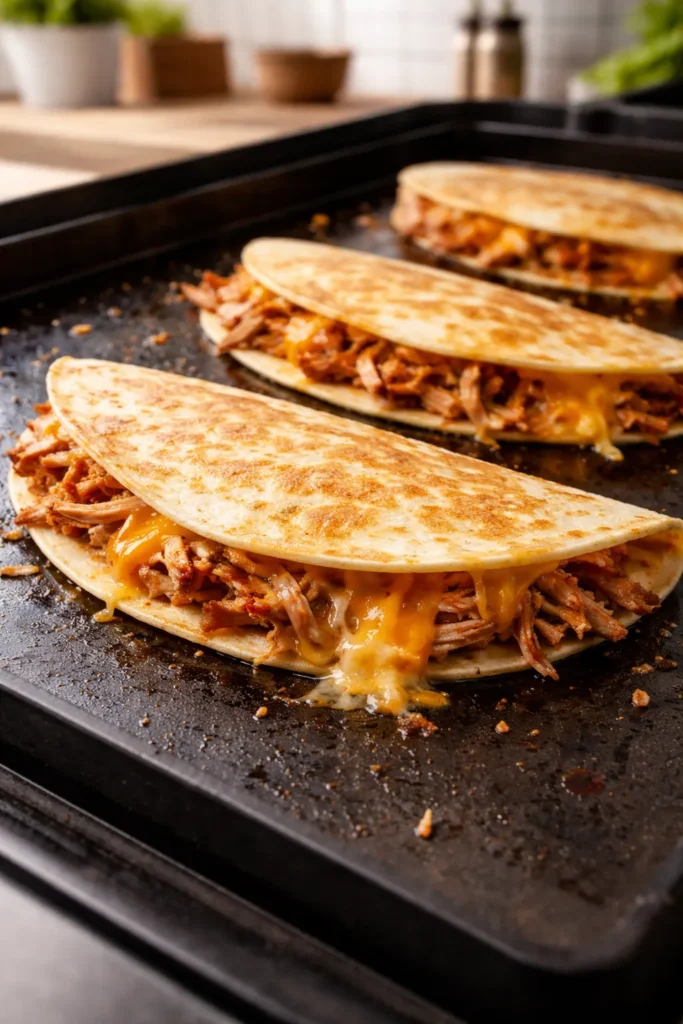
The concept here is deceptively simple: take the smoky pulled chicken and tangy barbecue sauce that everyone already loves, stuff them between two flour tortillas with a generous layer of melted cheddar and Monterey Jack, and cook the whole thing on a flat griddle until the exterior is shatteringly crisp. It sounds like leftovers. It tastes like intention.
Why it works: The griddle surface conducts heat evenly across the entire tortilla, creating a uniform golden-brown crust rather than the spotty, partially-raw exterior you get from a skillet. The cheese melts completely before the outside burns, meaning every bite from edge to center has that essential pull of molten, slightly caramelized cheese.
Assembling Directly on the Griddle
Rather than building the quesadilla in your hands and then placing it down, assemble it directly on the hot surface — tortilla first, then cheese, then chicken, then more cheese, then tortilla on top. This method gives the bottom tortilla a 30-second head start on crisping before you add any weight, and it ensures the cheese begins melting immediately from the heat radiating off the griddle.
Key Details
- Shred the chicken rather than chopping it — shredded pieces compress better between tortillas and create a more cohesive filling that doesn’t slide out when you cut
- Mix two barbecue sauces for complexity: one smoky, one sweet
- Press down gently with a spatula after flipping to ensure full contact between the top tortilla and the surface
- Let it rest 90 seconds before cutting — the filling needs to settle or it pours out
Pro tip: Add a thin layer of cream cheese between the barbecue chicken and the shredded cheddar. It melts into the filling invisibly but adds a richness and binding quality that makes the quesadilla stay intact even when cut into wedges.
7. Mexican Street Corn Salad (Esquites)
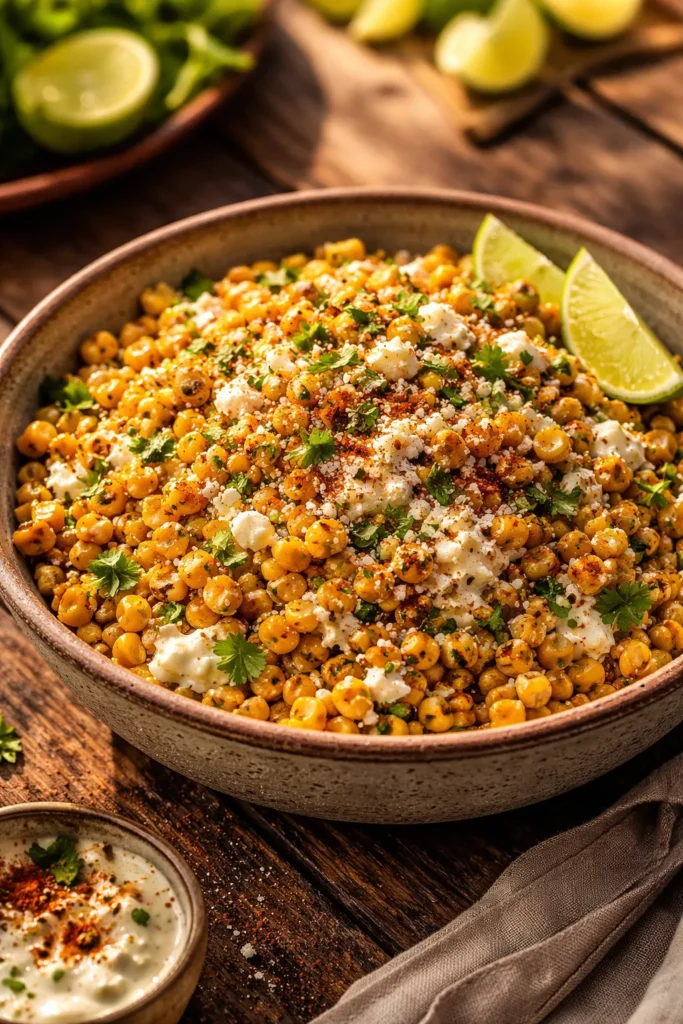
If you’ve ever served the classic elotes — grilled corn on the cob slathered in mayo, chili powder, cotija cheese, and lime — you already know the flavor profile. Esquites takes the same ingredient set, cuts the kernels off the cob, and builds a salad that’s far more practical for a crowd: no dripping down elbows, no awkward cob-biting, and it can be prepped an hour ahead.
Why it works: Grilling the corn in the husk, or directly on the grate after husking, develops the sugars on the cut surface into something approaching caramel. Those charred, sweet corn kernels are the backbone of the salad — without that step, the dish is just corn with toppings. With it, every element amplifies the others.
Building the Dressing
The dressing is a mixture of mayonnaise, Mexican crema (or sour cream as a substitute), fresh lime juice, garlic, and ground ancho chili. It’s creamy, tangy, and just spicy enough to register without overwhelming. Toss it with the warm corn kernels immediately off the grill so the dressing absorbs into the cut edges as everything cools together.
What Takes This From Good to Exceptional
- Grill the corn with some husk peeled back to get direct char on the kernels — fully husked is faster, but partially husked lets the steam inside the husk keep the corn moist
- Use cotija cheese crumbled directly into the warm corn — it softens slightly and distributes throughout the salad rather than sitting on top
- Add cilantro and thinly sliced scallions just before serving to keep them fresh and bright
- A pinch of smoked paprika deepens the smoke note significantly
Pro tip: This salad actually improves after 30 minutes at room temperature as the dressing soaks into the warm corn. Make it first, let it sit while you grill everything else, and it’ll be at peak flavor when the main dishes come off the grate.
8. Whole Grilled Fish with Herbs and Lemon
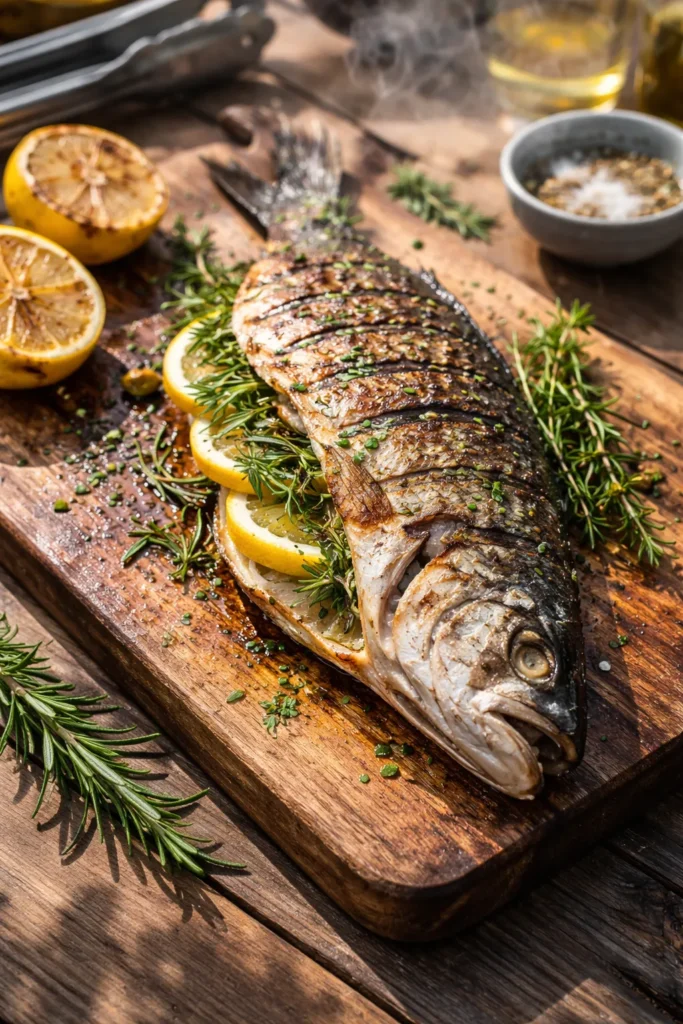
Grilling a whole fish feels ambitious until you do it the first time and realize it’s actually more forgiving than grilling fillets. The skin and bones hold the fish together throughout the cooking process, the steam trapped inside the cavity bastes the flesh from within, and the result is dramatically more moist and flavorful than any fillet you’ll pull off the grill.
Why it works: With fillets, all the moisture escapes from the cut edges as the fish cooks. A whole fish retains moisture inside the cavity — especially when you stuff that cavity with sliced lemon, fresh rosemary, thyme, and flat-leaf parsley. The herbs perfume the flesh from the inside as the natural steam circulates.
Scoring and Oil — Two Steps You Cannot Skip
Score the fish with 3–4 diagonal cuts through the skin and into the flesh on each side, cutting about halfway to the spine. This allows heat to penetrate the thickest part evenly so the spine area cooks at the same rate as the thinner tail section. Brush the exterior generously with olive oil — not just for flavor, but because oiled skin releases cleanly from grill grates where bare skin would tear and stick.
Practical Grill Notes
- A 2-pound whole fish (snapper, branzino, or sea bass work beautifully) needs 8–10 minutes per side over medium-high heat with the lid closed
- Don’t move the fish during the first 6 minutes — once the skin crisps and releases naturally from the grates, it will lift without tearing
- Check doneness by pressing at the thickest point behind the head — the flesh should flake and feel firm with no translucency
- Fresh rosemary, oregano, and thyme inside the cavity deliver far more aromatic impact than dried herbs
Pro tip: Place the stuffed fish in a grill basket designed for whole fish — the hinged design lets you flip it without touching the fish itself, which completely eliminates the risk of it breaking apart on the turn.
9. Extra-Juicy Grilled Shrimp with Herb Chermoula
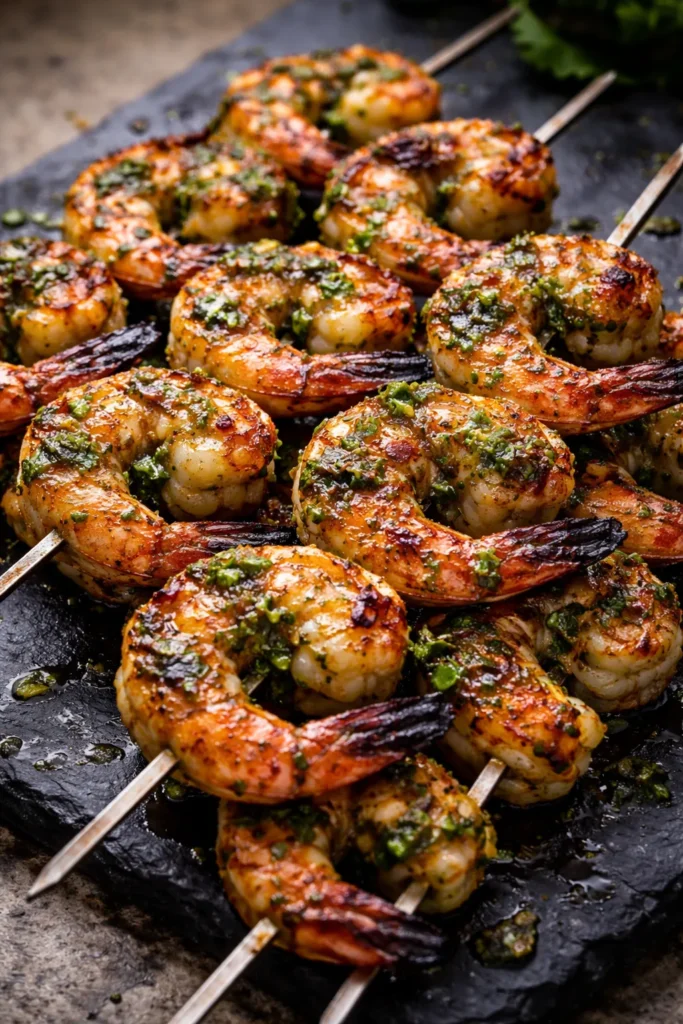
Overcooked shrimp is one of grilling’s most common and most avoidable outcomes. The difference between perfect grilled shrimp — plump, slightly charred, snapping with juice — and rubbery grilled shrimp comes down to two preparation steps that most recipes skip: brining, and how you pack them onto the skewer.
Why it works: A brief brine in cold water with salt and a small amount of baking soda changes the surface chemistry of the shrimp at a cellular level. The salt draws moisture in via osmosis and helps the proteins retain that moisture during cooking. The baking soda raises the pH of the surface, which promotes better browning at lower temperatures and contributes to the plump, firm texture that distinguishes great grilled shrimp from mediocre versions.
The Skewer Packing Technique
Pack the shrimp tightly against each other on the skewer with no space between them. Counterintuitively, closer packing — not spreading them out — produces better results. A tightly packed skewer has a lower ratio of surface area to mass, meaning you can achieve deep browning on the exterior before the interior overcooks. Spread-out shrimp overcook from all sides simultaneously before the exterior has a chance to char.
Chermoula: North Africa’s Most Versatile Herb Sauce
Chermoula is a blended sauce of fresh cilantro, flat-leaf parsley, preserved lemon (or fresh lemon zest and juice), cumin, smoked paprika, garlic, and olive oil. It’s brighter than chimichurri, more complex than a simple herb oil, and it pairs perfectly with the sweetness of charred shrimp.
- Brine the shrimp: 1 teaspoon salt + ¼ teaspoon baking soda dissolved in 4 cups cold water, 30 minutes maximum
- Grill over high direct heat: 2–3 minutes per side, no more
- Shrimp are done when the flesh turns opaque pink and just begins to curl into a C shape — a tight O shape means overcooked
- Make the chermoula up to 24 hours ahead; the flavors deepen significantly overnight
Pro tip: Use jumbo shrimp (16/20 count) rather than smaller sizes. The larger mass gives you a wider window between perfectly cooked and overdone, making the margin for error significantly more forgiving.
10. Grilled Cauliflower Steaks with Smoky BBQ Rub
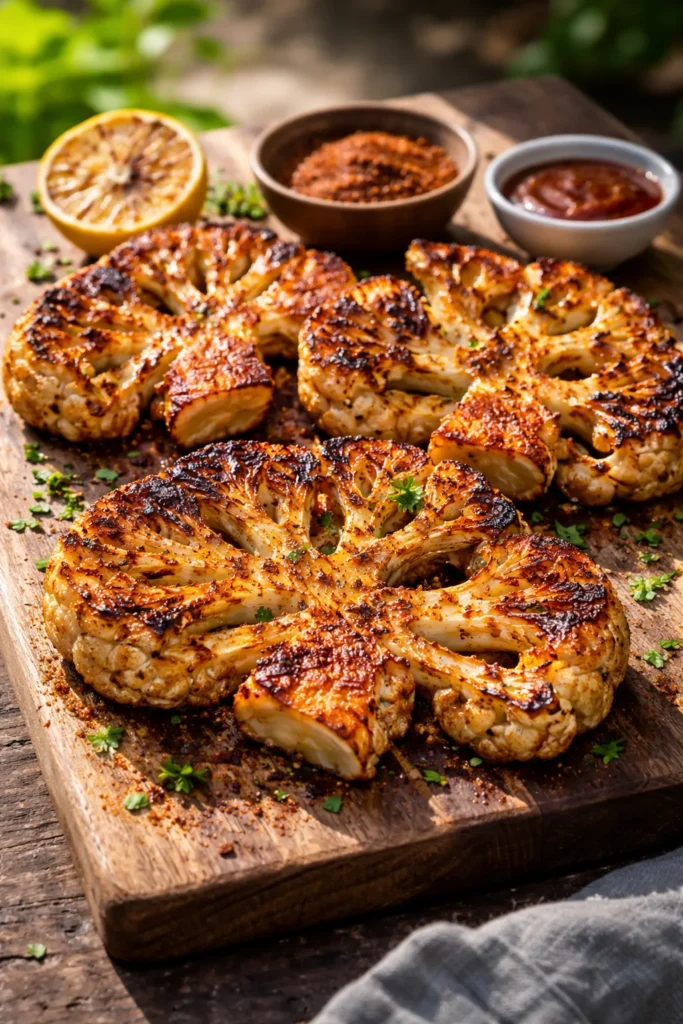
The vegetable-skeptics at any backyard cookout will change their position on this one. When you slice cauliflower vertically through the stem into thick 1-inch steaks and give them direct grill contact, something genuinely interesting happens — the cut surfaces char and caramelize in a way that develops a nutty, slightly bitter flavor that plays beautifully against a smoky spice rub.
Why it works: Cauliflower is about 92% water. When those water molecules hit direct high heat, they flash-evaporate from the cut surface, leaving behind concentrated sugars and the structural carbohydrates that char into the caramelized crust you’re after. The stem, which is denser than the florets, acts as a built-in structural support that keeps the steaks intact as they cook.
The Marinade and the Rub
A marinade of olive oil, lime juice, smoked paprika, garlic powder, cumin, and brown sugar pulls double duty here — it both seasons the cauliflower and protects the surface from drying out before the char develops. Brush it on both sides and let it sit for a minimum of 5 minutes before it goes on the grill.
Jalapeño Yogurt Sauce
The accompaniment that makes this dish a proper meal rather than a side: Greek yogurt blended with finely chopped pickled jalapeños, fresh lime juice, garlic, and a pinch of salt. The coolness and creaminess of the yogurt cuts through the smokiness of the charred cauliflower in a way that makes the whole plate feel complete and balanced.
- Grill at 300–325°F with the lid closed for 6–7 minutes per side — this lower temperature gives the interior time to become tender before the exterior burns
- Cut steaks 1 inch thick — thinner and they break apart; thicker and the interior stays raw
- Finish with coleslaw piled directly on top of the hot steaks for temperature and texture contrast
- Toasted pumpkin seeds scattered over the top add crunch and a subtle green, grassy flavor
Pro tip: Pre-heat your grill on high, then drop it to medium before adding the cauliflower. Starting on a ripping-hot grate gives you those coveted sear marks in the first 30 seconds, and the lower temperature carries the cooking through to the center without burning.
11. Grilled Flatbread with Olive Oil and Za’atar
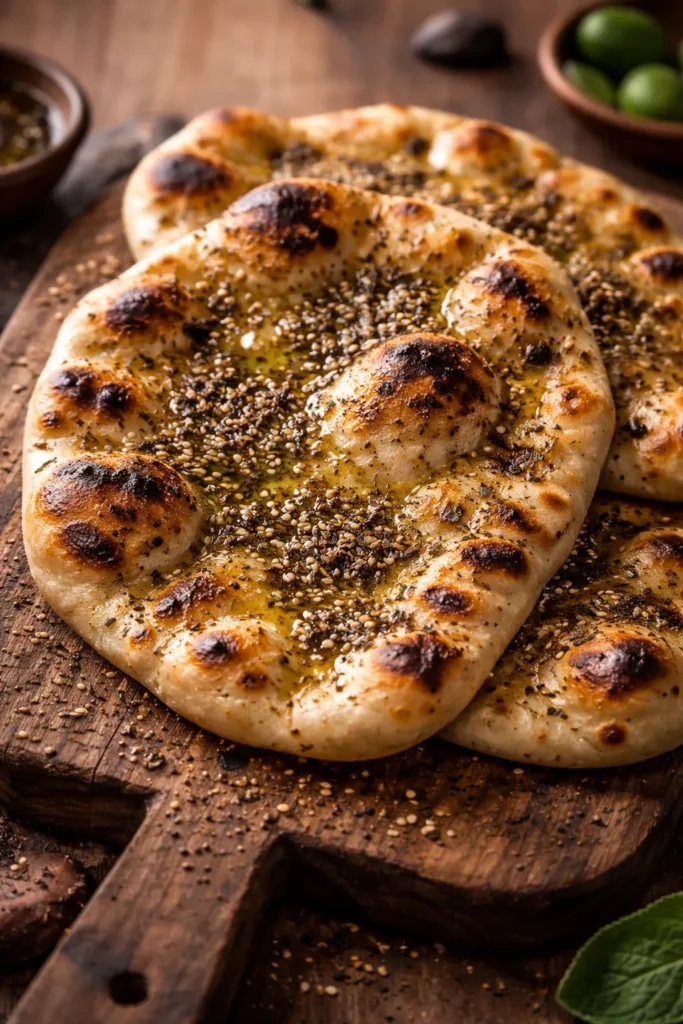
Every backyard grill session needs something you can hand to guests while the main event cooks — something that feels effortless but tastes like you planned it. Grilled flatbread fits that role with almost no competition. Made with a simple dough of flour, yogurt, olive oil, baking powder, and salt (no yeast, no rising time), it goes from mixed to grilled in under 30 minutes.
Why it works: The yogurt in the dough does two things. It adds just enough acidity to create a tender crumb texture, and the proteins in it help the bread stay soft and pliable rather than crackling like a cracker. The direct grill contact creates large, irregular charred bubbles on the surface — those slightly bitter char spots are exactly what you want.
Za’atar: The Herb Blend That Transforms the Dish
Za’atar is a Middle Eastern spice blend combining dried thyme, sumac, sesame seeds, and salt. Mixed with good olive oil and brushed onto the flatbread as it comes hot off the grill, it blooms into a fragrant, slightly tart, nutty coating that makes the bread disappear from the plate at a remarkable rate. Don’t substitute Italian seasoning — the sumac’s tartness is what distinguishes this.
Serving Versatility
- Serve as a starter with hummus and whipped feta
- Use as a base for grilled vegetables instead of pita
- Wrap grilled sausages or kebabs inside for an informal, satisfying roll
- Top with shaved ricotta salata and a drizzle of honey for a cheese-course hybrid
Pro tip: Roll the dough balls slightly thinner than you think you should. On the grill, they puff up significantly from the steam inside — starting thinner means the finished flatbread has the right balance of charred exterior and chewy interior rather than becoming too bready and dense.
12. Grilled Banana Pudding with Toasted Vanilla Wafers
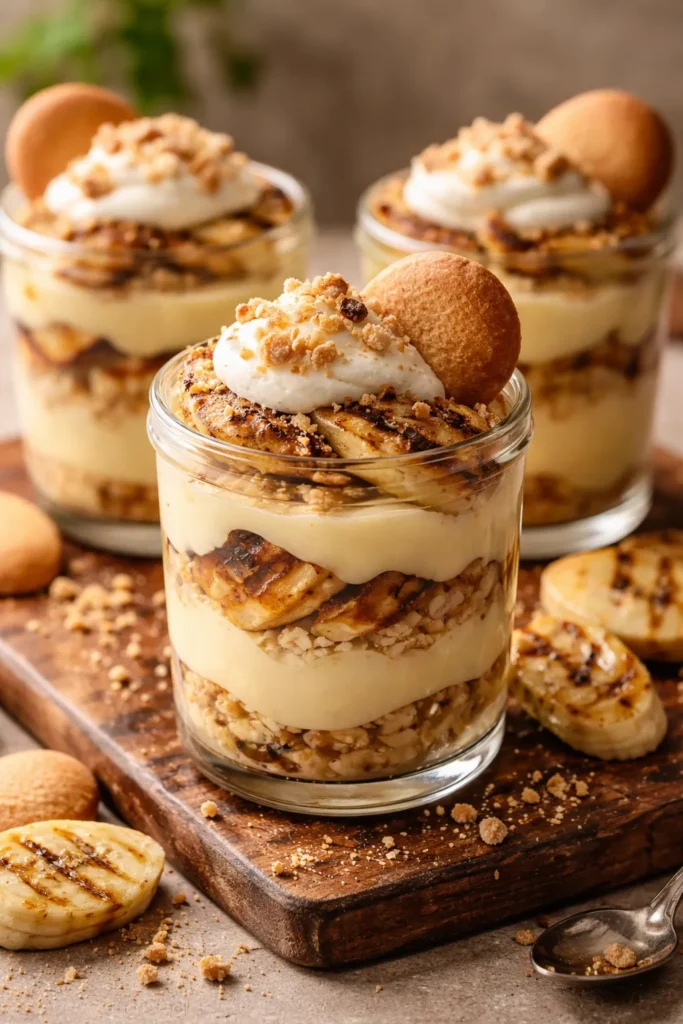
Grilled desserts are underutilized in the average backyard cookout — most people shut the grill off before dessert and let the moment pass. Don’t. Bananas on a hot grill are a revelation: the natural sugars caramelize into something approaching toffee, the flesh softens to a custard-like consistency, and the slight smokiness adds a depth that the same banana could never achieve any other way.
Why it works: When a banana (with the peel still on) goes directly onto a hot grate, the peel turns black and the interior steam-roasts in its own natural casing. The sugars concentrate dramatically — a ripe banana’s natural sweetness becomes something much more complex and almost caramel-like, which is exactly what you want layered into a creamy, vanillaforward pudding.
Building the Assembled Dessert
The pudding itself is a quick-cook vanilla custard — egg yolks, sugar, cornstarch, whole milk, heavy cream, and vanilla extract, cooked in a saucepan until thick enough to coat the back of a spoon. Layer the warm grilled banana slices into individual glasses or a large serving dish, alternating with the custard and a combination of crushed vanilla wafers and cubed pound cake for contrasting textures.
Making It Ahead
This is a dessert that genuinely improves with time in the refrigerator. The cookies absorb moisture from the custard and soften into a cake-like layer that provides a completely different textural experience from the crisp wafers you started with. Make it 4–6 hours before the cookout and refrigerate, covered with plastic wrap pressed directly onto the surface of the pudding.
- Grill the bananas with peels on over medium heat for 5–6 minutes until the peel is blackened and the interior feels completely soft when pressed
- Use both vanilla wafers and pound cake — the wafers add crunch, the pound cake absorbs the custard and creates layers of varying softness
- A splash of dark rum folded into the custard adds a warmth that complements the caramelized banana without tasting boozy
- Top with a cloud of freshly whipped cream just before serving
Pro tip: Choose bananas that are ripe but not overripe — look for a yellow skin with just the beginnings of brown spots. Overripe bananas can become too soft and lose their structure when grilled, while underripe ones don’t have enough sugar to caramelize properly.
Getting More From Your Grill This Season
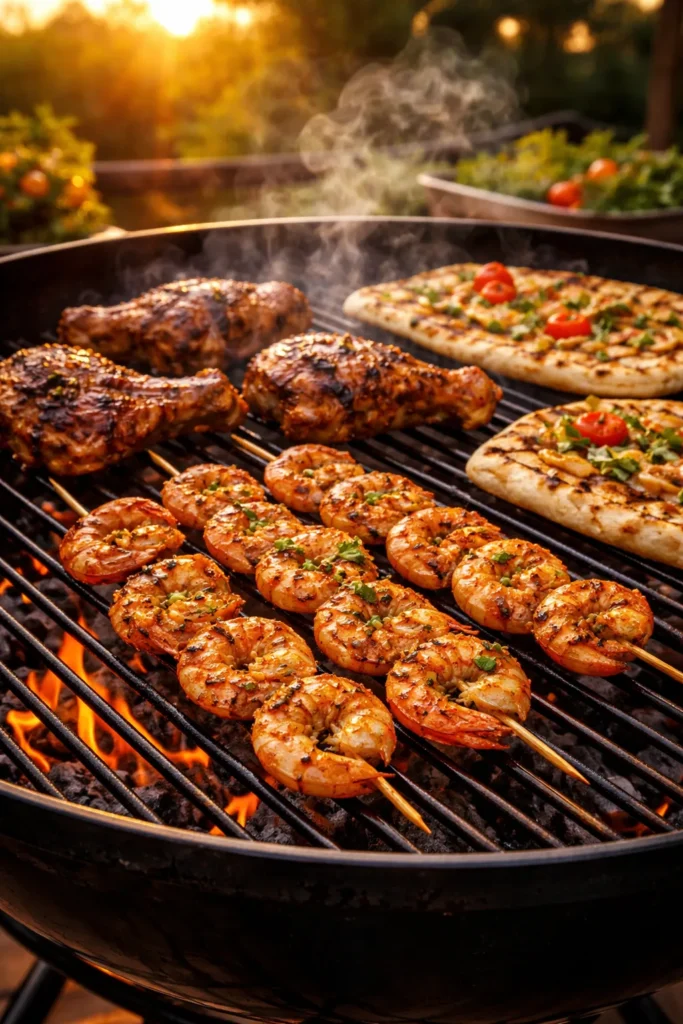
A few things worth carrying from these recipes into every future grilling session: marinades with acid, fat, and sugar hit all three mechanisms for building flavor — tenderizing, moisture retention, and caramelization. Brining proteins before high-heat cooking, especially shrimp and chicken, is a small step with a disproportionately large payoff. And the grill doesn’t have to go cold after the main course — flatbreads, fruits, and desserts all have a legitimate place on the grate.
The other thread running through all twelve of these recipes is that compound butters, herb sauces, and finishing touches applied after the grill do as much work as the cooking itself. The chermoula on the shrimp, the chimichurri on the carne asada, the za’atar oil brushed onto hot flatbread — these are the elements that push a good grilled dish into the memorable column.
Start with two or three of these and you’ll already have a better backyard spread than most cookouts offer. Work through all twelve across a summer and you’ll understand, firsthand, why the grill is the most democratic and most rewarding cooking surface available.
Final Thoughts
The best backyard cookout you can host isn’t about having the most expensive grill or the rarest cut of meat. It’s about knowing what you’re doing with whatever you have — understanding why the marinade works, why the technique matters, and how the finishing sauce changes everything.
Pull from these recipes as starting points, not rigid scripts. The pork smashburger marinade works beautifully on chicken thighs. The chimichurri from the carne asada recipe pairs just as well with grilled vegetables. The jalapeño yogurt sauce that accompanies the cauliflower steaks doubles as a perfect condiment for the whole fish.
Cook with confidence, keep the grill hot, and don’t put the lid down on dessert.