Feeding a crowd is one of those things that sounds straightforward until you’re standing in your kitchen two hours before guests arrive, staring at a pot that’s barely big enough for half the people you invited. Whether you’re hosting a neighborhood cookout, feeding a team after a long day, or pulling off a family reunion dinner, the pressure to produce something delicious without completely losing your mind is real.
The secret most experienced home cooks will tell you? It’s not about cooking more complicated food. It’s about choosing the right recipes — ones that scale easily, can be prepped hours in advance, and don’t require you to stand over a hot stove making constant micro-decisions while your guests are trying to have a conversation with you. The dishes that work best for large groups are the ones that practically cook themselves once they’re started.
There’s also the budget factor. Cooking for 12, 15, or 20 people can drain a grocery budget fast if you’re not strategic about it. The recipes in this roundup lean on affordable proteins, pantry staples, and slow-cooking methods that transform inexpensive cuts of meat into something genuinely special. A few of them are so good, guests will ask for the recipe before they’ve even finished their plate.
Every single dish here has been stress-tested in real hosting situations. They hold well, travel well if needed, feed a crowd without requiring professional-level timing, and — this part matters — they leave you enough mental energy to actually enjoy your own dinner party.
Table of Contents
- What Makes a Recipe Truly Crowd-Friendly
- The Scale-Up Test
- Timing Flexibility
- 1. Slow Cooker Pulled Pork Sandwiches
- Why It Works for a Crowd
- How to Set It Up for a Group
- 2. Build-Your-Own Taco Bar
- The Taco Bar Lineup
- Scaling the Meat
- 3. Hearty Baked Penne Pasta
- Assembling It for 12 to 16 People
- The Undercook Secret
- 4. Slow Cooker Chicken Spaghetti
- Why It Stretches So Well
- Make-Ahead Instructions
- 5. Ham and Cheese Sliders
- The Glaze That Makes Them Memorable
- Scaling for Larger Groups
- 6. Slow Cooker Carnitas
- Serving Options for a Group
- The Citrus Secret
- 7. Baked Potato Bar
- The Toppings That Elevate the Whole Spread
- Planning the Numbers
- 8. Chicken and Broccoli Alfredo Bake
- The Alfredo Sauce Decision
- Prep-Ahead Instructions
- 9. Slow-Cooker Beef and Bean Chili
- Why the Cocoa Powder Works
- Serving a Chili Bar
- 10. Chicken Parmesan Casserole
- Getting the Crust Right
- Serving It for a Group
- How to Scale Any of These Recipes for Any Group Size
- Make-Ahead Strategies That Make Hosting Feel Easy
- Final Thoughts
What Makes a Recipe Truly Crowd-Friendly
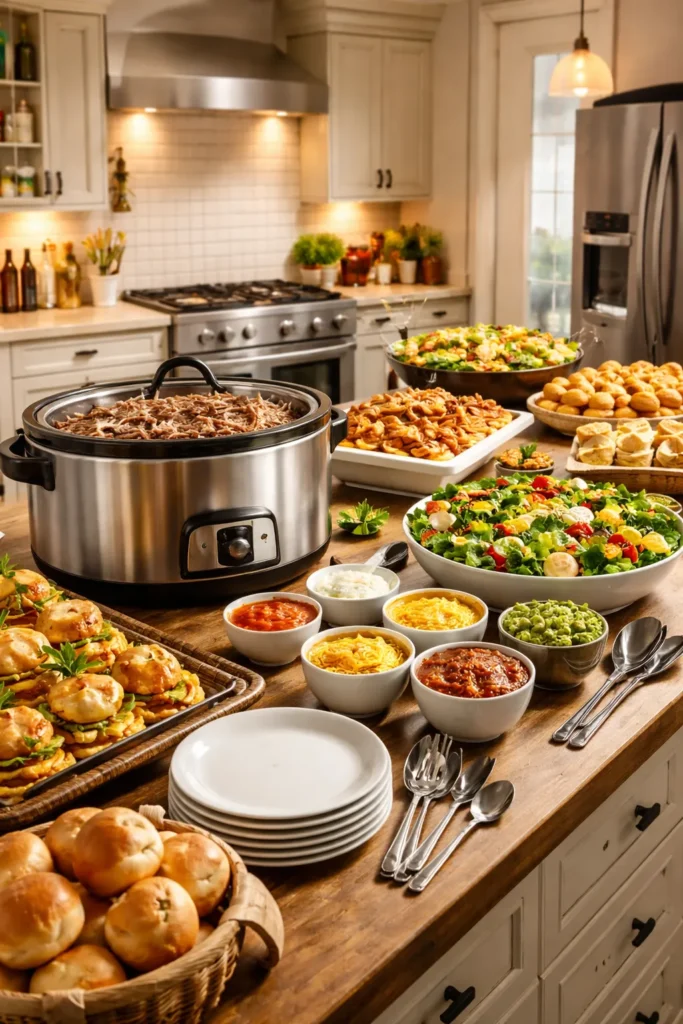
Not every dish that tastes good is actually suited for a crowd. There’s a difference between a meal that serves 4 and doubles easily versus one that falls apart structurally when you try to triple it. Before getting into the recipes themselves, it’s worth understanding what separates a genuinely crowd-friendly dish from everything else.
Hands-off cooking time is the biggest factor. Slow cooker recipes, baked casseroles, and braised proteins win here because once they’re assembled and cooking, they don’t need you. You can set up drinks, arrange your table, chat with early arrivals, and still pull out a perfect meal at the end.
Dishes that let guests serve themselves also take enormous pressure off the host. Taco bars, baked potato bars, pasta bars, and slider setups turn the meal into an interactive experience rather than a plated service situation. This isn’t just easier — it’s genuinely more fun. People linger longer, conversations happen around the food table, and everyone ends up with exactly what they want on their plate.
The Scale-Up Test
A recipe passes the scale-up test if doubling it doesn’t require a fundamentally different technique. Slow cooker carnitas that serve 6? Double the meat and it cooks in the exact same amount of time. Sheet pan chicken for 4? You’ll need more pans, not a different method. Delicate soufflés and risottos fail this test badly — both require constant attention and don’t multiply gracefully.
Timing Flexibility
The best crowd recipes have a forgiving window — they’re just as good at 90 minutes as they are at 2 hours. A casserole that can sit on warm for 30 minutes while latecomers arrive is infinitely more useful than a pasta dish that becomes gummy the moment it’s taken off the heat.
1. Slow Cooker Pulled Pork Sandwiches
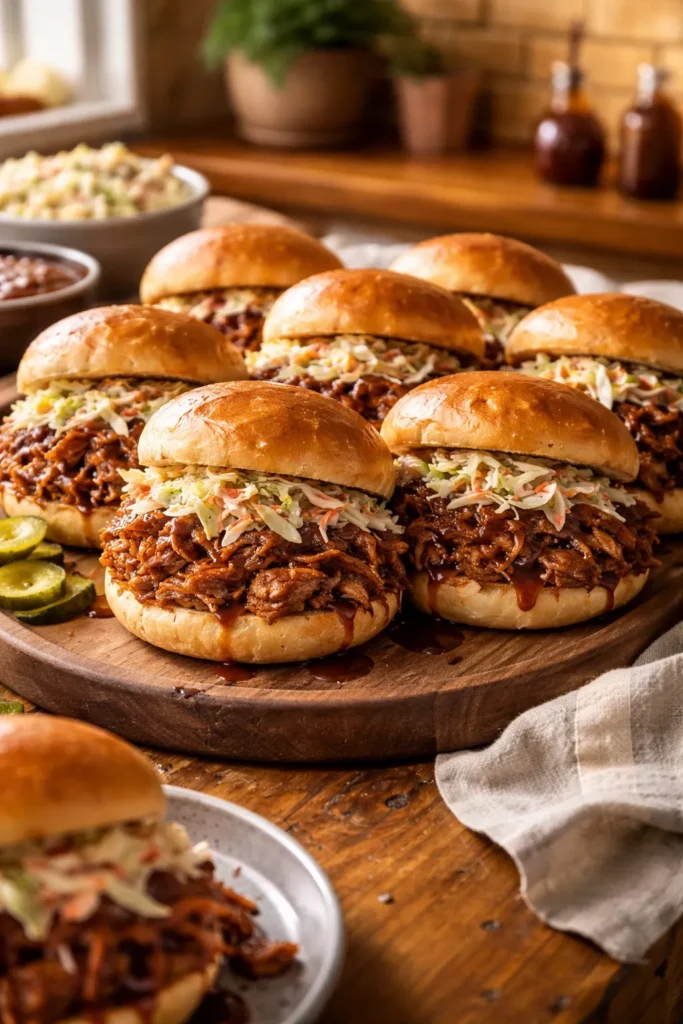
Few things are more satisfying to pull out for a crowd than a slow cooker filled with tender, fragrant pulled pork that’s been quietly doing its thing for eight hours. This is the definition of low-effort, high-reward cooking — the kind of dish that makes guests think you spent all day in the kitchen when you were actually free the entire time.
Pulled pork works so well for groups because a single pork shoulder (also labeled pork butt at most grocery stores) is one of the most affordable cuts per pound you can buy, and it shrinks considerably during cooking, which means a 6-pound shoulder feeds roughly 12 people comfortably when served as sandwiches. Buying two of them costs less than a lot of single-protein alternatives and feeds a full house.
Why It Works for a Crowd
The key to pulled pork that people rave about is a two-part process: a dry rub applied the night before and a bold, homemade BBQ sauce added during the last hour of cooking. The overnight rub — typically smoked paprika, brown sugar, garlic powder, cumin, black pepper, and salt — creates a deeper flavor penetration than any sauce can achieve on its own.
The pork shoulder goes into the slow cooker with a small amount of liquid (apple cider vinegar or chicken broth both work beautifully), and after 8 hours on low, it pulls apart with two forks effortlessly. The meat is juicy enough to hold its own without drowning in sauce, which is exactly where you want it.
How to Set It Up for a Group
- Pile the pulled pork in a large serving dish or keep it warm in the slow cooker on the “warm” setting
- Set out brioche buns or sturdy sandwich rolls separately so they don’t get soggy
- Offer toppings in small bowls: coleslaw, pickled jalapeños, sliced pickles, extra BBQ sauce
- Have a stack of napkins nearby — this is intentionally a messy, happy meal
Pro tip: Make two flavors of sauce — one sweeter, one spicier — and label them. It takes 10 extra minutes and turns the whole setup into something guests talk about long after the meal.
2. Build-Your-Own Taco Bar
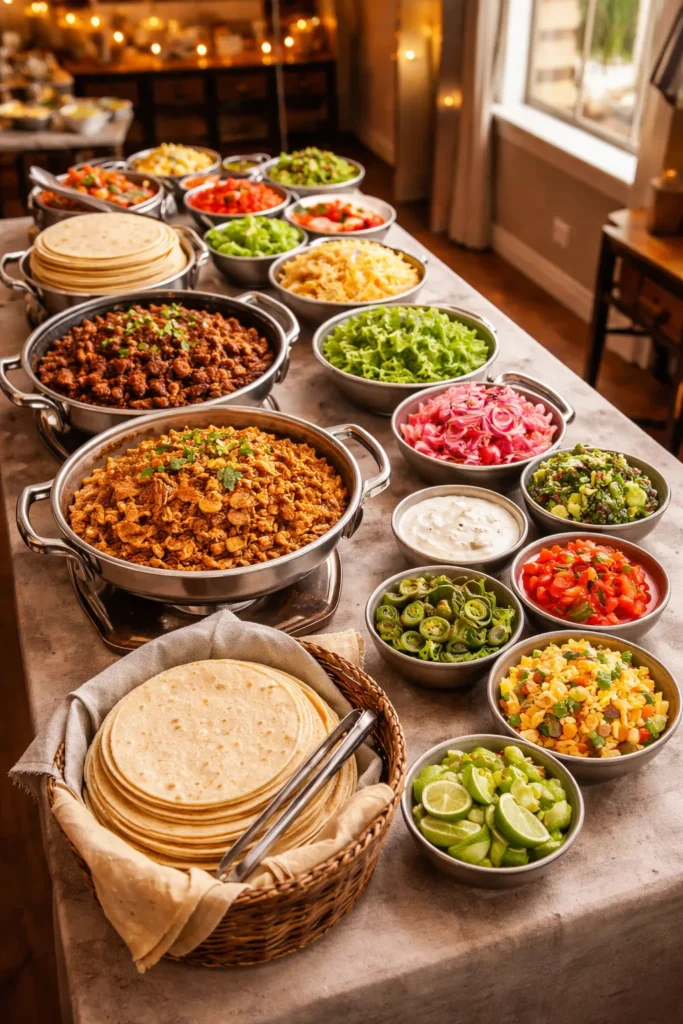
A taco bar is one of the smartest large-group dinner formats that exists, and it’s not even close. The host does all the prep, everything can be made ahead, and guests assemble their own plates — which means no one ends up with toppings they don’t like and you don’t end up plating 20 individual dinners.
The foundation of a great taco bar is well-seasoned meat, and the two best options for a crowd are ground beef seasoned with homemade taco spices (no packet needed — just cumin, chili powder, garlic powder, oregano, salt, and a splash of lime juice) and slow-cooked carnitas made from pork shoulder. The carnitas option requires a few hours of hands-off time but delivers a dramatically better end product — crispy-edged, deeply seasoned pork that guests will pile high.
The Taco Bar Lineup
Arrange your toppings on a long table or counter in this order so the flow moves logically:
- Warm tortillas (both flour and corn, wrapped in foil to stay soft)
- Seasoned meat in a slow cooker or chafing dish
- Shredded cheese, sour cream, guacamole, pico de gallo
- Shredded lettuce, diced tomato, pickled red onions, sliced jalapeños
- Hot sauce selection (at least two heat levels)
- Lime wedges
Scaling the Meat
For every 10 guests, plan on roughly 2 pounds of cooked ground beef or 3 pounds of raw pork shoulder (it loses about a third of its weight during cooking). Most people take 2–3 tacos, though if there are teenagers at the table, bump that estimate up significantly.
Worth knowing: Corn tortillas taste better when they’re warmed directly over a gas flame for 20–30 seconds per side. Wrap them immediately in foil in stacks of 10. They stay warm and pliable for up to an hour this way, which is perfect for the drawn-out timeline of a casual dinner party.
3. Hearty Baked Penne Pasta
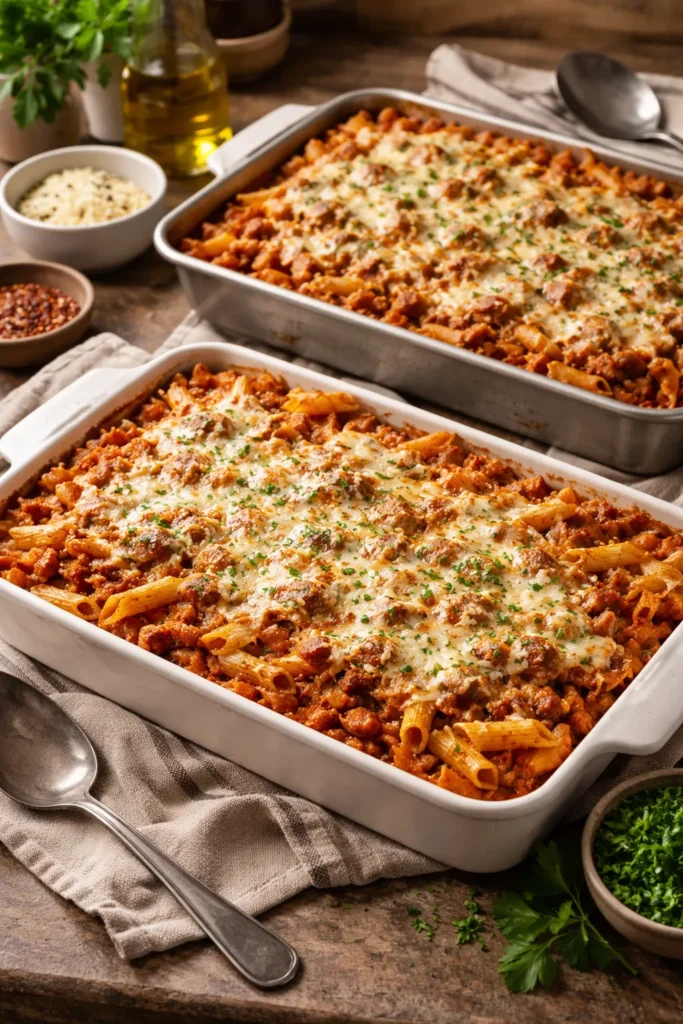
There’s a reason pasta casseroles show up at every potluck, team dinner, and family gathering on the planet. They feed armies, they reheat beautifully, they can be assembled the day before and baked fresh, and almost everyone loves them. A well-made baked penne — layered with seasoned ground beef, marinara sauce, and multiple cheeses — is comforting in a way that few dishes match.
The version that works best for a crowd uses a combination of ground beef and Italian sausage, which adds a depth of flavor that straight beef alone can’t quite reach. Browning both meats together with onion, garlic, and a pinch of red pepper flakes before mixing them with sauce creates a base that’s savory and complex even with the simplest jarred marinara.
Assembling It for 12 to 16 People
A 9×13-inch baking dish holds about 8 generous servings. For a group of 12–16, make two dishes. This is actually ideal because you can stagger the baking — one goes in an hour before guests arrive, and the second goes in 30 minutes after the first comes out. Both stay warm and the second one serves the late crowd perfectly.
Layer the dish this way: sauce on the bottom (this prevents sticking), then pasta, then meat sauce, then a layer of ricotta mixed with one egg and Italian seasoning, then mozzarella, then repeat. The top layer should be generously covered in shredded mozzarella and a handful of Parmesan, which develops a golden, slightly crispy crust at 375°F.
The Undercook Secret
Undercook your pasta by 2 full minutes when making any baked pasta dish. It finishes cooking in the oven and absorbs liquid from the sauce during baking. Pasta cooked to package directions before going into the casserole ends up mushy by the time the dish is done. This single adjustment separates a great baked pasta from a mediocre one.
4. Slow Cooker Chicken Spaghetti
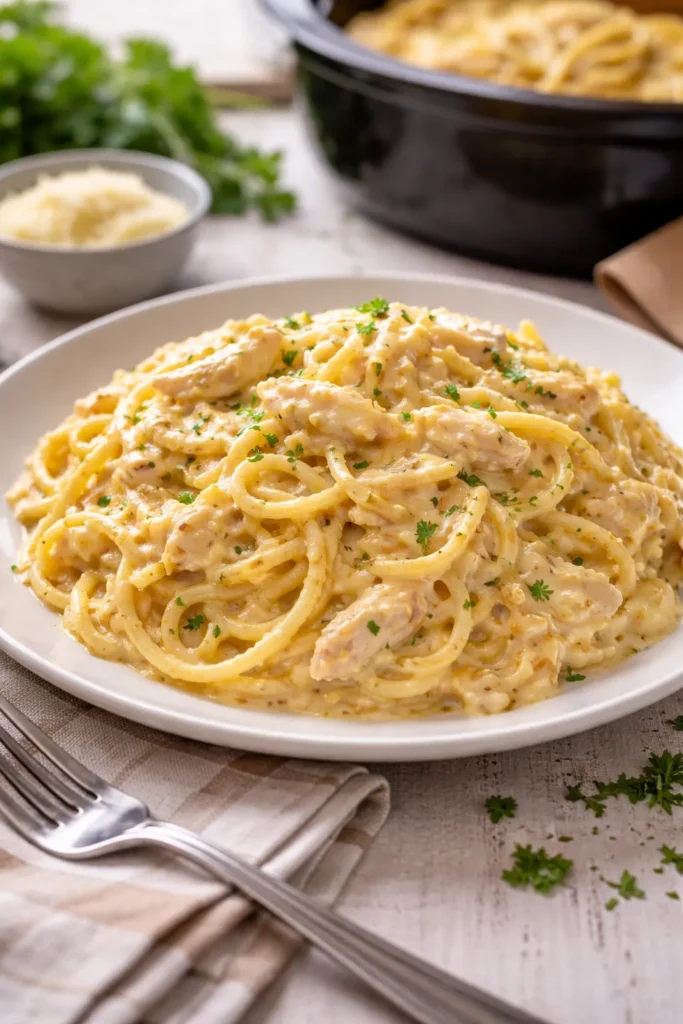
Chicken spaghetti is one of those recipes that converts skeptics on first bite. It sounds simple — chicken, pasta, a creamy sauce — but the combination of flavors manages to be greater than the sum of its parts. The sauce typically includes cream of mushroom soup, diced tomatoes with green chilies, chicken broth, and a generous amount of sharp cheddar, which melts into something deeply savory and satisfying.
The slow cooker version is particularly well-suited for large groups because the chicken cooks directly in the sauce for hours, shredding easily and absorbing every bit of flavor from the liquid around it. You cook the spaghetti separately, then fold it into the mixture right before serving — a quick last step that comes together in minutes.
Why It Stretches So Well
One of the practical advantages of chicken spaghetti is that spaghetti is cheap. Adding an extra half-pound of pasta to a recipe costs almost nothing and can extend the dish to feed two or three additional people. The sauce-to-pasta ratio is forgiving — this isn’t a dish where precise proportions are critical.
Make-Ahead Instructions
- Cook and shred the chicken up to two days ahead; store covered in the fridge
- Make the sauce separately and refrigerate it in the same window
- On the day of your gathering, combine chicken and sauce in a slow cooker on warm for 2 hours, then fold in freshly cooked pasta just before serving
This approach takes a dish that could create dinner-hour chaos and turns it into something that’s completely under control by noon. That’s worth everything when you have guests arriving in the afternoon.
Pro tip: Stir in a full block of cubed Velveeta along with the shredded cheddar. It melts without breaking, keeps the sauce silky even after sitting, and adds a richness that shredded cheese alone struggles to maintain.
5. Ham and Cheese Sliders
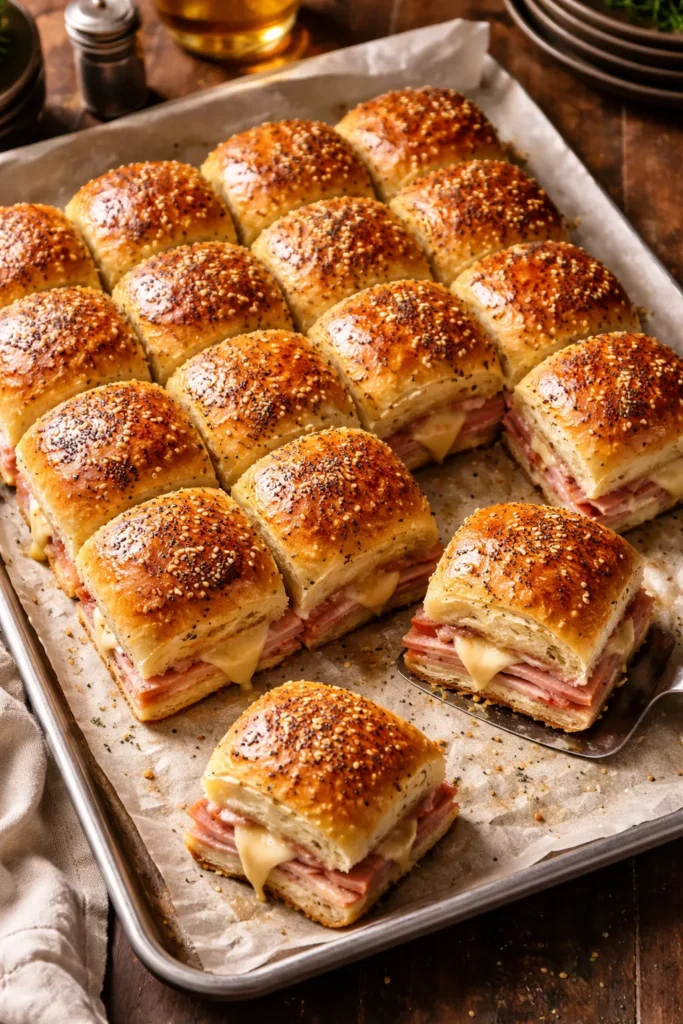
These tiny sandwiches have a near-perfect track record at gatherings. Adults love them, kids love them, they take about 20 minutes of active effort, and they produce roughly 24 sandwiches from a single batch — making them one of the most efficient large-group recipes that exists. The format is simple: Hawaiian rolls, thinly sliced ham, Swiss cheese, and a buttery Dijon-poppy seed glaze baked over the top until everything is warm, gooey, and slightly caramelized.
The magic of the slider is that it bakes as a single unit — you keep the rolls connected, slice them in half horizontally, layer the fillings, replace the top, pour the glaze over everything, and bake covered for 15 minutes, then uncovered for 5. The glaze soaks into the bread, the cheese melts completely, and each roll pulls apart cleanly when it’s time to serve.
The Glaze That Makes Them Memorable
Most slider recipes use a basic melted butter glaze, but the version guests always ask about uses:
- 4 tablespoons unsalted butter, melted
- 2 tablespoons Dijon mustard
- 1 tablespoon Worcestershire sauce
- 1 teaspoon poppy seeds
- 1 teaspoon onion powder
Whisk these together and pour evenly over the assembled sliders before baking. The result is savory, slightly tangy, and impossible to stop eating.
Scaling for Larger Groups
Two pans of 12 sliders serve a crowd of 10–14 as a main course alongside salad or a vegetable side. For groups of 20+, make three or four pans — they bake simultaneously and hold well on low heat in the oven for up to 30 minutes after baking.
6. Slow Cooker Carnitas
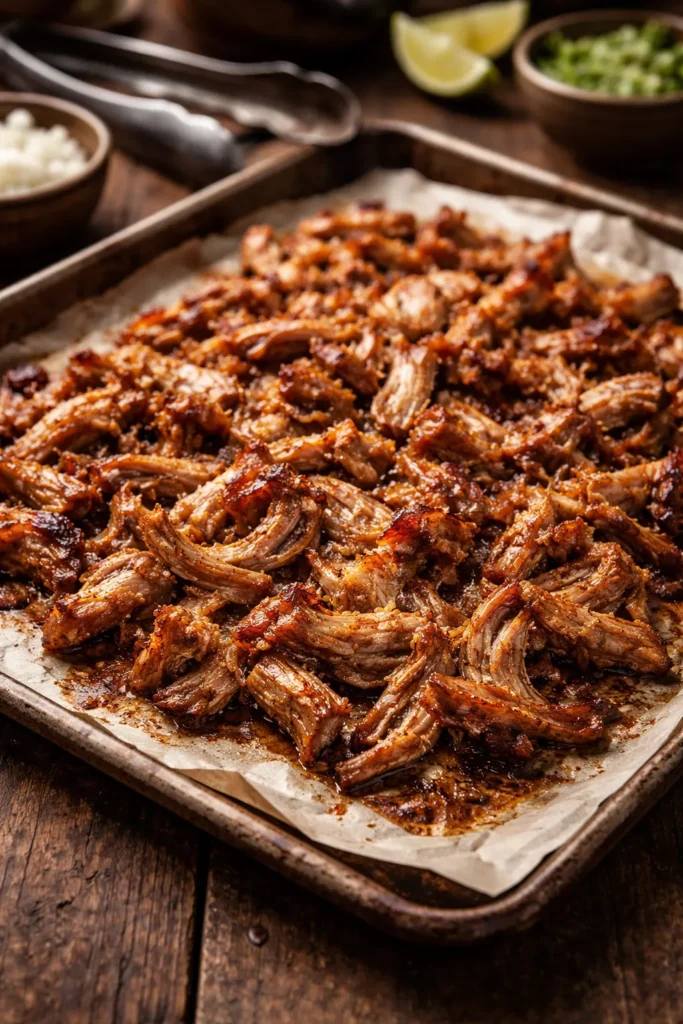
Carnitas deserve their own dedicated spot in the large-group dinner hall of fame. The process is simple: pork shoulder goes into a slow cooker with orange juice, lime juice, garlic, cumin, oregano, and salt, cooks on low for 8 hours or high for 5, then the shredded meat is spread on a baking sheet and broiled for 5–7 minutes until the edges go crispy and golden.
That broiling step is the one most recipes skip, and it’s the entire reason restaurant carnitas taste different from homemade. The contrast between the crispy exterior edges and the tender, juicy interior is what makes carnitas so addictive. Don’t skip it.
Serving Options for a Group
Carnitas are wonderfully versatile, which makes them especially useful when you’re cooking for people with different preferences:
- Serve them as taco bar protein alongside guacamole, pickled red onions, and corn tortillas
- Pile them on rice with black beans and sour cream for a burrito bowl situation
- Put out slider buns and let guests make small sandwiches with coleslaw on top
- Serve alongside roasted vegetables for a lower-carb option
One 4-pound pork shoulder yields enough carnitas for 10–12 tacos or roughly 8–10 generous rice bowls. For a group of 20, two shoulders is the right call.
The Citrus Secret
The orange juice does two things: it provides acid that helps break down the tough muscle fibers in the pork shoulder, and it adds a subtle sweetness that balances the salt and savory spices. Fresh-squeezed tastes noticeably better here — the oils from the orange peel that get into fresh juice when you squeeze it add a brightness that the carton version simply doesn’t have.
7. Baked Potato Bar
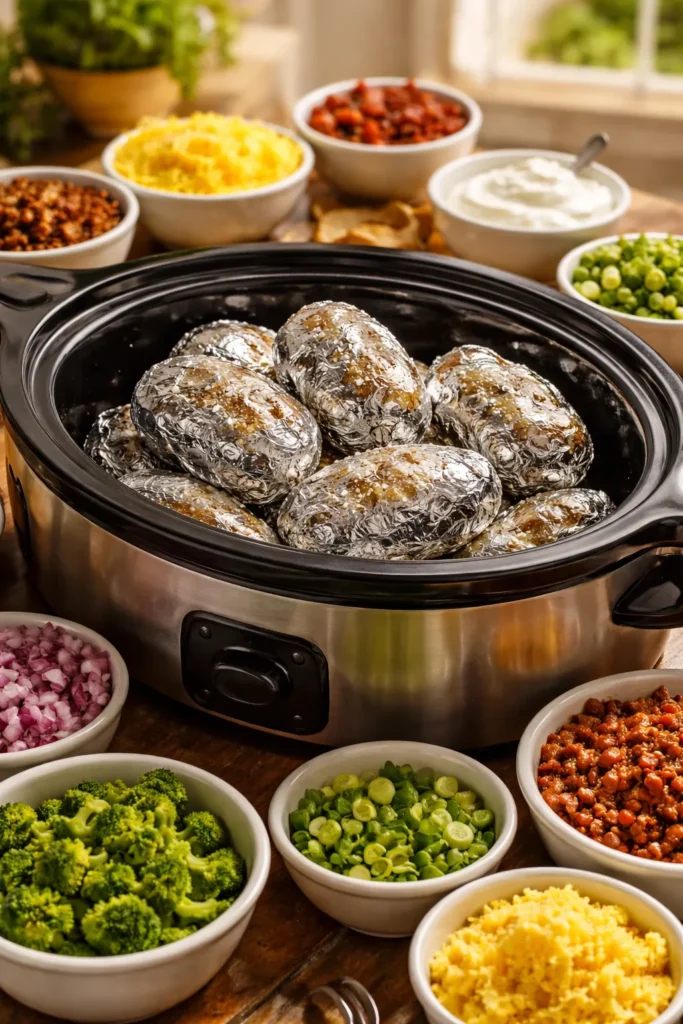
A baked potato bar is the kind of hosting move that looks thoughtfully casual while secretly being one of the easiest things you can pull off for a group. Everyone gets exactly what they want, the potatoes cook unattended for an hour, and the toppings can be prepped hours in advance. It’s a format that works for groups of 10 just as well as groups of 40.
The trick to excellent baked potatoes for a crowd is using a slow cooker instead of the oven — or in addition to it. Wrap each potato individually in foil after rubbing it with olive oil and salt, stack them in a large slow cooker, and cook on high for 4–5 hours or low for 8 hours. They come out perfectly soft all the way through, with a steamy interior that’s ideal for holding toppings.
The Toppings That Elevate the Whole Spread
Basic toppings (butter, sour cream, shredded cheese, bacon bits) are expected. The items that make guests genuinely excited are the slightly less expected ones:
- Homemade cheese sauce — far superior to shredded cheese, stays liquid and pourable
- Slow-cooker chili — turns a side dish into a complete, protein-rich meal
- Broccoli florets — steam them ahead and keep warm in a small pot
- Pickled jalapeños, hot sauce, and chives — for the guests who want something brighter and spicier
- Crispy bacon strips broken into pieces — not the pre-packaged bits, actual oven-baked bacon
Planning the Numbers
One large russet potato per adult is the standard. If chili is one of the toppings, people tend to eat slightly less potato and more topping — so in a chili situation, you can stretch slightly. Plan about 1.25 potatoes per person to be safe, especially if there are teenagers involved.
8. Chicken and Broccoli Alfredo Bake
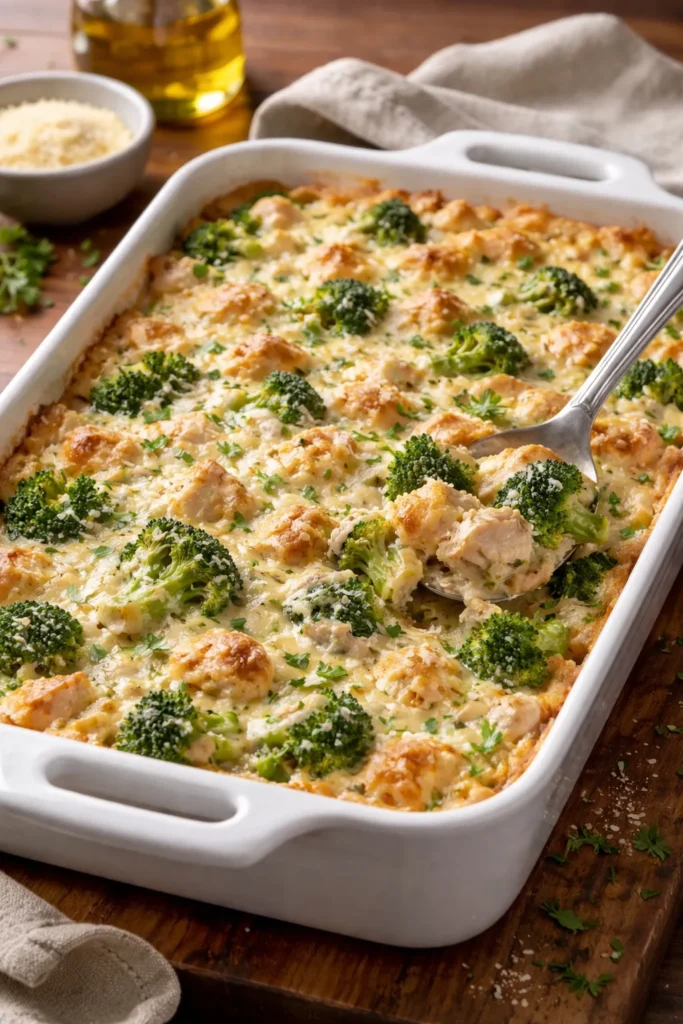
Casseroles are the workhorses of large-group cooking, and the chicken Alfredo bake sits near the top of the list for sheer crowd appeal. It combines tender chicken, broccoli florets, pasta, and a creamy Alfredo sauce under a blanket of mozzarella — essentially all the things people order at Italian restaurants, unified in one dish that serves 10–12 people from a single 9×13 pan.
Using rotisserie chicken here is a genuinely smart shortcut, not a lazy one. Pre-cooked rotisserie chicken shreds in about 5 minutes, has excellent flavor, and costs roughly the same as cooking a raw chicken breast when you factor in the time and oven energy. Two rotisserie chickens yield enough shredded meat for a full casserole.
The Alfredo Sauce Decision
You have two paths: jarred Alfredo sauce (quick, reliable, perfectly acceptable) or a homemade cream sauce (richer, more complex, takes about 10 minutes longer). For a casual weeknight gathering, jarred works beautifully. For something you want to be a bit more special, the 10-minute homemade version — butter, garlic, heavy cream, Parmesan, salt, and nutmeg — is worth it. The nutmeg is an often-skipped ingredient that adds a warm, subtle depth to cream sauces that most people can taste but can’t quite identify.
Prep-Ahead Instructions
- Assemble the entire casserole up to 24 hours ahead and refrigerate, covered
- Add 10–15 minutes to the bake time if going straight from fridge to oven
- The dish holds at 200°F for up to 45 minutes after baking without drying out
Pro tip: Blanch your broccoli for exactly 90 seconds before adding it to the casserole. Raw broccoli needs more time in the oven than the pasta and chicken do, and by the time it’s cooked through, everything else is overdone. A quick blanch puts it on the same timeline as everything else.
9. Slow-Cooker Beef and Bean Chili
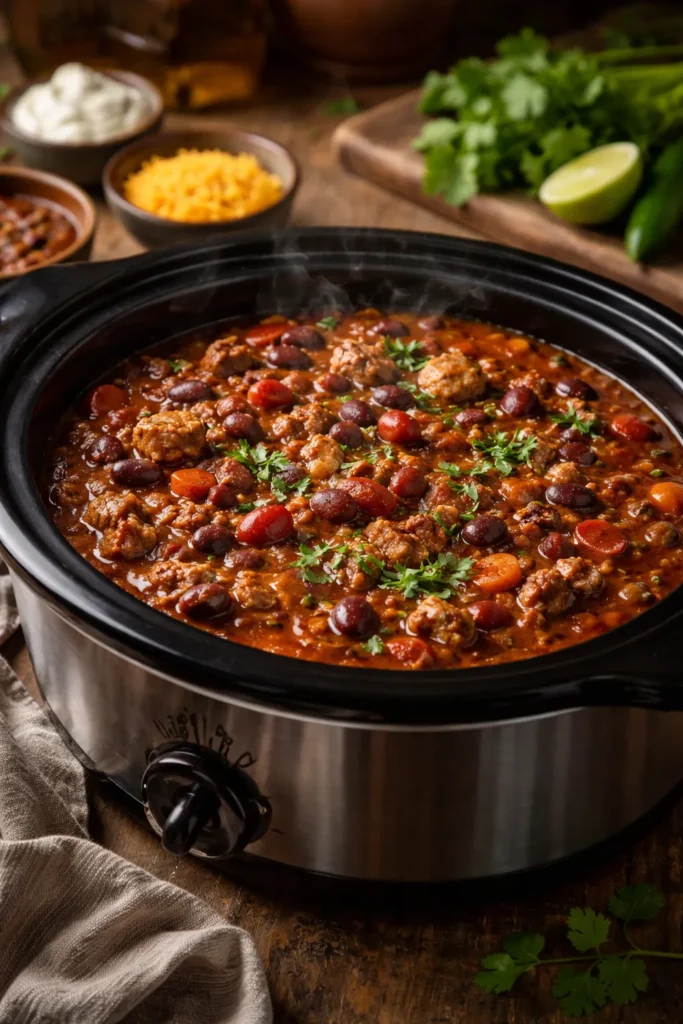
Chili is the rare dish that genuinely gets better the longer it cooks and the more people it has to feed. There’s something about making a big batch — 5 or 6 quarts — that allows the flavors to develop more fully than they do in a small pot. If you’ve only ever made a small pot of chili, making it for a crowd will actually produce a better result.
The version that stands out at large gatherings uses both ground beef and Italian sausage (the same combination as the baked penne, and for the same reason — depth). Three types of beans — kidney, black, and pinto — give texture variety throughout the chili. The spice base should include not just chili powder and cumin, but also smoked paprika, a small amount of cocoa powder (trust this), and a splash of cider vinegar added at the end to brighten all the flavors.
Why the Cocoa Powder Works
Unsweetened cocoa powder adds tannins and a subtle earthiness that makes chili taste richer and more complex without tasting remotely like chocolate. A single tablespoon in a large pot is all you need. This is a technique used in Cincinnati-style chili and many competition chili recipes, and it’s one of those additions that makes people say “I can’t figure out what you did differently, but this is the best chili I’ve ever had.”
Serving a Chili Bar
Set up the chili in a slow cooker on the warm setting and offer a topping station:
- Shredded sharp cheddar and Monterey Jack
- Sour cream
- Sliced scallions and diced white onion
- Corn chips or oyster crackers
- Sliced jalapeños and hot sauce
- Lime wedges
This format serves 16–20 people from a single large slow cooker batch and requires almost no day-of effort once the chili is made.
10. Chicken Parmesan Casserole
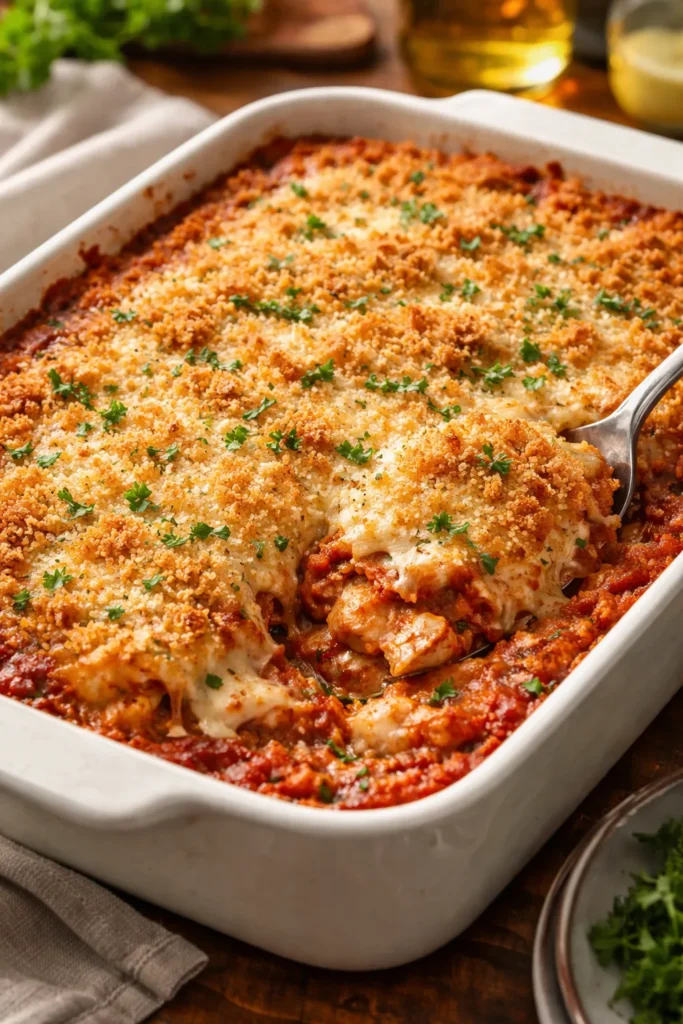
Chicken Parmesan as a casserole sidesteps every logistical problem that traditional chicken Parm creates when you’re cooking for a group. No individual portions to bread and fry, no timed plating, no sauce applied to order. Everything goes into one pan, bakes together, and comes out with the essential elements of the dish intact — crispy breadcrumb topping, melted mozzarella, tangy marinara, and tender chicken — just in a format that serves 10 people as easily as it serves 2.
The technique involves layering cooked, diced chicken breast (or again, rotisserie chicken) with marinara, mozzarella, and Parmesan, then finishing with a panko breadcrumb topping that crisps in the final 10 minutes of uncovered baking. The result has all the satisfaction of the original dish with a fraction of the effort.
Getting the Crust Right
The breadcrumb topping is where most casserole versions of chicken Parm fall flat — it goes soggy under the cheese layer and loses its purpose entirely. The solution is to add the breadcrumbs in the last 10 minutes only, after removing the foil, and to mix them with a tablespoon of olive oil and the Parmesan before adding them on top. This creates a crust that browns and crisps independently of the cheese layer underneath.
Serving It for a Group
Serve this casserole over spaghetti or rigatoni — cook the pasta while the casserole bakes and toss it with a small amount of extra marinara to keep it from sticking. Each guest gets a scoop of casserole over their pasta, which stretches the dish considerably and turns it into a complete, satisfying plate.
For a group of 16–18, double the casserole into two 9×13 pans and stagger the baking by 20 minutes so you have a hot second pan ready as the first one gets depleted.
How to Scale Any of These Recipes for Any Group Size
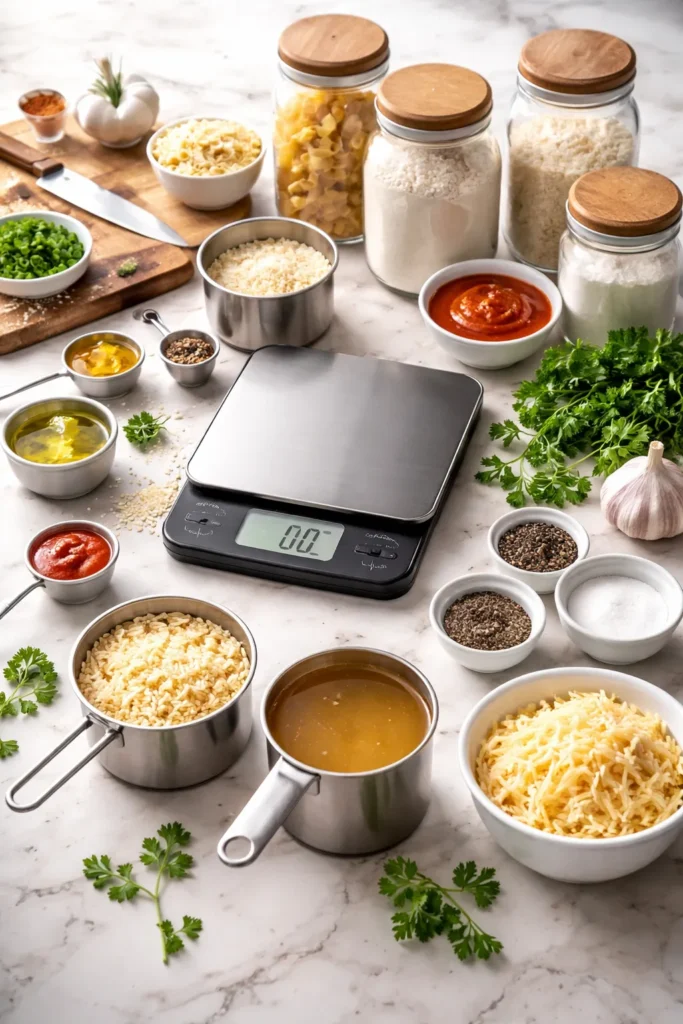
The single most useful skill in large-group cooking is knowing how to scale reliably. Most of these recipes scale by simple multiplication — double the ingredients, double the yield. But a few rules apply no matter what you’re making.
Seasoning doesn’t scale linearly. If you double a recipe, start with 1.5 times the salt, taste, and adjust from there. Doubling the salt exactly often produces an overseasoned result because you’re not just doubling flavor — you’re also concentrating it as things reduce.
Bake times change with volume, not just size. Two pans of the same casserole in the same oven will take the same amount of time as one pan, assuming both pans are the same size. But a single pan that’s twice as deep will take significantly longer. Keep pan size consistent when you scale up and simply use more pans.
Add a 15-minute buffer to everything. When cooking for a group, something always takes slightly longer than expected — an oven that runs a bit cool, a slow cooker that takes time to heat up, a topping bar that needs a last-minute refill. Build 15 extra minutes into every timing plan and you’ll never be caught scrambling.
Make-Ahead Strategies That Make Hosting Feel Easy
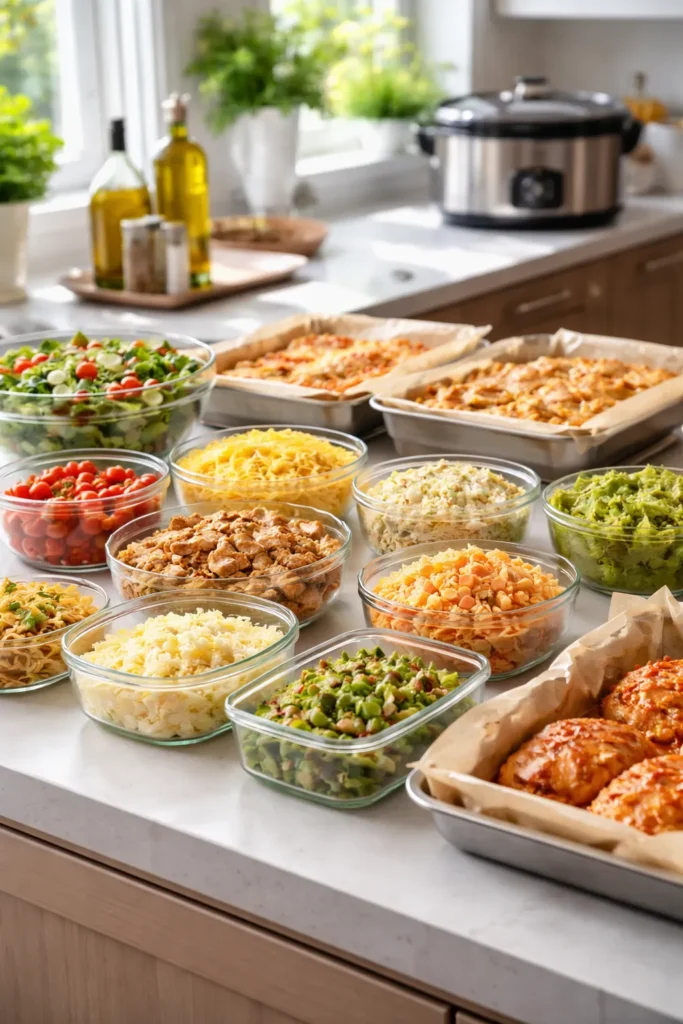
The hosts who seem effortlessly calm at their own parties aren’t calm because they’re naturally relaxed people. They’re calm because they’ve done nearly everything before the guests walked in the door. Make-ahead cooking is the single biggest quality-of-life improvement you can make when hosting a crowd.
Most of the dishes in this roundup have specific make-ahead windows worth knowing:
- Pulled pork and carnitas: Can be cooked 2 days ahead, refrigerated, and reheated gently in the slow cooker with a splash of broth. They may actually taste better the second day.
- Baked pasta casseroles: Assemble fully, cover tightly with foil, and refrigerate for up to 24 hours before baking. Add 10–15 minutes to the bake time.
- Chili and chicken spaghetti: Both benefit from being made a day ahead. The flavors meld overnight in a way that same-day cooking can’t replicate.
- Slider glaze: Whisk it together up to a week ahead and refrigerate. Warm slightly before using.
- Taco and potato bar toppings: All toppings can be prepped the morning of the gathering and held in the fridge. Bring to room temperature 30 minutes before serving.
The golden rule of make-ahead hosting: the more you can do before 3 PM on the day of the party, the better the evening will go. Aim to be fully assembled, heated, or well-underway by that benchmark, and the hours before guests arrive become calm rather than chaotic.
Final Thoughts

Cooking for a crowd doesn’t have to mean choosing between impressive and manageable. The recipes here prove that the best large-group meals are often the simplest ones — slow-cooked proteins, well-seasoned casseroles, self-serve bar formats that guests actually prefer over plated meals.
The consistent thread through everything on this list is that each dish does most of its work before the guests arrive. That’s the real benchmark for any large-group recipe worth making: if you’re still frantically cooking when people are walking through the door, the recipe isn’t right for the occasion.
Pick one or two of these dishes for your next gathering, get the prep done the night before where possible, and give yourself permission to actually enjoy the evening you worked hard to put together. The food will take care of itself — and your guests will be back for more.